July 12 2016
WHAT DOES COMMITMENT
MEAN?
 Commitment as defined by Merriam Webster
Dictionary:
 a promise to do or give something
 a promise to be loyal to someone or something
 the attitude of someone who works very hard to do or
support something
 Others:
 The state or quality of being dedicated to a cause, activity
 A pledge or undertaking
 An engagement or obligation that restricts freedom of action
 Being asked to “commit” to the delivery of a list of specific
stories rather than a goal
 Someone else estimating your work for you
 “A commitment is something that I offer you. A mandate is
something you impose on me. Not the same thing.” Kent Beck
(4/2/2014)
 “Behind every complaint is an idea, belief or a value that a
person is committed to.”
 Can be considered as a creative act (thought pattern)
 Arise from frustration
 About something someone cares about
 A conversation starter
 Gaining or deflecting attention
 Buys time
 Dwell on what’s not working
 Belief of helplessness, not empowered, not in a position to make a
difference, that there is no solution
 Habit forming
 Limits possibilities and outcomes
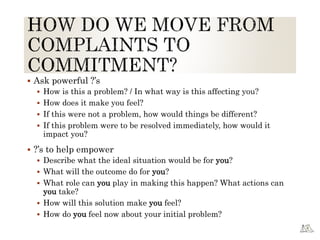
 Ask powerful ?’s
 How is this a problem? / In what way is this affecting you?
 How does it make you feel?
 If this were not a problem, how would things be different?
 If this problem were to be resolved immediately, how would it
impact you?
 ?’s to help empower
 Describe what the ideal situation would be for you?
 What will the outcome do for you?
 What role can you play in making this happen? What actions can
you take?
 How will this solution make you feel?
 How do you feel now about your initial problem?
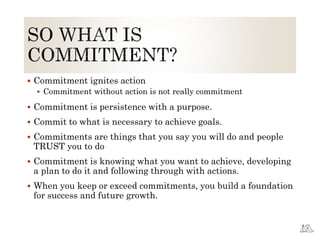
 Commitment ignites action
 Commitment without action is not really commitment
 Commitment is persistence with a purpose.
 Commit to what is necessary to achieve goals.
 Commitments are things that you say you will do and people
TRUST you to do
 Commitment is knowing what you want to achieve, developing
a plan to do it and following through with actions.
 When you keep or exceed commitments, you build a foundation
for success and future growth.
 Choose your commitments wisely.
 Document and track your commitments.
 Communicate commitments.
 Ask powerful ?’s
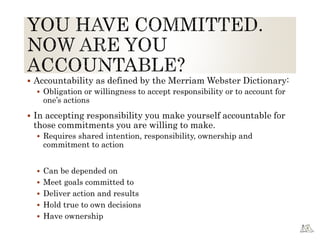
 Accountability as defined by the Merriam Webster Dictionary:
 Obligation or willingness to accept responsibility or to account for
one’s actions
 In accepting responsibility you make yourself accountable for
those commitments you are willing to make.
 Requires shared intention, responsibility, ownership and
commitment to action
 Can be depended on
 Meet goals committed to
 Deliver action and results
 Hold true to own decisions
 Have ownership
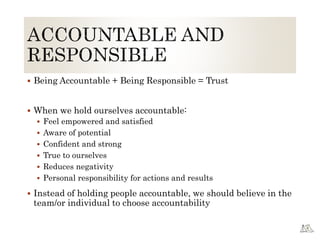
 Being Accountable + Being Responsible = Trust
 When we hold ourselves accountable:
 Feel empowered and satisfied
 Aware of potential
 Confident and strong
 True to ourselves
 Reduces negativity
 Personal responsibility for actions and results
 Instead of holding people accountable, we should believe in the
team/or individual to choose accountability
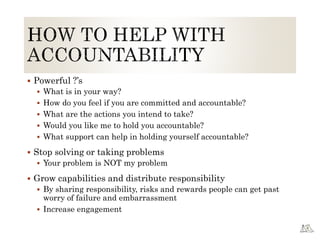
 Powerful ?’s
 What is in your way?
 How do you feel if you are committed and accountable?
 What are the actions you intend to take?
 Would you like me to hold you accountable?
 What support can help in holding yourself accountable?
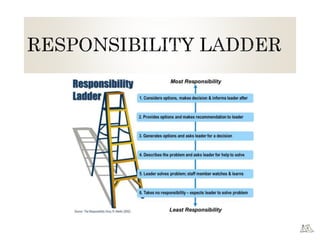
 Stop solving or taking problems
 Your problem is NOT my problem
 Grow capabilities and distribute responsibility
 By sharing responsibility, risks and rewards people can get past
worry of failure and embarrassment
 Increase engagement
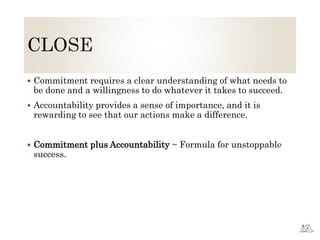
 Commitment requires a clear understanding of what needs to
be done and a willingness to do whatever it takes to succeed.
 Accountability provides a sense of importance, and it is
rewarding to see that our actions make a difference.
 Commitment plus Accountability ~ Formula for unstoppable
success.

Agile camp2016 accountabilitycommitment

Agile camp2016 accountabilitycommitment

  • 1.
  • 2.
    WHAT DOES COMMITMENT MEAN? Commitment as defined by Merriam Webster Dictionary:  a promise to do or give something  a promise to be loyal to someone or something  the attitude of someone who works very hard to do or support something  Others:  The state or quality of being dedicated to a cause, activity  A pledge or undertaking  An engagement or obligation that restricts freedom of action
  • 3.
     Being askedto “commit” to the delivery of a list of specific stories rather than a goal  Someone else estimating your work for you  “A commitment is something that I offer you. A mandate is something you impose on me. Not the same thing.” Kent Beck (4/2/2014)
  • 4.
     “Behind everycomplaint is an idea, belief or a value that a person is committed to.”  Can be considered as a creative act (thought pattern)  Arise from frustration  About something someone cares about
  • 5.
     A conversationstarter  Gaining or deflecting attention  Buys time  Dwell on what’s not working  Belief of helplessness, not empowered, not in a position to make a difference, that there is no solution  Habit forming  Limits possibilities and outcomes
  • 6.
     Ask powerful?’s  How is this a problem? / In what way is this affecting you?  How does it make you feel?  If this were not a problem, how would things be different?  If this problem were to be resolved immediately, how would it impact you?  ?’s to help empower  Describe what the ideal situation would be for you?  What will the outcome do for you?  What role can you play in making this happen? What actions can you take?  How will this solution make you feel?  How do you feel now about your initial problem?
  • 7.
     Commitment ignitesaction  Commitment without action is not really commitment  Commitment is persistence with a purpose.  Commit to what is necessary to achieve goals.  Commitments are things that you say you will do and people TRUST you to do  Commitment is knowing what you want to achieve, developing a plan to do it and following through with actions.  When you keep or exceed commitments, you build a foundation for success and future growth.
  • 8.
     Choose yourcommitments wisely.  Document and track your commitments.  Communicate commitments.  Ask powerful ?’s
  • 9.
     Accountability asdefined by the Merriam Webster Dictionary:  Obligation or willingness to accept responsibility or to account for one’s actions  In accepting responsibility you make yourself accountable for those commitments you are willing to make.  Requires shared intention, responsibility, ownership and commitment to action  Can be depended on  Meet goals committed to  Deliver action and results  Hold true to own decisions  Have ownership
  • 10.
     Being Accountable+ Being Responsible = Trust  When we hold ourselves accountable:  Feel empowered and satisfied  Aware of potential  Confident and strong  True to ourselves  Reduces negativity  Personal responsibility for actions and results  Instead of holding people accountable, we should believe in the team/or individual to choose accountability
  • 12.
     Powerful ?’s What is in your way?  How do you feel if you are committed and accountable?  What are the actions you intend to take?  Would you like me to hold you accountable?  What support can help in holding yourself accountable?  Stop solving or taking problems  Your problem is NOT my problem  Grow capabilities and distribute responsibility  By sharing responsibility, risks and rewards people can get past worry of failure and embarrassment  Increase engagement
  • 13.
     Commitment requiresa clear understanding of what needs to be done and a willingness to do whatever it takes to succeed.  Accountability provides a sense of importance, and it is rewarding to see that our actions make a difference.  Commitment plus Accountability ~ Formula for unstoppable success.
Editor's Notes

  • #3 What does that mean “a promise”? Freedom of Action – Context of Agile – Team has made a commitment
  • #4 Someone setting your delivery date – We know that in business we will always have delivery dates. Ones that are reachable and ones that aren’t. It is your responsibility to respond with what you can delivery by dates. The estimate will be received as your commitment
  • #5 People complain because they can Definition of Insanity
  • #7 Listening to a complaint is fine, but there should be a suggestion or action after the complaint
  • #8 Let’s redefine commitment Changing habits Without action – trying or experimenting. Not bad, but you need to commit Making a commitment is one thing. Managing the communication around a commitment is another thing entirely. This is where most of us drop the ball! Being brave enough to reveal bad news (early) can help build TRUST
  • #10 Accountability and Commitment are 2 pillars for change and moving forward