July 12 2016
If left unchecked, team toxins create negative
conflict
Prepare yourself
Be aware
Stonewalling
Defensiveness
Blaming
Contempt
 Harsh Start-up
 Bullying
 Domination
 Personal Attacks
 Sarcasm
 Demeaning gossip
 Eye Rolling
 Undermining
 Withdrawal
 Disengagement
 Avoidance
 Not open to influence
 Refusal to take
responsibility
 Not supportive or safe
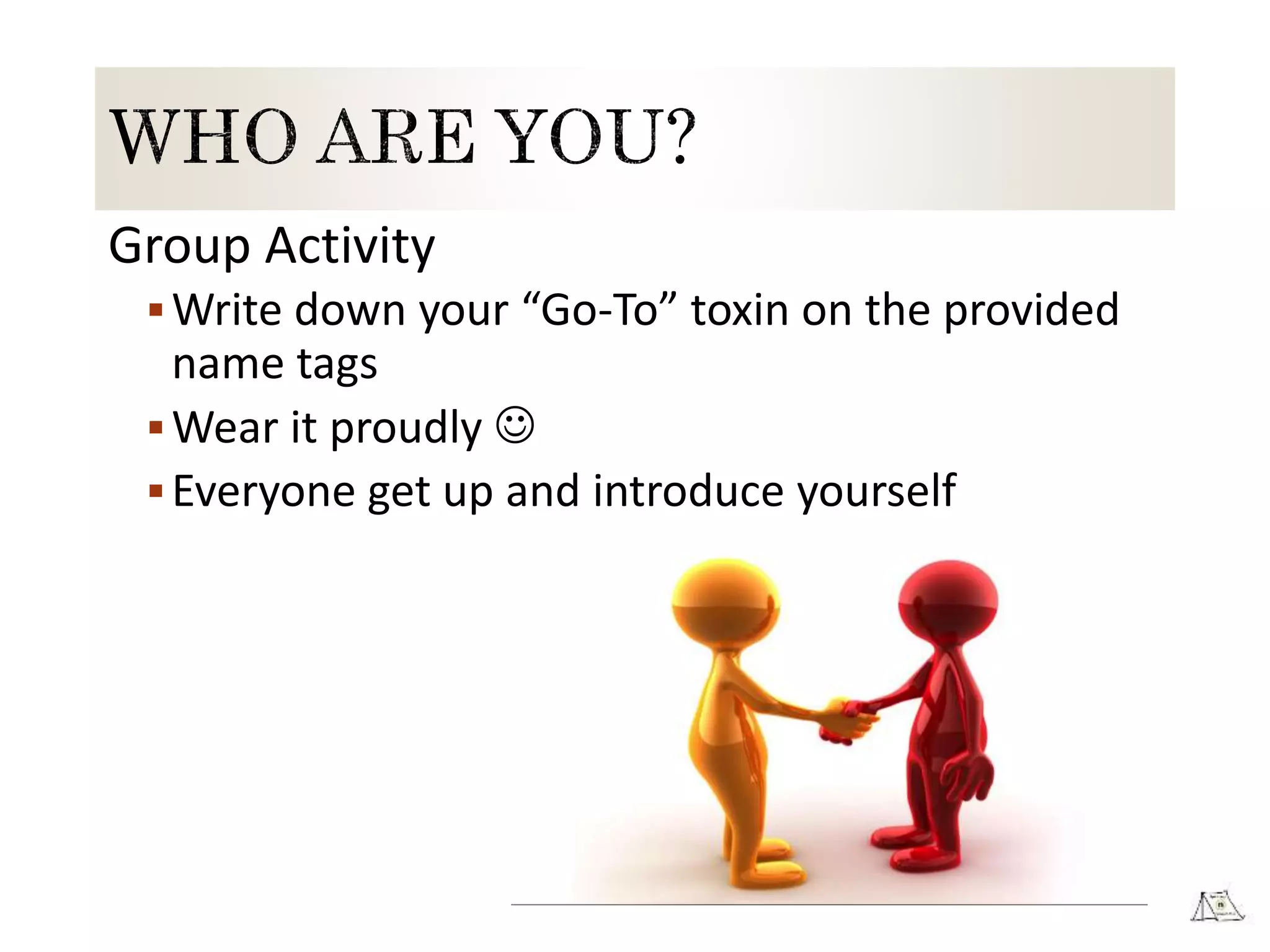
Group Activity
Write down your “Go-To” toxin on the provided
name tags
Wear it proudly 
Everyone get up and introduce yourself
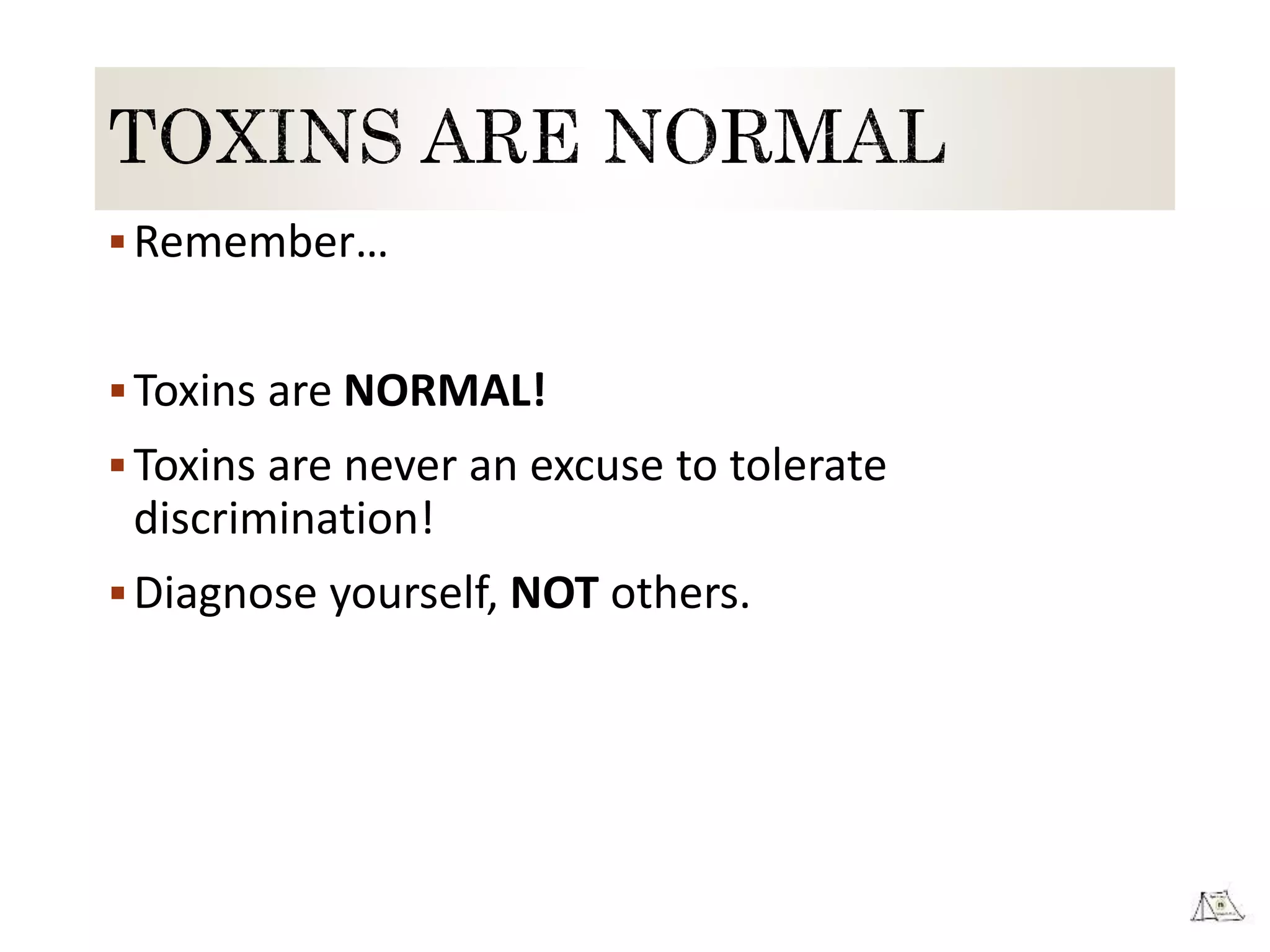
Remember…
Toxins are NORMAL!
Toxins are never an excuse to tolerate
discrimination!
Diagnose yourself, NOT others.
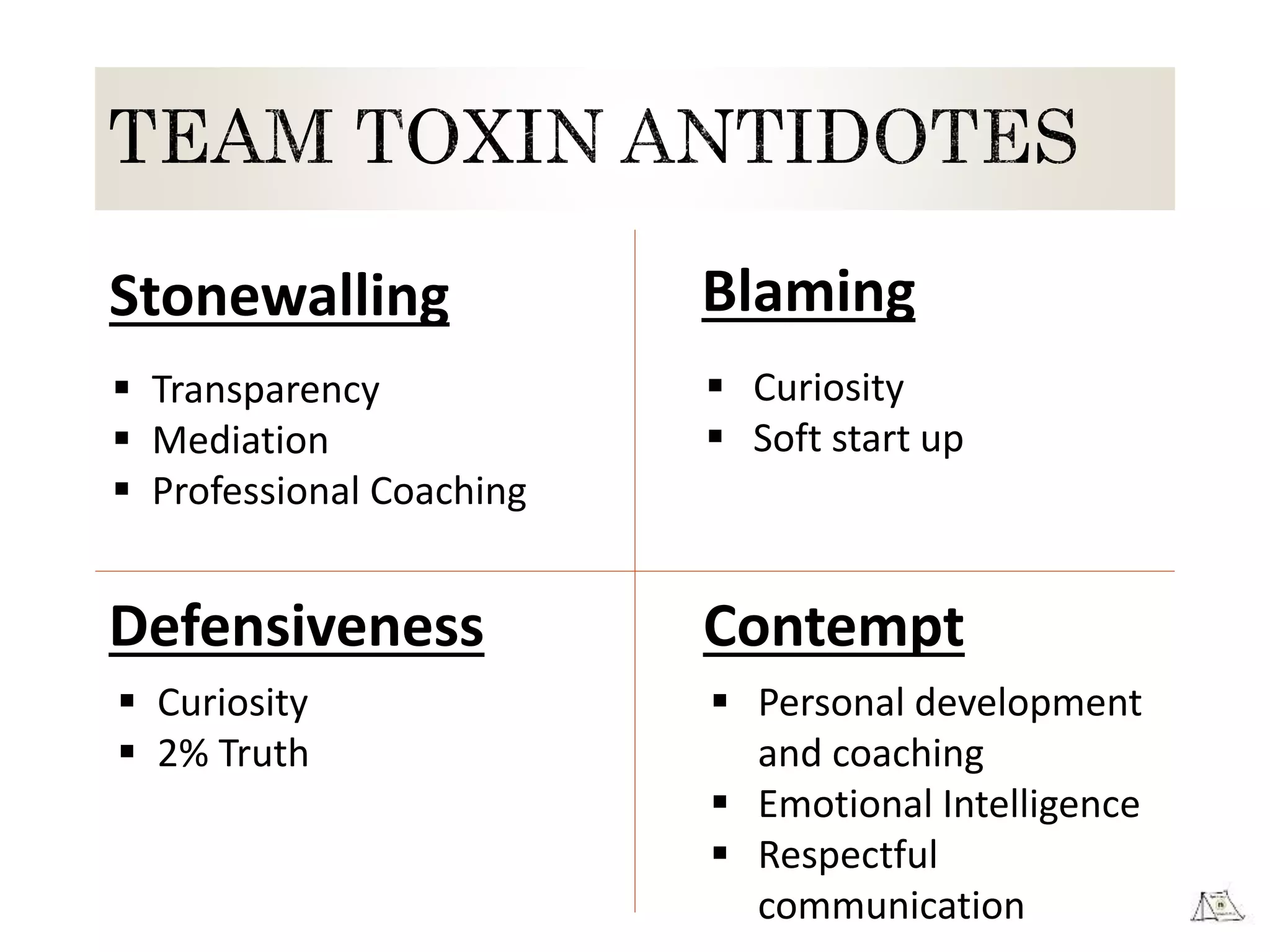
Stonewalling
Defensiveness
Blaming
Contempt
 Curiosity
 Soft start up
 Personal development
and coaching
 Emotional Intelligence
 Respectful
communication
 Transparency
 Mediation
 Professional Coaching
 Curiosity
 2% Truth
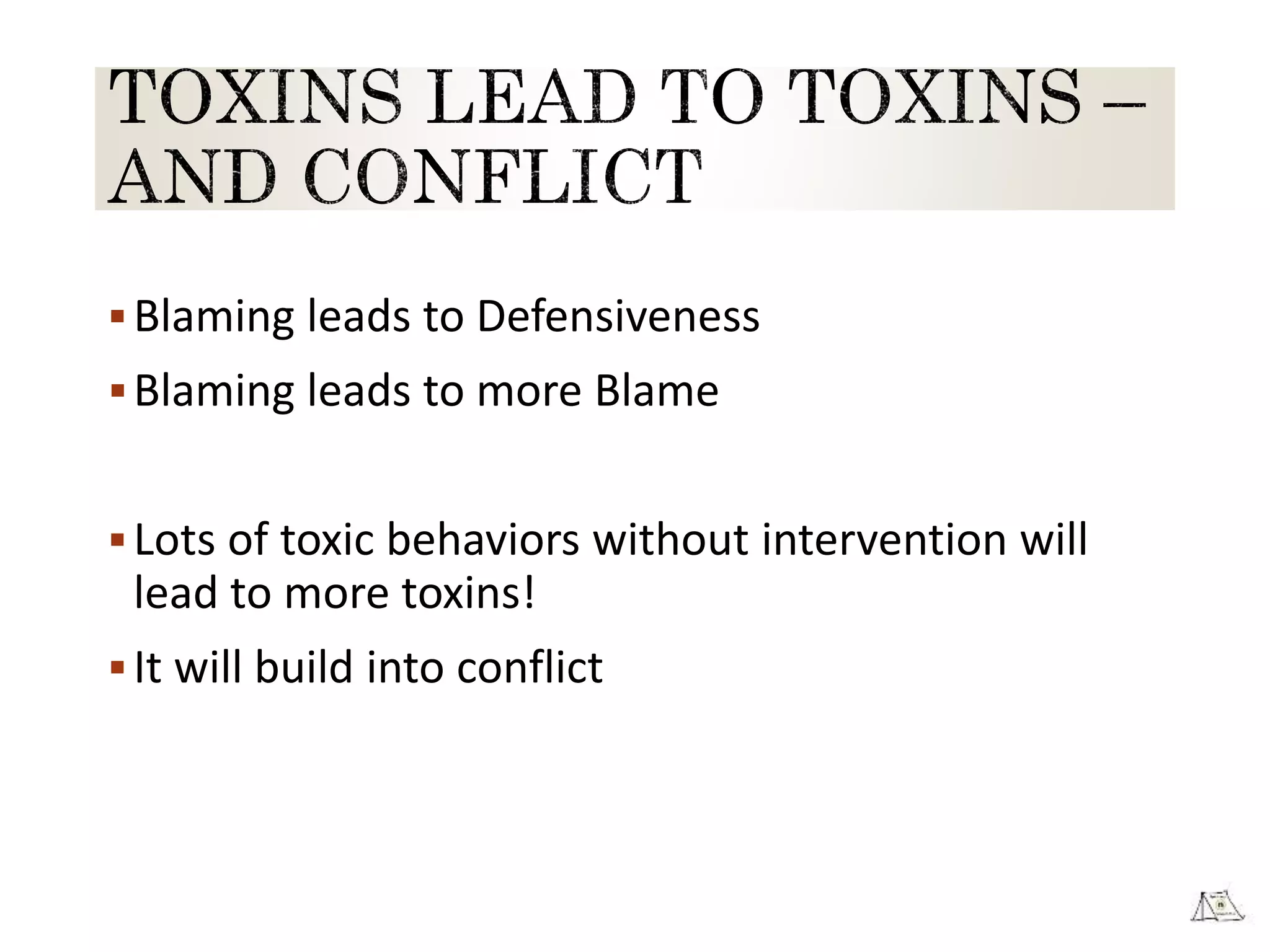
Blaming leads to Defensiveness
Blaming leads to more Blame
Lots of toxic behaviors without intervention will
lead to more toxins!
It will build into conflict
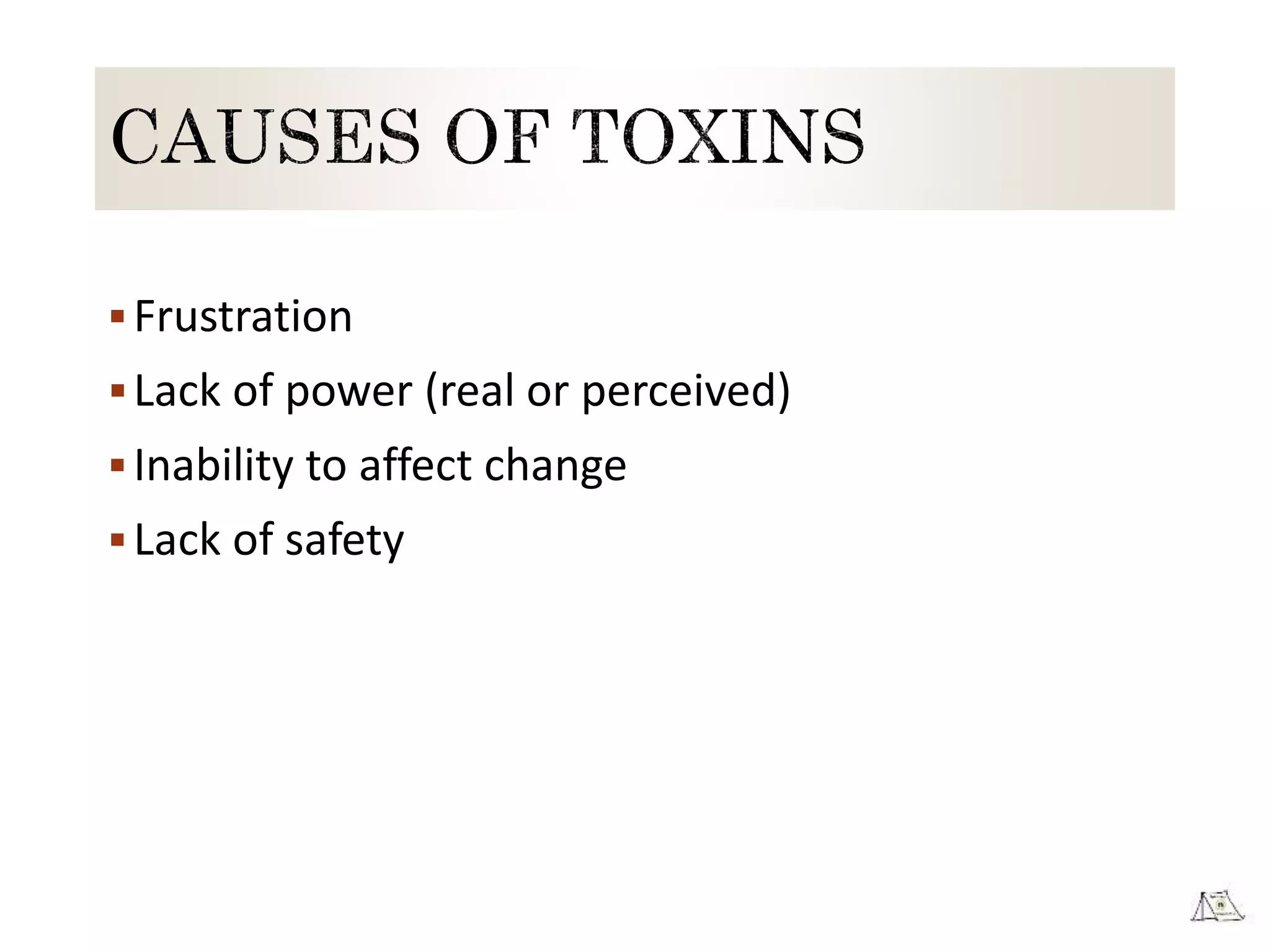
Frustration
Lack of power (real or perceived)
Inability to affect change
Lack of safety
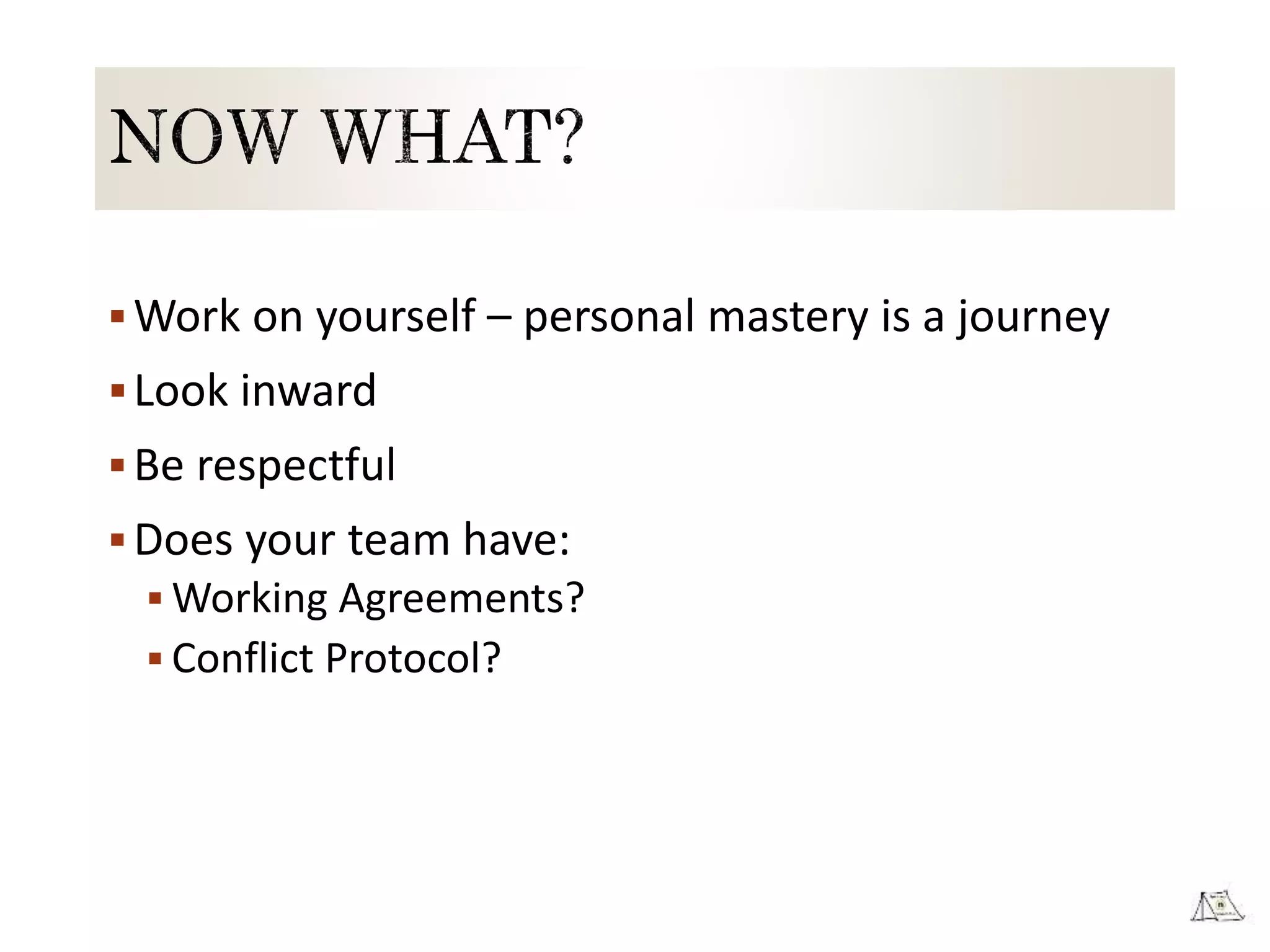
Work on yourself – personal mastery is a journey
Look inward
Be respectful
Does your team have:
 Working Agreements?
 Conflict Protocol?
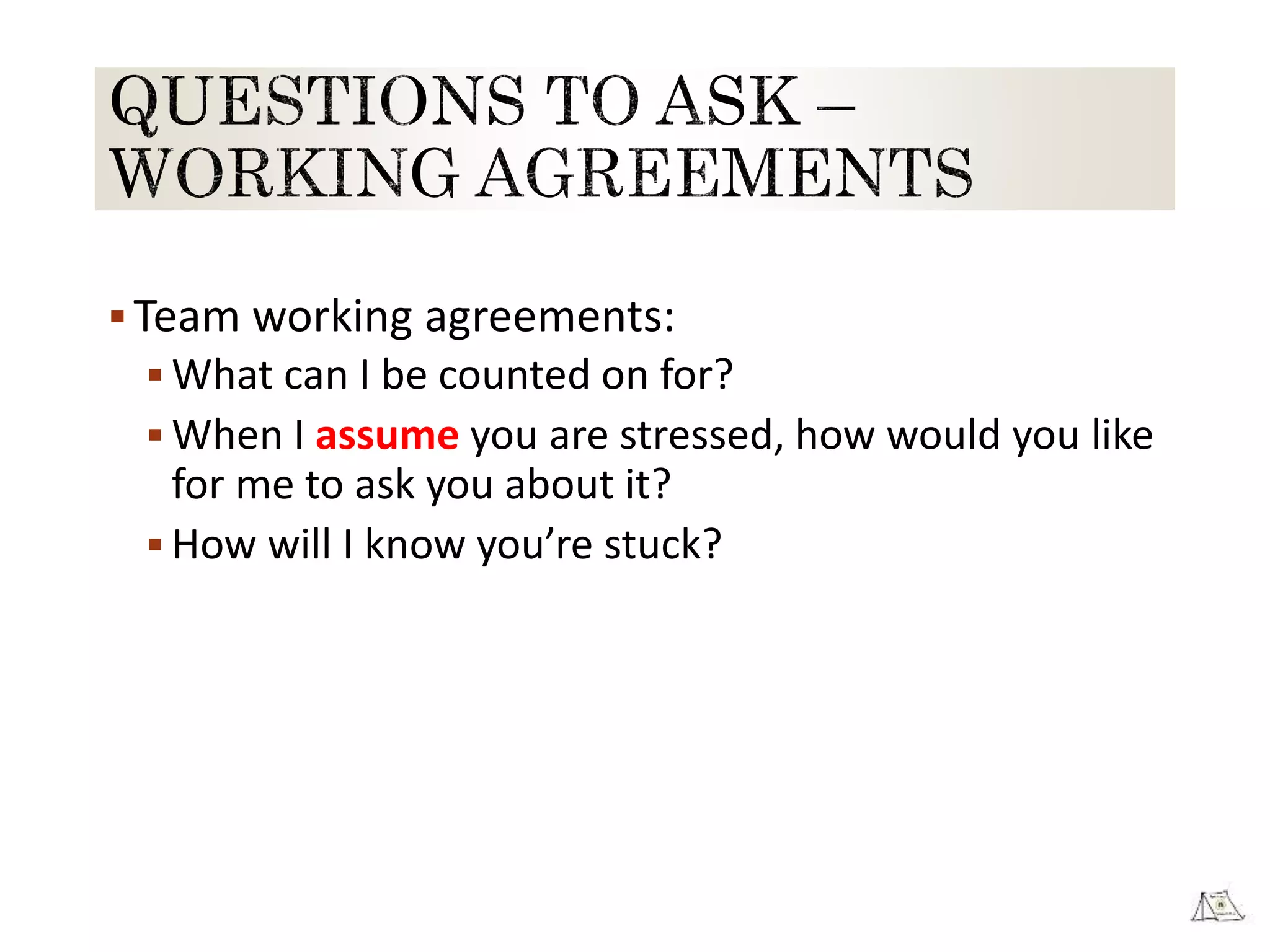
Team working agreements:
 What can I be counted on for?
 When I assume you are stressed, how would you like
for me to ask you about it?
 How will I know you’re stuck?
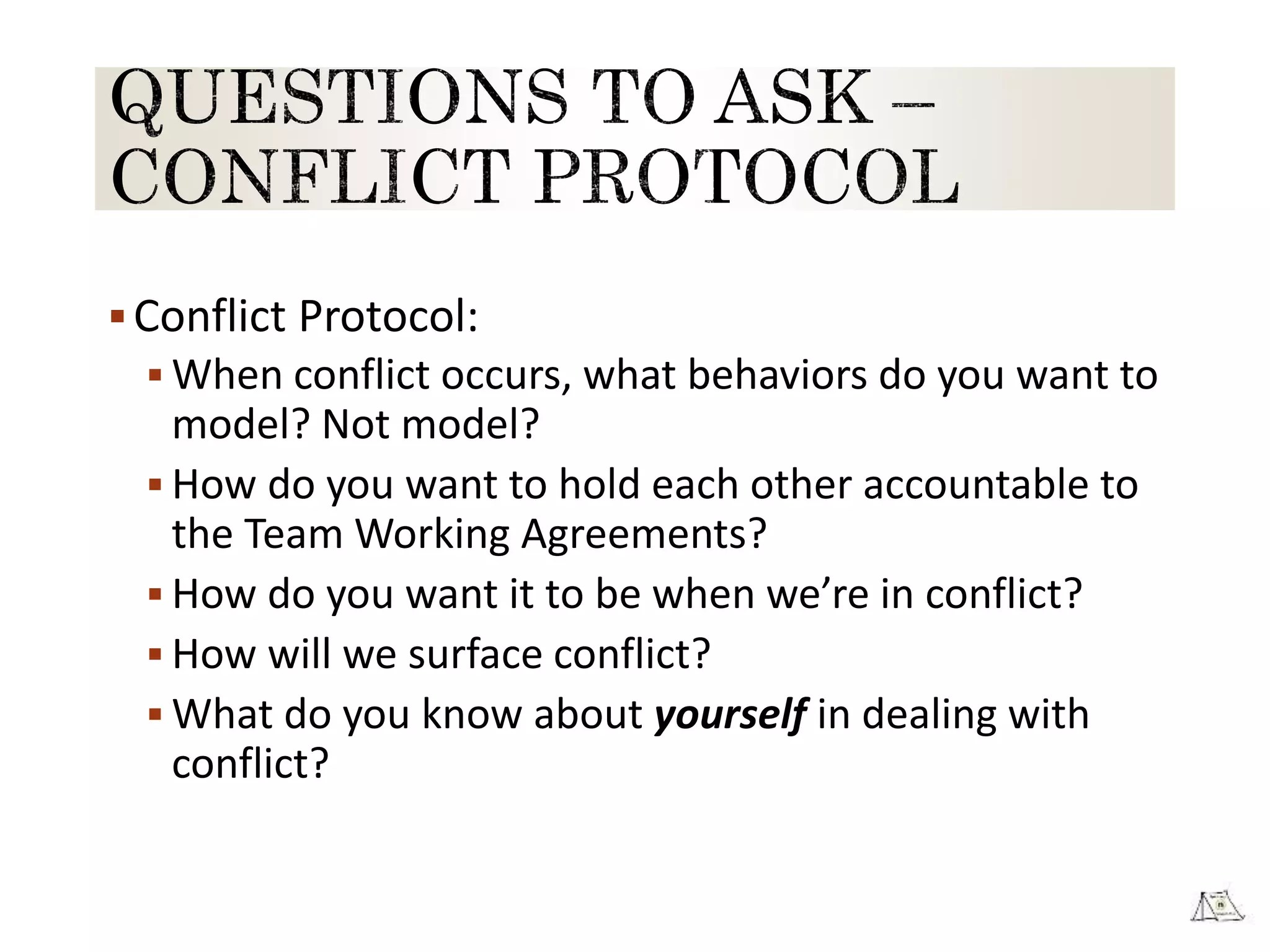
Conflict Protocol:
 When conflict occurs, what behaviors do you want to
model? Not model?
 How do you want to hold each other accountable to
the Team Working Agreements?
 How do you want it to be when we’re in conflict?
 How will we surface conflict?
 What do you know about yourself in dealing with
conflict?
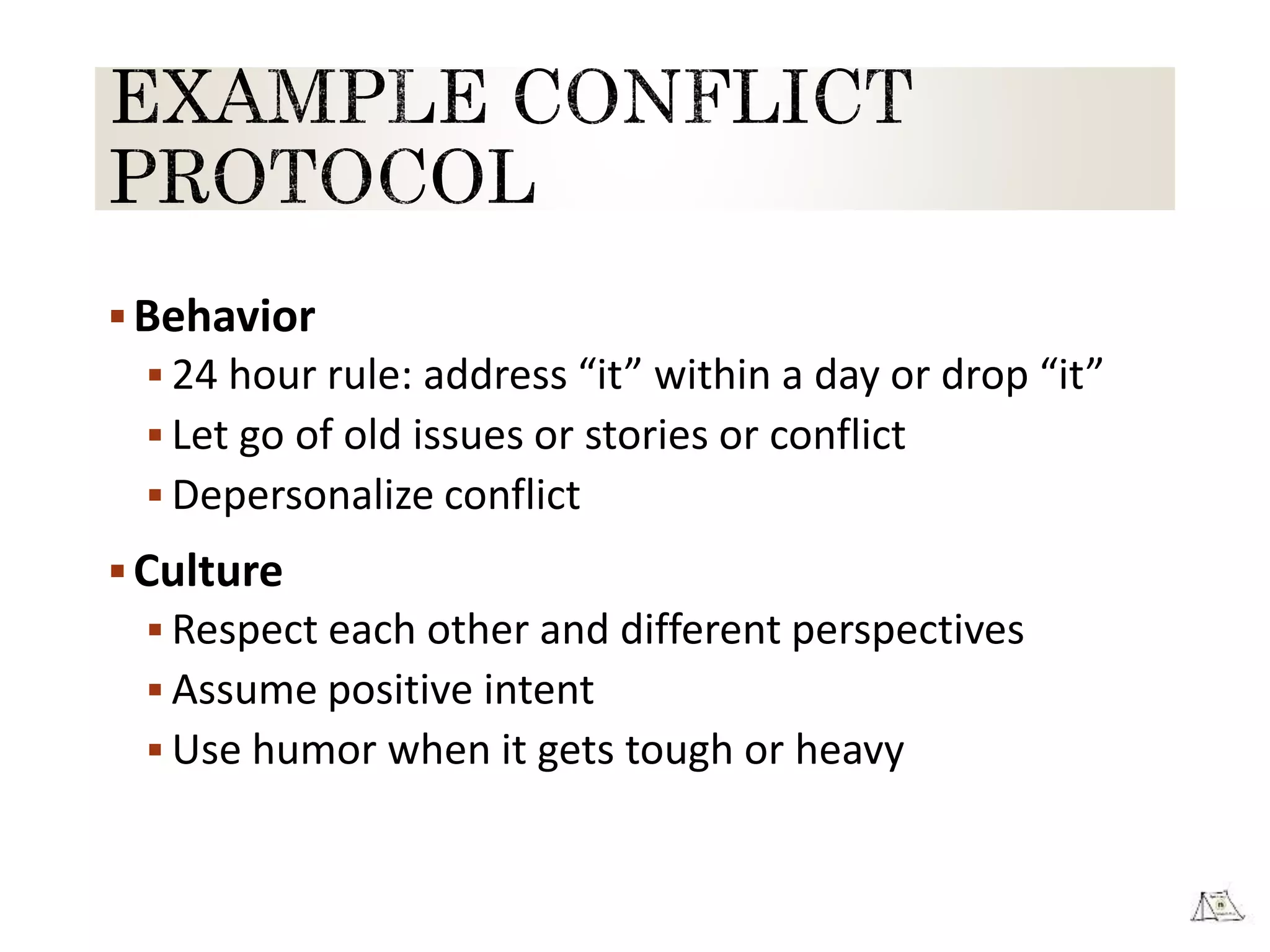
Behavior
 24 hour rule: address “it” within a day or drop “it”
 Let go of old issues or stories or conflict
 Depersonalize conflict
Culture
 Respect each other and different perspectives
 Assume positive intent
 Use humor when it gets tough or heavy
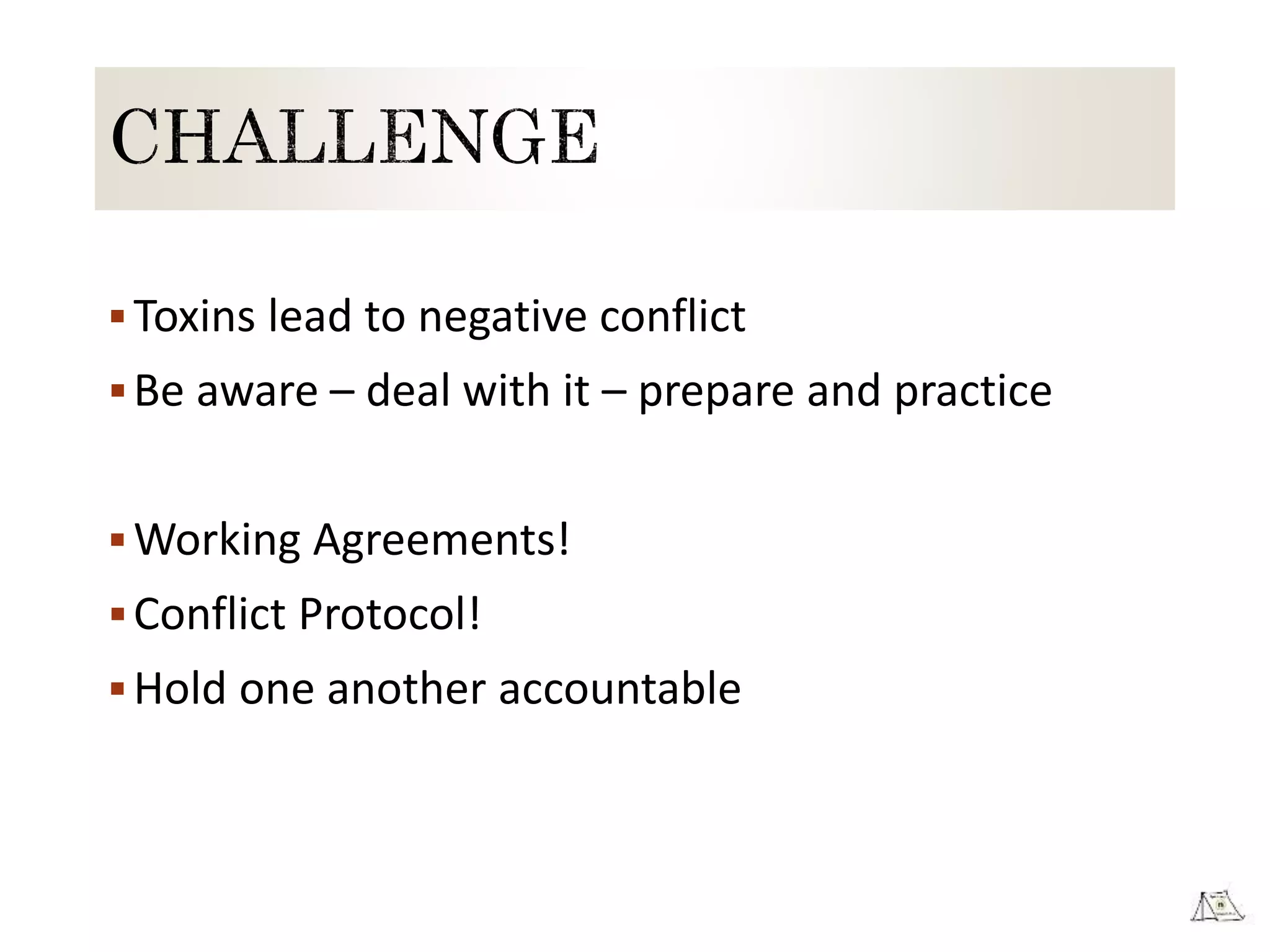
Toxins lead to negative conflict
Be aware – deal with it – prepare and practice
Working Agreements!
Conflict Protocol!
Hold one another accountable
Agile camp2016 team toxins

Agile camp2016 team toxins

  • 1.
  • 2.
    If left unchecked,team toxins create negative conflict Prepare yourself Be aware
  • 3.
    Stonewalling Defensiveness Blaming Contempt  Harsh Start-up Bullying  Domination  Personal Attacks  Sarcasm  Demeaning gossip  Eye Rolling  Undermining  Withdrawal  Disengagement  Avoidance  Not open to influence  Refusal to take responsibility  Not supportive or safe
  • 4.
    Group Activity Write downyour “Go-To” toxin on the provided name tags Wear it proudly  Everyone get up and introduce yourself
  • 5.
    Remember… Toxins are NORMAL! Toxinsare never an excuse to tolerate discrimination! Diagnose yourself, NOT others.
  • 6.
    Stonewalling Defensiveness Blaming Contempt  Curiosity  Softstart up  Personal development and coaching  Emotional Intelligence  Respectful communication  Transparency  Mediation  Professional Coaching  Curiosity  2% Truth
  • 7.
    Blaming leads toDefensiveness Blaming leads to more Blame Lots of toxic behaviors without intervention will lead to more toxins! It will build into conflict
  • 8.
    Frustration Lack of power(real or perceived) Inability to affect change Lack of safety
  • 9.
    Work on yourself– personal mastery is a journey Look inward Be respectful Does your team have:  Working Agreements?  Conflict Protocol?
  • 10.
    Team working agreements: What can I be counted on for?  When I assume you are stressed, how would you like for me to ask you about it?  How will I know you’re stuck?
  • 11.
    Conflict Protocol:  Whenconflict occurs, what behaviors do you want to model? Not model?  How do you want to hold each other accountable to the Team Working Agreements?  How do you want it to be when we’re in conflict?  How will we surface conflict?  What do you know about yourself in dealing with conflict?
  • 12.
    Behavior  24 hourrule: address “it” within a day or drop “it”  Let go of old issues or stories or conflict  Depersonalize conflict Culture  Respect each other and different perspectives  Assume positive intent  Use humor when it gets tough or heavy
  • 13.
    Toxins lead tonegative conflict Be aware – deal with it – prepare and practice Working Agreements! Conflict Protocol! Hold one another accountable

Editor's Notes

  • #3 Team toxins can wreak havoc on teams and organizations Awareness is one preemptive way to deal with team conflict Understand what they are Learn how to deal with them
  • #4 Conflict is normal
  • #5 Remember we are human – these behaviors are normal Intro yourself – give an example of how you show a particular behavior
  • #9 Understanding common reasons for toxins may help you step back and wonder what’s really happening We all have different backgrounds, perceptions and ideas Do team members feel “safe” enough to speak out and be heard?
  • #10 Looking Inward… Ask yourself – “How am I reacting?”, “How am I answering?”, “What can I do?”, “Am I being curious?”
  • #13 Depersonalize – keep it about the issue, not the people