


Helping People Take
   Responsibility
   Encouraging Accountability
A sign of wisdom and maturity is when you
 come to terms with the realization that your
decisions cause your Rewards And Consequences.
   You are responsible for your life, and your
 ultimate success depends on the choices you
                    make.

             - Denis Waitley, author and coach.
Case Study
• Sade manages a team of exceptional people, who
  work well together to accomplish the team's
  goals. However, one person, Felix, regularly
  causes problems with the rest of the group.

  For instance, he consistently misses deadlines.
  When asked why, he points the finger at one of
  his teammates, instead of admitting that it was
  his own procrastination that caused him to fail.
• Felix's behavior has a significant negative
  impact on the team. People don't want to
  work with him; and they resent his apathetic
  attitude and his unwillingness to change his
  behavior.

  It can be frustrating to have people like Felix
  on your team. However, there are steps that
  you take to put things right.
What Causes a Lack of
  Responsibility?
Signs and Symptoms
• Lacking interest in their work, and in the well-being of the
  team.
• Blaming others for mistakes and failures.
• Missing deadlines.
• Avoiding challenging tasks and projects; and not taking risks.
• Regularly complaining about unfair treatment by team leaders
  and team members - and engaging in self-pity.
• Avoiding taking initiative, and being dependent on others for
  work, advice, and instructions.
• Lacking trust in team members and leaders.
• Making excuses regularly - they may often say "It's not my
  fault," or, "That's unfair."
Strategies and Tools
Neither of these approaches is ideal
The situation is likely to get worse if you just leave it
alone; while laying people off should be a last
resort, especially if you're dealing with people who have
the potential to be effective team members.

Instead, your aim should be to provide your people with
the skills and resources needed to do their jobs, and then
to create an environment where it's easy for them to take
responsibility for their decisions and actions.

And yes, sometimes you'll need to be firm and
courageous, and sometimes your actions will cause
conflict.
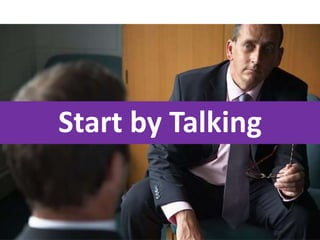
Start by Talking
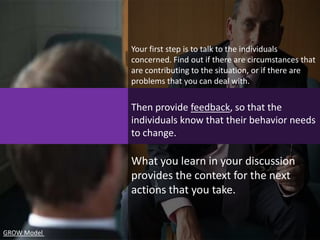
Your first step is to talk to the individuals
             concerned. Find out if there are circumstances that
             are contributing to the situation, or if there are
             problems that you can deal with.

             Then provide feedback, so that the
             individuals know that their behavior needs
             to change.

             What you learn in your discussion
             provides the context for the next
             actions that you take.


GROW Model
GROW Model
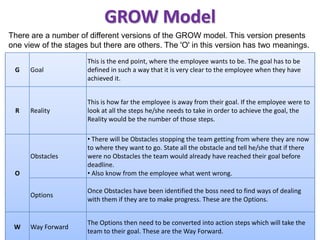
There are a number of different versions of the GROW model. This version presents
one view of the stages but there are others. The 'O' in this version has two meanings.
                      This is the end point, where the employee wants to be. The goal has to be
 G    Goal            defined in such a way that it is very clear to the employee when they have
                      achieved it.


                      This is how far the employee is away from their goal. If the employee were to
 R    Reality         look at all the steps he/she needs to take in order to achieve the goal, the
                      Reality would be the number of those steps.

                      • There will be Obstacles stopping the team getting from where they are now
                      to where they want to go. State all the obstacle and tell he/she that if there
      Obstacles       were no Obstacles the team would already have reached their goal before
                      deadline.
 O                    • Also know from the employee what went wrong.

                      Once Obstacles have been identified the boss need to find ways of dealing
      Options
                      with them if they are to make progress. These are the Options.


                      The Options then need to be converted into action steps which will take the
 W    Way Forward
                      team to their goal. These are the Way Forward.
• Tip:
  Make sure that you have clear, accurate
  examples that you can quote when you
  provide feedback. If you don't, your
  arguments won't stand up, and you'll risk
  leaving the individual feeling victimized.
Ensure Adequate
   Resources
Ensure Adequate Resources
• A sensible early action is to ensure that your
  people have the resources they need to do
  their job. This might include providing
  training, equipment, access to MENTORS and
  COACHES, and suchlike.
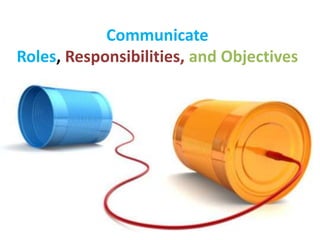
Communicate
Roles, Responsibilities, and Objectives
 Your people also need to know clearly what their job roles and responsibilities are.

 Make sure that you have an up-to-date job description for each team member, and be
as detailed as possible about every responsibility that they have.

 When working with your team on a project, use a Responsibility Assignment Matrix to
help keep assignments and responsibilities clear. You may also want to use a Team Charter
to define everyone's roles and responsibilities within the team.
Re-Engage People
 • This then leads on to re-
   engagement. Think about how
   you, yourself, feel when you're
   doing work that you love or care
   deeply about.

• Your people will be more
  engaged if their work aligns
  with their values. Meet with
  them to find out what these
  are. Then, illustrate how their
  daily tasks and responsibilities
  align with those values.
Help People Take Control
Sometimes, people feel that they have no control over their lives. To them, it doesn't
 matter what they do or how hard they work, nothing makes much of a difference.


• Help them overcome this.
• Help them build their self-confidence.
  Also, remind them of their strengths and past
  successes, and teach them how to think
  positively, instead of engaging in
  damaging, negative self-talk.


 You can also break up any large tasks or projects into smaller goals or steps. A huge
                 project or goal will make people feel overwhelmed
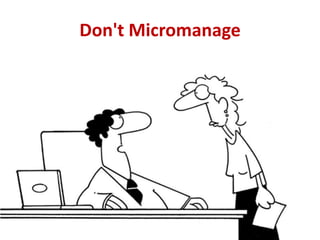
Don't Micromanage
• Look at your own management style. If certain
  team members aren't taking responsibility, it
  could be because you aren't delegating clearly, or
  because you're micromanaging them - if you
  hover over their shoulder and second guess their
  every action, they're going to be reluctant to do
  anything without you in the background.
  So, learn the art of delegation and avoid
  micromanagement. Give your people the
  freedom they need to make their own decisions,
  but be ready to guide them in the right direction
  if required. If they're able to make decisions on
  their own, they'll start to realize that their efforts
  really do make a difference
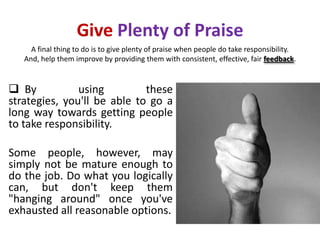
Give Plenty of Praise
     A final thing to do is to give plenty of praise when people do take responsibility.
   And, help them improve by providing them with consistent, effective, fair feedback.


 By           using         these
strategies, you'll be able to go a
long way towards getting people
to take responsibility.

Some people, however, may
simply not be mature enough to
do the job. Do what you logically
can, but don't keep them
"hanging around" once you've
exhausted all reasonable options.
People who don't take responsibility for
their work or actions are likely to have a
negative impact on their team. Look for
apathy,    finger    pointing,     missed
deadlines, or phrases like "It's not my
fault" to spot team members who are
avoiding                   accountability.

To help people take more responsibility
for their work, provide them with the
skills and resources to actually do their
job. Then set up an environment that
makes it easy for them to change, and
help them take responsibility for their
decisions          and           actions.
You can do this by:
• Ensuring adequate resources.
• Communicating roles, responsibilities, and
  objectives.
• Re-engaging people.
• Helping them take control.
• Avoiding micromanagement.
• Giving praise.
THANK YOU

Helping People Take Responsibility

  • 1.
    Helping People Take Responsibility Encouraging Accountability
  • 2.
    A sign ofwisdom and maturity is when you come to terms with the realization that your decisions cause your Rewards And Consequences. You are responsible for your life, and your ultimate success depends on the choices you make. - Denis Waitley, author and coach.
  • 3.
  • 4.
    • Sade managesa team of exceptional people, who work well together to accomplish the team's goals. However, one person, Felix, regularly causes problems with the rest of the group. For instance, he consistently misses deadlines. When asked why, he points the finger at one of his teammates, instead of admitting that it was his own procrastination that caused him to fail.
  • 5.
    • Felix's behaviorhas a significant negative impact on the team. People don't want to work with him; and they resent his apathetic attitude and his unwillingness to change his behavior. It can be frustrating to have people like Felix on your team. However, there are steps that you take to put things right.
  • 6.
    What Causes aLack of Responsibility?
  • 7.
    Signs and Symptoms •Lacking interest in their work, and in the well-being of the team. • Blaming others for mistakes and failures. • Missing deadlines. • Avoiding challenging tasks and projects; and not taking risks. • Regularly complaining about unfair treatment by team leaders and team members - and engaging in self-pity. • Avoiding taking initiative, and being dependent on others for work, advice, and instructions. • Lacking trust in team members and leaders. • Making excuses regularly - they may often say "It's not my fault," or, "That's unfair."
  • 8.
  • 9.
    Neither of theseapproaches is ideal The situation is likely to get worse if you just leave it alone; while laying people off should be a last resort, especially if you're dealing with people who have the potential to be effective team members. Instead, your aim should be to provide your people with the skills and resources needed to do their jobs, and then to create an environment where it's easy for them to take responsibility for their decisions and actions. And yes, sometimes you'll need to be firm and courageous, and sometimes your actions will cause conflict.
  • 10.
  • 11.
    Your first stepis to talk to the individuals concerned. Find out if there are circumstances that are contributing to the situation, or if there are problems that you can deal with. Then provide feedback, so that the individuals know that their behavior needs to change. What you learn in your discussion provides the context for the next actions that you take. GROW Model
  • 12.
    GROW Model There area number of different versions of the GROW model. This version presents one view of the stages but there are others. The 'O' in this version has two meanings. This is the end point, where the employee wants to be. The goal has to be G Goal defined in such a way that it is very clear to the employee when they have achieved it. This is how far the employee is away from their goal. If the employee were to R Reality look at all the steps he/she needs to take in order to achieve the goal, the Reality would be the number of those steps. • There will be Obstacles stopping the team getting from where they are now to where they want to go. State all the obstacle and tell he/she that if there Obstacles were no Obstacles the team would already have reached their goal before deadline. O • Also know from the employee what went wrong. Once Obstacles have been identified the boss need to find ways of dealing Options with them if they are to make progress. These are the Options. The Options then need to be converted into action steps which will take the W Way Forward team to their goal. These are the Way Forward.
  • 13.
    • Tip: Make sure that you have clear, accurate examples that you can quote when you provide feedback. If you don't, your arguments won't stand up, and you'll risk leaving the individual feeling victimized.
  • 14.
  • 15.
    Ensure Adequate Resources •A sensible early action is to ensure that your people have the resources they need to do their job. This might include providing training, equipment, access to MENTORS and COACHES, and suchlike.
  • 16.
  • 17.
     Your peoplealso need to know clearly what their job roles and responsibilities are.  Make sure that you have an up-to-date job description for each team member, and be as detailed as possible about every responsibility that they have.  When working with your team on a project, use a Responsibility Assignment Matrix to help keep assignments and responsibilities clear. You may also want to use a Team Charter to define everyone's roles and responsibilities within the team.
  • 18.
    Re-Engage People •This then leads on to re- engagement. Think about how you, yourself, feel when you're doing work that you love or care deeply about. • Your people will be more engaged if their work aligns with their values. Meet with them to find out what these are. Then, illustrate how their daily tasks and responsibilities align with those values.
  • 19.
    Help People TakeControl Sometimes, people feel that they have no control over their lives. To them, it doesn't matter what they do or how hard they work, nothing makes much of a difference. • Help them overcome this. • Help them build their self-confidence. Also, remind them of their strengths and past successes, and teach them how to think positively, instead of engaging in damaging, negative self-talk. You can also break up any large tasks or projects into smaller goals or steps. A huge project or goal will make people feel overwhelmed
  • 20.
  • 21.
    • Look atyour own management style. If certain team members aren't taking responsibility, it could be because you aren't delegating clearly, or because you're micromanaging them - if you hover over their shoulder and second guess their every action, they're going to be reluctant to do anything without you in the background. So, learn the art of delegation and avoid micromanagement. Give your people the freedom they need to make their own decisions, but be ready to guide them in the right direction if required. If they're able to make decisions on their own, they'll start to realize that their efforts really do make a difference
  • 22.
    Give Plenty ofPraise A final thing to do is to give plenty of praise when people do take responsibility. And, help them improve by providing them with consistent, effective, fair feedback.  By using these strategies, you'll be able to go a long way towards getting people to take responsibility. Some people, however, may simply not be mature enough to do the job. Do what you logically can, but don't keep them "hanging around" once you've exhausted all reasonable options.
  • 23.
    People who don'ttake responsibility for their work or actions are likely to have a negative impact on their team. Look for apathy, finger pointing, missed deadlines, or phrases like "It's not my fault" to spot team members who are avoiding accountability. To help people take more responsibility for their work, provide them with the skills and resources to actually do their job. Then set up an environment that makes it easy for them to change, and help them take responsibility for their decisions and actions.
  • 24.
    You can dothis by: • Ensuring adequate resources. • Communicating roles, responsibilities, and objectives. • Re-engaging people. • Helping them take control. • Avoiding micromanagement. • Giving praise.
  • 25.

Editor's Notes

  • #7 People duck responsibility for reasons ranging from simple laziness or a fear of failure, through to a sense of feeling overwhelmed by the scale of a problem or a situation.Whatever the reason, if people fail to take responsibility, they'll fail in their jobs, they'll fail their teams, and they'll fail to grow as individuals. All of this makes it important to address the issue.
  • #9 When team members don't take responsibility for their actions, some managers may just hope that the problem goes away. Others may try to remove these people from their teams completely. Neither of these approaches is ideal - the situation is likely to get worse if you just leave it alone; while laying people off should be a last resort, especially if you're dealing with people who have the potential to be effective team members. Instead, your aim should be to provide your people with the skills and resources needed to do their jobs, and then to create an environment where it's easy for them to take responsibility for their decisions and actions. And yes, sometimes you'll need to be firm and courageous, and sometimes your actions will cause conflict. We'll now explore a variety of strategies and tools that you can use to get people to take responsibility.
  • #16 This is a key step in helping people take responsibility for their work - if they don't have the "tools" needed to do their jobs, it's easy to shun responsibility!
  • #18 Sometimes, people don't take responsibility because they feel apathetic about their work. They can't see how their efforts tie into the "bigger picture." So, make sure that they understand how their work ties into the larger goals of the organization. Highlight the importance of what they're doing, and also paint a picture that details the unpleasant direct and indirect consequences that happen when they don't do their work properly.
  • #19 Team members could also be disengaged or dissatisfied because they're not in the right role. Take some time to discover their strengths and weaknesses, and analyze whether or not they're using their strengths. If not, they might be better suited in a different role. (You can also use job crafting techniques to reshape their role to fit them better.)
  • #21 In business management, micromanagement is a management style where a manager closely observes or controls the work of his or her subordinates or employees. Micromanagement generally has a negative connotation.