July 12 2016
WII-FM
ļ‚§Think about …
ļ‚§ The most important thing I want to know is …
ļ‚§ I want to know how to do …
ļ‚§ How do we deal with …
ļ‚§ What if we could …
WHAT IS AGILE?
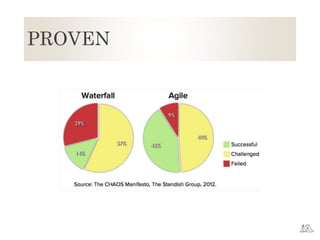
PROVEN
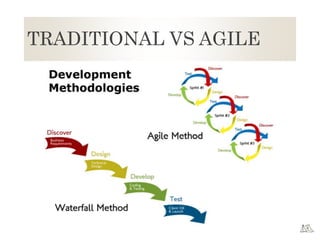
TRADITIONAL VS AGILE
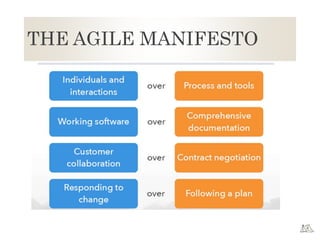
THE AGILE MANIFESTO
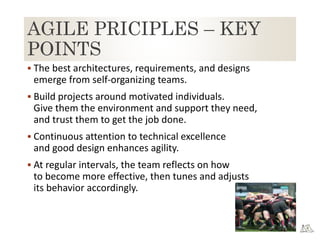
AGILE PRICIPLES – KEY
POINTS
ļ‚§ The best architectures, requirements, and designs
emerge from self-organizing teams.
ļ‚§ Build projects around motivated individuals.
Give them the environment and support they need,
and trust them to get the job done.
ļ‚§ Continuous attention to technical excellence
and good design enhances agility.
ļ‚§ At regular intervals, the team reflects on how
to become more effective, then tunes and adjusts
its behavior accordingly.
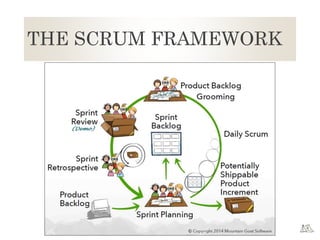
THE SCRUM FRAMEWORK
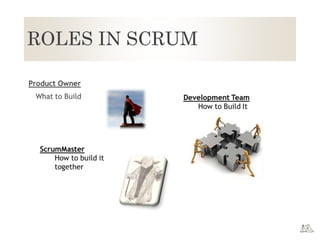
ROLES IN SCRUM
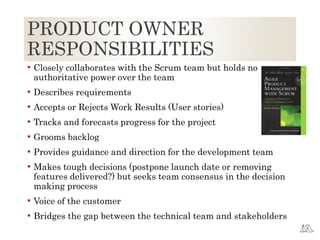
PRODUCT OWNER
RESPONSIBILITIES
ļ‚§ Closely collaborates with the Scrum team but holds no
authoritative power over the team
ļ‚§ Describes requirements
ļ‚§ Accepts or Rejects Work Results (User stories)
ļ‚§ Tracks and forecasts progress for the project
ļ‚§ Grooms backlog
ļ‚§ Provides guidance and direction for the development team
ļ‚§ Makes tough decisions (postpone launch date or removing
features delivered?) but seeks team consensus in the decision
making process
ļ‚§ Voice of the customer
ļ‚§ Bridges the gap between the technical team and stakeholders
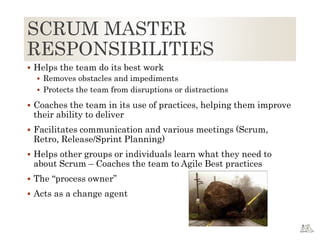
SCRUM MASTER
RESPONSIBILITIES
ļ‚§ Helps the team do its best work
ļ‚§ Removes obstacles and impediments
ļ‚§ Protects the team from disruptions or distractions
ļ‚§ Coaches the team in its use of practices, helping them improve
their ability to deliver
ļ‚§ Facilitates communication and various meetings (Scrum,
Retro, Release/Sprint Planning)
ļ‚§ Helps other groups or individuals learn what they need to
about Scrum – Coaches the team to Agile Best practices
ļ‚§ The ā€œprocess ownerā€
ļ‚§ Acts as a change agent
THE DEVELOPMENT TEAM
ļ‚§ Whoever is needed to complete the product increment
ļ‚§ Developers, Analysts, Designers
ļ‚§ QA/BA
ļ‚§ DBA
ļ‚§ Architects
ļ‚§ Business people, Marketing, Tech Support, Facilities... You
get the point.
ļ‚§ AND Product Owner
DEVELOPMENT TEAM
ACTIVITIES
ļ‚§ Commit to the Sprint
ļ‚§ Own the estimates and tasks
ļ‚§ Plan their own work (tasks, dependencies)
ļ‚§ Have the authority to do whatever is needed to meet their
commitment
ļ‚§ Rely on the Scrum Master to help remove obstacles
ļ‚§ Rely on the Product Owner to explain the product features
MAKE UP OF
DEVELOPMENT TEAMS
ļ‚§ Should not exceed 9 people.
ļ‚§ Preferably co-located, go fast through face-to-face
communication
ļ‚§ Preferably cross-functional with flexible roles so that the team
organizes around the tasks
ļ‚§ Cooperative development – role sharing
ļ‚§ Scrum scales by adding teams, not increasing team size
SELF-ORGANIZING TEAMS
ļ‚§ Team makes decisions collaboratively, cooperatively, role-
sharing and fully committed to the Sprint
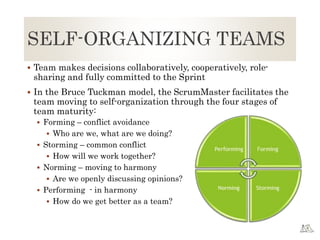
ļ‚§ In the Bruce Tuckman model, the ScrumMaster facilitates the
team moving to self-organization through the four stages of
team maturity:
ļ‚§ Forming – conflict avoidance
ļ‚§ Who are we, what are we doing?
ļ‚§ Storming – common conflict
ļ‚§ How will we work together?
ļ‚§ Norming – moving to harmony
ļ‚§ Are we openly discussing opinions?
ļ‚§ Performing - in harmony
ļ‚§ How do we get better as a team?
INDIVIDUAL BEHAVIORS
Individual Accountability is the KEY to Joint Accountability.
ļ‚§ PARTICIPATE: Speak openly in meetings.
ļ‚§ HONESTY: Call it like you see it. Be honest and open.
ļ‚§ RESPECT: Be respectful, but don’t avoid the truth.
ļ‚§ Admit when you need help
ļ‚§ COURAGE: Surface mistakes w/o fear of embarrassment or
embarrassing others.
ļ‚§ If you don’t understand something, SAY SOMETHING.
ļ‚§ COMMITMENT: Hold yourself and others accountable -
TALK It Out.
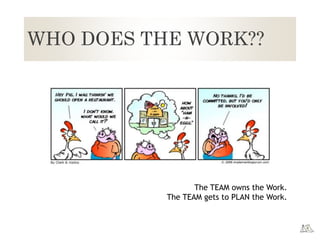
WHO DOES THE WORK??
The TEAM owns the Work.
The TEAM gets to PLAN the Work.
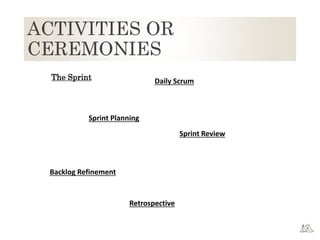
ACTIVITIES OR
CEREMONIES
The Sprint
Sprint Planning
Sprint Review
Retrospective
Backlog Refinement
Daily Scrum
RELEASE PLANNING OR
STORY MAPPING
ļ‚§ What is it?
ļ‚§ Epic User stories are created and discussed
ļ‚§ Team discusses how many sprints it will take to complete this work
ļ‚§ Who Attends?
ļ‚§ Product Owner
ļ‚§ Scrum Master
ļ‚§ Dev Team
ļ‚§ Outputs
ļ‚§ Organized release backlog and roadmap of the next release
BACKLOG REFINEMENT
ļ‚§ What is it?
ļ‚§ Meeting to discuss the top backlog items to prepare for the next 2-3
sprints
ļ‚§ Discuss the UAC
ļ‚§ Point or size stories
ļ‚§ Who Attends?
ļ‚§ Product Owner
ļ‚§ Scrum Master
ļ‚§ Dev Team
ļ‚§ Outputs
ļ‚§ A groomed backlog to pull in enough work for the next sprint
SPRINT PLANNING
ļ‚§ What is it?
ļ‚§ PO’s vision for the sprint
ļ‚§ Describes the highest priority features to the team
ļ‚§ Determines the work for the upcoming sprint.
ļ‚§ Items are taken off of the product backlog according to priority and
broken down into manageable tasks.
ļ‚§ Who Attends?
ļ‚§ Product Owner
ļ‚§ Scrum Master
ļ‚§ DevTeam
ļ‚§ Outputs
ļ‚§ A sprint goal
ļ‚§ A sprint backlog (includes the list of tasks necessary to delivering
the product backlog items
DAILY SCRUM
ļ‚§ What is it?
ļ‚§ Daily meeting held by the team
ļ‚§ Not a status or a problem solving meeting
ļ‚§ The team reports to each other on what they accomplish
ļ‚§ Who Attends?
ļ‚§ Product Owner
ļ‚§ Scrum Master
ļ‚§ Dev Team
ļ‚§ Other(s) outside of the Dev team can attend
ļ‚§ Outputs
ļ‚§ None unless there are roadblocks that the Scrum Master needs to
help remove
SPRINT REVIEW / DEMO
ļ‚§ What is it?
ļ‚§ The Scrum team demonstrates what they accomplished during the
sprint
ļ‚§ Very informal
ļ‚§ Natural result of the sprint
ļ‚§ PO accepts or rejects each product backlog item
ļ‚§ Stakeholders/business and PO provide feedback
ļ‚§ Who Attends?
ļ‚§ Dev team
ļ‚§ Scrum Master
ļ‚§ Product Owner
ļ‚§ Customers
ļ‚§ Stakeholders
ļ‚§ Outputs
ļ‚§ Accepted work for the sprint
RETROSPECTIVE
ļ‚§ What is it?
ļ‚§ A retrospective is an opportunity to learn and improve. It is time
set aside – outside of day-to-day routine – to reflect on past events
and behaviors.
ļ‚§ Who Attends?
ļ‚§ Product Owner
ļ‚§ Scrum Master
ļ‚§ Dev Team
ļ‚§ Outputs
ļ‚§ Top Items to improve for the next sprint
ļ‚§ Action Items that come out of the meeting
WHAT IS A USER STORY?
ļ‚§ Describes requirements in vertical slices
ļ‚§ Independent
ļ‚§ Negotiable
ļ‚§ Valuable
ļ‚§ Estimable
ļ‚§ Sized Appropriately
ļ‚§ Testable
ļ‚§ Template: ā€œAs a ____ I need _____ so that _______ā€
ļ‚§ Ex: As a vacation planner, I want to rebook a past trip so that
I save time booking trips I take
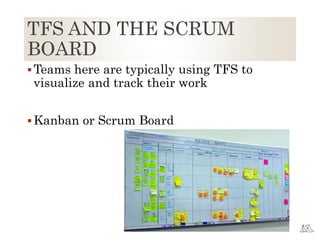
TFS AND THE SCRUM
BOARD
ļ‚§Teams here are typically using TFS to
visualize and track their work
ļ‚§Kanban or Scrum Board
WHAT ELSE?
ļ‚§ Metrics
ļ‚§ Burndowns, burnups, velocity, oh my!
ļ‚§ Terms
ļ‚§ Features, Epics, Stories, Tasks
ļ‚§ Agreements
ļ‚§ Team Agreements
ļ‚§ Conflict Protocol
ļ‚§ Etc.
Agile camp2016 agile101

Agile camp2016 agile101

  • 1.
  • 2.
    WII-FM ļ‚§Think about … ļ‚§The most important thing I want to know is … ļ‚§ I want to know how to do … ļ‚§ How do we deal with … ļ‚§ What if we could …
  • 3.
  • 4.
  • 5.
  • 6.
  • 7.
    AGILE PRICIPLES –KEY POINTS ļ‚§ The best architectures, requirements, and designs emerge from self-organizing teams. ļ‚§ Build projects around motivated individuals. Give them the environment and support they need, and trust them to get the job done. ļ‚§ Continuous attention to technical excellence and good design enhances agility. ļ‚§ At regular intervals, the team reflects on how to become more effective, then tunes and adjusts its behavior accordingly.
  • 8.
  • 9.
  • 10.
    PRODUCT OWNER RESPONSIBILITIES ļ‚§ Closelycollaborates with the Scrum team but holds no authoritative power over the team ļ‚§ Describes requirements ļ‚§ Accepts or Rejects Work Results (User stories) ļ‚§ Tracks and forecasts progress for the project ļ‚§ Grooms backlog ļ‚§ Provides guidance and direction for the development team ļ‚§ Makes tough decisions (postpone launch date or removing features delivered?) but seeks team consensus in the decision making process ļ‚§ Voice of the customer ļ‚§ Bridges the gap between the technical team and stakeholders
  • 11.
    SCRUM MASTER RESPONSIBILITIES ļ‚§ Helpsthe team do its best work ļ‚§ Removes obstacles and impediments ļ‚§ Protects the team from disruptions or distractions ļ‚§ Coaches the team in its use of practices, helping them improve their ability to deliver ļ‚§ Facilitates communication and various meetings (Scrum, Retro, Release/Sprint Planning) ļ‚§ Helps other groups or individuals learn what they need to about Scrum – Coaches the team to Agile Best practices ļ‚§ The ā€œprocess ownerā€ ļ‚§ Acts as a change agent
  • 12.
    THE DEVELOPMENT TEAM ļ‚§Whoever is needed to complete the product increment ļ‚§ Developers, Analysts, Designers ļ‚§ QA/BA ļ‚§ DBA ļ‚§ Architects ļ‚§ Business people, Marketing, Tech Support, Facilities... You get the point. ļ‚§ AND Product Owner
  • 13.
    DEVELOPMENT TEAM ACTIVITIES ļ‚§ Committo the Sprint ļ‚§ Own the estimates and tasks ļ‚§ Plan their own work (tasks, dependencies) ļ‚§ Have the authority to do whatever is needed to meet their commitment ļ‚§ Rely on the Scrum Master to help remove obstacles ļ‚§ Rely on the Product Owner to explain the product features
  • 14.
    MAKE UP OF DEVELOPMENTTEAMS ļ‚§ Should not exceed 9 people. ļ‚§ Preferably co-located, go fast through face-to-face communication ļ‚§ Preferably cross-functional with flexible roles so that the team organizes around the tasks ļ‚§ Cooperative development – role sharing ļ‚§ Scrum scales by adding teams, not increasing team size
  • 15.
    SELF-ORGANIZING TEAMS ļ‚§ Teammakes decisions collaboratively, cooperatively, role- sharing and fully committed to the Sprint ļ‚§ In the Bruce Tuckman model, the ScrumMaster facilitates the team moving to self-organization through the four stages of team maturity: ļ‚§ Forming – conflict avoidance ļ‚§ Who are we, what are we doing? ļ‚§ Storming – common conflict ļ‚§ How will we work together? ļ‚§ Norming – moving to harmony ļ‚§ Are we openly discussing opinions? ļ‚§ Performing - in harmony ļ‚§ How do we get better as a team?
  • 16.
    INDIVIDUAL BEHAVIORS Individual Accountabilityis the KEY to Joint Accountability. ļ‚§ PARTICIPATE: Speak openly in meetings. ļ‚§ HONESTY: Call it like you see it. Be honest and open. ļ‚§ RESPECT: Be respectful, but don’t avoid the truth. ļ‚§ Admit when you need help ļ‚§ COURAGE: Surface mistakes w/o fear of embarrassment or embarrassing others. ļ‚§ If you don’t understand something, SAY SOMETHING. ļ‚§ COMMITMENT: Hold yourself and others accountable - TALK It Out.
  • 17.
    WHO DOES THEWORK?? The TEAM owns the Work. The TEAM gets to PLAN the Work.
  • 18.
    ACTIVITIES OR CEREMONIES The Sprint SprintPlanning Sprint Review Retrospective Backlog Refinement Daily Scrum
  • 19.
    RELEASE PLANNING OR STORYMAPPING ļ‚§ What is it? ļ‚§ Epic User stories are created and discussed ļ‚§ Team discusses how many sprints it will take to complete this work ļ‚§ Who Attends? ļ‚§ Product Owner ļ‚§ Scrum Master ļ‚§ Dev Team ļ‚§ Outputs ļ‚§ Organized release backlog and roadmap of the next release
  • 20.
    BACKLOG REFINEMENT ļ‚§ Whatis it? ļ‚§ Meeting to discuss the top backlog items to prepare for the next 2-3 sprints ļ‚§ Discuss the UAC ļ‚§ Point or size stories ļ‚§ Who Attends? ļ‚§ Product Owner ļ‚§ Scrum Master ļ‚§ Dev Team ļ‚§ Outputs ļ‚§ A groomed backlog to pull in enough work for the next sprint
  • 21.
    SPRINT PLANNING ļ‚§ Whatis it? ļ‚§ PO’s vision for the sprint ļ‚§ Describes the highest priority features to the team ļ‚§ Determines the work for the upcoming sprint. ļ‚§ Items are taken off of the product backlog according to priority and broken down into manageable tasks. ļ‚§ Who Attends? ļ‚§ Product Owner ļ‚§ Scrum Master ļ‚§ DevTeam ļ‚§ Outputs ļ‚§ A sprint goal ļ‚§ A sprint backlog (includes the list of tasks necessary to delivering the product backlog items
  • 22.
    DAILY SCRUM ļ‚§ Whatis it? ļ‚§ Daily meeting held by the team ļ‚§ Not a status or a problem solving meeting ļ‚§ The team reports to each other on what they accomplish ļ‚§ Who Attends? ļ‚§ Product Owner ļ‚§ Scrum Master ļ‚§ Dev Team ļ‚§ Other(s) outside of the Dev team can attend ļ‚§ Outputs ļ‚§ None unless there are roadblocks that the Scrum Master needs to help remove
  • 23.
    SPRINT REVIEW /DEMO ļ‚§ What is it? ļ‚§ The Scrum team demonstrates what they accomplished during the sprint ļ‚§ Very informal ļ‚§ Natural result of the sprint ļ‚§ PO accepts or rejects each product backlog item ļ‚§ Stakeholders/business and PO provide feedback ļ‚§ Who Attends? ļ‚§ Dev team ļ‚§ Scrum Master ļ‚§ Product Owner ļ‚§ Customers ļ‚§ Stakeholders ļ‚§ Outputs ļ‚§ Accepted work for the sprint
  • 24.
    RETROSPECTIVE ļ‚§ What isit? ļ‚§ A retrospective is an opportunity to learn and improve. It is time set aside – outside of day-to-day routine – to reflect on past events and behaviors. ļ‚§ Who Attends? ļ‚§ Product Owner ļ‚§ Scrum Master ļ‚§ Dev Team ļ‚§ Outputs ļ‚§ Top Items to improve for the next sprint ļ‚§ Action Items that come out of the meeting
  • 25.
    WHAT IS AUSER STORY? ļ‚§ Describes requirements in vertical slices ļ‚§ Independent ļ‚§ Negotiable ļ‚§ Valuable ļ‚§ Estimable ļ‚§ Sized Appropriately ļ‚§ Testable ļ‚§ Template: ā€œAs a ____ I need _____ so that _______ā€ ļ‚§ Ex: As a vacation planner, I want to rebook a past trip so that I save time booking trips I take
  • 26.
    TFS AND THESCRUM BOARD ļ‚§Teams here are typically using TFS to visualize and track their work ļ‚§Kanban or Scrum Board
  • 27.
    WHAT ELSE? ļ‚§ Metrics ļ‚§Burndowns, burnups, velocity, oh my! ļ‚§ Terms ļ‚§ Features, Epics, Stories, Tasks ļ‚§ Agreements ļ‚§ Team Agreements ļ‚§ Conflict Protocol ļ‚§ Etc.

Editor's Notes

  • #3Ā Write down on stickies provided and post on the board
  • #4Ā What does it mean to ā€œdoā€ Agile or ā€œbeā€ agile? Is it different type of work?
  • #5Ā This study was conducted based on projects executed from 2002 to 2012. A successful project is defined as ā€œon time, on budget, and with all planned features.ā€ Why do you think it is that agile projects are 3x more successful?
  • #7Ā Drafted in 2001 Representatives from Extreme Programming, SCRUM, DSDM, etc…
  • #8Ā There are 12 principles – take a look at the AgileManifesto.org
  • #9Ā Focusing on Scrum since majority of our teams employ scrum
  • #26Ā INVEST Why is this format for user stories ideal? Who uses it What they need (specifically) Reason or the benefit or the value to the customer User Acceptance Criteria It’s the boundaries… how do we know when we are done with the thing?