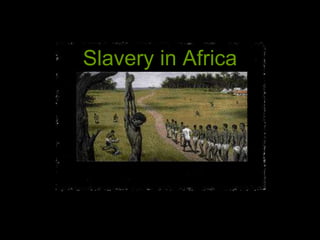
Slavery in Africa
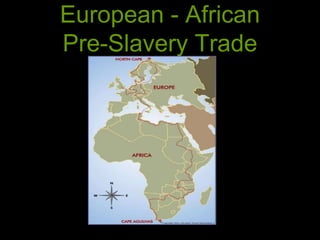
European - African
Pre-Slavery Trade
European Background
• Portuguese started African slave trade in
1441
• First Africans in Hispanola in 1505
• 1450-1850 ~12 million Africans sent to
Americas
Why Africans?
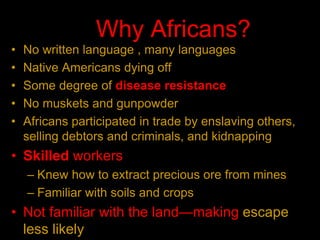
• No written language , many languages
• Native Americans dying off
• Some degree of disease resistance
• No muskets and gunpowder
• Africans participated in trade by enslaving others,
selling debtors and criminals, and kidnapping
• Skilled workers
– Knew how to extract precious ore from mines
– Familiar with soils and crops
• Not familiar with the land—making escape
less likely
How to Get Slaves?
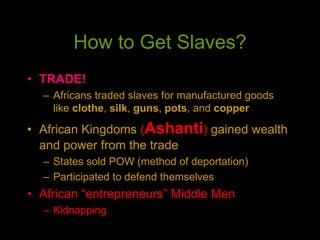
• TRADE!
– Africans traded slaves for manufactured goods
like clothe, silk, guns, pots, and copper
• African Kingdoms (Ashanti) gained wealth
and power from the trade
– States sold POW (method of deportation)
– Participated to defend themselves
• African “entrepreneurs” Middle Men
– Kidnapping
Capture
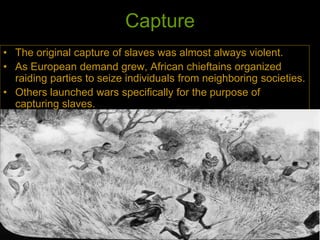
• The original capture of slaves was almost always violent.
• As European demand grew, African chieftains organized
raiding parties to seize individuals from neighboring societies.
• Others launched wars specifically for the purpose of
capturing slaves.
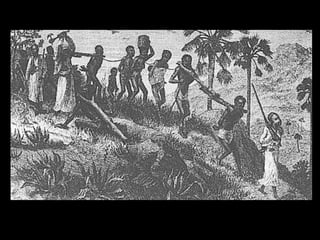
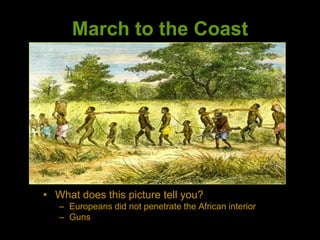
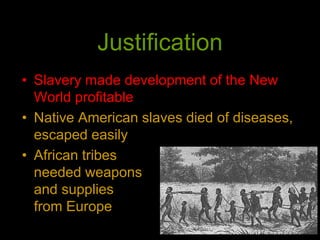
• What does this picture tell you?
– Europeans did not penetrate the African interior
– Guns
March to the Coast
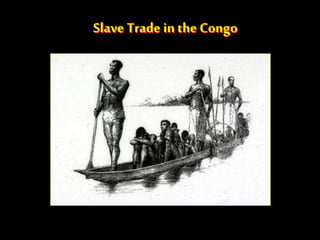
Slave Trade in the Congo
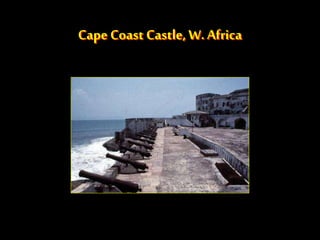
Cape Coast Castle, W. Africa
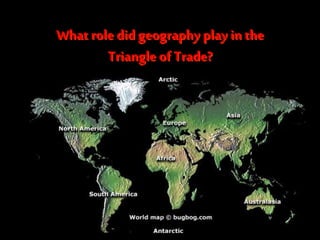
What role did geography play in the
Triangle of Trade?
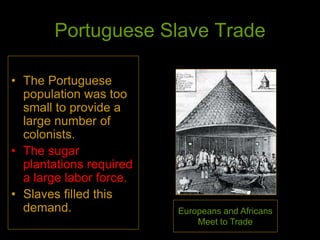
Portuguese Slave Trade
• The Portuguese
population was too
small to provide a
large number of
colonists.
• The sugar
plantations required
a large labor force.
• Slaves filled this
demand. Europeans and Africans
Meet to Trade
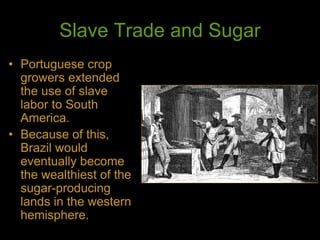
Slave Trade and Sugar
• Portuguese crop
growers extended
the use of slave
labor to South
America.
• Because of this,
Brazil would
eventually become
the wealthiest of the
sugar-producing
lands in the western
hemisphere.
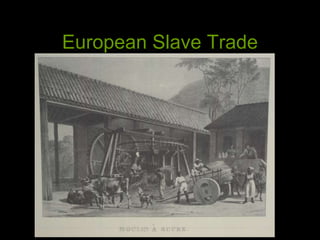
European Slave Trade
Plantations
• After crossing the Atlantic, most African
slaves went to plantations in the tropical or
subtropical regions of the western
hemisphere.
• The first was established by the Spanish on
Hispaniola in 1516.
• Originally the predominant crop was sugar. In
addition to sugar, plantations produced crops
like tobacco, indigo, and cotton.
• In the 1530s Portuguese began organizing
plantations in Brazil, and Brazil became the
world’s leading supplier of sugar.
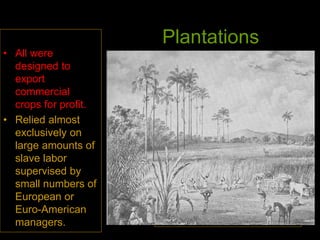
Plantations
• All were
designed to
export
commercial
crops for profit.
• Relied almost
exclusively on
large amounts of
slave labor
supervised by
small numbers of
European or
Euro-American
managers.
Brazilian sugar mill in the 1830s
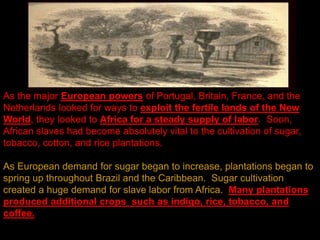
As the major European powers of Portugal, Britain, France, and the
Netherlands looked for ways to exploit the fertile lands of the New
World, they looked to Africa for a steady supply of labor. Soon,
African slaves had become absolutely vital to the cultivation of sugar,
tobacco, cotton, and rice plantations.
As European demand for sugar began to increase, plantations began to
spring up throughout Brazil and the Caribbean. Sugar cultivation
created a huge demand for slave labor from Africa. Many plantations
produced additional crops such as indigo, rice, tobacco, and
coffee.
Justification
• Slavery made development of the New
World profitable
• Native American slaves died of diseases,
escaped easily
• African tribes
needed weapons
and supplies
from Europe
Slavery Expands
• In 1518, the first shipment of slaves went
directly from West Africa to the Caribbean
where the slaves worked on sugar
plantations.
• By the 1520s, the Spanish had introduced
slaves to Mexico, Peru, and Central America
where they worked as farmers and miners.
• By the early 17th century, the British had
introduced slaves to North America.
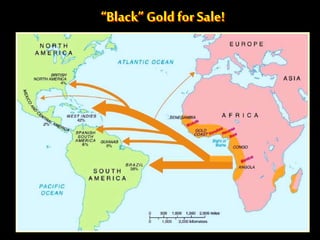
“Black” Gold forSale!
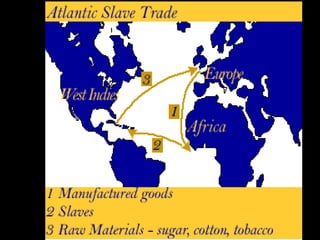
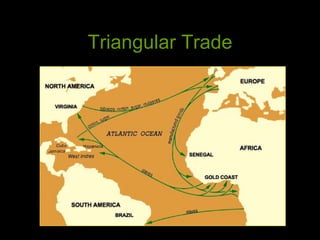
Triangular Trade
Exportation
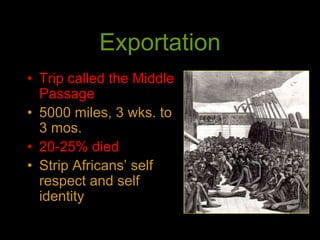
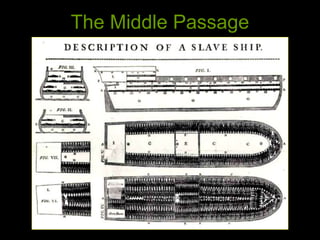
• Trip called the Middle
Passage
• 5000 miles, 3 wks. to
3 mos.
• 20-25% died
• Strip Africans’ self
respect and self
identity
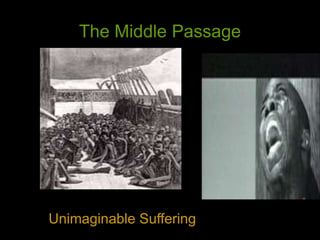
The Middle Passage
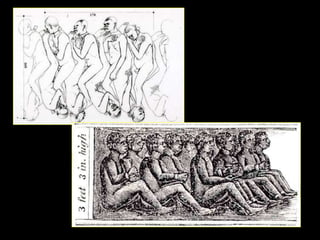
Unimaginable Suffering
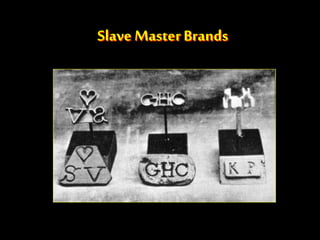
Slave MasterBrands
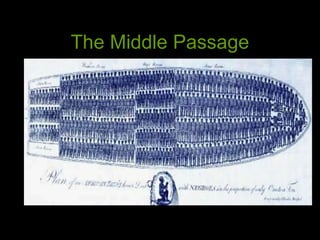
The Middle Passage
The Middle Passage
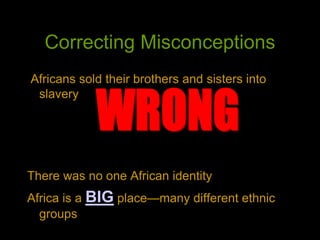
Correcting Misconceptions
Africans sold their brothers and sisters into
slavery
There was no one African identity
Africa is a BIG place—many different ethnic
groups
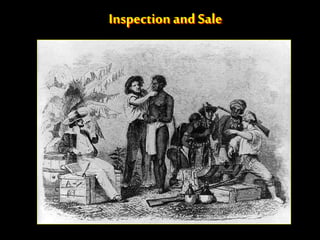
Inspection and Sale
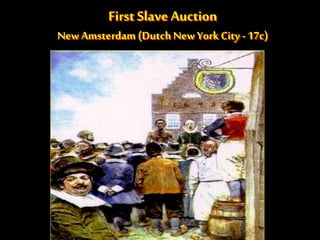
First Slave Auction
New Amsterdam (Dutch New York City - 17c)
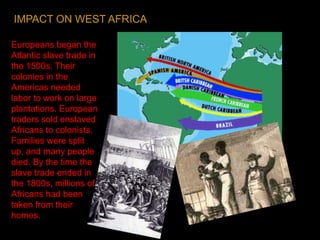
Europeans began the
Atlantic slave trade in
the 1500s. Their
colonies in the
Americas needed
labor to work on large
plantations. European
traders sold enslaved
Africans to colonists.
Families were split
up, and many people
died. By the time the
slave trade ended in
the 1800s, millions of
Africans had been
taken from their
homes.
IMPACT ON WEST AFRICA
Impact of Slave Trade on the Americas
•Cultural Diffusion –
--The slave trade spread ideas
and goods between cultures (cultural diffusion).
--Europeans brought new weapons to Africa.
--Africans brought part of their culture (like music
food, traditions, Language) to the Americas.

African slave trade

  • 2.
  • 3.
  • 4.
    European Background • Portuguesestarted African slave trade in 1441 • First Africans in Hispanola in 1505 • 1450-1850 ~12 million Africans sent to Americas
  • 5.
    Why Africans? • Nowritten language , many languages • Native Americans dying off • Some degree of disease resistance • No muskets and gunpowder • Africans participated in trade by enslaving others, selling debtors and criminals, and kidnapping • Skilled workers – Knew how to extract precious ore from mines – Familiar with soils and crops • Not familiar with the land—making escape less likely
  • 6.
    How to GetSlaves? • TRADE! – Africans traded slaves for manufactured goods like clothe, silk, guns, pots, and copper • African Kingdoms (Ashanti) gained wealth and power from the trade – States sold POW (method of deportation) – Participated to defend themselves • African “entrepreneurs” Middle Men – Kidnapping
  • 7.
    Capture • The originalcapture of slaves was almost always violent. • As European demand grew, African chieftains organized raiding parties to seize individuals from neighboring societies. • Others launched wars specifically for the purpose of capturing slaves.
  • 9.
    • What doesthis picture tell you? – Europeans did not penetrate the African interior – Guns March to the Coast
  • 10.
    Slave Trade inthe Congo
  • 11.
  • 12.
    What role didgeography play in the Triangle of Trade?
  • 13.
    Portuguese Slave Trade •The Portuguese population was too small to provide a large number of colonists. • The sugar plantations required a large labor force. • Slaves filled this demand. Europeans and Africans Meet to Trade
  • 15.
    Slave Trade andSugar • Portuguese crop growers extended the use of slave labor to South America. • Because of this, Brazil would eventually become the wealthiest of the sugar-producing lands in the western hemisphere.
  • 16.
  • 17.
    Plantations • After crossingthe Atlantic, most African slaves went to plantations in the tropical or subtropical regions of the western hemisphere. • The first was established by the Spanish on Hispaniola in 1516. • Originally the predominant crop was sugar. In addition to sugar, plantations produced crops like tobacco, indigo, and cotton. • In the 1530s Portuguese began organizing plantations in Brazil, and Brazil became the world’s leading supplier of sugar.
  • 18.
    Plantations • All were designedto export commercial crops for profit. • Relied almost exclusively on large amounts of slave labor supervised by small numbers of European or Euro-American managers. Brazilian sugar mill in the 1830s
  • 19.
    As the majorEuropean powers of Portugal, Britain, France, and the Netherlands looked for ways to exploit the fertile lands of the New World, they looked to Africa for a steady supply of labor. Soon, African slaves had become absolutely vital to the cultivation of sugar, tobacco, cotton, and rice plantations. As European demand for sugar began to increase, plantations began to spring up throughout Brazil and the Caribbean. Sugar cultivation created a huge demand for slave labor from Africa. Many plantations produced additional crops such as indigo, rice, tobacco, and coffee.
  • 20.
    Justification • Slavery madedevelopment of the New World profitable • Native American slaves died of diseases, escaped easily • African tribes needed weapons and supplies from Europe
  • 21.
    Slavery Expands • In1518, the first shipment of slaves went directly from West Africa to the Caribbean where the slaves worked on sugar plantations. • By the 1520s, the Spanish had introduced slaves to Mexico, Peru, and Central America where they worked as farmers and miners. • By the early 17th century, the British had introduced slaves to North America.
  • 22.
  • 25.
  • 26.
    Exportation • Trip calledthe Middle Passage • 5000 miles, 3 wks. to 3 mos. • 20-25% died • Strip Africans’ self respect and self identity
  • 27.
  • 28.
  • 29.
  • 30.
  • 32.
    Correcting Misconceptions Africans soldtheir brothers and sisters into slavery There was no one African identity Africa is a BIG place—many different ethnic groups
  • 33.
  • 34.
    First Slave Auction NewAmsterdam (Dutch New York City - 17c)
  • 35.
    Europeans began the Atlanticslave trade in the 1500s. Their colonies in the Americas needed labor to work on large plantations. European traders sold enslaved Africans to colonists. Families were split up, and many people died. By the time the slave trade ended in the 1800s, millions of Africans had been taken from their homes. IMPACT ON WEST AFRICA
  • 36.
    Impact of SlaveTrade on the Americas •Cultural Diffusion – --The slave trade spread ideas and goods between cultures (cultural diffusion). --Europeans brought new weapons to Africa. --Africans brought part of their culture (like music food, traditions, Language) to the Americas.

Editor's Notes

  • #3 Slavery was a normal part of Africa’s history dating back before the Pharaohs of Egypt. Remember Moses leading the Jews out of slavery? Slavery was a natural part of African society In West Africa, the system of slavery resembled European feudalism Slaves were used to increase production and population of a region = more power Seen more as a resource, rather than a trade commodity Generally, slaves were well treated While low in hierarchy, active contributor to kingdom or community Some held high positions with significant responsibility Accepted by and lived with non-slaves in family settings
  • #4 Portugal began exploring and trading along the African coast hundreds of years before Columbus sailed to the Americas.
  • #6 Picture: Cape Coast Castle, W. Africa
  • #7 Recognition Network: Use of color and bold text to emphasis main ideas.
  • #9 “Africans became enslaved mainly through four ways: first, criminals sold by the chiefs as punishment; secondly, free Africans obtained from raids by African and a few European gangs; thirdly, domestic slaves resold, and fourthly; prisoners of war." (Adu Boahen (University of Ghana).
  • #10 Illustrations use to show the Brutality of chaining Africans together and marching them to the slave holding cells on the coast—Affective b/c it seeks to evoke an emotional response within students.
  • #12 This was a slave holding fort.
  • #13 Africans on the West Coast because the destination of the slaves was in the West. Had the European powers built colonies in Asia or Australia that needed slave labor, the slaves would have come from the East Coast region.
  • #15 Triangular Trade The triangular trade demonstrates how people were reduced to commodities to be sold. Goods such as metal, cloth, beads and guns went from Britain to Africa, enslaved Africans went to America and the Caribbean, and raw products such as sugar, tobacco and cotton came back to Britain. Show the picture of the sugar nippers.         One of the reasons the trade lasted for so long was because it was incredibly profitable. The British appeared to have an insatiable appetite for luxury goods from the Caribbean, especially sugar and this demand fuelled supply.         Before the twentieth century, sugar came in cones from which chunks would be nipped off and used to sweeten the bitter taste of coffee, chocolate and tea. What people consumed in one part of the world altered forever the lives of those from other parts of the world.
  • #16 Brazilians still speak Portuguese not Spanish.
  • #17 With the arrival of the Europeans the demand for slaves in the Americas increased significantly. As disease reduced the native populations in Spanish conquered territories, the Spanish began relying on imported slaves from Africa.
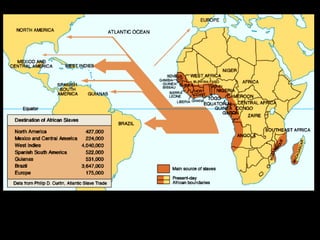
  • #23 The British colonies in North America received only 4% of the total slaves from Africa. Brazil and the West Indies- received about 80% combined.
  • #24 Why is the population of African Americans higher in the US than it is these other places?
  • #25 European products (cloth, firearms) were sent to the coast of Africa for slaves Slaves were carried to the Americas (Middle Passage) Sugar, Tobacco, and other goods were than carried to Europe European products (cloth, firearms) were sent to the coast of Africa for slaves to begin the triangle trade again
  • #29 Slaves were taken from the holding forts,  Chained together in pairs with leg-irons and carried to the ships. Once aboard they were branded with a red-hot iron, like cattle, to show who owned them and their clothes removed.
  • #30 Chained in darkness and filth, seasickness and disease were rife. The heat in the hold could be over 30°c and the slaves would have no access to toilets or washing facilities. So foul was the smell of slave ships that other vessels took care to steer well away from them. In such conditions disease spread, and many slaves died.   
  • #31 Many slave captains were notorious for their cruelty. The actual voyage could take from 6 weeks to three months. It has been estimated that between 9-11 million people were taken from Africa by European traders and landed alive on the other side of the Atlantic. But 1½ million Africans are buried in the Atlantic Ocean between Africa and the Americas. It was reported that schools of sharks would follow the ships waiting for their next meal.

  • #32 Chained in darkness and filth, seasickness and disease were rife. The heat in the hold could be over 30°c and the slaves would have no access to toilets or washing facilities. So foul was the smell of slave ships that other vessels took care to steer well away from them. In such conditions disease spread, and many slaves died.  
  • #34 The slave owners wanted big men that could work hard. The ship captains kept bringing them what they wanted. What effect did this have on African Society, culture, and economy?
  • #35 Wall street gets its name from the fact that it was here where slaves were put on the block to be sold. Neighboring businesses did not approve of the slave trade convinced the city to build a wall around the street so passerby's would not have to witness what was happening.