Adverse Events Following Immunization (AEFI)‏
Learning Objectives Identify common adverse events. Prevent adverse events from occurring in your service delivery area. Manage an adverse event. At the end of the unit, you should be able to:
Contents What is an Adverse Event following Immunization (AEFI)? Types of AEFIs  Elicitation of past history of AEFIs  Minimizing AEFIs in your area Types of AEFIs to report
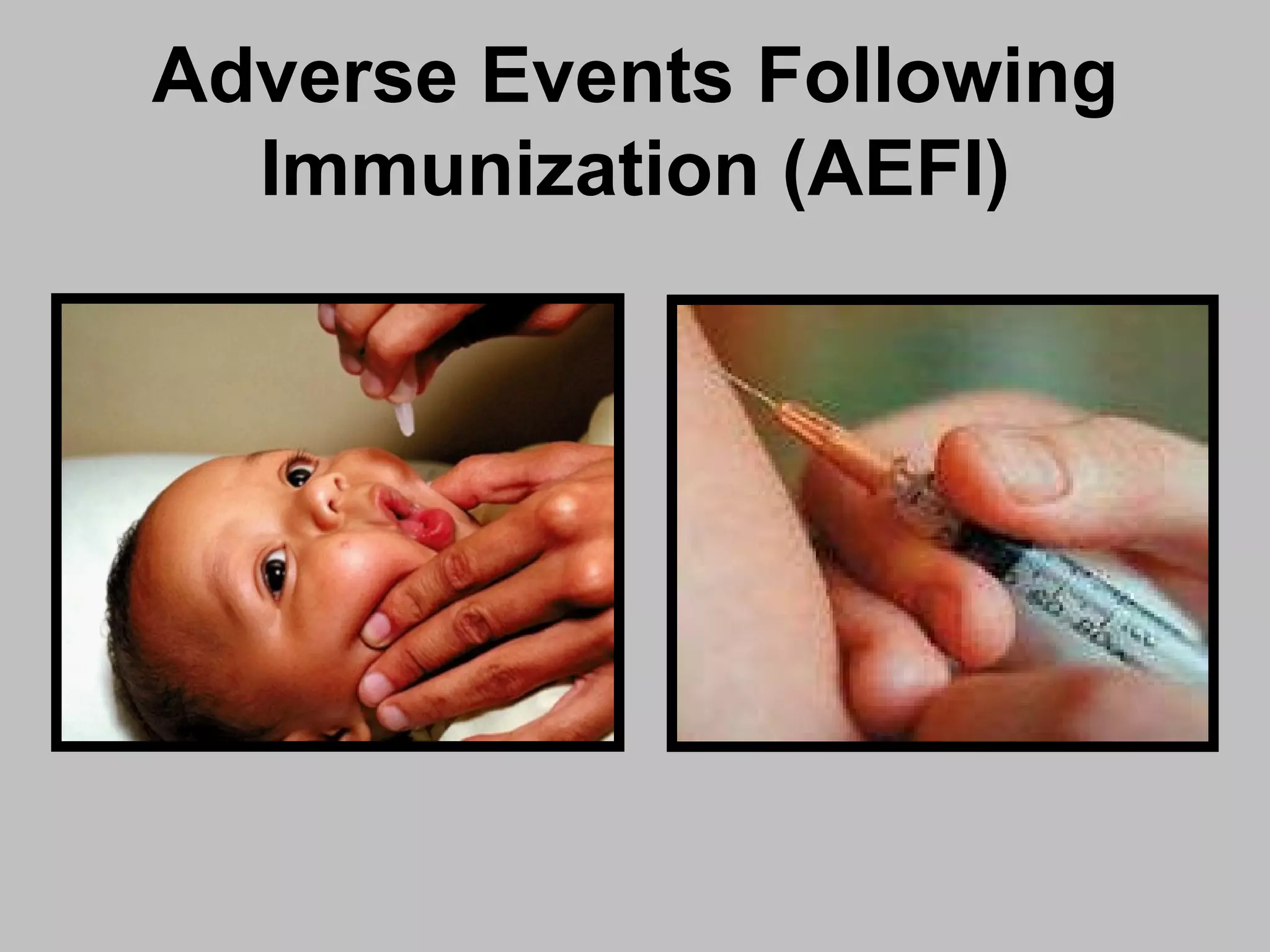
What is an AEFI ? A  medical event  that  takes place after an immunization causes concern is believed to be caused by immunization ranges from mild side effects to life-threatening, but rare, illnesses
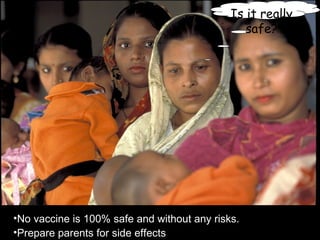
Is it really safe? No vaccine is 100% safe and without any risks. Prepare parents for side effects
Types of AEFIs   Programmatic error Vaccine reaction Coincidence Injection reaction Unknown
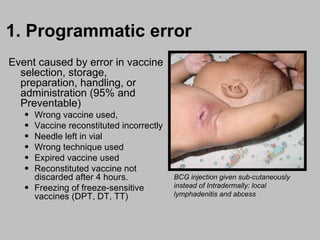
1. Programmatic error Event caused by error in vaccine selection, storage, preparation, handling, or administration (95% and Preventable)‏ Wrong vaccine used, Vaccine reconstituted incorrectly Needle left in vial Wrong technique used Expired vaccine used Reconstituted vaccine not discarded after 4 hours. Freezing of freeze-sensitive vaccines (DPT, DT, TT)‏ BCG injection given sub-cutaneously instead of Intradermally: local lymphadenitis and abcess
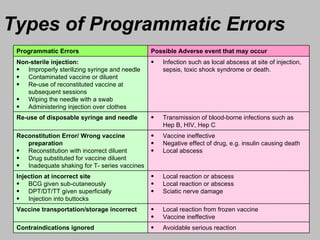
Types of Programmatic Errors Programmatic Errors Possible Adverse event that may occur  Non-sterile injection: Improperly sterilizing syringe and needle Contaminated vaccine or diluent Re-use of reconstituted vaccine at subsequent sessions Wiping the needle with a swab Administering injection over clothes Infection such as local abscess at site of injection, sepsis, toxic shock syndrome or death.  Re-use of disposable syringe and needle Transmission of blood-borne infections such as Hep B, HIV, Hep C Reconstitution Error/ Wrong vaccine preparation Reconstitution with incorrect diluent Drug substituted for vaccine diluent Inadequate shaking for T- series vaccines Vaccine ineffective Negative effect of drug, e.g. insulin causing death Local abscess Injection at incorrect site BCG given sub-cutaneously DPT/DT/TT given superficially Injection into buttocks Local reaction or abscess Local reaction or abscess Sciatic nerve damage Vaccine transportation/storage incorrect Local reaction from frozen vaccine Vaccine ineffective Contraindications ignored Avoidable serious reaction
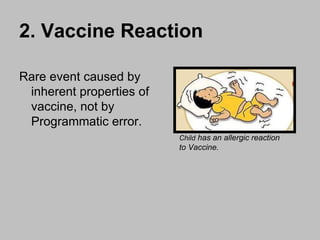
2. Vaccine Reaction   Rare event caused by inherent properties of vaccine, not by Programmatic error. Child  has an allergic reaction to Vaccine.
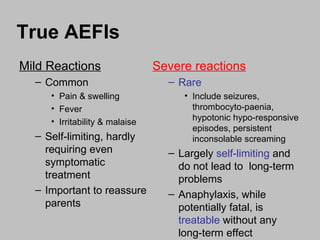
True AEFIs Mild Reactions Common Pain & swelling  Fever Irritability & malaise Self-limiting, hardly requiring even symptomatic treatment Important to reassure parents  Severe reactions Rare Include seizures, thrombocyto-paenia, hypotonic hypo-responsive episodes, persistent inconsolable screaming Largely  self-limiting  and do not lead to  long-term problems Anaphylaxis, while potentially fatal, is  treatable  without any long-term effect
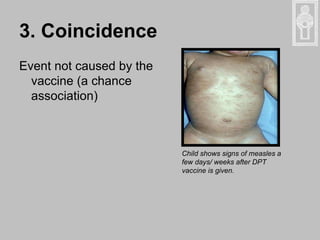
3. Coincidence   Event not caused by the vaccine (a chance association)‏ Child shows signs of measles a few days/ weeks after DPT vaccine is given.
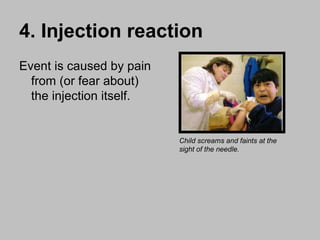
4. Injection reaction   Event is caused by pain from (or fear about) the injection itself.  Child screams and faints at the sight of the needle.
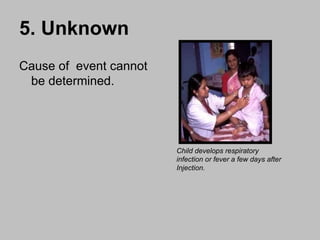
5. Unknown Cause of  event cannot be determined. Child develops respiratory infection or fever a few days after Injection.
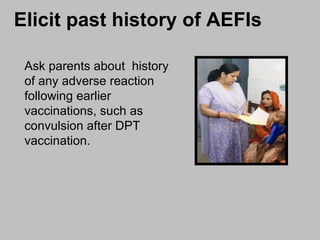
Elicit past history of AEFIs Ask parents about  history of any adverse reaction following earlier vaccinations, such as convulsion after DPT vaccination.
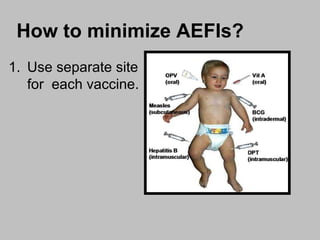
How to minimize AEFIs? Use separate site for  each vaccine.
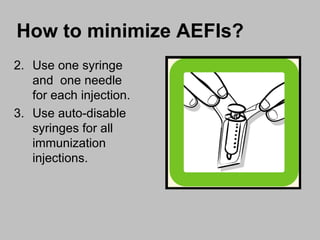
Use one syringe and  one needle for each injection. Use auto-disable syringes for all immunization injections.  How to minimize AEFIs?
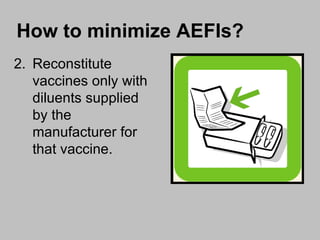
Reconstitute vaccines only with diluents supplied by the manufacturer for that vaccine. How to minimize AEFIs?
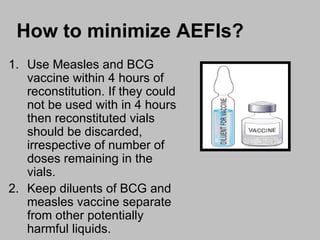
Use Measles and BCG vaccine within 4 hours of reconstitution. If they could not be used with in 4 hours then reconstituted vials should be discarded, irrespective of number of doses remaining in the vials. Keep diluents of BCG and measles vaccine separate from other potentially harmful liquids. How to minimize AEFIs?
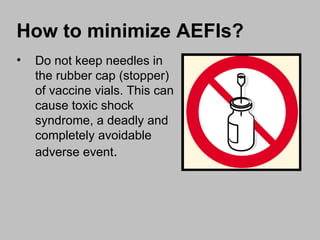
Do not keep needles in the rubber cap (stopper) of vaccine vials. This can cause toxic shock syndrome, a deadly and completely avoidable adverse event . How to minimize AEFIs?
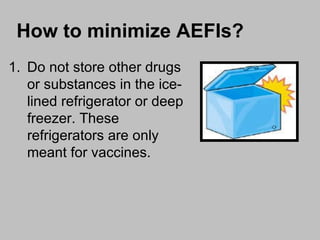
Do not store other drugs or substances in the ice-lined refrigerator or deep freezer. These refrigerators are only meant for vaccines. How to minimize AEFIs?
DON’T PANIC! THINK before you act Then act SWIFTLY Be clear, simple, straightforward BE HONEST AT ALL TIMES Seek prompt treatment What to do if AEFI occurs?
Why Monitor AEFIs? To help keep public’s confidence in the immunization programmes To know risks and how to handle such an event when it occurs To know the frequency  To enable Corrections – Programmatic / quality of vaccines To forecast AEFIs
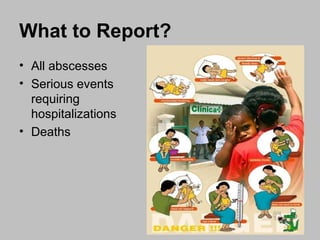
What to Report? All abscesses Serious events requiring hospitalizations Deaths
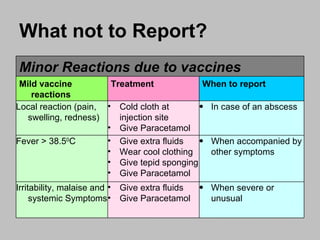
What not to Report?   Minor Reactions due to vaccines Mild vaccine reactions Treatment When to report Local reaction (pain, swelling, redness)‏ Cold cloth at injection site Give Paracetamol In case of an abscess Fever > 38.5 0 C Give extra fluids Wear cool clothing Give tepid sponging Give Paracetamol When accompanied by other symptoms Irritability, malaise and systemic Symptoms Give extra fluids Give Paracetamol When severe or unusual

AEFI Immunization Basics

  • 1.
    Adverse Events FollowingImmunization (AEFI)‏
  • 2.
    Learning Objectives Identifycommon adverse events. Prevent adverse events from occurring in your service delivery area. Manage an adverse event. At the end of the unit, you should be able to:
  • 3.
    Contents What isan Adverse Event following Immunization (AEFI)? Types of AEFIs Elicitation of past history of AEFIs Minimizing AEFIs in your area Types of AEFIs to report
  • 4.
    What is anAEFI ? A medical event that takes place after an immunization causes concern is believed to be caused by immunization ranges from mild side effects to life-threatening, but rare, illnesses
  • 5.
    Is it reallysafe? No vaccine is 100% safe and without any risks. Prepare parents for side effects
  • 6.
    Types of AEFIs Programmatic error Vaccine reaction Coincidence Injection reaction Unknown
  • 7.
    1. Programmatic errorEvent caused by error in vaccine selection, storage, preparation, handling, or administration (95% and Preventable)‏ Wrong vaccine used, Vaccine reconstituted incorrectly Needle left in vial Wrong technique used Expired vaccine used Reconstituted vaccine not discarded after 4 hours. Freezing of freeze-sensitive vaccines (DPT, DT, TT)‏ BCG injection given sub-cutaneously instead of Intradermally: local lymphadenitis and abcess
  • 8.
    Types of ProgrammaticErrors Programmatic Errors Possible Adverse event that may occur Non-sterile injection: Improperly sterilizing syringe and needle Contaminated vaccine or diluent Re-use of reconstituted vaccine at subsequent sessions Wiping the needle with a swab Administering injection over clothes Infection such as local abscess at site of injection, sepsis, toxic shock syndrome or death. Re-use of disposable syringe and needle Transmission of blood-borne infections such as Hep B, HIV, Hep C Reconstitution Error/ Wrong vaccine preparation Reconstitution with incorrect diluent Drug substituted for vaccine diluent Inadequate shaking for T- series vaccines Vaccine ineffective Negative effect of drug, e.g. insulin causing death Local abscess Injection at incorrect site BCG given sub-cutaneously DPT/DT/TT given superficially Injection into buttocks Local reaction or abscess Local reaction or abscess Sciatic nerve damage Vaccine transportation/storage incorrect Local reaction from frozen vaccine Vaccine ineffective Contraindications ignored Avoidable serious reaction
  • 9.
    2. Vaccine Reaction Rare event caused by inherent properties of vaccine, not by Programmatic error. Child has an allergic reaction to Vaccine.
  • 10.
    True AEFIs MildReactions Common Pain & swelling Fever Irritability & malaise Self-limiting, hardly requiring even symptomatic treatment Important to reassure parents Severe reactions Rare Include seizures, thrombocyto-paenia, hypotonic hypo-responsive episodes, persistent inconsolable screaming Largely self-limiting and do not lead to long-term problems Anaphylaxis, while potentially fatal, is treatable without any long-term effect
  • 11.
    3. Coincidence Event not caused by the vaccine (a chance association)‏ Child shows signs of measles a few days/ weeks after DPT vaccine is given.
  • 12.
    4. Injection reaction Event is caused by pain from (or fear about) the injection itself. Child screams and faints at the sight of the needle.
  • 13.
    5. Unknown Causeof event cannot be determined. Child develops respiratory infection or fever a few days after Injection.
  • 14.
    Elicit past historyof AEFIs Ask parents about history of any adverse reaction following earlier vaccinations, such as convulsion after DPT vaccination.
  • 15.
    How to minimizeAEFIs? Use separate site for each vaccine.
  • 16.
    Use one syringeand one needle for each injection. Use auto-disable syringes for all immunization injections. How to minimize AEFIs?
  • 17.
    Reconstitute vaccines onlywith diluents supplied by the manufacturer for that vaccine. How to minimize AEFIs?
  • 18.
    Use Measles andBCG vaccine within 4 hours of reconstitution. If they could not be used with in 4 hours then reconstituted vials should be discarded, irrespective of number of doses remaining in the vials. Keep diluents of BCG and measles vaccine separate from other potentially harmful liquids. How to minimize AEFIs?
  • 19.
    Do not keepneedles in the rubber cap (stopper) of vaccine vials. This can cause toxic shock syndrome, a deadly and completely avoidable adverse event . How to minimize AEFIs?
  • 20.
    Do not storeother drugs or substances in the ice-lined refrigerator or deep freezer. These refrigerators are only meant for vaccines. How to minimize AEFIs?
  • 21.
    DON’T PANIC! THINKbefore you act Then act SWIFTLY Be clear, simple, straightforward BE HONEST AT ALL TIMES Seek prompt treatment What to do if AEFI occurs?
  • 22.
    Why Monitor AEFIs?To help keep public’s confidence in the immunization programmes To know risks and how to handle such an event when it occurs To know the frequency To enable Corrections – Programmatic / quality of vaccines To forecast AEFIs
  • 23.
    What to Report?All abscesses Serious events requiring hospitalizations Deaths
  • 24.
    What not toReport? Minor Reactions due to vaccines Mild vaccine reactions Treatment When to report Local reaction (pain, swelling, redness)‏ Cold cloth at injection site Give Paracetamol In case of an abscess Fever > 38.5 0 C Give extra fluids Wear cool clothing Give tepid sponging Give Paracetamol When accompanied by other symptoms Irritability, malaise and systemic Symptoms Give extra fluids Give Paracetamol When severe or unusual