ADVERSE EFFECTS OF
PESTICIDES IN AGRICULTURE
Sandeepkumar C H
PG18AGR10022
Dept. of Agril. Entomology
College of Agriculture, Raichur
PESTICIDE
• Any substance or mixture of substances intended for
preventing, destroying or controlling any pest, including
vectors of human or animal disease, unwanted species of
plants or animals causing harm during or otherwise
interfering with the production, processing, storage or
marketing of food, agricultural commodities, wood and
wood products or animal food stuffs or which may be
administered to animals for the control of insects, arachnids
or other pests in or on their bodies (FAO, 1986).
Significance
• Although the reliance on chemicals in Green Revolution
agriculture has contributed to the remarkable gains in the
production of grains in the world, especially in developing
countries, the extensive use of fertilizers and pesticides has caused
serious public health and environmental problems
(Bull, 1982; WHO/UNEP, 1989; Pimentel, 1989;
El Sebae, 1989; Dinham, 1993; WRI, 1992).
Risk and Hazard of
pesticides
• Most of the applied pesticides get dispersed in
the environment and affects the health of un-
protected agricultural and industrial workers.
• The pesticides used in agricultural areas reach
the environment and humans directly or
indirectly.
• Humans are exposed to pesticides via
environmental media (contact with soil, water,
air, and food) and can enter the body by three
different routes: inhalation, ingestion, and
dermal contact
Historical significance
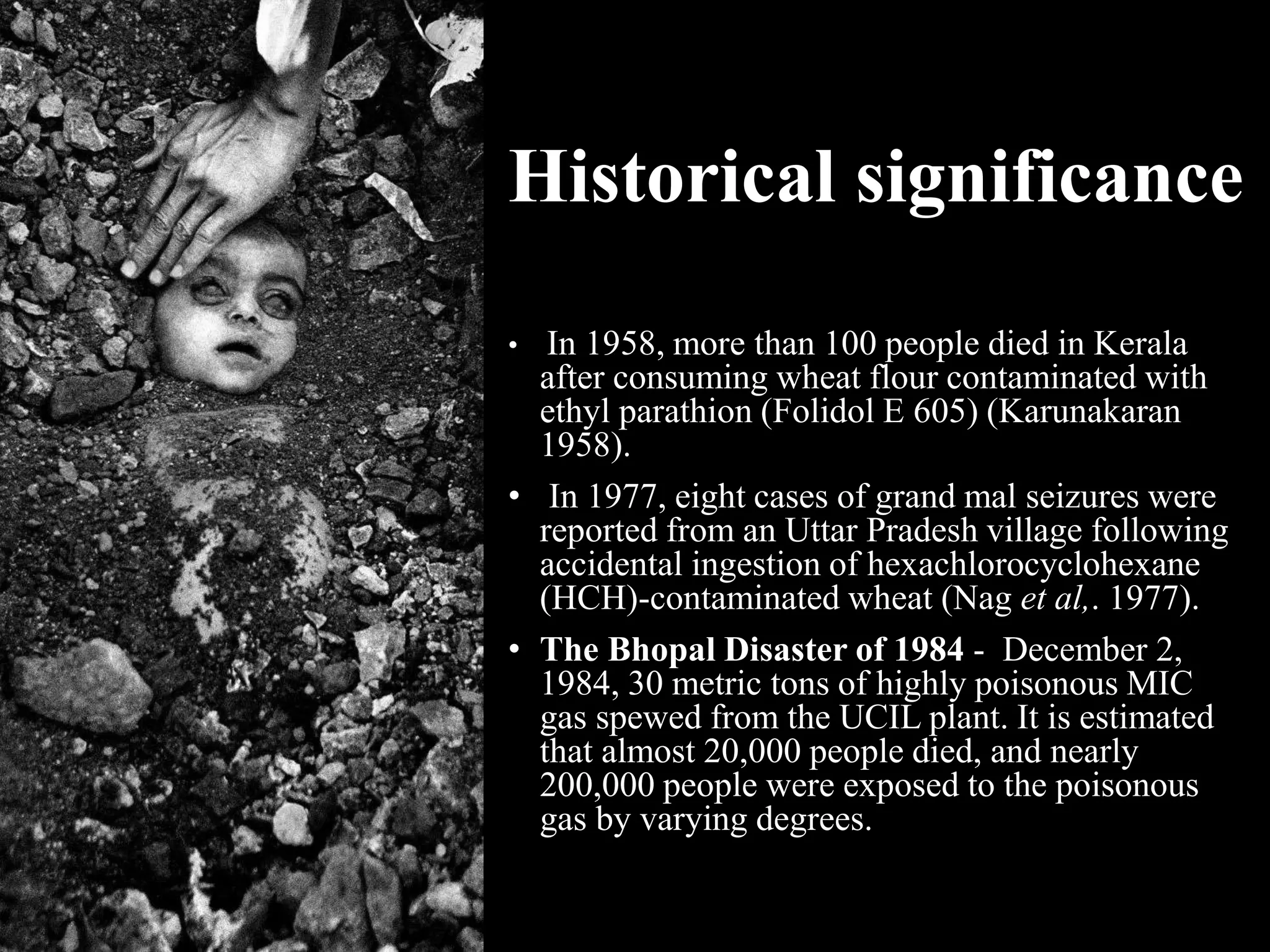
• In 1958, more than 100 people died in Kerala
after consuming wheat flour contaminated with
ethyl parathion (Folidol E 605) (Karunakaran
1958).
• In 1977, eight cases of grand mal seizures were
reported from an Uttar Pradesh village following
accidental ingestion of hexachlorocyclohexane
(HCH)-contaminated wheat (Nag et al,. 1977).
• The Bhopal Disaster of 1984 - December 2,
1984, 30 metric tons of highly poisonous MIC
gas spewed from the UCIL plant. It is estimated
that almost 20,000 people died, and nearly
200,000 people were exposed to the poisonous
gas by varying degrees.
Environmental effects
• Effect on domestic animals
• Destruction of beneficial natural predators and
parasites
• Pesticide resistance in pests
• Honeybee and wild bee poisonings and reduced
pollination
• Crop and crop product losses
• Ground and surface water contamination
• Fishery losses
• Effect on wild birds and mammals
• Effect on microorganisms and invertebrates
Effect on domestic
animals
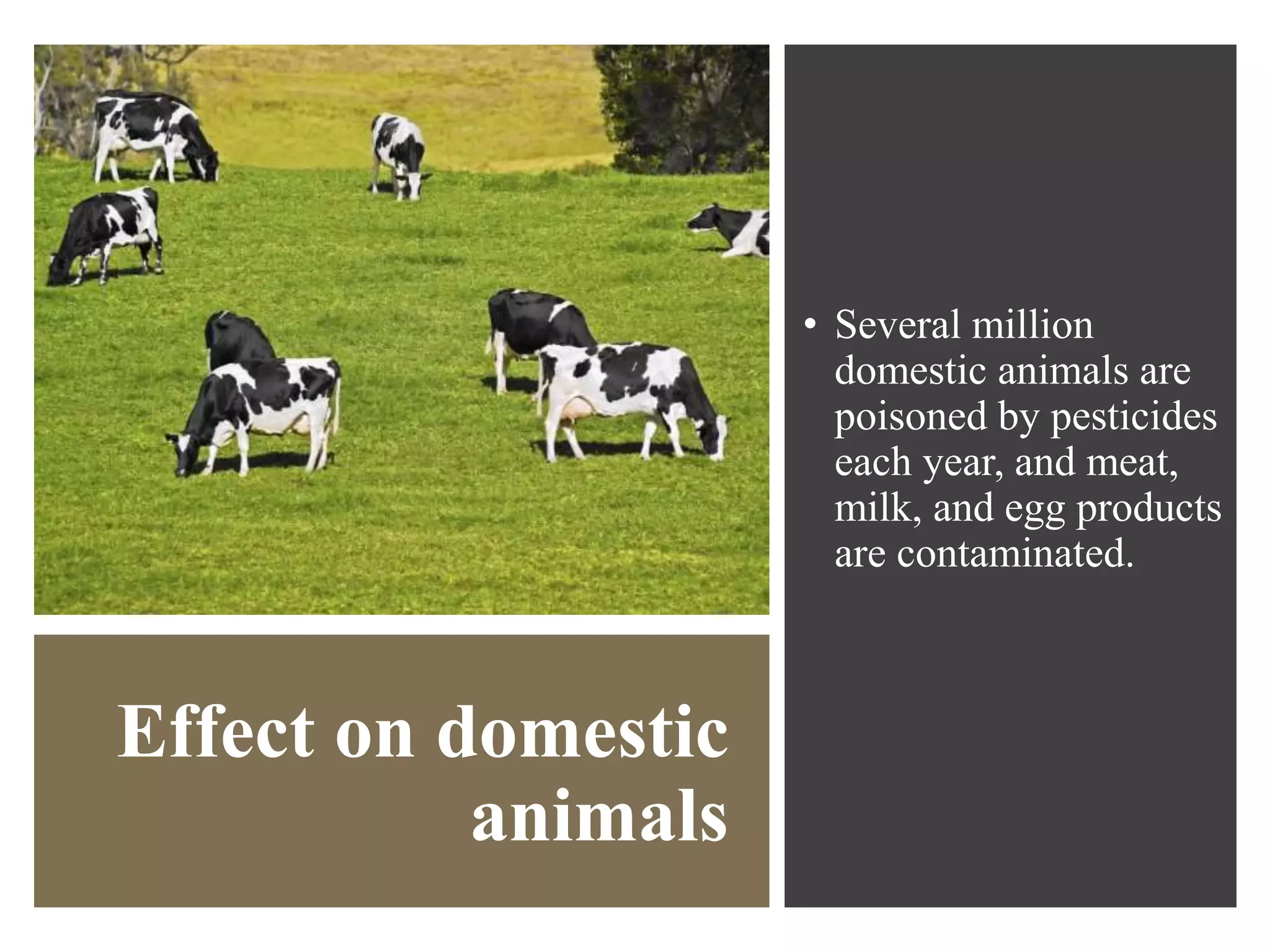
• Several million
domestic animals are
poisoned by pesticides
each year, and meat,
milk, and egg products
are contaminated.
56 cows die after feeding on pesticides in Daida village in Andhra
In a tragic incident, pesticides allegedly dumped at a field in Daida village of Guntur district
of Andhra Pradesh led to the death of at least 56 cows on Monday, after the animals
consumed them on Sunday night. Times of India (Tuesday, Apr 10, 2018, 5:35 IST)
Destruction of beneficial natural
predators and parasites
• Like pest populations,
also beneficial natural
enemies of pests are
adversely affected by
pesticides (Croft,
1990).
• Cause resurgence of
pests.
Pesticide
resistance
in pests
• The extensive use of pesticides often
results in the development of
pesticide resistance in insect pests,
plant pathogens, and weeds.
Honeybee and wild bee
poisonings and reduced
pollination
• Honey and wild bees
are absolutely vital
for pollination of
fruits, vegetables,
and other crops
worldwide.
• Their direct and
indirect benefits to
world agricultural
production amount
to several billion
dollars each year
• Colony collapse
disorder -
neonicotinoids
Colony collapse disorder
• Colony collapse disorder (CCD) is the phenomenon that occurs when the majority
of worker bees in a colony disappear and leave behind a queen, plenty of food and a
few nurse bees to care for the remaining immature bees.
• Several possible causes for CCD have been proposed, but no single proposal has gained
widespread acceptance among the scientific community. Suggested causes include:
infections with Varroa and Acarapis mites, malnutrition various pathogens, genetic
factors, immunodeficiencies, loss of habitat changing beekeeping practices or a
combination of factors
• A large amount of speculation has surrounded a family of pesticides
called neonicotinoids as having caused CCD.
Crop and
crop
product
losses
Sometimes crops are damaged by the
very pesticides used to protect them. This
occurs when:
• the recommended dosages suppress
crop growth, development, and yield
• pesticides drift from the targeted crop
to damage adjacent nearby crops (e.g.,
cotton adjacent to paddy)
• residual herbicides either prevent
chemical-sensitive crops from being
planted in rotation or inhibit the growth
of crops that are planted
• excessive pesticide residues
accumulate on crops, necessitating the
destruction of the harvest.
Ground and
surface water
contamination
• Many pesticides applied to crops
eventually end up in ground and
surface waters
• Groundwater contamination with
pesticides is a serious problem because
about one-half of the world population
obtains its water from wells, and once
groundwater is contaminated, the
pesticide residues remain for many
years.
Fishery losses
Pesticides cause fishery losses in several ways
• high pesticide concentrations in water directly kill
fish
• low level doses may kill highly susceptible fish fry
• the elimination of essential fish foods like insects
and other invertebrates.
Effect on
wild
birds and
mammals
Deleterious effects on
wildlife include:
• death from direct exposure to
pesticides
• secondary poisonings from
consuming contaminated prey
• reduced survival, growth, and
reproductive rates from
exposure to sublethal dosages
• habitat reduction through
elimination of food sources and
refuges
(McEwen and Stephenson, 1979)
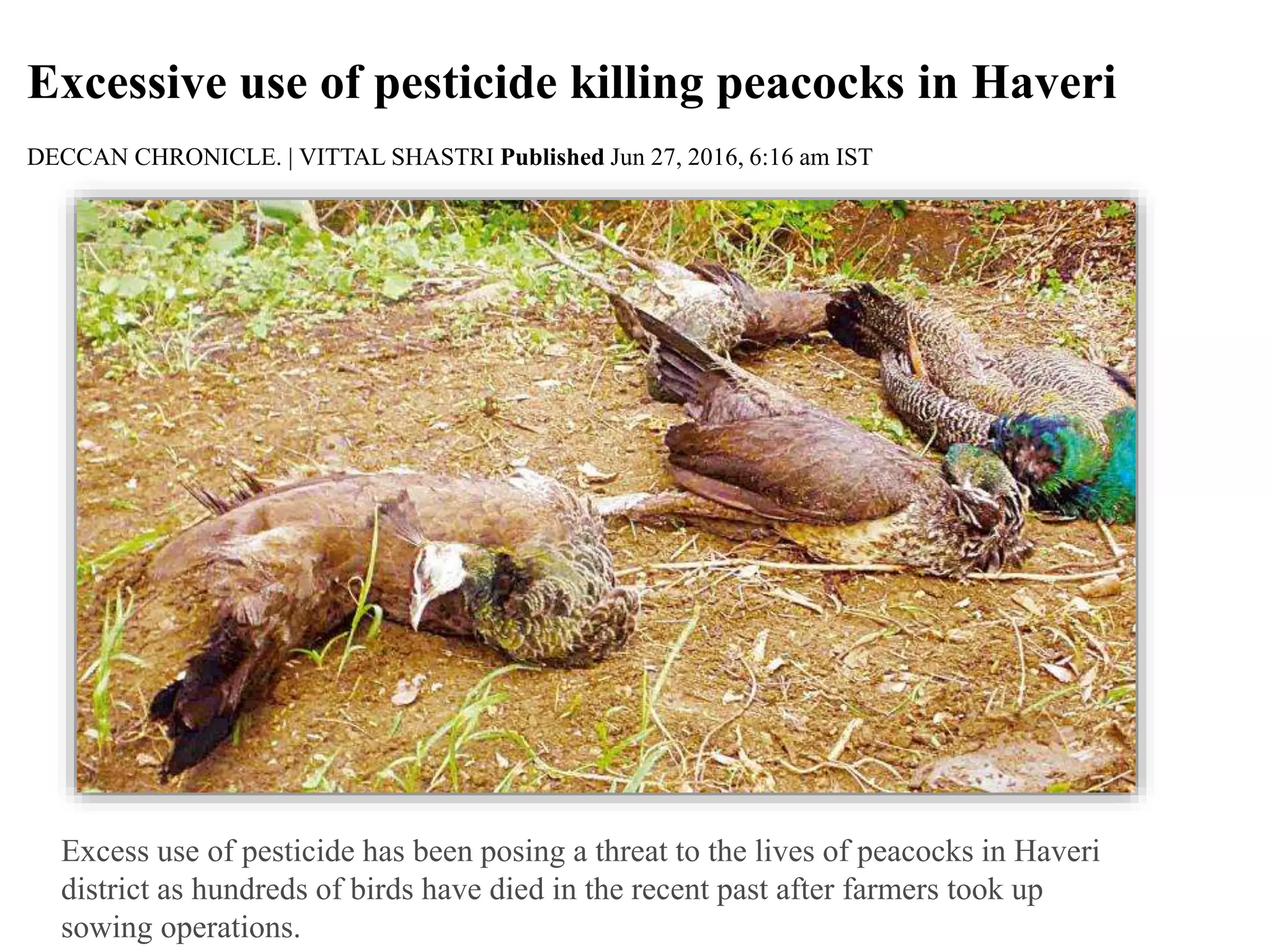
Excessive use of pesticide killing peacocks in Haveri
DECCAN CHRONICLE. | VITTAL SHASTRI Published Jun 27, 2016, 6:16 am IST
Excess use of pesticide has been posing a threat to the lives of peacocks in Haveri
district as hundreds of birds have died in the recent past after farmers took up
sowing operations.
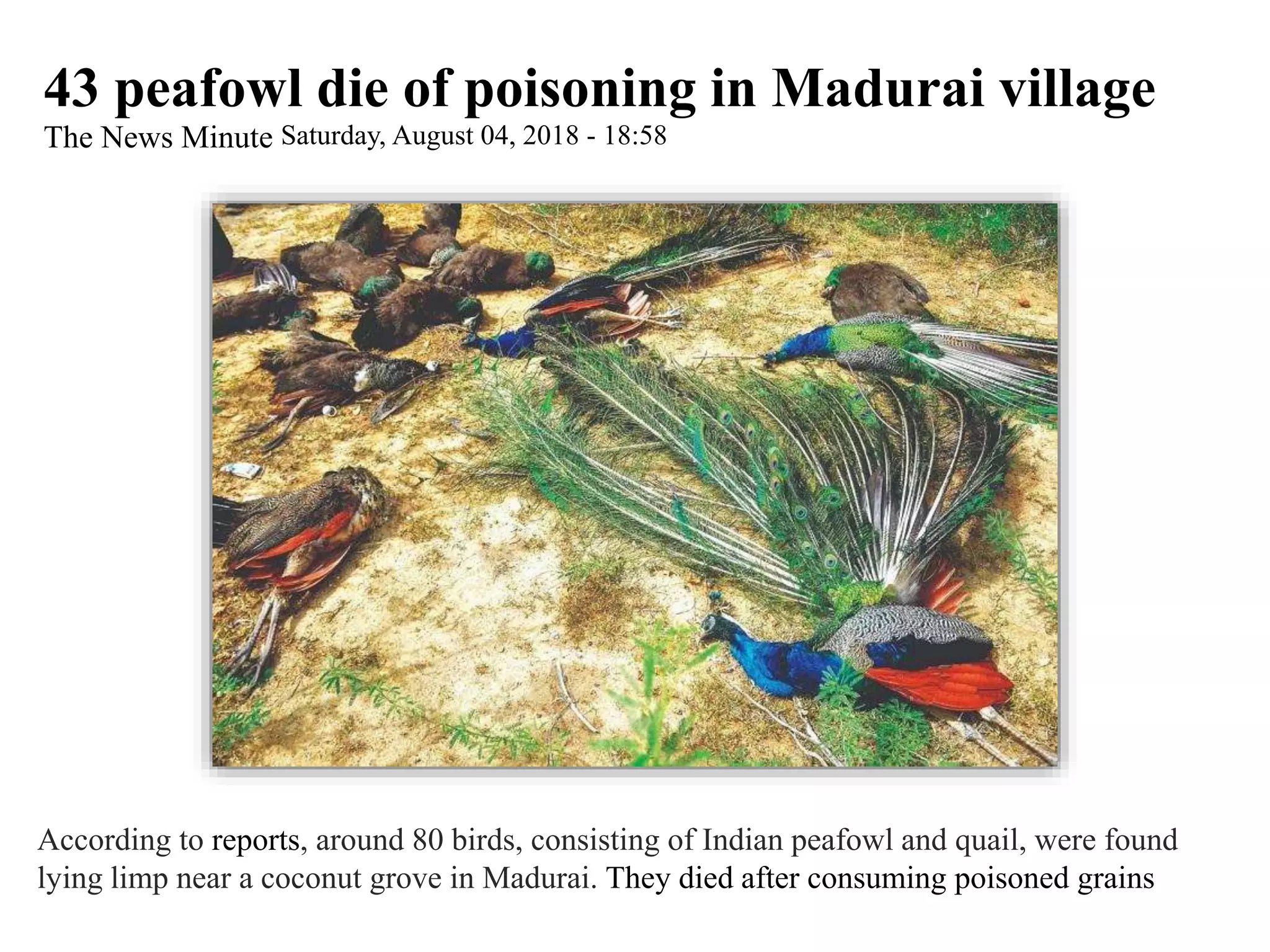
43 peafowl die of poisoning in Madurai village
The News Minute Saturday, August 04, 2018 - 18:58
According to reports, around 80 birds, consisting of Indian peafowl and quail, were found
lying limp near a coconut grove in Madurai. They died after consuming poisoned grains
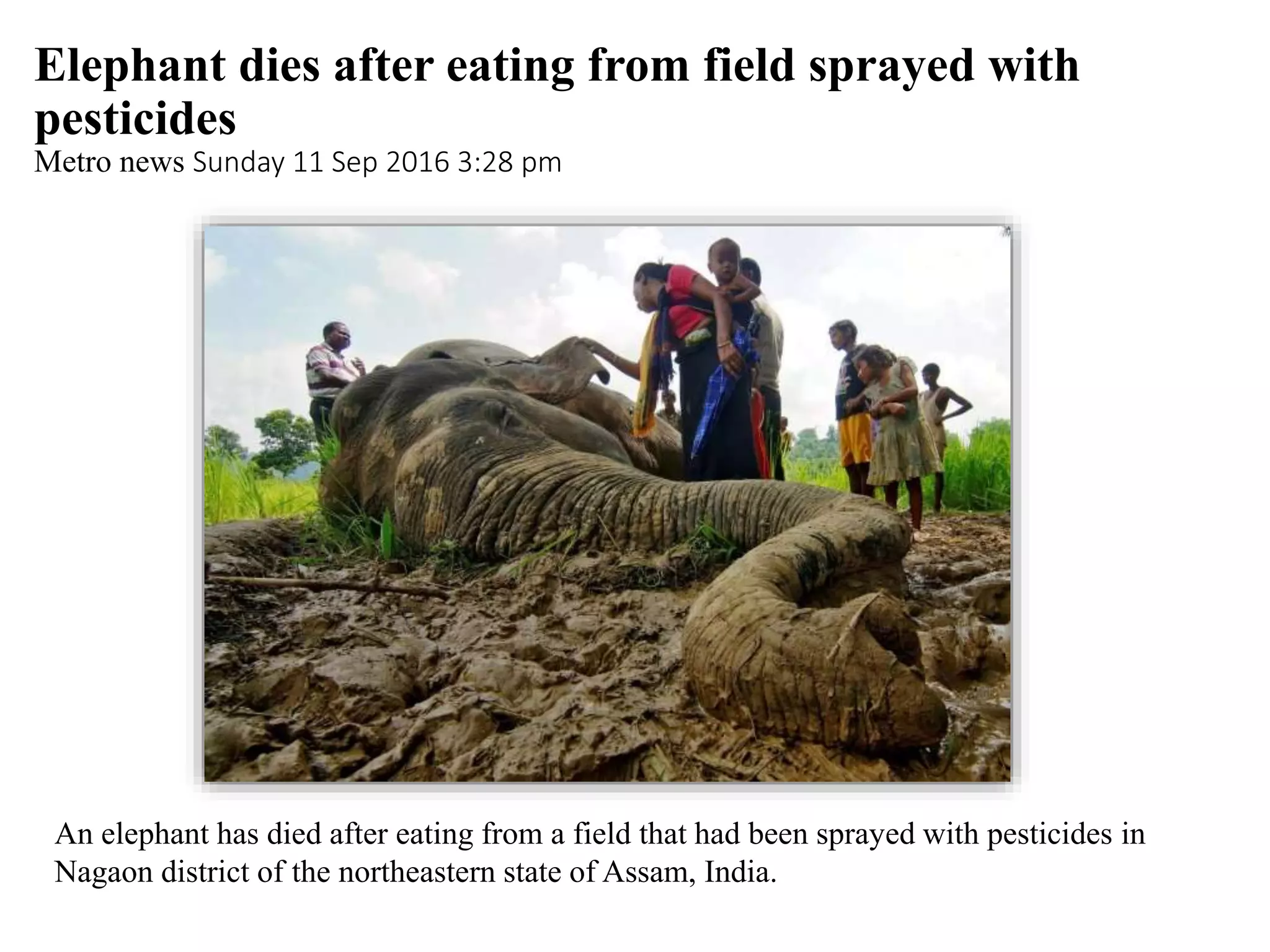
Elephant dies after eating from field sprayed with
pesticides
Metro news Sunday 11 Sep 2016 3:28 pm
An elephant has died after eating from a field that had been sprayed with pesticides in
Nagaon district of the northeastern state of Assam, India.
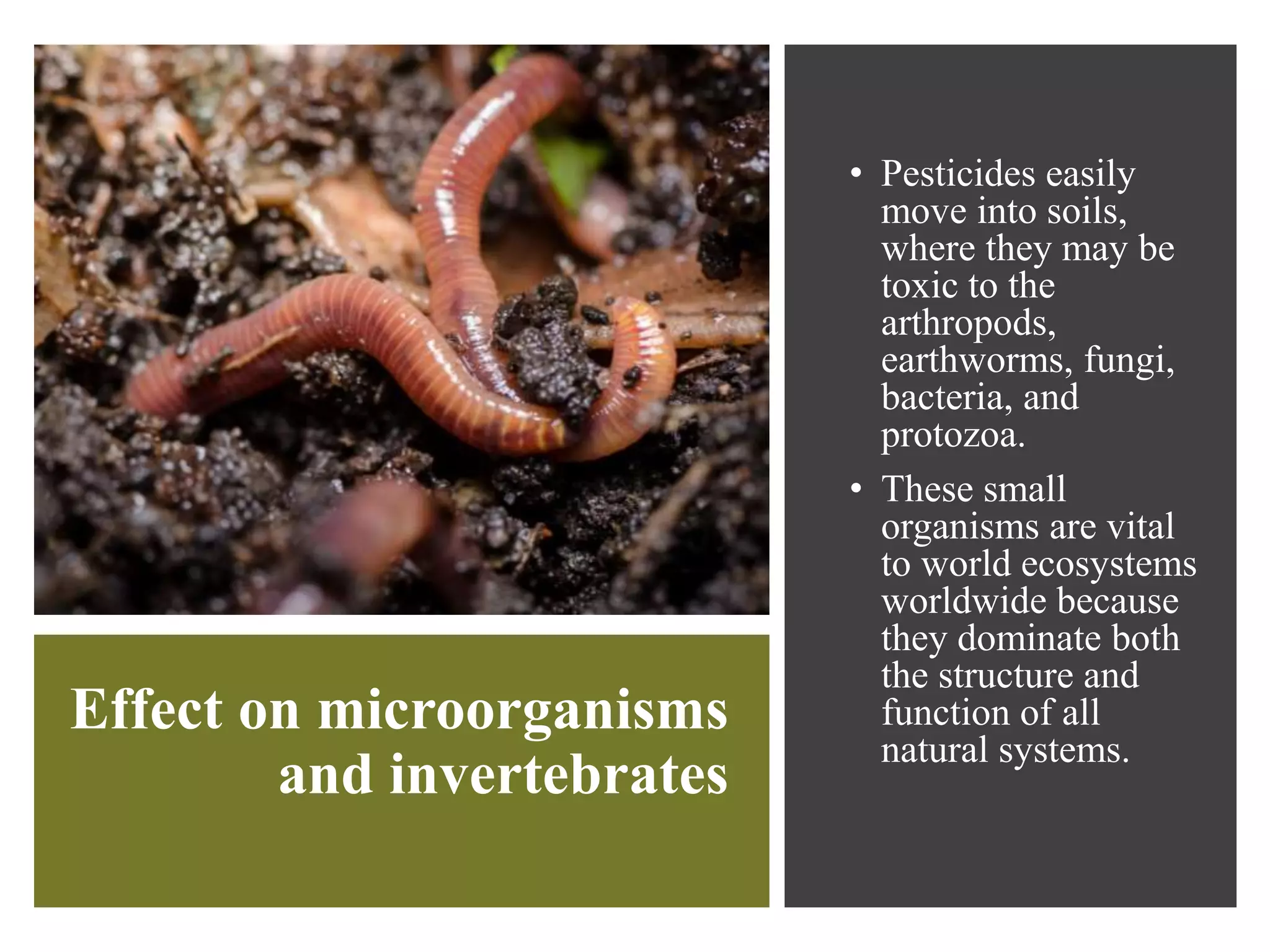
Effect on microorganisms
and invertebrates
• Pesticides easily
move into soils,
where they may be
toxic to the
arthropods,
earthworms, fungi,
bacteria, and
protozoa.
• These small
organisms are vital
to world ecosystems
worldwide because
they dominate both
the structure and
function of all
natural systems.
Health Impact of Pesticides
• Neurological Effects
• Respiratory Effects
• Dermal Effects
• Reproductive Abnormalities
• Cancer
• Effects on General Health
Neurological Effects
• The brain and peripheral nervous system are directly
affected by pesticides, both as sites of action and
deposition.
• All pesticide classes may affect brain and neural
tissue, even if they do not cause observable effects.
• Le Couteur et al.,, (1999) suggested that pesticide
exposure may be associated with increased risk of
neurodegenerative disease, particularly Parkinson’s
disease (PD).
• Several studies have implicated the herbicide paraquat
(Liou et al.,, 1997), which produces selective
degeneration of neurons and Parkinsonian-type
effects.
Neurological Effects
• Studies of individuals with a history of pesticide
poisoning—farmworkers, farmers, rescue workers or
individuals identified from hospitals or pesticide
registries have found that increased symptom
prevalence, deficits in cognitive and psychomotor
function, decreased vibration sensitivity, and motor
dysfunction can occur long after the immediate episode
is resolved.
• In some cases, effects were observed ≥ 10 years after
poisoning (Savage et al.,, 1988), suggesting that the
residual damage is permanent.
Respiratory Effects
• Health problems reported from farm workers
using pesticides showed respiratory symptoms
such as coughing, phlegm, and wheezing (Ejigu
and Mekonnen 2005).
• The high respiratory morbidity may be
attributed to high prevalence of smoking and
prolonged inhalation of organic dusts during
farming operations; such effects are associated
with illiteracy and poor socioeconomic status
(Gupta et al.,, 1995).
Respiratory Effects
• OP insecticide exposure, there were
two commonly observed patterns of
respiratory failure:
(1)respiratory failure requiring early
intubation within 2 hours of
exposure in unconscious patients
during the acute cholinergic crisis
(58% of intubated patients)
(2)respiratory failure occurring later
(often more than 24 h after
exposure) in conscious patients
without cholinergic signs (32%)
Dermal Effects
• It occurs by not washing hands after handling pesticides or
their containers.
• Splashing or spilling of pesticide on skin by wearing pesticide-
contaminated clothing and applying pesticides in the windy
weather.
• Touching treated plants or soil also leads to dermal exposure.
• Contact dermatitis leads to skin irritation in pesticide exposed
subjects
Reproductive Abnormalities
• Exposure of men or women to certain pesticides at sufficient doses may increase
the risk for sperm abnormalities, decreased fertility, a deficit of male children,
spontaneous abortion, birth defects or fetal growth retardation.
• Pesticides from workplace or environmental exposures enter breast milk.
• Some pesticides may interfere with the female hormonal function, which may
lead to negative effects on the reproductive system through disruption of the
hormonal balance necessary for proper functioning.
E.g. : Thiram - interference with hormone synthesis - ovarian cycle irregularities
Dicofol – unknown - impaired fertility
Atrazine - interference with hormone synthesis and binding without
activating the estrogen receptor - modulation of hormone
concentrations and ovarian cycle irregularities
Organochlorine compounds - interference with overall metabolic rate -
ovarian cycle irregularities
Reproductive Abnormalities
• Data on reproductive toxicity, collected from couples
engaged in spraying organochlorine, organophosphorus, and
carbamate insecticides in cotton fields, show abnormal
reproductive performance(Rupa et al.,, 1991).
A comparison of reproductive effects observed in couples engaged in
spraying OC, OP, and carbamate insecticides (exposed column) in cotton
fields, with unexposed subjects (Rupa et al.,, 1991)
Reproductive
problems
Exposed (%) Unexposed (%)
Abortions 26 15
Still births 8.7 2.6
Neonatal deaths 9.2 2.2
Congenital defects 3 0.1
Cancer
• Farmers have a higher risk of stomach cancer, when compared with the
general population, with a difference ranging from 1.05 to 1.12
(Acquavella et al.,, 1998; Blair et al., 1992; Meyer et al., 2003).
• Several studies have given indications that farmers or agricultural workers
may have an excess brain cancer risk (Blair et al., 1992; Wingren and
Axelson 1992; Brownson et al., 1990; Reif et al., 1989; Musicco et al.,
1982).
• The International Agency for Research on Cancer (IARC) has issued
reports concerning the increased risk of developing skin and lip cancer
among professional pesticide sprayers (IARC Working Group 1991).
• Moreover, in a study conduced in Costa Rica, excess skin cancers (lip
cancer, melanoma, nonmelanocytic skin and cancer) occurred in coffee
growing areas, where paraquat and lead arsenate were extensively used
(Wesseling et al., 1999).
•
Roundup has been linked to cancer.
UNITED STATES PUBLIC INTEREST RESEARCH GROUP
(U.S. PIRG)
Recent research, including some done by the
World Health Organization and the state of
California, found that Roundup, and other
glyphosate-based herbicides, could pose
significant risks to human health, including
links to cancer and reproductive problems.
One study found that certain formulations of
Roundup were more toxic to human
umbilical, embryonic and placental cells
than the herbicide's main ingredient by
itself.
Another study found that one of the inert
ingredients in Roundup was up to 2,000
times more toxic to cells than glyphosate.
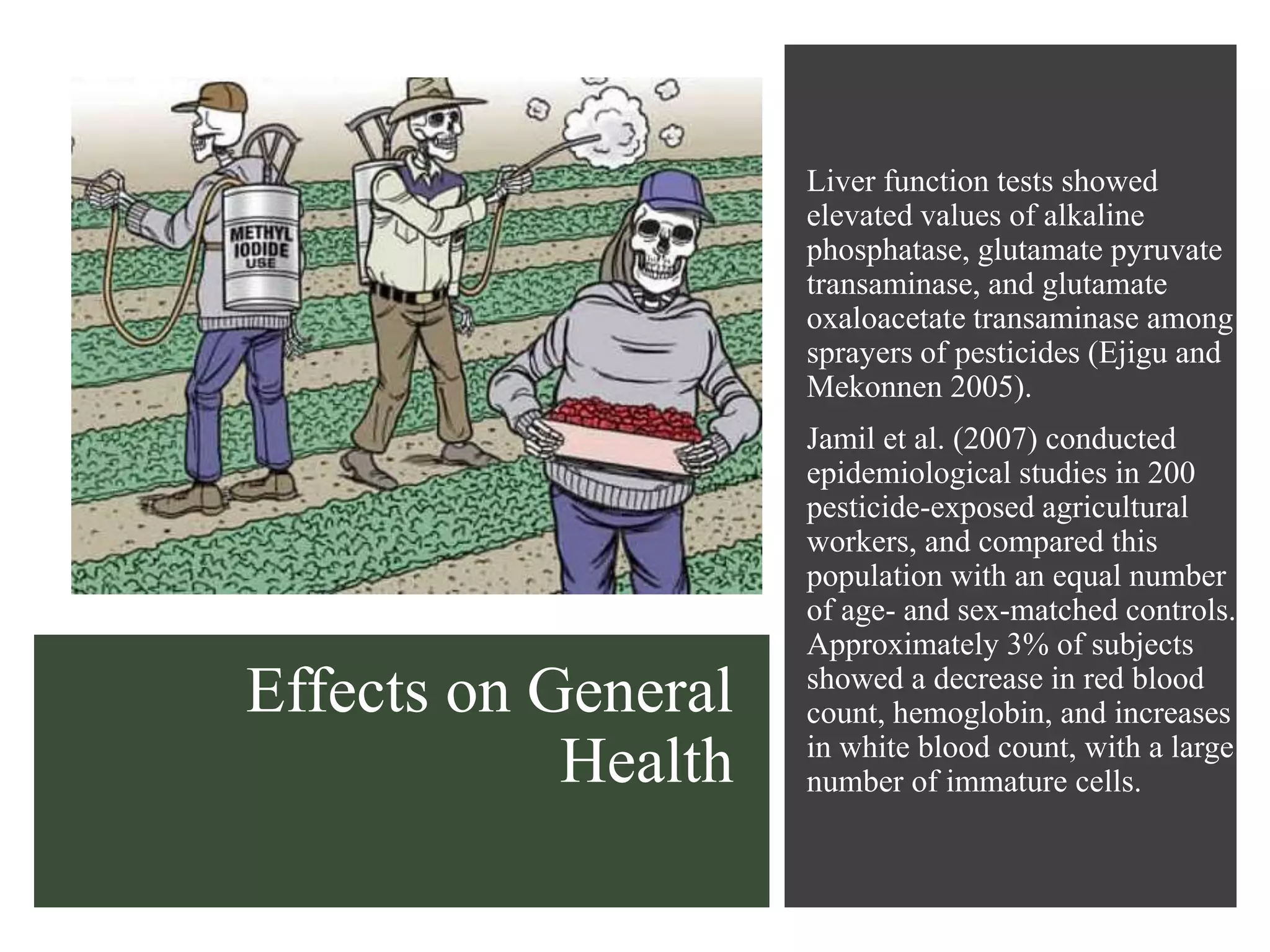
Effects on General
Health
• Liver function tests showed
elevated values of alkaline
phosphatase, glutamate pyruvate
transaminase, and glutamate
oxaloacetate transaminase among
sprayers of pesticides (Ejigu and
Mekonnen 2005).
• Jamil et al. (2007) conducted
epidemiological studies in 200
pesticide-exposed agricultural
workers, and compared this
population with an equal number
of age- and sex-matched controls.
Approximately 3% of subjects
showed a decrease in red blood
count, hemoglobin, and increases
in white blood count, with a large
number of immature cells.
Summary
Developing countries use only 20% of the world’s agrochemicals, yet
they suffer 99% of deaths from pesticide poisoning.
The primary need, currently, in such countries is creation and
implementation of sound national policies to effectively articulate
appropriate guidelines for managing farm pest control activities.
Such policies should be aimed at both limiting pesticide exposure and
usage, but doing so without damaging the yields of food production.
If such steps are taken, it is fully expected that the incidence of adverse
health consequences for agrarian populations from pesticide toxicity
will decrease, and the health of farmers improve.
Summary
References
• Nair Kesavachandran, Chandrasekharan & Fareed, Mohammad & Pathak, Manoj & Bihari, Vipin & Mathur,
Neeraj & Srivastava, Anup. (2009). Adverse Health Effects of Pesticides in Agrarian Populations of
Developing Countries. Reviews of environmental contamination and toxicology. 200. 33-52. 10.1007/978-1-
4419-0028-9_2.
• David Pimentel. (1999). Green revolution agriculture and chemical hazards. Science of The Total
EnvironmentVolume 188, Supplement, September 1996, Pages S86-S98
• Hashmi & Imran, Hashmi & Khan, Dilshad. (2011). Adverse Health Effects of Pesticides Exposure in
Agricultural and Industrial Workers of Developing Country. 10.5772/13835.
• Kamel F, Hoppin JA. Association of pesticide exposure with neurologic dysfunction and disease. Environ
Health Perspect. 2004;112(9):950–958. doi:10.1289/ehp.7135
• Bretveld, R. W., Thomas, C. M., Scheepers, P. T., Zielhuis, G. A., & Roeleveld, N. (2006). Pesticide
exposure: the hormonal function of the female reproductive system disrupted?. Reproductive biology and
endocrinology : RB&E, 4, 30. doi:10.1186/1477-7827-4-30
• https://timesofindia.indiatimes.com/city/amaravati/56-cows-die-after-feeding-on-pesticides-in-andhra-
village/articleshow/63689075.cmshttps://metro.co.uk/2016/09/11/elephant-dies-after-eating-from-field-
sprayed-with-pesticides-6121792/
• https://www.deccanchronicle.com/lifestyle/pets-and-environment/270616/excessive-use-of-pesticide-
killing-peacocks-in-haveri.html
• https://www.thenewsminute.com/article/43-peafowl-die-poisoning-madurai-village-85986
Adverse effects of pesticides in agriculture

Adverse effects of pesticides in agriculture

  • 1.
    ADVERSE EFFECTS OF PESTICIDESIN AGRICULTURE Sandeepkumar C H PG18AGR10022 Dept. of Agril. Entomology College of Agriculture, Raichur
  • 2.
    PESTICIDE • Any substanceor mixture of substances intended for preventing, destroying or controlling any pest, including vectors of human or animal disease, unwanted species of plants or animals causing harm during or otherwise interfering with the production, processing, storage or marketing of food, agricultural commodities, wood and wood products or animal food stuffs or which may be administered to animals for the control of insects, arachnids or other pests in or on their bodies (FAO, 1986).
  • 3.
    Significance • Although thereliance on chemicals in Green Revolution agriculture has contributed to the remarkable gains in the production of grains in the world, especially in developing countries, the extensive use of fertilizers and pesticides has caused serious public health and environmental problems (Bull, 1982; WHO/UNEP, 1989; Pimentel, 1989; El Sebae, 1989; Dinham, 1993; WRI, 1992).
  • 4.
    Risk and Hazardof pesticides • Most of the applied pesticides get dispersed in the environment and affects the health of un- protected agricultural and industrial workers. • The pesticides used in agricultural areas reach the environment and humans directly or indirectly. • Humans are exposed to pesticides via environmental media (contact with soil, water, air, and food) and can enter the body by three different routes: inhalation, ingestion, and dermal contact
  • 5.
    Historical significance • In1958, more than 100 people died in Kerala after consuming wheat flour contaminated with ethyl parathion (Folidol E 605) (Karunakaran 1958). • In 1977, eight cases of grand mal seizures were reported from an Uttar Pradesh village following accidental ingestion of hexachlorocyclohexane (HCH)-contaminated wheat (Nag et al,. 1977). • The Bhopal Disaster of 1984 - December 2, 1984, 30 metric tons of highly poisonous MIC gas spewed from the UCIL plant. It is estimated that almost 20,000 people died, and nearly 200,000 people were exposed to the poisonous gas by varying degrees.
  • 7.
    Environmental effects • Effecton domestic animals • Destruction of beneficial natural predators and parasites • Pesticide resistance in pests • Honeybee and wild bee poisonings and reduced pollination • Crop and crop product losses • Ground and surface water contamination • Fishery losses • Effect on wild birds and mammals • Effect on microorganisms and invertebrates
  • 8.
    Effect on domestic animals •Several million domestic animals are poisoned by pesticides each year, and meat, milk, and egg products are contaminated.
  • 9.
    56 cows dieafter feeding on pesticides in Daida village in Andhra In a tragic incident, pesticides allegedly dumped at a field in Daida village of Guntur district of Andhra Pradesh led to the death of at least 56 cows on Monday, after the animals consumed them on Sunday night. Times of India (Tuesday, Apr 10, 2018, 5:35 IST)
  • 10.
    Destruction of beneficialnatural predators and parasites • Like pest populations, also beneficial natural enemies of pests are adversely affected by pesticides (Croft, 1990). • Cause resurgence of pests.
  • 11.
    Pesticide resistance in pests • Theextensive use of pesticides often results in the development of pesticide resistance in insect pests, plant pathogens, and weeds.
  • 13.
    Honeybee and wildbee poisonings and reduced pollination • Honey and wild bees are absolutely vital for pollination of fruits, vegetables, and other crops worldwide. • Their direct and indirect benefits to world agricultural production amount to several billion dollars each year • Colony collapse disorder - neonicotinoids
  • 14.
    Colony collapse disorder •Colony collapse disorder (CCD) is the phenomenon that occurs when the majority of worker bees in a colony disappear and leave behind a queen, plenty of food and a few nurse bees to care for the remaining immature bees. • Several possible causes for CCD have been proposed, but no single proposal has gained widespread acceptance among the scientific community. Suggested causes include: infections with Varroa and Acarapis mites, malnutrition various pathogens, genetic factors, immunodeficiencies, loss of habitat changing beekeeping practices or a combination of factors • A large amount of speculation has surrounded a family of pesticides called neonicotinoids as having caused CCD.
  • 15.
    Crop and crop product losses Sometimes cropsare damaged by the very pesticides used to protect them. This occurs when: • the recommended dosages suppress crop growth, development, and yield • pesticides drift from the targeted crop to damage adjacent nearby crops (e.g., cotton adjacent to paddy) • residual herbicides either prevent chemical-sensitive crops from being planted in rotation or inhibit the growth of crops that are planted • excessive pesticide residues accumulate on crops, necessitating the destruction of the harvest.
  • 17.
    Ground and surface water contamination •Many pesticides applied to crops eventually end up in ground and surface waters • Groundwater contamination with pesticides is a serious problem because about one-half of the world population obtains its water from wells, and once groundwater is contaminated, the pesticide residues remain for many years.
  • 18.
    Fishery losses Pesticides causefishery losses in several ways • high pesticide concentrations in water directly kill fish • low level doses may kill highly susceptible fish fry • the elimination of essential fish foods like insects and other invertebrates.
  • 19.
    Effect on wild birds and mammals Deleteriouseffects on wildlife include: • death from direct exposure to pesticides • secondary poisonings from consuming contaminated prey • reduced survival, growth, and reproductive rates from exposure to sublethal dosages • habitat reduction through elimination of food sources and refuges (McEwen and Stephenson, 1979)
  • 20.
    Excessive use ofpesticide killing peacocks in Haveri DECCAN CHRONICLE. | VITTAL SHASTRI Published Jun 27, 2016, 6:16 am IST Excess use of pesticide has been posing a threat to the lives of peacocks in Haveri district as hundreds of birds have died in the recent past after farmers took up sowing operations.
  • 21.
    43 peafowl dieof poisoning in Madurai village The News Minute Saturday, August 04, 2018 - 18:58 According to reports, around 80 birds, consisting of Indian peafowl and quail, were found lying limp near a coconut grove in Madurai. They died after consuming poisoned grains
  • 22.
    Elephant dies aftereating from field sprayed with pesticides Metro news Sunday 11 Sep 2016 3:28 pm An elephant has died after eating from a field that had been sprayed with pesticides in Nagaon district of the northeastern state of Assam, India.
  • 23.
    Effect on microorganisms andinvertebrates • Pesticides easily move into soils, where they may be toxic to the arthropods, earthworms, fungi, bacteria, and protozoa. • These small organisms are vital to world ecosystems worldwide because they dominate both the structure and function of all natural systems.
  • 24.
    Health Impact ofPesticides • Neurological Effects • Respiratory Effects • Dermal Effects • Reproductive Abnormalities • Cancer • Effects on General Health
  • 25.
    Neurological Effects • Thebrain and peripheral nervous system are directly affected by pesticides, both as sites of action and deposition. • All pesticide classes may affect brain and neural tissue, even if they do not cause observable effects. • Le Couteur et al.,, (1999) suggested that pesticide exposure may be associated with increased risk of neurodegenerative disease, particularly Parkinson’s disease (PD). • Several studies have implicated the herbicide paraquat (Liou et al.,, 1997), which produces selective degeneration of neurons and Parkinsonian-type effects.
  • 26.
    Neurological Effects • Studiesof individuals with a history of pesticide poisoning—farmworkers, farmers, rescue workers or individuals identified from hospitals or pesticide registries have found that increased symptom prevalence, deficits in cognitive and psychomotor function, decreased vibration sensitivity, and motor dysfunction can occur long after the immediate episode is resolved. • In some cases, effects were observed ≥ 10 years after poisoning (Savage et al.,, 1988), suggesting that the residual damage is permanent.
  • 27.
    Respiratory Effects • Healthproblems reported from farm workers using pesticides showed respiratory symptoms such as coughing, phlegm, and wheezing (Ejigu and Mekonnen 2005). • The high respiratory morbidity may be attributed to high prevalence of smoking and prolonged inhalation of organic dusts during farming operations; such effects are associated with illiteracy and poor socioeconomic status (Gupta et al.,, 1995).
  • 28.
    Respiratory Effects • OPinsecticide exposure, there were two commonly observed patterns of respiratory failure: (1)respiratory failure requiring early intubation within 2 hours of exposure in unconscious patients during the acute cholinergic crisis (58% of intubated patients) (2)respiratory failure occurring later (often more than 24 h after exposure) in conscious patients without cholinergic signs (32%)
  • 29.
    Dermal Effects • Itoccurs by not washing hands after handling pesticides or their containers. • Splashing or spilling of pesticide on skin by wearing pesticide- contaminated clothing and applying pesticides in the windy weather. • Touching treated plants or soil also leads to dermal exposure. • Contact dermatitis leads to skin irritation in pesticide exposed subjects
  • 30.
    Reproductive Abnormalities • Exposureof men or women to certain pesticides at sufficient doses may increase the risk for sperm abnormalities, decreased fertility, a deficit of male children, spontaneous abortion, birth defects or fetal growth retardation. • Pesticides from workplace or environmental exposures enter breast milk. • Some pesticides may interfere with the female hormonal function, which may lead to negative effects on the reproductive system through disruption of the hormonal balance necessary for proper functioning. E.g. : Thiram - interference with hormone synthesis - ovarian cycle irregularities Dicofol – unknown - impaired fertility Atrazine - interference with hormone synthesis and binding without activating the estrogen receptor - modulation of hormone concentrations and ovarian cycle irregularities Organochlorine compounds - interference with overall metabolic rate - ovarian cycle irregularities
  • 31.
    Reproductive Abnormalities • Dataon reproductive toxicity, collected from couples engaged in spraying organochlorine, organophosphorus, and carbamate insecticides in cotton fields, show abnormal reproductive performance(Rupa et al.,, 1991). A comparison of reproductive effects observed in couples engaged in spraying OC, OP, and carbamate insecticides (exposed column) in cotton fields, with unexposed subjects (Rupa et al.,, 1991) Reproductive problems Exposed (%) Unexposed (%) Abortions 26 15 Still births 8.7 2.6 Neonatal deaths 9.2 2.2 Congenital defects 3 0.1
  • 32.
    Cancer • Farmers havea higher risk of stomach cancer, when compared with the general population, with a difference ranging from 1.05 to 1.12 (Acquavella et al.,, 1998; Blair et al., 1992; Meyer et al., 2003). • Several studies have given indications that farmers or agricultural workers may have an excess brain cancer risk (Blair et al., 1992; Wingren and Axelson 1992; Brownson et al., 1990; Reif et al., 1989; Musicco et al., 1982). • The International Agency for Research on Cancer (IARC) has issued reports concerning the increased risk of developing skin and lip cancer among professional pesticide sprayers (IARC Working Group 1991). • Moreover, in a study conduced in Costa Rica, excess skin cancers (lip cancer, melanoma, nonmelanocytic skin and cancer) occurred in coffee growing areas, where paraquat and lead arsenate were extensively used (Wesseling et al., 1999). •
  • 33.
    Roundup has beenlinked to cancer. UNITED STATES PUBLIC INTEREST RESEARCH GROUP (U.S. PIRG) Recent research, including some done by the World Health Organization and the state of California, found that Roundup, and other glyphosate-based herbicides, could pose significant risks to human health, including links to cancer and reproductive problems. One study found that certain formulations of Roundup were more toxic to human umbilical, embryonic and placental cells than the herbicide's main ingredient by itself. Another study found that one of the inert ingredients in Roundup was up to 2,000 times more toxic to cells than glyphosate.
  • 34.
    Effects on General Health •Liver function tests showed elevated values of alkaline phosphatase, glutamate pyruvate transaminase, and glutamate oxaloacetate transaminase among sprayers of pesticides (Ejigu and Mekonnen 2005). • Jamil et al. (2007) conducted epidemiological studies in 200 pesticide-exposed agricultural workers, and compared this population with an equal number of age- and sex-matched controls. Approximately 3% of subjects showed a decrease in red blood count, hemoglobin, and increases in white blood count, with a large number of immature cells.
  • 35.
    Summary Developing countries useonly 20% of the world’s agrochemicals, yet they suffer 99% of deaths from pesticide poisoning. The primary need, currently, in such countries is creation and implementation of sound national policies to effectively articulate appropriate guidelines for managing farm pest control activities. Such policies should be aimed at both limiting pesticide exposure and usage, but doing so without damaging the yields of food production. If such steps are taken, it is fully expected that the incidence of adverse health consequences for agrarian populations from pesticide toxicity will decrease, and the health of farmers improve. Summary
  • 36.
    References • Nair Kesavachandran,Chandrasekharan & Fareed, Mohammad & Pathak, Manoj & Bihari, Vipin & Mathur, Neeraj & Srivastava, Anup. (2009). Adverse Health Effects of Pesticides in Agrarian Populations of Developing Countries. Reviews of environmental contamination and toxicology. 200. 33-52. 10.1007/978-1- 4419-0028-9_2. • David Pimentel. (1999). Green revolution agriculture and chemical hazards. Science of The Total EnvironmentVolume 188, Supplement, September 1996, Pages S86-S98 • Hashmi & Imran, Hashmi & Khan, Dilshad. (2011). Adverse Health Effects of Pesticides Exposure in Agricultural and Industrial Workers of Developing Country. 10.5772/13835. • Kamel F, Hoppin JA. Association of pesticide exposure with neurologic dysfunction and disease. Environ Health Perspect. 2004;112(9):950–958. doi:10.1289/ehp.7135 • Bretveld, R. W., Thomas, C. M., Scheepers, P. T., Zielhuis, G. A., & Roeleveld, N. (2006). Pesticide exposure: the hormonal function of the female reproductive system disrupted?. Reproductive biology and endocrinology : RB&E, 4, 30. doi:10.1186/1477-7827-4-30 • https://timesofindia.indiatimes.com/city/amaravati/56-cows-die-after-feeding-on-pesticides-in-andhra- village/articleshow/63689075.cmshttps://metro.co.uk/2016/09/11/elephant-dies-after-eating-from-field- sprayed-with-pesticides-6121792/ • https://www.deccanchronicle.com/lifestyle/pets-and-environment/270616/excessive-use-of-pesticide- killing-peacocks-in-haveri.html • https://www.thenewsminute.com/article/43-peafowl-die-poisoning-madurai-village-85986