A few facts about agriculture
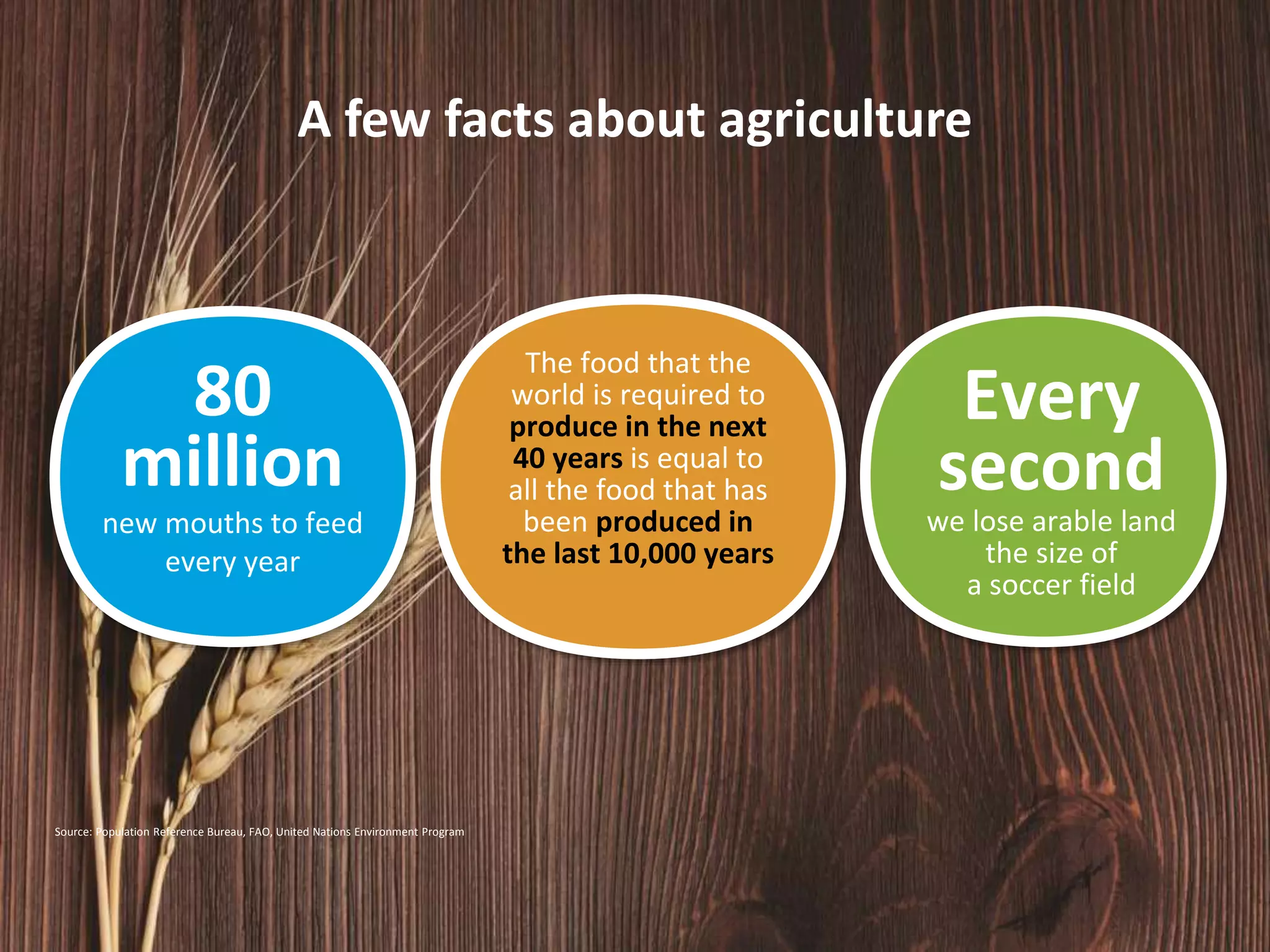
80
million
new mouths to feed
every year
The food that the
world is required to
produce in the next
40 years is equal to
all the food that has
been produced in
the last 10,000 years
Every
second
we lose arable land
the size of
a soccer field
© All rights reserved to Makhteshim Agan
What is IPM?
“Integrated pest management (IPM) is a strategy that draws on a range of
management tools with the goal of using the least ecologically disruptive
techniques to manage pests within economically acceptable levels.”
KNOWLEDGE PREVENTION MONITORING
INTERVENTION EVALUATION
© All rights reserved to Makhteshim Agan
What are the components of IPM?
1. Host plant resistance
2. Monitoring
3. Cultural control
4. Biological control
5. Chemical control
a) Weed control
b) Insect control
c) Disease control
© All rights reserved to Makhteshim Agan
Monitoring
 First step of IPM
 Do it systematically
 Visual monitoring of representative sample
 Keep diligent records
 Quality assessment at harvest
 Thresholds?
© All rights reserved to Makhteshim Agan
Cultural control
 Certified seed
 Seed treatment
 Mechanical weed control
 Mulches
 Plastic vs. organic
 Avoid spreading of diseases/weeds
 Implement movement
 Removal of plants
© All rights reserved to Makhteshim Agan
Cultural control (cont.)
 Field sanitation
 Rotate crops to break pest cycle
 Match crops to appropriate sites
 Adjust planting and maturity dates
 Water and nutrients
 Plant resistance
 Measure soil moisture
 Soil analysis
© All rights reserved to Makhteshim Agan
Biological control
 Main objective to reduce chemical control, never to
replace
 Position correctly in spray programme
 Only effective under low pressure situations
 Do homework
 Mating disruption, Beneficial's, mycorrhizae, viruses
 Evaluate products used, snake oils…
 Conserve natural population
© All rights reserved to Makhteshim Agan
Chemical control – the beginning…
Agrochemicals cannot change their characteristics to
suit farmers’ methods, it is set. Farmers need to
change their methods to accommodate the
chemical’s characteristics.
© All rights reserved to Makhteshim Agan
Chemical control – the basics…
 Maintain spray equipment properly
 Calibrate sprayer regularly
 Use appropriate nozzles, check regularly
 Follow proper mixing instructions
 50% water water conditioners granules & powders
SC EC SL adjuvants
 Adjust for pH/saline water
 Make sure products in tank are compatible
 Always read label
© All rights reserved to Makhteshim Agan
Weed control – the fundamentals…
Herbicides:
 Pre-emergent vs. Post-emergent
 Plant uptake
 Leaves, roots, coleoptile
 Weed spectrum
 Grass vs broadleaf vs non-selective
 Stage of crop and weeds
 Selectivity
 Wetter's…
© All rights reserved to Makhteshim Agan
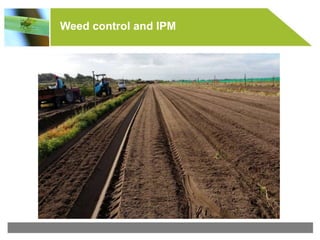
Weed control and IPM
 Consider all options BEFORE establishing crop
 Identify problem weeds to be controlled
 Pre-emergent herbicide with residual always 1st
option
 Grass weeds easily controlled post emergent
 Flushes
 Follow on crops
 Resistance
© All rights reserved to Makhteshim Agan
Weed control and IPM
Pre-emergent herbicides:
 Fine, firm seedbed free of clots and excessive
organic material
 Adhere to clay % rates
 Irrigation after application
© All rights reserved to Makhteshim Agan
Insect control – the fundamentals…
Plant uptake:
 Contact
 No movement in plant
 Translaminar
 Not systemic, moves through leaf
 Systemic
 Moves through plant
 Acropetal, basipetal, both
Insect uptake:
 Contact
 Stomach
 Body openings
© All rights reserved to Makhteshim Agan
Insect control and IPM
 Determine primary and secondary pests
 Research epidemiology/life cycle (vs crop stage)
 Build program around main pests
 Identify best insecticides (efficacy; Beneficial's)
 Familiarize yourself with insecticide characteristics
 Identify life stage targeted
 Make sure insecticide controls specific life stage
 Identify best timing for each product
 Block applications
© All rights reserved to Makhteshim Agan
Disease control – the fundamentals…
Fungicides:
 Contact
 “Knock down”
 Preventative
 Will stop infection from taking place
 Will not stop infection that already started
 Curative
 Will stop infection that already took place
 ‘X’ number of days “kick-back”
 Very few products
© All rights reserved to Makhteshim Agan
Disease control and IPM
 Identify main diseases before establishing crop
 Consider epidemiology, life cycle and conducive
weather conditions
 Identify best fungicides for main disease(s) and build
program around it
 Contact, preventative, curative
 When to use which product
 Block applications
 Prevention always better than cure
© All rights reserved to Makhteshim Agan
Disease control case study
Lettuce:
 Downey mildew program consists of only mancozeb
 Poor control
© All rights reserved to Makhteshim Agan
Resistance
 Identify HRAC, IRAC and FRAC group of every
product used in program
 Resistance against a group
 Product names
 Guideline available, i.e. number of sprays
 Protect best products
 Usually most prone to resistance
 Stick to recommended rate
© All rights reserved to Makhteshim Agan
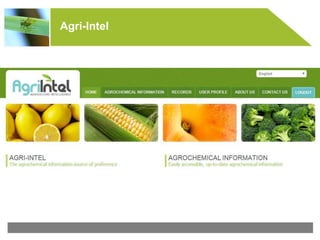
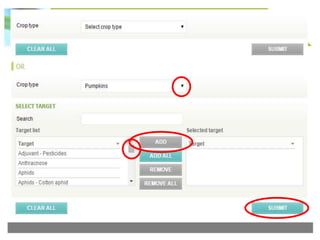
Agri-Intel
 http://www.agri-intel.com/
 Free to sign up
 Most up to date source of information
 Many different search functions
 All labels available for download
 Once you have all the options, easier to build
program
© All rights reserved to Makhteshim Agan
Agri-Intel
© All rights reserved to Makhteshim Agan
Agri-Intel
© All rights reserved to Makhteshim Agan
References
http://www.dpi.nsw.gov.au/__data/assets/pdf_file/0013/242050/Vegetable-integrated-pest-management.pdf
http://neipm.cce.cornell.edu/neipm/assets/File/NRCS-Resources/IPM-Plan-Guide-Sheet-Practices-for-
Vegetable-Production.pdf
© All rights reserved to Makhteshim Agan
23
Thank you!

Integrated pest management (IPM)

  • 1.
    A few factsabout agriculture 80 million new mouths to feed every year The food that the world is required to produce in the next 40 years is equal to all the food that has been produced in the last 10,000 years Every second we lose arable land the size of a soccer field
  • 2.
    © All rightsreserved to Makhteshim Agan What is IPM? “Integrated pest management (IPM) is a strategy that draws on a range of management tools with the goal of using the least ecologically disruptive techniques to manage pests within economically acceptable levels.” KNOWLEDGE PREVENTION MONITORING INTERVENTION EVALUATION
  • 3.
    © All rightsreserved to Makhteshim Agan What are the components of IPM? 1. Host plant resistance 2. Monitoring 3. Cultural control 4. Biological control 5. Chemical control a) Weed control b) Insect control c) Disease control
  • 4.
    © All rightsreserved to Makhteshim Agan Monitoring  First step of IPM  Do it systematically  Visual monitoring of representative sample  Keep diligent records  Quality assessment at harvest  Thresholds?
  • 5.
    © All rightsreserved to Makhteshim Agan Cultural control  Certified seed  Seed treatment  Mechanical weed control  Mulches  Plastic vs. organic  Avoid spreading of diseases/weeds  Implement movement  Removal of plants
  • 6.
    © All rightsreserved to Makhteshim Agan Cultural control (cont.)  Field sanitation  Rotate crops to break pest cycle  Match crops to appropriate sites  Adjust planting and maturity dates  Water and nutrients  Plant resistance  Measure soil moisture  Soil analysis
  • 7.
    © All rightsreserved to Makhteshim Agan Biological control  Main objective to reduce chemical control, never to replace  Position correctly in spray programme  Only effective under low pressure situations  Do homework  Mating disruption, Beneficial's, mycorrhizae, viruses  Evaluate products used, snake oils…  Conserve natural population
  • 8.
    © All rightsreserved to Makhteshim Agan Chemical control – the beginning… Agrochemicals cannot change their characteristics to suit farmers’ methods, it is set. Farmers need to change their methods to accommodate the chemical’s characteristics.
  • 9.
    © All rightsreserved to Makhteshim Agan Chemical control – the basics…  Maintain spray equipment properly  Calibrate sprayer regularly  Use appropriate nozzles, check regularly  Follow proper mixing instructions  50% water water conditioners granules & powders SC EC SL adjuvants  Adjust for pH/saline water  Make sure products in tank are compatible  Always read label
  • 10.
    © All rightsreserved to Makhteshim Agan Weed control – the fundamentals… Herbicides:  Pre-emergent vs. Post-emergent  Plant uptake  Leaves, roots, coleoptile  Weed spectrum  Grass vs broadleaf vs non-selective  Stage of crop and weeds  Selectivity  Wetter's…
  • 11.
    © All rightsreserved to Makhteshim Agan Weed control and IPM  Consider all options BEFORE establishing crop  Identify problem weeds to be controlled  Pre-emergent herbicide with residual always 1st option  Grass weeds easily controlled post emergent  Flushes  Follow on crops  Resistance
  • 12.
    © All rightsreserved to Makhteshim Agan Weed control and IPM Pre-emergent herbicides:  Fine, firm seedbed free of clots and excessive organic material  Adhere to clay % rates  Irrigation after application
  • 13.
    © All rightsreserved to Makhteshim Agan Insect control – the fundamentals… Plant uptake:  Contact  No movement in plant  Translaminar  Not systemic, moves through leaf  Systemic  Moves through plant  Acropetal, basipetal, both Insect uptake:  Contact  Stomach  Body openings
  • 14.
    © All rightsreserved to Makhteshim Agan Insect control and IPM  Determine primary and secondary pests  Research epidemiology/life cycle (vs crop stage)  Build program around main pests  Identify best insecticides (efficacy; Beneficial's)  Familiarize yourself with insecticide characteristics  Identify life stage targeted  Make sure insecticide controls specific life stage  Identify best timing for each product  Block applications
  • 15.
    © All rightsreserved to Makhteshim Agan Disease control – the fundamentals… Fungicides:  Contact  “Knock down”  Preventative  Will stop infection from taking place  Will not stop infection that already started  Curative  Will stop infection that already took place  ‘X’ number of days “kick-back”  Very few products
  • 16.
    © All rightsreserved to Makhteshim Agan Disease control and IPM  Identify main diseases before establishing crop  Consider epidemiology, life cycle and conducive weather conditions  Identify best fungicides for main disease(s) and build program around it  Contact, preventative, curative  When to use which product  Block applications  Prevention always better than cure
  • 17.
    © All rightsreserved to Makhteshim Agan Disease control case study Lettuce:  Downey mildew program consists of only mancozeb  Poor control
  • 18.
    © All rightsreserved to Makhteshim Agan Resistance  Identify HRAC, IRAC and FRAC group of every product used in program  Resistance against a group  Product names  Guideline available, i.e. number of sprays  Protect best products  Usually most prone to resistance  Stick to recommended rate
  • 19.
    © All rightsreserved to Makhteshim Agan Agri-Intel  http://www.agri-intel.com/  Free to sign up  Most up to date source of information  Many different search functions  All labels available for download  Once you have all the options, easier to build program
  • 20.
    © All rightsreserved to Makhteshim Agan Agri-Intel
  • 21.
    © All rightsreserved to Makhteshim Agan Agri-Intel
  • 22.
    © All rightsreserved to Makhteshim Agan References http://www.dpi.nsw.gov.au/__data/assets/pdf_file/0013/242050/Vegetable-integrated-pest-management.pdf http://neipm.cce.cornell.edu/neipm/assets/File/NRCS-Resources/IPM-Plan-Guide-Sheet-Practices-for- Vegetable-Production.pdf
  • 23.
    © All rightsreserved to Makhteshim Agan 23 Thank you!