CLINICAL CONSIDEARTIONS IN  ADVERSE EFFECTS OF  DRUGS
An adverse drug effect Any noxious or unintended effect of  a drug that occurs at appropriate doses used for prophylaxis, diagnosis or therapy  Drug toxicity includes all toxicity associated with a drug; including that observed in overdose/poisoning with drugs. S  Side effects generally refer to deleterious/nondeleterious effects that may occur during therapy.  Drug reactions can be classified into immunologic and nonimmunologic etiologies 
An adverse drug reaction (ADR) The majority (75 to 80 percent) of adverse drug reactions are caused by predictable, nonimmunologic effects.  The remaining 20 to 25 percent of adverse drug events are caused by unpredictable effects that may or may not be immune mediated  Dependent on the pharmacological and chemical properties of the drug and the target organ damaged  In many cases the exact mechanism of toxicity is not well understood, which makes the classification of drug reactions difficult
Types of adverse drug reactions Pharmacological  toxicity  due to receptor mediated/non-receptor mediated; side-effects,drug-drug interactions(pharmacokinetic and pharmacodynamic),  hypersensitivity(anaphylaxis/drugallergy), idiosyncratichyperreactivity, drug incompatibilities,  drug induced nephrotoxicity and hepatotoxicity  Dose dependent and predictable -avoided by careful and appropriate selection of the dose, taking in to consideration patient characteristics and concurrent drug use.
IDIOSYNCRACY   Genetically determined a unusual  abnormal reactivity to a  normal/ ordinary  dose of a drug , usually observed in  smaller percentage of population.  In general, dose dependent ADEs tend to be more common, but less serious;  but idiosyncratic ADEs tend to be relatively rare, but more serious.
IDIOSYNCRACY  …. contd The drugs used in veterinary medicine that have been associated with idiosyncratic reactions in humans are : penicillins, cephalosporins, erythromycin, sulfonamides, trimethoprim, chloramophenicol, anticonvulsants(phenobarbitol, phenytoin, carbamazepine) , phenyl butazone, dipyrone and phenothiazine derivatives.  ADRs  noticed in animlas are: sulfonamide polyarthritis, hepatotoxicity in dogs, diazepam hepatotoxicity in cats, mebendazole hepatotoxicity in dogs and  carprofen hepatitis.  The idiosyncratic reactions are difficult to predict and manage.
DRUG ALLERGY/ HYPERSENSITIVITY   An anaphylactic reaction or anaphylaxis :  an exaggerated immunological response to a substance to which an individual has become sensitised.  Histamine, serotonin, tryptase and other vasoactive substances are released from basophils and mast cells.  Clinically indistinguishable from anaphylaxis, but are mediated by the drug or substance directly, and not by sensitised IgE antibodies.

DRUG ALLERGY/ HYPERSENSITIVITY… contd Drug allergens implicated in producing anaphylactic reactions in domestic animals  penicillins, cephalosporins, sulfonamides,  streptomycin, tranquliisers, vancomycin, vitamins ,  insulin, tetracyclines, quinolones, salicylates,   phenothiazines,  chloramphenicol, heoparin, lidocaine ,  erythromycin, angiotensin converting  enzyme   inhibitors, methyl dopa, vitamin K, iron injections , exogenously administered repeated injections of  hormones(LH,hCG,PMSG)thiopentone,suxamethonium,non-depolarising muscle relaxants, ester local  anaesthetics and  plasma expanders  (dextrans, starches and gelatins ).   Other agents : vaccines, food and  insect  stings
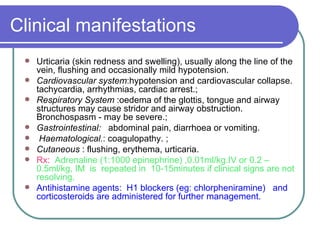
Clinical manifestations Urticaria (skin redness and swelling), usually along the line of the vein, flushing and occasionally mild hypotension.  Cardiovascular system :hypotension and cardiovascular collapse. tachycardia, arrhythmias, cardiac arrest.;  Respiratory System  :oedema of the glottis, tongue and airway structures may cause stridor and airway obstruction. Bronchospasm - may be severe.;  Gastrointestinal:  abdominal pain, diarrhoea or vomiting.  Haematological. : coagulopathy. ;  Cutaneous  : flushing, erythema, urticaria.   Rx:   Adrenaline (1:1000 epinephrine) ,0.01ml/kg.IV or 0.2 – 0.5ml/kg, IM  is  repeated in  10-15minutes if clinical signs are not resolving.  Antihistamine agents:  H1 blockers (eg: chlorpheniramine)  and corticosteroids are administered for further management.
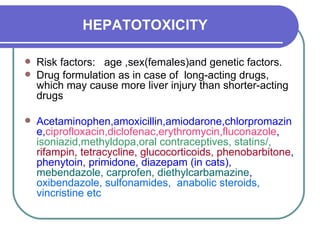
HEPATOTOXICITY  Risk factors:   age ,sex(females)and genetic factors.  Drug formulation as in case of  long-acting drugs,  which may cause more liver injury than shorter-acting drugs  Acetaminophen,amoxicillin,amiodarone,chlorpromazine, ciprofloxacin,diclofenac,erythromycin,fluconazole ,  isoniazid,methyldopa,oral contraceptives, statins/,   rifampin, tetracycline, glucocorticoids, phenobarbitone , phenytoin, primidone, diazepam (in cats),  mebendazole, carprofen, diethylcarbamazine ,  oxibendazole, sulfonamides,  anabolic steroids, vincristine etc
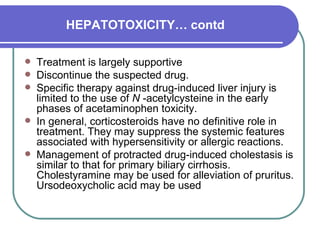
HEPATOTOXICITY… contd  Treatment is largely supportive Discontinue the suspected drug.  Specific therapy against drug-induced liver injury is limited to the use of  N  -acetylcysteine in the early phases of acetaminophen toxicity.  In general, corticosteroids have no definitive role in treatment. They may suppress the systemic features associated with hypersensitivity or allergic reactions.  Management of protracted drug-induced cholestasis is similar to that for primary biliary cirrhosis. Cholestyramine may be used for alleviation of pruritus. Ursodeoxycholic acid may be used
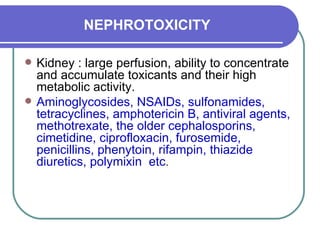
NEPHROTOXICITY Kidney : large perfusion, ability to concentrate and accumulate toxicants and their high metabolic activity.  Aminoglycosides, NSAIDs, sulfonamides, tetracyclines, amphotericin B, antiviral agents, methotrexate, the older cephalosporins, cimetidine, ciprofloxacin, furosemide, penicillins, phenytoin, rifampin, thiazide diuretics, polymixin  etc .
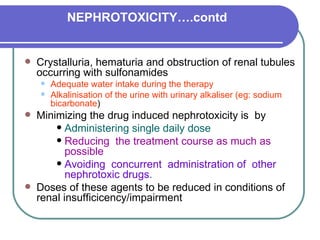
NEPHROTOXICITY….contd Crystalluria, hematuria and obstruction of renal tubules occurring with sulfonamides  Adequate water intake during the therapy  Alkalinisation of the urine with urinary alkaliser (eg: sodium bicarbonate )  Minimizing the drug induced nephrotoxicity is  by Administering single daily dose  Reducing  the treatment course as much as possible   Avoiding  concurrent  administration of  other nephrotoxic drugs . Doses of these agents to be reduced in conditions of renal insufficicency/impairment
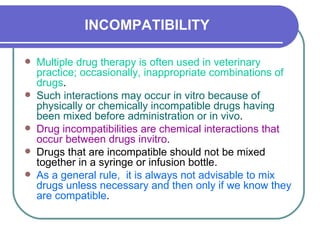
INCOMPATIBILITY Multiple drug therapy is often used in veterinary practice; occasionally, inappropriate combinations of drugs .  Such interactions may occur in vitro because of physically or chemically incompatible drugs having been mixed before administration or in vivo .  Drug incompatibilities are chemical interactions that occur between drugs invitro .  Drugs that are incompatible should not be mixed together in a syringe or infusion bottle.  As a general rule,  it is always not advisable to mix drugs unless necessary and then only if we know they are compatible .
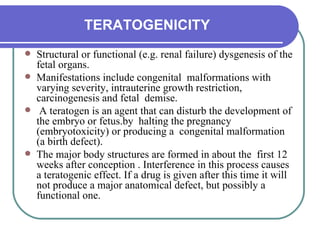
TERATOGENICITY Structural or functional (e.g. renal failure) dysgenesis of the fetal organs.  Manifestations include congenital  malformations with varying severity, intrauterine growth restriction, carcinogenesis and fetal  demise.  A teratogen is an agent that can disturb the development of the embryo or fetus.by  halting the pregnancy (embryotoxicity) or producing a  congenital malformation (a birth defect).  The major body structures are formed in about the  first 12 weeks after conception . Interference in this process causes a teratogenic effect. If a drug is given after this time it will not produce a major anatomical defect, but possibly a functional one.
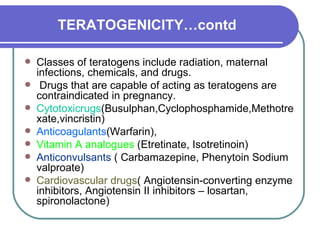
TERATOGENICITY…contd Classes of teratogens include radiation, maternal infections, chemicals, and drugs.  Drugs that are capable of acting as teratogens are  contraindicated in pregnancy.  Cytotoxicrugs (Busulphan,Cyclophosphamide,Methotrexate,vincristin)  Anticoagulants (Warfarin),  Vitamin A analogues  (Etretinate, Isotretinoin)  Anticonvulsants  ( Carbamazepine, Phenytoin Sodium valproate)  Cardiovascular drugs ( Angiotensin-converting enzyme inhibitors, Angiotensin II inhibitors – losartan,  spironolactone)
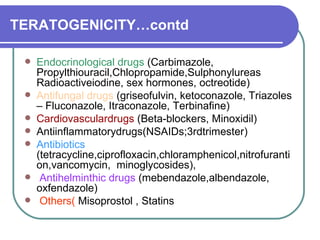
TERATOGENICITY…contd Endocrinological drugs  (Carbimazole, Propylthiouracil,Chlopropamide,Sulphonylureas Radioactiveiodine, sex hormones, octreotide)  Antifungal drugs  (griseofulvin, ketoconazole, Triazoles – Fluconazole, Itraconazole, Terbinafine)  Cardiovasculardrugs  (Beta-blockers, Minoxidil)  Antiinflammatorydrugs(NSAIDs;3rdtrimester)  Antibiotics  (tetracycline,ciprofloxacin,chloramphenicol,nitrofurantion,vancomycin,  minoglycosides),  Antihelminthic drugs  (mebendazole,albendazole, oxfendazole)  Others(  Misoprostol , Statins
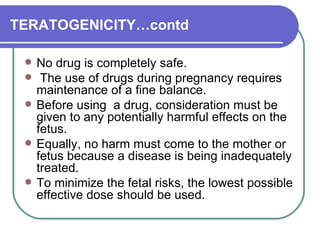
TERATOGENICITY…contd No drug is completely safe.  The use of drugs during pregnancy requires maintenance of a fine balance.  Before using  a drug, consideration must be given to any potentially harmful effects on the fetus.  Equally, no harm must come to the mother or fetus because a disease is being inadequately treated.  To minimize the fetal risks, the lowest possible effective dose should be used.
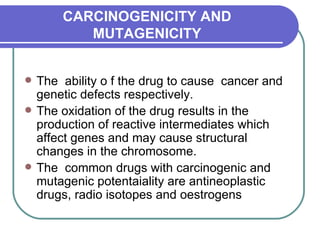
CARCINOGENICITY AND MUTAGENICITY The  ability o f the drug to cause  cancer and genetic defects respectively.  The oxidation of the drug results in the production of reactive intermediates which affect genes and may cause structural changes in the chromosome.  The  common drugs with carcinogenic and mutagenic potentaiality are antineoplastic drugs, radio isotopes and oestrogens
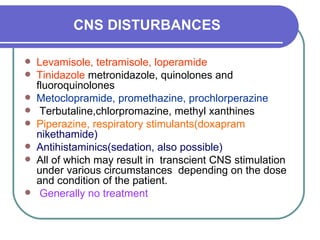
CNS DISTURBANCES Levamisole, tetramisole, loperamide Tinidazole  metronidazole, quinolones and fluoroquinolones  Metoclopramide, promethazine, prochlorperazine Terbutaline,chlorpromazine, methyl xanthines  Piperazine, respiratory stimulants(doxapram   nikethamide)  Antihistaminics(sedation, also possible)  All of which may result in  transcient CNS stimulation under various circumstances  depending on the dose and condition of the patient. Generally no treatment
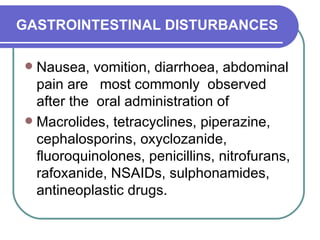
GASTROINTESTINAL DISTURBANCES Nausea, vomition, diarrhoea, abdominal pain are  most commonly  observed after the  oral administration of  Macrolides, tetracyclines, piperazine, cephalosporins, oxyclozanide, fluoroquinolones, penicillins, nitrofurans, rafoxanide, NSAIDs, sulphonamides, antineoplastic drugs.
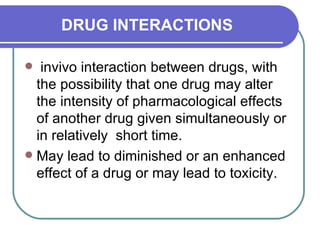
DRUG INTERACTIONS invivo interaction between drugs, with the possibility that one drug may alter the intensity of pharmacological effects of another drug given simultaneously or in relatively  short time.  May lead to diminished or an enhanced effect of a drug or may lead to toxicity.
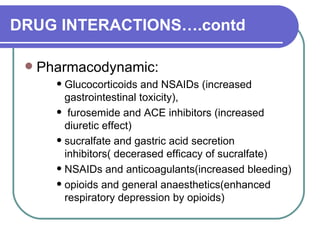
DRUG INTERACTIONS….contd Pharmacodynamic:  Glucocorticoids and NSAIDs (increased gastrointestinal toxicity),  furosemide and ACE inhibitors (increased diuretic effect)  sucralfate and gastric acid secretion inhibitors( decerased efficacy of sucralfate)  NSAIDs and anticoagulants(increased bleeding)  opioids and general anaesthetics(enhanced respiratory depression by opioids)
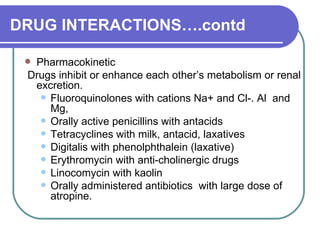
DRUG INTERACTIONS….contd Pharmacokinetic Drugs inhibit or enhance each other’s metabolism or renal excretion.  Fluoroquinolones with cations Na+ and Cl-. Al  and Mg,  Orally active penicillins with antacids  Tetracyclines with milk, antacid, laxatives  Digitalis with phenolphthalein (laxative)  Erythromycin with anti-cholinergic drugs  Linocomycin with kaolin  Orally administered antibiotics  with large dose of atropine.
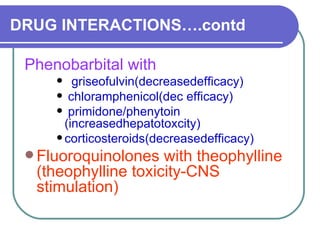
DRUG INTERACTIONS….contd Phenobarbital with  griseofulvin(decreasedefficacy)  chloramphenicol(dec efficacy)  primidone/phenytoin (increasedhepatotoxcity)  corticosteroids(decreasedefficacy)  Fluoroquinolones with theophylline (theophylline toxicity-CNS stimulation)
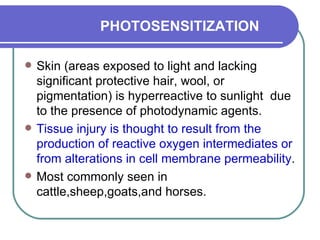
PHOTOSENSITIZATION Skin (areas exposed to light and lacking significant protective hair, wool, or pigmentation) is hyperreactive to sunlight  due to the presence of photodynamic agents.  Tissue injury is thought to result from the production of reactive oxygen intermediates or from alterations in cell membrane permeability .  Most commonly seen in cattle,sheep,goats,and horses.
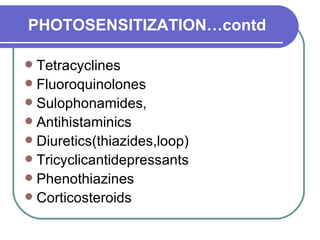
PHOTOSENSITIZATION…contd Tetracyclines  Fluoroquinolones Sulophonamides,  Antihistaminics  Diuretics(thiazides,loop)  Tricyclicantidepressants  Phenothiazines  Corticosteroids
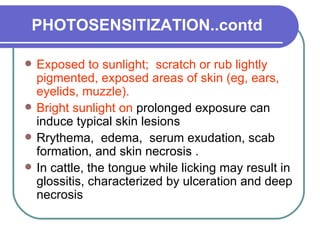
PHOTOSENSITIZATION..contd Exposed to sunlight;  scratch or rub lightly pigmented, exposed areas of skin (eg, ears, eyelids, muzzle).  Bright sunlight on  prolonged exposure can induce typical skin lesions  Rrythema,  edema,  serum exudation, scab formation, and skin necrosis .  In cattle, the tongue while licking may result in glossitis, characterized by ulceration and deep necrosis
PHOTOSENSITIZATION..contd Animals should be shaded fully or, preferably, housed and allowed to graze only during darkness. Corticosteroids, given parenterally in the early stages, may be helpful.  Secondary skin infections and suppurations should be treated with basic wound management techniques, and fly strike prevented.  Supportive care includes bathing and cleaning of the lesions with the application of topical antibiotic or antiseptic ointments.  If the lesions are deep enough, systemic antibiotics might be required
LOCAL PAIN, TISSUE INJURY AND IRRITATION Pain, irritation and tissue injuries : parenterally (IM) administered drugs Antibiotics, chemotherapeutics, vitamins, lidocaine, diazepam and digoxin in dogs, swine, cows, sheep and hens .  Both the drug itself and the vehicles may cause tissue damage.  The substances commonly used as drug vehicles  such as  glycerol formal or propylene glycol caused damage to muscle tissue .  Bleeding from the injection site and hematoma formation can occur if blood vessels are injured during particularly intramuscular injections .
LOCAL PAIN, TISSUE INJURY AND IRRITATION….contd Accidental intra arterial injection results in a severe chemical injury to the vessels with vasospasm and thrombosis.  Skin necrosis, neurological damage, and loss of limb can follow.  Nerve injury is another serious complication of IM injections.  The sciatic nerve is commonly injured by gluteal injections and the radial nerve injury at the shoulder, commonly manifested by  paresis, necrosis etc.
LOCAL PAIN, TISSUE INJURY AND IRRITATION….contd Quinpyramine salts  suramin, diminazine, B complex injectables, multivitamin injectables, ‘ cephalosporins, tetracyclines, NSAIDS, oil based injectables,  Long-acting injectable medications  The extravasation of anticancerous drugs outside the vein may result in thrombophlebitiis and tissue necrosis
LOCAL PAIN, TISSUE INJURY AND IRRITATION….contd Abscesses:   IM injection sites are sterile abscesses.  These are nodules of liquefied fat and muscle resulting from necrosis of the involved tissues.  Hypersensitivity to the injected medication or a caustic medication  injected in an inappropriate location such as  subcutaneous tissues rather than the muscle, absorption is delayed, which allows for a greater tissue reaction to the medication.  Local tissue necrosis and liquefaction with a surrounding area of intense inflammation.  Using a needle of insufficient length to reach the muscle.
LOCAL PAIN, TISSUE INJURY AND IRRITATION….contd Necrosis  Forceful placement of a volume of fluid into a closed space will cause damage.  The surrounding muscle and tissues in the immediate area of the needle tip are subjected to the pressure of the mass of fluid that has been instilled into the area, which causes pressure necrosis.  The toxicity of the medication, the volume injected, and even the speed at which the injection is given also will influence the size of the necrotic lesion
LOCAL PAIN, TISSUE INJURY AND IRRITATION….contd Multiple injections  in the same area over a protracted period of time:  the areas of necrosis may become quite large and result in large areas of fibrosis of the tissues .  Manifested by hard nodules felt deep in the tissues and even sunken areas of scar tissue seen on the surface of the skin   The fibrotic scar result in meat that is not suitable for the consumer and makes the remainder of the meat tough.  Malignancies (sarcoma) at injection sites (low)  Contracture of joints/bones due to tissue injury is another  irreversible complication
Guidelines for avoiding  injection site complications The approved landmarks for the injection site   Cleansing the skin The use of disposable needles and syringes  Using single-dose medication vials  A needle of appropriate size and length  The length or size of the needle does not affect post-injection pain.  Care to be taken to Inject medication only into muscle, not in to  fat.  Avoid inadvertent intravascular injection  Repeated injections into the same site is to be avoided
THANK YOU

Adverse drug reactions

  • 1.
    CLINICAL CONSIDEARTIONS IN ADVERSE EFFECTS OF DRUGS
  • 2.
    An adverse drugeffect Any noxious or unintended effect of a drug that occurs at appropriate doses used for prophylaxis, diagnosis or therapy Drug toxicity includes all toxicity associated with a drug; including that observed in overdose/poisoning with drugs. S Side effects generally refer to deleterious/nondeleterious effects that may occur during therapy. Drug reactions can be classified into immunologic and nonimmunologic etiologies 
  • 3.
    An adverse drugreaction (ADR) The majority (75 to 80 percent) of adverse drug reactions are caused by predictable, nonimmunologic effects. The remaining 20 to 25 percent of adverse drug events are caused by unpredictable effects that may or may not be immune mediated Dependent on the pharmacological and chemical properties of the drug and the target organ damaged In many cases the exact mechanism of toxicity is not well understood, which makes the classification of drug reactions difficult
  • 4.
    Types of adversedrug reactions Pharmacological toxicity due to receptor mediated/non-receptor mediated; side-effects,drug-drug interactions(pharmacokinetic and pharmacodynamic), hypersensitivity(anaphylaxis/drugallergy), idiosyncratichyperreactivity, drug incompatibilities, drug induced nephrotoxicity and hepatotoxicity Dose dependent and predictable -avoided by careful and appropriate selection of the dose, taking in to consideration patient characteristics and concurrent drug use.
  • 5.
    IDIOSYNCRACY Genetically determined a unusual abnormal reactivity to a normal/ ordinary dose of a drug , usually observed in smaller percentage of population. In general, dose dependent ADEs tend to be more common, but less serious; but idiosyncratic ADEs tend to be relatively rare, but more serious.
  • 6.
    IDIOSYNCRACY ….contd The drugs used in veterinary medicine that have been associated with idiosyncratic reactions in humans are : penicillins, cephalosporins, erythromycin, sulfonamides, trimethoprim, chloramophenicol, anticonvulsants(phenobarbitol, phenytoin, carbamazepine) , phenyl butazone, dipyrone and phenothiazine derivatives. ADRs noticed in animlas are: sulfonamide polyarthritis, hepatotoxicity in dogs, diazepam hepatotoxicity in cats, mebendazole hepatotoxicity in dogs and carprofen hepatitis. The idiosyncratic reactions are difficult to predict and manage.
  • 7.
    DRUG ALLERGY/ HYPERSENSITIVITY An anaphylactic reaction or anaphylaxis : an exaggerated immunological response to a substance to which an individual has become sensitised. Histamine, serotonin, tryptase and other vasoactive substances are released from basophils and mast cells. Clinically indistinguishable from anaphylaxis, but are mediated by the drug or substance directly, and not by sensitised IgE antibodies.
  • 8.
    DRUG ALLERGY/ HYPERSENSITIVITY…contd Drug allergens implicated in producing anaphylactic reactions in domestic animals penicillins, cephalosporins, sulfonamides, streptomycin, tranquliisers, vancomycin, vitamins , insulin, tetracyclines, quinolones, salicylates, phenothiazines, chloramphenicol, heoparin, lidocaine , erythromycin, angiotensin converting enzyme inhibitors, methyl dopa, vitamin K, iron injections , exogenously administered repeated injections of hormones(LH,hCG,PMSG)thiopentone,suxamethonium,non-depolarising muscle relaxants, ester local anaesthetics and plasma expanders (dextrans, starches and gelatins ). Other agents : vaccines, food and insect stings
  • 9.
    Clinical manifestations Urticaria(skin redness and swelling), usually along the line of the vein, flushing and occasionally mild hypotension. Cardiovascular system :hypotension and cardiovascular collapse. tachycardia, arrhythmias, cardiac arrest.; Respiratory System :oedema of the glottis, tongue and airway structures may cause stridor and airway obstruction. Bronchospasm - may be severe.; Gastrointestinal: abdominal pain, diarrhoea or vomiting. Haematological. : coagulopathy. ; Cutaneous : flushing, erythema, urticaria.  Rx: Adrenaline (1:1000 epinephrine) ,0.01ml/kg.IV or 0.2 – 0.5ml/kg, IM is repeated in 10-15minutes if clinical signs are not resolving. Antihistamine agents: H1 blockers (eg: chlorpheniramine) and corticosteroids are administered for further management.
  • 10.
    HEPATOTOXICITY Riskfactors:  age ,sex(females)and genetic factors. Drug formulation as in case of long-acting drugs, which may cause more liver injury than shorter-acting drugs Acetaminophen,amoxicillin,amiodarone,chlorpromazine, ciprofloxacin,diclofenac,erythromycin,fluconazole , isoniazid,methyldopa,oral contraceptives, statins/, rifampin, tetracycline, glucocorticoids, phenobarbitone , phenytoin, primidone, diazepam (in cats), mebendazole, carprofen, diethylcarbamazine , oxibendazole, sulfonamides, anabolic steroids, vincristine etc
  • 11.
    HEPATOTOXICITY… contd Treatment is largely supportive Discontinue the suspected drug. Specific therapy against drug-induced liver injury is limited to the use of  N  -acetylcysteine in the early phases of acetaminophen toxicity. In general, corticosteroids have no definitive role in treatment. They may suppress the systemic features associated with hypersensitivity or allergic reactions. Management of protracted drug-induced cholestasis is similar to that for primary biliary cirrhosis. Cholestyramine may be used for alleviation of pruritus. Ursodeoxycholic acid may be used
  • 12.
    NEPHROTOXICITY Kidney :large perfusion, ability to concentrate and accumulate toxicants and their high metabolic activity. Aminoglycosides, NSAIDs, sulfonamides, tetracyclines, amphotericin B, antiviral agents, methotrexate, the older cephalosporins, cimetidine, ciprofloxacin, furosemide, penicillins, phenytoin, rifampin, thiazide diuretics, polymixin etc .
  • 13.
    NEPHROTOXICITY….contd Crystalluria, hematuriaand obstruction of renal tubules occurring with sulfonamides Adequate water intake during the therapy Alkalinisation of the urine with urinary alkaliser (eg: sodium bicarbonate ) Minimizing the drug induced nephrotoxicity is by Administering single daily dose Reducing the treatment course as much as possible Avoiding concurrent administration of other nephrotoxic drugs . Doses of these agents to be reduced in conditions of renal insufficicency/impairment
  • 14.
    INCOMPATIBILITY Multiple drugtherapy is often used in veterinary practice; occasionally, inappropriate combinations of drugs . Such interactions may occur in vitro because of physically or chemically incompatible drugs having been mixed before administration or in vivo . Drug incompatibilities are chemical interactions that occur between drugs invitro . Drugs that are incompatible should not be mixed together in a syringe or infusion bottle. As a general rule, it is always not advisable to mix drugs unless necessary and then only if we know they are compatible .
  • 15.
    TERATOGENICITY Structural orfunctional (e.g. renal failure) dysgenesis of the fetal organs. Manifestations include congenital malformations with varying severity, intrauterine growth restriction, carcinogenesis and fetal demise. A teratogen is an agent that can disturb the development of the embryo or fetus.by halting the pregnancy (embryotoxicity) or producing a congenital malformation (a birth defect). The major body structures are formed in about the first 12 weeks after conception . Interference in this process causes a teratogenic effect. If a drug is given after this time it will not produce a major anatomical defect, but possibly a functional one.
  • 16.
    TERATOGENICITY…contd Classes ofteratogens include radiation, maternal infections, chemicals, and drugs. Drugs that are capable of acting as teratogens are contraindicated in pregnancy. Cytotoxicrugs (Busulphan,Cyclophosphamide,Methotrexate,vincristin) Anticoagulants (Warfarin), Vitamin A analogues (Etretinate, Isotretinoin) Anticonvulsants ( Carbamazepine, Phenytoin Sodium valproate) Cardiovascular drugs ( Angiotensin-converting enzyme inhibitors, Angiotensin II inhibitors – losartan, spironolactone)
  • 17.
    TERATOGENICITY…contd Endocrinological drugs (Carbimazole, Propylthiouracil,Chlopropamide,Sulphonylureas Radioactiveiodine, sex hormones, octreotide) Antifungal drugs (griseofulvin, ketoconazole, Triazoles – Fluconazole, Itraconazole, Terbinafine) Cardiovasculardrugs (Beta-blockers, Minoxidil) Antiinflammatorydrugs(NSAIDs;3rdtrimester) Antibiotics (tetracycline,ciprofloxacin,chloramphenicol,nitrofurantion,vancomycin, minoglycosides), Antihelminthic drugs (mebendazole,albendazole, oxfendazole) Others( Misoprostol , Statins
  • 18.
    TERATOGENICITY…contd No drugis completely safe. The use of drugs during pregnancy requires maintenance of a fine balance. Before using a drug, consideration must be given to any potentially harmful effects on the fetus. Equally, no harm must come to the mother or fetus because a disease is being inadequately treated. To minimize the fetal risks, the lowest possible effective dose should be used.
  • 19.
    CARCINOGENICITY AND MUTAGENICITYThe ability o f the drug to cause cancer and genetic defects respectively. The oxidation of the drug results in the production of reactive intermediates which affect genes and may cause structural changes in the chromosome. The common drugs with carcinogenic and mutagenic potentaiality are antineoplastic drugs, radio isotopes and oestrogens
  • 20.
    CNS DISTURBANCES Levamisole,tetramisole, loperamide Tinidazole metronidazole, quinolones and fluoroquinolones Metoclopramide, promethazine, prochlorperazine Terbutaline,chlorpromazine, methyl xanthines Piperazine, respiratory stimulants(doxapram nikethamide) Antihistaminics(sedation, also possible) All of which may result in transcient CNS stimulation under various circumstances depending on the dose and condition of the patient. Generally no treatment
  • 21.
    GASTROINTESTINAL DISTURBANCES Nausea,vomition, diarrhoea, abdominal pain are most commonly observed after the oral administration of Macrolides, tetracyclines, piperazine, cephalosporins, oxyclozanide, fluoroquinolones, penicillins, nitrofurans, rafoxanide, NSAIDs, sulphonamides, antineoplastic drugs.
  • 22.
    DRUG INTERACTIONS invivointeraction between drugs, with the possibility that one drug may alter the intensity of pharmacological effects of another drug given simultaneously or in relatively short time. May lead to diminished or an enhanced effect of a drug or may lead to toxicity.
  • 23.
    DRUG INTERACTIONS….contd Pharmacodynamic: Glucocorticoids and NSAIDs (increased gastrointestinal toxicity), furosemide and ACE inhibitors (increased diuretic effect) sucralfate and gastric acid secretion inhibitors( decerased efficacy of sucralfate) NSAIDs and anticoagulants(increased bleeding) opioids and general anaesthetics(enhanced respiratory depression by opioids)
  • 24.
    DRUG INTERACTIONS….contd PharmacokineticDrugs inhibit or enhance each other’s metabolism or renal excretion. Fluoroquinolones with cations Na+ and Cl-. Al and Mg, Orally active penicillins with antacids Tetracyclines with milk, antacid, laxatives Digitalis with phenolphthalein (laxative) Erythromycin with anti-cholinergic drugs Linocomycin with kaolin Orally administered antibiotics with large dose of atropine.
  • 25.
    DRUG INTERACTIONS….contd Phenobarbitalwith griseofulvin(decreasedefficacy) chloramphenicol(dec efficacy) primidone/phenytoin (increasedhepatotoxcity) corticosteroids(decreasedefficacy) Fluoroquinolones with theophylline (theophylline toxicity-CNS stimulation)
  • 26.
    PHOTOSENSITIZATION Skin (areasexposed to light and lacking significant protective hair, wool, or pigmentation) is hyperreactive to sunlight due to the presence of photodynamic agents. Tissue injury is thought to result from the production of reactive oxygen intermediates or from alterations in cell membrane permeability . Most commonly seen in cattle,sheep,goats,and horses.
  • 27.
    PHOTOSENSITIZATION…contd Tetracyclines Fluoroquinolones Sulophonamides, Antihistaminics Diuretics(thiazides,loop) Tricyclicantidepressants Phenothiazines Corticosteroids
  • 28.
    PHOTOSENSITIZATION..contd Exposed tosunlight; scratch or rub lightly pigmented, exposed areas of skin (eg, ears, eyelids, muzzle). Bright sunlight on prolonged exposure can induce typical skin lesions Rrythema, edema, serum exudation, scab formation, and skin necrosis . In cattle, the tongue while licking may result in glossitis, characterized by ulceration and deep necrosis
  • 29.
    PHOTOSENSITIZATION..contd Animals shouldbe shaded fully or, preferably, housed and allowed to graze only during darkness. Corticosteroids, given parenterally in the early stages, may be helpful. Secondary skin infections and suppurations should be treated with basic wound management techniques, and fly strike prevented. Supportive care includes bathing and cleaning of the lesions with the application of topical antibiotic or antiseptic ointments. If the lesions are deep enough, systemic antibiotics might be required
  • 30.
    LOCAL PAIN, TISSUEINJURY AND IRRITATION Pain, irritation and tissue injuries : parenterally (IM) administered drugs Antibiotics, chemotherapeutics, vitamins, lidocaine, diazepam and digoxin in dogs, swine, cows, sheep and hens . Both the drug itself and the vehicles may cause tissue damage. The substances commonly used as drug vehicles such as glycerol formal or propylene glycol caused damage to muscle tissue . Bleeding from the injection site and hematoma formation can occur if blood vessels are injured during particularly intramuscular injections .
  • 31.
    LOCAL PAIN, TISSUEINJURY AND IRRITATION….contd Accidental intra arterial injection results in a severe chemical injury to the vessels with vasospasm and thrombosis. Skin necrosis, neurological damage, and loss of limb can follow. Nerve injury is another serious complication of IM injections. The sciatic nerve is commonly injured by gluteal injections and the radial nerve injury at the shoulder, commonly manifested by paresis, necrosis etc.
  • 32.
    LOCAL PAIN, TISSUEINJURY AND IRRITATION….contd Quinpyramine salts suramin, diminazine, B complex injectables, multivitamin injectables, ‘ cephalosporins, tetracyclines, NSAIDS, oil based injectables, Long-acting injectable medications The extravasation of anticancerous drugs outside the vein may result in thrombophlebitiis and tissue necrosis
  • 33.
    LOCAL PAIN, TISSUEINJURY AND IRRITATION….contd Abscesses: IM injection sites are sterile abscesses. These are nodules of liquefied fat and muscle resulting from necrosis of the involved tissues. Hypersensitivity to the injected medication or a caustic medication injected in an inappropriate location such as subcutaneous tissues rather than the muscle, absorption is delayed, which allows for a greater tissue reaction to the medication. Local tissue necrosis and liquefaction with a surrounding area of intense inflammation. Using a needle of insufficient length to reach the muscle.
  • 34.
    LOCAL PAIN, TISSUEINJURY AND IRRITATION….contd Necrosis Forceful placement of a volume of fluid into a closed space will cause damage. The surrounding muscle and tissues in the immediate area of the needle tip are subjected to the pressure of the mass of fluid that has been instilled into the area, which causes pressure necrosis. The toxicity of the medication, the volume injected, and even the speed at which the injection is given also will influence the size of the necrotic lesion
  • 35.
    LOCAL PAIN, TISSUEINJURY AND IRRITATION….contd Multiple injections in the same area over a protracted period of time: the areas of necrosis may become quite large and result in large areas of fibrosis of the tissues . Manifested by hard nodules felt deep in the tissues and even sunken areas of scar tissue seen on the surface of the skin The fibrotic scar result in meat that is not suitable for the consumer and makes the remainder of the meat tough. Malignancies (sarcoma) at injection sites (low) Contracture of joints/bones due to tissue injury is another irreversible complication
  • 36.
    Guidelines for avoiding injection site complications The approved landmarks for the injection site Cleansing the skin The use of disposable needles and syringes Using single-dose medication vials A needle of appropriate size and length The length or size of the needle does not affect post-injection pain. Care to be taken to Inject medication only into muscle, not in to fat. Avoid inadvertent intravascular injection Repeated injections into the same site is to be avoided
  • 37.