T/Maj. Dr. Sitaram Khadka (Pharmacist)
Doctor of Pharmacy(Pak), PGDDM (Ind), R.Ph.
T/Capt. Dr. Mahesh Khatri (Pharmacist)
Doctor of Pharmacy(Pak), R.Ph.
5/31/2015WHO GPP: A clinical approach1
WHO Good Pharmacy
Practice(GPP): A Clinical Approach
Contents of the Presentation
5/31/2015WHO GPP: A clinical approach2
 Background
 Introduction to GPP; Global and SBH scenario
 Clinical Pharmacy Practice
 Rational prescribing and dispensing
 Pharmacovigilance; Adverse Drug
Reactions(ADR)
 Drug Information Centre(DIC)
 National GPP
 Questions/Answers session
“They just count a few
tablets”
Perception
s of
Pharmacis
ts
-How do others
see
pharmacists?
5/31/2015WHO GPP: A clinical approach3
“They just weigh and measure th
“A bunch of shop-keepers” “Tell me how and when to use the Medi
5/31/2015WHO GPP: A clinical approach4
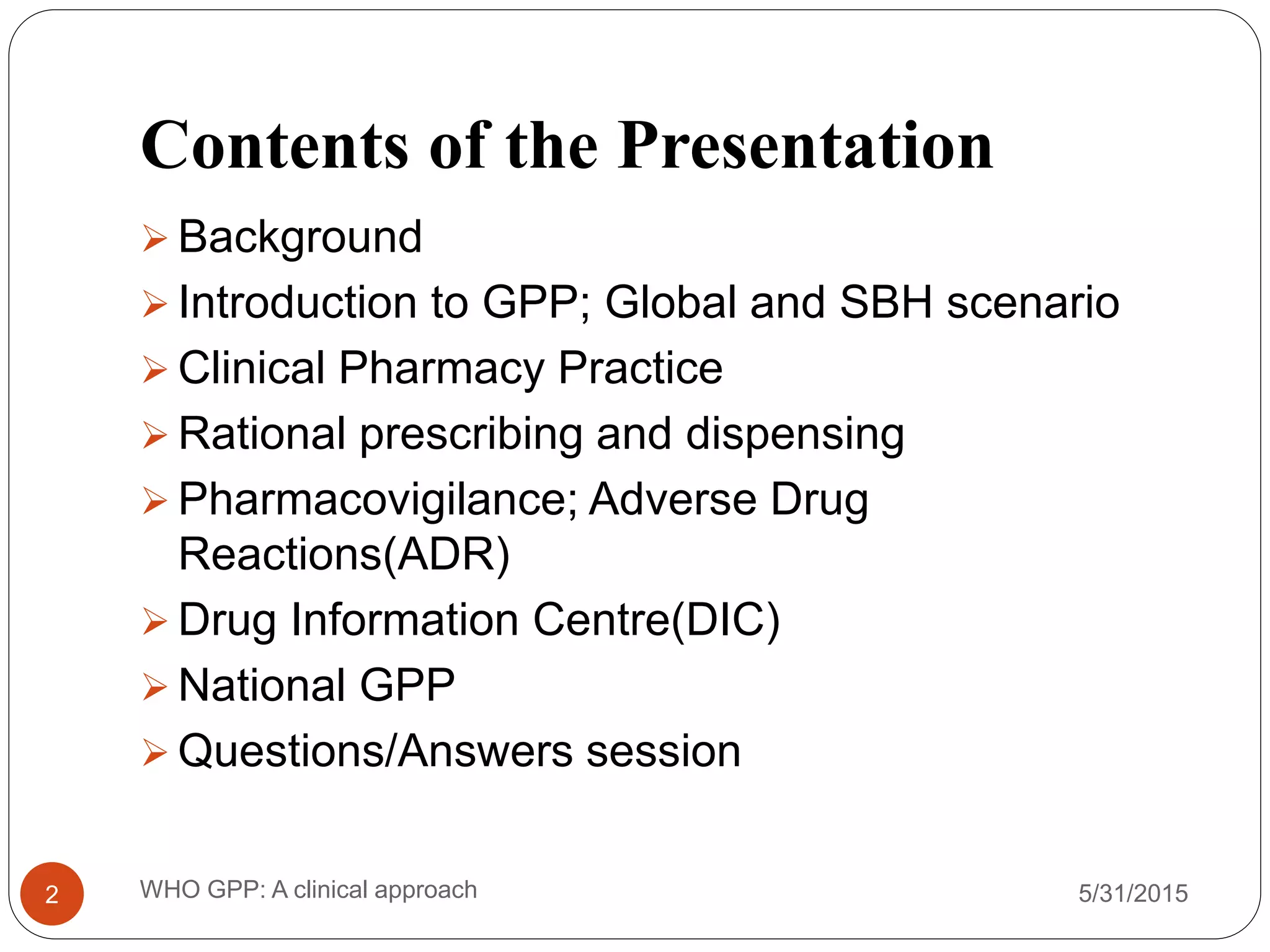
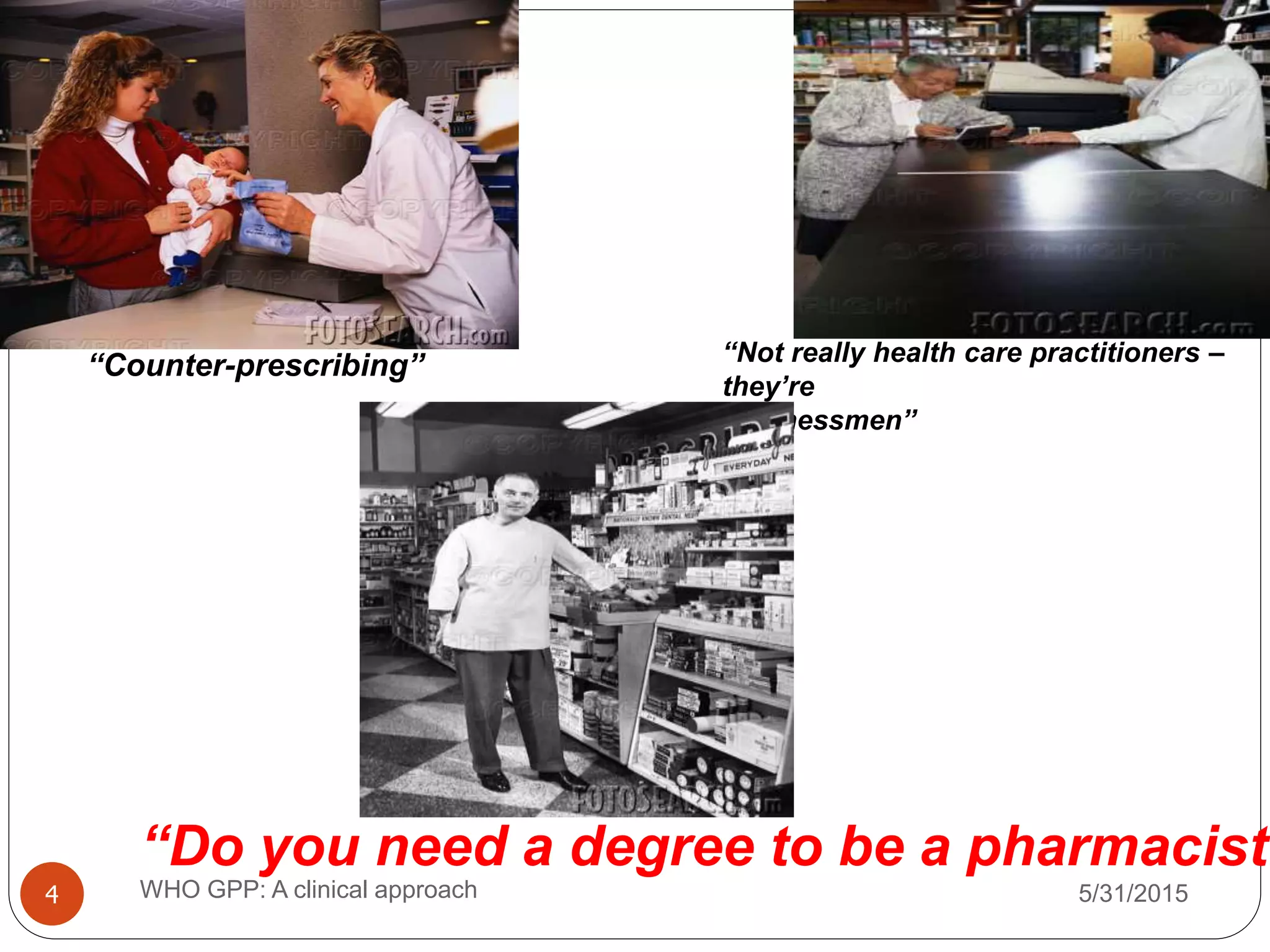
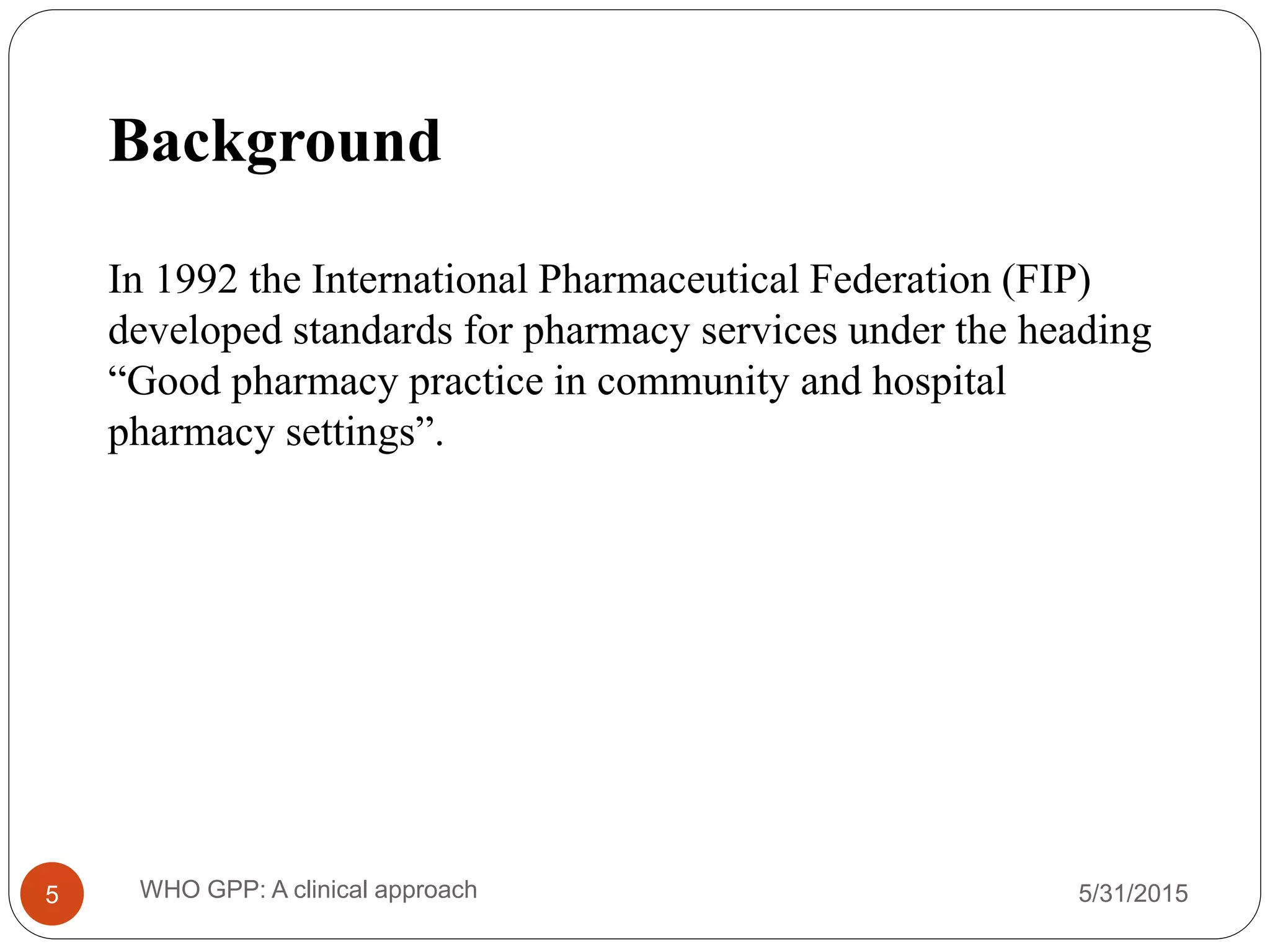
“Counter-prescribing” “Not really health care practitioners –
they’re
businessmen”
“Do you need a degree to be a pharmacist?
Background
In 1992 the International Pharmaceutical Federation (FIP)
developed standards for pharmacy services under the heading
“Good pharmacy practice in community and hospital
pharmacy settings”.
5/31/2015WHO GPP: A clinical approach5
5/31/2015WHO GPP: A clinical approach6
Knowledge of Drug Therapy
Knowledge of Disease
Knowledge of communication skill
Communication skill
Patient monitoring skill
Physical Assessment skill
Drug Information skill
Therapeutic Planning
Skill
Knowledge of laboratory and diagnostic skill
Philosophy of Pharmacy
Pharmacoeconomics Drug
Information
Efficacy
Assurance
Health
Promotion
Pharmacovigilance Patient care
Good Pharmacy Practice
5/31/2015WHO GPP: A clinical approach7
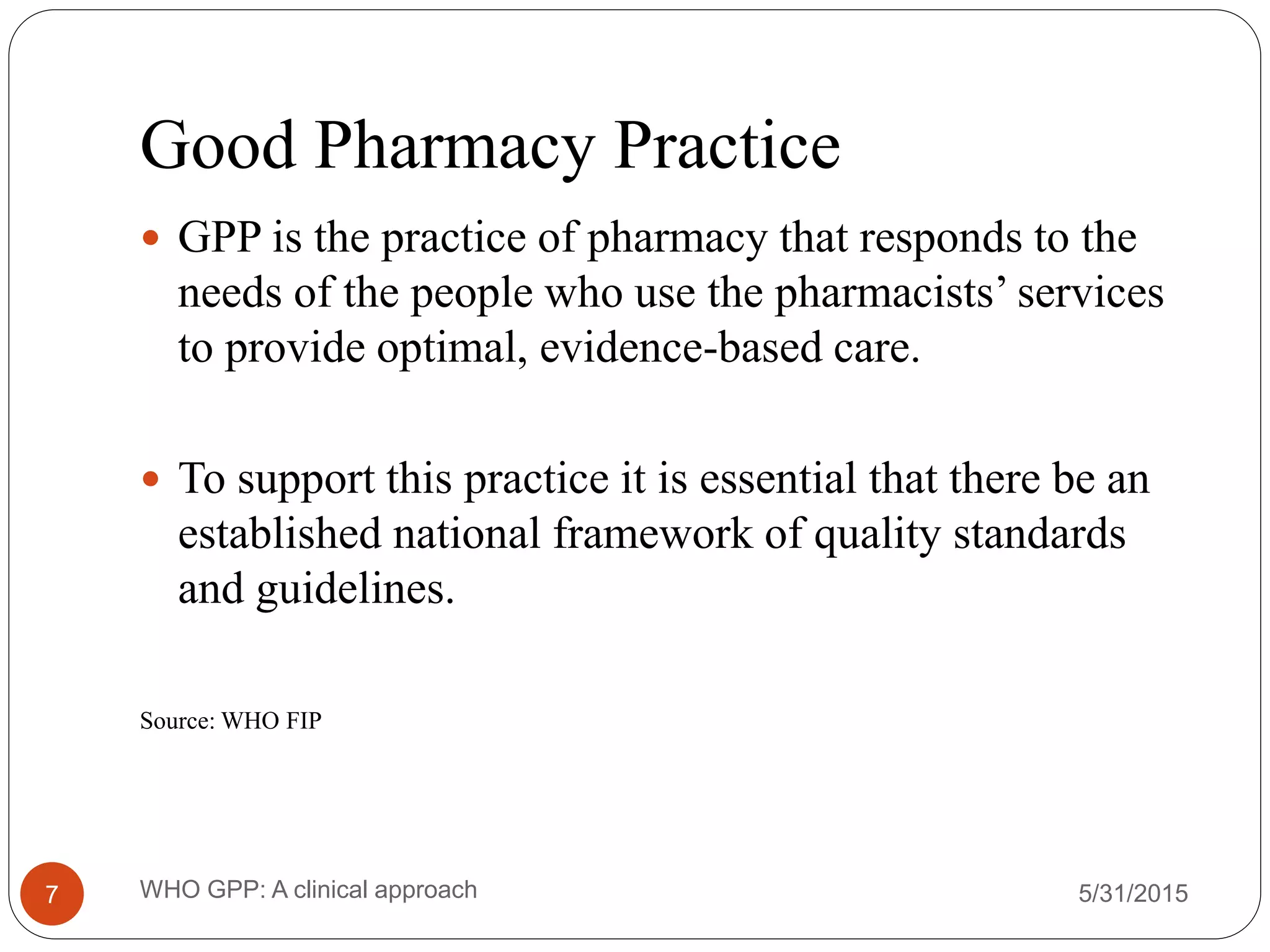
 GPP is the practice of pharmacy that responds to the
needs of the people who use the pharmacists’ services
to provide optimal, evidence-based care.
 To support this practice it is essential that there be an
established national framework of quality standards
and guidelines.
Source: WHO FIP
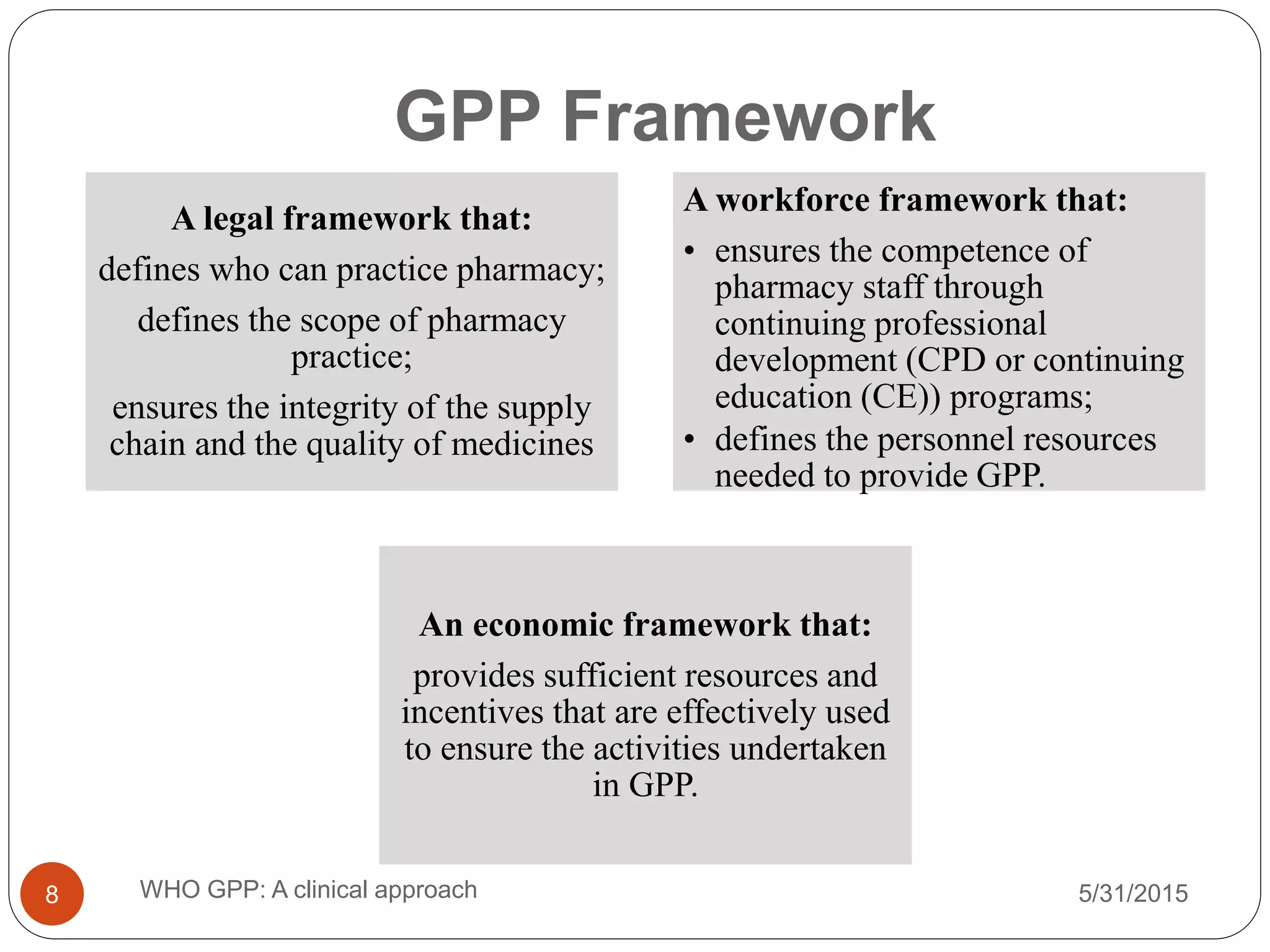
GPP Framework
5/31/2015WHO GPP: A clinical approach8
A legal framework that:
defines who can practice pharmacy;
defines the scope of pharmacy
practice;
ensures the integrity of the supply
chain and the quality of medicines
A workforce framework that:
• ensures the competence of
pharmacy staff through
continuing professional
development (CPD or continuing
education (CE)) programs;
• defines the personnel resources
needed to provide GPP.
An economic framework that:
provides sufficient resources and
incentives that are effectively used
to ensure the activities undertaken
in GPP.
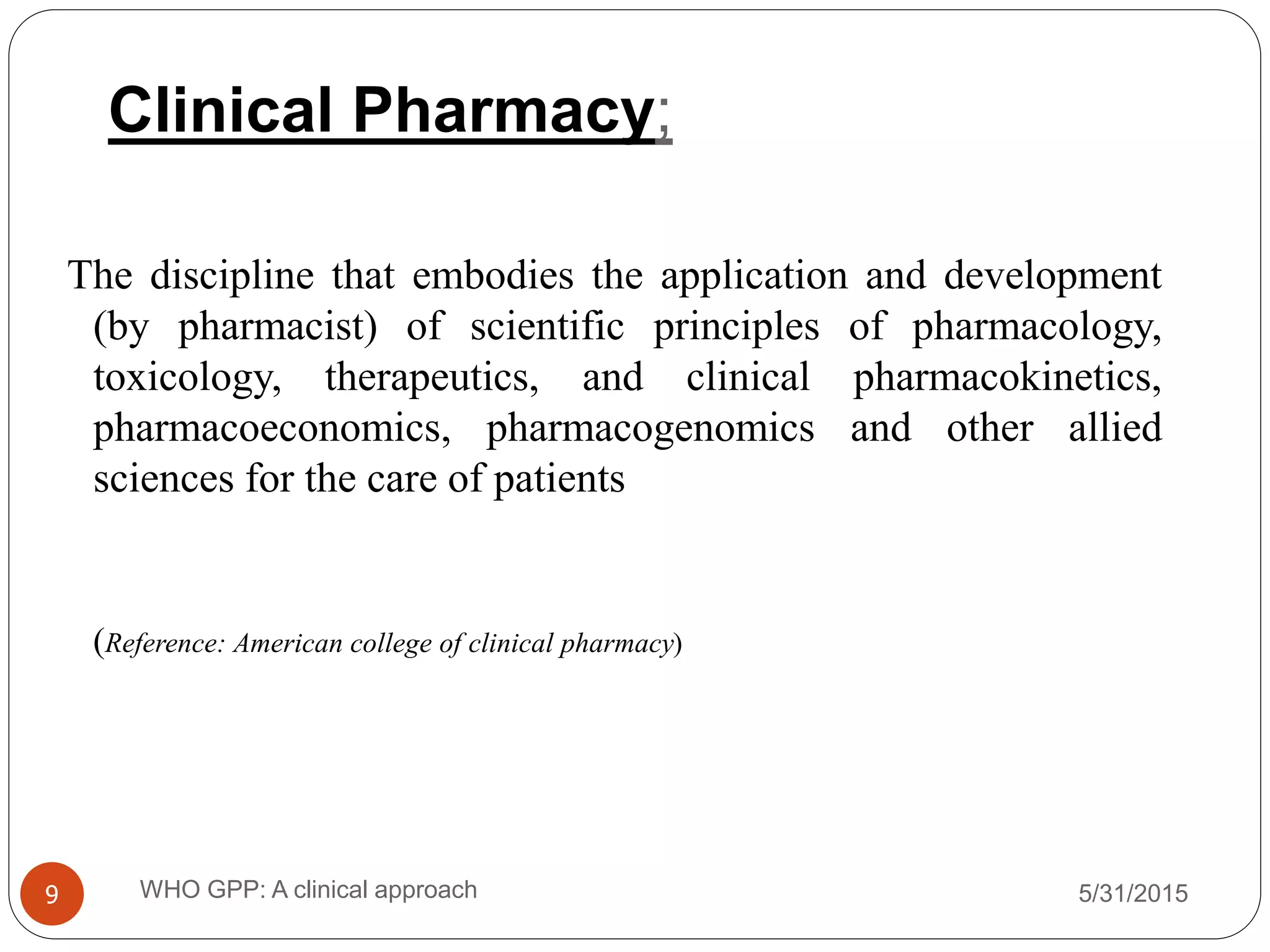
Clinical Pharmacy;
5/31/2015WHO GPP: A clinical approach9
The discipline that embodies the application and development
(by pharmacist) of scientific principles of pharmacology,
toxicology, therapeutics, and clinical pharmacokinetics,
pharmacoeconomics, pharmacogenomics and other allied
sciences for the care of patients
(Reference: American college of clinical pharmacy)
History and Development
5/31/2015WHO GPP: A clinical approach10
 Traditional role
 Sedentary practice
 Clinical pharmacy services in Community/Hospitals
 Ward pharmacy
 Bedside pharmacy
In context of Nepal
5/31/2015WHO GPP: A clinical approach11
 Education: Diploma level/Bachelor/Post Bacc
PharmD/Master/PhD
 The clinical pharmacy practice in Nepal is still in embryonic
stage.
 Efforts are being made by pharmacists in different parts of
country.
 A milestone for Pharmacy practice in Nepal:
 Hospital Pharmacy Directive 2070 : Accepted from the
minister level of Nepal Govt on 2070.07.14
Execution; not till now/in process
 Competency/Patience/ IPC needed
Clinical Pharmacy:
A Shift in Practice Philosophy and Education
5/31/2015WHO GPP: A clinical approach12
Drug Product
Pharmacy
Dispenser
Solo
Knowledge
As ordered
Drug Therapy
Bedside
Caregiver
Team
Information
As best prescribed
From To
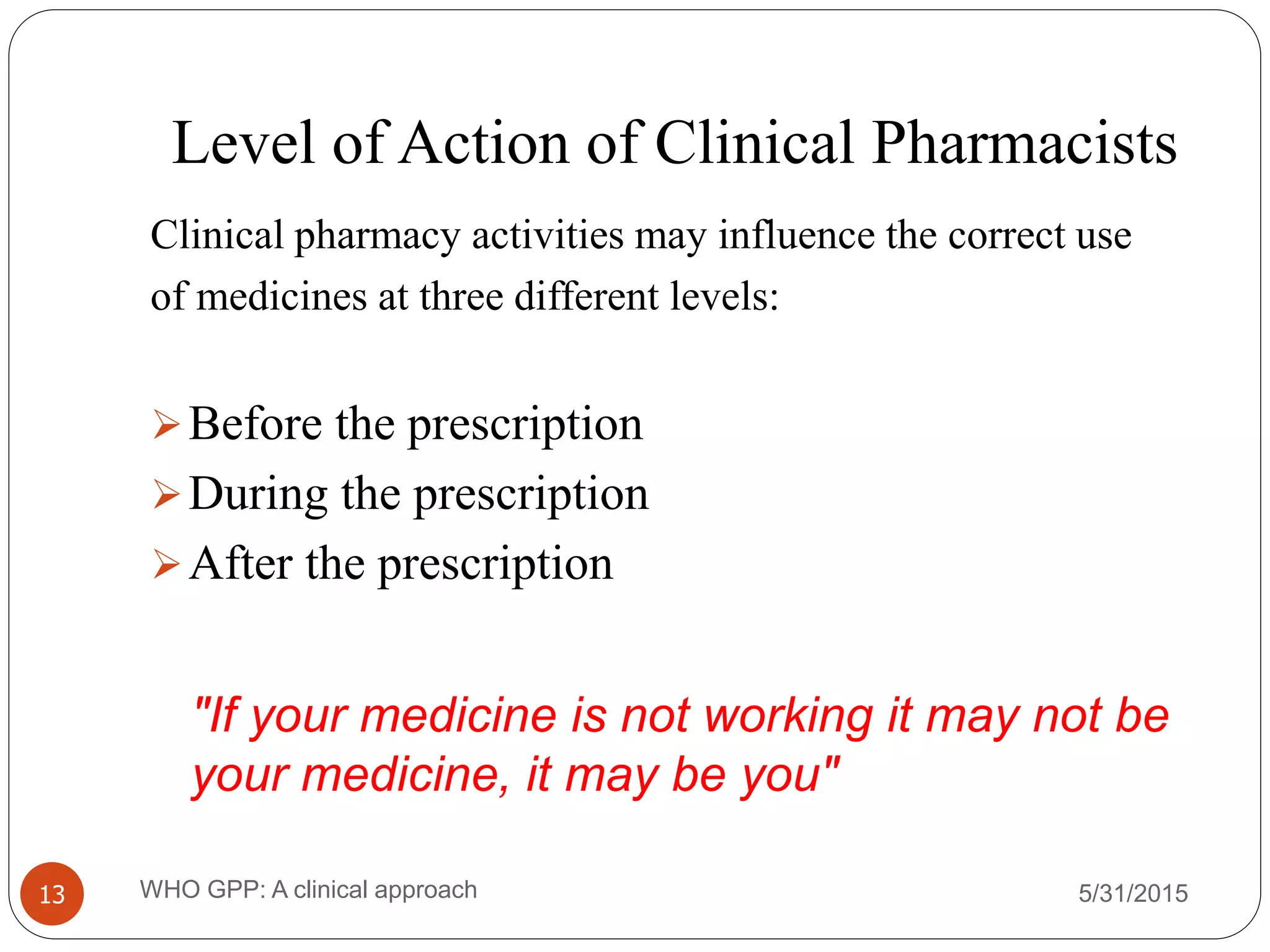
Level of Action of Clinical Pharmacists
5/31/2015WHO GPP: A clinical approach13
Clinical pharmacy activities may influence the correct use
of medicines at three different levels:
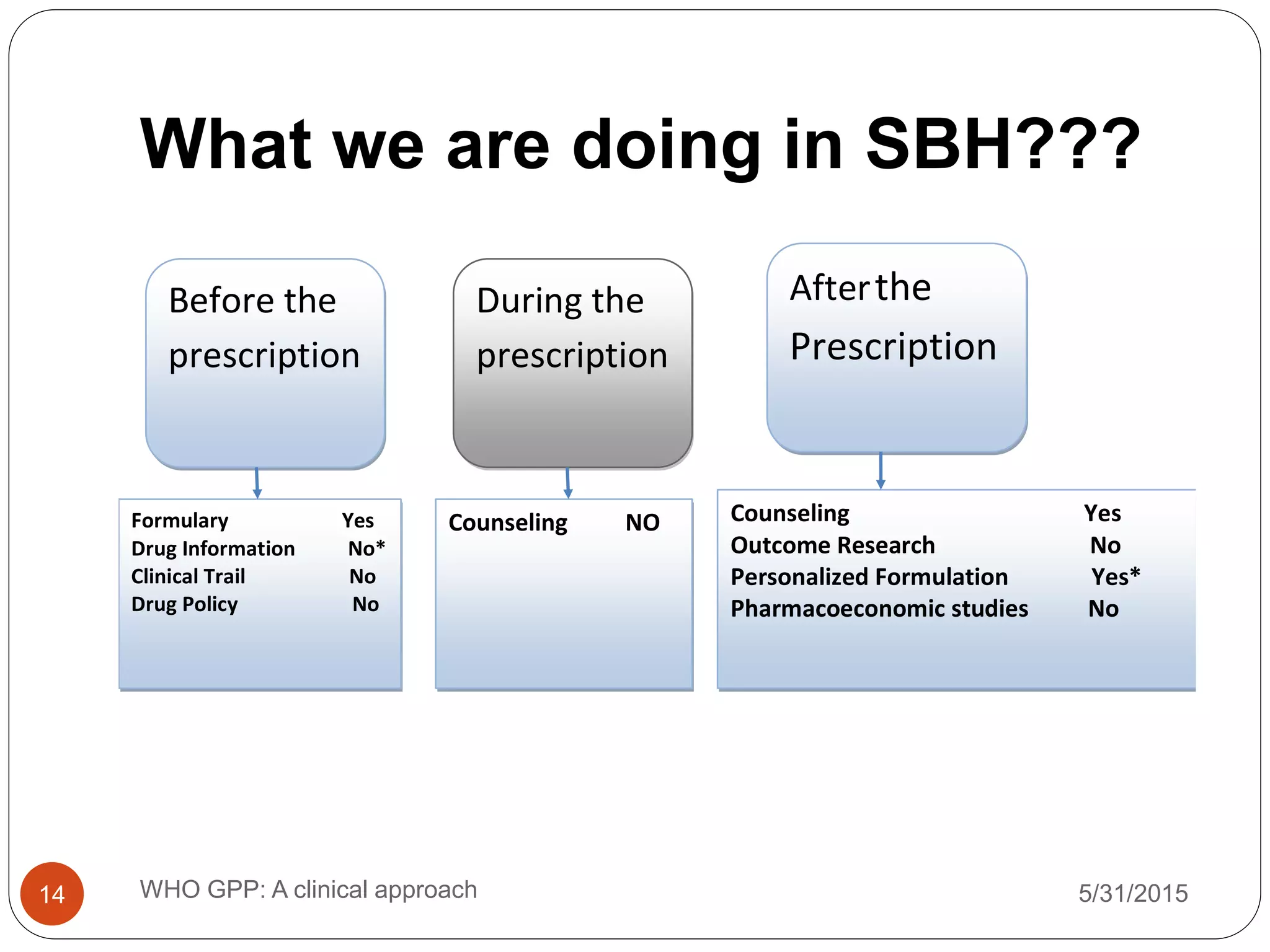
Before the prescription
During the prescription
After the prescription
"If your medicine is not working it may not be
your medicine, it may be you"
What we are doing in SBH???
5/31/2015WHO GPP: A clinical approach14
Formulary Yes
Drug Information No*
Clinical Trail No
Drug Policy No
Counseling NO Counseling Yes
Outcome Research No
Personalized Formulation Yes*
Pharmacoeconomic studies No
Before the
prescription
During the
prescription
Afterthe
Prescription
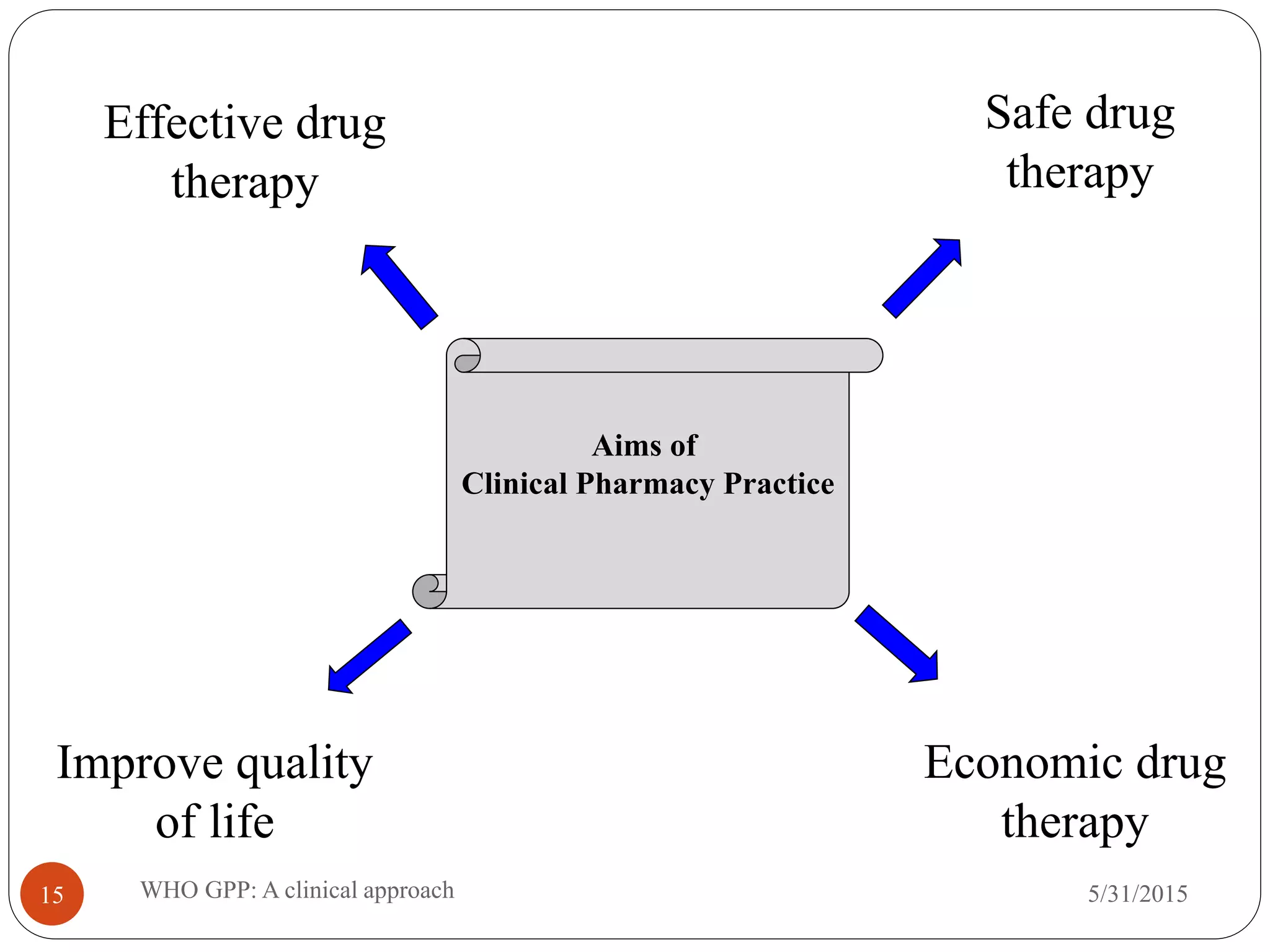
Aims of
Clinical Pharmacy Practice
Effective drug
therapy
Safe drug
therapy
Economic drug
therapy
Improve quality
of life
5/31/2015WHO GPP: A clinical approach15
Dispensing
5/31/2015WHO GPP: A clinical approach16
High Profile Examples
• A patient with leukaemia received Intrathecal vincristine
instead of intravenously. Died beginning of February
2001. 14th such case over the last 16 years.
• Patient being operated for a AAA received bupivacaine
intravenously rather than epidurally. Patient died 3 days
later.
• A 3 year old girl, who had a convulsion post flu vaccine.
Attended hospital to get “checked out”. Received nitrous
oxide instead of oxygen in casualty.
• Elderly lady was prescribed Methotrexate (1997) for her
rheumatoid arthritis. Dose increased to 17.5mg weekly
over a 6 month period.
• A patient undergoes right TKR in hospital (2000). MTX
given as one tablet a week (only 2.5mg).Prescription for
MTX 10mg/daily written and dispensed. 30th April patient5/31/2015WHO GPP: A clinical approach17
Deaths from medicines in the UK
1999 - 2000 (ICD9 & 10 data)
5/31/2015WHO GPP: A clinical approach18
"Every drug is poison, it’s the dose that differentiate
poison or drug the substance is.”
So drugs are safe ………?
Photosensitivity from
Amiodarone Severe extravasation of amiodarone
infusion
5/31/2015WHO GPP: A clinical approach19
NSAID induced peptic ulcer
Goitre –
Hypothyroidism
Secondary to
Amiodarone
Bleeding due to anticoagulation
Erythemal rash from
penicillin – in patient with a
previous
Known allergy/ ADR
Some considerations for Rational prescribing
5/31/2015WHO GPP: A clinical approach20
Interdisciplinary collaboration:
 Inter-professional collaboration
 Intra-professional collaboration
Effective and safe use of pharmaceuticals
Economic and effective use of pharmaceuticals
"Medicine is for those who need them, not for
those who want them."
Some facts
5/31/2015WHO GPP: A clinical approach21
 Over time, participation in medical ward rounds, medication history taking,
drug therapy selection,TDM services, provisin of drug information,ADR
monitoring, and prevention,DUE, research and teaching have become activities
that now form the basis of contemporary clinical pharmacy practice (Wilson
2000, Rahel 2000)
 Studies have clearly shown that clinical pharmacy improves drug therapy and
overall patient health outcomes (Gattis 1999, Leape 1999, Stewarr 1999, Bond
1999), and reduces both drug costs and total health costs (Stewart 1999,
McMullin 1999)
 The publication of editorial by Lundberg entitled “The clinical pharmacist” in
the Journal of the American Medical Association in 1983 was an important
milestone in the history of clinical pharmacy development in USA.
Human Error in clinical practice
(Mistakes, Slips, Lapses)
5/31/2015WHO GPP: A clinical approach22
 Error is inevitable due to “our” limitations
 We all make errors all the time
 Patients suffer adverse events much more often than
previously realized
 Types of errors that can be accounted:
 Prescribing error/Dispensing error/Administration error/Lack
of user education
“The same error, even a minor one, can have quite different
consequences in different circumstances.”
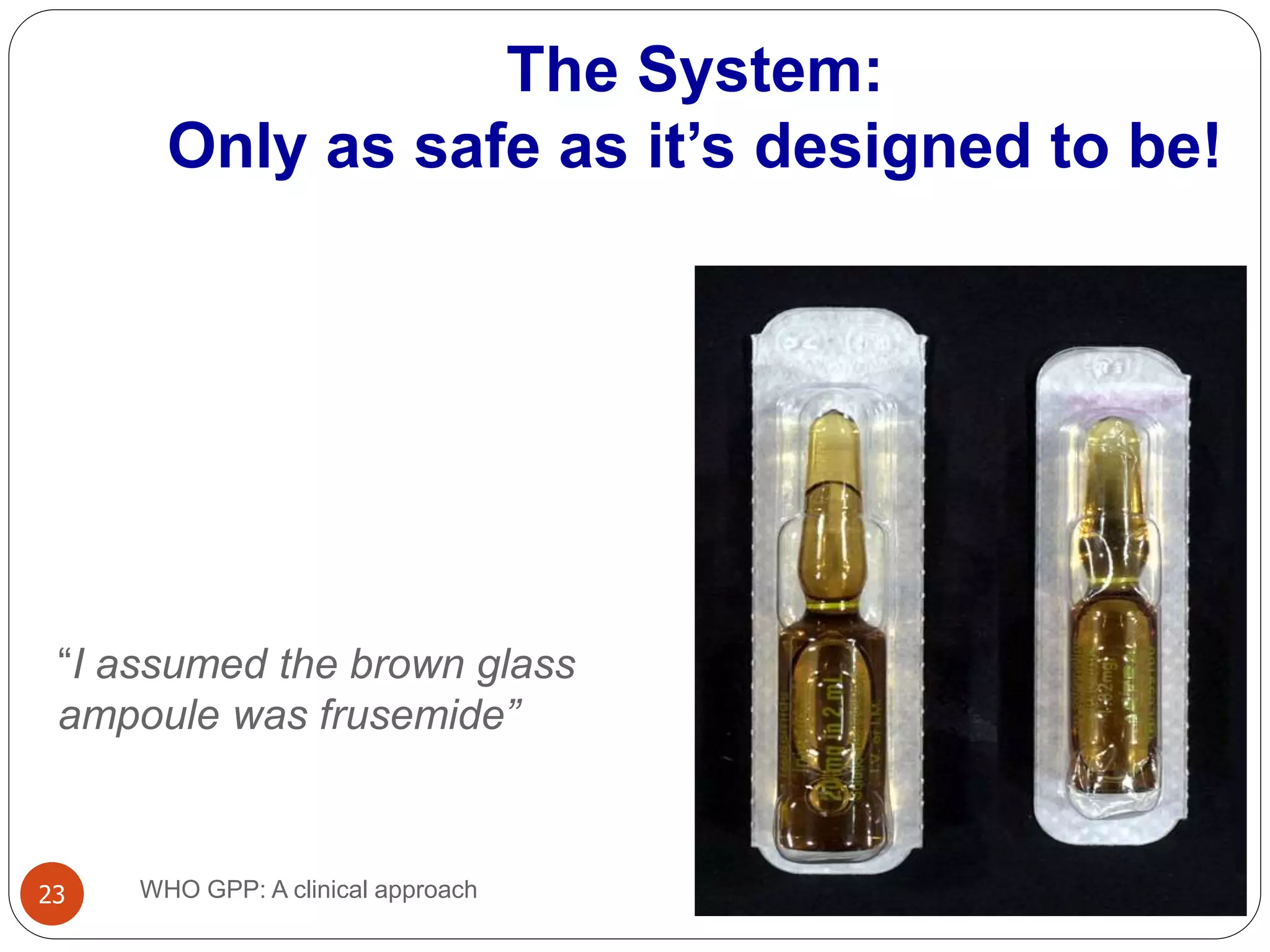
“I assumed the brown glass
ampoule was frusemide”
5/31/2015WHO GPP: A clinical approach23
The System:
Only as safe as it’s designed to be!
Formulary
Prescribing protocols
Prospective review
Clinical pharmacy
Admission medication history
Allergy check
Drug distribution system
Opportunity
For Error
Administration instructions
Clinical Pharmacist Role in Reducing
Risks
5/31/2015WHO GPP: A clinical approach24
Formulary
Prescribing protocols
Prospective review
Clinical pharmacy
Admission medication history
Allergy check
Drug distribution
system
Opportunity
For Error
Administration instructions
What if we are not there!
5/31/2015WHO GPP: A clinical approach25
Pharmacovigilance
5/31/2015WHO GPP: A clinical approach26
The WHO defines pharmacovigilance as ‘the
science and activities relating to the detection,
assessment, understanding and prevention of
adverse effects or any other drug related
problems.
5/31/2015WHO GPP: A clinical approach27
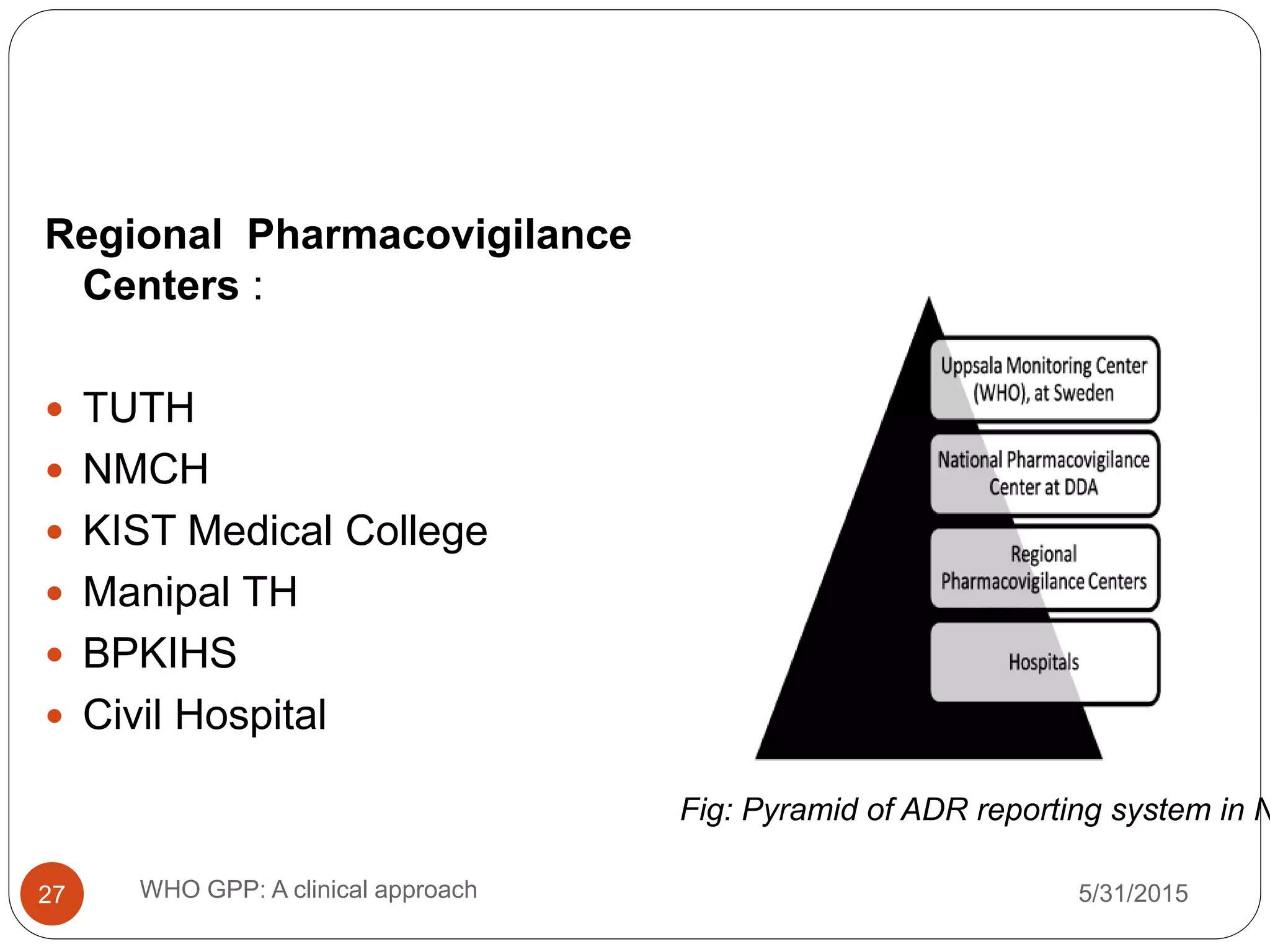
Regional Pharmacovigilance
Centers :
 TUTH
 NMCH
 KIST Medical College
 Manipal TH
 BPKIHS
 Civil Hospital
Fig: Pyramid of ADR reporting system in N
Drug Information Center
5/31/2015WHO GPP: A clinical approach28
Drug information centers (DICs) in general, are service providers, which provide
drug information relating to therapies, pharmacoeconomics, education, and
research programs.
Drug Information Centers in Nepal
Department of Drug Administration (DDA), Ministry of Health
Drug Information Unit(DIU), Tribhuvan University Teaching Hospital
Resource Centre for Primary Health Care (RECPHEC)
Nepal Chemists and Druggists Association (NCDA)
National GPP
 Facilities
 Premises
 Personnel
 Equipments
 Quality policy
 Service strategy
 Training
 Complaints and recalls
 Documentation systems
 Procurement and inventory control
 Storage
31/05/201529
National GPP Contd…
 Prescription handling
 Dispensing
 Extemporaneous preparations
 Patient information
 Patient counseling
 Medicine records and patients F/U
 Self care
 Health promotion
 Enhancement and development of professional
role
 Pharmacovigilance
 Audit
31/05/201530
Recommendations
 Technical manpower required in sufficient
number
 Skill enhancement trainings
 Quality control lab establishment
 Centralized store room for drugs and related
items with centralized AC system
 Surgical and other drug related items list
(similar to formulary) to be prepared
 Clinical pharmacy practice
 New and advanced technology needed
31/05/201531
5/31/2015WHO GPP: A clinical approach32
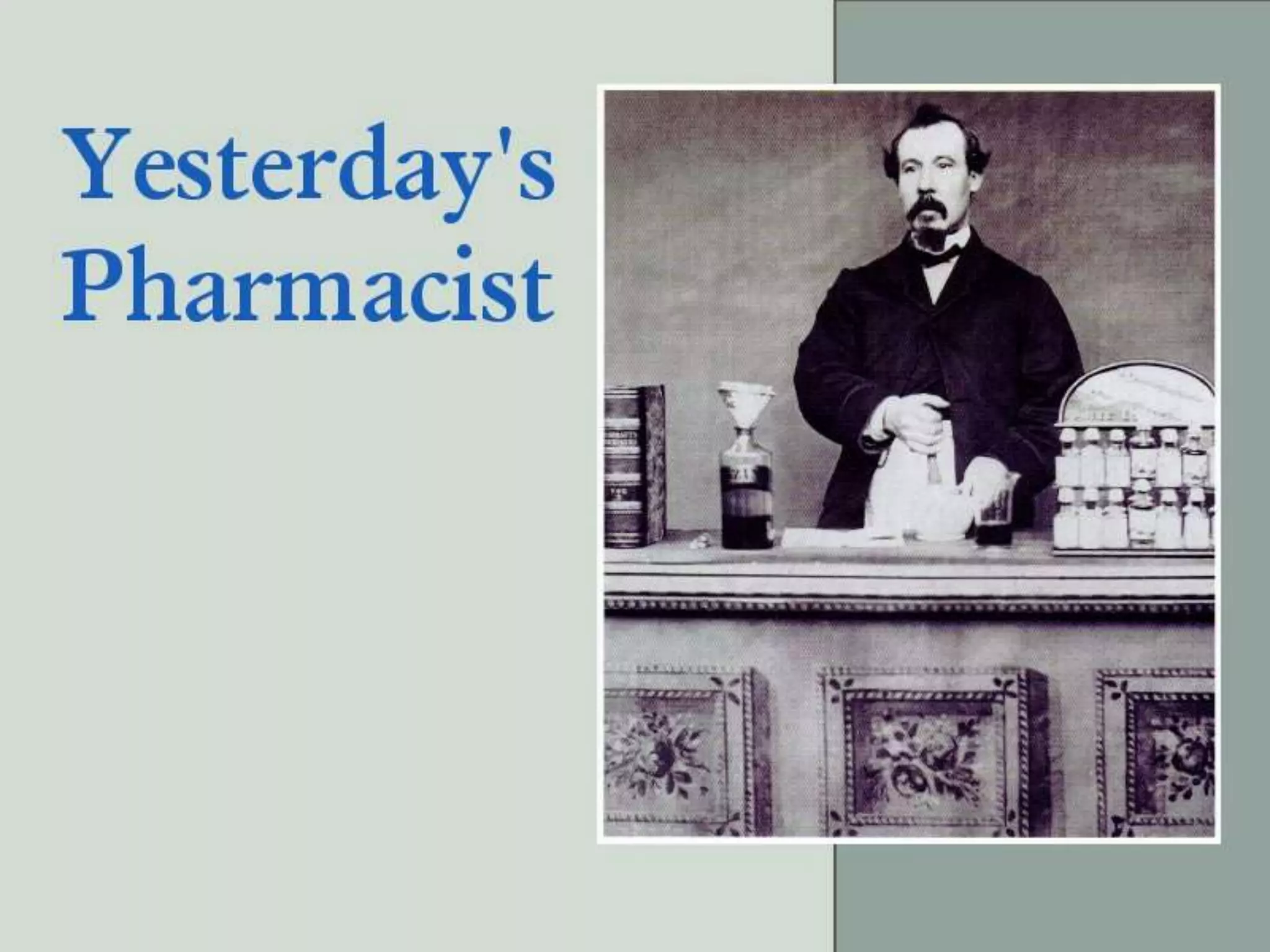
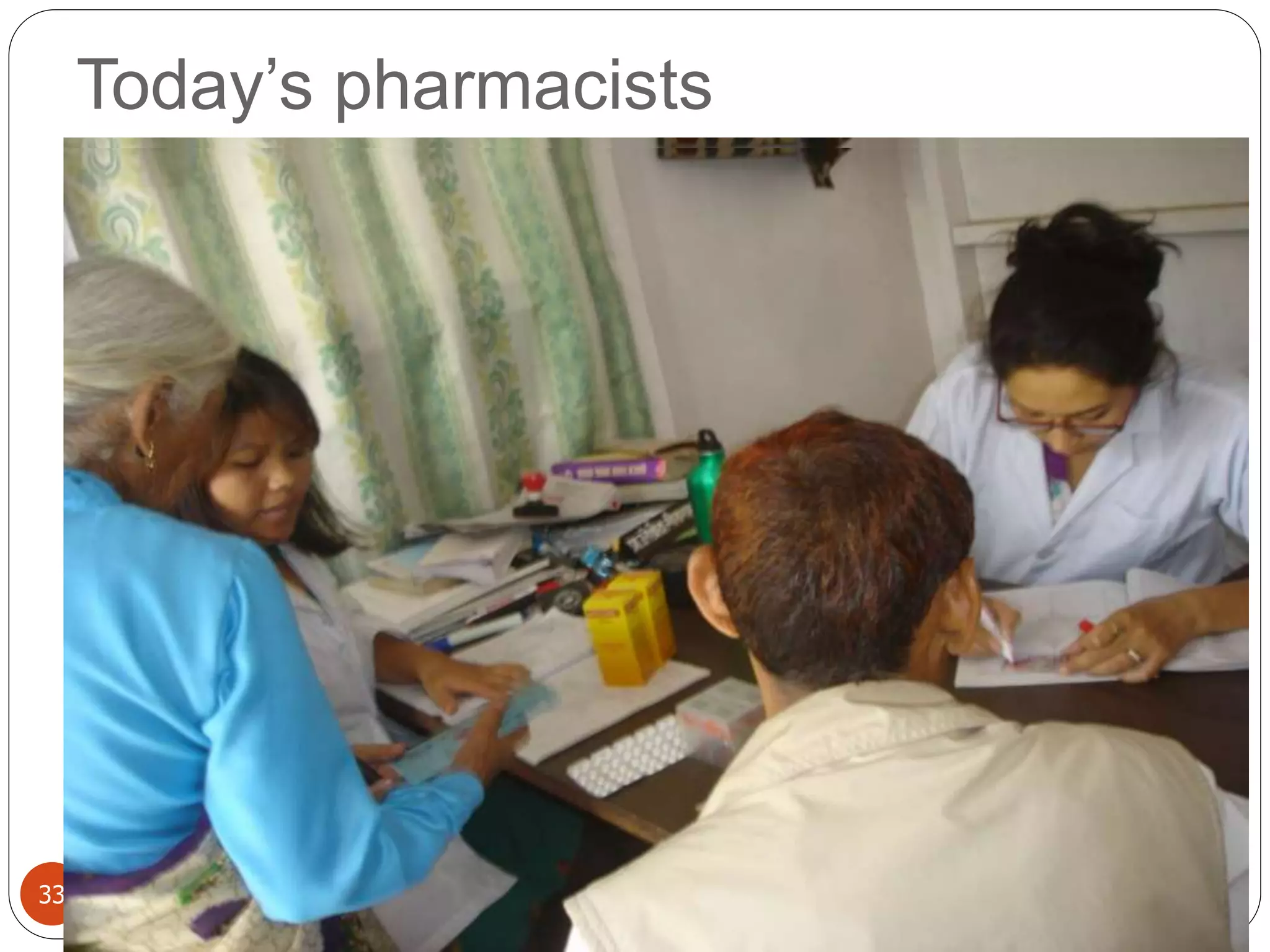
Today’s pharmacists
5/31/2015WHO GPP: A clinical approach33
The End
5/31/2015WHO GPP: A clinical approach34
Any
questions???
5/31/2015WHO GPP: A clinical approach35

COMPILED VERSION Sbh who good pharmacy practice(gpp)

  • 1.
    T/Maj. Dr. SitaramKhadka (Pharmacist) Doctor of Pharmacy(Pak), PGDDM (Ind), R.Ph. T/Capt. Dr. Mahesh Khatri (Pharmacist) Doctor of Pharmacy(Pak), R.Ph. 5/31/2015WHO GPP: A clinical approach1 WHO Good Pharmacy Practice(GPP): A Clinical Approach
  • 2.
    Contents of thePresentation 5/31/2015WHO GPP: A clinical approach2  Background  Introduction to GPP; Global and SBH scenario  Clinical Pharmacy Practice  Rational prescribing and dispensing  Pharmacovigilance; Adverse Drug Reactions(ADR)  Drug Information Centre(DIC)  National GPP  Questions/Answers session
  • 3.
    “They just counta few tablets” Perception s of Pharmacis ts -How do others see pharmacists? 5/31/2015WHO GPP: A clinical approach3 “They just weigh and measure th “A bunch of shop-keepers” “Tell me how and when to use the Medi
  • 4.
    5/31/2015WHO GPP: Aclinical approach4 “Counter-prescribing” “Not really health care practitioners – they’re businessmen” “Do you need a degree to be a pharmacist?
  • 5.
    Background In 1992 theInternational Pharmaceutical Federation (FIP) developed standards for pharmacy services under the heading “Good pharmacy practice in community and hospital pharmacy settings”. 5/31/2015WHO GPP: A clinical approach5
  • 6.
    5/31/2015WHO GPP: Aclinical approach6 Knowledge of Drug Therapy Knowledge of Drug Therapy Knowledge of Disease Knowledge of communication skill Communication skill Patient monitoring skill Physical Assessment skill Drug Information skill Therapeutic Planning Skill Knowledge of laboratory and diagnostic skill Philosophy of Pharmacy Pharmacoeconomics Drug Information Efficacy Assurance Health Promotion Pharmacovigilance Patient care
  • 7.
    Good Pharmacy Practice 5/31/2015WHOGPP: A clinical approach7  GPP is the practice of pharmacy that responds to the needs of the people who use the pharmacists’ services to provide optimal, evidence-based care.  To support this practice it is essential that there be an established national framework of quality standards and guidelines. Source: WHO FIP
  • 8.
    GPP Framework 5/31/2015WHO GPP:A clinical approach8 A legal framework that: defines who can practice pharmacy; defines the scope of pharmacy practice; ensures the integrity of the supply chain and the quality of medicines A workforce framework that: • ensures the competence of pharmacy staff through continuing professional development (CPD or continuing education (CE)) programs; • defines the personnel resources needed to provide GPP. An economic framework that: provides sufficient resources and incentives that are effectively used to ensure the activities undertaken in GPP.
  • 9.
    Clinical Pharmacy; 5/31/2015WHO GPP:A clinical approach9 The discipline that embodies the application and development (by pharmacist) of scientific principles of pharmacology, toxicology, therapeutics, and clinical pharmacokinetics, pharmacoeconomics, pharmacogenomics and other allied sciences for the care of patients (Reference: American college of clinical pharmacy)
  • 10.
    History and Development 5/31/2015WHOGPP: A clinical approach10  Traditional role  Sedentary practice  Clinical pharmacy services in Community/Hospitals  Ward pharmacy  Bedside pharmacy
  • 11.
    In context ofNepal 5/31/2015WHO GPP: A clinical approach11  Education: Diploma level/Bachelor/Post Bacc PharmD/Master/PhD  The clinical pharmacy practice in Nepal is still in embryonic stage.  Efforts are being made by pharmacists in different parts of country.  A milestone for Pharmacy practice in Nepal:  Hospital Pharmacy Directive 2070 : Accepted from the minister level of Nepal Govt on 2070.07.14 Execution; not till now/in process  Competency/Patience/ IPC needed
  • 12.
    Clinical Pharmacy: A Shiftin Practice Philosophy and Education 5/31/2015WHO GPP: A clinical approach12 Drug Product Pharmacy Dispenser Solo Knowledge As ordered Drug Therapy Bedside Caregiver Team Information As best prescribed From To
  • 13.
    Level of Actionof Clinical Pharmacists 5/31/2015WHO GPP: A clinical approach13 Clinical pharmacy activities may influence the correct use of medicines at three different levels: Before the prescription During the prescription After the prescription "If your medicine is not working it may not be your medicine, it may be you"
  • 14.
    What we aredoing in SBH??? 5/31/2015WHO GPP: A clinical approach14 Formulary Yes Drug Information No* Clinical Trail No Drug Policy No Counseling NO Counseling Yes Outcome Research No Personalized Formulation Yes* Pharmacoeconomic studies No Before the prescription During the prescription Afterthe Prescription
  • 15.
    Aims of Clinical PharmacyPractice Effective drug therapy Safe drug therapy Economic drug therapy Improve quality of life 5/31/2015WHO GPP: A clinical approach15
  • 16.
    Dispensing 5/31/2015WHO GPP: Aclinical approach16
  • 17.
    High Profile Examples •A patient with leukaemia received Intrathecal vincristine instead of intravenously. Died beginning of February 2001. 14th such case over the last 16 years. • Patient being operated for a AAA received bupivacaine intravenously rather than epidurally. Patient died 3 days later. • A 3 year old girl, who had a convulsion post flu vaccine. Attended hospital to get “checked out”. Received nitrous oxide instead of oxygen in casualty. • Elderly lady was prescribed Methotrexate (1997) for her rheumatoid arthritis. Dose increased to 17.5mg weekly over a 6 month period. • A patient undergoes right TKR in hospital (2000). MTX given as one tablet a week (only 2.5mg).Prescription for MTX 10mg/daily written and dispensed. 30th April patient5/31/2015WHO GPP: A clinical approach17
  • 18.
    Deaths from medicinesin the UK 1999 - 2000 (ICD9 & 10 data) 5/31/2015WHO GPP: A clinical approach18 "Every drug is poison, it’s the dose that differentiate poison or drug the substance is.”
  • 19.
    So drugs aresafe ………? Photosensitivity from Amiodarone Severe extravasation of amiodarone infusion 5/31/2015WHO GPP: A clinical approach19 NSAID induced peptic ulcer Goitre – Hypothyroidism Secondary to Amiodarone Bleeding due to anticoagulation Erythemal rash from penicillin – in patient with a previous Known allergy/ ADR
  • 20.
    Some considerations forRational prescribing 5/31/2015WHO GPP: A clinical approach20 Interdisciplinary collaboration:  Inter-professional collaboration  Intra-professional collaboration Effective and safe use of pharmaceuticals Economic and effective use of pharmaceuticals "Medicine is for those who need them, not for those who want them."
  • 21.
    Some facts 5/31/2015WHO GPP:A clinical approach21  Over time, participation in medical ward rounds, medication history taking, drug therapy selection,TDM services, provisin of drug information,ADR monitoring, and prevention,DUE, research and teaching have become activities that now form the basis of contemporary clinical pharmacy practice (Wilson 2000, Rahel 2000)  Studies have clearly shown that clinical pharmacy improves drug therapy and overall patient health outcomes (Gattis 1999, Leape 1999, Stewarr 1999, Bond 1999), and reduces both drug costs and total health costs (Stewart 1999, McMullin 1999)  The publication of editorial by Lundberg entitled “The clinical pharmacist” in the Journal of the American Medical Association in 1983 was an important milestone in the history of clinical pharmacy development in USA.
  • 22.
    Human Error inclinical practice (Mistakes, Slips, Lapses) 5/31/2015WHO GPP: A clinical approach22  Error is inevitable due to “our” limitations  We all make errors all the time  Patients suffer adverse events much more often than previously realized  Types of errors that can be accounted:  Prescribing error/Dispensing error/Administration error/Lack of user education “The same error, even a minor one, can have quite different consequences in different circumstances.”
  • 23.
    “I assumed thebrown glass ampoule was frusemide” 5/31/2015WHO GPP: A clinical approach23 The System: Only as safe as it’s designed to be!
  • 24.
    Formulary Prescribing protocols Prospective review Clinicalpharmacy Admission medication history Allergy check Drug distribution system Opportunity For Error Administration instructions Clinical Pharmacist Role in Reducing Risks 5/31/2015WHO GPP: A clinical approach24
  • 25.
    Formulary Prescribing protocols Prospective review Clinicalpharmacy Admission medication history Allergy check Drug distribution system Opportunity For Error Administration instructions What if we are not there! 5/31/2015WHO GPP: A clinical approach25
  • 26.
    Pharmacovigilance 5/31/2015WHO GPP: Aclinical approach26 The WHO defines pharmacovigilance as ‘the science and activities relating to the detection, assessment, understanding and prevention of adverse effects or any other drug related problems.
  • 27.
    5/31/2015WHO GPP: Aclinical approach27 Regional Pharmacovigilance Centers :  TUTH  NMCH  KIST Medical College  Manipal TH  BPKIHS  Civil Hospital Fig: Pyramid of ADR reporting system in N
  • 28.
    Drug Information Center 5/31/2015WHOGPP: A clinical approach28 Drug information centers (DICs) in general, are service providers, which provide drug information relating to therapies, pharmacoeconomics, education, and research programs. Drug Information Centers in Nepal Department of Drug Administration (DDA), Ministry of Health Drug Information Unit(DIU), Tribhuvan University Teaching Hospital Resource Centre for Primary Health Care (RECPHEC) Nepal Chemists and Druggists Association (NCDA)
  • 29.
    National GPP  Facilities Premises  Personnel  Equipments  Quality policy  Service strategy  Training  Complaints and recalls  Documentation systems  Procurement and inventory control  Storage 31/05/201529
  • 30.
    National GPP Contd… Prescription handling  Dispensing  Extemporaneous preparations  Patient information  Patient counseling  Medicine records and patients F/U  Self care  Health promotion  Enhancement and development of professional role  Pharmacovigilance  Audit 31/05/201530
  • 31.
    Recommendations  Technical manpowerrequired in sufficient number  Skill enhancement trainings  Quality control lab establishment  Centralized store room for drugs and related items with centralized AC system  Surgical and other drug related items list (similar to formulary) to be prepared  Clinical pharmacy practice  New and advanced technology needed 31/05/201531
  • 32.
    5/31/2015WHO GPP: Aclinical approach32
  • 33.
  • 34.
    The End 5/31/2015WHO GPP:A clinical approach34
  • 35.