Adverse drug effects
Dr. Karun Kumar
Senior Lecturer
Dept. of Pharmacology
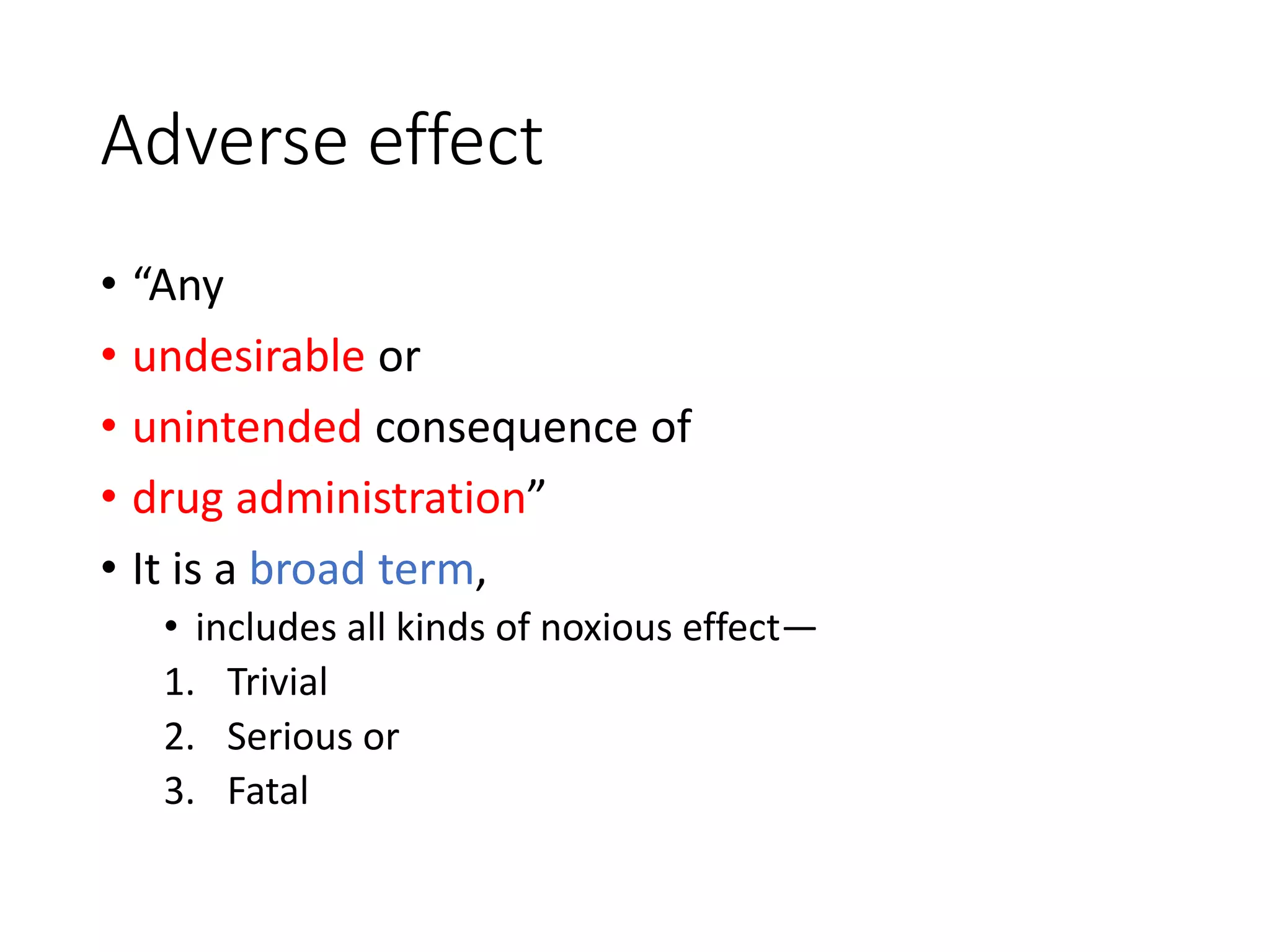
Adverse effect
• “Any
• undesirable or
• unintended consequence of
• drug administration”
• It is a broad term,
• includes all kinds of noxious effect—
1. Trivial
2. Serious or
3. Fatal
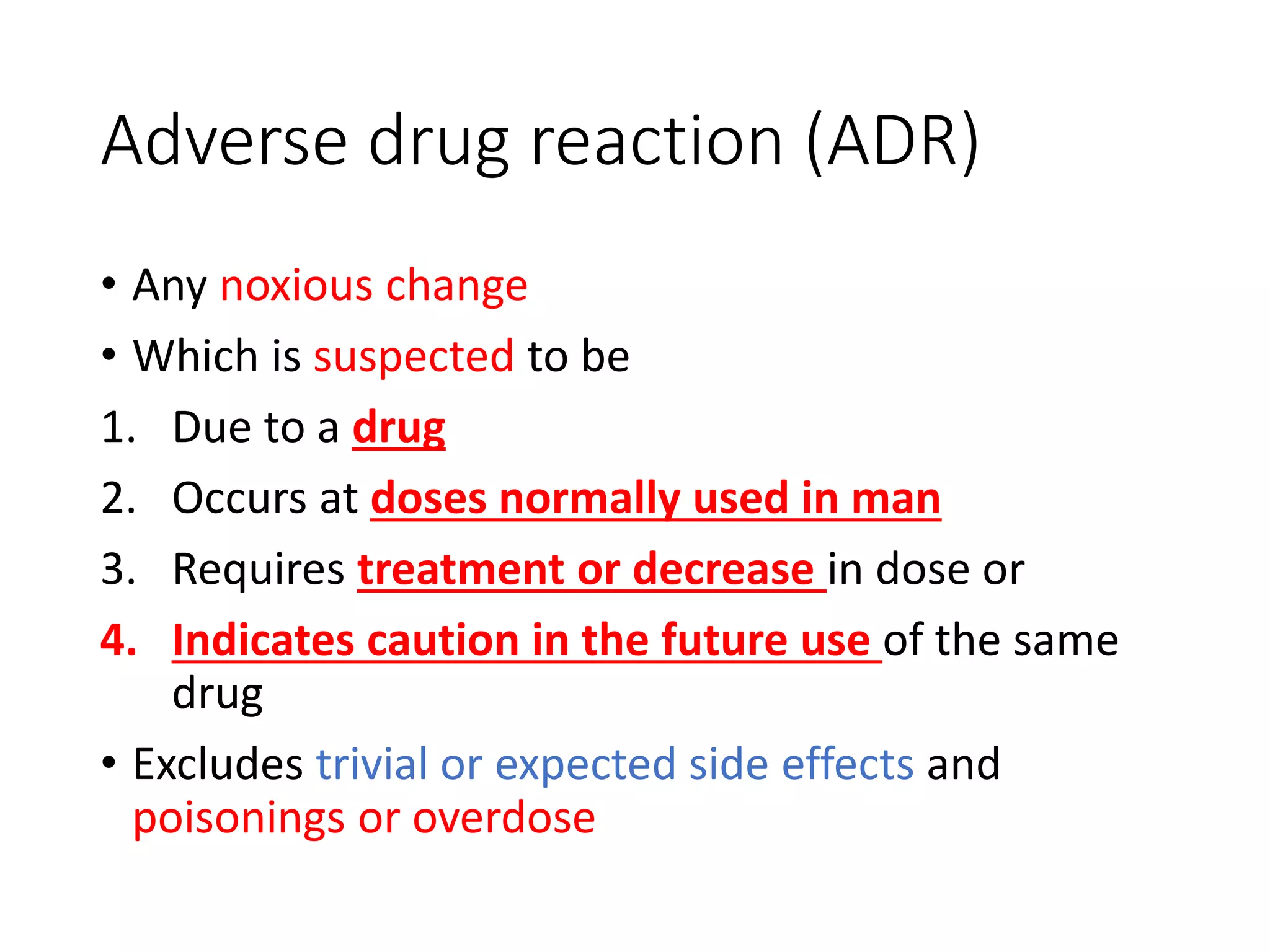
Adverse drug reaction (ADR)
• Any noxious change
• Which is suspected to be
1. Due to a drug
2. Occurs at doses normally used in man
3. Requires treatment or decrease in dose or
4. Indicates caution in the future use of the same
drug
• Excludes trivial or expected side effects and
poisonings or overdose
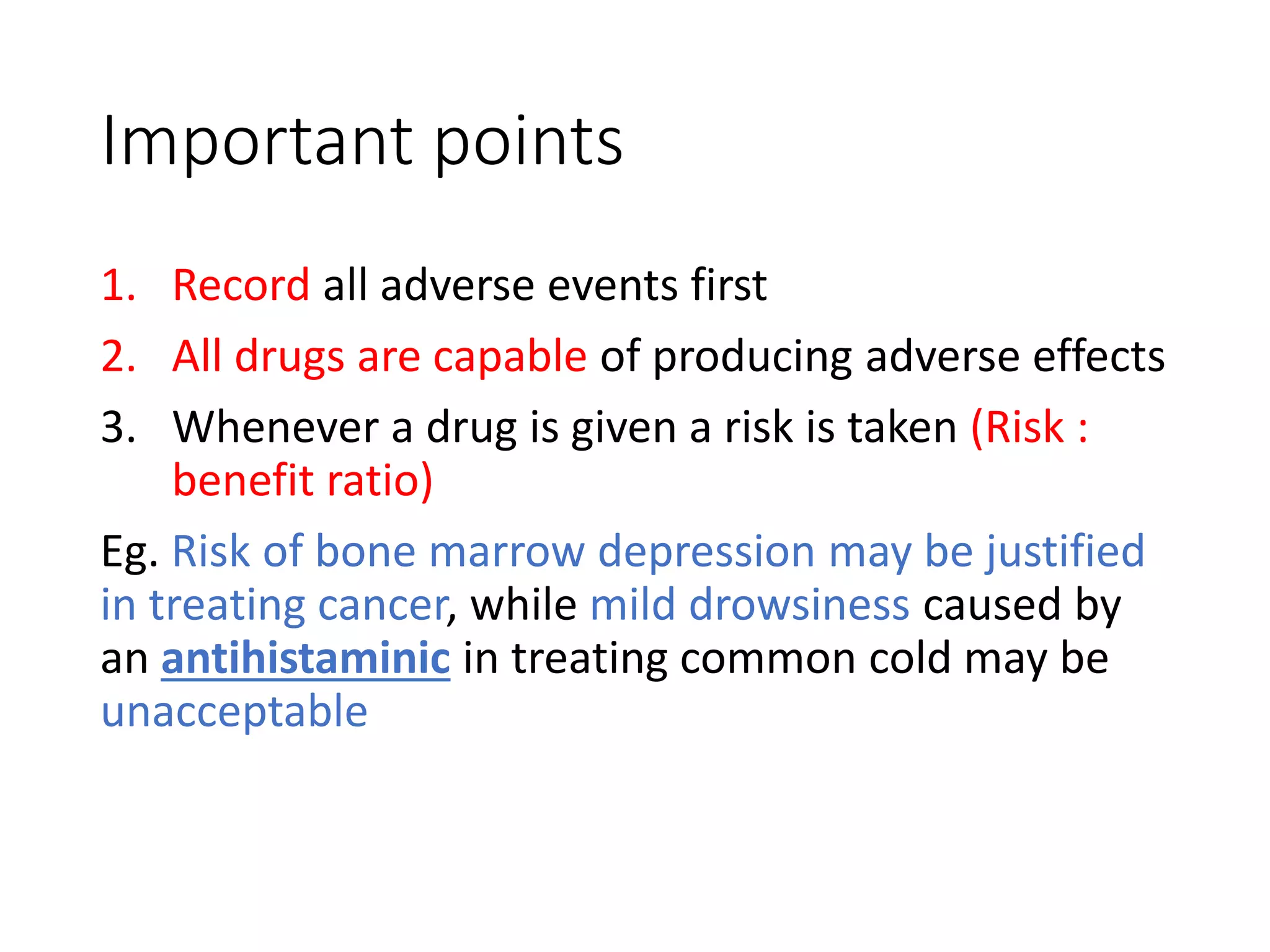
Important points
1. Record all adverse events first
2. All drugs are capable of producing adverse effects
3. Whenever a drug is given a risk is taken (Risk :
benefit ratio)
Eg. Risk of bone marrow depression may be justified
in treating cancer, while mild drowsiness caused by
an antihistaminic in treating common cold may be
unacceptable
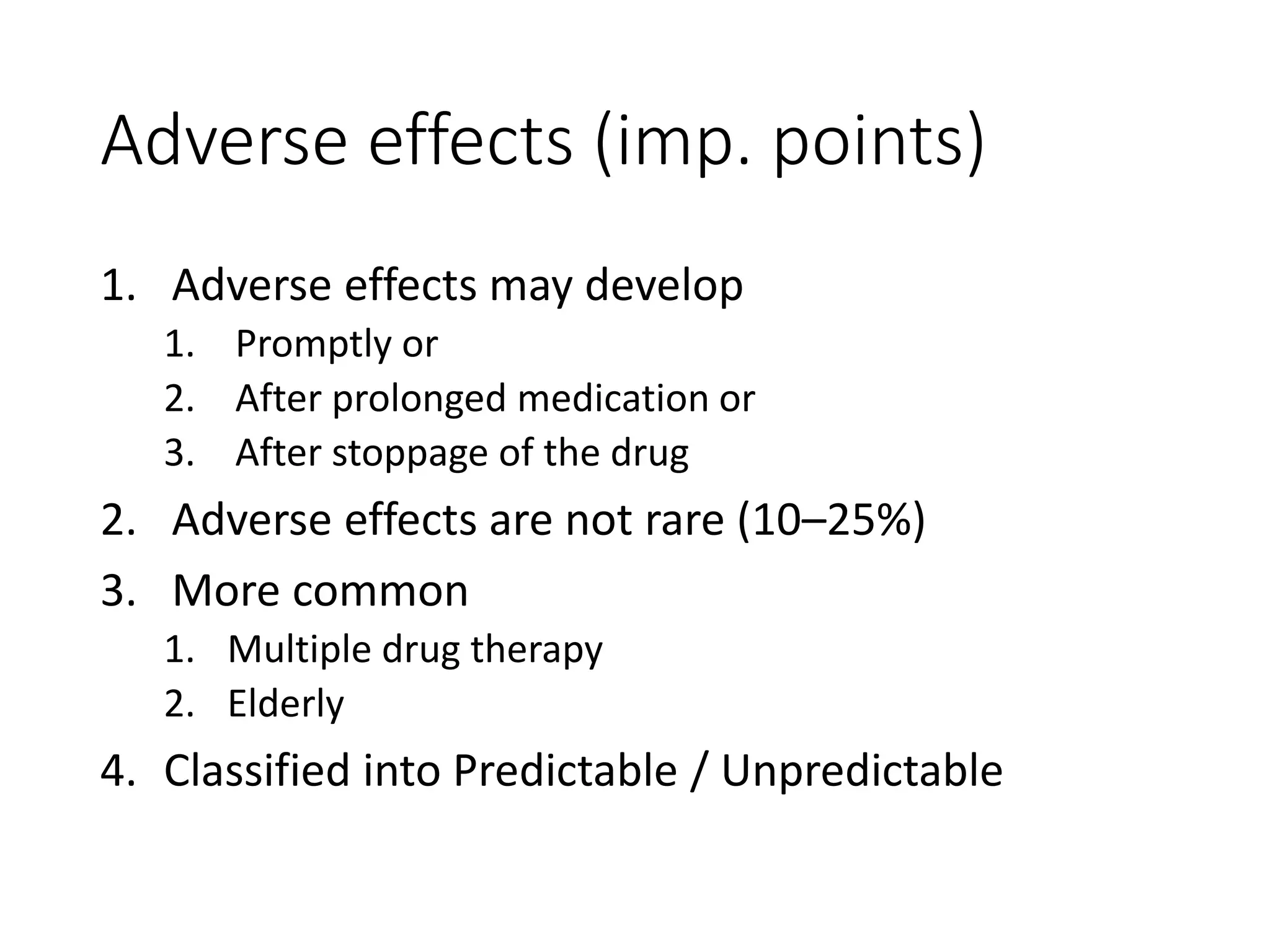
Adverse effects (imp. points)
1. Adverse effects may develop
1. Promptly or
2. After prolonged medication or
3. After stoppage of the drug
2. Adverse effects are not rare (10–25%)
3. More common
1. Multiple drug therapy
2. Elderly
4. Classified into Predictable / Unpredictable
Predictable (Type A or Augmented)
reactions
• Mechanism based adverse reactions
• Based on the pharmacological properties of the drug
1. Side effects
2. Toxic effects
3. Consequences of drug withdrawal
• They are
1. More common
2. Dose related
3. Preventable and reversible
Unpredictable (Type B or Bizarre)
reactions
• Based on peculiarities of the patient
1. Allergy
2. Idiosyncrasy
• They are
1. Less common
2. Non-dose related
3. More serious
4. Require withdrawal of the drug
5. Can be prevented if their genetic basis is known
Severity of adverse drug reactions
1. Minor: No therapy, antidote or prolongation of
hospitalization is required
2. Moderate: Requires change in drug therapy,
specific treatment or prolongs hospital stay by at
least one day
3. Severe: Potentially life-threatening, causes
permanent damage or requires intensive medical
treatment
4. Lethal: Directly or indirectly contributes to death
of the patient
Prevention of adverse effects to
drugs
1. Avoid all inappropriate use of drugs in the
context of patient’s clinical condition
2. Use appropriate dose, route and frequency of
drug administration based on patient’s specific
variables
3. Elicit and take into consideration previous history
of drug reactions
4. Elicit history of allergic diseases and exercise
caution (drug allergy is more common in patients
with allergic diseases)
5. Rule out possibility of drug interactions when
more than one drug is prescribed
6. Adopt correct drug administration technique (e.g.
NSAIDs not to be given on empty stomach)
7. Carry out appropriate laboratory monitoring (e.g.
prothrombin time with warfarin, serum drug levels
with lithium)
Category of adverse drug effects
1. Side effects
• These are unwanted but often unavoidable
pharmacodynamic effects that occur at therapeutic
doses
• Can be predicted from the pharmacological profile
of a drug and are known to occur in a given
percentage of drug recipients
• Reduction in dose, usually ameliorates the
symptoms
• A side effect may be based on the same action as
the therapeutic effect,
1. Atropine is used in preanaesthetic medication for
its anti secretory action  produces dryness of
mouth as a side effect
2. Glyceryl trinitrate relieves angina pectoris by
dilating peripheral vasculature which is also
responsible for postural hypotension and
throbbing headache
3. Anti inflammatory as well as gastric mucosal
damaging effects of NSAIDs are due to inhibition
of prostaglandin synthesis
• Side effect may also be based on a different facet of
action
1. Promethazine produces sedation which is
unrelated to its anti allergic action
2. Estrogens cause nausea which is unrelated to
their anti ovulatory action
• An effect may be therapeutic in one context but
side effect in another context
1. Codeine used for cough produces constipation as
a side effect, but the latter is its therapeutic
effect in traveller’s diarrhea
2. Depression of A-V conduction is the desired
effect of digoxin in atrial fibrillation, but the same
may be undesirable when it is used for CHF
Secondary effects
• These are indirect consequences of a primary
action of the drug
1. Suppression of bacterial flora by tetracyclines
paves the way for superinfections
2. Corticosteroids weaken host defence
mechanisms so that latent tuberculosis gets
activated
Toxic effects
• These are the result of excessive pharmacological
action of the drug due to overdosage or prolonged
use
• Overdosage may be
• absolute (accidental, homicidal, suicidal) or
• relative (i.e. usual dose of gentamicin in presence of
renal failure)
• Manifestations are predictable and dose related
• They result from functional alteration (high dose of
atropine causing delirium) or drug induced tissue
damage (hepatic necrosis from paracetamol over
dosage)
• The CNS, CVS, kidney, liver, lung, skin and blood
forming organs are most commonly involved in
drug toxicity
• Toxicity may result from extension of the
therapeutic effect itself
1. Coma by barbiturates
2. Complete A-V block by digoxin
3. Bleeding due to heparin
4. Hypoglycemia due to insulin
• Another action of the drug can also be responsible
for toxicity,
1. Morphine (analgesic) causes respiratory failure in
overdosage
2. Imipramine (antidepressant) overdose causes
cardiac arrhythmia
3. Streptomycin (anti tubercular) causes vestibular
damage on prolonged use
4. Gentamicin (anti bacterial) causes vestibular
damage on prolonged use
Poisoning
• It may result from large doses of drugs because ‘it
is the dose which distinguishes a drug from a
poison’
• Poison  ‘Substance which endangers life by
severely affecting one or more vital functions’
• Not only drugs but other household and industrial
chemicals, insecticides, etc. are frequently involved
in poisonings
• Specific antidotes such as receptor antagonists,
chelating agents or specific antibodies are available
for few poisons
• General supportive and symptomatic treatment is
all that can be done for others, and this is also
important for poisons which have a selective
antagonist
General detoxification and supportive
measures are:
1. Resuscitation and maintenance of vital functions
1. Ensure patent airway, adequate ventilation, give
artificial respiration/100% oxygen inhalation as
needed.
2. Maintain blood pressure and heart beat by fluid and
crystalloid infusion, pressor agents, cardiac stimulants,
external cardiac massage, pacing, defibrillation, etc
3. Maintain body temperature
4. Maintain blood sugar level by dextrose infusion,
especially in patients with altered sensorium
2. Termination of exposure
(decontamination)
1. Removing the patient to fresh air (for inhaled
poisons)
2. Washing the skin and eyes (for poisons entering
from the surface)
3. Induction of emesis with syrup ipecac or gastric
lavage (for ingested poisons)
4. Emesis should not be attempted in comatose or
haemodynamically unstable patient
5. Emesis/Gastric lavage is not recommended if the
patient presents > 2 hours after ingesting the
poison; or if the patient has vomited after
consuming the poison
3. Prevention of absorption of
ingested poisons
• A suspension of 20–40 g (1g/kg) of activated
charcoal, which has large surface area and can
adsorb many chemicals, should be administered in
200 ml of water
• However, strong acids and alkalis, metallic salts,
iodine, cyanide, caustics, alcohol, hydrocarbons and
other organic solvents are not adsorbed by
charcoal
4. Hastening elimination
• Inducing diuresis (furosemide, mannitol) or altering
urinary pH (alkalinization for acidic drugs, e.g.
barbiturates, aspirin)
• However, excretion of many poisons is not
enhanced by forced diuresis and this procedure is
generally not employed now
• Haemodialysis and haemoperfusion (passage of
blood through a column of charcoal or adsorbant
resin) are more efficacious procedures
4. Intolerance
• It is the appearance of characteristic toxic effects of
a drug in an individual at therapeutic doses
• It is the converse of tolerance and indicates a low
threshold of the individual to the action of a drug
Examples
1. A single dose of Triflupromazine induces
muscular dystonias in some individuals, specially
children
2. Only few doses of Carbamazepine may cause
ataxia in some people
3. One tablet of Chloroquine may cause vomiting
and abdominal pain in an occasional patient
4. One tablet of Aspirin may cause gastric bleeding
5. Idiosyncrasy
• It is genetically determined abnormal reactivity to a
chemical
• Certain bizarre drug effects due to peculiarities of
an individual (for which no definite genotype has
been described) are included among idiosyncratic
reactions
1. Barbiturates cause excitement and mental
confusion in some individuals
2. Quinine/quinidine cause cramps, diarrhea,
purpura, asthma and vascular collapse in some
patients
3. Chloramphenicol produces non dose-related
serious aplastic anemia in rare individuals
6. Drug allergy
• It is an immunologically mediated reaction
producing stereotype symptoms which are
unrelated to the pharmacodynamic profile of the
drug, occur even with much smaller doses
• This is also called drug hypersensitivity; but does
not refer to increased response which is called
supersensitivity
Mechanism and types of allergic
reactions
A. Humoral
1. Type I (anaphylactic) reactions  Only type of
allergic drug reaction the dentist may have to
treat himself/herself
2. Type II (cytolytic) reactions
3. Type III (retarded, Arthus) reactions
B. Cell mediated
Type IV (delayed hypersensitivity) reactions
Type
I
react
ion
Treatment of drug allergy
• The offending drug must be immediately stopped
• Most mild reactions (like skin rashes) subside by
themselves and do not require specific treatment
• Antihistamines (H1) are beneficial in some type I
reactions (urticaria, rhinitis, swelling of lips, etc.)
and some skin rashes
• In case of anaphylactic shock or angioedema of
larynx the following measures are recommended:
1. Put the patient in reclining position, administer
oxygen at high flow rate and perform
cardiopulmonary resuscitation if required
2. Inject adrenaline 0.5 mg (0.5 ml of 1 in 1000
solution) i.m.; repeat every 5–10 min in case patient
does not improve or improvement is transient. This is
the only life saving measure.
• Adrenaline should not be injected i.v. If adrenaline
is to be injected i.v., it should be diluted to 1:10,000
or 1:100,000 and infused slowly with constant
monitoring.
3. Administer a H1 antihistaminic (chlorpheniramine
10–20 mg) i.m./slow i.v.
4. Intravenous glucocorticoid (hydrocortisone sod.
succinate 200 mg) should be added in severe /
recurrent cases
• Adrenaline followed by a short course of
glucocorticoids is indicated for bronchospasm
attending drug hypersensitivity
• Glucocorticoids are the only drug effective in type
II, type III and type IV reactions
• Skin tests (intradermal inj., patch) or intranasal
tests may forewarn in case of Type I
hypersensitivity, but not in case of other types
7. Photosensitivity
• It is a cutaneous reaction resulting from drug
induced sensitization of the skin to UV radiation
• The reactions are of two types:
1. Phototoxic  Drug or its metabolite accumulates
in the skin, absorbs light and undergoes a
photochemical reaction followed by a
photobiological reaction resulting in local tissue
damage (sunburn-like), i.e. erythema, edema,
blistering followed by hyperpigmentation and
desquamation
• The shorter wave lengths (290–320 nm, UV-B) are
responsible
• Drugs involved in acute phototoxic reactions are
tetracyclines (especially demeclocycline) and tar
products
• Drugs causing chronic and low grade sensitization
are nalidixic acid, fluoroquinolones, dapsone,
sulfonamides, phenothiazines, thiazides,
amiodarone. This type of reaction is more common
than photoallergic reaction.
2. Photoallergic  Drug or its metabolite induces a
cell mediated immune response which on exposure
to light of longer wave lengths (320–400 nm, UV-A)
produces a papular or eczematous contact dermatitis
like picture that may persist long after exposure
• Rarely antibodies mediate photoallergy and the
reaction takes the form of immediate flare, itching
and wheal on exposure to sun
• Drugs involved are sulfonamides, sulfonylureas,
griseofulvin, chloroquine, chlorpromazine,
carbamazepine
Drug dependence
Drug dependence
• A state in which
• use of drugs
• for personal satisfaction
• is accorded a higher priority than other basic
needs
• often in the face of known risks to health
Types of drug dependence
1. Psychological dependence
1. Drug addiction
2. Drug habituation
2. Physical dependence
Psychological dependence
• It is said to have developed when
• the individual believes that
• Optimal state of wellbeing is achieved only
through the actions of the drug
• The subject feels emotionally distressed if the drug
is not taken
• Intensity varies (Desire to craving)
Drug addiction
• Pattern of compulsive drug use characterized by
overwhelming involvement with the use of a drug
• Procuring the drug and using it takes precedence
over other activities
• Physical dependence, though a strong impetus for
continued drug use, is not an essential feature of
addiction
• Drugs which produce addiction but little/no
physical dependence  Amphetamines, cocaine,
cannabis, LSD
• Drugs which produce physical dependence but
little/no addiction  Nalorphine
Drug habituation
• It denotes less intensive involvement with the drug,
so that its withdrawal produces only mild
discomfort
• Consumption of tea, coffee, tobacco, social drinking
are regarded habituating, physical dependence is
absent
Reinforcement
• Ability of the drug to produce effects that the user
enjoys and which make him/her wish to take it
again or to induce drug seeking behaviour
• Strong reinforcers  Opioids, cocaine
• Weak reinforcers  Benzodiazepines
• Faster the drug acts, more reinforcing it is.
Physical dependence
• Altered physiological state produced
• By repeated administration of a drug which
• Necessitates the continued presence of the drug
• to maintain physiological equilibrium
• Discontinuation of the drug results in a
characteristic withdrawal (abstinence) syndrome
• Essence of the process is adaptation of the nervous
system to function normally in the presence of the
drug  ‘Neuroadaptation’
• Drugs producing physical dependence are—
opioids, barbiturates and other depressants
including alcohol and benzodiazepines
• Stimulant drugs (Amphetamines, cocaine) produce
little or no physical dependence
Drug/Substance abuse
• Use of a drug by self-medication in a
1. Manner
2. Amount
• that deviates from approved
3. Medical and
4. Social patterns
• in a given culture at a given time
• For regulatory agencies, drug abuse refers to any
use of an illicit drug
9. Drug withdrawal reactions
• Sudden interruption of therapy with some drugs
results in adverse consequences, mostly in the form
of worsening of the clinical condition for which the
drug was being used
Examples
1. Acute adrenal insufficiency may be precipitated
by abrupt cessation of corticosteroid therapy.
2. Severe hypertension, restlessness and
sympathetic overactivity may occur shortly after
discontinuing clonidine.
3. Worsening of angina pectoris, precipitation of
myocardial infarction may result from stoppage
of β blockers
4. Frequency of seizures may increase on sudden
withdrawal of an antiepileptic
• These manifestations are also due to adaptive
changes and can be minimized by gradual
withdrawal
Teratogenicity
• It refers to the capacity of a drug to cause fetal
abnormalities when administered to the pregnant
mother
• Thalidomide disaster (1958–61)  Thousands of
babies born with phocomelia (seal like limbs) and
other defects focused attention onto this type of
adverse effect
Stages at which fetus is affected
by drugs
1. Fertilization and implantation—conception to 17
days—failure of pregnancy which often goes
unnoticed
2. Organogenesis—18 to 55 days of gestation—most
vulnerable period, deformities are produced
3. Growth and development—56 days onwards —
developmental and functional abnormalities can
occur,
1. ACE inhibitors can cause hypoplasia of organs, especially
of lungs and kidneys
2. NSAIDs may induce premature closure of ductus
arteriosus
• It is wise to avoid all drugs during pregnancy unless
compelling reasons exist for their use regardless of
the assigned pregnancy category, or presumed
safety
• Only emergency dental treatment should be
undertaken during the most vulnerable period of
organogenesis
Mutagenicity and Carcinogenicity
• It refers to capacity of a drug to cause genetic
defects and cancer respectively
• Chemical carcinogenesis generally takes several
(10–40) years to develop
• Drugs implicated in these adverse effects are
1. Anticancer drugs
2. Radioisotopes
3. Estrogens
4. Tobacco
Drug induced diseases
• These are also called iatrogenic (physician induced)
diseases, and are functional disturbances (disease)
caused by drugs which persist even after the
offending drug has been withdrawn and largely
eliminated
Examples
1. Peptic ulcer by NSAIDs and corticosteroids
2. Parkinsonism by phenothiazines and other
antipsychotics
3. Hepatitis by Isoniazid
4. DLE by Hydralazine

Adverse drug effects

  • 1.
    Adverse drug effects Dr.Karun Kumar Senior Lecturer Dept. of Pharmacology
  • 2.
    Adverse effect • “Any •undesirable or • unintended consequence of • drug administration” • It is a broad term, • includes all kinds of noxious effect— 1. Trivial 2. Serious or 3. Fatal
  • 3.
    Adverse drug reaction(ADR) • Any noxious change • Which is suspected to be 1. Due to a drug 2. Occurs at doses normally used in man 3. Requires treatment or decrease in dose or 4. Indicates caution in the future use of the same drug • Excludes trivial or expected side effects and poisonings or overdose
  • 4.
    Important points 1. Recordall adverse events first 2. All drugs are capable of producing adverse effects 3. Whenever a drug is given a risk is taken (Risk : benefit ratio) Eg. Risk of bone marrow depression may be justified in treating cancer, while mild drowsiness caused by an antihistaminic in treating common cold may be unacceptable
  • 5.
    Adverse effects (imp.points) 1. Adverse effects may develop 1. Promptly or 2. After prolonged medication or 3. After stoppage of the drug 2. Adverse effects are not rare (10–25%) 3. More common 1. Multiple drug therapy 2. Elderly 4. Classified into Predictable / Unpredictable
  • 6.
    Predictable (Type Aor Augmented) reactions • Mechanism based adverse reactions • Based on the pharmacological properties of the drug 1. Side effects 2. Toxic effects 3. Consequences of drug withdrawal • They are 1. More common 2. Dose related 3. Preventable and reversible
  • 7.
    Unpredictable (Type Bor Bizarre) reactions • Based on peculiarities of the patient 1. Allergy 2. Idiosyncrasy • They are 1. Less common 2. Non-dose related 3. More serious 4. Require withdrawal of the drug 5. Can be prevented if their genetic basis is known
  • 8.
    Severity of adversedrug reactions 1. Minor: No therapy, antidote or prolongation of hospitalization is required 2. Moderate: Requires change in drug therapy, specific treatment or prolongs hospital stay by at least one day 3. Severe: Potentially life-threatening, causes permanent damage or requires intensive medical treatment 4. Lethal: Directly or indirectly contributes to death of the patient
  • 9.
    Prevention of adverseeffects to drugs 1. Avoid all inappropriate use of drugs in the context of patient’s clinical condition 2. Use appropriate dose, route and frequency of drug administration based on patient’s specific variables 3. Elicit and take into consideration previous history of drug reactions 4. Elicit history of allergic diseases and exercise caution (drug allergy is more common in patients with allergic diseases)
  • 10.
    5. Rule outpossibility of drug interactions when more than one drug is prescribed 6. Adopt correct drug administration technique (e.g. NSAIDs not to be given on empty stomach) 7. Carry out appropriate laboratory monitoring (e.g. prothrombin time with warfarin, serum drug levels with lithium)
  • 11.
    Category of adversedrug effects 1. Side effects • These are unwanted but often unavoidable pharmacodynamic effects that occur at therapeutic doses • Can be predicted from the pharmacological profile of a drug and are known to occur in a given percentage of drug recipients • Reduction in dose, usually ameliorates the symptoms
  • 12.
    • A sideeffect may be based on the same action as the therapeutic effect, 1. Atropine is used in preanaesthetic medication for its anti secretory action  produces dryness of mouth as a side effect 2. Glyceryl trinitrate relieves angina pectoris by dilating peripheral vasculature which is also responsible for postural hypotension and throbbing headache 3. Anti inflammatory as well as gastric mucosal damaging effects of NSAIDs are due to inhibition of prostaglandin synthesis
  • 13.
    • Side effectmay also be based on a different facet of action 1. Promethazine produces sedation which is unrelated to its anti allergic action 2. Estrogens cause nausea which is unrelated to their anti ovulatory action
  • 14.
    • An effectmay be therapeutic in one context but side effect in another context 1. Codeine used for cough produces constipation as a side effect, but the latter is its therapeutic effect in traveller’s diarrhea 2. Depression of A-V conduction is the desired effect of digoxin in atrial fibrillation, but the same may be undesirable when it is used for CHF
  • 15.
    Secondary effects • Theseare indirect consequences of a primary action of the drug 1. Suppression of bacterial flora by tetracyclines paves the way for superinfections 2. Corticosteroids weaken host defence mechanisms so that latent tuberculosis gets activated
  • 16.
    Toxic effects • Theseare the result of excessive pharmacological action of the drug due to overdosage or prolonged use • Overdosage may be • absolute (accidental, homicidal, suicidal) or • relative (i.e. usual dose of gentamicin in presence of renal failure) • Manifestations are predictable and dose related
  • 17.
    • They resultfrom functional alteration (high dose of atropine causing delirium) or drug induced tissue damage (hepatic necrosis from paracetamol over dosage) • The CNS, CVS, kidney, liver, lung, skin and blood forming organs are most commonly involved in drug toxicity
  • 18.
    • Toxicity mayresult from extension of the therapeutic effect itself 1. Coma by barbiturates 2. Complete A-V block by digoxin 3. Bleeding due to heparin 4. Hypoglycemia due to insulin
  • 19.
    • Another actionof the drug can also be responsible for toxicity, 1. Morphine (analgesic) causes respiratory failure in overdosage 2. Imipramine (antidepressant) overdose causes cardiac arrhythmia 3. Streptomycin (anti tubercular) causes vestibular damage on prolonged use 4. Gentamicin (anti bacterial) causes vestibular damage on prolonged use
  • 20.
    Poisoning • It mayresult from large doses of drugs because ‘it is the dose which distinguishes a drug from a poison’ • Poison  ‘Substance which endangers life by severely affecting one or more vital functions’ • Not only drugs but other household and industrial chemicals, insecticides, etc. are frequently involved in poisonings
  • 21.
    • Specific antidotessuch as receptor antagonists, chelating agents or specific antibodies are available for few poisons • General supportive and symptomatic treatment is all that can be done for others, and this is also important for poisons which have a selective antagonist
  • 22.
    General detoxification andsupportive measures are: 1. Resuscitation and maintenance of vital functions 1. Ensure patent airway, adequate ventilation, give artificial respiration/100% oxygen inhalation as needed. 2. Maintain blood pressure and heart beat by fluid and crystalloid infusion, pressor agents, cardiac stimulants, external cardiac massage, pacing, defibrillation, etc 3. Maintain body temperature 4. Maintain blood sugar level by dextrose infusion, especially in patients with altered sensorium
  • 23.
    2. Termination ofexposure (decontamination) 1. Removing the patient to fresh air (for inhaled poisons) 2. Washing the skin and eyes (for poisons entering from the surface) 3. Induction of emesis with syrup ipecac or gastric lavage (for ingested poisons) 4. Emesis should not be attempted in comatose or haemodynamically unstable patient 5. Emesis/Gastric lavage is not recommended if the patient presents > 2 hours after ingesting the poison; or if the patient has vomited after consuming the poison
  • 24.
    3. Prevention ofabsorption of ingested poisons • A suspension of 20–40 g (1g/kg) of activated charcoal, which has large surface area and can adsorb many chemicals, should be administered in 200 ml of water • However, strong acids and alkalis, metallic salts, iodine, cyanide, caustics, alcohol, hydrocarbons and other organic solvents are not adsorbed by charcoal
  • 25.
    4. Hastening elimination •Inducing diuresis (furosemide, mannitol) or altering urinary pH (alkalinization for acidic drugs, e.g. barbiturates, aspirin) • However, excretion of many poisons is not enhanced by forced diuresis and this procedure is generally not employed now • Haemodialysis and haemoperfusion (passage of blood through a column of charcoal or adsorbant resin) are more efficacious procedures
  • 26.
    4. Intolerance • Itis the appearance of characteristic toxic effects of a drug in an individual at therapeutic doses • It is the converse of tolerance and indicates a low threshold of the individual to the action of a drug
  • 27.
    Examples 1. A singledose of Triflupromazine induces muscular dystonias in some individuals, specially children 2. Only few doses of Carbamazepine may cause ataxia in some people 3. One tablet of Chloroquine may cause vomiting and abdominal pain in an occasional patient 4. One tablet of Aspirin may cause gastric bleeding
  • 28.
    5. Idiosyncrasy • Itis genetically determined abnormal reactivity to a chemical • Certain bizarre drug effects due to peculiarities of an individual (for which no definite genotype has been described) are included among idiosyncratic reactions 1. Barbiturates cause excitement and mental confusion in some individuals 2. Quinine/quinidine cause cramps, diarrhea, purpura, asthma and vascular collapse in some patients 3. Chloramphenicol produces non dose-related serious aplastic anemia in rare individuals
  • 29.
    6. Drug allergy •It is an immunologically mediated reaction producing stereotype symptoms which are unrelated to the pharmacodynamic profile of the drug, occur even with much smaller doses • This is also called drug hypersensitivity; but does not refer to increased response which is called supersensitivity
  • 30.
    Mechanism and typesof allergic reactions A. Humoral 1. Type I (anaphylactic) reactions  Only type of allergic drug reaction the dentist may have to treat himself/herself 2. Type II (cytolytic) reactions 3. Type III (retarded, Arthus) reactions B. Cell mediated Type IV (delayed hypersensitivity) reactions
  • 31.
  • 32.
    Treatment of drugallergy • The offending drug must be immediately stopped • Most mild reactions (like skin rashes) subside by themselves and do not require specific treatment • Antihistamines (H1) are beneficial in some type I reactions (urticaria, rhinitis, swelling of lips, etc.) and some skin rashes
  • 33.
    • In caseof anaphylactic shock or angioedema of larynx the following measures are recommended: 1. Put the patient in reclining position, administer oxygen at high flow rate and perform cardiopulmonary resuscitation if required 2. Inject adrenaline 0.5 mg (0.5 ml of 1 in 1000 solution) i.m.; repeat every 5–10 min in case patient does not improve or improvement is transient. This is the only life saving measure.
  • 34.
    • Adrenaline shouldnot be injected i.v. If adrenaline is to be injected i.v., it should be diluted to 1:10,000 or 1:100,000 and infused slowly with constant monitoring. 3. Administer a H1 antihistaminic (chlorpheniramine 10–20 mg) i.m./slow i.v. 4. Intravenous glucocorticoid (hydrocortisone sod. succinate 200 mg) should be added in severe / recurrent cases
  • 36.
    • Adrenaline followedby a short course of glucocorticoids is indicated for bronchospasm attending drug hypersensitivity • Glucocorticoids are the only drug effective in type II, type III and type IV reactions • Skin tests (intradermal inj., patch) or intranasal tests may forewarn in case of Type I hypersensitivity, but not in case of other types
  • 38.
    7. Photosensitivity • Itis a cutaneous reaction resulting from drug induced sensitization of the skin to UV radiation • The reactions are of two types: 1. Phototoxic  Drug or its metabolite accumulates in the skin, absorbs light and undergoes a photochemical reaction followed by a photobiological reaction resulting in local tissue damage (sunburn-like), i.e. erythema, edema, blistering followed by hyperpigmentation and desquamation
  • 39.
    • The shorterwave lengths (290–320 nm, UV-B) are responsible • Drugs involved in acute phototoxic reactions are tetracyclines (especially demeclocycline) and tar products • Drugs causing chronic and low grade sensitization are nalidixic acid, fluoroquinolones, dapsone, sulfonamides, phenothiazines, thiazides, amiodarone. This type of reaction is more common than photoallergic reaction.
  • 40.
    2. Photoallergic Drug or its metabolite induces a cell mediated immune response which on exposure to light of longer wave lengths (320–400 nm, UV-A) produces a papular or eczematous contact dermatitis like picture that may persist long after exposure • Rarely antibodies mediate photoallergy and the reaction takes the form of immediate flare, itching and wheal on exposure to sun • Drugs involved are sulfonamides, sulfonylureas, griseofulvin, chloroquine, chlorpromazine, carbamazepine
  • 41.
  • 42.
    Drug dependence • Astate in which • use of drugs • for personal satisfaction • is accorded a higher priority than other basic needs • often in the face of known risks to health
  • 43.
    Types of drugdependence 1. Psychological dependence 1. Drug addiction 2. Drug habituation 2. Physical dependence
  • 44.
    Psychological dependence • Itis said to have developed when • the individual believes that • Optimal state of wellbeing is achieved only through the actions of the drug • The subject feels emotionally distressed if the drug is not taken • Intensity varies (Desire to craving)
  • 45.
    Drug addiction • Patternof compulsive drug use characterized by overwhelming involvement with the use of a drug • Procuring the drug and using it takes precedence over other activities
  • 46.
    • Physical dependence,though a strong impetus for continued drug use, is not an essential feature of addiction • Drugs which produce addiction but little/no physical dependence  Amphetamines, cocaine, cannabis, LSD • Drugs which produce physical dependence but little/no addiction  Nalorphine
  • 47.
    Drug habituation • Itdenotes less intensive involvement with the drug, so that its withdrawal produces only mild discomfort • Consumption of tea, coffee, tobacco, social drinking are regarded habituating, physical dependence is absent
  • 48.
    Reinforcement • Ability ofthe drug to produce effects that the user enjoys and which make him/her wish to take it again or to induce drug seeking behaviour • Strong reinforcers  Opioids, cocaine • Weak reinforcers  Benzodiazepines • Faster the drug acts, more reinforcing it is.
  • 49.
    Physical dependence • Alteredphysiological state produced • By repeated administration of a drug which • Necessitates the continued presence of the drug • to maintain physiological equilibrium • Discontinuation of the drug results in a characteristic withdrawal (abstinence) syndrome
  • 50.
    • Essence ofthe process is adaptation of the nervous system to function normally in the presence of the drug  ‘Neuroadaptation’ • Drugs producing physical dependence are— opioids, barbiturates and other depressants including alcohol and benzodiazepines • Stimulant drugs (Amphetamines, cocaine) produce little or no physical dependence
  • 51.
    Drug/Substance abuse • Useof a drug by self-medication in a 1. Manner 2. Amount • that deviates from approved 3. Medical and 4. Social patterns • in a given culture at a given time • For regulatory agencies, drug abuse refers to any use of an illicit drug
  • 52.
    9. Drug withdrawalreactions • Sudden interruption of therapy with some drugs results in adverse consequences, mostly in the form of worsening of the clinical condition for which the drug was being used
  • 53.
    Examples 1. Acute adrenalinsufficiency may be precipitated by abrupt cessation of corticosteroid therapy. 2. Severe hypertension, restlessness and sympathetic overactivity may occur shortly after discontinuing clonidine. 3. Worsening of angina pectoris, precipitation of myocardial infarction may result from stoppage of β blockers 4. Frequency of seizures may increase on sudden withdrawal of an antiepileptic • These manifestations are also due to adaptive changes and can be minimized by gradual withdrawal
  • 54.
    Teratogenicity • It refersto the capacity of a drug to cause fetal abnormalities when administered to the pregnant mother • Thalidomide disaster (1958–61)  Thousands of babies born with phocomelia (seal like limbs) and other defects focused attention onto this type of adverse effect
  • 55.
    Stages at whichfetus is affected by drugs 1. Fertilization and implantation—conception to 17 days—failure of pregnancy which often goes unnoticed 2. Organogenesis—18 to 55 days of gestation—most vulnerable period, deformities are produced 3. Growth and development—56 days onwards — developmental and functional abnormalities can occur, 1. ACE inhibitors can cause hypoplasia of organs, especially of lungs and kidneys 2. NSAIDs may induce premature closure of ductus arteriosus
  • 58.
    • It iswise to avoid all drugs during pregnancy unless compelling reasons exist for their use regardless of the assigned pregnancy category, or presumed safety • Only emergency dental treatment should be undertaken during the most vulnerable period of organogenesis
  • 59.
    Mutagenicity and Carcinogenicity •It refers to capacity of a drug to cause genetic defects and cancer respectively • Chemical carcinogenesis generally takes several (10–40) years to develop • Drugs implicated in these adverse effects are 1. Anticancer drugs 2. Radioisotopes 3. Estrogens 4. Tobacco
  • 60.
    Drug induced diseases •These are also called iatrogenic (physician induced) diseases, and are functional disturbances (disease) caused by drugs which persist even after the offending drug has been withdrawn and largely eliminated
  • 61.
    Examples 1. Peptic ulcerby NSAIDs and corticosteroids 2. Parkinsonism by phenothiazines and other antipsychotics 3. Hepatitis by Isoniazid 4. DLE by Hydralazine

Editor's Notes

  • #17 an acutely disturbed state of mind characterized by restlessness, illusions, and incoherence, occurring in intoxication, fever, and other disorders.
  • #23 Common Vasopressors Medicines — including synthetic hormones — that are used as vasopressors include: Norepinephrine Epinephrine Vasopressin (Vasostrict) Dopamine Phenylephrine Dobutamine
  • #24 Gastric lavage involves placing a tube through the mouth (orogastric) or through the nose (nasogastric) into the stomach. Toxicants are removed by flushing saline solutions into the stomach, followed by suction of gastric contents.
  • #27 Ataxia  Impaired balance or coordination, can be due to damage to brain, nerves or muscles.
  • #30 a widely held but fixed and oversimplified image or idea of a particular type of person or thing stereotype
  • #32 Angioedema involves a rapid swelling of the deep layers of skin, often in an allergic reaction
  • #33 Hives, also known as urticaria, is a kind of skin rash with red, raised, itchy bumps.[1] They may also burn or sting
  • #34 A.s.  an extreme, often life-threatening allergic reaction to an antigen to which the body has become hypersensitive.
  • #45 The intensity of psychological dependence may vary from desire to craving. Obviously, certain degree of psychological dependence accompanies all patterns of self medication.
  • #47 Lysergic acid diethylamide
  • #49 Inhaled drugs & those injected i.v.  Highly reinforcing—produce an intense ‘high’ in dependent individuals.
  • #62 Discoid lupus erythematosus (DLE) is a chronic skin condition of sores with inflammation and scarring favoring the face, ears, and scalp and at times on other body areas. These lesions develop as a red, inflamed patch with a scaling and crusty appearance.