Dr. R. T. Patil
Former Director CIPHET& Director,
Technocrats Institute of Technology,
Bhopal
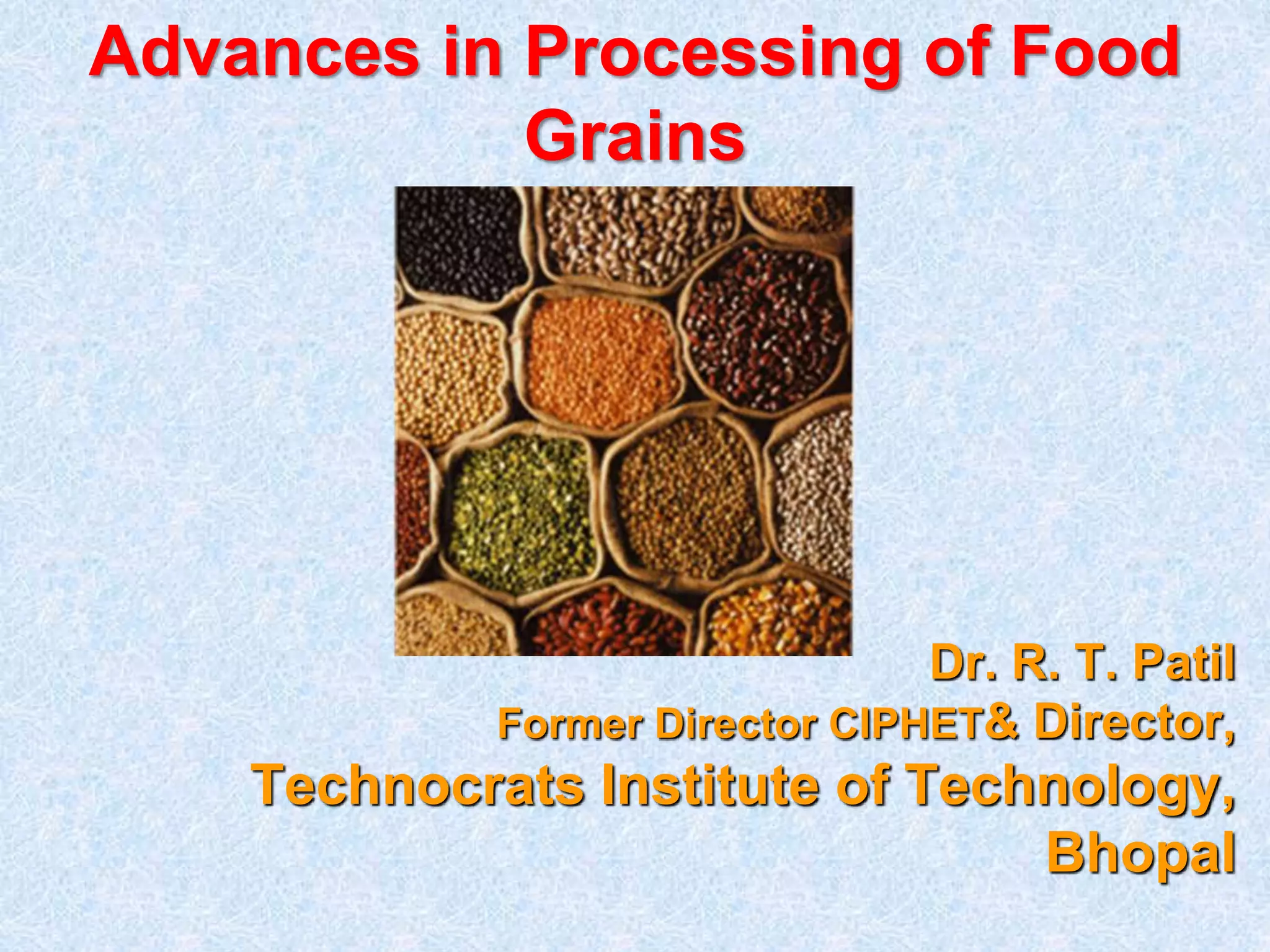
Advances in Processing of Food
Grains
• Cereals: 252.56 mn tonne
• Wheat: 95.98 mn tonne
• Rice : 86.87 mn tonne
• Millets :43.68 mn Tonne
• Pulses : 43.68 Million Tonne
• Hard to mill-Red Gram, Mung, Black gram
• Easy to mill-Lentils, Chickpea
Important Food Grains of India
Rice
Millets
Pulses
Health Benefits of Rice
• Brown rice contains manganese which is great for
energy and antioxidant protection
• Phytonutrients with anti-cancer properties protect
against heart disease
• Contains magnesium which can help to protect
against and reduce the symptoms of asthma,
migraine headaches, heart attack, stroke and high
blood pressure
• The fibre content of brown rice can help to protect
against and reduce the symptoms of
atherosclerosis, colon cancer, constipation,
diarrhoea and gallstones
Recent Trends in Processing
• Soft drying
• Curing of rice
• Bio polishing
• Rice in bakery-rice biscuits
• Rice crispies
• Microwavable and pressure
cooker puffed rice
• Vitamin rice
Advantages of Soft Drying
• Low running cost
• No heated air required
• It is only aeration with high capacity blowers
• Storage tanks with mixing arrangements can be
used for drying
• Higher head yield
• No heat stress to grain as in sun drying or
mechanical drying
• No cracking of grain due to drying
• Energy saving
• No heavy mixing of paddy during drying
• Drying of moistened paddy is relatively simple as
no quality concern
Naturally dried rice hence retains original taste
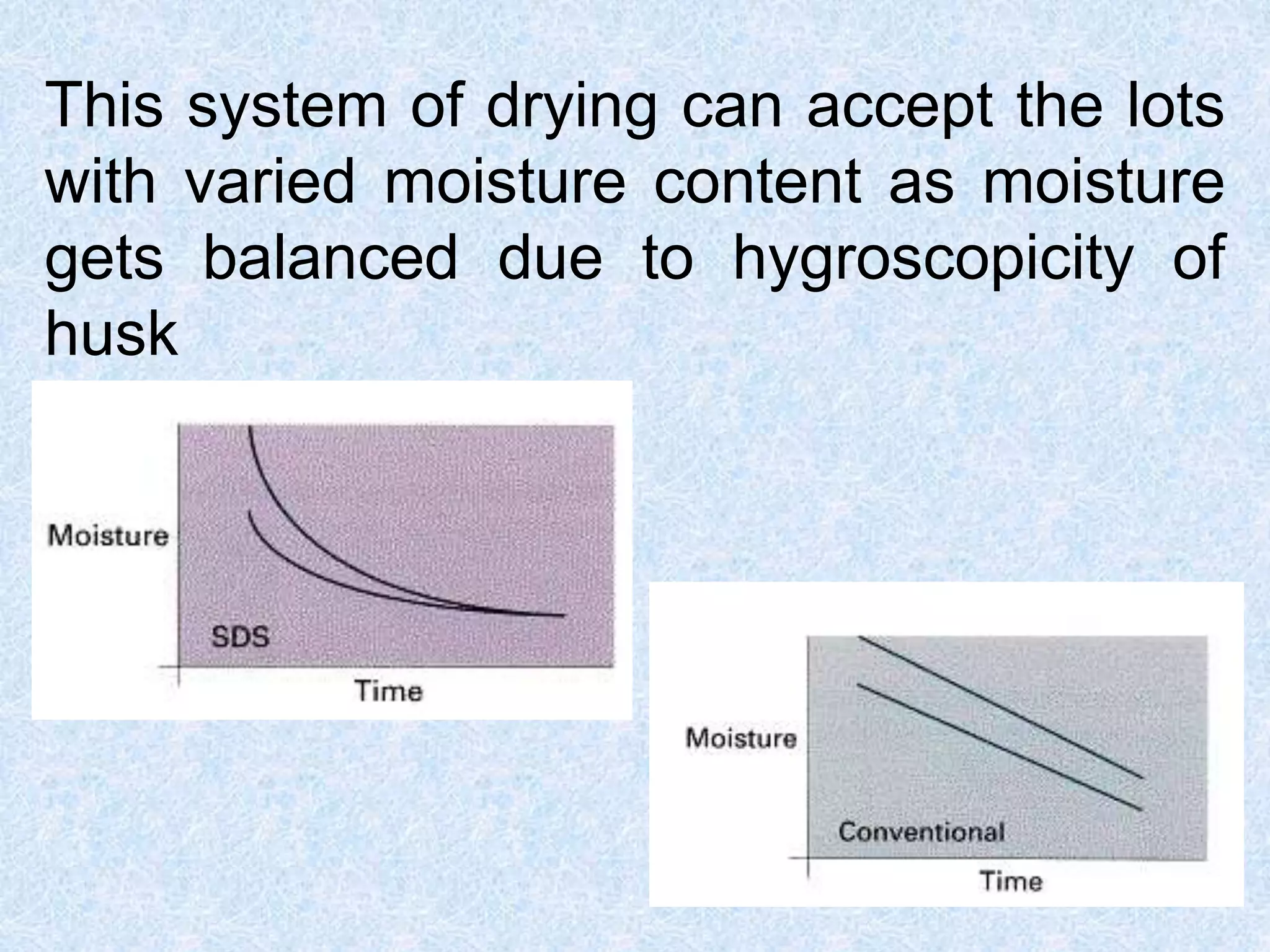
This system of drying can accept the lots
with varied moisture content as moisture
gets balanced due to hygroscopicity of
husk
Bio Polishing-Enzymatic Polishing of
Brown Rice
• Mechanical milling results in lower head rice
yield with loss of major nutrients.
• An alternative polishing method known as bio-
polish has been developed for rice with some
selected multi-enzymes
• Bio-polishing has been carried out on
germinated brown rice to get softer, nutritious
brown rice with the added benefits of germinated
rice.
• The bio-polished rice has been found to be
superior in every aspect when compared to
milled rice.
IIT Kharagpur Technology
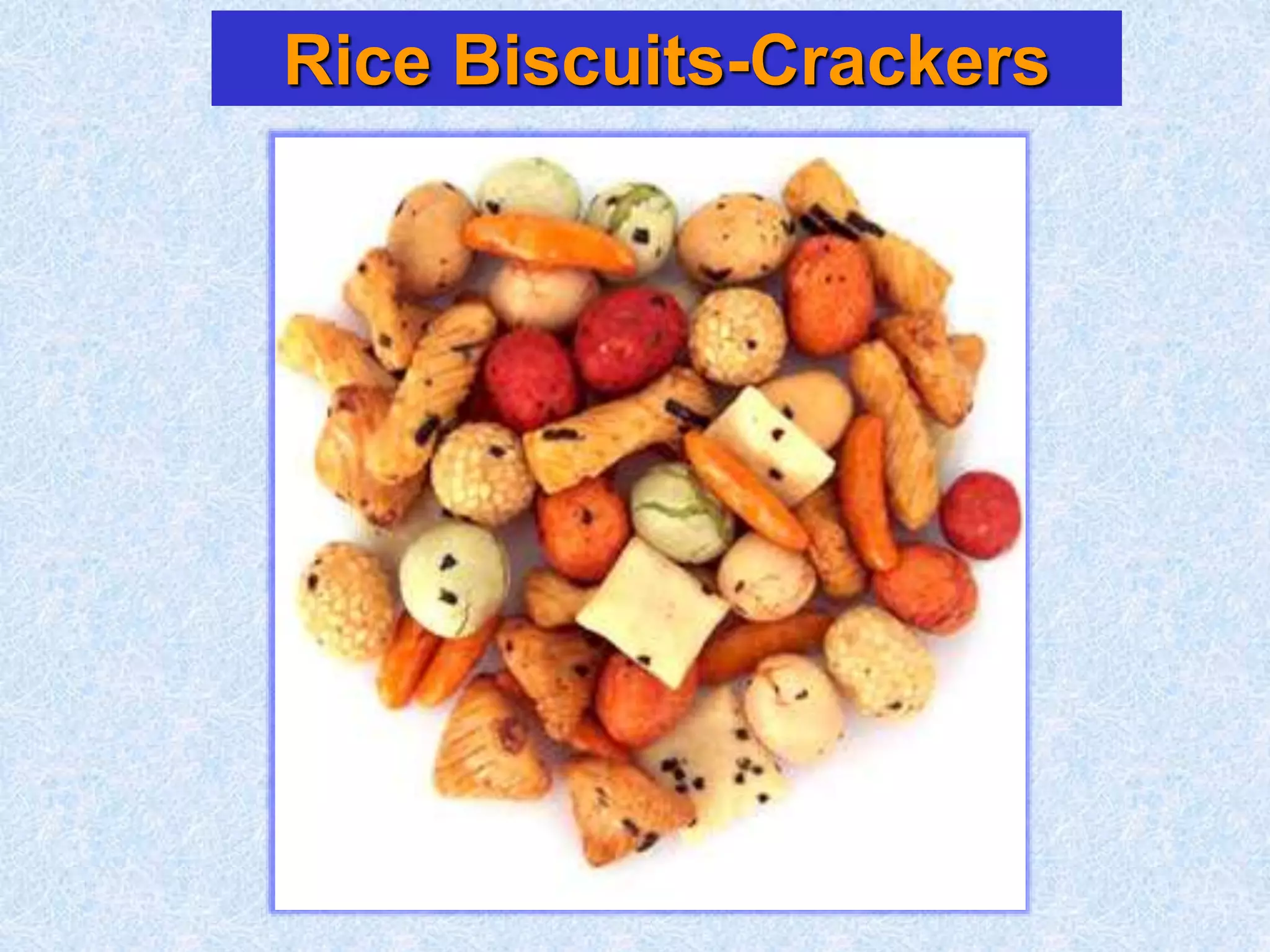
Rice Biscuits-Crackers
• Steam-kneading a mixture of rice powder and
water to form a rice dough
• Forming a piece from the rice dough by knead-
extruding
• First drying stage to intermediate moisture
• Second drying step to baking moisture content
• Baking the piece in to 3 stages to produce the
soft-baked rice cracker having a specific volume
of 5.0 to 6.5 cm3/g
• Coating a surface of the rice cracker
United States Patent 6890573, 2005
Rice Biscuits-Crackers
Half Products for Microwave
Expanded/Puffed Products
• Half products especially adapted to be puffed by
consumers at-home by microwave heating to form
puffed food products.
• The finished products comprise both R-T-E cereals
and snack products.
• The half products are fabricated from cooked
farinaceous doughs comprising rice flour, wheat
starch, oil and salt, which have been gelatinized by
subjecting the mixture to high shear mixing during
heating.
• The half products are further applied with exterior or
topical sugar coating.
United States Patent 5102679, 1990
Vitamin-enriching rice extrusion
process
• Extrusion mechanism has been developed that
transforms rice brokens into vitamin-enriched
rice pellets.
• Rice pellets can be customised in terms of
colour, shape, and size, composition and their
cooking characteristics can also be tailor-made
such as instant rice pellets, as quick-cooking
rice pellets, or as a product for admixture to
natural rice.
• Conserves most of the sensitive vitamins during
storage, washing and even cooking
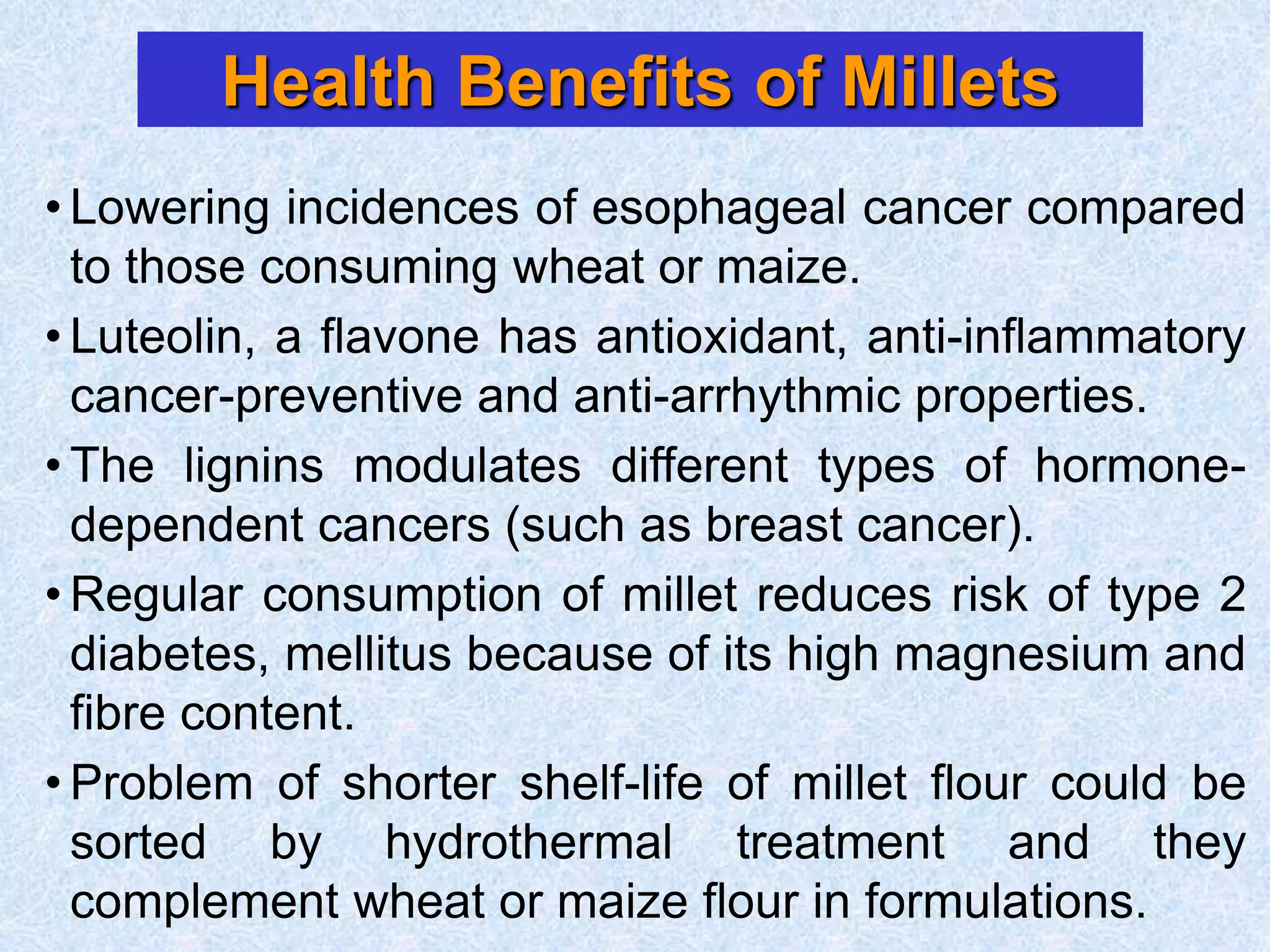
Health Benefits of Millets
• Lowering incidences of esophageal cancer compared
to those consuming wheat or maize.
• Luteolin, a flavone has antioxidant, anti-inflammatory
cancer-preventive and anti-arrhythmic properties.
• The lignins modulates different types of hormone-
dependent cancers (such as breast cancer).
• Regular consumption of millet reduces risk of type 2
diabetes, mellitus because of its high magnesium and
fibre content.
• Problem of shorter shelf-life of millet flour could be
sorted by hydrothermal treatment and they
complement wheat or maize flour in formulations.
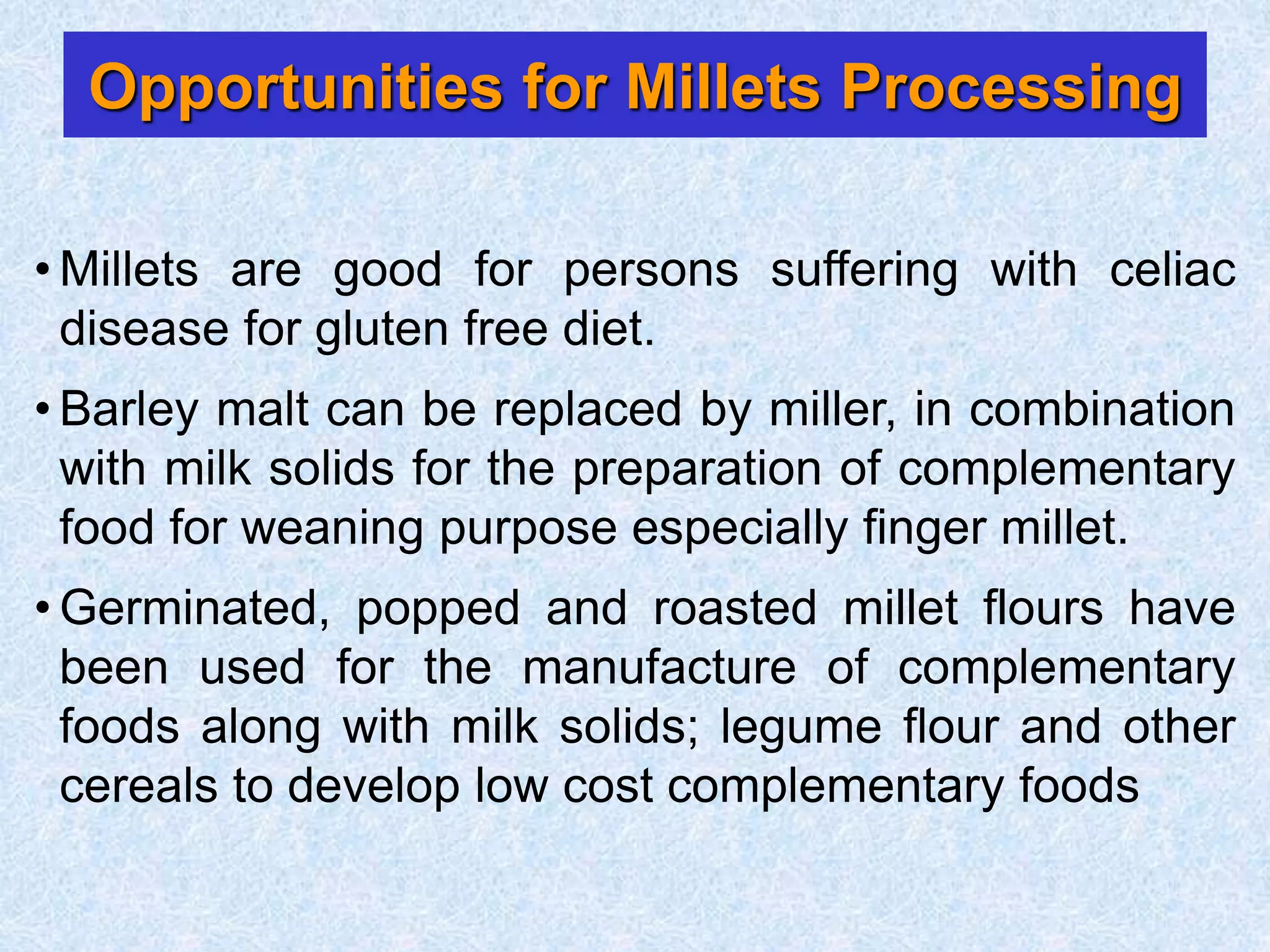
Opportunities for Millets Processing
• Millets are good for persons suffering with celiac
disease for gluten free diet.
• Barley malt can be replaced by miller, in combination
with milk solids for the preparation of complementary
food for weaning purpose especially finger millet.
• Germinated, popped and roasted millet flours have
been used for the manufacture of complementary
foods along with milk solids; legume flour and other
cereals to develop low cost complementary foods
Health Benefits of Millets
• Lowering incidences of esophageal cancer compared
to those consuming wheat or maize.
• Luteolin, a flavone has antioxidant, anti-inflammatory
cancer-preventive and anti-arrhythmic properties.
• The lignins modulates different types of hormone-
dependent cancers (such as breast cancer).
• Regular consumption of millet reduces risk of type 2
diabetes, mellitus because of its high magnesium and
fibre content.
• Problem of shorter shelf-life of millet flour could be
sorted by hydrothermal treatment and they
complement wheat or maize flour in formulations.
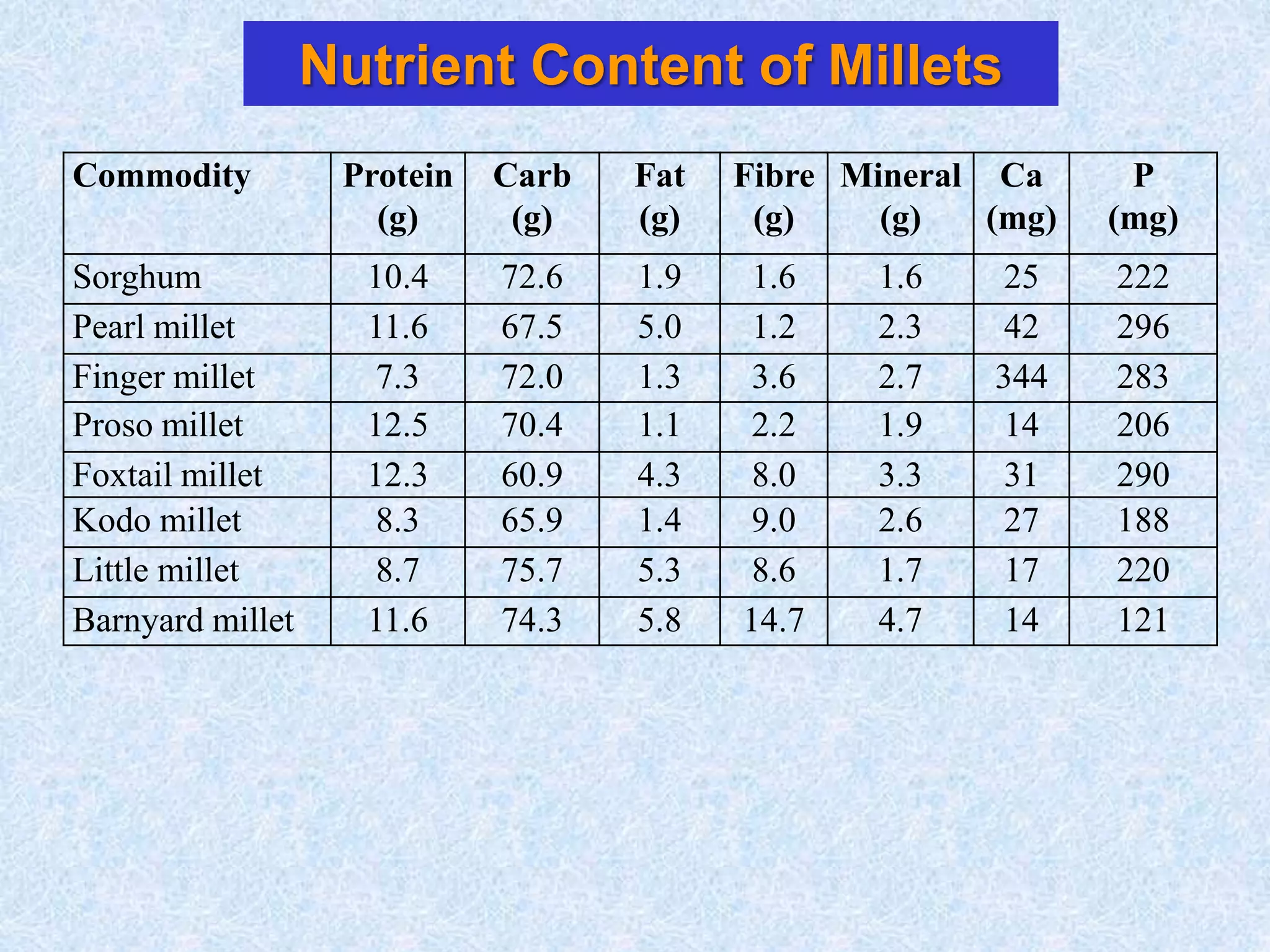
Nutrient Content of Millets
Commodity Protein
(g)
Carb
(g)
Fat
(g)
Fibre
(g)
Mineral
(g)
Ca
(mg)
P
(mg)
Sorghum 10.4 72.6 1.9 1.6 1.6 25 222
Pearl millet 11.6 67.5 5.0 1.2 2.3 42 296
Finger millet 7.3 72.0 1.3 3.6 2.7 344 283
Proso millet 12.5 70.4 1.1 2.2 1.9 14 206
Foxtail millet 12.3 60.9 4.3 8.0 3.3 31 290
Kodo millet 8.3 65.9 1.4 9.0 2.6 27 188
Little millet 8.7 75.7 5.3 8.6 1.7 17 220
Barnyard millet 11.6 74.3 5.8 14.7 4.7 14 121
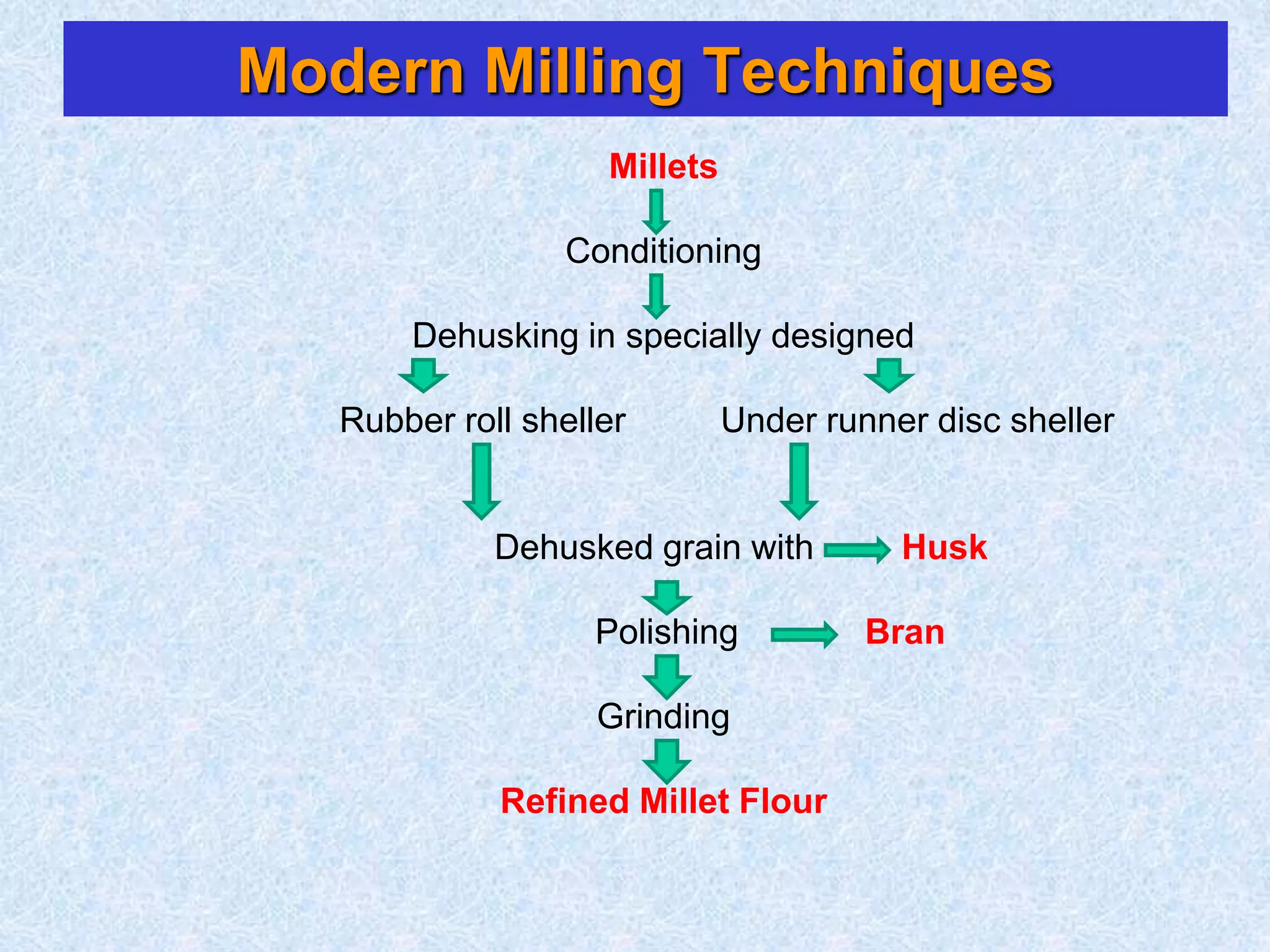
Modern Milling Techniques
Millets
Conditioning
Dehusking in specially designed
Rubber roll sheller Under runner disc sheller
Dehusked grain with Husk
Polishing Bran
Grinding
Refined Millet Flour
Importance of Pulses in Indian Diet
• Pulse milling is an important agro-based industry in India
next only to rice and wheat milling.
• Pulses are the major source of lysine rich protein, which is
supplementary to cereal based proteins (methionine).
• India is recognized globally as a major player contributing
to about 25 per cent of the world’s production.
• The present demand for pulses in the country is estimated
to be about 15 million tones, while the production hovers
around 12 to 14 million tones
• Indian Council of Medical Research has recommended a
minimum consumption of 47 grams.
• The average consumption in India, however, is much less
at around 30-35 grams per person per day.
• The demand projections indicate the requirement of 30
Million Tonnes by 2020 AD.
Processing of Legume
• De-hulled to improve their appearance, texture, cooking
quality, palatability and digestibility.
• The split pulses are not affected by insect pests during
storage
• There are about 10,000 dhal mills in the country and only
8 to 10 per cent of these are located in the rural areas
• Estimates indicate that about 30% of the production of
pulses is retained by the farmers and is processed in rural
sector using traditional techniques.
• The grain characteristics are such that husk is 10 -16 %
and hence the potential dhal recovery of 84 - 90% is
possible
• The available commercial milling gives low recovery (65-
72%) and high milling losses.
• The milling losses alone contribute to 15-20%, which
comes to around 1.5 million tonnes.
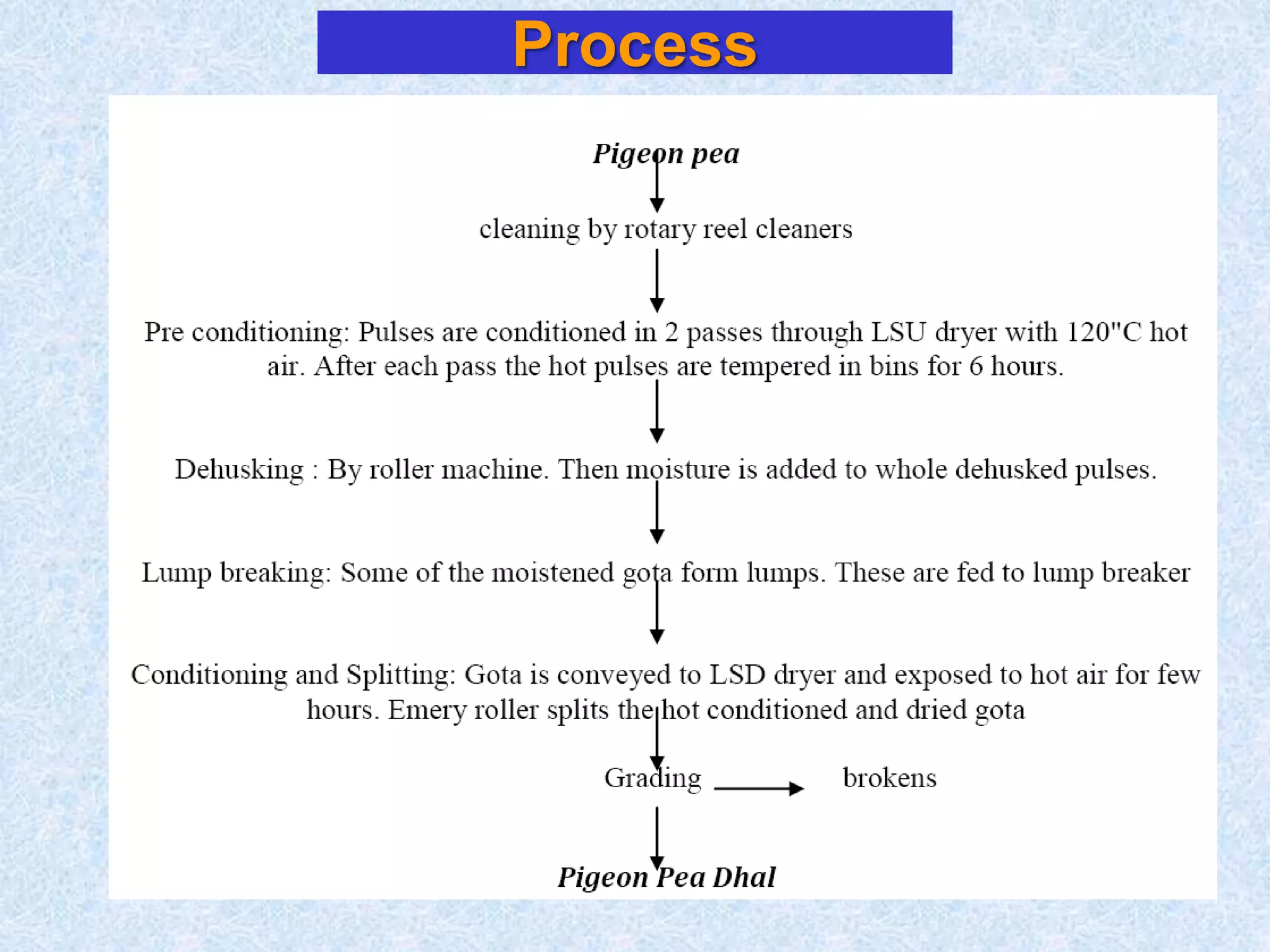
Unit Operations of Pulse Milling
• Cleaning/grading of raw grains: With the
help of air draft, screens and destoners
• Conditioning: to loosen the husk held by
gummy layer to facilitate its separation
from the kernel
• Dehusking and Splitting: To make into Dhal
• Polishing of dhal: To provide attractive
lustre
• Grading of dhal: Grade A, B and C
Domestic Level Processing
• The grains are steeped in water for few hours, the
water is then drained off, red earth is added to it.
• The grains are then dried under sun in thin layers for 2
days.
• Such conditioned grains are milled by Burr mill “manual
chakki”.
• Dehusking and splitting takes place simultaneously.
• The husk in all the above methods is removed by
winnowing.
These methods of processing cause cup formation, more
breakage and powdering of cotyledons, time consuming
and the edges of cotyledons break during splitting.
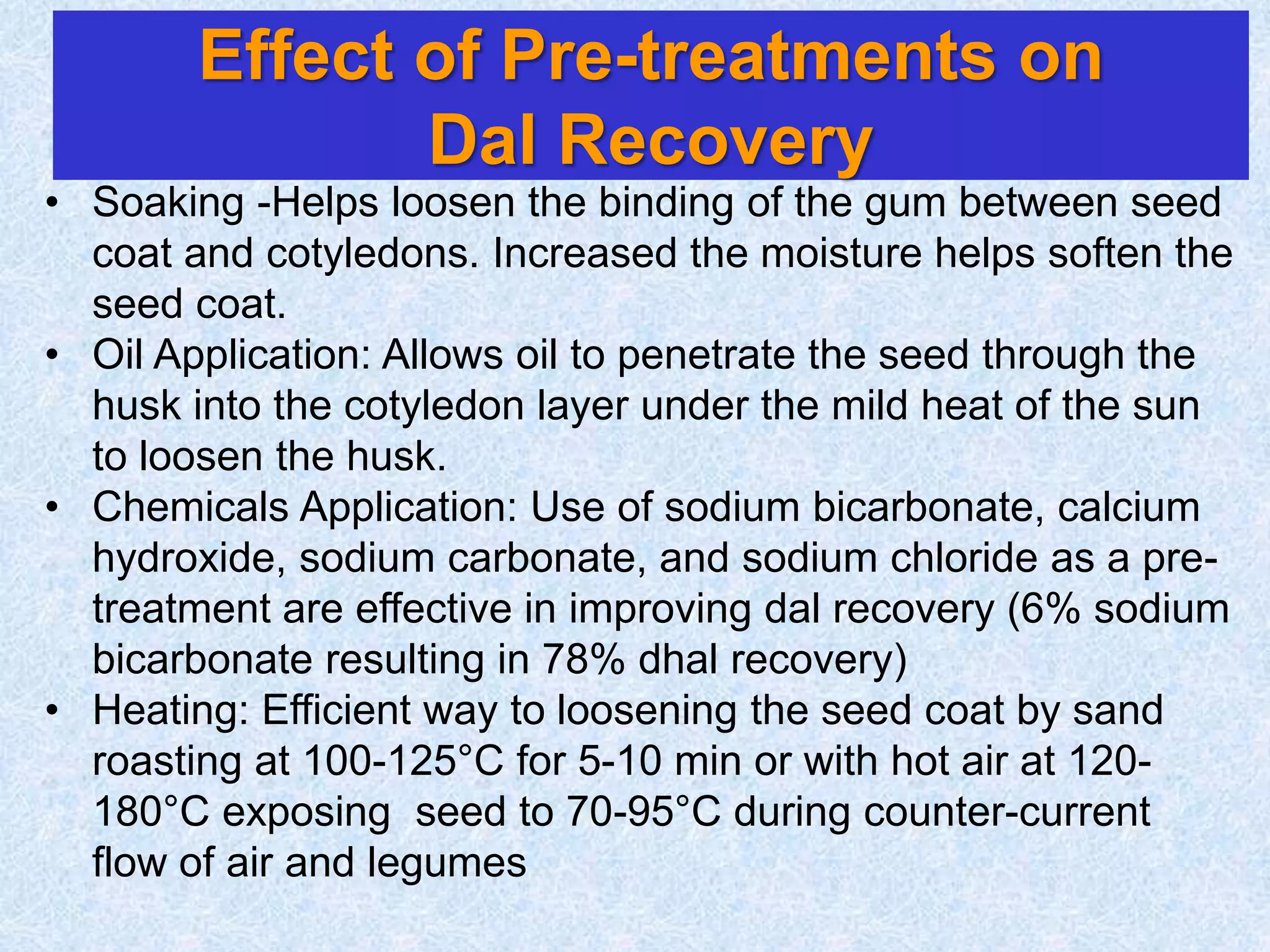
Effect of Pre-treatments on
Dal Recovery
• Soaking -Helps loosen the binding of the gum between seed
coat and cotyledons. Increased the moisture helps soften the
seed coat.
• Oil Application: Allows oil to penetrate the seed through the
husk into the cotyledon layer under the mild heat of the sun
to loosen the husk.
• Chemicals Application: Use of sodium bicarbonate, calcium
hydroxide, sodium carbonate, and sodium chloride as a pre-
treatment are effective in improving dal recovery (6% sodium
bicarbonate resulting in 78% dhal recovery)
• Heating: Efficient way to loosening the seed coat by sand
roasting at 100-125°C for 5-10 min or with hot air at 120-
180°C exposing seed to 70-95°C during counter-current
flow of air and legumes
Process
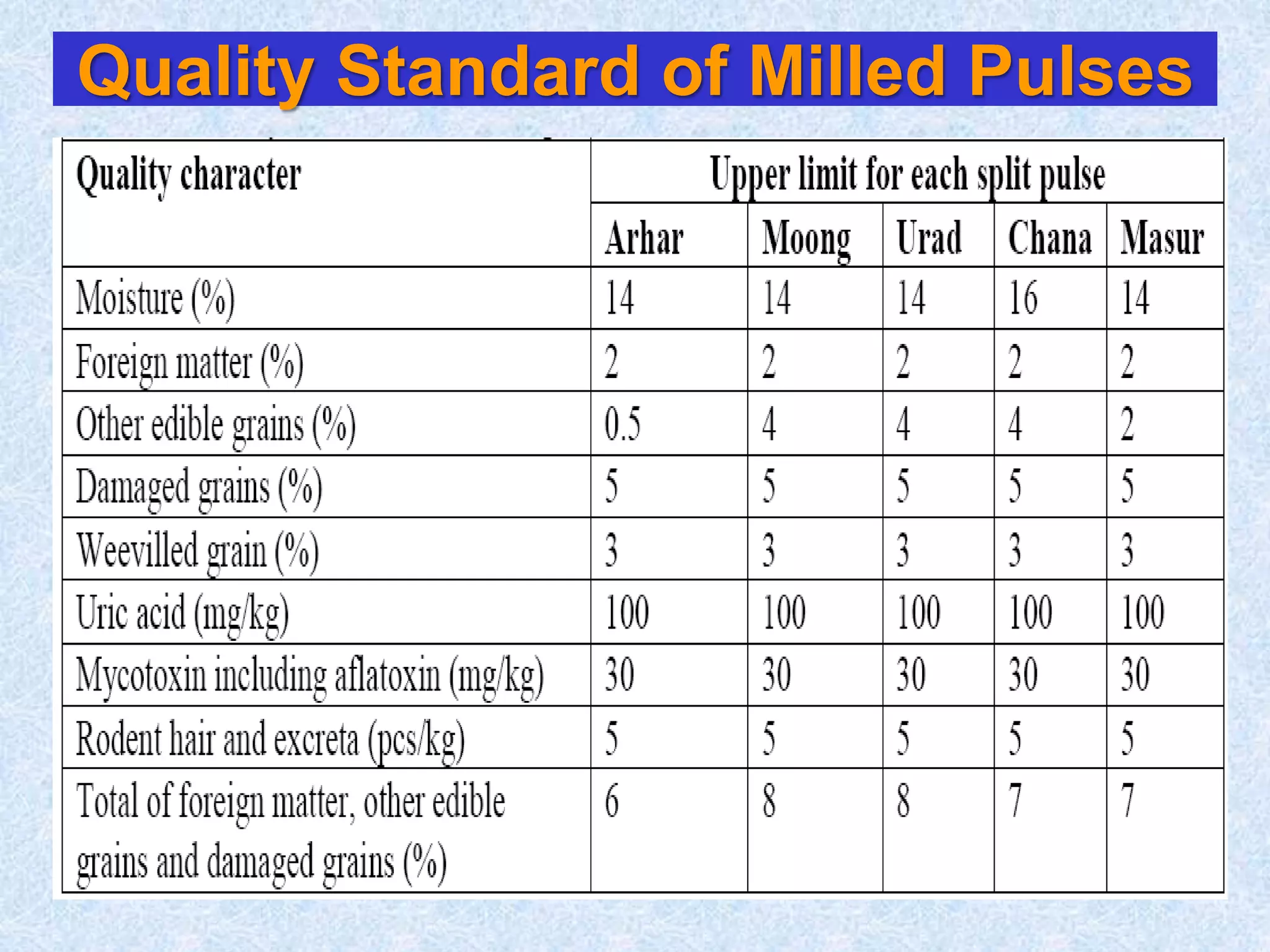
Quality Standard of Milled Pulses
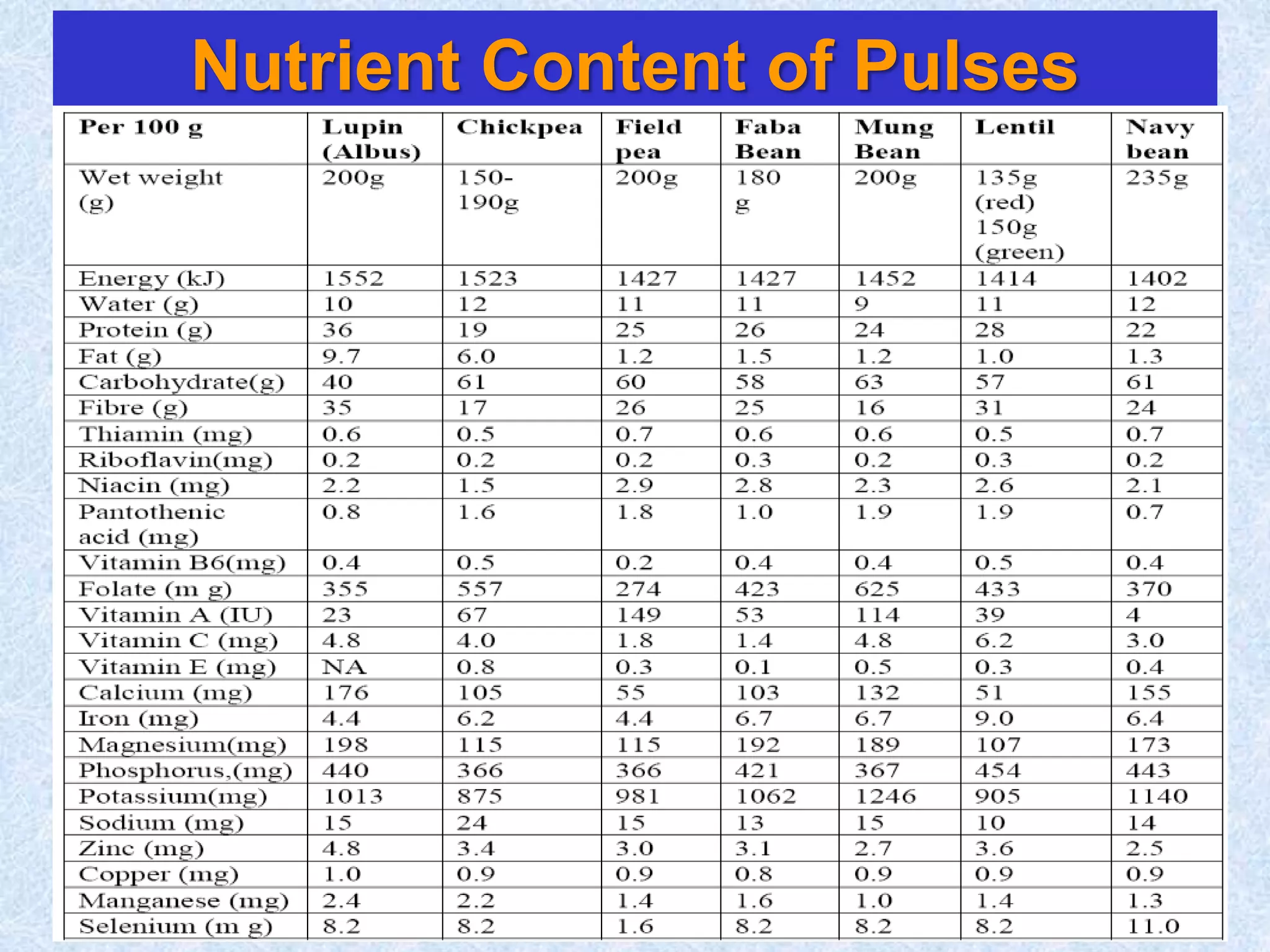
Nutrient Content of Pulses
Post Harvest Precautions for
Legumes and Pulses
• Harvest the crop when 80% of the pods are
mature (turned yellow).
• Harvest during conducive weather conditions.
• Threshing and winnowing on cemented (pucca)
floor.
• Use proper and scientific method of storage
• Package properly to protect the quality and
quantity of produce during transit
• Transportation of gram should be done in bags to
minimize the grain losses.
• Avail the procedure of Sanitary and Phyto-
Sanitary measures during export.
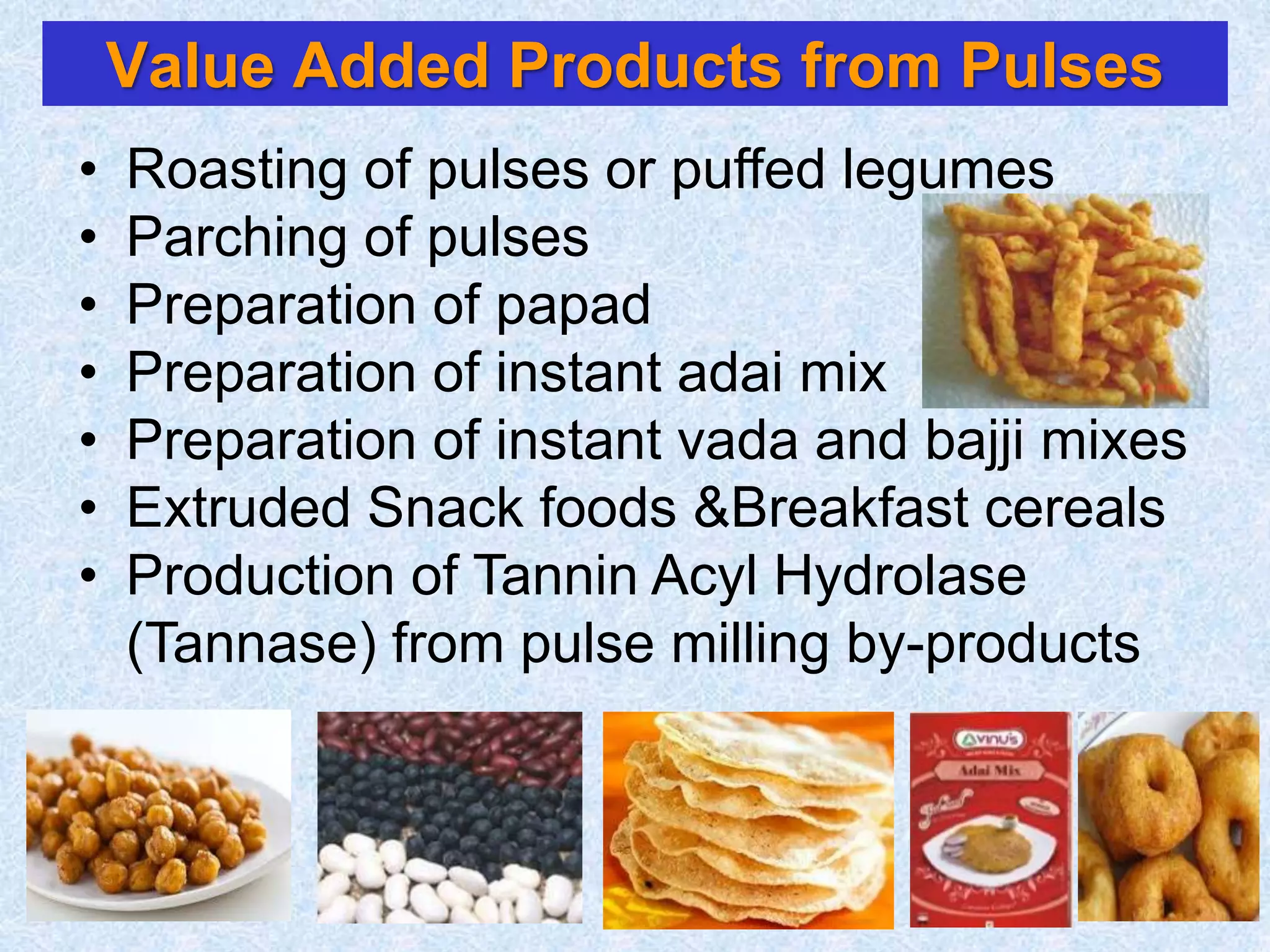
• Roasting of pulses or puffed legumes
• Parching of pulses
• Preparation of papad
• Preparation of instant adai mix
• Preparation of instant vada and bajji mixes
• Extruded Snack foods &Breakfast cereals
• Production of Tannin Acyl Hydrolase
(Tannase) from pulse milling by-products
Value Added Products from Pulses
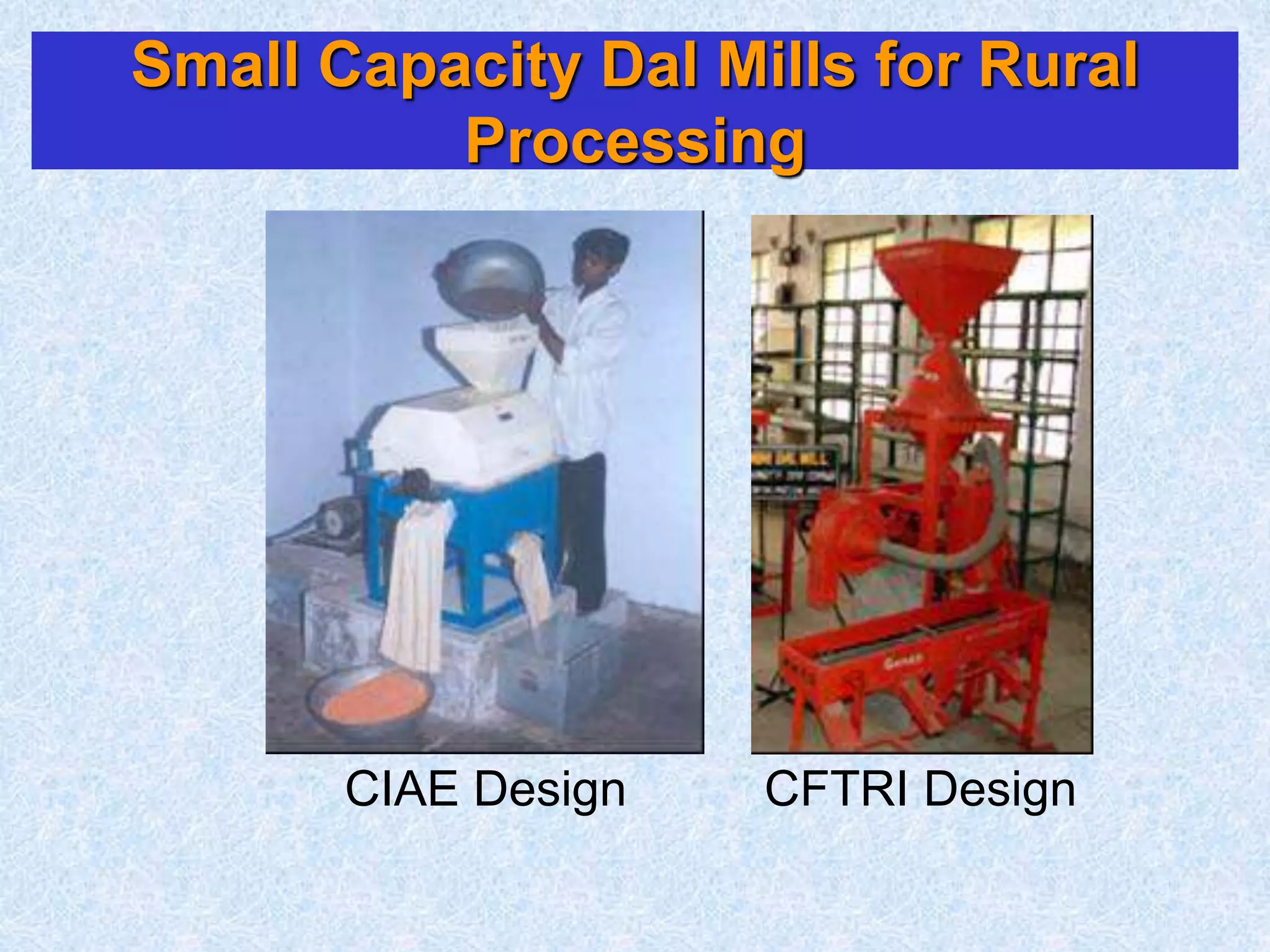
Small Capacity Dal Mills for Rural
Processing
CIAE Design CFTRI Design
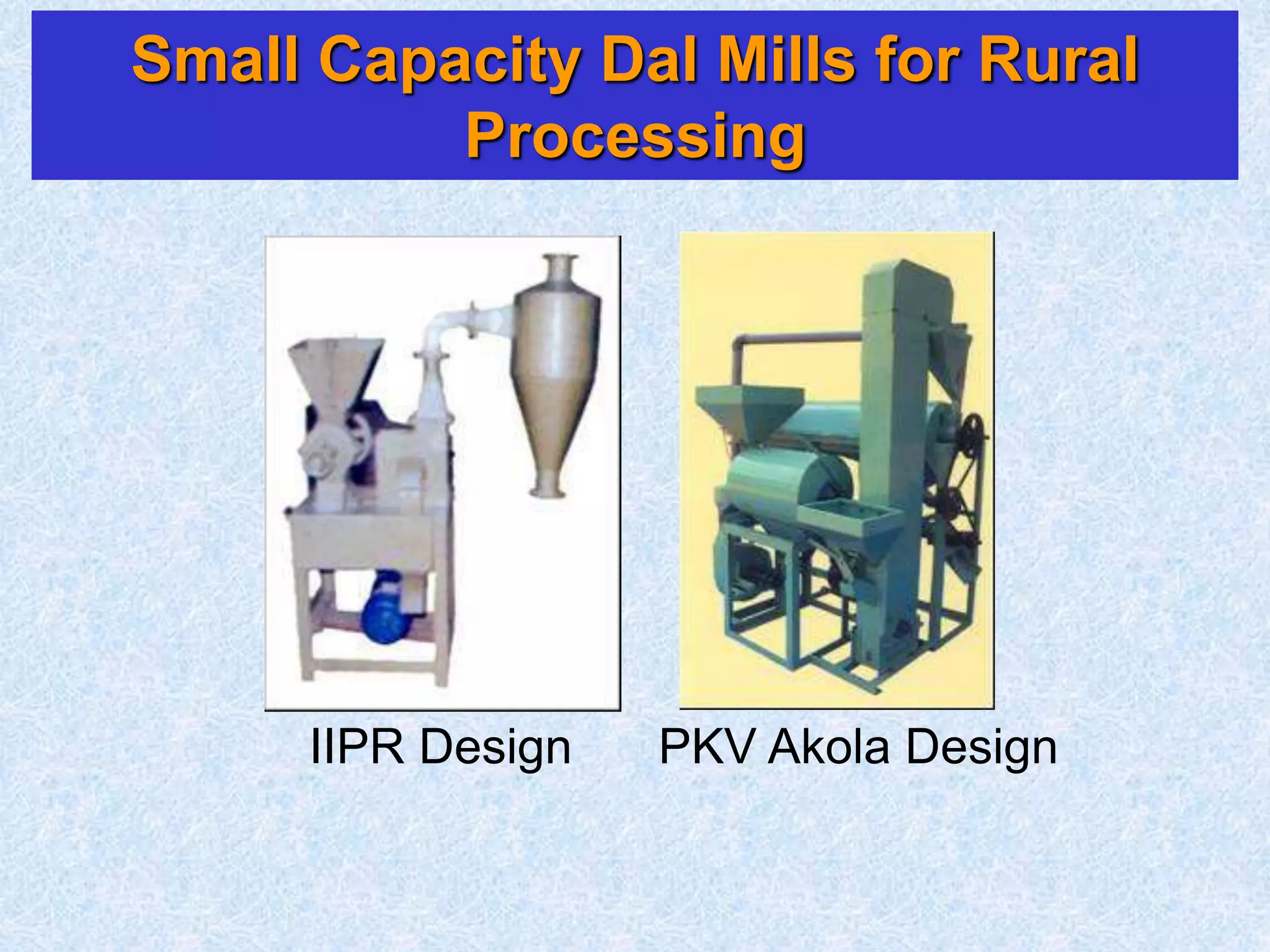
Small Capacity Dal Mills for Rural
Processing
IIPR Design PKV Akola Design
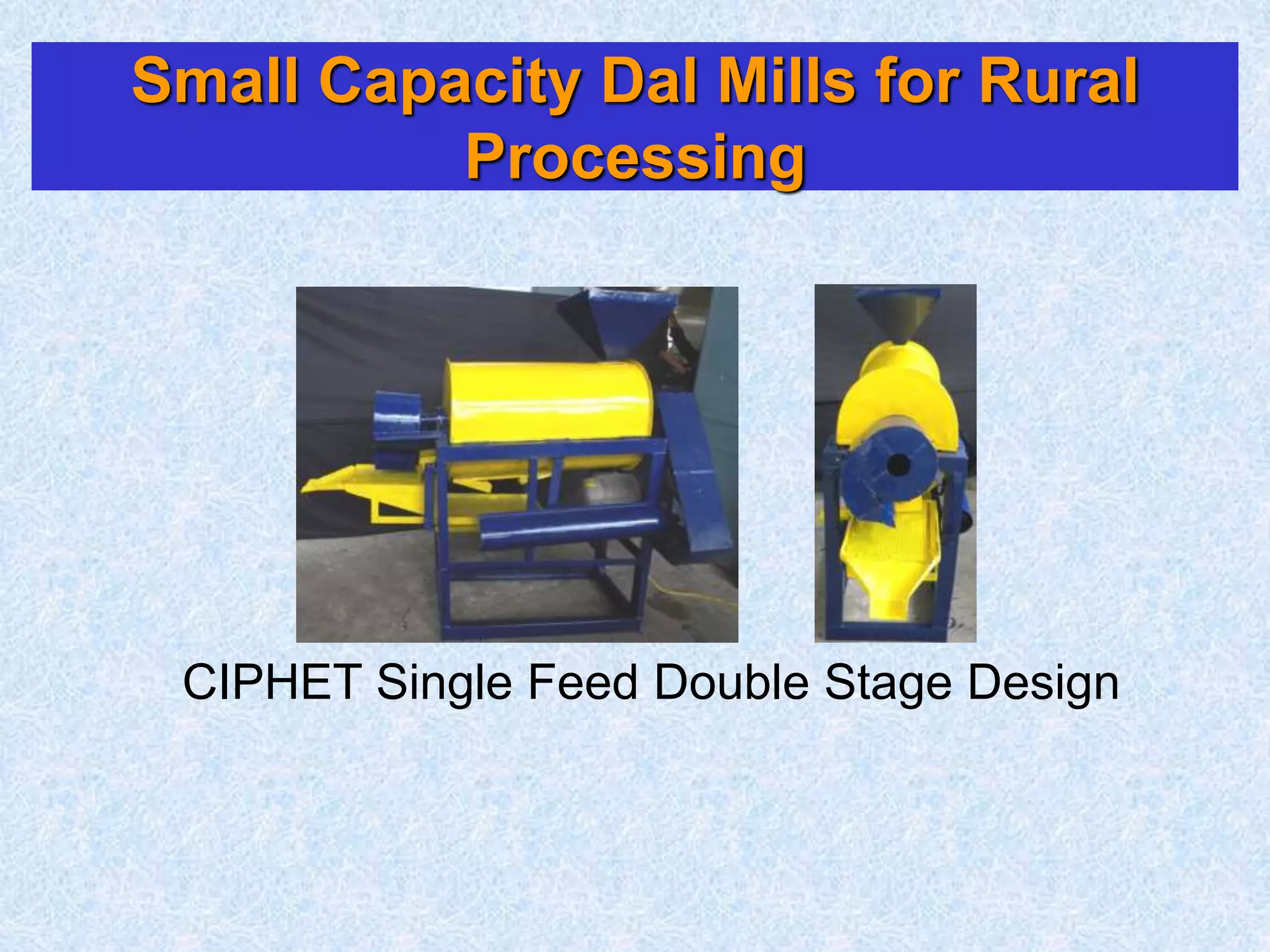
Small Capacity Dal Mills for Rural
Processing
CIPHET Single Feed Double Stage Design
Advances in processing of food grains

Advances in processing of food grains

  • 1.
    Dr. R. T.Patil Former Director CIPHET& Director, Technocrats Institute of Technology, Bhopal Advances in Processing of Food Grains
  • 2.
    • Cereals: 252.56mn tonne • Wheat: 95.98 mn tonne • Rice : 86.87 mn tonne • Millets :43.68 mn Tonne • Pulses : 43.68 Million Tonne • Hard to mill-Red Gram, Mung, Black gram • Easy to mill-Lentils, Chickpea Important Food Grains of India Rice Millets Pulses
  • 3.
    Health Benefits ofRice • Brown rice contains manganese which is great for energy and antioxidant protection • Phytonutrients with anti-cancer properties protect against heart disease • Contains magnesium which can help to protect against and reduce the symptoms of asthma, migraine headaches, heart attack, stroke and high blood pressure • The fibre content of brown rice can help to protect against and reduce the symptoms of atherosclerosis, colon cancer, constipation, diarrhoea and gallstones
  • 4.
    Recent Trends inProcessing • Soft drying • Curing of rice • Bio polishing • Rice in bakery-rice biscuits • Rice crispies • Microwavable and pressure cooker puffed rice • Vitamin rice
  • 5.
    Advantages of SoftDrying • Low running cost • No heated air required • It is only aeration with high capacity blowers • Storage tanks with mixing arrangements can be used for drying • Higher head yield • No heat stress to grain as in sun drying or mechanical drying • No cracking of grain due to drying • Energy saving • No heavy mixing of paddy during drying • Drying of moistened paddy is relatively simple as no quality concern Naturally dried rice hence retains original taste
  • 6.
    This system ofdrying can accept the lots with varied moisture content as moisture gets balanced due to hygroscopicity of husk
  • 7.
    Bio Polishing-Enzymatic Polishingof Brown Rice • Mechanical milling results in lower head rice yield with loss of major nutrients. • An alternative polishing method known as bio- polish has been developed for rice with some selected multi-enzymes • Bio-polishing has been carried out on germinated brown rice to get softer, nutritious brown rice with the added benefits of germinated rice. • The bio-polished rice has been found to be superior in every aspect when compared to milled rice. IIT Kharagpur Technology
  • 8.
    Rice Biscuits-Crackers • Steam-kneadinga mixture of rice powder and water to form a rice dough • Forming a piece from the rice dough by knead- extruding • First drying stage to intermediate moisture • Second drying step to baking moisture content • Baking the piece in to 3 stages to produce the soft-baked rice cracker having a specific volume of 5.0 to 6.5 cm3/g • Coating a surface of the rice cracker United States Patent 6890573, 2005
  • 9.
  • 10.
    Half Products forMicrowave Expanded/Puffed Products • Half products especially adapted to be puffed by consumers at-home by microwave heating to form puffed food products. • The finished products comprise both R-T-E cereals and snack products. • The half products are fabricated from cooked farinaceous doughs comprising rice flour, wheat starch, oil and salt, which have been gelatinized by subjecting the mixture to high shear mixing during heating. • The half products are further applied with exterior or topical sugar coating. United States Patent 5102679, 1990
  • 11.
    Vitamin-enriching rice extrusion process •Extrusion mechanism has been developed that transforms rice brokens into vitamin-enriched rice pellets. • Rice pellets can be customised in terms of colour, shape, and size, composition and their cooking characteristics can also be tailor-made such as instant rice pellets, as quick-cooking rice pellets, or as a product for admixture to natural rice. • Conserves most of the sensitive vitamins during storage, washing and even cooking
  • 12.
    Health Benefits ofMillets • Lowering incidences of esophageal cancer compared to those consuming wheat or maize. • Luteolin, a flavone has antioxidant, anti-inflammatory cancer-preventive and anti-arrhythmic properties. • The lignins modulates different types of hormone- dependent cancers (such as breast cancer). • Regular consumption of millet reduces risk of type 2 diabetes, mellitus because of its high magnesium and fibre content. • Problem of shorter shelf-life of millet flour could be sorted by hydrothermal treatment and they complement wheat or maize flour in formulations.
  • 13.
    Opportunities for MilletsProcessing • Millets are good for persons suffering with celiac disease for gluten free diet. • Barley malt can be replaced by miller, in combination with milk solids for the preparation of complementary food for weaning purpose especially finger millet. • Germinated, popped and roasted millet flours have been used for the manufacture of complementary foods along with milk solids; legume flour and other cereals to develop low cost complementary foods
  • 14.
    Health Benefits ofMillets • Lowering incidences of esophageal cancer compared to those consuming wheat or maize. • Luteolin, a flavone has antioxidant, anti-inflammatory cancer-preventive and anti-arrhythmic properties. • The lignins modulates different types of hormone- dependent cancers (such as breast cancer). • Regular consumption of millet reduces risk of type 2 diabetes, mellitus because of its high magnesium and fibre content. • Problem of shorter shelf-life of millet flour could be sorted by hydrothermal treatment and they complement wheat or maize flour in formulations.
  • 15.
    Nutrient Content ofMillets Commodity Protein (g) Carb (g) Fat (g) Fibre (g) Mineral (g) Ca (mg) P (mg) Sorghum 10.4 72.6 1.9 1.6 1.6 25 222 Pearl millet 11.6 67.5 5.0 1.2 2.3 42 296 Finger millet 7.3 72.0 1.3 3.6 2.7 344 283 Proso millet 12.5 70.4 1.1 2.2 1.9 14 206 Foxtail millet 12.3 60.9 4.3 8.0 3.3 31 290 Kodo millet 8.3 65.9 1.4 9.0 2.6 27 188 Little millet 8.7 75.7 5.3 8.6 1.7 17 220 Barnyard millet 11.6 74.3 5.8 14.7 4.7 14 121
  • 16.
    Modern Milling Techniques Millets Conditioning Dehuskingin specially designed Rubber roll sheller Under runner disc sheller Dehusked grain with Husk Polishing Bran Grinding Refined Millet Flour
  • 17.
    Importance of Pulsesin Indian Diet • Pulse milling is an important agro-based industry in India next only to rice and wheat milling. • Pulses are the major source of lysine rich protein, which is supplementary to cereal based proteins (methionine). • India is recognized globally as a major player contributing to about 25 per cent of the world’s production. • The present demand for pulses in the country is estimated to be about 15 million tones, while the production hovers around 12 to 14 million tones • Indian Council of Medical Research has recommended a minimum consumption of 47 grams. • The average consumption in India, however, is much less at around 30-35 grams per person per day. • The demand projections indicate the requirement of 30 Million Tonnes by 2020 AD.
  • 18.
    Processing of Legume •De-hulled to improve their appearance, texture, cooking quality, palatability and digestibility. • The split pulses are not affected by insect pests during storage • There are about 10,000 dhal mills in the country and only 8 to 10 per cent of these are located in the rural areas • Estimates indicate that about 30% of the production of pulses is retained by the farmers and is processed in rural sector using traditional techniques. • The grain characteristics are such that husk is 10 -16 % and hence the potential dhal recovery of 84 - 90% is possible • The available commercial milling gives low recovery (65- 72%) and high milling losses. • The milling losses alone contribute to 15-20%, which comes to around 1.5 million tonnes.
  • 19.
    Unit Operations ofPulse Milling • Cleaning/grading of raw grains: With the help of air draft, screens and destoners • Conditioning: to loosen the husk held by gummy layer to facilitate its separation from the kernel • Dehusking and Splitting: To make into Dhal • Polishing of dhal: To provide attractive lustre • Grading of dhal: Grade A, B and C
  • 20.
    Domestic Level Processing •The grains are steeped in water for few hours, the water is then drained off, red earth is added to it. • The grains are then dried under sun in thin layers for 2 days. • Such conditioned grains are milled by Burr mill “manual chakki”. • Dehusking and splitting takes place simultaneously. • The husk in all the above methods is removed by winnowing. These methods of processing cause cup formation, more breakage and powdering of cotyledons, time consuming and the edges of cotyledons break during splitting.
  • 21.
    Effect of Pre-treatmentson Dal Recovery • Soaking -Helps loosen the binding of the gum between seed coat and cotyledons. Increased the moisture helps soften the seed coat. • Oil Application: Allows oil to penetrate the seed through the husk into the cotyledon layer under the mild heat of the sun to loosen the husk. • Chemicals Application: Use of sodium bicarbonate, calcium hydroxide, sodium carbonate, and sodium chloride as a pre- treatment are effective in improving dal recovery (6% sodium bicarbonate resulting in 78% dhal recovery) • Heating: Efficient way to loosening the seed coat by sand roasting at 100-125°C for 5-10 min or with hot air at 120- 180°C exposing seed to 70-95°C during counter-current flow of air and legumes
  • 22.
  • 23.
    Quality Standard ofMilled Pulses
  • 24.
  • 25.
    Post Harvest Precautionsfor Legumes and Pulses • Harvest the crop when 80% of the pods are mature (turned yellow). • Harvest during conducive weather conditions. • Threshing and winnowing on cemented (pucca) floor. • Use proper and scientific method of storage • Package properly to protect the quality and quantity of produce during transit • Transportation of gram should be done in bags to minimize the grain losses. • Avail the procedure of Sanitary and Phyto- Sanitary measures during export.
  • 26.
    • Roasting ofpulses or puffed legumes • Parching of pulses • Preparation of papad • Preparation of instant adai mix • Preparation of instant vada and bajji mixes • Extruded Snack foods &Breakfast cereals • Production of Tannin Acyl Hydrolase (Tannase) from pulse milling by-products Value Added Products from Pulses
  • 27.
    Small Capacity DalMills for Rural Processing CIAE Design CFTRI Design
  • 28.
    Small Capacity DalMills for Rural Processing IIPR Design PKV Akola Design
  • 29.
    Small Capacity DalMills for Rural Processing CIPHET Single Feed Double Stage Design