This page intentionally left blank
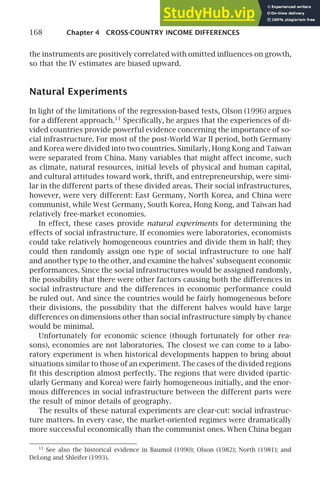
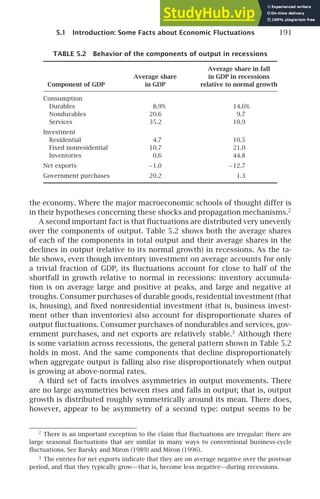
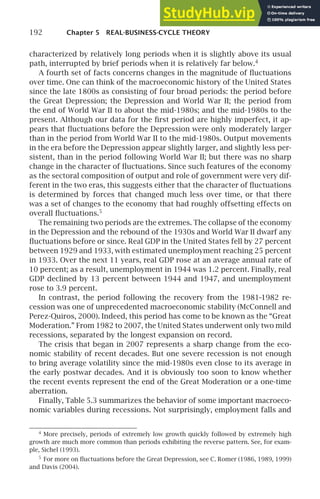
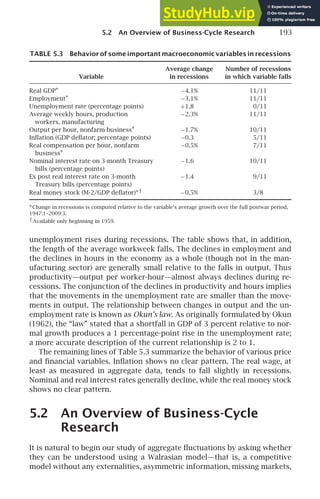
ADVANCED
MACROECONOMICS
Fourth Edition
The McGraw-Hill Series in Economics
ESSENTIALS OF
ECONOMICS
Brue, McConnell, and Flynn
Essentials of Economics
Second Edition
Mandel
Economics: The Basics
First Edition
Schiller
Essentials of Economics
Eighth Edition
PRINCIPLES OF ECONOMICS
Colander
Economics,
Microeconomics, and
Macroeconomics
Eighth Edition
Frank and Bernanke
Principles of Economics,
Principles of
Microeconomics, Principles
of Macroeconomics
Fourth Edition
Frank and Bernanke
Brief Editions: Principles of
Economics, Principles of
Microeconomics, Principles
of Macroeconomics
Second Edition
McConnell, Brue, and Flynn
Economics,
Microeconomics,
Macroeconomics
Nineteenth Edition
McConnell, Brue, and Flynn
Brief Editions:
Microeconomics and
Macroeconomics
First Edition
Miller
Principles of
Microeconomics
First Edition
Samuelson and Nordhaus
Economics,
Microeconomics, and
Macroeconomics
Nineteenth Edition
Schiller
The Economy Today, The
Micro Economy Today, and
The Macro Economy Today
Twelfth Edition
Slavin
Economics,
Microeconomics, and
Macroeconomics
Tenth Edition
ECONOMICS OF SOCIAL
ISSUES
Guell
Issues in Economics Today
Fifth Edition
Sharp, Register, and Grimes
Economics of Social Issues
Nineteenth Edition
ECONOMETRICS
Gujarati and Porter
Basic Econometrics
Fifth Edition
Gujarati and Porter
Essentials of Econometrics
Fourth Edition
MANAGERIAL ECONOMICS
Baye
Managerial Economics and
Business Strategy
Eighth Edition
Brickley, Smith, and
Zimmerman
Managerial Economics and
Organizational Architecture
Fifth Edition
Thomas and Maurice
Managerial Economics
Tenth Edition
INTERMEDIATE
ECONOMICS
Bernheim and Whinston
Microeconomics
First Edition
Dornbusch, Fischer, and
Startz
Macroeconomics
Eleventh Edition
Frank
Microeconomics and
Behavior
Eighth Edition
ADVANCED ECONOMICS
Romer
Advanced Macroeconomics
Fourth Edition
MONEY AND BANKING
Cecchetti and Schoenholtz
Money, Banking, and
Financial Markets
Third Edition
URBAN ECONOMICS
O’Sullivan
Urban Economics
Seventh Edition
LABOR ECONOMICS
Borjas
Labor Economics
Fifth Edition
McConnell, Brue, and
Macpherson
Contemporary Labor
Economics
Ninth Edition
PUBLIC FINANCE
Rosen and Gayer
Public Finance
Ninth Edition
Seidman
Public Finance
First Edition
ENVIRONMENTAL
ECONOMICS
Field and Field
Environmental Economics:
An Introduction
Fifth Edition
INTERNATIONAL
ECONOMICS
Appleyard, Field, and Cobb
International Economics
Seventh Edition
King and King
International Economics,
Globalization, and Policy:
A Reader
Fifth Edition
Pugel
International Economics
Fourteenth Edition
ADVANCED
MACROECONOMICS
Fourth Edition
David Romer
University of California, Berkeley
ADVANCED MACROECONOMICS, FOURTH EDITION
Published by McGraw-Hill, a business unit of The McGraw-Hill Companies, Inc.,
1221 Avenue of the Americas, New York, NY, 10020. Copyright c
 2012 by
The McGraw-Hill Companies, Inc. All rights reserved. Previous editions c
 2006, 2001,
and 1996. No part of this publication may be reproduced or distributed in any form or
by any means, or stored in a database or retrieval system, without the prior written
consent of The McGraw-Hill Companies, Inc., including, but not limited to, in any
network or other electronic storage or transmission, or broadcast for distance
learning.
Some ancillaries, including electronic and print components, may not be available to
customers outside the United States.
This book is printed on acid-free paper.
1 2 3 4 5 6 7 8 9 0 DOC/DOC 1 0 9 8 7 6 5 4 3 2 1
ISBN 978-0-07-351137-5
MHID 0-07-351137-4
Vice President  Editor-in-Chief: Brent Gordon
Vice President EDP/Central Publishing Services: Kimberly Meriwether David
Publisher: Douglas Reiner
Marketing Manager: Dean Karampelas
Managing Developmental Editor: Christina Kouvelis
Editorial Coordinator: Alyssa Otterness
Project Manager: Robin A. Reed
Design Coordinator: Margarite Reynolds
Cover Designer: Studio Montage, St. Louis, Missouri
Buyer: Nicole Baumgartner
Media Project Manager: Balaji Sundararaman
Compositor: MPS Limited, a Macmillan Company
Typeface: 9.25/12 Lucida Bright
Printer: R. R. Donnelley
Library of Congress Cataloging-in-Publication Data
Romer, David.
Advanced macroeconomics / David Romer. — 4th ed.
p. cm.
ISBN 978-0-07-351137-5
1. Macroeconomics. I. Title.
HB172.5.R66 2012
339—dc22
2010040893
www.mhhe.com
To Christy
This page intentionally left blank
ABOUT THE AUTHOR
David Romer is the Royer Professor in Political Economy at the Univer-
sity of California, Berkeley, where he has been on the faculty since 1988.
He is also co-director of the program in Monetary Economics at the National
Bureau of Economic Research. He received his A.B. from Princeton Univer-
sity and his Ph.D. from the Massachusetts Institute of Technology. He has
been on the faculty at Princeton and has been a visiting faculty member
at M.I.T. and Stanford University. At Berkeley, he is a three-time recipient
of the Graduate Economic Association’s distinguished teaching and advis-
ing awards. He is a fellow of the American Academy of Arts and Sciences,
a former member of the Executive Committee of the American Economic
Association, and co-editor of the Brookings Papers on Economic Activity.
Most of his recent research focuses on monetary and fiscal policy; this work
considers both the effects of policy on the economy and the determinants
of policy. His other research interests include the foundations of price stick-
iness, empirical evidence on economic growth, and asset-price volatility. He
is married to Christina Romer, with whom he frequently collaborates. They
have three children, Katherine, Paul, and Matthew.
This page intentionally left blank
CONTENTS IN BRIEF
Introduction 1
Chapter 1 THE SOLOW GROWTH MODEL 6
Chapter 2 INFINITE-HORIZON AND
OVERLAPPING-GENERATIONS
MODELS 49
Chapter 3 ENDOGENOUS GROWTH 101
Chapter 4 CROSS-COUNTRY INCOME
DIFFERENCES 150
Chapter 5 REAL-BUSINESS-CYCLE THEORY 189
Chapter 6 NOMINAL RIGIDITY 238
Chapter 7 DYNAMIC STOCHASTIC GENERAL-
EQUILIBRIUM MODELS OF
FLUCTUATIONS 312
Chapter 8 CONSUMPTION 365
Chapter 9 INVESTMENT 405
Chapter 10 UNEMPLOYMENT 456
Chapter 11 INFLATION AND MONETARY
POLICY 513
Chapter 12 BUDGET DEFICITS AND FISCAL
POLICY 584
Epilogue THE FINANCIAL AND
MACROECONOMIC CRISIS OF 2008
AND BEYOND 644
References 649
Indexes 686
ix
This page intentionally left blank
CONTENTS
Preface to the Fourth Edition xix
Introduction 1
Chapter 1 THE SOLOW GROWTH MODEL 6
1.1 Some Basic Facts about Economic Growth 6
1.2 Assumptions 10
1.3 The Dynamics of the Model 15
1.4 The Impact of a Change in the Saving Rate 18
1.5 Quantitative Implications 23
1.6 The Solow Model and the Central Questions of
Growth Theory 27
1.7 Empirical Applications 30
1.8 The Environment and Economic Growth 37
Problems 45
Chapter 2 INFINITE-HORIZON AND
OVERLAPPING-GENERATIONS
MODELS 49
Part A THE RAMSEY–CASS–KOOPMANS MODEL 49
2.1 Assumptions 49
2.2 The Behavior of Households and Firms 51
2.3 The Dynamics of the Economy 57
2.4 Welfare 63
2.5 The Balanced Growth Path 64
2.6 The Effects of a Fall in the Discount Rate 66
2.7 The Effects of Government Purchases 71
Part B THE DIAMOND MODEL 77
2.8 Assumptions 77
2.9 Household Behavior 78
2.10 The Dynamics of the Economy 81
xi
xii CONTENTS
2.11 The Possibility of Dynamic Inefficiency 88
2.12 Government in the Diamond Model 92
Problems 93
Chapter 3 ENDOGENOUS GROWTH 101
3.1 Framework and Assumptions 102
3.2 The Model without Capital 104
3.3 The General Case 111
3.4 The Nature of Knowledge and the Determinants of
the Allocation of Resources to RD 116
3.5 The Romer Model 123
3.6 Empirical Application: Time-Series Tests of
Endogenous Growth Models 134
3.7 Empirical Application: Population Growth and
Technological Change since 1 Million B.C. 138
3.8 Models of Knowledge Accumulation and the
Central Questions of Growth Theory 143
Problems 145
Chapter 4 CROSS-COUNTRY INCOME
DIFFERENCES 150
4.1 Extending the Solow Model to Include Human
Capital 151
4.2 Empirical Application: Accounting for Cross-Country
Income Differences 156
4.3 Social Infrastructure 162
4.4 Empirical Application: Social Infrastructure and
Cross-Country Income Differences 164
4.5 Beyond Social Infrastructure 169
4.6 Differences in Growth Rates 178
Problems 183
Chapter 5 REAL-BUSINESS-CYCLE THEORY 189
5.1 Introduction: Some Facts about Economic
Fluctuations 189
5.2 An Overview of Business-Cycle Research 193
5.3 A Baseline Real-Business-Cycle Model 195
5.4 Household Behavior 197
5.5 A Special Case of the Model 201
5.6 Solving the Model in the General Case 207
CONTENTS xiii
5.7 Implications 211
5.8 Empirical Application: Calibrating a Real-Business-
Cycle Model 217
5.9 Empirical Application: Money and Output 220
5.10 Assessing the Baseline Real-Business-Cycle Model 226
Problems 233
Chapter 6 NOMINAL RIGIDITY 238
Part A EXOGENOUS NOMINAL RIGIDITY 239
6.1 A Baseline Case: Fixed Prices 239
6.2 Price Rigidity, Wage Rigidity, and Departures from
Perfect Competition in the Goods and Labor
Markets 244
6.3 Empirical Application: The Cyclical Behavior of the
Real Wage 253
6.4 Toward a Usable Model with Exogenous Nominal
Rigidity 255
Part B MICROECONOMIC FOUNDATIONS OF INCOMPLETE
NOMINAL ADJUSTMENT 267
6.5 A Model of Imperfect Competition and Price-Setting 268
6.6 Are Small Frictions Enough? 275
6.7 Real Rigidity 278
6.8 Coordination-Failure Models and Real Non-
Walrasian Theories 286
6.9 The Lucas Imperfect-Information Model 292
6.10 Empirical Application: International Evidence on the
Output-Inflation Tradeoff 302
Problems 306
Chapter 7 DYNAMIC STOCHASTIC GENERAL-
EQUILIBRIUM MODELS OF
FLUCTUATIONS 312
7.1 Building Blocks of Dynamic New Keynesian Models 315
7.2 Predetermined Prices: The Fischer Model 319
7.3 Fixed Prices: The Taylor Model 322
7.4 The Calvo Model and the New Keynesian Phillips
Curve 329
xiv CONTENTS
7.5 State-Dependent Pricing 332
7.6 Empirical Applications 337
7.7 Models of Staggered Price Adjustment with
Inflation Inertia 344
7.8 The Canonical New Keynesian Model 352
7.9 Other Elements of Modern New Keynesian DSGE
Models of Fluctuations 356
Problems 361
Chapter 8 CONSUMPTION 365
8.1 Consumption under Certainty: The Permanent-
Income Hypothesis 365
8.2 Consumption under Uncertainty: The Random-
Walk Hypothesis 372
8.3 Empirical Application: Two Tests of the Random-
Walk Hypothesis 375
8.4 The Interest Rate and Saving 380
8.5 Consumption and Risky Assets 384
8.6 Beyond the Permanent-Income Hypothesis 389
Problems 398
Chapter 9 INVESTMENT 405
9.1 Investment and the Cost of Capital 405
9.2 A Model of Investment with Adjustment Costs 408
9.3 Tobin’s q 414
9.4 Analyzing the Model 415
9.5 Implications 419
9.6 Empirical Application: q and Investment 425
9.7 The Effects of Uncertainty 428
9.8 Kinked and Fixed Adjustment Costs 432
9.9 Financial-Market Imperfections 436
9.10 Empirical Application: Cash Flow and Investment 447
Problems 451
Chapter 10 UNEMPLOYMENT 456
10.1 Introduction: Theories of Unemployment 456
10.2 A Generic Efficiency-Wage Model 458
10.3 A More General Version 463
CONTENTS xv
10.4 The Shapiro–Stiglitz Model 467
10.5 Contracting Models 478
10.6 Search and Matching Models 486
10.7 Implications 493
10.8 Empirical Applications 498
Problems 506
Chapter 11 INFLATION AND MONETARY
POLICY 513
11.1 Inflation, Money Growth, and Interest Rates 514
11.2 Monetary Policy and the Term Structure of
Interest Rates 518
11.3 The Microeconomic Foundations of Stabilization
Policy 523
11.4 Optimal Monetary Policy in a Simple Backward-
Looking Model 531
11.5 Optimal Monetary Policy in a Simple Forward-
Looking Model 537
11.6 Additional Issues in the Conduct of Monetary
Policy 542
11.7 The Dynamic Inconsistency of Low-Inflation
Monetary Policy 554
11.8 Empirical Applications 562
11.9 Seignorage and Inflation 567
Problems 576
Chapter 12 BUDGET DEFICITS AND FISCAL
POLICY 584
12.1 The Government Budget Constraint 586
12.2 The Ricardian Equivalence Result 592
12.3 Ricardian Equivalence in Practice 594
12.4 Tax-Smoothing 598
12.5 Political-Economy Theories of Budget Deficits 604
12.6 Strategic Debt Accumulation 607
12.7 Delayed Stabilization 617
12.8 Empirical Application: Politics and Deficits in
Industrialized Countries 623
12.9 The Costs of Deficits 628
12.10 A Model of Debt Crises 632
Problems 639
xvi CONTENTS
Epilogue THE FINANCIAL AND
MACROECONOMIC CRISIS OF 2008
AND BEYOND 644
References 649
Author Index 686
Subject Index 694
EMPIRICAL APPLICATIONS
Section 1.7 Growth Accounting 30
Convergence 32
Saving and Investment 36
Section 2.7 Wars and Real Interest Rates 75
Section 2.11 Are Modern Economies Dynamically Efficient? 90
Section 3.6 Time-Series Tests of Endogenous Growth Models 134
Section 3.7 Population Growth and Technological Change since
1 Million B.C. 138
Section 4.2 Accounting for Cross-Country Income Differences 156
Section 4.4 Social Infrastructure and Cross-Country Income
Differences 164
Section 4.5 Geography, Colonialism, and Economic Development 174
Section 5.8 Calibrating a Real-Business-Cycle Model 217
Section 5.9 Money and Output 220
Section 6.3 The Cyclical Behavior of the Real Wage 253
Section 6.8 Experimental Evidence on Coordination-Failure Games 289
Section 6.10 International Evidence on the Output-Inflation
Tradeoff 302
Section 7.6 Microeconomic Evidence on Price Adjustment 337
Inflation Inertia 340
Section 8.1 Understanding Estimated Consumption Functions 368
Section 8.3 Campbell and Mankiw’s Test Using Aggregate Data 375
Shea’s Test Using Household Data 377
Section 8.5 The Equity-Premium Puzzle 387
Section 8.6 Credit Limits and Borrowing 395
Section 9.6 q and Investment 425
Section 9.10 Cash Flow and Investment 447
Section 10.8 Contracting Effects on Employment 498
Interindustry Wage Differences 501
Survey Evidence on Wage Rigidity 504
Section 11.2 The Term Structure and Changes in the Federal
Reserve’s Funds-Rate Target 520
Section 11.6 Estimating Interest-Rate Rules 548
Section 11.8 Central-Bank Independence and Inflation 562
The Great Inflation 564
Section 12.1 Is U.S. Fiscal Policy on a Sustainable Path? 590
Section 12.8 Politics and Deficits in Industrialized Countries 623
xvii
This page intentionally left blank
PREFACE TO THE FOURTH
EDITION
Keeping a book on macroeconomics up to date is a challenging and never-
ending task. The field is continually evolving, as new events and research
lead to doubts about old views and the emergence of new ideas, models,
and tests. The result is that each edition of this book is very different from
the one before. This is truer of this revision than any previous one.
The largest changes are to the material on economic growth and on short-
run fluctuations with incomplete price flexibility. I have split the old chapter
on new growth theory in two. The first chapter (Chapter 3) covers models
of endogenous growth, and has been updated to include Paul Romer’s now-
classic model of endogenous technological progress. The second chapter
(Chapter 4) focuses on the enormous income differences across countries.
This material includes a much more extensive consideration of the chal-
lenges confronting empirical work on cross-country income differences and
of recent work on the underlying determinants of those differences.
Chapters 6 and 7 on short-run fluctuations when prices are not fully flex-
ible have been completely recast. This material is now grounded in micro-
economic foundations from the outset. It proceeds from simple models with
exogenously fixed prices to the microeconomic foundations of price sticki-
ness in static and dynamic settings, to the canonical three-equation new Key-
nesian model (the new Keynesian IS curve, the new Keynesian Phillips curve,
and an interest-rate rule), to the ingredients of modern dynamic stochastic
general-equilibrium models of fluctuations. These revisions carry over to the
analysis of monetary policy in Chapter 11. This chapter has been entirely
reorganized and is now much more closely tied to the earlier analyses of
short-run fluctuations, and it includes a careful treatment of optimal policy
in forward-looking models.
The two other chapters where I have made major changes are Chapter 5
on real-business-cycle models of fluctuations and Chapter 10 on the labor
market and unemployment. In Chapter 5, the empirical applications and the
analysis of the relation between real-business-cycle theory and other mod-
els of fluctuations have been overhauled. In Chapter 10, the presentation of
search-and-matching models of the labor market has been revamped and
greatly expanded, and the material on contracting models has been sub-
stantially compressed.
xix
xx PREFACE
Keeping the book up to date has been made even more challenging by
the financial and macroeconomic crisis that began in 2008. I have delib-
erately chosen not to change the book fundamentally in response to the
crisis: although I believe that the crisis will lead to major changes in macro-
economics, I also believe that it is too soon to know what those changes
will be. I have therefore taken the approach of bringing in the crisis where
it is relevant and of including an epilogue that describes some of the main
issues that the crisis raises for macroeconomics. But I believe that it will be
years before we have a clear picture of how the crisis is changing the field.
For additional reference and general information, please refer to the
book’s website at www.mhhe.com/romer4e. Also available on the website,
under the password-protected Instructor Edition, is the Solutions Manual.
Print versions of the manual are available by request only—if interested,
please contact your McGraw-Hill/Irwin representative.
This book owes a great deal to many people. The book is an outgrowth of
courses I have taught at Princeton University, the Massachusetts Institute of
Technology, Stanford University, and especially the University of California,
Berkeley. I want to thank the many students in these courses for their feed-
back, their patience, and their encouragement.
Four people have provided detailed, thoughtful, and constructive com-
ments on almost every aspect of the book over multiple editions: Laurence
Ball, A. Andrew John, N. Gregory Mankiw, and Christina Romer. Each has
significantly improved the book, and I am deeply grateful to them for their
efforts. In addition to those four, Susanto Basu, Robert Hall, and Ricardo
Reis provided extremely valuable guidance that helped shape the revisions
in this edition.
Many other people have made valuable comments and suggestions con-
cerning some or all of the book. I would particularly like to thank James
Butkiewicz, Robert Chirinko, Matthew Cushing, Charles Engel, Mark Gertler,
Robert Gordon, Mary Gregory, Tahereh Alavi Hojjat, A. Stephen Holland,
Hiroo Iwanari, Frederick Joutz, Pok-sang Lam, Gregory Linden, Maurice
Obtsfeld, Jeffrey Parker, Stephen Perez, Kerk Phillips, Carlos Ramirez,
Robert Rasche, Joseph Santos, Peter Skott, Peter Temin, Henry Thompson,
Matias Vernengo, and Steven Yamarik. Jeffrey Rohaly prepared the superb
Solutions Manual. Salifou Issoufou updated the tables and figures. Tyler
Arant, Zachary Breig, Chen Li, and Melina Mattos helped draft solutions
to the new problems and assisted with proofreading. Finally, the editorial
and production staff at McGraw-Hill did an excellent job of turning the
manuscript into a finished product. I thank all these people for their help.
INTRODUCTION
Macroeconomics is the study of the economy as a whole. It is therefore con-
cerned with some of the most important questions in economics. Why are
some countries rich and others poor? Why do countries grow? What are the
sources of recessions and booms? Why is there unemployment, and what
determines its extent? What are the sources of inflation? How do govern-
ment policies affect output, unemployment, inflation, and growth? These
and related questions are the subject of macroeconomics.
This book is an introduction to the study of macroeconomics at an ad-
vanced level. It presents the major theories concerning the central questions
of macroeconomics. Its goal is to provide both an overview of the field for
students who will not continue in macroeconomics and a starting point
for students who will go on to more advanced courses and research in
macroeconomics and monetary economics.
The book takes a broad view of the subject matter of macroeconomics. A
substantial portion of the book is devoted to economic growth, and separate
chapters are devoted to the natural rate of unemployment, inflation, and
budget deficits. Within each part, the major issues and competing theories
are presented and discussed. Throughout, the presentation is motivated
by substantive questions about the world. Models and techniques are used
extensively, but they are treated as tools for gaining insight into important
issues, not as ends in themselves.
The first four chapters are concerned with growth. The analysis focuses
on two fundamental questions: Why are some economies so much richer
than others, and what accounts for the huge increases in real incomes over
time? Chapter 1 is devoted to the Solow growth model, which is the basic
reference point for almost all analyses of growth. The Solow model takes
technological progress as given and investigates the effects of the division
of output between consumption and investment on capital accumulation
and growth. The chapter presents and analyzes the model and assesses its
ability to answer the central questions concerning growth.
Chapter 2 relaxes the Solow model’s assumption that the saving rate is
exogenous and fixed. It covers both a model where the set of households in
1
2 INTRODUCTION
the economy is fixed (the Ramsey model) and one where there is turnover
(the Diamond model).
Chapter 3 presents the new growth theory. It begins with models where
technological progress arises from resources being devoted to the develop-
ment of new ideas, but where the division of resources between the produc-
tion of ideas and the production of conventional goods is taken as given. It
then considers the determinants of that division.
Chapter 4 focuses specifically on the sources of the enormous differ-
ences in average incomes across countries. This material, which is heavily
empirical, emphasizes two issues. The first is the contribution of variations
in the accumulation of physical and human capital and in output for given
quantities of capital to cross-country income differences. The other is the
determinants of those variations.
Chapters 5 through 7 are devoted to short-run fluctuations—the year-to-
year and quarter-to-quarter ups and downs of employment, unemployment,
and output. Chapter 5 investigates models of fluctuations where there are
no imperfections, externalities, or missing markets and where the economy
is subject only to real disturbances. This presentation of real-business-cycle
theory considers both a baseline model whose mechanics are fairly transpar-
ent and a more sophisticated model that incorporates additional important
features of fluctuations.
Chapters 6 and 7 then turn to Keynesian models of fluctuations. These
models are based on sluggish adjustment of nominal prices and wages,
and emphasize monetary as well as real disturbances. Chapter 6 focuses
on basic features of price stickiness. It investigates baseline models where
price stickiness is exogenous and the microeconomic foundations of price
stickiness in static settings. Chapter 7 turns to dynamics. It first exam-
ines the implications of alternative assumptions about price adjustment in
dynamic settings. It then turns to dynamic stochastic general-equilibrium
models of fluctuations with price stickiness—that is, fully specified general-
equilibrium models of fluctuations that incorporate incomplete nominal
price adjustment.
The analysis in the first seven chapters suggests that the behavior of
consumption and investment is central to both growth and fluctuations.
Chapters 8 and 9 therefore examine the determinants of consumption and
investment in more detail. In each case, the analysis begins with a baseline
model and then considers alternative views. For consumption, the baseline
is the permanent-income hypothesis; for investment, it is q theory.
Chapter 10 turns to the labor market. It focuses on the determinants of an
economy’s natural rate of unemployment. The chapter also investigates the
impact of fluctuations in labor demand on real wages and employment. The
main theories considered are efficiency-wage theories, contracting theories,
and search and matching models.
The final two chapters are devoted to macroeconomic policy. Chapter 11
investigates monetary policy and inflation. It starts by explaining the central
INTRODUCTION 3
role of money growth in causing inflation and by investigating the effects
of money growth. It then considers optimal monetary policy. This analysis
begins with the microeconomic foundations of the appropriate objective
for policy, proceeds to the analysis of optimal policy in backward-looking
and forward-looking models, and concludes with a discussion of a range of
issues in the conduct of policy. The final sections of the chapter examine
how excessive inflation can arise either from a short-run output-inflation
tradeoff or from governments’ need for revenue from money creation.
Chapter 12 is concerned with fiscal policy and budget deficits. The first
part of the chapter describes the government’s budget constraint and
investigates two baseline views of deficits: Ricardian equivalence and
tax-smoothing. Most of the remainder of the chapter investigates theories
of the sources of deficits. In doing so, it provides an introduction to the use
of economic tools to study politics.
Finally, a brief epilogue discusses the macroeconomic and financial crisis
that began in 2007 and worsened dramatically in the fall of 2008. The
focus is on the major issues that the crisis is likely to raise for the field
of macroeconomics.1
Macroeconomics is both a theoretical and an empirical subject. Because
of this, the presentation of the theories is supplemented with examples of
relevant empirical work. Even more so than with the theoretical sections, the
purpose of the empirical material is not to provide a survey of the literature;
nor is it to teach econometric techniques. Instead, the goal is to illustrate
some of the ways that macroeconomic theories can be applied and tested.
The presentation of this material is for the most part fairly intuitive and
presumes no more knowledge of econometrics than a general familiarity
with regressions. In a few places where it can be done naturally, the empir-
ical material includes discussions of the ideas underlying more advanced
econometric techniques.
Each chapter concludes with a set of problems. The problems range from
relatively straightforward variations on the ideas in the text to extensions
that tackle important issues. The problems thus serve both as a way for
readers to strengthen their understanding of the material and as a compact
way of presenting significant extensions of the ideas in the text.
The fact that the book is an advanced introduction to macroeconomics
has two main consequences. The first is that the book uses a series of for-
mal models to present and analyze the theories. Models identify particular
1
The chapters are largely independent. The growth and fluctuations sections are almost
entirely self-contained (although Chapter 5 builds moderately on Part A of Chapter 2). There
is also considerable independence among the chapters in each section. Chapters 2, 3, and 4
can be covered in any order, and models of price stickiness (Chapters 6 and 7) can be covered
either before or after real-business-cycle theory (Chapter 5). Finally, the last five chapters are
largely self-contained. The main exception is that Chapter 11 on monetary policy builds on
the analysis of models of fluctuations in Chapter 7. In addition, Chapter 8 relies moderately
on Chapter 2 and Chapter 10 relies moderately on Chapter 6.
4 INTRODUCTION
features of reality and study their consequences in isolation. They thereby
allow us to see clearly how different elements of the economy interact and
what their implications are. As a result, they provide a rigorous way of
investigating whether a proposed theory can answer a particular question
and whether it generates additional predictions.
The book contains literally dozens of models. The main reason for this
multiplicity is that we are interested in many issues. Features of the econ-
omy that are crucial to one issue may be unimportant to others. Money, for
example, is almost surely central to inflation but not to long-run growth. In-
corporating money into models of growth would only obscure the analysis.
Thus instead of trying to build a single model to analyze all the issues we
are interested in, the book develops a series of models.
An additional reason for the multiplicity of models is that there is consid-
erable disagreement about the answers to many of the questions we will be
examining. When there is disagreement, the book presents the leading views
and discusses their strengths and weaknesses. Because different theories
emphasize different features of the economy, again it is more enlightening
to investigate distinct models than to build one model incorporating all the
features emphasized by the different views.
The second consequence of the book’s advanced level is that it presumes
some background in mathematics and economics. Mathematics provides
compact ways of expressing ideas and powerful tools for analyzing them.
The models are therefore mainly presented and analyzed mathematically.
The key mathematical requirements are a thorough understanding of single-
variable calculus and an introductory knowledge of multivariable calculus.
Tools such as functions, logarithms, derivatives and partial derivatives, max-
imization subject to constraint, and Taylor-series approximations are used
relatively freely. Knowledge of the basic ideas of probability—random vari-
ables, means, variances, covariances, and independence—is also assumed.
No mathematical background beyond this level is needed. More advanced
tools (such as simple differential equations, the calculus of variations, and
dynamic programming) are used sparingly, and they are explained as they

are used. Indeed, since mathematical techniques are essential to further
study and research in macroeconomics, models are sometimes analyzed in
greater detail than is otherwise needed in order to illustrate the use of a
particular method.
In terms of economics, the book assumes an understanding of microeco-
nomics through the intermediate level. Familiarity with such ideas as profit
maximization and utility maximization, supply and demand, equilibrium,
efficiency, and the welfare properties of competitive equilibria is presumed.
Little background in macroeconomics itself is absolutely necessary. Read-
ers with no prior exposure to macroeconomics, however, are likely to find
some of the concepts and terminology difficult, and to find that the pace is
rapid. These readers may wish to review an intermediate macroeconomics
INTRODUCTION 5
text before beginning the book, or to study such a book in conjunction with
this one.
The book was designed for first-year graduate courses in macroeco-
nomics. But it can be used (either on its own or in conjunction with an
intermediate text) for students with strong backgrounds in mathematics

and economics in professional schools and advanced undergraduate pro-
grams. It can also provide a tour of the field for economists and others
working in areas outside macroeconomics.
Chapter 1
THE SOLOW GROWTH MODEL
1.1 Some Basic Facts about Economic
Growth
Over the past few centuries, standards of living in industrialized countries
have reached levels almost unimaginable to our ancestors. Although com-
parisons are difficult, the best available evidence suggests that average real
incomes today in the United States and Western Europe are between 10 and
30 times larger than a century ago, and between 50 and 300 times larger
than two centuries ago.1
Moreover, worldwide growth is far from constant. Growth has been rising
over most of modern history. Average growth rates in the industrialized
countries were higher in the twentieth century than in the nineteenth, and
higher in the nineteenth than in the eighteenth. Further, average incomes
on the eve of the Industrial Revolution even in the wealthiest countries were
not dramatically above subsistence levels; this tells us that average growth
over the millennia before the Industrial Revolution must have been very,
very low.
One important exception to this general pattern of increasing growth
is the productivity growth slowdown. Average annual growth in output per
person in the United States and other industrialized countries from the early
1970s to the mid-1990s was about a percentage point below its earlier level.
The data since then suggest a rebound in productivity growth, at least in the
United States. How long the rebound will last and how widespread it will be
are not yet clear.
1
Maddison (2006) reports and discusses basic data on average real incomes over modern
history. Most of the uncertainty about the extent of long-term growth concerns the behav-
ior not of nominal income, but of the price indexes needed to convert those figures into
estimates of real income. Adjusting for quality changes and for the introduction of new
goods is conceptually and practically difficult, and conventional price indexes do not make
these adjustments well. See Nordhaus (1997) and Boskin, Dulberger, Gordon, Griliches, and
Jorgenson (1998) for discussions of the issues involved and analyses of the biases in con-
ventional price indexes.
6
1.1 Some Basic Facts about Economic Growth 7
There are also enormous differences in standards of living across parts
of the world. Average real incomes in such countries as the United States,
Germany, and Japan appear to exceed those in such countries as Bangladesh
and Kenya by a factor of about 20.2
As with worldwide growth, cross-country
income differences are not immutable. Growth in individual countries often
differs considerably from average worldwide growth; that is, there are often
large changes in countries’ relative incomes.
The most striking examples of large changes in relative incomes are
growth miracles and growth disasters. Growth miracles are episodes where
growth in a country far exceeds the world average over an extended period,
with the result that the country moves rapidly up the world income distri-
bution. Some prominent growth miracles are Japan from the end of World
War II to around 1990, the newly industrializing countries (NICs) of East Asia
(South Korea, Taiwan, Singapore, and Hong Kong) starting around 1960, and

China starting around 1980. Average incomes in the NICs, for example, have
grown at an average annual rate of over 5 percent since 1960. As a result,
their average incomes relative to that of the United States have more than
tripled.
Growth disasters are episodes where a country’s growth falls far short
of the world average. Two very different examples of growth disasters are
Argentina and many of the countries of sub-Saharan Africa. In 1900,
Argentina’s average income was only slightly behind those of the world’s
leaders, and it appeared poised to become a major industrialized country.
But its growth performance since then has been dismal, and it is now near
the middle of the world income distribution. Sub-Saharan African countries
such as Chad, Ghana, and Mozambique have been extremely poor through-
out their histories and have been unable to obtain any sustained growth in
average incomes. As a result, their average incomes have remained close to
subsistence levels while average world income has been rising steadily.
Other countries exhibit more complicated growth patterns. Côte d’Ivoire
was held up as the growth model for Africa through the 1970s. From 1960 to
1978, real income per person grew at an average annual rate of 3.2 percent.
But in the three decades since then, its average income has not increased
at all, and it is now lower relative to that of the United States than it was in
1960. To take another example, average growth in Mexico was very high in
the 1950s, 1960s, and 1970s, negative in most of the 1980s, and moderate—
with a brief but severe interruption in the mid-1990s—since then.
Over the whole of the modern era, cross-country income differences have
widened on average. The fact that average incomes in the richest countries
at the beginning of the Industrial Revolution were not far above subsistence
2
Comparisons of real incomes across countries are far from straightforward, but are
much easier than comparisons over extended periods of time. The basic source for cross-
country data on real income is the Penn World Tables. Documentation of these data and the
most recent figures are available at http://pwt.econ.upenn.edu/.
8 Chapter 1 THE SOLOW GROWTH MODEL
means that the overall dispersion of average incomes across different parts
of the world must have been much smaller than it is today (Pritchett, 1997).
Over the past few decades, however, there has been no strong tendency
either toward continued divergence or toward convergence.
The implications of the vast differences in standards of living over time
and across countries for human welfare are enormous. The differences are
associated with large differences in nutrition, literacy, infant mortality, life
expectancy, and other direct measures of well-being. And the welfare con-
sequences of long-run growth swamp any possible effects of the short-run
fluctuations that macroeconomics traditionally focuses on. During an av-
erage recession in the United States, for example, real income per person
falls by a few percent relative to its usual path. In contrast, the productivity
growth slowdown reduced real income per person in the United States by
about 25 percent relative to what it otherwise would have been. Other exam-
ples are even more startling. If real income per person in the Philippines con-
tinues to grow at its average rate for the period 1960–2001 of 1.5 percent, it
will take 150 years for it to reach the current U.S. level. If it achieves 3 per-
cent growth, the time will be reduced to 75 years. And if it achieves 5 percent
growth, as the NICs have done, the process will take only 45 years. To quote
Robert Lucas (1988), “Once one starts to think about [economic growth], it
is hard to think about anything else.”
The first four chapters of this book are therefore devoted to economic
growth. We will investigate several models of growth. Although we will
examine the models’ mechanics in considerable detail, our goal is to learn
what insights they offer concerning worldwide growth and income differ-
ences across countries. Indeed, the ultimate objective of research on eco-
nomic growth is to determine whether there are possibilities for raising
overall growth or bringing standards of living in poor countries closer to
those in the world leaders.
This chapter focuses on the model that economists have traditionally
used to study these issues, the Solow growth model.3
The Solow model is
the starting point for almost all analyses of growth. Even models that depart
fundamentally from Solow’s are often best understood through comparison
with the Solow model. Thus understanding the model is essential to under-
standing theories of growth.
The principal conclusion of the Solow model is that the accumulation
of physical capital cannot account for either the vast growth over time in
output per person or the vast geographic differences in output per per-
son. Specifically, suppose that capital accumulation affects output through
the conventional channel that capital makes a direct contribution to pro-
duction, for which it is paid its marginal product. Then the Solow model
3
The Solow model (which is sometimes known as the Solow–Swan model) was developed
by Robert Solow (Solow, 1956) and T. W. Swan (Swan, 1956).
1.1 Some Basic Facts about Economic Growth 9
implies that the differences in real incomes that we are trying to under-
stand are far too large to be accounted for by differences in capital inputs.
The model treats other potential sources of differences in real incomes as
either exogenous and thus not explained by the model (in the case of tech-
nological progress, for example) or absent altogether (in the case of positive
externalities from capital, for example). Thus to address the central ques-
tions of growth theory, we must move beyond the Solow model.
Chapters 2 through 4 therefore extend and modify the Solow model.
Chapter 2 investigates the determinants of saving and investment. The
Solow model has no optimization in it; it takes the saving rate as exogenous
and constant. Chapter 2 presents two models that make saving endogenous
and potentially time-varying. In the first, saving and consumption decisions
are made by a fixed set of infinitely lived households; in the second, the
decisions are made by overlapping generations of households with finite
horizons.
Relaxing the Solow model’s assumption of a constant saving rate has
three advantages. First, and most important for studying growth, it demon-
strates that the Solow model’s conclusions about the central questions of
growth theory do not hinge on its assumption of a fixed saving rate. Second,
it allows us to consider welfare issues. A model that directly specifies rela-
tions among aggregate variables provides no way of judging whether some
outcomes are better or worse than others: without individuals in the model,
we cannot say whether different outcomes make individuals better or worse
off. The infinite-horizon and overlapping-generations models are built up
from the behavior of individuals, and can therefore be used to discuss wel-
fare issues. Third, infinite-horizon and overlapping-generations models are
used to study many issues in economics other than economic growth; thus
they are valuable tools.
Chapters 3 and 4 investigate more fundamental departures from the
Solow model. Their models, in contrast to Chapter 2’s, provide different
answers than the Solow model to the central questions of growth theory.
Chapter 3 departs from the Solow model’s treatment of technological pro-
gress as exogenous; it assumes instead that it is the result of the alloca-
tion of resources to the creation of new technologies. We will investigate
the implications of such endogenous technological progress for economic
growth and the determinants of the allocation of resources to innovative
activities.
The main conclusion of this analysis is that endogenous technological
progress is almost surely central to worldwide growth but probably has lit-
tle to do with cross-country income differences. Chapter 4 therefore focuses
specifically on those differences. We will find that understanding them re-
quires considering two new factors: variation in human as well as physical
capital, and variation in productivity not stemming from variation in tech-
nology. Chapter 4 explores both how those factors can help us understand
10 Chapter 1 THE SOLOW GROWTH MODEL
the enormous differences in average incomes across countries and potential
sources of variation in those factors.
We now turn to the Solow model.
1.2 Assumptions
Inputs and Output
The Solow model focuses on four variables: output (Y ), capital (K ), labor
(L), and “knowledge” or the “effectiveness of labor” (A). At any time, the
economy has some amounts of capital, labor, and knowledge, and these are
combined to produce output. The production function takes the form
Y(t) = F (K(t),A(t)L(t)), (1.1)
where t denotes time.
Notice that time does not enter the production function directly, but only
through K, L, and A. That is, output changes over time only if the inputs
to production change. In particular, the amount of output obtained from
given quantities of capital and labor rises over time—there is technological
progress—only if the amount of knowledge increases.
Notice also that A and L enter multiplicatively. AL is referred to as effec-
tive labor, and technological progress that enters in this fashion is known as
labor-augmenting or Harrod-neutral.4
This way of specifying how A enters,
together with the other assumptions of the model, will imply that the ratio
of capital to output, K/Y, eventually settles down. In practice, capital-output
ratios do not show any clear upward or downward trend over extended peri-
ods. In addition, building the model so that the ratio is eventually constant
makes the analysis much simpler. Assuming that A multiplies L is therefore
very convenient.
The central assumptions of the Solow model concern the properties of the
production function and the evolution of the three inputs into production
(capital, labor, and knowledge) over time. We discuss each in turn.
Assumptions Concerning the Production Function
The model’s critical assumption concerning the production function is that
it has constant returns to scale in its two arguments, capital and effective
labor. That is, doubling the quantities of capital and effective labor (for ex-
ample, by doubling K and L with A held fixed) doubles the amount produced.
4
If knowledge enters in the form Y = F (AK,L), technological progress is capital-
augmenting. If it enters in the form Y = AF(K,L), technological progress is Hicks-neutral.
1.2 Assumptions 11
More generally, multiplying both arguments by any nonnegative constant c
causes output to change by the same factor:
F (cK,cAL) = cF (K,AL) for all c ≥ 0. (1.2)
The assumption of constant returns can be thought of as a combination
of two separate assumptions. The first is that the economy is big enough that
the gains from specialization have been exhausted. In a very small economy,
there are likely to be enough possibilities for further specialization that
doubling the amounts of capital and labor more than doubles output. The
Solow model assumes, however, that the economy is sufficiently large that,
if capital and labor double, the new inputs are used in essentially the same
way as the existing inputs, and so output doubles.
The second assumption is that inputs other than capital, labor, and knowl-
edge are relatively unimportant. In particular, the model neglects land and
other natural resources. If natural resources are important, doubling capital
and labor could less than double output. In practice, however, as Section 1.8
describes, the availability of natural resources does not appear to be a major
constraint on growth. Assuming constant returns to capital and labor alone
therefore appears to be a reasonable approximation.
The assumption of constant returns allows us to work with the produc-
tion function in intensive form. Setting c = 1/AL in equation (1.2) yields
F

K
AL
,1

=
1
AL
F (K,AL). (1.3)
Here K/AL is the amount of capital per unit of effective labor, and F (K,AL)/
AL is Y/AL, output per unit of effective labor. Define k = K/AL, y = Y/AL,
and f (k) = F (k,1). Then we can rewrite (1.3) as
y = f (k). (1.4)
That is, we can write output per unit of effective labor as a function of
capital per unit of effective labor.
These new variables, k and y, are not of interest in their own right. Rather,
they are tools for learning about the variables we are interested in. As we
will see, the easiest way to analyze the model is to focus on the behavior
of k rather than to directly consider the behavior of the two arguments
of the production function, K and AL. For example, we will determine the
behavior of output per worker, Y/L, by writing it as A(Y/AL), or Af (k), and
determining the behavior of A and k.
To see the intuition behind (1.4), think of dividing the economy into AL
small economies, each with 1 unit of effective labor and K/AL units of capi-
tal. Since the production function has constant returns, each of these small
economies produces 1/AL as much as is produced in the large, undivided
economy. Thus the amount of output per unit of effective labor depends
only on the quantity of capital per unit of effective labor, and not on the over-
all size of the economy. This is expressed mathematically in equation (1.4).
12 Chapter 1 THE SOLOW GROWTH MODEL
k
f(k)
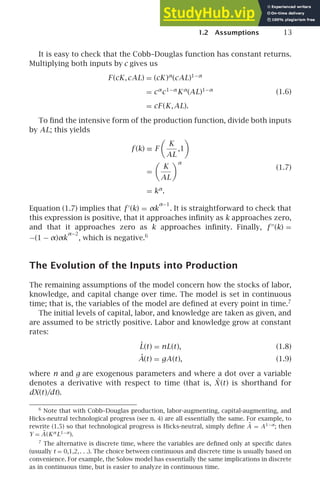
FIGURE 1.1 An example of a production function
The intensive-form production function, f (k), is assumed to satisfy f (0) =
0, f ′
(k)  0, f ′′
(k)  0.5
Since F (K,AL) equals ALf (K/AL), it follows that
the marginal product of capital, ∂F (K,AL)/∂K, equals ALf ′
(K/AL)(1/AL),
which is just f ′
(k). Thus the assumptions that f ′
(k) is positive and f ′′
(k)
is negative imply that the marginal product of capital is positive, but that
it declines as capital (per unit of effective labor) rises. In addition, f (•)
is assumed to satisfy the Inada conditions (Inada, 1964): limk→0 f ′
(k) = ∞,
limk→∞ f ′
(k) = 0. These conditions (which are stronger than needed for the
model’s central results) state that the marginal product of capital is very
large when the capital stock is sufficiently small and that it becomes very
small as the capital stock becomes large; their role is to ensure that the path
of the economy does not diverge. A production function satisfying f ′
(•)  0,
f ′′
(•)  0, and the Inada conditions is shown in Figure 1.1.
A specific example of a production function is the Cobb–Douglas function,
F (K,AL) = Kα
(AL)1−α
, 0  α  1. (1.5)
This production function is easy to analyze, and it appears to be a good first
approximation to actual production functions. As a result, it is very useful.
5
The notation f ′
(•) denotes the first derivative of f (•), and f ′′
(•) the second derivative.
1.2 Assumptions 13
It is easy to check that the Cobb–Douglas function has constant returns.
Multiplying both inputs by c gives us
F (cK,cAL) = (cK )α
(cAL)1−α
= cα
c1−α
Kα
(AL)1−α
= cF (K,AL).
(1.6)
To find the intensive form of the production function, divide both inputs
by AL; this yields
f (k) ≡ F

K
AL
,1

=

K
AL
α
= kα
.
(1.7)
Equation (1.7) implies that f ′
(k) = αk
α−1
. It is straightforward to check that
this expression is positive, that it approaches infinity as k approaches zero,
and that it approaches zero as k approaches infinity. Finally, f ′′
(k) =
−(1 − α)αk
α−2
, which is negative.6
The Evolution of the Inputs into Production
The remaining assumptions of the model concern how the stocks of labor,
knowledge, and capital change over time. The model is set in continuous
time; that is, the variables of the model are defined at every point in time.7
The initial levels of capital, labor, and knowledge are taken as given, and
are assumed to be strictly positive. Labor and knowledge grow at constant
rates:
L̇(t) = nL(t), (1.8)
Ȧ(t) = gA(t), (1.9)
where n and g are exogenous parameters and where a dot over a variable
denotes a derivative with respect to time (that is, Ẋ (t) is shorthand for
dX(t)/dt).
6
Note that with Cobb–Douglas production, labor-augmenting, capital-augmenting, and
Hicks-neutral technological progress (see n. 4) are all essentially the same. For example, to
rewrite (1.5) so that technological progress is Hicks-neutral, simply define à = A1−α
; then
Y = Ã(Kα
L1−α
).
7
The alternative is discrete time, where the variables are defined only at specific dates
(usually t = 0,1,2,. . .). The choice between continuous and discrete time is usually based on
convenience. For example, the Solow model has essentially the same implications in discrete
as in continuous time, but is easier to analyze in continuous time.
14 Chapter 1 THE SOLOW GROWTH MODEL
The growth rate of a variable refers to its proportional rate of change.
That is, the growth rate of X refers to the quantity ˙
X (t)/X(t). Thus equa-
tion (1.8) implies that the growth rate of L is constant and equal to n, and
(1.9) implies that A’s growth rate is constant and equal to g.
A key fact about growth rates is that the growth rate of a variable equals
the rate of change of its natural log. That is, Ẋ (t)/X(t) equals d ln X(t)/dt. To
see this, note that since ln X is a function of X and X is a function of t, we
can use the chain rule to write
d ln X(t)
dt
=
d ln X(t)
dX(t)
dX(t)
dt
=
1
X(t)
Ẋ (t).
(1.10)
Applying the result that a variable’s growth rate equals the rate of change
of its log to (1.8) and (1.9) tells us that the rates of change of the logs of L
and A are constant and that they equal n and g, respectively. Thus,
ln L(t) = [ln L(0)] + nt, (1.11)
ln A(t) = [ln A(0)] + gt, (1.12)
where L(0) and A(0) are the values of L and A at time 0. Exponentiating both
sides of these equations gives us
L(t) = L(0)ent
, (1.13)
A(t) = A(0)egt
. (1.14)
Thus, our assumption is that L and A each grow exponentially.8
Output is divided between consumption and investment. The fraction
of output devoted to investment, s, is exogenous and constant. One unit of
output devoted to investment yields one unit of new capital. In addition,
existing capital depreciates at rate δ. Thus
K̇(t) = sY(t) − δK(t). (1.15)
Although no restrictions are placed on n, g, and δ individually, their sum is
assumed to be positive. This completes the description of the model.
Since this is the first model (of many!) we will encounter, this is a good
place for a general comment about modeling. The Solow model is grossly
simplified in a host of ways. To give just a few examples, there is only a
single good; government is absent; fluctuations in employment are ignored;
production is described by an aggregate production function with just three
inputs; and the rates of saving, depreciation, population growth, and tech-
nological progress are constant. It is natural to think of these features of
the model as defects: the model omits many obvious features of the world,
8
See Problems 1.1 and 1.2 for more on basic properties of growth rates.
1.3 The Dynamics of the Model 15
and surely some of those features are important to growth. But the purpose
of a model is not to be realistic. After all, we already possess a model that
is completely realistic—the world itself. The problem with that “model” is
that it is too complicated to understand. A model’s purpose is to provide
insights about particular features of the world. If a simplifying assump-
tion causes a model to give incorrect answers to the questions it is being
used to address, then that lack of realism may be a defect. (Even then, the
simplification—by showing clearly the consequences of those features of
the world in an idealized setting—may be a useful reference point.) If the
simplification does not cause the model to provide incorrect answers to the
questions it is being used to address, however, then the lack of realism is
a virtue: by isolating the effect of interest more clearly, the simplification
makes it easier to understand.
1.3 The Dynamics of the Model
We want to determine the behavior of the economy we have just described.
The evolution of two of the three inputs into production, labor and knowl-
edge, is exogenous. Thus to characterize the behavior of the economy, we
must analyze the behavior of the third input, capital.
The Dynamics of k
Because the economy may be growing over time, it turns out to be much
easier to focus on the capital stock per unit of effective labor, k, than on the
unadjusted capital stock, K. Since k = K/AL, we can use the chain rule to
find
˙
k(t) =
K̇(t)
A(t)L(t)
−
K(t)
[A(t)L(t)]2
[A(t)L̇(t) + L(t)Ȧ(t)]
=
K̇(t)
A(t)L(t)
−
K(t)
A(t)L(t)
L̇(t)
L(t)
−
K(t)
A(t)L(t)
Ȧ(t)
A(t)
.
(1.16)
K/AL is simply k. From (1.8) and (1.9), L̇/L and Ȧ/A are n and g, respectively.
K̇ is given by (1.15). Substituting these facts into (1.16) yields
˙
k(t) =
sY(t) − δK(t)
A(t)L(t)
− k(t)n − k(t)g
= s
Y(t)
A(t)L(t)
− δk(t) − nk(t) − gk(t).
(1.17)
16 Chapter 1 THE SOLOW GROWTH MODEL
k∗ k
sf(k)
Actual investment
Break-even investment
Investment
per
unit
of
effective
labor
(n + g + δ)k
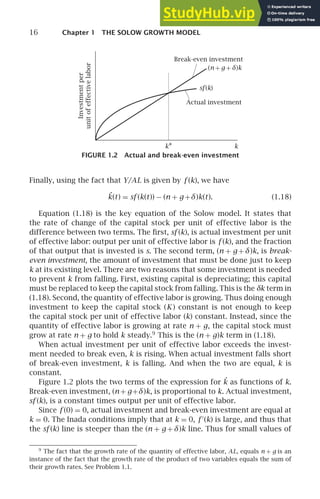
FIGURE 1.2 Actual and break-even investment
Finally, using the fact that Y/AL is given by f (k), we have
˙
k(t) = sf (k(t)) − (n + g +δ)k(t). (1.18)
Equation (1.18) is the key equation of the Solow model. It states that
the rate of change of the capital stock per unit of effective labor is the
difference between two terms. The first, sf (k), is actual investment per unit
of effective labor: output per unit of effective labor is f (k), and the fraction
of that output that is invested is s. The second term, (n + g +δ)k, is break-
even investment, the amount of investment that must be done just to keep
k at its existing level. There are two reasons that some investment is needed
to prevent k from falling. First, existing capital is depreciating; this capital
must be replaced to keep the capital stock from falling. This is the δk term in
(1.18). Second, the quantity of effective labor is growing. Thus doing enough
investment to keep the capital stock (K ) constant is not enough to keep
the capital stock per unit of effective labor (k) constant. Instead, since the
quantity of effective labor is growing at rate n + g, the capital stock must
grow at rate n + g to hold k steady.9
This is the (n + g)k term in (1.18).
When actual investment per unit of effective labor exceeds the invest-
ment needed to break even, k is rising. When actual investment falls short
of break-even investment, k is falling. And when the two are equal, k is
constant.
Figure 1.2 plots the two terms of the expression for ˙
k as functions of k.
Break-even investment, (n + g+δ)k, is proportional to k. Actual investment,
sf (k), is a constant times output per unit of effective labor.
Since f (0) = 0, actual investment and break-even investment are equal at
k = 0. The Inada conditions imply that at k = 0, f ′
(k) is large, and thus that
the sf (k) line is steeper than the (n + g + δ)k line. Thus for small values of
9
The fact that the growth rate of the quantity of effective labor, AL, equals n + g is an
instance of the fact that the growth rate of the product of two variables equals the sum of
their growth rates. See Problem 1.1.
1.3 The Dynamics of the Model 17
k
.
0
k
k∗
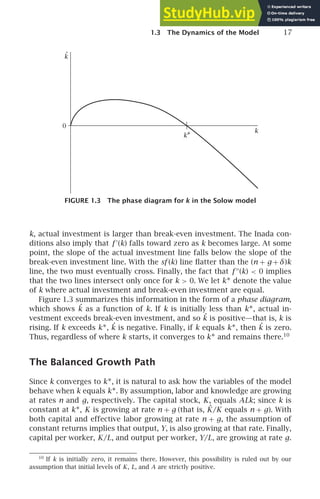
FIGURE 1.3 The phase diagram for k in the Solow model
k, actual investment is larger than break-even investment. The Inada con-
ditions also imply that f ′
(k) falls toward zero as k becomes large. At some
point, the slope of the actual investment line falls below the slope of the
break-even investment line. With the sf (k) line flatter than the (n + g + δ)k
line, the two must eventually cross. Finally, the fact that f ′′
(k)  0 implies
that the two lines intersect only once for k  0. We let k∗ denote the value
of k where actual investment and break-even investment are equal.
Figure 1.3 summarizes this information in the form of a phase diagram,
which shows ˙
k as a function of k. If k is initially less than k∗, actual in-
vestment exceeds break-even investment, and so ˙
k is positive—that is, k is
rising. If k exceeds k∗, ˙
k is negative. Finally, if k equals k∗, then ˙
k is zero.
Thus, regardless of where k starts, it converges to k∗ and remains there.10
The Balanced Growth Path
Since k converges to k∗, it is natural to ask how the variables of the model
behave when k equals k∗. By assumption, labor and knowledge are growing
at rates n and g, respectively. The capital stock, K, equals ALk; since k is
constant at k∗, K is growing at rate n + g (that is, K̇/K equals n + g). With
both capital and effective labor growing at rate n + g, the assumption of
constant returns implies that output, Y, is also growing at that rate. Finally,
capital per worker, K/L, and output per worker, Y/L, are growing at rate g.
10
If k is initially zero, it remains there. However, this possibility is ruled out by our
assumption that initial levels of K, L, and A are strictly positive.
18 Chapter 1 THE SOLOW GROWTH MODEL
Thus the Solow model implies that, regardless of its starting point, the
economy converges to a balanced growth path—a situation where each
variable of the model is growing at a constant rate. On the balanced growth
path, the growth rate of output per worker is determined solely by the rate
of technological progress.11
1.4 The Impact of a Change in the
Saving Rate
The parameter of the Solow model that policy is most likely to affect is the
saving rate. The division of the government’s purchases between consump-
tion and investment goods, the division of its revenues between taxes and
borrowing, and its tax treatments of saving and investment are all likely to
affect the fraction of output that is invested. Thus it is natural to investigate
the effects of a change in the saving rate.
For concreteness, we will consider a Solow economy that is on a balanced
growth path, and suppose that there is a permanent increase in s. In addition
to demonstrating the model’s implications concerning the role of saving,
this experiment will illustrate the model’s properties when the economy is
not on a balanced growth path.
The Impact on Output
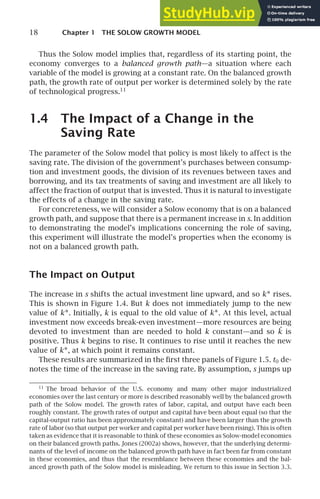
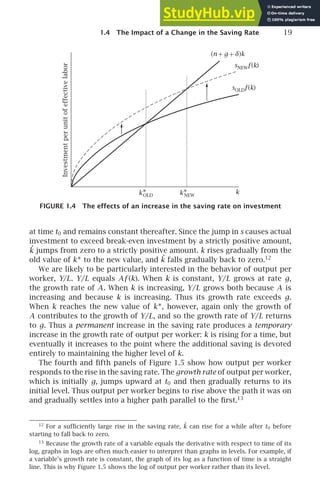
The increase in s shifts the actual investment line upward, and so k∗ rises.
This is shown in Figure 1.4. But k does not immediately jump to the new
value of k∗. Initially, k is equal to the old value of k∗. At this level, actual
investment now exceeds break-even investment—more resources are being
devoted to investment than are needed to hold k constant—and so ˙
k is
positive. Thus k begins to rise. It continues to rise until it reaches the new
value of k∗, at which point it remains constant.
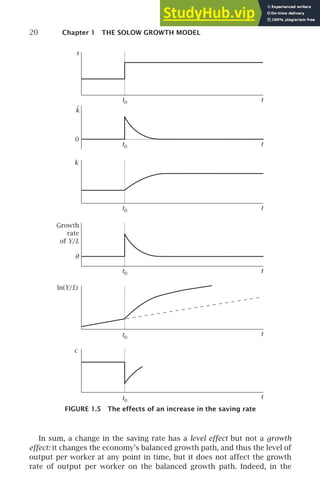
These results are summarized in the first three panels of Figure 1.5. t0 de-
notes the time of the increase in the saving rate. By assumption, s jumps up
11
The broad behavior of the U.S. economy and many other major industrialized
economies over the last century or more is described reasonably well by the balanced growth
path of the Solow model. The growth rates of labor, capital, and output have each been
roughly constant. The growth rates of output and capital have been about equal (so that the
capital-output ratio has been approximately constant) and have been larger than the growth
rate of labor (so that output per worker and capital per worker have been rising). This is often
taken as evidence that it is reasonable to think of these economies as Solow-model economies
on their balanced growth paths. Jones (2002a) shows, however, that the underlying determi-
nants of the level of income on the balanced growth path have in fact been far from constant
in these economies, and thus that the resemblance between these economies and the bal-
anced growth path of the Solow model is misleading. We return to this issue in Section 3.3.
1.4 The Impact of a Change in the Saving Rate 19
Investment
per
unit
of
effective
labor
k∗
OLD k∗
NEW
sNEWf(k)
k
(n + g + δ)k
sOLDf(k)
FIGURE 1.4 The effects of an increase in the saving rate on investment
at time t0 and remains constant thereafter. Since the jump in s causes actual
investment to exceed break-even investment by a strictly positive amount,
˙
k jumps from zero to a strictly positive amount. k rises gradually from the
old value of k∗ to the new value, and ˙
k falls gradually back to zero.12
We are likely to be particularly interested in the behavior of output per
worker, Y/L. Y/L equals Af (k). When k is constant, Y/L grows at rate g,
the growth rate of A. When k is increasing, Y/L grows both because A is
increasing and because k is increasing. Thus its growth rate exceeds g.
When k reaches the new value of k∗, however, again only the growth of
A contributes to the growth of Y/L, and so the growth rate of Y/L returns
to g. Thus a permanent increase in the saving rate produces a temporary
increase in the growth rate of output per worker: k is rising for a time, but
eventually it increases to the point where the additional saving is devoted
entirely to maintaining the higher level of k.
The fourth and fifth panels of Figure 1.5 show how output per worker
responds to the rise in the saving rate. The growth rate of output per worker,
which is initially g, jumps upward at t0 and then gradually returns to its
initial level. Thus output per worker begins to rise above the path it was on
and gradually settles into a higher path parallel to the first.13
12
For a sufficiently large rise in the saving rate, k̇ can rise for a while after t0 before
starting to fall back to zero.
13
Because the growth rate of a variable equals the derivative with respect to time of its
log, graphs in logs are often much easier to interpret than graphs in levels. For example, if
a variable’s growth rate is constant, the graph of its log as a function of time is a straight
line. This is why Figure 1.5 shows the log of output per worker rather than its level.
20 Chapter 1 THE SOLOW GROWTH MODEL
s
k
0
c
t
t
t
t
t
t
t0
t0
t0
t0
t0
Growth
rate
of Y/L
ln(Y/L)
g
t0
k
.
FIGURE 1.5 The effects of an increase in the saving rate
In sum, a change in the saving rate has a level effect but not a growth
effect: it changes the economy’s balanced growth path, and thus the level of
output per worker at any point in time, but it does not affect the growth
rate of output per worker on the balanced growth path. Indeed, in the
1.4 The Impact of a Change in the Saving Rate 21
Solow model only changes in the rate of technological progress have growth
effects; all other changes have only level effects.
The Impact on Consumption
If we were to introduce households into the model, their welfare would de-
pend not on output but on consumption: investment is simply an input into
production in the future. Thus for many purposes we are likely to be more
interested in the behavior of consumption than in the behavior of output.
Consumption per unit of effective labor equals output per unit of effec-
tive labor, f (k), times the fraction of that output that is consumed, 1 − s.
Thus, since s changes discontinuously at t0 and k does not, initially con-
sumption per unit of effective labor jumps downward. Consumption then
rises gradually as k rises and s remains at its higher level. This is shown in
the last panel of Figure 1.5.
Whether consumption eventually exceeds its level before the rise in s is
not immediately clear. Let c∗ denote consumption per unit of effective labor
on the balanced growth path. c∗ equals output per unit of effective labor,
f (k∗), minus investment per unit of effective labor, sf (k∗). On the balanced
growth path, actual investment equals break-even investment, (n + g+δ)k∗.
Thus,
c∗ = f (k∗) − (n + g +δ)k∗. (1.19)
k∗ is determined by s and the other parameters of the model, n, g, and δ;
we can therefore write k∗ = k∗(s,n,g,δ). Thus (1.19) implies
∂c∗
∂s
= [f ′
(k∗(s,n,g,δ)) − (n + g +δ)]
∂k∗(s,n,g,δ)
∂s
. (1.20)
We know that the increase in s raises k∗; that is, we know that ∂k∗/∂s
is positive. Thus whether the increase raises or lowers consumption in the
long run depends on whether f ′
(k∗)—the marginal product of capital—is
more or less than n + g+δ. Intuitively, when k rises, investment (per unit of
effective labor) must rise by n + g+δ times the change in k for the increase
to be sustained. If f ′
(k∗) is less than n + g + δ, then the additional output
from the increased capital is not enough to maintain the capital stock at
its higher level. In this case, consumption must fall to maintain the higher
capital stock. If f ′
(k∗) exceeds n + g + δ, on the other hand, there is more
than enough additional output to maintain k at its higher level, and so con-
sumption rises.
f ′
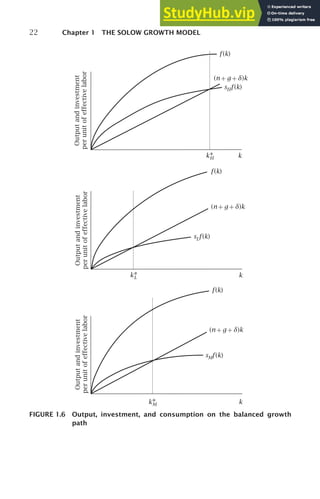
(k∗) can be either smaller or larger than n + g + δ. This is shown in
Figure 1.6. The figure shows not only (n + g+ δ)k and sf (k), but also f (k).
Since consumption on the balanced growth path equals output less break-
even investment (see [1.19]), c∗ is the distance between f (k) and (n + g+ δ)k
at k = k∗. The figure shows the determinants of c∗ for three different values
22 Chapter 1 THE SOLOW GROWTH MODEL
Output
and
investment
per
unit
of
effective
labor
Output
and
investment
per
unit
of
effective
labor
Output
and
investment
per
unit
of
effective
labor
f (k)
sHf(k)
k
k
k
k∗
H
f (k)
f (k)
sMf(k)
k∗
L
k∗
M
(n + g + δ)k
(n + g + δ)k
(n + g + δ)k
sLf(k)
FIGURE 1.6 Output, investment, and consumption on the balanced growth
path
1.5 Quantitative Implications 23
of s (and hence three different values of k∗). In the top panel, s is high, and
so k∗ is high and f ′
(k∗) is less than n + g + δ. As a result, an increase in
the saving rate lowers consumption even when the economy has reached
its new balanced growth path. In the middle panel, s is low, k∗ is low, f ′
(k∗)
is greater than n + g + δ, and an increase in s raises consumption in the
long run.
Finally, in the bottom panel, s is at the level that causes f ′
(k∗) to just equal
n + g+δ—that is, the f (k) and (n + g+δ)k loci are parallel at k = k∗. In this
case, a marginal change in s has no effect on consumption in the long run,
and consumption is at its maximum possible level among balanced growth
paths. This value of k∗ is known as the golden-rule level of the capital stock.
We will discuss the golden-rule capital stock further in Chapter 2. Among
the questions we will address are whether the golden-rule capital stock is
in fact desirable and whether there are situations in which a decentralized
economy with endogenous saving converges to that capital stock. Of course,
in the Solow model, where saving is exogenous, there is no more reason to
expect the capital stock on the balanced growth path to equal the golden-
rule level than there is to expect it to equal any other possible value.
1.5 Quantitative Implications
We are usually interested not just in a model’s qualitative implications, but
in its quantitative predictions. If, for example, the impact of a moderate
increase in saving on growth remains large after several centuries, the result
that the impact is temporary is of limited interest.
For most models, including this one, obtaining exact quantitative results
requires specifying functional forms and values of the parameters; it often
also requires analyzing the model numerically. But in many cases, it is possi-
ble to learn a great deal by considering approximations around the long-run
equilibrium. That is the approach we take here.
The Effect on Output in the Long Run
The long-run effect of a rise in saving on output is given by
∂y∗
∂s
= f ′
(k∗)
∂k∗(s,n,g,δ)
∂s
, (1.21)
where y∗ = f (k∗) is the level of output per unit of effective labor on the
balanced growth path. Thus to find ∂y∗/∂s, we need to find ∂k∗/∂s. To do
this, note that k∗ is defined by the condition that ˙
k = 0. Thus k∗ satisfies
sf (k∗(s,n,g,δ)) = (n + g +δ)k∗(s,n,g,δ). (1.22)
24 Chapter 1 THE SOLOW GROWTH MODEL
Equation (1.22) holds for all values of s (and of n, g, and δ). Thus the deriva-
tives of the two sides with respect to s are equal:14
sf ′
(k∗)
∂k∗
∂s
+ f (k∗) = (n + g +δ)
∂k∗
∂s
, (1.23)
where the arguments of k∗ are omitted for simplicity. This can be rearranged
to obtain15
∂k∗
∂s
=
f (k∗)
(n + g +δ) − sf ′
(k∗)
. (1.24)
Substituting (1.24) into (1.21) yields
∂y∗
∂s
=
f ′
(k∗)f (k∗)
(n + g +δ) − sf ′
(k∗)
. (1.25)
Two changes help in interpreting this expression. The first is to convert it
to an elasticity by multiplying both sides by s/y∗. The second is to use the
fact that sf (k∗) = (n + g + δ)k∗ to substitute for s. Making these changes
gives us
s
y∗
∂y∗
∂s
=
s
f (k∗)
f ′
(k∗)f (k∗)
(n + g +δ) − sf ′
(k∗)
=
(n + g +δ)k∗f ′
(k∗)
f (k∗)[(n + g +δ) − (n + g +δ)k∗f ′
(k∗)/f (k∗)]
=
k∗f ′
(k∗)/f (k∗)
1 − [k∗f ′
(k∗)/f (k∗)]
.
(1.26)
k∗f ′
(k∗)/f (k∗) is the elasticity of output with respect to capital at k = k∗.
Denoting this by αK (k∗), we have
s
y∗
∂y∗
∂s
=
αK (k∗)
1 − αK (k∗)
. (1.27)
Thus we have found a relatively simple expression for the elasticity of the
balanced-growth-path level of output with respect to the saving rate.
To think about the quantitative implications of (1.27), note that if mar-
kets are competitive and there are no externalities, capital earns its marginal
14
This technique is known as implicit differentiation. Even though (1.22) does not ex-
plicitly give k∗ as a function of s, n, g, and δ, it still determines how k∗ depends on those
variables. We can therefore differentiate the equation with respect to s and solve for ∂k∗/∂s.
15
We saw in the previous section that an increase in s raises k∗. To check that this is
also implied by equation (1.24), note that n + g+ δ is the slope of the break-even investment
line and that sf ′
(k∗) is the slope of the actual investment line at k∗. Since the break-even
investment line is steeper than the actual investment line at k∗ (see Figure 1.2), it follows
that the denominator of (1.24) is positive, and thus that ∂k∗/∂s  0.
1.5 Quantitative Implications 25
product. Since output equals ALf (k) and k equals K/AL, the marginal prod-
uct of capital, ∂Y/∂K, is ALf ′
(k)[1/(AL)], or just f ′
(k). Thus if capital earns its
marginal product, the total amount earned by capital (per unit of effective
labor) on the balanced growth path is k∗f ′
(k∗). The share of total income that
goes to capital on the balanced growth path is then k∗f ′
(k∗)/f (k∗), or αK (k∗).
In other words, if the assumption that capital earns its marginal product is
a good approximation, we can use data on the share of income going to
capital to estimate the elasticity of output with respect to capital, αK (k∗).
In most countries, the share of income paid to capital is about one-third.
If we use this as an estimate of αK (k∗), it follows that the elasticity of output
with respect to the saving rate in the long run is about one-half. Thus, for
example, a 10 percent increase in the saving rate (from 20 percent of output
to 22 percent, for instance) raises output per worker in the long run by about
5 percent relative to the path it would have followed. Even a 50 percent
increase in s raises y∗ only by about 22 percent. Thus significant changes
in saving have only moderate effects on the level of output on the balanced
growth path.
Intuitively, a small value of αK (k∗) makes the impact of saving on output
low for two reasons. First, it implies that the actual investment curve, sf (k),
bends fairly sharply. As a result, an upward shift of the curve moves its
intersection with the break-even investment line relatively little. Thus the
impact of a change in s on k∗ is small. Second, a low value of αK (k∗) means
that the impact of a change in k∗ on y∗ is small.
The Speed of Convergence
In practice, we are interested not only in the eventual effects of some change
(such as a change in the saving rate), but also in how rapidly those effects
occur. Again, we can use approximations around the long-run equilibrium
to address this issue.
For simplicity, we focus on the behavior of k rather than y. Our goal is thus
to determine how rapidly k approaches k∗. We know that ˙
k is determined
by k: recall that the key equation of the model is ˙
k = sf (k) − (n + g + δ)k
(see [1.18]). Thus we can write ˙
k = ˙
k(k). When k equals k∗, ˙
k is zero. A first-
order Taylor-series approximation of ˙
k(k) around k = k∗ therefore yields
˙
k ≃

∂˙
k(k)
∂k


k=k∗

(k − k∗). (1.28)
That is, ˙
k is approximately equal to the product of the difference between
k and k∗ and the derivative of ˙
k with respect to k at k = k∗.
Let λ denote −∂˙
k(k)/∂k|k=k∗ . With this definition, (1.28) becomes
˙
k(t) ≃ −λ[k(t) − k∗]. (1.29)
26 Chapter 1 THE SOLOW GROWTH MODEL
Since ˙
k is positive when k is slightly below k∗ and negative when it is slightly
above, ∂˙
k(k)/∂k|k=k∗ is negative. Equivalently, λ is positive.
Equation (1.29) implies that in the vicinity of the balanced growth path,
k moves toward k∗ at a speed approximately proportional to its distance
from k∗. That is, the growth rate of k(t) − k∗ is approximately constant and
equal to −λ. This implies
k(t) ≃ k∗ + e−λt
[k(0) − k∗], (1.30)
where k(0) is the initial value of k. Note that (1.30) follows just from the
facts that the system is stable (that is, that k converges to k∗) and that we
are linearizing the equation for ˙
k around k = k∗.
It remains to find λ; this is where the specifics of the model enter the anal-
ysis. Differentiating expression (1.18) for ˙
k with respect to k and evaluating
the resulting expression at k = k∗ yields
λ ≡ −
∂˙
k(k)
∂k


k=k∗
= −[sf ′
(k∗) − (n + g +δ)]
= (n + g +δ) − sf ′
(k∗)
= (n + g +δ) −
(n + g + δ)k∗f ′
(k∗)
f (k∗)
= [1 − αK (k∗)](n + g + δ).
(1.31)
Here the third line again uses the fact that sf (k∗) = (n + g + δ)k∗ to sub-
stitute for s, and the last line uses the definition of αK . Thus, k converges
to its balanced-growth-path value at rate [1 − αK (k∗)](n + g+δ). In addition,
one can show that y approaches y∗ at the same rate that k approaches k∗.
That is, y(t) − y∗ ≃ e−λt
[y(0) − y∗].16
We can calibrate (1.31) to see how quickly actual economies are likely to
approach their balanced growth paths. Typically, n+g+δis about 6 percent
per year. This arises, for example, with 1 to 2 percent population growth, 1
to 2 percent growth in output per worker, and 3 to 4 percent depreciation.
If capital’s share is roughly one-third, (1 − αK )(n + g + δ) is thus roughly
4 percent. Therefore k and y move 4 percent of the remaining distance
toward k∗ and y∗ each year, and take approximately 17 years to get halfway
to their balanced-growth-path values.17
Thus in our example of a 10 percent
16
See Problem 1.11.
17
The time it takes for a variable (in this case, y − y∗) with a constant negative growth rate
to fall in half is approximately equal to 70 divided by its growth rate in percent. (Similarly,
the doubling time of a variable with positive growth is 70 divided by the growth rate.) Thus
in this case the half-life is roughly 70/(4%/year), or about 17 years. More exactly, the half-life,
t∗, is the solution to e−λt ∗
= 0.5, where λ is the rate of decrease. Taking logs of both sides,
t∗ = − ln(0.5)/λ ≃ 0.69/λ.
1.6 The Solow Model and the Central Questions of Growth Theory 27
increase in the saving rate, output is 0.04(5%) = 0.2% above its previous
path after 1 year; is 0.5(5%) = 2.5% above after 17 years; and asymptotically
approaches 5 percent above the previous path. Thus not only is the overall
impact of a substantial change in the saving rate modest, but it does not
occur very quickly.18
1.6 The Solow Model and the Central
Questions of Growth Theory
The Solow model identifies two possible sources of variation—either over
time or across parts of the world—in output per worker: differences in cap-
ital per worker (K/L) and differences in the effectiveness of labor (A). We
have seen, however, that only growth in the effectiveness of labor can lead
to permanent growth in output per worker, and that for reasonable cases
the impact of changes in capital per worker on output per worker is modest.
As a result, only differences in the effectiveness of labor have any reason-
able hope of accounting for the vast differences in wealth across time and
space. Specifically, the central conclusion of the Solow model is that if the
returns that capital commands in the market are a rough guide to its con-
tributions to output, then variations in the accumulation of physical capital
do not account for a significant part of either worldwide economic growth
or cross-country income differences.
There are two ways to see that the Solow model implies that differ-
ences in capital accumulation cannot account for large differences in in-
comes, one direct and the other indirect. The direct approach is to con-
sider the required differences in capital per worker. Suppose we want to
account for a difference of a factor of X in output per worker between
two economies on the basis of differences in capital per worker. If out-
put per worker differs by a factor of X, the difference in log output per
worker between the two economies is ln X. Since the elasticity of output per
worker with respect to capital per worker is αK , log capital per worker must
differ by (ln X )/αK . That is, capital per worker differs by a factor of e(ln X )/αK
,
or X 1/αK
.
Output per worker in the major industrialized countries today is on the
order of 10 times larger than it was 100 years ago, and 10 times larger than
it is in poor countries today. Thus we would like to account for values of
18
These results are derived from a Taylor-series approximation around the balanced
growth path. Thus, formally, we can rely on them only in an arbitrarily small neighborhood
around the balanced growth path. The question of whether Taylor-series approximations
provide good guides for finite changes does not have a general answer. For the Solow model
with conventional production functions, and for moderate changes in parameter values (such
as those we have been considering), the Taylor-series approximations are generally quite
reliable.
28 Chapter 1 THE SOLOW GROWTH MODEL
X in the vicinity of 10. Our analysis implies that doing this on the basis of
differences in capital requires a difference of a factor of 101/αK
in capital
per worker. For αK = 1
3
, this is a factor of 1000. Even if capital’s share is
one-half, which is well above what data on capital income suggest, one still
needs a difference of a factor of 100.
There is no evidence of such differences in capital stocks. Capital-output
ratios are roughly constant over time. Thus the capital stock per worker in
industrialized countries is roughly 10 times larger than it was 100 years
ago, not 100 or 1000 times larger. Similarly, although capital-output ratios
vary somewhat across countries, the variation is not great. For example,
the capital-output ratio appears to be 2 to 3 times larger in industrialized
countries than in poor countries; thus capital per worker is “only” about 20
to 30 times larger. In sum, differences in capital per worker are far smaller
than those needed to account for the differences in output per worker that
we are trying to understand.
The indirect way of seeing that the model cannot account for large varia-
tions in output per worker on the basis of differences in capital per worker is
to notice that the required differences in capital imply enormous differences
in the rate of return on capital (Lucas, 1990). If markets are competitive, the
rate of return on capital equals its marginal product, f ′
(k), minus depreci-
ation, δ. Suppose that the production function is Cobb–Douglas, which in
intensive form is f (k) = kα
(see equation [1.7]). With this production func-
tion, the elasticity of output with respect to capital is simply α. The marginal
product of capital is
f ′
(k) = αkα−1
= αy (α−1)/α
.
(1.32)
Equation (1.32) implies that the elasticity of the marginal product of cap-
ital with respect to output is −(1 − α)/α. If α= 1
3
, a tenfold difference in
output per worker arising from differences in capital per worker thus im-
plies a hundredfold difference in the marginal product of capital. And since
the return to capital is f ′
(k) − δ, the difference in rates of return is even
larger.
Again, there is no evidence of such differences in rates of return. Direct
measurement of returns on financial assets, for example, suggests only
moderate variation over time and across countries. More tellingly, we can
learn much about cross-country differences simply by examining where the
holders of capital want to invest. If rates of return were larger by a factor of
10 or 100 in poor countries than in rich countries, there would be immense
incentives to invest in poor countries. Such differences in rates of return
would swamp such considerations as capital-market imperfections, govern-
ment tax policies, fear of expropriation, and so on, and we would observe
1.6 The Solow Model and the Central Questions of Growth Theory 29
immense flows of capital from rich to poor countries. We do not see such
flows.19
Thus differences in physical capital per worker cannot account for the
differences in output per worker that we observe, at least if capital’s con-
tribution to output is roughly reflected by its private returns.
The other potential source of variation in output per worker in the Solow
model is the effectiveness of labor. Attributing differences in standards of
living to differences in the effectiveness of labor does not require huge dif-
ferences in capital or in rates of return. Along a balanced growth path, for
example, capital is growing at the same rate as output; and the marginal
product of capital, f ′
(k), is constant.
Unfortunately, however, the Solow model has little to say about the effec-
tiveness of labor. Most obviously, the growth of the effectiveness of labor
is exogenous: the model takes as given the behavior of the variable that it
identifies as the driving force of growth. Thus it is only a small exaggeration
to say that we have been modeling growth by assuming it.
More fundamentally, the model does not identify what the “effectiveness
of labor” is; it is just a catchall for factors other than labor and capital
that affect output. Thus saying that differences in income are due to dif-
ferences in the effectiveness of labor is no different than saying that they
are not due to differences in capital per worker. To proceed, we must take
a stand concerning what we mean by the effectiveness of labor and what
causes it to vary. One natural possibility is that the effectiveness of labor
corresponds to abstract knowledge. To understand worldwide growth, it
would then be necessary to analyze the determinants of the stock of knowl-
edge over time. To understand cross-country differences in real incomes,
one would have to explain why firms in some countries have access to more
knowledge than firms in other countries, and why that greater knowledge is
not rapidly transmitted to poorer countries.
There are other possible interpretations of A: the education and skills of
the labor force, the strength of property rights, the quality of infrastructure,
cultural attitudes toward entrepreneurship and work, and so on. Or A may
reflect a combination of forces. For any proposed view of what A represents,
one would again have to address the questions of how it affects output, how
it evolves over time, and why it differs across parts of the world.
The other possible way to proceed is to consider the possibility that capi-
tal is more important than the Solow model implies. If capital encompasses
19
One can try to avoid this conclusion by considering production functions where capi-
tal’s marginal product falls less rapidly ask rises than it does in the Cobb–Douglas case. This
approach encounters two major difficulties. First, since it implies that the marginal product
of capital is similar in rich and poor countries, it implies that capital’s share is much larger
in rich countries. Second, and similarly, it implies that real wages are only slightly larger in
rich than in poor countries. These implications appear grossly inconsistent with the facts.
30 Chapter 1 THE SOLOW GROWTH MODEL
more than just physical capital, or if physical capital has positive external-
ities, then the private return on physical capital is not an accurate guide to
capital’s importance in production. In this case, the calculations we have
done may be misleading, and it may be possible to resuscitate the view that
differences in capital are central to differences in incomes.
These possibilities for addressing the fundamental questions of growth
theory are the subject of Chapters 3 and 4.
1.7 Empirical Applications
Growth Accounting
In many situations, we are interested in the proximate determinants of
growth. That is, we often want to know how much of growth over some
period is due to increases in various factors of production, and how much
stems from other forces. Growth accounting, which was pioneered by
Abramovitz (1956) and Solow (1957), provides a way of tackling this subject.
To see how growth accounting works, consider again the production func-
tion Y(t) = F (K(t),A(t)L(t)). This implies
Ẏ (t) =
∂Y(t)
∂K(t)
K̇(t) +
∂Y(t)
∂L(t)
L̇(t) +
∂Y(t)
∂A(t)
Ȧ(t), (1.33)
where ∂Y/∂L and ∂Y/∂A denote [∂Y/∂(AL)]A and [∂Y/∂(AL)]L, respectively.
Dividing both sides by Y(t) and rewriting the terms on the right-hand side
yields
Ẏ (t)
Y(t)
=
K(t)
Y(t)
∂Y(t)
∂K(t)
K̇(t)
K(t)
+
L(t)
Y(t)
∂Y(t)
∂L(t)
L̇(t)
L(t)
+
A(t)
Y(t)
∂Y(t)
∂A(t)
Ȧ(t)
A(t)
≡ αK (t)
K̇(t)
K(t)
+ αL(t)
L̇(t)
L(t)
+ R(t).
(1.34)
Here αL(t) is the elasticity of output with respect to labor at time t,
αK (t) is again the elasticity of output with respect to capital, and R(t) ≡
[A(t)/Y(t)][∂Y(t)/∂A(t)][Ȧ(t)/A(t)]. Subtracting L̇(t)/L(t) from both sides and
using the fact that αL(t) + αK (t) = 1 (see Problem 1.9) gives an expression
for the growth rate of output per worker:
Ẏ (t)
Y(t)
−
L̇(t)
L(t)
= αK (t)

K̇(t)
K(t)
−
L̇(t)
L(t)

+ R(t). (1.35)
The growth rates of Y, K, and L are straightforward to measure. And we
know that if capital earns its marginal product, αK can be measured using
data on the share of income that goes to capital. R(t) can then be mea-
sured as the residual in (1.35). Thus (1.35) provides a way of decomposing
the growth of output per worker into the contribution of growth of capital
per worker and a remaining term, the Solow residual. The Solow residual
1.7 Empirical Applications 31
is sometimes interpreted as a measure of the contribution of technological
progress. As the derivation shows, however, it reflects all sources of growth
other than the contribution of capital accumulation via its private return.
This basic framework can be extended in many ways. The most common
extensions are to consider different types of capital and labor and to adjust
for changes in the quality of inputs. But more complicated adjustments are
also possible. For example, if there is evidence of imperfect competition,
one can try to adjust the data on income shares to obtain a better estimate
of the elasticity of output with respect to the different inputs.
Growth accounting only examines the immediate determinants of growth:
it asks how much factor accumulation, improvements in the quality of in-
puts, and so on contribute to growth while ignoring the deeper issue of
what causes the changes in those determinants. One way to see that growth
accounting does not get at the underlying sources of growth is to consider
what happens if it is applied to an economy described by the Solow model
that is on its balanced growth path. We know that in this case growth is com-
ing entirely from growth in A. But, as Problem 1.13 asks you to show and
explain, growth accounting in this case attributes only fraction 1 − αK (k∗)
of growth to the residual, and fraction αK (k∗) to capital accumulation.
Even though growth accounting provides evidence only about the im-
mediate sources of growth, it has been fruitfully applied to many issues.
For example, it has played a major role in a recent debate concerning the
exceptionally rapid growth of the newly industrializing countries of East
Asia. Young (1995) uses detailed growth accounting to argue that the higher
growth in these countries than in the rest of the world is almost entirely due
to rising investment, increasing labor force participation, and improving
labor quality (in terms of education), and not to rapid technological progress
and other forces affecting the Solow residual. This suggests that for other
countries to replicate the NICs’ successes, it is enough for them to promote
accumulation of physical and human capital and greater use of resources,
and that they need not tackle the even more difficult task of finding ways
of obtaining greater output for a given set of inputs. In this view, the NICs’
policies concerning trade, regulation, and so on have been important largely
only to the extent they have influenced factor accumulation and factor use.
Hsieh (2002), however, observes that one can do growth accounting by
examining the behavior of factor returns rather than quantities. If rapid
growth comes solely from capital accumulation, for example, we will see
either a large fall in the return to capital or a large rise in capital’s share
(or a combination). Doing the growth accounting this way, Hsieh finds a
much larger role for the residual. Young (1998) and Fernald and Neiman
(2008) extend the analysis further, and identify reasons that Hsieh’s analysis
may have underestimated the role of factor accumulation.
Growth accounting has also been used extensively to study both the pro-
ductivity growth slowdown (the reduced growth rate of output per worker-
hour in the United States and other industrialized countries that began
32 Chapter 1 THE SOLOW GROWTH MODEL
in the early 1970s) and the productivity growth rebound (the return of U.S.
productivity growth starting in the mid-1990s to close to its level before the
slowdown). Growth-accounting studies of the rebound suggest that comput-
ers and other types of information technology are the main source of the
rebound (see, for example, Oliner and Sichel, 2002, and Oliner, Sichel, and
Stiroh, 2007). Until the mid-1990s, the rapid technological progress in com-
puters and their introduction in many sectors of the economy appear to
have had little impact on aggregate productivity. In part, this was simply
because computers, although spreading rapidly, were still only a small frac-
tion of the overall capital stock. And in part, it was because the adoption
of the new technologies involved substantial adjustment costs. The growth-
accounting studies find, however, that since the mid-1990s, computers and
other forms of information technology have had a large impact on aggregate
productivity.20
Convergence
An issue that has attracted considerable attention in empirical work on
growth is whether poor countries tend to grow faster than rich countries.
There are at least three reasons that one might expect such convergence.
First, the Solow model predicts that countries converge to their balanced
growth paths. Thus to the extent that differences in output per worker arise
from countries being at different points relative to their balanced growth
paths, one would expect poor countries to catch up to rich ones. Second, the
Solow model implies that the rate of return on capital is lower in countries
with more capital per worker. Thus there are incentives for capital to flow
from rich to poor countries; this will also tend to cause convergence. And
third, if there are lags in the diffusion of knowledge, income differences
can arise because some countries are not yet employing the best available
technologies. These differences might tend to shrink as poorer countries
gain access to state-of-the-art methods.
Baumol (1986) examines convergence from 1870 to 1979 among the 16
industrialized countries for which Maddison (1982) provides data. Baumol
regresses output growth over this period on a constant and initial income.
20
The simple information-technology explanation of the productivity growth rebound
faces an important challenge, however: other industrialized countries have for the most part
not shared in the rebound. The leading candidate explanation of this puzzle is closely related
to the observation that there are large adjustments costs in adopting the new technologies.
In this view, the adoption of computers and information technology raises productivity
substantially only if it is accompanied by major changes in worker training, the composition
of the firm’s workforce, and the organization of the firm. Thus in countries where firms
lack the ability to make these changes (because of either government regulation or business
culture), the information-technology revolution is, as yet, having little impact on overall
economic performance (see, for example, Breshnahan, Brynjolfsson, and Hitt, 2002; Basu,
Fernald, Oulton, and Srinivasan, 2003; and Bloom, Sadun, and Van Reenan, 2008).
1.7 Empirical Applications 33
1.0
1.2
1.4
1.6
1.8
2.0
2.2
2.4
2.6
2.8
3.0
5.6 5.8 6.0 6.2 6.4 6.6 6.8 7.0 7.2 7.4 7.6
+
+
+
+
+
+
+
+
+
+
+
+
+
+
+
Japan
Sweden
Finland
Norway
Germany
Austria
Italy
Canada
United States
Denmark
Switzerland
+ Belgium
Netherlands
United Kingdom
Australia
France
Log per capita income in 1870
Log
per
capita
income
growth
1870–1979
FIGURE 1.7 Initial income and subsequent growth in Baumol’s sample (from
DeLong, 1988; used with permission)
That is, he estimates
ln

Y
N

i,1979

− ln

Y
N

i,1870

= a + b ln

Y
N

i,1870

+ εi . (1.36)
Here ln(Y/N) is log income per person, ε is an error term, and i indexes coun-
tries.21
If there is convergence, b will be negative: countries with higher ini-
tial incomes have lower growth. A value for b of −1 corresponds to perfect
convergence: higher initial income on average lowers subsequent growth
one-for-one, and so output per person in 1979 is uncorrelated with its value
in 1870. A value for b of 0, on the other hand, implies that growth is uncor-
related with initial income and thus that there is no convergence.
The results are
ln

Y
N

i,1979

− ln

Y
N

i,1870

= 8.457 − 0.995
(0.094)
ln

Y
N

i,1870

,
(1.37)
R2
= 0.87, s.e.e. = 0.15,
where the number in parentheses, 0.094, is the standard error of the re-
gression coefficient. Figure 1.7 shows the scatterplot corresponding to this
regression.
The regression suggests almost perfect convergence. The estimate of b
is almost exactly equal to −1, and it is estimated fairly precisely; the
21
Baumol considers output per worker rather than output per person. This choice has
little effect on the results.
34 Chapter 1 THE SOLOW GROWTH MODEL
2.6
2.4
2.2
2.0
1.8
1.6
1.4
1.2
1.0
Log
per
capita
income
growth
1870–1979
6.0 6.2 6.4 6.6 6.8 7.0 7.2 7.4 7.6
Log per capita income in 1870
New Zealand
Argentina
Portugal
Chile
Ireland
Spain
East Germany
+
+
+ +
+
+
+
+
+
+
+
+
+
+
+
+
+
+
+
+
+
+
FIGURE 1.8 Initial income and subsequent growth in the expanded sample
(from DeLong, 1988; used with permission)
two-standard-error confidence interval is (0.81, 1.18). In this sample, per
capita income today is essentially unrelated to its level 100 years ago.
DeLong (1988) demonstrates, however, that Baumol’s finding is largely
spurious. There are two problems. The first is sample selection. Since his-
torical data are constructed retrospectively, the countries that have long
data series are generally those that are the most industrialized today. Thus
countries that were not rich 100 years ago are typically in the sample only if
they grew rapidly over the next 100 years. Countries that were rich 100 years
ago, in contrast, are generally included even if their subsequent growth was
only moderate. Because of this, we are likely to see poorer countries grow-
ing faster than richer ones in the sample of countries we consider, even if
there is no tendency for this to occur on average.
The natural way to eliminate this bias is to use a rule for choosing the
sample that is not based on the variable we are trying to explain, which
is growth over the period 1870–1979. Lack of data makes it impossible to
include the entire world. DeLong therefore considers the richest countries
as of 1870; specifically, his sample consists of all countries at least as rich as
the second poorest country in Baumol’s sample in 1870, Finland. This causes
him to add seven countries to Baumol’s list (Argentina, Chile, East Germany,
Ireland, New Zealand, Portugal, and Spain) and to drop one (Japan).22
Figure 1.8 shows the scatterplot for the unbiased sample. The inclusion
of the new countries weakens the case for convergence considerably. The
22
Since a large fraction of the world was richer than Japan in 1870, it is not possible
to consider all countries at least as rich as Japan. In addition, one has to deal with the fact
that countries’ borders are not fixed. DeLong chooses to use 1979 borders. Thus his 1870
income estimates are estimates of average incomes in 1870 in the geographic regions defined
by 1979 borders.
1.7 Empirical Applications 35
regression now produces an estimate of b of −0.566, with a standard error
of 0.144. Thus accounting for the selection bias in Baumol’s procedure elim-
inates about half of the convergence that he finds.
The second problem that DeLong identifies is measurement error. Esti-
mates of real income per capita in 1870 are imprecise. Measurement er-
ror again creates bias toward finding convergence. When 1870 income is
overstated, growth over the period 1870–1979 is understated by an equal
amount; when 1870 income is understated, the reverse occurs. Thus mea-
sured growth tends to be lower in countries with higher measured initial
income even if there is no relation between actual growth and actual initial
income.
DeLong therefore considers the following model:
ln

Y
N

i,1979

− ln

Y
N

i,1870
∗
= a + b ln

Y
N

i,1870
∗
+ εi , (1.38)
ln

Y
N

i,1870

= ln

Y
N

i,1870
∗
+ ui . (1.39)
Here ln[(Y/N)1870]∗ is the true value of log income per capita in 1870 and
ln[(Y/N)1870] is the measured value. ε and u are assumed to be uncorrelated
with each other and with ln[(Y/N)1870]∗.
Unfortunately, it is not possible to estimate this model using only data
on ln[(Y/N)1870] and ln[(Y/N)1979]. The problem is that there are different
hypotheses that make identical predictions about the data. For example,
suppose we find that measured growth is negatively related to measured
initial income. This is exactly what one would expect either if measurement
error is unimportant and there is true convergence or if measurement error
is important and there is no true convergence. Technically, the model is not
identified.
DeLong argues, however, that we have at least a rough idea of how good
the 1870 data are, and thus have a sense of what is a reasonable value
for the standard deviation of the measurement error. For example, σu =
0.01 implies that we have measured initial income to within an average of
1 percent; this is implausibly low. Similarly, σu = 0.50—an average error
of 50 percent—seems implausibly high. DeLong shows that if we fix a value
of σu , we can estimate the remaining parameters.
Even moderate measurement error has a substantial impact on the re-
sults. For the unbiased sample, the estimate of b reaches 0 (no tendency
toward convergence) for σu ≃ 0.15, and is 1 (tremendous divergence) for
σu ≃ 0.20. Thus plausible amounts of measurement error eliminate most or
all of the remainder of Baumol’s estimate of convergence.
It is also possible to investigate convergence for different samples of
countries and different time periods. Figure 1.9 is a convergence scatterplot
analogous to Figures 1.7 and 1.8 for virtually the entire non-Communist
36 Chapter 1 THE SOLOW GROWTH MODEL
5 6 7 8 9 10
⫺1.0
⫺0.5
0
0.5
1.0
1.5
2.0
2.5
Change
in
log
income
per
capita,
1970–2003
Log income per capita in 1970 (2000 international prices)
FIGURE 1.9 Initial income and subsequent growth in a large sample
world for the period 1970–2003. As the figure shows, there is little evidence
of convergence. We return to the issue of convergence in Section 3.12.
Saving and Investment
Consider a world where every country is described by the Solow model and
where all countries have the same amount of capital per unit of effective
labor. Now suppose that the saving rate in one country rises. If all the addi-
tional saving is invested domestically, the marginal product of capital in that
country falls below that in other countries. The country’s residents there-
fore have incentives to invest abroad. Thus if there are no impediments to
capital flows, not all the additional saving is invested domestically. Instead,
the investment resulting from the increased saving is spread uniformly over
the whole world; the fact that the rise in saving occurred in one country has
no special effect on investment there. Thus in the absence of barriers to
capital movements, there is no reason to expect countries with high saving
to also have high investment.
Feldstein and Horioka (1980) examine the association between saving and
investment rates. They find that, contrary to this simple view, saving and
investment rates are strongly correlated. Specifically, Feldstein and Horioka
run a cross-country regression for 21 industrialized countries of the average
share of investment in GDP during the period 1960–1974 on a constant and
the average share of saving in GDP over the same period. The results are

I
Y

i
= 0.035
(0.018)
+ 0.887
(0.074)

S
Y

i
, R2
= 0.91, (1.40)
1.8 The Environment and Economic Growth 37
where again the numbers in parentheses are standard errors. Thus, rather
than there being no relation between saving and investment, there is an
almost one-to-one relation.
There are various possible explanations for Feldstein and Horioka’s find-
ing. One possibility, suggested by Feldstein and Horioka, is that there are
significant barriers to capital mobility. In this case, differences in saving and
investment across countries would be associated with rate-of-return differ-
ences. There is little evidence of such rate-of-return differences, however.
Another possibility is that there are underlying variables that affect both
saving and investment. For example, high tax rates can reduce both saving
and investment (Barro, Mankiw, and Sala-i-Martin, 1995). Similarly, countries
whose citizens have low discount rates, and thus high saving rates, may
provide favorable investment climates in ways other than the high saving;
for example, they may limit workers’ ability to form strong unions or adopt
low tax rates on capital income.
Finally, the strong association between saving and investment can arise
from government policies that offset forces that would otherwise make sav-
ing and investment differ. Governments may be averse to large gaps between
saving and investment—after all, a large gap must be associated with a large
trade deficit (if investment exceeds saving) or a large trade surplus (if saving
exceeds investment). If economic forces would otherwise give rise to a large
imbalance between saving and investment, the government may choose to
adjust its own saving behavior or its tax treatment of saving or investment
to bring them into rough balance. Helliwell (1998) finds that the saving-
investment correlation is much weaker if we look across regions within a
country rather than across countries. This is certainly consistent with the
hypothesis that national governments take steps to prevent large imbal-
ances between aggregate saving and investment, but that such imbalances
can develop in the absence of government intervention.
In sum, the strong relationship between saving and investment differs
dramatically from the predictions of a natural baseline model. Most likely,
however, this difference reflects not major departures from the baseline
(such as large barriers to capital mobility), but something less fundamental
(such as underlying forces affecting both saving and investment).
1.8 The Environment and Economic
Growth
Natural resources, pollution, and other environmental considerations are
absent from the Solow model. But at least since Malthus (1798) made his
classic argument, many people have believed that these considerations are
critical to the possibilities for long-run economic growth. For example, the
amounts of oil and other natural resources on earth are fixed. This could
38 Chapter 1 THE SOLOW GROWTH MODEL
mean that any attempt to embark on a path of perpetually rising output
will eventually deplete those resources, and must therefore fail. Similarly,
the fixed supply of land may become a binding constraint on our ability to
produce. Or ever-increasing output may generate an ever-increasing stock
of pollution that will bring growth to a halt.
This section addresses the issue of how environmental limitations affect
long-run growth. In thinking about this issue, it is important to distinguish
between environmental factors for which there are well-defined property
rights—notably natural resources and land—and those for which there are
not—notably pollution-free air and water.
The existence of property rights for an environmental good has two im-
portant implications. The first is that markets provide valuable signals con-
cerning how the good should be used. Suppose, for example, that the best
available evidence indicates that the limited supply of oil will be an impor-
tant limitation on our ability to produce in the future. This means that oil
will command a high price in the future. But this in turn implies that the
owners of oil do not want to sell their oil cheaply today. Thus oil commands
a high price today, and so current users have an incentive to conserve. In
short, evidence that the fixed amount of oil is likely to limit our ability to
produce in the future would not be grounds for government intervention.
Such a situation, though unfortunate, would be addressed by the market.
The second implication of the existence of property rights for an environ-
mental good is that we can use the good’s price to obtain evidence about its
importance in production. For example, since evidence that oil will be an im-
portant constraint on future production would cause it to have a high price
today, economists can use the current price to infer what the best available
evidence suggests about oil’s importance; they do not need to assess that
evidence independently.
With environmental goods for which there are no property rights, the use
of a good has externalities. For example, firms can pollute without compen-
sating the people they harm. Thus the case for government intervention is
much stronger. And there is no market price to provide a handy summary
of the evidence concerning the good’s importance. As a result, economists
interested in environmental issues must attempt to assess that evidence
themselves.
We will begin by considering environmental goods that are traded in
markets. We will analyze both a simple baseline case and an important com-
plication to the baseline. We will then turn to environmental goods for which
there is no well-functioning market.
Natural Resources and Land: A Baseline Case
We want to extend our analysis to include natural resources and land. To
keep the analysis manageable, we start with the case of Cobb–Douglas
1.8 The Environment and Economic Growth 39
production. Thus the production function, (1.1), becomes
Y(t) = K(t)α
R(t)β
T(t)γ
[A(t)L(t)]1−α−β−γ
,
α  0, β  0, γ  0, α + β + γ  1.
(1.41)
Here R denotes resources used in production, and T denotes the amount of
land.
The dynamics of capital, labor, and the effectiveness of labor are the
same as before: K̇(t) = sY(t) − δK(t), L̇(t) = nL(t), and Ȧ(t) = gA(t). The new
assumptions concern resources and land. Since the amount of land on earth
is fixed, in the long run the quantity used in production cannot be growing.
Thus we assume
Ṫ (t) = 0. (1.42)
Similarly, the facts that resource endowments are fixed and that resources
are used in production imply that resource use must eventually decline.
Thus, even though resource use has been rising historically, we assume
Ṙ(t) = −bR(t), b  0. (1.43)
The presence of resources and land in the production function means
that K/AL no longer converges to some value. As a result, we cannot use
our previous approach of focusing on K/AL to analyze the behavior of this
economy. A useful strategy in such situations is to ask whether there can be
a balanced growth path and, if so, what the growth rates of the economy’s
variables are on that path.
By assumption, A, L, R, and T are each growing at a constant rate. Thus
what is needed for a balanced growth path is that K and Y each grow at
a constant rate. The equation of motion for capital, K̇(t) = sY(t) − δK(t),
implies that the growth rate of K is
K̇(t)
K(t)
= s
Y(t)
K(t)
− δ. (1.44)
Thus for the growth rate of K to be constant, Y/K must be constant. That
is, the growth rates of Y and K must be equal.
We can use the production function, (1.41), to find when this can occur.
Taking logs of both sides of (1.41) gives us
ln Y(t) = αln K(t) + βln R(t) + γ ln T(t)
+ (1 − α − β − γ )[ln A(t) + ln L(t)].
(1.45)
We can now differentiate both sides of this expression with respect to time.
Using the fact that the time derivative of the log of a variable equals the
variable’s growth rate, we obtain
gY (t) = αgK (t) + βgR(t) + γgT (t) + (1 − α − β − γ )[gA (t) + gL(t)], (1.46)
40 Chapter 1 THE SOLOW GROWTH MODEL
where gX denotes the growth rate of X. The growth rates of R, T, A, and L
are −b, 0, g, and n, respectively. Thus (1.46) simplifies to
gY (t) = αgK (t) − βb+ (1 − α − β − γ )(n + g). (1.47)
We can now use our finding that gY and gK must be equal if the economy
is on a balanced growth path. Imposing gK = gY on (1.47) and solving for
gY gives us
g
bgp
Y =
(1 − α − β − γ )(n + g) − βb
1 − α
, (1.48)
where g
bgp
Y denotes the growth rate of Y on the balanced growth path.
This analysis leaves out a step: we have not determined whether the econ-
omy in fact converges to this balanced growth path. From (1.47), we know
that if gK exceeds its balanced-growth-path value, gY does as well, but by
less than gK does. Thus if gK exceeds its balanced-growth-path value, Y/K
is falling. Equation (1.44) tells us that gK equals s(Y/K ) − δ. Thus if Y/K is
falling, gK is falling as well. That is, if gK exceeds its balanced-growth-path
value, it is falling. Similarly, if it is less than its balanced-growth-path value,
it is rising. Thus gK converges to its balanced-growth-path value, and so the
economy converges to its balanced growth path.23
Equation (1.48) implies that the growth rate of output per worker on the
balanced growth path is
g
bgp
Y/L = g
bgp
Y − g
bgp
L
=
(1 − α − β − γ )(n + g) − βb
1 − α
− n
=
(1 − α − β − γ )g − βb− (β + γ )n
1 − α
.
(1.49)
Equation (1.49) shows that growth in income per worker on the balanced
growth path, g
bgp
Y/L , can be either positive or negative. That is, resource and
land limitations can cause output per worker to eventually be falling, but
they need not. The declining quantities of resources and land per worker
are drags on growth. But technological progress is a spur to growth. If the
spur is larger than the drags, then there is sustained growth in output per
worker. This is precisely what has happened over the past few centuries.
23
This analysis overlooks one subtlety. If (1 − α − β − γ )(n + g) + (1 − α)δ − βb is
negative, the condition gK = g
bgp
K holds only for a negative value of Y/K. And the state-
ment that Y/K is falling when gY is less than gK is not true if Y/K is zero or negative. As a
result, if (1 − α − β − γ )(n + g) + (1 − α)δ− βb is negative, the economy does not converge
to the balanced growth path described in the text, but to a situation where Y/K = 0 and
gK = −δ. But for any reasonable parameter values, (1 − α − β − γ )(n + g) + (1 − α)δ− βb is
positive. Thus this complication is not important.
1.8 The Environment and Economic Growth 41
An Illustrative Calculation
In recent history, the advantages of technological progress have outweighed
the disadvantages of resource and land limitations. But this does not tell us
how large those disadvantages are. For example, they might be large enough
that only a moderate slowing of technological progress would make overall
growth in income per worker negative.
Resource and land limitations reduce growth by causing resource use per
worker and land per worker to be falling. Thus, as Nordhaus (1992) observes,
to gauge how much these limitations are reducing growth, we need to ask
how much greater growth would be if resources and land per worker were
constant. Concretely, consider an economy identical to the one we have
just considered except that the assumptions Ṫ (t) = 0 and Ṙ(t) = −bR(t)
are replaced with the assumptions Ṫ (t) = nT (t) and Ṙ(t) = nR(t). In this
hypothetical economy, there are no resource and land limitations; both grow
as population grows. Analysis parallel to that used to derive equation (1.49)
shows that growth of output per worker on the balanced growth path of
this economy is24
g̃
bgp
Y/L =
1
1 − α
(1 − α − β − γ )g. (1.50)
The “growth drag” from resource and land limitations is the difference
between growth in this hypothetical case and growth in the case of resource
and land limitations:
Drag = g̃
bgp
Y/L − g
bgp
Y/L
=
(1 − α − β − γ )g − [(1 − α − β − γ )g − βb− (β + γ )n]
1 − α
=
βb+ (β + γ )n
1 − α
.
(1.51)
Thus, the growth drag is increasing in resources’ share (β), land’s share (γ ),
the rate that resource use is falling (b), the rate of population growth (n),
and capital’s share (α).
It is possible to quantify the size of the drag. Because resources and land
are traded in markets, we can use income data to estimate their importance
in production—that is, to estimate β and γ . As Nordhaus (1992) describes,
these data suggest a combined value of β + γ of about 0.2. Nordhaus goes
on to use a somewhat more complicated version of the framework pre-
sented here to estimate the growth drag. His point estimate is a drag of
0.0024—that is, about a quarter of a percentage point per year. He finds
that only about a quarter of the drag is due to the limited supply of land. Of
24
See Problem 1.15.
42 Chapter 1 THE SOLOW GROWTH MODEL
the remainder, he estimates that the vast majority is due to limited energy
resources.
Thus this evidence suggests that the reduction in growth caused by envi-
ronmental limitations, while not trivial, is not large. In addition, since growth
in income per worker has been far more than a quarter of a percentage
point per year, the evidence suggests that there would have to be very large
changes for resource and land limitations to cause income per worker to
start falling.
A Complication
The stock of land is fixed, and resource use must eventually fall. Thus even
though technology has been able to keep ahead of resource and land limita-
tions over the past few centuries, it may still appear that those limitations
must eventually become a binding constraint on our ability to produce.
The reason that this does not occur in our model is that production is
Cobb–Douglas. With Cobb–Douglas production, a given percentage change
in A always produces the same percentage change in output, regardless of
how large A is relative to R and T. As a result, technological progress can
always counterbalance declines in R/L and T/L.
This is not a general property of production functions, however. With
Cobb–Douglas production, the elasticity of substitution between inputs is 1.
If this elasticity is less than 1, the share of income going to the inputs that
are becoming scarcer rises over time. Intuitively, as the production function
becomes more like the Leontief case, the inputs that are becoming scarcer
become increasingly important. Conversely, if the elasticity of substitution
is greater than 1, the share of income going to the inputs that are becoming
scarcer is falling. This, too, is intuitive: as the production function becomes
closer to linear, the abundant factors benefit.
In terms of our earlier analysis, what this means is that if we do not
restrict our attention to Cobb–Douglas production, the shares in expression
(1.51) for the growth drag are no longer constant, but are functions of factor
proportions. And if the elasticity of substitution is less than 1, the share of
income going to resources and land is rising over time—and thus the growth
drag is as well. Indeed, in this case the share of income going to the slowest-
growing input—resources—approaches 1. Thus the growth drag approaches
b + n. That is, asymptotically income per worker declines at rate b + n, the
rate at which resource use per worker is falling. This case supports our
apocalyptic intuition: in the long run, the fixed supply of resources leads to
steadily declining incomes.
In fact, however, recognizing that production may not be Cobb–Douglas
should not raise our estimate of the importance of resource and land lim-
itations, but reduce it. The reason is that the shares of income going to
resources and land are falling rather than rising. We can write land’s share
1.8 The Environment and Economic Growth 43
as the real rental price of land multiplied by the ratio of land to output.
The real rental price shows little trend, while the land-to-GDP ratio has
been falling steadily. Thus land’s share has been declining. Similarly, real
resource prices have had a moderate downward trend, and the ratio of re-
source use to GDP has also been falling. Thus resources’ share has also been
declining. And declining resource and land shares imply a falling growth
drag.
The fact that land’s and resources’ shares have been declining despite
the fact that these factors have been becoming relatively scarcer means that
the elasticity of substitution between these inputs and the others must be
greater than 1. At first glance, this may seem surprising. If we think in terms
of narrowly defined goods—books, for example—possibilities for substitu-
tion among inputs may not seem particularly large. But if we recognize that
what people value is not particular goods but the ultimate services they
provide—information storage, for example—the idea that there are often
large possibilities for substitution becomes more plausible. Information can
be stored not only through books, but through oral tradition, stone tablets,
microfilm, videotape, DVDs, hard drives, and more. These different means
of storage use capital, resources, land, and labor in very different propor-
tions. As a result, the economy can respond to the increasing scarcity of
resources and land by moving to means of information storage that use
those inputs less intensively.
Pollution
Declining quantities of resources and land per worker are not the only ways
that environmental problems can limit growth. Production creates pollu-
tion. This pollution reduces properly measured output. That is, if our data
on real output accounted for all the outputs of production at prices that
reflect their impacts on utility, pollution would enter with a negative price.
In addition, pollution could rise to the point where it reduces convention-
ally measured output. For example, global warming could reduce output
through its impact on sea levels and weather patterns.
Economic theory does not give us reason to be sanguine about pollution.
Because those who pollute do not bear the costs of their pollution, an un-
regulated market leads to excessive pollution. Similarly, there is nothing to
prevent an environmental catastrophe in an unregulated market. For exam-
ple, suppose there is some critical level of pollution that would result in a
sudden and drastic change in climate. Because pollution’s effects are exter-
nal, there is no market mechanism to prevent pollution from rising to such
a level, or even a market price of a pollution-free environment to warn us
that well-informed individuals believe a catastrophe is imminent.
Conceptually, the correct policy to deal with pollution is straightforward.
We should estimate the dollar value of the negative externality and tax
44 Chapter 1 THE SOLOW GROWTH MODEL
pollution by this amount. This would bring private and social costs in line,
and thus would result in the socially optimal level of pollution.25
Although describing the optimal policy is easy, it is still useful to know
how severe the problems posed by pollution are. In terms of understanding
economic growth, we would like to know by how much pollution is likely
to retard growth if no corrective measures are taken. In terms of policy,
we would like to know how large a pollution tax is appropriate. We would
also like to know whether, if pollution taxes are politically infeasible, the
benefits of cruder regulatory approaches are likely to outweigh their costs.
Finally, in terms of our own behavior, we would like to know how much
effort individuals who care about others’ well-being should make to curtail
their activities that cause pollution.
Since there are no market prices to use as guides, economists interested
in pollution must begin by looking at the scientific evidence. In the case of
global warming, for example, a reasonable point estimate is that in the ab-
sence of major intervention, the average temperature will rise by 3 degrees
centigrade over the next century, with various effects on climate (Nordhaus,
2008). Economists can help estimate the welfare consequences of these
changes. To give just one example, experts on farming had estimated the
likely impact of global warming on U.S. farmers’ ability to continue grow-
ing their current crops. These studies concluded that global warming would
have a significant negative impact. Mendelsohn, Nordhaus, and Shaw (1994),
however, note that farmers can respond to changing weather patterns by
moving into different crops, or even switching their land use out of crops
altogether. They find that once these possibilities for substitution are taken
into account, the overall effect of global warming on U.S. farmers is small
and may be positive (see also Deschenes and Greenstone, 2007).
After considering the various channels through which global warming
is likely to affect welfare, Nordhaus (2008) concludes that a reasonable es-
timate is that the overall welfare effect as of 2100 is likely to be slightly
negative—the equivalent of a reduction in GDP of 2 to 3 percent. This cor-
responds to a reduction in average annual growth of only about 0.03 per-
centage points. Not surprisingly, Nordhaus finds that drastic measures to
combat global warming, such as policies that would largely halt further
warming by cutting emissions of greenhouse gases to less than half their
1990 levels, would be much more harmful than simply doing nothing.
Using a similar approach, Nordhaus (1992) concludes that the welfare
costs of other types of pollution are larger, but still limited. His point es-
timate is that they will lower appropriately measured annual growth by
roughly 0.04 percentage points.
25
Alternatively, we could find the socially optimal level of pollution and auction off a
quantity of tradable permits that allow that level of pollution. Weitzman (1974) provides the
classic analysis of the choice between controlling prices or quantities.
Problems 45
Of course, it is possible that this reading of the scientific evidence or this
effort to estimate welfare effects is far from the mark. It is also possible
that considering horizons longer than the 50 to 100 years usually examined
in such studies would change the conclusions substantially. But the fact
remains that most economists who have studied environmental issues seri-
ously, even ones whose initial positions were sympathetic to environmental
concerns, have concluded that the likely impact of environmental problems
on growth is at most moderate.26
Problems
1.1. Basic properties of growth rates. Use the fact that the growth rate of a variable
equals the time derivative of its log to show:
(a) The growth rate of the product of two variables equals the sum of
their growth rates. That is, if Z(t) = X(t)Y (t), then Ż(t)/Z(t) = [Ẋ (t)/X(t)] +
[Ẏ (t)/Y (t)].
(b) The growth rate of the ratio of two variables equals the difference of their
growth rates. That is, if Z(t) = X(t)/Y (t), then Ż(t)/Z(t) = [Ẋ (t)/X(t)] −
[Ẏ (t)/Y (t)].
(c) If Z(t) = X(t)α
, then Ż(t)/Z(t) = αẊ (t)/X(t).
1.2. Suppose that the growth rate of some variable, X, is constant and equal to
a  0 from time 0 to time t1; drops to 0 at time t1; rises gradually from 0 to a
from time t1 to time t2; and is constant and equal to a after time t2.
(a) Sketch a graph of the growth rate of X as a function of time.
(b) Sketch a graph of ln X as a function of time.
1.3. Describe how, if at all, each of the following developments affects the break-
even and actual investment lines in our basic diagram for the Solow model:
(a) The rate of depreciation falls.
(b) The rate of technological progress rises.
(c) The production function is Cobb–Douglas, f (k) = kα
, and capital’s share,
α, rises.
(d) Workers exert more effort, so that output per unit of effective labor for a
given value of capital per unit of effective labor is higher than before.
26
This does not imply that environmental factors are always unimportant to long-run
growth. Brander and Taylor (1998) make a strong case that Easter Island suffered an envi-
ronmental disaster of the type envisioned by Malthusians sometime between its settlement
around 400 and the arrival of Europeans in the 1700s. And they argue that other primitive
societies may have also suffered such disasters.
46 Chapter 1 THE SOLOW GROWTH MODEL
1.4. Consider an economy with technological progress but without population
growth that is on its balanced growth path. Now suppose there is a one-time
jump in the number of workers.
(a) At the time of the jump, does output per unit of effective labor rise, fall,
or stay the same? Why?
(b) After the initial change (if any) in output per unit of effective labor when
the new workers appear, is there any further change in output per unit of
effective labor? If so, does it rise or fall? Why?
(c) Once the economy has again reached a balanced growth path, is output
per unit of effective labor higher, lower, or the same as it was before the
new workers appeared? Why?
1.5. Suppose that the production function is Cobb–Douglas.
(a) Find expressions for k∗, y∗, and c ∗ as functions of the parameters of the
model, s, n, δ, g, and α.
(b) What is the golden-rule value of k?
(c) What saving rate is needed to yield the golden-rule capital stock?
1.6. Consider a Solow economy that is on its balanced growth path. Assume for
simplicity that there is no technological progress. Now suppose that the rate
of population growth falls.
(a) What happens to the balanced-growth-path values of capital per worker,
output per worker, and consumption per worker? Sketch the paths of these
variables as the economy moves to its new balanced growth path.
(b) Describe the effect of the fall in population growth on the path of output
(that is, total output, not output per worker).
1.7. Find the elasticity of output per unit of effective labor on the balanced growth
path, y∗, with respect to the rate of population growth, n. If αK (k∗) = 1
3
,
g = 2%, and δ = 3%, by about how much does a fall in n from 2 percent to
1 percent raise y∗?
1.8. Suppose that investment as a fraction of output in the United States rises
permanently from 0.15 to 0.18. Assume that capital’s share is 1
3
.
(a) By about how much does output eventually rise relative to what it would
have been without the rise in investment?
(b) By about how much does consumption rise relative to what it would have
been without the rise in investment?
(c) What is the immediate effect of the rise in investment on consumption?
About how long does it take for consumption to return to what it would
have been without the rise in investment?
1.9. Factor payments in the Solow model. Assume that both labor and capital
are paid their marginal products. Let w denote ∂F (K, AL)/∂L and r denote
[∂F (K,AL)/∂K] − δ.
(a) Show that the marginal product of labor, w, is A[f (k) − kf ′
(k)].
Problems 47
(b) Show that if both capital and labor are paid their marginal products, con-
stant returns to scale imply that the total amount paid to the factors of
production equals total net output. That is, show that under constant
returns, wL + rK = F (K,AL) − δK.
(c) The return to capital (r) is roughly constant over time, as are the shares of
output going to capital and to labor. Does a Solow economy on a balanced
growth path exhibit these properties? What are the growth rates of w and
r on a balanced growth path?
(d) Suppose the economy begins with a level of k less than k∗. As k moves
toward k∗, is w growing at a rate greater than, less than, or equal to its
growth rate on the balanced growth path? What about r ?
1.10. Suppose that, as in Problem 1.9, capital and labor are paid their marginal
products. In addition, suppose that all capital income is saved and all labor
income is consumed. Thus K̇ = [∂F (K,AL)/∂K]K − δK.
(a) Show that this economy converges to a balanced growth path.
(b) Is k on the balanced growth path greater than, less than, or equal to the
golden-rule level of k? What is the intuition for this result?
1.11. Go through steps analogous to those in equations (1.28)–(1.31) to find how
quickly y converges to y∗ in the vicinity of the balanced growth path. (Hint:
Since y = f (k), we can write k = g(y), where g(•) = f −1
(•).)
1.12. Embodied technological progress. (This follows Solow, 1960, and Sato, 1966.)
One view of technological progress is that the productivity of capital goods
built at t depends on the state of technology at t and is unaffected by subse-
quent technological progress. This is known as embodied technological pro-
gress (technological progress must be “embodied” in new capital before it can
raise output). This problem asks you to investigate its effects.
(a) As a preliminary, let us modify the basic Solow model to make technolog-
ical progress capital-augmenting rather than labor-augmenting. So that
a balanced growth path exists, assume that the production function is
Cobb–Douglas: Y (t) = [A(t)K(t)]α
L(t)1−α
. Assume that A grows at rate
μ: Ȧ(t) = μA(t).
Show that the economy converges to a balanced growth path, and find
the growth rates of Y and K on the balanced growth path. (Hint: Show that
we can write Y/(Aφ
L) as a function of K/(Aφ
L), where φ = α/(1−α). Then
analyze the dynamics of K/(Aφ
L).)
(b) Now consider embodied technological progress. Specifically, let the pro-
duction function be Y (t) = J(t)α
L(t)1−α
, where J(t) is the effective capital
stock. The dynamics of J(t) are given by ˙
J (t) = sA(t)Y (t)− δJ(t). The pres-
ence of the A(t) term in this expression means that the productivity of
investment at t depends on the technology at t.
Show that the economy converges to a balanced growth path. What
are the growth rates of Y and J on the balanced growth path? (Hint: Let
J(t) = J(t)/A(t). Then use the same approach as in (a), focusing on J/(Aφ
L)
instead of K/(Aφ
L).)
48 Chapter 1 THE SOLOW GROWTH MODEL
(c) What is the elasticity of output on the balanced growth path with respect
to s?
(d) In the vicinity of the balanced growth path, how rapidly does the economy
converge to the balanced growth path?
(e) Compare your results for (c) and (d ) with the corresponding results in the
text for the basic Solow model.
1.13. Consider a Solow economy on its balanced growth path. Suppose the growth-
accounting techniques described in Section 1.7 are applied to this economy.
(a) What fraction of growth in output per worker does growth accounting
attribute to growth in capital per worker? What fraction does it attribute
to technological progress?
(b) How can you reconcile your results in (a) with the fact that the Solow
model implies that the growth rate of output per worker on the balanced
growth path is determined solely by the rate of technological progress?
1.14. (a) In the model of convergence and measurement error in equations (1.38)
and (1.39), suppose the true value of b is −1. Does a regression of
ln(Y/N )1979 − ln(Y/N )1870 on a constant and ln(Y/N )1870 yield a biased
estimate of b? Explain.
(b) Suppose there is measurement error in measured 1979 income per capita
but not in 1870 income per capita. Does a regression of ln(Y/N )1979 −
ln(Y/N )1870 on a constant and ln(Y/N )1870 yield a biased estimate of b?
Explain.
1.15. Derive equation (1.50). (Hint: Follow steps analogous to those in equations
[1.47] and [1.48].)
Chapter 2
INFINITE-HORIZON AND
OVERLAPPING-GENERATIONS
MODELS
This chapter investigates two models that resemble the Solow model but in
which the dynamics of economic aggregates are determined by decisions at
the microeconomic level. Both models continue to take the growth rates of
labor and knowledge as given. But the models derive the evolution of the
capital stock from the interaction of maximizing households and firms in
competitive markets. As a result, the saving rate is no longer exogenous,
and it need not be constant.
The first model is conceptually the simplest. Competitive firms rent cap-
ital and hire labor to produce and sell output, and a fixed number of in-
finitely lived households supply labor, hold capital, consume, and save. This
model, which was developed by Ramsey (1928), Cass (1965), and Koopmans
(1965), avoids all market imperfections and all issues raised by heteroge-
neous households and links among generations. It therefore provides a nat-
ural benchmark case.
The second model is the overlapping-generations model developed by
Diamond (1965). The key difference between the Diamond model and the
Ramsey–Cass–Koopmans model is that the Diamond model assumes contin-
ual entry of new households into the economy. As we will see, this seemingly
small difference has important consequences.
Part A The Ramsey–Cass–Koopmans
Model
2.1 Assumptions
Firms
There are a large number of identical firms. Each has access to the pro-
duction function Y = F (K,AL), which satisfies the same assumptions as
49
50 Chapter 2 INFINITE HORIZONS AND OVERLAPPING GENERATIONS
in Chapter 1. The firms hire workers and rent capital in competitive factor
markets, and sell their output in a competitive output market. Firms take A
as given; as in the Solow model, A grows exogenously at rate g. The firms
maximize profits. They are owned by the households, so any profits they
earn accrue to the households.
Households
There are also a large number of identical households. The size of each
household grows at rate n. Each member of the household supplies 1 unit
of labor at every point in time. In addition, the household rents whatever
capital it owns to firms. It has initial capital holdings of K(0)/H, where K(0)
is the initial amount of capital in the economy and H is the number of
households. As in the Solow model, the initial capital stock is assumed to
be strictly positive. For simplicity, here we assume there is no depreciation.
The household divides its income (from the labor and capital it supplies
and, potentially, from the profits it receives from firms) at each point in
time between consumption and saving so as to maximize its lifetime utility.
The household’s utility function takes the form
U =
 ∞
t =0
e−ρt
u(C(t))
L(t)
H
dt. (2.1)
C(t) is the consumption of each member of the household at time t. u(•)
is the instantaneous utility function, which gives each member’s utility at
a given date. L(t) is the total population of the economy; L(t)/H is there-
fore the number of members of the household. Thus u(C(t))L(t)/H is the
household’s total instantaneous utility at t. Finally, ρ is the discount rate;
the greater is ρ, the less the household values future consumption relative
to current consumption.1
The instantaneous utility function takes the form
u(C(t)) =
C(t)1−θ
1 − θ
, θ  0, ρ − n − (1 − θ)g  0. (2.2)
This functional form is needed for the economy to converge to a balanced
growth path. It is known as constant-relative-risk-aversion (or CRRA) util-
ity. The reason for the name is that the coefficient of relative risk aversion
(which is defined as −Cu′′
(C)/u′
(C)) for this utility function is θ, and thus is
independent of C.
Since there is no uncertainty in this model, the household’s attitude
toward risk is not directly relevant. But θ also determines the household’s
1
One can also write utility as
 ∞
t =0
e−ρ′
t
u(C(t)) dt, where ρ′
≡ ρ − n. Since L(t) = L(0)ent
,
this expression equals the expression in equation (2.1) divided by L(0)/H, and thus has the
same implications for behavior.
2.2 The Behavior of Households and Firms 51
willingness to shift consumption between different periods. When θ is
smaller, marginal utility falls more slowly as consumption rises, and so the
household is more willing to allow its consumption to vary over time. If θ
is close to zero, for example, utility is almost linear in C, and so the house-
hold is willing to accept large swings in consumption to take advantage of
small differences between the discount rate and the rate of return on sav-
ing. Specifically, one can show that the elasticity of substitution between
consumption at any two points in time is 1/θ.2
Three additional features of the instantaneous utility function are worth
mentioning. First, C1−θ
is increasing in C if θ  1 but decreasing if θ  1;
dividing C1−θ
by 1 − θ thus ensures that the marginal utility of consump-
tion is positive regardless of the value of θ. Second, in the special case
of θ → 1, the instantaneous utility function simplifies to ln C; this is of-
ten a useful case to consider.3
And third, the assumption that ρ − n −
(1 − θ)g  0 ensures that lifetime utility does not diverge: if this condi-
tion does not hold, the household can attain infinite lifetime utility, and its
maximization problem does not have a well-defined solution.4
2.2 The Behavior of Households and
Firms
Firms
Firms’ behavior is relatively simple. At each point in time they employ the
stocks of labor and capital, pay them their marginal products, and sell the
resulting output. Because the production function has constant returns and
the economy is competitive, firms earn zero profits.
As described in Chapter 1, the marginal product of capital, ∂F (K,AL)/∂K,
is f ′
(k), where f (•) is the intensive form of the production function. Because
markets are competitive, capital earns its marginal product. And because
there is no depreciation, the real rate of return on capital equals its earnings
per unit time. Thus the real interest rate at time t is
r(t) = f ′
(k (t)). (2.3)
Labor’s marginal product is ∂F (K,AL)/∂L, which equals A∂F (K,AL)/
∂AL. In terms of f (•), this is A[f (k) − kf ′
(k)].5
Thus the real wage
2
See Problem 2.2.
3
To see this, first subtract 1/(1−θ) from the utility function; since this changes utility by
a constant, it does not affect behavior. Then take the limit as θ approaches 1; this requires
using l’Hôpital’s rule. The result is ln C.
4
Phelps (1966a) discusses how growth models can be analyzed when households can
obtain infinite utility.
5
See Problem 1.9.
52 Chapter 2 INFINITE HORIZONS AND OVERLAPPING GENERATIONS
at t is
W(t) = A(t)[f (k (t)) − k (t)f ′
(k (t))]. (2.4)
The wage per unit of effective labor is therefore
w(t) = f (k (t)) − k (t)f ′
(k (t)). (2.5)
Households’ Budget Constraint
The representative household takes the paths of r and w as given. Its bud-
get constraint is that the present value of its lifetime consumption cannot
exceed its initial wealth plus the present value of its lifetime labor income.
To write the budget constraint formally, we need to account for the fact that
r may vary over time. To do this, define R(t) as
 t
τ= 0
r(τ) dτ. One unit of the
output good invested at time 0 yields eR(t )
units of the good at t; equiva-
lently, the value of 1 unit of output at time t in terms of output at time 0 is
e−R(t )
. For example, if r is constant at some level r, R(t) is simply rt and the
present value of 1 unit of output at t is e−rt
. More generally, eR(t )
shows the
effects of continuously compounding interest over the period [0,t].
Since the household has L(t)/H members, its labor income at t is
W(t)L(t)/H, and its consumption expenditures are C(t)L(t)/H. Its initial
wealth is 1/H of total wealth at time 0, or K(0)/H. The household’s bud-
get constraint is therefore
 ∞
t =0
e−R(t )
C(t)
L(t)
H
dt ≤
K(0)
H
+
 ∞
t =0
e−R(t )
W(t)
L(t)
H
dt. (2.6)
In general, it is not possible to find the integrals in this expression. Fortu-
nately, we can express the budget constraint in terms of the limiting behav-
ior of the household’s capital holdings; and it is usually possible to describe
the limiting behavior of the economy. To see how the budget constraint can
be rewritten in this way, first bring all the terms of (2.6) over to the same
side and combine the two integrals; this gives us
K(0)
H
+
 ∞
t =0
e−R(t )
[W(t) − C(t)]
L(t)
H
dt ≥ 0. (2.7)
We can write the integral from t = 0 to t = ∞ as a limit. Thus (2.7) is
equivalent to
lim
s→∞

K(0)
H
+
 s
t =0
e−R(t )
[W(t) − C(t)]
L(t)
H
dt

≥ 0. (2.8)
2.2 The Behavior of Households and Firms 53
Now note that the household’s capital holdings at time s are
K(s)
H
= eR(s) K(0)
H
+
 s
t =0
eR(s)−R(t )
[W(t) − C(t)]
L(t)
H
dt. (2.9)
To understand (2.9), observe that eR(s)
K(0)/H is the contribution of the
household’s initial wealth to its wealth at s. The household’s saving at t is
[W(t) − C(t)]L(t)/H (which may be negative); eR(s)−R(t )
shows how the value
of that saving changes from t to s.
The expression in (2.9) is eR(s)
times the expression in brackets in (2.8).
Thus we can write the budget constraint as simply
lim
s→∞
e−R(s) K(s)
H
≥ 0. (2.10)
Expressed in this form, the budget constraint states that the present value
of the household’s asset holdings cannot be negative in the limit.
Equation (2.10) is known as the no-Ponzi-game condition. A Ponzi game
is a scheme in which someone issues debt and rolls it over forever. That is,
the issuer always obtains the funds to pay off debt when it comes due by
issuing new debt. Such a scheme allows the issuer to have a present value of
lifetime consumption that exceeds the present value of his or her lifetime
resources. By imposing the budget constraint (2.6) or (2.10), we are ruling
out such schemes.6
Households’ Maximization Problem
The representative household wants to maximize its lifetime utility subject
to its budget constraint. As in the Solow model, it is easier to work with
variables normalized by the quantity of effective labor. To do this, we need
to express both the objective function and the budget constraint in terms
of consumption and labor income per unit of effective labor.
6
This analysis sweeps a subtlety under the rug: we have assumed rather than shown that
households must satisfy the no-Ponzi-game condition. Because there are a finite number
of households in the model, the assumption that Ponzi games are not feasible is correct. A
household can run a Ponzi game only if at least one other household has a present value of
lifetime consumption that is strictly less than the present value of its lifetime wealth. Since
the marginal utility of consumption is always positive, no household will accept this. But
in models with infinitely many households, such as the overlapping-generations model of
Part B of this chapter, Ponzi games are possible in some situations. We return to this point
in Section 12.1.
54 Chapter 2 INFINITE HORIZONS AND OVERLAPPING GENERATIONS
We start with the objective function. Define c (t) to be consumption per
unit of effective labor. Thus C(t), consumption per worker, equals A(t)c (t).
The household’s instantaneous utility, (2.2), is therefore
C(t)1−θ
1 − θ
=
[A(t)c (t)]1−θ
1 − θ
=
[A(0)egt
]1−θ
c (t)1−θ
1 − θ
= A(0)1−θ
e(1−θ)gt c (t)1−θ
1 − θ
.
(2.11)
Substituting (2.11) and the fact that L(t) = L(0)ent
into the household’s
objective function, (2.1)–(2.2), yields
U =
 ∞
t =0
e−ρt C(t)1−θ
1 − θ
L(t)
H
dt
=
 ∞
t =0
e−ρt

A(0)1−θ
e(1−θ)gt c (t)1−θ
1 − θ

L(0)ent
H
dt
= A(0)1−θ L(0)
H
 ∞
t =0
e−ρt
e(1−θ)gt
en t c (t)1−θ
1 − θ
dt
≡ B
 ∞
t =0
e−βt c (t)1−θ
1 − θ
dt,
(2.12)
where B ≡ A(0)1−θ
L(0)/H and β ≡ ρ − n − (1 − θ)g. From (2.2), β is assumed
to be positive.
Now consider the budget constraint, (2.6). The household’s total con-
sumption at t, C(t)L(t)/H, equals consumption per unit of effective labor,
c (t), times the household’s quantity of effective labor, A(t)L(t)/H. Similarly,
its total labor income at t equals the wage per unit of effective labor, w(t),
times A(t)L(t)/H. And its initial capital holdings are capital per unit of ef-
fective labor at time 0, k (0), times A(0)L(0)/H. Thus we can rewrite (2.6) as
 ∞
t =0
e−R(t )
c (t)
A(t)L(t)
H
dt
≤ k (0)
A(0)L(0)
H
+
 ∞
t =0
e−R(t )
w(t)
A(t)L(t)
H
dt.
(2.13)
A(t)L(t) equals A(0)L(0)e(n +g)t
. Substituting this fact into (2.13) and dividing
both sides by A(0)L(0)/H yields
 ∞
t =0
e−R(t )
c (t)e(n +g)t
dt ≤ k (0) +
 ∞
t =0
e−R(t )
w(t)e(n +g)t
dt. (2.14)
2.2 The Behavior of Households and Firms 55
Finally, because K(s) is proportional to k (s)e(n +g)s
, we can rewrite the
no-Ponzi-game version of the budget constraint, (2.10), as
lim
s→∞
e−R(s)
e(n +g)s
k (s) ≥ 0. (2.15)
Household Behavior
The household’s problem is to choose the path of c (t) to maximize life-
time utility, (2.12), subject to the budget constraint, (2.14). Although this
involves choosing c at each instant of time (rather than choosing a finite
set of variables, as in standard maximization problems), conventional max-
imization techniques can be used. Since the marginal utility of consumption
is always positive, the household satisfies its budget constraint with equal-
ity. We can therefore use the objective function, (2.12), and the budget con-
straint, (2.14), to set up the Lagrangian:
L = B
 ∞
t =0
e−βt c (t)1−θ
1 − θ
dt
(2.16)
+ λ

k (0) +
 ∞
t =0
e−R(t )
e(n +g)t
w(t) dt −
 ∞
t =0
e−R(t )
e(n +g)t
c (t) dt

.
The household chooses c at each point in time; that is, it chooses infinitely
many c (t)’s. The first-order condition for an individual c (t) is7
Be−βt
c (t)−θ
= λe−R(t )
e(n +g)t
. (2.17)
The household’s behavior is characterized by (2.17) and the budget con-
straint, (2.14).
7
This step is slightly informal; the difficulty is that the terms in (2.17) are of order dt in
(2.16); that is, they make an infinitesimal contribution to the Lagrangian. There are various
ways of addressing this issue more formally than simply “canceling” the dt’s (which is what
we do in [2.17]). For example, we can model the household as choosing consumption over the
finite intervals [0,t), [t,2t), [2t,3t), . . . , with its consumption required to be constant
within each interval, and then take the limit as t approaches zero. This also yields (2.17).
Another possibility is to use the calculus of variations (see n. 13, at the end of Section 2.4).
In this particular application, however, the calculus-of-variations approach simplifies to the
approach we have used here. That is, here the calculus-of-variations approach is no more
rigorous than the approach we have used. To put it differently, the methods used to derive
the calculus of variations provide a formal justification for canceling the dt’s in (2.17).
56 Chapter 2 INFINITE HORIZONS AND OVERLAPPING GENERATIONS
To see what (2.17) implies for the behavior of consumption, first take
logs of both sides:
ln B − βt − θ ln c (t) = lnλ− R(t) + (n + g)t
= lnλ−
 t
τ= 0
r(τ) dτ+ (n + g)t,
(2.18)
where the second line uses the definition of R(t) as
 t
τ= 0
r(τ) dτ. Now note
that since the two sides of (2.18) are equal for every t, the derivatives of the
two sides with respect to t must be the same. This condition is
−β − θ
ċ (t)
c (t)
= −r(t) + (n + g), (2.19)
where we have once again used the fact that the time derivative of the log
of a variable equals its growth rate. Solving (2.19) for ċ (t)/c (t) yields
ċ (t)
c (t)
=
r(t) − n − g − β
θ
=
r(t) − ρ − θg
θ
,
(2.20)
where the second line uses the definition of β as ρ − n − (1 − θ)g.
To interpret (2.20), note that since C(t) (consumption per worker) equals
c (t)A(t), the growth rate of C is given by
Ċ(t)
C(t)
=
Ȧ(t)
A(t)
+
ċ (t)
c (t)
= g +
r(t) − ρ − θg
θ
=
r(t) − ρ
θ
,
(2.21)
where the second line uses (2.20). This condition states that consumption
per worker is rising if the real return exceeds the rate at which the house-
hold discounts future consumption, and is falling if the reverse holds. The
smaller is θ—the less marginal utility changes as consumption changes—the
larger are the changes in consumption in response to differences between
the real interest rate and the discount rate.
Equation (2.20) is known as the Euler equation for this maximization
problem. A more intuitive way of deriving (2.20) is to think of the house-
hold’s consumption at two consecutive moments in time.8
Specifically,
imagine the household reducing c at some date t by a small (formally, in-
finitesimal) amount c, investing this additional saving for a short (again,
8
The intuition for the Euler equation is considerably easier if time is discrete rather than
continuous. See Section 2.9.
2.3 The Dynamics of the Economy 57
infinitesimal) period of time t, and then consuming the proceeds at time
t + t; assume that when it does this, the household leaves consumption
and capital holdings at all times other than t and t + t unchanged. If the
household is optimizing, the marginal impact of this change on lifetime
utility must be zero. If the impact is strictly positive, the household can
marginally raise its lifetime utility by making the change. And if the impact
is strictly negative, the household can raise its lifetime utility by making the
opposite change.
From (2.12), the marginal utility of c (t) is Be−βt
c (t)−θ
. Thus the change has
a utility cost of Be−βt
c (t)−θ
c. Since the instantaneous rate of return is r(t), c
at time t+t can be increased by e[r (t )−n−g]t
c. Similarly, since c is growing
at rate ċ (t)/c (t), we can write c (t + t) as c (t)e[ċ (t )/c(t )]t
. Thus the marginal
utility of c (t + t) is Be−β(t +t )
c (t + t)−θ
, or Be−β(t +t )
[c (t)e[ċ(t )/c(t )]t
]−θ
.
For the path of consumption to be utility-maximizing, it must therefore
satisfy
Be−βt
c (t)−θ
c = Be−β(t +t )
[c (t)e[ċ (t )/c(t )]t
]−θ
e[r (t )−n−g]t
c. (2.22)
Dividing by Be−βt
c (t)−θ
c and taking logs yields
−βt − θ
ċ (t)
c (t)
t + [r(t) − n − g] t = 0. (2.23)
Finally, dividing by t and rearranging yields the Euler equation in (2.20).
Intuitively, the Euler equation describes how c must behave over time
given c (0): if c does not evolve according to (2.20), the household can re-
arrange its consumption in a way that raises its lifetime utility without
changing the present value of its lifetime spending. The choice of c (0) is then
determined by the requirement that the present value of lifetime consump-
tion over the resulting path equals initial wealth plus the present value of
future earnings. When c (0) is chosen too low, consumption spending along
the path satisfying (2.20) does not exhaust lifetime wealth, and so a higher
path is possible; when c (0) is set too high, consumption spending more than
uses up lifetime wealth, and so the path is not feasible.9
2.3 The Dynamics of the Economy
The most convenient way to describe the behavior of the economy is in
terms of the evolution of c and k.
9
Formally, equation (2.20) implies that c (t) = c (0)e[R (t ) − (ρ+ θg)t ]/θ
, which implies
that e−R (t )
e(n +g)t
c (t) = c (0)e[(1−θ)R (t )+(θn−ρ)t ]/θ
. Thus c (0) is determined by the fact that
c (0)
 ∞
t =0
e[(1−θ)R (t ) + (θn − ρ)t ]/θ
dt must equal the right-hand side of the budget constraint,
(2.14).
58 Chapter 2 INFINITE HORIZONS AND OVERLAPPING GENERATIONS
c
.
= 0
c
(c
.
 0) (c
.
 0)
k∗ k
FIGURE 2.1 The dynamics of c
The Dynamics of c
Since all households are the same, equation (2.20) describes the evolution
of c not just for a single household but for the economy as a whole. Since
r(t) = f ′
(k (t)), we can rewrite (2.20) as
ċ (t)
c (t)
=
f ′
(k (t)) − ρ − θg
θ
. (2.24)
Thus ċ is zero when f ′
(k) equals ρ + θg. Let k∗ denote this level of k. When
k exceeds k∗, f ′
(k) is less than ρ + θg, and so ċ is negative; when k is less
than k∗, ċ is positive.
This information is summarized in Figure 2.1. The arrows show the di-
rection of motion of c. Thus c is rising if k  k∗ and falling if k  k∗. The
ċ = 0 line at k = k∗ indicates that c is constant for this value of k.10
The Dynamics of k
As in the Solow model, ˙
k equals actual investment minus break-even in-
vestment. Since we are assuming that there is no depreciation, break-even
10
Note that (2.24) implies that ċ also equals zero when c is zero. That is, ċ is also zero
along the horizontal axis of the diagram. But since, as we will see below, in equilibrium c is
never zero, this is not relevant to the analysis of the model.
2.3 The Dynamics of the Economy 59
c
k
= 0
k
.
(k  0)
.
(k  0)
.
FIGURE 2.2 The dynamics of k
investment is (n + g)k. Actual investment is output minus consumption,
f (k) − c. Thus,
˙
k (t) = f (k (t)) − c (t) − (n + g)k (t). (2.25)
For a given k, the level of c that implies ˙
k = 0 is given by f (k) − (n + g)k;
in terms of Figure 1.6 (in Chapter 1), ˙
k is zero when consumption equals the
difference between the actual output and break-even investment lines. This
value of c is increasing in k until f ′
(k) = n +g (the golden-rule level of k) and
is then decreasing. When c exceeds the level that yields ˙
k = 0, k is falling;
when c is less than this level, k is rising. For k sufficiently large, break-even
investment exceeds total output, and so ˙
k is negative for all positive values
of c. This information is summarized in Figure 2.2; the arrows show the
direction of motion of k.
The Phase Diagram
Figure 2.3 combines the information in Figures 2.1 and 2.2. The arrows now
show the directions of motion of both c and k. To the left of the ċ = 0 locus
and above the ˙
k = 0 locus, for example, ċ is positive and ˙
k negative. Thus c is
rising and k falling, and so the arrows point up and to the left. The arrows
in the other sections of the diagram are based on similar reasoning. On
the ċ = 0 and ˙
k = 0 curves, only one of c and k is changing. On the ċ = 0
line above the ˙
k = 0 locus, for example, c is constant and k is falling; thus
60 Chapter 2 INFINITE HORIZONS AND OVERLAPPING GENERATIONS
E
c
k∗ k
= 0
k
.
c
.
= 0
FIGURE 2.3 The dynamics of c and k
the arrow points to the left. Finally, at Point E both ċ and ˙
k are zero; thus
there is no movement from this point.11
Figure 2.3 is drawn with k∗ (the level of k that implies ċ = 0) less than
the golden-rule level of k (the value of k associated with the peak of the
˙
k = 0 locus). To see that this must be the case, recall that k∗ is defined by
f ′
(k∗) = ρ + θg, and that the golden-rule k is defined by f ′
(kGR) = n + g.
Since f ′′
(k) is negative, k∗ is less than kGR if and only if ρ + θg is greater
than n + g. This is equivalent to ρ−n−(1−θ)g  0, which we have assumed
to hold so that lifetime utility does not diverge (see [2.2]). Thus k∗ is to the
left of the peak of the ˙
k = 0 curve.
The Initial Value of c
Figure 2.3 shows how c and k must evolve over time to satisfy households’
intertemporal optimization condition (equation [2.24]) and the equation
11
Recall from n. 10 that ċ is also zero along the horizontal axis of the phase diagram.
As a result, there are two other points where c and k are constant. The first is the origin: if
the economy has no capital and no consumption, it remains there. The second is the point
where the ˙
k = 0 curve crosses the horizontal axis. Here all of output is being used to hold
k constant, so c = 0 and f (k) = (n + g)k. Since having consumption change from zero to
any positive amount violates households’ intertemporal optimization condition, (2.24), if
the economy is at this point it must remain there to satisfy (2.24) and (2.25). We will see
shortly, however, that the economy is never at either of these points.
2.3 The Dynamics of the Economy 61
E
A
B
C
F
D
k(0)
c
k∗ k
c
.
= 0
= 0
k
.
FIGURE 2.4 The behavior of c and k for various initial values of c
relating the change in k to output and consumption (equation [2.25]) given
initial values of c and k. The initial value of k is given; but the initial value
of c must be determined.
This issue is addressed in Figure 2.4. For concreteness, k (0) is assumed
to be less than k∗. The figure shows the trajectory of c and k for various
assumptions concerning the initial level of c. If c (0) is above the ˙
k = 0 curve,
at a point like A, then ċ is positive and ˙
k negative; thus the economy moves
continually up and to the left in the diagram. If c (0) is such that ˙
k is initially
zero (Point B), the economy begins by moving directly up in (k,c) space;
thereafter ċ is positive and ˙
k negative, and so the economy again moves
up and to the left. If the economy begins slightly below the ˙
k = 0 locus
(Point C), ˙
k is initially positive but small (since ˙
k is a continuous function
of c), and ċ is again positive. Thus in this case the economy initially moves
up and slightly to the right; after it crosses the ˙
k = 0 locus, however, ˙
k
becomes negative and once again the economy is on a path of rising c and
falling k.
Point D shows a case of very low initial consumption. Here ċ and ˙
k are
both initially positive. From (2.24), ċ is proportional to c; when c is small,
ċ is therefore small. Thus c remains low, and so the economy eventually
crosses the ċ = 0 line. After this point, ċ becomes negative, and ˙
k remains
positive. Thus the economy moves down and to the right.
ċ and ˙
k are continuous functions of c and k. Thus there is some critical
point between Points C and D—Point F in the diagram—such that at that
62 Chapter 2 INFINITE HORIZONS AND OVERLAPPING GENERATIONS
level of initial c, the economy converges to the stable point, Point E. For any
level of consumption above this critical level, the ˙
k = 0 curve is crossed
before the ċ = 0 line is reached, and so the economy ends up on a path
of perpetually rising consumption and falling capital. And if consumption
is less than the critical level, the ċ = 0 locus is reached first, and so the
economy embarks on a path of falling consumption and rising capital. But
if consumption is just equal to the critical level, the economy converges to
the point where both c and k are constant.
All these various trajectories satisfy equations (2.24) and (2.25). Does
this mean that they are all possible? The answer is no, because we have not
yet imposed the requirements that households must satisfy their budget
constraint and that the economy’s capital stock cannot be negative. These
conditions determine which of the trajectories in fact describes the behavior
of the economy.
If the economy starts at some point above F, c is high and rising. As a
result, the equation of motion for k, (2.25), implies that k eventually reaches
zero. For (2.24) and (2.25) to continue to be satisfied, c must continue to
rise and k must become negative. But this cannot occur. Since output is
zero when k is zero, c must drop to zero. This means that households are
not satisfying their intertemporal optimization condition, (2.24). We can
therefore rule out such paths.
To rule out paths starting below F, we use the budget constraint ex-
pressed in terms of the limiting behavior of capital holdings, equation (2.15):
lims→∞ e−R(s)
e(n +g)s
k (s) ≥ 0. If the economy starts at a point like D, eventu-
ally k exceeds the golden-rule capital stock. After that time, the real interest
rate, f ′
(k), is less than n + g, so e−R(s)
e(n +g)s
is rising. Since k is also rising,
e−R(s)
e(n +g)s
k (s) diverges. Thus lims→∞ e−R(s)
e(n +g)s
k (s) is infinity. From the
derivation of (2.15), we know that this is equivalent to the statement that
the present value of households’ lifetime income is infinitely larger than the
present value of their lifetime consumption. Thus each household can af-
ford to raise its consumption at each point in time, and so can attain higher
utility. That is, households are not maximizing their utility. Hence, such a
path cannot be an equilibrium.
Finally, if the economy begins at Point F, k converges to k∗, and so r
converges to f ′
(k∗) = ρ + θg. Thus eventually e−R(s)
e(n +g)s
is falling at rate
ρ − n − (1 − θ)g = β  0, and so lims→∞ e−R(s)
e(n +g)s
k (s) is zero. Thus the
path beginning at F, and only this path, is possible.
The Saddle Path
Although this discussion has been in terms of a single value of k, the idea is
general. For any positive initial level of k, there is a unique initial level of c
that is consistent with households’ intertemporal optimization, the dynam-
ics of the capital stock, households’ budget constraint, and the requirement
2.4 Welfare 63
E
c
k
= 0
k
.
c
.
= 0
k∗
FIGURE 2.5 The saddle path
that k not be negative. The function giving this initial c as a function of k is
known as the saddle path; it is shown in Figure 2.5. For any starting value
for k, the initial c must be the value on the saddle path. The economy then
moves along the saddle path to Point E.
2.4 Welfare
A natural question is whether the equilibrium of this economy represents
a desirable outcome. The answer to this question is simple. The first wel-
fare theorem from microeconomics tells us that if markets are competitive
and complete and there are no externalities (and if the number of agents
is finite), then the decentralized equilibrium is Pareto-efficient—that is, it is
impossible to make anyone better off without making someone else worse
off. Since the conditions of the first welfare theorem hold in our model,
the equilibrium must be Pareto-efficient. And since all households have the
same utility, this means that the decentralized equilibrium produces
the highest possible utility among allocations that treat all households in
the same way.
To see this more clearly, consider the problem facing a social planner who
can dictate the division of output between consumption and investment at
each date and who wants to maximize the lifetime utility of a representa-
tive household. This problem is identical to that of an individual household
except that, rather than taking the paths of w and r as given, the planner
64 Chapter 2 INFINITE HORIZONS AND OVERLAPPING GENERATIONS
takes into account the fact that these are determined by the path of k, which
is in turn determined by (2.25).
The intuitive argument involving consumption at consecutive moments
used to derive (2.20) or (2.24) applies to the social planner as well: reducing
c by c at time t and investing the proceeds allows the planner to increase c
at time t + t by ef ′
(k (t ))t
e−(n +g)t
c.12
Thus c (t) along the path chosen
by the planner must satisfy (2.24). And since equation (2.25) giving the
evolution of k reflects technology, not preferences, the social planner must
obey it as well. Finally, as with households’ optimization problem, paths
that require that the capital stock becomes negative can be ruled out on the
grounds that they are not feasible, and paths that cause consumption to
approach zero can be ruled out on the grounds that they do not maximize
households’ utility.
In short, the solution to the social planner’s problem is for the initial value
of c to be given by the value on the saddle path, and for c and k to then
move along the saddle path. That is, the competitive equilibrium maximizes
the welfare of the representative household.13
2.5 The Balanced Growth Path
Properties of the Balanced Growth Path
The behavior of the economy once it has converged to Point E is identical
to that of the Solow economy on the balanced growth path. Capital, output,
and consumption per unit of effective labor are constant. Since y and c are
constant, the saving rate, (y − c)/y, is also constant. The total capital stock,
total output, and total consumption grow at rate n + g. And capital per
worker, output per worker, and consumption per worker grow at rate g.
Thus the central implications of the Solow model concerning the driving
forces of economic growth do not hinge on its assumption of a constant
saving rate. Even when saving is endogenous, growth in the effectiveness of
12
Note that this change does affect r andw over the (brief) interval from t to t +t. r falls
by f ′′
(k) times the change in k, whilew rises by −f ′′
(k)k times the change in k. But the effect
of these changes on total income (per unit of effective labor), which is given by the change
in w plus k times the change in r, is zero. That is, since capital is paid its marginal product,
total payments to labor and to previously existing capital remain equal to the previous level
of output (again per unit of effective labor). This is just a specific instance of the general
result that the pecuniary externalities—externalities operating through prices—balance in
the aggregate under competition.
13
A formal solution to the planner’s problem involves the use of the calculus of varia-
tions. For a formal statement and solution of the problem, see Blanchard and Fischer (1989,
pp. 38–43). For an introduction to the calculus of variations, see Section 9.2; Barro and Sala-
i-Martin, 2003, Appendix A.3; Kamien and Schwartz (1991); or Obstfeld (1992).
2.5 The Balanced Growth Path 65
labor remains the only source of persistent growth in output per worker.
And since the production function is the same as in the Solow model, one
can repeat the calculations of Section 1.6 demonstrating that significant
differences in output per worker can arise from differences in capital per
worker only if the differences in capital per worker, and in rates of return
to capital, are enormous.
The Social Optimum and the Golden-Rule Level of
Capital
The only notable difference between the balanced growth paths of the Solow
and Ramsey–Cass–Koopmans models is that a balanced growth path with a
capital stock above the golden-rule level is not possible in the Ramsey–Cass–
Koopmans model. In the Solow model, a sufficiently high saving rate causes
the economy to reach a balanced growth path with the property that there
are feasible alternatives that involve higher consumption at every moment.
In the Ramsey–Cass–Koopmans model, in contrast, saving is derived from
the behavior of households whose utility depends on their consumption,
and there are no externalities. As a result, it cannot be an equilibrium for
the economy to follow a path where higher consumption can be attained in
every period; if the economy were on such a path, households would reduce
their saving and take advantage of this opportunity.
This can be seen in the phase diagram. Consider again Figure 2.5. If the
initial capital stock exceeds the golden-rule level (that is, if k (0) is greater
than the k associated with the peak of the ˙
k = 0 locus), initial consumption
is above the level needed to keep k constant; thus ˙
k is negative. k gradually
approaches k∗, which is below the golden-rule level.
Finally, the fact that k∗ is less than the golden-rule capital stock implies
that the economy does not converge to the balanced growth path that yields
the maximum sustainable level of c. The intuition for this result is clearest
in the case of g equal to zero, so that there is no long-run growth of con-
sumption and output per worker. In this case, k∗ is defined by f ′
(k∗) = ρ
(see [2.24]) and kGR is defined by f ′
(kGR) = n, and our assumption that
ρ − n − (1 − θ)g  0 simplifies to ρ  n. Since k∗ is less than kGR, an in-
crease in saving starting at k = k∗ would cause consumption per worker to
eventually rise above its previous level and remain there (see Section 1.4).
But because households value present consumption more than future con-
sumption, the benefit of the eventual permanent increase in consumption
is bounded. At some point—specifically, when k exceeds k∗—the tradeoff
between the temporary short-term sacrifice and the permanent long-term
gain is sufficiently unfavorable that accepting it reduces rather than raises
lifetime utility. Thus k converges to a value below the golden-rule level. Be-
cause k∗ is the optimal level of k for the economy to converge to, it is known
as the modified golden-rule capital stock.
66 Chapter 2 INFINITE HORIZONS AND OVERLAPPING GENERATIONS
2.6 The Effects of a Fall in the Discount
Rate
Consider a Ramsey–Cass–Koopmans economy that is on its balanced growth
path, and suppose that there is a fall in ρ, the discount rate. Because ρ is the
parameter governing households’ preferences between current and future
consumption, this change is the closest analogue in this model to a rise in
the saving rate in the Solow model.
Since the division of output between consumption and investment is
determined by forward-looking households, we must specify whether the
change is expected or unexpected. If a change is expected, households may
alter their behavior before the change occurs. We therefore focus on the
simple case where the change is unexpected. That is, households are opti-
mizing given their belief that their discount rate will not change, and the
economy is on the resulting balanced growth path. At some date households
suddenly discover that their preferences have changed, and that they now
discount future utility at a lower rate than before.14
Qualitative Effects
Since the evolution of k is determined by technology rather than prefer-
ences, ρ enters the equation for ċ but not the one for ˙
k. Thus only the ċ = 0
locus is affected. Recall equation (2.24): ċ (t)/c (t) = [f ′
(k (t)) − ρ − θg]/θ.
Thus the value of k where ċ equals zero is defined by f ′
(k∗) = ρ + θg. Since
f ′′
(•) is negative, this means that the fall in ρ raises k∗. Thus the ċ = 0 line
shifts to the right. This is shown in Figure 2.6.
At the time of the change in ρ, the value of k—the stock of capital per unit
of effective labor—is given by the history of the economy, and it cannot
change discontinuously. In particular, k at the time of the change equals
the value of k∗ on the old balanced growth path. In contrast, c—the rate at
which households are consuming—can jump at the time of the shock.
Given our analysis of the dynamics of the economy, it is clear what occurs:
at the instant of the change, c jumps down so that the economy is on the
new saddle path (Point A in Figure 2.6).15
Thereafter, c and k rise gradually
to their new balanced-growth-path values; these are higher than their values
on the original balanced growth path.
Thus the effects of a fall in the discount rate are similar to the effects of
a rise in the saving rate in the Solow model with a capital stock below the
14
See Section 2.7 and Problems 2.11 and 2.12 for examples of how to analyze anticipated
changes.
15
Since we are assuming that the change is unexpected, the discontinuous change in c
does not imply that households are not optimizing. Their original behavior is optimal given
their beliefs; the fall in c is the optimal response to the new information that ρ is lower.
2.6 The Effects of a Fall in the Discount Rate 67
E
A
E′
c
k
k∗
NEW
k∗
OLD
c
.
= 0
= 0
k
.
FIGURE 2.6 The effects of a fall in the discount rate
golden-rule level. In both cases, k rises gradually to a new higher level, and
in both c initially falls but then rises to a level above the one it started at.
Thus, just as with a permanent rise in the saving rate in the Solow model,
the permanent fall in the discount rate produces temporary increases in
the growth rates of capital per worker and output per worker. The only
difference between the two experiments is that, in the case of the fall in ρ,
in general the fraction of output that is saved is not constant during the
adjustment process.
The Rate of Adjustment and the Slope of the Saddle
Path
Equations (2.24) and (2.25) describe ċ (t) and ˙
k (t) as functions of k (t) and
c (t). A fruitful way to analyze their quantitative implications for the dy-
namics of the economy is to replace these nonlinear equations with linear
approximations around the balanced growth path. Thus we begin by taking
first-order Taylor approximations to (2.24) and (2.25) around k = k∗, c = c∗.
That is, we write
ċ ≃
∂ċ
∂k
[k − k∗] +
∂ċ
∂c
[c − c∗], (2.26)
˙
k ≃
∂˙
k
∂k
[k − k∗] +
∂˙
k
∂c
[c − c∗], (2.27)
68 Chapter 2 INFINITE HORIZONS AND OVERLAPPING GENERATIONS
where ∂ċ/∂k, ∂ċ/∂c, ∂˙
k/∂k, and ∂˙
k/∂c are all evaluated at k = k∗, c = c∗. Our
strategy will be to treat (2.26) and (2.27) as exact and analyze the dynamics
of the resulting system.16
It helps to define c̃ = c − c∗ and k̃ = k − k∗. Since c∗ and k∗ are both con-
stant, ˙
c̃ equals ċ, and ˙
k̃ equals ˙
k. We can therefore rewrite (2.26) and (2.27)
as
˙
c̃ ≃
∂ċ
∂k
k̃ +
∂ċ
∂c
c̃, (2.28)
˙
k̃ ≃
∂˙
k
∂k
k̃ +
∂˙
k
∂c
c̃. (2.29)
(Again, the derivatives are all evaluated at k = k∗, c = c∗.) Recall that ċ =
{[f ′
(k) − ρ− θg]/θ}c (equation [2.24]). Using this expression to compute the
derivatives in (2.28) and evaluating them at k = k∗, c = c∗ gives us
˙
c̃ ≃
f ′′
(k∗)c∗
θ
k̃. (2.30)
Similarly, (2.25) states that ˙
k = f (k) − c − (n + g)k. We can use this to find
the derivatives in (2.29); this yields
˙
k̃ ≃ [f ′
(k∗) − (n + g)]k̃ − c̃
= [(ρ + θg) − (n + g)]k̃ − c̃
= βk̃ − c̃,
(2.31)
where the second line uses the fact that (2.24) implies that f ′
(k∗) = ρ + θg
and the third line uses the definition of β as ρ − n − (1 − θ)g. Dividing both
sides of (2.30) by c̃ and both sides of (2.31) by k̃ yields expressions for the
growth rates of c̃ and k̃:
˙
c̃
c̃
≃
f ′′
(k∗)c∗
θ
k̃
c̃
, (2.32)
˙
k̃
k̃
≃ β −
c̃
k̃
. (2.33)
Equations (2.32) and (2.33) imply that the growth rates of c̃ and k̃ depend
only on the ratio of c̃ and k̃. Given this, consider what happens if the values
of c̃ and k̃ are such that c̃ and k̃ are falling at the same rate (that is, if they
imply ˙
c̃/c̃ = ˙
k̃/k̃). This implies that the ratio of c̃ to k̃ is not changing, and
thus that their growth rates are also not changing. That is, if c − c∗ and
16
For a more formal introduction to the analysis of systems of differential equations
(such as [2.26]–[2.27]), see Simon and Blume (1994, Chapter 25).
2.6 The Effects of a Fall in the Discount Rate 69
k − k∗ are initially falling at the same rate, they continue to fall at that rate.
In terms of the diagram, from a point where c̃ and k̃ are falling at equal
rates, the economy moves along a straight line to (k∗,c∗), with the distance
from (k∗,c∗) falling at a constant rate.
Let μ denote ˙
c̃/c̃. Equation (2.32) implies
c̃
k̃
=
f ′′
(k∗)c∗
θ
1
µ
. (2.34)
From (2.33), the condition that ˙
k̃/k̃ equals ˙
c̃/c̃ is thus
µ = β −
f ′′
(k∗)c∗
θ
1
µ
, (2.35)
or
µ2
− βµ +
f ′′
(k∗)c∗
θ
= 0. (2.36)
This is a quadratic equation in µ. The solutions are
µ =
β ± [β2
− 4f ′′
(k∗)c∗/θ]1/2
2
. (2.37)
Let µ1 and µ2 denote these two values of µ.
If µ is positive, then c̃ and k̃ are growing; that is, instead of moving along a
straight line toward (k∗,c∗), the economy is moving on a straight line away
from (k∗,c∗). Thus if the economy is to converge to (k∗,c∗), then µ must
be negative. Inspection of (2.37) shows that only one of the µ’s, namely
{β−[β2
−4f ′′
(k∗)c∗/θ]1/2
}/2, is negative. Let µ1 denote this value of µ. Equa-
tion (2.34) (with µ = µ1) then tells us how c̃ must be related to k̃ for both to
be falling at rate µ1.
Figure 2.7 shows the line along which the economy converges smoothly
to (k∗,c∗); it is labeled AA. This is the saddle path of the linearized system.
The figure also shows the line along which the economy moves directly away
from (k∗,c∗); it is labeled BB. If the initial values of c (0) and k (0) lay along
this line, (2.32) and (2.33) would imply that c̃ and k̃ would grow steadily at
rate µ2.17
Since f ′′
(•) is negative, (2.34) implies that the relation between c̃
and k̃ has the opposite sign from µ. Thus the saddle path AA is positively
sloped, and the BB line is negatively sloped.
Thus if we linearize the equations for ċ and ˙
k, we can characterize the
dynamics of the economy in terms of the model’s parameters. At time 0, c
must equal c∗+ [f ′′
(k∗)c∗/(θµ1)](k−k∗). Thereafter, c and k converge to their
balanced-growth-path values at rate µ1. That is, k (t) = k∗ + eµ1t
[k (0) − k∗]
and c (t) = c∗ + eµ1t
[c (0) − c∗].
17
Of course, it is not possible for the initial value of (k,c) to lie along the BB line. As we
saw in Section 2.3, if it did, either k would eventually become negative or households would
accumulate infinite wealth.
70 Chapter 2 INFINITE HORIZONS AND OVERLAPPING GENERATIONS
B
A
B
E
A
c
k∗ k
= 0
k
.
c
.
= 0
FIGURE 2.7 The linearized phase diagram
The Speed of Adjustment
To understand the implications of (2.37) for the speed of convergence to the
balanced growth path, consider our usual example of Cobb–Douglas pro-
duction, f (k) = kα
. This implies f ′′
(k∗) = α(α− 1)k∗α−2
. Since consumption
on the balanced growth path equals output minus break-even investment,
consumption per unit of effective labor, c∗, equals k∗α
− (n + g)k∗. Thus in
this case we can write the expression for µ1 as
µ1 =
1
2

β − β2
−
4
θ
α(α − 1)k∗α−2
[k∗α
− (n + g)k∗]
1/2
. (2.38)
Recall that on the balanced growth path, f ′
(k) equals ρ + θg (see [2.24]).
For the Cobb–Douglas case, this is equivalent to αk∗α−1
= ρ + θg, or k∗ =
[(ρ + θg)/α]1/(α−1)
. Substituting this into (2.38) and doing some uninterest-
ing algebraic manipulations yields
µ1 =
1
2

β − β2
+
4
θ
1 − α
α
(ρ + θg)[ρ + θg − α(n + g)]
1/2
. (2.39)
Equation (2.39) expresses the rate of adjustment in terms of the underlying
parameters of the model.
To get a feel for the magnitudes involved, suppose α = 1
3
, ρ = 4%, n = 2%,
g = 1%, and θ = 1. One can show that these parameter values imply that on
the balanced growth path, the real interest rate is 5 percent and the saving
2.7 The Effects of Government Purchases 71
rate 20 percent. And since β is defined as ρ−n−(1−θ)g, they imply β = 2%.
Equation (2.38) or (2.39) then implies µ1 ≃ −5.4%. Thus adjustment is quite
rapid in this case; for comparison, the Solow model with the same values
of α, n, and g (and as here, no depreciation) implies an adjustment speed
of 2 percent per year (see equation [1.31]). The reason for the difference is
that in this example, the saving rate is greater than s∗ when k is less than k∗
and less than s∗ when k is greater than k∗. In the Solow model, in contrast,
s is constant by assumption.
2.7 The Effects of Government
Purchases
Thus far, we have left government out of our model. Yet modern economies
devote their resources not just to investment and private consumption but
also to public uses. In the United States, for example, about 20 percent
of total output is purchased by the government; in many other countries
the figure is considerably higher. It is thus natural to extend our model to
include a government sector.
Adding Government to the Model
Assume that the government buys output at rate G(t) per unit of effective
labor per unit time. Government purchases are assumed not to affect util-
ity from private consumption; this can occur if the government devotes the
goods to some activity that does not affect utility at all, or if utility equals
the sum of utility from private consumption and utility from government-
provided goods. Similarly, the purchases are assumed not to affect future
output; that is, they are devoted to public consumption rather than pub-
lic investment. The purchases are financed by lump-sum taxes of amount
G(t) per unit of effective labor per unit time; thus the government always
runs a balanced budget. Consideration of deficit finance is postponed to
Chapter 11. We will see there, however, that in this model the government’s
choice between tax and deficit finance has no impact on any important vari-
ables. Thus the assumption that the purchases are financed with current
taxes only serves to simplify the presentation.
Investment is now the difference between output and the sum of private
consumption and government purchases. Thus the equation of motion for
k, (2.25), becomes
˙
k (t) = f (k (t)) − c (t) − G(t) − (n + g)k (t). (2.40)
A higher value of G shifts the ˙
k = 0 locus down: the more goods that are
purchased by the government, the fewer that can be purchased privately if
k is to be held constant.
72 Chapter 2 INFINITE HORIZONS AND OVERLAPPING GENERATIONS
By assumption, households’ preferences ([2.1]–[2.2] or [2.12]) are un-
changed. Since the Euler equation ([2.20] or [2.24]) is derived from house-
holds’ preferences without imposing their lifetime budget constraint, this
condition continues to hold as before. The taxes that finance the govern-
ment’s purchases affect households’ budget constraint, however. Specifi-
cally, (2.14) becomes
 ∞
t =0
e−R(t )
c (t)e(n +g)t
dt ≤ k (0) +
 ∞
t =0
e−R(t )
[w(t) − G(t)]e(n +g)t
dt. (2.41)
Reasoning parallel to that used before shows that this implies the same
expression as before for the limiting behavior of k (equation [2.15]).
The Effects of Permanent and Temporary Changes in
Government Purchases
To see the implications of the model, suppose that the economy is on a
balanced growth path with G(t) constant at some level GL, and that there
is an unexpected, permanent increase in G to GH. From (2.40), the ˙
k = 0
locus shifts down by the amount of the increase in G. Since government
purchases do not affect the Euler equation, the ċ = 0 locus is unaffected.
This is shown in Figure 2.8.18
We know that in response to such a change, c must jump so that the
economy is on its new saddle path. If not, then as before, either capital
would become negative at some point or households would accumulate in-
finite wealth. In this case, the adjustment takes a simple form: c falls by
the amount of the increase in G, and the economy is immediately on its
new balanced growth path. Intuitively, the permanent increases in govern-
ment purchases and taxes reduce households’ lifetime wealth. And because
the increases in purchases and taxes are permanent, there is no scope for
households to raise their utility by adjusting the time pattern of their con-
sumption. Thus the size of the immediate fall in consumption is equal to
the full amount of the increase in government purchases, and the capital
stock and the real interest rate are unaffected.
An older approach to modeling consumption behavior assumes that con-
sumption depends only on current disposable income and that it moves
less than one-for-one with disposable income. Recall, for example, that the
Solow model assumes that consumption is simply fraction 1 − s of current
income. With that approach, consumption falls by less than the amount of
the increase in government purchases. As a result, the rise in government
18
We assume that GH is not so large that k̇ is negative when c = 0. That is, the intersection
of the new k̇ = 0 locus with the ċ = 0 line is assumed to occur at a positive level of c. If it
does not, the government’s policy is not feasible. Even if c is always zero, k̇ is negative, and
eventually the economy’s output per unit of effective labor is less than GH.
2.7 The Effects of Government Purchases 73
E
c
k
E′
= 0
k
.
c
.
= 0
k∗
FIGURE 2.8 The effects of a permanent increase in government purchases
purchases crowds out investment, and so the capital stock starts to fall and
the real interest rate starts to rise. Our analysis shows that those results rest
critically on the assumption that households follow mechanical rules: with
intertemporal optimization, a permanent increase in government purchases
does not cause crowding out.
A more complicated case is provided by an unanticipated increase in G
that is expected to be temporary. For simplicity, assume that the terminal
date is known with certainty. In this case, c does not fall by the full amount
of the increase in G, GH − GL. To see this, note that if it did, consumption
would jump up discontinuously at the time that government purchases re-
turned to GL; thus marginal utility would fall discontinuously. But since the
return of G to GL is anticipated, the discontinuity in marginal utility would
also be anticipated, which cannot be optimal for households.
During the period of time that government purchases are high, ˙
k is gov-
erned by the capital-accumulation equation, (2.40), with G = GH; after G
returns to GL, it is governed by (2.40) with G = GL. The Euler equation,
(2.24), determines the dynamics of c throughout, and c cannot change dis-
continuously at the time that G returns to GL. These facts determine what
happens at the time of the increase in G: c must jump to the value such
that the dynamics implied by (2.40) with G = GH (and by [2.24]) bring the
economy to the old saddle path at the time that G returns to its initial level.
Thereafter, the economy moves along that saddle path to the old balanced
growth path.19
19
As in the previous example, because the initial change in G is unexpected, the discon-
tinuities in consumption and marginal utility at that point do not mean that households are
not behaving optimally. See n. 15.
74 Chapter 2 INFINITE HORIZONS AND OVERLAPPING GENERATIONS
r(t)
t0 t1 Time
(b)
E
(a)
c
(c)
k
E
ρ + θg
c
k
= 0
k
.
c
.
= 0
= 0
k
.
c
.
= 0
k∗
k∗
FIGURE 2.9 The effects of a temporary increase in government purchases
This is depicted in Figure 2.9. Panel (a) shows a case where the increase
in G is relatively long-lasting. In this case c falls by most of the amount of
the increase in G. Because the increase is not permanent, however, house-
holds decrease their capital holdings somewhat. c rises as the economy
approaches the time that G returns to GL.
Since r = f ′
(k), we can deduce the behavior of r from the behavior of k.
Thus r rises gradually during the period that government spending is high
and then gradually returns to its initial level. This is shown in Panel (b); t0
denotes the time of the increase in G, and t1 the time of its return to its
initial value.
Finally, Panel (c) shows the case of a short-lived rise in G. Here households
change their consumption relatively little, choosing instead to pay for most
2.7 The Effects of Government Purchases 75
of the temporarily higher taxes out of their savings. Because government
purchases are high for only a short period, the effects on the capital stock
and the real interest rate are small.
Note that once again allowing for forward-looking behavior yields in-
sights we would not get from the older approach of assuming that consump-
tion depends only on current disposable income. With that approach, the
duration of the change in government purchases is irrelevant to the impact
of the change during the time that G is high. But the idea that households do
not look ahead and put some weight on the likely future path of government
purchases and taxes is implausible.
Empirical Application: Wars and Real Interest Rates
This analysis suggests that temporarily high government purchases cause
real interest rates to rise, whereas permanently high purchases do not. Intu-
itively, when the government’s purchases are high only temporarily, house-
holds expect their consumption to be greater in the future than it is in the
present. To make them willing to accept this, the real interest rate must
be high. When the government’s purchases are permanently high, on the
other hand, households’ current consumption is low, and they expect it to
remain low. Thus in this case, no movement in real interest rates is needed
for households to accept their current low consumption.
A natural example of a period of temporarily high government purchases
is a war. Thus our analysis predicts that real interest rates are high during
wars. Barro (1987) tests this prediction by examining military spending and
interest rates in the United Kingdom from 1729 to 1918. The most signif-
icant complication he faces is that, instead of having data on short-term
real interest rates, he has data only on long-term nominal interest rates.
Long-term interest rates should be, loosely speaking, a weighted average of
expected short-term interest rates.20
Thus, since our analysis implies that
temporary increases in government purchases raise the short-term rate over
an extended period, it implies that they raise the long-term rate. Similarly,
since the analysis implies that permanent increases never change the short-
term rate, it predicts that they do not affect the long-term rate. In addition,
the real interest rate equals the nominal rate minus expected inflation; thus
the nominal rate should be corrected for changes in expected inflation. Barro
does not find any evidence, however, of systematic changes in expected in-
flation in his sample period; thus the data are at least consistent with the
view that movements in nominal rates represent changes in real rates.21
20
See Section 11.2.
21
Two further complications are that wars increase the probability that the bonds will
be defaulted on and that there is some chance that a war, rather than leading to a return of
consumption to normal, will lead to a catastrophic fall in consumption. Barro (2006) argues
that both complications may be important.
76 Chapter 2 INFINITE HORIZONS AND OVERLAPPING GENERATIONS
1740 1760 1780 1800 1820 1840 1860 1880 1900
6.5
6.0
5.5
5.0
4.5
4.0
3.5
3.0
2.5
2.0
0.6
0.5
0.4
0.3
0.2
0.1
0.0
−0.1
G
t
−
0.067
Gt − 0.067
R
t
(percent)
Rt
FIGURE 2.10 Temporary military spending and the long-term interest rate in
the United Kingdom (from Barro, 1987; used with permission)
Figure 2.10 plots British military spending as a share of GNP (relative
to the mean of this series for the full sample) and the long-term interest
rate. The spikes in the military spending series correspond to wars; for ex-
ample, the spike around 1760 reflects the Seven Years’ War, and the spike
around 1780 corresponds to the American Revolution. The figure suggests
that the interest rate is indeed higher during periods of temporarily high
government purchases.
To test this formally, Barro estimates a process for the military purchases
series and uses it to construct estimates of the temporary component of
military spending. Not surprisingly in light of the figure, the estimated tem-
porary component differs little from the raw series.22
Barro then regresses
the long-term interest rate on this estimate of temporary military spending.
Because the residuals are serially correlated, he includes a first-order serial
correlation correction. The results are
Rt = 3.54
(0.27)
+ 2.6
(0.7)
G̃t, λ = 0.91
(0.03)
R2
= 0.89, s.e.e. = 0.248, D.W. = 2.1.
(2.42)
22
Since there is little permanent variation in military spending, the data cannot be used
to investigate the effects of permanent changes in government purchases on interest rates.
2.8 Assumptions 77
Here Rt is the long-term nominal interest rate, G̃t is the estimated value of
temporary military spending as a fraction of GNP, λ is the first-order au-
toregressive parameter of the residual, and the numbers in parentheses are
standard errors. Thus there is a statistically significant link between tem-
porary military spending and interest rates. The results are even stronger
when World War I is excluded: stopping the sample period in 1914 raises
the coefficient on G̃t to 6.1 (and the standard error to 1.3). Barro argues that
the comparatively small rise in the interest rate given the tremendous rise
in military spending in World War I may have occurred because the gov-
ernment imposed price controls and used a variety of nonmarket means
of allocating resources. If this is right, the results for the shorter sample
may provide a better estimate of the impact of government purchases on
interest rates in a market economy.
Thus the evidence from the United Kingdom supports the predictions of
the theory. The success of the theory is not universal, however. In particular,
for the United States real interest rates appear to have been, if anything,
generally lower during wars than in other periods (see, for example, Weber,
2008). The reasons for this anomalous behavior are not well understood.
Thus the theory does not provide a full account of how real interest rates
respond to changes in government purchases.
Part B The Diamond Model
2.8 Assumptions
We now turn to the Diamond overlapping-generations model. The central
difference between the Diamond model and the Ramsey–Cass–Koopmans
model is that there is turnover in the population: new individuals are con-
tinually being born, and old individuals are continually dying.
With turnover, it turns out to be simpler to assume that time is dis-
crete rather than continuous. That is, the variables of the model are defined
for t = 0, 1, 2,. . . rather than for all values of t ≥ 0. To further simplify the
analysis, the model assumes that each individual lives for only two periods.
It is the general assumption of turnover in the population, however, and not
the specific assumptions of discrete time and two-period lifetimes, that is
crucial to the model’s results.23
23
See Problem 2.15 for a discrete-time version of the Solow model. Blanchard (1985)
develops a tractable continuous-time model in which the extent of the departure from the
infinite-horizon benchmark is governed by a continuous parameter. Weil (1989a) considers a
variant of Blanchard’s model where new households enter the economy but existing house-
holds do not leave. He shows that the arrival of new households is sufficient to generate most
of the main results of the Diamond and Blanchard models. Finally, Auerbach and Kotlikoff
(1987) use simulations to investigate a much more realistic overlapping-generations model.
78 Chapter 2 INFINITE HORIZONS AND OVERLAPPING GENERATIONS
Lt individuals are born in period t. As before, population grows at rate
n; thus Lt = (1 + n)Lt−1. Since individuals live for two periods, at time t
there are Lt individuals in the first period of their lives and Lt−1 = Lt/(1+n)
individuals in their second periods. Each individual supplies 1 unit of labor
when he or she is young and divides the resulting labor income between
first-period consumption and saving. In the second period, the individual
simply consumes the saving and any interest he or she earns.
Let C1t and C2t denote the consumption in period t of young and old
individuals. Thus the utility of an individual born at t, denoted Ut, depends
on C1t and C2t+1. We again assume constant-relative-risk-aversion utility:
Ut =
C1−θ
1t
1 − θ
+
1
1 + ρ
C1−θ
2t +1
1 − θ
, θ  0, ρ  −1. (2.43)
As before, this functional form is needed for balanced growth. Because life-
times are finite, we no longer have to assume ρ  n + (1 − θ)g to ensure
that lifetime utility does not diverge. If ρ  0, individuals place greater
weight on first-period than second-period consumption; if ρ  0, the situa-
tion is reversed. The assumption ρ  −1 ensures that the weight on second-
period consumption is positive.
Production is described by the same assumptions as before. There are
many firms, each with the production function Yt = F (Kt,At Lt). F (•) again
has constant returns to scale and satisfies the Inada conditions, and A again
grows at exogenous rate g (so At = [1 + g]At−1). Markets are competitive;
thus labor and capital earn their marginal products, and firms earn zero
profits. As in the first part of the chapter, there is no depreciation. The real
interest rate and the wage per unit of effective labor are therefore given as
before by rt = f ′
(kt) and wt = f (kt) − ktf ′
(kt). Finally, there is some strictly
positive initial capital stock, K0, that is owned equally by all old individuals.
Thus, in period 0 the capital owned by the old and the labor supplied by
the young are combined to produce output. Capital and labor are paid their
marginal products. The old consume both their capital income and their ex-
isting wealth; they then die and exit the model. The young divide their labor
income, wtAt, between consumption and saving. They carry their saving for-
ward to the next period; thus the capital stock in period t + 1, Kt +1, equals
the number of young individuals in period t, Lt, times each of these individ-
uals’ saving, wtAt − C1t. This capital is combined with the labor supplied by
the next generation of young individuals, and the process continues.
2.9 Household Behavior
The second-period consumption of an individual born at t is
C2t +1 = (1 + rt +1)(wtAt − C1t). (2.44)
2.9 Household Behavior 79
Dividing both sides of this expression by 1 + rt +1 and bringing C1t over to
the left-hand side yields the individual’s budget constraint:
C1t +
1
1 + rt +1
C2t +1 = Atwt. (2.45)
This condition states that the present value of lifetime consumption equals
initial wealth (which is zero) plus the present value of lifetime labor income
(which is Atwt).
The individual maximizes utility, (2.43), subject to the budget constraint,
(2.45). We will consider two ways of solving this maximization problem. The
first is to proceed along the lines of the intuitive derivation of the Euler equa-
tion for the Ramsey model in (2.22)–(2.23). Because the Diamond model is
in discrete time, the intuitive derivation of the Euler equation is much easier
here than in the Ramsey model. Specifically, imagine the individual decreas-
ing C1t by a small (formally, infinitesimal) amount C and then using the ad-
ditional saving and capital income to raise C2t +1 by (1+rt +1)C. This change
does not affect the present value of the individual’s lifetime consumption
stream. Thus if the individual is optimizing, the utility cost and benefit of
the change must be equal. If the cost is less than the benefit, the individual
can increase lifetime utility by making the change. And if the cost exceeds
the benefit, the individual can increase utility by making the reverse change.
The marginal contributions of C1t and C2t +1 to lifetime utility are C −θ
1t
and [1/(1 + ρ)]C−θ
2t +1, respectively. Thus as we let C approach 0, the utility
cost of the change approaches C−θ
1t C and the utility benefit approaches
[1/(1 + ρ)]C−θ
2t +1(1 + rt +1) C. As just described, these are equal when the
individual is optimizing. Thus optimization requires
C−θ
1t C =
1
1 + ρ
C−θ
2t +1(1 + rt +1) C. (2.46)
Canceling the C’s and multiplying both sides by Cθ
2t +1 gives us
Cθ
2t +1
Cθ
1t
=
1 + rt +1
1 + ρ
, (2.47)
or
C2t +1
C1t
=
1 + rt +1
1 + ρ
1/θ
. (2.48)
This condition and the budget constraint describe the individual’s behavior.
Expression (2.48) is analogous to equation (2.21) in the Ramsey model. It
implies that whether an individual’s consumption is increasing or decreas-
ing over time depends on whether the real rate of return is greater or less
than the discount rate. θ again determines how much individuals’ consump-
tion varies in response to differences between r and ρ.
80 Chapter 2 INFINITE HORIZONS AND OVERLAPPING GENERATIONS
The second way to solve the individual’s maximization problem is to set
up the Lagrangian:
L =
C1−θ
1t
1 − θ
+
1
1 + ρ
C1−θ
2t +1
1 − θ
+ λ

Atwt − C1t +
1
1 + rt +1
C2t +1

. (2.49)
The first-order conditions for C1t and C2t +1 are
C−θ
1t = λ, (2.50)
1
1 + ρ
C−θ
2t +1 =
1
1 + rt +1
λ. (2.51)
Substituting the first equation into the second yields
1
1 + ρ
C−θ
2t +1 =
1
1 + rt +1
C−θ
1t . (2.52)
This can be rearranged to obtain (2.48). As before, this condition and the
budget constraint characterize utility-maximizing behavior.
We can use the Euler equation, (2.48), and the budget constraint, (2.45), to
express C1t in terms of labor income and the real interest rate. Specifically,
multiplying both sides of (2.48) by C1t and substituting into (2.45) gives
C1t +
(1 + rt +1)(1−θ)/θ
(1 + ρ)1/θ
C1t = Atwt. (2.53)
This implies
C1t =
(1 + ρ)1/θ
(1 + ρ)1/θ
+ (1 + rt +1)(1−θ)/θ
Atwt. (2.54)
Equation (2.54) shows that the interest rate determines the fraction of
income the individual consumes in the first period. If we let s(r) denote the
fraction of income saved, (2.54) implies
s(r) =
(1 + r)(1−θ)/θ
(1 + ρ)1/θ
+ (1 + r)(1−θ)/θ
. (2.55)
We can therefore rewrite (2.54) as
C1t = [1 − s(rt +1)]Atwt. (2.56)
Equation (2.55) implies that young individuals’ saving is increasing in r
if and only if (1 + r)(1−θ)/θ
is increasing in r. The derivative of (1 + r)(1−θ)/θ
with respect to r is [(1 − θ)/θ](1 + r)(1−2θ)/θ
. Thus s is increasing in r if θ
is less than 1, and decreasing if θ is greater than 1. Intuitively, a rise in
r has both an income and a substitution effect. The fact that the tradeoff
between consumption in the two periods has become more favorable for
second-period consumption tends to increase saving (the substitution ef-
fect), but the fact that a given amount of saving yields more second-period
consumption tends to decrease saving (the income effect). When individuals
2.10 The Dynamics of the Economy 81
are very willing to substitute consumption between the two periods to take
advantage of rate-of-return incentives (that is, when θ is low), the substitu-
tion effect dominates. When individuals have strong preferences for similar
levels of consumption in the two periods (that is, whenθ is high), the income
effect dominates. And in the special case of θ = 1 (logarithmic utility), the
two effects balance, and young individuals’ saving rate is independent of r.
2.10 The Dynamics of the Economy
The Equation of Motion of k
As in the infinite-horizon model, we can aggregate individuals’ behavior to
characterize the dynamics of the economy. As described above, the capital
stock in period t + 1 is the amount saved by young individuals in period t.
Thus,
Kt +1 = s(rt +1)LtAtwt. (2.57)
Note that because saving in period t depends on labor income that period
and on the return on capital that savers expect the next period, it is w in
period t and r in period t + 1 that enter the expression for the capital stock
in period t + 1.
Dividing both sides of (2.57) by Lt +1At +1 gives us an expression for
Kt +1/(At +1 Lt +1), capital per unit of effective labor:
kt +1 =
1
(1 + n)(1 + g)
s(rt +1)wt. (2.58)
We can then substitute for rt +1 and wt to obtain
kt +1 =
1
(1 + n)(1 + g)
s(f ′
(kt +1))[f (kt) − kt f ′
(kt)]. (2.59)
The Evolution of k
Equation (2.59) implicitly defines kt +1 as a function of kt. (It defines kt +1 only
implicitly because kt +1 appears on the right-hand side as well as the left-
hand side.) It therefore determines how k evolves over time given its initial
value. A value of kt such that kt +1 = kt satisfies (2.59) is a balanced-growth-
path value of k: once k reaches that value, it remains there. We therefore
want to know whether there is a balanced-growth-path value (or values) of
k, and whether k converges to such a value if it does not begin at one.
82 Chapter 2 INFINITE HORIZONS AND OVERLAPPING GENERATIONS
45◦
k2 k1
k1
k2
k0 kt
kt+1
k∗
FIGURE 2.11 The dynamics of k
To answer these questions, we need to describe how kt +1 depends on kt.
Unfortunately, we can say relatively little about this for the general case.
We therefore begin by considering the case of logarithmic utility and Cobb–
Douglas production. With these assumptions, (2.59) takes a particularly sim-
ple form. We then briefly discuss what occurs when these assumptions are
relaxed.
Logarithmic Utility and Cobb–Douglas Production
When θ is 1, the fraction of labor income saved is 1/(2 + ρ) (see equation
[2.55]). And when production is Cobb–Douglas, f (k) is kα
and f ′
(k) is αkα−1
.
Equation (2.59) therefore becomes
kt +1 =
1
(1 + n)(1 + g)
1
2 + ρ
(1 − α)kα
t . (2.60)
Figure 2.11 shows kt +1 as a function of kt. A point where the kt +1 function
intersects the 45-degree line is a point where kt +1 equals kt. In the case we
are considering, kt +1 equals kt at kt = 0; it rises above kt when kt is small; and
it then crosses the 45-degree line and remains below. There is thus a unique
balanced-growth-path level of k (aside from k = 0), which is denoted k∗.
k∗ is globally stable: wherever k starts (other than at 0, which is ruled
out by the assumption that the initial capital stock is strictly positive), it
2.10 The Dynamics of the Economy 83
kt
45◦
kt+1
k∗
OLD k∗
NEW
FIGURE 2.12 The effects of a fall in the discount rate
converges to k∗. Suppose, for example, that the initial value of k, k0, is
greater than k∗. Because kt +1 is less than kt when kt exceeds k∗, k1 is less
than k0. And because k0 exceeds k∗ and kt +1 is increasing in kt, k1 is larger
than k∗. Thus k1 is between k∗ and k0: k moves partway toward k∗. This pro-
cess is repeated each period, and so k converges smoothly to k∗. A similar
analysis applies when k0 is less than k∗.
These dynamics are shown by the arrows in Figure 2.11. Given k0, the
height of the kt +1 function shows k1 on the vertical axis. To find k2, we first
need to find k1 on the horizontal axis; to do this, we move across to the
45-degree line. The height of the kt +1 function at this point then shows k2,
and so on.
The properties of the economy once it has converged to its balanced
growth path are the same as those of the Solow and Ramsey economies on
their balanced growth paths: the saving rate is constant, output per worker
is growing at rate g, the capital-output ratio is constant, and so on.
To see how the economy responds to shocks, consider our usual example
of a fall in the discount rate, ρ, when the economy is initially on its balanced
growth path. The fall in the discount rate causes the young to save a greater
fraction of their labor income. Thus the kt +1 function shifts up. This is
depicted in Figure 2.12. The upward shift of the kt +1 function increases
k∗, the value of k on the balanced growth path. As the figure shows, k rises
monotonically from the old value of k∗ to the new one.
Thus the effects of a fall in the discount rate in the Diamond model in
the case we are considering are similar to its effects in the Ramsey–Cass–
Koopmans model, and to the effects of a rise in the saving rate in the Solow
84 Chapter 2 INFINITE HORIZONS AND OVERLAPPING GENERATIONS
model. The change shifts the paths over time of output and capital per
worker permanently up, but it leads only to temporary increases in the
growth rates of these variables.
The Speed of Convergence
Once again, we may be interested in the model’s quantitative as well as
qualitative implications. In the special case we are considering, we can solve
for the balanced-growth-path values of k and y. Equation (2.60) gives kt +1
as a function of kt. The economy is on its balanced growth path when these
two are equal. That is, k∗ is defined by
k∗ =
1
(1 + n)(1 + g)
1
2 + ρ
(1 − α)k∗α
. (2.61)
Solving this expression for k∗ yields
k∗ =

1 − α
(1 + n)(1 + g)(2 + ρ)
1/(1−α)
. (2.62)
Since y equals kα
, this implies
y∗ =

1 − α
(1 + n)(1 + g)(2 + ρ)
α/(1−α)
. (2.63)
This expression shows how the model’s parameters affect output per unit
of effective labor on the balanced growth path. If we want to, we can choose
values for the parameters and obtain quantitative predictions about the
long-run effects of various developments.24
We can also find how quickly the economy converges to the balanced
growth path. To do this, we again linearize around the balanced growth
path. That is, we replace the equation of motion for k, (2.60), with a first-
order approximation around k = k∗. We know that when kt equals k∗, kt +1
also equals k∗. Thus,
kt +1 ≃ k∗ +

dkt +1
dkt


kt =k∗
(kt − k∗). (2.64)
Let λ denote dkt +1/dkt evaluated at kt = k∗. With this definition, we can
rewrite (2.64) as kt +1 − k∗ ≃ λ(kt − k∗). This implies
kt − k∗ ≃ λt
(k0 − k∗), (2.65)
where k0 is the initial value of k.
24
In choosing parameter values, it is important to keep in mind that individuals are
assumed to live for only two periods. Thus, for example, n should be thought of as population
growth not over a year, but over half a lifetime.
2.10 The Dynamics of the Economy 85
The convergence to the balanced growth path is determined by λ. If λ is
between 0 and 1, the system converges smoothly. If λ is between −1 and 0,
there are damped oscillations toward k∗: k alternates between being greater
and less than k∗, but each period it gets closer. If λ is greater than 1, the
system explodes. Finally, if λis less than −1, there are explosive oscillations.
To find λ, we return to (2.60): kt +1 = (1−α)kα
t /[(1+n)(1+ g)(2+ρ)]. Thus,
λ ≡
dkt +1
dkt


kt =k∗
= α
1 − α
(1 + n)(1 + g)(2 + ρ)
k∗α−1
= α
1 − α
(1 + n)(1 + g)(2 + ρ)

1 − α
(1 + n)(1 + g)(2 + ρ)
(α−1)/(1−α)
= α,
(2.66)
where the second line uses equation (2.62) to substitute for k∗. That is, λ is
simply α, capital’s share.
Since α is between 0 and 1, this analysis implies that k converges
smoothly to k∗. If α is one-third, for example, k moves two-thirds of the
way toward k∗ each period.25
The rate of convergence in the Diamond model differs from that in the
Solow model (and in a discrete-time version of the Solow model—see Prob-
lem 2.15). The reason is that although the saving of the young is a constant
fraction of their income and their income is a constant fraction of total
income, the dissaving of the old is not a constant fraction of total income.
The dissaving of the old as a fraction of output is Kt/F (Kt ,At Lt), or kt/f (kt).
The fact that there are diminishing returns to capital implies that this ratio
is increasing in k. Since this term enters negatively into saving, it follows
that total saving as a fraction of output is a decreasing function of k. Thus
total saving as a fraction of output is above its balanced-growth-path value
when k  k∗, and is below when k  k∗. As a result, convergence is more
rapid than in the Solow model.
The General Case
Let us now relax the assumptions of logarithmic utility and Cobb–Douglas
production. It turns out that, despite the simplicity of the model, a wide
range of behaviors of the economy are possible. Rather than attempting a
comprehensive analysis, we merely discuss some of the more interesting
cases.
25
Recall, however, that each period in the model corresponds to half of a person’s
lifetime.
86 Chapter 2 INFINITE HORIZONS AND OVERLAPPING GENERATIONS
To understand the possibilities intuitively, it is helpful to rewrite the
equation of motion, (2.59), as
kt +1 =
1
(1 + n)(1 + g)
s(f ′
(kt +1))
f (kt) − kt f ′
(kt)
f (kt)
f (kt). (2.67)
Equation (2.67) expresses capital per unit of effective labor in period t + 1
as the product of four terms. From right to left, those four terms are the
following: output per unit of effective labor at t, the fraction of that output
that is paid to labor, the fraction of that labor income that is saved, and the
ratio of the amount of effective labor in period t to the amount in period
t + 1.
Figure 2.13 shows some possible forms for the relation between kt +1 and
kt other than the well-behaved case shown in Figure 2.11. Panel (a) shows
a case with multiple values of k∗. In the case shown, k∗
1 and k∗
3 are stable:
if k starts slightly away from one of these points, it converges to that level.
k∗
2 is unstable (as is k = 0). If k starts slightly below k∗
2 , then kt +1 is less
than kt each period, and so k converges to k∗
1 . If k begins slightly above k∗
2 ,
it converges to k∗
3 .
To understand the possibility of multiple values of k∗, note that since
output per unit of capital is lower when k is higher (capital has a diminishing
marginal product), for there to be two k∗’s the saving of the young as a
fraction of total output must be higher at the higher k∗. When the fraction
of output going to labor and the fraction of labor income saved are constant,
the saving of the young is a constant fraction of total output, and so multiple
k∗’s are not possible. This is what occurs with Cobb–Douglas production and
logarithmic utility. But if labor’s share is greater at higher levels of k (which
occurs if f (•) is more sharply curved than in the Cobb–Douglas case) or if
workers save a greater fraction of their income when the rate of return is
lower (which occurs if θ  1), or both, there may be more than one level of
k at which saving reproduces the existing capital stock.
Panel (b) shows a case in which kt +1 is always less than kt, and in which
k therefore converges to zero regardless of its initial value. What is needed
for this to occur is for either labor’s share or the fraction of labor income
saved (or both) to approach zero as k approaches zero.
Panel (c) shows a case in which k converges to zero if its initial value
is sufficiently low, but to a strictly positive level if its initial value is suffi-
ciently high. Specifically, if k0  k∗
1 , then k approaches zero; if k0  k∗
1 , then
k converges to k∗
2 .
Finally, Panel (d) shows a case in which kt +1 is not uniquely determined
by kt: when kt is between ka and kb, there are three possible values of kt +1.
This can happen if saving is a decreasing function of the interest rate. When
saving is decreasing in r, saving is high if individuals expect a high value of
kt +1 and therefore expect r to be low, and is low when individuals expect
2.10 The Dynamics of the Economy 87
(a)
(d)
(c)
(b)
k∗
1 k∗
3
k∗
1 k∗
2 kt kt
ka kb
k∗
2
kt+1
kt+1
kt
kt
kt+1
kt+1
FIGURE 2.13 Various possibilities for the relationship between kt and kt+1
a low value of kt +1. If saving is sufficiently responsive to r, and if r is suf-
ficiently responsive to k, there can be more than one value of kt +1 that is
consistent with a given kt. Thus the path of the economy is indeterminate:
equation (2.59) (or [2.67]) does not fully determine how k evolves over time
given its initial value. This raises the possibility that self-fulfilling prophecies
and sunspots can affect the behavior of the economy and that the economy
can exhibit fluctuations even though there are no exogenous disturbances.
Depending on precisely what is assumed, various dynamics are possible.26
Thus assuming that there are overlapping generations rather than in-
finitely lived households has potentially important implications for the dy-
namics of the economy: for example, sustained growth may not be possible,
or it may depend on initial conditions.
At the same time, the model does no better than the Solow and Ramsey
models at answering our basic questions about growth. Because of the Inada
26
These issues are briefly discussed further in Section 6.8.
88 Chapter 2 INFINITE HORIZONS AND OVERLAPPING GENERATIONS
conditions, kt +1 must be less than kt for kt sufficiently large. Specifically,
since the saving of the young cannot exceed the economy’s total output,
kt +1 cannot be greater than f (kt)/[(1 + n)(1 + g)]. And because the marginal
product of capital approaches zero as k becomes large, this must eventu-
ally be less than kt. The fact that kt +1 is eventually less than kt implies
that unbounded growth of k is not possible. Thus, once again, growth in
the effectiveness of labor is the only potential source of long-run growth
in output per worker. Because of the possibility of multiple k∗’s, the model
does imply that otherwise identical economies can converge to different bal-
anced growth paths simply because of differences in their initial conditions.
But, as in the Solow and Ramsey models, we can account for quantitatively
large differences in output per worker in this way only by positing immense
differences in capital per worker and in rates of return.
2.11 The Possibility of Dynamic
Inefficiency
The one major difference between the balanced growth paths of the Dia-
mond and Ramsey–Cass–Koopmans models involves welfare. We saw that
the equilibrium of the Ramsey–Cass–Koopmans model maximizes the wel-
fare of the representative household. In the Diamond model, individuals
born at different times attain different levels of utility, and so the appropri-
ate way to evaluate social welfare is not clear. If we specify welfare as some
weighted sum of the utilities of different generations, there is no reason to
expect the decentralized equilibrium to maximize welfare, since the weights
we assign to the different generations are arbitrary.
A minimal criterion for efficiency, however, is that the equilibrium be
Pareto-efficient. It turns out that the equilibrium of the Diamond model
need not satisfy even this standard. In particular, the capital stock on the
balanced growth path of the Diamond model may exceed the golden-rule
level, so that a permanent increase in consumption is possible.
To see this possibility as simply as possible, assume that utility is log-
arithmic, production is Cobb–Douglas, and g is zero. With g = 0, equa-
tion (2.62) for the value of k on the balanced growth path simplifies to
k∗ =

1
1 + n
1
2 + ρ
(1 − α)
1/(1−α)
. (2.68)
Thus the marginal product of capital on the balanced growth path, αk∗α−1
, is
f ′
(k∗) =
α
1 − α
(1 + n)(2 + ρ). (2.69)
The golden-rule capital stock is the capital stock that yields the highest
balanced-growth-path value of the economy’s total consumption per unit of
2.11 The Possibility of Dynamic Inefficiency 89
t0 t
X X X X X X X X
Total
consumption
per
worker
X maintaining k at k∗  kGR
X
reducing k to kGR in period t0
FIGURE 2.14 How reducing k to the golden-rule level affects the path of
consumption per worker
effective labor. On a balanced growth path with g = 0, total consumption per
unit of effective labor is output per unit of effective labor, f (k), minus break-
even investment per unit of effective labor, nf (k). The golden-rule capital
stock therefore satisfies f ′
(kGR) = n. f ′
(k∗) can be either more or less than
f ′
(kGR). In particular, for α sufficiently small, f ′
(k∗) is less than f ′
(kGR)—the
capital stock on the balanced growth path exceeds the golden-rule level.
To see why it is inefficient for k∗ to exceed kGR, imagine introducing a
social planner into a Diamond economy that is on its balanced growth path
with k∗  kGR. If the planner does nothing to alter k, the amount of output
per worker available each period for consumption is output, f (k∗), minus
the new investment needed to maintain k at k∗, nk∗. This is shown by the
crosses in Figure 2.14. Suppose instead, however, that in some period, pe-
riod t0, the planner allocates more resources to consumption and fewer to
saving than usual, so that capital per worker the next period is kGR, and that
thereafter he or she maintains k at kGR. Under this plan, the resources per
worker available for consumption in period t0 are f (k∗) + (k∗ − kGR) − nkGR.
In each subsequent period, the output per worker available for consump-
tion is f (kGR) − nkGR. Since kGR maximizes f (k) − nk, f (kGR) − nkGR exceeds
f (k∗)−nk∗. And since k∗ is greater than kGR, f (k∗)+(k∗−kGR)−nkGR is even
larger than f (kGR) − nkGR. The path of total consumption under this policy
is shown by the circles in Figure 2.14. As the figure shows, this policy makes
more resources available for consumption in every period than the policy
of maintaining k at k∗. The planner can therefore allocate consumption be-
tween the young and the old each period to make every generation better off.
Thus the equilibrium of the Diamond model can be Pareto-inefficient.
This may seem puzzling: given that markets are competitive and there are
90 Chapter 2 INFINITE HORIZONS AND OVERLAPPING GENERATIONS
no externalities, how can the usual result that equilibria are Pareto-efficient
fail? The reason is that the standard result assumes not only competition
and an absence of externalities, but also a finite number of agents. Specif-
ically, the possibility of inefficiency in the Diamond model stems from the
fact that the infinity of generations gives the planner a means of providing
for the consumption of the old that is not available to the market. If individ-
uals in the market economy want to consume in old age, their only choice is
to hold capital, even if its rate of return is low. The planner, however, need
not have the consumption of the old determined by the capital stock and its
rate of return. Instead, he or she can divide the resources available for con-
sumption between the young and old in any manner. The planner can take,
for example, 1 unit of labor income from each young person and transfer it
to the old. Since there are 1 + n young people for each old person, this in-
creases the consumption of each old person by 1+n units. The planner can
prevent this change from making anyone worse off by requiring the next
generation of young to do the same thing in the following period, and then
continuing this process every period. If the marginal product of capital is
less than n—that is, if the capital stock exceeds the golden-rule level—this
way of transferring resources between youth and old age is more efficient
than saving, and so the planner can improve on the decentralized allocation.
Because this type of inefficiency differs from conventional sources of
inefficiency, and because it stems from the intertemporal structure of the
economy, it is known as dynamic inefficiency.27
Empirical Application: Are Modern Economies
Dynamically Efficient?
The Diamond model shows that it is possible for a decentralized economy
to accumulate capital beyond the golden-rule level, and thus to produce an
allocation that is Pareto-inefficient. Given that capital accumulation in actual
economies is not dictated by social planners, this raises the issue of whether
actual economies might be dynamically inefficient. If they were, there would
be important implications for public policy: the great concern about low
rates of saving would be entirely misplaced, and it would be possible to
increase both present and future consumption.
This issue is addressed by Abel, Mankiw, Summers, and Zeckhauser
(1989). They start by observing that at first glance, dynamic inefficiency ap-
pears to be a possibility for the United States and other major economies.
A balanced growth path is dynamically inefficient if the real rate of re-
turn, f ′
(k∗) − δ, is less than the growth rate of the economy. A straight-
forward measure of the real rate of return is the real interest rate on short-
term government debt. Abel et al. report that in the United States over the
27
Problem 2.20 investigates the sources of dynamic inefficiency further.
2.11 The Possibility of Dynamic Inefficiency 91
period 1926–1986, this interest rate averaged only a few tenths of a per-
cent, much less than the average growth rate of the economy. Similar find-
ings hold for other major industrialized countries. Thus the real interest
rate is less than the golden-rule level, suggesting that these economies have
overaccumulated capital.
As Abel et al. point out, however, there is a problem with this argument.
In a world of certainty, all interest rates must be equal; thus there is no
ambiguity in what is meant by “the” rate of return. But if there is uncertainty,
different assets can have different expected returns. Suppose, for example,
we assess dynamic efficiency by examining the marginal product of capital
net of depreciation instead of the return on a fairly safe asset. If capital
earns its marginal product, the net marginal product can be estimated as
the ratio of overall capital income minus total depreciation to the value
of the capital stock. For the United States, this ratio is about 10 percent,
which is much greater than the economy’s growth rate. Thus using this
approach, we would conclude that the U.S. economy is dynamically efficient.
Our simple theoretical model, in which the marginal product of capital and
the safe interest rate are the same, provides no guidance concerning which
of these contradictory conclusions is correct.
Abel et al. therefore tackle the issue of how to assess dynamic efficiency
in a world of uncertainty. Their principal theoretical result is that under
uncertainty, a sufficient condition for dynamic efficiency is that net capital
income exceed investment. For the balanced growth path of an economy
with certainty, this condition is the same as the usual comparison of the
real interest rate with the economy’s growth rate. In this case, net capital
income is the real interest rate times the stock of capital, and investment
is the growth rate of the economy times the stock of capital. Thus capital
income exceeds investment if and only if the real interest rate exceeds the
economy’s growth rate. But Abel et al. show that under uncertainty these
two conditions are not equivalent, and that it is the comparison of capital
income and investment that provides the correct way of judging whether
there is dynamic efficiency. Intuitively, a capital sector that is on net mak-
ing resources available by producing more output than it is using for new
investment is contributing to consumption, whereas one that is using more
in resources than it is producing is not.
Abel et al.’s principal empirical result is that the condition for dynamic
efficiency seems to be satisfied in practice. They measure capital income
as national income minus employees’ compensation and the part of the
income of the self-employed that appears to represent labor income;28
in-
vestment is taken directly from the national income accounts. They find that
for the period 1929–1985, capital income consistently exceeds investment
in the United States and in the six other major industrialized countries they
28
They argue that adjusting these figures to account for land income and monopoly
rents does not change the basic results.
92 Chapter 2 INFINITE HORIZONS AND OVERLAPPING GENERATIONS
consider. Even in Japan, where investment has been remarkably high, the
profit rate is so great that the returns to capital comfortably exceed invest-
ment. Thus, although decentralized economies can produce dynamically
inefficient outcomes in principle, they do not appear to in practice.
2.12 Government in the Diamond Model
As in the infinite-horizon model, it is natural to ask what happens in the
Diamond model if we introduce a government that makes purchases and
levies taxes. For simplicity, we focus on the case of logarithmic utility and
Cobb–Douglas production.
Let Gt denote the government’s purchases of goods per unit of effective
labor in period t. Assume that it finances those purchases by lump-sum
taxes on the young.
When the government finances its purchases entirely with taxes, workers’
after-tax income in period t is (1 − α)kα
t − Gt rather than (1 − α)kα
t . The
equation of motion for k, equation (2.60), therefore becomes
kt +1 =
1
(1 + n)(1 + g)
1
2 + ρ
[(1 − α)kα
t − Gt ]. (2.70)
A higher Gt therefore reduces kt +1 for a given kt.
To see the effects of government purchases, suppose that the economy
is on a balanced growth path with G constant, and that G increases per-
manently. From (2.70), this shifts the kt +1 function down; this is shown in
Figure 2.15. The downward shift of the kt +1 function reduces k∗. Thus—in
contrast to what occurs in the infinite-horizon model—higher government
purchases lead to a lower capital stock and a higher real interest rate. Intu-
itively, since individuals live for two periods, they reduce their first-period
consumption less than one-for-one with the increase in G. But since taxes
are levied only in the first period of life, this means that their saving falls.
As usual, the economy moves smoothly from the initial balanced growth
path to the new one.
As a second example, consider a temporary increase in government pur-
chases from GL to GH, again with the economy initially on its balanced
growth path. The dynamics of k are thus described by (2.70) with G = GH
during the period that government purchases are high and by (2.70) with
G = GL before and after. That is, the fact that individuals know that gov-
ernment purchases will return to GL does not affect the behavior of the
economy during the time that purchases are high. The saving of the young—
and hence next period’s capital stock—is determined by their after-tax labor
income, which is determined by the current capital stock and by the govern-
ment’s current purchases. Thus during the time that government purchases
Problems 93
kt
k∗
NEW k∗
OLD
kt+1
FIGURE 2.15 The effects of a permanent increase in government purchases
are high, k gradually falls and r gradually increases. Once G returns to GL,
k rises gradually back to its initial level.29
Problems
2.1. Consider N firms each with the constant-returns-to-scale production function
Y = F (K,AL), or (using the intensive form) Y = AL f (k). Assume f ′
(•)  0,
f ′′
(•)  0. Assume that all firms can hire labor at wage wA and rent capital at
cost r, and that all firms have the same value of A.
(a) Consider the problem of a firm trying to produce Y units of output at
minimum cost. Show that the cost-minimizing level of k is uniquely defined
and is independent of Y, and that all firms therefore choose the same value
of k.
(b) Show that the total output of the N cost-minimizing firms equals the out-
put that a single firm with the same production function has if it uses all
the labor and capital used by the N firms.
29
The result that future values of G do not affect the current behavior of the economy
does not depend on the assumption of logarithmic utility. Without logarithmic utility, the
saving of the current period’s young depends on the rate of return as well as on after-tax
labor income. But the rate of return is determined by the next period’s capital-labor ratio,
which is not affected by government purchases in that period.
94 Chapter 2 INFINITE HORIZONS AND OVERLAPPING GENERATIONS
2.2. The elasticity of substitution with constant-relative-risk-aversion utility.
Consider an individual who lives for two periods and whose utility is given
by equation (2.43). Let P1 and P2 denote the prices of consumption in the two
periods, and let W denote the value of the individual’s lifetime income; thus
the budget constraint is P1C1 + P2C2 = W.
(a) What are the individual’s utility-maximizing choices of C1 and C2, given
P1, P2, and W ?
(b) The elasticity of substitution between consumption in the two periods
is −[(P1/P2)/(C1/C2)][∂(C1/C2)/∂(P1/P2)], or −∂ ln (C1/C2)/∂ ln (P1/P2). Show
that with the utility function (2.43), the elasticity of substitution between
C1 and C2 is 1/θ.
2.3. (a) Suppose it is known in advance that at some time t0 the government will
confiscate half of whatever wealth each household holds at that time. Does
consumption change discontinuously at time t0? If so, why (and what is
the condition relating consumption immediately before t0 to consumption
immediately after)? If not, why not?
(b) Suppose it is known in advance that at t0 the government will confiscate
from each household an amount of wealth equal to half of the wealth of
the average household at that time. Does consumption change discontinu-
ously at time t0? If so, why (and what is the condition relating consumption
immediately before t0 to consumption immediately after)? If not, why not?
2.4. Assume that the instantaneous utility function u(C ) in equation (2.1) is
ln C. Consider the problem of a household maximizing (2.1) subject to (2.6).
Find an expression for C at each time as a function of initial wealth plus the
present value of labor income, the path of r(t), and the parameters of the utility
function.
2.5. Consider a household with utility given by (2.1)–(2.2). Assume that the real
interest rate is constant, and let W denote the household’s initial wealth plus
the present value of its lifetime labor income (the right-hand side of [2.6]). Find
the utility-maximizing path of C, given r, W, and the parameters of the utility
function.
2.6. The productivity slowdown and saving. Consider a Ramsey–Cass–Koopmans
economy that is on its balanced growth path, and suppose there is a permanent
fall in g.
(a) How, if at all, does this affect the ˙
k = 0 curve?
(b) How, if at all, does this affect the ċ = 0 curve?
(c) What happens to c at the time of the change?
(d) Find an expression for the impact of a marginal change ing on the fraction
of output that is saved on the balanced growth path. Can one tell whether
this expression is positive or negative?
(e) For the case where the production function is Cobb–Douglas, f (k) = kα
,
rewrite your answer to part (d) in terms of ρ, n, g, θ, and α. (Hint: Use the
fact that f ′
(k∗) = ρ + θg.)
Problems 95
2.7. Describe how each of the following affects the ċ = 0 and ˙
k = 0 curves in
Figure 2.5, and thus how they affect the balanced-growth-path values of c
and k:
(a) A rise in θ.
(b) A downward shift of the production function.
(c) A change in the rate of depreciation from the value of zero assumed in
the text to some positive level.
2.8. Derive an expression analogous to (2.39) for the case of a positive deprecia-
tion rate.
2.9. A closed-form solution of the Ramsey model. (This follows Smith, 2006.)
Consider the Ramsey model with Cobb–Douglas production, y(t) = k (t)α
,
and with the coefficient of relative risk aversion (θ) and capital’s share (α)
assumed to be equal.
(a) What is k on the balanced growth path (k∗)?
(b) What is c on the balanced growth path (c∗)?
(c) Let z(t) denote the capital-output ratio, k (t)/y(t), and x (t) denote the
consumption-capital ratio, c (t)/k(t). Find expressions for ż(t) and ẋ(t)/x(t)
in terms of z, x, and the parameters of the model.
(d) Tentatively conjecture that x is constant along the saddle path. Given this
conjecture:
(i) Find the path of z given its initial value, z(0).
(ii) Find the path of y given the initial value of k, k (0). Is the speed of
convergence to the balanced growth path, d ln[y(t) − y∗]/dt, constant
as the economy moves along the saddle path?
(e) In the conjectured solution, are the equations of motion for c and k, (2.24)
and (2.25), satisfied?
2.10. Capital taxation in the Ramsey–Cass–Koopmans model. Consider a Ramsey–
Cass–Koopmans economy that is on its balanced growth path. Suppose that
at some time, which we will call time 0, the government switches to a policy
of taxing investment income at rate τ. Thus the real interest rate that house-
holds face is now given by r(t) = (1 − τ)f ′
(k (t)). Assume that the government
returns the revenue it collects from this tax through lump-sum transfers.
Finally, assume that this change in tax policy is unanticipated.
(a) How, if at all, does the tax affect the ċ = 0 locus? The ˙
k = 0 locus?
(b) How does the economy respond to the adoption of the tax at time 0? What
are the dynamics after time 0?
(c) How do the values of c and k on the new balanced growth path compare
with their values on the old balanced growth path?
(d) (This is based on Barro, Mankiw, and Sala-i-Martin, 1995.) Suppose there
are many economies like this one. Workers’ preferences are the same in
96 Chapter 2 INFINITE HORIZONS AND OVERLAPPING GENERATIONS
each country, but the tax rates on investment income may vary across
countries. Assume that each country is on its balanced growth path.
(i) Show that the saving rate on the balanced growth path, (y∗ − c∗)/y∗,
is decreasing in τ.
(ii) Do citizens in low-τ, high-k∗, high-saving countries have any incentive
to invest in low-saving countries? Why or why not?
(e) Does your answer to part (c) imply that a policy of subsidizing investment
(that is, making τ  0), and raising the revenue for this subsidy through
lump-sum taxes, increases welfare? Why or why not?
(f ) How, if at all, do the answers to parts (a) and (b) change if the government
does not rebate the revenue from the tax but instead uses it to make
government purchases?
2.11. Using the phase diagram to analyze the impact of an anticipated change.
Consider the policy described in Problem 2.10, but suppose that instead of
announcing and implementing the tax at time 0, the government announces
at time 0 that at some later time, time t1, investment income will begin to be
taxed at rate τ.
(a) Draw the phase diagram showing the dynamics of c and k after time t1.
(b) Can c change discontinuously at time t1? Why or why not?
(c) Draw the phase diagram showing the dynamics of c and k before t1.
(d) In light of your answers to parts (a), (b), and (c), what mustc do at time 0?
(e) Summarize your results by sketching the paths of c and k as functions of
time.
2.12. Using the phase diagram to analyze the impact of unanticipated and antic-
ipated temporary changes. Analyze the following two variations on Problem
2.11:
(a) At time 0, the government announces that it will tax investment income at
rate τ from time 0 until some later date t1; thereafter investment income
will again be untaxed.
(b) At time 0, the government announces that from time t1 to some later
time t2, it will tax investment income at rate τ; before t1 and after t2,
investment income will not be taxed.
2.13. The analysis of government policies in the Ramsey–Cass–Koopmans model
in the text assumes that government purchases do not affect utility from
private consumption. The opposite extreme is that government purchases
and private consumption are perfect substitutes. Specifically, suppose that
the utility function (2.12) is modified to be
U = B
 ∞
t =0
e−βt [c (t) + G(t)]1−θ
1 − θ
dt.
If the economy is initially on its balanced growth path and if households’
preferences are given by U, what are the effects of a temporary increase in
Problems 97
government purchases on the paths of consumption, capital, and the interest
rate?
2.14. Consider the Diamond model with logarithmic utility and Cobb–Douglas
production. Describe how each of the following affects kt +1 as a function
of kt:
(a) A rise in n.
(b) A downward shift of the production function (that is, f (k) takes the form
Bkα
, and B falls).
(c) A rise in α.
2.15. A discrete-time version of the Solow model. Suppose Yt = F (Kt,At Lt), with
F (•) having constant returns to scale and the intensive form of the production
function satisfying the Inada conditions. Suppose also that At +1 = (1 + g)At,
Lt +1 = (1 + n)Lt, and Kt +1 = Kt + sYt − δKt.
(a) Find an expression for kt +1 as a function of kt.
(b) Sketch kt +1 as a function of kt. Does the economy have a balanced growth
path? If the initial level of k differs from the value on the balanced growth
path, does the economy converge to the balanced growth path?
(c) Find an expression for consumption per unit of effective labor on the
balanced growth path as a function of the balanced-growth-path value
of k. What is the marginal product of capital, f ′
(k), when k maximizes
consumption per unit of effective labor on the balanced growth path?
(d) Assume that the production function is Cobb–Douglas.
(i) What is kt +1 as a function of kt?
(ii) What is k∗, the value of k on the balanced growth path?
(iii) Along the lines of equations (2.64)–(2.66), in the text, linearize the
expression in subpart (i) around kt = k∗, and find the rate of conver-
gence of k to k∗.
2.16. Depreciation in the Diamond model and microeconomic foundations for
the Solow model. Suppose that in the Diamond model capital depreciates at
rate δ, so that rt = f ′
(kt) − δ.
(a) How, if at all, does this change in the model affect equation (2.59) giving
kt +1 as a function of kt?
(b) In the special case of logarithmic utility, Cobb–Douglas production, and
δ = 1, what is the equation for kt +1 as a function of kt? Compare this
with the analogous expression for the discrete-time version of the Solow
model with δ = 1 from part (a) of Problem 2.15.
2.17. Social security in the Diamond model. Consider a Diamond economy where
g is zero, production is Cobb–Douglas, and utility is logarithmic.
(a) Pay-as-you-go social security. Suppose the government taxes each young
individual an amount T and uses the proceeds to pay benefits to old in-
dividuals; thus each old person receives (1 + n)T.
98 Chapter 2 INFINITE HORIZONS AND OVERLAPPING GENERATIONS
(i) How, if at all, does this change affect equation (2.60) giving kt +1 as a
function of kt?
(ii) How, if at all, does this change affect the balanced-growth-path value
of k?
(iii) If the economy is initially on a balanced growth path that is dynami-
cally efficient, how does a marginal increase in T affect the welfare of
current and future generations? What happens if the initial balanced
growth path is dynamically inefficient?
(b) Fully funded social security. Suppose the government taxes each young
person an amount T and uses the proceeds to purchase capital. Individ-
uals born at t therefore receive (1 + rt +1)T when they are old.
(i) How, if at all, does this change affect equation (2.60) giving kt +1 as a
function of kt?
(ii) How, if at all, does this change affect the balanced-growth-path value
of k?
2.18. The basic overlapping-generations model. (This follows Samuelson, 1958,
and Allais, 1947.) Suppose, as in the Diamond model, that Lt two-period-lived
individuals are born in period t and that Lt = (1 + n)Lt−1. For simplicity, let
utility be logarithmic with no discounting: Ut = ln(C1t) + ln(C2t +1).
The production side of the economy is simpler than in the Diamond
model. Each individual born at time t is endowed with A units of the econ-
omy’s single good. The good can be either consumed or stored. Each unit
stored yields x  0 units of the good in the following period.30
Finally, assume that in the initial period, period 0, in addition to the
L0 young individuals each endowed with A units of the good, there are
[1/(1+n)]L0 individuals who are alive only in period 0. Each of these “old” in-
dividuals is endowed with some amount Z of the good; their utility is simply
their consumption in the initial period, C20.
(a) Describe the decentralized equilibrium of this economy. (Hint: Given the
overlapping-generations structure, will the members of any generation
engage in transactions with members of another generation?)
(b) Consider paths where the fraction of agents’ endowments that is stored,
ft, is constant over time. What is total consumption (that is, consumption
of all the young plus consumption of all the old) per person on such a path
as a function of f ? If x  1 + n, what value of f satisfying 0 ≤ f ≤ 1 max-
imizes consumption per person? Is the decentralized equilibrium Pareto-
efficient in this case? If not, how can a social planner raise welfare?
2.19. Stationary monetary equilibria in the Samuelson overlapping-generations
model. (Again this follows Samuelson, 1958.) Consider the setup described
30
Note that this is the same as the Diamond economy with g = 0, F (Kt,ALt) = ALt + xKt,
and δ = 1. With this production function, since individuals supply 1 unit of labor when they
are young, an individual born in t obtains A units of the good. And each unit saved yields
1 + r = 1 + ∂F (K,AL)/∂K − δ = 1 + x − 1 = x units of second-period consumption.
Problems 99
in Problem 2.18. Assume that x  1 + n. Suppose that the old individuals in
period 0, in addition to being endowed with Z units of the good, are each
endowed with M units of a storable, divisible commodity, which we will call
money. Money is not a source of utility.
(a) Consider an individual born at t. Suppose the price of the good in units
of money is Pt in t and Pt +1 in t + 1. Thus the individual can sell units of
endowment for Pt units of money and then use that money to buy Pt/Pt +1
units of the next generation’s endowment the following period. What is
the individual’s behavior as a function of Pt/Pt +1?
(b) Show that there is an equilibrium with Pt +1 = Pt/(1 + n) for all t ≥ 0 and
no storage, and thus that the presence of “money” allows the economy to
reach the golden-rule level of storage.
(c) Show that there are also equilibria with Pt +1 = Pt/x for all t ≥ 0.
(d) Finally, explain why Pt = ∞ for all t (that is, money is worthless) is also
an equilibrium. Explain why this is the only equilibrium if the economy
ends at some date, as in Problem 2.20(b) below. (Hint: Reason backward
from the last period.)
2.20. The source of dynamic inefficiency. (Shell, 1971.) There are two ways in
which the Diamond and Samuelson models differ from textbook models.
First, markets are incomplete: because individuals cannot trade with indi-
viduals who have not been born, some possible transactions are ruled out.
Second, because time goes on forever, there are an infinite number of agents.
This problem asks you to investigate which of these is the source of the pos-
sibility of dynamic inefficiency. For simplicity, it focuses on the Samuelson
overlapping-generations model (see the previous two problems), again with
log utility and no discounting. To simplify further, it assumes n = 0 and
0  x  1.
(a) Incomplete markets. Suppose we eliminate incomplete markets from the
model by allowing all agents to trade in a competitive market “before”
the beginning of time. That is, a Walrasian auctioneer calls out prices
Q 0, Q 1, Q 2, . . . for the good at each date. Individuals can then make sales
and purchases at these prices given their endowments and their ability
to store. The budget constraint of an individual born at t is thus Q tC1t +
Q t +1C2t +1 = Q t(A−St)+Q t +1xSt, where St (which must satisfy 0 ≤ St ≤ A)
is the amount the individual stores.
(i) Suppose the auctioneer announces Q t +1 = Q t/x for all t  0. Show
that in this case individuals are indifferent concerning how much to
store, that there is a set of storage decisions such that markets clear
at every date, and that this equilibrium is the same as the equilibrium
described in part (a) of Problem 2.18.
(ii) Suppose the auctioneer announces prices that fail to satisfy Q t +1 =
Q t/x at some date. Show that at the first date that does not satisfy
this condition the market for the good cannot clear, and thus that the
proposed price path cannot be an equilibrium.
100 Chapter 2 INFINITE HORIZONS AND OVERLAPPING GENERATIONS
(b) Infinite duration. Suppose that the economy ends at some date T. That
is, suppose the individuals born at T live only one period (and hence seek
to maximize C1T), and that thereafter no individuals are born. Show that
the decentralized equilibrium is Pareto-efficient.
(c) In light of these answers, is it incomplete markets or infinite duration that
is the source of dynamic inefficiency?
2.21. Explosive paths in the Samuelson overlapping-generations model. (Black,
1974; Brock, 1975; Calvo, 1978a.) Consider the setup described in Problem
2.19. Assume that x is zero, and assume that utility is constant-relative-risk-
aversion with θ  1 rather than logarithmic. Finally, assume for simplicity
that n = 0.
(a) What is the behavior of an individual born at t as a function of Pt/Pt +1?
Show that the amount of his or her endowment that the individual sells
for money is an increasing function of Pt/Pt +1 and approaches zero as
this ratio approaches zero.
(b) Suppose P0/P1  1. How much of the good are the individuals born in
period 0 planning to buy in period 1 from the individuals born then? What
must P1/P2 be for the individuals born in period 1 to want to supply this
amount?
(c) Iterating this reasoning forward, what is the qualitative behavior of Pt/Pt +1
over time? Does this represent an equilibrium path for the economy?
(d) Can there be an equilibrium path with P0/P1  1?
Chapter 3
ENDOGENOUS GROWTH
The models we have seen so far do not provide satisfying answers to our
central questions about economic growth. The models’ principal result is
a negative one: if capital’s earnings reflect its contribution to output, then
capital accumulation does not account for a large part of either long-run
growth or cross-country income differences. And the only determinant of
income in the models other than capital is a mystery variable, the “effective-
ness of labor” (A), whose exact meaning is not specified and whose behavior
is taken as exogenous.
Thus if we are to make progress in understanding economic growth, we
need to go further. The view of growth that is most in keeping with the mod-
els of Chapters 1 and 2 is that the effectiveness of labor represents knowl-
edge or technology. Certainly it is plausible that technological progress is
the reason that more output can be produced today from a given quantity of
capital and labor than could be produced a century or two ago. This chapter
therefore focuses on the accumulation of knowledge.
One can think of the models we will consider in this chapter as elabora-
tions of the Solow model and the models of Chapter 2. They treat capital
accumulation and its role in production in ways that are similar to those ear-
lier models. But they differ from the earlier models in explicitly interpreting
the effectiveness of labor as knowledge and in modeling the determinants
of its evolution over time.
Sections 3.1 through 3.3 present and analyze a model where, paralleling
the treatment of saving in the Solow model, the division of the economy’s
factors of production between knowledge accumulation and other activi-
ties is exogenous. We will investigate the dynamics of the economy and the
determinants of long-run growth under various assumptions about how in-
puts combine to produce additions to knowledge. Section 3.4 then discusses
different views about what determines the allocation of resources to knowl-
edge production. Section 3.5 considers one specific model of that allocation
in a model where growth is exogenous—the classic model of endogenous
technological change of P. Romer (1990). Sections 3.6 and 3.7 then turn to
empirical work: Section 3.6 examines the evidence about one key dimension
101
102 Chapter 3 ENDOGENOUS GROWTH
on which different models of endogenous growth make sharply different
predictions, and Section 3.7 considers an application of the models to the
grand sweep of human history.
Section 3.8 concludes by asking what we have learned about the cen-
tral questions of growth theory. We will see that the conclusions are mixed.
Models of knowledge accumulation provide a plausible and appealing expla-
nation of worldwide growth. But, as we will discuss, they are of little help
in understanding cross-country income differences. Chapter 4 is therefore
devoted specifically to those differences.
3.1 Framework and Assumptions
Overview
To model the accumulation of knowledge, we need to introduce a separate
sector of the economy where new ideas are developed. We then need to
model both how resources are divided between the sector where conven-
tional output is produced and this new research and development (or RD)
sector, and how inputs into RD produce new ideas.
In our formal modeling, we will take a fairly mechanical view of the pro-
duction of new technologies. Specifically, we will assume a largely standard
production function in which labor, capital, and technology are combined
to produce improvements in technology in a deterministic way. Of course,
this is not a complete description of technological progress. But it is reason-
able to think that, all else equal, devoting more resources to research yields
more discoveries; this is what the production function captures. Since we
are interested in growth over extended periods, modeling the randomness in
technological progress would give little additional insight. And if we want to
analyze the consequences of changes in other determinants of the success
of RD, we can introduce a shift parameter in the knowledge production
function and examine the effects of changes in that parameter. The model
provides no insight, however, concerning what those other determinants of
the success of research activity are.
We make two other major simplifications. First, both the RD and goods
production functions are assumed to be generalized Cobb–Douglas func-
tions; that is, they are power functions, but the sum of the exponents on
the inputs is not necessarily restricted to 1. Second, in the spirit of the Solow
model, the model of Sections 3.1–3.3 takes the fraction of output saved and
the fractions of the labor force and the capital stock used in the RD sector
as exogenous and constant. These assumptions do not change the model’s
main implications.
3.1 Framework and Assumptions 103
Specifics
The model is a simplified version of the models of RD and growth devel-
oped by P. Romer (1990), Grossman and Helpman (1991a), and Aghion and
Howitt (1992).1
The model, like the others we have studied, involves four
variables: labor (L), capital (K ), technology (A), and output (Y ). The model
is set in continuous time. There are two sectors, a goods-producing sector
where output is produced and an RD sector where additions to the stock
of knowledge are made. Fraction aL of the labor force is used in the RD
sector and fraction 1 − aL in the goods-producing sector. Similarly, fraction
aK of the capital stock is used in RD and the rest in goods production. Both
aL and aK are exogenous and constant. Because the use of an idea or a piece
of knowledge in one place does not prevent it from being used elsewhere,
both sectors use the full stock of knowledge, A.
The quantity of output produced at time t is thus
Y(t) = [(1 − aK )K(t)]α
[A(t)(1 − aL)L(t)]1−α
, 0  α  1. (3.1)
Aside from the 1 − aK and 1 − aL terms and the restriction to the Cobb–
Douglas functional form, this production function is identical to those of
our earlier models. Note that equation (3.1) implies constant returns to cap-
ital and labor: with a given technology, doubling the inputs doubles the
amount that can be produced.
The production of new ideas depends on the quantities of capital and
labor engaged in research and on the level of technology. Given our as-
sumption of generalized Cobb–Douglas production, we therefore write
Ȧ(t) = B[aK K(t)]β
[aL L(t)]γ
A(t)θ
, B  0, β ≥ 0, γ ≥ 0, (3.2)
where B is a shift parameter.
Notice that the production function for knowledge is not assumed to
have constant returns to scale to capital and labor. The standard argument
that there must be at least constant returns is a replication one: if the in-
puts double, the new inputs can do exactly what the old ones were doing,
thereby doubling the amount produced. But in the case of knowledge pro-
duction, exactly replicating what the existing inputs were doing would cause
the same set of discoveries to be made twice, thereby leaving Ȧ unchanged.
Thus it is possible that there are diminishing returns in RD. At the same
time, interactions among researchers, fixed setup costs, and so on may be
important enough in RD that doubling capital and labor more than doubles
output. We therefore also allow for the possibility of increasing returns.
The parameter θ reflects the effect of the existing stock of knowledge on
the success of RD. This effect can operate in either direction. On the one
hand, past discoveries may provide ideas and tools that make future
1
See also Uzawa (1965), Shell (1966, 1967), and Phelps (1966b).
104 Chapter 3 ENDOGENOUS GROWTH
discoveries easier. In this case, θ is positive. On the other hand, the eas-
iest discoveries may be made first. In this case, it is harder to make new
discoveries when the stock of knowledge is greater, and so θ is negative.
Because of these conflicting effects, no restriction is placed on θ in (3.2).
As in the Solow model, the saving rate is exogenous and constant. In
addition, depreciation is set to zero for simplicity. Thus,
K̇(t) = sY(t). (3.3)
Likewise, we continue to treat population growth as exogenous and con-
stant. For simplicity, we do not consider the possibility that it is negative.
This implies
L̇(t) = nL(t), n ≥ 0. (3.4)
Finally, as in our earlier models, the initial levels of A, K, and L are given
and strictly positive. This completes the description of the model.2
Because the model has two state variables whose behavior is endogenous,
K and A, it is more complicated to analyze than the Solow model. We there-
fore begin by considering the model without capital; that is, we set α and
β to zero. This case shows most of the model’s central messages. We then
turn to the general case.
3.2 The Model without Capital
The Dynamics of Knowledge Accumulation
When there is no capital in the model, the production function for output
(equation [3.1]) becomes
Y(t) = A(t)(1 − aL)L(t). (3.5)
Similarly, the production function for new knowledge (equation [3.2]) is now
Ȧ(t) = B[aL L(t)]γ
A(t)θ
. (3.6)
Population growth continues to be described by equation (3.4).
Equation (3.5) implies that output per worker is proportional to A, and
thus that the growth rate of output per worker equals the growth rate of
A. We therefore focus on the dynamics of A, which are given by (3.6). This
equation implies that the growth rate of A, denoted gA , is
gA (t) ≡
Ȧ(t)
A(t)
= Ba
γ
L L(t)γ
A(t)θ−1
.
(3.7)
2
The model contains the Solow model with Cobb–Douglas production as a special case:
if β, γ , aK , and aL are all 0 and θ is 1, the production function for knowledge becomes
Ȧ = BA (which implies that A grows at a constant rate), and the other equations of the
model simplify to the corresponding equations of the Solow model.
3.2 The Model without Capital 105
0
gA
gA
∗
.
gA
FIGURE 3.1 The dynamics of the growth rate of knowledge when θ  1
Taking logs of both sides of (3.7) and differentiating the two sides with
respect to time gives us an expression for the growth rate of gA (that is, for
the growth rate of the growth rate of A):
ġA (t)
gA (t)
= γ n + (θ− 1)gA (t). (3.8)
Multiplying both sides of this expression by gA (t) yields
ġA (t) = γ ngA (t) + (θ− 1)[gA (t)]2
. (3.9)
The initial values of L and A and the parameters of the model determine the
initial value of gA (by [3.7]). Equation (3.9) then determines the subsequent
behavior of gA .
To describe further how the growth rate of A behaves (and thus to char-
acterize the behavior of output per worker), we must distinguish among the
cases θ  1, θ  1, and θ = 1. We discuss each in turn.
Case 1: θ  1
Figure 3.1 shows the phase diagram for gA when θ is less than 1. That is, it
plots ġA as a function of A for this case. Because the production function for
knowledge, (3.6), implies that gA is always positive, the diagram considers
only positive values of gA . As the diagram shows, equation (3.9) implies
that for the case of θ less than 1, ġA is positive for small positive values
of gA and negative for large values. We will use g∗
A to denote the unique
positive value of gA that implies that ġA is zero. From (3.9), g∗
A is defined by
γ n + (θ− 1)g∗
A = 0. Solving this for g∗
A yields
g∗
A =
γ
1 − θ
n. (3.10)
106 Chapter 3 ENDOGENOUS GROWTH
0
gA
.
gA
gA
∗
FIGURE 3.2 The effects of an increase in aL when θ  1
This analysis implies that regardless of the economy’s initial conditions,
gA converges to g∗
A . If the parameter values and the initial values of L and A
imply gA (0)  g∗
A , for example, ġA is positive; that is, gA is rising. It continues
to rise until it reaches g∗
A . Similarly, if gA (0)  g∗
A , then gA falls until it
reaches g∗
A . Once gA reaches g∗
A , both A and Y/L grow steadily at rate g∗
A .
Thus the economy is on a balanced growth path.
This model is our first example of a model of endogenous growth. In this
model, in contrast to the Solow, Ramsey, and Diamond models, the long-run
growth rate of output per worker is determined within the model rather than
by an exogenous rate of technological progress.
The model implies that the long-run growth rate of output per worker,
g∗
A , is an increasing function of the rate of population growth, n. Indeed,
positive population growth is necessary for sustained growth of output per
worker. This may seem troubling; for example, the growth rate of output
per worker is not on average higher in countries with faster population
growth. We will return to this issue after we consider the other cases of the
model.
Equation (3.10) also implies that the fraction of the labor force engaged
in RD does not affect long-run growth. This too may seem surprising: since
growth is driven by technological progress and technological progress is en-
dogenous, it is natural to expect an increase in the fraction of the economy’s
resources devoted to technological progress to increase long-run growth. To
see why it does not, suppose there is a permanent increase in aL starting
from a situation where A is growing at rate g∗
A . This change is analyzed
in Figure 3.2. aL does not enter expression (3.9) for ġA : ġA (t) = γ ngA (t) +
(θ − 1)[ġA (t)]2
. Thus the rise in aL does not affect the curve showing ġA
as a function of gA . But aL does enter expression (3.7) for gA : gA (t) =
Ba
γ
L L(t)
γ
A(t)θ−1
. The increase in aL therefore causes an immediate increase
3.2 The Model without Capital 107
t
t0
ln A
FIGURE 3.3 The impact of an increase in aL on the path of A when θ  1
in gA but no change in ġA as a function of gA . This is shown by the dotted
arrow in Figure 3.2.
As the phase diagram shows, the increase in the growth rate of knowl-
edge is not sustained. When gA is above g∗
A , ġA is negative. gA therefore
returns gradually to g∗
A and then remains there. This is shown by the solid
arrows in the figure. Intuitively, the fact that θ is less than 1 means that the
contribution of additional knowledge to the production of new knowledge
is not strong enough to be self-sustaining.
This analysis implies that, paralleling the impact of a rise in the saving
rate on the path of output in the Solow model, the increase in aL results in
a rise in gA followed by a gradual return to its initial level. That is, it has
a level effect but not a growth effect on the path of A. This information is
summarized in Figure 3.3.3
Case 2: θ  1
The second case to consider is θ greater than 1. This corresponds to the case
where the production of new knowledge rises more than proportionally with
the existing stock. Recall from equation (3.9) that ġA = γ ngA + (θ − 1)g2
A .
When θ exceeds 1, this equation implies that ġA is positive for all possible
3
See Problem 3.1 for an analysis of how the change in aL affects the path of output.
108 Chapter 3 ENDOGENOUS GROWTH
0
gA
.
gA
FIGURE 3.4 The dynamics of the growth rate of knowledge when θ  1
values of gA . Further, it implies that ġA is increasing in gA (since gA must
be positive). The phase diagram is shown in Figure 3.4.
The implications of this case for long-run growth are very different from
those of the previous case. As the phase diagram shows, the economy
exhibits ever-increasing growth rather than convergence to a balanced
growth path. Intuitively, here knowledge is so useful in the production of
new knowledge that each marginal increase in its level results in so much
more new knowledge that the growth rate of knowledge rises rather than
falls. Thus once the accumulation of knowledge begins—which it necessar-
ily does in the model—the economy embarks on a path of ever-increasing
growth.
The impact of an increase in the fraction of the labor force engaged in
RD is now dramatic. From Equation (3.7), an increase in aL causes an im-
mediate increase in gA , as before. But ġA is an increasing function of gA;
thus ġA rises as well. And the more rapidly gA rises, the more rapidly its
growth rate rises. Thus the increase in aL causes the growth rate of A to
exceed what it would have been otherwise by an ever-increasing amount.
Case 3: θ = 1
When θ is exactly equal to 1, existing knowledge is just productive enough
in generating new knowledge that the production of new knowledge is pro-
portional to the stock. In this case, expressions (3.7) and (3.9) for gA and ġA
simplify to
gA (t) = Ba
γ
L L(t)γ
, (3.11)
ġA (t) = γ ngA (t). (3.12)
3.2 The Model without Capital 109
If population growth is positive, gA is growing over time; in this case
the dynamics of the model are similar to those when θ  1.4
If population
growth is zero, on the other hand, gA is constant regardless of the initial
situation. Thus there is no adjustment toward a balanced growth path: no
matter where it begins, the economy immediately exhibits steady growth.
As equations (3.5) and (3.11) show, the growth rates of knowledge, output,
and output per worker are all equal to Ba
γ
L Lγ
in this case. Thus changes in
aL affect the long-run growth rate of the economy.
Since the output good in this economy has no use other than in consump-
tion, it is natural to think of it as being entirely consumed. Thus 1 − aL is
the fraction of society’s resources devoted to producing goods for current
consumption, and aL is the fraction devoted to producing a good (namely,
knowledge) that is useful for producing output in the future. Thus one can
think of aL as a measure of the saving rate in this economy.
With this interpretation, the case of θ = 1 and n = 0 provides a simple
example of a model where the saving rate affects long-run growth. Models of
this form are known as linear growth models; for reasons that will become
clear in Section 3.4, they are also known as Y = AK models. Because of their
simplicity, linear growth models have received a great deal of attention in
work on endogenous growth.
The Importance of Returns to Scale to Produced
Factors
The reason that the three cases have such different implications is that
whether θ is less than, greater than, or equal to 1 determines whether there
are decreasing, increasing, or constant returns to scale to produced factors
of production. The growth of labor is exogenous, and we have eliminated
capital from the model; thus knowledge is the only produced factor. There
are constant returns to knowledge in goods production. Thus whether there
are on the whole increasing, decreasing, or constant returns to knowledge in
this economy is determined by the returns to scale to knowledge in knowl-
edge production—that is, by θ.
4
In the cases of θ  1 and of θ = 1 and n  0, the model implies not merely that growth
is increasing, but that it rises so fast that output reaches infinity in a finite amount of time.
Consider, for example, the case of θ  1 with n = 0. One can check that A(t) = c1/(c2−t)1/(θ−1)
,
with c1 = 1/[(θ − 1)Ba
γ
L Lγ
]1/(θ−1)
and c2 chosen so that A(0) equals the initial value of A,
satisfies (3.6). Thus A explodes at time c2. Since output cannot reach infinity in a finite
time, this implies that the model must break down at some point. But it does not mean that
it cannot provide a good description over the relevant range. Indeed, Section 3.7 presents
evidence that a model similar to this one provides a good approximation to historical data
over many thousands of years.
110 Chapter 3 ENDOGENOUS GROWTH
To see why the returns to the produced input are critical to the behavior
of the economy, suppose that the economy is on some path, and suppose
there is an exogenous increase in A of 1 percent. If θ is exactly equal to 1,
Ȧ grows by 1 percent as well: knowledge is just productive enough in the
production of new knowledge that the increase in A is self-sustaining. Thus
the jump in A has no effect on its growth rate. If θ exceeds 1, the 1 percent
increase in A causes more than a 1 percent increase in Ȧ. Thus in this case
the increase in A raises the growth rate of A. Finally, if θ is less than 1, the
1 percent increase in A results in an increase of less than 1 percent in Ȧ,
and so the growth rate of knowledge falls.
The Importance of Population Growth
Recall that when θ  1, the model has the surprising implication that posi-
tive population growth is necessary for long-run growth in income per per-
son, and that the economy’s long-run growth rate is increasing in population
growth. The other cases have similar implications. When θ = 1 and n = 0,
long-run growth is an increasing function of the level of population. And
when θ  1 (or θ = 1 and n  0), one can show that an increase in popula-
tion growth causes income per person to be higher than it otherwise would
have been by an ever-increasing amount.
To understand these results, consider equation (3.7) for knowledge ac-
cumulation: gA (t) = Ba
γ
L L(t)
γ
A(t)θ−1
. Built into this expression is the com-
pletely natural idea that when there are more people to make discoveries,
more discoveries are made. And when more discoveries are made, the stock
of knowledge grows faster, and so (all else equal) output per person grows
faster. In the particular case of θ = 1 and n = 0, this effect operates in a
special way: long-run growth is increasing in the level of population. When
θ is greater than 1, the effect is even more powerful, as increases in the
level or growth rate of population lead to ever-rising increases in growth.
When θ is less than 1, there are decreasing returns to scale to produced
factors, and so the implication is slightly different. In this case, although
knowledge may be helpful in generating new knowledge, the generation of
new knowledge rises less than proportionally with the existing stock. Thus
without something else making an increasing contribution to knowledge
production, growth would taper off. Because people contribute to knowl-
edge production, population growth provides that something else: positive
population growth is needed for long-run growth, and the rate of long-run
growth is increasing in the rate of population growth.
A natural interpretation of the model (which we will return to at the end
of the chapter) is that A represents knowledge that can be used anywhere in
the world. With this interpretation, the model does not imply that countries
with larger populations, or countries with greater population growth, enjoy
greater income growth; it only implies that higher worldwide population
3.3 The General Case 111
growth raises worldwide income growth. This implication is plausible: be-
cause people are an essential input into producing knowledge, it makes
sense that, at least up to the point where resource limitations (which are
omitted from the model) become important, higher population growth is
beneficial to the growth of worldwide knowledge.
3.3 The General Case
We now want to reintroduce capital into the model and determine how this
modifies the earlier analysis. Thus the model is now described by equations
(3.1)–(3.4) rather than by (3.4)–(3.6).
The Dynamics of Knowledge and Capital
As mentioned above, when the model includes capital, there are two endoge-
nous state variables, A and K. Paralleling our analysis of the simple model,
we focus on the dynamics of the growth rates of A and K. Substituting
the production function, (3.1), into the expression for capital accumulation,
(3.3), yields
K̇(t) = s(1 − aK )α
(1 − aL)1−α
K(t)α
A(t)1−α
L(t)1−α
. (3.13)
Dividing both sides by K(t) and defining cK = s(1 − aK )α
(1 − aL)1−α
gives us
gK (t) ≡
K̇(t)
K(t)
= cK

A(t)L(t)
K(t)
1−α
.
(3.14)
Taking logs of both sides and differentiating with respect to time yields
ġK (t)
gK (t)
= (1 − α)[gA (t) + n − gK (t)]. (3.15)
From (3.13), gK is always positive. Thus gK is rising if gA + n − gK is positive,
falling if this expression is negative, and constant if it is zero. This informa-
tion is summarized in Figure 3.5. In (gA ,gK ) space, the locus of points where
gK is constant has an intercept of n and a slope of 1. Above the locus, gK is
falling; below the locus, it is rising.
Similarly, dividing both sides of equation (3.2), Ȧ = B(aK K)β
(aL L)γ
Aθ
, by
A yields an expression for the growth rate of A:
gA (t) = cA K(t)β
L(t)γ
A(t)θ−1
, (3.16)
where cA ≡ Ba
β
K a
γ
L . Aside from the presence of the Kβ
term, this is essen-
tially the same as equation (3.7) in the simple version of the model. Taking
112 Chapter 3 ENDOGENOUS GROWTH
n
0
gA
gK
.
(gK  0)
.
(gK  0)
.
gK = 0
FIGURE 3.5 The dynamics of the growth rate of capital in the general version
of the model
logs and differentiating with respect to time gives
ġA (t)
gA (t)
= βgK (t) + γ n + (θ − 1)gA (t). (3.17)
Thus gA is rising if βgK + γ n + (θ − 1)gA is positive, falling if it is negative,
and constant if it is zero. This is shown in Figure 3.6. The set of points where
gA is constant has an intercept of −γ n/β and a slope of (1 − θ)/β.5
Above
this locus, gA is rising; and below the locus, it is falling.
The production function for output (equation [3.1]) exhibits constant re-
turns to scale in the two produced factors of production, capital and knowl-
edge. Thus whether there are on net increasing, decreasing, or constant
returns to scale to the produced factors depends on their returns to scale
in the production function for knowledge, equation (3.2). As that equation
shows, the degree of returns to scale to K and A in knowledge produc-
tion is β + θ: increasing both K and A by a factor of X increases Ȧ by
a factor of Xβ+θ
. Thus the key determinant of the economy’s behavior is
now not how θ compares with 1, but how β + θ compares with 1. We will
limit our attention to the cases of β + θ  1 and of β + θ = 1 with n = 0.
The remaining cases (β + θ  1 and β + θ = 1 with n  0) have implica-
tions similar to those of θ  1 in the simple model; they are considered in
Problem 3.6.
5
The figure is drawn for the case of θ  1, so the slope is shown as positive.
3.3 The General Case 113
0
−
γn
β
gK
gA
.
gA = 0
.
(gA  0)
.
(gA  0)
FIGURE 3.6 The dynamics of the growth rate of knowledge in the general
version of the model
Case 1: β + θ  1
If β + θ is less than 1, (1 − θ)/β is greater than 1. Thus the locus of points
where ġA = 0 is steeper than the locus where ġK = 0. This case is shown in
Figure 3.7. The initial values of gA and gK are determined by the parameters
of the model and by the initial values of A, K, and L. Their dynamics are
then as shown in the figure.
Figure 3.7 shows that regardless of where gA and gK begin, they converge
to Point E in the diagram. Both ġA and ġK are zero at this point. Thus the
values of gA and gK at Point E, which we denote g∗
A and g∗
K , must satisfy
g∗
A + n − g∗
K = 0 (3.18)
and
βg∗
K + γ n + (θ− 1)g∗
A = 0. (3.19)
Rewriting (3.18) as g∗
K = g∗
A + n and substituting into (3.19) yields
βg∗
A + (β + γ )n + (θ− 1)g∗
A = 0, (3.20)
or
g∗
A =
β + γ
1 − (θ+ β)
n. (3.21)
From above, g∗
K is simply g∗
A + n. Equation (3.1) then implies that when A
and K are growing at these rates, output is growing at rate g∗
K . Output per
worker is therefore growing at rate g∗
A .
114 Chapter 3 ENDOGENOUS GROWTH
n
E
0
gA
gK
gA
∗
gK
∗
−
γn
β
.
gA = 0 .
gK = 0
FIGURE 3.7 The dynamics of the growth rates of capital and knowledge when
β + θ  1
This case is similar to the case when θ is less than 1 in the version of
the model without capital. Here, as in that case, the long-run growth rate
of the economy is endogenous, and again long-run growth is an increasing
function of population growth and is zero if population growth is zero. The
fractions of the labor force and the capital stock engaged in RD, aL and
aK , do not affect long-run growth; nor does the saving rate, s. The reason
that these parameters do not affect long-run growth is essentially the same
as the reason that aL does not affect long-run growth in the simple version
of the model.6
Models like this one and like the model without capital in the case of θ  1
are often referred to as semi-endogenous growth models. On the one hand,
long-run growth arises endogenously in the model. On the other, it depends
only on population growth and parameters of the knowledge production
function, and is unaffected by any other parameters of the model. Thus, as
the name implies, growth seems only somewhat endogenous.
6
See Problem 3.4 for a more detailed analysis of the impact of a change in the saving
rate in this model.
3.3 The General Case 115
45∘
.
gA = 0
.
gK =
gA
gK
FIGURE 3.8 The dynamics of the growth rates of capital and knowledge when
β + θ = 1 and n = 0
Case 2: β + θ = 1 and n = 0
We have seen that the locus of points where ġK = 0 is given by gK = gA + n,
and that the locus of points where ġA = 0 is given by gK = − (γ n/β) +
[(1 − θ)/β]gA . When β+ θ is 1 and n is 0, both expressions simplify to
gK = gA . That is, in this case the two loci lie directly on top of each other:
both are given by the 45-degree line. Figure 3.8 shows the dynamics of the
economy in this case.
As the figure shows, regardless of where the economy begins, the dynam-
ics of gA and gK carry them to the 45-degree line. Once that happens, gA
and gK are constant, and the economy is on a balanced growth path. As in
the case of θ = 1 and n = 0 in the model without capital, the phase diagram
does not tell us what balanced growth path the economy converges to. One
can show, however, that the economy has a unique balanced growth path for
a given set of parameter values, and that the economy’s growth rate on that
path is a complicated function of the parameters. Increases in the saving rate
and in the size of the population increase this long-run growth rate; the in-
tuition is essentially the same as the intuition for why increases in aL and L
increase long-run growth when there is no capital. And because changes in
aL and aK involve shifts of resources between goods production (and hence
investment) and RD, they have ambiguous effects on long-run growth. Un-
fortunately, the derivation of the long-run growth rate is tedious and not
particularly insightful. Thus we will not work through the details.7
Because
7
See Problem 3.5.
116 Chapter 3 ENDOGENOUS GROWTH
long-run growth depends on a wide range of parameters, models like this
one, as well as the model of the previous section when θ ≥ 1 and the model
of this section when β + θ  1 or β + θ = 1 and n  0, are known as fully
endogenous growth models.
3.4 The Nature of Knowledge and the
Determinants of the Allocation of
Resources to RD
Overview
The previous analysis takes the saving rate, s, and the fractions of inputs
devoted to RD, aL and aK , as given. The models of Chapter 2 (and of Chap-
ter 8 as well) show the ingredients needed to make s endogenous. This leaves
the question of what determines aL and aK . This section is devoted to that
issue.
So far we have simply described the “A” variable produced by RD as
knowledge. But knowledge comes in many forms. It is useful to think of
there being a continuum of types of knowledge, ranging from the highly
abstract to the highly applied. At one extreme is basic scientific knowledge
with broad applicability, such as the Pythagorean theorem and the germ
theory of disease. At the other extreme is knowledge about specific goods,
such as how to start a particular lawn mower on a cold morning. There are
a wide range of ideas in between, from the design of the transistor or the
invention of the record player to an improved layout for the kitchen of a
fast-food restaurant or a recipe for a better-tasting soft drink.
Many of these different types of knowledge play important roles in eco-
nomic growth. Imagine, for example, that 100 years ago there had been a
halt to basic scientific progress, or to the invention of applied technologies
useful in broad classes of goods, or to the invention of new products, or
to improvements in the design and use of products after their invention.
These changes would have had different effects on growth, and those ef-
fects would have occurred with different lags, but it seems likely that all of
them would have led to substantial reductions in growth.
There is no reason to expect the determinants of the accumulation of
these different types of knowledge to be the same: the forces underlying,
for example, the advancement of basic mathematics differ from those be-
hind improvements in the design of fast-food restaurants. There is thus
no reason to expect a unified theory of the growth of knowledge. Rather,
we should expect to find various factors underlying the accumulation of
knowledge.
3.4 Knowledge and the Allocation of Resources to RD 117
At the same time, all types of knowledge share one essential feature:
they are nonrival. That is, the use of an item of knowledge, whether it is the
Pythagorean theorem or a soft-drink recipe, in one application makes its use
by someone else no more difficult. Conventional private economic goods,
in contrast, are rival: the use of, say, an item of clothing by one individual
precludes its simultaneous use by someone else.
An immediate implication of this fundamental property of knowledge is
that the production and allocation of knowledge cannot be completely gov-
erned by competitive market forces. The marginal cost of supplying an item
of knowledge to an additional user, once the knowledge has been discov-
ered, is zero. Thus the rental price of knowledge in a competitive market
is zero. But then the creation of knowledge could not be motivated by the
desire for private economic gain. It follows that either knowledge is sold
at above its marginal cost or its development is not motivated by market
forces.
Although all knowledge is nonrival, it is heterogeneous along a second
dimension: excludability. A good is excludable if it is possible to prevent
others from using it. Thus conventional private goods are excludable: the
owner of a piece of clothing can prevent others from using it.
In the case of knowledge, excludability depends both on the nature of the
knowledge itself and on economic institutions governing property rights.
Patent laws, for example, give inventors rights over the use of their de-
signs and discoveries. Under a different set of laws, inventors’ ability to
prevent the use of their discoveries by others might be smaller. To give
another example, copyright laws give an author who finds a better organi-
zation for a textbook little ability to prevent other authors from adopting
that organization. Thus the excludability of the superior organization is
limited. (Because, however, the copyright laws prevent other authors from
simply copying the entire textbook, adoption of the improved organization
requires some effort; as a result there is some degree of excludability, and
thus some potential to earn a return from the superior organization.) But it
would be possible to alter the law to give authors stronger rights concerning
the use of similar organizations by others.
In some cases, excludability is more dependent on the nature of the
knowledge and less dependent on the legal system. The recipe for Coca-Cola
is sufficiently complex that it can be kept secret without copyright or patent
protection. The technology for recording television programs onto videocas-
sette is sufficiently simple that the makers of the programs were unable to
prevent viewers from recording the programs (and the “knowledge” they
contained) even before courts ruled that such recording for personal use
is legal.
The degree of excludability is likely to have a strong influence on how the
development and allocation of knowledge depart from perfect competition.
If a type of knowledge is entirely nonexcludable, there can be no private gain
118 Chapter 3 ENDOGENOUS GROWTH
in its development; thus RD in these areas must come from elsewhere. But
when knowledge is excludable, the producers of new knowledge can license
the right to use the knowledge at positive prices, and hence hope to earn
positive returns on their RD efforts.
With these broad remarks, we can now turn to a discussion of some of the
major forces governing the allocation of resources to the development of
knowledge. Four forces have received the most attention: support for basic
scientific research, private incentives for RD and innovation, alternative
opportunities for talented individuals, and learning-by-doing.
Support for Basic Scientific Research
Basic scientific knowledge has traditionally been made available relatively
freely; the same is true of the results of much of the research undertaken
in such institutions as modern universities and medieval monasteries. Thus
this research is not motivated by the desire to earn private returns in the
market. Instead it is supported by governments, charities, and wealthy indi-
viduals and is pursued by individuals motivated by this support, by desire
for fame, and perhaps even by love of knowledge.
The economics of this type of knowledge are relatively straightforward.
Since it is useful in production and is given away at zero cost, it has a pos-
itive externality. Thus its production should be subsidized.8
If one added,
for example, the infinitely lived households of the Ramsey model to a model
of growth based on this view of knowledge accumulation, one could com-
pute the optimal research subsidy. Phelps (1966b) and Shell (1966) provide
examples of this type of analysis.
Private Incentives for RD and Innovation
Many innovations, ranging from the introductions of entirely new prod-
ucts to small improvements in existing goods, receive little or no external
support and are motivated almost entirely by the desire for private gain.
The modeling of these private RD activities and of their implications for
economic growth has been the subject of considerable research; important
examples include P. Romer (1990), Grossman and Helpman (1991a), and
Aghion and Howitt (1992).
As described above, for RD to result from economic incentives, the
knowledge that is created must be at least somewhat excludable. Thus
the developer of a new idea has some degree of market power. Typically,
the developer is modeled as having exclusive control over the use of the
8
This implication makes academics sympathetic to this view of knowledge.
3.4 Knowledge and the Allocation of Resources to RD 119
idea and as licensing its use to the producers of final goods. The fee that
the innovator can charge for the use of the idea is limited by the usefulness
of the idea in production, or by the possibility that others, motivated by
the prospect of high returns, will devote resources to learning the idea. The
quantities of the factors of production engaged in RD are modeled in turn
as resulting from factor movements that equate the private factor payments
in RD with the factor payments in the production of final goods.
Since economies like these are not perfectly competitive, their equilib-
ria are not in general optimal. In particular, the decentralized equilibria
may have inefficient divisions of resources between RD and conventional
goods production. There are in fact three distinct externalities from RD:
the consumer-surplus effect, the business-stealing effect, and the RD effect.
The consumer-surplus effect is that the individuals or firms licensing
ideas from innovators obtain some surplus, since innovators cannot engage
in perfect price discrimination. Thus this is a positive externality from RD.
The business-stealing effect is that the introduction of a superior tech-
nology typically makes existing technologies less attractive, and therefore
harms the owners of those technologies. This externality is negative.9
Finally, the RD effect is that innovators are generally assumed not to
control the use of their knowledge in the production of additional knowl-
edge. In terms of the model of the previous section, innovators are as-
sumed to earn returns on the use of their knowledge in goods production
(equation [3.1]) but not in knowledge production (equation [3.2]). Thus the
development of new knowledge has a positive externality on others engaged
in RD.
The net effect of these three externalities is ambiguous. It is possible to
construct examples where the business-stealing externality outweighs both
the consumer-surplus and RD externalities. In this case the incentives to
capture the profits being earned by other innovators cause too many re-
sources to be devoted to RD. The result is that the economy’s equilibrium
growth rate may be inefficiently high (Aghion and Howitt, 1992). It is gener-
ally believed, however, that the normal situation is for the overall externality
from RD to be positive. In this case the equilibrium level of RD is ineffi-
ciently low, and RD subsidies can increase welfare.
There can be additional externalities as well. For example, if innovators
have only incomplete control over the use of their ideas in goods production
(that is, if there is only partial excludability), there is an additional reason
that the private return to RD is below the social return. On the other hand,
9
Both the consumer-surplus and business-stealing effects are pecuniary externalities:
they operate through markets rather than outside them. As described in Section 2.4, such
externalities do not cause inefficiency in a competitive market. For example, the fact that
an individual’s love of carrots drives up the price of carrots harms other carrot buyers, but
benefits carrot producers. In the competitive case, these harms and benefits balance, and so
the competitive equilibrium is Pareto-efficient. But when there are departures from perfect
competition, pecuniary externalities can cause inefficiency.
120 Chapter 3 ENDOGENOUS GROWTH
the fact that the first individual to create an invention is awarded exclusive
rights to the invention can create excessive incentives for some kinds of
RD; for example, the private returns to activities that cause one inventor
to complete an invention just ahead of a competitor can exceed the social
returns.
In Section 3.5, we will investigate a specific model where RD is motivated
by the private returns from innovation. This investigation serves several
purposes. First, and probably most important, it shows the inner workings
of a model of this type and illustrates some of the tools used in constructing
and analyzing the models. Second, it allows us to see how various forces
can affect the division of the economy’s resources between RD and other
activities. And third, it shows how equilibrium and optimal RD differ in a
particular setting.
Alternative Opportunities for Talented Individuals
Baumol (1990) and Murphy, Shleifer, and Vishny (1991) observe that ma-
jor innovations and advances in knowledge are often the result of the work
of extremely talented individuals. They also observe that such individuals
typically have choices other than just pursuing innovations and producing
goods. These observations suggest that the economic incentives and social
forces influencing the activities of highly talented individuals may be im-
portant to the accumulation of knowledge.
Baumol takes a historical view of this issue. He argues that, in various
places and times, military conquest, political and religious leadership, tax
collection, criminal activity, philosophical contemplation, financial dealings,
and manipulation of the legal system have been attractive to the most tal-
ented members of society. He also argues that these activities often have
negligible (or even negative) social returns. That is, his argument is that
these activities are often forms of rent-seeking—attempts to capture exist-
ing wealth rather than to create new wealth. Finally, he argues that there has
been a strong link between how societies direct the energies of their most
able members and whether the societies flourish over the long term.
Murphy, Shleifer, and Vishny provide a general discussion of the forces
that influence talented individuals’ decisions whether to pursue activities
that are socially productive. They emphasize three factors in particular.
The first is the size of the relevant market: the larger is the market from
which a talented individual can reap returns, the greater are the incentives
to enter a given activity. Thus, for example, low transportation costs and
an absence of barriers to trade encourage entrepreneurship; poorly defined
property rights that make much of an economy’s wealth vulnerable to ex-
propriation encourage rent-seeking. The second factor is the degree of di-
minishing returns. Activities whose scale is limited by the entrepreneur’s
time (performing surgeries, for example) do not offer the same potential
3.4 Knowledge and the Allocation of Resources to RD 121
returns as activities whose returns are limited only by the scale of the mar-
ket (creating inventions, for instance). Thus, for example, well-functioning
capital markets that permit firms to expand rapidly tend to promote en-
trepreneurship over rent-seeking. The final factor is the ability to keep the
returns from one’s activities. Thus, clear property rights tend to encourage
entrepreneurship, whereas legally sanctioned rent-seeking (through govern-
ment or religion, for example) tends to encourage socially unproductive
activities.
Learning-by-Doing
The final determinant of knowledge accumulation is somewhat different
in character. The central idea is that, as individuals produce goods, they
inevitably think of ways of improving the production process. For example,
Arrow (1962) cites the empirical regularity that after a new airplane design
is introduced, the time required to build the frame of the marginal aircraft
is inversely proportional to the cube root of the number of aircraft of that
model that have already been produced; this improvement in productivity
occurs without any evident innovations in the production process. Thus
the accumulation of knowledge occurs in part not as a result of deliberate
efforts, but as a side effect of conventional economic activity. This type of
knowledge accumulation is known as learning-by-doing.
When learning-by-doing is the source of technological progress, the rate
of knowledge accumulation depends not on the fraction of the economy’s
resources engaged in RD, but on how much new knowledge is generated
by conventional economic activity. Analyzing learning-by-doing therefore
requires some changes to our model. All inputs are now engaged in goods
production; thus the production function becomes
Y(t) = K(t)α
[A(t)L(t)]1−α
. (3.22)
The simplest case of learning-by-doing is when learning occurs as a side
effect of the production of new capital. With this formulation, since the
increase in knowledge is a function of the increase in capital, the stock of
knowledge is a function of the stock of capital. Thus there is only one state
variable.10
Making our usual choice of a power function, we have
A(t) = BK(t)φ
, B  0, φ  0. (3.23)
Equations (3.22)–(3.23), together with (3.3)–(3.4) describing the accumula-
tion of capital and labor, characterize the economy.
10
See Problem 3.7 for the case in which knowledge accumulation occurs as a side effect
of goods production rather than of capital accumulation.
122 Chapter 3 ENDOGENOUS GROWTH
To analyze this economy, begin by substituting (3.23) into (3.22). This
yields
Y(t) = K(t)α
B1−α
K(t)φ(1−α)
L(t)1−α
. (3.24)
Since K̇(t) = sY(t), the dynamics of K are given by
K̇(t) = sB1−α
K(t)α
K(t)φ(1−α)
L(t)1−α
. (3.25)
In our model of knowledge accumulation without capital in Section 3.2,
the dynamics of A are given by Ȧ(t) = B[aL L(t)]γ
A(t)θ
(equation [3.6]). Com-
paring equation (3.25) of the learning-by-doing model with this equation
shows that the structures of the two models are similar. In the model of Sec-
tion 3.2, there is a single productive input, knowledge. Here, we can think
of there also being only one productive input, capital. As equations (3.6)
and (3.25) show, the dynamics of the two models are essentially the same.
Thus we can use the results of our analysis of the earlier model to analyze
this one. There, the key determinant of the economy’s dynamics is how θ
compares with 1. Here, by analogy, it is how α + φ(1 − α) compares with 1,
which is equivalent to how φ compares with 1.
If φ is less than 1, the long-run growth rate of the economy is a function
of the rate of population growth, n. If φ is greater than 1, there is explosive
growth. And if φ equals 1, there is explosive growth if n is positive and
steady growth if n equals 0.
Once again, a case that has received particular attention is φ = 1 and
n = 0. In this case, the production function (equation [3.24]) becomes
Y(t) = bK(t), b ≡ B1−α
L1−α
. (3.26)
Capital accumulation is therefore given by
K̇(t) = sbK(t). (3.27)
As in the similar cases we have already considered, the dynamics of this
economy are straightforward. Equation (3.27) immediately implies that K
grows steadily at rate sb. And since output is proportional to K, it also grows
at this rate. Thus we have another example of a model in which long-run
growth is endogenous and depends on the saving rate. Moreover, since b is
the inverse of the capital-output ratio, which is easy to measure, the model
makes predictions about the size of the saving rate’s impact on growth—an
issue we will return to in Section 3.6.
In this model, the saving rate affects long-run growth because the con-
tribution of capital is larger than its conventional contribution: increased
capital raises output not only through its direct role in production (the Kα
term in [3.24]), but also by indirectly contributing to the development of new
ideas and thereby making all other capital more productive (the Kφ(1−α)
term
in [3.24]). Because the production function in these models is often written
3.5 The Romer Model 123
using the symbol “A” rather than the “b” used in (3.26), these models are
often referred to as “Y = AK” models.11
3.5 The Romer Model
Overview
In this section we consider a specific model where the allocation of resources
to RD is built up from microeconomic foundations: the model of P. Romer
(1990) of endogenous technological change. In this model, RD is under-
taken by profit-maximizing economic factors. That RD fuels growth, which
in turn affects the incentives for devoting resources to RD.
As we know from the previous section, any model where the creation
of knowledge is motivated by the returns that the knowledge commands in
the market must involve departures from perfect competition: if knowledge
is sold at marginal cost, the creators of knowledge earn negative profits.
Romer deals with this issue by assuming that knowledge consists of dis-
tinct ideas and that inputs into production that embody different ideas are
imperfect substitutes. He also assumes that the developer of an idea has
monopoly rights to the use of the idea. These assumptions imply that the
developer can charge a price above marginal cost for the use of his or her
idea. The resulting profits provide the incentives for RD.
The assumptions of imperfect substitutability and monopoly power add
complexity to the model. To keep things as simple as possible, the variant
of Romer’s model we will consider is constructed so that its aggregate be-
havior is similar to the model in Section 3.2 in the special case of θ = 1 and
n = 0. The reason for constructing the model this way is not any evidence
that this is a particularly realistic case. Rather, it is that it simplifies the
analysis dramatically. Models of this type exhibit no transition dynamics. In
response to a shock, the economy jumps immediately to its new balanced
growth path. This feature makes it easier to characterize exactly how various
changes affect the economy and to explicitly compute both the equilibrium
and optimal allocations of resources to RD.
Two types of simplifications are needed to give the model these aggregate
properties. The first are assumptions about functional forms and parameter
values, analogous to the assumptions of θ = 1 and n = 0 in our earlier model.
11
The model in P. Romer (1986) that launched new growth theory is closely related to our
learning-by-doing model with φ = 1 and n = 0. There are two main differences. First, the role
played by physical capital here is played by knowledge in Romer’s model: privately controlled
knowledge both contributes directly to production at a particular firm and adds to aggregate
knowledge, which contributes to production at all firms. Second, knowledge accumulation
occurs through a separate production function rather than through forgone output; there are
increasing returns to knowledge in goods production and (asymptotically) constant returns
in knowledge accumulation. As a result, the economy converges to a constant growth rate.
124 Chapter 3 ENDOGENOUS GROWTH
The other is the elimination of all types of physical and human capital. In
versions of Romer’s model that include capital, there is generally some long-
run equilibrium ratio of capital to the stock of ideas. Any disturbance that
causes the actual ratio to differ from the long-run equilibrium ratio then
sets off transition dynamics.
The Ethier Production Function and the Returns to
Knowledge Creation
The first step in presenting the model is to describe how knowledge creators
have market power. Thus for the moment, we take the level of knowledge
as given and describe how inputs embodying different ideas combine to
produce final output.
There is an infinity of potential specialized inputs into production. For
concreteness, one can think of each input as a chemical compound and
each idea as the formula for a particular compound. When more ideas are
used, more output is produced from a given quantity of inputs. For example,
if output is initially produced with a single compound, adding an equal
amount of a second compound yields more output than just doubling the
amount of the first compound. Thus there is a benefit to new ideas.
Specifically, assume that there is a range of ideas that are currently avail-
able that extends from 0 to A, where A  0. (In a moment, A will be a function
of time. But here we are looking at the economy at a point in time, and so it
is simplest to leave out the time argument.) When an idea is available, the
input into production embodying the idea can be produced using a tech-
nology that transforms labor one-for-one into the input. Thus we will use
L(i) to denote both the quantity of labor devoted to producing input i and
the quantity of input i that goes into final-goods production. For ideas that
have not yet been discovered (that is, for i  A), inputs embodying the ideas
cannot be produced at any cost.
The specific assumption about how the inputs combine to produce final
output uses the production function proposed by Ethier (1982):
Y =
 A
i=0
L(i)φ
di
1/φ
, 0  φ  1. (3.28)
To see the implications of this function, let LY denote the total number of
workers producing inputs, and suppose the number producing each avail-
able input is the same. Then L(i) = LY/A for all i, and so
Y =

A

LY
A

φ
1/φ
= A(1− φ)/φ
LY.
(3.29)
3.5 The Romer Model 125
This expression has two critical implications. First, there are constant re-
turns to LY: holding the stock of knowledge constant, doubling the inputs
into production doubles output. Second, output is increasing in A: holding
the total quantity of inputs constant, raising the stock of knowledge raises
output. This creates a value to a new idea.
To say more about the implications of the production function, it helps to
introduce the model’s assumptions about market structure. The exclusive
rights to the use of a given idea are held by a monopolist; we can think of the
monopolist as holding a patent on the idea. The patent–holder hires workers
in a competitive labor market to produce the input associated with his or her
idea, and then sells the input to producers of final output. The monopolist
charges a constant price for each unit of the input; that is, price discrimi-
nation and other complicated contracts are ruled out. Output is produced
by competitive firms that take the prices of inputs as given. Competition
causes these firms to sell output at marginal cost. We will see shortly that
this causes them to earn zero profits.
Consider the cost-minimization problem of a representative output pro-
ducer. Let p(i) denote the price charged by the holder of the patent on idea
i for each unit of the input embodying that idea. The Lagrangian for the
problem of producing one unit of output at minimum cost is
L =
 A
i=0
p(i)L(i)di − λ
 A
i=0
L(i)φ
di
1/φ
− 1 . (3.30)
The firm’s choice variables are the L(i)’s for all values of i from 0 to A. The
first-order condition for an individual L(i) is
p(i) = λL(i)φ−1
, (3.31)
where we have used the fact that
A
i=0
L(i)φ
di must equal 1.12
Equation (3.31) implies L(i)φ−1
= p(i)/λ, which in turn implies
L(i) =

p(i)
λ
 1
φ− 1
(3.32)
=

λ
p(i)
 1
1−φ
.
Equation (3.32) shows that the holder of the patent on an idea faces a
downward-sloping demand curve for the input embodying the idea: L(i) is
a smoothly decreasing function of p(i). When φ is closer to 1, the marginal
12
Because the terms in (3.31) are of order di in the Lagrangian, this step—like the analysis
of household optimization in continuous time in Section 2.2—is slightly informal. Assuming
that the number of inputs is finite, so Y =
N
i=1
A
N
 NLi
A
φ1/φ
, and then letting that number
(N ) approach infinity, yields the same results. Note that this approach is analogous to the
approach sketched in n. 7 of Chapter 2 to analyzing household optimization there.
126 Chapter 3 ENDOGENOUS GROWTH
product of an input declines more slowly as the quantity of the input rises.
As a result, the inputs are closer substitutes, and so the elasticity of demand
for each input is greater.
Because firms producing final output face constant costs for each input
and the production function exhibits constant returns, marginal cost equals
average cost. As a result, these firms earn zero profits.13
The Rest of the Model
We now turn to the remainder of the model, which involves four sets of as-
sumptions. The first set concern economic aggregates. Population is fixed
and equal to L  0. Workers can be employed either in producing intermedi-
ate inputs or in RD. If we let LA (t) denote the number of workers engaged
in RD at time t, then equilibrium in the labor market at t requires
LA (t) + LY (t) = L, (3.33)
where, as before, LY(t) =
A(t )
i=0
L(i,t)di is the total number of workers pro-
ducing inputs. Note that we have now made the time arguments explicit,
since we will be considering the evolution of the economy over time.
The production function for new ideas is linear in the number of workers
employed in RD and proportional to the existing stock of knowledge:
Ȧ(t) = BLA (t)A(t), B  0. (3.34)
Finally, the initial level of A, A(0), is assumed to be strictly positive.
These assumptions are chosen to give the model the aggregate dynamics
of a linear growth model. Equation (3.34) and the assumption of no popu-
lation growth imply that if the fraction of the population engaged in RD is
constant, the stock of knowledge grows at a constant rate, and that this rate
is an increasing function of the fraction of the population engaged in RD.
The second group of assumptions concern the microeconomics of house-
hold behavior. Individuals are infinitely lived and maximize a conventional
utility function like the one we saw in Section 2.1. Individuals’ discount rate
is ρ and, for simplicity, their instantaneous utility function is logarithmic.14
Thus the representative individual’s lifetime utility is
U =
 ∞
t=0
e−ρt
ln C(t)dt, ρ  0, (3.35)
where C(t) is the individual’s consumption at t.
13
One could use the condition that
A
i=0
L(i)φ
di
1/φ
= 1 to solve for λ, and then solve
for the cost-minimizing levels of the L(i)’s and the level of marginal cost. These steps are
not needed for what follows, however.
14
Assuming constant-relative-risk-aversion utility leads to very similar results. See
Problem 3.8.
3.5 The Romer Model 127
As in the Ramsey-Cass-Koopmans model, the individual’s budget con-
straint is that the present value of lifetime consumption cannot exceed his
or her initial wealth plus the present value of lifetime labor income. If indi-
viduals all have the same initial wealth (which we assume) and if the interest
rate is constant (which will prove to be the case in equilibrium), this con-
straint is
 ∞
t=0
e−rt
C(t)dt ≤ X(0) +
 ∞
t=0
e−rt
w(t)dt, (3.36)
where r is the interest rate, X(0) is initial wealth per person, and w(t) is the
wage at t. The individual takes all of these as given.
The third set of assumptions concern the microeconomics of RD. There
is free entry into idea creation: anyone can hire 1/[BA(t)] units of labor at
the prevailing wage w(t) and produce a new idea (see [3.34]). Even though
an increase in A raises productivity in RD, RD firms are not required to
compensate the inventors of past ideas. Thus the model assumes the RD
externality discussed in Section 3.4.
The creator of an idea is granted permanent patent rights to the use of
the idea in producing the corresponding input into output production (but,
as just described, not in RD). The patent-holder chooses how much of the
input that embodies his or her idea to produce, and the price to charge for
the input, at each point in time. In making this decision, the patent-holder
takes as given the wage, the prices charged for other inputs, and the total
amount of labor used in goods production, LY.15
The free-entry condition in RD requires that the present value of the
profits earned from selling the input embodying an idea equals the cost
of creating it. Suppose idea i is created at time t, and let π(i,τ) denote the
profits earned by the creator of the idea at time τ. Then this condition is
 ∞
τ=t
e−r (τ−t )
π(i,τ)dτ =
w(t)
BA(t)
. (3.37)
The final assumptions of the model concern general equilibrium. First,
the assumption that the labor market is competitive implies that the wage
paid in RD and the wages paid by all input producers are equal. Second, the
only asset in the economy is the patents. Thus initial wealth is the present
value of the future profits from the ideas that have already been invented.
Finally, the only use of the output good is for consumption. Because all
15
It might seem natural to assume that the patent-holder takes the price charged by
producers of final goods rather than LY as given. However, this approach implies that no
equilibrium exists. Consider a situation where the price charged by goods producers equals
their marginal cost. If one patent-holder cuts his or her price infinitesimally with the prices
of other inputs and of final output unchanged, goods producers’ marginal cost is less than
price, and so their input demands are infinite. Assuming that patent-holders take LY as given
avoids this problem.
128 Chapter 3 ENDOGENOUS GROWTH
individuals are the same, they all choose the same consumption path. Thus
equilibrium in the goods market at time t requires
C(t)L = Y(t). (3.38)
This completes the description of the model.
Solving the Model
The fact that at the aggregate level the economy resembles a linear growth
model suggests that in equilibrium, the allocation of labor between RD
and the production of intermediate inputs is likely not to change over time.
Thus, rather than taking a general approach to find the equilibrium, we will
look for an equilibrium where LA and LY are constant. Specifically, we will in-
vestigate the implications of a given (and constant) value of LA to the point
where we can find what it implies about both the present value of the profits
from the creation of an idea and the cost of creating the idea. The condition
that these two quantities must be equal will then pin down the equilibrium
value of LA . We will then verify that this equilibrium value is constant over
time.
Of course, this approach will not rule out the possibility that there are
also equilibria where LA varies over time. It turns out, however, that there
are no such equilibria, and thus that the equilibrium we will find is the
model’s only one. We will not demonstrate this formally, however.
The first step in solving the model is to consider the problem of a patent-
holder choosing the price to charge for his or her input at a point in time.
A standard result from microeconomics is that the profit-maximizing price
of a monopolist is η/(η− 1) times marginal cost, where η is the elasticity of
demand. In our case, we know from equation (3.32) for cost-minimization
by the producers of final goods that the elasticity of demand is constant
and equal to 1/(1 − φ). And since one unit of the input can be produced
from one unit of labor, the marginal cost of supplying the input at time t is
w(t). Each monopolist therefore charges [1/(1 − φ)]/{[1/(1 − φ)] − 1} times
w(t), or w(t)/φ.16
Knowing the price each monopolist charges allows us to determine his or
her profits at a point in time. Because the prices of all inputs are the same,
the quantity of each input used at time t is the same. Given our assumption
that LA is constant and the requirement that LA (t)+ LY(t) = L, this quantity
16
This neglects the potential complication that the analysis in equations (3.30)–(3.32)
shows the elasticity of input demand conditional on producing a given amount of output.
Thus we might need to consider possible effects through changes in the quantity of output
produced. However, because each input accounts for an infinitesimal fraction of total costs,
the impact of a change in the price of a single input on the total amount produced from a
given LY is negligible. Thus allowing for the possibility that a change in p(i) could change
the quantity produced does not change the elasticity of demand each monopolist faces.
3.5 The Romer Model 129
is (L − LA )/A(t). Each patent-holder’s profits are thus
π(t) =
L − LA
A(t)

w(t)
φ
− w(t)

(3.39)
=
1 − φ
φ
L − LA
A(t)
w(t).
To determine the present value of profits from an invention, and hence
the incentive to innovate, we need to determine the economy’s growth rate
and the interest rate. Equation (3.34) for knowledge creation, Ȧ(t) =
BLA (t)A(t), implies that if LA is constant, Ȧ(t)/A(t) is just BLA . We know that
all input suppliers charge the same price at a point in time, and thus that
all available inputs are used in the same quantity. Equation (3.29) tells us
that in this case, Y(t) = A(t)[(1−φ)/φ]
LY(t). Since LY(t) is constant, the growth
rate of Y is (1 − φ)/φ times the growth rate of A, or [(1 − φ)/φ]BLA .
Both consumption and the wage grow at the same rate as output. In the
case of consumption, we know this because all output is consumed. In the
case of the wage, one way to see this is to note that because of constant
returns and competition, all the revenues of final goods producers are paid
to the intermediate goods suppliers. Because their markup is constant, their
payments to workers are a constant fraction of their revenues. Since the
number of workers producing intermediate inputs is constant, it follows
that the growth rate of the wage equals the growth rate of output.
We can use this analysis, together with equation (3.39), to find the growth
rate of profits from an invention. L − LA is constant; w is growing at rate
[(1 − φ)/φ]BLA ; and A is growing at rate BLA . Equation (3.39) then implies
that profits from a given invention are growing at rate [(1−φ)/φ]BLA −BLA ,
or [(1 − 2φ)/φ]BLA .
Once we know the growth rate of consumption, finding the real interest
rate is straightforward. Recall from Section 2.2 that consumption growth
for a household with constant-relative-risk-aversion utility is Ċ(t)/C(t) =
[r(t) − ρ]/θ, where θ is the coefficient of relative risk aversion. With loga-
rithmic utility, θ is 1. Thus equilibrium requires
r(t) = ρ +
Ċ(t)
C(t)
(3.40)
= ρ +
1 − φ
φ
BLA .
Thus if LA is constant, the real interest rate is constant, as we have been
assuming.
The profits from an invention grow at rate [(1 − 2φ)/φ]BLA , and are dis-
counted at the interest rate, ρ+ [(1 − φ)/φ]BLA . Equation (3.39) tells us that
the profits at t are [(1 − φ)/φ][(L − LA )w(t)/A(t)]. The present value of the
130 Chapter 3 ENDOGENOUS GROWTH
profits earned from the discovery of a new idea at time t is therefore
π(t) =
1 − φ
φ
(L − LA )
w(t)
A(t)
ρ +
1 − φ
φ
BLA −
1 − 2φ
φ
BLA
(3.41)
=
1 − φ
φ
L − LA
ρ + BLA
w(t)
A(t)
.
We are now in a position to find the equilibrium value of LA . If the amount
of RD is strictly positive, the present value of profits from an invention
must equal the costs of the invention. Since one worker can produce BA(t)
ideas per unit time, the cost of an invention is w(t)/[BA(t)]. The equilibrium
condition is therefore
1 − φ
φ
L − LA
ρ + BLA
w(t)
A(t)
=
w(t)
BA(t)
. (3.42)
Solving this equation for LA yields
LA = (1 − φ)L −
φρ
B
. (3.43)
The amount of RD need not be strictly positive, however. In particular,
when (3.43) implies LA  0, the discounted profits from the first invention
starting from LA = 0 are less than its costs. As a result, RD is 0. Thus we
need to modify equation (3.43) to
LA = max

(1 − φ)L −
φρ
B
,0

. (3.44)
Finally, since the growth rate of output is [(1 − φ)/φ]BLA , we have
Ẏ (t)
Y(t)
= max

(1 − φ)2
φ
BL − (1 − φ)ρ,0

. (3.45)
Thus we have succeeded in describing how long-run growth is determined
by the underlying microeconomic environment. And note that since none of
the terms on the right-hand side of (3.40) are time-varying, the equilibrium
value of LA is constant.17
17
To verify that individuals are satisfying their budget constraint, recall from Sec-
tion 2.2 that the lifetime budget constraint can be expressed in terms of the behavior of
wealth as t approaches infinity. When the interest rate is constant, this version of the bud-
get constraint simplifies to limt→∞ e−rt
[X(t)/L ] ≥ 0. X(t), the economy’s wealth at t, is the
present value of future profits from ideas already invented, and is growing at the growth
rate of the economy. From (3.40), the interest rate exceeds the economy’s growth rate.
Thus limt→∞ e−rt
[X(t)/L ] = 0, and so individuals are satisfying their budget constraint with
equality.
3.5 The Romer Model 131
Implications
The model has two major sets of implications. The first concern the deter-
minants of long-run growth. Four parameters affect the economy’s growth
rate.18
First, when individuals are less patient (that is, when ρ is higher),
fewer workers engage in RD (equation [3.44]), and so growth is lower (equa-
tion [3.45]). Since RD is a form of investment, this makes sense.
Second, an increase in substitutability among inputs (φ) also reduces
growth. There are two reasons. First, fewer workers engage in RD (again,
equation [3.44]). Second, although a given amount of RD translates into the
same growth rate of A (equation [3.34]), a given growth rate of A translates
into slower output growth (equation [3.29]). This finding is also intuitive:
when the inputs embodying different ideas are better substitutes, patent-
holders’ market power is lower, and each additional idea contributes less to
output. Both effects make RD less attractive.
Third, an increase in productivity in the RD sector (B) increases growth.
There are again two effects at work. The first is the straightforward one that
a rise in B raises growth for a given number of workers engaged in RD.
The other is that increased productivity in RD draws more workers into
that sector.
Finally, an increase in the size of the population (L) raises long-run
growth. Paralleling the effects of an increase in B, there are two effects:
growth increases for a given fraction of workers engaged in RD, and the
fraction of workers engaged in RD increases. The second effect is another
consequence of the nonrivalry of knowledge: an increase in the size of the
economy expands the market an inventor can reach, and so increases the
returns to RD.
All four parameters affect growth at least in part by changing the fraction
of workers who are engaged in RD. None of these effects are present in
the simple model of RD and growth in Sections 3.1–3.3, since that model
takes the allocation of workers between activities as given. Thus the Romer
model identifies a rich set of determinants of long-run growth.
The model’s second major set of implications concern the gap between
equilibrium and optimal growth. Since the economy is not perfectly com-
petitive, there is no reason to expect the decentralized equilibrium to be
socially optimal. Paralleling our analysis of the equilibrium, let us look for
the constant level of LA that yields the highest level of lifetime utility for
the representative individual.19
Because all output is consumed, the representative individual’s consump-
tion is 1/L times output. Equation (3.29) for output therefore implies that
18
The discussion that follows assumes that the parameter values are in the range where
LA is strictly positive.
19
One can show that a social planner would in fact choose to have LA be constant, so
the restriction to paths where LA is constant is not a binding constraint.
132 Chapter 3 ENDOGENOUS GROWTH
the representative individual’s consumption at time 0 is
C(0) =
(L − LA )A(0)(1−φ)/φ
L
. (3.46)
Output and consumption grow at rate [(1 − φ)/φ]BLA . The representative
individual’s lifetime utility is therefore
U =
 ∞
t=0
e−ρt
ln

L − LA
L
A(0)(1−φ)/φ
e[(1−φ)/φ]BLA t

dt. (3.47)
One can show that the solution to this integral is20
U =
1
ρ

ln
L − LA
L
+
1 − φ
φ
ln A(0) +
1 − φ
φ
BLA
ρ

. (3.48)
Maximizing this expression with respect to LA shows that the socially opti-
mal level of LA is given by21
LOPT
A = max

L −
φ
1 − φ
ρ
B
,0

. (3.49)
Comparing this expression with equation (3.44) for the equilibrium level of
LA shows a simple relation between the two:
L
EQ
A = (1 − φ)LOPT
A , (3.50)
where L
EQ
A is the equilibrium level of LA .
The model potentially has all three externalities described in Section 3.4.
There is a consumer-surplus effect (or, in this case, a goods-producer-
surplus effect): because a patent-holder charges a fixed price per unit of the
input embodying his or her idea, the firms producing final output obtain
surplus from buying the intermediate input. There can be either a business-
stealing or a business-creating effect. Equation (3.39) shows that the prof-
its of each supplier of intermediate goods are proportional to w(t)/A(t).
w(t) is proportional to Y(t), which is proportional to A(t)(1−φ)/φ
. Thus prof-
its are proportional to A(t)(1−2φ)/φ
. It follows that the profits of existing
patent-holders are reduced by an increase in A if φ  1/2, but increased
if φ  1/2. Finally, there is an RD effect: an increase in A makes the RD
sector more productive, but innovators do not have to compensate existing
patent-holders for this benefit.
Despite the three externalities, the relation between the equilibrium and
optimal allocation of workers to RD takes a simple form. The equilibrium
number of workers engaged in RD is always less than the optimal num-
ber (unless both are at the corner solution of zero). Thus growth is always
inefficiently low. Moreover, the proportional gap between the equilibrium
20
See Problem 3.10.
21
Again, see Problem 3.10.
3.5 The Romer Model 133
and optimal numbers (and hence between equilibrium and optimal growth)
depends only on a single parameter. The smaller the degree of differentia-
tion among inputs embodying different ideas (that is, the greater is φ), the
greater the gap.
Extensions
Romer’s model has proven seminal. As a result, there are almost innumer-
able extensions, variations, and alternatives. Here, we discuss three of the
most significant.
First, the key difference between Romer’s original model and the version
we have been considering is that Romer’s model includes physical capital.
In his version, ideas are embodied in specialized capital goods rather than
intermediate inputs. The capital goods are used together with labor to pro-
duce final output.
Introducing physical capital does not change the model’s central mes-
sages. And as described above, by introducing another state variable, it com-
plicates the analysis considerably. But it does allow one to examine policies
that affect the division of output between consumption and investment.
In Romer’s model, where physical capital is not an input into RD, policies
that increase physical-capital investment have only level effects, not growth
effects. In variants where capital enters the production function for ideas,
such policies generally have growth effects.
Second, as we have stressed repeatedly, for reasons of simplicity the
macroeconomics of the version of the model we have been considering cor-
respond to a linear growth model. In the next section, we will encounter im-
portant evidence against the predictions of linear growth models and other
models with fully endogenous growth. Jones (1995a) therefore extends the
Romer model to the case where the exponent on A in the production func-
tion for ideas is less than 1. This creates transition dynamics, and so com-
plicates the analysis. More importantly, it changes the model’s messages
concerning the determinants of long-run growth. The macroeconomics of
Jones’s model correspond to those of a semi-endogenous growth model. As
a result, long-run growth depends only on the rate of population growth.
Forces that affect the allocation of inputs between RD and goods produc-
tion, and forces that affect the division of output between investment and
consumption, have only level effects.
Third, in Romer’s model, technological progress takes the form of expan-
sion of the number of inputs into production. An alternative is that it takes
the form of improvements in existing inputs. This leads to the “quality-
ladder” models of Grossman and Helpman (1991a) and Aghion and Howitt
(1992). In those models, there is a fixed number of inputs, and innovations
take the form of discrete improvements in the inputs. One implication is that
the price a patent-holder charges is limited not just by downward-sloping
134 Chapter 3 ENDOGENOUS GROWTH
demand for a given input, but also by the possibility of output-producers
switching to an older, lower-quality version of the patent-holder’s input.
Quality-ladder models do not produce sharply different answers than
expanding-variety models concerning the long-run growth and level of in-
come. But they identify additional microeconomic determinants of incen-
tives for innovation, and so show other factors that affect long-run economic
performance.
3.6 Empirical Application: Time-Series
Tests of Endogenous Growth
Models
A central motivation for work on new growth theory is the desire to under-
stand variations in long-run growth. As a result, the initial work in this area
focused on fully endogenous growth models—that is, models with constant
or increasing returns to produced factors, where changes in saving rates and
resources devoted to RD can permanently change growth. Jones (1995b)
raises a critical issue about these models: Does growth in fact vary with the
factors identified by the models in the way the models predict?
Are Growth Rates Stationary?
Jones considers two approaches to testing the predictions of fully endoge-
nous growth models about changes in growth. The first starts with the ob-
servation that the models predict that changes in the models’ parameters
permanently affect growth. For example, in the model of Section 3.3 with
β + θ = 1 and n = 0, changes in s, aL, and aK change the economy’s long-
run growth rate. He therefore asks whether the actual growth rate of income
per person is stationary or nonstationary. Loosely speaking, a variable is sta-
tionary if its distribution is constant over time. To take a simple example,
consider a variable that follows the process
Xt = α + ρXt−1 + εt, (3.51)
where the ε’s are white-noise disturbances—that is, a series of independent
mean-zero shocks with the same distribution. If |ρ|  1, X is stationary: the
effects of a shock gradually fade, and the mean of Xt is α/(1 − ρ) for all t.
If |ρ|  1, X is nonstationary: the effects of a shock increase over time, and
the entire distribution of Xt is different for different values of t.
Jones argues that because models of fully endogenous growth imply that
long-run growth is easily changed, they predict that growth rates are non-
stationary. He therefore considers several tests of stationarity versus non-
stationarity. A simple one is to regress the growth rate of income per person
3.6 Time-Series Tests of Endogenous Growth Models 135
on a constant and a trend,
gt = a + bt + et, (3.52)
and then test the null hypothesis that b = 0. A second test is an augmented
Dickey-Fuller test. Consider a regression of the form
gt = µ + ρgt−1 + α1gt−1 + α2gt−2 + · · · + αngt−n + εt. (3.53)
If growth has some normal level that it reverts to when it is pushed away, ρ
is negative. If it does not, ρ is 0.22
Unfortunately, although trying to look at the issue of stationarity versus
nonstationarity is intuitively appealing, it is not in fact an appropriate way
to test endogenous growth models. There are two difficulties, both related
to the fact that stationarity and nonstationarity concern characteristics of
the data at infinite horizons. First, no finite amount of data can shed any
light on how series behave at infinite horizons. Suppose, for example, we
see highly persistent changes in growth in some sample. Although this is
consistent with the presence of permanent changes in growth, it is equally
consistent with the view that growth reverts very slowly to some value. Al-
ternatively, suppose we observe that growth returns rapidly to some value
over a sample. Such a finding is completely consistent not only with sta-
tionarity, but with the view that a small portion of changes in growth are
permanent, or even explosive.23
Second, it is hard to think of any substantive economic question that
hinges on the stationarity or nonstationarity of a series. In the case of growth
theory, growth could be nonstationary even if fully endogenous growth
models do not describe the world. For example, the correct model could
be a semi-endogenous growth model and n could be nonstationary. Like-
wise, growth could be stationary even if a fully endogenous growth model is
correct; all that is required is that the parameters that determine long-run
growth are stationary. No important question depends on whether move-
ments in some series are extremely long-lasting or literally permanent.
The results of Jones’s tests illustrate the dangers of conducting tests of
stationarity versus nonstationarity to try to address substantive questions.
Jones examines data on U.S. income per person over the period 1880–1987.
His statistical results seem to provide powerful evidence that growth is
stationary. The augmented Dickey-Fuller test overwhelmingly rejects the
null hypothesis that ρ = 0, thus appearing to indicate stationarity. And
the t-statistic on b in equation (3.52) is just 0.1, suggesting an almost com-
plete lack of evidence against the hypothesis of no trend in growth.
But, as Jones points out, the results are in fact essentially uninformative
about whether there have been economically important changes in growth.
22
It is the presence of the lagged gt terms that makes this test an “augmented” Dickey-
Fuller test. A simple Dickey-Fuller test would focus on gt = µ + ρgt−1 + εt.
23
See Blough (1992) and Campbell and Perron (1991).
136 Chapter 3 ENDOGENOUS GROWTH
The two-standard-error confidence interval for b in (3.52) is (−0. 026, 0. 028).
A value of 0.02, which is comfortably within the confidence interval, implies
that annual growth is rising by 0.2 percentage points per decade, and thus
that average growth was more than two percentage points higher at the end
of Jones’s sample than at the beginning. That is, while the results do not
reject the null of no trend in growth, they also fail to reject the null of an
enormous trend in growth.
Intuitively, what the statistical results are telling us is not whether growth
is stationary or nonstationary—which, as just described, is both impossible
and uninteresting. Rather, they are telling us that there are highly transitory
movements in growth that are large relative to any long-lasting movements
that may be present. But this does not tell us whether such long-lasting
movements are economically important.
The Magnitudes and Correlates of Changes in
Long-Run Growth
Jones’s second approach is to examine the relationships between the de-
terminants of growth identified by endogenous growth models and actual
growth rates. He begins by considering learning-by-doing models like the
one discussed in Section 3.4 with φ = 1. Recall that that model yields a
relationship of the form
Y(t)
L(t)
= b
K(t)
L(t)
(3.54)
(see equation [3.26]). This implies that the growth rate of income per per-
son is
gY/L(t) = gK (t) − gL(t), (3.55)
where gx denotes the growth rate of x. gK is given by
K̇(t)
K(t)
=
sY(t)
K(t)
− δ, (3.56)
where s is the fraction of output that is invested and δ is the depreciation
rate.
Jones observes that Y/K, δ, and gL all both appear to be fairly steady,
while investment rates have been trending up. Thus the model predicts an
upward trend in growth. More importantly, it makes predictions about the
magnitude of the trend. Jones reports that in most major industrialized
countries, Y/K is about 0.4 and the ratio of investment to GDP has been ris-
ing by about one percentage point per decade. The model therefore predicts
an increase in growth of about 0.4 percentage points per decade. This figure
is far outside the confidence interval noted above for the estimated trend in
3.6 Time-Series Tests of Endogenous Growth Models 137
growth in the United States. Jones reports similar findings for other major
countries.
Jones then turns to endogenous growth models that emphasize RD.
The simplest version of such a model is the model of Section 3.2 with γ = 1
(constant returns to the number of workers engaged in RD) and θ = 1 (the
production of new knowledge is proportional to the stock of knowledge).
In this case, growth in income per person is proportional to the number of
workers engaged in RD. Reasonable variants of the model, as long as they
imply fully endogenous growth, have similar implications.
Over the postwar period, the number of scientists and engineers engaged
in RD and real RD spending have both increased by roughly a factor
of five. Thus RD models of fully endogenous growth predict roughly a
quintupling of the growth rate of income per person. Needless to say, this
prediction is grossly contradicted by the data.
Finally, Jones observes that other variables that fully endogenous growth
models plausibly identify as potential determinants of growth also have
strong upward trends. Examples include the resources devoted to human-
capital accumulation, the number of highly educated workers, the extent of
interactions among countries, and world population. But again, we do not
observe large increases in growth.
Thus Jones’s second approach delivers clear results. Models of fully en-
dogenous growth predict that growth should have been rising rapidly. Yet
the data reveal no trend at all in growth over the past century, and are
grossly inconsistent with a trend of the magnitude predicted by the models.
Discussion
The simplest interpretation of Jones’s results, and the one that he proposes,
is that there are decreasing returns to produced factors. That is, Jones’s
results support semi-endogenous growth models over models of fully
endogenous growth.
Several subsequent papers suggest another possibility, however. These
papers continue to assume constant or increasing returns to produced fac-
tors, but add a channel through which the overall expansion of the economy
does not lead to faster growth. Specifically, they assume that it is the amount
of RD activity per sector that determines growth, and that the number of
sectors grows with the economy. As a result, growth is steady despite the
fact that population is rising. But because of the returns to produced fac-
tors, increases in the fraction of resources devoted to RD permanently
raise growth. Thus the models maintain the ability of early new growth
models to potentially explain variations in long-run growth, but do not im-
ply that worldwide population growth leads to ever-increasing growth (see,
for example, Peretto, 1998; Dinopoulos and Thompson, 1998; and Howitt,
1999).
138 Chapter 3 ENDOGENOUS GROWTH
There are two difficulties with this line of argument. First, it is not just
population that has been trending up. The basic fact emphasized by Jones
is that RD’s share and rates of investment in physical and human capital
have also been rising. Thus the failure of growth to rise is puzzling for these
second-generation models of fully endogenous growth as well. Second, as
Jones (1999) and Li (2000) show, the parameter restrictions needed in these
models to eliminate scale effects on growth are strong and appear arbitrary.
With decreasing returns, the lack of a trend in growth is not puzzling. In
this case, a rise in, say, the saving rate or RD’s share leads to a temporary
period of above-normal growth. As a result, repeated rises in these variables
lead not to increasing growth, but to an extended period of above-normal
growth. This suggests that despite the relative steadiness of growth, one
should not think of the United States and other major economies as being
on conventional balanced growth paths (Jones, 2002a).
Saving rates and RD’s share cannot continue rising indefinitely (though
in the case of the RD share, the current share is sufficiently low that it can
continue to rise at a rapid rate for a substantial period). Thus one corollary
of this analysis is that in the absence of countervailing forces, growth must
slow at some point. Moreover, the calculations in Jones (2002a) suggest that
the slowdown would be considerable.
3.7 Empirical Application: Population
Growth and Technological Change
since 1 Million B.C.
Our goal in developing models of endogenous knowledge accumulation has
been to learn about the sources of modern economic growth and of the
vast differences in incomes across countries today. Kremer (1993), however,
applies the models in a very different setting: he argues that they provide
insights into the dynamics of population, technology, and income over the
broad sweep of human history.
Kremer begins his analysis by noting that essentially all models of the
endogenous growth of knowledge predict that technological progress is an
increasing function of population size. The reasoning is simple: the larger
the population, the more people there are to make discoveries, and thus the
more rapidly knowledge accumulates.
He then argues that over almost all of human history, technological pro-
gress has led mainly to increases in population rather than increases in out-
put per person. Population grew by several orders of magnitude between
prehistoric times and the Industrial Revolution. But since incomes at the
beginning of the Industrial Revolution were not far above subsistence lev-
els, output per person could not have risen by anything close to the same
amount as population. Only in the past few centuries has the impact of
3.7 Population Growth and Technological Change since 1 Million B.C. 139
technological progress fallen to any substantial degree on output per person.
Putting these observations together, Kremer concludes that models of en-
dogenous technological progress predict that over most of human history,
the rate of population growth should have been rising.
A Simple Model
Kremer’s formal model is a straightforward variation on the models we have
been considering. The simplest version consists of three equations. First,
output depends on technology, labor, and land:
Y(t) = Tα
[A(t)L(t)]1−α
, (3.57)
where T denotes the fixed stock of land. (Capital is neglected for simplic-
ity, and land is included to keep population finite.) Second, additions to
knowledge are proportional to population, and also depend on the stock of
knowledge:
Ȧ(t) = BL(t)A(t)θ
. (3.58)
And third, population adjusts so that output per person equals the subsis-
tence level, denoted y:
Y(t)
L(t)
= y. (3.59)
Aside from this Malthusian assumption about the determination of popu-
lation, this model is similar to the model of Section 3.2 with γ = 1.
We solve the model in two steps. The first is to find the size of the pop-
ulation that can be supported on the fixed stock of land at a given time.
Substituting expression (3.57) for output into the Malthusian population
condition, (3.59), yields
Tα
[A(t)L(t)]1−α
L(t)
= y. (3.60)
Solving this condition for L(t) gives us
L(t) =

1
y

1/α
A(t)(1−α)/α
T. (3.61)
This equation states that the population that can be supported is decreas-
ing in the subsistence level of output, increasing in technology, and propor-
tional to the amount of land.
The second step is to find the dynamics of technology and population.
Since both y and T are constant, (3.61) implies that the growth rate of L is
(1 − α)/α times the growth rate of A:
L̇(t)
L(t)
=
1 − α
α
Ȧ(t)
A(t)
. (3.62)
140 Chapter 3 ENDOGENOUS GROWTH
In the special case of θ = 1, equation (3.58) for knowledge accumulation im-
plies that Ȧ(t)/A(t) is just BL(t). Thus in this case, (3.62) implies that the
growth rate of population is proportional to the level of population. In the
general case, one can show that the model implies that the rate of popu-
lation growth is proportional to L(t)ψ
, where ψ = 1 − [(1 − θ)α/(1 − α)].24
Thus population growth is increasing in the size of the population unless α
is large or θ is much less than 1 (or a combination of the two). Intuitively,
Kremer’s model implies increasing growth even with diminishing returns
to knowledge in the production of new knowledge (that is, even with θ  1)
because labor is now a produced factor: improvements in technology lead
to higher population, which in turn leads to further improvements in tech-
nology. Further, the effect is likely to be substantial. For example, even if
α is one-third and θ is one-half rather than 1, 1 − [(1 − θ)α/(1 − α)] is 0.75.
Results
Kremer tests the model’s predictions using population estimates extend-
ing back to 1 million B.C. that have been constructed by archaeologists and
anthropologists. Figure 3.9 shows the resulting scatter plot of population
growth against population. Each observation shows the level of popula-
tion at the beginning of some period and the average annual growth rate
of population over that period. The length of the periods considered falls
gradually from many thousand years early in the sample to 10 years at the
end. Because the periods considered for the early part of the sample are so
long, even substantial errors in the early population estimates would have
little impact on the estimated growth rates.
The figure shows a strongly positive, and approximately linear, relation-
ship between population growth and the level of population. A regression
of growth on a constant and population (in billions) yields
nt = −0.0023
(0.0355)
+ 0.524
(0.026)
Lt, R2
= 0.92, D.W. = 1.10, (3.63)
where n is population growth and L is population, and where the num-
bers in parentheses are standard errors. Thus there is an overwhelmingly
statistically significant association between the level of population and its
growth rate.
The argument that technological progress is a worldwide phenomenon
fails if there are regions that are completely cut off from one another.
Kremer uses this observation to propose a second test of theories of
24
To see this, divide both sides of (3.58) by A to obtain an expression for Ȧ/A. Then
use (3.60) to express A in terms of L, and substitute the result into the expression for Ȧ/A.
Expression (3.62) then implies that L̇/L equals a constant times L(t)ψ
.
3.7 Population Growth and Technological Change since 1 Million B.C. 141
−0.005
0.000
0.005
0.010
0.015
0.020
0.025
Population
growth
rate
0 2 3 4 5
1
Population (billions)
+
+
+
++
+ +
+
+
++
++++
+
+
+
+
+
+
+
+ + +
+
+
+
+
+ +
FIGURE 3.9 The level and growth rate of population, 1 million B.C. to 1990 (from
Kremer, 1993; used with permission)
endogenous knowledge accumulation. From the disappearance of the inter-
continental land bridges at the end of the last ice age to the voyages of the
European explorers, Eurasia-Africa, the Americas, Australia, and Tasmania
were almost completely isolated from one another. The model implies that
at the time of the separation, the populations of each region had the same
technology. Thus the initial populations should have been approximately
proportional to the land areas of the regions (see equation [3.61]). The
model predicts that during the period that the regions were separate, tech-
nological progress was faster in the regions with larger populations. The
theory thus predicts that, when contact between the regions was reestab-
lished around 1500, population density was highest in the largest regions.
Intuitively, inventions that would allow a given area to support more people,
such as the domestication of animals and the development of agriculture,
were much more likely in Eurasia-Africa, with its population of millions,
than in Tasmania, with its population of a few thousand.
The data confirm this prediction. The land areas of the four regions are
84 million square kilometers for Eurasia-Africa, 38 million for the Americas,
8 million for Australia, and 0.1 million for Tasmania. Population estimates
for the four regions in 1500 imply densities of approximately 4.9 people
per square kilometer for Eurasia-Africa, 0.4 for the Americas, and 0.03 for
both Australia and Tasmania.25
25
Kremer argues that, since Australia is largely desert, these figures understate
Australia’s effective population density. He also argues that direct evidence suggests that
Australia was more technologically advanced than Tasmania. Finally, he notes that there
was in fact a fifth separate region, Flinders Island, a 680-square-kilometer island between
Tasmania and Australia. Humans died out entirely on Flinders Island around 3000 B.C.
142 Chapter 3 ENDOGENOUS GROWTH
Discussion
What do we learn from the confirmation of the model’s time-series and
cross-section predictions? The basic source of Kremer’s predictions is the
idea that the rate of increase in the stock of knowledge is increasing in
population: innovations do not arrive exogenously, but are made by people.
Although this idea is assumed away in the Solow, Ramsey, and Diamond
models, it is hardly controversial. Thus Kremer’s main qualitative findings
for the most part confirm predictions that are not at all surprising.
Any tractable model of technological progress and population growth
over many millennia must inevitably be so simplified that it would closely
match the quantitative features of the data only by luck. For example, it
would be foolish to attach much importance to the finding that population
growth appears to be roughly proportional to the level of population rather
than to L0.75
or L0.9
. Thus, Kremer’s evidence tells us little about, say, the
exact value of θ in equation (3.58).
The value of Kremer’s evidence, then, lies not in discriminating among
alternative theories of growth, but in using growth theory to help under-
stand major features of human history. The dynamics of human population
over the very long run and the relative technological performance of differ-
ent regions in the era before 1500 are important issues. Kremer’s evidence
shows that the ideas of new growth theory shed significant light on them.
Population Growth versus Growth in Income per
Person over the Very Long Run
As described above, over nearly all of history technological progress has led
almost entirely to higher population rather than to higher average income.
But this has not been true over the past few centuries: the enormous tech-
nological progress of the modern era has led not only to vast population
growth, but also to vast increases in average income.
It may appear that explaining this change requires appealing to some de-
mographic change, such as the development of contraceptive techniques or
preferences for fewer children when technological progress is rapid. In fact,
however, Kremer shows that the explanation is much simpler. Malthusian
population dynamics are not instantaneous. Rather, at low levels of income,
population growth is an increasing function of income. That is, Kremer ar-
gues that instead of assuming that Y/L always equals y (equation [3.59]),
it is more realistic to assume n = n(y), with n(y) = 0 and n′
(•)  0 in the
vicinity of y.
This formulation implies that when income rises, population growth rises,
tending to push income back down. When technological progress is slow,
the fact that the adjustment is not immediate is of little importance. With
3.8 Knowledge and the Central Questions of Growth Theory 143
slow technological progress, population adjusts rapidly enough to keep in-
come per person very close to y. Income and population growth rise very
slowly, but almost all of technological progress is reflected in higher pop-
ulation rather than higher average income. But when population becomes
large enough that technological progress is relatively rapid, this no longer
occurs; instead, a large fraction of the effect of technological progress falls
on average income rather than on population. Thus, a small and natural
variation on Kremer’s basic model explains another important feature of
human history.26
A further extension of the demographic assumptions leads to additional
implications. The evidence suggests that preferences are such that once av-
erage income is sufficiently high, population growth is decreasing in income.
That is, n(y) appears to be decreasing in y when y exceeds some y∗. With
this modification, the model predicts that population growth peaks at some
point and then declines.27
This reinforces the tendency for an increasing
fraction of the effect of technological progress to fall on average income
rather than on population. And if n(y) is negative for y sufficiently large,
population itself peaks at some point. In this case, assuming that θ is less
than or equal to 1, the economy converges to a path where both the rate of
technological progress and the level of the population are converging to 0.28
3.8 Models of Knowledge Accumulation
and the Central Questions of
Growth Theory
Our analysis of economic growth is motivated by two issues: the growth
over time in standards of living, and their disparities across different parts
of the world. It is therefore natural to ask what the models of RD and
knowledge accumulation have to say about these issues.
Researchers’ original hope was that models of knowledge accumulation
would provide a unified explanation of worldwide growth and cross-country
income differences. After all, the models provided candidate theories of the
determinants of growth rates and levels of income, which is what we are
trying to understand.
26
Section III of Kremer’s paper provides a formal analysis of these points.
27
The facts that the population does not adjust immediately and that beyond some
point population growth is decreasing in income can explain why the relationship between
the level of population and its growth rate shown in Figure 3.9 breaks down somewhat for
the last two observations in the figure, which correspond to the period after 1970.
28
Of course, we should not expect any single model to capture the major features of all
of history. For example, it seems likely that sometime over the next few centuries, genetic
engineering will progress to the point where the concept of a “person” is no longer well
defined. When that occurs, a different type of model will be needed.
144 Chapter 3 ENDOGENOUS GROWTH
Explaining cross-country income differences on the basis of differences
in knowledge accumulation faces a fundamental problem, however: the non-
rivalry of knowledge. As emphasized in Section 3.4, the use of knowledge by
one producer does not prevent its use by others. Thus there is no inherent
reason that producers in poor countries cannot use the same knowledge
as producers in rich countries. If the relevant knowledge is publicly avail-
able, poor countries can become rich by having their workers or managers
read the appropriate literature. And if the relevant knowledge is proprietary
knowledge produced by private RD, poor countries can become rich by in-
stituting a credible program for respecting foreign firms’ property rights.
With such a program, the firms in developed countries with proprietary
knowledge would open factories in poor countries, hire their inexpensive la-
bor, and produce output using the proprietary technology. The result would
be that the marginal product of labor in poor countries, and hence wages,
would rapidly rise to the level of developed countries.
Although lack of confidence on the part of foreign firms in the security of
their property rights is surely an important problem in many poor countries,
it is difficult to believe that this alone is the cause of the countries’ poverty.
There are numerous examples of poor regions or countries, ranging from
European colonies over the past few centuries to many countries today,
where foreign investors can establish plants and use their know-how with
a high degree of confidence that the political environment will be relatively
stable, their plants will not be nationalized, and their profits will not be
taxed at exorbitant rates. Yet we do not see incomes in those areas jumping
to the levels of industrialized countries.
One might object to this argument on the grounds that in practice the
flow of knowledge is not instantaneous. In fact, however, this does not re-
solve the difficulties with attributing cross-country income differences to
differences in knowledge. As Problem 3.14 asks you to demonstrate, if one
believes that economies are described by something like the Solow model
but do not all have access to the same technology, the lags in the diffusion
of knowledge from rich to poor countries that are needed to account for
observed differences in incomes are extremely long—on the order of a cen-
tury or more. It is hard to believe that the reason that some countries are
so poor is that they do not have access to the improvements in technology
that have occurred over the past century.
One may also object on the grounds that the difficulty countries face is
not lack of access to advanced technology, but lack of ability to use the
technology. But this objection implies that the main source of differences
in standards of living is not different levels of knowledge or technology,
but differences in whatever factors allow richer countries to take better
advantage of technology. Understanding differences in incomes therefore
requires understanding the reasons for the differences in these factors. This
task is taken up in the next chapter.
Problems 145
With regard to worldwide growth, the case for the relevance of models of
knowledge accumulation is much stronger. At an informal level, the growth
of knowledge appears to be the central reason that output and standards
of living are so much higher today than in previous centuries. And formal
growth-accounting studies attribute large portions of the increases in out-
put per worker over extended periods to the unexplained residual com-
ponent, which may reflect technological progress.29
Work on endogenous
growth has identified many determinants of knowledge accumulation, pro-
vided tools and insights for studying the externalities involved, and ana-
lyzed ways that knowledge accumulation affects the level and growth of
income.
It would of course be desirable to refine these ideas by improving our
understanding of what types of knowledge are most important for growth,
their quantitative importance, and the forces determining how knowledge
is accumulated. For example, suppose we want to address a concrete policy
intervention, such as doubling government support for basic scientific re-
search or eliminating the RD tax credit. Models of endogenous knowledge
accumulation are far from the point where they can deliver reliable quan-
titative predictions about how such interventions would affect the path of
growth. But they identify many relevant considerations and channels. Thus,
although the analysis is not as far along as we would like, it appears to be
headed in the right direction.
Problems
3.1. Consider the model of Section 3.2 with θ  1.
(a) On the balanced growth path, Ȧ = g∗
A A(t), where g∗
A is the balanced-
growth-path value of gA . Use this fact and equation (3.6) to derive an
expression for A(t) on the balanced growth path in terms of B, aL, γ , θ,
and L(t).
(b) Use your answer to part (a) and the production function, (3.5), to obtain
an expression for Y (t) on the balanced growth path. Find the value of aL
that maximizes output on the balanced growth path.
3.2. Consider two economies (indexed by i = 1,2) described by Yi (t) = Ki (t)θ
and
K̇i (t) = si Yi (t), where θ  1. Suppose that the two economies have the same
initial value of K, but that s1  s2. Show that Y1/Y2 is continually rising.
3.3. Consider the economy analyzed in Section 3.3. Assume that θ + β  1 and
n  0, and that the economy is on its balanced growth path. Describe how
29
Moreover, as noted in Section 1.7 and Problem 1.13, by considering only the proximate
determinants of growth, growth accounting understates the underlying importance of the
residual component.
146 Chapter 3 ENDOGENOUS GROWTH
each of the following changes affects the ġA = 0 and ġK = 0 lines and the
position of the economy in (gA ,gK ) space at the moment of the change:
(a) An increase in n.
(b) An increase in aK .
(c) An increase in θ.
3.4. Consider the economy described in Section 3.3, and assume β + θ  1 and
n  0. Suppose the economy is initially on its balanced growth path, and that
there is a permanent increase in s.
(a) How, if at all, does the change affect the ġA = 0 and ġK = 0 lines? How,
if at all, does it affect the location of the economy in (gA ,gK ) space at the
time of the change?
(b) What are the dynamics of gA and gK after the increase in s? Sketch the
path of log output per worker.
(c) Intuitively, how does the effect of the increase in s compare with its effect
in the Solow model?
3.5. Consider the model of Section 3.3 with β + θ = 1 and n = 0.
(a) Using (3.14) and (3.16), find the value that A/K must have for gK and gA
to be equal.
(b) Using your result in part (a), find the growth rate of A and K when gK = gA .
(c) How does an increase in s affect the long-run growth rate of the economy?
(d) What value of aK maximizes the long-run growth rate of the economy?
Intuitively, why is this value not increasing in β, the importance of capital
in the RD sector?
3.6. Consider the model of Section 3.3 with β + θ  1 and n  0.
(a) Draw the phase diagram for this case.
(b) Show that regardless of the economy’s initial conditions, eventually the
growth rates of A and K (and hence the growth rate of Y ) are increasing
continually.
(c) Repeat parts (a) and (b) for the case of β + θ = 1, n  0.
3.7. Learning-by-doing. Suppose that output is given by equation (3.22), Y (t) =
K(t)α
[A(t)L(t)]1−α
; that L is constant and equal to 1; that K̇(t) = sY (t); and that
knowledge accumulation occurs as a side effect of goods production: Ȧ(t) =
BY (t).
(a) Find expressions for gA (t) and gK (t) in terms of A(t), K(t), and the
parameters.
(b) Sketch the ġA = 0 and ġK = 0 lines in (gA ,gK ) space.
(c) Does the economy converge to a balanced growth path? If so, what are the
growth rates of K, A, and Y on the balanced growth path?
(d) How does an increase in s affect long-run growth?
Problems 147
3.8. Consider the model of Section 3.5. Suppose, however, that households have
constant-relative-risk-aversion utility with a coefficient of relative risk aver-
sion of θ. Find the equilibrium level of labor in the RD sector, LA .
3.9. Suppose that policymakers, realizing that monopoly power creates distor-
tions, put controls on the prices that patent-holders in the Romer model can
charge for the inputs embodying their ideas. Specifically, suppose they re-
quire patent-holders to charge δw(t)/φ, where δ satisfies φ ≤ δ ≤ 1.
(a) What is the equilibrium growth rate of the economy as a function of δ
and the other parameters of the model? Does a reduction in δ increase,
decrease, or have no effect on the equilibrium growth rate, or is it not
possible to tell?
(b) Explain intuitively why setting δ = φ, thereby requiring patent-holders to
charge marginal cost and so eliminating the monopoly distortion, does
not maximize social welfare.
3.10. (a) Show that (3.48) follows from (3.47).
(b) Derive (3.49).
3.11. Learning-by-doing with microeconomic foundations. Consider a variant of
the model in equations (3.22)–(3.25). Suppose firm i’s output is Yi (t) =
Ki (t)α
[A(t)Li (t)]1−α
, and that A(t) = BK(t). Here Ki and Li are the amounts of
capital and labor used by firm i and K is the aggregate capital stock. Capital
and labor earn their private marginal products. As in the model of Section 3.5,
the economy is populated by infinitely lived households that own the econ-
omy’s initial capital stock. The utility of the representative household takes
the constant-relative-risk-aversion form in equations (2.1)–(2.2). Population
growth is zero.
(a) (i) What are the private marginal products of capital and labor at firm i
as functions of Ki (t), Li (t), K(t), and the parameters of the model?
(ii) Explain why the capital-labor ratio must be the same at all firms, so
Ki (t)/Li (t) = K(t)/L(t) for all i.
(iii) What are w(t) and r(t) as functions of K(t), L, and the parameters of
the model?
(b) What must the growth rate of consumption be in equilibrium? (Hint: Con-
sider equation [2.21].) Assume for simplicity that the parameter values
are such that the growth rate is strictly positive and less than the interest
rate. Sketch an explanation of why the equilibrium growth rate of output
equals the equilibrium growth rate of consumption.
(c) Describe how long-run growth is affected by:
(i) A rise in B.
(ii) A rise in ρ.
(iii) A rise in L.
(d) Is the equilibrium growth rate more than, less than, or equal to the socially
optimal rate, or is it not possible to tell?
148 Chapter 3 ENDOGENOUS GROWTH
3.12. (This follows Rebelo, 1991.) Assume that there are two sectors, one produc-
ing consumption goods and one producing capital goods, and two factors of
production: capital and land. Capital is used in both sectors, but land is used
only in producing consumption goods. Specifically, the production functions
are C(t) = KC (t)α
T 1−α
and K̇(t) = BKK (t), where KC and KK are the amounts of
capital used in the two sectors (so KC(t) + KK (t) = K(t)) and T is the amount
of land, and 0  α  1 and B  0. Factors are paid their marginal products,
and capital can move freely between the two sectors. T is normalized to 1 for
simplicity.
(a) Let PK (t) denote the price of capital goods relative to consumption goods
at time t. Use the fact that the earnings of capital in units of consumption
goods in the two sectors must be equal to derive a condition relating PK (t),
KC(t), and the parameters α and B. If KC is growing at rate gK (t), at what
rate must PK be growing (or falling)? Let gP (t) denote this growth rate.
(b) The real interest rate in terms of consumption is B + gP (t).30
Thus, assum-
ing that households have our standard utility function, (2.21–2.22), the
growth rate of consumption must be (B + gP − ρ)/θ ≡ gC. Assume ρ  B.
(i) Use your results in part (a) to express gC (t) in terms of gK (t) rather
than gP (t).
(ii) Given the production function for consumption goods, at what rate
must KC be growing for C to be growing at rate gC (t)?
(iii) Combine your answers to (i) and (ii) to solve for gK (t) and gC (t) in
terms of the underlying parameters.
(c) Suppose that investment income is taxed at rate τ, so that the real inter-
est rate households face is (1 − τ)(B + gP ). How, if at all, does τ affect the
equilibrium growth rate of consumption?
3.13. (This follows Krugman, 1979; see also Grossman and Helpman, 1991b.) Sup-
pose the world consists of two regions, the “North” and the “South.” Output
and capital accumulation in region i (i = N,S) are given by Yi (t) = Ki (t)α
[Ai (t)
(1 − aLi )Li ]1−α
and K̇i (t) = si Yi (t). New technologies are developed in the
North. Specifically, ȦN (t) = BaLN LNAN (t). Improvements in Southern tech-
nology, on the other hand, are made by learning from Northern technology:
ȦS (t) = µaLS LS [AN (t) − AS (t)] if AN (t)  AS (t); otherwise ȦS (t) = 0. Here aLN
is the fraction of the Northern labor force engaged in RD, and aLS is the frac-
tion of the Southern labor force engaged in learning Northern technology; the
rest of the notation is standard. Note that LN and LS are assumed constant.
(a) What is the long-run growth rate of Northern output per worker?
(b) Define Z(t) = AS (t)/AN (t). Find an expression for Ż as a function of Z and
the parameters of the model. Is Z stable? If so, what value does it converge
to? What is the long-run growth rate of Southern output per worker?
30
To see this, note that capital in the investment sector produces new capital at rate B
and changes in value relative to the consumption good at rate gP . (Because the return to
capital is the same in the two sectors, the same must be true of capital in the consumption
sector.)
Problems 149
(c) Assume aLN = aLS and sN = sS. What is the ratio of output per worker in
the South to output per worker in the North when both economies have
converged to their balanced growth paths?
3.14. Delays in the transmission of knowledge to poor countries.
(a) Assume that the world consists of two regions, the North and the South.
The North is described by YN (t) = AN (t)(1−aL)LN and ȦN (t) = aL LNAN (t).
The South does not do RD but simply uses the technology developed in
the North; however, the technology used in the South lags the North’s by
τ years. Thus YS (t) = AS (t)LS and AS (t) = AN (t − τ). If the growth rate of
output per worker in the North is 3 percent per year, and if aL is close to
0, what must τ be for output per worker in the North to exceed that in
the South by a factor of 10?
(b) Suppose instead that both the North and the South are described by
the Solow model: yi (t) = f (ki (t)), where yi (t) ≡ Yi (t)/[Ai (t)Li (t)] and
ki (t) ≡ Ki (t)/[Ai (t)Li (t)] (i = N,S). As in the Solow model, assume
K̇i (t) = sYi (t) − δKi (t) and L̇i (t) = nLi (t); the two countries are assumed
to have the same saving rates and rates of population growth. Finally,
ȦN (t) = gAN (t) and AS (t) = AN (t − τ).
(i) Show that the value of k on the balanced growth path, k∗, is the same
for the two countries.
(ii) Does introducing capital change the answer to part (a)? Explain.
(Continue to assume g = 3%.)
Chapter 4
CROSS-COUNTRY INCOME
DIFFERENCES
One of our central goals over the past three chapters has been to understand
the vast variation in average income per person around the world. So far,
however, our progress has been very limited. A key conclusion of the Solow
model is that if physical capital’s share in income is a reasonable measure
of capital’s importance in production, differences in capital account for lit-
tle of cross-country income differences. The Ramsey–Cass–Koopmans and
Diamond models have the same implication. And a key implication of mod-
els of endogenous growth is that since technology is nonrival, differences
in technology are unlikely to be important to differences in income among
countries.
This chapter attempts to move beyond these negative conclusions. Work
on cross-country income differences is extremely active, and has a much
greater empirical focus than the work discussed in the previous chapters. It
has two main branches. The first focuses on the proximate determinants of
income. That is, it considers factors whose influence on income is clear and
direct, such as the quantities of physical and human capital. It generally
employs techniques like those of growth accounting, which we discussed
in Section 1.7. Factors’ marginal products are measured using the prices
they command in the market; these estimates of marginal products are then
combined with estimates of differences in the quantities of factors to obtain
estimates of the factors’ contributions to income differences.
This work has the strength that one can often have a fair amount of confi-
dence in its conclusions, but the weakness that it considers only immediate
determinants of income. The second branch of work on cross-country in-
come differences therefore tries to go deeper. Among the potential under-
lying determinants of income that researchers have considered are polit-
ical institutions, geography, and religion. Unfortunately, accounting-style
approaches can rarely be used to measure these forces’ effects on incomes.
Researchers instead use various statistical techniques to attempt to esti-
mate their effects. As a result, the effort to go deeper comes at the cost of
reduced certainty about the results.
150
4.1 Extending the Solow Model to Include Human Capital 151
One obvious proximate determinant of countries’ incomes other than
physical capital is human capital. Section 4.1 therefore sets the stage for
the accounting approach by extending our modeling of growth to include
human capital. Section 4.2 then develops the accounting approach. Its main
focus is on decomposing income differences into the contributions of phys-
ical capital, human capital, and output for given amounts of capital. We will
see that variations in both physical and human capital contribute to income
differences, but that variations in output for given capital stocks are con-
siderably more important.
Sections 4.3 through 4.5 consider attempts to go deeper and investigate
the sources of differences in these determinants of average incomes. Section
4.3 introduces social infrastructure: institutions and policies that determine
the allocation of resources between activities that raise overall output and
ones that redistribute it. Section 4.4 examines the evidence about the im-
portance of social infrastructure. Section 4.5, which takes us very much to
the frontier of current research, extends the analysis of social infrastructure
in three directions. First, what specific factors within social infrastructure
might be particularly important? Second, can we go even further and say
anything about the determinants of social infrastructure? And third, are
there factors that are not part of social infrastructure that are important to
cross-country income differences?
Finally, Section 4.6 asks what insights our analysis provides about cross-
country differences in income growth rather than in income levels.
4.1 Extending the Solow Model to
Include Human Capital
This section develops a model of growth that includes human as well as
physical capital.1
Because the model is not intended to explain growth in
overall world income, it follows the Solow, Ramsey, and Diamond models in
taking worldwide technological progress as exogenous. Further, our even-
tual goal is to make quantitative statements about cross-country income
differences. The model therefore assumes Cobb–Douglas production; this
makes the model tractable and leads easily to quantitative analysis. Our de-
sire to do quantitative analysis also means that it is easiest to consider a
model that, in the spirit of the Solow model, takes the saving rate and the
allocation of resources to human-capital accumulation as exogenous. This
will allow us to relate the model to measures of capital accumulation, which
we can observe, rather than to preferences, which we cannot.
1
Jones (2002b, Chapter 3) presents a similar model.
152 Chapter 4 CROSS-COUNTRY INCOME DIFFERENCES
Assumptions
The model is set in continuous time. Output at time t is
Y(t) = K(t)α
[A(t)H(t)]1−α
. (4.1)
Y, K, and A are the same as in the Solow model: Y is output, K is capital,
and A is the effectiveness of labor. H is the total amount of productive
services supplied by workers. That is, it is the total contribution of workers
of different skill levels to production. It therefore includes the contributions
of both raw labor (that is, skills that individuals are endowed with) and
human capital (that is, acquired skills).
The dynamics of K and A are the same as in the Solow model. An exoge-
nous fraction s of output is saved, and capital depreciates at an exogenous
rate δ. Thus,
K̇(t) = sY(t) − δK(t). (4.2)
The effectiveness of labor grows at an exogenous rate g:
Ȧ(t) = gA(t). (4.3)
The model revolves around its assumptions about how the quantity of
human capital is determined. The accumulation of human capital depends
both on the amount of human capital created by a given amount of re-
sources devoted to human-capital accumulation (that is, on the production
function for human capital), and on the quantity of resources devoted to
human-capital accumulation. With regard to the amount of human capital
created from a given set of inputs, the model assumes that each worker’s
human capital depends only on his or her years of education. This is equiv-
alent to assuming that the only input into the production function for hu-
man capital is students’ time. The next section briefly discusses what hap-
pens if physical capital and existing workers’ human capital are also inputs
to human-capital production. With regard to the quantity of resources de-
voted to human-capital accumulation, the model, paralleling the treatment
of physical capital, takes the allocation of resources to human-capital ac-
cumulation as exogenous. To simplify further, it assumes that each worker
obtains the same amount of education, and for the most part we focus on
the case where that amount is constant over time.
Thus, our assumption is that the quantity of human capital, H, is given by
H(t) = L(t)G(E), (4.4)
where L is the number of workers and G(•) is a function giving human cap-
ital per worker as a function of years of education per worker.2
As usual,
2
Expression (4.4) implies that of total labor services, LG(0) is raw labor and L[G(E)−G(0)]
is human capital. If G(0) is much smaller than G(E), almost all of labor services are human
capital.
4.1 Extending the Solow Model to Include Human Capital 153
the number of workers grows at an exogenous rate n:
L̇(t) = nL(t). (4.5)
It is reasonable to assume that the more education a worker has, the
more human capital he or she has. That is, we assume G′
(•)  0. But there
is no reason to impose G′′
(•)  0. As individuals acquire human capital,
their ability to acquire additional human capital may improve. To put it
differently, the first few years of education may provide individuals mainly
with basic tools, such as the ability to read, count, and follow directions, that
by themselves do not allow the individuals to contribute much to output but
that are essential for acquiring additional human capital.
The microeconomic evidence suggests that each additional year of edu-
cation increases an individual’s wage by approximately the same percentage
amount. If wages reflect the labor services that individuals supply, this im-
plies that G′
(•) is indeed increasing. Specifically, it implies that G(•) takes
the form
G(E) = eφE
, φ  0, (4.6)
where we have normalized G(0) to 1. For the most part, however, we will
not impose this functional form in our analysis.
Analyzing the Model
The dynamics of the model are exactly like those of the Solow model. The
easiest way to see this is to define k as physical capital per unit of effective
labor services: k = K/[AG(E)L]. Analysis like that in Section 1.3 shows that
the dynamics of k are identical to those in the Solow model. That is,
˙
k(t) = sf (k(t)) − (n + g + δ)k(t)
= sk(t)α
− (n + g + δ)k(t).
(4.7)
In the first line, f (•) is the intensive form of the production function (see
Section 1.2). The second line uses the fact that the production function is
Cobb–Douglas.
As in the Solow model, k converges to the point where ˙
k = 0. From (4.7),
this value of k is [s/(n + g + δ)]1/(1−α)
, which we will denote k∗. We know
that once k reaches k∗, the economy is on a balanced growth path with
output per worker growing at rate g.
This analysis implies that the qualitative and quantitative effects of a
change in the saving rate are the same as in the Solow model. To see this,
note that since the equation of motion for k is identical to that in the Solow
model, the effects of a change in s on the path of k are identical to those in
the Solow model. And since output per unit of effective labor services, y,
is determined by k, it follows that the impact on the path of y is identical.
154 Chapter 4 CROSS-COUNTRY INCOME DIFFERENCES
Finally, output per worker equals output per unit of effective labor services,
y, times effective labor services per worker, AG(E): Y/L = AG(E)y. The path
of AG(E) is not affected by the change in the saving rate: A grows at exoge-
nous rate g, and G(E) is constant. Thus the impact of the change on the
path of output per worker is determined entirely by its impact on the path
of y.
We can also describe the long-run effects of a rise in the number of years
of schooling per worker, E. Since E does not enter the equation for K̇, the
balanced-growth-path value of k is unchanged, and so the balanced-growth-
path value of y is unchanged. And since Y/L equals AG(E)y, it follows that
the rise in E increases output per worker on the balanced growth path by
the same proportion that it increases G(E).
This model has two implications for cross-country income differences.
First, it identifies an additional potential source of these differences: they
can stem from differences in human capital as well as physical capital. Sec-
ond, it implies that recognizing the existence of human capital does not
change the Solow model’s implications about the effects of physical-capital
accumulation. That is, the effects of a change in the saving rate are no dif-
ferent in this model than they are in the Solow model.
Students and Workers
Our analysis thus far focuses on output per worker. In the case of a change
in the saving rate, output per person behaves the same way as output per
worker. But a change in the amount of time individuals spend in school
changes the proportion of the population that is working. Thus in this case,
output per person and output per worker behave differently.
To say more about this point, we need some additional demographic as-
sumptions. The most natural ones are that each individual has some fixed
lifespan, T, and spends the first E years of life in school and the remaining
T − E years working. Further, for the overall population to be growing at
rate n and the age distribution to be well behaved, the number of people
born per unit time must be growing at rate n.
With these assumptions, the total population at t equals the number of
people born from t − T to t. Thus if we use N(t) to denote the population at
t and B(t) to denote the number of people born at t,
N(t) =
 T
τ=0
B(t − τ) dτ
=
 T
τ=0
B(t)e−nτ
dτ
=
1 − e−nT
n
B(t),
(4.8)
4.1 Extending the Solow Model to Include Human Capital 155
where the second line uses the fact that the number of people born per unit
time grows at rate n.
Similarly, the number of workers at time t equals the number of individ-
uals who are alive and no longer in school. Thus it equals the number of
people born from t − T to t − E:
L(t) =
 T
τ=E
B(t − τ) dτ
=
 T
τ=E
B(t)e−nτ
dτ
=
e−nE
− e−nT
n
B(t).
(4.9)
Combining expressions (4.8) and (4.9) gives the ratio of the number of work-
ers to the total population:
L(t)
N(t)
=
e−nE
− e−nT
1 − e−nT
. (4.10)
We can now find output per person (as opposed to output per worker) on
the balanced growth path. Output per person equals output per unit of effec-
tive labor services, y, times the amount of effective labor services supplied
by the average person. And the amount of labor services supplied by the av-
erage person equals the amount supplied by the average worker, A(t)G(E),
times the fraction of the population that is working, (e−nE
−e−nT
)/(1−e−nT
).
Thus,

Y
N
∗
= y∗A(t)G(E)
e−nE
− e−nT
1 − e−nT
, (4.11)
where y∗ equals f (k∗), output per unit of effective labor services on the
balanced growth path.
We saw above that a change in E does not affect y∗. In addition, the path
of A is exogenous. Thus our analysis implies that a change in the amount of
education each person receives, E, alters output per person on the balanced
growth path by the same proportion that it changes G(E)[(e−nE
− e−nT
)/
(1 − e−nT
)]. A rise in education therefore has two effects on output per per-
son. Each worker has more human capital; that is, the G(E) term rises. But
a smaller fraction of the population is working; that is, the (e−nE
− e−nT
)/
(1 − e−nT
) term falls. Thus a rise in E can either raise or lower output per
person in the long run.3
The specifics of how the economy converges to its new balanced growth
path in response to a rise in E are somewhat complicated. In the short run,
the rise reduces output relative to what it otherwise would have been. In
3
See Problem 4.1 for an analysis of the “golden-rule” level of E in this model.
156 Chapter 4 CROSS-COUNTRY INCOME DIFFERENCES
addition, the adjustment to the new balanced growth path is very gradual.
To see these points, suppose the economy is on a balanced growth path with
E = E0. Now suppose that everyone born after some time, t0, obtains E1  E0
years of education. This change first affects the economy at date t0 + E0.
From this date until t0 + E1, everyone who is working still has E0 years of
education, and some individuals who would have been working if E had
not risen are still in school. The highly educated individuals start to enter
the labor force at date t0 + E1. The average level of education in the labor
force does not reach its new balanced-growth-path value until date t0 + T,
however. And even then, the stock of physical capital is still adjusting to
the changed path of effective labor services, and so the adjustment to the
new balanced growth path is not complete.
These results about the effects of an increase in education on the path
of output per person are similar to the Solow model’s implications about
the effects of an increase in the saving rate on the path of consumption
per person. In both cases, the shift in resources leads to a short-run fall in
the variable of interest (output per person in this model, consumption per
person in the Solow model). And in both cases, the long-run effect on the
variable of interest is ambiguous.
4.2 Empirical Application: Accounting
for Cross-Country Income
Differences
A central goal of accounting-style studies of income differences is to decom-
pose those differences into the contributions of physical-capital accumula-
tion, human-capital accumulation, and other factors. Such a decomposition
has the potential to offer significant insights into cross-country income dif-
ferences. For example, if we were to find that differences in human-capital
accumulation account for most of income differences, this would suggest
that to understand income differences, we should focus on factors that af-
fect human-capital accumulation.
Two leading examples accounting-style income decompositions are those
performed by Hall and Jones (1999) and Klenow and Rodrı́guez-Clare (1997).
These authors measure differences in the accumulation of physical and
human capital, and then use a framework like the previous section’s to
estimate the quantitative importance of those differences to income dif-
ferences. They then measure the role of other forces as a residual.
Procedure
Hall and Jones and Klenow and Rodrı́guez-Clare begin by assuming, as we
did in the previous section, that output in a given country is a Cobb–Douglas
4.2 Accounting for Cross-Country Income Differences 157
combination of physical capital and effective labor services:
Yi = Kα
i (Ai Hi )1−α
, (4.12)
where i indexes countries. Since A’s contribution will be measured as a
residual, it reflects not just technology or knowledge, but all forces that
determine output for given amounts of physical capital and labor services.
Dividing both sides of (4.12) by the number of workers, Li , and taking
logs yields
ln
Yi
Li
= αln
Ki
Li
+ (1 − α) ln
Hi
Li
+ (1 − α) ln Ai . (4.13)
The basic idea in these papers, as in growth accounting over time, is to
measure directly all the ingredients of this equation other than Ai and then
compute Ai as a residual. Thus (4.13) can be used to decompose differences
in output per worker into the contributions of physical capital per worker,
labor services per worker, and other factors.
Klenow and Rodrı́guez-Clare and Hall and Jones observe, however, that
this decomposition may not be the most interesting one. Suppose, for ex-
ample, that the level of A rises with no change in the saving rate or in
education per worker. The resulting higher output increases the amount of
physical capital (since the premise of the example is that the saving rate
is unchanged). When the country reaches its new balanced growth path,
physical capital and output are both higher by the same proportion as the
increase in A. The decomposition in (4.13) therefore attributes fraction α of
the long-run increase in output per worker in response to the increase in A
to physical capital per worker. It would be more useful to have a decompo-
sition that attributes all the increase to the residual, since the rise in A was
the underlying source of the increase in output per worker.
To address this issue, Klenow and Rodrı́guez-Clare and Hall and Jones
subtract α ln(Yi /Li ) from both sides of (4.13). This yields
(1 − α) ln
Yi
Li
=

α ln
Ki
Li
− α ln
Yi
Li

+ (1 − α) ln
Hi
Li
+ (1 − α) ln Ai
= α ln
Ki
Yi
+ (1 − α) ln
Hi
Li
+ (1 − α) ln Ai .
(4.14)
Dividing both sides by 1 − α gives us
ln
Yi
Li
=
α
1 − α
ln
Ki
Yi
+ ln
Hi
Li
+ ln Ai . (4.15)
Equation (4.15) expresses output per worker in terms of physical-capital
intensity (that is, the capital-output ratio, K/Y), labor services per worker,
and a residual. It is no more correct than equation (4.13): both result from
manipulating the production function, (4.12). But (4.15) is more insightful
for our purposes: it assigns the long-run effects of changes in labor services
per worker and the residual entirely to those variables.
158 Chapter 4 CROSS-COUNTRY INCOME DIFFERENCES
Data and Basic Results
Data on output and the number of workers are available from the Penn
World Tables. Hall and Jones and Klenow and Rodrı́guez-Clare estimate
physical-capital stocks using data on investment from the Penn World Tables
and reasonable assumptions about the initial stocks and depreciation. Data
on income shares suggest that α, physical capital’s share in the production
function, is around one-third for almost all countries (Gollin, 2002).
The hardest part of the analysis is to estimate the stock of labor ser-
vices, H. Hall and Jones take the simplest approach. They consider only
years of schooling. Specifically, they assume that Hi takes the form eφ(Ei )
Li ,
where Ei is the average number of years of education of workers in country
i and φ(•) is an increasing function. In the previous section, we considered
the possibility of a linear φ(•) function: φ(E) = φE. Hall and Jones argue,
however, that the microeconomic evidence suggests that the percentage in-
crease in earnings from an additional year of schooling falls as the amount
of schooling rises. On the basis of this evidence, they assume that φ(E) is a
piecewise linear function with a slope of 0.134 for E below 4 years, 0.101
for E between 4 and 8 years, and 0.068 for E above 8 years.
Armed with these data and assumptions, Hall and Jones use expression
(4.15) to estimate the contributions of physical-capital intensity, schooling,
and the residual to output per worker in each country. They summarize their
results by comparing the five richest countries in their sample with the five
poorest. Average output per worker in the rich group exceeds the average in
the poor group by a stunning factor of 31.7. On a log scale, this is a difference
of 3.5. The difference in the average [α/(1 − α)] ln(K/Y) between the two
groups is 0.6; in ln(H/L), 0.8; and in ln A, 2.1. That is, they find that only
about a sixth of the gap between the richest and poorest countries is due
to differences in physical-capital intensity, and that less than a quarter is
due to differences in schooling. Klenow and Rodrı́guez-Clare, using slightly
different assumptions, reach similar conclusions.
An additional finding from Hall and Jones’s and Klenow and Rodrı́guez-
Clare’s decompositions is that the contributions of physical capital, school-
ing, and the residual are not independent. Hall and Jones, for example, find a
substantial correlation across countries between their estimates of ln(Hi /Li )
and ln Ai (ρ = 0.52), and a modest correlation between their estimates of
[α/(1 − α)] ln(Ki /Li ) and ln Ai (ρ = 0.25); they also find a substantial corre-
lation between the two capital terms (ρ = 0.60).
More Detailed Examinations of Human Capital
Hall and Jones’s and Klenow and Rodrı́guez-Clare’s decompositions have
been extended in numerous ways. For the most part, the extensions suggest
an even larger role for the residual.
4.2 Accounting for Cross-Country Income Differences 159
Many of the extensions concern the role of human capital. Hall and Jones’s
calculations ignore all differences in human capital other than differences in
years of education. But there are many other sources of variation in human
capital. School quality, on-the-job training, informal human-capital acqui-
sition, child-rearing, and even prenatal care vary significantly across coun-
tries. The resulting differences in human capital may be large.
One way to incorporate differences in human-capital quality into the anal-
ysis is to continue to use the decomposition in equation (4.15), but to ob-
tain a more comprehensive measure of human capital. A natural approach
to comparing the overall human capital of workers in different countries
is to compare the wages they would earn in the same labor market. Since
the United States has immigrants from many countries, this can be done by
examining the wages of immigrants from different countries in the United
States. Of course, there are complications. For example, immigrants are not
chosen randomly from the workers in their home countries, and they may
have characteristics that affect their earnings in the United States that would
not affect their earnings in their home countries. Nonetheless, looking at
immigrants’ wages provides important information about whether there are
large differences in human-capital quality.
This idea is implemented by Klenow and Rodrı́guez-Clare and by
Hendricks (2002). These authors find that immigrants to the United States
with a given amount of education typically earn less when they come from
lower-income countries. This suggests that cross-country differences in hu-
man capital are larger than suggested solely by differences in years of school-
ing, and that the role of the residual is therefore smaller. Crucially, however,
the magnitudes involved are small.4
Hendricks extends the analysis of human capital in two other ways. First,
he estimates the returns to different amounts of education rather than im-
posing the piecewise linear form assumed by Hall and Jones. His results
suggest somewhat smaller differences in human capital across countries,
and hence somewhat larger differences in the residual.
Second, he examines the possibility that low-skill and high-skill work-
ers are complements in production. In this case, the typical worker in a
4
The approach of using the decomposition in equation (4.15) with a broader measure of
human capital has a disadvantage like that of our preliminary decomposition, (4.13). Physical
capital is likely to affect human-capital quality. For example, differences in the amount of
physical capital in schools are likely to lead to differences in school quality. When physical
capital affects human-capital quality, a rise in the saving rate or the residual raises income
per worker partly by raising human-capital quality via a higher stock of physical capital.
With a comprehensive measure of human capital, the decomposition in (4.15) assigns that
portion of the rise in income to human-capital quality. Ideally, however, we would assign it
to the underlying change in the saving rate or in the residual.
The alternative is to specify a production function for human capital and then use this
to create a decomposition that is more informative. Klenow and Rodrı́guez-Clare consider
this approach. It turns out, however, that the results are quite sensitive to the details of how
the production function for human capital is specified.
160 Chapter 4 CROSS-COUNTRY INCOME DIFFERENCES
low-income country (who has low skills) may have low wages in part not be-
cause output for a given set of inputs is low, but because he or she has few
high-skill workers to work with. And indeed, the premium to having high
skills is larger in poor countries. Hendricks finds that when he chooses an
elasticity of substitution between low-skill and high-skill workers to fit the
cross-country pattern of skill premia, he is able to explain a moderate addi-
tional part of cross-country income differences.
The combined effect of these more careful analyses of the role of human
capital is not large. For example, Hendricks finds an overall role for human-
capital differences in income differences that is slightly smaller than what
Hall and Jones estimate.
More Detailed Examinations of Physical Capital
Hall and Jones’s and Klenow and Rodríguez-Clare’s decomposition has also
been extended on the physical-capital side. The most thorough extension
is that of Hsieh and Klenow (2007). Hsieh and Klenow begin by observ-
ing that a lower capital-output ratio presumably reflects a lower average
investment-output ratio. They then note that, as a matter of accounting,
there are three possible sources of a lower investment-output ratio. First,
and most obviously, it can arise because the fraction of nominal income
devoted to investment is smaller. Second, it can arise because investment
goods are more costly (for example, because of distortionary policies or
transportation costs), so that a given amount of investment spending yields
a smaller quantity of investment (Jones, 1994). And third, it can arise be-
cause noninvestment goods have lower prices, which again has the effect
that devoting a given fraction of nominal income to investment yields a
smaller quantity of investment goods.
It has long been known that nontradable consumption goods, such as
haircuts and taxi rides, are generally cheaper in poorer countries; this is
the Balassa-Samuelson effect. The reasons for the effect are uncertain. One
possibility is that it arises because these goods use unskilled labor, which
is comparatively cheap in poor countries, more intensively. Another is that
it occurs because these goods are of lower quality in poor countries.
If lower income leads to lower prices of nontradable consumption goods,
this implies that a fall in H or A with the saving rate and the price of in-
vestment goods held fixed tends to lower the capital-output ratio. Thus, al-
though the decomposition in (4.15) (like the decomposition in [4.13]) is not
incorrect, it is probably more insightful to assign the differences in income
per worker that result from income’s impact on the price of nontradables,
and hence on investment for a given saving rate, to the underlying differ-
ences in H and A rather than to physical capital.
To see how Hsieh and Klenow decompose differences in the investment-
output ratio into the contributions of the three determinants they identify,
4.2 Accounting for Cross-Country Income Differences 161
consider for simplicity a country that produces nontradable and tradable
consumption goods and that purchases all its investment goods abroad. Let
Q N and Q T denote the quantities of the two types of consumption goods
that are produced in the country, and let I denote the quantity of invest-
ment goods purchased from abroad. Similarly, let PN, PT, and PI denote the
domestic prices of the three types of goods, and let P∗
N, P∗
T , and P∗
I denote
their prices in a typical country in the world. Finally, assume that PT and P∗
T
are equal.5
With these assumptions, the value of the country’s output at “world”
prices is P∗
N Q N + P∗
T Q T, and the value of its investment at world prices is
P∗
I I. Thus its investment-output ratio is P∗
I I/(P∗
N Q N + P∗
T Q T). We can write
this ratio as the product of three terms:
P∗
I I
P∗
N Q N + P∗
T Q T
=
PI I
PN Q N + PT Q T
P∗
I
PI
PN
PT
Q N + Q T
P∗
N
P∗
T
Q N + Q T
. (4.16)
The three terms correspond to the three determinants of the investment-
output ratio described above. The first is the fraction of nominal income de-
voted to investment; that is, loosely speaking, it is the economy’s saving rate.
The second is the world price relative to the domestic price of investment
goods. The third reflects differences between the domestic and world prices
of nontradable consumption goods (recall that PT = P∗
T by assumption).
Hsieh and Klenow find that as we move from rich to poor countries, only
about a quarter of the decline in the investment-output ratio comes from
a fall in the saving rate; almost none comes from increases in the price of
investment goods (as would occur, for example, if poor countries imposed
tariffs and other barriers to the purchase of investment goods); and three-
quarters comes from the lower price of nontradable consumption goods.
Because only a small fraction of cross-country income differences is due to
variation in the capital-output ratio to begin with, this implies that only a
very small part is due to variation in the saving rate.
As we have discussed, the reasons that nontradable consumption goods
are cheaper in poorer countries are not fully understood. But if lower income
from any source tends to reduce the price of nontradables, this would mag-
nify the importance of variation in human capital and the residual. Thus a
revised decomposition would assign the large majority of variations in in-
come across countries to the residual, and almost all of the remainder to
human capital.
5
It is straightforward to extend the analysis to allow for the possibilities that PT = P∗
T
and that some investment goods are produced domestically.
162 Chapter 4 CROSS-COUNTRY INCOME DIFFERENCES
4.3 Social Infrastructure
The analysis in the previous section tells us about the roles of physical-
capital accumulation, human-capital accumulation, and output for given
quantities of capital in cross-country income differences. But we would like
to go deeper and investigate the determinants of these sources of income
differences.
A leading candidate hypothesis is that differences in these determinants
of income stem largely from differences in what Hall and Jones call social
infrastructure. By social infrastructure, Hall and Jones mean institutions
and policies that align private and social returns to activities.6
There is a tremendous range of activities where private and social returns
may differ. They fall into two main categories. The first consists of various
types of investment. If an individual engages in conventional saving, ac-
quires education, or devotes resources to RD, his or her private returns
are likely to fall short of the social returns because of taxation, expropria-
tion, crime, externalities, and so on.
The second category consists of activities intended for the individual’s
current benefit. An individual can attempt to increase his or her current
income through either production or diversion. Production refers to ac-
tivities that increase the economy’s total output at a point in time. Diver-
sion, which we encountered in Section 3.4 under the name rent-seeking,
refers to activities that merely reallocate that output. The social return to
rent-seeking activities is zero by definition, and the social return to produc-
tive activities is the amount they contribute to output. As with investment,
there are many reasons the private returns to rent-seeking and to produc-
tion may differ from their social returns.
Discussions of diversion or rent-seeking often focus on its most obvi-
ous forms, such as crime, lobbying for tax benefits, and frivolous lawsuits.
Since these activities use only small fractions of resources in advanced
economies, it is natural to think that rent-seeking is not of great importance
in those countries. But rent-seeking consists of much more than these pure
forms. Such commonplace activities as firms engaging in price discrimina-
tion, workers providing documentation for performance evaluations, and
consumers clipping coupons have large elements of rent-seeking. Indeed,
such everyday actions as locking one’s car or going to a concert early to try
to get a ticket involve rent-seeking. Thus substantial fractions of resources
are probably devoted to rent-seeking even in advanced countries. And it
seems plausible that the fraction is considerably higher in less developed
6
This specific definition of social infrastructure is due to Jones.
4.3 Social Infrastructure 163
countries. If this is correct, differences in rent-seeking may be an important
source of cross-country income differences. Likewise, as described in Sec-
tion 3.4, the extent of rent-seeking in the world as a whole may be an im-
portant determinant of worldwide growth.7
There are many different aspects of social infrastructure. It is useful to
divide them into three groups. The first group consists of features of the
government’s fiscal policy. For example, the tax treatment of investment
and marginal tax rates on labor income directly affect relationships between
private and social returns. Only slightly more subtly, high tax rates induce
such forms of rent-seeking as devoting resources to tax evasion and working
in the underground economy despite its relative inefficiency.
The second group of institutions and policies that make up social infra-
structure consists of factors that determine the environment that private
decisions are made in. If crime is unchecked or there is civil war or foreign
invasion, private rewards to investment and to activities that raise overall
output are low. At a more mundane level, if contracts are not enforced or
the courts’ interpretation of them is unpredictable, long-term investment
projects are unattractive. Similarly, competition, with its rewards for activi-
ties that increase overall output, is more likely when the government allows
free trade and limits monopoly power.
The final group of institutions and policies that constitute social infra-
structure are ones that affect the extent of rent-seeking activities by the
government itself. As Hall and Jones stress, although well-designed govern-
ment policies can be an important source of beneficial social infrastructure,
the government can be a major rent-seeker. Government expropriation, the
solicitation of bribes, and the doling out of benefits in response to lobbying
or to actions that benefit government officials can be important forms of
rent-seeking.
Because social infrastructure has many dimensions, poor social infra-
structure takes many forms. There can be Stalinist central planning where
property rights and economic incentives are minimal. There can be
“kleptocracy”—an economy run by an oligarchy or a dictatorship whose
main interest is personal enrichment and preservation of power, and which
relies on expropriation and corruption. There can be near-anarchy, where
property and lives are extremely insecure. And so on.
7
The seminal paper on rent-seeking is Tullock (1967). Rent-seeking is important to
many phenomena other than cross-country income differences. For example, Krueger (1974)
shows its importance for understanding the effects of tariffs and other government inter-
ventions, and Posner (1975) argues that it is essential to understanding the welfare effects
of monopoly.
164 Chapter 4 CROSS-COUNTRY INCOME DIFFERENCES
4.4 Empirical Application: Social
Infrastructure and Cross-Country
Income Differences
The idea that institutions and policies that affect the relationship between
private returns and social benefits are crucial to economic performance
dates back at least to Adam Smith. But it has recently received renewed
attention. One distinguishing feature of this recent work is that it attempts
to provide empirical evidence about the importance of social infrastructure.
A Regression Framework
In thinking about the evidence concerning the importance of social infras-
tructure, it is natural to consider a simple regression framework. Suppose
income in country i is determined by social infrastructure and other forces.
We can express this as
ln

Yi
Li

= a + bSIi + ei . (4.17)
Here Y/L is output per worker, SI is social infrastructure, and e reflects
other influences on income. Examples of papers that try to find measures
of social infrastructure and then estimate regressions in the spirit of (4.17)
include Sachs and Warner (1995); Knack and Keefer (1995); Mauro (1995);
Acemoglu, Johnson, and Robinson (2001, 2002); and Hall and Jones. These
papers investigate both the magnitude of social infrastructure’s effect on
income and the fraction of the cross-country variation in income that is due
to variations in social infrastructure. The hypothesis that social infrastruc-
ture is critical to income differences predicts that it is the source of a large
fraction of those differences.
Attempts to estimate relationships like (4.17) must confront two major
problems. The first is the practical one of how to measure social infrastruc-
ture. The second is the conceptual one of how to obtain accurate estimates
of the parameters in (4.17) given a measure of social infrastructure.
For the moment, assume that we have a perfect measure of social in-
frastructure, and focus on the second problem. Equation (4.17) looks like
a regression. Thus it is natural to consider estimating it by ordinary least
squares (OLS). And indeed, many papers estimating the effects of social
infrastructure use OLS regressions.
For OLS to produce unbiased estimates, the right-hand-side variable (here,
social infrastructure) must be uncorrelated with the residual (here, other
4.4 Social Infrastructure and Cross-Country Income Differences 165
influences on income per worker). So to address the question of whether
OLS is likely to yield reliable estimates of social infrastructure’s impact on
income, we must think about whether social infrastructure is likely to be
correlated with other influences on income.
Unfortunately, the answer to that question appears to be yes. Suppose,
for example, that cultural factors, such as religion, have important effects
on income that operate through channels other than social infrastructure.
Some religions may instill values that promote thrift and education and
that discourage rent-seeking. It seems likely that countries where such re-
ligions are prevalent would tend to adopt institutions and policies that
do a relatively good job of aligning private and social returns. Thus there
would be positive correlation between social infrastructure and the
residual.
To give another example, suppose geography has an important direct
impact on income. Some climates may be unfavorable to agriculture and
favorable to disease, for example. The fact that countries with worse cli-
mates are poorer means they have fewer resources with which to create
good social infrastructure. Thus again there will be correlation between
social infrastructure and the residual.8
In short, OLS estimates of (4.17) are likely to suffer from omitted-variable
bias. Omitted-variable bias is a pervasive problem in empirical work in
economics.
The solution to omitted-variable bias is to use instrumental variables (IV)
rather than OLS. The intuition behind IV estimation is easiest to see using
the two-stage least squares interpretation of instrumental variables. What
one needs are variables correlated with the right-hand-side variables but not
systematically correlated with the residual. Once one has such instruments,
the first-stage regression is a regression of the right-hand-side variable, SI ,
on the instruments. The second-stage regression is then a regression of the
left-hand-side variable, ln(Y/L), on the fitted value of SI from the first-stage
regression, 
SI . That is, think of rewriting (4.17) as
ln
Yi
Li
= a + b 
SIl + b(SIi − 
SIl) + ei
(4.18)
≡ a + b 
SIl + ui ,
and then estimating the equation by OLS. u consists of two terms, e and
b(SI − 
SI ). By assumption, the instruments used to construct 
SI are not
systematically correlated with e. And since 
SI is the fitted value from a
regression, by construction it is not correlated with the residual from that
8
We will return to the subject of geography and cross-country income differences in
Section 4.5. There, we will encounter another potential source of correlation between direct
geographic influences on income and social infrastructure.
166 Chapter 4 CROSS-COUNTRY INCOME DIFFERENCES
regression, SI − 
SI . Thus regressing ln(Y/L) on 
SI yields a valid estimate
of b.9
Thus, the key to addressing the second problem—how to estimate (4.17)—
is to find valid instruments. Before discussing that issue, let us return to the
first problem—how to measure social infrastructure. It is clear that any mea-
sure of social infrastructure will be imperfect. Let SI ∗
denote “true” social
infrastructure, and let 
SI denote measured social infrastructure. The under-
lying relationship of interest is that between true social infrastructure and
income:
ln

Yi
Li

= a + bSI ∗
i + ei . (4.19)
True social infrastructure equals measured social infrastructure plus the
difference between true and measured social infrastructure: SI ∗
i = 
SIi +

SI ∗
i − 
SIi ). This allows us to rewrite (4.19) in terms of observables and other
factors:
ln
Yi
Li
= a + b 
SIi + b(SI ∗
i − 
SIi ) + ei
(4.20)
≡ a + b 
SIi + vi .
To consider what happens if we estimate (4.20) by OLS, consider the case
of classical measurement error: 
SIi = SI ∗
i +wi , where w is uncorrelated with
SI ∗
. In this case, the right-hand-side variable in the regression is SI ∗
+w, and
one component of the composite residual, v, is −bw. Thus if b is positive,
the measurement error causes negative correlation between the right-hand-
side variable and the residual. Thus again there is omitted-variable bias, but
now it biases the estimate of b down rather than up.
Since measurement error leads to omitted-variable bias, the solution is
again instrumental variables. That is, to obtain valid estimates of the im-
pact of social infrastructure on income, we need to find variables that are
not systematically correlated both with the measurement error in social in-
frastructure (the b(SI ∗
− 
SI ) component of the composite residual in [4.20],
v) and with forces other than social infrastructure that affect income (the e
component).
9
The fact that 
SI is based on estimated coefficients causes two complications. First, the
uncertainty about the estimated coefficients must be accounted for in finding the standard
error in the estimate of b; this is done in the usual formulas for the standard errors of
instrumental-variables estimates. Second, the fact that the first-stage coefficients are esti-
mated introduces some correlation between 
SI and e in the same direction as the correlation
between SI and e. This correlation disappears as the sample size becomes large; thus IV is
consistent but not unbiased. If the instruments are only moderately correlated with the
right-hand-side variable, however, the bias in finite samples can be large. See, for example,
Staiger and Stock (1997).
4.4 Social Infrastructure and Cross-Country Income Differences 167
Implementation and Results
One of the most serious attempts to use a regression approach to examine
social infrastructure’s effect on income is Hall and Jones’s. As their mea-
sure of social infrastructure, 
SI , Hall and Jones use an index based on two
variables. First, companies interested in doing business in foreign countries
often want to know about the quality of countries’ institutions. As a result,
there are consulting firms that construct measures of institutional quality
based on a mix of objective data and subjective assessments. Following ear-
lier work by Knack and Keefer (1995) and Mauro (1995), Hall and Jones use
one such measure, an index of “government anti-diversion policies” based
on assessments by the company Political Risk Services. The second variable
that enters Hall and Jones’s measure is an index of openness or market-
orientation constructed by Sachs and Warner (1995).
In selecting instruments, Hall and Jones argue that the main channel
through which Western European, and especially British, influence affected
incomes in the rest of the world was social infrastructure. They therefore
propose four instruments: the fraction of a country’s population who are
native speakers of English; the fraction who are native speakers of a major
European language (English, French, German, Portuguese, or Spanish); the
country’s distance from the equator; and a measure of geographic influences
on openness to trade constructed by Frankel and D. Romer (1999).
Unfortunately, as Hall and Jones recognize, the case for the validity of
these instruments is far from compelling. For example, distance from the
equator is correlated with climate, which may directly affect income. Geo-
graphic proximity to other countries may affect income through channels
other than social infrastructure. And Western European influence may op-
erate through channels other than social infrastructure, such as culture.
Nonetheless, it is interesting to examine Hall and Jones’s results, which
are generally representative of the findings of regression-based efforts to
estimate the role of social infrastructure in cross-country income differ-
ences. There are three main findings. First, the estimated impact of social
infrastructure on income is quantitatively large and highly statistically sig-
nificant. Second, variations in social infrastructure appear to account for
a large fraction of cross-country income differences.10
And third, the IV
estimates are substantially larger than the OLS estimates. This could arise
because measurement error in social infrastructure is a larger problem with
the OLS regression than correlation between omitted influences on growth
and true social infrastructure. Or, more troublingly, it could occur because
10
When there is important measurement error in the right-hand-side variable, interpret-
ing the magnitudes of the coefficient estimate and estimating the fraction of the variation
in the left-hand-side variable that is due to variation in the true right-hand-side variable are
not straightforward. Hall and Jones provide a careful discussion of these issues.
168 Chapter 4 CROSS-COUNTRY INCOME DIFFERENCES
the instruments are positively correlated with omitted influences on growth,
so that the IV estimates are biased upward.
Natural Experiments
In light of the limitations of the regression-based tests, Olson (1996) argues
for a different approach.11
Specifically, he argues that the experiences of di-
vided countries provide powerful evidence concerning the importance of so-
cial infrastructure. For most of the post-World War II period, both Germany
and Korea were divided into two countries. Similarly, Hong Kong and Taiwan
were separated from China. Many variables that might affect income, such
as climate, natural resources, initial levels of physical and human capital,
and cultural attitudes toward work, thrift, and entrepreneurship, were simi-
lar in the different parts of these divided areas. Their social infrastructures,
however, were very different: East Germany, North Korea, and China were
communist, while West Germany, South Korea, Hong Kong, and Taiwan had
relatively free-market economies.
In effect, these cases provide natural experiments for determining the
effects of social infrastructure. If economies were laboratories, economists
could take relatively homogeneous countries and divide them in half; they
could then randomly assign one type of social infrastructure to one half
and another type to the other, and examine the halves’ subsequent economic
performances. Since the social infrastructures would be assigned randomly,
the possibility that there were other factors causing both the differences in
social infrastructure and the differences in economic performance could
be ruled out. And since the countries would be fairly homogeneous before
their divisions, the possibility that the different halves would have large
differences on dimensions other than social infrastructure simply by chance
would be minimal.
Unfortunately for economic science (though fortunately for other rea-
sons), economies are not laboratories. The closest we can come to a labo-
ratory experiment is when historical developments happen to bring about
situations similar to those of an experiment. The cases of the divided regions
fit this description almost perfectly. The regions that were divided (partic-
ularly Germany and Korea) were fairly homogeneous initially, and the enor-
mous differences in social infrastructure between the different parts were
the result of minor details of geography.
The results of these natural experiments are clear-cut: social infrastruc-
ture matters. In every case, the market-oriented regimes were dramatically
more successful economically than the communist ones. When China began
11
See also the historical evidence in Baumol (1990); Olson (1982); North (1981); and
DeLong and Shleifer (1993).
4.5 Beyond Social Infrastructure 169
its move away from communism around 1980, Hong Kong had achieved a
level of income per person between 15 and 20 times larger than China, and
Taiwan had achieved a level between 5 and 10 times larger. When Germany
was reunited in 1990, income per person was about 21
/2 times larger in the
West than in the East. And although we have no reliable data on output in
North Korea, the available evidence suggests that the income gap between
South and North Korea is even larger than the others. Thus in the cases
of these very large cross-country income differences, differences in social
infrastructure appear to have been crucial. More importantly, the evidence
provided by these historical accidents strongly suggests that social infras-
tructure has a large effect on income.
Although the natural-experiment and regression approaches appear very
different, the natural-experiment approach can in fact be thought of as
a type of instrumental-variables estimation. Consider an instrument that
equals plus one for the capitalist halves of divided countries, minus one
for the communist halves, and zero for all other countries.12
Running an
IV regression of income on measured social infrastructure using this in-
strument uses only the information from the differences in social infras-
tructure and income in the divided countries, and so is equivalent to focus-
ing on the natural experiment. Thus one can think of a natural experiment
as an instrumental-variables approach using an instrument that captures
only a very small, but carefully chosen, portion of the variation in the right-
hand-side variable. And at least in this case, this approach appears to pro-
vide more compelling evidence than approaches that try to use much larger
amounts of the variation in the right-hand-side variable.
4.5 Beyond Social Infrastructure
Social infrastructure is an extremely broad concept, encompassing aspects
of economies ranging from the choice between capitalism and communism
to the details of the tax code. This breadth is unsatisfying both scientifically
and normatively. Scientifically, it makes the hypothesis that social infras-
tructure is important to cross-country income differences very hard to test.
For example, persuasive evidence that one specific component of social in-
frastructure had no impact on income would leave many other components
that could be important. Normatively, it means that the hypothesis that
social infrastructure is crucial to income does not have clear implications
about what specific institutions or policies policymakers should focus on in
their efforts to raise incomes in poor countries.
12
For simplicity, this discussion neglects the fact that China is paired with both Hong
Kong and Taiwan in Olson’s natural experiment.
170 Chapter 4 CROSS-COUNTRY INCOME DIFFERENCES
Thus, we would like to move beyond the general statement that social
infrastructure is important. This section discusses three ways that current
research is trying to do this.
Looking within Social Infrastructure
One way to move beyond the view that social infrastructure is important
is to be more specific about what features of it matter. Ideally, we could
identify a specific subset of institutions and policies that are critical to cross-
country income differences, or provide a list of different elements of social
infrastructure with weights attached to each one.
Our current knowledge does not come close to this ideal. Rather, research
is actively considering a range of features of social infrastructure. For ex-
ample, Glaeser, La Porta, Lopez-de-Silanes, and Shleifer (2004) and, espe-
cially, Jones and Olken (2005) ask whether “policies”—defined as features
of social infrastructure that can be changed by a country’s leaders, with no
change in the institutions that determine how leaders are chosen or how
they exercise their power—are important to growth. Another line of work
examines whether institutional constraints on executive power are impor-
tant to economic performance. North (1981) argues that they are critical,
while Glaeser, La Porta, Lopez-de-Silanes, and Shleifer argue that they are of
little importance.
Many other papers (and many informal arguments) single out specific fea-
tures of social infrastructure and argue that they are particularly important.
Examples include the security of property rights, political stability, market
orientation, and lack of corruption. Unfortunately, obtaining persuasive ev-
idence about the effects of a specific aspect of social infrastructure is very
hard. Countries that perform well on one measure of social infrastructure
tend to do well on others. Thus a cross-country regression of income on
a specific feature of social infrastructure is subject to potentially severe
omitted-variable bias: the right-hand-side variable is likely to be correlated
not just with determinants of income other than social infrastructure, but
also with other elements of social infrastructure. And because social infras-
tructure is multifaceted and hard to measure, we cannot simply control for
those other elements.
In the absence of a way to comprehensively analyze the effects of each
component of social infrastructure, researchers search for tools that pro-
vide insights into the roles of particular components. The work of Jones
and Olken on policies is an excellent example of this approach. Their strat-
egy is to look at what happens to growth in the wake of essentially random
deaths of leaders from accident or disease. One would expect such deaths
to result in changes in policies, but generally not in institutions. Thus ask-
ing whether growth rates change unusually (in either direction) provides a
test of whether policies are important. Jones and Olken find strong evidence
of such changes. Thus their strategy allows them to learn about whether a
4.5 Beyond Social Infrastructure 171
subset of social infrastructure is important. It does not, however, allow them
to address more precise questions, such as the relative importances of poli-
cies and deep institutions to income differences or what specific policies
are important.
The Determinants of Social Infrastructure
The second way that current research is attempting to look more deeply
into social infrastructure is by examining its determinants. Unfortunately,
there has been relatively little work on this issue. Our knowledge consists
of little more than speculation and scraps of evidence.
One set of speculations focuses on incentives, particularly those of indi-
viduals with power under the existing system. The clearest example of the
importance of incentives to social infrastructure is provided by absolute
dictators. An absolute dictator can expropriate any wealth that individuals
accumulate; but the knowledge that dictators can do this discourages indi-
viduals from accumulating wealth in the first place. Thus for the dictator
to encourage saving and entrepreneurship, he or she may need to give up
some power. Doing so might make it possible to make everyone, including
the dictator, much better off. But in practice, for reasons that are not well
understood, it is difficult for a dictator to do this in a way that does not in-
volve some risk of losing power (and perhaps much more) entirely. Further,
the dictator is likely to have little difficulty in amassing large amounts of
wealth even in a poor economy. Thus he or she is unlikely to accept even
a small chance of being overthrown in return for a large increase in ex-
pected wealth. The result may be that an absolute dictator prefers a social
infrastructure that leads to low average income (DeLong and Shleifer, 1993;
North, 1981; Jones, 2002b, pp. 148–149).
Similar considerations may be relevant for others who benefit from an ex-
isting system, such as bribe-taking government officials and workers earn-
ing above-market wages in industries where production occurs using labor-
intensive, inefficient technologies. If the existing system is highly inefficient,
it should be possible to compensate these individuals generously for agree-
ing to move to a more efficient system. But again, in practice we rarely ob-
serve such arrangements, and as a result these individuals have a large stake
in the continuation of the existing system.13
A second set of speculations focuses on factors that fall under the head-
ing of culture. Societies have fairly persistent characteristics arising from re-
ligion, family structure, and so on that can have important effects on social
13
See Shleifer and Vishny (1993) and Parente and Prescott (1999). Acemoglu and
Robinson (2000, 2002) argue that it is individuals who benefit economically under the cur-
rent system and would lose politically if there were reform (and who therefore ex post cannot
protect any compensation they had been given to accept the reform) who prevent moves to
more efficient systems.
172 Chapter 4 CROSS-COUNTRY INCOME DIFFERENCES
infrastructure. For example, different religions suggest different views about
the relative importance of tradition, authority, and individual initiative. The
implicit or explicit messages of the prevailing religion about these factors
may influence individuals’ views, and may in turn affect society’s choice of
social infrastructure. To give another example, there seems to be consider-
able variation across countries in norms of civic responsibility and in the
extent to which people generally view one another as trustworthy (Knack
and Keefer, 1997; La Porta, Lopez-de-Silanes, Shleifer, and Vishny, 1997).
Again, these difference are likely to affect social infrastructure. As a final
example, countries differ greatly in their ethnic diversity, and countries with
greater ethnic diversity appear to have less favorable social infrastructure
(Easterly and Levine, 1997, and Alesina, Devleeschauwer, Easterly, Kurlat,
and Wacziarg, 2003).
A third set of ideas focuses on geography. For example, recall that in
their analysis of social infrastructure and income, Hall and Jones’s instru-
ments include geographic variables. Their argument is that geography has
been an important determinant of exposure to Western European ideas and
institutions, and hence of social infrastructure. We will return to this issue
shortly, when we discuss the large income differences between temperate
and tropical countries.
A final set of speculations focuses on individuals’ beliefs about what
types of policies and institutions are best for economic development. For
example, Sachs and Warner (1995) emphasize that in the early postwar pe-
riod, the relative merits of state planning and markets were not at all clear.
The major market economies had just been through the Great Depression,
while the Soviet Union had gone from a backward economy to one of the
world’s leading industrial countries in just a few decades. Reasonable peo-
ple disagreed about the merits of alternative forms of social infrastructure.
As a result, one important source of differences in social infrastructure was
differences in leaders’ judgments.
The combination of beliefs and incentives in the determination of social
infrastructure creates the possibility of “vicious circles” in social infrastruc-
ture. A country may initially adopt a relatively centralized, interventionist
system because its leaders sincerely believe that this system is best for the
majority of the population. But the adoption of such a system creates groups
with interests in its continuation. Thus even as the evidence accumulates
that other types of social infrastructure are preferable, the system is very
difficult to change. This may capture important elements of the determi-
nation of social infrastructure in many sub-Saharan African countries after
they became independent (Krueger, 1993).
Other Sources of Cross-Country Income Differences
The third way that current research is trying to go beyond the general hy-
pothesis that social infrastructure is important to income differences is by
4.5 Beyond Social Infrastructure 173
investigating other potential sources of those differences. To the extent that
this work is just trying to identify additional determinants, it complements
the social-infrastructure view. But to the extent that it argues that those
other determinants are in fact crucial, it challenges the social-infrastructure
view.
Like work on the determinants of social infrastructure, work on other
sources of income differences is at an early and speculative stage. There is
another important parallel between the two lines of work: they emphasize
many of the same possibilities. In particular, both culture and geography
have the potential to affect income not just via social infrastructure, but
directly.
In the case of culture, it seems clear that views and norms about such
matters as thrift, education, trust, and the merits of material success could
directly affect economic performance. Clark (1987) and Landes (1998) argue
that these direct effects are important, but the evidence on this issue is very
limited.
In the case of geography, one line of work argues that the lower incomes
of tropical countries are largely the direct result of their geographies. We will
discuss this work below. Another line of work focuses on geographic deter-
minants of economic interactions: geographic barriers can reduce incomes
not just by decreasing exposure to beneficial institutions and policies, but
also by decreasing trade and specialization and reducing exposure to new
ideas (see, for example, Nunn and Puga, 2007).
A very different alternative to social infrastructure stresses externalities
from capital. In this view, human and physical capital earn less than their
marginal products. High-skill workers create innovations, which benefit all
workers, and increase other workers’ human capital in ways for which they
are not compensated. The accumulation of physical capital causes workers
to acquire human capital and promotes the development of new techniques
of production; again, the owners of the capital are not fully compensated for
these contributions. We encountered such possibilities in the learning-by-
doing model of Section 3.4.14
If this view is correct, Klenow and Rodrı́guez-
Clare’s and Hall and Jones’s accounting exercises are largely uninformative:
when capital has positive externalities, a decomposition that uses its private
returns to measure its marginal product understates its importance.
This view implies that focusing on social infrastructure in general is
misplaced, and that the key determinants of income differences are what-
ever forces give rise to differences in capital accumulation. This would
mean that only aspects of social infrastructure that affect capital accumu-
lation are important, and that factors other than social infrastructure that
14
For such externalities to contribute to cross-country income differences, they must be
somewhat localized. If the externalities are global (as would be the case if capital accumu-
lation produces additional knowledge, as in the learning-by-doing models), they raise world
income but do not produce differences among countries.
174 Chapter 4 CROSS-COUNTRY INCOME DIFFERENCES
affect capital accumulation, such as cultural attitudes toward thrift and
education, are important as well.
Although externalities from capital attracted considerable attention in
early work on new growth theory, several types of evidence suggest that they
are not crucial to cross-country income differences. First, the hypothesis of
large positive externalities from physical capital predicts that an increase
in the saving rate raises income by even more than conventional growth-
accounting calculations imply. Thus the absence of a noticeable correlation
between the saving rate and income is consistent with this view only if there
are negative influences on income that are correlated with the saving rate.
Second, there is no compelling microeconomic evidence of local external-
ities from capital large enough to account for the enormous income differ-
ences we observe. Third, highly statist economies have often been very suc-
cessful at the accumulation of physical and human capital, and at achieving
higher capital-output ratios than their market-oriented counterparts. But
these countries’ economic performance has been generally dismal.
Finally, Bils and Klenow (2000) observe that we can use the simple fact
that there is not technological regress to place an upper bound on the exter-
nalities from human capital. In the United States and other industrialized
countries, the average education of the labor force has been rising at an
average rate of about 0.1 years each year. An additional year of education
typically raises an individual’s earnings by about 10 percent. If the social
return to education were double this, increases in education would be rais-
ing average output per worker by about 2 percent per year (see equation
[4.15], for example). But this would account for essentially all growth of
output per worker. Since technology cannot be regressing, we can conclude
that the social return to education cannot be greater than this. And if we
are confident that technology is improving, we can conclude that the social
return to education is less than this.
For these reasons, recent work on cross-country income differences for
the most part does not emphasize externalities from capital.15
Empirical Application: Geography, Colonialism, and
Economic Development
A striking fact about cross-country income differences is that average in-
comes are much lower closer to the equator. Figure 4.1, from Bloom and
Sachs (1998), shows this pattern dramatically. Average incomes in countries
15
Early theoretical models of externalities from capital include P. Romer (1986), Lucas
(1988), and Rebelo (1991). When applied naively to the issue of cross-country income differ-
ences, these models tend to have the counterfactual implication that countries with higher
saving rates have permanently higher growth rates. Later models of capital externalities
that focus explicitly on the issue of income differences among countries generally avoid
this implication. See, for example, Basu and Weil (1999).
4.5 Beyond Social Infrastructure 175
Latitude
North South
5
0
∘
–
5
9
∘
4
0
∘
–
4
9
∘
3
0
∘
–
3
9
∘
2
0
∘
–
2
9
∘
1
0
∘
–
1
9
∘
0
∘
–
9
∘
0
∘
–
9
∘
1
0
∘
–
1
9
∘
2
0
∘
–
2
9
∘
3
0
∘
–
3
9
∘
4
0
∘
–
4
9
∘
5
0
∘
–
5
9
∘
12,000
GDP
per
capita
10,000
8,000
6,000
4,000
FIGURE 4.1 Geography and income (from Bloom and Sachs, 1998; used with
permission)
within 20 degrees of the equator, for example, are less than a sixth of those
in countries at more than 40 degrees of latitude.
As we have discussed, one possible reason for this pattern is that the trop-
ics have characteristics that directly reduce income. This idea has a long his-
tory, and has been advocated more recently by Diamond (1997), Bloom and
Sachs (1998), and others. These authors identify numerous geographic dis-
advantages of the tropics. Some, such as environments more conducive to
disease and climates less favorable to agriculture, are direct consequences
of tropical locations. Others, such as the fact that relatively little of the
world’s land is in the tropics (which reduces opportunities for trade and
incentives for innovations that benefit the tropics) are not inherently tied
to tropical locations, but are nonetheless geographic disadvantages.
The hypothesis that the tropics’ poverty is a direct consequence of geog-
raphy has a serious problem, however: social infrastructure is dramatically
worse in the tropics. The measures of social infrastructure employed by
Sachs and Warner (1995), Mauro (1995), and Knack and Keefer (1995) all
show much lower levels of social infrastructure in the tropics. The coun-
tries’ poor social infrastructure is almost surely not a consequence of their
poverty. For example, social infrastructure in much of Europe a century ago
was much more favorable than social infrastructure in most of Africa today.
Examining why tropical countries are poor therefore has the potential to
shed light on two of the three issues that are the focus of this section. The
176 Chapter 4 CROSS-COUNTRY INCOME DIFFERENCES
first is the determinants of social infrastructure: what is it about tropical
countries that causes them to have poor social infrastructure? The second
is the determinants of income other than social infrastructure: does geog-
raphy have important direct effects on income, or does its impact operate
largely through social infrastructure?
With regard to the first question, Acemoglu, Johnson, and Robinson (2001,
2002) and Engerman and Sokoloff (2002) argue that what links geography
and poor social infrastructure is colonialism. In their view, differences be-
tween tropical and temperate areas at the time of colonization (which were
largely the result of geography) caused the Europeans to colonize them dif-
ferently. These different strategies of colonization affected subsequent in-
stitutional development, and so are a crucial source of differences in social
infrastructure today.
The specific determinants of colonization strategy that these papers fo-
cus on differ. In their 2001 paper, Acemoglu, Johnson, and Robinson empha-
size the disease environment. They argue that Europeans faced extremely
high mortality risks in tropical areas, particularly from malaria and yel-
low fever, and that their death rates in temperate regions were similar to
(and in some cases less than) those in Europe. They then argue that in the
high-disease environments, European colonizers established “extractive
states”—authoritarian institutions designed to exploit the areas’ population
and resources with little settlement, and with minimal property rights or in-
centives to invest for the vast majority of the population. In the low-disease
environments, they established “settler colonies” with institutions broadly
similar to those in Europe.
In their 2002 paper, Acemoglu, Johnson, and Robinson focus on the exist-
ing level of development in the colonized areas. In regions that were more
densely populated and had more developed institutions, establishing ex-
tractive states was more attractive (because there was a larger population
to exploit and an existing institutional structure that could be used in that
effort) and establishing settler colonies more difficult. The result, Acemoglu,
Johnson, and Robinson argue, was a “great reversal”: among the areas that
were colonized, those that were the most developed on the eve of coloniza-
tion are the least developed today.
Engerman and Sokoloff argue that another geographic characteristic had
a large effect on colonization strategies: conduciveness to slavery. A major-
ity of the people who came to the Americas between 1500 and 1800 came
as slaves, and the extent of slavery varied greatly across different regions.
Engerman and Sokoloff argue that geography was key: although all the colo-
nizing powers accepted slavery, slavery flourished mainly in areas suitable
to crops that could be grown effectively on large plantations with heavy
use of manual labor. These initial differences in colonization strategy,
Engerman and Sokoloff argue, had long-lasting effects on the areas’ political
and institutional development.
4.5 Beyond Social Infrastructure 177
Acemoglu, Johnson, and Robinson and Engerman and Sokoloff present
compelling evidence that there were large differences in colonization strate-
gies. And these differences are almost surely an important source of dif-
ferences in social infrastructure today. However, both the reasons for the
differences in colonization strategies and the channels through which the
different strategies led to differences in institutions are not clear.
With regard to the reasons for the differences in colonization strategies,
researchers have made little progress in determining the relative impor-
tance of the different reasons the three papers propose for the differences.
Moreover, the evidence in Acemoglu, Johnson, and Robinson’s 2001 paper
is the subject of considerable debate. Albouy (2008) reexamines the data on
settler mortality and finds that in many cases the best available data sug-
gest that mortality was lower in the tropics and higher in temperate regions
than in the figures used by Acemoglu, Johnson, and Robinson. He finds that
as a result, the statistical relationship between modern social infrastructure
and settler mortality is much weaker than found by Acemoglu, Johnson, and
Robinson.16
With regard to the channels through which the differences in coloniza-
tion strategies affected institutional development, Acemoglu, Johnson, and
Robinson stress the distinction between extractive states and settler colo-
nies and the resulting effects on the strength of property rights. Engerman
and Sokoloff, in contrast, stress the impact of colonization strategies on po-
litical and economic inequality, and the resulting effects on the development
of democracy, public schooling, and other institutions. Another possibility
is that there was greater penetration of European ideas, and hence European
institutions, in regions more heavily settled by Europeans.
Now turn to the second issue that the poverty of tropical countries may
be able to shed light on—whether geography has important direct effects
on income. Here Acemoglu, Johnson, and Robinson take a strong view (par-
ticularly in their 2001 paper). They argue that it is only through their past
impact on institutional development that the geographic factors have im-
portant effects on income today. For example, yellow fever, which they argue
had important effects on colonization strategies and subsequent institu-
tional development, has been largely eradicated throughout the world. Thus
it cannot be a direct source of income differences today.
Unfortunately, however, the evidence on this issue is inconclusive. Con-
sider the negative correlation between the prevalence of yellow fever a cen-
tury or two ago and income today. Clearly, this cannot reflect any effects
of current risk of yellow fever, since that risk is minimal everywhere. But it
does not follow that it reflects long-lasting effects (through institutions or
other channels) of past risk of yellow fever. It could equally well reflect the
effects of other variables that are correlated with past risk of yellow fever
16
See Acemoglu, Johnson, and Robinson (2006) for their response to Albouy’s analysis.
178 Chapter 4 CROSS-COUNTRY INCOME DIFFERENCES
and that directly affect income today, such as risk of other tropical diseases,
climates poorly suited to agriculture, and so on. Thus the issue of whether
the direct effects of geography are important remains unsettled.17
Conclusion: “Five Papers in Fifteen Minutes”
The state of our understanding of the enormous differences in standards of
living across the world is mixed. On the one hand, we are far from having a
clear quantitative understanding of the ultimate determinants of those dif-
ferences. And we are even farther from being able to quantitatively assess
the contributions that different policies would make to the incomes of poor
countries. On the other hand, our knowledge is advancing rapidly. Our un-
derstanding of the proximate determinants of income has been revolution-
ized over the past 15 years and is continuing to advance impressively. And
work on deeper determinants is a cauldron of new ideas and new evidence.
When I teach this material to my students, to illustrate the ferment and
excitement of current research, I conclude with a short section I call “Five
Papers in Fifteen Minutes.” The idea is that there is so much current work
that is of high quality and potentially important that it is not possible to do
more than give a flavor of it. Some of the papers are accounting-based, some
are statistical, and some are theoretical. What unites them is that they all
provide important insights into cross-country income differences and the
low incomes of poor countries. The current list is Acemoglu and Robinson
(2000); Pritchett (2000); Jones and Olken (2005); Schmitz (2005); Caselli
and Feyrer (2007); Hsieh and Klenow (2008); Albouy (2008); and Lagakos
(2009).18
4.6 Differences in Growth Rates
Our discussion so far has focused on differences in countries’ average lev-
els of income per person. But recall from Section 1.1 that relative incomes
are not fixed; they often change by large amounts, sometimes in just a few
decades. It is therefore natural to ask what insights our discussion of dif-
ferences in income levels provides about differences in income growth.
17
Other recent papers that address the issue of geography versus institutions include
Easterly and Levine (2003); Sachs (2003); Rodrik, Subramanian, and Trebbi (2004); and
Glaeser, La Porta, Lopez-de-Silanes, and Shleifer (2004).
18
The careful reader will notice that there are more than five papers on this list. This
reflects the fact that so much important research is being done that it is hard to limit the
list to five. The even more careful reader will notice that one of the papers is about changes
in productivity in a specific industry in the United States and Canada. This reflects the fact
that one can obtain insights into the sources of low incomes in many ways.
4.6 Differences in Growth Rates 179
Convergence to Balanced Growth Paths
We begin with the case where the underlying determinants of long-run rela-
tive income per person across countries are constant over time. That is, we
begin by ignoring changes in relative saving rates, years of education, and
long-run determinants of output for a given set of inputs.
Countries’ incomes do not jump immediately to their long-run paths. For
example, if part of a country’s capital stock is destroyed in a war, capital
returns to its long-run path only gradually. During the return, capital per
worker is growing more rapidly than normal, and so output per worker is
growing more rapidly than normal. More generally, one source of differ-
ences in growth rates across countries is differences in the countries’ initial
positions relative to their long-run paths. Countries that begin below their
long-run paths grow more rapidly than countries that begin above.
To see this more formally, assume for simplicity that differences in out-
put per worker across countries stem only from differences in physical cap-
ital per worker. That is, human capital per worker and output for given in-
puts are the same in all countries. Assume that output is determined by a
standard production function, Yi (t) = F (Ki (t),A(t)Li (t)), with constant re-
turns. Because of the constant-returns assumption, we can write output per
worker in country i as
Yi (t)
Li (t)
= A(t)f (ki (t)). (4.21)
(As in our earlier models, k ≡ K/(AL) and f (k) ≡ F (k,1).) By assumption, the
path of A is the same in all countries. Thus (4.21) implies that differences
in growth come only from differences in the behavior of k.
In the Solow and Ramsey models, each economy has a balanced-growth-
path value of k, and the rate of change of k is approximately proportional
to its departure from its balanced-growth-path value (see Sections 1.5 and
2.6). If we assume that the same is true here, we have
˙
ki (t) = λ[k∗
i − ki (t)], (4.22)
where k∗
i is the balanced-growth-path value of k in country i and λ  0 is the
rate of convergence. Equation (4.22) implies that when a country is farther
below its balanced growth path, its capital per unit of effective labor rises
more rapidly, and so its growth in income per worker is greater.
There are two possibilities concerning the values of k∗
i . The first is that
they are the same in all countries. In this case, all countries have the same
income per worker on their balanced growth paths. Differences in average
income stem only from differences in where countries stand relative to the
common balanced growth path. Thus in this case, the model predicts that
the lower a country’s income per person, the faster its growth. This is known
as unconditional convergence.
180 Chapter 4 CROSS-COUNTRY INCOME DIFFERENCES
Unconditional convergence provides a reasonably good description of
differences in growth among the industrialized countries in the postwar
period. Long-run fundamentals—saving rates, levels of education, and in-
centives for production rather than diversion—are broadly similar in these
countries. Yet, because World War II affected the countries very differently,
they had very different average incomes at the beginning of the postwar
period. For example, average incomes in Japan and Germany were far below
those in the United States and Canada. Thus the bulk of the variation in ini-
tial income came from differences in where countries stood relative to their
long-run paths rather than from differences in those paths. As a result, the
industrialized countries that were the poorest at the start of the postwar
period grew the fastest over the next several decades (Dowrick and Nguyen,
1989; Mankiw, D. Romer, and Weil, 1992).
The other possibility is that the k∗
i ’s vary across countries. In this case,
there is a persistent component of cross-country income differences. Coun-
tries that are poor because their saving rates are low, for example, will
have no tendency to grow faster than other countries. But differences that
stem from countries being at different points relative to their balanced
growth paths gradually disappear as the countries converge to those bal-
anced growth paths. That is, the model predicts conditional convergence:
countries that are poorer after controlling for the determinants of income
on the balanced growth path grow faster (Barro and Sala-i-Martin, 1991,
1992; Mankiw, Romer, and Weil, 1992).
These ideas extend to situations where initial income differences do not
arise just from differences in physical capital. With human capital, as with
physical capital, capital per worker does not move immediately to its
long-run level. For example, if the young spend more years in school than
previous generations, average human capital per worker rises gradually as
new workers enter the labor force and old workers leave. Similarly, work-
ers and capital cannot switch immediately and costlessly between rent-
seeking and productive activities. Thus the allocation of resources between
these activities does not jump immediately to its long-run level. Again,
countries that begin with incomes below their long-run paths experi-
ence periods of temporarily high growth as they move to their long-run
paths.
Changes in Fundamentals
So far we have assumed that the underlying determinants of countries’ rel-
ative long-run levels of income per worker are fixed. The fact that those
underlying determinants can change creates another source of differences
in growth among countries.
To see this, begin again with the case where incomes per worker differ
only because of differences in physical capital per worker. As before, assume
4.6 Differences in Growth Rates 181
that economies have balanced growth paths they would converge to in the
absence of shocks. Recall equation (4.22): ˙
ki (t) = λ[k∗
i − ki (t)]. We want to
consider growth over some interval of time where k∗
i need not be constant.
To see the issues involved, it is easiest to assume that time is discrete and to
consider growth over just two periods. Assume that the change in ki from
period t to period t + 1, denoted, kit+1, depends on the period-t values of
k∗
i and ki . The equation analogous to (4.22) is thus
kit +1 = λ(k∗
it − kit), (4.23)
with λ assumed to be between 0 and 1. The change in ki from t to t + 2 is
therefore
kit +1 + kit +2 = λ(k∗
it − kit) + λ(k∗
it +1 − kit +1). (4.24)
To interpret this expression, rewrite k∗
it +1 as k∗
it + k∗
it +1 and kit +1 as
kit + kit +1. Thus (4.24) becomes
kit +1 + kit +2 = λ(k∗
it − kit) + λ(k∗
it + k∗
it +1 − kit − kit +1)
= λ(k∗
it − kit) + λ[k∗
it + k∗
it +1 − kit − λ(k∗
it − kit)]
= [λ+ λ(1 − λ)](k∗
it − kit) + λk∗
it +1,
(4.25)
where the second line uses (4.23) to substitute for kit +1.
It is also useful to consider the continuous-time case. One can show that
if k∗
i does not change discretely, then (4.22) implies that the change in k
over some interval, say from 0 to T, is
ki (T ) − ki (0) = (1 − e−λT
)[k∗
i (0) − ki (0)]
(4.26)
+
 T
τ=0
(1 − e−λ(T−τ)
)˙
k∗
i (τ) dτ.
Expressions (4.25) and (4.26) show that we can decompose that change
in k over an interval into two terms. The first depends on the country’s
initial position relative to its balanced growth path. This is the conditional-
convergence effect we discussed above. The second term depends on
changes in the balanced growth path during the interval. A rise in the
balanced-growth-path value of k, for example, raises growth. Further, as the
expression for the continuous-time case shows (and as one would expect),
such a rise has a larger effect if it occurs earlier in the interval.
For simplicity, we have focused on physical capital. But analogous results
apply to human capital and efficiency: growth depends on countries’ start-
ing points relative to their balanced growth paths and on changes in their
balanced growth paths.
This analysis shows that the issue of convergence is more complicated
than our earlier discussion suggests. Overall convergence depends not only
on the distribution of countries’ initial positions relative to their long-run
182 Chapter 4 CROSS-COUNTRY INCOME DIFFERENCES
paths and on the dispersion of those long-run paths, but also on the dis-
tribution of changes in the underlying determinants of countries’ long-run
paths. For example, there can be overall convergence as a result of conver-
gence of fundamentals.
It is tempting to infer from this that there are strong forces promoting
convergence. A country’s average income can be far below the world average
either because it is far below its long-run path or because its long-run path
has unusually low income. In the first case, the country is likely to grow
rapidly as it converges to its long-run path. In the second case, the country
can grow rapidly by improving its fundamentals. For example, it can adopt
policies and institutions that have proved successful in wealthier countries.
Unfortunately, the evidence does not support this conclusion. Over the
postwar period, poorer countries have shown no tendency to grow faster
than rich ones. This appears to reflect two factors. First, little of the initial
gap between poor and rich countries was due to poor countries being below
their long-run paths and rich countries being above. In fact, there is some
evidence that it was rich countries that tended to begin farther below their
long-run paths (Cho and Graham, 1996). This could reflect the fact that
World War II disproportionately affected those countries. Second, although
there are many cases where fundamentals improved in poor countries, there
are also many cases where they worsened.
Further, recall from Section 1.1 that if we look over the past several cen-
turies, the overall pattern has been one of strong divergence. Countries
that were slightly industrialized in 1800—mainly the countries of Western
Europe plus the United States and Canada—are now overwhelmingly richer
than the poorer countries of the world. What appears to have happened is
that these countries improved their fundamentals dramatically while many
poor countries did not.
Growth Miracles and Disasters
This analysis provides us with a framework for understanding the most
extreme cases of changes in countries’ relative incomes: growth miracles
and disasters. A period of very rapid or very slow growth relative to the
rest of the world can occur as a result of either a shock that pushes an
economy very far from its long-run path or a large change in fundamen-
tals. Shocks large enough to move an economy very far from its long-run
path are rare, however. The best example might be the impact of World
War II on West Germany. On the eve of the war, average income per person
in the region that became West Germany was about three-quarters of that
of the United States. In 1946, after the end of the war, it was about one-
quarter the level in the United States. West German output grew rapidly
over the next two decades as the country returned toward its long-run
trajectory: in the 20 years after 1946, growth of income per person in
Problems 183
West Germany averaged more than 7 percent per year. As a result, its av-
erage income in 1966 was again about three-quarters of that of the United
States (Maddison, 1995).19
Such large disturbances are rare, however. As a result, growth miracles
and disasters are usually the result of large changes in fundamentals. Fur-
ther, since social infrastructure is central to fundamentals, most growth
miracles and disasters are the result of large, rapid changes in social infras-
tructure.
Not surprisingly, growth miracles and disasters appear to be more com-
mon under strong dictators; large, rapid changes in institutions are difficult
in democracies. More surprisingly, there is not a clear correlation between
the dictators’ motives and the nature of the changes in social infrastructure.
Large favorable shifts in social infrastructure can occur under dictators who
are far from benevolent (to put it mildly), and large unfavorable shifts can
occur under dictators whose main objective is to improve the well-being of
the average citizen of their countries. Some apparent examples of major
shifts toward favorable social infrastructure, followed by periods of mirac-
ulous growth, are Singapore and South Korea around 1960, Chile in the
early 1970s, and China around 1980. Some examples of the opposite pat-
tern include Argentina after World War II, many newly independent African
countries in the early 1960s, China’s “cultural revolution” of the mid-1960s,
and Uganda in the early 1970s.
It is possible that the evidence about what types of social infrastructure
are most conducive to high levels of average income is becoming increas-
ingly clear, and that as a result many of the world’s poorer countries are
beginning, or are about to begin, growth miracles. Unfortunately, it is too
soon to know whether this optimistic view is correct.
Problems
4.1. The golden-rule level of education. Consider the model of Section 4.1 with
the assumption that G(E) takes the form G(E) = eφE
.
(a) Find an expression that characterizes the value of E that maximizes the
level of output per person on the balanced growth path. Are there cases
where this value equals 0? Are there cases where it equals T ?
(b) Assuming an interior solution, describe how, if at all, the golden-rule level
of E (that is, the level of E you characterized in part (a)) is affected by each
of the following changes:
(i) A rise in T.
(ii) A fall in n.
19
East Germany, in contrast, suffered an unfavorable change in fundamentals in the form
of the imposition of communism. Thus its recovery was much weaker.
184 Chapter 4 CROSS-COUNTRY INCOME DIFFERENCES
4.2. Endogenizing the choice of E. (This follows Bils and Klenow, 2000.) Suppose
that the wage of a worker with education E at time t is begt
eφE
. Consider a
worker born at time 0 who will be in school for the first E years of life and will
work for the remaining T − E years. Assume that the interest rate is constant
and equal to r.
(a) What is the present discounted value of the worker’s lifetime earnings as
a function of E, T, b, r, φ, and g?
(b) Find the first-order condition for the value of E that maximizes the ex-
pression you found in part (a). Let E∗ denote this value of E. (Assume an
interior solution.)
(c) Describe how each of the following developments affects E∗:
(i) A rise in T.
(ii) A rise in r.
(iii) A rise in g.
4.3. Suppose output in country i is given by Yi = Ai Qi eφEi
Li . Here Ei is each
worker’s years of education, Qi is the quality of education, and the rest of the
notation is standard. Higher output per worker raises the quality of education.
Specifically, Qi is given by Bi (Yi /Li )γ
, 0  γ  1, Bi  0.
Our goal is to decompose the difference in log output per worker between
two countries, 1 and 2, into the contributions of education and all other forces.
We have data on Y, L, and E in the two countries, and we know the values of
the parameters φ and γ .
(a) Explain in what way attributing amount φ(E2 − E1) of ln(Y2/L2) − ln(Y1/L1)
to education and the remainder to other forces would understate the con-
tribution of education to the difference in log output per worker between
the two countries.
(b) What would be a better measure of the contribution of education to the
difference in log output per worker?
4.4. Suppose the production function is Y = Kα
(eφE
L)1−α
, 0  α  1. E is the
amount of education workers receive; the rest of the notation is standard.
Assume that there is perfect capital mobility. In particular, K always adjusts
so that the marginal product of capital equals the world rate of
return, r∗.
(a) Find an expression for the marginal product of capital as a function of K,
E, L, and the parameters of the production function.
(b) Use the equation you derived in (a) to find K as a function of r∗, E, L, and
the parameters of the production function.
(c) Use your answer in (b) to find an expression for d(ln Y )/dE, incorporating
the effect of E on Y via K.
(d) Explain intuitively how capital mobility affects the impact of the change in
E on output.
Problems 185
4.5. (This follows Mankiw, D. Romer, and Weil, 1992.) Suppose output is given by
Y(t) = K(t)α
H(t)β
[A(t)L(t)]1−α−β
, α  0, β  0, α + β  1. Here L is the number
of workers and H is their total amount of skills. The remainder of the notation
is standard. The dynamics of the inputs are L̇(t) = nL(t), Ȧ(t) = gA(t), K̇(t) =
skY(t) − δK(t), Ḣ (t) = shY(t) − δH(t), where 0  sk  1, 0  sh  1, and n + g + δ 
0. L(0), A(0), K(0), and H(0) are given, and are all strictly positive. Finally, define
y(t) ≡ Y(t)/[A(t)L(t)], k(t) ≡ K(t)/[A(t)L(t)], and h(t) ≡ H(t)/[A(t)L(t)].
(a) Derive an expression for y(t) in terms of k(t) and h(t) and the parameters
of the model.
(b) Derive an expression for k̇(t) in terms of k(t) and h(t) and the parameters
of the model. In (k,h) space, sketch the set of points where k̇ = 0.
(c) Derive an expression for ḣ (t) in terms of k(t) and h(t) and the parameters
of the model. In (k,h) space, sketch the set of points where ḣ = 0.
(d) Does the economy converge to a balanced growth path? Why or why not?
If so, what is the growth rate of output per worker on the balanced growth
path? If not, in general terms what is the behavior of output per worker
over time?
4.6. Consider the model in Problem 4.5.
(a) What are the balanced-growth-path values of k and h in terms of sk, sh, and
the other parameters of the model?
(b) Suppose α = 1/3 and β = 1/2. Consider two countries, A and B, and
suppose that both sk and sh are twice as large in Country A as in Country B
and that the countries are otherwise identical. What is the ratio of the
balanced-growth-path value of income per worker in Country A to its value
in Country B implied by the model?
(c) Consider the same assumptions as in part (b). What is the ratio of the
balanced-growth-path value of skills per worker in Country A to its value
in Country B implied by the model?
4.7. (This follows Jones, 2002a.) Consider the model of Section 4.1 with the as-
sumption that G(E) = eφE
. Suppose, however, that E, rather than being con-
stant, is increasing steadily: Ė(t) = m, where m  0. Assume that, despite the
steady increase in the amount of education people are getting, the growth
rate of the number of workers is constant and equal to n, as in the basic
model.
(a) With this change in the model, what is the long-run growth rate of output
per worker?
(b) In the United States over the past century, if we measure E as years of
schooling, φ ≈ 0.1 and m ≈ 1/15. Overall growth of output per worker
has been about 2 percent per year. In light of your answer to (a), approx-
imately what fraction of this overall growth has been due to increasing
education?
(c) Can Ė(t) continue to equal m  0 forever? Explain.
186 Chapter 4 CROSS-COUNTRY INCOME DIFFERENCES
4.8. Consider the following model with physical and human capital:
Y (t) = [(1 − aK )K(t)]α
[(1 − aH)H(t)]1−α
, 0  α  1, 0  aK  1, 0  aH  1,
K̇(t) = sY (t) − δK K(t),
Ḣ (t) = B[aK K(t)]γ
[aH H(t)]φ
[A(t)L(t)]1−γ −φ
− δH H(t), γ  0, φ  0, γ + φ 1,
L̇(t) = nL(t),
Ȧ(t) = gA(t),
where aK and aH are the fractions of the stocks of physical and human capital
used in the education sector.
This model assumes that human capital is produced in its own sector
with its own production function. Bodies (L) are useful only as something to
be educated, not as an input into the production of final goods. Similarly,
knowledge (A) is useful only as something that can be conveyed to students,
not as a direct input to goods production.
(a) Define k = K/(AL) and h = H/(AL). Derive equations for k̇ and ḣ.
(b) Find an equation describing the set of combinations of h and k such that
k̇ = 0. Sketch in (h,k) space. Do the same for ḣ = 0.
(c) Does this economy have a balanced growth path? If so, is it unique? Is
it stable? What are the growth rates of output per person, physical cap-
ital per person, and human capital per person on the balanced growth
path?
(d) Suppose the economy is initially on a balanced growth path, and that
there is a permanent increase in s. How does this change affect the path
of output per person over time?
4.9. Increasing returns in a model with human capital. (This follows Lucas, 1988.)
Suppose that Y (t) = K(t)α
[(1 − aH)H(t)]β
, Ḣ (t) = BaH H(t), and K̇(t) = sY (t).
Assume 0  α  1, 0  β  1, and α + β  1.20
(a) What is the growth rate of H ?
(b) Does the economy converge to a balanced growth path? If so, what are
the growth rates of K and Y on the balanced growth path?
4.10. (A different form of measurement error.) Suppose the true relationship be-
tween social infrastructure (SI ) and log income per person (y) is yi = a +
bSIi + ei . There are two components of social infrastructure, SI A
and SI B
(with SIi = SI A
i + SI B
i ), and we only have data on one of the components, SI A
.
Both SI A
and SI B
are uncorrelated with e. We are considering running an OLS
regression of y on a constant and SI A
.
(a) Derive an expression of the form, yi = a + bSI A
i + other terms.
20
Lucas’s model differs from this formulation by letting aH and s be endogenous and
potentially time-varying, and by assuming that the social and private returns to human
capital differ.
Problems 187
(b) Use your answer to part (a) to determine whether an OLS regression of y
on a constant and SI A
will produce an unbiased estimate of the impact
of social infrastructure on income if:
(i) SI A
and SI B
are uncorrelated.
(ii) SI A
and SI B
are positively correlated.
4.11. Briefly explain whether each of the following statements concerning a cross-
country regression of income per person on a measure of social infrastructure
is true or false:
(a) “If the regression is estimated by ordinary least squares, it shows the
effect of social infrastructure on output per person.”
(b) “If the regression is estimated by instrumental variables using variables
that are not affected by social infrastructure as instruments, it shows the
effect of social infrastructure on output per person.”
(c) “If the regression is estimated by ordinary least squares and has a high
R2
, this means that there are no important influences on output per per-
son that are omitted from the regression; thus in this case, the coefficient
estimate from the regression is likely to be close to the true effect of social
infrastructure on output per person.”
4.12. Convergence regressions.
(a) Convergence. Let yi denote log output per worker in country i. Suppose
all countries have the same balanced-growth-path level of log income
per worker, y∗. Suppose also that yi evolves according to dyi (t)/dt =
−λ[yi (t) − y∗].
(i) What is yi (t) as a function of yi (0), y∗, λ, and t?
(ii) Suppose that yi (t) in fact equals the expression you derived in
part (i) plus a mean-zero random disturbance that is uncorrelated
with yi (0). Consider a cross-country growth regression of the form
yi (t) − yi (0) = α + βyi (0) + εi . What is the relation between β, the co-
efficient on yi (0) in the regression, and λ, the speed of convergence?
(Hint: For a univariate OLS regression, the coefficient on the right-
hand-side variable equals the covariance between the right-hand-side
and left-hand-side variables divided by the variance of the right-hand-
side variable.) Given this, how could you estimate λ from an estimate
of β?
(iii) If β in part (ii) is negative (so that rich countries on average grow less
than poor countries), is Var(yi (t)) necessarily less than Var(yi (0)), so
that the cross-country variance of income is falling? Explain. If β is
positive, is Var(yi (t)) necessarily more than Var(yi (0))? Explain.
(b) Conditional convergence. Suppose y∗
i = a + bXi , and that dyi (t)/dt =
−λ[yi (t) − y∗
i ].
(i) What is yi (t) as a function of yi (0), Xi , λ, and t?
(ii) Suppose that yi (0) = y∗
i +ui and that yi (t) equals the expression you
derived in part (i) plus a mean-zero random disturbance, ei , where
188 Chapter 4 CROSS-COUNTRY INCOME DIFFERENCES
Xi , ui , and ei are uncorrelated with one another. Consider a cross-
country growth regression of the form yi (t) − yi (0) = α + βyi (0) + εi .
Suppose one attempts to infer λ from the estimate of β using the
formula in part (a)(ii). Will this lead to a correct estimate of λ, an
overestimate, or an underestimate?
(iii) Consider a cross-country growth regression of the form yi (t)−yi (0) =
α + βyi (0) + γ Xi + εi . Under the same assumptions as in part (ii),
how could one estimate b, the effect of X on the balanced-growth-
path value of y, from estimates of β and γ?
Chapter 5
REAL-BUSINESS-CYCLE THEORY
5.1 Introduction: Some Facts about
Economic Fluctuations
Modern economies undergo significant short-run variations in aggregate
output and employment. At some times, output and employment are falling
and unemployment is rising; at others, output and employment are rising
rapidly and unemployment is falling. For example, the U.S. economy under-
went a severe contraction in 2007–2009. From the fourth quarter of 2007
to the second quarter of 2009, real GDP fell 3.8 percent, the fraction of the
adult population employed fell by 3.1 percentage points, and the unemploy-
ment rate rose from 4.8 to 9.3 percent. In contrast, over the previous 5 years
(that is, from the fourth quarter of 2002 to the fourth quarter of 2007), real
GDP rose at an average annual rate of 2.9 percent, the fraction of the adult
population employed rose by 0.3 percentage points, and the unemployment
rate fell from 5.9 to 4.8 percent.
Understanding the causes of aggregate fluctuations is a central goal of
macroeconomics. This chapter and the two that follow present the leading
theories concerning the sources and nature of macroeconomic fluctuations.
Before we turn to the theories, this section presents a brief overview of some
major facts about short-run fluctuations. For concreteness, and because of
the central role of the U.S. experience in shaping macroeconomic thought,
the focus is on the United States.
A first important fact about fluctuations is that they do not exhibit any
simple regular or cyclical pattern. Figure 5.1 plots seasonally adjusted real
GDP per person since 1947, and Table 5.1 summarizes the behavior of real
GDP in the eleven postwar recessions.1
The figure and table show that out-
put declines vary considerably in size and spacing. The falls in real GDP
range from 0.3 percent in 2000–2001 to 3.8 percent in the recent recession.
1
The formal dating of recessions for the United States is not based solely on the behav-
ior of real GDP. Instead, recessions are identified judgmentally by the National Bureau of
Economic Research (NBER) on the basis of various indicators. For that reason, the dates of
the official NBER peaks and troughs differ somewhat from the dates shown in Table 5.1.
189
190 Chapter 5 REAL-BUSINESS-CYCLE THEORY
TABLE 5.1 Recessions in the United States since World War II
Year and quarter Number of quarters until Change in real GDP,
of peak in real GDP trough in real GDP peak to trough
1948:4 2 −1.7%
1953:2 3 −2.6
1957:3 2 −3.7
1960:1 3 −1.6
1970:3 1 −1.1
1973:4 5 −3.2
1980:1 2 −2.2
1981:3 2 −2.9
1990:2 3 −1.4
2000:4 1 −0.3
2008:2 4 −3.8
Real
GDP
per
person
(chained
2000
dollars,
log
scale)
1948 1958 1968 1978 1988 1998 2008
20,000
25,000
30,000
35,000
40,000
50,000
60,000
FIGURE 5.1 U.S. real GDP per person, 1947:1–2009:3
The times between the end of one recession and the beginning of the next
range from 4 quarters in 1980–1981 to almost 10 years in 1991–2000. The
patterns of the output declines also vary greatly. In the 1980 recession, over
90 percent of the overall decline of 2.2 percent took place in a single quar-
ter; in the 1960 recession, output fell for a quarter, then rose slightly, and
then fell again; and in the 1957–1958 and 1981–1982 recessions, output fell
sharply for two consecutive quarters.
Because output movements are not regular, the prevailing view is that the
economy is perturbed by disturbances of various types and sizes at more or
less random intervals, and that those disturbances then propagate through
5.1 Introduction: Some Facts about Economic Fluctuations 191
TABLE 5.2 Behavior of the components of output in recessions
Average share in fall
Average share in GDP in recessions
Component of GDP in GDP relative to normal growth
Consumption
Durables 8.9% 14.6%
Nondurables 20.6 9.7
Services 35.2 10.9
Investment
Residential 4.7 10.5
Fixed nonresidential 10.7 21.0
Inventories 0.6 44.8
Net exports −1.0 −12.7
Government purchases 20.2 1.3
the economy. Where the major macroeconomic schools of thought differ is
in their hypotheses concerning these shocks and propagation mechanisms.2
A second important fact is that fluctuations are distributed very unevenly
over the components of output. Table 5.2 shows both the average shares
of each of the components in total output and their average shares in the
declines in output (relative to its normal growth) in recessions. As the ta-
ble shows, even though inventory investment on average accounts for only
a trivial fraction of GDP, its fluctuations account for close to half of the
shortfall in growth relative to normal in recessions: inventory accumula-
tion is on average large and positive at peaks, and large and negative at
troughs. Consumer purchases of durable goods, residential investment (that
is, housing), and fixed nonresidential investment (that is, business invest-
ment other than inventories) also account for disproportionate shares of
output fluctuations. Consumer purchases of nondurables and services, gov-
ernment purchases, and net exports are relatively stable.3
Although there
is some variation across recessions, the general pattern shown in Table 5.2
holds in most. And the same components that decline disproportionately
when aggregate output is falling also rise disproportionately when output
is growing at above-normal rates.
A third set of facts involves asymmetries in output movements. There
are no large asymmetries between rises and falls in output; that is, output
growth is distributed roughly symmetrically around its mean. There does,
however, appear to be asymmetry of a second type: output seems to be
2
There is an important exception to the claim that fluctuations are irregular: there are
large seasonal fluctuations that are similar in many ways to conventional business-cycle
fluctuations. See Barsky and Miron (1989) and Miron (1996).
3
The entries for net exports indicate that they are on average negative over the postwar
period, and that they typically grow—that is, become less negative—during recessions.
192 Chapter 5 REAL-BUSINESS-CYCLE THEORY
characterized by relatively long periods when it is slightly above its usual
path, interrupted by brief periods when it is relatively far below.4
A fourth set of facts concerns changes in the magnitude of fluctuations
over time. One can think of the macroeconomic history of the United States
since the late 1800s as consisting of four broad periods: the period before
the Great Depression; the Depression and World War II; the period from
the end of World War II to about the mid-1980s; and the mid-1980s to the
present. Although our data for the first period are highly imperfect, it ap-
pears that fluctuations before the Depression were only moderately larger
than in the period from World War II to the mid-1980s. Output movements
in the era before the Depression appear slightly larger, and slightly less per-
sistent, than in the period following World War II; but there was no sharp
change in the character of fluctuations. Since such features of the economy
as the sectoral composition of output and role of government were very dif-
ferent in the two eras, this suggests either that the character of fluctuations
is determined by forces that changed much less over time, or that there
was a set of changes to the economy that had roughly offsetting effects on
overall fluctuations.5
The remaining two periods are the extremes. The collapse of the economy
in the Depression and the rebound of the 1930s and World War II dwarf any
fluctuations before or since. Real GDP in the United States fell by 27 percent
between 1929 and 1933, with estimated unemployment reaching 25 percent
in 1933. Over the next 11 years, real GDP rose at an average annual rate of
10 percent; as a result, unemployment in 1944 was 1.2 percent. Finally, real
GDP declined by 13 percent between 1944 and 1947, and unemployment
rose to 3.9 percent.
In contrast, the period following the recovery from the 1981–1982 re-
cession was one of unprecedented macroeconomic stability (McConnell and
Perez-Quiros, 2000). Indeed, this period has come to be known as the “Great
Moderation.” From 1982 to 2007, the United States underwent only two mild
recessions, separated by the longest expansion on record.
The crisis that began in 2007 represents a sharp change from the eco-
nomic stability of recent decades. But one severe recession is not enough
to bring average volatility since the mid-1980s even close to its average in
the early postwar decades. And it is obviously too soon to know whether
the recent events represent the end of the Great Moderation or a one-time
aberration.
Finally, Table 5.3 summarizes the behavior of some important macroeco-
nomic variables during recessions. Not surprisingly, employment falls and
4
More precisely, periods of extremely low growth quickly followed by extremely high
growth are much more common than periods exhibiting the reverse pattern. See, for exam-
ple, Sichel (1993).
5
For more on fluctuations before the Great Depression, see C. Romer (1986, 1989, 1999)
and Davis (2004).
5.2 An Overview of Business-Cycle Research 193
TABLE 5.3 Behavior of some important macroeconomic variables in recessions
Average change Number of recessions
Variable in recessions in which variable falls
Real GDP∗
−4.1% 11/11
Employment
∗
−3.1% 11/11
Unemployment rate (percentage points) +1.8 0/11
Average weekly hours, production −2.3% 11/11
workers, manufacturing
Output per hour, nonfarm business
∗
−1.7% 10/11
Inflation (GDP deflator; percentage points) −0.3 5/11
Real compensation per hour, nonfarm −0.5% 7/11
business
∗
Nominal interest rate on 3-month Treasury −1.6 10/11
bills (percentage points)
Ex post real interest rate on 3-month −1.4 9/11
Treasury bills (percentage points)
Real money stock (M-2/GDP deflator)∗† −0.5% 3/8
∗Change in recessions is computed relative to the variable’s average growth over the full postwar period,
1947:1–2009:3.
†Available only beginning in 1959.
unemployment rises during recessions. The table shows that, in addition,
the length of the average workweek falls. The declines in employment and
the declines in hours in the economy as a whole (though not in the man-
ufacturing sector) are generally small relative to the falls in output. Thus
productivity—output per worker-hour—almost always declines during re-
cessions. The conjunction of the declines in productivity and hours implies
that the movements in the unemployment rate are smaller than the move-
ments in output. The relationship between changes in output and the un-
employment rate is known as Okun’s law. As originally formulated by Okun
(1962), the “law” stated that a shortfall in GDP of 3 percent relative to nor-
mal growth produces a 1 percentage-point rise in the unemployment rate;
a more accurate description of the current relationship is 2 to 1.
The remaining lines of Table 5.3 summarize the behavior of various price
and financial variables. Inflation shows no clear pattern. The real wage, at
least as measured in aggregate data, tends to fall slightly in recessions.
Nominal and real interest rates generally decline, while the real money stock
shows no clear pattern.
5.2 An Overview of Business-Cycle
Research
It is natural to begin our study of aggregate fluctuations by asking whether
they can be understood using a Walrasian model—that is, a competitive
model without any externalities, asymmetric information, missing markets,
194 Chapter 5 REAL-BUSINESS-CYCLE THEORY
or other imperfections. If they can, then the analysis of fluctuations may
not require any fundamental departure from conventional microeconomic
analysis.
As emphasized in Chapter 2, the Ramsey model is the natural Walrasian
baseline model of the aggregate economy: the model excludes not only
market imperfections, but also all issues raised by heterogeneity among
households. This chapter is therefore devoted to extending a variant of the
Ramsey model to incorporate aggregate fluctuations. This requires modify-
ing the model in two ways. First, there must be a source of disturbances:
without shocks, a Ramsey economy converges to a balanced growth path
and then grows smoothly. The initial extensions of the Ramsey model to in-
clude fluctuations emphasized shocks to the economy’s technology—that
is, changes in the production function from period to period.6
Subsequent
work in this area also emphasizes changes in government purchases.7
Both
types of shocks represent real—as opposed to monetary, or nominal—
disturbances: technology shocks change the amount that is produced from
a given quantity of inputs, and government-purchases shocks change the
quantity of goods available to the private economy for a given level of pro-
duction. For this reason, the models are known as real-business-cycle (or
RBC) models.
The second change that is needed to the Ramsey model is to allow for
variations in employment. In all the models we have seen, labor supply is ex-
ogenous and either constant or growing smoothly. Real-business-cycle the-
ory focuses on the question of whether a Walrasian model provides a good
description of the main features of observed fluctuations. Models in this lit-
erature therefore allow for changes in employment by making households’
utility depend not just on their consumption but also on the amount they
work; employment is then determined by the intersection of labor supply
and labor demand.
Although a purely Walrasian model is the natural starting point for study-
ing macroeconomic fluctuations, we will see that the real-business-cycle
models of this chapter do a poor job of explaining actual fluctuations. Thus
we will need to move beyond them. At the same time, however, what these
models are trying to accomplish remains the ultimate goal of business-cycle
research: building a general-equilibrium model from microeconomic foun-
dations and a specification of the underlying shocks that explains, both
qualitatively and quantitatively, the main features of macroeconomic fluc-
tuations. Thus the models of this chapter do not just allow us to explore how
far we can get in understanding fluctuations with purely Walrasian models;
they also illustrate the type of analysis that is the goal of business-cycle
6
The seminal papers include Kydland and Prescott (1982); Long and Plosser (1983);
Prescott (1986); and Black (1982).
7
See Aiyagari, Christiano, and Eichenbaum (1992), Baxter and King (1993), and Christiano
and Eichenbaum (1992).
5.3 A Baseline Real-Business-Cycle Model 195
research. Fully specified general-equilibrium models of fluctuations are
known as dynamic stochastic general-equilibrium (or DSGE) models. When
they are quantitative and use additional evidence to choose parameter val-
ues and properties of the shocks, they are calibrated DSGE models.
As we will discuss in Section 5.9, one way that the RBC models of this
chapter appear to fail involves the effects of monetary disturbances: there
is strong evidence that contrary to the predictions of the models, such dis-
turbances have important real effects. As a result, there is broad (though
not universal) agreement that nominal imperfections or rigidities are impor-
tant to macroeconomic fluctuations. Chapters 6 and 7 therefore build on the
analysis of this chapter by introducing nominal rigidities into business-cycle
models.
Chapter 6 drops almost all the complexities of the models of this chap-
ter to focus on nominal rigidity alone. It begins with simple models where
nominal rigidity is specified exogenously, and then moves on to consider
the microeconomic foundations of nominal rigidity in simple static models.
Chapter 6 illustrates an important feature of research on business cycles:
although the ultimate goal is a calibrated DSGE model rich enough to match
the main features of fluctuations, not all business-cycle research is done
using such models. If our goal is to understand a particular issue relevant
to fluctuations, we often learn more from studying much simpler models.
Chapter 7 begins to put nominal rigidity into DSGE models of fluctua-
tions. We will see, however, that—not surprisingly—business-cycle research
is still short of its ultimate goal. Much of the chapter therefore focuses on
the “dynamic” part of “dynamic stochastic general-equilibrium,” analyzing
dynamic models of price adjustment. The concluding sections discuss some
of the elements of leading models and some main outstanding challenges.
5.3 A Baseline Real-Business-Cycle
Model
We now turn to a specific real-business-cycle model. The assumptions and
functional forms are similar to those used in most such models. The model
is a discrete-time variation of the Ramsey model of Chapter 2. Because our
goal is to describe the quantitative behavior of the economy, we will assume
specific functional forms for the production and utility functions.
The economy consists of a large number of identical, price-taking firms
and a large number of identical, price-taking households. As in the Ramsey
model, households are infinitely lived. The inputs to production are again
capital (K ), labor (L), and “technology” (A). The production function is Cobb–
Douglas; thus output in period t is
Yt = Kα
t (At Lt )1−α
, 0  α  1. (5.1)
196 Chapter 5 REAL-BUSINESS-CYCLE THEORY
Output is divided among consumption (C), investment (I ), and govern-
ment purchases (G). Fraction δ of capital depreciates each period. Thus the
capital stock in period t + 1 is
Kt +1 = Kt + It − δKt
= Kt + Yt − Ct − Gt − δKt .
(5.2)
The government’s purchases are financed by lump-sum taxes that are as-
sumed to equal the purchases each period.8
Labor and capital are paid their marginal products. Thus the real wage
and the real interest rate in period t are
wt = (1 − α)Kα
t (At Lt )−α
At
= (1 − α)

Kt
At Lt
α
At ,
(5.3)
rt = α

At Lt
Kt
1−α
− δ. (5.4)
The representative household maximizes the expected value of
U =
∞

t = 0
e−ρt
u(ct,1 − ℓt)
Nt
H
. (5.5)
u(•) is the instantaneous utility function of the representative member of the
household, and ρ is the discount rate.9
Nt is population and H is the number
of households; thus Nt/H is the number of members of the household.
Population grows exogenously at rate n:
ln Nt = N + nt, n  ρ. (5.6)
Thus the level of Nt is given by Nt = eN+nt
.
The instantaneous utility function, u(•), has two arguments. The first is
consumption per member of the household, c. The second is leisure per
member, which is the difference between the time endowment per member
(normalized to 1 for simplicity) and the amount each member works, ℓ.
8
As in the Ramsey model, the choice between debt and tax finance in fact has no impact
on outcomes in this model. Thus the assumption of tax finance is made just for expositional
convenience. Section 12.2 describes why the form of finance is irrelevant in models like
this one.
9
The usual way to express discounting in a discrete-time model is as 1/(1 + ρ)t
rather
than as e−ρt
. But because of the log-linear structure of this model, the exponential formu-
lation is more natural here. There is no important difference between the two approaches,
however. Specifically, if we define ρ′
= eρ
−1, then e−ρt
= 1/(1+ρ′
)t
. The log-linear structure
of the model is also the reason behind the exponential formulations for population growth
and for trend growth of technology and government purchases (see equations [5.6], [5.8],
and [5.10]).
5.4 Household Behavior 197
Since all households are the same, c = C/N and ℓ = L/N. For simplicity, u(•)
is log-linear in the two arguments:
ut = ln ct + b ln(1 − ℓt), b  0. (5.7)
The final assumptions of the model concern the behavior of the two driv-
ing variables, technology and government purchases. Consider technology
first. To capture trend growth, the model assumes that in the absence of any
shocks, ln At would be A + gt, where g is the rate of technological progress.
But technology is also subject to random disturbances. Thus,
ln At = A + gt + Ãt, (5.8)
where à reflects departures from trend. à is assumed to follow a first-order
autoregressive process. That is,
Ãt = ρA Ãt −1 + εA,t, −1  ρA  1, (5.9)
where the εA,t’s are white-noise disturbances—a series of mean-zero shocks
that are uncorrelated with one another. Equation (5.9) states that the ran-
dom component of ln At , Ãt , equals fraction ρA of the previous period’s
value plus a random term. If ρA is positive, this means that the effects of a
shock to technology disappear gradually over time.
We make similar assumptions about government purchases. The trend
growth rate of per capita government purchases equals the trend growth
rate of technology; if this were not the case, over time government pur-
chases would become arbitrarily large or arbitrarily small relative to the
economy. Thus,
ln Gt = G + (n + g)t + G̃t, (5.10)
G̃t = ρGG̃t −1 + εG,t, −1  ρG  1, (5.11)
where the εG’s are white-noise disturbances that are uncorrelated with the
εA ’s. This completes the description of the model.
5.4 Household Behavior
The two most important differences between this model and the Ramsey
model are the inclusion of leisure in the utility function and the introduction
of randomness in technology and government purchases. Before we analyze
the model’s general properties, this section discusses the implications of
these features for households’ behavior.
Intertemporal Substitution in Labor Supply
To see what the utility function implies for labor supply, consider first the
case where the household lives only for one period and has no initial wealth.
In addition, assume for simplicity that the household has only one member.
198 Chapter 5 REAL-BUSINESS-CYCLE THEORY
In this case, the household’s objective function is just ln c + b ln(1 − ℓ), and
its budget constraint is c = wℓ.
The Lagrangian for the household’s maximization problem is
L = ln c + b ln(1 − ℓ) + λ(wℓ − c). (5.12)
The first-order conditions for c and ℓ, respectively, are
1
c
− λ = 0, (5.13)
−
b
1 − ℓ
+ λw = 0. (5.14)
Since the budget constraint requires c = wℓ, (5.13) implies λ = 1/(wℓ).
Substituting this into (5.14) yields
−
b
1 − ℓ
+
1
ℓ
= 0. (5.15)
The wage does not enter (5.15). Thus labor supply (the value of ℓ that sat-
isfies [5.15]) is independent of the wage. Intuitively, because utility is loga-
rithmic in consumption and the household has no initial wealth, the income
and substitution effects of a change in the wage offset each other.
The fact that the level of the wage does not affect labor supply in the
static case does not mean that variations in the wage do not affect labor
supply when the household’s horizon is more than one period. This can
be seen most easily when the household lives for two periods. Continue to
assume that it has no initial wealth and that it has only one member; in
addition, assume that there is no uncertainty about the interest rate or the
second-period wage.
The household’s lifetime budget constraint is now
c1 +
1
1 + r
c2 = w1ℓ1 +
1
1 + r
w2ℓ2, (5.16)
where r is the real interest rate. The Lagrangian is
L = ln c1 + b ln(1 − ℓ1) + e−ρ
[ln c2 + b ln(1 − ℓ2)]
+ λ

w1ℓ1 +
1
1 + r
w2ℓ2 − c1 −
1
1 + r
c2

.
(5.17)
The household’s choice variables are c1, c2, ℓ1, and ℓ2. Only the first-
order conditions for ℓ1 and ℓ2 are needed, however, to show the effect of the
relative wage in the two periods on relative labor supply. These conditions
are
b
1 − ℓ1
= λw1, (5.18)
e−ρ
b
1 − ℓ2
=
1
1 + r
λw2. (5.19)
5.4 Household Behavior 199
To see the implications of (5.18)–(5.19), divide both sides of (5.18) by
w1 and both sides of (5.19) by w2/(1 + r), and equate the two resulting
expressions for λ. This yields
e−ρ
b
1 − ℓ2
1 + r
w2
=
b
1 − ℓ1
1
w1
, (5.20)
or
1 − ℓ1
1 − ℓ2
=
1
e−ρ
(1 + r)
w2
w1
. (5.21)
Equation (5.21) implies that relative labor supply in the two periods re-
sponds to the relative wage. If, for example, w1 rises relative to w2, the
household decreases first-period leisure relative to second-period leisure;
that is, it increases first-period labor supply relative to second-period sup-
ply. Because of the logarithmic functional form, the elasticity of substitution
between leisure in the two periods is 1.
Equation (5.21) also implies that a rise in r raises first-period labor supply
relative to second-period supply. Intuitively, a rise in r increases the attrac-
tiveness of working today and saving relative to working tomorrow. As we
will see, this effect of the interest rate on labor supply is crucial to employ-
ment fluctuations in real-business-cycle models. These responses of labor
supply to the relative wage and the interest rate are known as intertemporal
substitution in labor supply (Lucas and Rapping, 1969).
Household Optimization under Uncertainty
The second way that the household’s optimization problem differs from its
problem in the Ramsey model is that it faces uncertainty about rates of re-
turn and future wages. Because of this uncertainty, the household does not
choose deterministic paths for consumption and labor supply. Instead, its
choices of c and ℓ at any date potentially depend on all the shocks to tech-
nology and government purchases up to that date. This makes a complete
description of the household’s behavior quite complicated. Fortunately, we
can describe key features of its behavior without fully solving its optimiza-
tion problem. Recall that in the Ramsey model, we were able to derive an
equation relating present consumption to the interest rate and consumption
a short time later (the Euler equation) before imposing the budget constraint
and determining the level of consumption. With uncertainty, the analogous
equation relates consumption in the current period to expectations concern-
ing interest rates and consumption in the next period. We will derive this
200 Chapter 5 REAL-BUSINESS-CYCLE THEORY
equation using the informal approach we used in equations (2.22)–(2.23) to
derive the Euler equation.10
Consider the household in period t. Suppose it reduces current consump-
tion per member by a small amount c and then uses the resulting greater
wealth to increase consumption per member in the next period above what
it otherwise would have been. If the household is behaving optimally, a
marginal change of this type must leave expected utility unchanged.
Equations (5.5) and (5.7) imply that the marginal utility of consumption
per member in period t, ct, is e−ρt
(Nt/H )(1/ct ). Thus the utility cost of this
change is e−ρt
(Nt/H )(c/ct ). Since the household has en
times as many
members in period t + 1 as in period t, the increase in consumption per
member in period t + 1, ct + 1, is e−n
(1 + rt + 1) c. The marginal utility of
period-t+1 consumption per member is e−ρ(t + 1)
(Nt + 1/H )(1/ct + 1). Thus
the expected utility benefit as of period t is Et [e−ρ(t + 1)
(Nt + 1/H )e−n
(1 +
rt + 1)/ct +1] c, where Et denotes expectations conditional on what the house-
hold knows in period t (that is, conditional on the history of the economy
up through period t ). Equating the costs and expected benefits implies
e−ρt Nt
H
c
ct
= Et

e−ρ(t + 1) Nt +1
H
e−n 1
ct +1
(1 + rt +1)

c. (5.22)
Since e−ρ(t +1)
(Nt +1/H )e−n
is not uncertain and since Nt +1 = Nt en
, this con-
dition simplifies to
1
ct
= e−ρ
Et

1
ct +1
(1 + rt +1)

. (5.23)
This is the analogue of equation (2.20) in the Ramsey model.
Note that the expression on the right-hand side of (5.23) is not the same
as e−ρ
Et [1/ct +1]Et [1 + rt +1]. That is, the tradeoff between present and fu-
ture consumption depends not just on the expectations of future marginal
utility and of the rate of return, but also on their interaction. Specifically,
the expectation of the product of two variables equals the product of their
expectations plus their covariance. Thus (5.23) implies
1
ct
= e−ρ

Et

1
ct +1

Et [1 + rt +1] + Cov

1
ct +1
,1 + rt +1

, (5.24)
where Cov(1/ct +1,1 + rt +1) denotes the covariance of 1/ct +1 and 1 + rt +1.
Suppose, for example, that when rt +1 is high, ct +1 is also high. In this case,
Cov(1/ct +1,1 + rt +1) is negative; that is, the return to saving is high in the
times when the marginal utility of consumption is low. This makes saving
less attractive than it is if 1/ct +1 and rt +1 are uncorrelated, and thus tends
to raise current consumption.
Chapter 8 discusses the impact of uncertainty on optimal consumption
further.
10
The household’s problem can be analyzed more formally using dynamic programming
(see Section 10.4 or Ljungqvist and Sargent, 2004). This also yields (5.23) below.
5.5 A Special Case of the Model 201
The Tradeoff between Consumption and Labor Supply
The household chooses not only consumption at each date, but also labor
supply. Thus a second first-order condition for the household’s optimiza-
tion problem relates its current consumption and labor supply. Specifically,
imagine the household increasing its labor supply per member in period t
by a small amount ℓ and using the resulting income to increase its con-
sumption in that period. Again if the household is behaving optimally, a
marginal change of this type must leave expected utility unchanged.
From equations (5.5) and (5.7), the marginal disutility of labor supply
in period t is e−ρt
(Nt /H )[b/(1 − ℓt)]. Thus the change has a utility cost of
e−ρt
(Nt /H )[b/(1 − ℓt)] ℓ. And since the change raises consumption per
member by wt ℓ, it has a utility benefit of e−ρt
(Nt /H )(1/ct)wt ℓ. Equating
the cost and benefit gives us
e−ρt Nt
H
b
1 − ℓt
ℓ = e−ρt Nt
H
1
ct
wt ℓ, (5.25)
or
ct
1 − ℓt
=
wt
b
. (5.26)
Equation (5.26) relates current leisure and consumption, given the wage. Be-
cause it involves current variables, which are known, uncertainty does not
enter. Equations (5.23) and (5.26) are the key equations describing house-
holds’ behavior.
5.5 A Special Case of the Model
Simplifying Assumptions
The model of Section 5.3 cannot be solved analytically. The basic problem
is that it contains a mixture of ingredients that are linear—such as depre-
ciation and the division of output into consumption, investment, and gov-
ernment purchases—and ones that are log-linear—such as the production
function and preferences. In this section, we therefore investigate a simpli-
fied version of the model.
Specifically, we make two changes to the model: we eliminate govern-
ment, and we assume 100 percent depreciation each period.11
Thus
11
With these changes, the model corresponds to a one-sector version of Long and
Plosser’s (1983) real-business-cycle model. McCallum (1989) investigates this model. In addi-
tion, except for the assumption of δ = 1, the model corresponds to the basic case considered
by Prescott (1986). It is straightforward to assume that a constant fraction of output is pur-
chased by the government instead of eliminating government altogether.
202 Chapter 5 REAL-BUSINESS-CYCLE THEORY
equations (5.10) and (5.11), which describe the behavior of government pur-
chases, are dropped from the model. And equations (5.2) and (5.4), which
describe the evolution of the capital stock and the determination of the real
interest rate, become
Kt +1 = Yt − Ct, (5.27)
1 + rt = α

At Lt
Kt
1−α
. (5.28)
The elimination of government can be justified on the grounds that doing
so allows us to isolate the effects of technology shocks. The grounds for
the assumption of complete depreciation, on the other hand, are only that
it allows us to solve the model analytically.
Solving the Model
Because markets are competitive, externalities are absent, and there are a
finite number of individuals, the model’s equilibrium must correspond to
the Pareto optimum. Because of this, we can find the equilibrium either
by ignoring markets and finding the social optimum directly, or by solving
for the competitive equilibrium. We will take the second approach, on the
grounds that it is easier to apply to variations of the model where Pareto
efficiency fails. Finding the social optimum is sometimes easier, however;
as a result, many real-business-cycle models are solved that way.12
There are two state variables in the model: the capital stock inherited
from the previous period, and the current value of technology. That is, the
economy’s situation in a given period is described by these two variables.
The two endogenous variables are consumption and employment.
Because the endogenous variables are growing over time, it is easier to
focus on the fraction of output that is saved, s, and labor supply per per-
son, ℓ. Our basic strategy will be to rewrite the equations of the model in
log-linear form, substituting (1−s)Y for C whenever it appears. We will then
determine how ℓ and s must depend on the current technology and on the
capital stock inherited from the previous period to satisfy the equilibrium
conditions. We will focus on the two conditions for household optimiza-
tion, (5.23) and (5.26); the remaining equations follow mechanically from
accounting and from competition.
We will find that s is independent of technology and the capital stock. In-
tuitively, the combination of logarithmic utility, Cobb–Douglas production,
and 100 percent depreciation causes movements in both technology and
12
See Problem 5.11 for the solution using the social-optimum approach.
5.5 A Special Case of the Model 203
capital to have offsetting income and substitution effects on saving. It is
the fact that s is constant that allows the model to be solved analytically.
Consider (5.23) first; this condition is 1/ct = e−ρ
Et [(1 + rt +1)/ct +1]. Since
ct = (1 − st )Yt/Nt, rewriting (5.23) along the lines just suggested gives us
− ln

(1 − st )
Yt
Nt

= −ρ + ln Et

1 + rt +1
(1 − st +1)Yt +1/Nt +1

. (5.29)
Equation (5.28) implies that 1 + rt +1 equals α(A t +1 L t +1/Kt +1)1−α
, or αYt +1/
Kt +1. In addition, the assumption of 100 percent depreciation implies that
Kt +1 = Yt − Ct = stYt. Substituting these facts into (5.29) yields
− ln(1 − st ) − ln Yt + ln Nt
= −ρ + ln Et

αYt +1
Kt +1(1 − st +1)Yt +1/Nt +1

= −ρ + ln Et

αNt +1
st (1 − st +1)Yt

= −ρ + ln α + ln Nt + n − ln st − ln Yt + ln Et

1
1 − st +1

,
(5.30)
where the final line uses the facts that α, Nt +1, st, and Yt are known at date t
and that N is growing at rate n. Equation (5.30) simplifies to
ln st − ln(1 − st) = −ρ + n + ln α + ln Et

1
1 − st +1

. (5.31)
Crucially, the two state variables, A and K, do not enter (5.31). This im-
plies that there is a constant value of s that satisfies this condition. To see
this, note that if s is constant at some value ŝ, then st +1 is not uncertain,
and so Et [1/(1 − st +1)] is simply 1/(1 − ŝ). Thus (5.31) becomes
ln ŝ = ln α + n − ρ, (5.32)
or
ŝ = αen−ρ
. (5.33)
Thus the model has a solution where the saving rate is constant.
Now consider (5.26), which states ct /(1 − ℓt ) = wt /b. Since ct = Ct /Nt =
(1 − ŝ)Yt /Nt, we can rewrite this condition as
ln

(1 − ŝ)
Yt
Nt

− ln(1 − ℓt ) = ln wt − ln b. (5.34)
204 Chapter 5 REAL-BUSINESS-CYCLE THEORY
Since the production function is Cobb–Douglas, wt = (1 − α)Yt /(ℓt Nt ). Sub-
stituting this fact into (5.34) yields
ln(1 − ŝ) + ln Yt − ln Nt − ln(1 − ℓt )
= ln(1 − α) + ln Yt − ln ℓt − ln Nt − ln b.
(5.35)
Canceling terms and rearranging gives us
ln ℓt − ln(1 − ℓt) = ln(1 − α) − ln(1 − ŝ) − ln b. (5.36)
Finally, straightforward algebra yields
ℓt =
1 − α
(1 − α) + b(1 − ŝ)
≡ ℓ̂.
(5.37)
Thus labor supply is also constant. The reason this occurs despite house-
holds’ willingness to substitute their labor supply intertemporally is that
movements in either technology or capital have offsetting impacts on the
relative-wage and interest-rate effects on labor supply. An improvement in
technology, for example, raises current wages relative to expected future
wages, and thus acts to raise labor supply. But, by raising the amount saved,
it also lowers the expected interest rate, which acts to reduce labor supply.
In the specific case we are considering, these two effects exactly balance.
The remaining equations of the model do not involve optimization; they
follow from technology, accounting, and competition. Thus we have found
a solution to the model with s and ℓ constant.
As described above, any competitive equilibrium of this model is also
a solution to the problem of maximizing the expected utility of the repre-
sentative household. Standard results about optimization imply that this
problem has a unique solution (see Stokey, Lucas, and Prescott, 1989, for
example). Thus the equilibrium we have found must be the only one.
Discussion
This model provides an example of an economy where real shocks drive
output movements. Because the economy is Walrasian, the movements are
the optimal responses to the shocks. Thus, contrary to the conventional
wisdom about macroeconomic fluctuations, here fluctuations do not reflect
any market failures, and government interventions to mitigate them can
only reduce welfare. In short, the implication of real-business-cycle mod-
els, in their strongest form, is that observed aggregate output movements
represent the time-varying Pareto optimum.
The specific form of the output fluctuations implied by the model is de-
termined by the dynamics of technology and the behavior of the capital
5.5 A Special Case of the Model 205
stock.13
In particular, the production function, Yt = Kα
t (At Lt )1−α
, implies
ln Yt = αln Kt + (1 − α)(ln At + ln Lt ). (5.38)
We know that Kt = ŝYt −1 and Lt = ℓ̂Nt; thus
ln Yt = αln ŝ + αln Yt −1 + (1 − α)(ln At + ln ℓ̂ + ln Nt )
= αln ŝ + αln Yt −1 + (1 − α)(A + gt)
+ (1 − α)Ãt + (1 − α)(ln ℓ̂ + N + nt),
(5.39)
where the last line uses the facts that ln At = A + gt + Ãt and ln Nt = N + nt
(see [5.6] and [5.8]).
The two components of the right-hand side of (5.39) that do not follow
deterministic paths are αln Yt −1 and (1−α)Ãt. It must therefore be possible
to rewrite (5.39) in the form
Ỹt = αỸt −1 + (1 − α)Ãt, (5.40)
where Ỹt is the difference between ln Yt and the value it would take if ln At
equaled A + gt each period (see Problem 5.14 for the details).
To see what (5.40) implies concerning the dynamics of output, note that
since it holds each period, it implies Ỹt −1 = αỸt−2 + (1 − α)Ãt −1, or
Ãt −1 =
1
1 − α
Ỹt −1 − αỸt −2 . (5.41)
Recall that (5.9) states that Ãt = ρA Ãt −1 + εA,t. Substituting this fact and
(5.41) into (5.40), we obtain
Ỹt = αỸt −1 + (1 − α)(ρA Ãt −1 + εA,t )
= αỸt −1 + ρA (Ỹt −1 − αỸt−2 ) + (1 − α)εA,t
= (α + ρA )Ỹt −1 − αρA Ỹt−2 + (1 − α)εA,t.
(5.42)
Thus, departures of log output from its normal path follow a second-order
autoregressive process; that is, Ỹ can be written as a linear combination of
its two previous values plus a white-noise disturbance.14
The combination of a positive coefficient on the first lag of Ỹt and a nega-
tive coefficient on the second lag can cause output to have a “hump-shaped”
13
The discussion that follows is based on McCallum (1989).
14
Readers who are familiar with the use of lag operators can derive (5.42) using that
approach. In lag operator notation, Ỹt −1 is LỸ t, where L maps variables to their previ-
ous period’s value. Thus (5.40) can be written as Ỹ t = αLỸ t + (1 − α)Ãt, or (1 − αL )Ỹ t =
(1 − α)Ãt. Similarly, we can rewrite (5.9) as (1 − ρA L )Ãt = εA,t, or Ãt = (1 − ρA L )−1
εA,t.
Thus we have (1 − αL )Ỹ t = (1 − α)(1 − ρA L )−1
εA,t. “Multiplying” through by 1 − ρA L yields
(1 − αL )(1 − ρA L )Ỹ t = (1 − α)εA,t, or [1 − (α + ρA )L + αρA L2
]Ỹ t = (1 − α)εA,t. This is equi-
valent to Ỹ t = (α + ρA )LỸ t − αρA L2
Ỹ t + (1 − α)εA,t, which corresponds to (5.42). (See Sec-
tion 7.3 for a discussion of lag operators and of the legitimacy of manipulating them in these
ways.)
206 Chapter 5 REAL-BUSINESS-CYCLE THEORY
response to disturbances. Suppose, for example, that α = 1
3
and ρA = 0. 9.
Consider a one-time shock of 1/(1 − α) to εA . Using (5.42) iteratively shows
that the shock raises log output relative to the path it would have otherwise
followed by 1 in the period of the shock (1 − α times the shock), 1.23 in
the next period (α + ρA times 1), 1.22 in the following period (α + ρA times
1.23, minus α times ρA times 1), then 1.14, 1.03, 0.94, 0.84, 0.76, 0.68, . . . in
subsequent periods.
Because α is not large, the dynamics of output are determined largely by
the persistence of the technology shocks, ρA . If ρA = 0, for example, (5.42)
simplifies to Ỹt = αỸt −1 +(1−α)εA,t. If α = 1
3
, this implies that almost nine-
tenths of the initial effect of a shock disappears after only two periods. Even
if ρA = 1
2
, two-thirds of the initial effect is gone after three periods. Thus
the model does not have any mechanism that translates transitory technol-
ogy disturbances into significant long-lasting output movements. We will
see that the same is true of the more general version of the model. Nonethe-
less, these results show that this model yields interesting output dynamics.
Despite the output dynamics, this special case of the model does not
match major features of fluctuations very well. Most obviously, the saving
rate is constant—so that consumption and investment are equally volatile—
and labor input does not vary. In practice, as we saw in Section 5.1, invest-
ment varies much more than consumption, and employment and hours are
strongly procyclical. In addition, the model predicts that the real wage is
highly procyclical. Because of the Cobb–Douglas production function, the
real wage is (1 − α)Y/L; since L does not respond to technology shocks, this
means that the real wage rises one-for-one with Y. But, as we saw in Section
5.1 and will see in more detail in Section 6.3, in actual fluctuations the real
wage is only moderately procyclical.
Thus the model must be modified if it is to capture many of the ma-
jor features of observed output movements. The next section shows that
introducing depreciation of less than 100 percent and shocks to govern-
ment purchases improves the model’s predictions concerning movements
in employment, saving, and the real wage.
To see intuitively how lower depreciation improves the fit of the model,
consider the extreme case of no depreciation and no growth, so that invest-
ment is zero in the absence of shocks. In this situation, a positive technology
shock, by raising the marginal product of capital in the next period, makes
it optimal for households to undertake some investment. Thus the saving
rate rises. The fact that saving is temporarily high means that expected con-
sumption growth is higher than it would be with a constant saving rate; from
consumers’ intertemporal optimization condition, (5.23), this requires the
expected interest rate to be higher. But we know that a higher interest rate
increases current labor supply. Thus introducing incomplete depreciation
causes investment and employment to respond more to shocks.
The reason that introducing shocks to government purchases improves
the fit of the model is straightforward: it breaks the tight link between
5.6 Solving the Model in the General Case 207
output and the real wage. Since an increase in government purchases in-
creases households’ lifetime tax liability, it reduces their lifetime wealth.
This causes them to consume less leisure—that is, to work more. When
labor supply rises without any change in technology, the real wage falls;
thus output and the real wage move in opposite directions. It follows that
with shocks to both government purchases and technology, the model can
generate an overall pattern of real wage movements that is not strongly
procyclical.
5.6 Solving the Model in the General
Case
Log-Linearization
As discussed above, the full model of Section 5.3 cannot be solved analyti-
cally. This is true of almost all real-business-cycle models, as well as many
other modern models in macroeconomics. A common way of dealing with
this problem is to log-linearize the model. That is, agents’ decision rules
and the equations of motion for the state variables are replaced by first-
order Taylor approximations in the logs of the relevant variables around
the path the economy would follow in the absence of shocks. We will take
that approach here.15
Unfortunately, even though taking a log-linear approximation to the
model allows it to be solved analytically, the analysis is complicated and
somewhat tedious. For that reason, we will only describe the broad features
of the derivation and results without going through the specifics in detail.
Recall that the economy has three state variables (the capital stock in-
herited from the previous period and the current values of technology and
government purchases) and two endogenous variables (consumption and
employment). If we log-linearize the model around the nonstochastic bal-
anced growth path, the rules for consumption and employment must take
the form
C̃t ≃ aCK K̃t + aCAÃt + aCGG̃t, (5.43)
L̃t ≃ aLK K̃t + aLAÃt + aLGG̃t, (5.44)
where the a’s will be functions of the underlying parameters of the model.
As before, a tilde over a variable denotes the difference between the log
of that variable and the log of its balanced-growth-path value.16
Thus, for
example, Ãt denotes ln At − (A + gt). Equations (5.43) and (5.44) state that
15
The specifics of the analysis follow Campbell (1994).
16
See Problem 5.10 for the balanced growth path of the model in the absence of shocks.
208 Chapter 5 REAL-BUSINESS-CYCLE THEORY
log consumption and log employment are linear functions of the logs of
K, A, and G, and that consumption and employment are equal to their
balanced-growth-path values when K, A, and G are all equal to theirs. Since
we are building a version of the model that is log-linear around the balanced
growth path by construction, we know that these conditions must hold. To
solve the model, we must determine the values of the a’s.
As with the simple version of the model, we will focus on the two condi-
tions for household optimization, (5.23) and (5.26). For a set of a’s to be a
solution to the model, they must imply that households are satisfying these
conditions. It turns out that the restrictions that this requirement puts on
the a’s fully determine them, and thus tell us the solution to the model.
This solution method is known as the method of undetermined coeffi-
cients. The idea is to use theory (or, in some cases, educated guesswork)
to find the general functional form of the solution, and then to determine
what values the coefficients in the functional form must take to satisfy the
equations of the model. This method is useful in many situations.
The Intratemporal First-Order Condition
Begin by considering households’ first-order condition for the tradeoff be-
tween current consumption and labor supply, ct /(1 − ℓt ) = wt /b (equa-
tion [5.26]). Using equation (5.3), wt = (1 − α)[Kt/(At Lt )]α
At, to substitute
for the wage and taking logs, we can write this condition as
ln ct − ln(1 − ℓt ) = ln

1 − α
b

+ (1 − α) ln At + αln Kt − αln Lt. (5.45)
We want to find a first-order Taylor-series approximation to this expres-
sion in the logs of the variables of the model around the balanced growth
path the economy would follow if there were no shocks. Approximating the
right-hand side is straightforward: the difference between the actual value
of the right-hand side and its balanced-growth-path value is (1 − α)Ãt +
αK̃t − αL̃t. To approximate the left-hand side, note first that since popu-
lation growth is not affected by the shocks, the log of consumption per
worker differs from its balanced-growth-path value only to the extent that
the log of total consumption differs from its balanced-growth-path value.
Thus c̃t = C̃t. Similarly, ℓ̃t = L̃t. The derivative of the left-hand side of (5.45)
with respect to ln ct is simply 1. The derivative with respect to ln ℓt at ℓt = ℓ∗
is ℓ∗/(1−ℓ∗), where ℓ∗ is the value of ℓ on the balanced growth path. Thus,
log-linearizing (5.45) around the balanced growth path yields
C̃t +
ℓ∗
1 − ℓ∗ L̃t = (1 − α)Ãt + αK̃t − αL̃t. (5.46)
5.6 Solving the Model in the General Case 209
We can now use the fact that C̃t and L̃t are linear functions of K̃t, Ãt, and
G̃t. Substituting (5.43) and (5.44) into (5.46) yields
aCK K̃t + aCAÃt + aCGG̃t +

ℓ∗
1 − ℓ∗ + α

(aLK K̃t + aLAÃt + aLGG̃t)
(5.47)
= αK̃t + (1 − α)Ãt .
Equation (5.47) must hold for all values of K̃, Ã, and G̃. If it does not, then
for some combinations of K̃, Ã, and G̃, households are not satisfying their
intratemporal first-order condition. Thus the coefficients on K̃ on the two
sides of (5.47) must be equal, and similarly for the coefficients on à and on
G̃. The a’s must therefore satisfy
aCK +

ℓ∗
1 − ℓ∗ + α

aLK = α, (5.48)
aCA +

ℓ∗
1 − ℓ∗ + α

aLA = 1 − α, (5.49)
aCG +

ℓ∗
1 − ℓ∗ + α

aLG = 0. (5.50)
To understand these conditions, consider first (5.50), which relates the
responses of consumption and employment to movements in government
purchases. Government purchases do not directly enter (5.45); that is, they
do not affect the wage for a given level of labor supply. If households in-
crease their labor supply in response to an increase in government pur-
chases, the wage falls and the marginal disutility of working rises. Thus,
they will do this only if the marginal utility of consumption is higher—
that is, if consumption is lower. Thus if labor supply and consumption
respond to changes in government purchases, they must move in oppo-
site directions. Equation (5.50) tells us not only this qualitative result, but
also how the movements in labor supply and consumption must be
related.
Now consider an increase in A (equation [5.49]). An improvement in tech-
nology raises the wage for a given level of labor supply. Thus if neither la-
bor supply nor consumption responds, households can raise their utility by
working more and increasing their current consumption. Households must
therefore increase either labor supply or consumption (or both); this is what
is captured in (5.49).
Finally, the restrictions that (5.45) puts on the responses of labor supply
and consumption to movements in capital are similar to the restrictions it
puts on their responses to movements in technology. The only difference
is that the elasticity of the wage with respect to capital, given L, is α rather
than 1 − α. This is what is shown in (5.48).
210 Chapter 5 REAL-BUSINESS-CYCLE THEORY
The Intertemporal First-Order Condition
The analysis of the first-order condition relating current consumption and
next period’s consumption, 1/ct = e−ρ
Et [(1 + rt +1)/ct +1] (equation [5.23]), is
more complicated. The basic idea is the following. Begin by defining Z̃t +1 as
the difference between the log of (1 + rt +1)/ct +1 and the log of its balanced-
growth-path value. Then use equation (5.4) for rt +1 to express 1 + rt +1 in
terms of Kt +1, At +1, and Lt +1. This allows us to approximate Z̃t +1 in terms
of K̃t +1, Ãt +1, L̃t +1 and C̃t +1. Now note that since (5.43) and (5.44) hold at
each date, they imply
C̃t +1 ≃ aCK K̃t +1 + aCAÃt +1 + aCGG̃t +1, (5.51)
L̃t +1 = aLK K̃t +1 + aLAÃt +1 + aLGG̃t +1. (5.52)
These equations allow us to express Z̃t +1 in terms of K̃t +1, Ãt +1, and G̃t +1.
Since K̃t +1 is an endogenous variable, we need to eliminate it from the
expression for Z̃t +1. Specifically, we can log-linearize the equation of motion
for capital, (5.2), to write K̃t +1 in terms of K̃t, Ãt, G̃t, L̃t, and C̃t, and then
use (5.43) and (5.44) to substitute for L̃t and C̃t. This yields an equation of
the form
K̃t +1 ≃ bKK K̃t + bKAÃt + bKGG̃t, (5.53)
where the b’s are complicated functions of the parameters of the model and
of the a’s.17
Substituting (5.53) into the expression for Z̃t +1 in terms of K̃t +1, Ãt +1,
and G̃t +1 then gives us an expression for Z̃t +1 in terms of Ãt +1, G̃t +1, K̃t,
Ãt, and G̃t. The final step is to use this to find Et [Z̃t +1] in terms of K̃t, Ãt,
and G̃t, which we can do by using the facts that Et [Ãt +1] = ρA Ãt and
Et [G̃t +1] = ρGG̃t (see [5.9] and [5.11]).18
Substituting this into (5.23) gives
us three additional restrictions on the a’s; this is enough to determine the
a’s in terms of the underlying parameters.
Unfortunately, the model is sufficiently complicated that solving for the
a’s is tedious, and the resulting expressions for the a’s in terms of the un-
derlying parameters of the model are complicated. Even if we wrote down
17
See Problem 5.15.
18
There is one complication here. As emphasized in Section 5.4, (5.23) involves not just
the expectations of next-period values, but their entire distribution. That is, what appears in
the log-linearized version of (5.23) is not Et [Z̃t +1], but ln Et [eZ̃t +1
]. Campbell (1994) addresses
this difficulty by assuming that Z̃ is normally distributed with constant variance; that is,
eZ̃
has a lognormal distribution. Standard results about this distribution then imply that
ln Et [eZ̃t +1
] equals Et [Z̃t +1] plus a constant. Thus we can express the log of the right-hand
side of (5.23) in terms of Et [Z̃t +1] and constants. Finally, Campbell notes that given the log-
linear structure of the model, if the underlying shocks—the εA ’s and εG’s in (5.9) and (5.11)—
are normally distributed with constant variances, his assumption about the distribution of
Z̃t +1 is correct.
5.7 Implications 211
those expressions, the effects of the parameters of the model on the a’s,
and hence on the economy’s response to shocks, would not be transparent.
Thus, despite the comparative simplicity of the model and our use of
approximations, we must still resort to numerical methods to describe the
model’s properties. What we will do is choose a set of baseline parameter
values and discuss their implications for the a’s in (5.43)–(5.44) and the
b’s in (5.53). Once we have determined the values of the a’s and b’s, equa-
tions (5.43), (5.44), and (5.53) specify (approximately) how consumption,
employment, and capital respond to shocks to technology and government
purchases. The remaining equations of the model can then be used to de-
scribe the responses of the model’s other variables—output, investment, the
wage, and the interest rate. For example, we can substitute equation (5.44)
for L̃ into the log-linearized version of the production function to find the
model’s implications for output:
Ỹt = αK̃t + (1 − α)(L̃t + Ãt )
= αK̃t + (1 − α)(aLK K̃t + aLAÃt + aLGG̃t + Ãt )
= [α + (1 − α)aLK]K̃t + (1 − α)(1 + aLA )Ãt + (1 − α)aLGG̃t.
(5.54)
5.7 Implications
Following Campbell (1994), assume that each period corresponds to a quar-
ter, and take for baseline parameter values α = 1
3
, g = 0.5%, n = 0.25%,
δ = 2.5%, ρA = 0.95, ρG = 0.95, and G, ρ, and b such that (G/Y)∗ = 0.2,
r∗ = 1.5%, and ℓ∗ = 1
3
.19
The Effects of Technology Shocks
One can show that these parameter values imply aLA ≃ 0.35, aLK ≃ −0.31,
aCA ≃ 0.38, aCK ≃ 0.59, bKA ≃ 0.08, and bKK ≃ 0.95. These values can be
used to trace out the effects of a change in technology. Consider, for ex-
ample, a positive 1 percent technology shock. In the period of the shock,
capital (which is inherited from the previous period) is unchanged, labor
supply rises by 0.35 percent, and consumption rises by 0.38 percent. Since
the production function is K1/3
(AL)2/3
, output increases by 0.90 percent. In
the next period, technology is 0.95 percent above normal (since ρA = 0.95),
capital is higher by 0.08 percent (since bKA ≃ 0. 08), labor supply is higher
by 0.31 percent (0.35 times 0.95, minus 0.31 times 0.08), and consump-
tion is higher by 0.41 percent (0.38 times 0.95, plus 0.59 times 0.08); the
19
See Problem 5.10 for the implications of these parameter values for the balanced
growth path.
212 Chapter 5 REAL-BUSINESS-CYCLE THEORY
Quarters
2 6 8 20 22 26 28 30 32 36
Percentage
0.0
0.2
0.4
0.6
0.8
1.0
4 10 12 14 16 18 24 34 40
38
K
A
L
−0.2
FIGURE 5.2 The effects of a 1 percent technology shock on the paths of tech-
nology, capital, and labor
Percentage
−0.2
0.0
0.2
0.4
0.6
1.0
Quarters
C
Y
2 6 8 20 22 26 28 30 32 36
4 10 12 14 16 18 24 34 40
38
0.8
FIGURE 5.3 The effects of a 1 percent technology shock on the paths of output
and consumption
effects on A, K, and L imply that output is 0.86 percent above normal. And
so on.
Figures 5.2 and 5.3 show the shock’s effects on the major quantity vari-
ables of the model. By assumption, the effects on the level of technology
die away slowly. Capital accumulates gradually and then slowly returns to
5.7 Implications 213
−0.2
0.0
0.2
0.6
0.4
0.8
1.0
2 6 8 20 22 26 28 30 32 36
4 10 12 14 16 18 24 34 40
38
w
r
Percentage
Quarters
FIGURE 5.4 The effects of a 1 percent technology shock on the paths of the
wage and the interest rate
normal; the peak effect is an increase of 0.60 percent after 20 quarters. Labor
supply jumps by 0.35 percent in the period of the shock and then declines
relatively rapidly, falling below normal after 15 quarters. It reaches a low
of −0.09 percent after 33 quarters and then slowly comes back to normal.
The net result of the movements in A, K, and L is that output increases in
the period of the shock and then gradually returns to normal. Consumption
responds less, and more slowly, than output; thus investment is more vola-
tile than consumption.
Figure 5.4 shows the percentage movement in the wage and the change in
percentage points in the interest rate at an annual rate. The wage rises and
then returns very slowly to normal. Because the changes in the wage (after
the unexpected jump at the time of the shock) are small, wage movements
contribute little to the variations in labor supply. The annual interest rate
increases by about one-seventh of a percentage point in the period of the
shock and then returns to normal fairly quickly. Because the capital stock
moves more slowly than labor supply, the interest rate dips below normal
after 14 quarters. These movements in the interest rate are the main source
of the movements in labor supply.
To understand the movements in the interest rate and consumption,
start by considering the case where labor supply is inelastic, and recall that
r = α(AL/K)1−α
− δ. The immediate effect of the increase in A is to raise
r. Since the increase in A dies out only slowly, r must remain high unless
K increases rapidly. And since depreciation is low, a rapid rise in K would
214 Chapter 5 REAL-BUSINESS-CYCLE THEORY
require a large increase in the fraction of output that is invested. But if
the saving rate were to rise by so much that r returned immediately to
its usual level, this would mean that consumption was expected to grow
rapidly even though r equaled its normal value; this would violate house-
holds’ intertemporal first-order condition, (5.23). Thus instead, households
raise the fraction of their income that they save, but not by enough to re-
turn r immediately to its usual level. And since the increase in A is per-
sistent, the increase in the saving rate is also persistent. As technology re-
turns to normal, the slow adjustment of the capital stock eventually causes
A/K to fall below its initial value, and thus causes r to fall below its usual
value. When this occurs, the saving rate falls below its balanced-growth-path
level.
When we allow for variations in labor supply, some of the adjustments
of the capital stock occur through changes in labor supply rather than the
saving rate: households build up the capital stock during the early phase
partly by increasing labor supply, and bring it back to normal in the later
phase partly by decreasing labor supply.
In general, we can think of the effects of shocks as working through
wealth and intertemporal-substitution effects. A positive technology shock
implies that the economy will be more productive for a while. This increase
in productivity means that households’ lifetime wealth is greater, which
acts to increase their consumption and reduce their labor supply. But there
are also two reasons for them to shift labor supply from the future to the
present and to save more. First, the productivity increases will dissipate
over time, so that this is an especially appealing time to produce. Second,
the capital stock is low relative to technology, so the marginal product of
capital is especially high.
We saw in Section 5.5 that with complete depreciation, the wealth and
intertemporal-substitution effects balance, so technology shocks do not af-
fect labor supply and the saving rate. With less than complete depreciation,
the intertemporal-substitution effect becomes more important, and so labor
supply and the saving rate rise in the short run.
The parameter that the results are most sensitive to is ρA . When technol-
ogy shocks are less persistent, the wealth effect of a shock is smaller (be-
cause its impact is shorter-lived), and its intertemporal-substitution effect
is larger. As a result, aCA is increasing in ρA , and aLA and bKA are decreasing;
aCK, aLK, and bKK are unaffected. If ρA declines from the baseline value of
0.95 to 0.5, for example, aCA falls from 0.38 to 0.11, aLA rises from 0.35 to
0.66, and bKA rises from 0.08 to 0.12. The result is sharper, shorter out-
put fluctuations. In this case, a 1 percent technology shock raises output by
1.11 percent in the period of the shock, but only by 0.30 percent two peri-
ods later. If ρA = 1, then aCA rises to 0.63, aLA falls to 0.05, and bKA falls
to 0.04. The result is that employment fluctuations are small and output
fluctuations are much more gradual. For example, a 1 percent shock causes
output to increase by 0.70 percent immediately (only slightly larger than the
5.7 Implications 215
direct effect of 0.67 percent), and then to rise very gradually to 1 percent
above its initial level.20
In addition, suppose we generalize the way that leisure enters the instan-
taneous utility function, (5.7), to allow the intertemporal elasticity of substi-
tution in labor supply to take on values other than 1.21
With this change, this
elasticity also has important effects on the economy’s response to shocks:
the larger the elasticity, the more responsive labor supply is to technology
and capital. If the elasticity rises from 1 to 2, for example, aLA increases
from 0.35 to 0.48 and aLK increases from −0. 31 to −0. 41 (in addition, aCA,
aCK, bKA, and bKK all change moderately). As a result, fluctuations are larger
when the intertemporal elasticity of substitution is higher.22
The Effects of Changes in Government Purchases
Our baseline parameter values imply aCG ≃ −0.13, aLG ≃ 0.15, and bKG ≃
−0.004; aCK, aLK, and bKK are as before. Intuitively, an increase in govern-
ment purchases causes consumption to fall and labor supply to rise be-
cause of its negative wealth effects. And because the rise in government
purchases is not permanent, agents also respond by decreasing their capi-
tal holdings.
Since the elasticity of output with respect to L is 2
3
, the value of aLG of
0.15 means that output rises by about 0.1 percent in response to a 1 per-
cent government-purchases shock. Since output on the balanced growth
path is 5 times government purchases, this means that Y rises by about
one-half as much as G. And since one can show that consumption on the
balanced growth path is about 21
/2 times government purchases, the value
of aCG of −0. 13 means that C falls by about one-third as much as G
increases. The remaining one-sixth of the adjustment takes the form of
lower investment.
Figures 5.5–5.7 trace out the effects of a positive 1 percent government-
purchases shock. The capital stock is only slightly affected; the maximum
impact is a decline of 0.03 percent after 20 quarters. Employment increases
and then gradually returns to normal; in contrast to what occurs with tech-
nology shocks, it never falls below its normal level. Because technology is
20
One might think that with a permanent shock, the intertemporal-substitution effect
would be absent, and so labor supply would not rise. Recall, however, that the capital stock
also creates an intertemporal-substitution effect. When technology improves, the marginal
product of capital rises, creating an incentive to increase labor supply to increase investment.
Equivalently, the real interest rate rises temporarily, increasing labor supply.
21
See Campbell (1994) and Problem 5.4.
22
In addition, Kimball (1991) shows that if we relax the assumption of a Cobb–Douglas
production function, the elasticity of substitution between capital and labor has important
effects on the economy’s response to shocks.
216 Chapter 5 REAL-BUSINESS-CYCLE THEORY
−0.2
−0.1
0.0
0.1
0.2
2 6 8 20 22 26 28 30
L
K
32 36
4 10 12 14 16 18 24 34 40
38
Percentage
Quarters
FIGURE 5.5 The effects of a 1 percent government-purchases shock on the
paths of capital and labor
−0.2
−0.1
0.0
0.1
0.2
2 6 8 20 22 26 28 30 32 36
4 10 12 14 16 18 24 34 40
38
Y
C
Percentage
Quarters
FIGURE 5.6 The effects of a 1 percent government-purchases shock on the
paths of output and consumption
unchanged and the capital stock moves little, the movements in output are
small and track the changes in employment fairly closely. Consumption de-
clines at the time of the shock and then gradually returns to normal. The
increase in employment and the fall in the capital stock cause the wage to
fall and the interest rate to rise. The anticipated wage movements after the
5.8 Empirical Application: Calibrating a Real-Business-Cycle Model 217
Percentage
0.2
0.1
0.0
−0.1
−0.2
Quarters
2 4 6 8 10 12 14 16 18 20 22 24 26 28 30 32 34 36 38 40
w
r
FIGURE 5.7 The effects of a 1 percent government-purchases shock on the
paths of the wage and the interest rate
period of the shock are small and positive. Thus the increases in labor sup-
ply stem from the intertemporal-substitution effect due to the increase in
the interest rate, and from the wealth effect due to the government’s use of
more output.
As with technology, the persistence of movements in government pur-
chases has important effects on how the economy responds to shocks. If
ρG falls to 0.5, for example, aCG falls from −0. 13 to −0. 03, aLG falls from
0.15 to 0.03, and bKG increases from −0. 004 to −0. 020: because movements
in purchases are much shorter-lived, much more of the response takes the
form of reductions in capital holdings. These values imply that output rises
by about one-tenth of the increase in government purchases, that consump-
tion falls by about one-tenth of the increase, and that investment falls by
about four-fifths of the increase. In response to a 1 percent shock, for ex-
ample, output increases by just 0.02 percent in the period of the shock and
then falls below normal, with a low of −0. 004 percent after 7 quarters.
5.8 Empirical Application: Calibrating a
Real-Business-Cycle Model
How should we judge how well a real-business-cycle model fits the data?
One common approach is calibration (Kydland and Prescott, 1982). The
basic idea of calibration is to choose parameter values on the basis of
218 Chapter 5 REAL-BUSINESS-CYCLE THEORY
microeconomic evidence and then to compare the model’s predictions con-
cerning the variances and covariances of various series with those in the
data.
Calibration has two potential advantages over estimating models econo-
metrically. First, because parameter values are selected on the basis of mi-
croeconomic evidence, a large body of information beyond that usually em-
ployed can be brought to bear, and the models can therefore be held to a
higher standard. Second, the economic importance of a statistical rejection,
or lack of rejection, of a model is often hard to interpret. A model that fits
the data well along every dimension except one unimportant one may be
overwhelmingly rejected statistically. Or a model may fail to be rejected
simply because the data are consistent with a wide range of possibilities.
To see how calibration works in practice, consider the baseline real-
business-cycle model of Prescott (1986) and Hansen (1985). This model dif-
fers from the model we have been considering in two ways. First, govern-
ment is absent. Second, the trend component of technology is not assumed
to follow a simple linear path; instead, a smooth but nonlinear trend is re-
moved from the data before the model’s predictions and actual fluctuations
are compared.23
We consider the parameter values proposed by Hansen and Wright (1992),
which are similar to those we considered in the previous section as well as
those considered by Hansen and Wright. Based on data on factor shares, the
capital-output ratio, and the investment-output ratio, Hansen and Wright
set α = 0.36, δ = 2.5% per quarter, and ρ = 1% per quarter. Based on
the average division of discretionary time between work and nonwork ac-
tivities, they set b to 2. They choose the parameters of the process for
technology on the basis of the empirical behavior of the Solow residual,
Rt ≡  ln Yt − [α ln Kt + (1 − α) ln Lt]. As described in Chapter 1, the
Solow residual is a measure of all influences on output growth other than the
contributions of capital and labor through their private marginal products.
Under the assumptions of real-business-cycle theory, the only such other in-
fluence on output is technology, and so the Solow residual is a measure of
technological change. Based on the behavior of the Solow residual, Hansen
and Wright set ρA = 0. 95 and the standard deviation of the quarterly εA ’s
to 1.1 percent.24
Table 5.4 shows the model’s implications for some key features of fluc-
tuations. The figures in the first column are from actual U.S. data; those in
23
The detrending procedure that is used is known as the Hodrick–Prescott filter (Hodrick
and Prescott, 1997).
24
In addition, Prescott argues that, under the assumption that technology multiplies an
expression of form F (K,L), the absence of a strong trend in capital’s share suggests that F (•)
is approximately Cobb–Douglas. Similarly, he argues on the basis of the lack of a trend in
leisure per person and of studies of substitution between consumption in different periods
that (5.7) provides a good approximation to the instantaneous utility function. Thus the
choices of functional forms are not arbitrary.
5.8 Empirical Application: Calibrating a Real-Business-Cycle Model 219
TABLE 5.4 A calibrated real-business-cycle model
versus actual data
U.S. data Baseline real-business-cycle model
σY 1.92 1.30
σC/σY 0.45 0.31
σI /σY 2.78 3.15
σL /σY 0.96 0.49
Corr(L,Y/L) −0.14 0.93
Source: Hansen and Wright (1992).
the second column are from the model. All of the numbers are based on the
deviation-from-trend components of the variables, with the trends found
using the nonlinear procedure employed by Prescott and Hansen.
The first line of the table reports the standard deviation of output. The
model produces output fluctuations that are only moderately smaller than
those observed in practice. This finding is the basis for Prescott’s (1986)
famous conclusion that aggregate fluctuations are not just consistent with
a competitive, neoclassical model, but are predicted by such a model. The
second and third lines of the table show that both in the United States and
in the model, consumption is considerably less volatile than output, and
investment is considerably more volatile.
The final two lines of the table show that the baseline model is less suc-
cessful in its predictions about the contributions of variations in labor input
and in output per unit of labor input to aggregate fluctuations. In the U.S.
economy, labor input is nearly as volatile as output; in the model it is much
less so. And in the United States, labor input and productivity are essentially
uncorrelated; in the model they move together closely.
Thus a simple calibration exercise can be used to identify a model’s ma-
jor successes and failures. In doing so, it suggests ways in which the model
might be modified to improve its fit with the data. For example, additional
sources of shocks would be likely to increase output fluctuations and to
reduce the correlation between movements in labor input and in produc-
tivity. Indeed, Hansen and Wright show that, for their suggested parameter
values, adding government-purchases shocks along the lines of the model
of this chapter lowers the correlation of L and Y/L from 0.93 to 0.49; the
change has little effect on the magnitude of output fluctuations, however.
Of course, calibration has disadvantages as well. As we will see over the
next two chapters, models of business cycles have moved away from the
simple, highly Walrasian models of this chapter. As a result, calibration exer-
cises no longer rely on the original idea of using microeconomic evidence to
tie down essentially all the relevant parameters and functional forms: given
the models’ wide variety of features, they have some flexibility in matching
the data. As a result, we do not know how informative it is when they match
important moments of the data relatively well. Nor, because the models
220 Chapter 5 REAL-BUSINESS-CYCLE THEORY
are generally not tested against alternatives, do we know whether there are
other, perhaps completely different, models that can match the moments
just as well.
Further, given the state of economic knowledge, it is not clear that match-
ing the major moments of the data should be viewed as a desirable fea-
ture of a model.25
Even the most complicated models of fluctuations are
grossly simplified descriptions of reality. It would be remarkable if none
of the simplifications had quantitatively important effects on the models’
implications. But given this, it is hard to determine how informative the
fact that a model does or does not match aggregate data is about its overall
usefulness.
It would be a mistake to think that the only alternative to calibration is
formal estimation of fully specified models. Often, the alternative is to focus
more narrowly. Researchers frequently assess models by considering the
microeconomic evidence about the reasonableness of the models’ central
building blocks or by examining the models’ consistency with a handful of
“stylized facts” that the modelers view as crucial.
Unfortunately, there is little evidence concerning the relative merits of
different approaches to evaluating macroeconomic models. Researchers use
various mixes and types of calibration exercises, formal estimation, exam-
ination of the plausibility of the ingredients, and consideration of consis-
tency with specific facts. At this point, choices among these approaches
seem to be based more on researchers’ “tastes” than on a body of knowl-
edge about the strengths and weaknesses of the approaches. Trying to move
beyond this situation by developing evidence about the merits of different
approaches is an important and largely uncharted area of research.
5.9 Empirical Application: Money and
Output
One dimension on which the real-business-cycle view of macroeconomic
fluctuations departs strikingly from traditional views concerns the effects
of monetary disturbances. A monetary shock, such as a change in the money
supply, does not change the economy’s technology, agents’ preferences, or
the government’s purchases of goods and services. As a result, in models
with completely flexible prices, including the RBC models of this chapter,
its only effect is to change nominal prices; all real quantities and relative
prices are unaffected. In traditional views of fluctuations, in contrast, mon-
etary changes have substantial real effects, and they are often viewed as
important sources of output movements. Moreover, as we will see in the
next two chapters, the same factors that can cause monetary disturbances
25
The argument that follows is due to Matthew Shapiro.
5.9 Empirical Application: Money and Output 221
to have significant real effects have important consequences for the effects
of other disturbances.
This discussion suggests that a critical test of pure real-business-cycle
models is whether monetary disturbances have substantial real effects.
Partly for this reason, an enormous amount of research has been devoted
to trying to determine the effects of monetary changes.
The St. Louis Equation
Since our goal is to test whether monetary changes have real effects, a seem-
ingly obvious place to start is to just regress output on money. Such regres-
sions have a long history. One of the earliest and most straightforward was
carried out by Leonall Andersen and Jerry Jordan of the Federal Reserve
Bank of St. Louis (Andersen and Jordan, 1968). For that reason, the regres-
sion of output on money is known as the St. Louis equation.
Here we consider an example of the St. Louis equation. The left-hand-side
variable is the change in the log of real GDP. The main right-hand-side vari-
able is the change in the log of the money stock, as measured by M2; since
any effect of money on output may occur with a lag, the contemporaneous
and four lagged values are included. The regression also includes a con-
stant and a time trend (to account for trends in output and money growth).
The data are quarterly, and the sample period is 1960Q2–2008Q4.
The results are
 ln Yt = 0.0046
(0.0024)
− 0.09
(0.10)
 ln mt + 0.18
(0.12)
 ln mt −1 + 0.16
(0.12)
 ln mt −2
(5.55)
+ 0.02
(0.12)
 ln mt−3 − 0.02
(0.10)
 ln mt −4 − 0.000010
(0.000011)
t,
R
2
= 0.056, D.W. = 1.51, s.e.e. = 0.008,
where the numbers in parentheses are standard errors. The sum of the co-
efficients on the current and four lagged values of the money-growth vari-
able is 0.25, with a standard error of 0.10. Thus the estimates suggest that
a 1 percent increase in the money stock is associated with an increase of
1
4
percent in output over the next year, and the null hypothesis of no asso-
ciation is rejected at high levels of significance.
Does this regression, then, provide powerful evidence in support of mon-
etary over real theories of fluctuations? The answer is no. There are several
basic problems with a regression like this one. First, causation may run
from output to money rather than from money to output. A simple story,
formalized by King and Plosser (1984), is that when firms plan to increase
production, they may increase their money holdings because they will need
to purchase more intermediate inputs. Similarly, households may increase
222 Chapter 5 REAL-BUSINESS-CYCLE THEORY
their money holdings when they plan to increase their purchases. Aggregate
measures of the money stock, such as M2, are not set directly by the Federal
Reserve but are determined by the interaction of the supply of high-powered
money with the behavior of the banking system and the public. Thus shifts
in money demand stemming from changes in firms’ and households’ pro-
duction plans can lead to changes in the money stock. As a result, we may
see changes in the money stock in advance of output movements even if the
changes in money are not causing the output movements.
The second major problem with the St. Louis equation involves the deter-
minants of monetary policy. Suppose the Federal Reserve adjusts the money
stock to try to offset other factors that influence aggregate output. Then if
monetary changes have real effects and the Federal Reserve’s efforts to sta-
bilize the economy are successful, we will observe fluctuations in money
without movements in output (Kareken and Solow, 1963). Thus, just as we
cannot conclude from the positive correlation between money and output
that money causes output, if we fail to observe such a correlation we cannot
conclude that money does not cause output.
A more prosaic difficulty with the St. Louis equation is that there have
been a series of large shifts in the demand for money over this period. At
least some of the shifts are probably due to financial innovation and dereg-
ulation, but their causes are not entirely understood. Models with sticky
prices predict that if the Federal Reserve does not adjust the money supply
fully in response to these disturbances, there will be a negative relationship
between money and output. A positive money demand shock, for example,
will increase the money stock but increase the interest rate and reduce out-
put. And even if the Federal Reserve accommodates the shifts, the fact that
they are so large may cause a few observations to have a disproportionate
effect on the results.
As a result of the money demand shifts, the estimated relationship be-
tween money and output is sensitive to such matters as the sample period
and the measure of money. For example, if equation (5.55) is estimated us-
ing M1 in place of M2, or if it is estimated over a somewhat different sample
period, the results change considerably.
Because of these difficulties, regressions like (5.55) are of little value in
determining the effects of monetary changes on output.
Other Types of Evidence
A very different approach to testing whether monetary shocks have real ef-
fects stems from the work of Friedman and Schwartz (1963). Friedman and
Schwartz undertake a careful historical analysis of the sources of move-
ments in the money stock in the United States from the end of the Civil
War to 1960. On the basis of this analysis, they argue that many of the
movements in money, especially the largest ones, were mainly the result of
5.9 Empirical Application: Money and Output 223
developments in the monetary sector of the economy rather than the re-
sponse of the money stock to real developments. Friedman and Schwartz
demonstrate that these monetary movements were followed by output move-
ments in the same direction. Thus, Friedman and Schwartz conclude, unless
the money-output relationship in these episodes is an extraordinary fluke,
it must reflect causation running from money to output.26
C. Romer and D. Romer (1989) provide additional evidence along the same
lines. They search the records of the Federal Reserve for the postwar period
for evidence of policy shifts designed to lower inflation that were not mo-
tivated by developments on the real side of the economy. They identify six
such shifts, and find that all of them were followed by recessions. For ex-
ample, in October 1979, shortly after Paul Volcker became chairman of the
Federal Reserve Board, the Federal Reserve tightened monetary policy dra-
matically. The change appears to have been motivated by a desire to reduce
inflation, and not by the presence of other forces that would have caused
output to decline in any event. Yet it was followed by one of the largest
recessions in postwar U.S. history.27
What Friedman and Schwartz and Romer and Romer are doing is search-
ing for natural experiments to determine the effects of monetary shocks
analogous to the natural experiments described in Section 4.4 for determin-
ing the effects of social infrastructure. For example, Friedman and
Schwartz argue that the death in 1928 of Benjamin Strong, the president
of the Federal Reserve Bank of New York, brought about a large monetary
change that was not caused by the behavior of output. Strong’s death, they
argue, left a power vacuum in the Federal Reserve System and therefore
caused monetary policy to be conducted very differently over the next sev-
eral years than it otherwise would have been.28
Natural experiments such as Strong’s death are unlikely to be as ideal as
genuine randomized experiments for determining the effects of monetary
26
See especially Chapter 13 of their book—something that every macroeconomist should
read.
27
It is possible that similar studies of open economies could provide stronger evidence
concerning the importance of monetary forces. For example, shifts in monetary policy to
combat high rates of inflation in small, highly open economies appear to be associated with
large changes in real exchange rates, real interest rates, and real output. What we observe
is more complicated than anti-inflationary monetary policy being consistently followed by
low output, however. In particular, when the policy attempts to reduce inflation by targeting
the exchange rate, there is typically an output boom in the short run. Why this occurs is not
known. Likewise, the more general question of whether the evidence from inflation stabiliza-
tions in open economies provides strong evidence of monetary nonneutrality is unresolved.
Analyzing stabilizations is complicated by the fact that the policy shifts are often accompa-
nied by fiscal reforms and by large changes in uncertainty. See, for example, Sargent (1982),
Rebelo and Végh (1995), and Calvo and Végh (1999).
28
Velde (2008) identifies and analyzes a fascinating natural monetary experiment in
eighteenth-century France. The results provide strong evidence of incomplete price adjust-
ment and real effects of monetary changes even then.
224 Chapter 5 REAL-BUSINESS-CYCLE THEORY
changes. There is room for disagreement concerning whether any episodes
are sufficiently clear-cut to be viewed as independent monetary dis-
turbances, and if so, what set of episodes should be considered. But since
randomized experiments are not possible, the evidence provided by natural
experiments may be the best we can obtain.
A related approach is to use the evidence provided by specific mone-
tary interventions to investigate the impact of monetary changes on relative
prices. For example, as described in Section 11.2, Cook and Hahn (1989) con-
firm formally the common observation that Federal Reserve open-market
operations are associated with changes in nominal interest rates (see also
Kuttner, 2001). Given the discrete nature of the open-market operations and
the specifics of how their timing is determined, it is not plausible that they
occur endogenously at times when interest rates would have moved in any
event. And the fact that monetary expansions lower nominal rates strongly
suggests that the changes in nominal rates represent changes in real rates
as well. For example, monetary expansions lower nominal interest rates for
terms as short as a day; it seems unlikely that they reduce expected inflation
over such horizons. Since changes in real rates affect real behavior even in
Walrasian models, this evidence strongly suggests that monetary changes
have real effects.
Similarly, the nominal exchange-rate regime appears to affect the behav-
ior of real exchange rates. Under a fixed exchange rate, the central bank
adjusts the money supply to keep the nominal exchange rate constant;
under a floating exchange rate, it does not. There is strong evidence that
not just nominal but also real exchange rates are much less volatile un-
der fixed than floating exchange rates. In addition, when a central bank
switches from pegging the nominal exchange rate against one currency to
pegging it against another, the volatility of the two associated real exchange
rates seems to change sharply as well. (See, for example, Genberg, 1978;
Stockman, 1983; Mussa, 1986; and Baxter and Stockman, 1989.) Since shifts
between exchange-rate regimes are usually discrete, explaining this behav-
ior of real exchange rates without appealing to real effects of monetary
forces appears to require positing sudden large changes in the real shocks
affecting economies. And again, all classes of theories predict that the be-
havior of real exchange rates has real effects.
The most significant limitation of this evidence is that the importance
of these apparent effects of monetary changes on real interest rates and
real exchange rates for quantities has not been determined. Baxter and
Stockman (1989), for example, do not find any clear difference in the be-
havior of economic aggregates under floating and fixed exchange rates.
Since real-business-cycle theories attribute fairly large changes in quanti-
ties to relatively modest movements in relative prices, however, a finding
that the price changes were not important would be puzzling from the per-
spective of many theories, not just ones predicting real effects of monetary
changes.
5.9 Empirical Application: Money and Output 225
More Sophisticated Statistical Evidence
The evidence involving natural experiments and monetary policy’s impact
on relative prices has caused the proposition that monetary disturbances
have real effects to gain broad support among macroeconomists. But these
kinds of evidence are of little use in determining the details of policy’s ef-
fects. For example, because Friedman and Schwartz and Romer and Romer
identify only a few episodes, their evidence cannot be used to obtain precise
quantitative estimates of policy’s impact on output or to shed much light
on the exact timing of different variables’ responses to monetary changes.
The desire to obtain a more detailed picture of monetary policy’s effects
has motivated a large amount of work reexamining the statistical relation-
ship between monetary policy and the economy. Most of the work has been
done in the context of vector autoregressions, or VARs. In its simplest form,
a VAR is a system of equations where each variable in the system is re-
gressed on a set of its own lagged values and lagged values of each of the
other variables (for example, Sims, 1980; Hamilton, 1994, Chapter 11, pro-
vides a general introduction to VARs). Early VARs put little or no structure
on the system. As a result, attempts to make inferences from them about
the effects of monetary policy suffered from the same problems of omit-
ted variables, reverse causation, and money-demand shifts that doom the
St. Louis equation (Cooley and LeRoy, 1985).
Modern VARs improve on the early attempts in two ways. First, since
the Federal Reserve has generally let the money stock fluctuate in response
to money-demand shifts, the modern VARs choose measures of monetary
policy other than the money stock. The most common choice is the Fed-
eral funds rate (Bernanke and Blinder, 1992). Second, and more important,
they recognize that drawing inferences about the economy from the data
requires a model. They therefore make assumptions about the conduct of
policy and its effects that allow the estimates of the VAR parameters to
be mapped into estimates of policy’s impact on macroeconomic variables.
These structural VARs were pioneered by Sims (1986), Bernanke (1986), and
Blanchard and Watson (1986). Important contributions in the context of
monetary policy include Sims (1992); Galı́ (1992); Christiano, Eichenbaum,
and Evans (1996); Bernanke and Mihov (1998); Cochrane (1998); Barth and
Ramey (2001); and Hanson (2004). The results of these studies are broadly
consistent with the evidence discussed above. More importantly, these stud-
ies provide a variety of evidence about lags in policy’s effects, its impact on
financial markets, and other issues.
Unfortunately, it is not clear that such VARs have solved the difficulties
with simpler money-output regressions (Rudebusch, 1998). In particular,
these papers have not found a compelling way of addressing the problem
that the Federal Reserve may be adjusting policy in response to information
it has about future economic developments that the VARs do not control
for. Consider, for example, the Federal Reserve’s interest-rate cuts in 2007.
226 Chapter 5 REAL-BUSINESS-CYCLE THEORY
Since output had been growing rapidly for several years and unemployment
was low (which is not a situation in which the Federal Reserve normally cuts
interest rates), the typical VAR identifies the cuts as expansionary monetary-
policy shocks, and as therefore appropriate to use to investigate policy’s
effects. In fact, however, the Federal Reserve made the cuts because it be-
lieved the declines in housing prices and disruptions to financial markets
would lead to slower growth of aggregate demand; it lowered interest rates
only to try to offset these contractionary forces. Thus looking at the behav-
ior of the macroeconomy after the interest-rate cuts is not a good way of
determining the impact of monetary policy. As this example shows, mon-
etary policymaking is sufficiently complicated that it is extremely difficult
to control for the full set of factors that influence policy and that may also
directly influence the economy.
This discussion suggests that obtaining reliable estimates of the size and
timing of the effects of monetary changes will be very difficult: we will need
both the careful attention to the sources of changes in monetary policy or
of other monetary disturbances that characterizes the natural-experiments
literature, and the careful attention to statistical issues and estimation that
characterizes the VAR literature. C. Romer and D. Romer (2004) provide one
attempt in this direction. They find larger and faster impacts of monetary
policy on output and prices than conventional VARs, which is consistent
with the discussion above about likely biases in VARs. However, work trying
to marry the natural-experiment and VAR approaches is still in its early
stages.
5.10 Assessing the Baseline
Real-Business-Cycle Model
Difficulties
As described in Section 5.2, models like those we have been analyzing are
the simplest and most natural extensions of the Ramsey model to include
fluctuations. As a result, they are the natural baseline models of fluctua-
tions. It would therefore be gratifying—and would simplify macroeconomics
greatly—if they captured the key features of observed fluctuations. Unfor-
tunately, however, the evidence is overwhelming that they do not.
We met one major problem in the previous section: there is strong evi-
dence that monetary shocks have important real effects. This finding means
more than just that baseline real-business-cycle models omit one source
of output movements. As described in the next two chapters, the leading
candidate explanations of real effects of monetary changes rest on incom-
plete adjustment of nominal prices or wages. We will see that incom-
plete nominal adjustment implies a new channel through which other
5.10 Assessing the Baseline Real-Business-Cycle Model 227
disturbances, such as changes in government purchases, have real effects.
We will also see that incomplete nominal adjustment is most likely to arise
when labor, credit, and goods markets depart significantly from the com-
petitive assumptions of pure real-business-cycle theory. Thus the existence
of substantial monetary nonneutrality raises the possibility that there are
significant problems with many of the central features of the basic real-
business-cycle model.
A second difficulty concerns the technology shocks. The model posits
technology shocks with a standard deviation of about 1 percent each quar-
ter. It seems likely that such large technological innovations would often be
readily apparent. Yet it is usually difficult to identify specific innovations
associated with the large quarter-to-quarter swings in the Solow residual.
More importantly, there is significant evidence that short-run variations
in the Solow residual reflect more than changes in the pace of technolog-
ical innovation. For example, Bernanke and Parkinson (1991) find that the
Solow residual moves just as much with output in the Great Depression as it
does in the postwar period, even though the Depression was almost surely
not caused by technological regress. Mankiw (1989) shows that the Solow
residual behaves similarly in the World War II boom—for which technology
shocks again appear an unlikely explanation—as it does during other peri-
ods. Hall (1988a) demonstrates that movements in the Solow residual are
correlated with the political party of the President, changes in military pur-
chases, and oil price movements; yet none of these variables seem likely to
affect technology significantly in the short run.29
These findings suggest that variations in the Solow residual may be a
poor measure of technology shocks. There are several reasons that a rise
in output stemming from a source other than a positive technology shock
can cause the measured Solow residual to rise. The leading possibilities are
increasing returns, increases in the intensity of capital and labor utilization,
and the reallocation of inputs toward more productive firms. The evidence
suggests that the variation in utilization is important and provides less sup-
port for increasing returns. Less work has been done on reallocation.30
Technology shocks are central to the basic real-business-cycle model.
Thus if true technology shocks are considerably smaller than the variation
in the Solow residual suggests, the model’s ability to account for fluctua-
tions is much smaller than the calibration exercise of Section 5.8 implies.
A third problem with the model concerns the effects of properly identi-
fied technology shocks. A body of recent work attempts to estimate series
of true technological disturbances, for example by purging the simple Solow
29
As Hall explains, oil price movements should not affect productivity once oil’s role in
production is accounted for.
30
Some important papers in this area are Basu (1995, 1996); Burnside, Eichenbaum, and
Rebelo (1995); Caballero and Lyons (1992) and the critique by Basu and Fernald (1995); Basu
and Fernald (1997); and Bils and Klenow (1998).
228 Chapter 5 REAL-BUSINESS-CYCLE THEORY
residual of confounding influences due to such factors as variable utiliza-
tion. The papers then estimate the macroeconomic effects of those distur-
bances. The general finding is that following a positive technology shock,
labor input falls rather than rises (see Shea, 1998; Galı́ and Rabanal, 2004;
Francis and Ramey, 2005; Basu, Fernald, and Kimball, 2006; and Fernald,
2007). Thus in practice, the key source of fluctuations in baseline real-
business-cycle models appears to cause labor and output to move in oppo-
site directions. Moreover, this is exactly what one would expect in a sticky-
price model where output is determined by demand in the short run.
A fourth difficulty concerns the microeconomic foundations of the model.
As noted above, the evidence concerning the effects of monetary distur-
bances is suggestive of important non-Walrasian features of the economy.
More importantly, there is strong direct evidence from the markets for
goods, labor, and credit that those markets depart from the assumptions
underlying the models of this chapter in ways that are potentially very rel-
evant to aggregate fluctuations. To give an obvious example, the events
since August 2007 appear to provide overwhelming evidence that credit
markets are not Walrasian, and that this can have major consequences for
the macroeconomy. To give a more prosaic example, we will see in Section
7.6 that prices of goods are not perfectly flexible, but often remain fixed for
extended periods. A third example is provided by studies of the microeco-
nomics of labor supply. These studies generally find that the intertemporal
elasticity of substitution is low, casting doubt on a critical mechanism be-
hind changes in employment in real-business-cycle models. They also often
find that the prediction of the model that changes in labor demand affect the
quantity of labor supplied only through their impact on wages is rejected
by the data, suggesting that there is more to employment fluctuations than
the forces included in the model (see, for example, MaCurdy, 1981, Altonji,
1986, and Ham and Reilly, 2002). Although we would not want or expect the
microeconomics of a successful macroeconomic model to be completely re-
alistic, such systematic departures are worrisome for real-business-cycle
models.
Finally, Cogley and Nason (1995) and Rotemberg and Woodford (1996)
show that the dynamics of the basic real-business-cycle model do not look
at all like what one would think of as a business cycle. Cogley and Nason
show that the model has no significant propagation mechanisms: the dy-
namics of output follow the dynamics of the shocks quite closely. That is, the
model produces realistic output dynamics only to the extent that it assumes
them in the driving processes. Rotemberg and Woodford, in contrast, show
that there are important predictable movements in output, consumption,
and hours in actual economies but not in the baseline real-business-cycle
model. In the data, for example, times when hours are unusually low or the
ratio of consumption to income is unusually high are typically followed by
above-normal output growth. Rotemberg and Woodford demonstrate that
predictable output movements in the basic real-business-cycle model are
5.10 Assessing the Baseline Real-Business-Cycle Model 229
much smaller than what we observe in the data, and have very different
characteristics.
“Real” Extensions
Because of these difficulties, there is broad agreement that the models of
this chapter do not provide a remotely accurate account of fluctuations.
Moreover, as we have discussed, there are important features of fluctuations
that appear impossible to understand without incorporating some type of
nominal rigidity or imperfection. Nonetheless, much work on fluctuations
is done in purely real models. One reason is to create building blocks for
more complete models. As we will see, incorporating nominal rigidity into
dynamic models of fluctuations is difficult. As a result, in considering some
new feature, it is often easier to start with models that lack nominal rigidity.
Another reason is that there may be features of fluctuations that can be
understood without appeal to nominal rigidity. Thus, although a complete
model will presumably incorporate it, we may be able to gain insights in
models without it. Here we briefly discuss some important extensions on
the real side of business-cycle research.
One extension of the models of this chapter that has attracted consid-
erable attention is the addition of indivisible labor. Changes in labor input
come not just from smooth changes in hours, but also from movements
into and out of employment. To investigate the implications of this fact,
Rogerson (1988) and Hansen (1985) consider the extreme case where ℓ for
each individual has only two possible values, 0 (which corresponds to not
being employed) and some positive value, ℓ0 (which corresponds to being
employed). Rogerson and Hansen justify this assumption by arguing that
there are fixed costs of working.
This change in the model greatly increases the responsiveness of labor
input to shocks; this in turn increases both the size of output fluctuations
and the share of changes in labor input in those fluctuations. From the
results of the calibration exercise described in Section 5.8, we know that
these changes improve the fit of the model.
To see why assuming all-or-nothing employment increases fluctuations
in labor input, assume that once the number of workers employed is de-
termined, individuals are divided between employment and unemployment
randomly. The number of workers employed in period t, denoted by Et, must
satisfy Et ℓ0 = Lt; thus the probability that any given individual is employed
in period t is (Lt /ℓ0)/Nt. Each individual’s expected utility from leisure in
period t is therefore
Lt /ℓ0
Nt
b ln(1 − ℓ0) +
Nt − (Lt /ℓ0)
Nt
b ln 1. (5.56)
This expression is linear in Lt: individuals are not averse to employment
fluctuations. In contrast, when all individuals work the same amount, utility
230 Chapter 5 REAL-BUSINESS-CYCLE THEORY
from leisure in period t is b ln [1 − (Lt/Nt )]. This expression has a negative
second derivative with respect to Lt: there is increasing marginal disutility of
working. As a result, Lt varies less in response to a given amount of variation
in wages in the conventional version of the model than in the indivisible-
labor version. Hansen and Wright (1992) report that introducing indivisible
labor into the Prescott model discussed in Section 5.8 raises the standard
deviation of output from 1.30 to 1.73 percent (versus 1.92 percent in the
data), and the ratio of the standard deviation of total hours to the standard
deviation of output from 0.49 to 0.76 (versus 0.96 in the data).31
A second major extension is to include distortionary taxes (see Green-
wood and Huffman, 1991; Baxter and King, 1993; Campbell, 1994; Braun,
1994; and McGrattan, 1994). A particularly appealing case is proportional
output taxation, so Tt = τtYt, where τt is the tax rate in period t. Output
taxation corresponds to equal tax rates on capital and labor, which is a
reasonable first approximation for many countries. With output taxation,
a change in 1 − τ is, from the point of view of private agents, just like a
change in technology, A1−α
: it changes the amount of output they obtain
from a given amount of capital and labor. Thus for a given process for 1−τ,
after-tax output behaves just as total output does in a model without tax-
ation in which A1−α
follows that same process. This makes the analysis of
distortionary taxation straightforward (Campbell, 1994).
Since tax revenues are used to finance government purchases, it is natural
to analyze the effects of distortionary taxation and government purchases
together. Doing this can change our earlier analysis of the effects of gov-
ernment purchases significantly. Most importantly, predictable changes in
marginal tax rates create additional intertemporal-substitution effects that
can be quantitatively important. For example, in response to a temporary
increase in government purchases financed by a temporary increase in dis-
tortionary taxation, the tax-induced incentives for intertemporal substitu-
tion typically outweigh the other forces affecting output, so that aggregate
output falls rather than rises (Baxter and King, 1993).
Another important extension of real models of fluctuations is the inclu-
sion of multiple sectors and sector-specific shocks. Long and Plosser (1983)
develop a multisector model similar to the model of Section 5.5 and inves-
tigate its implications for the transmission of shocks among sectors. Lilien
(1982) proposes a distinct mechanism through which sectoral technology or
relative-demand shocks can cause employment fluctuations. The basic idea
is that if the reallocation of labor across sectors is time-consuming, em-
ployment falls more rapidly in the sectors suffering negative shocks than
it rises in the sectors facing favorable shocks. As a result, sector-specific
31
Because the instantaneous utility function, (5.7), is separable between consumption
and leisure, expected utility is maximized when employed and unemployed workers have
the same consumption. Thus the indivisible-labor model implies that the unemployed are
better off than the employed. See Problem 10.6 and Rogerson and Wright (1988).
5.10 Assessing the Baseline Real-Business-Cycle Model 231
shocks cause temporary increases in unemployment. Lilien finds that a sim-
ple measure of the size of sector-specific disturbances appears to account
for a large fraction of the variation in aggregate employment. Subsequent
research, however, shows that Lilien’s original measure is flawed and that
his results are almost surely too strong. This work has not reached any firm
conclusions concerning the contribution of sectoral shocks to fluctuations
or to average unemployment, however.32
These are only a few of a large number of extensions of real-business-
cycle models. Since there is nothing inherent in real-business-cycle mod-
eling that requires that the models be Walrasian, many of the extensions
incorporate non-Walrasian features.33
Incorporating Nominal Rigidity into Models of
Business Cycles
As we have stressed, finding some channel through which nominal distur-
bances have real effects appears essential to understanding some central
features of business cycles. The main focus of the next two chapters is
therefore on incorporating nominal rigidity into business-cycle modeling.
Chapter 6 steps back from the complexities of this chapter and considers
nominal rigidity in isolation. Chapter 7 begins the process of putting things
back together by considering increasingly rich dynamic models of fluctua-
tions with nominal rigidity.
One drawback of this organization is that it may give a false sense of
disagreement about research on business cycles. It is wrong to think of
macroeconomics as divided into two camps, one favoring rich Walrasian
models along the lines of the real extensions of the models of this chapter,
the other favoring relatively simple models with nominal rigidity like many
32
See, for example, Abraham and Katz (1986); Murphy and Topel (1987a); Davis and
Haltiwanger (1999); and Phelan and Trejos (2000).
33
Examples of Walrasian features that have been incorporated into the models include
lags in the investment process, or time-to-build (Kydland and Prescott, 1982); non-time-
separable utility (so that instantaneous utility at t does not depend just on ct and ℓt) (Kydland
and Prescott, 1982); home production (Benhabib, Rogerson, and Wright, 1991, and Green-
wood and Hercowitz, 1991); roles for government-provided goods and capital in utility and
production (for example, Christiano and Eichenbaum, 1992, and Baxter and King, 1993);
multiple countries (for example, Baxter and Crucini, 1993); embodied technological change
(Greenwood, Hercowitz, and Huffman, 1988, and Hornstein and Krusell, 1996); variable cap-
ital utilization and labor hoarding (Greenwood, Hercowitz, and Huffman, 1988, Burnside,
Eichenbaum, and Rebelo, 1993, and Burnside and Eichenbaum, 1996); and learning-by-doing
(Chang, Gomes, and Schorfheide, 2002, and Cooper and Johri, 2002). Examples of non-
Walrasian features include externalities from capital (for example, Christiano and Harrison,
1999); efficiency wages (for example, Danthine and Donaldson, 1990); job search (for exam-
ple, den Haan, Ramey, and Watson, 2000); and uninsurable idiosyncratic risk (for example,
Krusell and Smith, 1998).
232 Chapter 5 REAL-BUSINESS-CYCLE THEORY
of the models of the next two chapters. The almost universally shared ideal
is a fully specified quantitative model built up from microeconomic foun-
dations, and the almost universal consensus is that such a model will need
to be relatively complicated and will need to include an important role for
nominal rigidity.
In terms of how to make progress toward that objective, again there is
no sharp division into distinct camps with conflicting views. Instead, re-
searchers pursue a wide range of approaches. There are at least two dimen-
sions along which there is considerable heterogeneity in research strategies.
The first is the extent to which the “default” modeling choices are Walrasian.
Suppose, for example, one is interested in the business-cycle implications
of efficiency wages. If one needed to model consumption decisions in ana-
lyzing that issue, one could let them be made by infinitely lived households
that face no borrowing constraints, or one could take a shortcut (such as
considering a static model or excluding capital) that implies that consump-
tion equals current income.
There is no clearly “right” answer concerning which approach is likely
to be more fruitful. The use of a Walrasian baseline imposes discipline:
the modeler is not free to make a long list of non-Walrasian assumptions
that generate the results he or she desires. It also makes clear what non-
Walrasian features are essential to the results. But it makes the models more
complicated, and thereby makes the sources of the results more difficult to
discern. And it may cause modelers to adopt assumptions that are not good
approximations for analyzing the questions at hand.
A second major dimension along which approaches vary is partial-
equilibrium versus general-equilibrium. Consider, for example, the issue we
will discuss in Part B of Chapter 6 of whether small costs of price adjustment
can cause substantial nominal rigidity. At one extreme, one could focus on a
single firm’s response to a one-time monetary disturbance. At the other, one
could build a dynamic model where the money supply follows a stochastic
process and examine the resulting general equilibrium.
Again, there are strengths and weaknesses to both approaches. The focus
on general equilibrium guards against the possibility that the effect being
considered has implausible implications along some dimension the mod-
eler would not otherwise consider. But this comes at the cost of making
the analysis more complicated. As a result, the analysis must often take a
simpler approach to modeling the central issue of interest, and the greater
complexity again makes it harder to see the intuition for the results.
It is tempting to say that all these approaches are valuable, and that
macroeconomists should therefore pursue them all. There is clearly much
truth in this statement. For example, the proposition that both partial-
equilibrium and general-equilibrium models are valuable is unassailable.
But there are tradeoffs: simultaneously pursuing general-equilibrium and
partial-equilibrium analysis, and fully specified dynamic models and simple
static models, means that less attention can be paid to any one avenue. Thus
Problems 233
saying that all approaches have merit avoids the harder question of when
different approaches are more valuable and what mix is appropriate for an-
alyzing a particular issue. Unfortunately, as with the issue of calibration ver-
sus other approaches to evaluating models’ empirical performance, we have
little systematic evidence on this question. As a result, macroeconomists
have little choice but to make tentative judgments, based on the currently
available models and evidence, about what types of inquiry are most promis-
ing. And they must remain open to the possibility that those judgments will
need to be revised.
Problems
5.1. Redo the calculations reported in Table 5.1, 5.2, or 5.3 for any country other
than the United States.
5.2. Redo the calculations reported in Table 5.3 for the following:
(a) Employees’ compensation as a share of national income.
(b) The labor force participation rate.
(c) The federal government budget deficit as a share of GDP.
(d) The Standard and Poor’s 500 composite stock price index.
(e) The difference in yields between Moody’s Baa and Aaa bonds.
(f) The difference in yields between 10-year and 3-month U.S. Treasury
securities.
(g) The weighted average exchange rate of the U.S. dollar against major
currencies.
5.3. Let A0 denote the value of A in period 0, and let the behavior of ln A be given
by equations (5.8)–(5.9).
(a) Express ln A1, ln A2, and ln A3 in terms of ln A0, εA1, εA2, εA3, A, and g.
(b) In light of the fact that the expectations of the εA ’s are zero, what are the
expectations of ln A1, ln A2, and ln A3 given ln A0, A, and g?
5.4. Suppose the period-t utility function, ut, is ut = ln ct + b(1 − ℓt )1−γ
/(1 − γ ),
b  0, γ  0, rather than (5.7).
(a) Consider the one-period problem analogous to that investigated in
(5.12)–(5.15). How, if at all, does labor supply depend on the wage?
(b) Consider the two-period problem analogous to that investigated in
(5.16)–(5.21). How does the relative demand for leisure in the two periods
depend on the relative wage? How does it depend on the interest rate? Ex-
plain intuitively why γ affects the responsiveness of labor supply to wages
and the interest rate.
234 Chapter 5 REAL-BUSINESS-CYCLE THEORY
5.5. Consider the problem investigated in (5.16)–(5.21).
(a) Show that an increase in both w1 and w2 that leaves w1/w2 unchanged
does not affect ℓ1 or ℓ2.
(b) Now assume that the household has initial wealth of amount Z  0.
(i) Does (5.23) continue to hold? Why or why not?
(ii) Does the result in (a) continue to hold? Why or why not?
5.6. Suppose an individual lives for two periods and has utility ln C1 + ln C2.
(a) Suppose the individual has labor income of Y1 in the first period of life
and zero in the second period. Second-period consumption is thus
(1 + r)(Y1 − C1); r, the rate of return, is potentially random.
(i) Find the first-order condition for the individual’s choice of C1.
(ii) Suppose r changes from being certain to being uncertain, without any
change in E[r]. How, if at all, does C1 respond to this change?
(b) Suppose the individual has labor income of zero in the first period and
Y2 in the second. Second-period consumption is thus Y2 − (1 + r)C1. Y2 is
certain; again, r may be random.
(i) Find the first-order condition for the individual’s choice of C1.
(ii) Suppose r changes from being certain to being uncertain, without any
change in E[r]. How, if at all, does C1 respond to this change?
5.7. (a) Use an argument analogous to that used to derive equation (5.23) to show
that household optimization requires b/(1 − ℓt) = e−ρ
Et [wt(1 + rt +1)b/
wt +1(1 − ℓt +1)] .
(b) Show that this condition is implied by (5.23) and (5.26). (Note that [5.26]
must hold in every period.)
5.8. A simplified real-business-cycle model with additive technology shocks.
(This follows Blanchard and Fischer, 1989, pp. 329–331.) Consider an econ-
omy consisting of a constant population of infinitely lived individuals. The
representative individual maximizes the expected value of
∞
t=0
u(Ct)/(1 + ρ)t
,
ρ  0. The instantaneous utility function, u(Ct), is u(Ct) = Ct − θC 2
t , θ  0.
Assume that C is always in the range where u′
(C) is positive.
Output is linear in capital, plus an additive disturbance: Yt = AKt + et.
There is no depreciation; thus Kt +1 = Kt + Yt − Ct, and the interest rate is A.
Assume A = ρ. Finally, the disturbance follows a first-order autoregressive
process: et = φet −1 + εt, where −1  φ 1 and where the εt’s are mean-zero,
i.i.d. shocks.
(a) Find the first-order condition (Euler equation) relating Ct and expectations
of Ct +1.
(b) Guess that consumption takes the form Ct = α + βKt + γ et. Given this
guess, what is Kt +1 as a function of Kt and et?
(c) What values must the parameters α, β, and γ have for the first-order con-
dition in part (a) to be satisfied for all values of Kt and et?
Problems 235
(d) What are the effects of a one-time shock to ε on the paths of Y, K,
and C ?
5.9. A simplified real-business-cycle model with taste shocks. (This follows
Blanchard and Fischer, 1989, p. 361.) Consider the setup in Problem 5.8. As-
sume, however, that the technological disturbances (the e’s) are absent and
that the instantaneous utility function is u(Ct ) = Ct − θ(Ct + νt )2
. The ν’s are
mean-zero, i.i.d. shocks.
(a) Find the first-order condition (Euler equation) relating Ct and expectations
of Ct +1.
(b) Guess that consumption takes the form Ct = α + βKt + γ νt. Given this
guess, what is Kt +1 as a function of Kt and νt?
(c) What values must the parameters α, β, and γ have for the first-order con-
dition in (a) to be satisfied for all values of Kt and νt?
(d) What are the effects of a one-time shock to ν on the paths of Y, K, and C ?
5.10. The balanced growth path of the model of Section 5.3. Consider the model
of Section 5.3 without any shocks. Let y∗, k∗, c∗, and G∗ denote the values
of Y/(AL), K/(AL), C/(AL), and G/(AL) on the balanced growth path; w∗ the
value of w/A; ℓ ∗ the value of L/N; and r∗ the value of r.
(a) Use equations (5.1)–(5.4), (5.23), and (5.26) and the fact that y∗, k∗, c∗, w∗,
ℓ ∗, and r∗ are constant on the balanced growth path to find six equations
in these six variables. (Hint: The fact that c in [5.23] is consumption per
person, C/N, and c∗ is the balanced-growth-path value of consumption
per unit of effective labor, C/(AL), implies that c = c∗ℓ ∗A on the balanced
growth path.)
(b) Consider the parameter values assumed in Section 5.7. What are the im-
plied shares of consumption and investment in output on the balanced
growth path? What is the implied ratio of capital to annual output on the
balanced growth path?
5.11. Solving a real-business-cycle model by finding the social optimum.34
Con-
sider the model of Section 5.5. Assume for simplicity that n = g = A = N =
0. Let V(Kt,At), the value function, be the expected present value from the
current period forward of lifetime utility of the representative individual as
a function of the capital stock and technology.
(a) Explain intuitively why V (•) must satisfy
V(Kt,At) = max
Ct,ℓt
{[ln Ct + b ln(1 − ℓt)] + e−ρ
Et [V(Kt +1,At +1)]}.
This condition is known as the Bellman equation.
Given the log-linear structure of the model, let us guess that V (•) takes
the form V(Kt,At) = β0 + βK ln Kt + βA ln At, where the values of the β’s
are to be determined. Substituting this conjectured form and the facts
34
This problem uses dynamic programming and the method of undetermined coeffi-
cients. These two methods are explained in Section 10.4 and Section 5.6, respectively.
236 Chapter 5 REAL-BUSINESS-CYCLE THEORY
that Kt +1 = Yt − Ct and Et [ln At +1] = ρA ln At into the Bellman equation
yields
V(Kt,At) = max
Ct,ℓt
{[ln Ct +b ln(1−ℓt)]+e−ρ
[β0 +βK ln(Yt −Ct)+βA ρA ln At]}.
(b) Find the first-order condition for Ct. Show that it implies that Ct/Yt does
not depend on Kt or At.
(c) Find the first-order condition for ℓt. Use this condition and the result in
part (b) to show that ℓt does not depend on Kt or At.
(d) Substitute the production function and the results in parts (b) and (c) for
the optimal Ct and ℓt into the equation above for V(•), and show that the
resulting expression has the form V(Kt,At) = β′
0 + β′
K ln Kt + β′
A ln At.
(e) What must βK and βA be so that β′
K = βK and β′
A = βA ?35
(f) What are the implied values of C/Y and ℓ? Are they the same as those
found in Section 5.5 for the case of n = g = 0?
5.12. Suppose technology follows some process other than (5.8)–(5.9). Do st = ŝ
and ℓt = ℓ̂ for all t continue to solve the model of Section 5.5? Why or
why not?
5.13. Consider the model of Section 5.5. Suppose, however, that the instantaneous
utility function, ut, is given by ut = ln ct + b(1 − ℓt )1−γ
/(1 − γ ), b  0, γ  0,
rather than by (5.7) (see Problem 5.4).
(a) Find the first-order condition analogous to equation (5.26) that relates
current leisure and consumption, given the wage.
(b) With this change in the model, is the saving rate (s) still constant?
(c) Is leisure per person (1 − ℓ) still constant?
5.14. (a) If the Ãt’s are uniformly 0 and if ln Yt evolves according to (5.39), what
path does ln Yt settle down to? (Hint: Note that we can rewrite [5.39] as
ln Yt − (n + g)t = Q + α[ln Yt −1 − (n + g)(t − 1)] + (1 − α)Ãt, where Q ≡
α ln ŝ + (1 − α)(A + ln ℓ̂ + N ) − α(n + g).)
(b) Let Ỹ t denote the difference between ln Yt and the path found in (a). With
this definition, derive (5.40).
5.15. The derivation of the log-linearized equation of motion for capital. Con-
sider the equation of motion for capital, Kt +1 = Kt + Kα
t (At Lt)1−α
− Ct −
Gt − δKt.
(a) (i) Show that ∂ ln Kt +1/∂ ln Kt (holding At, Lt, Ct, and Gt fixed) equals
(1 + rt +1)(Kt/Kt +1).
(ii) Show that this implies that ∂ ln Kt +1/∂ ln Kt evaluated at the balanced
growth path is (1 + r∗)/en+g
.36
35
The calculation of β0 is tedious and is therefore omitted.
36
One could express r ∗ in terms of the discount rate ρ. Campbell (1994) argues, however,
that it is easier to discuss the model’s implications in terms of r ∗ than ρ.
Problems 237
(b) Show that
K̃t +1 ≃ λ1 K̃ t + λ2(Ãt + L̃t) + λ3G̃t + (1 − λ1 − λ2 − λ3)C̃t,
where λ1 ≡ (1 + r∗)/en +g
,λ2 ≡ (1 − α)(r∗ + δ)/(αen +g
), and λ3 = −(r∗ + δ)
(G/Y )∗/(αen+g
); and where (G/Y )∗ denotes the ratio of G to Y on the
balanced growth path without shocks. (Hints: Since the production func-
tion is Cobb–Douglas, Y ∗ = (r∗ + δ)K ∗/α. On the balanced growth path,
Kt +1 = en+g
Kt, which implies that C ∗ = Y ∗ − G∗ − δK∗ − (en+g
− 1)K∗.)
(c) Use the result in (b) and equations (5.43)–(5.44) to derive (5.53),
where bKK = λ1 + λ2aLK + (1 − λ1 − λ2 − λ3)aCK, bKA = λ2(1 + aLA) +
(1 − λ1 − λ2 − λ3)aCA, and bKG = λ2aLG + λ3 + (1 − λ1 − λ2 − λ3)aCG.
5.16. Redo the regression reported in equation (5.55):
(a) Incorporating more recent data.
(b) Incorporating more recent data, and using M1 rather than M2.
(c) Including eight lags of the change in log money rather than four.
Chapter 6
NOMINAL RIGIDITY
As we discussed at the end of the previous chapter, a major limitation
of real-business-cycle models is their omission of any role for monetary
changes in driving macroeconomic fluctuations. It is therefore important
to extend our analysis of fluctuations to incorporate a role for such
changes.
For monetary disturbances to have real effects, there must be some type
of nominal rigidity or imperfection. Otherwise, even in a model that is highly
non-Walrasian, a monetary change results only in proportional changes in
all prices with no impact on real prices or quantities. By far the most com-
mon nominal imperfection in modern business-cycle models is some type
of barrier or limitation to the adjustment of nominal prices or wages. This
chapter therefore focuses on such barriers.
Introducing incomplete nominal price adjustment does more than just
add a channel through which monetary disturbances have real effects. As we
will see, for realistic cases just adding plausible barriers to price adjustment
to an otherwise Walrasian model is not enough to produce quantitatively
important effects of monetary changes. Thus introducing an important role
for nominal disturbances usually involves significant changes to the mi-
croeconomics of the model. In addition, nominal rigidity changes how dis-
turbances other than monetary shocks affect the economy. Thus it affects
our understanding of the effects of nonmonetary changes. Because nominal
rigidity has such strong effects and is so central to understanding impor-
tant features of fluctuations, most modern business-cycle models include
some form of nominal rigidity.
This chapter begins the process of adding nominal rigidity to business-
cycle models by considering the effects of nominal rigidity in relatively sim-
ple models that are either static or consider only one-time shocks. In Part A
of the chapter, nominal rigidity is taken as given. The goal is to understand
the effects of nominal rigidity and to analyze the effects of various assump-
tions about the specifics of the rigidity, such as whether it is prices or wages
that are sticky and the nature of inflation dynamics. Part B then turns to the
microeconomic foundations of nominal rigidity. The key question we will
consider there is how barriers to nominal adjustment—which, as we will
238
6.1 A Baseline Case: Fixed Prices 239
see, are almost certainly small—can lead to substantial aggregate nominal
rigidity.
Part A Exogenous Nominal Rigidity
6.1 A Baseline Case: Fixed Prices
In this part of the chapter, we take nominal rigidity as given and investi-
gate its effects. We begin with the extreme case where nominal prices are
not just less than fully flexible, but completely fixed. Aside from this ex-
ogenously imposed assumption of price rigidity, the model is built up from
microeconomic foundations.
Assumptions
Time is discrete. Firms produce output using labor as their only input. Ag-
gregate output is therefore given by
Y = F (L), F ′
(•)  0, F ′′
(•) ≤ 0. (6.1)
Government and international trade are absent from the model. Together
with the assumption that there is no capital, this implies that aggregate
consumption and aggregate output are equal.
There is a fixed number of infinitely lived households that obtain utility
from consumption and from holding real money balances, and disutility
from working. For simplicity, we ignore population growth and normalize
the number of households to 1. The representative household’s objective
function is
U =
∞

t=0
βt
[U(Ct) + ⌫

Mt
Pt

− V(Lt)], 0  β  1. (6.2)
There is diminishing marginal utility of consumption and money holdings,
and increasing marginal disutility of working: U′
(•)  0, U′′
(•)  0, ⌫
′
(•)  0,
⌫
′′
(•)  0, V′
(•)  0, V′′
(•)  0. We assume that U(•) and ⌫(•) take our usual
constant-relative-risk-aversion forms:
U(Ct) =
C1−θ
t
1 − θ
, θ  0, (6.3)
⌫

Mt
Pt

=
(Mt/Pt)1−ν
1 − ν
, ν  0. (6.4)
The assumption that money is a direct source of utility is a shortcut.
In truth, individuals hold cash not because it provides utility directly, but
240 Chapter 6 NOMINAL RIGIDITY
because it allows them to purchase some goods more easily. One can think
of the contribution of Mt/Pt to the objective function as reflecting this in-
creased convenience rather than direct utility.1
There are two assets: money, which pays a nominal interest rate of zero,
and bonds, which pay an interest rate of it. Let At denote the household’s
wealth at the start of period t. Its labor income is Wt Lt (where W is the
nominal wage), and its consumption expenditures are PtCt. The quantity of
bonds it holds from t to t + 1 is therefore At + Wt Lt − PtCt − Mt. Thus its
wealth evolves according to
At+1 = Mt + (At + Wt Lt − PtCt − Mt)(1 + it). (6.5)
The household takes the paths of P, W, and i as given. It chooses the
paths of C and M to maximize its lifetime utility subject to its flow budget
constraint and a no-Ponzi-game condition (see Section 2.2). Because we want
to allow for the possibility of nominal wage rigidity and of a labor market
that does not clear, for now we do not take a stand concerning whether the
household’s labor supply, L, is exogenous to the household or a choice vari-
able. Likewise, for now we make no assumption about how firms choose L.
The path of M is set by the central bank. Thus, although households view
the path of i as given and the path of M as something they choose, in general
equilibrium the path of M is exogenous and the path of i is determined
endogenously.
Household Behavior
In period t, the household’s choice variables are Ct and Mt (and as just de-
scribed, perhaps Lt). Consider the experiment we used in Sections 2.2 and
5.4 to find the Euler equation relating Ct and Ct+1. The household reduces
Ct by dC, and therefore increases its bond holdings by PtdC. It then uses
those bonds and the interest on them to increase Ct+1 by (1 + it)PtdC/Pt+1.
Equivalently, it increases Ct+1 by (1 + rt)dC, where rt is the real interest rate,
defined by 1 + rt = (1 + it)Pt/Pt+1.2
Analysis paralleling that in the earlier
chapters yields
C−θ
t = (1 + rt)βC−θ
t+1. (6.6)
1
Feenstra (1986) demonstrates formally that this money-in-the-utility-function formula-
tion and transactions benefits of money holdings are observationally equivalent. The classic
model of the transactions demand for money is the Baumol-Tobin model (Baumol, 1952;
Tobin, 1956). See Problem 6.2.
2
If we define πt by 1 + πt = Pt+1/Pt, we have 1 + rt = (1 + it)/(1 + πt). For small values of
it and πt, rt ≈ it − πt.
6.1 A Baseline Case: Fixed Prices 241
Taking logs of both sides and solving for ln Ct gives us
ln Ct = ln Ct+1 −
1
θ
ln[(1 + rt)β]. (6.7)
To get this expression into a form that is more useful, we make three
changes. First, and most importantly, recall that the only use of output is
for consumption and that we have normalized the number of households
to 1. Thus in equilibrium, aggregate output, Y, and the consumption of the
representative household, C, must be equal. We therefore substitute Y for
C. Second, for small values of r, ln(1 + r) ≈ r. For simplicity, we treat this
relationship as exact. And third, we suppress the constant term, −(1/θ) ln β.3
These changes give us:
ln Yt = ln Yt+1 −
1
θ
rt. (6.8)
Equation (6.8) is known as the new Keynesian IS curve. In contrast to
the traditional IS curve, it is derived from microeconomic foundations. The
main difference from the traditional IS curve is the presence of Yt+1 on the
right-hand side.4
For our purposes, the most important feature of the new Keynesian IS
curve is that it implies an inverse relationship between rt and Yt. More elab-
orate analyses of the demand for goods have the same implication. For ex-
ample, we will see in Chapter 9 that increases in the real interest rate reduce
the amount of investment firms want to undertake. Thus adding capital to
the model would introduce another reason for a downward-sloping relation-
ship. Similarly, suppose we introduced international trade. A rise in the
country’s interest rate would generally increase demand for the country’s
assets, and so cause its exchange rate to appreciate. This in turn would
reduce exports and increase imports.
To find the first-order condition for households’ money holdings, con-
sider a balanced-budget change in Mt/Pt and Ct. Specifically, suppose the
household raises Mt/Pt by dm and lowers Ct by [it/(1 + it)]dm. The house-
hold’s real bond holdings therefore fall by {1 − [it/(1 + it)]}dm, or [1/(1 +
it)]dm. This change has no effect on the household’s wealth at the begin-
ning of period t + 1. Thus if the household is optimizing, at the margin this
change must not affect utility.
The utility benefit of the change is ⌫
′
(Mt/Pt)dm, and the utility cost is
U′
(Ct)[it/(1 + it)]dm. The first-order condition for optimal money holdings
3
This can be formalized by reinterpreting r as the difference between the real interest
rate and − ln β.
4
The new Keynesian IS curve is derived by Kerr and King (1996) and McCallum and
Nelson (1999). Under uncertainty, with appropriate assumptions ln Yt+1 can be replaced with
Et[ln Yt+1] plus a constant.
242 Chapter 6 NOMINAL RIGIDITY
is therefore
⌫
′

Mt
Pt

=
it
1 + it
U′
(Ct). (6.9)
Since U(•) and ⌫(•) are given by (6.3) and (6.4) and since Ct = Yt, this condi-
tion implies
Mt
Pt
= Yθ/v
t

1 + it
it

1/v
. (6.10)
Thus money demand is increasing in output and decreasing in the nominal
interest rate.
The Effects of Shocks with Fixed Prices
We are now in a position to describe the effects of changes in the money
supply and of other disturbances. To see how price rigidity alters the be-
havior of the economy, it is easiest to begin with the case where prices are
completely fixed, both now and in the future. Thus in this section we assume
Pt = P for all t. (6.11)
This assumption allows us to depict the solutions to the two conditions
for household optimization, (6.8) and (6.10), graphically. With completely
rigid prices, the nominal and real interest rates are the same. Equation (6.8),
the new Keynesian IS curve, implies an inverse relationship between the
interest rate and output (for a given value of the expectation of next period’s
output). The set of combinations of the interest rate and output that satisfy
equation (6.10) for optimal money holdings (for a given level of the money
supply) is upward-sloping. The two curves are shown in Figure 6.1. They are
known as the IS and LM curves.
We know that in the absence of any type of nominal rigidity or imper-
fection, a change in the money supply leads to a proportional change in all
prices and wages, with no impact on real quantities. Thus the most impor-
tant experiment to consider to investigate the effects of nominal rigidity is
a change in the money supply.
For concreteness, consider an increase in the money supply in period t
that is fully reversed the next period, so that future output is unaffected.
The increase shifts the LM curve down and does not affect the IS curve. As
a result, the interest rate falls and output rises. This is shown in Figure 6.2.
Thus we have a simple but crucial result: with nominal rigidity, monetary
disturbances have real effects.
Nominal rigidity also has implications for the effects of other distur-
bances. Suppose, for example, we introduce government purchases to the
model. The Euler equation for households’ intertemporal optimization
problem is the same as before; thus equation (6.7) continues to describe
6.1 A Baseline Case: Fixed Prices 243
r
LM
IS
Y
FIGURE 6.1 The IS-LM diagram
r
IS
Y
LM′
LM
FIGURE 6.2 The effects of a temporary increase in the money supply with
completely fixed prices
244 Chapter 6 NOMINAL RIGIDITY
consumption demand. Now, however, the demand for goods comes from
both households and the government. An increase in government purchases
that is temporary (so that future output is unaffected) shifts the IS curve
to the right, and so raises output and the real interest rate. Because of
the nominal rigidity, the intertemporal-substitution and wealth effects that
are central to the effects of changes in government purchases in the real-
business-cycle model of Chapter 5 are irrelevant. Thus the transmission
mechanism is now completely different: the government demands more
goods and, because prices are fixed, firms supply them at the fixed prices.
6.2 Price Rigidity, Wage Rigidity, and
Departures from Perfect
Competition in the Goods and
Labor Markets
The discussion in the previous section of the effects of increases in demand
with rigid prices neglects an important question: Why do firms supply the
additional output? Although by assumption they do not have the option of
raising prices, they could just leave their output unchanged and choose not
to meet the additional demand.
There is one important case where this is exactly what they do. Suppose
the markets for goods and labor are perfectly competitive and are initially in
equilibrium. Thus workers’ wages equal their marginal disutility of supply-
ing labor, and firms’ prices equal their marginal cost. Workers are therefore
not willing to supply more labor unless the wage rises. But the marginal
product of labor declines as labor input rises, and so marginal cost rises.
Thus firms are not willing to employ more labor unless the wage falls. The
result is that employment and output do not change when the money supply
increases. The rise in demand leads not to a rise in output, but to rationing
in the goods market.
This discussion tells us that for monetary expansion to have real effects,
nominal rigidity is not enough; there must also be some departure from
perfect competition in either the product market or the labor market. This
section therefore investigates various combinations of nominal price and
wage rigidity and imperfections in the goods and labor markets that could
cause nominal disturbances to have real effects.
In all of the cases we will consider, incomplete nominal adjustment is
assumed rather than derived. Thus this section’s purpose is not to discuss
possible microeconomic foundations of nominal stickiness; that is the job
of Part B of this chapter. Instead, the goal is to examine the implications that
different assumptions concerning nominal wage and price rigidity and char-
acteristics of the labor and goods markets have for unemployment, firms’
6.2 Alternative Assumptions about Price and Wage Rigidity 245
pricing behavior, and the behavior of the real wage and the markup in re-
sponse to demand fluctuations.
We consider four sets of assumptions. The first two are valuable base-
lines. Both, however, appear to fail as even remotely approximate descrip-
tions of actual economies. The other two are more complicated and poten-
tially more accurate. Together, the four cases illustrate the wide range of
possibilities.
Case 1: Keynes’s Model
The supply side of the model in Keynes’s General Theory (1936) has two
key features. First, the nominal wage is completely unresponsive to current-
period developments (at least over some range):
W = W. (6.12)
(Throughout this section, we focus on the economy in a single period. Thus
we omit time subscripts for simplicity.) Second, for reasons that Keynes did
not specify explicitly, the wage that prevails in the absence of nominal rigid-
ity is above the level that equates supply and demand. Thus, implicitly, the
labor market has some non-Walrasian feature that causes the equilibrium
real wage to be above the market-clearing level.
Keynes’s assumptions concerning the goods market, in contrast, are con-
ventional. As in Section 6.1, output is given by Y = F (L), with F′
(•)  0 and
F ′′
(•) ≤ 0 (see equation [6.1]). Firms are competitive and their prices are
flexible, and so they hire labor up to the point where the marginal product
of labor equals the real wage:
F ′
(L) =
W
P
. (6.13)
With these assumptions, an increase in demand raises output through its
impact on the real wage. When the money supply or some other determinant
of demand rises, goods prices rise, and so the real wage falls and employ-
ment rises. Because the real wage is initially above the market-clearing level,
workers are willing to supply the additional labor.
Figure 6.3 shows the situation in the labor market. The initial level of em-
ployment is determined by labor demand and the prevailing real wage (Point
E in the diagram). Thus there is involuntary unemployment: some workers
would like to work at the prevailing wage but cannot. The amount of un-
employment is the difference between supply and demand at the prevailing
real wage (distance EA in the diagram).
Fluctuations in the demand for goods lead to movements of employment
and the real wage along the downward-sloping labor demand curve. Higher
demand, for example, raises the price level. Thus it leads to a lower real
wage and higher employment. This is shown as Point E′
in the diagram. This
246 Chapter 6 NOMINAL RIGIDITY
W
P ′
W
P
LS
LD
L
W
P
A
E
E′
FIGURE 6.3 The labor market with sticky wages, flexible prices, and a com-
petitive goods market
view of the supply side of the economy therefore implies a countercyclical
real wage in response to aggregate demand shocks. This prediction has been
subject to extensive testing beginning shortly after the publication of the
General Theory. It has consistently failed to find support. As described in
the next section, our current understanding suggests that real wages are
moderately procyclical.5
Case 2: Sticky Prices, Flexible Wages, and a
Competitive Labor Market
The view of supply in the General Theory assumes that the goods market is
competitive and goods prices are completely flexible, and that the source of
nominal stickiness is entirely in the labor market. This raises the question
5
In responding to early studies of the cyclical behavior of wages, Keynes (1939) largely
disavowed the specific formulation of the supply side of the economy in the General Theory,
saying that he had chosen it to keep the model as classical as possible and to simplify the
presentation. His 1939 view of supply is closer to Case 4, below.
6.2 Alternative Assumptions about Price and Wage Rigidity 247
of what occurs in the reverse case where the labor market is competitive and
wages are completely flexible, and where the source of incomplete nominal
adjustment is entirely in the goods market.
In the previous case, we assumed that in the absence of nominal rigidity,
the wage is above the market-clearing level. This assumption was neces-
sary for increases in demand to lead to higher employment. Likewise, when
the nominal rigidity is in the goods market, we assume that the flexible-
price equilibrium involves prices that exceed marginal costs. Without this
assumption, if the demand for goods rose, firms would turn customers away
rather than meet the additional demand at their fixed prices.
Models of nominal rigidity in the goods market almost always assume
that the reason prices normally exceed marginal costs is that firms have
market power, so that profit-maximizing prices are above marginal costs.
Under this assumption, at the flexible-price equilibrium, firms are better off
if they can sell more at the prevailing price. As a result, a rise in demand
with rigid prices leads to higher output.
When prices rather than wages are assumed rigid, the assumption from
Section 6.1 that P = P (equation [6.11]), which we dropped in Case 1, again
applies. Wages are flexible and the labor market is competitive. Thus work-
ers choose their labor supply to maximize utility taking the real wage as
given. From the utility function, (6.2)–(6.4), the first-order condition for op-
timal labor supply is
C−θ W
P
= V ′
(L). (6.14)
In equilibrium, C = Y = F (L). Thus (6.14) implies
W
P
= [F (L)]θ
V ′
(L). (6.15)
The right-hand side of this expression is increasing in L. Thus (6.15) implic-
itly defines L as an increasing function of the real wage:
L = Ls

W
P

, Ls ′
(•)  0. (6.16)
Finally, firms meet demand at the prevailing price as long as it does not
exceed the level where marginal cost equals price.
With these assumptions, fluctuations in demand cause firms to change
employment and output at the fixed price level. Figure 6.4 shows the model’s
implications for the labor market. Firms’ demand for labor is determined
by their desire to meet the demand for their goods. Thus, as long as the
real wage is not so high that it is unprofitable to meet the full demand, the
labor demand curve is a vertical line in employment-wage space. The term
effective labor demand is used to describe a situation, such as this, where the
248 Chapter 6 NOMINAL RIGIDITY
LS
L
F −1
(Y ′
)
F −1
(Y )
E′
E
W
P
FIGURE 6.4 A competitive labor market when prices are sticky and wages
are flexible
quantity of labor demanded depends on the amount of goods that firms are
able to sell.6
The real wage is determined by the intersection of the effective
labor demand curve and the labor supply curve (Point E). Thus workers are
on their labor supply curve, and there is no unemployment.
This model implies a procyclical real wage in the face of demand fluc-
tuations. A rise in demand, for example, leads to a rise in effective labor
demand, and thus to an increase in the real wage as workers move up their
labor supply curve (to Point E′
in the diagram). If labor supply is relatively
unresponsive to the real wage, the real wage varies greatly when demand
for goods changes.
Finally, this model implies a countercyclical markup (ratio of price to
marginal cost) in response to demand fluctuations. A rise in demand, for
example, leads to a rise in costs, both because the wage rises and because
the marginal product of labor declines as output rises. Prices, however, stay
fixed, and so the ratio of price to marginal cost falls.
6
If the real wage is so high that it is unprofitable for firms to meet the demand for their
goods, the quantity of labor demanded is determined by the condition that the marginal
product equals the real wage. Thus this portion of the labor demand curve is downward-
sloping.
6.2 Alternative Assumptions about Price and Wage Rigidity 249
Because markups are harder to measure than real wages, it is harder to
determine their cyclical behavior. Nonetheless, work in this area has largely
reached a consensus that markups are significantly countercyclical. See, for
example, Bils (1987); Warner and Barsky (1995); Chevalier and Scharfstein
(1996); and Chevalier, Kashyap, and Rossi (2003).7
The reason that incomplete nominal adjustment causes changes in the
demand for goods to affect output is quite different in this case than in the
previous one. A fall in demand, for example, lowers the amount that firms
are able to sell; thus they reduce their production. In the previous model,
in contrast, a fall in demand, by raising the real wage, reduces the amount
that firms want to sell.
This model of the supply side of the economy is important for three rea-
sons. First, it is the natural starting point for models in which nominal sticki-
ness involves prices rather than wages. Second, it shows that there is no nec-
essary connection between nominal rigidity and unemployment. And third,
it is easy to use; because of this, models like it often appear in the theoretical
literature.
Case 3: Sticky Prices, Flexible Wages, and Real Labor
Market Imperfections
Since fluctuations in output appear to be associated with fluctuations in
unemployment, it is natural to ask whether movements in the demand for
goods can lead to changes in unemployment when it is nominal prices
that adjust sluggishly. To see how this can occur, suppose that nominal
wages are still flexible, but that there is some non-Walrasian feature of
the labor market that causes the real wage to remain above the level that
equates demand and supply. Chapter 10 investigates characteristics of the
labor market that can cause this to occur and how the real wage may vary
with the level of aggregate economic activity in such situations. For now,
let us simply assume that firms have some “real-wage function.” Thus we
write
W
P
= w(L), w′
(•) ≥ 0. (6.17)
For concreteness, one can think of firms paying more than market-clearing
wages for efficiency-wage reasons (see Sections 10.2–10.4). As before, prices
are fixed at P, and output and employment are related by the production
function, Y = F (L).
7
Rotemberg and Woodford (1999a) synthesize much of the evidence and discuss its
implications. Nekarda and Ramey (2009) present evidence in support of procyclical markups.
250 Chapter 6 NOMINAL RIGIDITY
LS
W(L)
L
F −1
(Y ′
)
F −1
(Y )
E′
E A
W
P
FIGURE 6.5 A non-Walrasian labor market when prices are sticky and nominal
wages are flexible
These assumptions, like the previous ones, imply that increases in de-
mand raise output up to the point where marginal cost equals the exoge-
nously given price level. Thus again changes in demand have real effects.
This case’s implications for the labor market are shown in Figure 6.5. Em-
ployment and the real wage are now determined by the intersection of the
effective labor demand curve and the real-wage function. In contrast to the
previous case, there is unemployment; the amount is given by distance EA
in the diagram. Fluctuations in labor demand lead to movements along the
real-wage function rather than along the labor supply curve. Thus the elas-
ticity of labor supply no longer determines how the real wage responds to
changes in the demand for goods. And if the real-wage function is flatter
than the labor supply curve, unemployment falls when demand rises.
Case 4: Sticky Wages, Flexible Prices, and Imperfect
Competition
Just as Case 3 extends Case 2 by introducing real imperfections in the labor
market, the final case extends Case 1 by introducing real imperfections in
6.2 Alternative Assumptions about Price and Wage Rigidity 251
the goods market. Specifically, assume (as in Case 1) that the nominal wage
is rigid at W and that nominal prices are flexible, and continue to assume
that output and employment are related by the production function. Now,
however, assume that the goods market is imperfectly competitive. With
imperfect competition, price is a markup over marginal cost. Paralleling our
assumptions about the real wage in Case 3, we do not model the determi-
nants of the markup, but simply assume that there is a “markup function.”
With these assumptions, price is given by
P = µ(L)
W
F ′
(L)
; (6.18)
W/F ′
(L) is marginal cost and µ is the markup.
Equation (6.18) implies that the real wage, W/P, is given by F ′
(L)/µ(L).
Without any restriction on µ(L), one cannot say how W/P varies with L. If
µ is constant, the real wage is countercyclical because of the diminishing
marginal product of labor, just as in Case 1. Since the nominal wage is fixed,
the price level must be higher when output is higher. And again as in Case 1,
there is unemployment.
If µ(L) is sufficiently countercyclical—that is, if the markup is sufficiently
lower in booms than in recoveries—the real wage can be acyclical or pro-
cyclical even though the nominal rigidity is entirely in the labor market. A
particularly simple case occurs when µ(L) is precisely as countercyclical as
F ′
(L). In this situation, the real wage is not affected by changes in L. Since
the nominal wage is unaffected by L by assumption, the price level is unaf-
fected as well. If µ(L) is more countercyclical than F ′
(L), then P must actually
be lower when L is higher. In all these cases, employment continues to be
determined by effective labor demand.
Figure 6.6 shows this case’s implications for the labor market. The real
wage equals F ′
(L)/µ(L), which can be decreasing in L (Panel (a)), constant
(Panel (b)), or increasing (Panel (c)). The level of goods demand determines
where on the F ′
(L)/µ(L) locus the economy is. Unemployment again equals
the difference between labor supply and employment at the prevailing real
wage.
In short, different views about the sources of incomplete nominal ad-
justment and the characteristics of labor and goods markets have different
implications for unemployment, the real wage, and the markup. As a re-
sult, Keynesian theories do not make strong predictions about the behavior
of these variables. For example, the fact that the real wage does not ap-
pear to be countercyclical is perfectly consistent with the view that nominal
disturbances are a major source of aggregate fluctuations. The behavior of
these variables can be used, however, to test specific Keynesian models. The
absence of a countercyclical real wage, for example, appears to be strong
evidence against the view that fluctuations are driven by changes in goods
252 Chapter 6 NOMINAL RIGIDITY
LS
LS
L
L
LS
L
(a)
(b)
(c)
F ′
(L)/µ(L)
F ′
(L)/µ(L)
F ′
(L)/µ(L)
W
P
W
P
W
P
FIGURE 6.6 The labor market with sticky wages, flexible prices, and an
imperfectly competitive goods market
6.3 Empirical Application: The Cyclical Behavior of the Real Wage 253
demand and that Keynes’s original model provides a good description of
the supply side of the economy.
6.3 Empirical Application: The Cyclical
Behavior of the Real Wage
Economists have been interested in the cyclical behavior of the real wage
ever since the appearance of Keynes’s General Theory. Early studies of this
issue examined aggregate data. The general conclusion of this literature is
that the real wage in the United States and other countries is approximately
acyclical or moderately procyclical (see, for example, Geary and Kennan,
1982).
The set of workers who make up the aggregate is not constant over
the business cycle, however. Since employment is more cyclical for lower-
skill, lower-wage workers, lower-skill workers constitute a larger fraction of
employed individuals in booms than in recessions. As a result, examining
aggregate data is likely to understate the extent of procyclical movements
in the typical individual’s real wage. To put it differently, the skill-adjusted
aggregate real wage is likely to be more procyclical than the unadjusted
aggregate real wage.
Because of this possibility, various authors have examined the cyclical
behavior of real wages using panel data. One of the most thorough and
careful attempts is that of Solon, Barsky, and Parker (1994). They employ U.S.
data from the Panel Study of Income Dynamics (commonly referred to as the
PSID) for the period 1967–1987. As Solon, Barsky, and Parker describe, the
aggregate real wage is unusually procyclical in this period. Specifically, they
report that in this period a rise in the unemployment rate of 1 percentage
point is associated with a fall in the aggregate real wage of 0.6 percent (with
a standard error of 0.17 percent).
Solon, Barsky, and Parker consider two approaches to addressing the
effects of cyclical changes in the skill mix of workers. The first is to consider
only individuals who are employed throughout their sample period and to
examine the cyclical behavior of the aggregate real wage for this group. The
second approach uses more observations. With this approach, Solon, Barsky,
and Parker in effect estimate a regression of the form
 ln wit = a′
Xit + but + eit. (6.19)
Here i indexes individuals and t years, w is the real wage, u is the unem-
ployment rate, and X is a vector of control variables. They use all available
observations; that is, observation it is included if individual i is employed in
both year t − 1 and year t. The fact that the individual must be employed in
254 Chapter 6 NOMINAL RIGIDITY
both years to be included is what addresses the possibility of composition
bias.8
The results of the two approaches are quite similar: the real wage is
roughly twice as procyclical at the individual level as in the aggregate. A
fall in the unemployment rate of 1 percentage point is associated with a
rise in a typical worker’s real wage of about 1.2 percent. And with both
approaches, the estimates are highly statistically significant.
One concern is that these results might reflect not composition bias, but
differences between the workers in the PSID and the population as a whole.
To address this possibility, Solon, Barsky, and Parker construct an aggregate
real wage series for the PSID in the conventional way; that is, they compute
the real wage in a given year as the average real wage paid to individuals
in the PSID who are employed in that year. Since the set of workers used in
computing this wage varies from year to year, these estimates are subject
to composition bias. Thus, comparing the estimates of wage cyclicality for
this measure with those for a conventional aggregate wage measure shows
the importance of the PSID sample. And comparing the estimates from this
measure with the panel data estimates shows the importance of composi-
tion bias.
When they perform this exercise, Solon, Barsky, and Parker find that the
cyclicality of the aggregate PSID real wage is virtually identical to that of the
conventional aggregate real wage. Thus the difference between the panel-
data estimates and the aggregate estimates reflects composition bias.
Solon, Barsky, and Parker are not the first authors to examine the cyclical
behavior of the real wage using panel data. Yet they report much greater
composition bias than earlier researchers. If we are to accept their conclu-
sions rather than those of the earlier studies, we need to understand why
they obtain different results.
Solon, Barsky, and Parker discuss this issue in the context of three ear-
lier studies: Blank (1990), Coleman (1984), and Bils (1985). Blank’s results
in fact indicated considerable composition bias. She was interested in other
issues, however, and so did not call attention to this finding. Coleman
focused on the fact that movements in an aggregate real wage series and
in a series purged of composition bias show essentially the same correla-
tion with movements in the unemployment rate. He failed to note that the
magnitude of the movements in the corrected series is much larger. This
is an illustration of the general principle that in doing empirical work, it is
important to consider not just statistical measures such as correlations and
8
Because of the need to avoid composition bias, Solon, Barsky, and Parker do not use all
PSID workers with either approach. Thus it is possible that their procedures suffer from a
different type of composition bias. Suppose, for example, that wages conditional on being
employed are highly countercyclical for individuals who work only sporadically. Then by
excluding these workers, Solon, Barsky, and Parker are overstating the procyclicality of wages
for the typical individual. This possibility seems farfetched, however.
6.4 Toward a Usable Model with Exogenous Nominal Rigidity 255
t-statistics, but also the economic magnitudes of the estimates. Finally, Bils
found that real wages at the individual level are substantially procyclical.
But he found that an aggregate real wage series for his sample was nearly as
procyclical, and thus he concluded that composition bias is not large. His
sample, however, consisted only of young men. Thus a finding that there
is only a small amount of composition bias within this fairly homogeneous
group does not rule out the possibility that there is substantial bias in the
population as a whole.
Can we conclude from Solon, Barsky, and Parker’s findings that short-
run fluctuations in the quantity of labor represent movements along an
upward-sloping short-run labor supply curve? Solon, Barsky, and Parker
argue that we cannot, for two reasons. First, they find that explaining their
results in this way requires a labor supply elasticity in response to cyclical
wage variation of 1.0 to 1.4. They argue that microeconomic studies suggest
that this elasticity is implausibly high even in response to purely temporary
changes. More importantly, they point out that short-run wage movements
are far from purely temporary; this makes an explanation based on move-
ments along the labor supply function even more problematic. Second, as
described above, the aggregate real wage is unusually procyclical in Solon,
Barsky, and Parker’s sample period. If the same is true of individuals’ wages,
explaining employment movements on the basis of shifts along the labor
supply function in other periods is even more difficult.
Thus, Solon, Barsky, and Parker’s evidence does not eliminate the likeli-
hood that non-Walrasian features of the labor market (or, possibly, shifts
in labor supply) are important to the comovement of the quantity of labor
and real wages. Nonetheless, it significantly changes our understanding of a
basic fact about short-run fluctuations, and therefore about what we should
demand of our models of macroeconomic fluctuations.
6.4 Toward a Usable Model with
Exogenous Nominal Rigidity
The models of Sections 6.1 and 6.2 are extremely stylized. They all assume
that nominal prices or wages are completely fixed, which is obviously not
remotely accurate. They also assume that the central bank fixes the money
supply. Although this assumption is not as patently counterfactual as the
assumption of complete nominal rigidity, it provides a poor description of
how modern central banks behave.
Our goal in Sections 6.1 and 6.2 was to address qualitative questions
about nominal rigidity, such as whether monetary disturbances have real
effects when there is nominal rigidity and whether nominal rigidity implies
a countercyclical real wage. The models in those sections are not useful
for addressing more practical questions, however. This section therefore
256 Chapter 6 NOMINAL RIGIDITY
discusses how one can modify the models to turn them into a potentially
helpful framework for thinking about real-world issues. We will begin with
the supply side, and then turn to the demand side.
A Permanent Output-Inflation Tradeoff?
To build a model we would want to use in practice, we need to relax the
assumption that nominal prices or wages never change. One natural way to
do this is to suppose that the level at which current prices or wages are fixed
is determined by what happened the previous period. Consider, for example,
our first model of supply; this is the model with fixed wages, flexible prices,
and a competitive goods market.9
Suppose, however, that rather than being
an exogenous parameter, W is proportional to the previous period’s price
level. That is, suppose that wages are adjusted to make up for the previous
period’s inflation:
Wt = APt −1, A  0, (6.20)
Recall that in our first model of supply, employment is determined by
F ′
(Lt) = Wt/Pt (equation [6.13]). Equation (6.20) for Wt therefore implies
F ′
(Lt) =
APt −1
Pt
(6.21)
=
A
1 + πt
,
where πt is the inflation rate. Equation (6.21) implies a stable, upward-
sloping relationship between employment (and hence output) and inflation.
That is, it implies that there is a permanent output-inflation tradeoff: by
accepting higher inflation, policymakers can permanently raise output. And
since higher output is associated with lower unemployment, it also implies
a permanent unemployment-inflation tradeoff.
In a famous paper, Phillips (1958) showed that there was in fact a strong
and relatively stable negative relationship between unemployment and wage
inflation in the United Kingdom over the previous century. Subsequent
researchers found a similar relationship between unemployment and price
inflation—a relationship that became known as the Phillips curve. Thus
there appeared to be both theoretical and empirical support for a stable
unemployment-inflation tradeoff.
9
The other models of Section 6.2 could be modified in similar ways, and would have
similar implications.
6.4 Toward a Usable Model with Exogenous Nominal Rigidity 257
The Natural Rate
The case for this stable tradeoff was shattered in the late 1960s and early
1970s. On the theoretical side, the attack took the form of the natural-
rate hypothesis of Friedman (1968) and Phelps (1968). Friedman and Phelps
argued that the idea that nominal variables, such as the money supply or
inflation, could permanently affect real variables, such as output or unem-
ployment, was unreasonable. In the long run, they argued, the behavior of
real variables is determined by real forces.
In the specific case of the output-inflation or unemployment-inflation
tradeoff, Friedman’s and Phelps’s argument was that a shift by policymakers
to permanently expansionary policy would, sooner or later, change the way
that prices or wages are set. Consider again the example analyzed in (6.20)–
(6.21). When policymakers adopt permanently more expansionary policies,
they permanently increase output and employment, and (with this version
of supply) they permanently reduce the real wage. Yet there is no reason
for workers and firms to settle on different levels of employment and the
real wage just because inflation is higher: if there are forces causing the
employment and real wage that prevail in the absence of inflation to be an
equilibrium, those same forces are present when there is inflation. Thus
wages will not always be adjusted mechanically for the previous period’s
inflation. Sooner or later, they will be set to account for the expansionary
policies that workers and firms know are going to be undertaken. Once this
occurs, employment, output, and the real wage will return to the levels that
prevailed at the original inflation rate.
In short, the natural-rate hypothesis states that there is some “normal”
or “natural” rate of unemployment, and that monetary policy cannot keep
unemployment below this level indefinitely. The precise determinants of the
natural rate are unimportant. Friedman’s and Phelps’s argument was simply
that it was determined by real rather than nominal forces. In Friedman’s
famous definition (1968, p. 8):
“The natural rate of unemployment” . . . is the level that would be ground
out by the Walrasian system of general equilibrium equations, provided there
is embedded in them the actual structural characteristics of the labor and
commodity markets, including market imperfections, stochastic variability in
demands and supplies, the cost of gathering information about job vacancies
and labor availabilities, the costs of mobility, and so on.
The empirical downfall of the stable unemployment-inflation tradeoff is
illustrated by Figure 6.7, which shows the combinations of unemployment
and inflation in the United States during the heyday of belief in a stable
tradeoff and in the quarter-century that followed. The points for the 1960s
suggest a fairly stable downward-sloping relationship. The points over the
subsequent 25 years do not.
258 Chapter 6 NOMINAL RIGIDITY
0
1
2
3
4
5
6
7
8
9
10
11
Inflation
(GDP
deflator,
Q4
to
Q4,
percent)
3 4 5 6 7 8 9 10
Unemployment (annual average, percent)
61
62
63
64
65
66
67
68
69 70
71
72
73
74
75
76
77
78
79
80
81
82
83
84
85
86
87
88
89
90
91
92
93
94
95
FIGURE 6.7 Unemployment and inflation in the United States, 1961–1995
One source of the empirical failure of the Phillips curve is mundane: if
there are disturbances to supply rather than demand, then even the models
of the previous section imply that high inflation and high unemployment can
occur together. And there certainly are plausible candidates for significant
supply shocks in the 1970s. For example, there were tremendous increases
in oil prices in 1973–74 and 1978–79; such increases are likely to cause
firms to charge higher prices for a given level of wages. To give another
example, there were large influxes of new workers into the labor force dur-
ing this period; such influxes may increase unemployment for a given level
of wages.
Yet these supply shocks cannot explain all the failings of the Phillips
curve in the 1970s and 1980s. In 1981 and 1982, for example, there were
no identifiable large supply shocks, yet both inflation and unemployment
were much higher than they were at any time in the 1960s. The reason,
if Friedman and Phelps are right, is that the high inflation of the 1970s
changed how prices and wages were set.
Thus, the models of price and wage behavior that imply a stable relation-
ship between inflation and unemployment do not provide even a moderately
accurate description of the dynamics of inflation and the choices facing
policymakers. We must therefore go further if our models of the supply
side of the economy are to be used to address these issues.
6.4 Toward a Usable Model with Exogenous Nominal Rigidity 259
The Expectations-Augmented Phillips Curve
Our purpose at the moment is not to build models of pricing from microeco-
nomic foundations. Rather, our goal is to directly specify a model of pricing
that is realistic enough to have some practical use. The model in equations
(6.20)–(6.21), with its implication of a permanent unemployment-inflation
tradeoff, does not meet that standard for most purposes.
Modern non-micro-founded formulations of pricing behavior generally
differ from the simple models in equations (6.20)–(6.21) and in Section 6.2
in three ways. First, neither wages nor prices are assumed to be completely
unresponsive to the current state of the economy. Instead, higher output is
assumed to be associated with higher wages and prices. Second, the possibil-
ity of supply shocks is allowed for. Third, and most important, adjustment
to past and expected future inflation is assumed to be more complicated
than the simple formulation in (6.20).
A typical modern non-micro-founded formulation of supply is
πt = π∗
t + λ(ln Yt − ln Yt) + εS
t , λ  0. (6.22)
Here Y is the level of output that would prevail if prices were fully flexible.
It is known as the natural rate of output, or potential or full-employment
output, or flexible-price output. The λ(ln Y − ln Y) term implies that at any
time there is an upward-sloping relationship between inflation and output;
the relationship is log-linear for simplicity. Equation (6.22) takes no stand
concerning whether it is nominal prices or wages, or some combination of
the two, that are the source of the incomplete adjustment.10
The εS
term
captures supply shocks.
The key difference between (6.22) and the earlier models of supply is the
π∗ term. Tautologically, π∗ is what inflation would be if output is equal to its
natural rate and there are no supply shocks. π∗ is known as core or under-
lying inflation. Equation (6.22) is referred to as the expectations-augmented
Phillips curve—although, as we will see shortly, modern formulations do not
necessarily interpret π∗ as expected inflation.
A simple model of π∗ that is useful for fixing ideas is that it equals the
previous period’s actual inflation:
π∗
t = πt −1. (6.23)
10
Equation (6.22) can be combined with Case 2 or 3 of Section 6.2 by assuming that
the nominal wage is completely flexible and using the assumption in (6.22) in place of the
assumption that P equals P . Similarly, one can assume that wage inflation is given by an
expression analogous to (6.22) and use that assumption in place of the assumption that
the wage is completely unresponsive to current-period developments in Case 1 or 4. This
implies somewhat more complicated behavior of price inflation, however.
260 Chapter 6 NOMINAL RIGIDITY
With this assumption, there is a tradeoff between output and the change
in inflation, but no permanent tradeoff between output and inflation. For
inflation to be held steady at any level, output must equal the natural rate.
And any level of inflation is sustainable. But for inflation to fall, there must
be a period when output is below the natural rate. The formulation in (6.22)–
(6.23) is known as the accelerationist Phillips curve.11
This model is much more successful than models with a permanent
output-inflation tradeoff at fitting the macroeconomic history of the United
States over the past quarter-century. Consider, for example, the behavior of
unemployment and inflation from 1980 to 1995. The model attributes the
combination of high inflation and high unemployment in the early 1980s
to contractionary shifts in demand with inflation starting from a high level.
The high unemployment was associated with falls in inflation (and with
larger falls when unemployment was higher), just as the model predicts.
Once unemployment fell below the 6 to 7 percent range in the mid-1980s,
inflation began to creep up. When unemployment returned to this range at
the end of the decade, inflation held steady. Inflation again declined when
unemployment rose above 7 percent in 1992, and it again held steady when
unemployment fell below 7 percent in 1993 and 1994. All these movements
are consistent with the model.
Although the model of core inflation in (6.23) is often useful, it has impor-
tant limitations. For example, if we interpret a period as being fairly short
(such as a quarter), core inflation is likely to take more than one period to
respond fully to changes in actual inflation. In this case, it is reasonable to
replace the right-hand side of (6.23) with a weighted average of inflation
over the previous several periods.
Perhaps the most important drawback of the model of supply in (6.22)–
(6.23) is that it assumes that the behavior of core inflation is independent
of the economic environment. For example, if the formulation in (6.23) al-
ways held, there would be a permanent tradeoff between output and the
change in inflation. That is, equations (6.22) and (6.23) imply that if policy-
makers are willing to accept ever-increasing inflation, they can push output
permanently above its natural rate. But the same arguments that Friedman
and Phelps make against a permanent output-inflation tradeoff imply that if
policymakers attempt to pursue this strategy, workers and firms will even-
tually stop following (6.22)–(6.23) and will adjust their behavior to account
for the increases in inflation they know are going to occur; as a result, output
will return to its natural rate.
In his original presentation of the natural-rate hypothesis, Friedman dis-
cussed another, more realistic, example of how the behavior of core inflation
11
The standard rule of thumb is that for each percentage point that the unemployment
rate exceeds the natural rate, inflation falls by one-half percentage point per year. And, as
we saw in Section 5.1, for each percentage point that u exceeds u, Y is roughly 2 percent
less than Y. Thus if each period corresponds to a year, λ in equation (6.22) is about 1
4
.
6.4 Toward a Usable Model with Exogenous Nominal Rigidity 261
may depend on the environment: how rapidly core inflation adjusts to
changes in inflation is likely to depend on how long-lasting actual move-
ments in inflation typically are. If this is right, then in a situation like the
one that Phillips studied, where there are many transitory movements in in-
flation, core inflation will vary little; the data will therefore suggest a stable
relationship between output and inflation. But in a setting like the United
States in the 1970s and 1980s, where there are sustained periods of high
and of low inflation, core inflation will vary more, and thus there will be no
consistent link between output and the level of inflation.
Carrying these criticisms of (6.22)–(6.23) to their logical extreme would
suggest that we replace core inflation in (6.22) with expected inflation:
πt = πe
t + λ(ln Yt − ln Yt ) + εS
t , (6.24)
where πe
t is expected inflation. This formulation captures the ideas in the
previous examples. For example, (6.24) implies that unless expectations are
grossly irrational, no policy can permanently raise output above its natural
rate, since that requires that workers’ and firms’ forecasts of inflation are
always too low. Similarly, since expectations of future inflation respond less
to current inflation when movements in inflation tend to be shorter-lived,
(6.24) is consistent with Friedman’s example of how the output-inflation
relationship is likely to vary with the behavior of actual inflation.
Nonetheless, practical modern formulations of pricing behavior gener-
ally do not use the model of supply in (6.24). The central reason is that, as
we will see in Section 6.9, if one assumes that price- and wage-setters are
rational in forming their expectations, then (6.24) has strong implications—
implications that do not appear to be supported by the data. Alternatively,
if one assumes that workers and firms do not form their expectations ratio-
nally, one is resting the theory on irrationality.
A natural compromise between the models of core inflation in (6.23) and
in (6.24) is to assume that core inflation is a weighted average of past infla-
tion and expected inflation. With this assumption, we have a hybrid Phillips
curve:
πt = φπe
t + (1 − φ)πt −1 + λ(ln Yt − ln Yt ) + εS
t , 0 ≤ φ ≤ 1. (6.25)
As long as φ is strictly less than 1, there is some inertia in wage and price
inflation. That is, there is some link between past and future inflation be-
yond effects operating through expectations. We will return to this issue in
the next chapter.
Aggregate Demand, Aggregate Supply, and the AS-AD
Diagram
Our simple formulation of the demand side of the economy in Section 6.1
had two elements: the new Keynesian IS curve, ln Yt = E[ln Yt+1] − 1
θ
rt
262 Chapter 6 NOMINAL RIGIDITY
(equation [6.8]), and the LM curve, Mt/Pt = Yθ/ν
t [(1+ it)/it]1/ν
(equation [6.10]).
Coupled with the assumption that Mt was set exogenously by the central
bank, these equations led to the IS-LM diagram in (Y,r) space
(Figure 6.1).
The ideas captured by the new Keynesian IS curve are appealing and use-
ful: increases in the real interest rate reduce the current demand for goods
relative to future demand, and increases in expected future income raise
current demand. The LM curve, in contrast, is quite problematic in practical
applications. One difficulty is that the model becomes much more compli-
cated once we relax Section 6.1’s assumption that prices are permanently
fixed; changes in either Pt or πe
t shift the LM curve in (Y,r) space. A second
difficulty is that modern central banks do not focus on the money supply.
An alternative approach that avoids the difficulties with the LM curve is
to assume that the central bank conducts policy in terms of a rule for the
interest rate (Taylor, 1993; Bryant, Hooper, and Mann, 1993). We will discuss
such interest-rate rules extensively in our examination of monetary policy
in Chapter 11. For now, however, we simply assume that the central bank
conducts policy so as to make the real interest rate an increasing function
of the gap between actual and potential output and of inflation:
rt = r(ln Yt − ln Yt,πt), r1(•)  0,r2(•)  0. (6.26)
The way the central bank carries out this policy is by adjusting the money
supply to make (6.26) hold. That is, it sets the money supply at t so that
the money market equilibrium condition, which we can write as
Mt
Pt
= Yθ/ν
t [(1 + rt + πe
t )/(rt + πe
t )]1/ν
yields the value of rt that satisfies (6.26).
For most purposes, however, we can neglect the money market and work
directly with (6.26).
The central bank’s interest-rate rule, (6.26), directly implies an upward-
sloping relationship between Yt and rt (for a given value of πt). This rela-
tionship is known as the MP curve. It is shown together with the IS curve in
Figure 6.8.
The determination of output and inflation can then be described by two
curves in output-inflation space, an upward-sloping aggregate supply (AS)
curve and a downward-sloping aggregate demand (AD) curve. The AS curve
follows directly from (6.22), πt = π∗
t + λ(ln Yt − ln Yt) + εS
t . The AD curve
comes from the IS and MP curves. To see this, consider a rise in infla-
tion. Since π does not enter households’ intertemporal first-order condi-
tion, (6.7), the IS curve is unaffected. But since the monetary-policy rule,
r = r(ln Y − ln Y,π), is increasing in π, the rise in inflation increases the real
interest rate the central bank sets at a given level of output. That is, the MP
curve shifts up. As a result, r rises and Y falls. Thus the level of output at the
intersection of the IS and MP curves is a decreasing function of inflation.
The AS and AD curves are shown in Figure 6.9.
6.4 Toward a Usable Model with Exogenous Nominal Rigidity 263
r
MP
IS
Y
FIGURE 6.8 The IS-MP diagram
π
AS
AD
Y
FIGURE 6.9 The AS-AD diagram
264 Chapter 6 NOMINAL RIGIDITY
Example: IS Shocks
We now have a three-equation model: the new Keynesian IS curve, the MP
curve, and the AS curve. A common approach to obtaining a model one can
work with is to assume that core inflation, π∗
t , is given by lagged inflation,
πt −1, as in (6.23), and that the MP curve is linear. Even then, however, the
conjunction of forward-looking elements (from the Et[ln Yt+1] term in the
IS curve) and backward-looking ones (from the πt −1 term in the AS curve)
makes solving the model complicated.
A solution to this difficulty that is somewhat arbitrary but nonetheless
often useful is to simply drop the Et[ln Yt+1] term from the IS curve. The
result is the traditional IS curve, where output depends negatively on the
real interest rate and is not affected by any other endogenous variables.
The attractiveness of this approach is that it makes the model very easy to
solve. There is no need to assume linear functional forms; shocks to any
of the equations can be considered without making assumptions about the
processes followed by the shocks; and the analysis can be done graphi-
cally. For these reasons, this approach is often useful and is the standard
approach in undergraduate teaching.
At the same time, however, the logic of the model implies that the ex-
pected output term belongs in the IS equation, and thus that it is desirable
to understand the implications of the full model. To get a feel for this,
here we consider a very stripped-down version. Crucially, we assume that
the monetary-policy rule depends only on output and not on inflation; this
assumption eliminates the backward-looking element of output behavior.
Second, we assume that the only shocks are to the IS curve, and that the
shocks follow a first-order autoregressive process. Finally, we make several
minor assumptions to simplify the notation and presentation: ln Yt is zero
for all t, the MP equation is linear, the constant term in the MP equation is
zero, and yt denotes ln Yt.
These assumptions give us the system:
πt = πt −1 + λyt, λ  0, (6.27)
rt = byt, b  0, (6.28)
yt = Et[yt +1] −
1
θ
rt + uI S
t , θ  0, (6.29)
uI S
t = ρI SuI S
t −1 + eI S
t , −1  ρI S  1, (6.30)
where eI S
is white noise. Equation (6.27) is the AS curve, (6.28) is the MP
curve, (6.29) is the IS curve, and (6.30) describes the behavior of the IS
shocks.
6.4 Toward a Usable Model with Exogenous Nominal Rigidity 265
We can combine (6.28) and (6.29) and use straightforward algebra to solve
for yt in terms of uI S
t and Et[yt +1]:
yt =
θ
θ + b
Et[yt +1] +
θ
θ + b
uI S
t
(6.31)
≡ φEt[yt +1] + φuI S
t ,
where φ = θ/(θ + b). Note that our assumptions imply 0  φ  1.
Equation (6.31) poses a challenge: it expresses y in terms of not just the
disturbance, uI S
t , but the expectation of the future value of an endogenous
variable, Et[yt +1]. Thus it is not immediately clear how to trace out the effect
of a shock. To address this problem, note that (6.31) holds in all future
periods:
yt +j = φEt +j[yt +j +1] + φuI S
t +j for j = 1, 2, 3, . . . (6.32)
Taking expectations of both sides of (6.32) as of time t implies
Et[yt +j] = φEt[yt +j +1] + φρ
j
I SuI S
t . (6.33)
Equation (6.33) uses the fact that Et[Et +j[yt +j +1]] is simply Et[yt +j +1]; oth-
erwise agents would be expecting to revise their estimate of yt +j +1 either up
or down, which would imply that their original estimate was not rational.
The fact that the current expectation of a future expectation of a variable
equals the current expectation of the variable is known as the law of iterated
projections.
We can now iterate (6.31) forward. That is, we first express Et[yt +1] in
terms of Et[yt +2] and Et[uI S
t +1]; we then express Et[yt +2] in terms of Et[yt +3]
and Et[uI S
t +2]; and so on. Doing this gives us:
yt = φuI S
t + φ

φEt[yt +2] + φρI SuI S
t

= φuI S
t + φ2
ρI SuI S
t + φ2

φEt[yt +3] + φρ2
I SuI S
t

= · · · (6.34)
=

φ + φ2
ρI S + φ3
ρ2
I S + · · ·

uI S
t + lim
n →∞
φn
Et[yt +n]
=
φ
1 − φρI S
uI S
t + lim
n →∞
φn
Et[yt +n].
If we assume that limn →∞ φn
Et[yt +n] converges to zero (an issue we will
return to in a moment) and substitute back in for φ, we obtain
yt =
θ
θ + b − θρI S
uI S
t . (6.35)
This expression shows how various forces influence how shocks to de-
mand affect output. For example, a more aggressive monetary-policy
266 Chapter 6 NOMINAL RIGIDITY
response to output movements (that is, a higher value of b) dampens the
effects of shocks to the IS curve.
Observe that in the absence of the forward-looking aspect of the IS curve
(that is, if the IS equation is just yt = −(1/θ)rt + uI S
t ), output is [θ/(θ +
b)]uI S
t . Equation (6.35) shows that accounting for forward-looking behavior
raises the coefficient on uI S
t as long as ρI S  0. That is, forward-looking
consumption behavior magnifies the effects of persistent shocks to demand.
Equation (6.35) for output and the AS equation, (6.27), imply that inflation
is given by
πt = πt −1 +
θλ
θ + b − θρI S
uI S
t . (6.36)
Because there is no feedback from inflation to the real interest rate, there
is no force acting to stabilize inflation. Indeed, if the shocks to the IS curve
are positively serially correlated, the change in inflation is positively serially
correlated.
The solution for yt in (6.34) includes the term limn →∞ φn
Et[yt +n], which
thus far we have been assuming converges to zero. Since φ is less than one,
this term could fail to converge only if Et[yt +n] diverged. That is, agents
would have to expect y to diverge, which cannot happen. Thus assuming
limn →∞ φn
Et[yt +n] = 0 is appropriate.
One other aspect of this example is worth noting. Suppose φ  1 but
φρI S  1. φ  1 could arise if the central bank followed the perverse policy
of cutting the real interest rate in response to increases in output (so that
b was negative). With φρI S  1, the sum in equation (6.34) still converges,
and so that expression is still correct. And if (6.35) holds, limn →∞ φn
Et[yt +n]
equals limn →∞ φn
ρn
I S[θ/(θ + b − θρI S)]uI S
t , which is zero. That is, although
one might expect φ  1 to generate instability, the conventional solution to
the model still carries over to this case as long as φρI S  1.
Interestingly, however, this is now no longer the only solution. If φ ex-
ceeds 1, then limn →∞ φn
Et[yt +n] can differ from zero without Et[yt +n] di-
verging. As a result, there can be spontaneous, self-fulfilling changes in the
path of output. To see this, suppose that uI S
t = 0 for all t and that initially
yt = 0 for all t. Now suppose that in some period, which we will call period
0, y rises by some amount X—not because of a change in tastes, govern-
ment purchases, or some other external influence (that is, not because of a
nonzero realization of uI S
0 ), but simply because a change in agents’ beliefs
about the equilibrium path of the economy. If agents’ expectation of yt is
X/φt
for t ≥ 0, they will act in ways that make their expectations correct.
That is, this change can be self-fulfilling.
When the economy has multiple equilibria in this way, the solution with-
out spontaneous, self-fulfilling output movements is known as the funda-
mental solution. Solutions with self-fulfilling output movements are known
as sunspot solutions. Although here the assumption that leads to the possi-
bility of a sunspot solution is contrived, there are many models where this
6.4 Toward a Usable Model with Exogenous Nominal Rigidity 267
possibility arises naturally. We will therefore return to the general issue of
self-fulfilling equilibria in Section 6.8, and to sunspot solutions in a model
similar in spirit to this one in Section 11.5.12
Part B Microeconomic Foundations of
Incomplete Nominal Adjustment
Some type of incomplete nominal adjustment appears essential to under-
standing why monetary changes have real effects. This part of the chap-
ter therefore examines the question of what might give rise to incomplete
nominal adjustment.
The fact that what is needed is a nominal imperfection has an important
implication.13
Individuals care mainly about real prices and quantities: real
wages, hours of work, real consumption levels, and the like. Nominal mag-
nitudes matter to them only in ways that are minor and easily overcome.
Prices and wages are quoted in nominal terms, but it costs little to change
(or index) them. Individuals are not fully informed about the aggregate price
level, but they can obtain accurate information at little cost. Debt contracts
are usually specified in nominal terms, but they too could be indexed with
little difficulty. And individuals hold modest amounts of currency, which is
denominated in nominal terms, but they can change their holdings easily.
There is no way in which nominal magnitudes are of great direct importance
to individuals.
This discussion suggests that nominal frictions that are small at the
microeconomic level somehow have a large effect on the macroeconomy.
Much of the research on the microeconomic foundations of nominal rigid-
ity is devoted to addressing the questions of whether this can plausibly be
the case and of what conditions are needed for this to be true.14
Most of this part of the chapter addresses these questions for a specific
view about the nominal imperfection. In particular, we focus on a static
model where firms face a menu cost of price adjustment—a small fixed cost
of changing a nominal price. (The standard example is the cost incurred
by a restaurant in printing new menus—hence the name.) The goal is to
characterize the microeconomic conditions that cause menu costs to lead
to significant nominal stickiness in response to a one-time monetary shock.
Section 6.9 considers the case where the nominal imperfection is instead
lack of complete information about the aggregate price level and briefly
12
For more on the model of this section, see Problems 6.8–6.9. For more on the solutions
of linear models with expectations of future variables, see Blanchard and Kahn (1980).
13
In places, the introduction to Part B and the material in Sections 6.6–6.7 draw on
D. Romer (1993).
14
The seminal papers are Mankiw (1985) and Akerlof and Yellen (1985). See also Parkin
(1986), Rotemberg (1982), and Blanchard and Kiyotaki (1987).
268 Chapter 6 NOMINAL RIGIDITY
discusses other possible sources of incomplete nominal adjustment. We
will see that the same fundamental issues that arise with menu costs also
arise with other nominal imperfections.
Our goal in this chapter is not to try to construct an even remotely realis-
tic macroeconomic model. For that reason, the models we will consider are
very simple. The next chapter will begin to make the models more realistic
and useful in practical applications.
6.5 A Model of Imperfect Competition
and Price-Setting
Before turning to menu costs and the effects of monetary shocks, we first
examine an economy of imperfectly competitive price-setters with complete
price flexibility. There are two reasons for analyzing this model. First, as
we will see, imperfect competition alone has interesting macroeconomic
consequences. Second, the models in the rest of the chapter are concerned
with the causes and effects of barriers to price adjustment. To address these
issues, we will need a model that shows us what prices firms would choose
in the absence of barriers to adjustment and what happens when prices
depart from those levels.
Assumptions
There is a continuum of differentiated goods indexed by i ∈ [0,1]. Each good
is produced by a single firm with monopoly rights to the production of the
good. Firm i’s production function is just
Yi = Li , (6.37)
where Li is the amount of labor it hires and Yi is its output. Firms hire
labor in a perfectly competitive labor market and sell output in imperfectly
competitive goods markets. In this section, firms can set their prices freely.
They are owned by the households, and so any profits they earn accrue to
the households. As in the model of Section 6.1, we normalize the number
of households to 1.
The utility of the representative household depends positively on its con-
sumption and negatively on the amount of labor it supplies. It takes the
form
U = C −
1
γ
LY
, γ  1. (6.38)
Crucially, C is not the household’s total consumption of all goods. If it were,
goods would be perfect substitutes for one another, and so firms would not
6.5 A Model of Imperfect Competition and Price-Setting 269
have market power. Instead, it is an index of the household’s consumption
of the individual goods. It takes the constant-elasticity-of-substitution form
C =
 1
i=0
C
(η−1)/η
i
η/(η−1)
, η 1. (6.39)
This formulation, which parallels the production function in the Romer
model of endogenous technological change in Section 3.5, is due to Dixit
and Stiglitz (1977). Note that it has the convenient feature that if all the Ci ’s
are equal, C equals the common level of the Ci ’s. The assumption that η 1
implies that the elasticity of demand for each good is greater than 1, and
thus that profit-maximizing prices are not infinite.
As in the model in Section 6.1, investment, government purchases, and
international trade are absent from the model. We will therefore use C as
our measure of output in this economy:
Y ≡ C. (6.40)
Households choose their labor supply and their purchases of the con-
sumption goods to maximize their utility, taking as given the wage, prices
of goods, and profits from firms. Firms choose their prices and the amounts
of labor to hire to maximize profits, taking the wage and the demand curves
for their goods as given.
Finally, to be able to analyze the effects of monetary changes and other
shifts in aggregate demand, we need to add an aggregate demand side to
the model. We do this in the simplest possible way by assuming
Y =
M
P
. (6.41)
There are various interpretations of (6.41). The simplest, and most appro-
priate for our purposes, is that it is just a shortcut approach to modeling
aggregate demand. Equation (6.41) implies an inverse relationship between
the price level and output, which is the essential feature of aggregate de-
mand. Since our focus is on the supply side of the economy, there is little
point in modeling aggregate demand more fully. Under this interpretation,
M should be thought of as a generic variable affecting aggregate demand
rather than as money.
It is also possible to derive (6.41) from more complete models. We could
introduce real money balances to the utility function along the lines of
Section 6.1. With an appropriate specification, this gives rise to (6.41).
Rotemberg (1987) derives (6.41) from a cash-in-advance constraint. Finally,
Woodford (2003) observes that (6.41) arises if the central bank conducts
monetary policy to achieve a target level of nominal GDP.
Under the money-in-the-utility function and cash-in-advance-constraint
interpretations of (6.41), it is natural to think of M as literally money. In
this case the right-hand side should be modified to MV/P, where V captures
270 Chapter 6 NOMINAL RIGIDITY
aggregate demand disturbances other than shifts in money supply. Under
Woodford’s interpretation, in contrast, M is the central bank’s target level
of nominal GDP.
Household Behavior
In analyzing households’ behavior, it is easiest to start by considering how
they allocate their consumption spending among the different goods. Con-
sider a household that spends S. The Lagrangian for its utility-maximization
problem is
L =
 1
i=0
C
(η−1)/η
i di
η/(η−1)
+ λ

S −
 1
i=0
Pi Ci di . (6.42)
The first-order condition for Ci is
η
η− 1
 1
j=0
C
(η−1)/η
j dj
1/(η−1)
η− 1
η
C
−1/η
i = λPi . (6.43)
The only terms in (6.43) that depend on i are C
−1/η
i and Pi . Thus, Ci must
take the form
Ci = AP
−η
i . (6.44)
To find A in terms of the variables the household takes as given, substitute
(6.44) into the budget constraint,
1
i=0
Pi Ci di = S, and then solve for A. This
yields
A =
S
1
j=0
P
1−η
j dj
. (6.45)
Substituting this result into expression (6.44) for the Ci ’s and then into the
definition of C in (6.39) gives us
C =
⎡
⎣
 1
i=0
S
1
j=0
P
1−η
j dj
P
−η
i
(η−1)/η
di
⎤
⎦
η/(η−1)
=
S
1
j=0
P
1−η
j dj
 1
i=0
P
1−η
i di
η/(η−1)
(6.46)
=
S

1
i=0
P
1−η
i di
1/(1−η)
.
Equation (6.46) tells us that when households allocate their spending
across goods optimally, the cost of obtaining one unit of C is
6.5 A Model of Imperfect Competition and Price-Setting 271
 1
i=0
P
1−η
i di
1/(1−η)
. That is, the price index corresponding to the utility func-
tion (6.39) is
P =
 1
i=0
P
1−η
i di
1/(1−η)
. (6.47)
Note that the index has the attractive feature that if all the Pi ’s are equal,
the index equals the common level of the Pi ’s.
Finally, expressions (6.44), (6.45), and (6.47) imply
Ci =

Pi
P

−η
S
P
(6.48)
=

Pi
P

−η
C.
Thus the elasticity of demand for each individual good is η.
The household’s only other choice variable is its labor supply. Its spend-
ing equals WL + R, where W is the wage and R is its profit income, and so
its consumption is (WL + R)/P. Its problem for choosing L is therefore
max
L
WL + R
P
−
1
γ
Lγ
. (6.49)
The first-order condition for L is
W
P
− Lγ −1
= 0, (6.50)
which implies
L =

W
P

1/(γ −1)
. (6.51)
Thus labor supply is an increasing function of the real wage, with an elas-
ticity of 1/(γ − 1).
Since all households are the same and we have normalized the number of
households to one, equation (6.51) describes not just L for a representative
household, but the aggregate value of L.
Firm Behavior
The real profits of the monopolistic producer of good i are its real revenues
minus its real costs:
Ri
P
=
Pi
P
Yi −
W
P
Li . (6.52)
The production function, (6.37), implies Li = Yi , and the demand function,
(6.48), implies Yi = (Pi /P)−η
Y. (Recall that Y = C and that the amount of
272 Chapter 6 NOMINAL RIGIDITY
good i produced must equal the amount consumed.) Substituting these ex-
pressions into (6.52) implies
Ri
P
=

Pi
P

1−η
Y −
W
P

Pi
P

−η
Y. (6.53)
The first-order condition for Pi /P is
(1 − η)

Pi
P

−η
Y + η
W
P

Pi
P

−η−1
Y = 0. (6.54)
To solve this expression for Pi /P, divide both sides by Y and by (Pi /P)−η
.
Solving for Pi /P then yields
Pi
P
=
η
η − 1
W
P
. (6.55)
That is, we get the standard result that a producer with market power sets
price as a markup over marginal cost, with the size of the markup deter-
mined by the elasticity of demand.
Equilibrium
Because the model is symmetric, its equilibrium is also symmetric. As de-
scribed above, all households supply the same amount of labor and have the
same demand curves. Similarly, the fact that all firms face the same demand
curve and the same real wage implies that they all charge the same amount
and produce the same amount. And since the production of each good is
the same, the measure of aggregate output, Y, is just this common level of
output. Finally, since the production function is one-for-one, this in turn
equals the common level of labor supply. That is, in equilibrium Y = C = L.
We can use (6.50) or (6.51) to express the real wage as a function of output:
W
P
= Y γ −1
. (6.56)
Substituting this expression into the price equation, (6.55), yields an expres-
sion for each producer’s desired relative price as a function of aggregate
output:
P∗
i
P
=
η
η − 1
Y γ −1
. (6.57)
For future reference, it is useful to write this expression in logarithms:
p∗
i − p = ln
η
η − 1
+ (γ − 1)y
≡ c + φy,
(6.58)
6.5 A Model of Imperfect Competition and Price-Setting 273
where lowercase letters denote the logs of the corresponding uppercase
variables.
We know that each producer charges the same price, and that the price
index, P, equals this common price. Equilibrium therefore requires that each
producer, taking P as given, sets his or her own price equal to P; that is, each
producer’s desired relative price must equal 1. From (6.57), this condition
is [η/(η − 1)]Yγ −1
= 1, or
Y =

η − 1
η
1/(γ −1)
. (6.59)
This is the equilibrium level of output.
Finally, we can use the aggregate demand equation, Y = M/P, to find the
equilibrium price level:
P =
M
Y
=
M

η − 1
η
1/(γ −1)
.
(6.60)
Implications
When producers have market power, they produce less than the socially
optimal amount. To see this, note that in a symmetric allocation each indi-
vidual supplies some amount L of labor, and production of each good and
each individual’s consumption equal that L. Thus the problem of finding the
best symmetric allocation reduces to choosing L to maximize L − (1/γ )L
γ
.
The solution is simply L = 1. As (6.59) shows, equilibrium output is less
than this. Intuitively, the fact that producers face downward-sloping de-
mand curves means that the marginal revenue product of labor is less than
its marginal product. As a result, the real wage is less than the marginal
product of labor: from (6.55) (and the fact that each Pi equals P in equilib-
rium), the real wage is (η − 1)/η; the marginal product of labor, in contrast,
is 1. This reduces the quantity of labor supplied, and thus causes equi-
librium output to be less than optimal. From (6.59), equilibrium output is
[(η − 1)/η]1/(γ −1)
. Thus the gap between the equilibrium and optimal levels
of output is greater when producers have more market power (that is, when
η is lower) and when labor supply is more responsive to the real wage (that
is, when γ is lower).
The fact that equilibrium output is inefficiently low under imperfect com-
petition has important implications for fluctuations. To begin with, it im-
plies that recessions and booms have asymmetric effects on welfare
(Mankiw, 1985). In practice, periods when output is unusually high are
viewed as good times, and periods when output is unusually low are viewed
274 Chapter 6 NOMINAL RIGIDITY
as bad times. But think about an economy where fluctuations arise from
incomplete nominal adjustment in the face of monetary shocks. If the equi-
librium in the absence of shocks is optimal, both times of high output and
times of low output are departures from the optimum, and thus both are un-
desirable. But if equilibrium output is less than optimal, a boom brings out-
put closer to the social optimum, whereas a recession pushes it farther away.
In addition, the gap between equilibrium and optimal output implies that
pricing decisions have externalities. Suppose the economy is initially in equi-
librium, and consider the effects of a marginal reduction in all prices. M/P
rises, and so aggregate output rises. This potentially affects welfare through
two channels. First, the real wage increases (see [6.56]). Since households
employ the same amount of labor in their capacity as owners of the firms
as they supply to the labor market, at the margin this increase does not af-
fect welfare. Second, because aggregate output increases, the demand curve
for each good, Y(Pi /P)−η
, shifts out. Since firms are selling at prices that ex-
ceed marginal costs, this change raises profits, and so increases households’
welfare. Thus under imperfect competition, pricing decisions have external-
ities, and those externalities operate through the overall demand for goods.
This externality is often referred to as an aggregate demand externality
(Blanchard and Kiyotaki, 1987).
The final implication of this analysis is that imperfect competition alone
does not imply monetary nonneutrality. A change in the money stock leads
to proportional changes in the nominal wage and all nominal prices; output
and the real wage are unchanged (see [6.59] and [6.60]).
Finally, since a pricing equation of the form (6.58) is important in later
sections, it is worth noting that the basic idea captured by the equation is
much more general than the specific model of price-setters’ desired prices
we are considering here. Equation (6.58) states that p∗
i − p takes the form
c + φy. That is, it states that a price-setter’s optimal relative price is in-
creasing in aggregate output. In the particular model we are considering,
this arises from increases in the prevailing real wage when output rises. But
in a more general setting, it can also arise from increases in the costs of
other inputs, from diminishing returns, or from costs of adjusting output.
The fact that price-setters’ desired real prices are increasing in aggregate
output is necessary for the flexible-price equilibrium to be stable. To see
this, note that we can use the fact that y = m − p to rewrite (6.58) as
p∗
i = c + (1 − φ)p + φm. (6.61)
If φ is negative, an increase in the price level raises each price-setter’s de-
sired price more than one-for-one. This means that if p is above the level
that causes individuals to charge a relative price of 1, each individual wants
to charge more than the prevailing price level; and if p is below its equilib-
rium value, each individual wants to charge less than the prevailing price
level. Thus if φ is negative, the flexible-price equilibrium is unstable. We
will return to this issue in Section 6.8.
6.6 Are Small Frictions Enough? 275
6.6 Are Small Frictions Enough?
General Considerations
Consider an economy, such as that of the previous section, consisting of
many price-setting firms. Assume that it is initially at its flexible-price equi-
librium. That is, each firm’s price is such that if aggregate demand is at its
expected level, marginal revenue equals marginal cost. After prices are set,
aggregate demand is determined; at this point each firm can change its price
by paying a menu cost. For simplicity, prices are assumed to be set afresh
at the start of each period. This means that we can consider a single period
in isolation. It also means that if a firm pays the menu cost, it sets its price
to the new profit-maximizing level.
We want to know when firms change their prices in response to a depar-
ture of aggregate demand from its expected level. For concreteness, sup-
pose that demand is less than expected. Since the economy is large, each
firm takes other firms’ actions as given. Constant nominal prices are thus
an equilibrium if, when all other firms hold their prices fixed, the maximum
gain to a representative firm from changing its price is less than the menu
cost of price adjustment.15
To see the general issue involved, consider the marginal revenue–marginal
cost diagram in Figure 6.10. The economy begins in equilibrium; thus the
representative firm is producing at the point where marginal cost equals
marginal revenue (Point A in the diagram). A fall in aggregate demand with
other prices unchanged reduces aggregate output, and thus shifts the de-
mand curve that the firm faces to the left—at a given price, demand for the
firm’s product is lower. Thus the marginal revenue curve shifts in. If the firm
does not change its price, its output is determined by demand at the existing
price (Point B). At this level of output, marginal revenue exceeds marginal
cost, and so the firm has some incentive to lower its price and raise output.16
If the firm changes its price, it produces at the point where marginal cost
and marginal revenue are equal (Point C). The area of the shaded triangle in
the diagram shows the additional profits to be gained from reducing price
and increasing quantity produced. For the firm to be willing to hold its price
fixed, the area of the triangle must be small.
The diagram reveals a crucial point: the firm’s incentive to reduce its
price may be small even if it is harmed greatly by the fall in demand. The
firm would prefer to face the original, higher demand curve, but of course
it can only choose a point on the new demand curve. This is an example of
15
The condition for price adjustment by all firms to be an equilibrium is not simply the
reverse of this. As a result, there can be cases when both price adjustment and unchanged
prices are equilibria. See Problem 6.10.
16
The fall in aggregate output is likely to reduce the prevailing wage, and therefore to
shift the marginal cost curve down. For simplicity, this effect is not shown in the figure.
276 Chapter 6 NOMINAL RIGIDITY
Price
Quantity
A
B
C
MC
D
D′
MR
MR′
FIGURE 6.10 A representative firm’s incentive to change its price in response
to a fall in aggregate output (from D. Romer, 1993)
the aggregate demand externality described above: the representative firm
is harmed by other firms’ failure to cut their prices in the face of the fall in
the money supply, just as it is harmed in the model of the previous section
by a decision by all firms to raise their prices. As a result, the firm may
find that the gain from reducing its price is small even if the shift in its
demand curve is large. Thus there is no contradiction between the view that
recessions have large costs and the hypothesis that they are caused by falls
in aggregate demand and small barriers to price adjustment.
It is not possible, however, to proceed further using a purely diagram-
matic analysis. To answer the question of whether the firm’s incentive to
change its price is likely to be more or less than the menu cost for plausi-
ble cases, we must turn to a specific model and find the incentive for price
adjustment for reasonable parameter values.
A Quantitative Example
Consider the model of imperfect competition in Section 6.5. Firm i’s real
profits equal the quantity sold, Y(Pi /P)−η
, times price minus cost, (Pi /P) −
(W/P) (see [6.52]). In addition, labor-market equilibrium requires that the
real wage equals Y1/ν
, where ν ≡ 1/(γ − 1) is the elasticity of labor supply
6.6 Are Small Frictions Enough? 277
(see [6.56]). Thus,
πi = Y

Pi
P

−η
Pi
P
− Y1/ν

=
M
P

Pi
P

1−η
−

M
P
(1+ν)/ν

Pi
P

−η
,
(6.62)
where the second line uses the fact that Y = M/P. We know that the profit-
maximizing real price in the absence of the menu cost is η/(η − 1) times
marginal cost, or [η/(η − 1)](M/P)1/ν
(see [6.57]). It follows that the equi-
librium when prices are flexible occurs when [η/(η − 1)](M/P)1/ν
= 1, or
M/P = [(η − 1)/η]ν
(see [6.59]).
We want to find the condition for unchanged nominal prices to be a Nash
equilibrium in the face of a departure of M from its expected value. That
is, we want to find the condition under which, if all other firms do not ad-
just their prices, a representative firm does not want to pay the menu cost
and adjust its own price. This condition is πADJ − πFIXED  Z, where πADJ
is the representative firm’s profits if it adjusts its price to the new profit-
maximizing level and other firms do not, πFIXED is its profits if no prices
change, and Z is the menu cost. Thus we need to find these two profit levels.
Initially all firms are charging the same price, and by assumption, other
firms do not change their prices. Thus if firm i does not adjust its price, we
have Pi = P. Substituting this into (6.62) yields
πFIXED =
M
P
−

M
P
(1+ν)/ν
. (6.63)
If the firm does adjust its price, it sets it to the profit-maximizing value,
[η/(η − 1)](M/P)1/ν
. Substituting this into (6.62) yields
πADJ =
M
P

η
η − 1

1−η
M
P

(1−η)/ν
−

M
P

(1+ν)/ν
η
η − 1

−η
M
P
−η/ν
(6.64)
=
1
η − 1

η
η − 1

−η
M
P

(1+ν−η)/ν
.
It is straightforward to check that πADJ and πFIXED are equal when M/P
equals its flexible-price equilibrium value, and that otherwise πADJ is greater
than πFIXED.
To find the firm’s incentive to change its price, we need values for η
and ν. Since labor supply appears relatively inelastic, consider ν = 0.1.
Suppose also that η = 5, which implies that price is 1.25 times marginal
cost. These parameter values imply that the flexible-price level of output
is Y EQ
= [(η − 1)/η]ν
≃ 0.978. Now consider a firm’s incentive to adjust
its price in response to a 3 percent fall in M with other prices unchanged.
278 Chapter 6 NOMINAL RIGIDITY
Substituting ν = 0.1, η = 5, and Y = 0.97Y EQ
into (6.63) and (6.64) yields
πADJ − πFIXED ≃ 0.253.
Since Y EQ
is about 1, this calculation implies that the representative firm’s
incentive to pay the menu cost in response to a 3 percent change in output
is about a quarter of revenue. No plausible cost of price adjustment can
prevent firms from changing their prices in the face of this incentive. Thus,
in this setting firms adjust their prices in the face of all but the smallest
shocks, and money is virtually neutral.17
The source of the difficulty lies in the labor market. The labor mar-
ket clears, and labor supply is relatively inelastic. Thus, as in Case 2 of
Section 6.2, the real wage falls considerably when aggregate output falls.
Producers’ costs are therefore very low, and so they have a strong incentive
to cut their prices and raise output. But this means that unchanged nominal
prices cannot be an equilibrium.18
6.7 Real Rigidity
General Considerations
Consider again a firm that is deciding whether to change its price in the face
of a fall in aggregate demand with other prices held fixed. Figure 6.11 shows
the firm’s profits as a function of its price. The fall in aggregate output af-
fects this function in two ways. First, it shifts the profit function vertically.
The fact that the demand for the firm’s good falls tends to shift the function
down. The fact that the real wage falls, on the other hand, tends to shift the
function up. In the case shown in the figure, the net effect is a downward
shift. As described above, the firm cannot undo this change. Second, the
firm’s profit-maximizing price is less than before.19
This the firm can do
17
Although πADJ − πFIXED is sensitive to the values of ν and η, there are no remotely
reasonable values that imply that the incentive for price adjustment is small. Consider, for
example, η = 3 (implying a markup of 50 percent) and ν = 1
3
. Even with these extreme values,
the incentive to pay the menu cost is 0.8 percent of the flexible-price level of revenue for a
3 percent fall in output, and 2.4 percent for a 5 percent fall. Even though these incentives
are much smaller than those in the baseline calculation, they are still surely larger than the
barriers to price adjustment for most firms.
18
It is not possible to avoid the problem by assuming that the cost of adjustment applies
to wages rather than prices, in the spirit of Case 1 of Section 6.2. With this assumption, the
incentive to cut prices would indeed be low. But the incentive to cut wages would be high:
firms (which could greatly reduce their labor costs) and workers (who could greatly increase
their hours of work) would bid wages down.
19
This corresponds to the assumption that the profit-maximizing relative price is
increasing in aggregate output; that is, it corresponds to the assumption that φ  0 in the
pricing equation, (6.58). As described in Section 6.5, this condition is needed for the equi-
librium with flexible prices to be stable.
6.7 Real Rigidity 279
P
A
B
C D
π
FIGURE 6.11 The impact of a fall in aggregate output on the representative
firm’s profits as a function of its price
something about. If the firm does not pay the menu cost, its price remains
the same, and so it is not charging the new profit-maximizing price. If the
firm pays the menu cost, on the other hand, it can go to the peak of the new
profit function.
The firm’s incentive to adjust its price is thus given by the distance AB in
the diagram. This distance depends on two factors: the difference between
the old and new profit-maximizing prices, and the curvature of the profit
function. We consider each in turn.
Since other firms’ prices are unchanged, a change in the firm’s nominal
price is also a change in its real price. In addition, the fact that others’
prices are unchanged means that the shift in aggregate demand changes
aggregate output. Thus the difference between the firm’s new and old profit-
maximizing prices (distance CD in the figure) is determined by how the
profit-maximizing real price depends on aggregate output: when the firm’s
profit-maximizing price is less responsive to aggregate output (holding the
curvature of the profit function fixed), its incentive to adjust its price is
smaller.
A smaller responsiveness of profit-maximizing real prices to aggregate
output is referred to as greater real rigidity (Ball and D. Romer, 1990). In
terms of equation (6.58) (p∗
i − p = c +φy), greater real rigidity corresponds
to a lower value of φ. Real rigidity alone does not cause monetary distur-
bances to have real effects: if prices can adjust fully, money is neutral re-
gardless of the degree of real rigidity. But real rigidity magnifies the effects
280 Chapter 6 NOMINAL RIGIDITY
of nominal rigidity: the greater the degree of real rigidity, the larger the
range of prices for which nonadjustment of prices is an equilibrium.
The curvature of the profit function determines the cost of a given de-
parture of price from the profit-maximizing level. When profits are less sen-
sitive to departures from the optimum, the incentive for price adjustment
is smaller (for a given degree of real rigidity), and so the range of shocks
for which nonadjustment is an equilibrium is larger. Thus, in general terms,
what is needed for small costs of price adjustment to generate substantial
nominal rigidity is some combination of real rigidity and of insensitivity of
the profit function.
Seen in terms of real rigidity and insensitivity of the profit function, it is
easy to see why the incentive for price adjustment in our baseline calculation
is so large: there is immense “real flexibility” rather than real rigidity. Since
the profit-maximizing real price is [η/(η − 1)]Y1/ν
, its elasticity with respect
to output is 1/ν. If the elasticity of labor supply, ν, is small, the elasticity of
(Pi /P)∗ with respect to Y is large. A value of ν of 0.1, for example, implies
an elasticity of (Pi /P)∗ with respect to Y of 10.
An analogy may help to make clear how the combination of menu costs
with either real rigidity or insensitivity of the profit function (or both) can
lead to considerable nominal stickiness: monetary disturbances may have
real effects for the same reasons that the switch to daylight saving time
does.20
The resetting of clocks is a purely nominal change—it simply alters
the labels assigned to different times of day. But the change is associated
with changes in real schedules—that is, the times of various activities rel-
ative to the sun. And there is no doubt that the switch to daylight saving
time is the cause of the changes in real schedules.
If there were literally no cost to changing nominal schedules and commu-
nicating this information to others, daylight saving time would just cause
everyone to do this and would have no effect on real schedules. Thus for
daylight saving time to change real schedules, there must be some cost to
changing nominal schedules. These costs are analogous to the menu costs
of changing prices; and like the menu costs, they do not appear to be large.
The reason that these small costs cause the switch to have real effects is that
individuals and businesses are generally much more concerned about their
schedules relative to one another’s than about their schedules relative to
the sun. Thus, given that others do not change their scheduled hours, each
individual does not wish to incur the cost of changing his or hers. This is
analogous to the effects of real rigidity in the price-setting case. Finally, the
less concerned that individuals are about precisely what their schedules are,
the less willing they are to incur the cost of changing them; this is analogous
to the insensitivity of the profit function in the price-setting case.
20
This analogy is originally due to Friedman (1953, p. 173), in the context of exchange
rates.
6.7 Real Rigidity 281
Specific Sources of Real Rigidity
A great deal of research on macroeconomic fluctuations is concerned with
factors that can give rise to real rigidity or to insensitivity of the profit
function. This work is done in various ways. For example, one can focus on
the partial-equilibrium question of how some feature of financial, goods,
or labor markets affects either a firm’s incentive to adjust its real price in
response to a change in aggregate output or the sensitivity of its profits
to departures from the optimum. Or one can add the candidate feature
to a calibrated dynamic stochastic general equilibrium model that includes
barriers to nominal adjustment, like those we will meet at the end of the next
chapter, and ask how the addition affects such properties of the model as
the variance of output, the covariance of money growth and output growth,
and the real effects of a monetary disturbance. Or one need not focus on
monetary disturbances and nominal imperfections at all. As we will see in
the next section, most forces that make the real economy more responsive to
monetary shocks when there are nominal frictions make it more responsive
to other types of shocks. As a result, many analyses of specific sources
of real rigidity and insensitivity focus on their general implications for the
effects of shocks, or on their implications for some type of shock other than
monetary shocks.
Here we will take the approach of considering a single firm’s incentive
to adjust its price in response to a change in aggregate output when other
firms do not change their prices. To do this, consider again the marginal
revenue–marginal cost framework of Figure 6.10. When the fall in marginal
cost as a result of the fall in aggregate output is smaller, the firm’s incentive
to cut its price and increase its output is smaller; thus nominal rigidity is
more likely to be an equilibrium. This can occur in two ways. First, a smaller
downward shift of the marginal cost curve in response to a fall in aggregate
output implies a smaller decline in the firm’s profit-maximizing price—that
is, it corresponds to greater real rigidity.21
Second, a flatter marginal cost
curve implies both greater insensitivity of the profit function and greater
real rigidity.
Similarly, when the fall in marginal revenue in response to a decline in
aggregate output is larger, the gap between marginal revenue and marginal
cost at the representative firm’s initial price is smaller, and so the incentive
for price adjustment is smaller. Specifically, a larger leftward shift of the
marginal revenue curve corresponds to increased real rigidity, and so re-
duces the incentive for price adjustment. In addition, a steeper marginal
revenue curve (for a given leftward shift) also increases the degree of real
rigidity, and so again acts to reduce the incentive for adjustment.
21
Recall that for simplicity the marginal cost curve was not shown as shifting in
Figure 6.10 (see n. 16). There is no reason to expect it to stay fixed in general, however.
282 Chapter 6 NOMINAL RIGIDITY
Since there are many potential determinants of the cyclical behavior of
marginal cost and marginal revenue, the hypothesis that small frictions in
price adjustment result in considerable nominal rigidity is not tied to any
specific view of the structure of the economy. On the cost side, researchers
have identified various factors that may make costs less procyclical than in
our baseline case. A factor that has been the subject of considerable research
is capital-market imperfections that raise the cost of finance in recessions.
This can occur through reductions in cash flow (Bernanke and Gertler, 1989)
or declines in asset values (Kiyotaki and Moore, 1997). Another factor that
may be quantitatively important is input-output linkages that cause firms
to face constant costs for their inputs when prices are sticky (Basu, 1995).
A factor that has received a great deal of attention is thick-market exter-
nalities and other external economies of scale. These externalities have the
potential to make purchasing inputs and selling products easier in times
of high economic activity. Although this is an appealing idea, its empirical
importance is unknown.22
On the revenue side, any factor that makes firms’ desired markups coun-
tercyclical increases real rigidity. Typically, when the desired markup is
more countercyclical, the marginal revenue curve shifts down more in a
recession. One specific factor that might make this occur is the combina-
tion of long-term relationships between customers and firms and capital-
market imperfections. With long-term relationships, some of the increased
revenues from cutting prices and thereby attracting new customers come
in the future. And with capital-market imperfections, firms may face short-
term financing difficulties in recessions that lower the present value to them
of these future revenues (see, for example, Greenwald, Stiglitz, and Weiss,
1984, and Chevalier and Scharfstein, 1996). Another possibility is thick-
market effects that make it easier for firms to disseminate information and
for consumers to acquire it when aggregate output is high, and thus make
demand more elastic (Warner and Barsky, 1995). Three other factors that
tend to make desired markups lower when output is higher are shifts in the
composition of demand toward goods with more elastic demand, increased
competition as a result of entry, and the fact that higher sales increase the
incentive for firms to deviate from patterns of implicit collusion by cut-
ting their prices (Rotemberg and Woodford, 1999a, Section 4.2). Finally, an
example of a factor on the revenue side that affects real rigidity by mak-
ing the marginal revenue curve steeper (rather than by causing it to shift
more in response to movements in aggregate output) is imperfect infor-
mation that makes existing customers more responsive to price increases
22
The classic reference is Diamond (1982). See also Caballero and Lyons (1992), Cooper
and Haltiwanger (1996), and Basu and Fernald (1995).
6.7 Real Rigidity 283
than prospective new customers are to price decreases (for example, Stiglitz,
1979, Woglom, 1982, and Kimball, 1995).23
Although the view of fluctuations we have been considering does not
depend on any specific view about the sources of real rigidity and insensi-
tivity of the profit function, the labor market is almost certainly crucial. In
the example in the previous section, the combination of relatively inelastic
labor supply and a clearing labor market causes the real wage to fall sharply
when output falls. As a result, firms have very large incentives to cut their
prices and then hire large amounts of labor at the lower real wage to meet
the resulting increase in the quantity of their goods demanded. These in-
centives for price adjustment will almost surely swamp the effects of any
complications in the goods and credit markets.
One feature of the labor market that has an important effect on the de-
gree of real rigidity is the extent of labor mobility. As we will discuss in more
detail in Chapter 10, the enormous heterogeneity of workers and jobs means
that there is not simply a prevailing wage at which firms can hire as much la-
bor as they want. Instead, there are significant search and matching frictions
that generate important barriers to short-run labor mobility.
Reduced labor mobility affects both the slope of firms’ marginal cost
curve and how it shifts in response to changes in aggregate output: it makes
the marginal cost curve steeper (because incomplete mobility causes the real
wage a firm faces to rise as it hires more labor), and causes it to respond
less to aggregate output (because conditions in the economy as a whole have
smaller effects on the availability of labor to an individual firm). The overall
effect is to increase the degree of real rigidity. When the output of all firms
falls together, labor mobility is unimportant to the level of marginal cost. But
the steepening of the marginal cost curve from lower mobility reduces the
amount an individual firm wants to cut its price and increase its production
relative to others’.
Even relatively high barriers to labor mobility, however, are unlikely to be
enough. Thus the view that small costs of nominal adjustment have large
effects almost surely requires that the cost of labor not fall nearly as dra-
matically as it would if labor supply is relatively inelastic and workers are
on their labor supply curves.
At a general level, real wages might not be highly procyclical for two
reasons. First, short-run aggregate labor supply could be relatively elastic
(as a result of intertemporal substitution, for example). But as described in
23
As described in Section 6.2, markups appear to be at least moderately countercyclical.
If this occurs because firms’ desired markups are countercyclical, then there are real rigidities
on the revenue side. But this is not the case if, as argued by Sbordone (2002), markups are
countercyclical only because barriers to nominal price adjustment cause firms not to adjust
their prices in the face of procyclical fluctuations in marginal cost.
284 Chapter 6 NOMINAL RIGIDITY
Sections 5.10 and 6.3, this view of the labor market has had limited empirical
success.
Second, imperfections in the labor market, such as those that are the
subject of Chapter 10, can cause workers to be off their labor supply curves
over at least part of the business cycle. The models presented there (in-
cluding more complicated models of search and matching frictions) break
the link between the elasticity of labor supply and the response of the
cost of labor to demand disturbances. Indeed, Chapter 10 presents several
models that imply relatively acyclical wages (or relatively acyclical costs of
labor to firms) despite inelastic labor supply. If imperfections like these
cause real wages to respond little to demand disturbances, they greatly
reduce firms’ incentive to vary their prices in response to these demand
shifts.24
A Second Quantitative Example
To see the potential importance of labor-market imperfections, consider the
following variation (from Ball and Romer, 1990) on our example of firms’
incentives to change prices in response to a monetary disturbance. Sup-
pose that for some reason firms pay wages above the market-clearing level,
and that the elasticity of the real wage with respect to aggregate output
is β:
W
P
= AY β
. (6.65)
Thus, as in Case 3 of Section 6.2, the cyclical behavior of the real wage is
determined by a “real-wage function” rather than by the elasticity of labor
supply.
With the remainder of the model as before, firm i’s profits are given by
(6.53) with the real wage equal to AY β
rather than Y1/ν
. It follows that
πi =
M
P

Pi
P
1−η
− A

M
P
1+β
Pi
P
−η
(6.66)
(compare [6.62]). The profit-maximizing real price is again η/(η − 1) times
the real wage; thus it is [η/(η − 1)]AY β
. It follows that equilibrium output
under flexible prices is [(η − 1)/(ηA)]1/β
. Assume that A and β are such that
24
In addition, the possibility of substantial real rigidities in the labor market suggests
that small barriers to nominal adjustment may cause nominal disturbances to have substan-
tial real effects through stickiness of nominal wages rather than of nominal prices. If wages
display substantial real rigidity, a demand-driven expansion leads only to small increases
in optimal real wages. As a result, just as small frictions in nominal price adjustment can
lead to substantial nominal price rigidity, so small frictions in nominal wage adjustment
can lead to substantial nominal wage rigidity.
6.7 Real Rigidity 285
labor supply at the flexible-price equilibrium exceeds the amount of labor
employed by firms.25
Now consider the representative firm’s incentive to change its price in the
face of a decline in aggregate demand, again assuming that other firms do
not change their prices. If the firm does not change its price, then Pi /P = 1,
and so (6.66) implies
πFIXED =
M
P
− A

M
P
1+β
. (6.67)
If the firm changes its price, it charges a real price of [η/(η − 1)]AY β
. Sub-
stituting this expression into (6.66) yields
πADJ =
M
P

η
η − 1
1−η
A1−η

M
P
β(1−η)
− A

M
P
1+β
η
η − 1
−η
A−η

M
P
−βη
= A1−η 1
η − 1

η
η − 1
−η
M
P
1+β−βη
.
(6.68)
If β, the parameter that governs the cyclical behavior of the real wage, is
small, the effect of this change in the model on the incentive for price adjust-
ment is dramatic. Suppose, for example, that β = 0.1, that η = 5 as before,
and that A = 0.806 (so that the flexible-price level of Y is 0.928, or about
95 percent of its level with ν = 0.1 and a clearing labor market). Substitut-
ing these parameter values into (6.67) and (6.68) implies that if the money
stock falls by 3 percent and firms do not adjust their prices, the represen-
tative firm’s gain from changing its price is approximately 0.0000168, or
about 0.0018 percent of the revenue it gets at the flexible-price equilibrium.
Even if M falls by 5 percent and β = 0.25 (and A is changed to 0.815,
so that the flexible-price level of Y continues to be 0.928), the incentive
for price adjustment is only 0.03 percent of the firm’s flexible-price
revenue.
This example shows how real rigidity and small barriers to nominal price
adjustment can produce a large amount of nominal rigidity. But the example
almost surely involves an unrealistic degree of real rigidity in the labor mar-
ket: the example assumes that the elasticity of the real wage with respect to
output is only 0.1, while the evidence discussed in Section 6.3 suggests that
the true elasticity is considerably higher. A more realistic account would
probably involve less real rigidity in the labor market, but would include
25
When prices are flexible, each firm sets its relative price to [η/(η − 1)](W/P). Thus the
real wage at the flexible-price equilibrium must be (η −1)/η, and so labor supply is [(η −1)/η]ν
.
Thus the condition that labor supply exceeds demand at the flexible-price equilibrium is
[(η − 1)/η]ν
 [(η − 1)/(ηA)]1/β
.
286 Chapter 6 NOMINAL RIGIDITY
the presence of other forces dampening fluctuations in costs and making
desired markups countercyclical.
6.8 Coordination-Failure Models and
Real Non-Walrasian Theories
Coordination-Failure Models
Our analysis suggests that real rigidities play an important role in fluctu-
ations. As desired real prices become less responsive to aggregate output
(that is, as φ falls), the degree to which nominal frictions lead nominal dis-
turbances to have real effects increases. Throughout, however, we have as-
sumed that desired real prices are increasing in aggregate output (that is,
that φ  0). An obvious question is what happens if real rigidities are so
strong that desired real prices are decreasing in output (φ  0).
When producers reduce their relative prices, their relative output rises.
Thus if they want to cut their relative prices when aggregate output rises,
their desired output is rising more than one-for-one with aggregate output.
This immediately raises the possibility that there could be more than one
equilibrium level of output when prices are flexible.
Cooper and John (1988) present a framework for analyzing the possi-
bility of multiple equilibria in aggregate activity under flexible prices in a
framework that is considerably more general than the particular model we
have been considering. The economy consists of many identical agents. Each
agent chooses the value of some variable, which we call output for concrete-
ness, taking others’ choices as given. Let Ui = V (yi ,y) be agent i’s payoff
when he or she chooses output yi and all others choose y. (We will consider
only symmetric equilibria; thus we do not need to specify what happens
when others’ choices are heterogeneous.) Let y∗
i (y) denote the representa-
tive agent’s optimal choice of yi given y. Assume that V (•) is sufficiently well
behaved that y∗
i (y) is uniquely defined for any y, continuous, and always
between 0 and some upper bound y. y∗
i (y) is referred to as the reaction
function.
Equilibrium occurs when y∗
i (y) = y. In such a situation, if each agent
believes that other agents will produce y, each agent in fact chooses to
produce y.
Figure 6.12 shows an economy without multiple equilibria. The figure
plots the reaction function, y∗
i (y). Equilibrium occurs when the reaction
function crosses the 45-degree line. Since there is only one crossing, the
equilibrium is unique.
Figure 6.13 shows a case with multiple equilibria. Since y∗
i (y) is bounded
between 0 and y, it must begin above the 45-degree line and end up below.
And since it is continuous, it must cross the 45-degree line an odd number
6.8 Coordination-Failure Models and Real Non-Walrasian Theories 287
45◦
y
E
y∗
i
y∗
i (y)
FIGURE 6.12 A reaction function that implies a unique equilibrium
B
C
A
y
45◦
y∗
i
y∗
i (y)
FIGURE 6.13 A reaction function that implies multiple equilibria
of times (if we ignore the possibility of tangencies). The figure shows a case
with three crossings and thus three equilibrium levels of output. Under plau-
sible assumptions, the equilibrium at Point B is unstable. If, for example,
agents expect output to be slightly above the level at B, they produce slightly
more than they expect others to produce. With natural assumptions about
288 Chapter 6 NOMINAL RIGIDITY
dynamics, this causes the economy to move away from B. The equilibria at
A and C, however, are stable.
With multiple equilibria, fundamentals do not fully determine outcomes.
If agents expect the economy to be at A, it ends up there; if they expect it to
be at C, it ends up there instead. Thus animal spirits, self-fulfilling prophecies,
and sunspots can affect aggregate outcomes.26
It is plausible that V (yi ,y) is increasing in y—that is, that a typical in-
dividual is better off when aggregate output is higher. In the model of
Section 6.5, for example, higher aggregate output shifts the demand curve
that the representative firm faces outward, and thus increases the real price
the firm obtains for a given level of its output. If V(yi ,y) is increasing in y,
equilibria with higher output involve higher welfare. To see this, consider
two equilibrium levels of output, y1 and y2, with y2  y1. Since V (yi ,y) is
increasing in y, V (y1,y2) is greater than V (y1,y1). And since y2 is an equi-
librium, yi = y2 maximizes V (yi ,y) given y = y2, and so V (y2,y2) exceeds
V (y1,y2). Thus the representative agent is better off at the higher-output
equilibrium.
Models with multiple, Pareto-ranked equilibria are known as coordination-
failure models. The possibility of coordination failure implies that the econ-
omy can get stuck in an underemployment equilibrium. That is, output can
be inefficiently low just because everyone believes that it will be. In such a
situation, there is no force tending to restore output to normal. As a result,
there may be scope for government policies that coordinate expectations on
a high-output equilibrium. For example, a temporary stimulus might perma-
nently move the economy to a better equilibrium.
One weakness of models with multiple equilibria is that they are inher-
ently incomplete: they fail to tell us what outcomes will be as a function
of underlying conditions. Work by Morris and Shin (1998, 2000) addresses
this limitation by introducing heterogeneous information about fundamen-
tals. Under plausible assumptions, adding heterogeneous information to
coordination-failure models makes each agent’s action a unique function of
his or her information, and so eliminates the indeterminacy. At the same
time, when the heterogeneity is small, the modified models have the fea-
ture that small changes in fundamentals (or in beliefs about fundamentals,
or in beliefs about others’ beliefs about fundamentals, and so on) can lead
to very large changes in outcomes and welfare. Thus the basic message
of coordination-failure models carries over to this more realistic and more
complete case.
26
A sunspot equilibrium occurs when some variable that has no inherent effect on the
economy matters because agents believe that it does. Any model with multiple equilibria
has the potential for sunspots: if agents believe that the economy will be at one equilibrium
when the extraneous variable takes on a high value and at another when it takes on a low
value, they behave in ways that validate this belief. For more on these issues, see Woodford
(1990) and Benhabib and Farmer (1999).
6.8 Coordination-Failure Models and Real Non-Walrasian Theories 289
As noted above, there is a close connection between multiple equilibria
and real rigidity. The existence of multiple equilibria requires that over some
range, increases in aggregate output cause the representative producer to
want to lower its price and thus increase its output relative to others’. That
is, coordination failure requires that real rigidity be very strong over some
range. One implication of this observation is that since there are many po-
tential sources of real rigidity, there are many potential sources of coor-
dination failure. Thus there are many possible models that fit Cooper and
John’s general framework.
Empirical Application: Experimental Evidence on
Coordination-Failure Games
Coordination-failure models have more than one Nash equilibrium. Tradi-
tional game theory predicts that such economies will arrive at one of their
equilibria, but does not predict which one. Various theories of equilibrium
refinements make predictions about which equilibrium will be reached (as
do the extensions to heterogeneous information mentioned above). For ex-
ample, a common view is that Pareto-superior equilibria are focal, and that
economies where there is the potential for coordination failure therefore
attain the best possible equilibrium. There are other possibilities as well.
For example, it may be that each agent is unsure about what rule others
are using to choose among the possible outcomes, and that as a result such
economies do not reach any of their equilibria.
One approach to testing theories that has been pursued extensively in re-
cent years, especially in game theory, is the use of experiments. Experiments
have the advantage that they allow researchers to control the economic en-
vironment precisely. They have the disadvantages, however, that they are
often not feasible and that behavior may be different in the laboratory than
in similar situations in practice.
An example of this approach in the context of coordination-failure mod-
els is the test of the game proposed by Bryant (1983) that is conducted by
Van Huyck, Battalio, and Beil (1990). In Bryant’s game, each of N agents
chooses an effort level over the range [0,e]. The payoff to agent i is
Ui = αmin[e1,e2, . . . ,eN] − βei , α  β  0. (6.69)
The best Nash equilibrium is for every agent to choose the maximum effort
level, e; this gives each agent a payoff of (α − β)e. But any common effort
level in [0,e] is also a Nash equilibrium: if every agent other than agent i
sets his or her effort to some level ê, i also wants to choose effort of ê. Since
each agent’s payoff is increasing in the common effort level, Bryant’s game
is a coordination-failure model with a continuum of equilibria.
Van Huyck, Battalio, and Beil consider a version of Bryant’s game with
effort restricted to the integers 1 through 7, α = $0.20, β = $0.10, and N
290 Chapter 6 NOMINAL RIGIDITY
between 14 and 16.27
They report several main results. The first concerns
the first time a group plays the game; since Bryant’s model is not one of
repeated play, this situation may correspond most closely to the model.
Van Huyck, Battalio, and Beil find that in the first play, the players do not
reach any of the equilibria. The most common levels of effort are 5 and 7,
but there is a great deal of dispersion. Thus, no deterministic theory of
equilibrium selection successfully describes behavior.
Second, repeated play of the game results in rapid movement toward low
effort. Among five of the seven experimental groups, the minimum effort in
the first period is more than 1. But in all seven groups, by the fourth play the
minimum level of effort reaches 1 and remains there in every subsequent
round. Thus there is strong coordination failure.
Third, the game fails to converge to any equilibrium. Each group played
the game 10 times, for a total of 70 trials. Yet in none of the 70 trials do all
the players choose the same effort. Even in the last several trials, which are
preceded in every group by a string of trials where the minimum effort is 1,
more than a quarter of players choose effort greater than 1.
Finally, even modifying the payoff function to induce “coordination suc-
cesses” does not prevent reversion to inefficient outcomes. After the initial
10 trials, each group played 5 trials with the parameter β in (6.69) set to
zero. With β = 0, there is no cost to higher effort. As a result, most groups
converge to the Pareto-efficient outcome of ei = 7 for all players. But when
β is changed back to $0.10, there is a rapid return to the situation where
most players choose the minimum effort.
Van Huyck, Battalio, and Beil’s results suggest that predictions from de-
ductive theories of behavior should be treated with caution: even though
Bryant’s game is fairly simple, actual behavior does not correspond well
with the predictions of any standard theory. The results also suggest that
coordination-failure models can give rise to complicated behavior and
dynamics.
Real Non-Walrasian Theories
Substantial real rigidity, even if it is not strong enough to cause multiple
equilibria, can make the equilibrium highly sensitive to disturbances. Con-
sider the case where the reaction function is upward-sloping with a slope
slightly less than 1. As shown in Figure 6.14, this leads to a unique equilib-
rium. Now let x be some variable that shifts the reaction function; thus we
now write the reaction function as yi = y∗
i (y,x). The equilibrium level of y
for a given x, denoted ŷ(x), is defined by the condition y∗
i (ŷ(x),x) = ŷ(x).
27
In addition, they add a constant of $0.60 to the payoff function so that no one can
lose money.
6.8 Coordination-Failure Models and Real Non-Walrasian Theories 291
45◦
E
y
E′
y∗
i
y∗
i (y, x′
)
y∗
i (y, x)
FIGURE 6.14 A reaction function that implies a unique but fragile equilibrium
Differentiating this condition with respect to x yields
∂y∗
i
∂y
ŷ ′
(x) +
∂y∗
i
∂x
= ŷ ′
(x), (6.70)
or
ŷ ′
(x) =
1
1 − (∂y∗
i /∂y)
∂y∗
i
∂x
. (6.71)
Equation (6.71) shows that when the reaction function slopes up, there
is a “multiplier” that magnifies the effect of the shift of the reaction func-
tion at a given level of y, ∂y∗
i /∂x. In terms of the diagram, the impact on
the equilibrium level of y is larger than the upward shift of the reaction
function. The closer the slope is to 1, the larger is the multiplier.
In a situation like this, any factor that affects the reaction function has
a large impact on overall economic activity. In the terminology of Summers
(1988), the equilibrium is fragile. Thus it is possible that there is substantial
real rigidity but that fluctuations are driven by real rather than nominal
shocks. When there is substantial real rigidity, technology shocks, credit-
market disruptions, changes in government spending and tax rates, shifts
in uncertainty about future policies, and other real disturbances can all be
important sources of output movements. Since, as we have seen, there is
unlikely to be substantial real rigidity in a Walrasian model, we refer to
theories of fluctuations based on real rigidities and real disturbances as
292 Chapter 6 NOMINAL RIGIDITY
real non-Walrasian theories. Just as there are many candidate real rigidities,
there are many possible theories of this type.
This discussion suggests that whether there are multiple flexible-
price equilibria or merely a unique but fragile equilibrium is not crucial
to fluctuations. Suppose first that (as we have been assuming throughout
this section) there are no barriers to nominal adjustment. If there are multi-
ple equilibria, fluctuations can occur without any disturbances at all as the
economy moves among the different equilibria. With a unique but fragile
equilibrium, on the other hand, fluctuations can occur in response to small
disturbances as the equilibrium is greatly affected by the shocks.
The situation is similar with small barriers to price adjustment. Strong
real rigidity (plus appropriate insensitivity of the profit function) causes
firms’ incentives to adjust their prices in response to a nominal disturbance
to be small; whether the real rigidity is strong enough to create multiple
equilibria when prices are flexible is not important.
6.9 The Lucas Imperfect-Information
Model
The nominal imperfection we have focused on so far is a cost of chang-
ing nominal prices. Long before the modern work on menu costs, however,
Lucas (1972) and Phelps (1970) suggested a different nominal imperfection:
perhaps producers do not observe the aggregate price level perfectly.
If a producer does not know the price level, then it does not know whether
a change in the price of its good reflects a change in the good’s relative price
or a change in the aggregate price level. A change in the relative price alters
the optimal amount to produce. A change in the aggregate price level, on
the other hand, leaves optimal production unchanged.
When the price of the producer’s good increases, there is some chance
that the increase reflects a rise in the price level, and some chance that
it reflects a rise in the good’s relative price. The rational response for the
producer is to attribute part of the change to an increase in the price level
and part to an increase in the relative price, and therefore to increase output
somewhat. When the aggregate price level rises, all producers see increases
in the prices of their goods. Thus, not knowing that the increases reflect
a rise in the price level, they raise their output. As a result, an increase in
aggregate demand that is not publicly observed leads to some combination
of a rise in the overall price level and a rise in overall output.
This section develops these ideas in a variation of the model of Sec-
tion 6.5. We now need to allow for unobserved movements in the overall
price level and in relative prices. We do this by assuming that the money
supply (or some other aggregate-demand variable) and the demands for
individual goods are subject to random shocks that are not observed by
6.9 The Lucas Imperfect-Information Model 293
producers. We also make two smaller changes to the earlier model. First,
producers behave competitively rather than imperfectly competitively; that
is, they ignore the impact of their output choices on the prices of their
goods. We make this assumption both because it keeps the model closer
to Lucas’s original model and because it is easier to talk about producers
making inferences from the prices of their goods than from the positions of
their demand curves. Nothing substantive hinges on this assumption, how-
ever. Second, there is no economy-wide labor market; each firm is owned
by a particular household that produces the firm’s output using its own la-
bor. If firms hired labor in a competitive labor market, their observation of
the prevailing wage would allow them to deduce the aggregate price level.
Assuming away an economy-wide labor market eliminates this possibility.
The Model
As in the model of Section 6.5, each household maximizes C − (1/γ )Lγ
,
where C is its consumption and L is its labor supply. Each good is produced
by a single household using only its own labor. For simplicity, we will refer to
the household that produces good i as household i. Household i’s objective
function is therefore
Ui = Ci −
1
γ
L
γ
i
(6.72)
=
Pi
P
Yi −
1
γ
Y
γ
i ,
where Ci is its consumption index. The second line of (6.72) uses the produc-
tion function, Yi = Li , and the fact that Ci equals the household’s revenues
from selling its good, Pi Yi , divided by the price index, P.
The producers takes prices as given. Thus if producer i knew Pi and P,
the first-order condition for its utility-maximizing choice of Yi would be
Pi
P
− Y
γ −1
i = 0, (6.73)
or
Yi =

Pi
P

1/(γ −1)
. (6.74)
Letting lowercase letters denote logarithms of the corresponding uppercase
variables, we can rewrite this as
yi =
1
γ − 1
(pi − p). (6.75)
The model allows for both changes in the money supply (or aggregate
demand) and the demands for individual goods. Specifically, the demand
294 Chapter 6 NOMINAL RIGIDITY
for good i is given by
yi = y + zi − η(pi − p), η  0, (6.76)
where zi is the good-specific demand shock. We assume that the aggregate
demand equation (6.41), y = m − p, holds as before. Thus (6.76) becomes
yi = (m − p) + zi − η(pi − p). (6.77)
Note that aside from the presence of the zi term, this is the same as the
demand curve in the model in Section 6.5, equation (6.48).
With heterogeneous demands arising from taste shocks, the price index
corresponding to individuals’ utility function takes a somewhat more com-
plicated form than the previous price index, (6.47). For simplicity, we there-
fore define the log price index, p, to be just the average log price:
p = pi . (6.78)
Similarly, we define
y = yi . (6.79)
Using the more theoretically appropriate definitions of p and y would have
no effects on the messages of the model.
The model’s key assumption is that the producer cannot observe zi and
m. Instead, it can only observe the price of its good, pi . We can write pi as
pi = p + (pi − p)
≡ p + ri ,
(6.80)
where ri ≡ pi − p is the relative price of good i. Thus, in logs, the variable
that the producer observes—the price of its good—equals the sum of the
aggregate price level and the good’s relative price.
The producer would like to base its production decision on ri alone (see
[6.75]). The producer does not observe ri , but must estimate it given the
observation of pi .28
At this point, Lucas makes two simplifying assumptions.
First, he assumes that the producer finds the expectation of ri given pi , and
then produces as much as it would if this estimate were certain. Thus (6.75)
becomes
yi =
1
γ − 1
E [ri |pi ]. (6.81)
28
Recall that the firm is owned by a single household. If the household knew others’
prices as a result of making purchases, it could deduce p, and hence ri . This can be ruled out
in several ways. One approach is to assume that the household consists of two individuals, a
“producer” and a “shopper,” and that communication between them is limited. In his original
model, Lucas avoids the problem by assuming an overlapping-generations structure where
individuals produce in the first period of their lives and make purchases in the second.
6.9 The Lucas Imperfect-Information Model 295
As Problem 6.14 shows, this certainty-equivalence behavior is not identical
to maximizing expected utility: in general, the utility-maximizing choice of
yi depends not just on the household’s point estimate of ri , but also on
its uncertainty. Like the assumption that p = Pi , however, the assumption
that households use certainty equivalence simplifies the analysis and has
no effect on the central messages of the model.
Second, Lucas assumes that the monetary shock (m) and the shocks to
the demands for the individual goods (the zi ’s) are normally distributed.
m has a mean of E [m] and a variance of Vm. The zi ’s have a mean of 0 and a
variance of Vz, and are independent of m. We will see that these assumptions
imply that p and ri are normal and independent.
Finally, one assumption of the model is so commonplace today that we
passed over it without comment: in assuming that the producer chooses
how much to produce based on the mathematical expectation of ri , E[ri |pi ],
we implicitly assumed that the producer finds expectations rationally. That
is, the expectation of ri is assumed to be the true expectation of ri given pi
and given the actual joint distribution of the two variables. Today, this as-
sumption of rational expectations seems no more peculiar than the assump-
tion that individuals maximize utility. But when Lucas introduced rational
expectations into macroeconomics, it was highly controversial. As we will
see, it is one source—but by no means the only one—of the strong implica-
tions of his model.
The Lucas Supply Curve
We will solve the model by tentatively assuming that p and ri are normal
and independent, and then verifying that the equilibrium does indeed have
this property.
Since pi equals p + ri , the assumption that p and ri are normal and in-
dependent implies that pi is also normal; its mean is the sum of the means
of p and ri , and its variance is the sum of their variances. An important re-
sult in statistics is that when two variables are jointly normally distributed
(as with ri and pi here), the expectation of one is a linear function of the
observation of the other. In this particular case, where pi equals ri plus an
independent variable, the expectation takes the specific form
E[ri |pi ] = E[ri ] +
Vr
Vr + Vp
(pi − E[pi ])
(6.82)
=
Vr
Vr + Vp
(pi − E[pi ]),
where Vr and Vp are the variances of p and ri , and where the second line
uses the fact that the symmetry of the model implies that the mean of each
relative price is zero.
296 Chapter 6 NOMINAL RIGIDITY
Equation (6.82) is intuitive. First, it implies that if pi equals its mean,
the expectation of ri equals its mean (which is 0). Second, it states that the
expectation of ri exceeds its mean if pi exceeds its mean, and is less than
its mean if pi is less than its mean. Third, it tells us that the fraction of the
departure of pi from its mean that is estimated to be due to the departure of
ri from its mean is Vr/(Vr + Vp); this is the fraction of the overall variance
of pi (which is Vr + Vp) that is due to the variance of ri (which is Vr). If,
for example, Vp is 0, all the variation in pi is due to ri , and so E [ri |pi ] is
pi − E [p]. If Vr and Vp are equal, half of the variance in pi is due to ri , and
so E [ri |pi ] = (pi − E [p])/2. And so on.
This conditional-expectations problem is referred to as signal extraction.
The variable that the individual observes, pi , equals the signal, ri , plus noise,
p. Equation (6.82) shows how the individual can best extract an estimate of
the signal from the observation of pi . The ratio of Vr to Vp is referred to as
the signal-to-noise ratio.
Recall that the producer’s output is given by yi = [1/(γ −1)]E[ri |pi ] (equa-
tion [6.81]). Substituting (6.82) into this expression yields
yi =
1
γ − 1
Vr
Vr + Vp
(pi − E [p])
≡ b(pi − E [p]).
(6.83)
Averaging (6.83) across producers (and using the definitions of y and p)
gives us an expression for overall output:
y = b(p− E [p]). (6.84)
Equation (6.84) is the Lucas supply curve. It states that the departure of
output from its normal level (which is zero in the model) is an increasing
function of the surprise in the price level.
The Lucas supply curve is essentially the same as the expectations-
augmented Phillips curve of Section 6.4 with core inflation replaced by ex-
pected inflation (see equation [6.24]). Both state that if we neglect distur-
bances to supply, output is above normal only to the extent that inflation
(and hence the price level) is greater than expected. Thus the Lucas model
provides microeconomic foundations for this view of aggregate supply.
Equilibrium
Combining the Lucas supply curve with the aggregate demand equation,
y = m −p, and solving for p and y yields
p =
1
1 + b
m +
b
1 + b
E [p], (6.85)
y =
b
1 + b
m −
b
1 + b
E [p]. (6.86)
6.9 The Lucas Imperfect-Information Model 297
We can use (6.85) to find E [p]. Ex post, after m is determined, the two sides
of (6.85) are equal. Thus it must be that ex ante, before m is determined,
the expectations of the two sides are equal. Taking the expectations of both
sides of (6.85), we obtain
E [p] =
1
1 + b
E [m] +
b
1 + b
E [p]. (6.87)
Solving for E [p] yields
E [p] = E [m]. (6.88)
Using (6.88) and the fact that m = E [m] + (m − E [m]), we can rewrite
(6.85) and (6.86) as
p = E [m] +
1
1 + b
(m − E [m]), (6.89)
y =
b
1 + b
(m − E [m]). (6.90)
Equations (6.89) and (6.90) show the key implications of the model: the
component of aggregate demand that is observed, E [m], affects only prices,
but the component that is not observed, m − E [m], has real effects. Con-
sider, for concreteness, an unobserved increase in m—that is, a higher real-
ization of m given its distribution. This increase in the money supply raises
aggregate demand, and thus produces an outward shift in the demand curve
for each good. Since the increase is not observed, each supplier’s best guess
is that some portion of the rise in the demand for his or her product reflects
a relative price shock. Thus producers increase their output.
The effects of an observed increase in m are very different. Specifically,
consider the effects of an upward shift in the entire distribution of m, with
the realization of m − E [m] held fixed. In this case, each supplier attributes
the rise in the demand for his or her product to money, and thus does not
change his or her output. Of course, the taste shocks cause variations in
relative prices and in output across goods (just as they do in the case of an
unobserved shock), but on average real output does not rise. Thus observed
changes in aggregate demand affect only prices.
To complete the model, we must express b in terms of underlying pa-
rameters rather than in terms of the variances of p and ri . Recall that b =
[1/(γ −1)][Vr/(Vr +Vp)] (see [6.83]). Equation (6.89) implies Vp = Vm/(1 +b)2
.
The demand curve, (6.76), and the supply curve, (6.84), can be used to find
Vr, the variance of pi − p. Specifically, we can substitute y = b(p − E [p])
into (6.76) to obtain yi = b(p − E [p]) + zi − η(pi − p), and we can rewrite
(6.83) as yi = b(pi − p) + b(p − E [p]). Solving these two equations for pi − p
then yields pi − p = zi /(η+ b). Thus Vr = Vz/(η+ b)2
.
298 Chapter 6 NOMINAL RIGIDITY
Substituting the expressions for Vp and Vr into the definition of b (see
[6.83]) yields
b =
1
γ − 1
⎡
⎣
Vz
Vz +
(η + b)2
(1 + b)2
Vm
⎤
⎦. (6.91)
Equation (6.91) implicitly defines b in terms of Vz, Vm, and γ , and thus com-
pletes the model. It is straightforward to show that b is increasing in Vz and
decreasing in Vm. In the special case of η = 1, we can obtain a closed-form
expression for b:
b =
1
γ − 1
Vz
Vz + Vm
. (6.92)
Finally, note that the results that p = E [m] + [1/(1 + b)](m − E [m]) and
ri = zi /(η + b) imply that p and ri are linear functions of m and zi . Since
m and zi are independent, p and ri are independent. And since linear func-
tions of normal variables are normal, p and ri are normal. This confirms the
assumptions made above about these variables.
The Phillips Curve and the Lucas Critique
Lucas’s model implies that unexpectedly high realizations of aggregate de-
mand lead to both higher output and higher-than-expected prices. As a re-
sult, for reasonable specifications of the behavior of aggregate demand, the
model implies a positive association between output and inflation. Suppose,
for example, that m is a random walk with drift:
mt = mt −1 + c + ut, (6.93)
where u is white noise. This specification implies that the expectation of
mt is mt −1 + c and that the unobserved component of mt is ut. Thus, from
(6.89) and (6.90),
pt = mt −1 + c +
1
1 + b
ut, (6.94)
yt =
b
1 + b
ut. (6.95)
Equation (6.94) implies that pt −1 = mt −2 + c + [ut −1/(1 + b)]. The rate of
inflation (measured as the change in the log of the price level) is thus
πt = (mt −1 − mt −2) +
1
1 + b
ut −
1
1 + b
ut −1
= c +
b
1 + b
ut −1 +
1
1 + b
ut.
(6.96)
6.9 The Lucas Imperfect-Information Model 299
Note that ut appears in both (6.95) and (6.96) with a positive sign, and
that ut and ut −1 are uncorrelated. These facts imply that output and inflation
are positively correlated. Intuitively, high unexpected money growth leads,
through the Lucas supply curve, to increases in both prices and output.
The model therefore implies a positive relationship between output and
inflation—a Phillips curve.
Crucially, however, although there is a statistical output-inflation rela-
tionship in the model, there is no exploitable tradeoff between output and
inflation. Suppose policymakers decide to raise average money growth (for
example, by raising c in equation [6.93]). If the change is not publicly known,
there is an interval when unobserved money growth is typically positive, and
output is therefore usually above normal. Once individuals determine that
the change has occurred, however, unobserved money growth is again on
average zero, and so average real output is unchanged. And if the increase
in average money growth is known, expected money growth jumps imme-
diately and there is not even a brief interval of high output. The idea that
the statistical relationship between output and inflation may change if pol-
icymakers attempt to take advantage of it is not just a theoretical curiosity:
as we saw in Section 6.4, when average inflation rose in the late 1960s and
early 1970s, the traditional output-inflation relationship collapsed.
The central idea underlying this analysis is of wider relevance. Expec-
tations are likely to be important to many relationships among aggregate
variables, and changes in policy are likely to affect those expectations. As a
result, shifts in policy can change aggregate relationships. In short, if poli-
cymakers attempt to take advantage of statistical relationships, effects op-
erating through expectations may cause the relationships to break down.
This is the famous Lucas critique (Lucas, 1976).
Stabilization Policy
The result that only unobserved aggregate demand shocks have real effects
has a strong implication: monetary policy can stabilize output only if policy-
makers have information that is not available to private agents. Any portion
of policy that is a response to publicly available information—such as the
unemployment rate or the index of leading indicators—is irrelevant to the
real economy (Sargent and Wallace, 1975; Barro, 1976).
To see this, let aggregate demand, m, equal m∗ + v, where m∗ is a pol-
icy variable and v a disturbance outside the government’s control. If the
government does not pursue activist policy but simply keeps m∗ constant
(or growing at a steady rate), the unobserved shock to aggregate demand
in some period is the realization of v less the expectation of v given the
information available to private agents. If m∗ is instead a function of public
information, individuals can deduce m∗, and so the situation is unchanged.
Thus systematic policy rules cannot stabilize output.
300 Chapter 6 NOMINAL RIGIDITY
If the government observes variables correlated with v that are not known
to the public, it can use this information to stabilize output: it can change
m∗ to offset the movements in v that it expects on the basis of its private
information. But this is not an appealing defense of stabilization policy, for
two reasons. First, a central element of conventional stabilization policy in-
volves reactions to general, publicly available information that the economy
is in a boom or a recession. Second, if superior information is the basis for
potential stabilization, there is a much easier way for the government to
accomplish that stabilization than following a complex policy rule: it can
simply announce the information that the public does not have.
Discussion
The Lucas model is surely not a complete account of the effects of aggre-
gate demand shifts. For example, as described in Section 5.9, there is strong
evidence that publicly announced changes in monetary policy affect real
interest rates and real exchange rates, contrary to the model’s predictions.
The more important question, however, is whether the model accounts for
important elements of the effects of aggregate demand. Two major objec-
tions have been raised in this regard.
The first difficulty is that the employment fluctuations in the Lucas model,
like those in real-business-cycle models, arise from changes in labor supply
in response to changes in the perceived benefits of working. Thus to gen-
erate substantial employment fluctuations, the model requires a significant
short-run elasticity of labor supply. But, as described in Section 5.10, there
is little evidence of such a high elasticity.
The second difficulty concerns the assumption of imperfect information.
In modern economies, high-quality information about changes in prices is
released with only brief lags. Thus, other than in times of hyperinflation,
individuals can estimate aggregate price movements with considerable ac-
curacy at little cost. In light of this, it is difficult to see how they can be sig-
nificantly confused between relative and aggregate price level movements.
In fact, however, neither of the apparently critical assumptions—a high
short-run elasticity of labor supply and the difficulty of finding timely infor-
mation about the price level—is essential to Lucas’s central results. Suppose
that price-setters choose not to acquire current information about the price
level, and that the behavior of the economy is therefore described by the
Lucas model. In such a situation, price-setters’ incentive to obtain informa-
tion about the price level, and to adjust their pricing and output decisions
accordingly, is determined by the same considerations that determine their
incentive to adjust their nominal prices in menu-cost models. As we have
seen, there are many possible mechanisms other than highly elastic labor
supply that can cause this incentive to be small. Thus neither unavailabil-
ity of information about the price level nor elastic labor supply is essential
6.9 The Lucas Imperfect-Information Model 301
to the mechanism identified by Lucas. One important friction in nominal
adjustment may therefore be a small inconvenience or cost of obtaining in-
formation about the price level (or of adjusting one’s pricing decisions in
light of that information). We will return to this point in Section 7.7.
Another Candidate Nominal Imperfection: Nominal
Frictions in Debt Markets
Not all potential nominal frictions involve incomplete adjustment of nomi-
nal prices and wages, as they do in menu-cost models and the Lucas model.
One line of research examines the consequences of the fact that debt con-
tracts are often not indexed; that is, loan agreements and bonds generally
specify streams of nominal payments the borrower must make to the lender.
Nominal disturbances therefore cause redistributions. A negative nominal
shock, for example, increases borrowers’ real debt burdens. If capital mar-
kets are perfect, such redistributions do not have any important real effects;
investments continue to be made if the risk-adjusted expected payoffs ex-
ceed the costs, regardless of whether the funds for the projects can be sup-
plied by the entrepreneurs or have to be raised in capital markets.
But actual capital markets are not perfect. As we will discuss in Sec-
tion 9.9, asymmetric information between lenders and borrowers, coupled
with risk aversion or limited liability, generally makes the first-best outcome
unattainable. The presence of risk aversion or limited liability means that
the borrowers usually do not bear the full cost of very bad outcomes of
their investment projects. But if borrowers are partially insured against bad
outcomes, they have an incentive to take advantage of the asymmetric in-
formation between themselves and lenders by borrowing only if they know
their projects are risky (adverse selection) or by taking risks on the projects
they undertake (moral hazard). These difficulties cause lenders to charge
a premium on their loans. As a result, there is generally less investment,
and less efficient investment, when it is financed externally than when it is
funded by the entrepreneurs’ own funds.
In such settings, redistributions matter: transferring wealth from en-
trepreneurs to lenders makes the entrepreneurs more dependent on external
finance, and thus reduces investment. Thus if debt contracts are not in-
dexed, nominal disturbances are likely to have real effects. Indeed, price and
wage flexibility can increase the distributional effects of nominal shocks,
and thus potentially increase their real effects. This channel for real effects
of nominal shocks is known as debt-deflation.29
This view of the nature of nominal imperfections must confront the same
issues that face theories based on frictions in nominal price adjustment.
29
The term is due to Irving Fisher (1933). For a modern treatment, see Bernanke and
Gertler (1989).
302 Chapter 6 NOMINAL RIGIDITY
For example, when a decline in the money stock redistributes wealth from
firms to lenders because of nonindexation of debt contracts, firms’ marginal
cost curves shift up. For reasonable cases, this upward shift is not large. If
marginal cost falls greatly when aggregate output falls (because real wages
decline sharply, for example) and marginal revenue does not, the modest
increase in costs caused by the fall in the money stock leads to only a small
decline in aggregate output. If marginal cost changes little and marginal
revenue is very responsive to aggregate output, on the other hand, the small
change in costs leads to large changes in output. Thus the same kinds of
forces needed to cause small barriers to price adjustment to lead to large
fluctuations in aggregate output are also needed for small costs to indexing
debt contracts to have this effect.
At first glance, the current financial and economic crisis, where devel-
opments in financial markets have been central, seems to provide strong
evidence of the importance of nominal imperfections in debt contracts. But
this inference would be mistaken. Recent events provide strong evidence
that debt and financial markets affect the real economy. The bankruptcies,
rises in risk spreads, drying up of credit flows, and other credit-market dis-
ruptions appear to have had enormous effects on output and employment.
But essentially none of this operated through debt-deflation. Inflation has
not changed sharply over the course of the crisis. Thus it appears that out-
comes would have been little different if financial contracts had been written
in real rather than nominal terms.
We must therefore look elsewhere to understand both the reasons for
the crisis and the reasons that financial disruptions are so destructive to
the real economy. We will return to this issue briefly in the Epilogue.30
6.10 Empirical Application:
International Evidence on the
Output-Inflation Tradeoff
The fundamental concern of the models of this chapter is the real effects
of monetary changes and of other disturbances to aggregate demand. Thus
a natural place to look for tests of the models is in their predictions about
30
Another line of work on nominal imperfections investigates the consequences of the
fact that at any given time, not all agents are adjusting their holdings of high-powered
money. Thus when the monetary authority changes the quantity of high-powered money,
it cannot achieve a proportionate change in everyone’s holdings. As a result, a change in the
money stock generally affects real money balances even if all prices and wages are perfectly
flexible. Under appropriate conditions (such as an impact of real balances on consumption),
this change in real balances affects the real interest rate. And if the real interest rate affects
aggregate supply, the result is that aggregate output changes. See, for example, Christiano,
Eichenbaum, and Evans (1997) and Williamson (2008).
6.10 International Evidence on the Output-Inflation Tradeoff 303
the determinants of the strength of those effects. This is the approach pio-
neered by Lucas (1973).
The Variability of Demand
In the Lucas model, suppliers’ responses to changes in prices are determined
by the relative importance of aggregate and idiosyncratic shocks. If aggre-
gate shocks are large, for example, suppliers attribute most of the changes
in the prices of their goods to changes in the price level, and so they al-
ter their production relatively little in response to variations in prices (see
[6.83]). The Lucas model therefore predicts that the real effect of a given
aggregate demand shock is smaller in an economy where the variance of
those shocks is larger.
To test this prediction, one must find a measure of aggregate demand
shocks. Lucas (1973) uses the change in the log of nominal GDP. For this to
be precisely correct, two conditions must be satisfied. First, the aggregate
demand curve must be unit-elastic; that is, nominal GDP must be deter-
mined entirely by aggregate demand, so that changes in aggregate supply
affect P and Y but not their product. Second, the change in log nominal GDP
must not be predictable or observable. That is, letting x denote log nominal
GDP, x must take the form a + ut, where ut is white noise. With this pro-
cess, the change in log nominal GDP (relative to its average change) is also
the unobserved change. Although these conditions are surely not satisfied
exactly, they may be accurate enough to be reasonable approximations.
Under these assumptions, the real effects of an aggregate demand shock
in a given country can be estimated by regressing log real GDP (or the change
in log real GDP) on the change in log nominal GDP and control variables. The
specification Lucas employs is
yt = c + γt + τxt + λyt −1, (6.97)
where y is log real GDP, t is time, and x is the change in log nominal GDP.
Lucas estimates (6.97) separately for various countries. He then asks
whether the estimated τ’s—the estimates of the responsiveness of output to
aggregate demand movements—are related to the average size of countries’
aggregate demand shocks. A simple way to do this is to estimate
τi = α + βσx,i , (6.98)
where τi is the estimate of the real impact of an aggregate demand shift
obtained by estimating (6.97) for country i and σx,i is the standard devia-
tion of the change in log nominal GDP in country i. Lucas’s theory predicts
that nominal shocks have smaller real effects in settings where aggregate
demand is more volatile, and thus that β is negative.
Lucas employs a relatively small sample. His test has been extended to
much larger samples, with various modifications in specification, in several
studies. Figure 6.15, from Ball, Mankiw, and D. Romer (1988), is typical of
304 Chapter 6 NOMINAL RIGIDITY
0 0.1 0.2 0.3 0.4
−0.2
−0.3
−0.1
0
0.1
0.2
0.3
0.4
0.5
0.6
0.7
0.8
0.9
Standard deviation of nominal GDP growth
τ
FIGURE 6.15 The output-inflation tradeoff and the variability of aggregate
demand (from Ball, Mankiw, and Romer, 1988)
the results. It shows a scatterplot of τ versus σx for 43 countries. The
corresponding regression is
τi = 0.388
(0.057)
− 1.639
(0.482)
σx,i ,
R
2
= 0.201, s.e.e. = 0.245,
(6.99)
where the numbers in parentheses are standard errors. Thus there is a highly
statistically significant negative relationship between the variability of nom-
inal GDP growth and the estimated effect of a given change in aggregate
demand, just as the model predicts.
The Average Inflation Rate
Ball, Mankiw, and Romer observe that menu-cost models and other models
of barriers to price adjustment suggest a different determinant of the real
effects of aggregate demand movements: the average rate of inflation. Their
argument is straightforward. When average inflation is higher, firms must
adjust their prices more often to keep up with the price level. This implies
that when there is an aggregate demand disturbance, firms can pass it into
prices more quickly. Thus its real effects are smaller.
Paralleling Lucas’s test, Ball, Mankiw, and Romer’s basic test of their pre-
diction is to examine whether the estimated impact of aggregate demand
shifts (the τi ’s) are negatively estimated to average inflation. Figure 6.16
shows a scatterplot of the estimated τi ’s versus average inflation. The fig-
ure suggests a negative relationship. The corresponding regression (with
6.10 International Evidence on the Output-Inflation Tradeoff 305
−0.2
−0.3
−0.1
0
0.1
0.2
0.3
0.4
0.5
0.6
0.7
0.9
0.8
Mean inflation
0.6
0.2 0.4
τ
FIGURE 6.16 The output-inflation tradeoff and average inflation (from Ball,
Mankiw, and Romer, 1988)
a quadratic term included to account for the nonlinearity apparent in the
figure) is
τi = 0.600
(0.079)
− 4.835
(1.074)
πi + 7.118
(2.088)
π2
i ,
R
2
= 0.388, s.e.e. = 0.215,
(6.100)
where πi is average inflation in country i and the numbers in parenthe-
ses are standard errors. The point estimates imply that ∂τ/∂π = −4.835 +
2(7.118)π, which is negative for π  4.835/[2(7.118)] ≃ 34%. Thus there is a
statistically significant negative relationship between average inflation and
the estimated real impact of aggregate demand movements.
Countries with higher average inflation generally have more variable ag-
gregate demand. Thus it is possible that the results in (6.100) arise not
because π directly affects τ, but because it is correlated with the standard
deviation of nominal GNP growth (σx), which does directly affect τ. Alter-
natively, it is possible that Lucas’s results arise from the fact that σx and π
are correlated.
The appropriate way to test between these two views is to run a “horse-
race” regression that includes both variables. Again quadratic terms are
included to allow for nonlinearities. The results are
τi = 0.589
(0.086)
− 5.729
(1.973)
πi + 8.406
(3.849)
π2
i + 1.241
(2.467)
σx − 2.380
(7.062)
σ2
x ,
(6.101)
R
2
= 0.359, s.e.e. = 0.219.
306 Chapter 6 NOMINAL RIGIDITY
The coefficients on the average inflation variables are essentially the same
as in the previous regression, and they remain statistically significant. The
variability terms, in contrast, play little role. The null hypothesis that the co-
efficients on both σx and σ2
x are zero cannot be rejected at any reasonable
confidence level, and the point estimates imply that reasonable changes in
σx have quantitatively small effect on τ. For example, a change in σx from
0.05 to 0.10 changes τ by only 0.04. Thus the results appear to favor the
menu-cost view over the Lucas model.31
Kiley (2000) extends the analysis to the persistence of output movements.
He first notes that menu-cost models imply that departures of output from
normal are less persistent when average inflation is higher. The intuition
is again that higher average inflation increases the frequency of price ad-
justment, and therefore causes the economy to return to its flexible-price
equilibrium more rapidly after a shock. He finds that the data support this
implication as well.
Problems
6.1. Describe how, if at all, each of the following developments affect the curves in
Figure 6.1:
(a) The coefficient of relative risk aversion, θ, rises.
(b) The curvature of ⌫(•), ν falls.
(c) We modify the utility function, (6.2), to be

βt
[U(Ct) + B⌫(Mt/Pt) −
V(Lt)], B  0, and B falls.
6.2. The Baumol-Tobin model. (Baumol, 1952; Tobin, 1956.) Consider a consumer
with a steady flow of real purchases of amount αY, 0  α ≤ 1, that are made
with money. The consumer chooses how often to convert bonds, which pay a
constant interest rate of i, into money, which pays no interest. If the consumer
chooses an interval of τ, his or her money holdings decline linearly from αYPτ
after each conversion to zero at the moment of the next conversion (here P is
the price level, which is assumed constant). Each conversion has a fixed real
cost of C. The consumer’s problem is to choose τ to minimize the average cost
per unit time of conversions and foregone interest.
(a) Find the optimal value of τ.
(b) What are the consumer’s average real money holdings? Are they decreasing
in i and increasing in Y ? What is the elasticity of average money holdings
with respect to i ? With respect to Y ?
6.3. The multiplier-accelerator. (Samuelson, 1939.) Consider the following model
of income determination. (1) Consumption depends on the previous period’s
31
The lack of a discernable link between σx and τ, however, is a puzzle not only for the
Lucas model but also for models based on barriers to price adjustment: an increase in the
variability of shocks should make firms change their prices more often, and should therefore
reduce the real impact of a change in aggregate demand.
Problems 307
income: Ct = a + bYt −1. (2) The desired capital stock (or inventory stock) is
proportional to the previous period’s output: K∗
t = cYt −1. (3) Investment equals
the difference between the desired capital stock and the stock inherited from
the previous period: It = K∗
t − Kt −1 = K∗
t − cYt −2. (4) Government purchases
are constant: Gt = G. (5) Yt = Ct + It + Gt.
(a) Express Yt in terms of Yt −1, Yt−2, and the parameters of the model.
(b) Suppose b = 0.9 and c = 0.5. Suppose there is a one-time disturbance
to government purchases; specifically, suppose that G is equal to G + 1
in period t and is equal to G in all other periods. How does this shock
affect output over time?
6.4. The analysis of Case 1 in Section 6.2 assumes that employment is determined
by labor demand. Under perfect competition, however, employment at a given
real wage will equal the minimum of demand and supply; this is known as the
short-side rule. Draw diagrams showing the situation in the labor market when
employment is determined by the short-side rule if:
(a) P is at the level that generates the maximum possible output.
(b) P is above the level that generates the maximum possible output.
6.5. Productivity growth, the Phillips curve, and the natural rate. (Braun, 1984,
and Ball and Moffitt, 2001.) Let gt be growth of output per worker in period
t, πt inflation, and πW
t wage inflation. Suppose that initially g is constant and
equal to gL
and that unemployment is at the level that causes inflation to
be constant. g then rises permanently to gH
 gL
. Describe the path of ut
that would keep price inflation constant for each of the following assump-
tions about the behavior of price and wage inflation. Assume φ  0 in all
cases.
(a) (The price-price Phillips curve.) πt = πt −1 − φ(ut − u), πw
t = πt + gt.
(b) (The wage-wage Phillips curve.) πw
t = πw
t −1 − φ(ut − u), πt = πw
t − gt.
(c) (The pure wage-price Phillips curve.) πw
t = πt −1 − φ(ut − u), πt = πw
t − gt.
(d) (The wage-price Phillips curve with an adjustment for normal productivity
growth.) πw
t = πt −1 + ĝt − φ(ut − u), ĝt = ρĝt −1 + (1 − ρ)gt, πt = πw
t − gt.
Assume that 0  ρ  1 and that initially ĝ = gL
.
6.6. The central bank’s ability to control the real interest rate. Suppose the econ-
omy is described by two equations. The first is the IS equation, which for
simplicity we assume takes the traditional form, Yt = −rt/θ. The second is the
money-market equilibrium condition, which we can write as m − p =
L(r + πe
,Y ), Lr+πe  0, LY  0, where m and p denote ln M and ln P .
(a) Suppose P = P and πe
= 0. Find an expression for dr/dm. Does an increase
in the money supply lower the real interest rate?
(b) Suppose prices respond partially to increases in money. Specifically, as-
sume that dp/dm is exogenous, with 0  dp/
dm  1. Continue to assume
πe
= 0. Find an expression for dr/dm. Does an increase in the money sup-
ply lower the real interest rate? Does achieving a given change in r require
a change in m smaller, larger, or the same size as in part (a)?
308 Chapter 6 NOMINAL RIGIDITY
(c) Suppose increases in money also affect expected inflation. Specifically,
assume that dπe
/dm is exogenous, with dπe
/dm  0. Continue to as-
sume 0  dp/dm  1. Find an expression for dr/dm. Does an increase
in the money supply lower the real interest rate? Does achieving a given
change in r require a change in m smaller, larger, or the same size as in
part (b)?
(d) Suppose there is complete and instantaneous price adjustment: dp/dm =
1, dπe
/dm = 0. Find an expression for dr/dm. Does an increase in the
money supply lower the real interest rate?
6.7. The liquidity trap. Consider the following model. The dynamics of inflation
are given by the continuous-time version of (6.22)–(6.23): π̇(t) = λ[y(t)−y (t)],
λ  0. The IS curve takes the traditional form, y(t) = −[i(t)−π(t)]/θ, θ  0. The
central bank sets the interest rate according to (6.26), but subject to the con-
straint that the nominal interest rate cannot be negative: i(t) = max[0,π(t) +
r(y(t) − y(t),π(t))]. For simplicity, normalize y(t) = 0 for all t.
(a) Sketch the aggregate demand curve for this model—that is, the set of
points in (y,π) space that satisfy the IS equation and the rule above for
the interest rate.
(b) Let (ỹ,π̃) denote the point on the aggregate demand curve where π +
r(y,π) = 0. Sketch the paths of y and π over time if:
(i) ỹ  0, π(0)  π̃, and y (0)  0.
(ii) ỹ  0 and π(0)  π̃.
(iii) ỹ  0, π(0)  π̃, and y (0)  0.32
6.8. Consider the model in equations (6.27)–(6.30). Suppose, however, that there
are shocks to the MP equation but not to the IS equation. Thus rt = byt +
uMP
t , uMP
t = ρMP uMP
t + eMP
t (where −1  ρMP  1 and eMP
is white noise), and
yt = Et yt+1 − 1
θ
rt. Find the expression analogous to (6.35).
6.9. (a) Consider the model in equations (6.27)–(6.30). Solve the model using the
method of undetermined coefficients. That is, conjecture that the solution
takes the form yt = AuIS
t , and find the value that A must take for the
equations of the model to hold. (Hint: The fact that yt = AuIS
t for all t
implies Et yt+1 = A EtuIS
t+1.)
(b) Now modify the MP equation to be rt = byt + cπt. Conjecture that the
solution takes the form yt = AuIS
t + Bπt−1, πt = CuIS
t + Dπt−1. Find (but do
not solve) four equations that A, B, C, and D must satisfy for the equations
of the model to hold.
6.10. Multiple equilibria with menu costs. (Ball and D. Romer, 1991.) Consider an
economy consisting of many imperfectly competitive firms. The profits that
a firm loses relative to what it obtains with pi = p∗ are K(pi − p∗)2
, K  0. As
usual, p∗ = p +φy and y = m − p. Each firm faces a fixed cost Z of changing
its nominal price.
32
See Section 11.6 for more on the zero lower bound on the nominal interest rate.
Problems 309
Initially m is 0 and the economy is at its flexible-price equilibrium, which
is y = 0 and p = m= 0. Now suppose m changes to m′
.
(a) Suppose that fraction f of firms change their prices. Since the firms that
change their prices charge p∗ and the firms that do not charge 0, this
implies p = f p∗. Use this fact to find p, y, and p∗ as functions of m′
and f .
(b) Plot a firm’s incentive to adjust its price, K(0− p∗)2
= Kp∗2
, as a function
of f . Be sure to distinguish the cases φ 1 and φ  1.
(c) A firm adjusts its price if the benefit exceeds Z, does not adjust if the
benefit is less than Z, and is indifferent if the benefit is exactly Z. Given
this, can there be a situation where both adjustment by all firms and
adjustment by no firms are equilibria? Can there be a situation where
neither adjustment by all firms nor adjustment by no firms is an
equilibrium?
6.11. Consider an economy consisting of many imperfectly competitive, price-
setting firms. The profits of the representative firm, firm i, depend on ag-
gregate output, y, and the firm’s real price, ri : πi = π(y,ri ), where π22  0
(subscripts denote partial derivatives). Let r∗(y) denote the profit-maximizing
price as a function of y; note that r∗(y) is characterized by π2(y,r∗(y)) = 0.
Assume that output is at some level y0, and that firm i’s real price is r∗(y0).
Now suppose there is a change in the money supply, and suppose that other
firms do not change their prices and that aggregate output therefore changes
to some new level, y1.
(a) Explain why firm i’s incentive to adjust its price is given by G = π(y1,
r∗(y1)) − π(y1,r∗(y0)).
(b) Use a second-order Taylor approximation of this expression in y1 around
y1 = y0 to show that G ≃ −π22(y0,r∗(y0))[r∗′
(y0)]2
(y1 − y0)2
/2.
(c) What component of this expression corresponds to the degree of real
rigidity? What component corresponds to the degree of insensitivity of
the profit function?
6.12. Indexation. (This problem follows Ball, 1988.) Suppose production at firm
i is given by Yi = SLα
i , where S is a supply shock and 0  α ≤ 1. Thus
in logs, yi = s + αℓi . Prices are flexible; thus (setting the constant term to
0 for simplicity), pi = wi + (1 − α)ℓi − s. Aggregating the output and price
equations yields y = s + αℓ and p = w + (1 − α)ℓ − s. Wages are partially
indexed to prices: w = θp, where 0 ≤ θ ≤ 1. Finally, aggregate demand is
given by y = m − p. s and m are independent, mean-zero random variables
with variances Vs and Vm.
(a) What are p, y, ℓ, and w as functions of m and s and the parameters α and
θ? How does indexation affect the response of employment to monetary
shocks? How does it affect the response to supply shocks?
(b) What value of θ minimizes the variance of employment?
(c) Suppose the demand for a single firm’s output is yi = y − η(pi − p).
Suppose all firms other than firm i index their wages by w = θp as before,
but that firm i indexes its wage by wi = θi p. Firm i continues to set its
310 Chapter 6 NOMINAL RIGIDITY
price as pi = wi + (1 − α)ℓi − s. The production function and the pricing
equation then imply that yi = y − φ(wi − w), where φ≡ αη/[α+ (1 − α)η].
(i) What is employment at firm i, ℓi , as a function of m, s, α, η, θ, and θi ?
(ii) What value of θi minimizes the variance of ℓi ?
(iii) Find the Nash equilibrium value of θ. That is, find the value of θsuch
that if aggregate indexation is given by θ, the representative firm
minimizes the variance of ℓi by setting θi = θ. Compare this value
with the value found in part (b).
6.13. Thick-market effects and coordination failure. (This follows Diamond,
1982.)33
Consider an island consisting of N people and many palm trees.
Each person is in one of two states, not carrying a coconut and looking for
palm trees (state P) or carrying a coconut and looking for other people with
coconuts (state C ). If a person without a coconut finds a palm tree, he or she
can climb the tree and pick a coconut; this has a cost (in utility units) of c.
If a person with a coconut meets another person with a coconut, they trade
and eat each other’s coconuts; this yields u units of utility for each of them.
(People cannot eat coconuts that they have picked themselves.)
A person looking for coconuts finds palm trees at rate b per unit time.
A person carrying a coconut finds trading partners at rate aL per unit time,
where L is the total number of people carrying coconuts. a and b are
exogenous.
Individuals’ discount rate is r. Focus on steady states; that is, assume that
L is constant.
(a) Explain why, if everyone in state P climbs a palm tree whenever he or she
finds one, then rVP = b(VC − VP − c), where VP and VC are the values of
being in the two states.
(b) Find the analogous expression for VC.
(c) Solve for VC − VP , VC, and VP in terms of r, b, c, u, a, and L.
(d) What is L, still assuming that anyone in state P climbs a palm tree when-
ever he or she finds one? Assume for simplicity that aN = 2b.
(e) For what values of c is it a steady-state equilibrium for anyone in state
P to climb a palm tree whenever he or she finds one? (Continue to assume
aN = 2b.)
(f) For what values of c is it a steady-state equilibrium for no one who finds
a tree to climb it? Are there values of c for which there is more than one
steady-state equilibrium? If there are multiple equilibria, does one involve
higher welfare than the other? Explain intuitively.
6.14. Consider the problem facing an individual in the Lucas model when Pi /P is
unknown. The individual chooses Li to maximize the expectation of Ui ; Ui
continues to be given by equation (6.72).
33
The solution to this problem requires dynamic programming (see Section 10.4).
Problems 311
(a) Find the first-order condition for Yi , and rearrange it to obtain an expres-
sion for Yi in terms of E [Pi /P]. Take logs of this expression to obtain an
expression for yi .
(b) How does the amount of labor the individual supplies if he or she fol-
lows the certainty-equivalence rule in (6.81) compare with the optimal
amount derived in part (a)? (Hint: How does E [ln(Pi /P)] compare with
ln(E [Pi /P])?)
(c) Suppose that (as in the Lucas model) ln(Pi /P) = E [ln(Pi /P) |Pi ]+ui , where
ui is normal with a mean of 0 and a variance that is independent of Pi .
Show that this implies that ln{E [(Pi /P) |Pi ]} = E [ln(Pi /P) |Pi ] + C, where
C is a constant whose value is independent of Pi . (Hint: Note that Pi /P =
exp{E [ln(Pi /P) |Pi ]}exp(ui ), and show that this implies that the yi that
maximizes expected utility differs from the certainty-equivalence rule in
(6.81) only by a constant.)
6.15. Observational equivalence. (Sargent, 1976.) Suppose that the money supply
is determined by mt = c ′
zt −1 + et, where c and z are vectors and et is an i.i.d.
disturbance uncorrelated with zt −1. et is unpredictable and unobservable.
Thus the expected component of mt is c ′
zt −1, and the unexpected component
is et. In setting the money supply, the Federal Reserve responds only to vari-
ables that matter for real activity; that is, the variables in z directly affect y.
Now consider the following two models: (i) Only unexpected money mat-
ters, so yt = a′
zt −1+bet +vt; (ii) all money matters, so yt = α′
zt −1+βmt +νt. In
each specification, the disturbance is i.i.d. and uncorrelated with zt −1 and et.
(a) Is it possible to distinguish between these two theories? That is, given a
candidate set of parameter values under, say, model (i), are there param-
eter values under model (ii) that have the same predictions? Explain.
(b) Suppose that the Federal Reserve also responds to some variables that
do not directly affect output; that is, suppose mt = c ′
zt −1 + γ ′
wt −1 + et
and that models (i) and (ii) are as before (with their distubances now
uncorrelated with wt −1 as well as with zt −1 and et). In this case, is it pos-
sible to distinguish between the two theories? Explain.
6.16. Consider an economy consisting of some firms with flexible prices and some
with rigid prices. Let pf
denote the price set by a representative flexible-price
firm and pr
the price set by a representative rigid-price firm. Flexible-price
firms set their prices after m is known; rigid-price firms set their prices be-
fore m is known. Thus flexible-price firms set pf
= p∗
i = (1 − φ)p + φm,
and rigid-price firms set pr
= E p∗
i = (1 − φ)E p + φEm, where E denotes the
expectation of a variable as of when the rigid-price firms set their prices.
Assume that fraction q of firms have rigid prices, so that p = qpr
+ (1−q)pf
.
(a) Find pf
in terms of pr
, m, and the parameters of the model (φ and q).
(b) Find pr
in terms of Em and the parameters of the model.
(c) (i) Do anticipated changes in m (that is, changes that are expected as of
when rigid-price firms set their prices) affect y? Why or why not?
(ii) Do unanticipated changes in m affect y? Why or why not?
Chapter 7
DYNAMIC STOCHASTIC
GENERAL-EQUILIBRIUM
MODELS OF FLUCTUATIONS
Our analysis of macroeconomic fluctuations in the previous two chapters
has developed two very incomplete pieces. In Chapter 5, we considered a
full intertemporal macroeconomic model built from microeconomic foun-
dations with explicit assumptions about the behavior of the underlying
shocks. The model generated quantitative predictions about fluctuations,
and is therefore an example of a quantitative dynamic stochastic general-
equilibrium, or DSGE, model. The problem is that, as we saw in Section 5.10,
the model appears to be an empirical failure. For example, it implies that
monetary disturbances do not have real effects; it rests on large aggregate
technology shocks for which there is little evidence; and its predictions
about the effects of technology shocks and about business-cycle dynamics
appear to be far from what we observe.
To address the real effects of monetary shocks, Chapter 6 introduced
nominal rigidity. It established that barriers to price adjustment and other
nominal frictions can cause monetary changes to have real effects, analyzed
some of the determinants of the magnitude of those effects, and showed
how nominal rigidity has important implications for the impacts of other
disturbances. But it did so at the cost of abandoning most of the richness of
the model of Chapter 5. Its models are largely static models with one-time
shocks; and to the extent their focus is on quantitative predictions at all,
it is only on addressing broad questions, notably whether plausibly small
barriers to price adjustment can lead to plausibly large effects of monetary
disturbances.
Researchers’ ultimate goal is to build a model of fluctuations that com-
bines the strengths of the models of the previous two chapters. This chap-
ter will not take us all the way to that goal, however. There are two reasons.
First, there is no consensus about the ingredients that are critical to include
in such a model. Second, the state-of-the-art models in this effort (for ex-
ample, Erceg, Henderson, and Levin, 2000, Smets and Wouters, 2003, and
Christiano, Eichenbaum, and Evans, 2005) are quite complicated. If there
312
Chapter 7 DSGE MODELS OF FLUCTUATIONS 313
were strong evidence that one of these models captured the essence of mod-
ern macroeconomic fluctuations, it would be worth covering in detail. But in
the absence of such evidence, the models are best left for more specialized
treatments.
Instead, the chapter moves us partway toward constructing a realistic
DSGE model of fluctuations. The bulk of the chapter extends the analysis
of the microeconomic foundations of incomplete nominal flexibility to dy-
namic settings. This material vividly illustrates the lack of consensus about
how best to build a realistic dynamic model of fluctuations: counting gener-
ously, we will consider seven distinct models of dynamic price adjustment.
As we will see, the models often have sharply different implications for the
macroeconomic consequences of microeconomic frictions in price adjust-
ment. This analysis shows the main issues in moving to dynamic models
of price-setting and illustrates the list of ingredients to choose from, but it
does not identify a specific “best practice” model.
The main nominal friction we considered in Chapter 6 was a fixed cost
of changing prices, or menu cost. In considering dynamic models of price
adjustment, it is therefore tempting to assume that the only nominal im-
perfection is that firms must pay a fixed cost each time they change their
price. There are two reasons not to make this the only case we consider,
however. First, it is complicated: analyzing models of dynamic optimiza-
tion with fixed adjustment costs is technically challenging and only rarely
leads to closed-form solutions. Second, the vision of price-setters constantly
monitoring their prices and standing ready to change them at any moment
subject only to an unchanging fixed cost may be missing something impor-
tant. Many prices are reviewed on a schedule and are only rarely changed at
other times. For example, many wages are reviewed annually; some union
contracts specify wages over a three-year period; and many companies issue
catalogues with prices that are in effect for six months or a year. Thus price
changes are not purely state dependent (that is, triggered by developments
within the economy, regardless of the time over which the developments
have occurred); they are partly time dependent (that is, triggered by the pas-
sage of time).
Because time-dependent models are easier, we will start with them. Sec-
tion 7.1 presents a common framework for all the models of this part of
the chapter. Sections 7.2 through 7.4 then consider three baseline models
of time-dependent price adjustment: the Fischer, or Fischer-Phelps-Taylor,
model (Fischer, 1977; Phelps and Taylor, 1977); the Taylor model (Taylor,
1979); and the Calvo model (Calvo, 1983). All three models posit that prices
(or wages) are set by multiperiod contracts or commitments. In each pe-
riod, the contracts governing some fraction of prices expire and must be
renewed; expiration is determined by the passage of time, not economic de-
velopments. The central result of the models is that multiperiod contracts
lead to gradual adjustment of the price level to nominal disturbances. As a
result, aggregate demand disturbances have persistent real effects.
314 Chapter 7 DSGE MODELS OF FLUCTUATIONS
The Taylor and Calvo models differ from the Fischer model in one im-
portant respect. The Fischer model assumes that prices are predetermined
but not fixed. That is, when a multiperiod contract sets prices for several
periods, it can specify a different price for each period. In the Taylor and
Calvo models, in contrast, prices are fixed: a contract must specify the same
price each period it is in effect.
The difference between the Taylor and Calvo models is smaller. In the
Taylor model, opportunities to change prices arrive deterministically, and
each price is in effect for the same number of periods. In the Calvo model,
opportunities to change prices arrive randomly, and so the number of pe-
riods a price is in effect is stochastic. In keeping with the assumption of
time-dependence rather than state-dependence, the stochastic process gov-
erning price changes operates independently of other factors affecting the
economy. The qualitative implications of the Calvo model are the same as
those of the Taylor model. Its appeal is that it yields simpler inflation dy-
namics than the Taylor model, and so is easier to embed in larger models.
Section 7.5 then turns to two baseline models of state-dependent price
adjustment, the Caplin-Spulber and Danziger-Golosov-Lucas models (Caplin
and Spulber, 1987; Danziger, 1999; Golosov and Lucas, 2007). In both, the
only barrier to price adjustment is a constant fixed cost. There are two
differences between the models. First, money growth is always positive
in the Caplin-Spulber model, while the version of the Danziger-Golosov-
Lucas model we will consider assumes no trend money growth. Second, the
Caplin-Spulber model assumes no firm-specific shocks, while the Danziger-
Golosov-Lucas model includes them. Both models deliver strong results
about the effects of monetary disturbances, but for very different reasons.
After Section 7.6 examines some empirical evidence, Section 7.7 con-
siders two more models of dynamic price adjustment: the Calvo-with-
indexation model and the Mankiw-Reis model (Christiano, Eichenbaum, and
Evans, 2005; Mankiw and Reis, 2002). These models are more complicated
than the models of the earlier sections, but appear to have more hope of
fitting key facts about inflation dynamics.
The final two sections begin to consider how dynamic models of price
adjustment can be embedded in models of the business cycle. Section 7.8
presents an example of a complete DSGE model with nominal rigidity. The
model is the canonical three-equation new Keynesian model of Clarida, Galí,
and Gertler (2000). Unfortunately, in many ways this model is closer to
the baseline real-business-cycle model than to our ultimate objective: much
of the model’s appeal is tractability and elegance, not realism. Section 7.9
therefore discusses elements of other DSGE models with monetary non-
neutrality. Because of the models’ complexity and the lack of agreement
about their key ingredients, however, it stops short of analyzing other fully
specified models.
Before proceeding, it is important to emphasize that the issue we are in-
terested in is incomplete adjustment of nominal prices and wages. There are
7.1 Building Blocks of Dynamic New Keynesian Models 315
many reasons—involving uncertainty, information and renegotiation costs,
incentives, and so on—that prices and wages may not adjust freely to equate
supply and demand, or that firms may not change their prices and wages
completely and immediately in response to shocks. But simply introducing
some departure from perfect markets is not enough to imply that nomi-
nal disturbances matter. All the models of unemployment in Chapter 10,
for example, are real models. If one appends a monetary sector to those
models without any further complications, the classical dichotomy contin-
ues to hold: monetary disturbances cause all nominal prices and wages to
change, leaving the real equilibrium (with whatever non-Walrasian features
it involves) unchanged. Any microeconomic basis for failure of the classical
dichotomy requires some kind of nominal imperfection.
7.1 Building Blocks of Dynamic New
Keynesian Models
Overview
We will analyze the various models of dynamic price adjustment in a com-
mon framework. The framework draws heavily on the model of exogenous
nominal rigidity in Section 6.1 and the model of imperfect competition in
Section 6.5.
Time is discrete. Each period, imperfectly competitive firms produce out-
put using labor as their only input. As in Section 6.5, the production func-
tion is one-for-one; thus aggregate output and aggregate labor input are
equal. The model omits the government and international trade; thus, as in
the models of Chapter 6, aggregate consumption and aggregate output are
equal.
For simplicity, for the most part we will neglect uncertainty. Households
maximize utility, taking the paths of the real wage and the real interest rate
as given. Firms, which are owned by the households, maximize the present
discounted value of their profits, subject to constraints on their price-setting
(which vary across the models we will consider). Finally, a central bank de-
termines the path of the real interest rate through its conduct of monetary
policy.
Households
There is a fixed number of infinitely lived households that obtain utility from
consumption and disutility from working. The representative household’s
objective function is
∞

t =0
βt
[U(Ct) − V (Lt)], 0  β  1. (7.1)
316 Chapter 7 DSGE MODELS OF FLUCTUATIONS
As in Section 6.5, C is a consumption index that is a constant-elasticity-of-
substitution combination of the household’s consumption of the individual
goods, with elasticity of substitution η  1. We make our usual assumptions
about the functional forms of U(•) and V(•):1
U(Ct) =
C1−θ
t
1 − θ
, θ  0, (7.2)
V(Lt) =
B
γ
L
γ
t , B  0, γ  1. (7.3)
Let W denote the nominal wage and P denote the price level. Formally, P is
the price index corresponding to the consumption index, as in Section 6.5.
Throughout this chapter, however, we use the approximation we used in
the Lucas model in Section 6.9 that the log of the price index, which we will
denote p, is simply the average of firms’ log prices.
An increase in labor supply in period t of amount dL increases the house-
hold’s real income by (Wt/Pt) dL. The first-order condition for labor supply
in period t is therefore
V ′
(Lt) = U ′
(Ct)
Wt
Pt
. (7.4)
Because the production function is one-for-one and the only possible use
of output is for consumption, in equilibrium Ct and Lt must both equal Yt.
Combining this fact with (7.4) tells us what the real wage must be given the
level of output:
Wt
Pt
=
V ′
(Yt)
U ′
(Yt)
. (7.5)
Substituting the functional forms in (7.2)–(7.3) into (7.5) and solving for the
real wage yields
Wt
Pt
= BY
θ+γ −1
t . (7.6)
Equation (7.6) is similar to equation (6.56) in the model of Section 6.5.
Since we are making the same assumptions about consumption as before,
the new Keynesian IS curve holds in this model (see equation [6.8]):
ln Yt = ln Yt +1 −
1
θ
rt. (7.7)
Firms
Firm i produces output in period t according to the production function
Yit = Lit, and, as in Section 6.5, faces demand function Yit = Yt (Pit/Pt)−η
. The
1
The reason for introducing B in (7.3) will be apparent below.
7.1 Building Blocks of Dynamic New Keynesian Models 317
firm’s real profits in period t, Rt, are revenues minus costs:
Rt =

Pit
Pt

Yit −

Wt
Pt

Yit
(7.8)
= Yt

Pit
Pt
1−η
−

Wt
Pt

Pit
Pt
−η

.
Consider the problem of the firm setting its price in some period, which
we normalize to period 0. As emphasized above, we will consider various
assumptions about price-setting, including ones that imply that the length
of time a given price is in effect is random. Thus, let qt denote the probability
that the price the firm sets in period zero is in effect in period t. Since the
firm’s profits accrue to the households, it values the profits according to the
utility they provide to households. The marginal utility of the representative
household’s consumption in period t relative to period 0 is βt
U ′
(Ct)/U ′
(C0);
denote this quantity λt.
The firm therefore chooses its price in period 0, Pi , to maximize
∞
t =0 qt λt Rt ≡ A, where Rt is the firm’s profits in period t if Pi is still in
effect. Using equation (7.8) for Rt, we can write A as
A =
∞

t =0
qt λt Yt

Pi
Pt
1−η
−

Wt
Pt

Pi
Pt
−η

. (7.9)
One can say relatively little about the Pi that maximizes A in the gen-
eral case. Two assumptions allow us to make progress, however. The first,
and most important, is that inflation is low and that the economy is always
close to its flexible-price equilibrium. The other is that households’ discount
factor, β, is close to 1.
To see the usefulness of these assumptions, rewrite (7.9) as
A =
∞

t =0
qt λt Yt P
η −1
t

P
1−η
i − Wt P
−η
i . (7.10)
The production function implies that marginal cost is constant and equal
to Wt, and the elasticity of demand for the firm’s good is constant. Thus the
price that maximizes profits in period t, which we denote P∗
t , is a constant
times Wt (see equation [6.55]). Equivalently, Wt is a constant times P∗
t . Thus
we can write the expression in parentheses in (7.10) as a function of just Pi
and P∗
t . As before, we will end up working with variables expressed in logs
rather than levels. Thus, rewrite (7.10) as
A =
∞

t =0
qt λt Yt P
η −1
t F (pi ,p∗
t ), (7.11)
where pi and p∗
t denote the logs of Pi and P∗
t .
Our simplifying assumptions have two important implications about
(7.11). The first is that the variation in λtYt P
η −1
t is negligible relative to the
318 Chapter 7 DSGE MODELS OF FLUCTUATIONS
variation in qt and p∗
t . The second is that F (•) can be well approximated by
a second-order approximation around pi = p∗
t .2
Period-t profits are maxi-
mized at pi = p∗
t ; thus at pi = p∗
t , ∂F (pi ,p∗
t )/∂pi is zero and ∂2
F(pi ,p∗
t )/∂p2
i
is negative. It follows that
F (pi ,p∗
t ) ≃ F (p∗
t ,p∗
t ) − K(pi − p∗
t )2
, K  0. (7.12)
This analysis implies that the problem of choosing Pi to maximize A can
be simplified to the problem,
min
pi
∞

t =0
qt (pi − p∗
t )2
. (7.13)
Finding the first-order condition for pi and rearranging gives us
pi =
∞

t =0
ωt p∗
t , (7.14)
where ωt ≡ qt/
∞
τ=0 qτ. ωt is the probability that the price the firm sets
in period 0 will be in effect in period t divided by the expected number
of periods the price will be in effect. Thus it measures the importance of
period t to the choice of pi . Equation (7.14) states that the price firm i sets
is a weighted average of the profit-maximizing prices during the time the
price will be in effect.
Finally, paralleling our assumption of certainty equivalence in the Lucas
model in Section 6.9, we assume that when there is uncertainty, firms base
their prices on expectations of the p∗
t ’s:
pi =
∞

t =0
ωt E0[p∗
t ], (7.15)
where E0[•] denotes expectations as of period 0. Again, (7.15) is a legitimate
approximation under appropriate assumptions.
A firm’s profit-maximizing real price, P∗/P, is η/(η − 1) times the real
wage, W/P. And we know from equation (7.6) that wt equals pt + b +
(θ + γ − 1)yt (where b ≡ ln B, wt ≡ ln Wt, and yt ≡ ln Yt). Thus, the profit-
maximizing price is
p∗ = p + ln[η/(η− 1)] + b + (θ + γ − 1)y. (7.16)
Note that (7.16) is of the form p∗ = p + c + φy, φ  0, of the static model
of Section 6.5 (see [6.58]). To simplify this, let m denote log nominal GDP,
p + y, define φ ≡ θ + γ − 1, and assume ln[η/(η − 1)] + b = 0 for simplicity.3
This yields
p∗
t = φmt + (1 − φ)pt. (7.17)
2
These claims can be made precise with appropriate formalizations of the statements
that inflation is small, the economy is near its flexible-price equilibrium, and β is close to 1.
3
It was for this reason that we introduced B in (7.3).
7.2 Predetermined Prices: The Fischer Model 319
Substituting this expression into (7.15) gives us
pi =
∞

t =0
ωt E0[φmt + (1 − φ)pt]. (7.18)
The Central Bank
Equation (7.18) is the key equation of the aggregate supply side of the model,
and equation (7.7) describes aggregate demand for a given real interest rate.
It remains to describe the determination of the real interest rate. To do this,
we need to bring monetary policy into the model.
One approach, along the lines of Section 6.4, is to assume that the central
bank follows some rule for how it sets the real interest rate as a function of
macroeconomic conditions. This is the approach we will use in Section 7.8
and in much of Chapter 11. Our interest here, however, is in the aggregate
supply side of the economy. Thus, along the lines of what we did in Part
B of Chapter 6, we will follow the simpler approach of taking the path of
nominal GDP (that is, the path of mt) as given. We will then examine the
behavior of the economy in response to various paths of nominal GDP, such
as a one-time, permanent increase in its level or a permanent increase in
its growth rate. As described in Section 6.5, a simple interpretation of the
assumption that the path of nominal GDP is given is that the central bank
has a target path of nominal GDP and conducts monetary policy to achieve
it. This approach allows us to suppress not only the money market, but also
the IS equation, (7.7).
7.2 Predetermined Prices: The Fischer
Model
Framework and Assumptions
We now turn to the Fischer model of staggered price adjustment.4
The model
follows the framework of the previous section. Price-setting is assumed to
take a particular form, however: each price-setter sets prices every other pe-
riod for the next two periods. And as emphasized above, the model assumes
that the price-setter can set different prices for the two periods. That is, a
4
The original versions of the Fischer and Taylor models focused on staggered adjust-
ment of wages; prices were in principle flexible but were determined as markups over wages.
For simplicity, we assume instead that staggered adjustment applies directly to prices. Stag-
gered wage adjustment has qualitatively similar implications. The key difference is that the
microeconomic determinants of the parameter φ in the equation for desired prices, (7.17),
are different under staggered wage adjustment (Huang and Liu, 2002).
320 Chapter 7 DSGE MODELS OF FLUCTUATIONS
firm setting its price in period 0 sets one price for period 1 and one price
for period 2. Since each price will be in effect for only one period, equation
(7.15) implies that each price (in logs) equals the expectation as of period 0
of the profit-maximizing price for that period. In any given period, half of
price-setters are setting their prices for the next two periods. Thus at any
point, half of the prices in effect are those set the previous period, and half
are those set two periods ago.
No specific assumptions are made about the process followed by aggre-
gate demand. For example, information about mt may be revealed gradually
in the periods leading up to t; the expectation of mt as of period t−1, Et −1mt,
may therefore differ from the expectation of mt the period before, Et −2mt.
Solving the Model
In any period, half of prices are ones set in the previous period, and half are
ones set two periods ago. Thus the average price is
pt = 1
2
(p1
t + p2
t ), (7.19)
where p1
t denotes the price set for t by firms that set their prices in t −1, and
p2
t the price set for t by firms that set their prices in t − 2. Our assumptions
about pricing from the previous section imply that p1
t equals the expectation
as of period t − 1 of p∗
it, and p2
t equals the expectation as of t − 2 of p∗
it.
Equation (7.17) therefore implies
p1
t = Et −1[φmt + (1 − φ)pt]
(7.20)
= φEt −1mt + (1 − φ)1
2
(p1
t + p2
t ),
p2
t = Et −2[φmt + (1 − φ)pt]
(7.21)
= φEt −2mt + (1 − φ)1
2
(Et −2 p1
t + p2
t ),
where Et−τ denotes expectations conditional on information available
through period t − τ. Equation (7.20) uses the fact that p2
t is already de-
termined when p1
t is set, and thus is not uncertain.
Our goal is to find how the price level and output evolve over time, given
the behavior of m. To do this, we begin by solving (7.20) for p1
t ; this yields
p1
t =
2φ
1 + φ
Et −1mt +
1 − φ
1 + φ
p2
t . (7.22)
Since the left- and right-hand sides of (7.22) are equal, the expectation as of
t − 2 of the two sides must be equal. Thus,
Et −2 p1
t =
2φ
1 + φ
Et −2mt +
1 − φ
1 + φ
p2
t , (7.23)
7.2 Predetermined Prices: The Fischer Model 321
where we have used the law of iterated projections to substitute Et −2mt for
Et −2 Et −1mt.
We can substitute (7.23) into (7.21) to obtain
p2
t = φEt −2mt + (1 − φ)
1
2

2φ
1 + φ
Et −2mt +
1 − φ
1 + φ
p2
t + p2
t

. (7.24)
Solving this expression for p2
t yields simply
p2
t = Et −2mt. (7.25)
We can now combine the results and describe the equilibrium. Substitut-
ing (7.25) into (7.22) and simplifying gives
p1
t = Et −2mt +
2φ
1 + φ
(Et −1mt − Et −2mt). (7.26)
Finally, substituting (7.25) and (7.26) into the expressions for the price level
and output, pt = (p1
t + p2
t )/2 and yt = mt − pt, implies
pt = Et −2mt +
φ
1 + φ
(Et −1mt − Et −2mt), (7.27)
yt =
1
1 + φ
(Et −1mt − Et −2mt) + (mt − Et −1mt). (7.28)
Implications
Equation (7.28) shows the model’s main implications. First, unanticipated
aggregate demand shifts have real effects; this is shown by the mt − Et −1mt
term. Because price-setters are assumed not to know mt when they set their
prices, these shocks are passed one-for-one into output.
Second, aggregate demand shifts that become anticipated after the first
prices are set affect output. Consider information about aggregate demand
in t that becomes available between period t − 2 and period t − 1. In prac-
tice, this might correspond to the release of survey results or other leading
indicators of future economic activity, or to indications of likely shifts in
monetary policy. As (7.27) and (7.28) show, proportion 1/(1 + φ) of infor-
mation about mt that arrives between t − 2 and t − 1 is passed into output,
and the remainder goes into prices. The reason that the change is not neutral
is straightforward: not all prices are completely flexible in the short run.
One implication of these results is that interactions among price-setters
can either increase or decrease the effects of microeconomic price stick-
iness. One might expect that since half of prices are already set and the
other half are free to adjust, half of the information about mt that arrives
between t − 2 and t − 1 is passed into prices and half into output. But in
general this is not correct. The key parameter is φ: the proportion of the
shift that is passed into output is not 1
2
but 1/(1 + φ) (see [7.28]).
322 Chapter 7 DSGE MODELS OF FLUCTUATIONS
Recall that φ measures the degree of real rigidity: φ is the responsive-
ness of price-setters’ desired real prices to aggregate real output, and so
a smaller value of φ corresponds to greater real rigidity. When real rigid-
ity is large, price-setters are reluctant to allow variations in their relative
prices. As a result, the price-setters that are free to adjust their prices do
not allow their prices to differ greatly from the ones already set, and so the
real effects of a monetary shock are large. If φ exceeds 1, in contrast, the
later price-setters make large price changes, and the aggregate real effects
of changes in m are small.5
Finally, and importantly, the model implies that output does not depend
on Et −2mt (given the values of Et −1mt −Et −2mt and mt −Et −1mt). That is, any
information about aggregate demand that all price-setters have had a chance
to respond to has no effect on output. Thus the model does not provide an
explanation of persistent effects of movements in aggregate demand. We
will return to this issue in Section 7.7.
7.3 Fixed Prices: The Taylor Model
The Model
We now change the model of the previous section by assuming that when a
firm sets prices for two periods, it must set the same price for both periods.
In the terminology introduced earlier, prices are not just predetermined,
but fixed.
We make two other, less significant changes to the model. First, a firm
setting a price in period t now does so for periods t and t +1 rather than for
periods t + 1 and t + 2. This change simplifies the model without affecting
the main results. Second, the model is much easier to solve if we posit a
specific process for m. A simple assumption is that m is a random walk:
mt = mt −1 + ut, (7.29)
where u is white noise. The key feature of this process is that an innovation
to m (the u term) has a long-lasting effect on its level.
Let xt denote the price chosen by firms that set their prices in period t.
Here equation (7.18) for price-setting implies
xt = 1
2

p∗
it + Et p∗
it +1
= 1
2
{[φmt + (1 − φ)pt] + [φEtmt +1 + (1 − φ)Et pt +1]},
(7.30)
where the second line uses the fact that p∗ = φm + (1 − φ)p.
Since half of prices are set each period, pt is the average of xt and xt −1.
In addition, since m is a random walk, Etmt +1 equals mt. Substituting these
5
Haltiwanger and Waldman (1989) show more generally how a small fraction of agents
who do not respond to shocks can have a disproportionate effect on the economy.
7.3 Fixed Prices: The Taylor Model 323
facts into (7.30) gives us
xt = φmt + 1
4
(1 − φ)(xt −1 + 2xt + Etxt +1). (7.31)
Solving for xt yields
xt = A(xt −1 + Etxt +1) + (1 − 2A)mt, A ≡
1
2
1 − φ
1 + φ
. (7.32)
Equation (7.32) is the key equation of the model.
Equation (7.32) expresses xt in terms of mt, xt −1, and the expectation of
xt +1. To solve the model, we need to eliminate the expectation of xt +1 from
this expression. We will solve the model in two different ways, first using
the method of undetermined coefficients and then using lag operators. The
method of undetermined coefficients is simpler. But there are cases where
it is cumbersome or intractable; in those cases the use of lag operators is
often fruitful.
The Method of Undetermined Coefficients
As described in Section 5.6, the idea of the method of undetermined coef-
ficients is to guess the general functional form of the solution and then to
use the model to determine the precise coefficients. In the model we are
considering, in period t two variables are given: the money stock, mt, and
the prices set the previous period, xt −1. In addition, the model is linear. It
is therefore reasonable to guess that xt is a linear function of xt −1 and mt:
xt = µ + λxt −1 + νmt. (7.33)
Our goal is to determine whether there are values of µ,λ, and ν that yield a
solution of the model.
Although we could now proceed to find µ,λ, and ν, it simplifies the al-
gebra if we first use our knowledge of the model to restrict (7.33). We have
normalized the constant in the expression for firms’ desired prices to zero,
so that p∗
it = pt + φyt. As a result, the equilibrium with flexible prices is for
y to equal zero and for each price to equal m. In light of this, consider a
situation where xt −1 and mt are equal. If period-t price-setters also set their
prices to mt, the economy is at its flexible-price equilibrium. In addition,
since m follows a random walk, the period-t price-setters have no reason to
expect mt +1 to be on average either more or less than mt, and hence no rea-
son to expect xt +1 to depart on average from mt. Thus in this situation p∗
it
and Et p∗
it +1 are both equal to mt, and so price-setters will choose xt = mt.
In sum, it is reasonable to guess that if xt −1 = mt, then xt = mt. In terms of
(7.33), this condition is
µ + λmt + νmt = mt (7.34)
for all mt.
324 Chapter 7 DSGE MODELS OF FLUCTUATIONS
Two conditions are needed for (7.34) to hold. The first is λ + ν = 1;
otherwise (7.34) cannot be satisfied for all values of mt. Second, when we
impose λ + ν = 1, (7.34) implies µ = 0. Substituting these conditions into
(7.33) yields
xt = λxt −1 + (1 − λ)mt. (7.35)
Our goal is now to find a value of λ that solves the model.
Since (7.35) holds each period, it implies xt +1 = λxt + (1 − λ)mt +1. Thus
the expectation as of period t of xt +1 is λxt + (1 − λ)Etmt +1, which equals
λxt + (1 − λ)mt. Using (7.35) to substitute for xt then gives us
Etxt +1 = λ[λxt −1 + (1 − λ)mt] + (1 − λ)mt
= λ2
xt −1 + (1 − λ2
)mt.
(7.36)
Substituting this expression into (7.32) yields
xt = A[xt −1 + λ2
xt −1 + (1 − λ2
)mt] + (1 − 2A)mt
= (A + Aλ2
)xt −1 + [A(1 − λ2
) + (1 − 2A)]mt.
(7.37)
Thus, if price-setters believe that xt is a linear function of xt −1 and mt
of the form assumed in (7.35), then, acting to maximize their profits, they
will indeed set their prices as a linear function of these variables. If we have
found a solution of the model, these two linear equations must be the same.
Comparison of (7.35) and (7.37) shows that this requires
A + Aλ2
= λ (7.38)
and
A(1 − λ2
) + (1 − 2A) = 1 − λ. (7.39)
It is easy to show that (7.39) simplifies to (7.38). Thus we only need to
consider (7.38). This is a quadratic in λ. The solution is
λ =
1 ±
√
1 − 4A2
2A
. (7.40)
Using the definition of A in equation (7.32), one can show that the two values
of λ are
λ1 =
1 − φ
1 + φ
, (7.41)
λ2 =
1 + φ
1 − φ
. (7.42)
Of the two values, only λ = λ1 gives reasonable results. When λ = λ1,
|λ|  1, and so the economy is stable. When λ = λ2, in contrast, |λ|  1,
7.3 Fixed Prices: The Taylor Model 325
and thus the economy is unstable: the slightest disturbance sends output
off toward plus or minus infinity. As a result, the assumptions underlying
the model—for example, that sellers do not ration buyers—break down. For
that reason, we focus on λ = λ1.
Thus equation (7.35) with λ = λ1 solves the model: if price-setters believe
that others are using that rule to set their prices, they find it in their own
interests to use that same rule.
We can now describe the behavior of output. yt equals mt − pt, which in
turn equals mt − (xt −1 + xt)/2. With the behavior of x given by (7.35), this
implies
yt = mt − 1
2
{[λxt−2 + (1 − λ)mt −1] + [λxt −1 + (1 − λ)mt]}
= mt − λ1
2
(xt−2 + xt −1) + (1 − λ)1
2
(mt −1 + mt) .
(7.43)
Using the facts that mt = mt −1 + ut and (xt −1 + xt−2)/2 = pt −1, we can
simplify this to
yt = mt −1 + ut − λpt −1 + (1 − λ)mt −1 + (1 − λ)1
2
ut
= λ(mt −1 − pt −1) +
1 + λ
2
ut
= λyt −1 +
1 + λ
2
ut.
(7.44)
Implications
Equation (7.44) is the key result of the model. As long as λ1 is positive
(which is true if φ 1), (7.44) implies that shocks to aggregate demand
have long-lasting effects on output—effects that persist even after all firms
have changed their prices. Suppose the economy is initially at the equilib-
rium with flexible prices (so y is steady at 0), and consider the effects of
a positive shock of size u0
in some period. In the period of the shock, not
all firms adjust their prices, and so not surprisingly, y rises; from (7.44),
y = [(1 + λ)/2]u0
. In the following period, even though the remaining firms
are able to adjust their prices, y does not return to normal even in the
absence of a further shock: from (7.44), y is λ[(1 + λ)/2]u0
. Thereafter out-
put returns slowly to normal, with yt = λyt −1 each period.
The response of the price level to the shock is the flip side of the response
of output. The price level rises by [1 − (1 + λ)/2]u0
in the initial period, and
then fraction 1 − λ of the remaining distance from u0
in each subsequent
period. Thus the economy exhibits price-level inertia.
The source of the long-lasting real effects of monetary shocks is again
price-setters’ reluctance to allow variations in their relative prices. Recall
that p∗
it = φmt + (1 − φ)pt, and that λ1  0 only if φ  1. Thus there is
gradual adjustment only if desired prices are an increasing function of the
price level. Suppose each price-setter adjusted fully to the shock at the first
326 Chapter 7 DSGE MODELS OF FLUCTUATIONS
opportunity. In this case, the price-setters who adjusted their prices in the
period of the shock would adjust by the full amount of the shock, and the
remainder would do the same in the next period. Thus y would rise by u0
/2
in the initial period and return to normal in the next.
To see why this rapid adjustment cannot be the equilibrium if φ is less
than 1, consider the firms that adjust their prices immediately. By assump-
tion, all prices have been adjusted by the second period, and so in that
period each firm is charging its profit-maximizing price. But since φ 1,
the profit-maximizing price is lower when the price level is lower, and so
the price that is profit-maximizing in the period of the shock, when not all
prices have been adjusted, is less than the profit-maximizing price in the
next period. Thus these firms should not adjust their prices fully in the
period of the shock. This in turn implies that it is not optimal for the re-
maining firms to adjust their prices fully in the subsequent period. And the
knowledge that they will not do this further dampens the initial response
of the firms that adjust their prices in the period of the shock. The end
result of these forward- and backward-looking interactions is the gradual
adjustment shown in equation (7.35).
Thus, as in the model with prices that are predetermined but not fixed,
the extent of incomplete price adjustment in the aggregate can be larger
than one might expect simply from the knowledge that not all prices are
adjusted every period. Indeed, the extent of aggregate price sluggishness is
even larger in this case, since it persists even after every price has changed.
And again a low value of φ—that is, a high degree of real rigidity—is critical
to this result. If φ is 1, then λ is 0, and so each price-setter adjusts his or her
price fully to changes in m at the earliest opportunity. If φ exceeds 1, λ is
negative, and so p moves by more than m in the period after the shock, and
thereafter the adjustment toward the long-run equilibrium is oscillatory.
Lag Operators
A different, more general approach to solving the model is to use lag opera-
tors. The lag operator, which we denote by L, is a function that lags variables.
That is, the lag operator applied to any variable gives the previous period’s
value of the variable: Lzt = zt −1.
To see the usefulness of lag operators, consider our model without the
restriction that m follows a random walk. Equation (7.30) continues to hold.
If we proceed analogously to the derivation of (7.32), but without imposing
Etmt +1 = mt, straightforward algebra yields
xt = A(xt −1 + Etxt +1) +
1 − 2A
2
mt +
1 − 2A
2
Etmt +1, (7.45)
where A is as before. Note that (7.45) simplifies to (7.32) if Etmt +1 = mt.
The first step is to rewrite this expression using lag operators. xt −1 is the
lag of xt: xt −1 = Lxt. In addition, if we adopt the rule that when L is applied to
7.3 Fixed Prices: The Taylor Model 327
an expression involving expectations, it lags the date of the variables but not
the date of the expectations, then xt is the lag of Etxt +1: LEtxt +1 = Etxt = xt.6
Equivalently, using L−1
to denote the inverse lag function, Etxt +1 = L−1
xt.
Similarly, Etmt +1 = L−1
mt. Thus we can rewrite (7.45) as
xt = A(Lxt + L−1
xt) +
1 − 2A
2
mt +
1 − 2A
2
L−1
mt, (7.46)
or
(I − AL − AL−1
)xt =
1 − 2A
2
(I + L−1
)mt. (7.47)
Here I is the identity operator (so I zt = zt for any z). Thus (I + L−1
)mt
is shorthand for mt + L−1
mt, and (I − AL − AL−1
)xt is shorthand for xt −
Axt −1 − A Etxt +1.
Now observe that we can “factor” I −AL −AL−1
as (I −λL−1
)(I −λL)(A/λ),
where λ is again given by (7.40). Thus we have
(I − λL−1
)(I − λL)xt =
λ
A
1 − 2A
2
(I + L−1
)mt. (7.48)
This formulation of “multiplying” expressions involving the lag operator
should be interpreted in the natural way: (I − λL−1
)(I − λL)xt is shorthand
for (I −λL)xt minus λtimes the inverse lag operator applied to (I −λL)xt, and
thus equals (xt − λLxt) − (λL−1
xt − λ2
xt). Simple algebra and the definition
of λ can be used to verify that (7.48) and (7.47) are equivalent.
As before, to solve the model we need to eliminate the term involving
the expectation of the future value of an endogenous variable. In (7.48),
Etxt +1 appears (implicitly) on the left-hand side because of the I − λL−1
term. It is thus natural to “divide” both sides by I − λL−1
. That is, consider
applying the operator I + λL−1
+ λ2
L−2
+ λ3
L−3
+ · · · to both sides of (7.48).
I + λL−1
+ λ2
L−2
+ · · · times I − λL−1
is simply I; thus the left-hand side
is (I − λL)xt. And I + λL−1
+ λ2
L−2
+ · · · times I + L−1
is I + (1 + λ)L−1
+
(1 + λ)λL−2
+ (1 + λ)λ2
L−3
+ · · ·.7
Thus (7.48) becomes
(I − λL)xt
(7.49)
=
λ
A
1 − 2A
2
[I + (1 + λ)L−1
+ (1 + λ)λL−2
+ (1 + λ)λ2
L−3
+ · · ·]mt.
6
Since Etxt −1 = xt −1 and Etmt = mt, we can think of all the variables in (7.45) as being
expectations as of t. Thus in the analysis that follows, the lag operator should always be
interpreted as keeping all variables as expectations as of t. The backshift operator, B, lags
both the date of the variable and the date of the expectations. Thus, for example, BEtxt +1 =
Et −1xt. Whether the lag operator or the backshift operator is more useful depends on the
application.
7
Since the operator I + λL−1
+ λ2
L−2
+ · · · is an infinite sum, this requires that
limn→∞(I + λL−1
+ λ2
L−2
+ · · · + λn
L−n
)(I + L−1
)mt exists. This requires that λn
L−(n+1)
mt
(which equals λn
Etmt+n+1) converges to 0. For the case where λ = λ1 (so |λ|  1) and where
m is a random walk, this condition is satisfied.
328 Chapter 7 DSGE MODELS OF FLUCTUATIONS
Rewriting this expression without lag operators yields
xt = λxt −1
(7.50)
+
λ
A
1 − 2A
2
[mt + (1 + λ)(Etmt +1 + λEtmt+2 + λ2
Etmt+3 + · · ·)].
Expression (7.50) characterizes the behavior of newly set prices in terms
of the exogenous money supply process. To find the behavior of the aggre-
gate price level and output, we only have to substitute this expression into
the expressions for p (pt = (xt + xt −1)/2) and y (yt = mt − pt).
In the special case when m is a random walk, all the Etmt+i ’s are equal
to mt. In this case, (7.50) simplifies to
xt = λxt −1 +
λ
A
1 − 2A
2

1 +
1 + λ
1 − λ

mt. (7.51)
It is straightforward to show that expression (7.38), A + Aλ2
= λ, implies
that equation (7.51) reduces to equation (7.35), xt = λxt −1 + (1 − λ)mt. Thus
when m is a random walk, we obtain the same result as before. But we have
also solved the model for a general process for m.
Although this use of lag operators may seem mysterious, in fact it is no
more than a compact way of carrying out perfectly standard manipulations.
We could have first derived (7.45) (expressed without using lag operators)
by simple algebra. We could then have noted that since (7.45) holds at each
date, it must be the case that
Etxt+k − A Etxt+k−1 − A Etxt+k+1 =
1 − 2A
2
(Etmt+k + Etmt+k+1) (7.52)
for all k ≥ 0.8
Since the left- and right-hand sides of (7.52) are equal, it
must be the case that the left-hand side for k = 0 plus λ times the left-hand
side for k = 1 plus λ2
times the left-hand side for k = 2 and so on equals
the right-hand side for k = 0 plus λ times the right-hand side for k = 1
plus λ2
times the right-hand side for k = 2 and so on. Computing these
two expressions yields (7.50). Thus lag operators are not essential; they
serve merely to simplify the notation and to suggest ways of proceeding
that might otherwise be missed.9
8
The reason that we cannot assume that (7.52) holds for k  0 is that the law of iterated
projections does not apply backward: the expectation today of the expectation at some date
in the past of a variable need not equal the expectation today of the variable.
9
For a more thorough introduction to lag operators and their uses, see Sargent (1987,
Chapter 9).
7.4 The Calvo Model and the New Keynesian Phillips Curve 329
7.4 The Calvo Model and the New
Keynesian Phillips Curve
Overview
In the Taylor model, each price is in effect for the same number of peri-
ods. One consequence is that moving beyond the two-period case quickly
becomes intractable. The Calvo model (Calvo, 1983) is an elegant variation
on the model that avoids this problem. Calvo assumes that price changes,
rather than arriving deterministically, arrive stochastically. Specifically, he
assumes that opportunities to change prices follow a Poisson process: the
probability that a firm is able to change its price is the same each period,
regardless of when it was last able to change its price. As in the Taylor
model, prices are not just predetermined but fixed between the times they
are adjusted.
This model’s qualitative implications are similar to those of the Taylor
model. Suppose, for example, the economy starts with all prices equal to
the money stock, m, and that in period 1 there is a one-time, permanent
increase in m. Firms that can adjust their prices will want to raise them in
response to the rise in m. But if φin the expression for the profit-maximizing
price (p∗
t = φmt + (1 − φ)pt) is less than 1, they put some weight on the
overall price level, and so the fact that not all firms are able to adjust their
prices mutes their adjustment. And the smaller is φ, the larger is this effect.
Thus, just as in the Taylor model, nominal rigidity (the fact that not all prices
adjust every period) leads to gradual adjustment of the price level, and real
rigidity (a low value of φ) magnifies the effects of nominal rigidity.10
The importance of the Calvo model, then, is not in its qualitative pre-
dictions. Rather, it is twofold. First, the model can easily accommodate any
degree of price stickiness; all one needs to do is change the parameter de-
termining the probability that a firm is able to change its price each period.
Second, it leads to a simple expression for the dynamics of inflation. That
expression is known as the new Keynesian Phillips curve.
Deriving the New Keynesian Phillips Curve
Each period, fraction α (0  α ≤ 1) of firms set new prices, with the firms
chosen at random. The average price in period t therefore equals α times
the price set by firms that set new prices in t, xt, plus 1−α times the average
price charged in t by firms that do not change their prices. Because the firms
that change their prices are chosen at random (and because the number of
10
See Problem 7.6.
330 Chapter 7 DSGE MODELS OF FLUCTUATIONS
firms is large), the average price charged by the firms that do not change
their prices equals the average price charged by all firms the previous period.
Thus we have
pt = αxt + (1 − α)pt−1, (7.53)
where p is the average price and x is the price set by firms that are able to
change their prices. Subtracting pt−1 from both sides gives us an expression
for inflation:
πt = α(xt − pt−1). (7.54)
That is, inflation is determined by the fraction of firms that change their
prices and the relative price they set.
In deriving the rule in Section 7.1 for how a firm sets its price as a
weighted average of the expected profit-maximizing prices while the price
is in effect (equation [7.14]), we assumed the discount factor was approxi-
mately 1. For the Fischer and Taylor models, where prices are only in effect
for two periods, this assumption simplified the analysis at little cost. But
here, where firms need to look indefinitely into the future, it is not innocu-
ous. Extending expression (7.14) to the case of a general discount factor
implies
xt =
∞

j=0
βj
qj
∞
k=0 βk
qk
Et p∗
t+ j, (7.55)
where β is the discount factor and, as before, qj is the probability the price
will still be in effect in period t + j. Calvo’s Poisson assumption implies that
qj is (1 − α)j
. Thus (7.55) becomes
xt = [1 − β(1 − α)]
∞

j=0
βj
(1 − α)j
Et p∗
t+ j. (7.56)
Firms that can set their prices in period t + 1 face a very similar problem.
Period t is no longer relevant, and all other periods get a proportionally
higher weight. It therefore turns out to be helpful to express xt in terms of
p∗
t and Etxt+1. To do this, rewrite (7.56) as
xt = [1 − β(1 − α)]Et p∗
t + β(1 − α)[1 − β(1 − α)]
 ∞

j=0
βj
(1 − α)j
Et p∗
t+1+ j

(7.57)
= [1 − β(1 − α)]p∗
t + β(1 − α)Etxt+1,
where the second line uses the fact that p∗
t is known at time t and expres-
sion (7.56) shifted forward one period. To relate (7.57) to (7.54), subtract
pt from both sides of (7.57), and rewrite xt − pt as (xt − pt−1) − (pt − pt−1).
7.4 The Calvo Model and the New Keynesian Phillips Curve 331
This gives us
(xt − pt−1) − (pt − pt−1) = [1 − β(1 − α)](p∗
t − pt) + β(1 − α)(Etxt+1 − pt). (7.58)
We can now use (7.54): xt − pt−1 is πt/α, and Etxt+1 − pt is Etπt+1/α. In
addition, pt − pt−1 is just πt, and p∗
t − pt is φyt. Thus (7.58) becomes
(πt/α) − πt = [1 − β(1 − α)]φyt + β(1 − α)(Etπt+1/α), (7.59)
or
πt =
α
1 − α
[1 − β(1 − α)]φyt + βEtπt+1
(7.60)
= κyt + βEtπt+1, κ ≡
α[1 − (1 − α)β]φ
1 − α
.
Discussion
Equation (7.60) is the new Keynesian Phillips curve.11
Like the accelerationist
Phillips curve of Section 6.4 and the Lucas supply curve of Section 6.9,
it states that inflation depends on a core or expected inflation term and
on output. Higher output raises inflation, as does higher core or expected
inflation.
There are two features of this Phillips curve that make it “new.” First, it is
derived by aggregating the behavior of price-setters facing barriers to price
adjustment. Second, the inflation term on the right-hand side is different
from previous Phillips curves. In the accelerationist Phillips curve, it is last
period’s inflation. In the Lucas supply curve, it is the expectation of current
inflation. Here it is the current expectation of next period’s inflation. These
differences are important—a point we will return to in Section 7.6.
Although the Calvo model leads to a particularly elegant expression for
inflation, its broad implications stem from the general assumption of stag-
gered price adjustment, not the specific Poisson assumption. For example,
one can show that the basic equation for pricing-setting in the Taylor model,
xt = (p∗
it + Et p∗
it+1)/2 (equation [7.30]) implies
πx
t = Etπx
t+1 + 2φ(yt + Et yt+1), (7.61)
where πx
is the growth rate of newly set prices. Although (7.61) is not as sim-
ple as (7.60), its basic message is the same: a measure of inflation depends
on a measure of expected future inflation and expectations of output.
11
The new Keynesian Phillips curve was originally derived by Roberts (1995).
332 Chapter 7 DSGE MODELS OF FLUCTUATIONS
7.5 State-Dependent Pricing
The Fischer, Taylor, and Calvo models assume that the timing of price
changes is purely time dependent. The other extreme is that it is purely
state dependent. Many retail stores, for example, can adjust the timing of
their price change fairly freely in response to economic developments. This
section therefore considers state-dependent pricing.
The basic message of analyses of state-dependent pricing is that it leads
to more rapid adjustment of the overall price level to macroeconomic dis-
turbances for a given average frequency of price changes. There are two
distinct reasons for this result. The first is the frequency effect: under state-
dependent pricing, the number of firms that change their prices is larger
when there is a larger monetary shock. The other is the selection effect: the
composition of the firms that adjust their prices changes in response to a
shock. In this section, we consider models that illustrate each effect.
The Frequency Effect: The Caplin-Spulber Model
Our first model is the Caplin-Spulber model. The model is set in continuous
time. Nominal GDP is always growing; coupled with the assumption that
there are no firm-specific shocks, this causes profit-maximizing prices to
always be increasing. The specific state-dependent pricing rule that price-
setters are assumed to follow is an Ss policy. That is, whenever a firm adjusts
its price, it sets the price so that the difference between the actual price and
the optimal price at that time, pi − p∗
i , equals some target level, S. The
firm then keeps its nominal price fixed until money growth has raised p∗
i
sufficiently that pi − p∗
i has fallen to some trigger level, s. Then, regardless
of how much time has passed since it last changed its price, the firm resets
pi − p∗
i to S, and the process begins anew.
Such an Ss policy is optimal when inflation is steady, aggregate output is
constant, and there is a fixed cost of each nominal price change (Barro, 1972;
Sheshinski and Weiss, 1977). In addition, as Caplin and Spulber describe, it
is also optimal in some cases where inflation or output is not constant. And
even when it is not fully optimal, it provides a simple and tractable example
of state-dependent pricing.
Two technical assumptions complete the model. First, to keep prices from
overshooting s and to prevent bunching of the distribution of prices across
price-setters, m changes continuously. Second, the initial distribution of
pi − p∗
i across price-setters is uniform between s and S. We continue to use
the assumptions of Section 7.1 that p∗
i = (1 − φ)p + φm, p is the average of
the pi ’s, and y = m − p.
Under these assumptions, shifts in aggregate demand are completely
neutral in the aggregate despite the price stickiness at the level of the
individual price-setters. To see this, consider an increase in m of amount
7.5 State-Dependent Pricing 333
m  S −s over some period of time. We want to find the resulting changes
in the price level and output, p and y. Since p∗
i = (1 − φ)p + φm, the rise
in each firm’s profit-maximizing price is (1 − φ)p + φm. Firms change
their prices if pi − p∗
i falls below s; thus firms with initial values of pi − p∗
i
that are less than s +[(1−φ) p +φm] change their prices. Since the initial
values of pi − p∗
i are distributed uniformly between s and S, this means that
the fraction of firms that change their prices is [(1 − φ) p + φm]/(S − s).
Each firm that changes its price does so at the moment when its value of
pi − p∗
i reaches s; thus each price increase is of amount S − s. Putting all
this together gives us
p =
(1 − φ) p + φm
S − s
(S − s)
= (1 − φ)p + φm.
(7.62)
Equation (7.62) implies that p = m, and thus that y = 0. Thus the
change in money has no impact on aggregate output.12
The reason for the sharp difference between the results of this model and
those of the models with time-dependent adjustment is that the number of
firms changing their prices at any time is endogenous. In the Caplin–Spulber
model, the number of firms changing their prices at any time is larger when
aggregate demand is increasing more rapidly; given the specific assump-
tions that Caplin and Spulber make, this has the effect that the aggregate
price level responds fully to changes in m. In the Fischer, Taylor, and Calvo
models, in contrast, the number of firms changing their prices at any time
is fixed; as a result, the price level does not respond fully to changes in m.
Thus this model illustrates the frequency effect.
The Selection Effect: The Danziger-Golosov-Lucas
Model
A key fact about price adjustment, which we will discuss in more detail in
the next section, is that it varies enormously across firms and products. For
example, even in environments of moderately high inflation, a substantial
fraction of price changes are price cuts.
This heterogeneity introduces a second channel through which state-
dependent pricing dampens the effects of nominal disturbances. With state-
dependent pricing, the composition of the firms that adjust their prices
responds to shocks. When there is a positive monetary shock, for example,
12
In addition, this result helps to justify the assumption that the initial distribution of
pi − p∗
i is uniform between s and S. For each firm, pi − p∗
i equals each value between s and
S once during the interval between any two price changes; thus there is no reason to expect
a concentration anywhere within the interval. Indeed, Caplin and Spulber show that under
simple assumptions, a given firm’s pi − p∗
i is equally likely to take on any value between s
and S.
334 Chapter 7 DSGE MODELS OF FLUCTUATIONS
the firms that adjust are disproportionately ones that raise their prices. As a
result, it is not just the number of firms changing their prices that responds
to the shock; the average change of those that adjust responds as well.
Here we illustrate these ideas using a simple example based on Danziger
(1999). However, the model is similar in spirit to the richer model of Golosov
and Lucas (2007).
Each firm’s profit-maximizing price in period t depends on aggregate de-
mand, mt, and an idiosyncratic variable, ωit; ωis independent across firms.
For simplicity, φ in the price-setting rule is set to 1. Thus p∗
it = mt + ωit.
To show the selection effect as starkly as possible, we make strong as-
sumptions about the behavior of m and ω. Time is discrete. Initially, m is
constant and not subject to shocks. Each firm’s ω follows a random walk.
The innovation to ω, denoted ε, can take on either positive or negative val-
ues and is distributed uniformly over a wide range (in a sense to be specified
momentarily).
When profit-maximizing prices can either rise or fall, as is the case here,
the analogue of an Ss policy is a two-sided Ss policy. If a shock pushes the
difference between the firm’s actual and profit-maximizing prices, pi − p∗
i ,
either above some upper bound S or below some lower bound s, the firm
resets pi −p∗
i to some target K. As with the one-sided Ss policy in the Caplin-
Spulber model, the two-sided policy is optimal in the presence of fixed costs
of price adjustment under appropriate assumptions. Again, however, here
we just assume that firms follow such a policy.
The sense in which the distribution of ε is wide is that regardless of a
firm’s initial price, there is some chance the firm will raise its price and some
chance that it will lower it. Concretely, let A and B be the lower and upper
bounds of the distribution of ε. Then our assumptions are S − B  s and
s − A  S, or equivalently, B  S − s and A  − (S − s). To see the implications
of these assumptions, consider a firm that is at the upper bound, S, and so
appears to be on the verge of cutting its price. The assumption B  S − s
means that if it draws that largest possible realization of ε, its p − p∗ is
pushed below the lower bound s, and so it raises its price. Thus every firm
has some chance of raising its price each period. Likewise, the assumption
A  − (S − s) implies that every firm has some chance of cutting its price.
The steady state of the model is relatively simple. Initially, all pi − p∗
i
′
s
must be between s and S. For any pi − p∗
i within this interval, there is a
range of values of ε of width S − s that leaves pi − p∗
i between s and S.
Thus the probability that the firm does not adjust its price is (S −s)/(B −A).
Conditional on not adjusting, pi − p∗
i is distributed uniformly on [sS]. And
with probability 1−[(S −s)/(B −A)] the firm adjusts, in which case its pi − p∗
i
equals the reset level, K.
This analysis implies that the distribution of pi − p∗
i consists of a uniform
distribution over [sS] with density 1/(B −A), plus a spike of mass 1−[(S−s)/
(B − A)] at K. This is shown in Figure 7.1. For convenience, we assume that
K = (S + s)/2, so that the reset price is midway between s and S.
7.5 State-Dependent Pricing 335
s K S
Density
pi − pi
∗
Mass of probability
S − s
B − A
1−
B − A
1
FIGURE 7.1 The steady state of the Danziger model
Now consider a one-time monetary shock. Specifically, suppose that at
the end of some period, after firms have made price-adjustment decisions,
there is an unexpected increase in m of amount m  K − s. This raises
all p∗
i
′
s by m. That is, the distribution in Figure 7.1 shifts to the left by
m. Because pricing is state-dependent, firms can change their prices at
any time. The firms whose pi − p∗
i
′
s are pushed below s therefore raise them
to K. The resulting distribution is shown in Figure 7.2.
Crucially, the firms that adjust are not a random sample of firms. In-
stead, they are the firms whose actual prices are furthest below their opti-
mal prices, and thus that are most inclined to make large price increases. For
small values of m, the firms that raise their prices do so by approximately
K − s. If instead, in the spirit of time-dependent models, we picked firms
at random and allowed them to change their prices, their average price in-
crease would be m.13
Thus there is a selection effect that sharply increases
the initial price response.
Now consider the next period: there is no additional monetary shock, and
the firm-specific shocks behave in their usual way. But because of the ini-
tial monetary disturbance, there are now relatively few firms near S. Thus
the firms whose idiosyncratic shocks cause them to change their prices are
13
The result that the average increase is m is exactly true only because of the assump-
tion that K = (S + s)/2. If this condition does not hold, there is a constant term that does
not depend on the sign or magnitude of m.
336 Chapter 7 DSGE MODELS OF FLUCTUATIONS
s S
K S − △m
Density
K − △m
Mass of probability
pi − pi
∗
B − A
1
△m
Mass of probability
S − s
B − A
B − A
1−
FIGURE 7.2 The initial effects of a monetary disturbance in the Danziger
model
disproportionately toward the bottom of the [sS] interval, and so price
changes are disproportionately price increases. Given the strong assump-
tions of the model, the distribution of pi − p∗
i returns to its steady state
after just one period. And the distribution of pi − p∗
i being unchanged is
equivalent to the distribution of pi moving one-for-one with the distribution
of p∗
i . That is, actual prices on average adjust fully to the rise in m. Note
that this occurs even though the fraction of firms changing their prices in
this period is exactly the same as normal (all firms change their prices with
probability 1−[(S −s)/(B −A)], as usual), and even though all price changes
in this period are the result of firm-specific shocks.
Discussion
The assumptions of these examples are chosen to show the frequency and
selection effects as starkly as possible. In the Danziger-Golosov-Lucas model,
the assumption of wide, uniformly distributed firm-specific shocks is needed
to deliver the strong result that a monetary shock is neutral after just one
period. With a narrower distribution, for example, the effects would be
more persistent. Similarly, a nonuniform distribution of the shocks gen-
erally leads to a nonuniform distribution of firms’ prices, and so weakens
the frequency effect. In addition, allowing for real rigidity (that is, allowing
7.6 Empirical Applications 337
φ in the expression for firms’ desired prices to be less than 1) causes the
behavior of the nonadjusters to influence the firms that change their prices,
and so causes the effects of monetary shocks to be larger and longer lasting.
Similarly, if we introduced negative as well as positive monetary shocks
to the Caplin-Spulber model, the result would be a two-sided Ss rule, and so
monetary shocks would generally have real effects (see, for example, Caplin
and Leahy, 1991, and Problem 7.7). In addition, the values of S and s may
change in response to changes in aggregate demand. If, for example, high
money growth today signals high money growth in the future, firms widen
their Ss bands when there is a positive monetary shock; as a result, no firms
adjust their prices in the short run (since no firms are now at the new, lower
trigger point s), and so the positive shock raises output (Tsiddon, 1991).14
In short, the strong results of the simple cases considered in this sec-
tion are not robust. What is robust is that state-dependent pricing gives rise
naturally to the frequency and selection effects, and that those effects can
be quantitatively important. For example, Golosov and Lucas show in the
context of a much more carefully calibrated model that the effects of mon-
etary shocks can be much smaller with state-dependent pricing than in a
comparable economy with time-dependent pricing.
7.6 Empirical Applications
Microeconomic Evidence on Price Adjustment
The central assumption of the models we have been analyzing is that there is
some kind of barrier to complete price adjustment at the level of individual
firms. It is therefore natural to investigate pricing policies at the microeco-
nomic level. By doing so, we can hope to learn whether there are barriers to
price adjustment and, if so, what form they take.
The microeconomics of price adjustment have been investigated by many
authors. The broadest studies of price adjustment in the United States are
the survey of firms conducted by Blinder (1998), the analysis of the data un-
derlying the Consumer Price Index by Klenow and Kryvtsov (2008), and the
analysis of the data underlying the Consumer Price Index and the Producer
Price Index by Nakamura and Steinsson (2008). Blinder’s and Nakamura and
Steinsson’s analyses show that the average interval between price changes
for intermediate goods is about a year. In contrast, Klenow and Kryvtsov’s
and Nakamura and Steinsson’s analyses find that the typical period between
price changes for final goods and services is only about 4 months.
The key finding of this literature, however, is not the overall statistics
concerning the frequency of adjustment. Rather, it is that price adjustment
14
See Caballero and Engel (1993) for a more detailed analysis of these issues.
338 Chapter 7 DSGE MODELS OF FLUCTUATIONS
1 399
$1.14
$2.65
Week
Price
FIGURE 7.3 Price of a 9.5 ounce box of Triscuits (from Chevalier, Kashyap, and
Rossi, 2000; used with permission)
does not follow any simple pattern. Figure 7.3, from Chevalier, Kashyap, and
Rossi (2000), is a plot of the price of a 9.5 ounce box of Triscuit crackers at a
particular supermarket from 1989 to 1997. The behavior of this price clearly
defies any simple summary. One obvious feature, which is true for many
products, is that temporary “sale” prices are common. That is, the price
often falls sharply and is then quickly raised again, often to its previous
level. Beyond the fact that sales are common, it is hard to detect any regular
patterns. Sales occur at irregular intervals and are of irregular lengths; the
sizes of the reductions during sales vary; the intervals between adjustments
of the “regular” price are heterogeneous; the regular price sometimes rises
and sometimes falls; and the sizes of the changes in the regular price vary.
Other facts that have been documented include tremendous heterogeneity
across products in the frequency of adjustment; a tendency for some prices
to be adjusted at fairly regular intervals, most often once a year; the pres-
ence of a substantial fraction of price decreases (of both regular and sale
prices), even in environments of moderately high inflation; and the pres-
ence for many products of a second type of sale, a price reduction that is
not reversed and that is followed, perhaps after further reductions, by the
disappearance of the product (a “clearance” sale).
Thus the microeconomic evidence does not show clearly what assump-
tions about price adjustment we should use in building a macroeconomic
7.6 Empirical Applications 339
model. Time-dependent models are grossly contradicted by the data, and
purely state-dependent models fare only slightly better. The time-
dependent models are contradicted by the overwhelming presence of ir-
regular intervals between adjustments. Purely state-dependent models are
most clearly contradicted by two facts: the frequent tendency for prices to
be in effect for exactly a year, and the strong tendency for prices to revert
to their original level after a sale.
In thinking about the aggregate implications of the evidence on price
adjustment, a key issue is how to treat sales. At one extreme, they could
be completely mechanical. Imagine, for example, that a store manager is
instructed to discount goods representing 10 percent of the store’s sales
by an average of 20 percent each week. Then sale prices are unresponsive
to macroeconomic conditions, and so should be ignored in thinking about
macroeconomic issues. If we decide to exclude sales, we then encounter dif-
ficult issues of how to define them and how to treat missing observations
and changes in products. Klenow and Kryvtsov’s and Nakamura and Steins-
son’s analyses suggest, however, that across goods, the median frequency
of changes in regular prices of final goods is about once every 7 months. For
intermediate goods, sales are relatively unimportant, and so accounting for
them has little impact on estimates of the average frequency of adjustment.
The other possibility is that sale prices respond to macroeconomic con-
ditions; for example, they could be more frequent and larger when the econ-
omy is weak. At the extreme, sales should not be removed from the data at
all in considering the macroeconomic implications of the microeconomics
of price adjustment.
Another key issue for the aggregate implications of these data is hetero-
geneity. The usual summary statistic, and the one used above, is the median
frequency of adjustment across goods. But the median masks an enormous
range, from goods whose prices typically adjust more than once a month
to ones whose prices usually change less than once a year. Carvalho (2006)
poses the following question. Suppose the economy is described by a model
with heterogeneity, but a researcher wants to match the economy’s response
to various types of monetary disturbances using a model with a single
frequency of adjustment. What frequency should the researcher choose?
Carvalho shows that in most cases, one would want to choose a frequency
less than the median or average frequency. Moreover, the difference is mag-
nified by real rigidity: as the degree of real rigidity rises, the importance of
the firms with the stickiest prices increases. Carvalho shows that to best
match the economy’s response to shocks using a single-sector model, one
would often want to use a frequency of price adjustment a third to a half of
the median across heterogeneous firms. Thus heterogeneity has important
effects.
Finally, Levy, Bergen, Dutta, and Venable (1997) look not at prices, but at
the costs of price adjustment. Specifically, they report data on each step of
340 Chapter 7 DSGE MODELS OF FLUCTUATIONS
the process of changing prices at supermarkets, such as the costs of putting
on new price tags or signs on the shelves, of entering the new prices into
the computer system, and of checking the prices and correcting errors. This
approach does not address the possibility that there may be more sophisti-
cated, less expensive ways of adjusting prices to aggregate disturbances. For
example, a store could have a prominently displayed discount factor that it
used at checkout to subtract some proportion from the amount due; it could
then change the discount factor rather than the shelf prices in response to
aggregate shocks. The costs of changing the discount factor would be dra-
matically less than the cost of changing the posted price on every item in
the store.
Despite this limitation, it is still interesting to know how large the costs
of changing prices are. Levy et al.’s basic finding is that the costs are surpris-
ingly high. For the average store in their sample, expenditures on changing
prices amount to between 0.5 and 1 percent of revenues. To put it differ-
ently, the average cost of a price change in their stores in 1991–1992 was
about 50 cents. Thus the common statement that the physical costs of nom-
inal price changes are extremely small is not always correct: for the stores
that Levy et al. consider, these costs, while not large, are far from trivial.
In short, empirical work on the microeconomics of price adjustment and
its macroeconomic implications is extremely active. A few examples of re-
cent contributions in addition to those discussed above are Dotsey, King,
and Wolman (1999), Klenow and Willis (2006), Gopinath and Rigobon (2008),
and Midrigan (2009).
Inflation Inertia
We have encountered three aggregate supply relationships that include an
inflation term and an output term: the accelerationist Phillips curve of Sec-
tion 6.4, the Lucas supply curve of Section 6.9, and the new Keynesian
Phillips curve of Section 7.4. Although the three relationships look broadly
similar, in fact they have sharply different implications. To see this, con-
sider the experiment of an anticipated fall in inflation in an economy with
no shocks. The accelerationist Phillips curve, πt = πt−1 + λ(yt − yt) (see
[6.22]–[6.23]), implies that disinflation requires below-normal output. The
Lucas supply curve, πt = Et−1πt + λ(yt − yt) (see [6.84]), implies that dis-
inflation can be accomplished with no output cost. Finally, for the new Key-
nesian Phillips curve (equation [7.60]), it is helpful to rewrite it as
Et[πt+1] − πt =

1 − β
β

πt −
κ
β
(yt − yt). (7.63)
With β close to 1, the [(1 − β)/β]πt term is small. Thus the new Keynesian
Phillips curve implies that anticipated disinflation is associated with an out-
put boom.
7.6 Empirical Applications 341
The view that high inflation has a tendency to continue unless there is
a period of low output is often described as the view that there is infla-
tion inertia. That is, “inflation inertia” refers not to inflation being highly
serially correlated, but to it being costly to reduce. Of the three Phillips
curves, only the accelerationist one implies inertia. The Lucas supply curve
implies that there is no inertia, while the new Keynesian Phillips curve (as
well as other models of staggered price-setting) implies that there is “anti-
inertia.”15
Ball (1994b) performs a straightforward test for inflation inertia. Look-
ing at a sample of nine industrialized countries over the period 1960–1990,
he identifies 28 episodes where inflation fell substantially. He reports that
in all 28 cases, observers at the time attributed the decline to monetary
policy. Thus the view that there is inflation inertia predicts that output
was below normal in the episodes; the Lucas supply curve suggests that
it need not have departed systematically from normal; and the new Keyne-
sian Phillips curve implies that it was above normal. Ball finds that the evi-
dence is overwhelmingly supportive of inflation inertia: in 27 of the 28 cases,
output was on average below his estimate of normal output during the
disinflation.
Ball’s approach of choosing episodes on the basis of ex post inflation
outcomes could create bias, however. In particular, suppose the disinflations
had important unanticipated components. If prices were set on the basis of
expectations of higher aggregate demand than actually occurred, the low
output in the episodes does not clearly contradict any of the models.
Galí and Gertler (1999) therefore take a more formal econometric ap-
proach. Their main interest is in testing between the accelerationist and
new Keynesian views. They begin by positing a hybrid Phillips curve with
backward-looking and forward-looking elements:
πt = γb
πt−1 + γf
Etπt+1 + κ(yt − yt) + et. (7.64)
They point out, however, that what the κ(yt − yt) term is intended to capture
is the behavior of firms’ real marginal costs. When output is above normal,
marginal costs are high, which increases desired relative prices. In the model
of Section 7.1, for example, desired relative prices rise when output rises
because the real wage increases. Galí and Gertler therefore try a more direct
approach to estimating marginal costs. Real marginal cost equals the real
wage divided by the marginal product of labor. If the production function
is Cobb-Douglas, so that Y = Kα
(AL)1−α
, the marginal product of labor is
(1 − α)Y/L. Thus real marginal cost is wL/[(1 − α)Y], where w is the real
wage. That is, marginal cost is proportional to the share of income going
15
The result that models of staggered price adjustment do not imply inflation inertia is
due to Fuhrer and Moore (1995) and Ball (1994a).
342 Chapter 7 DSGE MODELS OF FLUCTUATIONS
to labor (see also Sbordone, 2002). Galı́ and Gertler therefore focus on the
equation:
πt = γb
πt−1 + γf
Etπt+1 + λSt + et, (7.65)
where St is labor’s share.16
Galı́ and Gertler estimate (7.65) using quarterly U.S. data for the period
1960–1997.17
A typical set of estimates is
πt = 0.378
(0.020)
πt−1 + 0.591
(0.016)
Etπt+1 + 0.015
(0.004)
St + et, (7.66)
where the numbers in parentheses are standard errors. Thus their results
appear to provide strong support for the importance of forward-looking
expectations.
In a series of papers, however, Rudd and Whelan show that in fact the data
provide little evidence for the new Keynesian Phillips curve (see especially
Rudd and Whelan, 2005, 2006). They make two key points. The first concerns
labor’s share. Galı́ and Gertler’s argument for including labor’s share in the
Phillips curve is that under appropriate assumptions, it captures the rise
in firms’ marginal costs when output rises. Rudd and Whelan (2005) point
out, however, that in practice labor’s share is low in booms and high in
recessions. In Galı́ and Gertler’s framework, this would mean that booms are
times when the economy’s flexible-price level of output has risen even more
than actual output, and when marginal costs are therefore unusually low.
A much more plausible possibility, however, is that there are forces other
than those considered by Galı́ and Gertler moving labor’s share over the
business cycle, and that labor’s share is therefore a poor proxy for marginal
costs.
Since labor’s share is countercyclical, the finding of a large coefficient on
expected future inflation and a positive coefficient on the share means that
inflation tends to be above future inflation in recessions and below future
inflation in booms. That is, inflation tends to fall in recessions and rise in
booms, consistent with the accelerationist Phillips curve and not with the
new Keynesian Phillips curve.
16
How can labor’s share vary if production is Cobb-Douglas? Under perfect competition
(and under imperfect competition if price is a constant markup over marginal cost), it cannot.
But if prices are not fully flexible, it can. For example, if a firm with a fixed price hires more
labor at the prevailing wage, output rises less than proportionally than the rise in labor, and
so labor’s share rises.
17
For simplicity, we omit any discussion of their estimation procedure, which, among
other things, must address the fact that we do not have data on Etπt+1. Section 8.3 discusses
estimation when there are expectational variables.
7.6 Empirical Applications 343
Rudd and Whelan’s second concern has to do with the information con-
tent of current inflation. Replacing yt with a generic marginal cost variable,
mct, and then iterating the new Keynesian Phillips curve, (7.60), forward
implies
πt = κmct + βEtπt+1
= κmct + β[κErmct+1 + βEtπt+2]
(7.67)
= . . .
= κ
∞

i=0
βi
Etmct+i .
Thus the model implies that inflation should be a function of expectations
of future marginal costs, and thus that it should help predict marginal costs.
Rudd and Whelan (2005) show, however, that the evidence for this hypoth-
esis is minimal. When marginal costs are proxied by an estimate of y − y,
inflation’s predictive power is small and goes in the wrong direction from
what the model suggests. When marginal costs are measured using labor’s
share (which, as Rudd and Whelan’s first criticism shows, may be a poor
proxy), the performance is only slightly better. In this case, inflation’s pre-
dictive power for marginal costs is not robust, and almost entirely absent in
Rudd and Whelan’s preferred specification. They also find that the hybrid
Phillips curve performs little better (Rudd and Whelan, 2006). They con-
clude that there is little evidence in support of the new Keynesian Phillips
curve.18
The bottom line of this analysis is twofold. First, the evidence we have
on the correct form of the Phillips curve is limited. The debate between Galı́
and Gertler and Rudd and Whelan, along with further analysis of the econo-
metrics of the new Keynesian Phillips curve (for example, King and Plosser,
2005), does not lead to clear conclusions on the basis of formal economet-
ric studies. This leaves us with the evidence from less formal analyses, such
as Ball’s, which is far from airtight. Second, although the evidence is not
definitive, it points in the direction of inflation inertia and provides little
support for the new Keynesian Phillips curve.
Because of this and other evidence, researchers attempting to match im-
portant features of business-cycle dynamics typically make modifications to
models of price-setting (often along the lines of the ones we will encounter
in the next section) that imply inertia. Nonetheless, because of its simplicity
18
This discussion does not address the question of why Galı́ and Gertler’s estimates sug-
gest that the new Keynesian Phillips curve fits well. Rudd and Whelan argue that this has to
do with the specifics of Galı́ and Gertler’s estimation procedure, which we are not delving
into. Loosely speaking, Rudd and Whelan’s argument is that because inflation is highly se-
rially correlated, small violations of the conditions needed for the estimation procedure to
be valid can generate substantial upward bias in the coefficient on Etπt+1.
344 Chapter 7 DSGE MODELS OF FLUCTUATIONS
and elegance, the new Keynesian Phillips curve is still often used in theoret-
ical models. Following that pattern, we will meet it again in Section 7.8 and
in Chapter 11.
7.7 Models of Staggered Price
Adjustment with Inflation Inertia
The evidence in the previous section suggests that a major limitation of the
micro-founded models of dynamic price adjustment we have been consider-
ing is that they do not imply inflation inertia. A central focus of recent work
on price adjustment is therefore bringing inflation inertia into the models.
At a general level, the most common strategy is to assume that firms’ prices
are not fixed between the times they review them, but adjust in some way.
These adjustments are assumed to give some role to past inflation, or to
past beliefs about inflation. The result is inflation inertia.
The two most prominent approaches along these lines are those of Chris-
tiano, Eichenbaum, and Evans (2005) and Mankiw and Reis (2002). Christiano,
Eichenbaum, and Evans assume that between reviews, prices are adjusted
for past inflation. This creates a direct role for past inflation in price behav-
ior. But whether this reasonably captures important microeconomic phe-
nomena is not clear. Mankiw and Reis return to Fischer’s assumption of
prices that are predetermined but not fixed. This causes past beliefs about
what inflation would be to affect price changes, and so creates behavior
similar to inflation inertia. In contrast to Fischer, however, they make as-
sumptions that imply that some intervals between reviews of prices are
quite long, which has important quantitative implications. Again, however,
the strength of the microeconomic case for the realism of their key assump-
tion is not clear.
The Christiano, Eichenbaum, and Evans Model: The
New Keynesian Phillips Curve with Indexation
Christiano, Eichenbaum, and Evans begin with Calvo’s assumption that op-
portunities for firms to review their prices follow a Poisson process. As
in the basic Calvo model of Section 7.4, let α denote the fraction of firms
that review their prices in a given period. Where Christiano, Eichenbaum,
and Evans depart from Calvo is in their assumption about what happens
between reviews. Rather than assuming that prices are fixed, they assume
they are indexed to the previous period’s inflation rate. This assumption
captures the fact that even in the absence of a full-fledged reconsideration
of their prices, firms can account for the overall inflationary environment.
The assumption that the indexing is to lagged rather than current inflation
7.7 Models of Staggered Price Adjustment with Inflation Inertia 345
reflects the fact that firms do not continually obtain and use all available
information.
Our analysis of the model is similar to the analysis of the Calvo model
in Section 7.4. Since the firms that review their prices in a given period are
chosen at random, the average (log) price in period t of the firms that do
not review their prices is pt−1 + πt−1. The average price in t is therefore
pt = (1 − α)(pt−1 + πt−1) + αxt, (7.68)
where xt is the price set by firms that review their prices. Equation (7.68)
implies
xt − pt = xt − [(1 − α)(pt−1 + πt−1) + αxt]
= (1 − α)xt − (1 − α)(pt−1 + πt−1)
(7.69)
= (1 − α)(xt − pt) − (1 − α)(pt−1 + πt−1 − pt)
= (1 − α)(xt − pt) + (1 − α)(πt − πt−1).
Thus,
xt − pt =
1 − α
α
(πt − πt−1). (7.70)
Equation (7.70) shows that to find the dynamics of inflation, we need to
find xt − pt. That is, we need to determine how firms that review their prices
set their relative prices in period t. As in the Calvo model, a firm wants to
set its price to minimize the expected discounted sum of the squared dif-
ferences between its optimal and actual prices during the period before it
is next able to review its price. Suppose a firm sets a price of xt in period t
and that it does not have an opportunity to review its price before period
t + j. Then, because of the lagged indexation, its price in t + j (for j ≥ 1) is
xt +
j−1
τ=0 πt+τ. The profit-maximizing price in t + j is pt+ j + φyt+ j, which
equals pt +
j
τ=1 πt+τ + φyt+ j. Thus the difference between the profit-
maximizing and actual prices in t + j, which we will denote et,t+ j, is
et,t+ j = (pt − xt) + (πt+ j − πt) + φyt+ j. (7.71)
Note that (7.71) holds for all j ≥ 0. The discount factor is β, and the probabil-
ity of nonadjustment each period is 1−α. Thus, similarly to equation (7.56)
in the Calvo model without indexation, the firm sets
xt − pt = [1 − β(1 − α)]
∞

j=0
βj
(1 − α)j
[(Etπt+ j − πt) + φEt yt+ j]. (7.72)
As in the derivation of the new Keynesian Phillips curve, it is helpful to
rewrite this expression in terms of period-t variables and the expectation of
346 Chapter 7 DSGE MODELS OF FLUCTUATIONS
xt+1 − pt+1. Equation (7.72) implies
xt+1 − pt+1
(7.73)
= [1 − β(1 − α)]
∞

j=0
βj
(1 − α)j
[(Et+1πt+1+ j − πt+1) + φEt+1 yt+1+ j].
Rewriting the πt+1 term as πt + (πt+1 − πt) and taking expectations as of t
(and using the law of iterated projections) gives us
Et[xt+1 − pt+1] = −Et[πt+1 − πt]
(7.74)
+ [1 − β(1 − α)]
∞

j=0
βj
(1 − α)j
[(Etπt+1+ j − πt) + φEt yt+1+ j].
We can therefore rewrite (7.72) as
xt − pt = [1 − β(1 − α)]φyt + β(1 − α){Et[xt+1 − pt+1] + Et[πt+1 − πt]}. (7.75)
The final step is to use (7.70) applied to both periods t and t +1: xt − pt =
[(1 − α)/α](πt − πt−1), Et[xt+1 − pt+1] = [(1 − α)/α](Et[πt+1] − πt). Substituting
these expressions into (7.75) and performing straightforward algebra yields
πt =
1
1 + β
πt−1 +
β
1 + β
Etπt+1 +
1
1 + β
α
1 − α
[1 − β(1 − α)]φyt
(7.76)
≡
1
1 + β
πt−1 +
β
1 + β
Etπt+1 + χyt.
Equation (7.76) is the new Keynesian Phillips curve with indexation. It re-
sembles the new Keynesian Phillips curve except that instead of a weight
of β on expected future inflation and no role for past inflation, there is a
weight of β/(1 + β) on expected future inflation and a weight of 1/(1 + β) on
lagged inflation. If β is close to 1, the weights are both close to one-half. An
obvious generalization of (7.76) is
πt = γ πt−1 + (1 − γ )Etπt+1 + χyt, 0 ≤ γ ≤ 1. (7.77)
Equation (7.77) allows for any mix of weights on the two inflation terms.
Because they imply that past inflation has a direct impact on current in-
flation, and thus that there is inflation inertia, expressions like (7.76) and
(7.77) often appear in modern dynamic stochastic general-equilibrium mod-
els with nominal rigidity.
The Model’s Implications for the Costs of Disinflation
The fact that equation (7.76) (or [7.77]) implies inflation inertia does not
mean that the model can account for the apparent output costs of dis-
inflation. To see this, consider the case of β = 1, so that (7.76) becomes
πt = (πt−1/2) + (Et[πt+1]/2) + xyt. Now suppose that there is a perfectly
7.7 Models of Staggered Price Adjustment with Inflation Inertia 347
anticipated, gradual disinflation that occurs at a uniform rate: πt = π0 for
t ≤ 0; πt = 0 for t ≥ T; and πt = [(T − t)/T ]π0 for 0  t  T. Because the
disinflation proceeds linearly and is anticipated, πt equals the average of
πt−1 and Et[πt+1] in all periods except t = 0 and t = T. In period 0, π0 ex-
ceeds (πt−1 + Et[πt+1])/2, and in period T, it is less than (πt−1 + Et[πt+1])/2
by the same amount. Thus the disinflation is associated with above-normal
output when it starts and an equal amount of below-normal output when
it ends, and no departure of output from normal in between. That is, the
model implies no systematic output cost of an anticipated disinflation.
One possible solution to this difficulty is to reintroduce the assumption
that β is less than 1. This results in more weight on πt−1 and less on Et[πt+1],
and so creates output costs of disinflation. For reasonable values of β, how-
ever, this effect is small.
A second potential solution is to appeal to the generalization in equa-
tion (7.77) and to suppose that γ  (1 − γ ). But since (7.77) is not derived
from microeconomic foundations, this comes at the cost of abandoning the
initial goal of grounding our understanding of inflation dynamics in micro-
economic behavior.
The final candidate solution is to argue that the prediction of no sys-
tematic output costs of an anticipated disinflation is reasonable. Recall that
Ball’s finding is that disinflations are generally associated with below-normal
output. But recall also that the fact that disinflations are typically less than
fully anticipated means that the output costs of actual disinflations tend to
overstate the costs of perfectly anticipated disinflations. Perhaps the bias is
sufficiently large that the average cost of an anticipated disinflation is zero.
The bottom line is that adding indexation to Calvo pricing introduces
some inflation inertia. But whether that inertia is enough to explain actual
inflation dynamics is not clear.
The other important limitation of the model is that its key microeconomic
assumption appears unrealistic—we do not observe actual prices rising me-
chanically with lagged inflation. At the same time, however, it could be that
price-setters behave in ways that cause their average prices to rise roughly
with lagged inflation between the times that they seriously rethink their
pricing policies in light of macroeconomic conditions, and that this aver-
age adjustment is masked by the fact that individual nominal prices are not
continually adjusted.
The Mankiw-Reis Model
Mankiw and Reis take a somewhat different approach to obtaining inflation
inertia. Like Christiano, Eichenbaum, and Evans, they assume some adjust-
ment of prices between the times that firms review their pricing policies.
Their assumption, however, is that each time a firm reviews its price, it
sets a path that the price will follow until the next review. That is, they
348 Chapter 7 DSGE MODELS OF FLUCTUATIONS
reintroduce the idea from the Fischer model that prices are predetermined
but not fixed.
Recall that a key result from our analysis in Section 7.2 is that with prede-
termined prices, a monetary shock ceases to have real effects once all price-
setters have had an opportunity to respond. This is often taken to imply
that predetermined prices cannot explain persistent real effects of mone-
tary shocks. But recall also that when real rigidity is high, firms that do not
change their prices have a disproportionate impact on the behavior of the
aggregate economy. This raises the possibility that a small number of firms
that are slow to change their price paths can cause monetary shocks to have
important long-lasting effects with predetermined prices. This is the central
idea of Mankiw and Reis’s model (see also Devereux and Yetman, 2003).
Although the mechanics of the Mankiw–Reis model involve predeter-
mined prices, their argument for predetermination differs from Fischer’s.
Fischer motivates his analysis in terms of labor contracts that specify a dif-
ferent wage for each period of the contract; prices are then determined as
markups over wages. But such contracts do not appear sufficiently wide-
spread to be a plausible source of substantial aggregate nominal rigidity.
Mankiw and Reis appeal instead to what they call “sticky information.” It
is costly for price-setters to obtain and process information. Mankiw and
Reis argue that as a result, they may choose not to continually update their
prices, but to periodically choose a path for their prices that they follow
until they next gather information and adjust their path.
Specifically, Mankiw and Reis begin with a model of predetermined prices
like that of Section 7.2. Opportunities to adopt new price paths do not arise
deterministically, as in the Fischer model, however. Instead, as in the Calvo
and Christiano-Eichenbaum-Evans models, they follow a Poisson process.
Paralleling those models, each period a fraction α of firms adopt a new
piece path (where 0  α ≤ 1). And again yt = mt − pt and p∗
t = pt + φyt.
Our analysis of the Fischer model provides a strong indication of what
the solution of the model will look like. Because a firm can set a different
price for each period, the price it sets for a given period, period t, will depend
only on information about yt and pt. It follows that the aggregate price level,
pt (and hence yt), will depend only on information about mt; information
about m in other periods will affect yt and pt only to the extent it conveys
information about mt. Further, if the value of mt were known arbitrarily far
in advance, all firms would set their prices for t equal to mt, and so yt would
be zero. Thus, departures of yt from zero will come only from information
about mt revealed after some firms have set their prices for period t. And
given the log-linear structure of the model, its solution will be log-linear.
Consider information about mt that arrives in period t − i (i ≥ 0); that
is, consider Et−i mt − Et−(i+1)mt. If we let ai denote the fraction of Et−i mt −
Et−(i+1)mt that is passed into the aggregate price level, then the informa-
tion about mt that arrives in period t − i raises pt by ai (Et−i mt − Et−(i+1)mt)
and raises yt by (1 − ai )(Et−i mt − Et−(i+1)mt). That is, yt will be given by
7.7 Models of Staggered Price Adjustment with Inflation Inertia 349
an expression of the form
yt =
∞

i=0
(1 − ai )(Et−i mt − Et−(i+1)mt). (7.78)
To solve the model, we need to find the ai ’s. To do this, let λi denote the
fraction of firms that have an opportunity to change their price for period
t in response to information about mt that arrives in period t − i (that is,
in response to Et−i mt − Et−(i+1)mt). A firm does not have an opportunity
to change its price for period t in response to this information if it does
not have an opportunity to set a new price path in any of periods t − i,
t − (i − 1), . . . , t. The probability of this occurring is (1 − α)i+1
. Thus,
λi = 1 − (1 − α)i+1
. (7.79)
Because firms can set a different price for each period, the firms that
adjust their prices are able to respond freely to the new information. We
know that p∗
t = (1 − φ)pt + φmt and that the change in pt in response to
the new information is ai (Et−i mt − Et−(i+1)mt). Thus, the firms that are able
to respond raise their prices for period t by (1 − φ)ai (Et−i mt − Et−(i+1)mt) +
φ(Et−i mt − Et−(i+1)mt), or [(1 − φ)ai + φ](Et−i mt − Et−(i+1)mt). Since fraction
λi of firms are able to adjust their prices and the remaining firms cannot
respond at all, the overall price level responds by λi [(1 − φ)ai + φ](Et−i mt −
Et−(i+1)mt). Thus ai must satisfy
λi [(1 − φ)ai + φ] = ai . (7.80)
Solving for ai yields
ai =
φλi
1 − (1 − φ)λi
(7.81)
=
φ[1 − (1 − α)i+1
]
1 − (1 − φ)[1 − (1 − α)i+1
]
,
where the second line uses (7.79) to substitute for λi . Finally, since pt + yt =
mt, we can write pt as
pt = mt − yt. (7.82)
Implications
To understand the implications of the Mankiw–Reis model, it is helpful to
start by examining the effects of a shift in the level of aggregate demand
(as opposed to its growth rate).19
Specifically, consider an unexpected, one-
time, permanent increase in m in period t of amount m. The increase raises
19
The reason for not considering this experiment for the Christiano-Eichenbaum-Evans
model is that the model’s implications concerning such a shift are complicated. See
Problem 7.9.
350 Chapter 7 DSGE MODELS OF FLUCTUATIONS
Etmt+i − Et −1mt+i by m for all i ≥ 0. Thus pt+i rises by ai m and yt+i rises
by (1 − ai )m.
Equation (7.80) implies that the ai ’s are increasing in i and gradually
approach 1. Thus the permanent increase in aggregate demand leads to a
rise in output that gradually disappears, and to a gradual rise in the price
level. If the degree of real rigidity is high, the output effects can be quite
persistent even if price adjustment is frequent. Mankiw and Reis assume
that a period corresponds to a quarter, and consider the case of λ = 0. 25
and φ= 0.1. These assumptions imply price adjustment on average every
four periods and substantial real rigidity. For this case, a8 = 0.55. Even
though by period 8 firms have been able to adjust their price paths twice on
average since the shock, there is a small fraction—7.5 percent—that have
not been able to adjust at all. Because of the high degree of real rigidity, the
result is that the price level has only adjusted slightly more than halfway to
its long-run level.
Another implication concerns the time pattern of the response. Straight-
forward differentiation of (7.81) shows that if φ  1, then d2
ai /dλ2
i  0. That
is, when there is real rigidity, the impact of a given change in the number of
additional firms adjusting their prices is greater when more other firms are
adjusting. Thus there are two competing effects on how the ai ’s vary with i.
The fact that d2
ai /dλ2
i  0 tends to make the ai ’s rise more rapidly as i rises,
but the fact that fewer additional firms are getting their first opportunity
to respond to the shock as i increases tends to make them rise less rapidly.
For the parameter values that Mankiw and Reis consider, the ai ’s rise first
at an increasing rate and then a decreasing one, with the greatest rate of
increase occurring after about eight periods. That is, the peak effect of the
demand expansion on inflation occurs with a lag.20
Now consider a disinflation. For concreteness, we start with the case of
an immediate, unanticipated disinflation. In particular, assume that until
date 0 all firms expect m to follow the path mt = gt (where g  0), but that
the central bank stabilizes m at 0 starting at date 0. Thus mt = 0 for t ≥ 0.
Because of the policy change, E0mt − E−1mt = −gt for all t ≥ 0. This
expression is always negative—that is, the actual money supply is always
below what was expected by the firms that set their price paths before date 0.
Since the ai ’s are always between 0 and 1, it follows that the disinflation
lowers output. Specifically, equations (7.78) and (7.81) imply that the path
of y is given by
yt = (1 − at)(−gt)
(7.83)
= −
(1 − α)t +1
1 − (1 − φ)[1 − (1 − α)t +1
]
gt for t ≥ 0.
20
This is easier to see in a continuous-time version of the model (see Problem 7.11). In
this case, equation (7.81) becomes a(i ) = φ(1 − e−αi
)/[1 − (1 − φ)(1 − e−αi
)]. The sign of a′
(i )
is determined by the sign of (1 − φ)e−αi
− φ. For Mankiw and Reis’s parameter values, this
is positive until i ≃ 8. 8 and then negative.
7.7 Models of Staggered Price Adjustment with Inflation Inertia 351
The (1 − at)’s are falling over time, while gt is rising. Initially the linear
growth of the gt term dominates, and so the output effect increases. Even-
tually, however, the fall in the (1 − at)’s dominates, and so the output ef-
fect decreases, and asymptotically it approaches zero. Thus the switch to a
lower growth rate of aggregate demand produces a recession whose trough
is reached with a lag. For the parameter values described above, the trough
occurs after seven quarters.
For the first few periods after the policy shift, most firms still follow
their old price paths. Moreover, the firms that are able to adjust do not
change their prices for the first few periods very much, both because m is
not yet far below its old path and because (if φ 1) they do not want to
deviate far from the prices charged by others. Thus initially inflation falls
little. As time passes, however, these forces all act to create greater price
adjustment, and so inflation falls. In the long run, output returns to normal
and inflation equals the new growth rate of aggregate demand, which is zero.
Thus, consistent with what we appear to observe, a shift to a disinflationary
policy first produces a recession, and then a fall in inflation.
The polar extreme from a completely anticipated disinflation is one that
is anticipated arbitrarily far in advance. The model immediately implies that
such a disinflation is not associated with any departure of output from nor-
mal. If all firms know the value of mt for some period t when they set their
prices, then, regardless of what they expect about m in any other period,
they set pt = mt, and so we have yt = 0.
For any disinflation, either instantaneous or gradual, that is not fully an-
ticipated, there are output costs. The reason is simple: any disinflation in-
volves a fall of aggregate demand below its prior path. Thus for sufficiently
large values of τ, mt is less than Et−τmt, and so the prices for period t that
are set in period t − τ are above mt. As a result, the average value of prices,
pt, exceeds mt, and thus yt (which equals mt − pt) is negative. Finally, recall
that the ai ’s are increasing in i. Thus the further in advance a change in
aggregate demand is anticipated, the smaller are its real effects.
At the same time, the model is not without difficulties. As with the
Christiano-Eichenbaum-Evans model, its assumptions about price-setting
do not match what we observe at the microeconomic level: many prices and
wages are fixed for extended periods, and there is little evidence that many
price-setters or wage-setters set price or wage paths of the sort that are
central to the model. And some phenomena, such as the finding described
in Section 6.10 that aggregate demand disturbances appear to have smaller
and less persistent real effects in higher-inflation economies, seem hard to
explain without fixed prices. It is possible that to fully capture the major
features of fluctuations, our microeconomic model will need to incorporate
important elements both of adjustments between formal reviews, as in the
models of this section, and of fixed prices.
Another limitation of the Christiano–Eichenbaum–Evans and Mankiw–
Reis models, like all models of pure time-dependence, is that the assumption
352 Chapter 7 DSGE MODELS OF FLUCTUATIONS
of an exogenous and unchanging frequency of changes in firms’ pricing
plans is clearly too strong. The frequency of adjustment is surely the result
of some type of optimizing calculation, not an exogenous parameter. Per-
haps more importantly, it could change in response to policy changes, and
this in turn could alter the effects of the policy changes. That is, a success-
ful model may need to incorporate elements of both time-dependence and
state-dependence.
This leaves us in an unsatisfactory position. It appears that any model
of price behavior that does not include elements of both fixed prices and
mechanical price adjustments, and elements of both time-dependence and
state-dependence, will fail to capture important macroeconomic phenom-
ena. Yet the hope that a single model could incorporate all these features
and still be tractable seems far-fetched. The search for a single workhorse
model of pricing behavior—or for a small number of workhorse models
together with an understanding of when each is appropriate—continues.
7.8 The Canonical New Keynesian
Model
The next step in constructing a complete model of fluctuations is to in-
tegrate a model of dynamic price adjustment into a larger model of the
economy. Given the wide range of models of pricing behavior we have seen,
it is not possible to single out one approach as the obvious starting point.
Moreover, dynamic general-equilibrium models with the behavior of infla-
tion built up from microeconomic foundations quickly become complicated.
In this section, we therefore consider only an illustrative, relatively simple
general-equilibrium model.
Assumptions
The specific model we consider is the canonical three-equation new Keyne-
sian model of Clarida, Galı́, and Gertler (2000). The price-adjustment equa-
tion is the new Keynesian Phillips curve of Section 7.4. This treatment of
price adjustment has two main strengths. The first is its strong microeco-
nomic foundations: it comes directly from an assumption of infrequent ad-
justment of nominal prices. The other is its comparative simplicity: inflation
depends only on expected future inflation and current output, with no role
for past inflation or for more complicated dynamics. The aggregate-demand
equation of the model is the new Keynesian IS curve of Sections 6.1 and 7.1.
The final equation describes monetary policy. So far in this chapter, because
our goal has been to shed light on the basic implications of various assump-
tions concerning price adjustment, we have considered only simple paths
of the money supply (or aggregate demand). To build a model that is more
7.8 The Canonical New Keynesian Model 353
useful for analyzing actual macroeconomic fluctuations, however, we need
to assume that the central bank follows a rule for the interest rate along the
lines of Section 6.4. In particular, in keeping with the forward-looking char-
acter of the new Keynesian Phillips curve and the new Keynesian IS curve,
we assume the central bank follows a forward-looking interest-rate rule, ad-
justing the interest rate in response to changes in expected future inflation
and output.
The other ingredient of the model is its shocks: it includes serially corre-
lated disturbances to all three equations. This allows us to analyze distur-
bances to private aggregate demand, price-setting behavior, and monetary
policy. Finally, for convenience, all the equations are linear and the constant
terms are set to zero. Thus the variables should be interpreted as differences
from their steady-state or trend values.
The three core equations are:
yt = Et[yt+1] −
1
θ
rt + uIS
t , θ  0, (7.84)
πt = βEt[πt+1] + κyt + uπ
t , 0  β  1, κ  0, (7.85)
rt = φπEt[πt+1] + φy Et[yt+1] + uMP
t , φπ  0, φy ≥ 0. (7.86)
Equation (7.84) is the new Keynesian IS curve, (7.85) is the new Keynesian
Phillips curve, and (7.86) is the forward-looking interest-rate rule. The shocks
follow independent AR-1 processes:
uIS
t = ρIS uIS
t−1 + eIS
t , −1  ρIS  1, (7.87)
uπ
t = ρπuπ
t−1 + eπ
t , −1  ρπ  1, (7.88)
uMP
t = ρMP uMP
t−1 + eMP
t , −1  ρMP  1, (7.89)
where eIS
, eπ
, and eMP
are white-noise disturbances that are uncorrelated
with one another.
The model is obviously extremely stylized. To give just a few examples,
all behavior is forward-looking; the dynamics of inflation and aggregate de-
mand are very simple; and the new Keynesian Phillips curve is assumed to
describe inflation dynamics despite its poor empirical performance. None-
theless, because its core ingredients are so simple and have such appealing
microeconomic foundations, the model is a key reference point in modern
models of fluctuations. The model and variants of it are frequently used,
and it has been modified and extended in many ways.
Because of its forward-looking elements, for some parameter values the
model has sunspot solutions, like those we encountered in the model of
Section 6.4. Since we discussed such solutions there and will encounter them
again in our discussion of monetary policy in a model similar to this one in
Section 11.5, here we focus only on the fundamental, non-sunspot solution.
354 Chapter 7 DSGE MODELS OF FLUCTUATIONS
The Case of White-Noise Disturbances
The first step in solving the model is to express output and inflation in terms
of their expected future values and the disturbances. Applying straightfor-
ward algebra to (7.84)–(7.85) gives us
yt = −
φπ
θ
Et[πt+1] +

1 −
φy
θ

Et[yt+1] + uIS
t −
1
θ
uMP
t , (7.90)
πt =

β −
φπκ
θ

Et[πt+1] +

1 −
φy
θ

κEt[yt+1] + κuIS
t + uπ
t −
κ
θ
uMP
t . (7.91)
An important and instructive special case of the model occurs when there
is no serial correlation in the disturbances (so ρIS = ρπ = ρMP = 0). In this
case, because of the absence of any backward-looking elements and any
information about the future values of the disturbances, there is no force
causing agents to expect the economy to depart from its steady state in the
future. That is, the fundamental solution has Et[yt+1] and Et[πt+1] always
equal to zero. To see this, note that with Et[yt+1] = Et[πt+1] = 0, equations
(7.86), (7.90), and (7.91) simplify to
yt = uIS
t −
1
θ
uMP
t , (7.92)
πt = κuIS
t + uπ
t −
κ
θ
uMP
t , (7.93)
rt = uMP
t . (7.94)
If (7.92)–(7.94) describe the behavior of output, inflation, and the real in-
terest rate, then, because we are considering the case where the u’s are
white noise, the expectations of future output and inflation are always zero.
(7.92)–(7.94) therefore represent the fundamental solution to the model in
this case.
These expressions show the effects of the various shocks. A contrac-
tionary monetary-policy shock raises the real interest rate and lowers output
and inflation. A positive shock to private aggregate demand raises output
and inflation and has no impact on the real interest rate. And an unfavorable
inflation shock raises inflation but has no other effects. These results are
largely conventional. The IS shock fails to affect the real interest rate because
monetary policy is forward-looking, and so does not respond to the in-
creases in current output and inflation. The fact that monetary policy is
forward-looking is also the reason the inflation shock does not spill over to
the other variables.
The key message of this case of the model, however, is that the model,
like the baseline real-business-cycle model of Chapter 5, has no internal
propagation mechanisms. Serial correlation in output, inflation, and the real
interest rate can come only from serial correlation in the driving processes.
7.8 The Canonical New Keynesian Model 355
As a result, a major goal of extensions and variations of the model—such as
those we will discuss in the next section—is to introduce forces that cause
one-time shocks to trigger persistent changes in the macroeconomy.
The General Case
A straightforward way to solve the model in the general case is to use the
method of undetermined coefficients. Given the model’s linear structure
and absence of backward-looking behavior, it is reasonable to guess that the
endogenous variables are linear functions of the disturbances. For output
and inflation, we can write this as
yt = aIS uIS
t + aπuπ
t + aMP uMP
t , (7.95)
πt = bIS uIS
t + bπuπ
t + bMP uMP
t . (7.96)
This conjecture and the assumptions about the behavior of the disturbances
in (7.87)–(7.89) determine Et[yt+1] and Et[πt+1]: Et[yt+1] equals aIS ρIS uIS
t +
aπρπuπ
t +aMP ρMP uMP
t , and similarly for Et[πt+1]. We can then substitute these
expressions and (7.95) and (7.96) into (7.90) and (7.91). This yields:
aIS uIS
t + aπuπ
t + aMP uMP
t = −
φπ
θ

bIS ρIS uIS
t + bπρπuπ
t + bMP ρMP uMP
t
(7.97)
+

1 −
φy
θ


aIS ρIS uIS
t + aπρπuπ
t + aMP ρMP uMP
t + uIS
t −
1
θ
uMP
t ,
bIS uIS
t + bπuπ
t + bMP uMP
t =

β −
φπκ
θ


bIS ρIS uIS
t + bπρπuπ
t + bMP ρMP uMP
t
(7.98)
+

1 −
φy
θ

κ

aIS ρIS uIS
t + aπρπuπ
t + aMP ρMP uMP
t + κuIS
t + uπ
t −
κ
θ
uMP
t .
For the equations of the model to be satisfied when output and inflation
are described by equations (7.95) and (7.96), the two sides of (7.97) must be
equal for all values of uIS
t , uπ
t , and uMP
t . That is, the coefficients on uIS
t on the
two sides must be equal, and similarly for the coefficients on uπ
t and uMP
t .
This gives us three equations—one involving aIS and bIS , one involving aπ
and bπ, and one involving aMP and bMP . Equation (7.98) gives us three more
equations. Once we have found the a’s and b’s, equations (7.95) and (7.96)
tell us the behavior of output and inflation. We can then use (7.86) and the
expressions for Et[πt+1] and Et[yt+1] to find the behavior of the real interest
rate. Thus solving the model is just a matter of algebra.
Unfortunately, the equations determining the a’s and b’s are complicated,
the algebra is tedious, and the resulting solutions for the a’s and b’s are
complex and unintuitive. To get a sense of the model’s implications, we
will therefore assume values for the parameters and find their implications
for how the economy responds to shocks. Specifically, following Galı́ (2008,
Section 3.4.1), we interpret a time period as a quarter, and assume θ = 1,
356 Chapter 7 DSGE MODELS OF FLUCTUATIONS
κ = 0.1275, β = 0.99, φπ = 0.5, and φy = 0.125. For each of the distur-
bances, we will consider both the case of no serial correlation and a serial
correlation coefficient of 0.5 to see how serial correlation affects the behav-
ior of the economy.
Consider first a monetary-policy shock. With ρMP = 0, our parameter val-
ues and equations (7.92)–(7.94) imply that yt = −uMP
t , πt = −0.13uMP
t , and
rt = uMP
t . With ρMP = 0.5, they imply that yt = −1.60uMP
t , πt = −0.40uMP
t ,
and rt = 0.80uMP
t . Intuitively, the fact that output and inflation will be below
normal in later periods mutes the rise in the real interest rate. But because
of the fall in future output, a larger fall in current output is needed for
households to satisfy their Euler equation in response to the rise in the real
rate. And both the greater fall in output and the decline in future inflation
strengthen the response of inflation. As the economy returns to its steady
state, the real rate is above normal and output is rising, consistent with the
new Keynesian IS curve. And inflation is rising and output is below normal,
consistent with the new Keynesian Phillips curve.
Next, consider an IS shock. When ρIS = 0, our parameter values im-
ply yt = uIS
t , πt = 0.13uIS
t , and rt = 0. When ρIS rises to 0.5, we obtain
yt = 1.60uIS
t , πt = 0.40uIS
t , and rt = 0.20uIS
t . Again, the impact of the shock
on future output magnifies the output response via the new Keynesian IS
curve. In addition, the increases in future inflation strengthen the inflation
response through the new Keynesian Phillips curve. And with future output
and inflation affected by the shock, the current real interest rate responds
through the forward-looking interest-rate rule.
Finally, consider an inflation shock. As described above, in the absence of
serial correlation, the shock is translated one-for-one into inflation and has
no effect on output or the real interest rate. With ρπ = 0. 5, in contrast, yt =
−0.80uπ
t , πt = 1.78uπ
t , and rt = 0.40uπ
t . The persistence of the inflation shock
increases the response of current inflation (through the forward-looking
term of the new Keynesian Phillips curve) and raises the real interest rate
(through the inflation term of the forward-looking interest-rate rule). The
increase in the real rate reduces current output through the IS curve; and
this effect is magnified by the fact that the curve is forward-looking.
7.9 Other Elements of Modern New
Keynesian DSGE Models of
Fluctuations
The model of Section 7.8 is a convenient illustrative model. But it is obvi-
ously far short of being rich enough to be useful for many applications. A
policymaker wanting to forecast the path of the economy or evaluate the
likely macroeconomic effects of some policy intervention would certainly
need a considerably more complicated model.
7.9 Modern New Keynesian DSGE Models of Fluctuations 357
A large and active literature is engaged in constructing and estimating
more sophisticated quantitative DSGE models that, at their core, have im-
portant resemblances to the model of the previous section. The models
do not lend themselves to analytic solutions or to transparency. But they
are in widespread use not just in academia, but in central banks and other
policymaking institutions. This section briefly discusses some of the most
important modifications and extensions of the baseline model. Many of
the changes come from the models of Christiano, Eichenbaum, and Evans
(2005), Erceg, Henderson, and Levin (2000), and Smets and Wouters (2003).
Aggregate Supply
The canonical new Keynesian model uses the new Keynesian Phillips curve
to model the behavior of inflation. Richer models often extend this in two
ways. First, recall that the evidence in favor of the distinctive predictions
of the new Keynesian Phillips curve—notably its implication that an antici-
pated disinflation is associated with an output boom—is weak. Thus mod-
ern models often introduce inflation inertia. Because of its tractability, the
usual approach is to posit a relationship along the lines suggested by the
new Keynesian Phillips curve with indexation. Typically, the coefficients on
lagged and expected future inflation are not constrained to equal 1/(1 + β)
and β/(1 + β), as in equation (7.76), but follow the more general set of pos-
sibilities allowed by equation (7.77).
Second, to better capture the behavior of prices and wages, the mod-
els often assume incomplete adjustment not just of goods prices, but also
of wages. The most common approach is to assume Calvo wage adjust-
ment (with an adjustment frequency potentially different from that for price
changes). Under appropriate assumptions, the result is a new Keynesian
Phillips curve for wage inflation:
πw
t = βEt πw
t+1 + κwyt, (7.99)
where πw
is wage inflation. A natural alternative, paralleling the treatment
of prices, is to assume indexation to lagged wage inflation between ad-
justments, leading to an equation for wage inflation analogous to the new
Keynesian Phillips curve with indexation.
Aggregate Demand
There are two major limitations of the new Keynesian IS curve. First, and
most obviously, it leaves out investment, government purchases, and net
exports. Virtually every model intended for practical use includes invest-
ment modeled as arising from the decisions of profit-maximizing firms. Gov-
ernment purchases are almost always included as well; they are generally
358 Chapter 7 DSGE MODELS OF FLUCTUATIONS
modeled as exogenous. And there are numerous open-economy extensions.
Examples include Obstfeld and Rogoff (2002); Corsetti and Pesenti (2005);
Benigno and Benigno (2006); and Galı́ (2008, Chapter 7).
Second, the basic new Keynesian IS curve, even when it is extended to in-
clude other components of output, tends to imply large and rapid responses
to shocks. To better match the data, the models therefore generally include
ingredients that slow adjustment. With regard to consumption, the most
common approach is to assume habit formation. That is, a consumer’s util-
ity is assumed to depend not just on the level of consumption, but also
on its level relative to some reference amount, such as the consumer’s or
others’ past consumption. Under appropriate assumptions, this slows the
response of consumption to shocks. On the investment side, the most com-
mon way of slowing responses is to assume directly that there are costs of
adjusting investment.
We will see in Chapter 8 that households’ current income appears to
have an important effect on their consumption, and we will see in Chap-
ter 9 that firms’ current cash flow may be important to their investment
decisions. The new Keynesian IS curve, with or without the various mod-
ifications we have discussed, does not allow for these possibilities. To let
current income affect the demand for goods, the usual approach is to as-
sume that some fraction of consumption is determined by rule-of-thumb
or liquidity-constrained households that devote all their current income
to consumption.21
This assumption can magnify the economy’s responses
to various disturbances and can introduce a role for shocks that shift the
timing of income, which would otherwise not affect behavior.
Credit-Market Imperfections
The crisis of 2008–2009 has made it clear that non-Walrasian features of
credit markets have important macroeconomic consequences. Disruptions
in credit markets can cause large swings in economic activity, and credit-
market imperfections can have large effects on how other shocks affect the
macroeconomy. As a result, introducing credit-market imperfections into
new Keynesian DSGE models is an active area of research.
Three recent efforts in this area are those by Cúrdia and Woodford (2009),
Gertler and Karadi (2009), and Christiano, Motto, and Rostagno (2009). In all
three models, there is a financial sector that intermediates between saving
and investment. Cúrdia and Woodford’s model is conceptually the simplest.
21
The models generally do not give current cash flow a role in investment. For some
purposes, the assumption of rule-of-thumb consumers has similar implications, making it
unnecessary to add this complication. In addition, some models that include credit-market
imperfections, along the lines of the ones we will discuss in a moment, naturally imply an
impact of cash flow on investment.
7.9 Modern New Keynesian DSGE Models of Fluctuations 359
They assume a costly intermediation technology. The spread between bor-
rowing and lending rates changes because of changes both in the marginal
cost of intermediation and in intermediaries’ markups. These fluctuations
have an endogenous component, with changes in the quantity of intermedi-
ation changing its marginal cost, and an exogenous component, with shocks
to both the intermediation technology and markups.
In Gertler and Karadi’s model, the spread arises from constraints on the
size of the intermediation sector. Intermediaries have limited capital. Be-
cause high leverage would create harmful incentives, the limited capital
restricts intermediaries’ ability to attract funds from savers. The result is
that they effectively earn rents on their capital, charging more to borrowers
than they pay to savers. Again, the spread moves both endogenously and
exogenously. Various types of shocks affect intermediaries’ capital, and so
change their ability to attract funds and the spread. And shocks to the value
of their capital directly affect their ability to attract funds, and so again af-
fect the spread. Both endogenous and exogenous movements in the spread
are propagated to the remainder of the economy.
Christiano, Motto, and Rostagno, building on their earlier work
(Christiano, Motto, and Rostagno, 2003), focus on frictions in the relation-
ship between intermediaries and borrowers. The limited capital of borrow-
ers and the riskiness of their investments affect their ability to borrow and
the interest rates they must pay. As a result, borrowing rates and the quan-
tity of borrowing move endogenously in response to various types of dis-
turbances. In addition, Christiano, Motto, and Rostagno assume that loan
contracts are written in nominal terms (along the lines we discussed in Sec-
tion 6.9), so that any disturbance that affects the price level affects borrow-
ers’ real indebtedness, which in turn affects the rest of the economy. And,
as in the other models, there are exogenous disturbances to the factors gov-
erning spreads. Christiano, Motto, and Rostagno consider not only shocks
to borrowers’ net worth and to the riskiness of their projects, but also the
arrival of news about the riskiness of future projects.
All three papers represent early efforts to incorporate financial-market
imperfections and disruptions into larger models. Recent events leave no
doubt that those imperfections and disruptions are important. But the ques-
tion of how to best incorporate them in larger macroeconomic models is
very much open.
Policy
The policy assumptions of more sophisticated new Keynesian DSGE models
of fluctuations depart from the simple interest-rate rule we considered in
Section 7.8 in three main ways. The first, and most straightforward, is to
consider other interest-rate rules. A seemingly infinite variety of interest-
rate rules have been considered. The rules consider gradual adjustment,
360 Chapter 7 DSGE MODELS OF FLUCTUATIONS
responses to current values or past values of variables instead of (or in
addition to) their expected future values, responses to growth rates rather
than levels of variables, and the possible inclusion of many variables other
than output and inflation. A common strategy in this literature is to ask
how some change in the rule, such as the addition of a new variable, affects
macroeconomic outcomes, such as the variability of inflation and output.
The second, larger departure is to replace the assumption of a prespeci-
fied policy rule with the assumption that policymakers maximize some ob-
jective function. The objective function may be specified directly; for exam-
ple, policymakers can be assumed to have a quadratic loss function over
inflation and output. Alternatively, the function may be derived from mi-
croeconomic foundations; most commonly, policymakers’ goal is assumed
to be to maximize the expected utility of the representative household in the
model. With this approach, it is necessary to specify a model rich enough
that inflation affects welfare. Once the objective is in place (either by as-
sumption or by derivation), policymakers’ decisions come from maximizing
that function.
A natural way to meld the approach based on interest-rate rules and the
approach based on maximization is to ask how well various simple rules
approximate optimal policy. There is a widespread view that policymakers
would be reluctant to follow a complicated rule or the prescriptions of one
particular model. Thus it is important to ask whether there are simple rules
that perform relatively well across a range of models. We will investigate
both modifications of simple interest-rate rules and the derivation of op-
timal policy further in Chapter 11, where we examine monetary policy in
more depth.
The third way that recent models extend the analysis of policy is by con-
sidering policy instruments other than the short-term interest rate. One set
of additional policy instruments are those associated with fiscal policy, no-
tably government purchases, transfers, and various tax rates. And models
that incorporate imperfections in credit markets naturally allow for consid-
eration of various government interventions in those markets.
Discussion
Assessments of this research program fall along a continuum between two
extremes. Although few economists are at either extreme, they are useful
reference points.
One extreme is that we are well on the way to having models of the
macroeconomy that are sufficiently well grounded in microeconomic as-
sumptions that their parameters can be thought of as structural (in the
sense that they do not change when policies change), and that are suffi-
ciently realistic that they can be used to obtain welfare-based recommenda-
tions about the conduct of policy. Advocates of this view can point to the
Problems 361
facts that the models are built up from microeconomic foundations; that
estimated versions of the models match some important features of fluctu-
ations reasonably well; that many policymakers value the models enough to
put weight on their predictions and recommendations; that there is micro-
economic evidence for many of their assumptions; and that their sophisti-
cation is advancing rapidly.
The other extreme is that the models are ad hoc constructions that are
sufficiently distant from reality that their policy recommendations are unre-
liable and their predictions likely to fail if the macroeconomic environment
changes. Advocates of this view can point to two main facts. First, despite
the models’ complications, there is a great deal they leave out. For example,
until the recent crisis, the models’ treatment of credit-market imperfections
was generally minimal. Second, the microeconomic case for some important
features of the models is questionable. Most notably, the models include as-
sumptions that generate inertia in decision making: inflation indexation in
price adjustment, habit formation in consumption, and adjustment costs in
investment. The inclusion of these features is mainly motivated not by mi-
croeconomic evidence, but by a desire to match macroeconomic facts. For
example, at the microeconomic level we see nominal prices that are fixed for
extended periods, not frequently adjusted to reflect recent inflation. Simi-
larly, as we will see in Chapter 9, standard models of investment motivated
by microeconomic evidence involve costs of adjusting the capital stock, not
costs of adjusting investment. The need to introduce these features, in this
view, suggests that the models have significant gaps.
Almost all macroeconomists agree that the models have important
strengths and weaknesses, and thus that the truth lies between the two
extremes. Nonetheless, where in that range the truth is matters for how
macroeconomists should conduct their research. The closer it is to the first
extreme, the greater the value of extending the models and of examining
new phenomena by incorporating them into the models. The closer it is
to the second extreme, the greater the value of working on new issues in
narrower models and of postponing efforts to construct integrative models
until our understanding of the component pieces is further advanced.
Problems
7.1. The Fischer model with unbalanced price-setting. Suppose the economy is
described by the model of Section 7.2, except that instead of half of firms
setting their prices each period, fraction f set their prices in odd periods and
fraction 1 − f set their prices in even periods. Thus the price level is f p1
t +
(1− f )p2
t if t is even and (1− f )p1
t + f p2
t if t is odd. Derive expressions analogous
to (7.27) and (7.28) for pt and yt for even and odd periods.
7.2. The instability of staggered price-setting. Suppose the economy is described
as in Problem 7.1, and assume for simplicity that m is a random walk
362 Chapter 7 DSGE MODELS OF FLUCTUATIONS
(so mt = mt−1 +ut, where u is white noise and has a constant variance). Assume
the profits a firm loses over two periods relative to always having pt = p∗
t is
proportional to (pit − p∗
it)2
+ (pit+1− p∗
it+1)2
. If f  1/2 and φ 1, is the expected
value of this loss larger for the firms that set their prices in odd periods or
for the firms that set their prices in even periods? In light of this, would you
expect to see staggered price-setting if φ 1?
7.3. Synchronized price-setting. Consider the Taylor model. Suppose, however,
that every other period all the firms set their prices for that period and the
next. That is, in period t prices are set for t and t + 1; in t + 1, no prices are
set; in t +2, prices are set for t +2 and t +3; and so on. As in the Taylor model,
prices are both predetermined and fixed, and firms set their prices according
to (7.30). Finally, assume that m follows a random walk.
(a) What is the representative firm’s price in period t, xt, as a function of mt,
Etmt +1, pt, and Et pt +1?
(b) Use the fact that synchronization implies that pt and pt +1 are both equal
to xt to solve for xt in terms of mt and Etmt +1.
(c) What are yt and yt +1? Does the central result of the Taylor model—that
nominal disturbances continue to have real effects after all prices have
been changed—still hold? Explain intuitively.
7.4. Consider the Taylor model with the money stock white noise rather than a ran-
dom walk; that is, mt = εt, where εt is serially uncorrelated. Solve the model
using the method of undetermined coefficients. (Hint: In the equation analo-
gous to (7.33), is it still reasonable to impose λ + ν = 1?)
7.5. Repeat Problem 7.4 using lag operators.
7.6. Consider the experiment described at the beginning of Section 7.4. Specifically,
a Calvo economy is initially in long-run equilibrium with all prices equal to
m, which we normalize to zero. In period 1, there is a one-time, permanent
increase in m to m1.
Let us conjecture that the behavior of the price level for t ≥ 1 is described
by an expression of the form pt = (1 −λt
)m1.
(a) Explain why this conjecture is or is not reasonable.
(b) Find λ in terms of the primitive parameters of the model (α, β, and φ).
(c) How do increases in each of α, β, and φ affect λ? Explain your answers
intuitively.
7.7. State-dependent pricing with both positive and negative inflation. (Caplin
and Leahy, 1991.) Consider an economy like that of the Caplin–Spulber model.
Suppose, however, that m can either rise or fall, and that firms therefore follow
a simple two-sided Ss policy: if pi − p∗
i (t) reaches either S or −S, firm i changes
pi so that pi − p∗
i (t) equals 0. As in the Caplin–Spulber model, changes in m
are continuous.
Assume for simplicity that p∗
i (t) = m(t). In addition, assume that pi −
p∗
i (t) is initially distributed uniformly over some interval of width S; that
is, pi − p∗
i (t) is distributed uniformly on [X,X + S] for some X between −S
and 0.
Problems 363
(a) Explain why, given these assumptions, pi − p∗
i (t) continues to be dis-
tributed uniformly over some interval of width S.
(b) Are there any values of X for which an infinitesimal increase in m of
dm raises average prices by less than dm? by more than dm? by exactly
dm? Thus, what does this model imply about the real effects of monetary
shocks?
7.8. (This follows Ball, 1994a.) Consider a continuous-time version of the Taylor
model, so that p (t) = (1/T )
T
τ=0
x(t − τ)dτ, where T is the interval between
each individual’s price changes and x(t−τ) is the price set by individuals who
set their prices at time t − τ. Assume that φ = 1, so that p∗
i (t) = m(t); thus
x(t) = (1/T )
T
τ=0
Etm(t + τ)dτ.
(a) Suppose that initially m(t) = gt (g  0), and that Etm(t + τ) is therefore
(t + τ)g. What are x(t), p (t), and y(t) = m(t) − p (t)?
(b) Suppose that at time 0 the government announces that it is steadily re-
ducing money growth to zero over the next interval T of time. Thus
m(t) = t [1 − (t/2T )]g for 0  t  T, and m(t) = gT/2 for t ≥ T. The
change is unexpected, so that prices set before t = 0 are as in part (a).
(i) Show that if x(t) = gT/2 for all t  0, then p (t) = m(t) for all t  0,
and thus that output is the same as it would be without the change in
policy.
(ii) For 0  t  T, are the prices that firms set more than, less than, or
equal to gT/2? What about for T ≤ t ≤ 2T ? Given this, how does output
during the period (0,2T ) compare with what it would be without the
change in policy?
7.9. Consider the new Keynesian Phillips curve with indexation, equation (7.76),
under the assumptions of perfect foresight and β = 1, together with our usual
aggregate demand equation, yt = mt − pt.
(a) Express pt+1 in terms of its lagged values and mt.
(b) Consider an anticipated, permanent, one-time increase in m: mt = 0 for
t  0, mt = 1 for t ≥ 0. Sketch how you would find the resulting path of
pt. (Hint: Use the lag operator approach from Section 7.3.)
7.10. The new Keynesian Phillips curve with partial indexation. Consider the
analysis of the new Keynesian Phillips curve with indexation in Section 7.7.
Suppose, however, that the indexation is only partial. That is, if a firm does
not have an opportunity to review its price in period t, its price in t is the
previous period’s price plus γ πt−1, 0 ≤ γ ≤ 1. Find an expression for πt in
terms of πt−1, Etπt+1, yt, and the parameters of the model. Check that your
answer simplifies to the new Keynesian Phillips curve when γ = 0 and to
the new Keynesian Phillips curve with indexation when γ = 1. (Hint: Start by
showing that [α/(1 − α)](xt − pt) = πt − γ πt−1.)
7.11. Consider a continuous-time version of the Mankiw–Reis model. Opportunities
to review pricing policies follow a Poisson process with arrival rate α  0.
Thus the probability that a price path set at time t is still being followed at
time t+i is e−αi
. The other assumptions of the model are the same as before.
364 Chapter 7 DSGE MODELS OF FLUCTUATIONS
(a) Show that the expression analogous to (7.81) is a(i) =
φ(1 − e−αi
)
[1 − (1 − φ)(1 − e−αi
)]
.
(b) Consider the experiment of a permanent fall in the growth rate of aggregate
demand discussed in Section 7.7. That is, until t = 0, all firms expect m(t) =
gt (where g  0); thereafter, they expect m(t) = 0.
(i) Find the expression analogous to (7.83).
(ii) Find an expression for inflation, ṗ (t), for t ≥ 0. Is inflation ever negative
during the transition to the new steady state?
(iii) Suppose φ= 1. When does output reach its lowest level? When does
inflation reach its lowest level?
7.12. Consider the model of Section 7.8. Suppose, however, that monetary policy
responds to current inflation and output: rt = φππt + φy yt + uMP
t .
(a) For the case of white-noise disturbances, find expressions analogous to
(7.92)–(7.94). What are the effects of an unfavorable inflation shock in
this case?
(b) Describe how you would solve this model using the method of undeter-
mined coefficients (but do not actually solve it).
Chapter 8
CONSUMPTION
This chapter and the next investigate households’ consumption choices and
firms’ investment decisions. Consumption and investment are important to
both growth and fluctuations. With regard to growth, the division of soci-
ety’s resources between consumption and various types of investment—in
physical capital, human capital, and research and development—is central
to standards of living in the long run. That division is determined by the in-
teraction of households’ allocation of their incomes between consumption
and saving given the rates of return and other constraints they face, and
firms’ investment demand given the interest rates and other constraints
they face. With regard to fluctuations, consumption and investment make
up the vast majority of the demand for goods. Thus to understand how such
forces as government purchases, technology, and monetary policy affect ag-
gregate output, we must understand how consumption and investment are
determined.
There are two other reasons for studying consumption and investment.
First, they introduce some important issues involving financial markets.
Financial markets affect the macroeconomy mainly through their impact
on consumption and investment. In addition, consumption and investment
have important feedback effects on financial markets. We will investigate
the interaction between financial markets and consumption and investment
both in cases where financial markets function perfectly and in cases where
they do not.
Second, much of the most insightful empirical work in macroeconomics
in recent decades has been concerned with consumption and investment.
These two chapters therefore have an unusually intensive empirical focus.
8.1 Consumption under Certainty: The
Permanent-Income Hypothesis
Assumptions
Although we have already examined aspects of individuals’ consumption
decisions in our investigations of the Ramsey and Diamond models in
365
366 Chapter 8 CONSUMPTION
Chapter 2 and of real-business-cycle theory in Chapter 5, here we start with
a simple case. Consider an individual who lives for T periods whose lifetime
utility is
U =
T

t =1
u(Ct), u′
(•)  0, u′′
(•)  0, (8.1)
where u(•) is the instantaneous utility function and Ct is consumption in
period t. The individual has initial wealth of A0 and labor incomes of Y1,
Y2, . . . , YT in the T periods of his or her life; the individual takes these as
given. The individual can save or borrow at an exogenous interest rate, sub-
ject only to the constraint that any outstanding debt be repaid at the end
of his or her life. For simplicity, this interest rate is set to 0.1
Thus the
individual’s budget constraint is
T

t =1
Ct ≤ A0 +
T

t =1
Yt. (8.2)
Behavior
Since the marginal utility of consumption is always positive, the individual
satisfies the budget constraint with equality. The Lagrangian for his or her
maximization problem is therefore
L =
T

t =1
u(Ct) + λ

A0 +
T

t =1
Yt −
T

t =1
Ct

. (8.3)
The first-order condition for Ct is
u′
(Ct) = λ. (8.4)
Since (8.4) holds in every period, the marginal utility of consumption is con-
stant. And since the level of consumption uniquely determines its marginal
utility, this means that consumption must be constant. Thus C1 = C2 = · · · =
CT. Substituting this fact into the budget constraint yields
Ct =
1
T

A0 +
T

τ=1
Yτ

for all t. (8.5)
1
Note that we have also assumed that the individual’s discount rate is zero (see [8.1]).
Assuming that the interest rate and the discount rate are equal but not necessarily zero
would have almost no effect on the analysis in this section and the next. And assuming that
they need not be equal would have only modest effects.
8.1 The Permanent-Income Hypothesis 367
The term in parentheses is the individual’s total lifetime resources. Thus
(8.5) states that the individual divides his or her lifetime resources equally
among each period of life.
Implications
This analysis implies that the individual’s consumption in a given period is
determined not by income that period, but by income over his or her en-
tire lifetime. In the terminology of Friedman (1957), the right-hand side of
(8.5) is permanent income, and the difference between current and perma-
nent income is transitory income. Equation (8.5) implies that consumption
is determined by permanent income.
To see the importance of the distinction between permanent and transi-
tory income, consider the effect of a windfall gain of amount Z in the first
period of life. Although this windfall raises current income by Z, it raises
permanent income by only Z/T. Thus if the individual’s horizon is fairly
long, the windfall’s impact on current consumption is small. One implica-
tion is that a temporary tax cut may have little impact on consumption.
Our analysis also implies that although the time pattern of income is not
important to consumption, it is critical to saving. The individual’s saving in
period t is the difference between income and consumption:
St = Yt − Ct
(8.6)
=

Yt −
1
T
T

τ=1
Yτ

−
1
T
A0,
where the second line uses (8.5) to substitute for Ct. Thus saving is high
when income is high relative to its average—that is, when transitory income
is high. Similarly, when current income is less than permanent income, sav-
ing is negative. Thus the individual uses saving and borrowing to smooth
the path of consumption. This is the key idea of the permanent-income hy-
pothesis of Modigliani and Brumberg (1954) and Friedman (1957).
What Is Saving?
At a more general level, the basic idea of the permanent-income hypoth-
esis is a simple insight about saving: saving is future consumption. As
long as an individual does not save just for the sake of saving, he or she
saves to consume in the future. The saving may be used for conventional
consumption later in life, or bequeathed to the individual’s children for their
consumption, or even used to erect monuments to the individual upon his
or her death. But as long as the individual does not value saving in itself,
368 Chapter 8 CONSUMPTION
the decision about the division of income between consumption and sav-
ing is driven by preferences between present and future consumption and
information about future consumption prospects.
This observation suggests that many common statements about saving
may be incorrect. For example, it is often asserted that poor individuals
save a smaller fraction of their incomes than the wealthy do because their
incomes are little above the level needed to provide a minimal standard of
living. But this claim overlooks the fact that individuals who have trouble
obtaining even a low standard of living today may also have trouble obtain-
ing that standard in the future. Thus their saving is likely to be determined
by the time pattern of their income, just as it is for the wealthy.
To take another example, consider the common assertion that individu-
als’ concern about their consumption relative to others’ tends to raise their
consumption as they try to “keep up with the Joneses.” Again, this claim
fails to recognize what saving is: since saving represents future consump-
tion, saving less implies consuming less in the future, and thus falling fur-
ther behind the Joneses. Thus one can just as well argue that concern about
relative consumption causes individuals to try to catch up with the Joneses
in the future, and thus lowers rather than raises current consumption.2
Empirical Application: Understanding Estimated
Consumption Functions
The traditional Keynesian consumption function posits that consumption is
determined by current disposable income. Keynes (1936) argued that “the
amount of aggregate consumption mainly depends on the amount of ag-
gregate income,” and that this relationship “is a fairly stable function.”
He claimed further that “it is also obvious that a higher absolute level of
income . . . will lead, as a rule, to a greater proportion of income being saved”
(Keynes, 1936, pp. 96–97; emphasis in original).
The importance of the consumption function to Keynes’s analysis of fluc-
tuations led many researchers to estimate the relationship between con-
sumption and current income. Contrary to Keynes’s claims, these studies
did not demonstrate a consistent, stable relationship. Across households at
a point in time, the relationship is indeed of the type that Keynes postu-
lated; an example of such a relationship is shown in Panel (a) of Figure 8.1.
But within a country over time, aggregate consumption is essentially pro-
portional to aggregate income; that is, one sees a relationship like that in
2
For more on how individuals’ concern about their consumption relative to others’
affects saving once one recognizes that saving represents future consumption, see n. 14
below.
8.1 The Permanent-Income Hypothesis 369
Y
Y
Y
(a)
(b)
(c)
C
C
C
Whites
Blacks
45◦
45◦
45◦
FIGURE 8.1 Some different forms of the relationship between current income
and consumption
370 Chapter 8 CONSUMPTION
Panel (b) of the figure. Further, the cross-section consumption function dif-
fers across groups. For example, the slope of the estimated consumption
function is similar for whites and blacks, but the intercept is higher for
whites. This is shown in Panel (c) of the figure.
As Friedman (1957) demonstrates, the permanent-income hypothesis pro-
vides a straightforward explanation of all of these findings. Suppose con-
sumption is in fact determined by permanent income: C = YP
. Current in-
come equals the sum of permanent and transitory income: Y = YP
+ YT
.
And since transitory income reflects departures of current income from
permanent income, in most samples it has a mean near zero and is roughly
uncorrelated with permanent income.
Now consider a regression of consumption on current income:
Ci = a + bYi + ei . (8.7)
In a univariate regression, the estimated coefficient on the right-hand-side
variable is the ratio of the covariance of the right-hand-side and left-hand-
side variables to the variance of the right-hand-side variable. In this case,
this implies
b̂ =
Cov(Y,C)
Var(Y )
=
Cov(YP
+ YT
,YP
)
Var(YP
+ YT
)
(8.8)
=
Var(YP
)
Var(YP
) + Var(YT
)
.
Here the second line uses the facts that current income equals the sum of
permanent and transitory income and that consumption equals permanent
income, and the last line uses the assumption that permanent and tempo-
rary income are uncorrelated. In addition, the estimated constant equals
the mean of the left-hand-side variable minus the estimated slope coeffi-
cient times the mean of the right-hand-side variable. Thus,
â = C − b̂Y
= Y
P
− b̂(Y
P
+ Y
T
) (8.9)
= (1 − b̂)Y
P
,
where the last line uses the assumption that the mean of transitory income
is zero.
Thus the permanent-income hypothesis predicts that the key determi-
nant of the slope of an estimated consumption function, b̂, is the relative
variation in permanent and transitory income. Intuitively, an increase in
8.1 The Permanent-Income Hypothesis 371
current income is associated with an increase in consumption only to the
extent that it reflects an increase in permanent income. When the variation in
permanent income is much greater than the variation in transitory income,
almost all differences in current income reflect differences in permanent in-
come; thus consumption rises nearly one-for-one with current income. But
when the variation in permanent income is small relative to the variation
in transitory income, little of the variation in current income comes from
variation in permanent income, and so consumption rises little with current
income.
This analysis can be used to understand the estimated consumption
functions in Figure 8.1. Across households, much of the variation in in-
come reflects such factors as unemployment and the fact that households
are at different points in their life cycles. As a result, the estimated slope
coefficient is substantially less than 1, and the estimated intercept is pos-
itive. Over time, in contrast, almost all the variation in aggregate income
reflects long-run growth—that is, permanent increases in the economy’s re-
sources. Thus the estimated slope coefficient is close to 1, and the estimated
intercept is close to zero.3
Now consider the differences between blacks and whites. The relative
variances of permanent and transitory income are similar in the two groups,
and so the estimates of b are similar. But blacks’ average incomes are lower
than whites’; as a result, the estimate of a for blacks is lower than the esti-
mate for whites (see [8.9]).
To see the intuition for this result, consider a member of each group
whose income equals the average income among whites. Since there are
many more blacks with permanent incomes below this level than there are
with permanent incomes above it, the black’s permanent income is much
more likely to be less than his or her current income than more. As a result,
blacks with this current income have on average lower permanent income;
thus on average they consume less than their income. For the white, in con-
trast, his or her permanent income is about as likely to be more than current
income as it is to be less; as a result, whites with this current income on
average have the same permanent income, and thus on average they con-
sume their income. In sum, the permanent-income hypothesis attributes
the different consumption patterns of blacks and whites to the different
average incomes of the two groups, and not to any differences in tastes or
culture.
3
In this case, although consumption is approximately proportional to income, the con-
stant of proportionality is less than 1; that is, consumption is on average less than permanent
income. As Friedman describes, there are various ways of extending the basic theory to make
it consistent with this result. One is to account for turnover among generations and long-run
growth: if the young generally save and the old generally dissave, the fact that each gener-
ation is wealthier than the previous one implies that the young’s saving is greater than the
old’s dissaving.
372 Chapter 8 CONSUMPTION
8.2 Consumption under Uncertainty:
The Random-Walk Hypothesis
Individual Behavior
We now extend our analysis to account for uncertainty. In particular, sup-
pose there is uncertainty about the individual’s labor income each period
(the Yt
′
S). Continue to assume that both the interest rate and the discount
rate are zero. In addition, suppose that the instantaneous utility function,
u(•), is quadratic. Thus the individual maximizes
E [U ] = E
 T

t=1

Ct −
a
2
C2
t


, a  0. (8.10)
We will assume that the individual’s wealth is such that consumption is
always in the range where marginal utility is positive. As before, the indi-
vidual must pay off any outstanding debts at the end of life. Thus the budget
constraint is again given by equation (8.2),
T
t =1 Ct ≤ A0 +
T
t =1 Yt.
To describe the individual’s behavior, we use our usual Euler equation
approach. Specifically, suppose that the individual has chosen first-period
consumption optimally given the information available, and suppose that
he or she will choose consumption in each future period optimally given
the information then available. Now consider a reduction in C1 of dC from
the value the individual has chosen and an equal increase in consumption at
some future date from the value he or she would have chosen. If the individ-
ual is optimizing, a marginal change of this type does not affect expected
utility. Since the marginal utility of consumption in period 1 is 1 − aC1,
the change has a utility cost of (1 − aC1) dC. And since the marginal util-
ity of period-t consumption is 1 − aCt, the change has an expected utility
benefit of E1[1 − aCt] dC, where E1[•] denotes expectations conditional on
the information available in period 1. Thus if the individual is optimizing,
1 − aC1 = E1[1 − aCt], for t = 2, 3, . . . , T. (8.11)
Since E1[1 − aCt] equals 1 − aE1[Ct], this implies
C1 = E1[Ct], for t = 2, 3, . . . , T. (8.12)
The individual knows that his or her lifetime consumption will satisfy
the budget constraint, (8.2), with equality. Thus the expectations of the two
sides of the constraint must be equal:
T

t=1
E1[Ct] = A0 +
T

t=1
E1[Yt]. (8.13)
8.2 Consumption under Uncertainty: The Random-Walk Hypothesis 373
Equation (8.12) implies that the left-hand side of (8.13) is TC1. Substituting
this into (8.13) and dividing by T yields
C1 =
1
T

A0 +
T

t=1
E1[Yt]

. (8.14)
That is, the individual consumes 1/T of his or her expected lifetime
resources.
Implications
Equation (8.12) implies that the expectation as of period 1 of C2 equals C1.
More generally, reasoning analogous to what we have just done implies that
each period, expected next-period consumption equals current consump-
tion. This implies that changes in consumption are unpredictable. By the
definition of expectations, we can write
Ct = Et −1[Ct] + et, (8.15)
where et is a variable whose expectation as of period t − 1 is zero. Thus,
since Et −1[Ct] = Ct −1, we have
Ct = Ct −1 + et. (8.16)
This is Hall’s famous result that the permanent-income hypothesis implies
that consumption follows a random walk (Hall, 1978).4
The intuition for this
result is straightforward: if consumption is expected to change, the individ-
ual can do a better job of smoothing consumption. Suppose, for example,
that consumption is expected to rise. This means that the current marginal
utility of consumption is greater than the expected future marginal utility
of consumption, and thus that the individual is better off raising current
consumption. Thus the individual adjusts his or her current consumption
to the point where consumption is not expected to change.
In addition, our analysis can be used to find what determines the change
in consumption, e. Consider for concreteness the change from period 1 to
period 2. Reasoning parallel to that used to derive (8.14) implies that C2
4
Strictly speaking, the theory implies that consumption follows a martingale (a series
whose changes are unpredictable) and not necessarily a random walk (a martingale whose
changes are i.i.d.). The common practice, however, is to refer to martingales as random
walks.
374 Chapter 8 CONSUMPTION
equals 1/(T − 1) of the individual’s expected remaining lifetime resources:
C2 =
1
T − 1

A1 +
T

t=2
E2[Yt]

=
1
T − 1

A0 + Y1 − C1 +
T

t=2
E2[Yt]

,
(8.17)
where the second line uses the fact that A1 = A0 + Y1 − C1. We can rewrite
the expectation as of period 2 of income over the remainder of life,
T
t=2E2[Yt], as the expectation of this quantity as of period 1,
T
t=2E1[Yt],
plus the information learned between period 1 and period 2,
T
t=2E2[Yt] −
T
t=2E1[Yt]. Thus we can rewrite (8.17) as
C2 =
1
T − 1

A0 + Y1 − C1 +
T

t=2
E1[Yt] +
 T

t=2
E2[Yt] −
T

t=2
E1[Yt]

. (8.18)
From (8.14), A0 + Y1 +
T
t=2E1[Yt] equals TC1. Thus (8.18) becomes
C2 =
1
T − 1

TC1 − C1 +
 T

t=2
E2[Yt] −
T

t=2
E1[Yt]

(8.19)
= C1 +
1
T − 1
 T

t=2
E2[Yt] −
T

t=2
E1[Yt]

.
Equation (8.19) states that the change in consumption between period 1 and
period 2 equals the change in the individual’s estimate of his or her lifetime
resources divided by the number of periods of life remaining.
Finally, note that the individual’s behavior exhibits certainty equivalence:
as (8.14) shows, the individual consumes the amount he or she would if his
or her future incomes were certain to equal their means; that is, uncertainty
about future income has no impact on consumption.
To see the intuition for this certainty-equivalence behavior, consider the
Euler equation relating consumption in periods 1 and 2. With a general in-
stantaneous utility function, this condition is
u′
(C1) = E1[u′
(C2)]. (8.20)
When utility is quadratic, marginal utility is linear. Thus the expected
marginal utility of consumption is the same as the marginal utility of ex-
pected consumption. That is, since E1[1 − aC2] = 1 − aE1[C2], for quadratic
utility (8.20) is equivalent to
u′
(C1) = u′
(E1[C2]). (8.21)
This implies C1 = E1[C2].
8.3 Two Tests of the Random-Walk Hypothesis 375
This analysis shows that quadratic utility is the source of certainty-
equivalence behavior: if utility is not quadratic, marginal utility is not lin-
ear, and so (8.21) does not follow from (8.20). We return to this point in
Section 8.6.5
8.3 Empirical Application: Two Tests of
the Random-Walk Hypothesis
Hall’s random-walk result ran strongly counter to existing views about con-
sumption.6
The traditional view of consumption over the business cycle
implies that when output declines, consumption declines but is expected to
recover; thus it implies that there are predictable movements in consump-
tion. Hall’s extension of the permanent-income hypothesis, in contrast, pre-
dicts that when output declines unexpectedly, consumption declines only
by the amount of the fall in permanent income; as a result, it is not expected
to recover.
Because of this divergence in the predictions of the two views, a great
deal of effort has been devoted to testing whether predictable changes in
income produce predictable changes in consumption. The hypothesis that
consumption responds to predictable income movements is referred to as
excess sensitivity of consumption (Flavin, 1981).7
Campbell and Mankiw’s Test Using Aggregate Data
The random-walk hypothesis implies that the change in consumption is un-
predictable; thus it implies that no information available at time t −1 can be
used to forecast the change in consumption from t − 1 to t. One approach
5
Although the specific result that the change in consumption has a mean of zero and is
unpredictable (equation [8.16]) depends on the assumption of quadratic utility (and on the
assumption that the discount rate and the interest rate are equal), the result that departures
of consumption growth from its average value are not predictable arises under more general
assumptions. See Problem 8.5.
6
Indeed, when Hall first presented the paper deriving and testing the random-walk result,
one prominent macroeconomist told him that he must have been on drugs when he wrote
the paper.
7
The permanent-income hypothesis also makes predictions about how consumption re-
sponds to unexpected changes in income. In the model of Section 8.2, for example, the
response to news is given by equation (8.19). The hypothesis that consumption responds
less than the permanent-income hypothesis predicts to unexpected changes in income is
referred to as excess smoothness of consumption. Since excess sensitivity concerns expected
changes in income and excess smoothness concerns unexpected changes, it is possible for
consumption to be excessively sensitive and excessively smooth at the same time. For more
on excess smoothness, see Campbell and Deaton (1989); West (1988); Flavin (1993); and
Problem 8.6.
376 Chapter 8 CONSUMPTION
to testing the random-walk hypothesis is therefore to regress the change
in consumption on variables that are known at t − 1. If the random-walk
hypothesis is correct, the coefficients on the variables should not differ
systematically from zero.
This is the approach that Hall took in his original work. He was unable to
reject the hypothesis that lagged values of either income or consumption
cannot predict the change in consumption. He did find, however, that lagged
stock-price movements have statistically significant predictive power for the
change in consumption.
The disadvantage of this approach is that the results are hard to interpret.
For example, Hall’s result that lagged income does not have strong predic-
tive power for consumption could arise not because predictable changes in
income do not produce predictable changes in consumption, but because
lagged values of income are of little use in predicting income movements.
Similarly, it is hard to gauge the importance of the rejection of the random-
walk prediction using stock-price data.
Campbell and Mankiw (1989) therefore use an instrumental-variables ap-
proach to test Hall’s hypothesis against a specific alternative. The alterna-
tive they consider is that some fraction of consumers simply spend their
current income, and the remainder behave according to Hall’s theory. This
alternative implies that the change in consumption from period t − 1 to
period t equals the change in income between t − 1 and t for the first
group of consumers, and equals the change in estimated permanent income
between t −1 and t for the second group. Thus if we let λdenote the fraction
of consumption that is done by consumers in the first group, the change in
aggregate consumption is
Ct − Ct −1 = λ(Yt − Yt −1) + (1 − λ)et
≡ λZt + vt ,
(8.22)
where et is the change in consumers’ estimate of their permanent income
from t − 1 to t.
Zt and vt are almost surely correlated. Times when income increases
greatly are usually also times when households receive favorable news about
their total lifetime incomes. But this means that the right-hand-side variable
in (8.22) is positively correlated with the error term. Thus estimating (8.22)
by OLS leads to estimates of λ that are biased upward.
As described in Section 4.4, the solution to correlation between the right-
hand-side variable and the error term is to use IV rather than OLS. The
usual problem in using IV is finding valid instruments: it is often hard to
find variables that one can be confident are uncorrelated with the residual.
But in cases where the residual reflects new information between t − 1 and
t, theory tells us that there are many candidate instruments: any variable
that is known as of time t − 1 is uncorrelated with the residual. Campbell
and Mankiw’s specification therefore implies that there are many variables
that can be used as instruments.
8.3 Two Tests of the Random-Walk Hypothesis 377
To carry out their test, Campbell and Mankiw measure consumption as
real purchases of consumer nondurables and services per person, and in-
come as real disposable income per person. The data are quarterly, and the
sample period is 1953–1986. They consider various sets of instruments.
They find that lagged changes in income have almost no predictive power for
future changes. This suggests that Hall’s failure to find predictive power of
lagged income movements for consumption is not strong evidence against
the traditional view of consumption. As a base case, they therefore use
lagged values of the change in consumption as instruments. When three
lags are used, the estimate of λ is 0.42, with a standard error of 0.16; when
five lags are used, the estimate is 0.52, with a standard error of 0.13. Other
specifications yield similar results.
Thus Campbell and Mankiw’s estimates suggest quantitatively large and
statistically significant departures from the predictions of the random-walk
model: consumption appears to increase by about fifty cents in response
to an anticipated one-dollar increase in income, and the null hypothesis of
no effect is strongly rejected. At the same time, the estimates of λ are far
below 1. Thus the results also suggest that the permanent-income hypoth-
esis is important to understanding consumption.8
Shea’s Test Using Household Data
Testing the random-walk hypothesis with aggregate data has several disad-
vantages. Most obviously, the number of observations is small. In addition,
it is difficult to find variables with much predictive power for changes in
income; it is therefore hard to test the key prediction of the random-walk
hypothesis that predictable changes in income are not associated with pre-
dictable changes in consumption. Finally, the theory concerns individuals’
consumption, and additional assumptions are needed for the predictions
of the model to apply to aggregate data. Entry and exit of households from
8
In addition, the instrumental-variables approach has overidentifying restrictions that
can be tested. If the lagged changes in consumption are valid instruments, they are uncorre-
lated with v. This implies that once we have extracted all the information in the instruments
about income growth, they should have no additional predictive power for the left-hand-
side variable: if they do, that means that they are correlated with v, and thus that they are
not valid instruments. This implication can be tested by regressing the estimated residuals
from (8.22) on the instruments and testing whether the instruments have any explanatory
power. Specifically, one can show that under the null hypothesis of valid instruments, the
R2
of this regression times the number of observations is asymptotically distributed χ2
with
degrees of freedom equal to the number of overidentifying restrictions—that is, the number
of instruments minus the number of endogenous variables.
In Campbell and Mankiw’s case, this TR2
statistic is distributed χ2
2 when three lags of
the change in consumption are used, and χ2
4 when five lags are used. The values of the
test statistic in the two cases are only 1.83 and 2.94; these are only in the 59th and 43rd
percentiles of the relevant χ2
distributions. Thus the hypothesis that the instruments are
valid cannot be rejected.
378 Chapter 8 CONSUMPTION
the population, for example, can cause the predictions of the theory to fail
in the aggregate even if they hold for each household individually.
Because of these considerations, many investigators have examined con-
sumption behavior using data on individual households. Shea (1995) takes
particular care to identify predictable changes in income. He focuses on
households in the PSID with wage-earners covered by long-term union con-
tracts. For these households, the wage increases and cost-of-living provi-
sions in the contracts cause income growth to have an important predictable
component.
Shea constructs a sample of 647 observations where the union contract
provides clear information about the household’s future earnings. A re-
gression of actual real wage growth on the estimate constructed from the
union contract and some control variables produces a coefficient on the
constructed measure of 0.86, with a standard error of 0.20. Thus the union
contract has important predictive power for changes in earnings.
Shea then regresses consumption growth on this measure of expected
wage growth; the permanent-income hypothesis predicts that the coefficient
should be 0.9
The estimated coefficient is in fact 0.89, with a standard error
of 0.46. Thus Shea also finds a quantitatively large (though only marginally
statistically significant) departure from the random-walk prediction.
Recall that in our analysis in Sections 8.1 and 8.2, we assumed that house-
holds can borrow without limit as long as they eventually repay their debts.
One reason that consumption might not follow a random walk is that this
assumption might fail—that is, that households might face liquidity con-
straints. If households are unable to borrow and their current income is less
than their permanent income, their consumption is determined by their cur-
rent income. In this case, predictable changes in income produce predictable
changes in consumption.
Shea tests for liquidity constraints in two ways. First, following Zeldes
(1989) and others, he divides the households according to whether they have
liquid assets. Households with liquid assets can smooth their consumption
by running down these assets rather than by borrowing. Thus if liquidity
constraints are the reason that predictable wage changes affect consump-
tion growth, the prediction of the permanent-income hypothesis will fail
only among the households with no assets. Shea finds, however, that the es-
timated effect of expected wage growth on consumption is essentially the
same in the two groups.
Second, following Altonji and Siow (1987), Shea splits the low-wealth sam-
ple according to whether the expected change in the real wage is positive or
9
An alternative would be to follow Campbell and Mankiw’s approach and regress con-
sumption growth on actual income growth by instrumental variables, using the constructed
wage growth measure as an instrument. Given the almost one-for-one relationship between
actual and constructed earnings growth, this approach would probably produce similar
results.
8.3 Two Tests of the Random-Walk Hypothesis 379
negative. Individuals facing expected declines in income need to save rather
than borrow to smooth their consumption. Thus if liquidity constraints are
important, predictable wage increases produce predictable consumption in-
creases, but predictable wage decreases do not produce predictable con-
sumption decreases.
Shea’s findings are the opposite of this. For the households with positive
expected income growth, the estimated impact of the expected change in
the real wage on consumption growth is 0.06 (with a standard error of 0.79);
for the households with negative expected growth, the estimated effect is
2.24 (with a standard error of 0.95). Thus there is no evidence that liquidity
constraints are the source of Shea’s results.
Discussion
Many other researchers have obtained findings similar to Campbell and
Mankiw’s and Shea’s. For example, Parker (1999), Souleles (1999), Shapiro
and Slemrod (2003), and Johnson, Parker, and Souleles (2006) identify fea-
tures of government policy that cause predictable income movements.
Parker focuses on the fact that workers do not pay social security taxes
once their wage income for the year exceeds a certain level; Souleles exam-
ines income-tax refunds; and Shapiro and Slemrod and Johnson, Parker, and
Souleles consider the distribution of tax rebates in 2001. All these authors
find that the predictable changes in income resulting from the policies are
associated with substantial predictable changes in consumption.
This pattern appears to break down, however, when the predictable move-
ments in income are large and regular. Paxson (1993), Browning and Collado
(2001), and Hsieh (2003) consider predictable income movements that are
often 10 percent or more of a family’s annual income. In Paxson’s and
Browning and Collado’s cases, the movements stem from seasonal fluctua-
tions in labor income; in Hsieh’s case, they stem from the state of Alaska’s
annual payments to its residents from its oil royalties. In all three cases, the
permanent-income hypothesis describes consumption behavior well.
Cyclical fluctuations in income are much smaller and much less obvi-
ously predictable than the movements considered by Paxson, Browning and
Collado, and Hsieh. Thus the behavior of consumption over the business
cycle seems more likely to resemble its behavior in response to the income
movements considered by Shea and others than to resemble its behavior
in response to the movements considered by Paxson and others. Certainly
Campbell and Mankiw’s findings are consistent with this view.
At the same time, it is possible that cyclical income fluctuations are differ-
ent in some important way from the variations caused by contracts and the
tax code; for example, they may be more salient to consumers. As a result,
the behavior of consumption in response to aggregate income fluctuations
could be closer to the predictions of the permanent-income hypothesis.
380 Chapter 8 CONSUMPTION
Unfortunately, it appears that only aggregate data can resolve the issue.
And although those data point against the permanent-income hypothesis,
they are far from decisive.
8.4 The Interest Rate and Saving
An important issue concerning consumption involves its response to rates
of return. For example, many economists have argued that more favorable
tax treatment of interest income would increase saving, and thus increase
growth. But if consumption is relatively unresponsive to the rate of return,
such policies would have little effect. Understanding the impact of rates of
return on consumption is thus important.
The Interest Rate and Consumption Growth
We begin by extending the analysis of consumption under certainty in Sec-
tion 8.1 to allow for a nonzero interest rate. This largely repeats material in
Section 2.2; for convenience, however, we quickly repeat that analysis here.
Once we allow for a nonzero interest rate, the individual’s budget con-
straint is that the present value of lifetime consumption not exceed initial
wealth plus the present value of lifetime labor income. For the case of a
constant interest rate and a lifetime of T periods, this constraint is
T

t=1
1
(1 + r)t
Ct ≤ A0 +
T

t=1
1
(1 + r)t
Yt , (8.23)
where r is the interest rate and where all variables are discounted to
period 0.
When we allow for a nonzero interest rate, it is also useful to allow for a
nonzero discount rate. In addition, it simplifies the analysis to assume that
the instantaneous utility function takes the constant-relative-risk-aversion
form used in Chapter 2: u(Ct) = C1−θ
t /(1 − θ), where θ is the coefficient of
relative risk aversion (the inverse of the elasticity of substitution between
consumption at different dates). Thus the utility function, (8.1), becomes
U =
T

t=1
1
(1 + ρ)t
C1−θ
t
1 − θ
, (8.24)
where ρ is the discount rate.
Now consider our usual experiment of a decrease in consumption in some
period, period t, accompanied by an increase in consumption in the next
period by 1 + r times the amount of the decrease. Optimization requires
that a marginal change of this type has no effect on lifetime utility. Since
the marginal utilities of consumption in periods t and t + 1 are C −θ
t /(1 + ρ)t
8.4 The Interest Rate and Saving 381
and C −θ
t +1/(1 + ρ)t +1
, this condition is
1
(1 + ρ)t
C −θ
t = (1 + r)
1
(1 + ρ)t +1
C −θ
t +1. (8.25)
We can rearrange this condition to obtain
Ct +1
Ct
=
1 + r
1 + ρ
1/θ
. (8.26)
This analysis implies that once we allow for the possibility that the real
interest rate and the discount rate are not equal, consumption need not be a
random walk: consumption is rising over time if r exceeds ρ and falling if r
is less than ρ. In addition, if there are variations in the real interest rate, there
are variations in the predictable component of consumption growth. Hansen
and Singleton (1983), Hall (1988b), Campbell and Mankiw (1989), and others
therefore examine how much consumption growth responds to variations in
the real interest rate. For the most part they find that it responds relatively
little, which suggests that the intertemporal elasticity of substitution is low
(that is, that θ is high).
The Interest Rate and Saving in the Two-Period Case
Although an increase in the interest rate reduces the ratio of first-period to
second-period consumption, it does not necessarily follow that the increase
reduces first-period consumption and thereby raises saving. The complica-
tion is that the change in the interest rate has not only a substitution effect,
but also an income effect. Specifically, if the individual is a net saver, the
increase in the interest rate allows him or her to attain a higher path of
consumption than before.
The qualitative issues can be seen in the case where the individual lives
for only two periods. For this case, we can use the standard indifference-
curve diagram shown in Figure 8.2. For simplicity, assume the individual has
no initial wealth. Thus in (C1,C2) space, the individual’s budget constraint
goes through the point (Y1,Y2): the individual can choose to consume his
or her income each period. The slope of the budget constraint is −(1 + r):
giving up 1 unit of first-period consumption allows the individual to increase
second-period consumption by 1 + r. When r rises, the budget constraint
continues to go through (Y1,Y2) but becomes steeper; thus it pivots clock-
wise around (Y1,Y2).
In Panel (a), the individual is initially at the point (Y1,Y2); that is, saving is
initially zero. In this case the increase in r has no income effect—the individ-
ual’s initial consumption bundle continues to be on the budget constraint.
Thus first-period consumption necessarily falls, and so saving necessarily
rises.
In Panel (b), C1 is initially less than Y1, and thus saving is positive. In
this case the increase in r has a positive income effect—the individual can
382 Chapter 8 CONSUMPTION
C2
C1
Y2
C2
C1
C1
(a)
(b)
(c)
Y1
Y1
Y1
Y2
Y2
C2
FIGURE 8.2 The interest rate and consumption choices in the two-period case
8.4 The Interest Rate and Saving 383
now afford strictly more than his or her initial bundle. The income effect
acts to decrease saving, whereas the substitution effect acts to increase it.
The overall effect is ambiguous; in the case shown in the figure, saving does
not change.
Finally, in Panel (c) the individual is initially borrowing. In this case both
the substitution and income effects reduce first-period consumption, and
so saving necessarily rises.
Since the stock of wealth in the economy is positive, individuals are on
average savers rather than borrowers. Thus the overall income effect of a
rise in the interest rate is positive. An increase in the interest rate thus
has two competing effects on overall saving, a positive one through the
substitution effect and a negative one through the income effect.
Complications
This discussion appears to imply that unless the elasticity of substitution
between consumption in different periods is large, increases in the interest
rate are unlikely to bring about substantial increases in saving. There are
two reasons, however, that the importance of this conclusion is limited.
First, many of the changes we are interested in do not involve just changes
in the interest rate. For tax policy, the relevant experiment is usually a
change in composition between taxes on interest income and other taxes
that leaves government revenue unchanged. As Problem 8.7 shows, such a
change has only a substitution effect, and thus necessarily shifts consump-
tion toward the future.
Second, and more subtly, if individuals have long horizons, small changes
in saving can accumulate over time into large changes in wealth (Summers,
1981a). To see this, first consider an individual with an infinite horizon and
constant labor income. Suppose that the interest rate equals the individual’s
discount rate. From (8.26), this means that the individual’s consumption is
constant. The budget constraint then implies that the individual consumes
the sum of interest and labor incomes: any higher steady level of consump-
tion implies violating the budget constraint, and any lower level implies
failing to satisfy the constraint with equality. That is, the individual main-
tains his or her initial wealth level regardless of its value: the individual is
willing to hold any amount of wealth if r = ρ. A similar analysis shows that
if r  ρ, the individual’s wealth grows without bound, and that if r  ρ, his
or her wealth falls without bound. Thus the long-run supply of capital is
perfectly elastic at r = ρ.
Summers shows that similar, though less extreme, results hold in the
case of long but finite lifetimes. Suppose, for example, that r is slightly
larger than ρ, that the intertemporal elasticity of substitution is small, and
that labor income is constant. The facts that r exceeds ρ and that the elas-
ticity of substitution is small imply that consumption rises slowly over the
individual’s lifetime. But with a long lifetime, this means that consumption
384 Chapter 8 CONSUMPTION
is much larger at the end of life than at the beginning. But since labor in-
come is constant, this in turn implies that the individual gradually builds
up considerable savings over the first part of his or her life and gradually
decumulates them over the remainder. As a result, when horizons are finite
but long, wealth holdings may be highly responsive to the interest rate in
the long run even if the intertemporal elasticity of substitution is small.10
8.5 Consumption and Risky Assets
Individuals can invest in many assets, almost all of which have uncertain
returns. Extending our analysis to account for multiple assets and risk raises
some new issues concerning both household behavior and asset markets.
The Conditions for Individual Optimization
Consider an individual reducing consumption in period t by an infinitesimal
amount and using the resulting saving to buy an asset, i, that produces a
potentially uncertain stream of payoffs, Di
t +1, Di
t +2, . . . . If the individual is
optimizing, the marginal utility he or she forgoes from the reduced con-
sumption in period t must equal the expected sum of the discounted
marginal utilities of the future consumption provided by the asset’s pay-
offs. If we let P i
t denote the price of the asset, this condition is
u′
(Ct)P i
t = Et
 ∞

k=1
1
(1 + ρ)k
u′
(Ct +k)Di
t +k

for all i. (8.27)
To see the implications (8.27), suppose the individual holds the asset for
only one period, and define the return on the asset, ri
t +1, by ri
t +1 =
Di
t +1
P i
t
−1.
(Note that here the payoff to the asset, Di
t +1, includes not only any dividend
payouts in period t + 1, but also any proceeds from selling the asset.) Then
(8.27) becomes
u′
(Ct) =
1
1 + ρ
Et

1 + ri
t +1 u′
(Ct +1)

for all i. (8.28)
Since the expectation of the product of two variables equals the product of
their expectations plus their covariance, we can rewrite this expression as
u′
(Ct) =
1
1 + ρ

Et

1 + ri
t +1

Et [u′
(Ct +1)]
(8.29)
+ Covt 1 + ri
t +1,u′
(Ct +1)

for all i,
where Covt (•) is covariance conditional on information available at time t.
10
Carroll (1997) shows, however, that the presence of uncertainty weakens this
conclusion.
8.5 Consumption and Risky Assets 385
If we assume that utility is quadratic, u(C) = C−aC2
/2, then the marginal
utility of consumption is 1 − aC. Using this to substitute for the covariance
term in (8.29), we obtain
u′
(Ct) =
1
1 + ρ

Et

1 + ri
t +1

Et [u′
(Ct +1)] − aCovt 1 + ri
t +1,Ct +1

. (8.30)
Equation (8.30) implies that in deciding whether to hold more of an asset,
the individual is not concerned with how risky the asset is: the variance of
the asset’s return does not appear in (8.30). Intuitively, a marginal increase
in holdings of an asset that is risky, but whose risk is not correlated with
the overall risk the individual faces, does not increase the variance of the
individual’s consumption. Thus in evaluating that marginal decision, the
individual considers only the asset’s expected return.
Equation (8.30) implies that the aspect of riskiness that matters to the
decision of whether to hold more of an asset is the relation between the
asset’s payoff and consumption. Suppose, for example, that the individual
is given an opportunity to buy a new asset whose expected return equals
the rate of return on a risk-free asset that the individual is already able
to buy. If the payoff to the new asset is typically high when the marginal
utility of consumption is high (that is, when consumption is low), buying
one unit of the asset raises expected utility by more than buying one unit
of the risk-free asset. Thus (since the individual was previously indiffer-
ent about buying more of the risk-free asset), the individual can raise his
or her expected utility by buying the new asset. As the individual invests
more in the asset, his or her consumption comes to depend more on the
asset’s payoff, and so the covariance between consumption and the as-
set’s return becomes less negative. In the example we are considering, since
the asset’s expected return equals the risk-free rate, the individual invests
in the asset until the covariance of its return with consumption reaches
zero.
This discussion implies that hedging risks is crucial to optimal portfolio
choices. A steelworker whose future labor income depends on the health of
the U.S. steel industry should avoid—or better yet, sell short—assets whose
returns are positively correlated with the fortunes of the steel industry, such
as shares in U.S. steel companies. Instead the worker should invest in assets
whose returns move inversely with the health of the U.S. steel industry, such
as foreign steel companies or U.S. aluminum companies.
One implication of this analysis is that individuals should exhibit no
particular tendency to hold shares of companies that operate in the indi-
viduals’ own countries. In fact, because the analysis implies that individu-
als should avoid assets whose returns are correlated with other sources of
risk to their consumption, it implies that their holdings should be skewed
against domestic companies. For example, for plausible parameter values it
predicts that the typical person in the United States should sell U.S. stocks
short (Baxter and Jermann, 1997). In fact, however, individuals’ portfolios
386 Chapter 8 CONSUMPTION
are very heavily skewed toward domestic companies (French and Poterba,
1991). This pattern is known as home bias.
The Consumption CAPM
This discussion takes assets’ expected returns as given. But individuals’ de-
mands for assets determine these expected returns. If, for example, an as-
set’s payoff is highly correlated with consumption, its price must be driven
down to the point where its expected return is high for individuals to
hold it.
To see the implications of this observation for asset prices, suppose that
all individuals are the same, and return to the general first-order condition,
(8.27). Solving this expression for P i
t yields
P i
t = Et
 ∞

k=1
1
(1 + ρ)k
u′
(Ct +k)
u′
(Ct)
Di
t +k

. (8.31)
The term [1/(1 + ρ)k
]u′
(Ct +k)/u′
(Ct) shows how the consumer values future
payoffs, and therefore how much he or she is willing to pay for various
assets. It is referred to as the pricing kernel or stochastic discount factor.
Similarly, we can find the implications of our analysis for expected returns
by solving (8.30) for Et[1 + ri
t +1]:
Et

1 + ri
t +1

=
1
Et [u′
(Ct +1)]

(1 + ρ)u′
(Ct) + aCovt 1 + ri
t +1,Ct +1

. (8.32)
Equation (8.32) states that the higher the covariance of an asset’s payoff
with consumption, the higher its expected return must be.
We can simplify (8.32) by considering the return on a risk-free asset. If
the payoff to an asset is certain, then the covariance of its payoff with con-
sumption is zero. Thus the risk-free rate, rt +1, satisfies
1 + rt +1 =
(1 + ρ)u′
(Ct)
Et [u′
(Ct +1)]
. (8.33)
Subtracting (8.33) from (8.32) gives
Et

ri
t +1

− rt +1 =
aCovt 1 + ri
t +1, Ct +1
Et [u′
(Ct +1)]
. (8.34)
Equation (8.34) states that the expected-return premium that an asset must
offer relative to the risk-free rate is proportional to the covariance of its
return with consumption.
This model of the determination of expected asset returns is known
as the consumption capital-asset pricing model, or consumption CAPM. The
8.5 Consumption and Risky Assets 387
coefficient from a regression of an asset’s return on consumption growth
is known as its consumption beta. Thus the central prediction of the
consumption CAPM is that the premiums that assets offer are proportional
to their consumption betas (Breeden, 1979; see also Merton, 1973, and
Rubinstein, 1976).11
Empirical Application: The Equity-Premium Puzzle
One of the most important implications of this analysis of assets’ expected
returns concerns the case where the risky asset is a broad portfolio of
stocks. To see the issues involved, it is easiest to return to the Euler equation,
(8.28), and to assume that individuals have constant-relative-risk-aversion
utility rather than quadratic utility. With this assumption, the Euler equation
becomes
C −θ
t =
1
1 + ρ
Et

1 + ri
t +1 C −θ
t +1

, (8.35)
where θ is the coefficient of relative risk aversion. If we divide both sides
by C−θ
t and multiply both sides by 1 + ρ, this expression becomes
1 + ρ = Et

1 + ri
t +1
C −θ
t +1
C −θ
t

. (8.36)
Finally, it is convenient to let gc
t +1 denote the growth rate of consumption
from t to t + 1, (Ct +1/Ct) − 1, and to omit the time subscripts. Thus we have
E [(1 + ri
)(1 + gc
)−θ
] = 1 + ρ. (8.37)
To see the implications of (8.37), we take a second-order Taylor approx-
imation of the left-hand side around r = g = 0. Computing the relevant
derivatives yields
(1 + r)(1 + g)−θ
≃ 1 + r − θg − θgr + 1
2
θ(θ+ 1)g2
. (8.38)
Thus we can rewrite (8.37) as
E [ri
] − θE [gc
] − θ{E [ri
]E [gc
] + Cov(ri
,gc
)}
(8.39)
+ 1
2
θ(θ + 1){(E [gc
])2
+ Var(gc
)} ≃ ρ.
11
The original CAPM assumes that investors are concerned with the mean and variance of
the return on their portfolio rather than the mean and variance of consumption. That version
of the model therefore focuses on market betas—that is, coefficients from regressions of
assets’ returns on the returns on the market portfolio—and predicts that expected-return
premiums are proportional to market betas (Lintner, 1965, and Sharpe, 1964).
388 Chapter 8 CONSUMPTION
When the time period involved is short, the E [ri
]E [gc
] and (E [gc
])2
terms are
small relative to the others.12
Omitting these terms and solving the resulting
expression for E [ri
] yields
E [ri
] ≃ ρ + θE [gc
] + θCov(ri
,gc
) − 1
2
θ(θ+ 1)Var(gc
). (8.40)
Equation (8.40) implies that the difference between the expected returns on
two assets, i and j, satisfies
E [ri
] − E [r j
] = θCov(ri
,gc
) − θCov(r j
,gc
)
(8.41)
= θCov(ri
− r j
,gc
).
In a famous paper, Mehra and Prescott (1985) show that it is difficult
to reconcile observed returns on stocks and bonds with equation (8.41).
Mankiw and Zeldes (1991) report a simple calculation that shows the essence
of the problem. For the United States during the period 1890–1979 (which is
the sample that Mehra and Prescott consider), the difference between the av-
erage return on the stock market and the return on short-term government
debt—the equity premium—is about 6 percentage points. Over the same
period, the standard deviation of the growth of consumption (as measured
by real purchases of nondurables and services) is 3.6 percentage points, and
the standard deviation of the excess return on the market is 16.7 percentage
points; the correlation between these two quantities is 0.40. These figures
imply that the covariance of consumption growth and the excess return on
the market is 0.40(0.036)(0.167), or 0.0024.
Equation (8.41) therefore implies that the coefficient of relative risk aver-
sion needed to account for the equity premium is the solution to 0.06 =
θ(0.0024), or θ = 25. This is an extraordinary level of risk aversion; it
implies, for example, that individuals would rather accept a 17 percent
reduction in consumption with certainty than risk a 50-50 chance of a 20 per-
cent reduction. As Mehra and Prescott describe, other evidence suggests that
risk aversion is much lower than this. Among other things, such a high de-
gree of aversion to variations in consumption makes it puzzling that the
average risk-free rate is close to zero despite the fact that consumption is
growing over time.
Furthermore, the equity-premium puzzle has become more severe in the
period since Mehra and Prescott identified it. From 1979 to 2008, the aver-
age equity premium is 7 percentage points, which is slightly higher than in
Mehra and Prescott’s sample period. More importantly, consumption growth
has become more stable and less correlated with returns: the standard devi-
ation of consumption growth over this period is 1.1 percentage points, the
standard deviation of the excess market return is 14.2 percentage points,
and the correlation between these two quantities is 0.33. These figures
12
Indeed, for the continuous-time case, one can derive equation (8.40) without any
approximations.
8.6 Beyond the Permanent-Income Hypothesis 389
imply a coefficient of relative risk aversion of 0.07/[0.33(0.011)(0.142)], or
about 140.
The large equity premium, particularly when coupled with the low risk-
free rate, is thus difficult to reconcile with household optimization. This
equity-premium puzzle has stimulated a large amount of research, and many
explanations for it have been proposed. No clear resolution of the puzzle
has been provided, however.13
8.6 Beyond the Permanent-Income
Hypothesis
Background: Buffer-Stock Saving
The permanent-income hypothesis provides appealing explanations of many
important features of consumption. For example, it explains why temporary
tax cuts appear to have much smaller effects than permanent ones, and it
accounts for many features of the relationship between current income and
consumption, such as those described in Section 8.1.
Yet there are also important features of consumption that appear incon-
sistent with the permanent-income hypothesis. For example, as described
in Section 8.3, both macroeconomic and microeconomic evidence suggest
that consumption often responds to predictable changes in income. And as
we just saw, simple models of consumer optimization cannot account for
the equity premium.
Indeed, the permanent-income hypothesis fails to explain some central
features of consumption behavior. One of the hypothesis’s key predictions
is that there should be no relation between the expected growth of an indi-
vidual’s income over his or her lifetime and the expected growth of his or
her consumption: consumption growth is determined by the real interest
rate and the discount rate, not by the time pattern of income.
Carroll and Summers (1991) present extensive evidence that this predic-
tion of the permanent-income hypothesis is incorrect. For example, individ-
uals in countries where income growth is high typically have high rates of
consumption growth over their lifetimes, and individuals in slowly growing
countries typically have low rates of consumption growth. Similarly, typical
13
Proposed explanations include incomplete markets and transactions costs (Mankiw,
1986; Mankiw and Zeldes, 1991; Heaton and Lucas, 1996; Luttmer, 1999; and Problem 8.11);
habit formation (Constantinides, 1990; Campbell and Cochrane, 1999); nonexpected utility
(Weil, 1989b; Epstein and Zin, 1991; Bekaert, Hodrick, and Marshall, 1997); concern about
equity returns for reasons other than just their implications for consumption (Benartzi
and Thaler, 1995; Barberis, Huang, and Santos, 2001); gradual adjustment of consumption
(Gabaix and Laibson, 2001; Parker, 2001); and a small probability of a catastrophic decline
in consumption and equity prices (Barro, 2006).
390 Chapter 8 CONSUMPTION
lifetime consumption patterns of individuals in different occupations tend
to match typical lifetime income patterns in those occupations. Managers
and professionals, for example, generally have earnings profiles that rise
steeply until middle age and then level off; their consumption profiles fol-
low a similar pattern.
More generally, most households have little wealth (see, for example,
Wolff, 1998). Their consumption approximately tracks their income. As a
result, as described in Section 8.3, their current income has a large role
in determining their consumption. Nonetheless, these households have a
small amount of saving that they use in the event of sharp falls in income
or emergency spending needs. In the terminology of Deaton (1991), most
households exhibit buffer-stock saving behavior. As a result, a small fraction
of households hold the vast majority of wealth.
These failings of the permanent-income hypothesis have motivated a
large amount of work on extensions or alternatives to the theory. Three
ideas that have received particular attention are precautionary saving,
liquidity constraints, and departures from full optimization. This section
touches on some of the issues raised by these ideas.14
Precautionary Saving
Recall that our derivation of the random-walk result in Section 8.2 was based
on the assumption that utility is quadratic. Quadratic utility implies, how-
ever, that marginal utility reaches zero at some finite level of consumption
and then becomes negative. It also implies that the utility cost of a given
variance of consumption is independent of the level of consumption. This
means that, since the marginal utility of consumption is declining, individ-
uals have increasing absolute risk aversion: the amount of consumption
they are willing to give up to avoid a given amount of uncertainty about the
level of consumption rises as they become wealthier. These difficulties with
quadratic utility suggest that marginal utility falls more slowly as consump-
tion rises. That is, the third derivative of utility is almost certainly positive
rather than zero.
To see the effects of a positive third derivative, assume that both the
real interest rate and the discount rate are zero, and consider again the
Euler equation relating consumption in consecutive periods, equation (8.20):
14
Four extensions of the permanent-income hypothesis that we will not discuss are dura-
bility of consumption goods, habit formation, nonexpected utility, and complementarity be-
tween consumption and employment. For durability, see Mankiw (1982); Caballero (1990,
1993); Eberly (1994); and Problem 8.12. For habit formation, see Carroll, Overland, and Weil
(1997); Dynan (2000); Fuhrer (2000); Canzoneri, Cumby, and Diba (2007); and Problem 8.13.
For nonexpected utility, see Weil (1989b, 1990) and Epstein and Zin (1989, 1991). For com-
plementarity, see Benhabib, Rogerson, and Wright (1991), Baxter and Jermann (1999), and
Aguiar and Hurst (2005).
8.6 Beyond the Permanent-Income Hypothesis 391
u′
(Ct) = Et [u′
(Ct +1)]. As described in Section 8.2, if utility is quadratic,
marginal utility is linear, and so Et [u′
(Ct +1)] equals u′
(Et [Ct +1]). Thus in this
case, the Euler equation reduces to Ct = Et [Ct +1]. But if u′′′
(•) is positive, then
u′
(C) is a convex function of C. In this case, Et [u′
(Ct +1)] exceeds u′
(Et [Ct +1]).
But this means that if Ct and Et [Ct +1] are equal, Et [u′
(Ct +1)] is greater than
u′
(Ct), and so a marginal reduction in Ct increases expected utility. Thus the
combination of a positive third derivative of the utility function and uncer-
tainty about future income reduces current consumption, and thus raises
saving. This saving is known as precautionary saving (Leland, 1968).
Panel (a) of Figure 8.3 shows the impact of uncertainty and a positive
third derivative of the utility function on the expected marginal utility of
consumption. Since u′′
(C) is negative, u′
(C) is decreasing in C. And since
u′′′
(C) is positive, u′
(C) declines less rapidly as C rises. If consumption takes
on only two possible values, CL and CH, each with probability 1
2
, the expected
marginal utility of consumption is the average of marginal utility at these
two values. In terms of the diagram, this is shown by the midpoint of the
line connecting u′
(CL) and u′
(CH). As the diagram shows, the fact that u′
(C)
is convex implies that this quantity is larger than marginal utility at the
average value of consumption, (CL + CH)/2.
Panel (b) depicts an increase in uncertainty. In particular, the low value
of consumption, CL, falls, and the high value, CH, rises, with no change in
their mean. When the high value of consumption rises, the fact that u′′′
(C) is
positive means that marginal utility falls relatively little; but when the low
value falls, the positive third derivative magnifies the rise in marginal utility.
As a result, the increase in uncertainty raises expected marginal utility for
a given value of expected consumption. Thus the increase in uncertainty
raises the incentive to save.
An important question, of course, is whether precautionary saving is
quantitatively important. To address this issue, recall equation (8.40) from
our analysis of the equity premium: E [ri
] ≃ ρ + θE [gc
] + θCov(ri
,gc
) −
1
2
θ(θ + 1)Var(gc
). If we consider a risk-free asset and assume r = ρ for
simplicity, this expression becomes
ρ ≃ ρ + θE [gc
] − 1
2
θ(θ + 1)Var(gc
), (8.42)
or
E [gc
] ≃ 1
2
(θ + 1)Var(gc
). (8.43)
Thus the impact of precautionary saving on expected consumption growth
depends on the variance of consumption growth and the coefficient of rel-
ative risk aversion.15
If both are substantial, precautionary saving can have
a large effect on expected consumption growth. If the coefficient of relative
risk aversion is 4 (which is toward the high end of values that are viewed
15
For a general utility function, the θ + 1 term is replaced by −Cu′′′
(C )/u′′
(C ). In anal-
ogy to the coefficient of relative risk aversion, −Cu′′
(C )/u′
(C ), Kimball (1990) refers to
−Cu′′′
(C )/u′′
(C ) as the coefficient of relative prudence.
392 Chapter 8 CONSUMPTION
u ′
(CL)
CL
CL
CH
CH
C
C
(a)
(CL + CH)/2
(CL + CH)/2
(b)
[u′
(CL ) + u′
(CH)]/2
u′
(CH)
u ′
(C)
u ′
(C)
[u′
(CL ) + u′
(CH)]/2
u′
([CL + CH]/2)
+ u ′
[u′
(CL )
′
(CH )]/2
′
CL
′
CH
′
FIGURE 8.3 The effects of a positive third derivative of the utility function on
the expected marginal utility of consumption
as plausible), and the standard deviation of households’ uncertainty about
their consumption 1 year ahead is 0.1 (which is consistent with the evidence
in Dynan, 1993, and Carroll, 1992), (8.43) implies that precautionary saving
raises expected consumption growth by 1
2
(4 + 1)(0. 1)2
, or 2.5 percentage
points.
8.6 Beyond the Permanent-Income Hypothesis 393
This analysis implies that precautionary saving raises expected consump-
tion growth; that is, it decreases current consumption and thus increases
saving. But one of the basic features of household behavior we are trying to
understand is that most households save very little. Carroll (1992, 1997) ar-
gues that the key to understanding this phenomenon is a combination of a
precautionary motive for saving and a high discount rate. The high discount
rate acts to decrease saving, offsetting the effect of the precautionary-saving
motive.
This hypothesis does not, however, provide a reason for the two forces
to approximately balance, so that savings are typically close to zero. Rather,
this view implies that households that are particularly impatient, that have
particularly steep paths of expected income, or that have particularly weak
precautionary-saving motives will have consumption far in excess of income
early in life. Explaining the fact that there are not many such households
requires something further.16
Liquidity Constraints
The permanent-income hypothesis assumes that individuals can borrow at
the same interest rate at which they can save as long as they eventually
repay their loans. Yet the interest rates that households pay on credit card
debt, automobile loans, and other borrowing are often much higher than the
rates they obtain on their savings. In addition, some individuals are unable
to borrow more at any interest rate.
Liquidity constraints can raise saving in two ways. First, and most ob-
viously, whenever a liquidity constraint is binding, it causes the individual
to consume less than he or she otherwise would. Second, as Zeldes (1989)
emphasizes, even if the constraints are not currently binding, the fact that
they may bind in the future reduces current consumption. Suppose, for ex-
ample, there is some chance of low income in the next period. If there are
no liquidity constraints, and if income in fact turns out to be low, the indi-
vidual can borrow to avoid a sharp fall in consumption. If there are liquidity
constraints, however, the fall in income causes a large fall in consumption
unless the individual has savings. Thus the presence of liquidity constraints
causes individuals to save as insurance against the effects of future falls in
income.
16
Carroll points out that an extreme precautionary-saving motive can in fact account for
the fact that there are not many such households. Suppose the marginal utility of consump-
tion approaches infinity as consumption approaches some low level, C0. Then households
will make certain their consumption is always above this level. As a result, they will choose
to limit their debt if there is any chance of their income path being only slightly above the
level that would finance steady consumption at C0. But plausible changes in assumptions
(such as introducing income-support programs or assuming large but finite marginal utility
at C0) eliminate this result.
394 Chapter 8 CONSUMPTION
These points can be seen in a three-period model. To distinguish the ef-
fects of liquidity constraints from precautionary saving, assume that the in-
stantaneous utility function is quadratic. In addition, continue to assume
that the real interest rate and the discount rate are zero.
Begin by considering the individual’s behavior in period 2. Let At denote
assets at the end of period t. Since the individual lives for only three periods,
C3 equals A2 + Y3, which in turn equals A1 + Y2 + Y3 − C2. The individual’s
expected utility over the last two periods of life as a function of his or her
choice of C2 is therefore
U = C2 − 1
2
aC2
2 + E2

(A1 + Y2 + Y3 − C2)
(8.44)
− 1
2
a(A1 + Y2 + Y3 − C2)2

.
The derivative of this expression with respect to C2 is
∂U
∂C2
= 1 − aC2 − (1 − aE2[A1 + Y2 + Y3 − C2])
(8.45)
= a(A1 + Y2 + E2[Y3] − 2C2).
This expression is positive for C2  (A1 + Y2 + E2[Y3])/2, and negative
thereafter. Thus, as we know from our earlier analysis, if the liquidity con-
straint does not bind, the individual chooses C2 = (A1 + Y2 + E2[Y3])/2. But
if it does bind, he or she sets consumption to the maximum attainable level,
which is A1 + Y2. Thus,
C2 = min

A1 + Y2 + E2[Y3]
2
,A1 + Y2

. (8.46)
Thus the liquidity constraint reduces current consumption if it is binding.
Now consider the first period. If the liquidity constraint is not binding
that period, the individual has the option of marginally raising C1 and paying
for this by reducing C2. Thus if the individual’s assets are not literally zero,
the usual Euler equation holds. With the specific assumptions we are mak-
ing, this means that C1 equals the expectation of C2.
But the fact that the Euler equation holds does not mean that the liquidity
constraints do not affect consumption. Equation (8.46) implies that if the
probability that the liquidity constraint will bind in the second period is
strictly positive, the expectation of C2 as of period 1 is strictly less than the
expectation of (A1 + Y2 + E2[Y3])/2. A1 is given by A0 + Y1 − C1, and the law
of iterated projections implies that E1[E2[Y3]] equals E1[Y3]. Thus,
C1 
A0 + Y1 + E1[Y2] + E1[Y3] − C1
2
. (8.47)
Adding C1/2 to both sides of this expression and then dividing by 3
2
yields
C1 
A0 + Y1 + E1[Y2] + E1[Y3]
3
. (8.48)
8.6 Beyond the Permanent-Income Hypothesis 395
Thus even when the liquidity constraint does not bind currently, the possi-
bility that it will bind in the future reduces consumption.
Finally, if the value of C1 that satisfies C1 = E1[C2] (given that C2 is deter-
mined by [8.46]) is greater than the individual’s period-1 resources, A0 +Y1,
the first-period liquidity constraint is binding; in this case the individual
consumes A0 + Y1.
Thus liquidity constraints alone, like precautionary saving alone, raise
saving. Explaining why household wealth is often low on the basis of liquid-
ity constraints therefore again requires appealing to a high discount rate.
As before, the high discount rate tends to make households want to have
high consumption. But with liquidity constraints, consumption cannot sys-
tematically exceed income early in life. Instead, households are constrained,
and so their consumption follows their income.
The combination of liquidity constraints and impatience can also explain
why households typically have some savings. When there are liquidity con-
straints, a household with no wealth faces asymmetric risks from increases
and decreases in income even if its utility is quadratic. A large fall in income
forces a corresponding fall in consumption, and thus a large rise in the
marginal utility of consumption. In contrast, a large rise in income causes
the household to save, and thus leads to only a moderate fall in marginal
utility. This is precisely the reason that the possibility of future liquidity
constraints lowers consumption. Researchers who have examined this issue
quantitatively, however, generally find that this effect is not large enough
to account for even the small savings we observe. Thus they typically in-
troduce a precautionary-saving motive as well. The positive third deriva-
tive of the utility function increases consumers’ desire to insure themselves
against the fall in consumption that would result from a fall in income, and
so increases the consumers’ savings beyond what would come about from
liquidity constraints and quadratic utility alone.17
Empirical Application: Credit Limits and Borrowing
In the absence of liquidity constraints, an increase in the amount a particular
lender is willing to lend will not affect consumption. But if there are bind-
ing liquidity constraints, such an increase will increase the consumption of
households that are borrowing as much as they can. Moreover, by making it
less likely that households will be up against their borrowing constraints in
the future, the increase may raise the consumption of households that are
not currently at their constraints.
17
Gourinchas and Parker (2002) extend the analysis of impatience, liquidity constraints,
and precautionary savings to the life cycle. Even a fairly impatient household wants to avoid
a large drop in consumption at retirement. Gourinchas and Parker find that as a result, it
appears that most households are mainly buffer-stock savers early in life but begin accu-
mulating savings for retirement once they reach middle age.
396 Chapter 8 CONSUMPTION
Gross and Souleles (2002) test these predictions by examining the im-
pact of changes in the credit limits on households’ credit cards. Their basic
regression takes the form:
Bit = b0 Lit + b1Li,t −1 + · · · + b12 Li,t −12 + a′
Xit + eit. (8.49)
Here i indexes households and t months, B is interest-incurring credit-card
debt, L is the credit limit, and X is a vector of control variables.
An obvious concern about equation (8.49) is that credit-card issuers might
tend to raise credit limits when cardholders are more likely to borrow more.
That is, there might be correlation between e, which captures other influ-
ences on borrowing, and the L terms. Gross and Souleles take various ap-
proaches to dealing with this problem. For example, in most specifications
they exclude cases where cardholders request increases in their borrowing
limits. Their most compelling approach uses institutional features of how
card issuers adjust credit limits that induce variation in L that is almost
certainly unrelated to variations in e. Most issuers are unlikely to raise a
card’s credit limit for a certain number of months after a previous increase,
with different issuers doing this for different numbers of months. Gross
and Souleles therefore introduce a set of dummy variables, D jn
, where D
jn
it
equals 1 if and only if household i’s card is from issuer j and i’s credit
limit was increased n months before month t. They then estimate (8.49) by
instrumental variables, using the D jn
’s as the instruments.
For Gross and Souleles’s basic instrumental-variables specification, the
sum of the estimated b’s in (8.49) is 0.111, with a standard error of 0.018.
That is, a one-dollar increase in the credit limit is associated with an 11-cent
increase in borrowing after 12 months. This estimate is highly robust to the
estimation technique, control variables, and sample.18
Gross and Souleles then ask whether the increased borrowing is confined
to households that are borrowing as much as they can. To do this, they split
the sample by the utilization rate (the ratio of the credit-card balance to the
credit limit) in month t −13 (the month before the earliest L term in [8.49]).
For households with initial utilization rates above 90 percent, the sum of the
b’s is very large: 0.452 (with a standard error of 0.125). Crucially, however,
it remains clearly positive for households with lower utilization rates: 0.158
(with a standard error of 0.060) when the utilization rate is between 50 and
90 percent, and 0.068 (with a standard error of 0.018) when the utilization
rate is less than 50 percent. Thus the data support not just the prediction
of the theory that changes in liquidity constraints matter for households
18
Gross and Souleles have data on borrowers’ other credit-card debt; they find no evi-
dence that the increased borrowing in response to the increases in credit limits lowers other
credit-card debt. However, since they do not have complete data on households’ balance
sheets, they cannot rule out the possibility that the increased borrowing is associated with
lower debt of other types or increased asset holdings. But they argue that since interest rates
on credit-card debt are quite high, this effect is unlikely to be large.
8.6 Beyond the Permanent-Income Hypothesis 397
that are currently constrained, but the more interesting prediction that they
matter for households that are not currently constrained but may be in the
future.
Gross and Souleles do uncover one important pattern that is at odds
with the model, however. Using a separate data set, they find that it is com-
mon for households to have both interest-incurring credit-card debt and
liquid assets. For example, one-third of households with positive interest-
incurring credit-card debt have liquid assets worth more than one month’s
income. Given the large difference between the interest rates on credit-card
debt and liquid assets, these households appear to be forgoing a virtually
riskless opportunity to save money. Thus this behavior is puzzling not just
for theories of liquidity constraints, but for virtually all theories.
Departures from Complete Optimization
The assumption of costless optimization is a powerful modeling device,
and it provides a good first approximation to how individuals respond to
many changes. At the same time, it does not provide a perfect description
of how people behave. There are well-documented cases in which individu-
als appear to depart consistently and systematically from the predictions of
standard models of utility maximization, and in which those departures are
quantitatively important (see, for example, Tversky and Kahneman, 1974,
and Loewenstein and Thaler, 1989). This may be the case with choices be-
tween consumption and saving. The calculations involved are complex, the
time periods are long, and there is a great deal of uncertainty that is difficult
to quantify. So instead of attempting to be completely optimizing, individ-
uals may follow rules of thumb in choosing their consumption (Shefrin and
Thaler, 1988). Indeed, such rules of thumb may be the rational response
to such factors as computation costs and fundamental uncertainty about
how future after-tax income is determined. Examples of possible rules of
thumb are that it is usually reasonable to spend one’s current income and
that assets should be dipped into only in exceptional circumstances. Re-
lying on such rules may lead households to use saving and borrowing to
smooth short-run income fluctuations; thus they will typically have some
savings, and consumption will follow the predictions of the permanent-
income hypothesis reasonably well at short horizons. But such behavior
may also cause consumption to track income fairly closely over long hori-
zons; thus savings will typically be small.
One specific departure from full optimization that has received consider-
able attention is time-inconsistent preferences (for example, Laibson, 1997).
There is considerable evidence that individuals (and animals as well) are im-
patient at short horizons but patient at long horizons. This leads to time
inconsistency. Consider, for example, choices concerning consumption over
a two-week period. When the period is in the distant future—when it is a
398 Chapter 8 CONSUMPTION
year away, for instance—individuals typically have little preference for con-
sumption in the first week over consumption in the second. Thus they prefer
roughly equal levels of consumption in the two weeks. When the two weeks
arrive, however, individuals often want to depart from their earlier plans
and have higher consumption in the first week.
Time inconsistency alone, like the other departures from the baseline
model alone, cannot account for the puzzling features of consumption we
are trying to understand. By itself, time inconsistency makes consumers
act as though they are impatient: at each point in time, individuals value
current consumption greatly relative to future consumption, and so their
consumption is high (Barro, 1999). And time inconsistency alone provides
no reason for consumption to approximately track income for a large num-
ber of households, so that their savings are close to zero. Other factors—
liquidity constraints, the ability to save in illiquid forms (so that individu-
als can limit their future ability to indulge the strong preference they feel
at each moment for current consumption), and perhaps a precautionary-
saving motivation—appear needed for models with time inconsistency to
fit the facts (Angeletos, Laibson, Repetto, Tobacman, and Weinberg, 2001).
Conclusion
Two themes emerge from this discussion. First, no single factor can account
for the main departures from the permanent-income hypothesis. Second,
there is considerable agreement on the broad factors that must be present:
a high degree of impatience (from either a high discount rate or time in-
consistency with a perpetually high weight on current consumption); some
force preventing consumption from running far ahead of income (either liq-
uidity constraints or rules of thumb that stress the importance of avoiding
debt); and a precautionary-saving motive.
Problems
8.1. Life-cycle saving. (Modigliani and Brumberg, 1954.) Consider an individual
who lives from 0 to T, and whose lifetime utility is given by U =
 T
t =0
u(C(t))dt,
where u′
(•)  0, u′′
(•)  0. The individual’s income is Y0 + gt for 0 ≤ t  R, and
0 for R ≤ t ≤ T. The retirement age, R, satisfies 0  R  T. The interest rate is
zero, the individual has no initial wealth, and there is no uncertainty.
(a) What is the individual’s lifetime budget constraint?
(b) What is the individual’s utility-maximizing path of consumption, C(t)?
(c) What is the path of the individual’s wealth as a function of t?
8.2. The average income of farmers is less than the average income of non-
farmers, but fluctuates more from year to year. Given this, how does the
Problems 399
permanent-income hypothesis predict that estimated consumption functions
for farmers and nonfarmers differ?
8.3. The time-averaging problem. (Working, 1960.) Actual data give not con-
sumption at a point in time, but average consumption over an extended period,
such as a quarter. This problem asks you to examine the effects of this
fact.
Suppose that consumption follows a random walk: Ct = Ct −1 + et, where e
is white noise. Suppose, however, that the data provide average consumption
over two-period intervals; that is, one observes (Ct + Ct +1)/2, (Ct +2 + Ct +3)/2,
and so on.
(a) Find an expression for the change in measured consumption from one
two-period interval to the next in terms of the e’s.
(b) Is the change in measured consumption uncorrelated with the previous
value of the change in measured consumption? In light of this, is measured
consumption a random walk?
(c) Given your result in part (a), is the change in consumption from one two-
period interval to the next necessarily uncorrelated with anything known
as of the first of these two-period intervals? Is it necessarily uncorrelated
with anything known as of the two-period interval immediately preceding
the first of the two-period intervals?
(d ) Suppose that measured consumption for a two-period interval is not the
average over the interval, but consumption in the second of the two peri-
ods. That is, one observes Ct +1, Ct +3, and so on. In this case, is measured
consumption a random walk?
8.4. In the model of Section 8.2, uncertainty about future income does not affect
consumption. Does this mean that the uncertainty does not affect expected
lifetime utility?
8.5. (This follows Hansen and Singleton, 1983.) Suppose instantaneous utility is of
the constant-relative-risk-aversion form, u(Ct) = C1−θ
t /(1 − θ), θ  0. Assume
that the real interest rate, r, is constant but not necessarily equal to the dis-
count rate, ρ.
(a) Find the Euler equation relating Ct to expectations concerning Ct +1.
(b) Suppose that the log of income is distributed normally, and that as a
result the log of Ct +1 is distributed normally; let σ2
denote its variance
conditional on information available at time t. Rewrite the expression in
part (a) in terms of ln Ct, Et [ln Ct +1], σ2
, and the parameters r, ρ, and θ.
(Hint: If a variable x is distributed normally with mean µ and variance V,
E [ex
] = eµ
eV/2
.)
(c) Show that if r and σ2
are constant over time, the result in part (b) implies
that the log of consumption follows a random walk with drift: ln Ct +1 =
a + ln Ct + ut +1, where u is white noise.
(d ) How do changes in each of r and σ2
affect expected consumption growth,
Et [ln Ct +1 − ln Ct]? Interpret the effect of σ2
on expected consumption
growth in light of the discussion of precautionary saving in Section 8.6.
400 Chapter 8 CONSUMPTION
8.6. A framework for investigating excess smoothness. Suppose that Ct equals
[r/(1 + r)]{At +
∞
s =0
Et [Yt +s]/(1 + r)s
}, and that At +1 = (1 + r)(At + Yt − Ct).
(a) Show that these assumptions imply that Et [Ct +1] = Ct (and thus that
consumption follows a random walk) and that
∞
s=0
Et [Ct +s]/(1 + r)s
=
At +
∞
s=0
Et [Yt +s]/(1 + r)s
.
(b) Suppose that Yt = φYt −1 + ut, where u is white noise. Suppose that Yt
exceeds Et −1[Yt] by 1 unit (that is, suppose ut = 1). By how much does
consumption increase?
(c) For the case of φ  0, which has a larger variance, the innovation in
income, ut, or the innovation in consumption, Ct − Et −1[Ct]? Do consumers
use saving and borrowing to smooth the path of consumption relative to
income in this model? Explain.
8.7. Consider the two-period setup analyzed in Section 8.4. Suppose that the gov-
ernment initially raises revenue only by taxing interest income. Thus the in-
dividual’s budget constraint is C1 + C2/[1 + (1 − τ)r] ≤ Y1 + Y2/[1 + (1 − τ)r],
where τ is the tax rate. The government’s revenue is 0 in period 1 and
τr(Y1 − C0
1 ) in period 2, where C0
1 is the individual’s choice of C1 given this tax
rate. Now suppose the government eliminates the taxation of interest income
and instead institutes lump-sum taxes of amounts T1 and T2 in the two peri-
ods; thus the individual’s budget constraint is now C1 +C2/(1+r) ≤ (Y1 − T1)+
(Y2 − T2)/(1 + r). Assume that Y1, Y2, and r are exogenous.
(a) What condition must the new taxes satisfy so that the change does not
affect the present value of government revenues?
(b) If the new taxes satisfy the condition in part (a), is the old consumption
bundle, (C0
1 ,C0
2 ), not affordable, just affordable, or affordable with room to
spare?
(c) If the new taxes satisfy the condition in part (a), does first-period con-
sumption rise, fall, or stay the same?
8.8. Consider a stock that pays dividends of Dt in period t and whose price in period
t is Pt. Assume that consumers are risk-neutral and have a discount rate of r;
thus they maximize E [
∞
t =0
Ct/(1 + r)t
].
(a) Show that equilibrium requires Pt = Et [(Dt +1 + Pt +1)/(1 + r)] (assume that
if the stock is sold, this happens after that period’s dividends have been
paid).
(b) Assume that lims→∞ Et [Pt +s/(1 + r)s
] = 0 (this is a no-bubbles condition;
see the next problem). Iterate the expression in part (a) forward to derive
an expression for Pt in terms of expectations of future dividends.
8.9. Bubbles. Consider the setup of the previous problem without the assumption
that lims→∞ Et [Pt +s/(1 + r)s
] = 0.
(a) Deterministic bubbles. Suppose that Pt equals the expression derived in
part (b) of Problem 8.8 plus (1 + r)t
b, b  0.
(i) Is consumers’ first-order condition derived in part (a) of Problem 8.8
still satisfied?
Problems 401
(ii) Can b be negative? (Hint: Consider the strategy of never selling the
stock.)
(b) Bursting bubbles. (Blanchard, 1979.) Suppose that Pt equals the expres-
sion derived in part (b) of Problem 8.8 plus qt, where qt equals
(1 + r)qt −1/α with probability α and equals 0 with probability 1 − α.
(i) Is consumers’ first-order condition derived in part (a) of Problem 8.8
still satisfied?
(ii) If there is a bubble at time t (that is, if qt  0), what is the probability
that the bubble has burst by time t + s (that is, that qt +s = 0)? What is
the limit of this probability as s approaches infinity?
(c) Intrinsic bubbles. (Froot and Obstfeld, 1991.) Suppose that dividends fol-
low a random walk: Dt = Dt −1 + et, where e is white noise.
(i) In the absence of bubbles, what is the price of the stock in period t?
(ii) Suppose that Pt equals the expression derived in (i ) plus bt, where
bt = (1+r)bt −1 +cet, c  0. Is consumers’ first-order condition derived
in part (a) of Problem 8.8 still satisfied? In what sense do stock prices
overreact to changes in dividends?
8.10. The Lucas asset-pricing model. (Lucas, 1978.) Suppose the only assets in
the economy are infinitely lived trees. Output equals the fruit of the trees,
which is exogenous and cannot be stored; thus Ct = Yt, where Yt is the ex-
ogenously determined output per person and Ct is consumption per person.
Assume that initially each consumer owns the same number of trees. Since
all consumers are assumed to be the same, this means that, in equilibrium,
the behavior of the price of trees must be such that, each period, the repre-
sentative consumer does not want to either increase or decrease his or her
holdings of trees.
Let Pt denote the price of a tree in period t (assume that if the tree is
sold, the sale occurs after the existing owner receives that period’s output).
Finally, assume that the representative consumer maximizes E [
∞
t =0
ln Ct/
(1 + ρ)t
].
(a) Suppose the representative consumer reduces his or her consumption in
period t by an infinitesimal amount, uses the resulting saving to increase
his or her holdings of trees, and then sells these additional holdings in
period t + 1. Find the condition that Ct and expectations involving Yt +1,
Pt +1, and Ct +1 must satisfy for this change not to affect expected utility.
Solve this condition for Pt in terms of Yt and expectations involving Yt +1,
Pt +1, and Ct +1.
(b) Assume that lims→∞ Et [(Pt+s/Yt +s)/(1 + ρ)s
] = 0. Given this assumption,
iterate your answer to part (a) forward to solve for Pt. (Hint: Use the fact
that Ct+s = Yt +s for all s.)
(c) Explain intuitively why an increase in expectations of future dividends
does not affect the price of the asset.
(d ) Does consumption follow a random walk in this model?
402 Chapter 8 CONSUMPTION
8.11. The equity premium and the concentration of aggregate shocks. (Mankiw,
1986.) Consider an economy with two possible states, each of which occurs
with probability 1
2
. In the good state, each individual’s consumption is 1.
In the bad state, fraction λ of the population consumes 1 − (φ/λ) and the
remainder consumes 1, where 0  φ  1 and φ ≤ λ ≤ 1. φ measures the re-
duction in average consumption in the bad state, and λ measures how broadly
that reduction is shared.
Consider two assets, one that pays off 1 unit in the good state and one
that pays off 1 unit in the bad state. Let p denote the relative price of the
bad-state asset to the good-state asset.
(a) Consider an individual whose initial holdings of the two assets are zero,
and consider the experiment of the individual marginally reducing (that
is, selling short) his or her holdings of the good-state asset and using the
proceeds to purchase more of the bad-state asset. Derive the condition
for this change not to affect the individual’s expected utility.
(b) Since consumption in the two states is exogenous and individuals are
ex ante identical, p must adjust to the point where it is an equilibrium
for individuals’ holdings of both assets to be zero. Solve the condition
derived in part (a) for this equilibrium value of p in terms of φ, λ, U ′
(1),
and U ′
(1 − (φ/λ)).
(c) Find ∂p/∂λ.
(d) Show that if utility is quadratic, ∂p/∂λ = 0.
(e) Show that if U ′′′
(•) is everywhere positive, ∂p/∂λ  0.
8.12. Consumption of durable goods. (Mankiw, 1982.) Suppose that, as in Sec-
tion 8.2, the instantaneous utility function is quadratic and the interest rate
and the discount rate are zero. Suppose, however, that goods are durable;
specifically, Ct = (1 − δ)Ct −1 + Xt, where Xt is purchases in period t and
0 ≤ δ  1.
(a) Consider a marginal reduction in purchases in period t of dX t. Find values
of dX t +1 and dX t +2 such that the combined changes in Xt, Xt +1, and
Xt +2 leave the present value of spending unchanged (so dX t + dX t +1 +
dX t +2 = 0) and leave Ct +2 unchanged (so (1 − δ)2
dXt + (1 − δ)dX t +1 +
dX t +2 = 0).
(b) What is the effect of the change in part (a) on Ct and Ct +1? What is the
effect on expected utility?
(c) What condition must Ct and Et [Ct +1] satisfy for the change in part (a)
not to affect expected utility? Does C follow a random walk?
(d ) Does X follow a random walk? (Hint: Write Xt − Xt −1 in terms of Ct −Ct −1
and Ct −1 − Ct−2.) Explain intuitively. If δ = 0, what is the behavior of X?
8.13. Habit formation and serial correlation in consumption growth. Suppose
that the utility of the representative consumer, individual i, is given by
T
t=1
[1/(1 + ρ)t
](Cit/Zit)1−θ
/(1 − θ), ρ  0, θ  0, where Zit is the “reference”
level of consumption. Assume the interest rate is constant at some level, r,
and that there is no uncertainty.
Problems 403
(a) External habits. Suppose Zit = C
φ
t−1, 0 ≤ φ ≤ 1. Thus the reference level of
consumption is determined by aggregate consumption, which individual
i takes as given.
(i) Find the Euler equation for the experiment of reducing Cit by dC and
increasing Ci,t+1 by (1 + r)dC. Express Ci,t+1/Ci,t in terms of Ct/Ct−1
and (1 + r)/(1 + ρ).
(ii) In equilibrium, the consumption of the representative consumer must
equal aggregate consumption: Cit = Ct for all t. Use this fact to ex-
press current consumption growth, ln Ct+1 − ln Ct, in terms of lagged
consumption growth, ln Ct − ln Ct−1, and anything else that is rel-
evant. If φ  0 and θ = 1, does habit formation affect the behav-
ior of consumption? What if φ  0 and θ  1? Explain your results
intuitively.
(b) Internal habits. Suppose Zt = Ci,t−1. Thus the reference level of consump-
tion is determined by the individual’s own level of past consumption (and
the parameter φ is fixed at 1).
(i) Find the Euler equation for the experiment considered in part (a) (i).
(Note that Cit affects utility in periods t and t + 1, and Ci,t+1 affects
utility in t + 1 and t + 2.)
(ii) Let gt ≡ (Ct/Ct−1) − 1 denote consumption growth from t − 1 to t.
Assume that ρ = r = 0 and that consumption growth is close to
zero (so that we can approximate expressions of the form (Ct/Ct−1)γ
with 1 + γ gt, and can ignore interaction terms). Using your results
in (i), find an approximate expression for gt+2 − gt+1 in terms of
gt+1 − gt and anything else that is relevant. Explain your result
intuitively.
8.14. Precautionary saving with constant-absolute-risk-aversion utility. Consider
an individual who lives for two periods and has constant-absolute-
risk-aversion utility, U = −e−γ C1 − e−γ C2 , γ  0. The interest rate is zero and
the individual has no initial wealth, so the individual’s lifetime budget con-
straint is C1 + C2 = Y1 + Y2. Y1 is certain, but Y2 is normally distributed with
mean Y2 and variance σ2
.
(a) With an instantaneous utility function u(C ) = −e−γ C
, γ  0, what is the
sign of U′′′
(C )?
(b) What is the individual’s expected lifetime utility as a function of C1 and
the exogenous parameters Y1, Y2, σ2
, and γ ? (Hint: See the hint in Prob-
lem 8.5, part (b).)
(c) Find an expression for C1 in terms of Y1, Y2, σ2
, and γ . What is C1 if there
is no uncertainty? How does an increase in uncertainty affect C1?
8.15. Time-inconsistent preferences. Consider an individual who lives for three
periods. In period 1, his or her objective function is ln c1 + δln c2 + δln c3,
where 0  δ  1. In period 2, it is ln c2 + δln c3. (Since the individual’s period-
3 choice problem is trivial, the period-3 objective function is irrelevant.) The
individual has wealth of W and faces a real interest rate of zero.
404 Chapter 8 CONSUMPTION
(a) Find the values of c1, c2, and c3 under the following assumptions about
how they are determined:
(i) Commitment: The individual chooses c1, c2, and c3 in period 1.
(ii) No commitment, naivete: The individual chooses c1 in period 1 to
maximize the period-1 objective function, thinking he or she will also
choose c2 to maximize this objective function. In fact, however, the
individual chooses c2 to maximize the period-2 objective function.
(iii) No commitment, sophistication: The individual chooses c1 in period
1 to maximize the period-1 objective function, realizing that he or
she will choose c2 in period 2 to maximize the period-2 objective
function.
(b) (i) Use your answers to parts (a)(i) and (a)(ii) to explain in what sense
the individuals’ preferences are time-inconsistent.
(ii) Explain intuitively why sophistication does not produce different
behavior than naivete.
Chapter 9
INVESTMENT
This chapter investigates the demand for investment. As described at the
beginning of Chapter 8, there are two main reasons for studying invest-
ment. First, the combination of firms’ investment demand and households’
saving supply determines how much of an economy’s output is invested;
as a result, investment demand is potentially important to the behavior of
standards of living over the long run. Second, investment is highly volatile;
thus investment demand may be important to short-run fluctuations.
Section 9.1 presents a baseline model of investment where firms face a
perfectly elastic supply of capital goods and can adjust their capital stocks
costlessly. We will see that this model, even though it is a natural one to con-
sider, provides little insight into actual investment. It implies, for example,
that discrete changes in the economic environment (such as discrete changes
in interest rates) produce infinite rates of investment or disinvestment.
Sections 9.2 through 9.5 therefore develop and analyze theq theory model
of investment. The model’s key assumption is that firms face costs of adjust-
ing their capital stocks. As a result, the model avoids the unreasonable impli-
cations of the baseline case and provides a useful framework for analyzing
the effects that expectations and current conditions have on investment.
The remainder of the chapter examines extensions and empirical evi-
dence. Sections 9.7 through 9.9 consider three issues that are omitted from
the basic model: uncertainty, adjustment costs that take more complicated
forms than the smooth adjustment costs of q theory, and financial-market
imperfections. Sections 9.6 and 9.10 consider empirical evidence about the
impact of the value of capital on investment and the importance of financial-
market imperfections to investment decisions.
9.1 Investment and the Cost of Capital
The Desired Capital Stock
Consider a firm that can rent capital at a price of rK . The firm’s profits at a
point in time are given by π(K,X1,X2, . . . ,Xn) − rK K, where K is the amount
405
406 Chapter 9 INVESTMENT
of capital the firm rents and the X ’s are variables that it takes as given. In
the case of a perfectly competitive firm, for example, the X ’s include the
price of the firm’s product and the costs of other inputs. π(•) is assumed to
account for whatever optimization the firm can do on dimensions other than
its choice of K. For a competitive firm, for example, π(K,X1, . . . ,Xn) − rK K
gives the firm’s profits at the profit-maximizing choices of inputs other than
capital given K and the X ’s. We assume that πK  0 and πKK  0, where
subscripts denote partial derivatives.
The first-order condition for the profit-maximizing choice of K is
πK (K,X1, . . . ,Xn) = rK . (9.1)
That is, the firm rents capital up to the point where its marginal revenue
product equals its rental price.
Equation (9.1) implicitly defines the firm’s desired capital stock as a func-
tion of rK and the X ’s. We can differentiate this condition to find the impact
of a change in one of these variables on the desired capital stock. Consider,
for example, a change in the rental price of capital, rK . By assumption, the
X ’s are exogenous; thus they do not change when rK changes. K, however,
is chosen by the firm. Thus it adjusts so that (9.1) continues to hold. Differ-
entiating both sides of (9.1) with respect to rK shows that this requires
πKK (K,X1, . . . ,Xn)
∂K(rK ,X1, . . . ,Xn)
∂rK
= 1. (9.2)
Solving this expression for ∂K/∂rK yields
∂K(rK ,X1, . . . ,Xn)
∂rK
=
1
πKK (K,X1, . . . ,Xn)
. (9.3)
Since πKK is negative, (9.3) implies that K is decreasing in rK . A similar
analysis can be used to find the effects of changes in the X ’s on K.
The User Cost of Capital
Most capital is not rented but is owned by the firms that use it. Thus there is
no clear empirical counterpart of rK . This difficulty has given rise to a large
literature on the user cost of capital.
Consider a firm that owns a unit of capital. Suppose the real market price
of the capital at time t is pK (t), and consider the firm’s choice between
selling the capital and continuing to use it. Keeping the capital has three
costs to the firm. First, the firm forgoes the interest it would receive if it sold
the capital and saved the proceeds. This has a real cost of r(t)pK (t) per unit
time, where r(t) is the real interest rate. Second, the capital is depreciating.
This has a cost of δpK (t) per unit time, where δ is the depreciation rate. And
third, the price of the capital may be changing. This increases the cost of
using the capital if the price is falling (since the firm obtains less if it waits
to sell the capital) and decreases the cost if the price is rising. This has a
cost of −ṗK (t) per unit time. Putting the three components together yields
9.1 Investment and the Cost of Capital 407
the user cost of capital:
rK (t) = r(t)pK (t) + δpK (t) − ṗK (t)
=

r(t) + δ−
ṗK (t)
pK (t)

pK (t).
(9.4)
This analysis ignores taxes. In practice, however, the tax treatments of in-
vestment and of capital income have large effects on the user cost of capital.
To give an idea of these effects, consider an investment tax credit. Specifi-
cally, suppose the firm’s income that is subject to the corporate income tax
is reduced by fraction f of its investment expenditures; for symmetry, sup-
pose also that its taxable income is increased by fraction f of any receipts
from selling capital goods. Such an investment tax credit implies that the
effective price of a unit of capital to the firm is (1 − f τ)pK (t), where τ is the
marginal corporate income tax rate. The user cost of capital is therefore
rK (t) =

r(t) + δ−
ṗK (t)
pK (t)

(1 − f τ)pK (t). (9.5)
Thus the investment tax credit reduces the user cost of capital, and hence in-
creases firms’ desired capital stocks. One can also investigate the effects
of depreciation allowances, the tax treatment of interest, and many other
features of the tax code on the user cost of capital and the desired capital
stock.1
Difficulties with the Baseline Model
This simple model of investment has at least two major failings as a descri-
ption of actual behavior. The first concerns the impact of changes in the
exogenous variables. Our model concerns firms’ demand for capital, and
it implies that firms’ desired capital stocks are smooth functions of the
exogenous variable. As a result, a discrete change in an exogenous variables
leads to a discrete change in the desired capital stock. Suppose, for example,
that the Federal Reserve reduces interest rates by a discrete amount. As the
analysis above shows, this discretely reduces the cost of capital, rK . This in
turn means that the capital stock that satisfies (9.1) rises discretely.
The problem with this implication is that, since the rate of change of the
capital stock equals investment minus depreciation, a discrete change in
the capital stock requires an infinite rate of investment. For the economy
as a whole, however, investment is limited by the economy’s output; thus
aggregate investment cannot be infinite.
The second problem with the model is that it does not identify any mech-
anism through which expectations affect investment demand. The model
implies that firms equate the current marginal revenue product of capital
1
The seminal paper is Hall and Jorgenson (1967). See also Problems 9.2 and 9.3.
408 Chapter 9 INVESTMENT
with its current user cost, without regard to what they expect future marginal
revenue products or user costs to be. Yet it is clear that in practice, expec-
tations about demand and costs are central to investment decisions: firms
expand their capital stocks when they expect their sales to be growing and
the cost of capital to be low, and they contract them when they expect their
sales to be falling and the cost of capital to be high.
Thus we need to modify the model if we are to obtain even a remotely
reasonable picture of actual investment decisions. The standard theory that
does this emphasizes the presence of costs to changing the capital stock.
Those adjustment costs come in two forms, internal and external. Internal
adjustment costs arise when firms face direct costs of changing their capital
stocks (Eisner and Strotz, 1963; Lucas, 1967). Examples of such costs are the
costs of installing the new capital and training workers to operate the new
machines. Consider again a discrete cut in interest rates. If the adjustment
costs approach infinity as the rate of change of the capital stock approaches
infinity, the fall in interest rates causes investment to increase but not to
become infinite. As a result, the capital stock moves gradually toward the
new desired level.
External adjustment costs arise when each firm, as in our baseline model,
faces a perfectly elastic supply of capital, but where the price of capital
goods relative to other goods adjusts so that firms do not wish to invest
or disinvest at infinite rates (Foley and Sidrauski, 1970). When the supply
of capital is not perfectly elastic, a discrete change that increases firms’
desired capital stocks bids up the price of capital goods. Under plausible
assumptions, the result is that the rental price of capital does not change
discontinuously but merely begins to adjust, and that again investment
increases but does not become infinite.2
9.2 A Model of Investment with
Adjustment Costs
We now turn to a model of investment with adjustment costs. For concrete-
ness, the adjustment costs are assumed to be internal; it is straightforward,
however, to reinterpret the model as one of external adjustment costs.3
The
model is known as the q theory model of investment.
2
As described in Section 7.9, some business-cycle models assume that there are costs
of adjusting investment rather than costs of adjusting the capital stock (for example,
Christiano, Eichenbaum, and Evans, 2005). Like the assumption of adjustment costs for capi-
tal, this assumption implies that investment is a smooth function of the exogenous variables
and that expectations affect investment demand. We will focus on the more traditional as-
sumption of capital adjustment costs, however, both because it is simpler and because it
appears to better describe firm-level investment behavior (Eberly, Rebelo, and Vincent, 2009).
3
See n. 10 and Problem 9.8. The model presented here is developed by Abel (1982),
Hayashi (1982), and Summers (1981b).
9.2 A Model of Investment with Adjustment Costs 409
Assumptions
Consider an industry with N identical firms. A representative firm’s real
profits at time t, neglecting any costs of acquiring and installing capital, are
proportional to its capital stock, κ(t), and decreasing in the industry-wide
capital stock, K(t); thus they take the form π(K(t))κ(t), where π′
(•)  0. The
assumption that the firm’s profits are proportional to its capital is appropri-
ate if the production function has constant returns to scale, output markets
are competitive, and the supply of all factors other than capital is perfectly
elastic. Under these assumptions, if one firm has, for example, twice as much
capital as another, it employs twice as much of all inputs; as a result, both
its revenues and its costs are twice as high as the other’s.4
And the assump-
tion that profits are decreasing in the industry’s capital stock is appropriate
if the demand curve for the industry’s product is downward-sloping.
The key assumption of the model is that firms face costs of adjusting
their capital stocks. The adjustment costs are a convex function of the rate
of change of the firm’s capital stock, κ̇. Specifically, the adjustment costs,
C(κ̇), satisfy C(0) = 0, C′
(0) = 0, and C′′
(•)  0. These assumptions imply
that it is costly for a firm to increase or decrease its capital stock, and that
the marginal adjustment cost is increasing in the size of the adjustment.
The purchase price of capital goods is constant and equal to 1; thus there
are no external adjustment costs. Finally, for simplicity, the depreciation
rate is assumed to be zero. It follows that κ̇(t) = I (t), where I is the firm’s
investment.
These assumptions imply that the firm’s profits at a point in time are
π(K )κ − I − C(I). The firm maximizes the present value of these profits,
 =
 ∞
t=0
e−r t

π(K(t))κ(t) − I (t) − C(I (t))

dt, (9.6)
where we assume for simplicity that the real interest rate is constant. Each
firm takes the path of the industry-wide capital stock, K, as given, and
chooses its investment over time to maximize  given this path.
A Discrete-Time Version of the Firm’s Problem
To solve the firm’s maximization problem, we need to employ the calculus
of variations. To understand this method, it is helpful to first consider a
discrete-time version of the firm’s problem.5
In discrete time, the firm’s
4
Note that these assumptions imply that in the model of Section 9.1, π(K,X1, . . . ,Xn)
takes the form π̃(X1, . . . ,Xn)K, and so the assumption that πK K  0 fails. Thus in this case,
in the absence of adjustment costs, the firm’s demand for capital is not well defined: it is
infinite if π̃(X1, . . . ,Xn)  0, zero if π̃(X1, . . . ,Xn)  0, and indeterminate if π̃(X1, . . . ,Xn) = 0.
5
For more thorough and formal introductions to the calculus of variations, see Kamien
and Schwartz (1991), Obstfeld (1992), and Barro and Sala-i-Martin (2003, Appendix A.3).
410 Chapter 9 INVESTMENT
objective function is

 =
∞

t =0
1
(1 + r)t
[π(Kt)κt − It − C(It)]. (9.7)
For comparability with the continuous-time case, it is helpful to assume that
the firm’s investment and its capital stock are related by κt = κt −1 + It for
all t.6
We can think of the firm as choosing its investment and capital stock
each period subject to the constraint κt = κt −1 + It for each t. Since there
are infinitely many periods, there are infinitely many constraints.
The Lagrangian for the firm’s maximization problem is
L =
∞

t =0
1
(1 + r)t
[π(Kt)κt − It − C(It)] +
∞

t =0
λt (κt −1 + It − κt). (9.8)
λt is the Lagrange multiplier associated with the constraint relating κt and
κt −1. It therefore gives the marginal value of relaxing the constraint; that is,
it gives the marginal impact of an exogenous increase in κt on the lifetime
value of the firm’s profits discounted to time 0. This discussion implies
that if we define qt = (1 + r)t
λt, then qt shows the value to the firm of an
additional unit of capital at time t in time-t dollars. With this definition, we
can rewrite the Lagrangian as
L′
=
∞

t =0
1
(1 + r)t
[π(Kt)κt − It − C(It) + qt(κt −1 + It − κt)]. (9.9)
The first-order condition for the firm’s investment in period t is therefore
1
(1 + r)t
[−1 − C′
(It) + qt] = 0, (9.10)
which is equivalent to
1 + C′
(It) = qt. (9.11)
To interpret this condition, observe that the cost of acquiring a unit of cap-
ital equals the purchase price (which is fixed at 1) plus the marginal adjust-
ment cost. Thus (9.11) states that the firm invests to the point where the
cost of acquiring capital equals the value of the capital.
Now consider the first-order condition for capital in period t. The term
for period t in the Lagrangian, (9.9), involves both κt and κt −1. Thus the
capital stock in period t, κt, appears in both the term for period t and the
6
The more standard assumption is κt = κt −1 + It−1. However, this formulation imposes
a one-period delay between investment and the resulting increase in capital that has no
analogue in the continuous-time case.
9.2 A Model of Investment with Adjustment Costs 411
term for period t + 1. The first-order condition for κt is therefore
1
(1 + r)t
[π(Kt) − qt] +
1
(1 + r)t +1
qt +1 = 0. (9.12)
Multiplying this expression by (1 + r)t +1
and rearranging yields
(1 + r)π(Kt) = (1 + r)qt − qt +1. (9.13)
If we define qt = qt +1 − qt, we can rewrite the right-hand side of (9.13) as
rqt − qt. Thus we have
π(Kt) =
1
1 + r
(rqt − qt). (9.14)
The left-hand side of (9.14) is the marginal revenue product of capital, and
the right-hand side is the opportunity cost of a unit of capital. Intuitively,
owning a unit of capital for a period requires forgoing rqt of real interest
and involves offsetting capital gains of qt (see [9.4] with the depreciation
rate assumed to be zero; in addition, there is a factor of 1/(1 + r) that will
disappear in the continuous-time case). For the firm to be optimizing, the
returns to capital must equal this opportunity cost. This is what is stated
by (9.14). This condition is thus analogous to the condition in the model
without adjustment costs that the firm rents capital to the point where its
marginal revenue product equals its rental price.
A second way of interpreting (9.14) is as a consistency requirement con-
cerning how the firm values capital over time. To see this interpretation,
rearrange (9.14) (or [9.13]) as
qt = π(Kt) +
1
1 + r
qt +1. (9.15)
By definition, qt is the value the firm attaches to a unit of capital in period t
measured in period-t dollars, and qt +1 is the value the firm will attach to
a unit of capital in period t + 1 measured in period-(t + 1) dollars. If qt
does not equal the amount the capital contributes to the firm’s objective
function this period, π(Kt), plus the value the firm will attach to the capital
next period measured in this period’s dollars, qt +1/(1 + r), its valuations in
the two periods are inconsistent.
Conditions (9.11) and (9.15) are not enough to completely characterize
profit-maximizing behavior, however. The problem is that although (9.15)
requires the q’s to be consistent over time, it does not require them to
actually equal the amount that an additional unit of capital contributes to
the firm’s objective function. To see this, suppose the firm has an additional
unit of capital in period 0 that it holds forever. Since the additional unit of
capital raises profits in period t by π(Kt), we can write the amount the capital
412 Chapter 9 INVESTMENT
contributes to the firm’s objective function as
MB = lim
T→∞
T−1

t =0
1
(1 + r)t
π(Kt) . (9.16)
Now note that equation (9.15) implies that q0 can be written as
q0 = π(K0) +
1
1 + r
q1
= π(K0) +
1
1 + r

π(K1) +
1
1 + r
q2

= . . .
= lim
T→∞
T−1

t =0
1
(1 + r)t
π(Kt) +
1
(1 + r)T
qT ,
(9.17)
where the first line uses (9.15) for t = 0, and the second uses it for t = 1.
Comparison of (9.16) and (9.17) shows that q0 equals the contribution of
an additional unit of capital to the firm’s objective function if and only if
lim
T→∞
1
(1 + r)T
qT = 0. (9.18)
If (9.18) fails, then marginally raising investment in period 0 (which, by
[9.11], has a marginal cost of q0) and holding the additional capital forever
(which has a marginal benefit of MB) has a nonzero impact on the firm’s
profits, which would mean that the firm is not maximizing profits. Equa-
tion (9.18) is therefore necessary for profit maximization. This condition is
known as the transversality condition.
An alternative version of the transversality condition is
lim
T→∞
1
(1 + r)T
qTκT = 0. (9.19)
Intuitively, this version of the condition states that it cannot be optimal to
hold valuable capital forever. In the model we are considering, κ̇ and q are
linked through (9.11), and so κ diverges if and only if q does. One can show
that as a result, (9.19) holds if and only if (9.18) does. Thus we can use either
condition.
The Continuous-Time Case
We can now consider the case when time is continuous. The firm’s profit-
maximizing behavior in this case is characterized by three conditions that
are analogous to the three conditions that characterize its behavior in dis-
crete time: (9.11), (9.14), and (9.19). Indeed, the optimality conditions for
continuous time can be derived by considering the discrete-time problem
9.2 A Model of Investment with Adjustment Costs 413
where the time periods are separated by intervals of length t and then tak-
ing the limit as t approaches zero. We will not use this method, however.
Instead we will simply describe how to find the optimality conditions, and
justify them as necessary by way of analogy to the discrete-time case.
The firm’s problem is now to maximize the continuous-time objective
function, (9.6), rather than the discrete-time objective function, (9.7).
The first step in analyzing this problem is to set up the current-value
Hamiltonian:
H (κ(t),I (t)) = π(K(t))κ(t) − I (t) − C(I (t)) + q(t)I (t). (9.20)
This expression is analogous to the period-t term in the Lagrangian for the
discrete-time case with the term in the change in the capital stock omitted
(see [9.9]). There is some standard terminology associated with this type of
problem. The variable that can be controlled freely (I ) is the control variable;
the variable whose value at any time is determined by past decisions (κ) is
the state variable; and the shadow value of the state variable (q) is the costate
variable.
The first condition characterizing the optimum is that the derivative of
the Hamiltonian with respect to the control variable at each point in time is
zero. This is analogous to the condition in the discrete-time problem that
the derivative of the Lagrangian with respect to I for each t is zero. For our
problem, this condition is
1 + C ′
(I (t)) = q(t). (9.21)
This condition is analogous to (9.11) in the discrete-time case.
The second condition is that the derivative of the Hamiltonian with re-
spect to the state variable equals the discount rate times the costate variable
minus the derivative of the costate variable with respect to time. In our case,
this condition is
π(K(t)) = rq(t) − ˙
q (t). (9.22)
This condition is analogous to (9.14) in the discrete-time problem.
The final condition is the continuous-time version of the transversality
condition. This condition is that the limit of the product of the discounted
costate variable and the state variable is zero. In our model, this condition is
lim
t→∞
e−r t
q(t)κ(t) = 0. (9.23)
Equations (9.21), (9.22), and (9.23) characterize the firm’s behavior.7
7
An alternative approach is to formulate the present-value Hamiltonian, H̃ (κ(t),I (t)) =
e−rt
[π (K(t))κ(t) − I (t) − C (I (t))] + λ(t)I (t). This is analogous to using the Lagrangian (9.8)
rather than (9.9). With this formulation, (9.22) is replaced by e−rt
π (K(t)) = −λ̇(t), and (9.23)
is replaced by limt→∞ λ(t)κ(t) = 0.
414 Chapter 9 INVESTMENT
9.3 Tobin’s q
Our analysis of the firm’s maximization problem implies that q summarizes
all information about the future that is relevant to a firm’s investment deci-
sion. q shows how an additional dollar of capital affects the present value
of profits. Thus the firm wants to increase its capital stock if q is high and
reduce it if q is low; the firm does not need to know anything about the
future other than the information that is summarized in q in order to make
this decision (see [9.21]).
From our analysis of the discrete-time case, we know that q is the present
discounted value of the future marginal revenue products of a unit of capi-
tal. In the continuous-time case, we can therefore express q as
q(t) =
 ∞
τ=t
e−r (τ−t )
π(K(τ)) dτ. (9.24)
There is another interpretation of q. A unit increase in the firm’s capital
stock increases the present value of the firm’s profits by q, and thus raises
the value of the firm by q. Thus q is the market value of a unit of capital. If
there is a market for shares in firms, for example, the total value of a firm
with one more unit of capital than another firm exceeds the value of the
other by q. And since we have assumed that the purchase price of capital
is fixed at 1, q is also the ratio of the market value of a unit of capital to
its replacement cost. Thus equation (9.21) states that a firm increases its
capital stock if the market value of capital exceeds the cost of acquiring it,
and that it decreases its capital stock if the market value of the capital is
less than the cost of acquiring it.
The ratio of the market value to the replacement cost of capital is known
as Tobin’s q (Tobin, 1969); it is because of this terminology that we used q to
denote the value of capital in the previous section. Our analysis implies that
what is relevant to investment is marginal q—the ratio of the market value
of a marginal unit of capital to its replacement cost. Marginal q is likely to
be harder to measure than average q—the ratio of the total value of the
firm to the replacement cost of its total capital stock. Thus it is important
to know how marginal q and average q are related.
One can show that in our model, marginal q is less than average q. The
reason is that when we assumed that adjustment costs depend only on κ̇,
we implicitly assumed diminishing returns to scale in adjustment costs. Our
assumptions imply, for example, that it is more than twice as costly for a
firm with 20 units of capital to add 2 more than it is for a firm with 10 units
to add 1 more. Because of this assumption of diminishing returns, firms’
lifetime profits, , rise less than proportionally with their capital stocks,
Advanced-Macroeconomics

Advanced-Macroeconomics

  • 2.
  • 3.
  • 4.
    The McGraw-Hill Seriesin Economics ESSENTIALS OF ECONOMICS Brue, McConnell, and Flynn Essentials of Economics Second Edition Mandel Economics: The Basics First Edition Schiller Essentials of Economics Eighth Edition PRINCIPLES OF ECONOMICS Colander Economics, Microeconomics, and Macroeconomics Eighth Edition Frank and Bernanke Principles of Economics, Principles of Microeconomics, Principles of Macroeconomics Fourth Edition Frank and Bernanke Brief Editions: Principles of Economics, Principles of Microeconomics, Principles of Macroeconomics Second Edition McConnell, Brue, and Flynn Economics, Microeconomics, Macroeconomics Nineteenth Edition McConnell, Brue, and Flynn Brief Editions: Microeconomics and Macroeconomics First Edition Miller Principles of Microeconomics First Edition Samuelson and Nordhaus Economics, Microeconomics, and Macroeconomics Nineteenth Edition Schiller The Economy Today, The Micro Economy Today, and The Macro Economy Today Twelfth Edition Slavin Economics, Microeconomics, and Macroeconomics Tenth Edition ECONOMICS OF SOCIAL ISSUES Guell Issues in Economics Today Fifth Edition Sharp, Register, and Grimes Economics of Social Issues Nineteenth Edition ECONOMETRICS Gujarati and Porter Basic Econometrics Fifth Edition Gujarati and Porter Essentials of Econometrics Fourth Edition MANAGERIAL ECONOMICS Baye Managerial Economics and Business Strategy Eighth Edition Brickley, Smith, and Zimmerman Managerial Economics and Organizational Architecture Fifth Edition Thomas and Maurice Managerial Economics Tenth Edition INTERMEDIATE ECONOMICS Bernheim and Whinston Microeconomics First Edition Dornbusch, Fischer, and Startz Macroeconomics Eleventh Edition Frank Microeconomics and Behavior Eighth Edition ADVANCED ECONOMICS Romer Advanced Macroeconomics Fourth Edition MONEY AND BANKING Cecchetti and Schoenholtz Money, Banking, and Financial Markets Third Edition URBAN ECONOMICS O’Sullivan Urban Economics Seventh Edition LABOR ECONOMICS Borjas Labor Economics Fifth Edition McConnell, Brue, and Macpherson Contemporary Labor Economics Ninth Edition PUBLIC FINANCE Rosen and Gayer Public Finance Ninth Edition Seidman Public Finance First Edition ENVIRONMENTAL ECONOMICS Field and Field Environmental Economics: An Introduction Fifth Edition INTERNATIONAL ECONOMICS Appleyard, Field, and Cobb International Economics Seventh Edition King and King International Economics, Globalization, and Policy: A Reader Fifth Edition Pugel International Economics Fourteenth Edition
  • 5.
  • 6.
    ADVANCED MACROECONOMICS, FOURTHEDITION Published by McGraw-Hill, a business unit of The McGraw-Hill Companies, Inc., 1221 Avenue of the Americas, New York, NY, 10020. Copyright c 2012 by The McGraw-Hill Companies, Inc. All rights reserved. Previous editions c 2006, 2001, and 1996. No part of this publication may be reproduced or distributed in any form or by any means, or stored in a database or retrieval system, without the prior written consent of The McGraw-Hill Companies, Inc., including, but not limited to, in any network or other electronic storage or transmission, or broadcast for distance learning. Some ancillaries, including electronic and print components, may not be available to customers outside the United States. This book is printed on acid-free paper. 1 2 3 4 5 6 7 8 9 0 DOC/DOC 1 0 9 8 7 6 5 4 3 2 1 ISBN 978-0-07-351137-5 MHID 0-07-351137-4 Vice President Editor-in-Chief: Brent Gordon Vice President EDP/Central Publishing Services: Kimberly Meriwether David Publisher: Douglas Reiner Marketing Manager: Dean Karampelas Managing Developmental Editor: Christina Kouvelis Editorial Coordinator: Alyssa Otterness Project Manager: Robin A. Reed Design Coordinator: Margarite Reynolds Cover Designer: Studio Montage, St. Louis, Missouri Buyer: Nicole Baumgartner Media Project Manager: Balaji Sundararaman Compositor: MPS Limited, a Macmillan Company Typeface: 9.25/12 Lucida Bright Printer: R. R. Donnelley Library of Congress Cataloging-in-Publication Data Romer, David. Advanced macroeconomics / David Romer. — 4th ed. p. cm. ISBN 978-0-07-351137-5 1. Macroeconomics. I. Title. HB172.5.R66 2012 339—dc22 2010040893 www.mhhe.com
  • 7.
  • 8.
  • 9.
    ABOUT THE AUTHOR DavidRomer is the Royer Professor in Political Economy at the Univer- sity of California, Berkeley, where he has been on the faculty since 1988. He is also co-director of the program in Monetary Economics at the National Bureau of Economic Research. He received his A.B. from Princeton Univer- sity and his Ph.D. from the Massachusetts Institute of Technology. He has been on the faculty at Princeton and has been a visiting faculty member at M.I.T. and Stanford University. At Berkeley, he is a three-time recipient of the Graduate Economic Association’s distinguished teaching and advis- ing awards. He is a fellow of the American Academy of Arts and Sciences, a former member of the Executive Committee of the American Economic Association, and co-editor of the Brookings Papers on Economic Activity. Most of his recent research focuses on monetary and fiscal policy; this work considers both the effects of policy on the economy and the determinants of policy. His other research interests include the foundations of price stick- iness, empirical evidence on economic growth, and asset-price volatility. He is married to Christina Romer, with whom he frequently collaborates. They have three children, Katherine, Paul, and Matthew.
  • 10.
  • 11.
    CONTENTS IN BRIEF Introduction1 Chapter 1 THE SOLOW GROWTH MODEL 6 Chapter 2 INFINITE-HORIZON AND OVERLAPPING-GENERATIONS MODELS 49 Chapter 3 ENDOGENOUS GROWTH 101 Chapter 4 CROSS-COUNTRY INCOME DIFFERENCES 150 Chapter 5 REAL-BUSINESS-CYCLE THEORY 189 Chapter 6 NOMINAL RIGIDITY 238 Chapter 7 DYNAMIC STOCHASTIC GENERAL- EQUILIBRIUM MODELS OF FLUCTUATIONS 312 Chapter 8 CONSUMPTION 365 Chapter 9 INVESTMENT 405 Chapter 10 UNEMPLOYMENT 456 Chapter 11 INFLATION AND MONETARY POLICY 513 Chapter 12 BUDGET DEFICITS AND FISCAL POLICY 584 Epilogue THE FINANCIAL AND MACROECONOMIC CRISIS OF 2008 AND BEYOND 644 References 649 Indexes 686 ix
  • 12.
  • 13.
    CONTENTS Preface to theFourth Edition xix Introduction 1 Chapter 1 THE SOLOW GROWTH MODEL 6 1.1 Some Basic Facts about Economic Growth 6 1.2 Assumptions 10 1.3 The Dynamics of the Model 15 1.4 The Impact of a Change in the Saving Rate 18 1.5 Quantitative Implications 23 1.6 The Solow Model and the Central Questions of Growth Theory 27 1.7 Empirical Applications 30 1.8 The Environment and Economic Growth 37 Problems 45 Chapter 2 INFINITE-HORIZON AND OVERLAPPING-GENERATIONS MODELS 49 Part A THE RAMSEY–CASS–KOOPMANS MODEL 49 2.1 Assumptions 49 2.2 The Behavior of Households and Firms 51 2.3 The Dynamics of the Economy 57 2.4 Welfare 63 2.5 The Balanced Growth Path 64 2.6 The Effects of a Fall in the Discount Rate 66 2.7 The Effects of Government Purchases 71 Part B THE DIAMOND MODEL 77 2.8 Assumptions 77 2.9 Household Behavior 78 2.10 The Dynamics of the Economy 81 xi
  • 14.
    xii CONTENTS 2.11 ThePossibility of Dynamic Inefficiency 88 2.12 Government in the Diamond Model 92 Problems 93 Chapter 3 ENDOGENOUS GROWTH 101 3.1 Framework and Assumptions 102 3.2 The Model without Capital 104 3.3 The General Case 111 3.4 The Nature of Knowledge and the Determinants of the Allocation of Resources to RD 116 3.5 The Romer Model 123 3.6 Empirical Application: Time-Series Tests of Endogenous Growth Models 134 3.7 Empirical Application: Population Growth and Technological Change since 1 Million B.C. 138 3.8 Models of Knowledge Accumulation and the Central Questions of Growth Theory 143 Problems 145 Chapter 4 CROSS-COUNTRY INCOME DIFFERENCES 150 4.1 Extending the Solow Model to Include Human Capital 151 4.2 Empirical Application: Accounting for Cross-Country Income Differences 156 4.3 Social Infrastructure 162 4.4 Empirical Application: Social Infrastructure and Cross-Country Income Differences 164 4.5 Beyond Social Infrastructure 169 4.6 Differences in Growth Rates 178 Problems 183 Chapter 5 REAL-BUSINESS-CYCLE THEORY 189 5.1 Introduction: Some Facts about Economic Fluctuations 189 5.2 An Overview of Business-Cycle Research 193 5.3 A Baseline Real-Business-Cycle Model 195 5.4 Household Behavior 197 5.5 A Special Case of the Model 201 5.6 Solving the Model in the General Case 207
  • 15.
    CONTENTS xiii 5.7 Implications211 5.8 Empirical Application: Calibrating a Real-Business- Cycle Model 217 5.9 Empirical Application: Money and Output 220 5.10 Assessing the Baseline Real-Business-Cycle Model 226 Problems 233 Chapter 6 NOMINAL RIGIDITY 238 Part A EXOGENOUS NOMINAL RIGIDITY 239 6.1 A Baseline Case: Fixed Prices 239 6.2 Price Rigidity, Wage Rigidity, and Departures from Perfect Competition in the Goods and Labor Markets 244 6.3 Empirical Application: The Cyclical Behavior of the Real Wage 253 6.4 Toward a Usable Model with Exogenous Nominal Rigidity 255 Part B MICROECONOMIC FOUNDATIONS OF INCOMPLETE NOMINAL ADJUSTMENT 267 6.5 A Model of Imperfect Competition and Price-Setting 268 6.6 Are Small Frictions Enough? 275 6.7 Real Rigidity 278 6.8 Coordination-Failure Models and Real Non- Walrasian Theories 286 6.9 The Lucas Imperfect-Information Model 292 6.10 Empirical Application: International Evidence on the Output-Inflation Tradeoff 302 Problems 306 Chapter 7 DYNAMIC STOCHASTIC GENERAL- EQUILIBRIUM MODELS OF FLUCTUATIONS 312 7.1 Building Blocks of Dynamic New Keynesian Models 315 7.2 Predetermined Prices: The Fischer Model 319 7.3 Fixed Prices: The Taylor Model 322 7.4 The Calvo Model and the New Keynesian Phillips Curve 329
  • 16.
    xiv CONTENTS 7.5 State-DependentPricing 332 7.6 Empirical Applications 337 7.7 Models of Staggered Price Adjustment with Inflation Inertia 344 7.8 The Canonical New Keynesian Model 352 7.9 Other Elements of Modern New Keynesian DSGE Models of Fluctuations 356 Problems 361 Chapter 8 CONSUMPTION 365 8.1 Consumption under Certainty: The Permanent- Income Hypothesis 365 8.2 Consumption under Uncertainty: The Random- Walk Hypothesis 372 8.3 Empirical Application: Two Tests of the Random- Walk Hypothesis 375 8.4 The Interest Rate and Saving 380 8.5 Consumption and Risky Assets 384 8.6 Beyond the Permanent-Income Hypothesis 389 Problems 398 Chapter 9 INVESTMENT 405 9.1 Investment and the Cost of Capital 405 9.2 A Model of Investment with Adjustment Costs 408 9.3 Tobin’s q 414 9.4 Analyzing the Model 415 9.5 Implications 419 9.6 Empirical Application: q and Investment 425 9.7 The Effects of Uncertainty 428 9.8 Kinked and Fixed Adjustment Costs 432 9.9 Financial-Market Imperfections 436 9.10 Empirical Application: Cash Flow and Investment 447 Problems 451 Chapter 10 UNEMPLOYMENT 456 10.1 Introduction: Theories of Unemployment 456 10.2 A Generic Efficiency-Wage Model 458 10.3 A More General Version 463
  • 17.
    CONTENTS xv 10.4 TheShapiro–Stiglitz Model 467 10.5 Contracting Models 478 10.6 Search and Matching Models 486 10.7 Implications 493 10.8 Empirical Applications 498 Problems 506 Chapter 11 INFLATION AND MONETARY POLICY 513 11.1 Inflation, Money Growth, and Interest Rates 514 11.2 Monetary Policy and the Term Structure of Interest Rates 518 11.3 The Microeconomic Foundations of Stabilization Policy 523 11.4 Optimal Monetary Policy in a Simple Backward- Looking Model 531 11.5 Optimal Monetary Policy in a Simple Forward- Looking Model 537 11.6 Additional Issues in the Conduct of Monetary Policy 542 11.7 The Dynamic Inconsistency of Low-Inflation Monetary Policy 554 11.8 Empirical Applications 562 11.9 Seignorage and Inflation 567 Problems 576 Chapter 12 BUDGET DEFICITS AND FISCAL POLICY 584 12.1 The Government Budget Constraint 586 12.2 The Ricardian Equivalence Result 592 12.3 Ricardian Equivalence in Practice 594 12.4 Tax-Smoothing 598 12.5 Political-Economy Theories of Budget Deficits 604 12.6 Strategic Debt Accumulation 607 12.7 Delayed Stabilization 617 12.8 Empirical Application: Politics and Deficits in Industrialized Countries 623 12.9 The Costs of Deficits 628 12.10 A Model of Debt Crises 632 Problems 639
  • 18.
    xvi CONTENTS Epilogue THEFINANCIAL AND MACROECONOMIC CRISIS OF 2008 AND BEYOND 644 References 649 Author Index 686 Subject Index 694
  • 19.
    EMPIRICAL APPLICATIONS Section 1.7Growth Accounting 30 Convergence 32 Saving and Investment 36 Section 2.7 Wars and Real Interest Rates 75 Section 2.11 Are Modern Economies Dynamically Efficient? 90 Section 3.6 Time-Series Tests of Endogenous Growth Models 134 Section 3.7 Population Growth and Technological Change since 1 Million B.C. 138 Section 4.2 Accounting for Cross-Country Income Differences 156 Section 4.4 Social Infrastructure and Cross-Country Income Differences 164 Section 4.5 Geography, Colonialism, and Economic Development 174 Section 5.8 Calibrating a Real-Business-Cycle Model 217 Section 5.9 Money and Output 220 Section 6.3 The Cyclical Behavior of the Real Wage 253 Section 6.8 Experimental Evidence on Coordination-Failure Games 289 Section 6.10 International Evidence on the Output-Inflation Tradeoff 302 Section 7.6 Microeconomic Evidence on Price Adjustment 337 Inflation Inertia 340 Section 8.1 Understanding Estimated Consumption Functions 368 Section 8.3 Campbell and Mankiw’s Test Using Aggregate Data 375 Shea’s Test Using Household Data 377 Section 8.5 The Equity-Premium Puzzle 387 Section 8.6 Credit Limits and Borrowing 395 Section 9.6 q and Investment 425 Section 9.10 Cash Flow and Investment 447 Section 10.8 Contracting Effects on Employment 498 Interindustry Wage Differences 501 Survey Evidence on Wage Rigidity 504 Section 11.2 The Term Structure and Changes in the Federal Reserve’s Funds-Rate Target 520 Section 11.6 Estimating Interest-Rate Rules 548 Section 11.8 Central-Bank Independence and Inflation 562 The Great Inflation 564 Section 12.1 Is U.S. Fiscal Policy on a Sustainable Path? 590 Section 12.8 Politics and Deficits in Industrialized Countries 623 xvii
  • 20.
  • 21.
    PREFACE TO THEFOURTH EDITION Keeping a book on macroeconomics up to date is a challenging and never- ending task. The field is continually evolving, as new events and research lead to doubts about old views and the emergence of new ideas, models, and tests. The result is that each edition of this book is very different from the one before. This is truer of this revision than any previous one. The largest changes are to the material on economic growth and on short- run fluctuations with incomplete price flexibility. I have split the old chapter on new growth theory in two. The first chapter (Chapter 3) covers models of endogenous growth, and has been updated to include Paul Romer’s now- classic model of endogenous technological progress. The second chapter (Chapter 4) focuses on the enormous income differences across countries. This material includes a much more extensive consideration of the chal- lenges confronting empirical work on cross-country income differences and of recent work on the underlying determinants of those differences. Chapters 6 and 7 on short-run fluctuations when prices are not fully flex- ible have been completely recast. This material is now grounded in micro- economic foundations from the outset. It proceeds from simple models with exogenously fixed prices to the microeconomic foundations of price sticki- ness in static and dynamic settings, to the canonical three-equation new Key- nesian model (the new Keynesian IS curve, the new Keynesian Phillips curve, and an interest-rate rule), to the ingredients of modern dynamic stochastic general-equilibrium models of fluctuations. These revisions carry over to the analysis of monetary policy in Chapter 11. This chapter has been entirely reorganized and is now much more closely tied to the earlier analyses of short-run fluctuations, and it includes a careful treatment of optimal policy in forward-looking models. The two other chapters where I have made major changes are Chapter 5 on real-business-cycle models of fluctuations and Chapter 10 on the labor market and unemployment. In Chapter 5, the empirical applications and the analysis of the relation between real-business-cycle theory and other mod- els of fluctuations have been overhauled. In Chapter 10, the presentation of search-and-matching models of the labor market has been revamped and greatly expanded, and the material on contracting models has been sub- stantially compressed. xix
  • 22.
    xx PREFACE Keeping thebook up to date has been made even more challenging by the financial and macroeconomic crisis that began in 2008. I have delib- erately chosen not to change the book fundamentally in response to the crisis: although I believe that the crisis will lead to major changes in macro- economics, I also believe that it is too soon to know what those changes will be. I have therefore taken the approach of bringing in the crisis where it is relevant and of including an epilogue that describes some of the main issues that the crisis raises for macroeconomics. But I believe that it will be years before we have a clear picture of how the crisis is changing the field. For additional reference and general information, please refer to the book’s website at www.mhhe.com/romer4e. Also available on the website, under the password-protected Instructor Edition, is the Solutions Manual. Print versions of the manual are available by request only—if interested, please contact your McGraw-Hill/Irwin representative. This book owes a great deal to many people. The book is an outgrowth of courses I have taught at Princeton University, the Massachusetts Institute of Technology, Stanford University, and especially the University of California, Berkeley. I want to thank the many students in these courses for their feed- back, their patience, and their encouragement. Four people have provided detailed, thoughtful, and constructive com- ments on almost every aspect of the book over multiple editions: Laurence Ball, A. Andrew John, N. Gregory Mankiw, and Christina Romer. Each has significantly improved the book, and I am deeply grateful to them for their efforts. In addition to those four, Susanto Basu, Robert Hall, and Ricardo Reis provided extremely valuable guidance that helped shape the revisions in this edition. Many other people have made valuable comments and suggestions con- cerning some or all of the book. I would particularly like to thank James Butkiewicz, Robert Chirinko, Matthew Cushing, Charles Engel, Mark Gertler, Robert Gordon, Mary Gregory, Tahereh Alavi Hojjat, A. Stephen Holland, Hiroo Iwanari, Frederick Joutz, Pok-sang Lam, Gregory Linden, Maurice Obtsfeld, Jeffrey Parker, Stephen Perez, Kerk Phillips, Carlos Ramirez, Robert Rasche, Joseph Santos, Peter Skott, Peter Temin, Henry Thompson, Matias Vernengo, and Steven Yamarik. Jeffrey Rohaly prepared the superb Solutions Manual. Salifou Issoufou updated the tables and figures. Tyler Arant, Zachary Breig, Chen Li, and Melina Mattos helped draft solutions to the new problems and assisted with proofreading. Finally, the editorial and production staff at McGraw-Hill did an excellent job of turning the manuscript into a finished product. I thank all these people for their help.
  • 23.
    INTRODUCTION Macroeconomics is thestudy of the economy as a whole. It is therefore con- cerned with some of the most important questions in economics. Why are some countries rich and others poor? Why do countries grow? What are the sources of recessions and booms? Why is there unemployment, and what determines its extent? What are the sources of inflation? How do govern- ment policies affect output, unemployment, inflation, and growth? These and related questions are the subject of macroeconomics. This book is an introduction to the study of macroeconomics at an ad- vanced level. It presents the major theories concerning the central questions of macroeconomics. Its goal is to provide both an overview of the field for students who will not continue in macroeconomics and a starting point for students who will go on to more advanced courses and research in macroeconomics and monetary economics. The book takes a broad view of the subject matter of macroeconomics. A substantial portion of the book is devoted to economic growth, and separate chapters are devoted to the natural rate of unemployment, inflation, and budget deficits. Within each part, the major issues and competing theories are presented and discussed. Throughout, the presentation is motivated by substantive questions about the world. Models and techniques are used extensively, but they are treated as tools for gaining insight into important issues, not as ends in themselves. The first four chapters are concerned with growth. The analysis focuses on two fundamental questions: Why are some economies so much richer than others, and what accounts for the huge increases in real incomes over time? Chapter 1 is devoted to the Solow growth model, which is the basic reference point for almost all analyses of growth. The Solow model takes technological progress as given and investigates the effects of the division of output between consumption and investment on capital accumulation and growth. The chapter presents and analyzes the model and assesses its ability to answer the central questions concerning growth. Chapter 2 relaxes the Solow model’s assumption that the saving rate is exogenous and fixed. It covers both a model where the set of households in 1
  • 24.
    2 INTRODUCTION the economyis fixed (the Ramsey model) and one where there is turnover (the Diamond model). Chapter 3 presents the new growth theory. It begins with models where technological progress arises from resources being devoted to the develop- ment of new ideas, but where the division of resources between the produc- tion of ideas and the production of conventional goods is taken as given. It then considers the determinants of that division. Chapter 4 focuses specifically on the sources of the enormous differ- ences in average incomes across countries. This material, which is heavily empirical, emphasizes two issues. The first is the contribution of variations in the accumulation of physical and human capital and in output for given quantities of capital to cross-country income differences. The other is the determinants of those variations. Chapters 5 through 7 are devoted to short-run fluctuations—the year-to- year and quarter-to-quarter ups and downs of employment, unemployment, and output. Chapter 5 investigates models of fluctuations where there are no imperfections, externalities, or missing markets and where the economy is subject only to real disturbances. This presentation of real-business-cycle theory considers both a baseline model whose mechanics are fairly transpar- ent and a more sophisticated model that incorporates additional important features of fluctuations. Chapters 6 and 7 then turn to Keynesian models of fluctuations. These models are based on sluggish adjustment of nominal prices and wages, and emphasize monetary as well as real disturbances. Chapter 6 focuses on basic features of price stickiness. It investigates baseline models where price stickiness is exogenous and the microeconomic foundations of price stickiness in static settings. Chapter 7 turns to dynamics. It first exam- ines the implications of alternative assumptions about price adjustment in dynamic settings. It then turns to dynamic stochastic general-equilibrium models of fluctuations with price stickiness—that is, fully specified general- equilibrium models of fluctuations that incorporate incomplete nominal price adjustment. The analysis in the first seven chapters suggests that the behavior of consumption and investment is central to both growth and fluctuations. Chapters 8 and 9 therefore examine the determinants of consumption and investment in more detail. In each case, the analysis begins with a baseline model and then considers alternative views. For consumption, the baseline is the permanent-income hypothesis; for investment, it is q theory. Chapter 10 turns to the labor market. It focuses on the determinants of an economy’s natural rate of unemployment. The chapter also investigates the impact of fluctuations in labor demand on real wages and employment. The main theories considered are efficiency-wage theories, contracting theories, and search and matching models. The final two chapters are devoted to macroeconomic policy. Chapter 11 investigates monetary policy and inflation. It starts by explaining the central
  • 25.
    INTRODUCTION 3 role ofmoney growth in causing inflation and by investigating the effects of money growth. It then considers optimal monetary policy. This analysis begins with the microeconomic foundations of the appropriate objective for policy, proceeds to the analysis of optimal policy in backward-looking and forward-looking models, and concludes with a discussion of a range of issues in the conduct of policy. The final sections of the chapter examine how excessive inflation can arise either from a short-run output-inflation tradeoff or from governments’ need for revenue from money creation. Chapter 12 is concerned with fiscal policy and budget deficits. The first part of the chapter describes the government’s budget constraint and investigates two baseline views of deficits: Ricardian equivalence and tax-smoothing. Most of the remainder of the chapter investigates theories of the sources of deficits. In doing so, it provides an introduction to the use of economic tools to study politics. Finally, a brief epilogue discusses the macroeconomic and financial crisis that began in 2007 and worsened dramatically in the fall of 2008. The focus is on the major issues that the crisis is likely to raise for the field of macroeconomics.1 Macroeconomics is both a theoretical and an empirical subject. Because of this, the presentation of the theories is supplemented with examples of relevant empirical work. Even more so than with the theoretical sections, the purpose of the empirical material is not to provide a survey of the literature; nor is it to teach econometric techniques. Instead, the goal is to illustrate some of the ways that macroeconomic theories can be applied and tested. The presentation of this material is for the most part fairly intuitive and presumes no more knowledge of econometrics than a general familiarity with regressions. In a few places where it can be done naturally, the empir- ical material includes discussions of the ideas underlying more advanced econometric techniques. Each chapter concludes with a set of problems. The problems range from relatively straightforward variations on the ideas in the text to extensions that tackle important issues. The problems thus serve both as a way for readers to strengthen their understanding of the material and as a compact way of presenting significant extensions of the ideas in the text. The fact that the book is an advanced introduction to macroeconomics has two main consequences. The first is that the book uses a series of for- mal models to present and analyze the theories. Models identify particular 1 The chapters are largely independent. The growth and fluctuations sections are almost entirely self-contained (although Chapter 5 builds moderately on Part A of Chapter 2). There is also considerable independence among the chapters in each section. Chapters 2, 3, and 4 can be covered in any order, and models of price stickiness (Chapters 6 and 7) can be covered either before or after real-business-cycle theory (Chapter 5). Finally, the last five chapters are largely self-contained. The main exception is that Chapter 11 on monetary policy builds on the analysis of models of fluctuations in Chapter 7. In addition, Chapter 8 relies moderately on Chapter 2 and Chapter 10 relies moderately on Chapter 6.
  • 26.
    4 INTRODUCTION features ofreality and study their consequences in isolation. They thereby allow us to see clearly how different elements of the economy interact and what their implications are. As a result, they provide a rigorous way of investigating whether a proposed theory can answer a particular question and whether it generates additional predictions. The book contains literally dozens of models. The main reason for this multiplicity is that we are interested in many issues. Features of the econ- omy that are crucial to one issue may be unimportant to others. Money, for example, is almost surely central to inflation but not to long-run growth. In- corporating money into models of growth would only obscure the analysis. Thus instead of trying to build a single model to analyze all the issues we are interested in, the book develops a series of models. An additional reason for the multiplicity of models is that there is consid- erable disagreement about the answers to many of the questions we will be examining. When there is disagreement, the book presents the leading views and discusses their strengths and weaknesses. Because different theories emphasize different features of the economy, again it is more enlightening to investigate distinct models than to build one model incorporating all the features emphasized by the different views. The second consequence of the book’s advanced level is that it presumes some background in mathematics and economics. Mathematics provides compact ways of expressing ideas and powerful tools for analyzing them. The models are therefore mainly presented and analyzed mathematically. The key mathematical requirements are a thorough understanding of single- variable calculus and an introductory knowledge of multivariable calculus. Tools such as functions, logarithms, derivatives and partial derivatives, max- imization subject to constraint, and Taylor-series approximations are used relatively freely. Knowledge of the basic ideas of probability—random vari- ables, means, variances, covariances, and independence—is also assumed. No mathematical background beyond this level is needed. More advanced tools (such as simple differential equations, the calculus of variations, and dynamic programming) are used sparingly, and they are explained as they are used. Indeed, since mathematical techniques are essential to further study and research in macroeconomics, models are sometimes analyzed in greater detail than is otherwise needed in order to illustrate the use of a particular method. In terms of economics, the book assumes an understanding of microeco- nomics through the intermediate level. Familiarity with such ideas as profit maximization and utility maximization, supply and demand, equilibrium, efficiency, and the welfare properties of competitive equilibria is presumed. Little background in macroeconomics itself is absolutely necessary. Read- ers with no prior exposure to macroeconomics, however, are likely to find some of the concepts and terminology difficult, and to find that the pace is rapid. These readers may wish to review an intermediate macroeconomics
  • 27.
    INTRODUCTION 5 text beforebeginning the book, or to study such a book in conjunction with this one. The book was designed for first-year graduate courses in macroeco- nomics. But it can be used (either on its own or in conjunction with an intermediate text) for students with strong backgrounds in mathematics and economics in professional schools and advanced undergraduate pro- grams. It can also provide a tour of the field for economists and others working in areas outside macroeconomics.
  • 28.
    Chapter 1 THE SOLOWGROWTH MODEL 1.1 Some Basic Facts about Economic Growth Over the past few centuries, standards of living in industrialized countries have reached levels almost unimaginable to our ancestors. Although com- parisons are difficult, the best available evidence suggests that average real incomes today in the United States and Western Europe are between 10 and 30 times larger than a century ago, and between 50 and 300 times larger than two centuries ago.1 Moreover, worldwide growth is far from constant. Growth has been rising over most of modern history. Average growth rates in the industrialized countries were higher in the twentieth century than in the nineteenth, and higher in the nineteenth than in the eighteenth. Further, average incomes on the eve of the Industrial Revolution even in the wealthiest countries were not dramatically above subsistence levels; this tells us that average growth over the millennia before the Industrial Revolution must have been very, very low. One important exception to this general pattern of increasing growth is the productivity growth slowdown. Average annual growth in output per person in the United States and other industrialized countries from the early 1970s to the mid-1990s was about a percentage point below its earlier level. The data since then suggest a rebound in productivity growth, at least in the United States. How long the rebound will last and how widespread it will be are not yet clear. 1 Maddison (2006) reports and discusses basic data on average real incomes over modern history. Most of the uncertainty about the extent of long-term growth concerns the behav- ior not of nominal income, but of the price indexes needed to convert those figures into estimates of real income. Adjusting for quality changes and for the introduction of new goods is conceptually and practically difficult, and conventional price indexes do not make these adjustments well. See Nordhaus (1997) and Boskin, Dulberger, Gordon, Griliches, and Jorgenson (1998) for discussions of the issues involved and analyses of the biases in con- ventional price indexes. 6
  • 29.
    1.1 Some BasicFacts about Economic Growth 7 There are also enormous differences in standards of living across parts of the world. Average real incomes in such countries as the United States, Germany, and Japan appear to exceed those in such countries as Bangladesh and Kenya by a factor of about 20.2 As with worldwide growth, cross-country income differences are not immutable. Growth in individual countries often differs considerably from average worldwide growth; that is, there are often large changes in countries’ relative incomes. The most striking examples of large changes in relative incomes are growth miracles and growth disasters. Growth miracles are episodes where growth in a country far exceeds the world average over an extended period, with the result that the country moves rapidly up the world income distri- bution. Some prominent growth miracles are Japan from the end of World War II to around 1990, the newly industrializing countries (NICs) of East Asia (South Korea, Taiwan, Singapore, and Hong Kong) starting around 1960, and China starting around 1980. Average incomes in the NICs, for example, have grown at an average annual rate of over 5 percent since 1960. As a result, their average incomes relative to that of the United States have more than tripled. Growth disasters are episodes where a country’s growth falls far short of the world average. Two very different examples of growth disasters are Argentina and many of the countries of sub-Saharan Africa. In 1900, Argentina’s average income was only slightly behind those of the world’s leaders, and it appeared poised to become a major industrialized country. But its growth performance since then has been dismal, and it is now near the middle of the world income distribution. Sub-Saharan African countries such as Chad, Ghana, and Mozambique have been extremely poor through- out their histories and have been unable to obtain any sustained growth in average incomes. As a result, their average incomes have remained close to subsistence levels while average world income has been rising steadily. Other countries exhibit more complicated growth patterns. Côte d’Ivoire was held up as the growth model for Africa through the 1970s. From 1960 to 1978, real income per person grew at an average annual rate of 3.2 percent. But in the three decades since then, its average income has not increased at all, and it is now lower relative to that of the United States than it was in 1960. To take another example, average growth in Mexico was very high in the 1950s, 1960s, and 1970s, negative in most of the 1980s, and moderate— with a brief but severe interruption in the mid-1990s—since then. Over the whole of the modern era, cross-country income differences have widened on average. The fact that average incomes in the richest countries at the beginning of the Industrial Revolution were not far above subsistence 2 Comparisons of real incomes across countries are far from straightforward, but are much easier than comparisons over extended periods of time. The basic source for cross- country data on real income is the Penn World Tables. Documentation of these data and the most recent figures are available at http://pwt.econ.upenn.edu/.
  • 30.
    8 Chapter 1THE SOLOW GROWTH MODEL means that the overall dispersion of average incomes across different parts of the world must have been much smaller than it is today (Pritchett, 1997). Over the past few decades, however, there has been no strong tendency either toward continued divergence or toward convergence. The implications of the vast differences in standards of living over time and across countries for human welfare are enormous. The differences are associated with large differences in nutrition, literacy, infant mortality, life expectancy, and other direct measures of well-being. And the welfare con- sequences of long-run growth swamp any possible effects of the short-run fluctuations that macroeconomics traditionally focuses on. During an av- erage recession in the United States, for example, real income per person falls by a few percent relative to its usual path. In contrast, the productivity growth slowdown reduced real income per person in the United States by about 25 percent relative to what it otherwise would have been. Other exam- ples are even more startling. If real income per person in the Philippines con- tinues to grow at its average rate for the period 1960–2001 of 1.5 percent, it will take 150 years for it to reach the current U.S. level. If it achieves 3 per- cent growth, the time will be reduced to 75 years. And if it achieves 5 percent growth, as the NICs have done, the process will take only 45 years. To quote Robert Lucas (1988), “Once one starts to think about [economic growth], it is hard to think about anything else.” The first four chapters of this book are therefore devoted to economic growth. We will investigate several models of growth. Although we will examine the models’ mechanics in considerable detail, our goal is to learn what insights they offer concerning worldwide growth and income differ- ences across countries. Indeed, the ultimate objective of research on eco- nomic growth is to determine whether there are possibilities for raising overall growth or bringing standards of living in poor countries closer to those in the world leaders. This chapter focuses on the model that economists have traditionally used to study these issues, the Solow growth model.3 The Solow model is the starting point for almost all analyses of growth. Even models that depart fundamentally from Solow’s are often best understood through comparison with the Solow model. Thus understanding the model is essential to under- standing theories of growth. The principal conclusion of the Solow model is that the accumulation of physical capital cannot account for either the vast growth over time in output per person or the vast geographic differences in output per per- son. Specifically, suppose that capital accumulation affects output through the conventional channel that capital makes a direct contribution to pro- duction, for which it is paid its marginal product. Then the Solow model 3 The Solow model (which is sometimes known as the Solow–Swan model) was developed by Robert Solow (Solow, 1956) and T. W. Swan (Swan, 1956).
  • 31.
    1.1 Some BasicFacts about Economic Growth 9 implies that the differences in real incomes that we are trying to under- stand are far too large to be accounted for by differences in capital inputs. The model treats other potential sources of differences in real incomes as either exogenous and thus not explained by the model (in the case of tech- nological progress, for example) or absent altogether (in the case of positive externalities from capital, for example). Thus to address the central ques- tions of growth theory, we must move beyond the Solow model. Chapters 2 through 4 therefore extend and modify the Solow model. Chapter 2 investigates the determinants of saving and investment. The Solow model has no optimization in it; it takes the saving rate as exogenous and constant. Chapter 2 presents two models that make saving endogenous and potentially time-varying. In the first, saving and consumption decisions are made by a fixed set of infinitely lived households; in the second, the decisions are made by overlapping generations of households with finite horizons. Relaxing the Solow model’s assumption of a constant saving rate has three advantages. First, and most important for studying growth, it demon- strates that the Solow model’s conclusions about the central questions of growth theory do not hinge on its assumption of a fixed saving rate. Second, it allows us to consider welfare issues. A model that directly specifies rela- tions among aggregate variables provides no way of judging whether some outcomes are better or worse than others: without individuals in the model, we cannot say whether different outcomes make individuals better or worse off. The infinite-horizon and overlapping-generations models are built up from the behavior of individuals, and can therefore be used to discuss wel- fare issues. Third, infinite-horizon and overlapping-generations models are used to study many issues in economics other than economic growth; thus they are valuable tools. Chapters 3 and 4 investigate more fundamental departures from the Solow model. Their models, in contrast to Chapter 2’s, provide different answers than the Solow model to the central questions of growth theory. Chapter 3 departs from the Solow model’s treatment of technological pro- gress as exogenous; it assumes instead that it is the result of the alloca- tion of resources to the creation of new technologies. We will investigate the implications of such endogenous technological progress for economic growth and the determinants of the allocation of resources to innovative activities. The main conclusion of this analysis is that endogenous technological progress is almost surely central to worldwide growth but probably has lit- tle to do with cross-country income differences. Chapter 4 therefore focuses specifically on those differences. We will find that understanding them re- quires considering two new factors: variation in human as well as physical capital, and variation in productivity not stemming from variation in tech- nology. Chapter 4 explores both how those factors can help us understand
  • 32.
    10 Chapter 1THE SOLOW GROWTH MODEL the enormous differences in average incomes across countries and potential sources of variation in those factors. We now turn to the Solow model. 1.2 Assumptions Inputs and Output The Solow model focuses on four variables: output (Y ), capital (K ), labor (L), and “knowledge” or the “effectiveness of labor” (A). At any time, the economy has some amounts of capital, labor, and knowledge, and these are combined to produce output. The production function takes the form Y(t) = F (K(t),A(t)L(t)), (1.1) where t denotes time. Notice that time does not enter the production function directly, but only through K, L, and A. That is, output changes over time only if the inputs to production change. In particular, the amount of output obtained from given quantities of capital and labor rises over time—there is technological progress—only if the amount of knowledge increases. Notice also that A and L enter multiplicatively. AL is referred to as effec- tive labor, and technological progress that enters in this fashion is known as labor-augmenting or Harrod-neutral.4 This way of specifying how A enters, together with the other assumptions of the model, will imply that the ratio of capital to output, K/Y, eventually settles down. In practice, capital-output ratios do not show any clear upward or downward trend over extended peri- ods. In addition, building the model so that the ratio is eventually constant makes the analysis much simpler. Assuming that A multiplies L is therefore very convenient. The central assumptions of the Solow model concern the properties of the production function and the evolution of the three inputs into production (capital, labor, and knowledge) over time. We discuss each in turn. Assumptions Concerning the Production Function The model’s critical assumption concerning the production function is that it has constant returns to scale in its two arguments, capital and effective labor. That is, doubling the quantities of capital and effective labor (for ex- ample, by doubling K and L with A held fixed) doubles the amount produced. 4 If knowledge enters in the form Y = F (AK,L), technological progress is capital- augmenting. If it enters in the form Y = AF(K,L), technological progress is Hicks-neutral.
  • 33.
    1.2 Assumptions 11 Moregenerally, multiplying both arguments by any nonnegative constant c causes output to change by the same factor: F (cK,cAL) = cF (K,AL) for all c ≥ 0. (1.2) The assumption of constant returns can be thought of as a combination of two separate assumptions. The first is that the economy is big enough that the gains from specialization have been exhausted. In a very small economy, there are likely to be enough possibilities for further specialization that doubling the amounts of capital and labor more than doubles output. The Solow model assumes, however, that the economy is sufficiently large that, if capital and labor double, the new inputs are used in essentially the same way as the existing inputs, and so output doubles. The second assumption is that inputs other than capital, labor, and knowl- edge are relatively unimportant. In particular, the model neglects land and other natural resources. If natural resources are important, doubling capital and labor could less than double output. In practice, however, as Section 1.8 describes, the availability of natural resources does not appear to be a major constraint on growth. Assuming constant returns to capital and labor alone therefore appears to be a reasonable approximation. The assumption of constant returns allows us to work with the produc- tion function in intensive form. Setting c = 1/AL in equation (1.2) yields F K AL ,1 = 1 AL F (K,AL). (1.3) Here K/AL is the amount of capital per unit of effective labor, and F (K,AL)/ AL is Y/AL, output per unit of effective labor. Define k = K/AL, y = Y/AL, and f (k) = F (k,1). Then we can rewrite (1.3) as y = f (k). (1.4) That is, we can write output per unit of effective labor as a function of capital per unit of effective labor. These new variables, k and y, are not of interest in their own right. Rather, they are tools for learning about the variables we are interested in. As we will see, the easiest way to analyze the model is to focus on the behavior of k rather than to directly consider the behavior of the two arguments of the production function, K and AL. For example, we will determine the behavior of output per worker, Y/L, by writing it as A(Y/AL), or Af (k), and determining the behavior of A and k. To see the intuition behind (1.4), think of dividing the economy into AL small economies, each with 1 unit of effective labor and K/AL units of capi- tal. Since the production function has constant returns, each of these small economies produces 1/AL as much as is produced in the large, undivided economy. Thus the amount of output per unit of effective labor depends only on the quantity of capital per unit of effective labor, and not on the over- all size of the economy. This is expressed mathematically in equation (1.4).
  • 34.
    12 Chapter 1THE SOLOW GROWTH MODEL k f(k) FIGURE 1.1 An example of a production function The intensive-form production function, f (k), is assumed to satisfy f (0) = 0, f ′ (k) 0, f ′′ (k) 0.5 Since F (K,AL) equals ALf (K/AL), it follows that the marginal product of capital, ∂F (K,AL)/∂K, equals ALf ′ (K/AL)(1/AL), which is just f ′ (k). Thus the assumptions that f ′ (k) is positive and f ′′ (k) is negative imply that the marginal product of capital is positive, but that it declines as capital (per unit of effective labor) rises. In addition, f (•) is assumed to satisfy the Inada conditions (Inada, 1964): limk→0 f ′ (k) = ∞, limk→∞ f ′ (k) = 0. These conditions (which are stronger than needed for the model’s central results) state that the marginal product of capital is very large when the capital stock is sufficiently small and that it becomes very small as the capital stock becomes large; their role is to ensure that the path of the economy does not diverge. A production function satisfying f ′ (•) 0, f ′′ (•) 0, and the Inada conditions is shown in Figure 1.1. A specific example of a production function is the Cobb–Douglas function, F (K,AL) = Kα (AL)1−α , 0 α 1. (1.5) This production function is easy to analyze, and it appears to be a good first approximation to actual production functions. As a result, it is very useful. 5 The notation f ′ (•) denotes the first derivative of f (•), and f ′′ (•) the second derivative.
  • 35.
    1.2 Assumptions 13 Itis easy to check that the Cobb–Douglas function has constant returns. Multiplying both inputs by c gives us F (cK,cAL) = (cK )α (cAL)1−α = cα c1−α Kα (AL)1−α = cF (K,AL). (1.6) To find the intensive form of the production function, divide both inputs by AL; this yields f (k) ≡ F K AL ,1 = K AL α = kα . (1.7) Equation (1.7) implies that f ′ (k) = αk α−1 . It is straightforward to check that this expression is positive, that it approaches infinity as k approaches zero, and that it approaches zero as k approaches infinity. Finally, f ′′ (k) = −(1 − α)αk α−2 , which is negative.6 The Evolution of the Inputs into Production The remaining assumptions of the model concern how the stocks of labor, knowledge, and capital change over time. The model is set in continuous time; that is, the variables of the model are defined at every point in time.7 The initial levels of capital, labor, and knowledge are taken as given, and are assumed to be strictly positive. Labor and knowledge grow at constant rates: L̇(t) = nL(t), (1.8) Ȧ(t) = gA(t), (1.9) where n and g are exogenous parameters and where a dot over a variable denotes a derivative with respect to time (that is, Ẋ (t) is shorthand for dX(t)/dt). 6 Note that with Cobb–Douglas production, labor-augmenting, capital-augmenting, and Hicks-neutral technological progress (see n. 4) are all essentially the same. For example, to rewrite (1.5) so that technological progress is Hicks-neutral, simply define à = A1−α ; then Y = Ã(Kα L1−α ). 7 The alternative is discrete time, where the variables are defined only at specific dates (usually t = 0,1,2,. . .). The choice between continuous and discrete time is usually based on convenience. For example, the Solow model has essentially the same implications in discrete as in continuous time, but is easier to analyze in continuous time.
  • 36.
    14 Chapter 1THE SOLOW GROWTH MODEL The growth rate of a variable refers to its proportional rate of change. That is, the growth rate of X refers to the quantity ˙ X (t)/X(t). Thus equa- tion (1.8) implies that the growth rate of L is constant and equal to n, and (1.9) implies that A’s growth rate is constant and equal to g. A key fact about growth rates is that the growth rate of a variable equals the rate of change of its natural log. That is, Ẋ (t)/X(t) equals d ln X(t)/dt. To see this, note that since ln X is a function of X and X is a function of t, we can use the chain rule to write d ln X(t) dt = d ln X(t) dX(t) dX(t) dt = 1 X(t) Ẋ (t). (1.10) Applying the result that a variable’s growth rate equals the rate of change of its log to (1.8) and (1.9) tells us that the rates of change of the logs of L and A are constant and that they equal n and g, respectively. Thus, ln L(t) = [ln L(0)] + nt, (1.11) ln A(t) = [ln A(0)] + gt, (1.12) where L(0) and A(0) are the values of L and A at time 0. Exponentiating both sides of these equations gives us L(t) = L(0)ent , (1.13) A(t) = A(0)egt . (1.14) Thus, our assumption is that L and A each grow exponentially.8 Output is divided between consumption and investment. The fraction of output devoted to investment, s, is exogenous and constant. One unit of output devoted to investment yields one unit of new capital. In addition, existing capital depreciates at rate δ. Thus K̇(t) = sY(t) − δK(t). (1.15) Although no restrictions are placed on n, g, and δ individually, their sum is assumed to be positive. This completes the description of the model. Since this is the first model (of many!) we will encounter, this is a good place for a general comment about modeling. The Solow model is grossly simplified in a host of ways. To give just a few examples, there is only a single good; government is absent; fluctuations in employment are ignored; production is described by an aggregate production function with just three inputs; and the rates of saving, depreciation, population growth, and tech- nological progress are constant. It is natural to think of these features of the model as defects: the model omits many obvious features of the world, 8 See Problems 1.1 and 1.2 for more on basic properties of growth rates.
  • 37.
    1.3 The Dynamicsof the Model 15 and surely some of those features are important to growth. But the purpose of a model is not to be realistic. After all, we already possess a model that is completely realistic—the world itself. The problem with that “model” is that it is too complicated to understand. A model’s purpose is to provide insights about particular features of the world. If a simplifying assump- tion causes a model to give incorrect answers to the questions it is being used to address, then that lack of realism may be a defect. (Even then, the simplification—by showing clearly the consequences of those features of the world in an idealized setting—may be a useful reference point.) If the simplification does not cause the model to provide incorrect answers to the questions it is being used to address, however, then the lack of realism is a virtue: by isolating the effect of interest more clearly, the simplification makes it easier to understand. 1.3 The Dynamics of the Model We want to determine the behavior of the economy we have just described. The evolution of two of the three inputs into production, labor and knowl- edge, is exogenous. Thus to characterize the behavior of the economy, we must analyze the behavior of the third input, capital. The Dynamics of k Because the economy may be growing over time, it turns out to be much easier to focus on the capital stock per unit of effective labor, k, than on the unadjusted capital stock, K. Since k = K/AL, we can use the chain rule to find ˙ k(t) = K̇(t) A(t)L(t) − K(t) [A(t)L(t)]2 [A(t)L̇(t) + L(t)Ȧ(t)] = K̇(t) A(t)L(t) − K(t) A(t)L(t) L̇(t) L(t) − K(t) A(t)L(t) Ȧ(t) A(t) . (1.16) K/AL is simply k. From (1.8) and (1.9), L̇/L and Ȧ/A are n and g, respectively. K̇ is given by (1.15). Substituting these facts into (1.16) yields ˙ k(t) = sY(t) − δK(t) A(t)L(t) − k(t)n − k(t)g = s Y(t) A(t)L(t) − δk(t) − nk(t) − gk(t). (1.17)
  • 38.
    16 Chapter 1THE SOLOW GROWTH MODEL k∗ k sf(k) Actual investment Break-even investment Investment per unit of effective labor (n + g + δ)k FIGURE 1.2 Actual and break-even investment Finally, using the fact that Y/AL is given by f (k), we have ˙ k(t) = sf (k(t)) − (n + g +δ)k(t). (1.18) Equation (1.18) is the key equation of the Solow model. It states that the rate of change of the capital stock per unit of effective labor is the difference between two terms. The first, sf (k), is actual investment per unit of effective labor: output per unit of effective labor is f (k), and the fraction of that output that is invested is s. The second term, (n + g +δ)k, is break- even investment, the amount of investment that must be done just to keep k at its existing level. There are two reasons that some investment is needed to prevent k from falling. First, existing capital is depreciating; this capital must be replaced to keep the capital stock from falling. This is the δk term in (1.18). Second, the quantity of effective labor is growing. Thus doing enough investment to keep the capital stock (K ) constant is not enough to keep the capital stock per unit of effective labor (k) constant. Instead, since the quantity of effective labor is growing at rate n + g, the capital stock must grow at rate n + g to hold k steady.9 This is the (n + g)k term in (1.18). When actual investment per unit of effective labor exceeds the invest- ment needed to break even, k is rising. When actual investment falls short of break-even investment, k is falling. And when the two are equal, k is constant. Figure 1.2 plots the two terms of the expression for ˙ k as functions of k. Break-even investment, (n + g+δ)k, is proportional to k. Actual investment, sf (k), is a constant times output per unit of effective labor. Since f (0) = 0, actual investment and break-even investment are equal at k = 0. The Inada conditions imply that at k = 0, f ′ (k) is large, and thus that the sf (k) line is steeper than the (n + g + δ)k line. Thus for small values of 9 The fact that the growth rate of the quantity of effective labor, AL, equals n + g is an instance of the fact that the growth rate of the product of two variables equals the sum of their growth rates. See Problem 1.1.
  • 39.
    1.3 The Dynamicsof the Model 17 k . 0 k k∗ FIGURE 1.3 The phase diagram for k in the Solow model k, actual investment is larger than break-even investment. The Inada con- ditions also imply that f ′ (k) falls toward zero as k becomes large. At some point, the slope of the actual investment line falls below the slope of the break-even investment line. With the sf (k) line flatter than the (n + g + δ)k line, the two must eventually cross. Finally, the fact that f ′′ (k) 0 implies that the two lines intersect only once for k 0. We let k∗ denote the value of k where actual investment and break-even investment are equal. Figure 1.3 summarizes this information in the form of a phase diagram, which shows ˙ k as a function of k. If k is initially less than k∗, actual in- vestment exceeds break-even investment, and so ˙ k is positive—that is, k is rising. If k exceeds k∗, ˙ k is negative. Finally, if k equals k∗, then ˙ k is zero. Thus, regardless of where k starts, it converges to k∗ and remains there.10 The Balanced Growth Path Since k converges to k∗, it is natural to ask how the variables of the model behave when k equals k∗. By assumption, labor and knowledge are growing at rates n and g, respectively. The capital stock, K, equals ALk; since k is constant at k∗, K is growing at rate n + g (that is, K̇/K equals n + g). With both capital and effective labor growing at rate n + g, the assumption of constant returns implies that output, Y, is also growing at that rate. Finally, capital per worker, K/L, and output per worker, Y/L, are growing at rate g. 10 If k is initially zero, it remains there. However, this possibility is ruled out by our assumption that initial levels of K, L, and A are strictly positive.
  • 40.
    18 Chapter 1THE SOLOW GROWTH MODEL Thus the Solow model implies that, regardless of its starting point, the economy converges to a balanced growth path—a situation where each variable of the model is growing at a constant rate. On the balanced growth path, the growth rate of output per worker is determined solely by the rate of technological progress.11 1.4 The Impact of a Change in the Saving Rate The parameter of the Solow model that policy is most likely to affect is the saving rate. The division of the government’s purchases between consump- tion and investment goods, the division of its revenues between taxes and borrowing, and its tax treatments of saving and investment are all likely to affect the fraction of output that is invested. Thus it is natural to investigate the effects of a change in the saving rate. For concreteness, we will consider a Solow economy that is on a balanced growth path, and suppose that there is a permanent increase in s. In addition to demonstrating the model’s implications concerning the role of saving, this experiment will illustrate the model’s properties when the economy is not on a balanced growth path. The Impact on Output The increase in s shifts the actual investment line upward, and so k∗ rises. This is shown in Figure 1.4. But k does not immediately jump to the new value of k∗. Initially, k is equal to the old value of k∗. At this level, actual investment now exceeds break-even investment—more resources are being devoted to investment than are needed to hold k constant—and so ˙ k is positive. Thus k begins to rise. It continues to rise until it reaches the new value of k∗, at which point it remains constant. These results are summarized in the first three panels of Figure 1.5. t0 de- notes the time of the increase in the saving rate. By assumption, s jumps up 11 The broad behavior of the U.S. economy and many other major industrialized economies over the last century or more is described reasonably well by the balanced growth path of the Solow model. The growth rates of labor, capital, and output have each been roughly constant. The growth rates of output and capital have been about equal (so that the capital-output ratio has been approximately constant) and have been larger than the growth rate of labor (so that output per worker and capital per worker have been rising). This is often taken as evidence that it is reasonable to think of these economies as Solow-model economies on their balanced growth paths. Jones (2002a) shows, however, that the underlying determi- nants of the level of income on the balanced growth path have in fact been far from constant in these economies, and thus that the resemblance between these economies and the bal- anced growth path of the Solow model is misleading. We return to this issue in Section 3.3.
  • 41.
    1.4 The Impactof a Change in the Saving Rate 19 Investment per unit of effective labor k∗ OLD k∗ NEW sNEWf(k) k (n + g + δ)k sOLDf(k) FIGURE 1.4 The effects of an increase in the saving rate on investment at time t0 and remains constant thereafter. Since the jump in s causes actual investment to exceed break-even investment by a strictly positive amount, ˙ k jumps from zero to a strictly positive amount. k rises gradually from the old value of k∗ to the new value, and ˙ k falls gradually back to zero.12 We are likely to be particularly interested in the behavior of output per worker, Y/L. Y/L equals Af (k). When k is constant, Y/L grows at rate g, the growth rate of A. When k is increasing, Y/L grows both because A is increasing and because k is increasing. Thus its growth rate exceeds g. When k reaches the new value of k∗, however, again only the growth of A contributes to the growth of Y/L, and so the growth rate of Y/L returns to g. Thus a permanent increase in the saving rate produces a temporary increase in the growth rate of output per worker: k is rising for a time, but eventually it increases to the point where the additional saving is devoted entirely to maintaining the higher level of k. The fourth and fifth panels of Figure 1.5 show how output per worker responds to the rise in the saving rate. The growth rate of output per worker, which is initially g, jumps upward at t0 and then gradually returns to its initial level. Thus output per worker begins to rise above the path it was on and gradually settles into a higher path parallel to the first.13 12 For a sufficiently large rise in the saving rate, k̇ can rise for a while after t0 before starting to fall back to zero. 13 Because the growth rate of a variable equals the derivative with respect to time of its log, graphs in logs are often much easier to interpret than graphs in levels. For example, if a variable’s growth rate is constant, the graph of its log as a function of time is a straight line. This is why Figure 1.5 shows the log of output per worker rather than its level.
  • 42.
    20 Chapter 1THE SOLOW GROWTH MODEL s k 0 c t t t t t t t0 t0 t0 t0 t0 Growth rate of Y/L ln(Y/L) g t0 k . FIGURE 1.5 The effects of an increase in the saving rate In sum, a change in the saving rate has a level effect but not a growth effect: it changes the economy’s balanced growth path, and thus the level of output per worker at any point in time, but it does not affect the growth rate of output per worker on the balanced growth path. Indeed, in the
  • 43.
    1.4 The Impactof a Change in the Saving Rate 21 Solow model only changes in the rate of technological progress have growth effects; all other changes have only level effects. The Impact on Consumption If we were to introduce households into the model, their welfare would de- pend not on output but on consumption: investment is simply an input into production in the future. Thus for many purposes we are likely to be more interested in the behavior of consumption than in the behavior of output. Consumption per unit of effective labor equals output per unit of effec- tive labor, f (k), times the fraction of that output that is consumed, 1 − s. Thus, since s changes discontinuously at t0 and k does not, initially con- sumption per unit of effective labor jumps downward. Consumption then rises gradually as k rises and s remains at its higher level. This is shown in the last panel of Figure 1.5. Whether consumption eventually exceeds its level before the rise in s is not immediately clear. Let c∗ denote consumption per unit of effective labor on the balanced growth path. c∗ equals output per unit of effective labor, f (k∗), minus investment per unit of effective labor, sf (k∗). On the balanced growth path, actual investment equals break-even investment, (n + g+δ)k∗. Thus, c∗ = f (k∗) − (n + g +δ)k∗. (1.19) k∗ is determined by s and the other parameters of the model, n, g, and δ; we can therefore write k∗ = k∗(s,n,g,δ). Thus (1.19) implies ∂c∗ ∂s = [f ′ (k∗(s,n,g,δ)) − (n + g +δ)] ∂k∗(s,n,g,δ) ∂s . (1.20) We know that the increase in s raises k∗; that is, we know that ∂k∗/∂s is positive. Thus whether the increase raises or lowers consumption in the long run depends on whether f ′ (k∗)—the marginal product of capital—is more or less than n + g+δ. Intuitively, when k rises, investment (per unit of effective labor) must rise by n + g+δ times the change in k for the increase to be sustained. If f ′ (k∗) is less than n + g + δ, then the additional output from the increased capital is not enough to maintain the capital stock at its higher level. In this case, consumption must fall to maintain the higher capital stock. If f ′ (k∗) exceeds n + g + δ, on the other hand, there is more than enough additional output to maintain k at its higher level, and so con- sumption rises. f ′ (k∗) can be either smaller or larger than n + g + δ. This is shown in Figure 1.6. The figure shows not only (n + g+ δ)k and sf (k), but also f (k). Since consumption on the balanced growth path equals output less break- even investment (see [1.19]), c∗ is the distance between f (k) and (n + g+ δ)k at k = k∗. The figure shows the determinants of c∗ for three different values
  • 44.
    22 Chapter 1THE SOLOW GROWTH MODEL Output and investment per unit of effective labor Output and investment per unit of effective labor Output and investment per unit of effective labor f (k) sHf(k) k k k k∗ H f (k) f (k) sMf(k) k∗ L k∗ M (n + g + δ)k (n + g + δ)k (n + g + δ)k sLf(k) FIGURE 1.6 Output, investment, and consumption on the balanced growth path
  • 45.
    1.5 Quantitative Implications23 of s (and hence three different values of k∗). In the top panel, s is high, and so k∗ is high and f ′ (k∗) is less than n + g + δ. As a result, an increase in the saving rate lowers consumption even when the economy has reached its new balanced growth path. In the middle panel, s is low, k∗ is low, f ′ (k∗) is greater than n + g + δ, and an increase in s raises consumption in the long run. Finally, in the bottom panel, s is at the level that causes f ′ (k∗) to just equal n + g+δ—that is, the f (k) and (n + g+δ)k loci are parallel at k = k∗. In this case, a marginal change in s has no effect on consumption in the long run, and consumption is at its maximum possible level among balanced growth paths. This value of k∗ is known as the golden-rule level of the capital stock. We will discuss the golden-rule capital stock further in Chapter 2. Among the questions we will address are whether the golden-rule capital stock is in fact desirable and whether there are situations in which a decentralized economy with endogenous saving converges to that capital stock. Of course, in the Solow model, where saving is exogenous, there is no more reason to expect the capital stock on the balanced growth path to equal the golden- rule level than there is to expect it to equal any other possible value. 1.5 Quantitative Implications We are usually interested not just in a model’s qualitative implications, but in its quantitative predictions. If, for example, the impact of a moderate increase in saving on growth remains large after several centuries, the result that the impact is temporary is of limited interest. For most models, including this one, obtaining exact quantitative results requires specifying functional forms and values of the parameters; it often also requires analyzing the model numerically. But in many cases, it is possi- ble to learn a great deal by considering approximations around the long-run equilibrium. That is the approach we take here. The Effect on Output in the Long Run The long-run effect of a rise in saving on output is given by ∂y∗ ∂s = f ′ (k∗) ∂k∗(s,n,g,δ) ∂s , (1.21) where y∗ = f (k∗) is the level of output per unit of effective labor on the balanced growth path. Thus to find ∂y∗/∂s, we need to find ∂k∗/∂s. To do this, note that k∗ is defined by the condition that ˙ k = 0. Thus k∗ satisfies sf (k∗(s,n,g,δ)) = (n + g +δ)k∗(s,n,g,δ). (1.22)
  • 46.
    24 Chapter 1THE SOLOW GROWTH MODEL Equation (1.22) holds for all values of s (and of n, g, and δ). Thus the deriva- tives of the two sides with respect to s are equal:14 sf ′ (k∗) ∂k∗ ∂s + f (k∗) = (n + g +δ) ∂k∗ ∂s , (1.23) where the arguments of k∗ are omitted for simplicity. This can be rearranged to obtain15 ∂k∗ ∂s = f (k∗) (n + g +δ) − sf ′ (k∗) . (1.24) Substituting (1.24) into (1.21) yields ∂y∗ ∂s = f ′ (k∗)f (k∗) (n + g +δ) − sf ′ (k∗) . (1.25) Two changes help in interpreting this expression. The first is to convert it to an elasticity by multiplying both sides by s/y∗. The second is to use the fact that sf (k∗) = (n + g + δ)k∗ to substitute for s. Making these changes gives us s y∗ ∂y∗ ∂s = s f (k∗) f ′ (k∗)f (k∗) (n + g +δ) − sf ′ (k∗) = (n + g +δ)k∗f ′ (k∗) f (k∗)[(n + g +δ) − (n + g +δ)k∗f ′ (k∗)/f (k∗)] = k∗f ′ (k∗)/f (k∗) 1 − [k∗f ′ (k∗)/f (k∗)] . (1.26) k∗f ′ (k∗)/f (k∗) is the elasticity of output with respect to capital at k = k∗. Denoting this by αK (k∗), we have s y∗ ∂y∗ ∂s = αK (k∗) 1 − αK (k∗) . (1.27) Thus we have found a relatively simple expression for the elasticity of the balanced-growth-path level of output with respect to the saving rate. To think about the quantitative implications of (1.27), note that if mar- kets are competitive and there are no externalities, capital earns its marginal 14 This technique is known as implicit differentiation. Even though (1.22) does not ex- plicitly give k∗ as a function of s, n, g, and δ, it still determines how k∗ depends on those variables. We can therefore differentiate the equation with respect to s and solve for ∂k∗/∂s. 15 We saw in the previous section that an increase in s raises k∗. To check that this is also implied by equation (1.24), note that n + g+ δ is the slope of the break-even investment line and that sf ′ (k∗) is the slope of the actual investment line at k∗. Since the break-even investment line is steeper than the actual investment line at k∗ (see Figure 1.2), it follows that the denominator of (1.24) is positive, and thus that ∂k∗/∂s 0.
  • 47.
    1.5 Quantitative Implications25 product. Since output equals ALf (k) and k equals K/AL, the marginal prod- uct of capital, ∂Y/∂K, is ALf ′ (k)[1/(AL)], or just f ′ (k). Thus if capital earns its marginal product, the total amount earned by capital (per unit of effective labor) on the balanced growth path is k∗f ′ (k∗). The share of total income that goes to capital on the balanced growth path is then k∗f ′ (k∗)/f (k∗), or αK (k∗). In other words, if the assumption that capital earns its marginal product is a good approximation, we can use data on the share of income going to capital to estimate the elasticity of output with respect to capital, αK (k∗). In most countries, the share of income paid to capital is about one-third. If we use this as an estimate of αK (k∗), it follows that the elasticity of output with respect to the saving rate in the long run is about one-half. Thus, for example, a 10 percent increase in the saving rate (from 20 percent of output to 22 percent, for instance) raises output per worker in the long run by about 5 percent relative to the path it would have followed. Even a 50 percent increase in s raises y∗ only by about 22 percent. Thus significant changes in saving have only moderate effects on the level of output on the balanced growth path. Intuitively, a small value of αK (k∗) makes the impact of saving on output low for two reasons. First, it implies that the actual investment curve, sf (k), bends fairly sharply. As a result, an upward shift of the curve moves its intersection with the break-even investment line relatively little. Thus the impact of a change in s on k∗ is small. Second, a low value of αK (k∗) means that the impact of a change in k∗ on y∗ is small. The Speed of Convergence In practice, we are interested not only in the eventual effects of some change (such as a change in the saving rate), but also in how rapidly those effects occur. Again, we can use approximations around the long-run equilibrium to address this issue. For simplicity, we focus on the behavior of k rather than y. Our goal is thus to determine how rapidly k approaches k∗. We know that ˙ k is determined by k: recall that the key equation of the model is ˙ k = sf (k) − (n + g + δ)k (see [1.18]). Thus we can write ˙ k = ˙ k(k). When k equals k∗, ˙ k is zero. A first- order Taylor-series approximation of ˙ k(k) around k = k∗ therefore yields ˙ k ≃ ∂˙ k(k) ∂k k=k∗ (k − k∗). (1.28) That is, ˙ k is approximately equal to the product of the difference between k and k∗ and the derivative of ˙ k with respect to k at k = k∗. Let λ denote −∂˙ k(k)/∂k|k=k∗ . With this definition, (1.28) becomes ˙ k(t) ≃ −λ[k(t) − k∗]. (1.29)
  • 48.
    26 Chapter 1THE SOLOW GROWTH MODEL Since ˙ k is positive when k is slightly below k∗ and negative when it is slightly above, ∂˙ k(k)/∂k|k=k∗ is negative. Equivalently, λ is positive. Equation (1.29) implies that in the vicinity of the balanced growth path, k moves toward k∗ at a speed approximately proportional to its distance from k∗. That is, the growth rate of k(t) − k∗ is approximately constant and equal to −λ. This implies k(t) ≃ k∗ + e−λt [k(0) − k∗], (1.30) where k(0) is the initial value of k. Note that (1.30) follows just from the facts that the system is stable (that is, that k converges to k∗) and that we are linearizing the equation for ˙ k around k = k∗. It remains to find λ; this is where the specifics of the model enter the anal- ysis. Differentiating expression (1.18) for ˙ k with respect to k and evaluating the resulting expression at k = k∗ yields λ ≡ − ∂˙ k(k) ∂k k=k∗ = −[sf ′ (k∗) − (n + g +δ)] = (n + g +δ) − sf ′ (k∗) = (n + g +δ) − (n + g + δ)k∗f ′ (k∗) f (k∗) = [1 − αK (k∗)](n + g + δ). (1.31) Here the third line again uses the fact that sf (k∗) = (n + g + δ)k∗ to sub- stitute for s, and the last line uses the definition of αK . Thus, k converges to its balanced-growth-path value at rate [1 − αK (k∗)](n + g+δ). In addition, one can show that y approaches y∗ at the same rate that k approaches k∗. That is, y(t) − y∗ ≃ e−λt [y(0) − y∗].16 We can calibrate (1.31) to see how quickly actual economies are likely to approach their balanced growth paths. Typically, n+g+δis about 6 percent per year. This arises, for example, with 1 to 2 percent population growth, 1 to 2 percent growth in output per worker, and 3 to 4 percent depreciation. If capital’s share is roughly one-third, (1 − αK )(n + g + δ) is thus roughly 4 percent. Therefore k and y move 4 percent of the remaining distance toward k∗ and y∗ each year, and take approximately 17 years to get halfway to their balanced-growth-path values.17 Thus in our example of a 10 percent 16 See Problem 1.11. 17 The time it takes for a variable (in this case, y − y∗) with a constant negative growth rate to fall in half is approximately equal to 70 divided by its growth rate in percent. (Similarly, the doubling time of a variable with positive growth is 70 divided by the growth rate.) Thus in this case the half-life is roughly 70/(4%/year), or about 17 years. More exactly, the half-life, t∗, is the solution to e−λt ∗ = 0.5, where λ is the rate of decrease. Taking logs of both sides, t∗ = − ln(0.5)/λ ≃ 0.69/λ.
  • 49.
    1.6 The SolowModel and the Central Questions of Growth Theory 27 increase in the saving rate, output is 0.04(5%) = 0.2% above its previous path after 1 year; is 0.5(5%) = 2.5% above after 17 years; and asymptotically approaches 5 percent above the previous path. Thus not only is the overall impact of a substantial change in the saving rate modest, but it does not occur very quickly.18 1.6 The Solow Model and the Central Questions of Growth Theory The Solow model identifies two possible sources of variation—either over time or across parts of the world—in output per worker: differences in cap- ital per worker (K/L) and differences in the effectiveness of labor (A). We have seen, however, that only growth in the effectiveness of labor can lead to permanent growth in output per worker, and that for reasonable cases the impact of changes in capital per worker on output per worker is modest. As a result, only differences in the effectiveness of labor have any reason- able hope of accounting for the vast differences in wealth across time and space. Specifically, the central conclusion of the Solow model is that if the returns that capital commands in the market are a rough guide to its con- tributions to output, then variations in the accumulation of physical capital do not account for a significant part of either worldwide economic growth or cross-country income differences. There are two ways to see that the Solow model implies that differ- ences in capital accumulation cannot account for large differences in in- comes, one direct and the other indirect. The direct approach is to con- sider the required differences in capital per worker. Suppose we want to account for a difference of a factor of X in output per worker between two economies on the basis of differences in capital per worker. If out- put per worker differs by a factor of X, the difference in log output per worker between the two economies is ln X. Since the elasticity of output per worker with respect to capital per worker is αK , log capital per worker must differ by (ln X )/αK . That is, capital per worker differs by a factor of e(ln X )/αK , or X 1/αK . Output per worker in the major industrialized countries today is on the order of 10 times larger than it was 100 years ago, and 10 times larger than it is in poor countries today. Thus we would like to account for values of 18 These results are derived from a Taylor-series approximation around the balanced growth path. Thus, formally, we can rely on them only in an arbitrarily small neighborhood around the balanced growth path. The question of whether Taylor-series approximations provide good guides for finite changes does not have a general answer. For the Solow model with conventional production functions, and for moderate changes in parameter values (such as those we have been considering), the Taylor-series approximations are generally quite reliable.
  • 50.
    28 Chapter 1THE SOLOW GROWTH MODEL X in the vicinity of 10. Our analysis implies that doing this on the basis of differences in capital requires a difference of a factor of 101/αK in capital per worker. For αK = 1 3 , this is a factor of 1000. Even if capital’s share is one-half, which is well above what data on capital income suggest, one still needs a difference of a factor of 100. There is no evidence of such differences in capital stocks. Capital-output ratios are roughly constant over time. Thus the capital stock per worker in industrialized countries is roughly 10 times larger than it was 100 years ago, not 100 or 1000 times larger. Similarly, although capital-output ratios vary somewhat across countries, the variation is not great. For example, the capital-output ratio appears to be 2 to 3 times larger in industrialized countries than in poor countries; thus capital per worker is “only” about 20 to 30 times larger. In sum, differences in capital per worker are far smaller than those needed to account for the differences in output per worker that we are trying to understand. The indirect way of seeing that the model cannot account for large varia- tions in output per worker on the basis of differences in capital per worker is to notice that the required differences in capital imply enormous differences in the rate of return on capital (Lucas, 1990). If markets are competitive, the rate of return on capital equals its marginal product, f ′ (k), minus depreci- ation, δ. Suppose that the production function is Cobb–Douglas, which in intensive form is f (k) = kα (see equation [1.7]). With this production func- tion, the elasticity of output with respect to capital is simply α. The marginal product of capital is f ′ (k) = αkα−1 = αy (α−1)/α . (1.32) Equation (1.32) implies that the elasticity of the marginal product of cap- ital with respect to output is −(1 − α)/α. If α= 1 3 , a tenfold difference in output per worker arising from differences in capital per worker thus im- plies a hundredfold difference in the marginal product of capital. And since the return to capital is f ′ (k) − δ, the difference in rates of return is even larger. Again, there is no evidence of such differences in rates of return. Direct measurement of returns on financial assets, for example, suggests only moderate variation over time and across countries. More tellingly, we can learn much about cross-country differences simply by examining where the holders of capital want to invest. If rates of return were larger by a factor of 10 or 100 in poor countries than in rich countries, there would be immense incentives to invest in poor countries. Such differences in rates of return would swamp such considerations as capital-market imperfections, govern- ment tax policies, fear of expropriation, and so on, and we would observe
  • 51.
    1.6 The SolowModel and the Central Questions of Growth Theory 29 immense flows of capital from rich to poor countries. We do not see such flows.19 Thus differences in physical capital per worker cannot account for the differences in output per worker that we observe, at least if capital’s con- tribution to output is roughly reflected by its private returns. The other potential source of variation in output per worker in the Solow model is the effectiveness of labor. Attributing differences in standards of living to differences in the effectiveness of labor does not require huge dif- ferences in capital or in rates of return. Along a balanced growth path, for example, capital is growing at the same rate as output; and the marginal product of capital, f ′ (k), is constant. Unfortunately, however, the Solow model has little to say about the effec- tiveness of labor. Most obviously, the growth of the effectiveness of labor is exogenous: the model takes as given the behavior of the variable that it identifies as the driving force of growth. Thus it is only a small exaggeration to say that we have been modeling growth by assuming it. More fundamentally, the model does not identify what the “effectiveness of labor” is; it is just a catchall for factors other than labor and capital that affect output. Thus saying that differences in income are due to dif- ferences in the effectiveness of labor is no different than saying that they are not due to differences in capital per worker. To proceed, we must take a stand concerning what we mean by the effectiveness of labor and what causes it to vary. One natural possibility is that the effectiveness of labor corresponds to abstract knowledge. To understand worldwide growth, it would then be necessary to analyze the determinants of the stock of knowl- edge over time. To understand cross-country differences in real incomes, one would have to explain why firms in some countries have access to more knowledge than firms in other countries, and why that greater knowledge is not rapidly transmitted to poorer countries. There are other possible interpretations of A: the education and skills of the labor force, the strength of property rights, the quality of infrastructure, cultural attitudes toward entrepreneurship and work, and so on. Or A may reflect a combination of forces. For any proposed view of what A represents, one would again have to address the questions of how it affects output, how it evolves over time, and why it differs across parts of the world. The other possible way to proceed is to consider the possibility that capi- tal is more important than the Solow model implies. If capital encompasses 19 One can try to avoid this conclusion by considering production functions where capi- tal’s marginal product falls less rapidly ask rises than it does in the Cobb–Douglas case. This approach encounters two major difficulties. First, since it implies that the marginal product of capital is similar in rich and poor countries, it implies that capital’s share is much larger in rich countries. Second, and similarly, it implies that real wages are only slightly larger in rich than in poor countries. These implications appear grossly inconsistent with the facts.
  • 52.
    30 Chapter 1THE SOLOW GROWTH MODEL more than just physical capital, or if physical capital has positive external- ities, then the private return on physical capital is not an accurate guide to capital’s importance in production. In this case, the calculations we have done may be misleading, and it may be possible to resuscitate the view that differences in capital are central to differences in incomes. These possibilities for addressing the fundamental questions of growth theory are the subject of Chapters 3 and 4. 1.7 Empirical Applications Growth Accounting In many situations, we are interested in the proximate determinants of growth. That is, we often want to know how much of growth over some period is due to increases in various factors of production, and how much stems from other forces. Growth accounting, which was pioneered by Abramovitz (1956) and Solow (1957), provides a way of tackling this subject. To see how growth accounting works, consider again the production func- tion Y(t) = F (K(t),A(t)L(t)). This implies Ẏ (t) = ∂Y(t) ∂K(t) K̇(t) + ∂Y(t) ∂L(t) L̇(t) + ∂Y(t) ∂A(t) Ȧ(t), (1.33) where ∂Y/∂L and ∂Y/∂A denote [∂Y/∂(AL)]A and [∂Y/∂(AL)]L, respectively. Dividing both sides by Y(t) and rewriting the terms on the right-hand side yields Ẏ (t) Y(t) = K(t) Y(t) ∂Y(t) ∂K(t) K̇(t) K(t) + L(t) Y(t) ∂Y(t) ∂L(t) L̇(t) L(t) + A(t) Y(t) ∂Y(t) ∂A(t) Ȧ(t) A(t) ≡ αK (t) K̇(t) K(t) + αL(t) L̇(t) L(t) + R(t). (1.34) Here αL(t) is the elasticity of output with respect to labor at time t, αK (t) is again the elasticity of output with respect to capital, and R(t) ≡ [A(t)/Y(t)][∂Y(t)/∂A(t)][Ȧ(t)/A(t)]. Subtracting L̇(t)/L(t) from both sides and using the fact that αL(t) + αK (t) = 1 (see Problem 1.9) gives an expression for the growth rate of output per worker: Ẏ (t) Y(t) − L̇(t) L(t) = αK (t) K̇(t) K(t) − L̇(t) L(t) + R(t). (1.35) The growth rates of Y, K, and L are straightforward to measure. And we know that if capital earns its marginal product, αK can be measured using data on the share of income that goes to capital. R(t) can then be mea- sured as the residual in (1.35). Thus (1.35) provides a way of decomposing the growth of output per worker into the contribution of growth of capital per worker and a remaining term, the Solow residual. The Solow residual
  • 53.
    1.7 Empirical Applications31 is sometimes interpreted as a measure of the contribution of technological progress. As the derivation shows, however, it reflects all sources of growth other than the contribution of capital accumulation via its private return. This basic framework can be extended in many ways. The most common extensions are to consider different types of capital and labor and to adjust for changes in the quality of inputs. But more complicated adjustments are also possible. For example, if there is evidence of imperfect competition, one can try to adjust the data on income shares to obtain a better estimate of the elasticity of output with respect to the different inputs. Growth accounting only examines the immediate determinants of growth: it asks how much factor accumulation, improvements in the quality of in- puts, and so on contribute to growth while ignoring the deeper issue of what causes the changes in those determinants. One way to see that growth accounting does not get at the underlying sources of growth is to consider what happens if it is applied to an economy described by the Solow model that is on its balanced growth path. We know that in this case growth is com- ing entirely from growth in A. But, as Problem 1.13 asks you to show and explain, growth accounting in this case attributes only fraction 1 − αK (k∗) of growth to the residual, and fraction αK (k∗) to capital accumulation. Even though growth accounting provides evidence only about the im- mediate sources of growth, it has been fruitfully applied to many issues. For example, it has played a major role in a recent debate concerning the exceptionally rapid growth of the newly industrializing countries of East Asia. Young (1995) uses detailed growth accounting to argue that the higher growth in these countries than in the rest of the world is almost entirely due to rising investment, increasing labor force participation, and improving labor quality (in terms of education), and not to rapid technological progress and other forces affecting the Solow residual. This suggests that for other countries to replicate the NICs’ successes, it is enough for them to promote accumulation of physical and human capital and greater use of resources, and that they need not tackle the even more difficult task of finding ways of obtaining greater output for a given set of inputs. In this view, the NICs’ policies concerning trade, regulation, and so on have been important largely only to the extent they have influenced factor accumulation and factor use. Hsieh (2002), however, observes that one can do growth accounting by examining the behavior of factor returns rather than quantities. If rapid growth comes solely from capital accumulation, for example, we will see either a large fall in the return to capital or a large rise in capital’s share (or a combination). Doing the growth accounting this way, Hsieh finds a much larger role for the residual. Young (1998) and Fernald and Neiman (2008) extend the analysis further, and identify reasons that Hsieh’s analysis may have underestimated the role of factor accumulation. Growth accounting has also been used extensively to study both the pro- ductivity growth slowdown (the reduced growth rate of output per worker- hour in the United States and other industrialized countries that began
  • 54.
    32 Chapter 1THE SOLOW GROWTH MODEL in the early 1970s) and the productivity growth rebound (the return of U.S. productivity growth starting in the mid-1990s to close to its level before the slowdown). Growth-accounting studies of the rebound suggest that comput- ers and other types of information technology are the main source of the rebound (see, for example, Oliner and Sichel, 2002, and Oliner, Sichel, and Stiroh, 2007). Until the mid-1990s, the rapid technological progress in com- puters and their introduction in many sectors of the economy appear to have had little impact on aggregate productivity. In part, this was simply because computers, although spreading rapidly, were still only a small frac- tion of the overall capital stock. And in part, it was because the adoption of the new technologies involved substantial adjustment costs. The growth- accounting studies find, however, that since the mid-1990s, computers and other forms of information technology have had a large impact on aggregate productivity.20 Convergence An issue that has attracted considerable attention in empirical work on growth is whether poor countries tend to grow faster than rich countries. There are at least three reasons that one might expect such convergence. First, the Solow model predicts that countries converge to their balanced growth paths. Thus to the extent that differences in output per worker arise from countries being at different points relative to their balanced growth paths, one would expect poor countries to catch up to rich ones. Second, the Solow model implies that the rate of return on capital is lower in countries with more capital per worker. Thus there are incentives for capital to flow from rich to poor countries; this will also tend to cause convergence. And third, if there are lags in the diffusion of knowledge, income differences can arise because some countries are not yet employing the best available technologies. These differences might tend to shrink as poorer countries gain access to state-of-the-art methods. Baumol (1986) examines convergence from 1870 to 1979 among the 16 industrialized countries for which Maddison (1982) provides data. Baumol regresses output growth over this period on a constant and initial income. 20 The simple information-technology explanation of the productivity growth rebound faces an important challenge, however: other industrialized countries have for the most part not shared in the rebound. The leading candidate explanation of this puzzle is closely related to the observation that there are large adjustments costs in adopting the new technologies. In this view, the adoption of computers and information technology raises productivity substantially only if it is accompanied by major changes in worker training, the composition of the firm’s workforce, and the organization of the firm. Thus in countries where firms lack the ability to make these changes (because of either government regulation or business culture), the information-technology revolution is, as yet, having little impact on overall economic performance (see, for example, Breshnahan, Brynjolfsson, and Hitt, 2002; Basu, Fernald, Oulton, and Srinivasan, 2003; and Bloom, Sadun, and Van Reenan, 2008).
  • 55.
    1.7 Empirical Applications33 1.0 1.2 1.4 1.6 1.8 2.0 2.2 2.4 2.6 2.8 3.0 5.6 5.8 6.0 6.2 6.4 6.6 6.8 7.0 7.2 7.4 7.6 + + + + + + + + + + + + + + + Japan Sweden Finland Norway Germany Austria Italy Canada United States Denmark Switzerland + Belgium Netherlands United Kingdom Australia France Log per capita income in 1870 Log per capita income growth 1870–1979 FIGURE 1.7 Initial income and subsequent growth in Baumol’s sample (from DeLong, 1988; used with permission) That is, he estimates ln Y N i,1979 − ln Y N i,1870 = a + b ln Y N i,1870 + εi . (1.36) Here ln(Y/N) is log income per person, ε is an error term, and i indexes coun- tries.21 If there is convergence, b will be negative: countries with higher ini- tial incomes have lower growth. A value for b of −1 corresponds to perfect convergence: higher initial income on average lowers subsequent growth one-for-one, and so output per person in 1979 is uncorrelated with its value in 1870. A value for b of 0, on the other hand, implies that growth is uncor- related with initial income and thus that there is no convergence. The results are ln Y N i,1979 − ln Y N i,1870 = 8.457 − 0.995 (0.094) ln Y N i,1870 , (1.37) R2 = 0.87, s.e.e. = 0.15, where the number in parentheses, 0.094, is the standard error of the re- gression coefficient. Figure 1.7 shows the scatterplot corresponding to this regression. The regression suggests almost perfect convergence. The estimate of b is almost exactly equal to −1, and it is estimated fairly precisely; the 21 Baumol considers output per worker rather than output per person. This choice has little effect on the results.
  • 56.
    34 Chapter 1THE SOLOW GROWTH MODEL 2.6 2.4 2.2 2.0 1.8 1.6 1.4 1.2 1.0 Log per capita income growth 1870–1979 6.0 6.2 6.4 6.6 6.8 7.0 7.2 7.4 7.6 Log per capita income in 1870 New Zealand Argentina Portugal Chile Ireland Spain East Germany + + + + + + + + + + + + + + + + + + + + + + FIGURE 1.8 Initial income and subsequent growth in the expanded sample (from DeLong, 1988; used with permission) two-standard-error confidence interval is (0.81, 1.18). In this sample, per capita income today is essentially unrelated to its level 100 years ago. DeLong (1988) demonstrates, however, that Baumol’s finding is largely spurious. There are two problems. The first is sample selection. Since his- torical data are constructed retrospectively, the countries that have long data series are generally those that are the most industrialized today. Thus countries that were not rich 100 years ago are typically in the sample only if they grew rapidly over the next 100 years. Countries that were rich 100 years ago, in contrast, are generally included even if their subsequent growth was only moderate. Because of this, we are likely to see poorer countries grow- ing faster than richer ones in the sample of countries we consider, even if there is no tendency for this to occur on average. The natural way to eliminate this bias is to use a rule for choosing the sample that is not based on the variable we are trying to explain, which is growth over the period 1870–1979. Lack of data makes it impossible to include the entire world. DeLong therefore considers the richest countries as of 1870; specifically, his sample consists of all countries at least as rich as the second poorest country in Baumol’s sample in 1870, Finland. This causes him to add seven countries to Baumol’s list (Argentina, Chile, East Germany, Ireland, New Zealand, Portugal, and Spain) and to drop one (Japan).22 Figure 1.8 shows the scatterplot for the unbiased sample. The inclusion of the new countries weakens the case for convergence considerably. The 22 Since a large fraction of the world was richer than Japan in 1870, it is not possible to consider all countries at least as rich as Japan. In addition, one has to deal with the fact that countries’ borders are not fixed. DeLong chooses to use 1979 borders. Thus his 1870 income estimates are estimates of average incomes in 1870 in the geographic regions defined by 1979 borders.
  • 57.
    1.7 Empirical Applications35 regression now produces an estimate of b of −0.566, with a standard error of 0.144. Thus accounting for the selection bias in Baumol’s procedure elim- inates about half of the convergence that he finds. The second problem that DeLong identifies is measurement error. Esti- mates of real income per capita in 1870 are imprecise. Measurement er- ror again creates bias toward finding convergence. When 1870 income is overstated, growth over the period 1870–1979 is understated by an equal amount; when 1870 income is understated, the reverse occurs. Thus mea- sured growth tends to be lower in countries with higher measured initial income even if there is no relation between actual growth and actual initial income. DeLong therefore considers the following model: ln Y N i,1979 − ln Y N i,1870 ∗ = a + b ln Y N i,1870 ∗ + εi , (1.38) ln Y N i,1870 = ln Y N i,1870 ∗ + ui . (1.39) Here ln[(Y/N)1870]∗ is the true value of log income per capita in 1870 and ln[(Y/N)1870] is the measured value. ε and u are assumed to be uncorrelated with each other and with ln[(Y/N)1870]∗. Unfortunately, it is not possible to estimate this model using only data on ln[(Y/N)1870] and ln[(Y/N)1979]. The problem is that there are different hypotheses that make identical predictions about the data. For example, suppose we find that measured growth is negatively related to measured initial income. This is exactly what one would expect either if measurement error is unimportant and there is true convergence or if measurement error is important and there is no true convergence. Technically, the model is not identified. DeLong argues, however, that we have at least a rough idea of how good the 1870 data are, and thus have a sense of what is a reasonable value for the standard deviation of the measurement error. For example, σu = 0.01 implies that we have measured initial income to within an average of 1 percent; this is implausibly low. Similarly, σu = 0.50—an average error of 50 percent—seems implausibly high. DeLong shows that if we fix a value of σu , we can estimate the remaining parameters. Even moderate measurement error has a substantial impact on the re- sults. For the unbiased sample, the estimate of b reaches 0 (no tendency toward convergence) for σu ≃ 0.15, and is 1 (tremendous divergence) for σu ≃ 0.20. Thus plausible amounts of measurement error eliminate most or all of the remainder of Baumol’s estimate of convergence. It is also possible to investigate convergence for different samples of countries and different time periods. Figure 1.9 is a convergence scatterplot analogous to Figures 1.7 and 1.8 for virtually the entire non-Communist
  • 58.
    36 Chapter 1THE SOLOW GROWTH MODEL 5 6 7 8 9 10 ⫺1.0 ⫺0.5 0 0.5 1.0 1.5 2.0 2.5 Change in log income per capita, 1970–2003 Log income per capita in 1970 (2000 international prices) FIGURE 1.9 Initial income and subsequent growth in a large sample world for the period 1970–2003. As the figure shows, there is little evidence of convergence. We return to the issue of convergence in Section 3.12. Saving and Investment Consider a world where every country is described by the Solow model and where all countries have the same amount of capital per unit of effective labor. Now suppose that the saving rate in one country rises. If all the addi- tional saving is invested domestically, the marginal product of capital in that country falls below that in other countries. The country’s residents there- fore have incentives to invest abroad. Thus if there are no impediments to capital flows, not all the additional saving is invested domestically. Instead, the investment resulting from the increased saving is spread uniformly over the whole world; the fact that the rise in saving occurred in one country has no special effect on investment there. Thus in the absence of barriers to capital movements, there is no reason to expect countries with high saving to also have high investment. Feldstein and Horioka (1980) examine the association between saving and investment rates. They find that, contrary to this simple view, saving and investment rates are strongly correlated. Specifically, Feldstein and Horioka run a cross-country regression for 21 industrialized countries of the average share of investment in GDP during the period 1960–1974 on a constant and the average share of saving in GDP over the same period. The results are I Y i = 0.035 (0.018) + 0.887 (0.074) S Y i , R2 = 0.91, (1.40)
  • 59.
    1.8 The Environmentand Economic Growth 37 where again the numbers in parentheses are standard errors. Thus, rather than there being no relation between saving and investment, there is an almost one-to-one relation. There are various possible explanations for Feldstein and Horioka’s find- ing. One possibility, suggested by Feldstein and Horioka, is that there are significant barriers to capital mobility. In this case, differences in saving and investment across countries would be associated with rate-of-return differ- ences. There is little evidence of such rate-of-return differences, however. Another possibility is that there are underlying variables that affect both saving and investment. For example, high tax rates can reduce both saving and investment (Barro, Mankiw, and Sala-i-Martin, 1995). Similarly, countries whose citizens have low discount rates, and thus high saving rates, may provide favorable investment climates in ways other than the high saving; for example, they may limit workers’ ability to form strong unions or adopt low tax rates on capital income. Finally, the strong association between saving and investment can arise from government policies that offset forces that would otherwise make sav- ing and investment differ. Governments may be averse to large gaps between saving and investment—after all, a large gap must be associated with a large trade deficit (if investment exceeds saving) or a large trade surplus (if saving exceeds investment). If economic forces would otherwise give rise to a large imbalance between saving and investment, the government may choose to adjust its own saving behavior or its tax treatment of saving or investment to bring them into rough balance. Helliwell (1998) finds that the saving- investment correlation is much weaker if we look across regions within a country rather than across countries. This is certainly consistent with the hypothesis that national governments take steps to prevent large imbal- ances between aggregate saving and investment, but that such imbalances can develop in the absence of government intervention. In sum, the strong relationship between saving and investment differs dramatically from the predictions of a natural baseline model. Most likely, however, this difference reflects not major departures from the baseline (such as large barriers to capital mobility), but something less fundamental (such as underlying forces affecting both saving and investment). 1.8 The Environment and Economic Growth Natural resources, pollution, and other environmental considerations are absent from the Solow model. But at least since Malthus (1798) made his classic argument, many people have believed that these considerations are critical to the possibilities for long-run economic growth. For example, the amounts of oil and other natural resources on earth are fixed. This could
  • 60.
    38 Chapter 1THE SOLOW GROWTH MODEL mean that any attempt to embark on a path of perpetually rising output will eventually deplete those resources, and must therefore fail. Similarly, the fixed supply of land may become a binding constraint on our ability to produce. Or ever-increasing output may generate an ever-increasing stock of pollution that will bring growth to a halt. This section addresses the issue of how environmental limitations affect long-run growth. In thinking about this issue, it is important to distinguish between environmental factors for which there are well-defined property rights—notably natural resources and land—and those for which there are not—notably pollution-free air and water. The existence of property rights for an environmental good has two im- portant implications. The first is that markets provide valuable signals con- cerning how the good should be used. Suppose, for example, that the best available evidence indicates that the limited supply of oil will be an impor- tant limitation on our ability to produce in the future. This means that oil will command a high price in the future. But this in turn implies that the owners of oil do not want to sell their oil cheaply today. Thus oil commands a high price today, and so current users have an incentive to conserve. In short, evidence that the fixed amount of oil is likely to limit our ability to produce in the future would not be grounds for government intervention. Such a situation, though unfortunate, would be addressed by the market. The second implication of the existence of property rights for an environ- mental good is that we can use the good’s price to obtain evidence about its importance in production. For example, since evidence that oil will be an im- portant constraint on future production would cause it to have a high price today, economists can use the current price to infer what the best available evidence suggests about oil’s importance; they do not need to assess that evidence independently. With environmental goods for which there are no property rights, the use of a good has externalities. For example, firms can pollute without compen- sating the people they harm. Thus the case for government intervention is much stronger. And there is no market price to provide a handy summary of the evidence concerning the good’s importance. As a result, economists interested in environmental issues must attempt to assess that evidence themselves. We will begin by considering environmental goods that are traded in markets. We will analyze both a simple baseline case and an important com- plication to the baseline. We will then turn to environmental goods for which there is no well-functioning market. Natural Resources and Land: A Baseline Case We want to extend our analysis to include natural resources and land. To keep the analysis manageable, we start with the case of Cobb–Douglas
  • 61.
    1.8 The Environmentand Economic Growth 39 production. Thus the production function, (1.1), becomes Y(t) = K(t)α R(t)β T(t)γ [A(t)L(t)]1−α−β−γ , α 0, β 0, γ 0, α + β + γ 1. (1.41) Here R denotes resources used in production, and T denotes the amount of land. The dynamics of capital, labor, and the effectiveness of labor are the same as before: K̇(t) = sY(t) − δK(t), L̇(t) = nL(t), and Ȧ(t) = gA(t). The new assumptions concern resources and land. Since the amount of land on earth is fixed, in the long run the quantity used in production cannot be growing. Thus we assume Ṫ (t) = 0. (1.42) Similarly, the facts that resource endowments are fixed and that resources are used in production imply that resource use must eventually decline. Thus, even though resource use has been rising historically, we assume Ṙ(t) = −bR(t), b 0. (1.43) The presence of resources and land in the production function means that K/AL no longer converges to some value. As a result, we cannot use our previous approach of focusing on K/AL to analyze the behavior of this economy. A useful strategy in such situations is to ask whether there can be a balanced growth path and, if so, what the growth rates of the economy’s variables are on that path. By assumption, A, L, R, and T are each growing at a constant rate. Thus what is needed for a balanced growth path is that K and Y each grow at a constant rate. The equation of motion for capital, K̇(t) = sY(t) − δK(t), implies that the growth rate of K is K̇(t) K(t) = s Y(t) K(t) − δ. (1.44) Thus for the growth rate of K to be constant, Y/K must be constant. That is, the growth rates of Y and K must be equal. We can use the production function, (1.41), to find when this can occur. Taking logs of both sides of (1.41) gives us ln Y(t) = αln K(t) + βln R(t) + γ ln T(t) + (1 − α − β − γ )[ln A(t) + ln L(t)]. (1.45) We can now differentiate both sides of this expression with respect to time. Using the fact that the time derivative of the log of a variable equals the variable’s growth rate, we obtain gY (t) = αgK (t) + βgR(t) + γgT (t) + (1 − α − β − γ )[gA (t) + gL(t)], (1.46)
  • 62.
    40 Chapter 1THE SOLOW GROWTH MODEL where gX denotes the growth rate of X. The growth rates of R, T, A, and L are −b, 0, g, and n, respectively. Thus (1.46) simplifies to gY (t) = αgK (t) − βb+ (1 − α − β − γ )(n + g). (1.47) We can now use our finding that gY and gK must be equal if the economy is on a balanced growth path. Imposing gK = gY on (1.47) and solving for gY gives us g bgp Y = (1 − α − β − γ )(n + g) − βb 1 − α , (1.48) where g bgp Y denotes the growth rate of Y on the balanced growth path. This analysis leaves out a step: we have not determined whether the econ- omy in fact converges to this balanced growth path. From (1.47), we know that if gK exceeds its balanced-growth-path value, gY does as well, but by less than gK does. Thus if gK exceeds its balanced-growth-path value, Y/K is falling. Equation (1.44) tells us that gK equals s(Y/K ) − δ. Thus if Y/K is falling, gK is falling as well. That is, if gK exceeds its balanced-growth-path value, it is falling. Similarly, if it is less than its balanced-growth-path value, it is rising. Thus gK converges to its balanced-growth-path value, and so the economy converges to its balanced growth path.23 Equation (1.48) implies that the growth rate of output per worker on the balanced growth path is g bgp Y/L = g bgp Y − g bgp L = (1 − α − β − γ )(n + g) − βb 1 − α − n = (1 − α − β − γ )g − βb− (β + γ )n 1 − α . (1.49) Equation (1.49) shows that growth in income per worker on the balanced growth path, g bgp Y/L , can be either positive or negative. That is, resource and land limitations can cause output per worker to eventually be falling, but they need not. The declining quantities of resources and land per worker are drags on growth. But technological progress is a spur to growth. If the spur is larger than the drags, then there is sustained growth in output per worker. This is precisely what has happened over the past few centuries. 23 This analysis overlooks one subtlety. If (1 − α − β − γ )(n + g) + (1 − α)δ − βb is negative, the condition gK = g bgp K holds only for a negative value of Y/K. And the state- ment that Y/K is falling when gY is less than gK is not true if Y/K is zero or negative. As a result, if (1 − α − β − γ )(n + g) + (1 − α)δ− βb is negative, the economy does not converge to the balanced growth path described in the text, but to a situation where Y/K = 0 and gK = −δ. But for any reasonable parameter values, (1 − α − β − γ )(n + g) + (1 − α)δ− βb is positive. Thus this complication is not important.
  • 63.
    1.8 The Environmentand Economic Growth 41 An Illustrative Calculation In recent history, the advantages of technological progress have outweighed the disadvantages of resource and land limitations. But this does not tell us how large those disadvantages are. For example, they might be large enough that only a moderate slowing of technological progress would make overall growth in income per worker negative. Resource and land limitations reduce growth by causing resource use per worker and land per worker to be falling. Thus, as Nordhaus (1992) observes, to gauge how much these limitations are reducing growth, we need to ask how much greater growth would be if resources and land per worker were constant. Concretely, consider an economy identical to the one we have just considered except that the assumptions Ṫ (t) = 0 and Ṙ(t) = −bR(t) are replaced with the assumptions Ṫ (t) = nT (t) and Ṙ(t) = nR(t). In this hypothetical economy, there are no resource and land limitations; both grow as population grows. Analysis parallel to that used to derive equation (1.49) shows that growth of output per worker on the balanced growth path of this economy is24 g̃ bgp Y/L = 1 1 − α (1 − α − β − γ )g. (1.50) The “growth drag” from resource and land limitations is the difference between growth in this hypothetical case and growth in the case of resource and land limitations: Drag = g̃ bgp Y/L − g bgp Y/L = (1 − α − β − γ )g − [(1 − α − β − γ )g − βb− (β + γ )n] 1 − α = βb+ (β + γ )n 1 − α . (1.51) Thus, the growth drag is increasing in resources’ share (β), land’s share (γ ), the rate that resource use is falling (b), the rate of population growth (n), and capital’s share (α). It is possible to quantify the size of the drag. Because resources and land are traded in markets, we can use income data to estimate their importance in production—that is, to estimate β and γ . As Nordhaus (1992) describes, these data suggest a combined value of β + γ of about 0.2. Nordhaus goes on to use a somewhat more complicated version of the framework pre- sented here to estimate the growth drag. His point estimate is a drag of 0.0024—that is, about a quarter of a percentage point per year. He finds that only about a quarter of the drag is due to the limited supply of land. Of 24 See Problem 1.15.
  • 64.
    42 Chapter 1THE SOLOW GROWTH MODEL the remainder, he estimates that the vast majority is due to limited energy resources. Thus this evidence suggests that the reduction in growth caused by envi- ronmental limitations, while not trivial, is not large. In addition, since growth in income per worker has been far more than a quarter of a percentage point per year, the evidence suggests that there would have to be very large changes for resource and land limitations to cause income per worker to start falling. A Complication The stock of land is fixed, and resource use must eventually fall. Thus even though technology has been able to keep ahead of resource and land limita- tions over the past few centuries, it may still appear that those limitations must eventually become a binding constraint on our ability to produce. The reason that this does not occur in our model is that production is Cobb–Douglas. With Cobb–Douglas production, a given percentage change in A always produces the same percentage change in output, regardless of how large A is relative to R and T. As a result, technological progress can always counterbalance declines in R/L and T/L. This is not a general property of production functions, however. With Cobb–Douglas production, the elasticity of substitution between inputs is 1. If this elasticity is less than 1, the share of income going to the inputs that are becoming scarcer rises over time. Intuitively, as the production function becomes more like the Leontief case, the inputs that are becoming scarcer become increasingly important. Conversely, if the elasticity of substitution is greater than 1, the share of income going to the inputs that are becoming scarcer is falling. This, too, is intuitive: as the production function becomes closer to linear, the abundant factors benefit. In terms of our earlier analysis, what this means is that if we do not restrict our attention to Cobb–Douglas production, the shares in expression (1.51) for the growth drag are no longer constant, but are functions of factor proportions. And if the elasticity of substitution is less than 1, the share of income going to resources and land is rising over time—and thus the growth drag is as well. Indeed, in this case the share of income going to the slowest- growing input—resources—approaches 1. Thus the growth drag approaches b + n. That is, asymptotically income per worker declines at rate b + n, the rate at which resource use per worker is falling. This case supports our apocalyptic intuition: in the long run, the fixed supply of resources leads to steadily declining incomes. In fact, however, recognizing that production may not be Cobb–Douglas should not raise our estimate of the importance of resource and land lim- itations, but reduce it. The reason is that the shares of income going to resources and land are falling rather than rising. We can write land’s share
  • 65.
    1.8 The Environmentand Economic Growth 43 as the real rental price of land multiplied by the ratio of land to output. The real rental price shows little trend, while the land-to-GDP ratio has been falling steadily. Thus land’s share has been declining. Similarly, real resource prices have had a moderate downward trend, and the ratio of re- source use to GDP has also been falling. Thus resources’ share has also been declining. And declining resource and land shares imply a falling growth drag. The fact that land’s and resources’ shares have been declining despite the fact that these factors have been becoming relatively scarcer means that the elasticity of substitution between these inputs and the others must be greater than 1. At first glance, this may seem surprising. If we think in terms of narrowly defined goods—books, for example—possibilities for substitu- tion among inputs may not seem particularly large. But if we recognize that what people value is not particular goods but the ultimate services they provide—information storage, for example—the idea that there are often large possibilities for substitution becomes more plausible. Information can be stored not only through books, but through oral tradition, stone tablets, microfilm, videotape, DVDs, hard drives, and more. These different means of storage use capital, resources, land, and labor in very different propor- tions. As a result, the economy can respond to the increasing scarcity of resources and land by moving to means of information storage that use those inputs less intensively. Pollution Declining quantities of resources and land per worker are not the only ways that environmental problems can limit growth. Production creates pollu- tion. This pollution reduces properly measured output. That is, if our data on real output accounted for all the outputs of production at prices that reflect their impacts on utility, pollution would enter with a negative price. In addition, pollution could rise to the point where it reduces convention- ally measured output. For example, global warming could reduce output through its impact on sea levels and weather patterns. Economic theory does not give us reason to be sanguine about pollution. Because those who pollute do not bear the costs of their pollution, an un- regulated market leads to excessive pollution. Similarly, there is nothing to prevent an environmental catastrophe in an unregulated market. For exam- ple, suppose there is some critical level of pollution that would result in a sudden and drastic change in climate. Because pollution’s effects are exter- nal, there is no market mechanism to prevent pollution from rising to such a level, or even a market price of a pollution-free environment to warn us that well-informed individuals believe a catastrophe is imminent. Conceptually, the correct policy to deal with pollution is straightforward. We should estimate the dollar value of the negative externality and tax
  • 66.
    44 Chapter 1THE SOLOW GROWTH MODEL pollution by this amount. This would bring private and social costs in line, and thus would result in the socially optimal level of pollution.25 Although describing the optimal policy is easy, it is still useful to know how severe the problems posed by pollution are. In terms of understanding economic growth, we would like to know by how much pollution is likely to retard growth if no corrective measures are taken. In terms of policy, we would like to know how large a pollution tax is appropriate. We would also like to know whether, if pollution taxes are politically infeasible, the benefits of cruder regulatory approaches are likely to outweigh their costs. Finally, in terms of our own behavior, we would like to know how much effort individuals who care about others’ well-being should make to curtail their activities that cause pollution. Since there are no market prices to use as guides, economists interested in pollution must begin by looking at the scientific evidence. In the case of global warming, for example, a reasonable point estimate is that in the ab- sence of major intervention, the average temperature will rise by 3 degrees centigrade over the next century, with various effects on climate (Nordhaus, 2008). Economists can help estimate the welfare consequences of these changes. To give just one example, experts on farming had estimated the likely impact of global warming on U.S. farmers’ ability to continue grow- ing their current crops. These studies concluded that global warming would have a significant negative impact. Mendelsohn, Nordhaus, and Shaw (1994), however, note that farmers can respond to changing weather patterns by moving into different crops, or even switching their land use out of crops altogether. They find that once these possibilities for substitution are taken into account, the overall effect of global warming on U.S. farmers is small and may be positive (see also Deschenes and Greenstone, 2007). After considering the various channels through which global warming is likely to affect welfare, Nordhaus (2008) concludes that a reasonable es- timate is that the overall welfare effect as of 2100 is likely to be slightly negative—the equivalent of a reduction in GDP of 2 to 3 percent. This cor- responds to a reduction in average annual growth of only about 0.03 per- centage points. Not surprisingly, Nordhaus finds that drastic measures to combat global warming, such as policies that would largely halt further warming by cutting emissions of greenhouse gases to less than half their 1990 levels, would be much more harmful than simply doing nothing. Using a similar approach, Nordhaus (1992) concludes that the welfare costs of other types of pollution are larger, but still limited. His point es- timate is that they will lower appropriately measured annual growth by roughly 0.04 percentage points. 25 Alternatively, we could find the socially optimal level of pollution and auction off a quantity of tradable permits that allow that level of pollution. Weitzman (1974) provides the classic analysis of the choice between controlling prices or quantities.
  • 67.
    Problems 45 Of course,it is possible that this reading of the scientific evidence or this effort to estimate welfare effects is far from the mark. It is also possible that considering horizons longer than the 50 to 100 years usually examined in such studies would change the conclusions substantially. But the fact remains that most economists who have studied environmental issues seri- ously, even ones whose initial positions were sympathetic to environmental concerns, have concluded that the likely impact of environmental problems on growth is at most moderate.26 Problems 1.1. Basic properties of growth rates. Use the fact that the growth rate of a variable equals the time derivative of its log to show: (a) The growth rate of the product of two variables equals the sum of their growth rates. That is, if Z(t) = X(t)Y (t), then Ż(t)/Z(t) = [Ẋ (t)/X(t)] + [Ẏ (t)/Y (t)]. (b) The growth rate of the ratio of two variables equals the difference of their growth rates. That is, if Z(t) = X(t)/Y (t), then Ż(t)/Z(t) = [Ẋ (t)/X(t)] − [Ẏ (t)/Y (t)]. (c) If Z(t) = X(t)α , then Ż(t)/Z(t) = αẊ (t)/X(t). 1.2. Suppose that the growth rate of some variable, X, is constant and equal to a 0 from time 0 to time t1; drops to 0 at time t1; rises gradually from 0 to a from time t1 to time t2; and is constant and equal to a after time t2. (a) Sketch a graph of the growth rate of X as a function of time. (b) Sketch a graph of ln X as a function of time. 1.3. Describe how, if at all, each of the following developments affects the break- even and actual investment lines in our basic diagram for the Solow model: (a) The rate of depreciation falls. (b) The rate of technological progress rises. (c) The production function is Cobb–Douglas, f (k) = kα , and capital’s share, α, rises. (d) Workers exert more effort, so that output per unit of effective labor for a given value of capital per unit of effective labor is higher than before. 26 This does not imply that environmental factors are always unimportant to long-run growth. Brander and Taylor (1998) make a strong case that Easter Island suffered an envi- ronmental disaster of the type envisioned by Malthusians sometime between its settlement around 400 and the arrival of Europeans in the 1700s. And they argue that other primitive societies may have also suffered such disasters.
  • 68.
    46 Chapter 1THE SOLOW GROWTH MODEL 1.4. Consider an economy with technological progress but without population growth that is on its balanced growth path. Now suppose there is a one-time jump in the number of workers. (a) At the time of the jump, does output per unit of effective labor rise, fall, or stay the same? Why? (b) After the initial change (if any) in output per unit of effective labor when the new workers appear, is there any further change in output per unit of effective labor? If so, does it rise or fall? Why? (c) Once the economy has again reached a balanced growth path, is output per unit of effective labor higher, lower, or the same as it was before the new workers appeared? Why? 1.5. Suppose that the production function is Cobb–Douglas. (a) Find expressions for k∗, y∗, and c ∗ as functions of the parameters of the model, s, n, δ, g, and α. (b) What is the golden-rule value of k? (c) What saving rate is needed to yield the golden-rule capital stock? 1.6. Consider a Solow economy that is on its balanced growth path. Assume for simplicity that there is no technological progress. Now suppose that the rate of population growth falls. (a) What happens to the balanced-growth-path values of capital per worker, output per worker, and consumption per worker? Sketch the paths of these variables as the economy moves to its new balanced growth path. (b) Describe the effect of the fall in population growth on the path of output (that is, total output, not output per worker). 1.7. Find the elasticity of output per unit of effective labor on the balanced growth path, y∗, with respect to the rate of population growth, n. If αK (k∗) = 1 3 , g = 2%, and δ = 3%, by about how much does a fall in n from 2 percent to 1 percent raise y∗? 1.8. Suppose that investment as a fraction of output in the United States rises permanently from 0.15 to 0.18. Assume that capital’s share is 1 3 . (a) By about how much does output eventually rise relative to what it would have been without the rise in investment? (b) By about how much does consumption rise relative to what it would have been without the rise in investment? (c) What is the immediate effect of the rise in investment on consumption? About how long does it take for consumption to return to what it would have been without the rise in investment? 1.9. Factor payments in the Solow model. Assume that both labor and capital are paid their marginal products. Let w denote ∂F (K, AL)/∂L and r denote [∂F (K,AL)/∂K] − δ. (a) Show that the marginal product of labor, w, is A[f (k) − kf ′ (k)].
  • 69.
    Problems 47 (b) Showthat if both capital and labor are paid their marginal products, con- stant returns to scale imply that the total amount paid to the factors of production equals total net output. That is, show that under constant returns, wL + rK = F (K,AL) − δK. (c) The return to capital (r) is roughly constant over time, as are the shares of output going to capital and to labor. Does a Solow economy on a balanced growth path exhibit these properties? What are the growth rates of w and r on a balanced growth path? (d) Suppose the economy begins with a level of k less than k∗. As k moves toward k∗, is w growing at a rate greater than, less than, or equal to its growth rate on the balanced growth path? What about r ? 1.10. Suppose that, as in Problem 1.9, capital and labor are paid their marginal products. In addition, suppose that all capital income is saved and all labor income is consumed. Thus K̇ = [∂F (K,AL)/∂K]K − δK. (a) Show that this economy converges to a balanced growth path. (b) Is k on the balanced growth path greater than, less than, or equal to the golden-rule level of k? What is the intuition for this result? 1.11. Go through steps analogous to those in equations (1.28)–(1.31) to find how quickly y converges to y∗ in the vicinity of the balanced growth path. (Hint: Since y = f (k), we can write k = g(y), where g(•) = f −1 (•).) 1.12. Embodied technological progress. (This follows Solow, 1960, and Sato, 1966.) One view of technological progress is that the productivity of capital goods built at t depends on the state of technology at t and is unaffected by subse- quent technological progress. This is known as embodied technological pro- gress (technological progress must be “embodied” in new capital before it can raise output). This problem asks you to investigate its effects. (a) As a preliminary, let us modify the basic Solow model to make technolog- ical progress capital-augmenting rather than labor-augmenting. So that a balanced growth path exists, assume that the production function is Cobb–Douglas: Y (t) = [A(t)K(t)]α L(t)1−α . Assume that A grows at rate μ: Ȧ(t) = μA(t). Show that the economy converges to a balanced growth path, and find the growth rates of Y and K on the balanced growth path. (Hint: Show that we can write Y/(Aφ L) as a function of K/(Aφ L), where φ = α/(1−α). Then analyze the dynamics of K/(Aφ L).) (b) Now consider embodied technological progress. Specifically, let the pro- duction function be Y (t) = J(t)α L(t)1−α , where J(t) is the effective capital stock. The dynamics of J(t) are given by ˙ J (t) = sA(t)Y (t)− δJ(t). The pres- ence of the A(t) term in this expression means that the productivity of investment at t depends on the technology at t. Show that the economy converges to a balanced growth path. What are the growth rates of Y and J on the balanced growth path? (Hint: Let J(t) = J(t)/A(t). Then use the same approach as in (a), focusing on J/(Aφ L) instead of K/(Aφ L).)
  • 70.
    48 Chapter 1THE SOLOW GROWTH MODEL (c) What is the elasticity of output on the balanced growth path with respect to s? (d) In the vicinity of the balanced growth path, how rapidly does the economy converge to the balanced growth path? (e) Compare your results for (c) and (d ) with the corresponding results in the text for the basic Solow model. 1.13. Consider a Solow economy on its balanced growth path. Suppose the growth- accounting techniques described in Section 1.7 are applied to this economy. (a) What fraction of growth in output per worker does growth accounting attribute to growth in capital per worker? What fraction does it attribute to technological progress? (b) How can you reconcile your results in (a) with the fact that the Solow model implies that the growth rate of output per worker on the balanced growth path is determined solely by the rate of technological progress? 1.14. (a) In the model of convergence and measurement error in equations (1.38) and (1.39), suppose the true value of b is −1. Does a regression of ln(Y/N )1979 − ln(Y/N )1870 on a constant and ln(Y/N )1870 yield a biased estimate of b? Explain. (b) Suppose there is measurement error in measured 1979 income per capita but not in 1870 income per capita. Does a regression of ln(Y/N )1979 − ln(Y/N )1870 on a constant and ln(Y/N )1870 yield a biased estimate of b? Explain. 1.15. Derive equation (1.50). (Hint: Follow steps analogous to those in equations [1.47] and [1.48].)
  • 71.
    Chapter 2 INFINITE-HORIZON AND OVERLAPPING-GENERATIONS MODELS Thischapter investigates two models that resemble the Solow model but in which the dynamics of economic aggregates are determined by decisions at the microeconomic level. Both models continue to take the growth rates of labor and knowledge as given. But the models derive the evolution of the capital stock from the interaction of maximizing households and firms in competitive markets. As a result, the saving rate is no longer exogenous, and it need not be constant. The first model is conceptually the simplest. Competitive firms rent cap- ital and hire labor to produce and sell output, and a fixed number of in- finitely lived households supply labor, hold capital, consume, and save. This model, which was developed by Ramsey (1928), Cass (1965), and Koopmans (1965), avoids all market imperfections and all issues raised by heteroge- neous households and links among generations. It therefore provides a nat- ural benchmark case. The second model is the overlapping-generations model developed by Diamond (1965). The key difference between the Diamond model and the Ramsey–Cass–Koopmans model is that the Diamond model assumes contin- ual entry of new households into the economy. As we will see, this seemingly small difference has important consequences. Part A The Ramsey–Cass–Koopmans Model 2.1 Assumptions Firms There are a large number of identical firms. Each has access to the pro- duction function Y = F (K,AL), which satisfies the same assumptions as 49
  • 72.
    50 Chapter 2INFINITE HORIZONS AND OVERLAPPING GENERATIONS in Chapter 1. The firms hire workers and rent capital in competitive factor markets, and sell their output in a competitive output market. Firms take A as given; as in the Solow model, A grows exogenously at rate g. The firms maximize profits. They are owned by the households, so any profits they earn accrue to the households. Households There are also a large number of identical households. The size of each household grows at rate n. Each member of the household supplies 1 unit of labor at every point in time. In addition, the household rents whatever capital it owns to firms. It has initial capital holdings of K(0)/H, where K(0) is the initial amount of capital in the economy and H is the number of households. As in the Solow model, the initial capital stock is assumed to be strictly positive. For simplicity, here we assume there is no depreciation. The household divides its income (from the labor and capital it supplies and, potentially, from the profits it receives from firms) at each point in time between consumption and saving so as to maximize its lifetime utility. The household’s utility function takes the form U = ∞ t =0 e−ρt u(C(t)) L(t) H dt. (2.1) C(t) is the consumption of each member of the household at time t. u(•) is the instantaneous utility function, which gives each member’s utility at a given date. L(t) is the total population of the economy; L(t)/H is there- fore the number of members of the household. Thus u(C(t))L(t)/H is the household’s total instantaneous utility at t. Finally, ρ is the discount rate; the greater is ρ, the less the household values future consumption relative to current consumption.1 The instantaneous utility function takes the form u(C(t)) = C(t)1−θ 1 − θ , θ 0, ρ − n − (1 − θ)g 0. (2.2) This functional form is needed for the economy to converge to a balanced growth path. It is known as constant-relative-risk-aversion (or CRRA) util- ity. The reason for the name is that the coefficient of relative risk aversion (which is defined as −Cu′′ (C)/u′ (C)) for this utility function is θ, and thus is independent of C. Since there is no uncertainty in this model, the household’s attitude toward risk is not directly relevant. But θ also determines the household’s 1 One can also write utility as ∞ t =0 e−ρ′ t u(C(t)) dt, where ρ′ ≡ ρ − n. Since L(t) = L(0)ent , this expression equals the expression in equation (2.1) divided by L(0)/H, and thus has the same implications for behavior.
  • 73.
    2.2 The Behaviorof Households and Firms 51 willingness to shift consumption between different periods. When θ is smaller, marginal utility falls more slowly as consumption rises, and so the household is more willing to allow its consumption to vary over time. If θ is close to zero, for example, utility is almost linear in C, and so the house- hold is willing to accept large swings in consumption to take advantage of small differences between the discount rate and the rate of return on sav- ing. Specifically, one can show that the elasticity of substitution between consumption at any two points in time is 1/θ.2 Three additional features of the instantaneous utility function are worth mentioning. First, C1−θ is increasing in C if θ 1 but decreasing if θ 1; dividing C1−θ by 1 − θ thus ensures that the marginal utility of consump- tion is positive regardless of the value of θ. Second, in the special case of θ → 1, the instantaneous utility function simplifies to ln C; this is of- ten a useful case to consider.3 And third, the assumption that ρ − n − (1 − θ)g 0 ensures that lifetime utility does not diverge: if this condi- tion does not hold, the household can attain infinite lifetime utility, and its maximization problem does not have a well-defined solution.4 2.2 The Behavior of Households and Firms Firms Firms’ behavior is relatively simple. At each point in time they employ the stocks of labor and capital, pay them their marginal products, and sell the resulting output. Because the production function has constant returns and the economy is competitive, firms earn zero profits. As described in Chapter 1, the marginal product of capital, ∂F (K,AL)/∂K, is f ′ (k), where f (•) is the intensive form of the production function. Because markets are competitive, capital earns its marginal product. And because there is no depreciation, the real rate of return on capital equals its earnings per unit time. Thus the real interest rate at time t is r(t) = f ′ (k (t)). (2.3) Labor’s marginal product is ∂F (K,AL)/∂L, which equals A∂F (K,AL)/ ∂AL. In terms of f (•), this is A[f (k) − kf ′ (k)].5 Thus the real wage 2 See Problem 2.2. 3 To see this, first subtract 1/(1−θ) from the utility function; since this changes utility by a constant, it does not affect behavior. Then take the limit as θ approaches 1; this requires using l’Hôpital’s rule. The result is ln C. 4 Phelps (1966a) discusses how growth models can be analyzed when households can obtain infinite utility. 5 See Problem 1.9.
  • 74.
    52 Chapter 2INFINITE HORIZONS AND OVERLAPPING GENERATIONS at t is W(t) = A(t)[f (k (t)) − k (t)f ′ (k (t))]. (2.4) The wage per unit of effective labor is therefore w(t) = f (k (t)) − k (t)f ′ (k (t)). (2.5) Households’ Budget Constraint The representative household takes the paths of r and w as given. Its bud- get constraint is that the present value of its lifetime consumption cannot exceed its initial wealth plus the present value of its lifetime labor income. To write the budget constraint formally, we need to account for the fact that r may vary over time. To do this, define R(t) as t τ= 0 r(τ) dτ. One unit of the output good invested at time 0 yields eR(t ) units of the good at t; equiva- lently, the value of 1 unit of output at time t in terms of output at time 0 is e−R(t ) . For example, if r is constant at some level r, R(t) is simply rt and the present value of 1 unit of output at t is e−rt . More generally, eR(t ) shows the effects of continuously compounding interest over the period [0,t]. Since the household has L(t)/H members, its labor income at t is W(t)L(t)/H, and its consumption expenditures are C(t)L(t)/H. Its initial wealth is 1/H of total wealth at time 0, or K(0)/H. The household’s bud- get constraint is therefore ∞ t =0 e−R(t ) C(t) L(t) H dt ≤ K(0) H + ∞ t =0 e−R(t ) W(t) L(t) H dt. (2.6) In general, it is not possible to find the integrals in this expression. Fortu- nately, we can express the budget constraint in terms of the limiting behav- ior of the household’s capital holdings; and it is usually possible to describe the limiting behavior of the economy. To see how the budget constraint can be rewritten in this way, first bring all the terms of (2.6) over to the same side and combine the two integrals; this gives us K(0) H + ∞ t =0 e−R(t ) [W(t) − C(t)] L(t) H dt ≥ 0. (2.7) We can write the integral from t = 0 to t = ∞ as a limit. Thus (2.7) is equivalent to lim s→∞ K(0) H + s t =0 e−R(t ) [W(t) − C(t)] L(t) H dt ≥ 0. (2.8)
  • 75.
    2.2 The Behaviorof Households and Firms 53 Now note that the household’s capital holdings at time s are K(s) H = eR(s) K(0) H + s t =0 eR(s)−R(t ) [W(t) − C(t)] L(t) H dt. (2.9) To understand (2.9), observe that eR(s) K(0)/H is the contribution of the household’s initial wealth to its wealth at s. The household’s saving at t is [W(t) − C(t)]L(t)/H (which may be negative); eR(s)−R(t ) shows how the value of that saving changes from t to s. The expression in (2.9) is eR(s) times the expression in brackets in (2.8). Thus we can write the budget constraint as simply lim s→∞ e−R(s) K(s) H ≥ 0. (2.10) Expressed in this form, the budget constraint states that the present value of the household’s asset holdings cannot be negative in the limit. Equation (2.10) is known as the no-Ponzi-game condition. A Ponzi game is a scheme in which someone issues debt and rolls it over forever. That is, the issuer always obtains the funds to pay off debt when it comes due by issuing new debt. Such a scheme allows the issuer to have a present value of lifetime consumption that exceeds the present value of his or her lifetime resources. By imposing the budget constraint (2.6) or (2.10), we are ruling out such schemes.6 Households’ Maximization Problem The representative household wants to maximize its lifetime utility subject to its budget constraint. As in the Solow model, it is easier to work with variables normalized by the quantity of effective labor. To do this, we need to express both the objective function and the budget constraint in terms of consumption and labor income per unit of effective labor. 6 This analysis sweeps a subtlety under the rug: we have assumed rather than shown that households must satisfy the no-Ponzi-game condition. Because there are a finite number of households in the model, the assumption that Ponzi games are not feasible is correct. A household can run a Ponzi game only if at least one other household has a present value of lifetime consumption that is strictly less than the present value of its lifetime wealth. Since the marginal utility of consumption is always positive, no household will accept this. But in models with infinitely many households, such as the overlapping-generations model of Part B of this chapter, Ponzi games are possible in some situations. We return to this point in Section 12.1.
  • 76.
    54 Chapter 2INFINITE HORIZONS AND OVERLAPPING GENERATIONS We start with the objective function. Define c (t) to be consumption per unit of effective labor. Thus C(t), consumption per worker, equals A(t)c (t). The household’s instantaneous utility, (2.2), is therefore C(t)1−θ 1 − θ = [A(t)c (t)]1−θ 1 − θ = [A(0)egt ]1−θ c (t)1−θ 1 − θ = A(0)1−θ e(1−θ)gt c (t)1−θ 1 − θ . (2.11) Substituting (2.11) and the fact that L(t) = L(0)ent into the household’s objective function, (2.1)–(2.2), yields U = ∞ t =0 e−ρt C(t)1−θ 1 − θ L(t) H dt = ∞ t =0 e−ρt A(0)1−θ e(1−θ)gt c (t)1−θ 1 − θ L(0)ent H dt = A(0)1−θ L(0) H ∞ t =0 e−ρt e(1−θ)gt en t c (t)1−θ 1 − θ dt ≡ B ∞ t =0 e−βt c (t)1−θ 1 − θ dt, (2.12) where B ≡ A(0)1−θ L(0)/H and β ≡ ρ − n − (1 − θ)g. From (2.2), β is assumed to be positive. Now consider the budget constraint, (2.6). The household’s total con- sumption at t, C(t)L(t)/H, equals consumption per unit of effective labor, c (t), times the household’s quantity of effective labor, A(t)L(t)/H. Similarly, its total labor income at t equals the wage per unit of effective labor, w(t), times A(t)L(t)/H. And its initial capital holdings are capital per unit of ef- fective labor at time 0, k (0), times A(0)L(0)/H. Thus we can rewrite (2.6) as ∞ t =0 e−R(t ) c (t) A(t)L(t) H dt ≤ k (0) A(0)L(0) H + ∞ t =0 e−R(t ) w(t) A(t)L(t) H dt. (2.13) A(t)L(t) equals A(0)L(0)e(n +g)t . Substituting this fact into (2.13) and dividing both sides by A(0)L(0)/H yields ∞ t =0 e−R(t ) c (t)e(n +g)t dt ≤ k (0) + ∞ t =0 e−R(t ) w(t)e(n +g)t dt. (2.14)
  • 77.
    2.2 The Behaviorof Households and Firms 55 Finally, because K(s) is proportional to k (s)e(n +g)s , we can rewrite the no-Ponzi-game version of the budget constraint, (2.10), as lim s→∞ e−R(s) e(n +g)s k (s) ≥ 0. (2.15) Household Behavior The household’s problem is to choose the path of c (t) to maximize life- time utility, (2.12), subject to the budget constraint, (2.14). Although this involves choosing c at each instant of time (rather than choosing a finite set of variables, as in standard maximization problems), conventional max- imization techniques can be used. Since the marginal utility of consumption is always positive, the household satisfies its budget constraint with equal- ity. We can therefore use the objective function, (2.12), and the budget con- straint, (2.14), to set up the Lagrangian: L = B ∞ t =0 e−βt c (t)1−θ 1 − θ dt (2.16) + λ k (0) + ∞ t =0 e−R(t ) e(n +g)t w(t) dt − ∞ t =0 e−R(t ) e(n +g)t c (t) dt . The household chooses c at each point in time; that is, it chooses infinitely many c (t)’s. The first-order condition for an individual c (t) is7 Be−βt c (t)−θ = λe−R(t ) e(n +g)t . (2.17) The household’s behavior is characterized by (2.17) and the budget con- straint, (2.14). 7 This step is slightly informal; the difficulty is that the terms in (2.17) are of order dt in (2.16); that is, they make an infinitesimal contribution to the Lagrangian. There are various ways of addressing this issue more formally than simply “canceling” the dt’s (which is what we do in [2.17]). For example, we can model the household as choosing consumption over the finite intervals [0,t), [t,2t), [2t,3t), . . . , with its consumption required to be constant within each interval, and then take the limit as t approaches zero. This also yields (2.17). Another possibility is to use the calculus of variations (see n. 13, at the end of Section 2.4). In this particular application, however, the calculus-of-variations approach simplifies to the approach we have used here. That is, here the calculus-of-variations approach is no more rigorous than the approach we have used. To put it differently, the methods used to derive the calculus of variations provide a formal justification for canceling the dt’s in (2.17).
  • 78.
    56 Chapter 2INFINITE HORIZONS AND OVERLAPPING GENERATIONS To see what (2.17) implies for the behavior of consumption, first take logs of both sides: ln B − βt − θ ln c (t) = lnλ− R(t) + (n + g)t = lnλ− t τ= 0 r(τ) dτ+ (n + g)t, (2.18) where the second line uses the definition of R(t) as t τ= 0 r(τ) dτ. Now note that since the two sides of (2.18) are equal for every t, the derivatives of the two sides with respect to t must be the same. This condition is −β − θ ċ (t) c (t) = −r(t) + (n + g), (2.19) where we have once again used the fact that the time derivative of the log of a variable equals its growth rate. Solving (2.19) for ċ (t)/c (t) yields ċ (t) c (t) = r(t) − n − g − β θ = r(t) − ρ − θg θ , (2.20) where the second line uses the definition of β as ρ − n − (1 − θ)g. To interpret (2.20), note that since C(t) (consumption per worker) equals c (t)A(t), the growth rate of C is given by Ċ(t) C(t) = Ȧ(t) A(t) + ċ (t) c (t) = g + r(t) − ρ − θg θ = r(t) − ρ θ , (2.21) where the second line uses (2.20). This condition states that consumption per worker is rising if the real return exceeds the rate at which the house- hold discounts future consumption, and is falling if the reverse holds. The smaller is θ—the less marginal utility changes as consumption changes—the larger are the changes in consumption in response to differences between the real interest rate and the discount rate. Equation (2.20) is known as the Euler equation for this maximization problem. A more intuitive way of deriving (2.20) is to think of the house- hold’s consumption at two consecutive moments in time.8 Specifically, imagine the household reducing c at some date t by a small (formally, in- finitesimal) amount c, investing this additional saving for a short (again, 8 The intuition for the Euler equation is considerably easier if time is discrete rather than continuous. See Section 2.9.
  • 79.
    2.3 The Dynamicsof the Economy 57 infinitesimal) period of time t, and then consuming the proceeds at time t + t; assume that when it does this, the household leaves consumption and capital holdings at all times other than t and t + t unchanged. If the household is optimizing, the marginal impact of this change on lifetime utility must be zero. If the impact is strictly positive, the household can marginally raise its lifetime utility by making the change. And if the impact is strictly negative, the household can raise its lifetime utility by making the opposite change. From (2.12), the marginal utility of c (t) is Be−βt c (t)−θ . Thus the change has a utility cost of Be−βt c (t)−θ c. Since the instantaneous rate of return is r(t), c at time t+t can be increased by e[r (t )−n−g]t c. Similarly, since c is growing at rate ċ (t)/c (t), we can write c (t + t) as c (t)e[ċ (t )/c(t )]t . Thus the marginal utility of c (t + t) is Be−β(t +t ) c (t + t)−θ , or Be−β(t +t ) [c (t)e[ċ(t )/c(t )]t ]−θ . For the path of consumption to be utility-maximizing, it must therefore satisfy Be−βt c (t)−θ c = Be−β(t +t ) [c (t)e[ċ (t )/c(t )]t ]−θ e[r (t )−n−g]t c. (2.22) Dividing by Be−βt c (t)−θ c and taking logs yields −βt − θ ċ (t) c (t) t + [r(t) − n − g] t = 0. (2.23) Finally, dividing by t and rearranging yields the Euler equation in (2.20). Intuitively, the Euler equation describes how c must behave over time given c (0): if c does not evolve according to (2.20), the household can re- arrange its consumption in a way that raises its lifetime utility without changing the present value of its lifetime spending. The choice of c (0) is then determined by the requirement that the present value of lifetime consump- tion over the resulting path equals initial wealth plus the present value of future earnings. When c (0) is chosen too low, consumption spending along the path satisfying (2.20) does not exhaust lifetime wealth, and so a higher path is possible; when c (0) is set too high, consumption spending more than uses up lifetime wealth, and so the path is not feasible.9 2.3 The Dynamics of the Economy The most convenient way to describe the behavior of the economy is in terms of the evolution of c and k. 9 Formally, equation (2.20) implies that c (t) = c (0)e[R (t ) − (ρ+ θg)t ]/θ , which implies that e−R (t ) e(n +g)t c (t) = c (0)e[(1−θ)R (t )+(θn−ρ)t ]/θ . Thus c (0) is determined by the fact that c (0) ∞ t =0 e[(1−θ)R (t ) + (θn − ρ)t ]/θ dt must equal the right-hand side of the budget constraint, (2.14).
  • 80.
    58 Chapter 2INFINITE HORIZONS AND OVERLAPPING GENERATIONS c . = 0 c (c . 0) (c . 0) k∗ k FIGURE 2.1 The dynamics of c The Dynamics of c Since all households are the same, equation (2.20) describes the evolution of c not just for a single household but for the economy as a whole. Since r(t) = f ′ (k (t)), we can rewrite (2.20) as ċ (t) c (t) = f ′ (k (t)) − ρ − θg θ . (2.24) Thus ċ is zero when f ′ (k) equals ρ + θg. Let k∗ denote this level of k. When k exceeds k∗, f ′ (k) is less than ρ + θg, and so ċ is negative; when k is less than k∗, ċ is positive. This information is summarized in Figure 2.1. The arrows show the di- rection of motion of c. Thus c is rising if k k∗ and falling if k k∗. The ċ = 0 line at k = k∗ indicates that c is constant for this value of k.10 The Dynamics of k As in the Solow model, ˙ k equals actual investment minus break-even in- vestment. Since we are assuming that there is no depreciation, break-even 10 Note that (2.24) implies that ċ also equals zero when c is zero. That is, ċ is also zero along the horizontal axis of the diagram. But since, as we will see below, in equilibrium c is never zero, this is not relevant to the analysis of the model.
  • 81.
    2.3 The Dynamicsof the Economy 59 c k = 0 k . (k 0) . (k 0) . FIGURE 2.2 The dynamics of k investment is (n + g)k. Actual investment is output minus consumption, f (k) − c. Thus, ˙ k (t) = f (k (t)) − c (t) − (n + g)k (t). (2.25) For a given k, the level of c that implies ˙ k = 0 is given by f (k) − (n + g)k; in terms of Figure 1.6 (in Chapter 1), ˙ k is zero when consumption equals the difference between the actual output and break-even investment lines. This value of c is increasing in k until f ′ (k) = n +g (the golden-rule level of k) and is then decreasing. When c exceeds the level that yields ˙ k = 0, k is falling; when c is less than this level, k is rising. For k sufficiently large, break-even investment exceeds total output, and so ˙ k is negative for all positive values of c. This information is summarized in Figure 2.2; the arrows show the direction of motion of k. The Phase Diagram Figure 2.3 combines the information in Figures 2.1 and 2.2. The arrows now show the directions of motion of both c and k. To the left of the ċ = 0 locus and above the ˙ k = 0 locus, for example, ċ is positive and ˙ k negative. Thus c is rising and k falling, and so the arrows point up and to the left. The arrows in the other sections of the diagram are based on similar reasoning. On the ċ = 0 and ˙ k = 0 curves, only one of c and k is changing. On the ċ = 0 line above the ˙ k = 0 locus, for example, c is constant and k is falling; thus
  • 82.
    60 Chapter 2INFINITE HORIZONS AND OVERLAPPING GENERATIONS E c k∗ k = 0 k . c . = 0 FIGURE 2.3 The dynamics of c and k the arrow points to the left. Finally, at Point E both ċ and ˙ k are zero; thus there is no movement from this point.11 Figure 2.3 is drawn with k∗ (the level of k that implies ċ = 0) less than the golden-rule level of k (the value of k associated with the peak of the ˙ k = 0 locus). To see that this must be the case, recall that k∗ is defined by f ′ (k∗) = ρ + θg, and that the golden-rule k is defined by f ′ (kGR) = n + g. Since f ′′ (k) is negative, k∗ is less than kGR if and only if ρ + θg is greater than n + g. This is equivalent to ρ−n−(1−θ)g 0, which we have assumed to hold so that lifetime utility does not diverge (see [2.2]). Thus k∗ is to the left of the peak of the ˙ k = 0 curve. The Initial Value of c Figure 2.3 shows how c and k must evolve over time to satisfy households’ intertemporal optimization condition (equation [2.24]) and the equation 11 Recall from n. 10 that ċ is also zero along the horizontal axis of the phase diagram. As a result, there are two other points where c and k are constant. The first is the origin: if the economy has no capital and no consumption, it remains there. The second is the point where the ˙ k = 0 curve crosses the horizontal axis. Here all of output is being used to hold k constant, so c = 0 and f (k) = (n + g)k. Since having consumption change from zero to any positive amount violates households’ intertemporal optimization condition, (2.24), if the economy is at this point it must remain there to satisfy (2.24) and (2.25). We will see shortly, however, that the economy is never at either of these points.
  • 83.
    2.3 The Dynamicsof the Economy 61 E A B C F D k(0) c k∗ k c . = 0 = 0 k . FIGURE 2.4 The behavior of c and k for various initial values of c relating the change in k to output and consumption (equation [2.25]) given initial values of c and k. The initial value of k is given; but the initial value of c must be determined. This issue is addressed in Figure 2.4. For concreteness, k (0) is assumed to be less than k∗. The figure shows the trajectory of c and k for various assumptions concerning the initial level of c. If c (0) is above the ˙ k = 0 curve, at a point like A, then ċ is positive and ˙ k negative; thus the economy moves continually up and to the left in the diagram. If c (0) is such that ˙ k is initially zero (Point B), the economy begins by moving directly up in (k,c) space; thereafter ċ is positive and ˙ k negative, and so the economy again moves up and to the left. If the economy begins slightly below the ˙ k = 0 locus (Point C), ˙ k is initially positive but small (since ˙ k is a continuous function of c), and ċ is again positive. Thus in this case the economy initially moves up and slightly to the right; after it crosses the ˙ k = 0 locus, however, ˙ k becomes negative and once again the economy is on a path of rising c and falling k. Point D shows a case of very low initial consumption. Here ċ and ˙ k are both initially positive. From (2.24), ċ is proportional to c; when c is small, ċ is therefore small. Thus c remains low, and so the economy eventually crosses the ċ = 0 line. After this point, ċ becomes negative, and ˙ k remains positive. Thus the economy moves down and to the right. ċ and ˙ k are continuous functions of c and k. Thus there is some critical point between Points C and D—Point F in the diagram—such that at that
  • 84.
    62 Chapter 2INFINITE HORIZONS AND OVERLAPPING GENERATIONS level of initial c, the economy converges to the stable point, Point E. For any level of consumption above this critical level, the ˙ k = 0 curve is crossed before the ċ = 0 line is reached, and so the economy ends up on a path of perpetually rising consumption and falling capital. And if consumption is less than the critical level, the ċ = 0 locus is reached first, and so the economy embarks on a path of falling consumption and rising capital. But if consumption is just equal to the critical level, the economy converges to the point where both c and k are constant. All these various trajectories satisfy equations (2.24) and (2.25). Does this mean that they are all possible? The answer is no, because we have not yet imposed the requirements that households must satisfy their budget constraint and that the economy’s capital stock cannot be negative. These conditions determine which of the trajectories in fact describes the behavior of the economy. If the economy starts at some point above F, c is high and rising. As a result, the equation of motion for k, (2.25), implies that k eventually reaches zero. For (2.24) and (2.25) to continue to be satisfied, c must continue to rise and k must become negative. But this cannot occur. Since output is zero when k is zero, c must drop to zero. This means that households are not satisfying their intertemporal optimization condition, (2.24). We can therefore rule out such paths. To rule out paths starting below F, we use the budget constraint ex- pressed in terms of the limiting behavior of capital holdings, equation (2.15): lims→∞ e−R(s) e(n +g)s k (s) ≥ 0. If the economy starts at a point like D, eventu- ally k exceeds the golden-rule capital stock. After that time, the real interest rate, f ′ (k), is less than n + g, so e−R(s) e(n +g)s is rising. Since k is also rising, e−R(s) e(n +g)s k (s) diverges. Thus lims→∞ e−R(s) e(n +g)s k (s) is infinity. From the derivation of (2.15), we know that this is equivalent to the statement that the present value of households’ lifetime income is infinitely larger than the present value of their lifetime consumption. Thus each household can af- ford to raise its consumption at each point in time, and so can attain higher utility. That is, households are not maximizing their utility. Hence, such a path cannot be an equilibrium. Finally, if the economy begins at Point F, k converges to k∗, and so r converges to f ′ (k∗) = ρ + θg. Thus eventually e−R(s) e(n +g)s is falling at rate ρ − n − (1 − θ)g = β 0, and so lims→∞ e−R(s) e(n +g)s k (s) is zero. Thus the path beginning at F, and only this path, is possible. The Saddle Path Although this discussion has been in terms of a single value of k, the idea is general. For any positive initial level of k, there is a unique initial level of c that is consistent with households’ intertemporal optimization, the dynam- ics of the capital stock, households’ budget constraint, and the requirement
  • 85.
    2.4 Welfare 63 E c k =0 k . c . = 0 k∗ FIGURE 2.5 The saddle path that k not be negative. The function giving this initial c as a function of k is known as the saddle path; it is shown in Figure 2.5. For any starting value for k, the initial c must be the value on the saddle path. The economy then moves along the saddle path to Point E. 2.4 Welfare A natural question is whether the equilibrium of this economy represents a desirable outcome. The answer to this question is simple. The first wel- fare theorem from microeconomics tells us that if markets are competitive and complete and there are no externalities (and if the number of agents is finite), then the decentralized equilibrium is Pareto-efficient—that is, it is impossible to make anyone better off without making someone else worse off. Since the conditions of the first welfare theorem hold in our model, the equilibrium must be Pareto-efficient. And since all households have the same utility, this means that the decentralized equilibrium produces the highest possible utility among allocations that treat all households in the same way. To see this more clearly, consider the problem facing a social planner who can dictate the division of output between consumption and investment at each date and who wants to maximize the lifetime utility of a representa- tive household. This problem is identical to that of an individual household except that, rather than taking the paths of w and r as given, the planner
  • 86.
    64 Chapter 2INFINITE HORIZONS AND OVERLAPPING GENERATIONS takes into account the fact that these are determined by the path of k, which is in turn determined by (2.25). The intuitive argument involving consumption at consecutive moments used to derive (2.20) or (2.24) applies to the social planner as well: reducing c by c at time t and investing the proceeds allows the planner to increase c at time t + t by ef ′ (k (t ))t e−(n +g)t c.12 Thus c (t) along the path chosen by the planner must satisfy (2.24). And since equation (2.25) giving the evolution of k reflects technology, not preferences, the social planner must obey it as well. Finally, as with households’ optimization problem, paths that require that the capital stock becomes negative can be ruled out on the grounds that they are not feasible, and paths that cause consumption to approach zero can be ruled out on the grounds that they do not maximize households’ utility. In short, the solution to the social planner’s problem is for the initial value of c to be given by the value on the saddle path, and for c and k to then move along the saddle path. That is, the competitive equilibrium maximizes the welfare of the representative household.13 2.5 The Balanced Growth Path Properties of the Balanced Growth Path The behavior of the economy once it has converged to Point E is identical to that of the Solow economy on the balanced growth path. Capital, output, and consumption per unit of effective labor are constant. Since y and c are constant, the saving rate, (y − c)/y, is also constant. The total capital stock, total output, and total consumption grow at rate n + g. And capital per worker, output per worker, and consumption per worker grow at rate g. Thus the central implications of the Solow model concerning the driving forces of economic growth do not hinge on its assumption of a constant saving rate. Even when saving is endogenous, growth in the effectiveness of 12 Note that this change does affect r andw over the (brief) interval from t to t +t. r falls by f ′′ (k) times the change in k, whilew rises by −f ′′ (k)k times the change in k. But the effect of these changes on total income (per unit of effective labor), which is given by the change in w plus k times the change in r, is zero. That is, since capital is paid its marginal product, total payments to labor and to previously existing capital remain equal to the previous level of output (again per unit of effective labor). This is just a specific instance of the general result that the pecuniary externalities—externalities operating through prices—balance in the aggregate under competition. 13 A formal solution to the planner’s problem involves the use of the calculus of varia- tions. For a formal statement and solution of the problem, see Blanchard and Fischer (1989, pp. 38–43). For an introduction to the calculus of variations, see Section 9.2; Barro and Sala- i-Martin, 2003, Appendix A.3; Kamien and Schwartz (1991); or Obstfeld (1992).
  • 87.
    2.5 The BalancedGrowth Path 65 labor remains the only source of persistent growth in output per worker. And since the production function is the same as in the Solow model, one can repeat the calculations of Section 1.6 demonstrating that significant differences in output per worker can arise from differences in capital per worker only if the differences in capital per worker, and in rates of return to capital, are enormous. The Social Optimum and the Golden-Rule Level of Capital The only notable difference between the balanced growth paths of the Solow and Ramsey–Cass–Koopmans models is that a balanced growth path with a capital stock above the golden-rule level is not possible in the Ramsey–Cass– Koopmans model. In the Solow model, a sufficiently high saving rate causes the economy to reach a balanced growth path with the property that there are feasible alternatives that involve higher consumption at every moment. In the Ramsey–Cass–Koopmans model, in contrast, saving is derived from the behavior of households whose utility depends on their consumption, and there are no externalities. As a result, it cannot be an equilibrium for the economy to follow a path where higher consumption can be attained in every period; if the economy were on such a path, households would reduce their saving and take advantage of this opportunity. This can be seen in the phase diagram. Consider again Figure 2.5. If the initial capital stock exceeds the golden-rule level (that is, if k (0) is greater than the k associated with the peak of the ˙ k = 0 locus), initial consumption is above the level needed to keep k constant; thus ˙ k is negative. k gradually approaches k∗, which is below the golden-rule level. Finally, the fact that k∗ is less than the golden-rule capital stock implies that the economy does not converge to the balanced growth path that yields the maximum sustainable level of c. The intuition for this result is clearest in the case of g equal to zero, so that there is no long-run growth of con- sumption and output per worker. In this case, k∗ is defined by f ′ (k∗) = ρ (see [2.24]) and kGR is defined by f ′ (kGR) = n, and our assumption that ρ − n − (1 − θ)g 0 simplifies to ρ n. Since k∗ is less than kGR, an in- crease in saving starting at k = k∗ would cause consumption per worker to eventually rise above its previous level and remain there (see Section 1.4). But because households value present consumption more than future con- sumption, the benefit of the eventual permanent increase in consumption is bounded. At some point—specifically, when k exceeds k∗—the tradeoff between the temporary short-term sacrifice and the permanent long-term gain is sufficiently unfavorable that accepting it reduces rather than raises lifetime utility. Thus k converges to a value below the golden-rule level. Be- cause k∗ is the optimal level of k for the economy to converge to, it is known as the modified golden-rule capital stock.
  • 88.
    66 Chapter 2INFINITE HORIZONS AND OVERLAPPING GENERATIONS 2.6 The Effects of a Fall in the Discount Rate Consider a Ramsey–Cass–Koopmans economy that is on its balanced growth path, and suppose that there is a fall in ρ, the discount rate. Because ρ is the parameter governing households’ preferences between current and future consumption, this change is the closest analogue in this model to a rise in the saving rate in the Solow model. Since the division of output between consumption and investment is determined by forward-looking households, we must specify whether the change is expected or unexpected. If a change is expected, households may alter their behavior before the change occurs. We therefore focus on the simple case where the change is unexpected. That is, households are opti- mizing given their belief that their discount rate will not change, and the economy is on the resulting balanced growth path. At some date households suddenly discover that their preferences have changed, and that they now discount future utility at a lower rate than before.14 Qualitative Effects Since the evolution of k is determined by technology rather than prefer- ences, ρ enters the equation for ċ but not the one for ˙ k. Thus only the ċ = 0 locus is affected. Recall equation (2.24): ċ (t)/c (t) = [f ′ (k (t)) − ρ − θg]/θ. Thus the value of k where ċ equals zero is defined by f ′ (k∗) = ρ + θg. Since f ′′ (•) is negative, this means that the fall in ρ raises k∗. Thus the ċ = 0 line shifts to the right. This is shown in Figure 2.6. At the time of the change in ρ, the value of k—the stock of capital per unit of effective labor—is given by the history of the economy, and it cannot change discontinuously. In particular, k at the time of the change equals the value of k∗ on the old balanced growth path. In contrast, c—the rate at which households are consuming—can jump at the time of the shock. Given our analysis of the dynamics of the economy, it is clear what occurs: at the instant of the change, c jumps down so that the economy is on the new saddle path (Point A in Figure 2.6).15 Thereafter, c and k rise gradually to their new balanced-growth-path values; these are higher than their values on the original balanced growth path. Thus the effects of a fall in the discount rate are similar to the effects of a rise in the saving rate in the Solow model with a capital stock below the 14 See Section 2.7 and Problems 2.11 and 2.12 for examples of how to analyze anticipated changes. 15 Since we are assuming that the change is unexpected, the discontinuous change in c does not imply that households are not optimizing. Their original behavior is optimal given their beliefs; the fall in c is the optimal response to the new information that ρ is lower.
  • 89.
    2.6 The Effectsof a Fall in the Discount Rate 67 E A E′ c k k∗ NEW k∗ OLD c . = 0 = 0 k . FIGURE 2.6 The effects of a fall in the discount rate golden-rule level. In both cases, k rises gradually to a new higher level, and in both c initially falls but then rises to a level above the one it started at. Thus, just as with a permanent rise in the saving rate in the Solow model, the permanent fall in the discount rate produces temporary increases in the growth rates of capital per worker and output per worker. The only difference between the two experiments is that, in the case of the fall in ρ, in general the fraction of output that is saved is not constant during the adjustment process. The Rate of Adjustment and the Slope of the Saddle Path Equations (2.24) and (2.25) describe ċ (t) and ˙ k (t) as functions of k (t) and c (t). A fruitful way to analyze their quantitative implications for the dy- namics of the economy is to replace these nonlinear equations with linear approximations around the balanced growth path. Thus we begin by taking first-order Taylor approximations to (2.24) and (2.25) around k = k∗, c = c∗. That is, we write ċ ≃ ∂ċ ∂k [k − k∗] + ∂ċ ∂c [c − c∗], (2.26) ˙ k ≃ ∂˙ k ∂k [k − k∗] + ∂˙ k ∂c [c − c∗], (2.27)
  • 90.
    68 Chapter 2INFINITE HORIZONS AND OVERLAPPING GENERATIONS where ∂ċ/∂k, ∂ċ/∂c, ∂˙ k/∂k, and ∂˙ k/∂c are all evaluated at k = k∗, c = c∗. Our strategy will be to treat (2.26) and (2.27) as exact and analyze the dynamics of the resulting system.16 It helps to define c̃ = c − c∗ and k̃ = k − k∗. Since c∗ and k∗ are both con- stant, ˙ c̃ equals ċ, and ˙ k̃ equals ˙ k. We can therefore rewrite (2.26) and (2.27) as ˙ c̃ ≃ ∂ċ ∂k k̃ + ∂ċ ∂c c̃, (2.28) ˙ k̃ ≃ ∂˙ k ∂k k̃ + ∂˙ k ∂c c̃. (2.29) (Again, the derivatives are all evaluated at k = k∗, c = c∗.) Recall that ċ = {[f ′ (k) − ρ− θg]/θ}c (equation [2.24]). Using this expression to compute the derivatives in (2.28) and evaluating them at k = k∗, c = c∗ gives us ˙ c̃ ≃ f ′′ (k∗)c∗ θ k̃. (2.30) Similarly, (2.25) states that ˙ k = f (k) − c − (n + g)k. We can use this to find the derivatives in (2.29); this yields ˙ k̃ ≃ [f ′ (k∗) − (n + g)]k̃ − c̃ = [(ρ + θg) − (n + g)]k̃ − c̃ = βk̃ − c̃, (2.31) where the second line uses the fact that (2.24) implies that f ′ (k∗) = ρ + θg and the third line uses the definition of β as ρ − n − (1 − θ)g. Dividing both sides of (2.30) by c̃ and both sides of (2.31) by k̃ yields expressions for the growth rates of c̃ and k̃: ˙ c̃ c̃ ≃ f ′′ (k∗)c∗ θ k̃ c̃ , (2.32) ˙ k̃ k̃ ≃ β − c̃ k̃ . (2.33) Equations (2.32) and (2.33) imply that the growth rates of c̃ and k̃ depend only on the ratio of c̃ and k̃. Given this, consider what happens if the values of c̃ and k̃ are such that c̃ and k̃ are falling at the same rate (that is, if they imply ˙ c̃/c̃ = ˙ k̃/k̃). This implies that the ratio of c̃ to k̃ is not changing, and thus that their growth rates are also not changing. That is, if c − c∗ and 16 For a more formal introduction to the analysis of systems of differential equations (such as [2.26]–[2.27]), see Simon and Blume (1994, Chapter 25).
  • 91.
    2.6 The Effectsof a Fall in the Discount Rate 69 k − k∗ are initially falling at the same rate, they continue to fall at that rate. In terms of the diagram, from a point where c̃ and k̃ are falling at equal rates, the economy moves along a straight line to (k∗,c∗), with the distance from (k∗,c∗) falling at a constant rate. Let μ denote ˙ c̃/c̃. Equation (2.32) implies c̃ k̃ = f ′′ (k∗)c∗ θ 1 µ . (2.34) From (2.33), the condition that ˙ k̃/k̃ equals ˙ c̃/c̃ is thus µ = β − f ′′ (k∗)c∗ θ 1 µ , (2.35) or µ2 − βµ + f ′′ (k∗)c∗ θ = 0. (2.36) This is a quadratic equation in µ. The solutions are µ = β ± [β2 − 4f ′′ (k∗)c∗/θ]1/2 2 . (2.37) Let µ1 and µ2 denote these two values of µ. If µ is positive, then c̃ and k̃ are growing; that is, instead of moving along a straight line toward (k∗,c∗), the economy is moving on a straight line away from (k∗,c∗). Thus if the economy is to converge to (k∗,c∗), then µ must be negative. Inspection of (2.37) shows that only one of the µ’s, namely {β−[β2 −4f ′′ (k∗)c∗/θ]1/2 }/2, is negative. Let µ1 denote this value of µ. Equa- tion (2.34) (with µ = µ1) then tells us how c̃ must be related to k̃ for both to be falling at rate µ1. Figure 2.7 shows the line along which the economy converges smoothly to (k∗,c∗); it is labeled AA. This is the saddle path of the linearized system. The figure also shows the line along which the economy moves directly away from (k∗,c∗); it is labeled BB. If the initial values of c (0) and k (0) lay along this line, (2.32) and (2.33) would imply that c̃ and k̃ would grow steadily at rate µ2.17 Since f ′′ (•) is negative, (2.34) implies that the relation between c̃ and k̃ has the opposite sign from µ. Thus the saddle path AA is positively sloped, and the BB line is negatively sloped. Thus if we linearize the equations for ċ and ˙ k, we can characterize the dynamics of the economy in terms of the model’s parameters. At time 0, c must equal c∗+ [f ′′ (k∗)c∗/(θµ1)](k−k∗). Thereafter, c and k converge to their balanced-growth-path values at rate µ1. That is, k (t) = k∗ + eµ1t [k (0) − k∗] and c (t) = c∗ + eµ1t [c (0) − c∗]. 17 Of course, it is not possible for the initial value of (k,c) to lie along the BB line. As we saw in Section 2.3, if it did, either k would eventually become negative or households would accumulate infinite wealth.
  • 92.
    70 Chapter 2INFINITE HORIZONS AND OVERLAPPING GENERATIONS B A B E A c k∗ k = 0 k . c . = 0 FIGURE 2.7 The linearized phase diagram The Speed of Adjustment To understand the implications of (2.37) for the speed of convergence to the balanced growth path, consider our usual example of Cobb–Douglas pro- duction, f (k) = kα . This implies f ′′ (k∗) = α(α− 1)k∗α−2 . Since consumption on the balanced growth path equals output minus break-even investment, consumption per unit of effective labor, c∗, equals k∗α − (n + g)k∗. Thus in this case we can write the expression for µ1 as µ1 = 1 2 β − β2 − 4 θ α(α − 1)k∗α−2 [k∗α − (n + g)k∗] 1/2 . (2.38) Recall that on the balanced growth path, f ′ (k) equals ρ + θg (see [2.24]). For the Cobb–Douglas case, this is equivalent to αk∗α−1 = ρ + θg, or k∗ = [(ρ + θg)/α]1/(α−1) . Substituting this into (2.38) and doing some uninterest- ing algebraic manipulations yields µ1 = 1 2 β − β2 + 4 θ 1 − α α (ρ + θg)[ρ + θg − α(n + g)] 1/2 . (2.39) Equation (2.39) expresses the rate of adjustment in terms of the underlying parameters of the model. To get a feel for the magnitudes involved, suppose α = 1 3 , ρ = 4%, n = 2%, g = 1%, and θ = 1. One can show that these parameter values imply that on the balanced growth path, the real interest rate is 5 percent and the saving
  • 93.
    2.7 The Effectsof Government Purchases 71 rate 20 percent. And since β is defined as ρ−n−(1−θ)g, they imply β = 2%. Equation (2.38) or (2.39) then implies µ1 ≃ −5.4%. Thus adjustment is quite rapid in this case; for comparison, the Solow model with the same values of α, n, and g (and as here, no depreciation) implies an adjustment speed of 2 percent per year (see equation [1.31]). The reason for the difference is that in this example, the saving rate is greater than s∗ when k is less than k∗ and less than s∗ when k is greater than k∗. In the Solow model, in contrast, s is constant by assumption. 2.7 The Effects of Government Purchases Thus far, we have left government out of our model. Yet modern economies devote their resources not just to investment and private consumption but also to public uses. In the United States, for example, about 20 percent of total output is purchased by the government; in many other countries the figure is considerably higher. It is thus natural to extend our model to include a government sector. Adding Government to the Model Assume that the government buys output at rate G(t) per unit of effective labor per unit time. Government purchases are assumed not to affect util- ity from private consumption; this can occur if the government devotes the goods to some activity that does not affect utility at all, or if utility equals the sum of utility from private consumption and utility from government- provided goods. Similarly, the purchases are assumed not to affect future output; that is, they are devoted to public consumption rather than pub- lic investment. The purchases are financed by lump-sum taxes of amount G(t) per unit of effective labor per unit time; thus the government always runs a balanced budget. Consideration of deficit finance is postponed to Chapter 11. We will see there, however, that in this model the government’s choice between tax and deficit finance has no impact on any important vari- ables. Thus the assumption that the purchases are financed with current taxes only serves to simplify the presentation. Investment is now the difference between output and the sum of private consumption and government purchases. Thus the equation of motion for k, (2.25), becomes ˙ k (t) = f (k (t)) − c (t) − G(t) − (n + g)k (t). (2.40) A higher value of G shifts the ˙ k = 0 locus down: the more goods that are purchased by the government, the fewer that can be purchased privately if k is to be held constant.
  • 94.
    72 Chapter 2INFINITE HORIZONS AND OVERLAPPING GENERATIONS By assumption, households’ preferences ([2.1]–[2.2] or [2.12]) are un- changed. Since the Euler equation ([2.20] or [2.24]) is derived from house- holds’ preferences without imposing their lifetime budget constraint, this condition continues to hold as before. The taxes that finance the govern- ment’s purchases affect households’ budget constraint, however. Specifi- cally, (2.14) becomes ∞ t =0 e−R(t ) c (t)e(n +g)t dt ≤ k (0) + ∞ t =0 e−R(t ) [w(t) − G(t)]e(n +g)t dt. (2.41) Reasoning parallel to that used before shows that this implies the same expression as before for the limiting behavior of k (equation [2.15]). The Effects of Permanent and Temporary Changes in Government Purchases To see the implications of the model, suppose that the economy is on a balanced growth path with G(t) constant at some level GL, and that there is an unexpected, permanent increase in G to GH. From (2.40), the ˙ k = 0 locus shifts down by the amount of the increase in G. Since government purchases do not affect the Euler equation, the ċ = 0 locus is unaffected. This is shown in Figure 2.8.18 We know that in response to such a change, c must jump so that the economy is on its new saddle path. If not, then as before, either capital would become negative at some point or households would accumulate in- finite wealth. In this case, the adjustment takes a simple form: c falls by the amount of the increase in G, and the economy is immediately on its new balanced growth path. Intuitively, the permanent increases in govern- ment purchases and taxes reduce households’ lifetime wealth. And because the increases in purchases and taxes are permanent, there is no scope for households to raise their utility by adjusting the time pattern of their con- sumption. Thus the size of the immediate fall in consumption is equal to the full amount of the increase in government purchases, and the capital stock and the real interest rate are unaffected. An older approach to modeling consumption behavior assumes that con- sumption depends only on current disposable income and that it moves less than one-for-one with disposable income. Recall, for example, that the Solow model assumes that consumption is simply fraction 1 − s of current income. With that approach, consumption falls by less than the amount of the increase in government purchases. As a result, the rise in government 18 We assume that GH is not so large that k̇ is negative when c = 0. That is, the intersection of the new k̇ = 0 locus with the ċ = 0 line is assumed to occur at a positive level of c. If it does not, the government’s policy is not feasible. Even if c is always zero, k̇ is negative, and eventually the economy’s output per unit of effective labor is less than GH.
  • 95.
    2.7 The Effectsof Government Purchases 73 E c k E′ = 0 k . c . = 0 k∗ FIGURE 2.8 The effects of a permanent increase in government purchases purchases crowds out investment, and so the capital stock starts to fall and the real interest rate starts to rise. Our analysis shows that those results rest critically on the assumption that households follow mechanical rules: with intertemporal optimization, a permanent increase in government purchases does not cause crowding out. A more complicated case is provided by an unanticipated increase in G that is expected to be temporary. For simplicity, assume that the terminal date is known with certainty. In this case, c does not fall by the full amount of the increase in G, GH − GL. To see this, note that if it did, consumption would jump up discontinuously at the time that government purchases re- turned to GL; thus marginal utility would fall discontinuously. But since the return of G to GL is anticipated, the discontinuity in marginal utility would also be anticipated, which cannot be optimal for households. During the period of time that government purchases are high, ˙ k is gov- erned by the capital-accumulation equation, (2.40), with G = GH; after G returns to GL, it is governed by (2.40) with G = GL. The Euler equation, (2.24), determines the dynamics of c throughout, and c cannot change dis- continuously at the time that G returns to GL. These facts determine what happens at the time of the increase in G: c must jump to the value such that the dynamics implied by (2.40) with G = GH (and by [2.24]) bring the economy to the old saddle path at the time that G returns to its initial level. Thereafter, the economy moves along that saddle path to the old balanced growth path.19 19 As in the previous example, because the initial change in G is unexpected, the discon- tinuities in consumption and marginal utility at that point do not mean that households are not behaving optimally. See n. 15.
  • 96.
    74 Chapter 2INFINITE HORIZONS AND OVERLAPPING GENERATIONS r(t) t0 t1 Time (b) E (a) c (c) k E ρ + θg c k = 0 k . c . = 0 = 0 k . c . = 0 k∗ k∗ FIGURE 2.9 The effects of a temporary increase in government purchases This is depicted in Figure 2.9. Panel (a) shows a case where the increase in G is relatively long-lasting. In this case c falls by most of the amount of the increase in G. Because the increase is not permanent, however, house- holds decrease their capital holdings somewhat. c rises as the economy approaches the time that G returns to GL. Since r = f ′ (k), we can deduce the behavior of r from the behavior of k. Thus r rises gradually during the period that government spending is high and then gradually returns to its initial level. This is shown in Panel (b); t0 denotes the time of the increase in G, and t1 the time of its return to its initial value. Finally, Panel (c) shows the case of a short-lived rise in G. Here households change their consumption relatively little, choosing instead to pay for most
  • 97.
    2.7 The Effectsof Government Purchases 75 of the temporarily higher taxes out of their savings. Because government purchases are high for only a short period, the effects on the capital stock and the real interest rate are small. Note that once again allowing for forward-looking behavior yields in- sights we would not get from the older approach of assuming that consump- tion depends only on current disposable income. With that approach, the duration of the change in government purchases is irrelevant to the impact of the change during the time that G is high. But the idea that households do not look ahead and put some weight on the likely future path of government purchases and taxes is implausible. Empirical Application: Wars and Real Interest Rates This analysis suggests that temporarily high government purchases cause real interest rates to rise, whereas permanently high purchases do not. Intu- itively, when the government’s purchases are high only temporarily, house- holds expect their consumption to be greater in the future than it is in the present. To make them willing to accept this, the real interest rate must be high. When the government’s purchases are permanently high, on the other hand, households’ current consumption is low, and they expect it to remain low. Thus in this case, no movement in real interest rates is needed for households to accept their current low consumption. A natural example of a period of temporarily high government purchases is a war. Thus our analysis predicts that real interest rates are high during wars. Barro (1987) tests this prediction by examining military spending and interest rates in the United Kingdom from 1729 to 1918. The most signif- icant complication he faces is that, instead of having data on short-term real interest rates, he has data only on long-term nominal interest rates. Long-term interest rates should be, loosely speaking, a weighted average of expected short-term interest rates.20 Thus, since our analysis implies that temporary increases in government purchases raise the short-term rate over an extended period, it implies that they raise the long-term rate. Similarly, since the analysis implies that permanent increases never change the short- term rate, it predicts that they do not affect the long-term rate. In addition, the real interest rate equals the nominal rate minus expected inflation; thus the nominal rate should be corrected for changes in expected inflation. Barro does not find any evidence, however, of systematic changes in expected in- flation in his sample period; thus the data are at least consistent with the view that movements in nominal rates represent changes in real rates.21 20 See Section 11.2. 21 Two further complications are that wars increase the probability that the bonds will be defaulted on and that there is some chance that a war, rather than leading to a return of consumption to normal, will lead to a catastrophic fall in consumption. Barro (2006) argues that both complications may be important.
  • 98.
    76 Chapter 2INFINITE HORIZONS AND OVERLAPPING GENERATIONS 1740 1760 1780 1800 1820 1840 1860 1880 1900 6.5 6.0 5.5 5.0 4.5 4.0 3.5 3.0 2.5 2.0 0.6 0.5 0.4 0.3 0.2 0.1 0.0 −0.1 G t − 0.067 Gt − 0.067 R t (percent) Rt FIGURE 2.10 Temporary military spending and the long-term interest rate in the United Kingdom (from Barro, 1987; used with permission) Figure 2.10 plots British military spending as a share of GNP (relative to the mean of this series for the full sample) and the long-term interest rate. The spikes in the military spending series correspond to wars; for ex- ample, the spike around 1760 reflects the Seven Years’ War, and the spike around 1780 corresponds to the American Revolution. The figure suggests that the interest rate is indeed higher during periods of temporarily high government purchases. To test this formally, Barro estimates a process for the military purchases series and uses it to construct estimates of the temporary component of military spending. Not surprisingly in light of the figure, the estimated tem- porary component differs little from the raw series.22 Barro then regresses the long-term interest rate on this estimate of temporary military spending. Because the residuals are serially correlated, he includes a first-order serial correlation correction. The results are Rt = 3.54 (0.27) + 2.6 (0.7) G̃t, λ = 0.91 (0.03) R2 = 0.89, s.e.e. = 0.248, D.W. = 2.1. (2.42) 22 Since there is little permanent variation in military spending, the data cannot be used to investigate the effects of permanent changes in government purchases on interest rates.
  • 99.
    2.8 Assumptions 77 HereRt is the long-term nominal interest rate, G̃t is the estimated value of temporary military spending as a fraction of GNP, λ is the first-order au- toregressive parameter of the residual, and the numbers in parentheses are standard errors. Thus there is a statistically significant link between tem- porary military spending and interest rates. The results are even stronger when World War I is excluded: stopping the sample period in 1914 raises the coefficient on G̃t to 6.1 (and the standard error to 1.3). Barro argues that the comparatively small rise in the interest rate given the tremendous rise in military spending in World War I may have occurred because the gov- ernment imposed price controls and used a variety of nonmarket means of allocating resources. If this is right, the results for the shorter sample may provide a better estimate of the impact of government purchases on interest rates in a market economy. Thus the evidence from the United Kingdom supports the predictions of the theory. The success of the theory is not universal, however. In particular, for the United States real interest rates appear to have been, if anything, generally lower during wars than in other periods (see, for example, Weber, 2008). The reasons for this anomalous behavior are not well understood. Thus the theory does not provide a full account of how real interest rates respond to changes in government purchases. Part B The Diamond Model 2.8 Assumptions We now turn to the Diamond overlapping-generations model. The central difference between the Diamond model and the Ramsey–Cass–Koopmans model is that there is turnover in the population: new individuals are con- tinually being born, and old individuals are continually dying. With turnover, it turns out to be simpler to assume that time is dis- crete rather than continuous. That is, the variables of the model are defined for t = 0, 1, 2,. . . rather than for all values of t ≥ 0. To further simplify the analysis, the model assumes that each individual lives for only two periods. It is the general assumption of turnover in the population, however, and not the specific assumptions of discrete time and two-period lifetimes, that is crucial to the model’s results.23 23 See Problem 2.15 for a discrete-time version of the Solow model. Blanchard (1985) develops a tractable continuous-time model in which the extent of the departure from the infinite-horizon benchmark is governed by a continuous parameter. Weil (1989a) considers a variant of Blanchard’s model where new households enter the economy but existing house- holds do not leave. He shows that the arrival of new households is sufficient to generate most of the main results of the Diamond and Blanchard models. Finally, Auerbach and Kotlikoff (1987) use simulations to investigate a much more realistic overlapping-generations model.
  • 100.
    78 Chapter 2INFINITE HORIZONS AND OVERLAPPING GENERATIONS Lt individuals are born in period t. As before, population grows at rate n; thus Lt = (1 + n)Lt−1. Since individuals live for two periods, at time t there are Lt individuals in the first period of their lives and Lt−1 = Lt/(1+n) individuals in their second periods. Each individual supplies 1 unit of labor when he or she is young and divides the resulting labor income between first-period consumption and saving. In the second period, the individual simply consumes the saving and any interest he or she earns. Let C1t and C2t denote the consumption in period t of young and old individuals. Thus the utility of an individual born at t, denoted Ut, depends on C1t and C2t+1. We again assume constant-relative-risk-aversion utility: Ut = C1−θ 1t 1 − θ + 1 1 + ρ C1−θ 2t +1 1 − θ , θ 0, ρ −1. (2.43) As before, this functional form is needed for balanced growth. Because life- times are finite, we no longer have to assume ρ n + (1 − θ)g to ensure that lifetime utility does not diverge. If ρ 0, individuals place greater weight on first-period than second-period consumption; if ρ 0, the situa- tion is reversed. The assumption ρ −1 ensures that the weight on second- period consumption is positive. Production is described by the same assumptions as before. There are many firms, each with the production function Yt = F (Kt,At Lt). F (•) again has constant returns to scale and satisfies the Inada conditions, and A again grows at exogenous rate g (so At = [1 + g]At−1). Markets are competitive; thus labor and capital earn their marginal products, and firms earn zero profits. As in the first part of the chapter, there is no depreciation. The real interest rate and the wage per unit of effective labor are therefore given as before by rt = f ′ (kt) and wt = f (kt) − ktf ′ (kt). Finally, there is some strictly positive initial capital stock, K0, that is owned equally by all old individuals. Thus, in period 0 the capital owned by the old and the labor supplied by the young are combined to produce output. Capital and labor are paid their marginal products. The old consume both their capital income and their ex- isting wealth; they then die and exit the model. The young divide their labor income, wtAt, between consumption and saving. They carry their saving for- ward to the next period; thus the capital stock in period t + 1, Kt +1, equals the number of young individuals in period t, Lt, times each of these individ- uals’ saving, wtAt − C1t. This capital is combined with the labor supplied by the next generation of young individuals, and the process continues. 2.9 Household Behavior The second-period consumption of an individual born at t is C2t +1 = (1 + rt +1)(wtAt − C1t). (2.44)
  • 101.
    2.9 Household Behavior79 Dividing both sides of this expression by 1 + rt +1 and bringing C1t over to the left-hand side yields the individual’s budget constraint: C1t + 1 1 + rt +1 C2t +1 = Atwt. (2.45) This condition states that the present value of lifetime consumption equals initial wealth (which is zero) plus the present value of lifetime labor income (which is Atwt). The individual maximizes utility, (2.43), subject to the budget constraint, (2.45). We will consider two ways of solving this maximization problem. The first is to proceed along the lines of the intuitive derivation of the Euler equa- tion for the Ramsey model in (2.22)–(2.23). Because the Diamond model is in discrete time, the intuitive derivation of the Euler equation is much easier here than in the Ramsey model. Specifically, imagine the individual decreas- ing C1t by a small (formally, infinitesimal) amount C and then using the ad- ditional saving and capital income to raise C2t +1 by (1+rt +1)C. This change does not affect the present value of the individual’s lifetime consumption stream. Thus if the individual is optimizing, the utility cost and benefit of the change must be equal. If the cost is less than the benefit, the individual can increase lifetime utility by making the change. And if the cost exceeds the benefit, the individual can increase utility by making the reverse change. The marginal contributions of C1t and C2t +1 to lifetime utility are C −θ 1t and [1/(1 + ρ)]C−θ 2t +1, respectively. Thus as we let C approach 0, the utility cost of the change approaches C−θ 1t C and the utility benefit approaches [1/(1 + ρ)]C−θ 2t +1(1 + rt +1) C. As just described, these are equal when the individual is optimizing. Thus optimization requires C−θ 1t C = 1 1 + ρ C−θ 2t +1(1 + rt +1) C. (2.46) Canceling the C’s and multiplying both sides by Cθ 2t +1 gives us Cθ 2t +1 Cθ 1t = 1 + rt +1 1 + ρ , (2.47) or C2t +1 C1t = 1 + rt +1 1 + ρ 1/θ . (2.48) This condition and the budget constraint describe the individual’s behavior. Expression (2.48) is analogous to equation (2.21) in the Ramsey model. It implies that whether an individual’s consumption is increasing or decreas- ing over time depends on whether the real rate of return is greater or less than the discount rate. θ again determines how much individuals’ consump- tion varies in response to differences between r and ρ.
  • 102.
    80 Chapter 2INFINITE HORIZONS AND OVERLAPPING GENERATIONS The second way to solve the individual’s maximization problem is to set up the Lagrangian: L = C1−θ 1t 1 − θ + 1 1 + ρ C1−θ 2t +1 1 − θ + λ Atwt − C1t + 1 1 + rt +1 C2t +1 . (2.49) The first-order conditions for C1t and C2t +1 are C−θ 1t = λ, (2.50) 1 1 + ρ C−θ 2t +1 = 1 1 + rt +1 λ. (2.51) Substituting the first equation into the second yields 1 1 + ρ C−θ 2t +1 = 1 1 + rt +1 C−θ 1t . (2.52) This can be rearranged to obtain (2.48). As before, this condition and the budget constraint characterize utility-maximizing behavior. We can use the Euler equation, (2.48), and the budget constraint, (2.45), to express C1t in terms of labor income and the real interest rate. Specifically, multiplying both sides of (2.48) by C1t and substituting into (2.45) gives C1t + (1 + rt +1)(1−θ)/θ (1 + ρ)1/θ C1t = Atwt. (2.53) This implies C1t = (1 + ρ)1/θ (1 + ρ)1/θ + (1 + rt +1)(1−θ)/θ Atwt. (2.54) Equation (2.54) shows that the interest rate determines the fraction of income the individual consumes in the first period. If we let s(r) denote the fraction of income saved, (2.54) implies s(r) = (1 + r)(1−θ)/θ (1 + ρ)1/θ + (1 + r)(1−θ)/θ . (2.55) We can therefore rewrite (2.54) as C1t = [1 − s(rt +1)]Atwt. (2.56) Equation (2.55) implies that young individuals’ saving is increasing in r if and only if (1 + r)(1−θ)/θ is increasing in r. The derivative of (1 + r)(1−θ)/θ with respect to r is [(1 − θ)/θ](1 + r)(1−2θ)/θ . Thus s is increasing in r if θ is less than 1, and decreasing if θ is greater than 1. Intuitively, a rise in r has both an income and a substitution effect. The fact that the tradeoff between consumption in the two periods has become more favorable for second-period consumption tends to increase saving (the substitution ef- fect), but the fact that a given amount of saving yields more second-period consumption tends to decrease saving (the income effect). When individuals
  • 103.
    2.10 The Dynamicsof the Economy 81 are very willing to substitute consumption between the two periods to take advantage of rate-of-return incentives (that is, when θ is low), the substitu- tion effect dominates. When individuals have strong preferences for similar levels of consumption in the two periods (that is, whenθ is high), the income effect dominates. And in the special case of θ = 1 (logarithmic utility), the two effects balance, and young individuals’ saving rate is independent of r. 2.10 The Dynamics of the Economy The Equation of Motion of k As in the infinite-horizon model, we can aggregate individuals’ behavior to characterize the dynamics of the economy. As described above, the capital stock in period t + 1 is the amount saved by young individuals in period t. Thus, Kt +1 = s(rt +1)LtAtwt. (2.57) Note that because saving in period t depends on labor income that period and on the return on capital that savers expect the next period, it is w in period t and r in period t + 1 that enter the expression for the capital stock in period t + 1. Dividing both sides of (2.57) by Lt +1At +1 gives us an expression for Kt +1/(At +1 Lt +1), capital per unit of effective labor: kt +1 = 1 (1 + n)(1 + g) s(rt +1)wt. (2.58) We can then substitute for rt +1 and wt to obtain kt +1 = 1 (1 + n)(1 + g) s(f ′ (kt +1))[f (kt) − kt f ′ (kt)]. (2.59) The Evolution of k Equation (2.59) implicitly defines kt +1 as a function of kt. (It defines kt +1 only implicitly because kt +1 appears on the right-hand side as well as the left- hand side.) It therefore determines how k evolves over time given its initial value. A value of kt such that kt +1 = kt satisfies (2.59) is a balanced-growth- path value of k: once k reaches that value, it remains there. We therefore want to know whether there is a balanced-growth-path value (or values) of k, and whether k converges to such a value if it does not begin at one.
  • 104.
    82 Chapter 2INFINITE HORIZONS AND OVERLAPPING GENERATIONS 45◦ k2 k1 k1 k2 k0 kt kt+1 k∗ FIGURE 2.11 The dynamics of k To answer these questions, we need to describe how kt +1 depends on kt. Unfortunately, we can say relatively little about this for the general case. We therefore begin by considering the case of logarithmic utility and Cobb– Douglas production. With these assumptions, (2.59) takes a particularly sim- ple form. We then briefly discuss what occurs when these assumptions are relaxed. Logarithmic Utility and Cobb–Douglas Production When θ is 1, the fraction of labor income saved is 1/(2 + ρ) (see equation [2.55]). And when production is Cobb–Douglas, f (k) is kα and f ′ (k) is αkα−1 . Equation (2.59) therefore becomes kt +1 = 1 (1 + n)(1 + g) 1 2 + ρ (1 − α)kα t . (2.60) Figure 2.11 shows kt +1 as a function of kt. A point where the kt +1 function intersects the 45-degree line is a point where kt +1 equals kt. In the case we are considering, kt +1 equals kt at kt = 0; it rises above kt when kt is small; and it then crosses the 45-degree line and remains below. There is thus a unique balanced-growth-path level of k (aside from k = 0), which is denoted k∗. k∗ is globally stable: wherever k starts (other than at 0, which is ruled out by the assumption that the initial capital stock is strictly positive), it
  • 105.
    2.10 The Dynamicsof the Economy 83 kt 45◦ kt+1 k∗ OLD k∗ NEW FIGURE 2.12 The effects of a fall in the discount rate converges to k∗. Suppose, for example, that the initial value of k, k0, is greater than k∗. Because kt +1 is less than kt when kt exceeds k∗, k1 is less than k0. And because k0 exceeds k∗ and kt +1 is increasing in kt, k1 is larger than k∗. Thus k1 is between k∗ and k0: k moves partway toward k∗. This pro- cess is repeated each period, and so k converges smoothly to k∗. A similar analysis applies when k0 is less than k∗. These dynamics are shown by the arrows in Figure 2.11. Given k0, the height of the kt +1 function shows k1 on the vertical axis. To find k2, we first need to find k1 on the horizontal axis; to do this, we move across to the 45-degree line. The height of the kt +1 function at this point then shows k2, and so on. The properties of the economy once it has converged to its balanced growth path are the same as those of the Solow and Ramsey economies on their balanced growth paths: the saving rate is constant, output per worker is growing at rate g, the capital-output ratio is constant, and so on. To see how the economy responds to shocks, consider our usual example of a fall in the discount rate, ρ, when the economy is initially on its balanced growth path. The fall in the discount rate causes the young to save a greater fraction of their labor income. Thus the kt +1 function shifts up. This is depicted in Figure 2.12. The upward shift of the kt +1 function increases k∗, the value of k on the balanced growth path. As the figure shows, k rises monotonically from the old value of k∗ to the new one. Thus the effects of a fall in the discount rate in the Diamond model in the case we are considering are similar to its effects in the Ramsey–Cass– Koopmans model, and to the effects of a rise in the saving rate in the Solow
  • 106.
    84 Chapter 2INFINITE HORIZONS AND OVERLAPPING GENERATIONS model. The change shifts the paths over time of output and capital per worker permanently up, but it leads only to temporary increases in the growth rates of these variables. The Speed of Convergence Once again, we may be interested in the model’s quantitative as well as qualitative implications. In the special case we are considering, we can solve for the balanced-growth-path values of k and y. Equation (2.60) gives kt +1 as a function of kt. The economy is on its balanced growth path when these two are equal. That is, k∗ is defined by k∗ = 1 (1 + n)(1 + g) 1 2 + ρ (1 − α)k∗α . (2.61) Solving this expression for k∗ yields k∗ = 1 − α (1 + n)(1 + g)(2 + ρ) 1/(1−α) . (2.62) Since y equals kα , this implies y∗ = 1 − α (1 + n)(1 + g)(2 + ρ) α/(1−α) . (2.63) This expression shows how the model’s parameters affect output per unit of effective labor on the balanced growth path. If we want to, we can choose values for the parameters and obtain quantitative predictions about the long-run effects of various developments.24 We can also find how quickly the economy converges to the balanced growth path. To do this, we again linearize around the balanced growth path. That is, we replace the equation of motion for k, (2.60), with a first- order approximation around k = k∗. We know that when kt equals k∗, kt +1 also equals k∗. Thus, kt +1 ≃ k∗ + dkt +1 dkt kt =k∗ (kt − k∗). (2.64) Let λ denote dkt +1/dkt evaluated at kt = k∗. With this definition, we can rewrite (2.64) as kt +1 − k∗ ≃ λ(kt − k∗). This implies kt − k∗ ≃ λt (k0 − k∗), (2.65) where k0 is the initial value of k. 24 In choosing parameter values, it is important to keep in mind that individuals are assumed to live for only two periods. Thus, for example, n should be thought of as population growth not over a year, but over half a lifetime.
  • 107.
    2.10 The Dynamicsof the Economy 85 The convergence to the balanced growth path is determined by λ. If λ is between 0 and 1, the system converges smoothly. If λ is between −1 and 0, there are damped oscillations toward k∗: k alternates between being greater and less than k∗, but each period it gets closer. If λ is greater than 1, the system explodes. Finally, if λis less than −1, there are explosive oscillations. To find λ, we return to (2.60): kt +1 = (1−α)kα t /[(1+n)(1+ g)(2+ρ)]. Thus, λ ≡ dkt +1 dkt kt =k∗ = α 1 − α (1 + n)(1 + g)(2 + ρ) k∗α−1 = α 1 − α (1 + n)(1 + g)(2 + ρ) 1 − α (1 + n)(1 + g)(2 + ρ) (α−1)/(1−α) = α, (2.66) where the second line uses equation (2.62) to substitute for k∗. That is, λ is simply α, capital’s share. Since α is between 0 and 1, this analysis implies that k converges smoothly to k∗. If α is one-third, for example, k moves two-thirds of the way toward k∗ each period.25 The rate of convergence in the Diamond model differs from that in the Solow model (and in a discrete-time version of the Solow model—see Prob- lem 2.15). The reason is that although the saving of the young is a constant fraction of their income and their income is a constant fraction of total income, the dissaving of the old is not a constant fraction of total income. The dissaving of the old as a fraction of output is Kt/F (Kt ,At Lt), or kt/f (kt). The fact that there are diminishing returns to capital implies that this ratio is increasing in k. Since this term enters negatively into saving, it follows that total saving as a fraction of output is a decreasing function of k. Thus total saving as a fraction of output is above its balanced-growth-path value when k k∗, and is below when k k∗. As a result, convergence is more rapid than in the Solow model. The General Case Let us now relax the assumptions of logarithmic utility and Cobb–Douglas production. It turns out that, despite the simplicity of the model, a wide range of behaviors of the economy are possible. Rather than attempting a comprehensive analysis, we merely discuss some of the more interesting cases. 25 Recall, however, that each period in the model corresponds to half of a person’s lifetime.
  • 108.
    86 Chapter 2INFINITE HORIZONS AND OVERLAPPING GENERATIONS To understand the possibilities intuitively, it is helpful to rewrite the equation of motion, (2.59), as kt +1 = 1 (1 + n)(1 + g) s(f ′ (kt +1)) f (kt) − kt f ′ (kt) f (kt) f (kt). (2.67) Equation (2.67) expresses capital per unit of effective labor in period t + 1 as the product of four terms. From right to left, those four terms are the following: output per unit of effective labor at t, the fraction of that output that is paid to labor, the fraction of that labor income that is saved, and the ratio of the amount of effective labor in period t to the amount in period t + 1. Figure 2.13 shows some possible forms for the relation between kt +1 and kt other than the well-behaved case shown in Figure 2.11. Panel (a) shows a case with multiple values of k∗. In the case shown, k∗ 1 and k∗ 3 are stable: if k starts slightly away from one of these points, it converges to that level. k∗ 2 is unstable (as is k = 0). If k starts slightly below k∗ 2 , then kt +1 is less than kt each period, and so k converges to k∗ 1 . If k begins slightly above k∗ 2 , it converges to k∗ 3 . To understand the possibility of multiple values of k∗, note that since output per unit of capital is lower when k is higher (capital has a diminishing marginal product), for there to be two k∗’s the saving of the young as a fraction of total output must be higher at the higher k∗. When the fraction of output going to labor and the fraction of labor income saved are constant, the saving of the young is a constant fraction of total output, and so multiple k∗’s are not possible. This is what occurs with Cobb–Douglas production and logarithmic utility. But if labor’s share is greater at higher levels of k (which occurs if f (•) is more sharply curved than in the Cobb–Douglas case) or if workers save a greater fraction of their income when the rate of return is lower (which occurs if θ 1), or both, there may be more than one level of k at which saving reproduces the existing capital stock. Panel (b) shows a case in which kt +1 is always less than kt, and in which k therefore converges to zero regardless of its initial value. What is needed for this to occur is for either labor’s share or the fraction of labor income saved (or both) to approach zero as k approaches zero. Panel (c) shows a case in which k converges to zero if its initial value is sufficiently low, but to a strictly positive level if its initial value is suffi- ciently high. Specifically, if k0 k∗ 1 , then k approaches zero; if k0 k∗ 1 , then k converges to k∗ 2 . Finally, Panel (d) shows a case in which kt +1 is not uniquely determined by kt: when kt is between ka and kb, there are three possible values of kt +1. This can happen if saving is a decreasing function of the interest rate. When saving is decreasing in r, saving is high if individuals expect a high value of kt +1 and therefore expect r to be low, and is low when individuals expect
  • 109.
    2.10 The Dynamicsof the Economy 87 (a) (d) (c) (b) k∗ 1 k∗ 3 k∗ 1 k∗ 2 kt kt ka kb k∗ 2 kt+1 kt+1 kt kt kt+1 kt+1 FIGURE 2.13 Various possibilities for the relationship between kt and kt+1 a low value of kt +1. If saving is sufficiently responsive to r, and if r is suf- ficiently responsive to k, there can be more than one value of kt +1 that is consistent with a given kt. Thus the path of the economy is indeterminate: equation (2.59) (or [2.67]) does not fully determine how k evolves over time given its initial value. This raises the possibility that self-fulfilling prophecies and sunspots can affect the behavior of the economy and that the economy can exhibit fluctuations even though there are no exogenous disturbances. Depending on precisely what is assumed, various dynamics are possible.26 Thus assuming that there are overlapping generations rather than in- finitely lived households has potentially important implications for the dy- namics of the economy: for example, sustained growth may not be possible, or it may depend on initial conditions. At the same time, the model does no better than the Solow and Ramsey models at answering our basic questions about growth. Because of the Inada 26 These issues are briefly discussed further in Section 6.8.
  • 110.
    88 Chapter 2INFINITE HORIZONS AND OVERLAPPING GENERATIONS conditions, kt +1 must be less than kt for kt sufficiently large. Specifically, since the saving of the young cannot exceed the economy’s total output, kt +1 cannot be greater than f (kt)/[(1 + n)(1 + g)]. And because the marginal product of capital approaches zero as k becomes large, this must eventu- ally be less than kt. The fact that kt +1 is eventually less than kt implies that unbounded growth of k is not possible. Thus, once again, growth in the effectiveness of labor is the only potential source of long-run growth in output per worker. Because of the possibility of multiple k∗’s, the model does imply that otherwise identical economies can converge to different bal- anced growth paths simply because of differences in their initial conditions. But, as in the Solow and Ramsey models, we can account for quantitatively large differences in output per worker in this way only by positing immense differences in capital per worker and in rates of return. 2.11 The Possibility of Dynamic Inefficiency The one major difference between the balanced growth paths of the Dia- mond and Ramsey–Cass–Koopmans models involves welfare. We saw that the equilibrium of the Ramsey–Cass–Koopmans model maximizes the wel- fare of the representative household. In the Diamond model, individuals born at different times attain different levels of utility, and so the appropri- ate way to evaluate social welfare is not clear. If we specify welfare as some weighted sum of the utilities of different generations, there is no reason to expect the decentralized equilibrium to maximize welfare, since the weights we assign to the different generations are arbitrary. A minimal criterion for efficiency, however, is that the equilibrium be Pareto-efficient. It turns out that the equilibrium of the Diamond model need not satisfy even this standard. In particular, the capital stock on the balanced growth path of the Diamond model may exceed the golden-rule level, so that a permanent increase in consumption is possible. To see this possibility as simply as possible, assume that utility is log- arithmic, production is Cobb–Douglas, and g is zero. With g = 0, equa- tion (2.62) for the value of k on the balanced growth path simplifies to k∗ = 1 1 + n 1 2 + ρ (1 − α) 1/(1−α) . (2.68) Thus the marginal product of capital on the balanced growth path, αk∗α−1 , is f ′ (k∗) = α 1 − α (1 + n)(2 + ρ). (2.69) The golden-rule capital stock is the capital stock that yields the highest balanced-growth-path value of the economy’s total consumption per unit of
  • 111.
    2.11 The Possibilityof Dynamic Inefficiency 89 t0 t X X X X X X X X Total consumption per worker X maintaining k at k∗ kGR X reducing k to kGR in period t0 FIGURE 2.14 How reducing k to the golden-rule level affects the path of consumption per worker effective labor. On a balanced growth path with g = 0, total consumption per unit of effective labor is output per unit of effective labor, f (k), minus break- even investment per unit of effective labor, nf (k). The golden-rule capital stock therefore satisfies f ′ (kGR) = n. f ′ (k∗) can be either more or less than f ′ (kGR). In particular, for α sufficiently small, f ′ (k∗) is less than f ′ (kGR)—the capital stock on the balanced growth path exceeds the golden-rule level. To see why it is inefficient for k∗ to exceed kGR, imagine introducing a social planner into a Diamond economy that is on its balanced growth path with k∗ kGR. If the planner does nothing to alter k, the amount of output per worker available each period for consumption is output, f (k∗), minus the new investment needed to maintain k at k∗, nk∗. This is shown by the crosses in Figure 2.14. Suppose instead, however, that in some period, pe- riod t0, the planner allocates more resources to consumption and fewer to saving than usual, so that capital per worker the next period is kGR, and that thereafter he or she maintains k at kGR. Under this plan, the resources per worker available for consumption in period t0 are f (k∗) + (k∗ − kGR) − nkGR. In each subsequent period, the output per worker available for consump- tion is f (kGR) − nkGR. Since kGR maximizes f (k) − nk, f (kGR) − nkGR exceeds f (k∗)−nk∗. And since k∗ is greater than kGR, f (k∗)+(k∗−kGR)−nkGR is even larger than f (kGR) − nkGR. The path of total consumption under this policy is shown by the circles in Figure 2.14. As the figure shows, this policy makes more resources available for consumption in every period than the policy of maintaining k at k∗. The planner can therefore allocate consumption be- tween the young and the old each period to make every generation better off. Thus the equilibrium of the Diamond model can be Pareto-inefficient. This may seem puzzling: given that markets are competitive and there are
  • 112.
    90 Chapter 2INFINITE HORIZONS AND OVERLAPPING GENERATIONS no externalities, how can the usual result that equilibria are Pareto-efficient fail? The reason is that the standard result assumes not only competition and an absence of externalities, but also a finite number of agents. Specif- ically, the possibility of inefficiency in the Diamond model stems from the fact that the infinity of generations gives the planner a means of providing for the consumption of the old that is not available to the market. If individ- uals in the market economy want to consume in old age, their only choice is to hold capital, even if its rate of return is low. The planner, however, need not have the consumption of the old determined by the capital stock and its rate of return. Instead, he or she can divide the resources available for con- sumption between the young and old in any manner. The planner can take, for example, 1 unit of labor income from each young person and transfer it to the old. Since there are 1 + n young people for each old person, this in- creases the consumption of each old person by 1+n units. The planner can prevent this change from making anyone worse off by requiring the next generation of young to do the same thing in the following period, and then continuing this process every period. If the marginal product of capital is less than n—that is, if the capital stock exceeds the golden-rule level—this way of transferring resources between youth and old age is more efficient than saving, and so the planner can improve on the decentralized allocation. Because this type of inefficiency differs from conventional sources of inefficiency, and because it stems from the intertemporal structure of the economy, it is known as dynamic inefficiency.27 Empirical Application: Are Modern Economies Dynamically Efficient? The Diamond model shows that it is possible for a decentralized economy to accumulate capital beyond the golden-rule level, and thus to produce an allocation that is Pareto-inefficient. Given that capital accumulation in actual economies is not dictated by social planners, this raises the issue of whether actual economies might be dynamically inefficient. If they were, there would be important implications for public policy: the great concern about low rates of saving would be entirely misplaced, and it would be possible to increase both present and future consumption. This issue is addressed by Abel, Mankiw, Summers, and Zeckhauser (1989). They start by observing that at first glance, dynamic inefficiency ap- pears to be a possibility for the United States and other major economies. A balanced growth path is dynamically inefficient if the real rate of re- turn, f ′ (k∗) − δ, is less than the growth rate of the economy. A straight- forward measure of the real rate of return is the real interest rate on short- term government debt. Abel et al. report that in the United States over the 27 Problem 2.20 investigates the sources of dynamic inefficiency further.
  • 113.
    2.11 The Possibilityof Dynamic Inefficiency 91 period 1926–1986, this interest rate averaged only a few tenths of a per- cent, much less than the average growth rate of the economy. Similar find- ings hold for other major industrialized countries. Thus the real interest rate is less than the golden-rule level, suggesting that these economies have overaccumulated capital. As Abel et al. point out, however, there is a problem with this argument. In a world of certainty, all interest rates must be equal; thus there is no ambiguity in what is meant by “the” rate of return. But if there is uncertainty, different assets can have different expected returns. Suppose, for example, we assess dynamic efficiency by examining the marginal product of capital net of depreciation instead of the return on a fairly safe asset. If capital earns its marginal product, the net marginal product can be estimated as the ratio of overall capital income minus total depreciation to the value of the capital stock. For the United States, this ratio is about 10 percent, which is much greater than the economy’s growth rate. Thus using this approach, we would conclude that the U.S. economy is dynamically efficient. Our simple theoretical model, in which the marginal product of capital and the safe interest rate are the same, provides no guidance concerning which of these contradictory conclusions is correct. Abel et al. therefore tackle the issue of how to assess dynamic efficiency in a world of uncertainty. Their principal theoretical result is that under uncertainty, a sufficient condition for dynamic efficiency is that net capital income exceed investment. For the balanced growth path of an economy with certainty, this condition is the same as the usual comparison of the real interest rate with the economy’s growth rate. In this case, net capital income is the real interest rate times the stock of capital, and investment is the growth rate of the economy times the stock of capital. Thus capital income exceeds investment if and only if the real interest rate exceeds the economy’s growth rate. But Abel et al. show that under uncertainty these two conditions are not equivalent, and that it is the comparison of capital income and investment that provides the correct way of judging whether there is dynamic efficiency. Intuitively, a capital sector that is on net mak- ing resources available by producing more output than it is using for new investment is contributing to consumption, whereas one that is using more in resources than it is producing is not. Abel et al.’s principal empirical result is that the condition for dynamic efficiency seems to be satisfied in practice. They measure capital income as national income minus employees’ compensation and the part of the income of the self-employed that appears to represent labor income;28 in- vestment is taken directly from the national income accounts. They find that for the period 1929–1985, capital income consistently exceeds investment in the United States and in the six other major industrialized countries they 28 They argue that adjusting these figures to account for land income and monopoly rents does not change the basic results.
  • 114.
    92 Chapter 2INFINITE HORIZONS AND OVERLAPPING GENERATIONS consider. Even in Japan, where investment has been remarkably high, the profit rate is so great that the returns to capital comfortably exceed invest- ment. Thus, although decentralized economies can produce dynamically inefficient outcomes in principle, they do not appear to in practice. 2.12 Government in the Diamond Model As in the infinite-horizon model, it is natural to ask what happens in the Diamond model if we introduce a government that makes purchases and levies taxes. For simplicity, we focus on the case of logarithmic utility and Cobb–Douglas production. Let Gt denote the government’s purchases of goods per unit of effective labor in period t. Assume that it finances those purchases by lump-sum taxes on the young. When the government finances its purchases entirely with taxes, workers’ after-tax income in period t is (1 − α)kα t − Gt rather than (1 − α)kα t . The equation of motion for k, equation (2.60), therefore becomes kt +1 = 1 (1 + n)(1 + g) 1 2 + ρ [(1 − α)kα t − Gt ]. (2.70) A higher Gt therefore reduces kt +1 for a given kt. To see the effects of government purchases, suppose that the economy is on a balanced growth path with G constant, and that G increases per- manently. From (2.70), this shifts the kt +1 function down; this is shown in Figure 2.15. The downward shift of the kt +1 function reduces k∗. Thus—in contrast to what occurs in the infinite-horizon model—higher government purchases lead to a lower capital stock and a higher real interest rate. Intu- itively, since individuals live for two periods, they reduce their first-period consumption less than one-for-one with the increase in G. But since taxes are levied only in the first period of life, this means that their saving falls. As usual, the economy moves smoothly from the initial balanced growth path to the new one. As a second example, consider a temporary increase in government pur- chases from GL to GH, again with the economy initially on its balanced growth path. The dynamics of k are thus described by (2.70) with G = GH during the period that government purchases are high and by (2.70) with G = GL before and after. That is, the fact that individuals know that gov- ernment purchases will return to GL does not affect the behavior of the economy during the time that purchases are high. The saving of the young— and hence next period’s capital stock—is determined by their after-tax labor income, which is determined by the current capital stock and by the govern- ment’s current purchases. Thus during the time that government purchases
  • 115.
    Problems 93 kt k∗ NEW k∗ OLD kt+1 FIGURE2.15 The effects of a permanent increase in government purchases are high, k gradually falls and r gradually increases. Once G returns to GL, k rises gradually back to its initial level.29 Problems 2.1. Consider N firms each with the constant-returns-to-scale production function Y = F (K,AL), or (using the intensive form) Y = AL f (k). Assume f ′ (•) 0, f ′′ (•) 0. Assume that all firms can hire labor at wage wA and rent capital at cost r, and that all firms have the same value of A. (a) Consider the problem of a firm trying to produce Y units of output at minimum cost. Show that the cost-minimizing level of k is uniquely defined and is independent of Y, and that all firms therefore choose the same value of k. (b) Show that the total output of the N cost-minimizing firms equals the out- put that a single firm with the same production function has if it uses all the labor and capital used by the N firms. 29 The result that future values of G do not affect the current behavior of the economy does not depend on the assumption of logarithmic utility. Without logarithmic utility, the saving of the current period’s young depends on the rate of return as well as on after-tax labor income. But the rate of return is determined by the next period’s capital-labor ratio, which is not affected by government purchases in that period.
  • 116.
    94 Chapter 2INFINITE HORIZONS AND OVERLAPPING GENERATIONS 2.2. The elasticity of substitution with constant-relative-risk-aversion utility. Consider an individual who lives for two periods and whose utility is given by equation (2.43). Let P1 and P2 denote the prices of consumption in the two periods, and let W denote the value of the individual’s lifetime income; thus the budget constraint is P1C1 + P2C2 = W. (a) What are the individual’s utility-maximizing choices of C1 and C2, given P1, P2, and W ? (b) The elasticity of substitution between consumption in the two periods is −[(P1/P2)/(C1/C2)][∂(C1/C2)/∂(P1/P2)], or −∂ ln (C1/C2)/∂ ln (P1/P2). Show that with the utility function (2.43), the elasticity of substitution between C1 and C2 is 1/θ. 2.3. (a) Suppose it is known in advance that at some time t0 the government will confiscate half of whatever wealth each household holds at that time. Does consumption change discontinuously at time t0? If so, why (and what is the condition relating consumption immediately before t0 to consumption immediately after)? If not, why not? (b) Suppose it is known in advance that at t0 the government will confiscate from each household an amount of wealth equal to half of the wealth of the average household at that time. Does consumption change discontinu- ously at time t0? If so, why (and what is the condition relating consumption immediately before t0 to consumption immediately after)? If not, why not? 2.4. Assume that the instantaneous utility function u(C ) in equation (2.1) is ln C. Consider the problem of a household maximizing (2.1) subject to (2.6). Find an expression for C at each time as a function of initial wealth plus the present value of labor income, the path of r(t), and the parameters of the utility function. 2.5. Consider a household with utility given by (2.1)–(2.2). Assume that the real interest rate is constant, and let W denote the household’s initial wealth plus the present value of its lifetime labor income (the right-hand side of [2.6]). Find the utility-maximizing path of C, given r, W, and the parameters of the utility function. 2.6. The productivity slowdown and saving. Consider a Ramsey–Cass–Koopmans economy that is on its balanced growth path, and suppose there is a permanent fall in g. (a) How, if at all, does this affect the ˙ k = 0 curve? (b) How, if at all, does this affect the ċ = 0 curve? (c) What happens to c at the time of the change? (d) Find an expression for the impact of a marginal change ing on the fraction of output that is saved on the balanced growth path. Can one tell whether this expression is positive or negative? (e) For the case where the production function is Cobb–Douglas, f (k) = kα , rewrite your answer to part (d) in terms of ρ, n, g, θ, and α. (Hint: Use the fact that f ′ (k∗) = ρ + θg.)
  • 117.
    Problems 95 2.7. Describehow each of the following affects the ċ = 0 and ˙ k = 0 curves in Figure 2.5, and thus how they affect the balanced-growth-path values of c and k: (a) A rise in θ. (b) A downward shift of the production function. (c) A change in the rate of depreciation from the value of zero assumed in the text to some positive level. 2.8. Derive an expression analogous to (2.39) for the case of a positive deprecia- tion rate. 2.9. A closed-form solution of the Ramsey model. (This follows Smith, 2006.) Consider the Ramsey model with Cobb–Douglas production, y(t) = k (t)α , and with the coefficient of relative risk aversion (θ) and capital’s share (α) assumed to be equal. (a) What is k on the balanced growth path (k∗)? (b) What is c on the balanced growth path (c∗)? (c) Let z(t) denote the capital-output ratio, k (t)/y(t), and x (t) denote the consumption-capital ratio, c (t)/k(t). Find expressions for ż(t) and ẋ(t)/x(t) in terms of z, x, and the parameters of the model. (d) Tentatively conjecture that x is constant along the saddle path. Given this conjecture: (i) Find the path of z given its initial value, z(0). (ii) Find the path of y given the initial value of k, k (0). Is the speed of convergence to the balanced growth path, d ln[y(t) − y∗]/dt, constant as the economy moves along the saddle path? (e) In the conjectured solution, are the equations of motion for c and k, (2.24) and (2.25), satisfied? 2.10. Capital taxation in the Ramsey–Cass–Koopmans model. Consider a Ramsey– Cass–Koopmans economy that is on its balanced growth path. Suppose that at some time, which we will call time 0, the government switches to a policy of taxing investment income at rate τ. Thus the real interest rate that house- holds face is now given by r(t) = (1 − τ)f ′ (k (t)). Assume that the government returns the revenue it collects from this tax through lump-sum transfers. Finally, assume that this change in tax policy is unanticipated. (a) How, if at all, does the tax affect the ċ = 0 locus? The ˙ k = 0 locus? (b) How does the economy respond to the adoption of the tax at time 0? What are the dynamics after time 0? (c) How do the values of c and k on the new balanced growth path compare with their values on the old balanced growth path? (d) (This is based on Barro, Mankiw, and Sala-i-Martin, 1995.) Suppose there are many economies like this one. Workers’ preferences are the same in
  • 118.
    96 Chapter 2INFINITE HORIZONS AND OVERLAPPING GENERATIONS each country, but the tax rates on investment income may vary across countries. Assume that each country is on its balanced growth path. (i) Show that the saving rate on the balanced growth path, (y∗ − c∗)/y∗, is decreasing in τ. (ii) Do citizens in low-τ, high-k∗, high-saving countries have any incentive to invest in low-saving countries? Why or why not? (e) Does your answer to part (c) imply that a policy of subsidizing investment (that is, making τ 0), and raising the revenue for this subsidy through lump-sum taxes, increases welfare? Why or why not? (f ) How, if at all, do the answers to parts (a) and (b) change if the government does not rebate the revenue from the tax but instead uses it to make government purchases? 2.11. Using the phase diagram to analyze the impact of an anticipated change. Consider the policy described in Problem 2.10, but suppose that instead of announcing and implementing the tax at time 0, the government announces at time 0 that at some later time, time t1, investment income will begin to be taxed at rate τ. (a) Draw the phase diagram showing the dynamics of c and k after time t1. (b) Can c change discontinuously at time t1? Why or why not? (c) Draw the phase diagram showing the dynamics of c and k before t1. (d) In light of your answers to parts (a), (b), and (c), what mustc do at time 0? (e) Summarize your results by sketching the paths of c and k as functions of time. 2.12. Using the phase diagram to analyze the impact of unanticipated and antic- ipated temporary changes. Analyze the following two variations on Problem 2.11: (a) At time 0, the government announces that it will tax investment income at rate τ from time 0 until some later date t1; thereafter investment income will again be untaxed. (b) At time 0, the government announces that from time t1 to some later time t2, it will tax investment income at rate τ; before t1 and after t2, investment income will not be taxed. 2.13. The analysis of government policies in the Ramsey–Cass–Koopmans model in the text assumes that government purchases do not affect utility from private consumption. The opposite extreme is that government purchases and private consumption are perfect substitutes. Specifically, suppose that the utility function (2.12) is modified to be U = B ∞ t =0 e−βt [c (t) + G(t)]1−θ 1 − θ dt. If the economy is initially on its balanced growth path and if households’ preferences are given by U, what are the effects of a temporary increase in
  • 119.
    Problems 97 government purchaseson the paths of consumption, capital, and the interest rate? 2.14. Consider the Diamond model with logarithmic utility and Cobb–Douglas production. Describe how each of the following affects kt +1 as a function of kt: (a) A rise in n. (b) A downward shift of the production function (that is, f (k) takes the form Bkα , and B falls). (c) A rise in α. 2.15. A discrete-time version of the Solow model. Suppose Yt = F (Kt,At Lt), with F (•) having constant returns to scale and the intensive form of the production function satisfying the Inada conditions. Suppose also that At +1 = (1 + g)At, Lt +1 = (1 + n)Lt, and Kt +1 = Kt + sYt − δKt. (a) Find an expression for kt +1 as a function of kt. (b) Sketch kt +1 as a function of kt. Does the economy have a balanced growth path? If the initial level of k differs from the value on the balanced growth path, does the economy converge to the balanced growth path? (c) Find an expression for consumption per unit of effective labor on the balanced growth path as a function of the balanced-growth-path value of k. What is the marginal product of capital, f ′ (k), when k maximizes consumption per unit of effective labor on the balanced growth path? (d) Assume that the production function is Cobb–Douglas. (i) What is kt +1 as a function of kt? (ii) What is k∗, the value of k on the balanced growth path? (iii) Along the lines of equations (2.64)–(2.66), in the text, linearize the expression in subpart (i) around kt = k∗, and find the rate of conver- gence of k to k∗. 2.16. Depreciation in the Diamond model and microeconomic foundations for the Solow model. Suppose that in the Diamond model capital depreciates at rate δ, so that rt = f ′ (kt) − δ. (a) How, if at all, does this change in the model affect equation (2.59) giving kt +1 as a function of kt? (b) In the special case of logarithmic utility, Cobb–Douglas production, and δ = 1, what is the equation for kt +1 as a function of kt? Compare this with the analogous expression for the discrete-time version of the Solow model with δ = 1 from part (a) of Problem 2.15. 2.17. Social security in the Diamond model. Consider a Diamond economy where g is zero, production is Cobb–Douglas, and utility is logarithmic. (a) Pay-as-you-go social security. Suppose the government taxes each young individual an amount T and uses the proceeds to pay benefits to old in- dividuals; thus each old person receives (1 + n)T.
  • 120.
    98 Chapter 2INFINITE HORIZONS AND OVERLAPPING GENERATIONS (i) How, if at all, does this change affect equation (2.60) giving kt +1 as a function of kt? (ii) How, if at all, does this change affect the balanced-growth-path value of k? (iii) If the economy is initially on a balanced growth path that is dynami- cally efficient, how does a marginal increase in T affect the welfare of current and future generations? What happens if the initial balanced growth path is dynamically inefficient? (b) Fully funded social security. Suppose the government taxes each young person an amount T and uses the proceeds to purchase capital. Individ- uals born at t therefore receive (1 + rt +1)T when they are old. (i) How, if at all, does this change affect equation (2.60) giving kt +1 as a function of kt? (ii) How, if at all, does this change affect the balanced-growth-path value of k? 2.18. The basic overlapping-generations model. (This follows Samuelson, 1958, and Allais, 1947.) Suppose, as in the Diamond model, that Lt two-period-lived individuals are born in period t and that Lt = (1 + n)Lt−1. For simplicity, let utility be logarithmic with no discounting: Ut = ln(C1t) + ln(C2t +1). The production side of the economy is simpler than in the Diamond model. Each individual born at time t is endowed with A units of the econ- omy’s single good. The good can be either consumed or stored. Each unit stored yields x 0 units of the good in the following period.30 Finally, assume that in the initial period, period 0, in addition to the L0 young individuals each endowed with A units of the good, there are [1/(1+n)]L0 individuals who are alive only in period 0. Each of these “old” in- dividuals is endowed with some amount Z of the good; their utility is simply their consumption in the initial period, C20. (a) Describe the decentralized equilibrium of this economy. (Hint: Given the overlapping-generations structure, will the members of any generation engage in transactions with members of another generation?) (b) Consider paths where the fraction of agents’ endowments that is stored, ft, is constant over time. What is total consumption (that is, consumption of all the young plus consumption of all the old) per person on such a path as a function of f ? If x 1 + n, what value of f satisfying 0 ≤ f ≤ 1 max- imizes consumption per person? Is the decentralized equilibrium Pareto- efficient in this case? If not, how can a social planner raise welfare? 2.19. Stationary monetary equilibria in the Samuelson overlapping-generations model. (Again this follows Samuelson, 1958.) Consider the setup described 30 Note that this is the same as the Diamond economy with g = 0, F (Kt,ALt) = ALt + xKt, and δ = 1. With this production function, since individuals supply 1 unit of labor when they are young, an individual born in t obtains A units of the good. And each unit saved yields 1 + r = 1 + ∂F (K,AL)/∂K − δ = 1 + x − 1 = x units of second-period consumption.
  • 121.
    Problems 99 in Problem2.18. Assume that x 1 + n. Suppose that the old individuals in period 0, in addition to being endowed with Z units of the good, are each endowed with M units of a storable, divisible commodity, which we will call money. Money is not a source of utility. (a) Consider an individual born at t. Suppose the price of the good in units of money is Pt in t and Pt +1 in t + 1. Thus the individual can sell units of endowment for Pt units of money and then use that money to buy Pt/Pt +1 units of the next generation’s endowment the following period. What is the individual’s behavior as a function of Pt/Pt +1? (b) Show that there is an equilibrium with Pt +1 = Pt/(1 + n) for all t ≥ 0 and no storage, and thus that the presence of “money” allows the economy to reach the golden-rule level of storage. (c) Show that there are also equilibria with Pt +1 = Pt/x for all t ≥ 0. (d) Finally, explain why Pt = ∞ for all t (that is, money is worthless) is also an equilibrium. Explain why this is the only equilibrium if the economy ends at some date, as in Problem 2.20(b) below. (Hint: Reason backward from the last period.) 2.20. The source of dynamic inefficiency. (Shell, 1971.) There are two ways in which the Diamond and Samuelson models differ from textbook models. First, markets are incomplete: because individuals cannot trade with indi- viduals who have not been born, some possible transactions are ruled out. Second, because time goes on forever, there are an infinite number of agents. This problem asks you to investigate which of these is the source of the pos- sibility of dynamic inefficiency. For simplicity, it focuses on the Samuelson overlapping-generations model (see the previous two problems), again with log utility and no discounting. To simplify further, it assumes n = 0 and 0 x 1. (a) Incomplete markets. Suppose we eliminate incomplete markets from the model by allowing all agents to trade in a competitive market “before” the beginning of time. That is, a Walrasian auctioneer calls out prices Q 0, Q 1, Q 2, . . . for the good at each date. Individuals can then make sales and purchases at these prices given their endowments and their ability to store. The budget constraint of an individual born at t is thus Q tC1t + Q t +1C2t +1 = Q t(A−St)+Q t +1xSt, where St (which must satisfy 0 ≤ St ≤ A) is the amount the individual stores. (i) Suppose the auctioneer announces Q t +1 = Q t/x for all t 0. Show that in this case individuals are indifferent concerning how much to store, that there is a set of storage decisions such that markets clear at every date, and that this equilibrium is the same as the equilibrium described in part (a) of Problem 2.18. (ii) Suppose the auctioneer announces prices that fail to satisfy Q t +1 = Q t/x at some date. Show that at the first date that does not satisfy this condition the market for the good cannot clear, and thus that the proposed price path cannot be an equilibrium.
  • 122.
    100 Chapter 2INFINITE HORIZONS AND OVERLAPPING GENERATIONS (b) Infinite duration. Suppose that the economy ends at some date T. That is, suppose the individuals born at T live only one period (and hence seek to maximize C1T), and that thereafter no individuals are born. Show that the decentralized equilibrium is Pareto-efficient. (c) In light of these answers, is it incomplete markets or infinite duration that is the source of dynamic inefficiency? 2.21. Explosive paths in the Samuelson overlapping-generations model. (Black, 1974; Brock, 1975; Calvo, 1978a.) Consider the setup described in Problem 2.19. Assume that x is zero, and assume that utility is constant-relative-risk- aversion with θ 1 rather than logarithmic. Finally, assume for simplicity that n = 0. (a) What is the behavior of an individual born at t as a function of Pt/Pt +1? Show that the amount of his or her endowment that the individual sells for money is an increasing function of Pt/Pt +1 and approaches zero as this ratio approaches zero. (b) Suppose P0/P1 1. How much of the good are the individuals born in period 0 planning to buy in period 1 from the individuals born then? What must P1/P2 be for the individuals born in period 1 to want to supply this amount? (c) Iterating this reasoning forward, what is the qualitative behavior of Pt/Pt +1 over time? Does this represent an equilibrium path for the economy? (d) Can there be an equilibrium path with P0/P1 1?
  • 123.
    Chapter 3 ENDOGENOUS GROWTH Themodels we have seen so far do not provide satisfying answers to our central questions about economic growth. The models’ principal result is a negative one: if capital’s earnings reflect its contribution to output, then capital accumulation does not account for a large part of either long-run growth or cross-country income differences. And the only determinant of income in the models other than capital is a mystery variable, the “effective- ness of labor” (A), whose exact meaning is not specified and whose behavior is taken as exogenous. Thus if we are to make progress in understanding economic growth, we need to go further. The view of growth that is most in keeping with the mod- els of Chapters 1 and 2 is that the effectiveness of labor represents knowl- edge or technology. Certainly it is plausible that technological progress is the reason that more output can be produced today from a given quantity of capital and labor than could be produced a century or two ago. This chapter therefore focuses on the accumulation of knowledge. One can think of the models we will consider in this chapter as elabora- tions of the Solow model and the models of Chapter 2. They treat capital accumulation and its role in production in ways that are similar to those ear- lier models. But they differ from the earlier models in explicitly interpreting the effectiveness of labor as knowledge and in modeling the determinants of its evolution over time. Sections 3.1 through 3.3 present and analyze a model where, paralleling the treatment of saving in the Solow model, the division of the economy’s factors of production between knowledge accumulation and other activi- ties is exogenous. We will investigate the dynamics of the economy and the determinants of long-run growth under various assumptions about how in- puts combine to produce additions to knowledge. Section 3.4 then discusses different views about what determines the allocation of resources to knowl- edge production. Section 3.5 considers one specific model of that allocation in a model where growth is exogenous—the classic model of endogenous technological change of P. Romer (1990). Sections 3.6 and 3.7 then turn to empirical work: Section 3.6 examines the evidence about one key dimension 101
  • 124.
    102 Chapter 3ENDOGENOUS GROWTH on which different models of endogenous growth make sharply different predictions, and Section 3.7 considers an application of the models to the grand sweep of human history. Section 3.8 concludes by asking what we have learned about the cen- tral questions of growth theory. We will see that the conclusions are mixed. Models of knowledge accumulation provide a plausible and appealing expla- nation of worldwide growth. But, as we will discuss, they are of little help in understanding cross-country income differences. Chapter 4 is therefore devoted specifically to those differences. 3.1 Framework and Assumptions Overview To model the accumulation of knowledge, we need to introduce a separate sector of the economy where new ideas are developed. We then need to model both how resources are divided between the sector where conven- tional output is produced and this new research and development (or RD) sector, and how inputs into RD produce new ideas. In our formal modeling, we will take a fairly mechanical view of the pro- duction of new technologies. Specifically, we will assume a largely standard production function in which labor, capital, and technology are combined to produce improvements in technology in a deterministic way. Of course, this is not a complete description of technological progress. But it is reason- able to think that, all else equal, devoting more resources to research yields more discoveries; this is what the production function captures. Since we are interested in growth over extended periods, modeling the randomness in technological progress would give little additional insight. And if we want to analyze the consequences of changes in other determinants of the success of RD, we can introduce a shift parameter in the knowledge production function and examine the effects of changes in that parameter. The model provides no insight, however, concerning what those other determinants of the success of research activity are. We make two other major simplifications. First, both the RD and goods production functions are assumed to be generalized Cobb–Douglas func- tions; that is, they are power functions, but the sum of the exponents on the inputs is not necessarily restricted to 1. Second, in the spirit of the Solow model, the model of Sections 3.1–3.3 takes the fraction of output saved and the fractions of the labor force and the capital stock used in the RD sector as exogenous and constant. These assumptions do not change the model’s main implications.
  • 125.
    3.1 Framework andAssumptions 103 Specifics The model is a simplified version of the models of RD and growth devel- oped by P. Romer (1990), Grossman and Helpman (1991a), and Aghion and Howitt (1992).1 The model, like the others we have studied, involves four variables: labor (L), capital (K ), technology (A), and output (Y ). The model is set in continuous time. There are two sectors, a goods-producing sector where output is produced and an RD sector where additions to the stock of knowledge are made. Fraction aL of the labor force is used in the RD sector and fraction 1 − aL in the goods-producing sector. Similarly, fraction aK of the capital stock is used in RD and the rest in goods production. Both aL and aK are exogenous and constant. Because the use of an idea or a piece of knowledge in one place does not prevent it from being used elsewhere, both sectors use the full stock of knowledge, A. The quantity of output produced at time t is thus Y(t) = [(1 − aK )K(t)]α [A(t)(1 − aL)L(t)]1−α , 0 α 1. (3.1) Aside from the 1 − aK and 1 − aL terms and the restriction to the Cobb– Douglas functional form, this production function is identical to those of our earlier models. Note that equation (3.1) implies constant returns to cap- ital and labor: with a given technology, doubling the inputs doubles the amount that can be produced. The production of new ideas depends on the quantities of capital and labor engaged in research and on the level of technology. Given our as- sumption of generalized Cobb–Douglas production, we therefore write Ȧ(t) = B[aK K(t)]β [aL L(t)]γ A(t)θ , B 0, β ≥ 0, γ ≥ 0, (3.2) where B is a shift parameter. Notice that the production function for knowledge is not assumed to have constant returns to scale to capital and labor. The standard argument that there must be at least constant returns is a replication one: if the in- puts double, the new inputs can do exactly what the old ones were doing, thereby doubling the amount produced. But in the case of knowledge pro- duction, exactly replicating what the existing inputs were doing would cause the same set of discoveries to be made twice, thereby leaving Ȧ unchanged. Thus it is possible that there are diminishing returns in RD. At the same time, interactions among researchers, fixed setup costs, and so on may be important enough in RD that doubling capital and labor more than doubles output. We therefore also allow for the possibility of increasing returns. The parameter θ reflects the effect of the existing stock of knowledge on the success of RD. This effect can operate in either direction. On the one hand, past discoveries may provide ideas and tools that make future 1 See also Uzawa (1965), Shell (1966, 1967), and Phelps (1966b).
  • 126.
    104 Chapter 3ENDOGENOUS GROWTH discoveries easier. In this case, θ is positive. On the other hand, the eas- iest discoveries may be made first. In this case, it is harder to make new discoveries when the stock of knowledge is greater, and so θ is negative. Because of these conflicting effects, no restriction is placed on θ in (3.2). As in the Solow model, the saving rate is exogenous and constant. In addition, depreciation is set to zero for simplicity. Thus, K̇(t) = sY(t). (3.3) Likewise, we continue to treat population growth as exogenous and con- stant. For simplicity, we do not consider the possibility that it is negative. This implies L̇(t) = nL(t), n ≥ 0. (3.4) Finally, as in our earlier models, the initial levels of A, K, and L are given and strictly positive. This completes the description of the model.2 Because the model has two state variables whose behavior is endogenous, K and A, it is more complicated to analyze than the Solow model. We there- fore begin by considering the model without capital; that is, we set α and β to zero. This case shows most of the model’s central messages. We then turn to the general case. 3.2 The Model without Capital The Dynamics of Knowledge Accumulation When there is no capital in the model, the production function for output (equation [3.1]) becomes Y(t) = A(t)(1 − aL)L(t). (3.5) Similarly, the production function for new knowledge (equation [3.2]) is now Ȧ(t) = B[aL L(t)]γ A(t)θ . (3.6) Population growth continues to be described by equation (3.4). Equation (3.5) implies that output per worker is proportional to A, and thus that the growth rate of output per worker equals the growth rate of A. We therefore focus on the dynamics of A, which are given by (3.6). This equation implies that the growth rate of A, denoted gA , is gA (t) ≡ Ȧ(t) A(t) = Ba γ L L(t)γ A(t)θ−1 . (3.7) 2 The model contains the Solow model with Cobb–Douglas production as a special case: if β, γ , aK , and aL are all 0 and θ is 1, the production function for knowledge becomes Ȧ = BA (which implies that A grows at a constant rate), and the other equations of the model simplify to the corresponding equations of the Solow model.
  • 127.
    3.2 The Modelwithout Capital 105 0 gA gA ∗ . gA FIGURE 3.1 The dynamics of the growth rate of knowledge when θ 1 Taking logs of both sides of (3.7) and differentiating the two sides with respect to time gives us an expression for the growth rate of gA (that is, for the growth rate of the growth rate of A): ġA (t) gA (t) = γ n + (θ− 1)gA (t). (3.8) Multiplying both sides of this expression by gA (t) yields ġA (t) = γ ngA (t) + (θ− 1)[gA (t)]2 . (3.9) The initial values of L and A and the parameters of the model determine the initial value of gA (by [3.7]). Equation (3.9) then determines the subsequent behavior of gA . To describe further how the growth rate of A behaves (and thus to char- acterize the behavior of output per worker), we must distinguish among the cases θ 1, θ 1, and θ = 1. We discuss each in turn. Case 1: θ 1 Figure 3.1 shows the phase diagram for gA when θ is less than 1. That is, it plots ġA as a function of A for this case. Because the production function for knowledge, (3.6), implies that gA is always positive, the diagram considers only positive values of gA . As the diagram shows, equation (3.9) implies that for the case of θ less than 1, ġA is positive for small positive values of gA and negative for large values. We will use g∗ A to denote the unique positive value of gA that implies that ġA is zero. From (3.9), g∗ A is defined by γ n + (θ− 1)g∗ A = 0. Solving this for g∗ A yields g∗ A = γ 1 − θ n. (3.10)
  • 128.
    106 Chapter 3ENDOGENOUS GROWTH 0 gA . gA gA ∗ FIGURE 3.2 The effects of an increase in aL when θ 1 This analysis implies that regardless of the economy’s initial conditions, gA converges to g∗ A . If the parameter values and the initial values of L and A imply gA (0) g∗ A , for example, ġA is positive; that is, gA is rising. It continues to rise until it reaches g∗ A . Similarly, if gA (0) g∗ A , then gA falls until it reaches g∗ A . Once gA reaches g∗ A , both A and Y/L grow steadily at rate g∗ A . Thus the economy is on a balanced growth path. This model is our first example of a model of endogenous growth. In this model, in contrast to the Solow, Ramsey, and Diamond models, the long-run growth rate of output per worker is determined within the model rather than by an exogenous rate of technological progress. The model implies that the long-run growth rate of output per worker, g∗ A , is an increasing function of the rate of population growth, n. Indeed, positive population growth is necessary for sustained growth of output per worker. This may seem troubling; for example, the growth rate of output per worker is not on average higher in countries with faster population growth. We will return to this issue after we consider the other cases of the model. Equation (3.10) also implies that the fraction of the labor force engaged in RD does not affect long-run growth. This too may seem surprising: since growth is driven by technological progress and technological progress is en- dogenous, it is natural to expect an increase in the fraction of the economy’s resources devoted to technological progress to increase long-run growth. To see why it does not, suppose there is a permanent increase in aL starting from a situation where A is growing at rate g∗ A . This change is analyzed in Figure 3.2. aL does not enter expression (3.9) for ġA : ġA (t) = γ ngA (t) + (θ − 1)[ġA (t)]2 . Thus the rise in aL does not affect the curve showing ġA as a function of gA . But aL does enter expression (3.7) for gA : gA (t) = Ba γ L L(t) γ A(t)θ−1 . The increase in aL therefore causes an immediate increase
  • 129.
    3.2 The Modelwithout Capital 107 t t0 ln A FIGURE 3.3 The impact of an increase in aL on the path of A when θ 1 in gA but no change in ġA as a function of gA . This is shown by the dotted arrow in Figure 3.2. As the phase diagram shows, the increase in the growth rate of knowl- edge is not sustained. When gA is above g∗ A , ġA is negative. gA therefore returns gradually to g∗ A and then remains there. This is shown by the solid arrows in the figure. Intuitively, the fact that θ is less than 1 means that the contribution of additional knowledge to the production of new knowledge is not strong enough to be self-sustaining. This analysis implies that, paralleling the impact of a rise in the saving rate on the path of output in the Solow model, the increase in aL results in a rise in gA followed by a gradual return to its initial level. That is, it has a level effect but not a growth effect on the path of A. This information is summarized in Figure 3.3.3 Case 2: θ 1 The second case to consider is θ greater than 1. This corresponds to the case where the production of new knowledge rises more than proportionally with the existing stock. Recall from equation (3.9) that ġA = γ ngA + (θ − 1)g2 A . When θ exceeds 1, this equation implies that ġA is positive for all possible 3 See Problem 3.1 for an analysis of how the change in aL affects the path of output.
  • 130.
    108 Chapter 3ENDOGENOUS GROWTH 0 gA . gA FIGURE 3.4 The dynamics of the growth rate of knowledge when θ 1 values of gA . Further, it implies that ġA is increasing in gA (since gA must be positive). The phase diagram is shown in Figure 3.4. The implications of this case for long-run growth are very different from those of the previous case. As the phase diagram shows, the economy exhibits ever-increasing growth rather than convergence to a balanced growth path. Intuitively, here knowledge is so useful in the production of new knowledge that each marginal increase in its level results in so much more new knowledge that the growth rate of knowledge rises rather than falls. Thus once the accumulation of knowledge begins—which it necessar- ily does in the model—the economy embarks on a path of ever-increasing growth. The impact of an increase in the fraction of the labor force engaged in RD is now dramatic. From Equation (3.7), an increase in aL causes an im- mediate increase in gA , as before. But ġA is an increasing function of gA; thus ġA rises as well. And the more rapidly gA rises, the more rapidly its growth rate rises. Thus the increase in aL causes the growth rate of A to exceed what it would have been otherwise by an ever-increasing amount. Case 3: θ = 1 When θ is exactly equal to 1, existing knowledge is just productive enough in generating new knowledge that the production of new knowledge is pro- portional to the stock. In this case, expressions (3.7) and (3.9) for gA and ġA simplify to gA (t) = Ba γ L L(t)γ , (3.11) ġA (t) = γ ngA (t). (3.12)
  • 131.
    3.2 The Modelwithout Capital 109 If population growth is positive, gA is growing over time; in this case the dynamics of the model are similar to those when θ 1.4 If population growth is zero, on the other hand, gA is constant regardless of the initial situation. Thus there is no adjustment toward a balanced growth path: no matter where it begins, the economy immediately exhibits steady growth. As equations (3.5) and (3.11) show, the growth rates of knowledge, output, and output per worker are all equal to Ba γ L Lγ in this case. Thus changes in aL affect the long-run growth rate of the economy. Since the output good in this economy has no use other than in consump- tion, it is natural to think of it as being entirely consumed. Thus 1 − aL is the fraction of society’s resources devoted to producing goods for current consumption, and aL is the fraction devoted to producing a good (namely, knowledge) that is useful for producing output in the future. Thus one can think of aL as a measure of the saving rate in this economy. With this interpretation, the case of θ = 1 and n = 0 provides a simple example of a model where the saving rate affects long-run growth. Models of this form are known as linear growth models; for reasons that will become clear in Section 3.4, they are also known as Y = AK models. Because of their simplicity, linear growth models have received a great deal of attention in work on endogenous growth. The Importance of Returns to Scale to Produced Factors The reason that the three cases have such different implications is that whether θ is less than, greater than, or equal to 1 determines whether there are decreasing, increasing, or constant returns to scale to produced factors of production. The growth of labor is exogenous, and we have eliminated capital from the model; thus knowledge is the only produced factor. There are constant returns to knowledge in goods production. Thus whether there are on the whole increasing, decreasing, or constant returns to knowledge in this economy is determined by the returns to scale to knowledge in knowl- edge production—that is, by θ. 4 In the cases of θ 1 and of θ = 1 and n 0, the model implies not merely that growth is increasing, but that it rises so fast that output reaches infinity in a finite amount of time. Consider, for example, the case of θ 1 with n = 0. One can check that A(t) = c1/(c2−t)1/(θ−1) , with c1 = 1/[(θ − 1)Ba γ L Lγ ]1/(θ−1) and c2 chosen so that A(0) equals the initial value of A, satisfies (3.6). Thus A explodes at time c2. Since output cannot reach infinity in a finite time, this implies that the model must break down at some point. But it does not mean that it cannot provide a good description over the relevant range. Indeed, Section 3.7 presents evidence that a model similar to this one provides a good approximation to historical data over many thousands of years.
  • 132.
    110 Chapter 3ENDOGENOUS GROWTH To see why the returns to the produced input are critical to the behavior of the economy, suppose that the economy is on some path, and suppose there is an exogenous increase in A of 1 percent. If θ is exactly equal to 1, Ȧ grows by 1 percent as well: knowledge is just productive enough in the production of new knowledge that the increase in A is self-sustaining. Thus the jump in A has no effect on its growth rate. If θ exceeds 1, the 1 percent increase in A causes more than a 1 percent increase in Ȧ. Thus in this case the increase in A raises the growth rate of A. Finally, if θ is less than 1, the 1 percent increase in A results in an increase of less than 1 percent in Ȧ, and so the growth rate of knowledge falls. The Importance of Population Growth Recall that when θ 1, the model has the surprising implication that posi- tive population growth is necessary for long-run growth in income per per- son, and that the economy’s long-run growth rate is increasing in population growth. The other cases have similar implications. When θ = 1 and n = 0, long-run growth is an increasing function of the level of population. And when θ 1 (or θ = 1 and n 0), one can show that an increase in popula- tion growth causes income per person to be higher than it otherwise would have been by an ever-increasing amount. To understand these results, consider equation (3.7) for knowledge ac- cumulation: gA (t) = Ba γ L L(t) γ A(t)θ−1 . Built into this expression is the com- pletely natural idea that when there are more people to make discoveries, more discoveries are made. And when more discoveries are made, the stock of knowledge grows faster, and so (all else equal) output per person grows faster. In the particular case of θ = 1 and n = 0, this effect operates in a special way: long-run growth is increasing in the level of population. When θ is greater than 1, the effect is even more powerful, as increases in the level or growth rate of population lead to ever-rising increases in growth. When θ is less than 1, there are decreasing returns to scale to produced factors, and so the implication is slightly different. In this case, although knowledge may be helpful in generating new knowledge, the generation of new knowledge rises less than proportionally with the existing stock. Thus without something else making an increasing contribution to knowledge production, growth would taper off. Because people contribute to knowl- edge production, population growth provides that something else: positive population growth is needed for long-run growth, and the rate of long-run growth is increasing in the rate of population growth. A natural interpretation of the model (which we will return to at the end of the chapter) is that A represents knowledge that can be used anywhere in the world. With this interpretation, the model does not imply that countries with larger populations, or countries with greater population growth, enjoy greater income growth; it only implies that higher worldwide population
  • 133.
    3.3 The GeneralCase 111 growth raises worldwide income growth. This implication is plausible: be- cause people are an essential input into producing knowledge, it makes sense that, at least up to the point where resource limitations (which are omitted from the model) become important, higher population growth is beneficial to the growth of worldwide knowledge. 3.3 The General Case We now want to reintroduce capital into the model and determine how this modifies the earlier analysis. Thus the model is now described by equations (3.1)–(3.4) rather than by (3.4)–(3.6). The Dynamics of Knowledge and Capital As mentioned above, when the model includes capital, there are two endoge- nous state variables, A and K. Paralleling our analysis of the simple model, we focus on the dynamics of the growth rates of A and K. Substituting the production function, (3.1), into the expression for capital accumulation, (3.3), yields K̇(t) = s(1 − aK )α (1 − aL)1−α K(t)α A(t)1−α L(t)1−α . (3.13) Dividing both sides by K(t) and defining cK = s(1 − aK )α (1 − aL)1−α gives us gK (t) ≡ K̇(t) K(t) = cK A(t)L(t) K(t) 1−α . (3.14) Taking logs of both sides and differentiating with respect to time yields ġK (t) gK (t) = (1 − α)[gA (t) + n − gK (t)]. (3.15) From (3.13), gK is always positive. Thus gK is rising if gA + n − gK is positive, falling if this expression is negative, and constant if it is zero. This informa- tion is summarized in Figure 3.5. In (gA ,gK ) space, the locus of points where gK is constant has an intercept of n and a slope of 1. Above the locus, gK is falling; below the locus, it is rising. Similarly, dividing both sides of equation (3.2), Ȧ = B(aK K)β (aL L)γ Aθ , by A yields an expression for the growth rate of A: gA (t) = cA K(t)β L(t)γ A(t)θ−1 , (3.16) where cA ≡ Ba β K a γ L . Aside from the presence of the Kβ term, this is essen- tially the same as equation (3.7) in the simple version of the model. Taking
  • 134.
    112 Chapter 3ENDOGENOUS GROWTH n 0 gA gK . (gK 0) . (gK 0) . gK = 0 FIGURE 3.5 The dynamics of the growth rate of capital in the general version of the model logs and differentiating with respect to time gives ġA (t) gA (t) = βgK (t) + γ n + (θ − 1)gA (t). (3.17) Thus gA is rising if βgK + γ n + (θ − 1)gA is positive, falling if it is negative, and constant if it is zero. This is shown in Figure 3.6. The set of points where gA is constant has an intercept of −γ n/β and a slope of (1 − θ)/β.5 Above this locus, gA is rising; and below the locus, it is falling. The production function for output (equation [3.1]) exhibits constant re- turns to scale in the two produced factors of production, capital and knowl- edge. Thus whether there are on net increasing, decreasing, or constant returns to scale to the produced factors depends on their returns to scale in the production function for knowledge, equation (3.2). As that equation shows, the degree of returns to scale to K and A in knowledge produc- tion is β + θ: increasing both K and A by a factor of X increases Ȧ by a factor of Xβ+θ . Thus the key determinant of the economy’s behavior is now not how θ compares with 1, but how β + θ compares with 1. We will limit our attention to the cases of β + θ 1 and of β + θ = 1 with n = 0. The remaining cases (β + θ 1 and β + θ = 1 with n 0) have implica- tions similar to those of θ 1 in the simple model; they are considered in Problem 3.6. 5 The figure is drawn for the case of θ 1, so the slope is shown as positive.
  • 135.
    3.3 The GeneralCase 113 0 − γn β gK gA . gA = 0 . (gA 0) . (gA 0) FIGURE 3.6 The dynamics of the growth rate of knowledge in the general version of the model Case 1: β + θ 1 If β + θ is less than 1, (1 − θ)/β is greater than 1. Thus the locus of points where ġA = 0 is steeper than the locus where ġK = 0. This case is shown in Figure 3.7. The initial values of gA and gK are determined by the parameters of the model and by the initial values of A, K, and L. Their dynamics are then as shown in the figure. Figure 3.7 shows that regardless of where gA and gK begin, they converge to Point E in the diagram. Both ġA and ġK are zero at this point. Thus the values of gA and gK at Point E, which we denote g∗ A and g∗ K , must satisfy g∗ A + n − g∗ K = 0 (3.18) and βg∗ K + γ n + (θ− 1)g∗ A = 0. (3.19) Rewriting (3.18) as g∗ K = g∗ A + n and substituting into (3.19) yields βg∗ A + (β + γ )n + (θ− 1)g∗ A = 0, (3.20) or g∗ A = β + γ 1 − (θ+ β) n. (3.21) From above, g∗ K is simply g∗ A + n. Equation (3.1) then implies that when A and K are growing at these rates, output is growing at rate g∗ K . Output per worker is therefore growing at rate g∗ A .
  • 136.
    114 Chapter 3ENDOGENOUS GROWTH n E 0 gA gK gA ∗ gK ∗ − γn β . gA = 0 . gK = 0 FIGURE 3.7 The dynamics of the growth rates of capital and knowledge when β + θ 1 This case is similar to the case when θ is less than 1 in the version of the model without capital. Here, as in that case, the long-run growth rate of the economy is endogenous, and again long-run growth is an increasing function of population growth and is zero if population growth is zero. The fractions of the labor force and the capital stock engaged in RD, aL and aK , do not affect long-run growth; nor does the saving rate, s. The reason that these parameters do not affect long-run growth is essentially the same as the reason that aL does not affect long-run growth in the simple version of the model.6 Models like this one and like the model without capital in the case of θ 1 are often referred to as semi-endogenous growth models. On the one hand, long-run growth arises endogenously in the model. On the other, it depends only on population growth and parameters of the knowledge production function, and is unaffected by any other parameters of the model. Thus, as the name implies, growth seems only somewhat endogenous. 6 See Problem 3.4 for a more detailed analysis of the impact of a change in the saving rate in this model.
  • 137.
    3.3 The GeneralCase 115 45∘ . gA = 0 . gK = gA gK FIGURE 3.8 The dynamics of the growth rates of capital and knowledge when β + θ = 1 and n = 0 Case 2: β + θ = 1 and n = 0 We have seen that the locus of points where ġK = 0 is given by gK = gA + n, and that the locus of points where ġA = 0 is given by gK = − (γ n/β) + [(1 − θ)/β]gA . When β+ θ is 1 and n is 0, both expressions simplify to gK = gA . That is, in this case the two loci lie directly on top of each other: both are given by the 45-degree line. Figure 3.8 shows the dynamics of the economy in this case. As the figure shows, regardless of where the economy begins, the dynam- ics of gA and gK carry them to the 45-degree line. Once that happens, gA and gK are constant, and the economy is on a balanced growth path. As in the case of θ = 1 and n = 0 in the model without capital, the phase diagram does not tell us what balanced growth path the economy converges to. One can show, however, that the economy has a unique balanced growth path for a given set of parameter values, and that the economy’s growth rate on that path is a complicated function of the parameters. Increases in the saving rate and in the size of the population increase this long-run growth rate; the in- tuition is essentially the same as the intuition for why increases in aL and L increase long-run growth when there is no capital. And because changes in aL and aK involve shifts of resources between goods production (and hence investment) and RD, they have ambiguous effects on long-run growth. Un- fortunately, the derivation of the long-run growth rate is tedious and not particularly insightful. Thus we will not work through the details.7 Because 7 See Problem 3.5.
  • 138.
    116 Chapter 3ENDOGENOUS GROWTH long-run growth depends on a wide range of parameters, models like this one, as well as the model of the previous section when θ ≥ 1 and the model of this section when β + θ 1 or β + θ = 1 and n 0, are known as fully endogenous growth models. 3.4 The Nature of Knowledge and the Determinants of the Allocation of Resources to RD Overview The previous analysis takes the saving rate, s, and the fractions of inputs devoted to RD, aL and aK , as given. The models of Chapter 2 (and of Chap- ter 8 as well) show the ingredients needed to make s endogenous. This leaves the question of what determines aL and aK . This section is devoted to that issue. So far we have simply described the “A” variable produced by RD as knowledge. But knowledge comes in many forms. It is useful to think of there being a continuum of types of knowledge, ranging from the highly abstract to the highly applied. At one extreme is basic scientific knowledge with broad applicability, such as the Pythagorean theorem and the germ theory of disease. At the other extreme is knowledge about specific goods, such as how to start a particular lawn mower on a cold morning. There are a wide range of ideas in between, from the design of the transistor or the invention of the record player to an improved layout for the kitchen of a fast-food restaurant or a recipe for a better-tasting soft drink. Many of these different types of knowledge play important roles in eco- nomic growth. Imagine, for example, that 100 years ago there had been a halt to basic scientific progress, or to the invention of applied technologies useful in broad classes of goods, or to the invention of new products, or to improvements in the design and use of products after their invention. These changes would have had different effects on growth, and those ef- fects would have occurred with different lags, but it seems likely that all of them would have led to substantial reductions in growth. There is no reason to expect the determinants of the accumulation of these different types of knowledge to be the same: the forces underlying, for example, the advancement of basic mathematics differ from those be- hind improvements in the design of fast-food restaurants. There is thus no reason to expect a unified theory of the growth of knowledge. Rather, we should expect to find various factors underlying the accumulation of knowledge.
  • 139.
    3.4 Knowledge andthe Allocation of Resources to RD 117 At the same time, all types of knowledge share one essential feature: they are nonrival. That is, the use of an item of knowledge, whether it is the Pythagorean theorem or a soft-drink recipe, in one application makes its use by someone else no more difficult. Conventional private economic goods, in contrast, are rival: the use of, say, an item of clothing by one individual precludes its simultaneous use by someone else. An immediate implication of this fundamental property of knowledge is that the production and allocation of knowledge cannot be completely gov- erned by competitive market forces. The marginal cost of supplying an item of knowledge to an additional user, once the knowledge has been discov- ered, is zero. Thus the rental price of knowledge in a competitive market is zero. But then the creation of knowledge could not be motivated by the desire for private economic gain. It follows that either knowledge is sold at above its marginal cost or its development is not motivated by market forces. Although all knowledge is nonrival, it is heterogeneous along a second dimension: excludability. A good is excludable if it is possible to prevent others from using it. Thus conventional private goods are excludable: the owner of a piece of clothing can prevent others from using it. In the case of knowledge, excludability depends both on the nature of the knowledge itself and on economic institutions governing property rights. Patent laws, for example, give inventors rights over the use of their de- signs and discoveries. Under a different set of laws, inventors’ ability to prevent the use of their discoveries by others might be smaller. To give another example, copyright laws give an author who finds a better organi- zation for a textbook little ability to prevent other authors from adopting that organization. Thus the excludability of the superior organization is limited. (Because, however, the copyright laws prevent other authors from simply copying the entire textbook, adoption of the improved organization requires some effort; as a result there is some degree of excludability, and thus some potential to earn a return from the superior organization.) But it would be possible to alter the law to give authors stronger rights concerning the use of similar organizations by others. In some cases, excludability is more dependent on the nature of the knowledge and less dependent on the legal system. The recipe for Coca-Cola is sufficiently complex that it can be kept secret without copyright or patent protection. The technology for recording television programs onto videocas- sette is sufficiently simple that the makers of the programs were unable to prevent viewers from recording the programs (and the “knowledge” they contained) even before courts ruled that such recording for personal use is legal. The degree of excludability is likely to have a strong influence on how the development and allocation of knowledge depart from perfect competition. If a type of knowledge is entirely nonexcludable, there can be no private gain
  • 140.
    118 Chapter 3ENDOGENOUS GROWTH in its development; thus RD in these areas must come from elsewhere. But when knowledge is excludable, the producers of new knowledge can license the right to use the knowledge at positive prices, and hence hope to earn positive returns on their RD efforts. With these broad remarks, we can now turn to a discussion of some of the major forces governing the allocation of resources to the development of knowledge. Four forces have received the most attention: support for basic scientific research, private incentives for RD and innovation, alternative opportunities for talented individuals, and learning-by-doing. Support for Basic Scientific Research Basic scientific knowledge has traditionally been made available relatively freely; the same is true of the results of much of the research undertaken in such institutions as modern universities and medieval monasteries. Thus this research is not motivated by the desire to earn private returns in the market. Instead it is supported by governments, charities, and wealthy indi- viduals and is pursued by individuals motivated by this support, by desire for fame, and perhaps even by love of knowledge. The economics of this type of knowledge are relatively straightforward. Since it is useful in production and is given away at zero cost, it has a pos- itive externality. Thus its production should be subsidized.8 If one added, for example, the infinitely lived households of the Ramsey model to a model of growth based on this view of knowledge accumulation, one could com- pute the optimal research subsidy. Phelps (1966b) and Shell (1966) provide examples of this type of analysis. Private Incentives for RD and Innovation Many innovations, ranging from the introductions of entirely new prod- ucts to small improvements in existing goods, receive little or no external support and are motivated almost entirely by the desire for private gain. The modeling of these private RD activities and of their implications for economic growth has been the subject of considerable research; important examples include P. Romer (1990), Grossman and Helpman (1991a), and Aghion and Howitt (1992). As described above, for RD to result from economic incentives, the knowledge that is created must be at least somewhat excludable. Thus the developer of a new idea has some degree of market power. Typically, the developer is modeled as having exclusive control over the use of the 8 This implication makes academics sympathetic to this view of knowledge.
  • 141.
    3.4 Knowledge andthe Allocation of Resources to RD 119 idea and as licensing its use to the producers of final goods. The fee that the innovator can charge for the use of the idea is limited by the usefulness of the idea in production, or by the possibility that others, motivated by the prospect of high returns, will devote resources to learning the idea. The quantities of the factors of production engaged in RD are modeled in turn as resulting from factor movements that equate the private factor payments in RD with the factor payments in the production of final goods. Since economies like these are not perfectly competitive, their equilib- ria are not in general optimal. In particular, the decentralized equilibria may have inefficient divisions of resources between RD and conventional goods production. There are in fact three distinct externalities from RD: the consumer-surplus effect, the business-stealing effect, and the RD effect. The consumer-surplus effect is that the individuals or firms licensing ideas from innovators obtain some surplus, since innovators cannot engage in perfect price discrimination. Thus this is a positive externality from RD. The business-stealing effect is that the introduction of a superior tech- nology typically makes existing technologies less attractive, and therefore harms the owners of those technologies. This externality is negative.9 Finally, the RD effect is that innovators are generally assumed not to control the use of their knowledge in the production of additional knowl- edge. In terms of the model of the previous section, innovators are as- sumed to earn returns on the use of their knowledge in goods production (equation [3.1]) but not in knowledge production (equation [3.2]). Thus the development of new knowledge has a positive externality on others engaged in RD. The net effect of these three externalities is ambiguous. It is possible to construct examples where the business-stealing externality outweighs both the consumer-surplus and RD externalities. In this case the incentives to capture the profits being earned by other innovators cause too many re- sources to be devoted to RD. The result is that the economy’s equilibrium growth rate may be inefficiently high (Aghion and Howitt, 1992). It is gener- ally believed, however, that the normal situation is for the overall externality from RD to be positive. In this case the equilibrium level of RD is ineffi- ciently low, and RD subsidies can increase welfare. There can be additional externalities as well. For example, if innovators have only incomplete control over the use of their ideas in goods production (that is, if there is only partial excludability), there is an additional reason that the private return to RD is below the social return. On the other hand, 9 Both the consumer-surplus and business-stealing effects are pecuniary externalities: they operate through markets rather than outside them. As described in Section 2.4, such externalities do not cause inefficiency in a competitive market. For example, the fact that an individual’s love of carrots drives up the price of carrots harms other carrot buyers, but benefits carrot producers. In the competitive case, these harms and benefits balance, and so the competitive equilibrium is Pareto-efficient. But when there are departures from perfect competition, pecuniary externalities can cause inefficiency.
  • 142.
    120 Chapter 3ENDOGENOUS GROWTH the fact that the first individual to create an invention is awarded exclusive rights to the invention can create excessive incentives for some kinds of RD; for example, the private returns to activities that cause one inventor to complete an invention just ahead of a competitor can exceed the social returns. In Section 3.5, we will investigate a specific model where RD is motivated by the private returns from innovation. This investigation serves several purposes. First, and probably most important, it shows the inner workings of a model of this type and illustrates some of the tools used in constructing and analyzing the models. Second, it allows us to see how various forces can affect the division of the economy’s resources between RD and other activities. And third, it shows how equilibrium and optimal RD differ in a particular setting. Alternative Opportunities for Talented Individuals Baumol (1990) and Murphy, Shleifer, and Vishny (1991) observe that ma- jor innovations and advances in knowledge are often the result of the work of extremely talented individuals. They also observe that such individuals typically have choices other than just pursuing innovations and producing goods. These observations suggest that the economic incentives and social forces influencing the activities of highly talented individuals may be im- portant to the accumulation of knowledge. Baumol takes a historical view of this issue. He argues that, in various places and times, military conquest, political and religious leadership, tax collection, criminal activity, philosophical contemplation, financial dealings, and manipulation of the legal system have been attractive to the most tal- ented members of society. He also argues that these activities often have negligible (or even negative) social returns. That is, his argument is that these activities are often forms of rent-seeking—attempts to capture exist- ing wealth rather than to create new wealth. Finally, he argues that there has been a strong link between how societies direct the energies of their most able members and whether the societies flourish over the long term. Murphy, Shleifer, and Vishny provide a general discussion of the forces that influence talented individuals’ decisions whether to pursue activities that are socially productive. They emphasize three factors in particular. The first is the size of the relevant market: the larger is the market from which a talented individual can reap returns, the greater are the incentives to enter a given activity. Thus, for example, low transportation costs and an absence of barriers to trade encourage entrepreneurship; poorly defined property rights that make much of an economy’s wealth vulnerable to ex- propriation encourage rent-seeking. The second factor is the degree of di- minishing returns. Activities whose scale is limited by the entrepreneur’s time (performing surgeries, for example) do not offer the same potential
  • 143.
    3.4 Knowledge andthe Allocation of Resources to RD 121 returns as activities whose returns are limited only by the scale of the mar- ket (creating inventions, for instance). Thus, for example, well-functioning capital markets that permit firms to expand rapidly tend to promote en- trepreneurship over rent-seeking. The final factor is the ability to keep the returns from one’s activities. Thus, clear property rights tend to encourage entrepreneurship, whereas legally sanctioned rent-seeking (through govern- ment or religion, for example) tends to encourage socially unproductive activities. Learning-by-Doing The final determinant of knowledge accumulation is somewhat different in character. The central idea is that, as individuals produce goods, they inevitably think of ways of improving the production process. For example, Arrow (1962) cites the empirical regularity that after a new airplane design is introduced, the time required to build the frame of the marginal aircraft is inversely proportional to the cube root of the number of aircraft of that model that have already been produced; this improvement in productivity occurs without any evident innovations in the production process. Thus the accumulation of knowledge occurs in part not as a result of deliberate efforts, but as a side effect of conventional economic activity. This type of knowledge accumulation is known as learning-by-doing. When learning-by-doing is the source of technological progress, the rate of knowledge accumulation depends not on the fraction of the economy’s resources engaged in RD, but on how much new knowledge is generated by conventional economic activity. Analyzing learning-by-doing therefore requires some changes to our model. All inputs are now engaged in goods production; thus the production function becomes Y(t) = K(t)α [A(t)L(t)]1−α . (3.22) The simplest case of learning-by-doing is when learning occurs as a side effect of the production of new capital. With this formulation, since the increase in knowledge is a function of the increase in capital, the stock of knowledge is a function of the stock of capital. Thus there is only one state variable.10 Making our usual choice of a power function, we have A(t) = BK(t)φ , B 0, φ 0. (3.23) Equations (3.22)–(3.23), together with (3.3)–(3.4) describing the accumula- tion of capital and labor, characterize the economy. 10 See Problem 3.7 for the case in which knowledge accumulation occurs as a side effect of goods production rather than of capital accumulation.
  • 144.
    122 Chapter 3ENDOGENOUS GROWTH To analyze this economy, begin by substituting (3.23) into (3.22). This yields Y(t) = K(t)α B1−α K(t)φ(1−α) L(t)1−α . (3.24) Since K̇(t) = sY(t), the dynamics of K are given by K̇(t) = sB1−α K(t)α K(t)φ(1−α) L(t)1−α . (3.25) In our model of knowledge accumulation without capital in Section 3.2, the dynamics of A are given by Ȧ(t) = B[aL L(t)]γ A(t)θ (equation [3.6]). Com- paring equation (3.25) of the learning-by-doing model with this equation shows that the structures of the two models are similar. In the model of Sec- tion 3.2, there is a single productive input, knowledge. Here, we can think of there also being only one productive input, capital. As equations (3.6) and (3.25) show, the dynamics of the two models are essentially the same. Thus we can use the results of our analysis of the earlier model to analyze this one. There, the key determinant of the economy’s dynamics is how θ compares with 1. Here, by analogy, it is how α + φ(1 − α) compares with 1, which is equivalent to how φ compares with 1. If φ is less than 1, the long-run growth rate of the economy is a function of the rate of population growth, n. If φ is greater than 1, there is explosive growth. And if φ equals 1, there is explosive growth if n is positive and steady growth if n equals 0. Once again, a case that has received particular attention is φ = 1 and n = 0. In this case, the production function (equation [3.24]) becomes Y(t) = bK(t), b ≡ B1−α L1−α . (3.26) Capital accumulation is therefore given by K̇(t) = sbK(t). (3.27) As in the similar cases we have already considered, the dynamics of this economy are straightforward. Equation (3.27) immediately implies that K grows steadily at rate sb. And since output is proportional to K, it also grows at this rate. Thus we have another example of a model in which long-run growth is endogenous and depends on the saving rate. Moreover, since b is the inverse of the capital-output ratio, which is easy to measure, the model makes predictions about the size of the saving rate’s impact on growth—an issue we will return to in Section 3.6. In this model, the saving rate affects long-run growth because the con- tribution of capital is larger than its conventional contribution: increased capital raises output not only through its direct role in production (the Kα term in [3.24]), but also by indirectly contributing to the development of new ideas and thereby making all other capital more productive (the Kφ(1−α) term in [3.24]). Because the production function in these models is often written
  • 145.
    3.5 The RomerModel 123 using the symbol “A” rather than the “b” used in (3.26), these models are often referred to as “Y = AK” models.11 3.5 The Romer Model Overview In this section we consider a specific model where the allocation of resources to RD is built up from microeconomic foundations: the model of P. Romer (1990) of endogenous technological change. In this model, RD is under- taken by profit-maximizing economic factors. That RD fuels growth, which in turn affects the incentives for devoting resources to RD. As we know from the previous section, any model where the creation of knowledge is motivated by the returns that the knowledge commands in the market must involve departures from perfect competition: if knowledge is sold at marginal cost, the creators of knowledge earn negative profits. Romer deals with this issue by assuming that knowledge consists of dis- tinct ideas and that inputs into production that embody different ideas are imperfect substitutes. He also assumes that the developer of an idea has monopoly rights to the use of the idea. These assumptions imply that the developer can charge a price above marginal cost for the use of his or her idea. The resulting profits provide the incentives for RD. The assumptions of imperfect substitutability and monopoly power add complexity to the model. To keep things as simple as possible, the variant of Romer’s model we will consider is constructed so that its aggregate be- havior is similar to the model in Section 3.2 in the special case of θ = 1 and n = 0. The reason for constructing the model this way is not any evidence that this is a particularly realistic case. Rather, it is that it simplifies the analysis dramatically. Models of this type exhibit no transition dynamics. In response to a shock, the economy jumps immediately to its new balanced growth path. This feature makes it easier to characterize exactly how various changes affect the economy and to explicitly compute both the equilibrium and optimal allocations of resources to RD. Two types of simplifications are needed to give the model these aggregate properties. The first are assumptions about functional forms and parameter values, analogous to the assumptions of θ = 1 and n = 0 in our earlier model. 11 The model in P. Romer (1986) that launched new growth theory is closely related to our learning-by-doing model with φ = 1 and n = 0. There are two main differences. First, the role played by physical capital here is played by knowledge in Romer’s model: privately controlled knowledge both contributes directly to production at a particular firm and adds to aggregate knowledge, which contributes to production at all firms. Second, knowledge accumulation occurs through a separate production function rather than through forgone output; there are increasing returns to knowledge in goods production and (asymptotically) constant returns in knowledge accumulation. As a result, the economy converges to a constant growth rate.
  • 146.
    124 Chapter 3ENDOGENOUS GROWTH The other is the elimination of all types of physical and human capital. In versions of Romer’s model that include capital, there is generally some long- run equilibrium ratio of capital to the stock of ideas. Any disturbance that causes the actual ratio to differ from the long-run equilibrium ratio then sets off transition dynamics. The Ethier Production Function and the Returns to Knowledge Creation The first step in presenting the model is to describe how knowledge creators have market power. Thus for the moment, we take the level of knowledge as given and describe how inputs embodying different ideas combine to produce final output. There is an infinity of potential specialized inputs into production. For concreteness, one can think of each input as a chemical compound and each idea as the formula for a particular compound. When more ideas are used, more output is produced from a given quantity of inputs. For example, if output is initially produced with a single compound, adding an equal amount of a second compound yields more output than just doubling the amount of the first compound. Thus there is a benefit to new ideas. Specifically, assume that there is a range of ideas that are currently avail- able that extends from 0 to A, where A 0. (In a moment, A will be a function of time. But here we are looking at the economy at a point in time, and so it is simplest to leave out the time argument.) When an idea is available, the input into production embodying the idea can be produced using a tech- nology that transforms labor one-for-one into the input. Thus we will use L(i) to denote both the quantity of labor devoted to producing input i and the quantity of input i that goes into final-goods production. For ideas that have not yet been discovered (that is, for i A), inputs embodying the ideas cannot be produced at any cost. The specific assumption about how the inputs combine to produce final output uses the production function proposed by Ethier (1982): Y = A i=0 L(i)φ di 1/φ , 0 φ 1. (3.28) To see the implications of this function, let LY denote the total number of workers producing inputs, and suppose the number producing each avail- able input is the same. Then L(i) = LY/A for all i, and so Y = A LY A φ 1/φ = A(1− φ)/φ LY. (3.29)
  • 147.
    3.5 The RomerModel 125 This expression has two critical implications. First, there are constant re- turns to LY: holding the stock of knowledge constant, doubling the inputs into production doubles output. Second, output is increasing in A: holding the total quantity of inputs constant, raising the stock of knowledge raises output. This creates a value to a new idea. To say more about the implications of the production function, it helps to introduce the model’s assumptions about market structure. The exclusive rights to the use of a given idea are held by a monopolist; we can think of the monopolist as holding a patent on the idea. The patent–holder hires workers in a competitive labor market to produce the input associated with his or her idea, and then sells the input to producers of final output. The monopolist charges a constant price for each unit of the input; that is, price discrimi- nation and other complicated contracts are ruled out. Output is produced by competitive firms that take the prices of inputs as given. Competition causes these firms to sell output at marginal cost. We will see shortly that this causes them to earn zero profits. Consider the cost-minimization problem of a representative output pro- ducer. Let p(i) denote the price charged by the holder of the patent on idea i for each unit of the input embodying that idea. The Lagrangian for the problem of producing one unit of output at minimum cost is L = A i=0 p(i)L(i)di − λ A i=0 L(i)φ di 1/φ − 1 . (3.30) The firm’s choice variables are the L(i)’s for all values of i from 0 to A. The first-order condition for an individual L(i) is p(i) = λL(i)φ−1 , (3.31) where we have used the fact that A i=0 L(i)φ di must equal 1.12 Equation (3.31) implies L(i)φ−1 = p(i)/λ, which in turn implies L(i) = p(i) λ 1 φ− 1 (3.32) = λ p(i) 1 1−φ . Equation (3.32) shows that the holder of the patent on an idea faces a downward-sloping demand curve for the input embodying the idea: L(i) is a smoothly decreasing function of p(i). When φ is closer to 1, the marginal 12 Because the terms in (3.31) are of order di in the Lagrangian, this step—like the analysis of household optimization in continuous time in Section 2.2—is slightly informal. Assuming that the number of inputs is finite, so Y = N i=1 A N NLi A φ1/φ , and then letting that number (N ) approach infinity, yields the same results. Note that this approach is analogous to the approach sketched in n. 7 of Chapter 2 to analyzing household optimization there.
  • 148.
    126 Chapter 3ENDOGENOUS GROWTH product of an input declines more slowly as the quantity of the input rises. As a result, the inputs are closer substitutes, and so the elasticity of demand for each input is greater. Because firms producing final output face constant costs for each input and the production function exhibits constant returns, marginal cost equals average cost. As a result, these firms earn zero profits.13 The Rest of the Model We now turn to the remainder of the model, which involves four sets of as- sumptions. The first set concern economic aggregates. Population is fixed and equal to L 0. Workers can be employed either in producing intermedi- ate inputs or in RD. If we let LA (t) denote the number of workers engaged in RD at time t, then equilibrium in the labor market at t requires LA (t) + LY (t) = L, (3.33) where, as before, LY(t) = A(t ) i=0 L(i,t)di is the total number of workers pro- ducing inputs. Note that we have now made the time arguments explicit, since we will be considering the evolution of the economy over time. The production function for new ideas is linear in the number of workers employed in RD and proportional to the existing stock of knowledge: Ȧ(t) = BLA (t)A(t), B 0. (3.34) Finally, the initial level of A, A(0), is assumed to be strictly positive. These assumptions are chosen to give the model the aggregate dynamics of a linear growth model. Equation (3.34) and the assumption of no popu- lation growth imply that if the fraction of the population engaged in RD is constant, the stock of knowledge grows at a constant rate, and that this rate is an increasing function of the fraction of the population engaged in RD. The second group of assumptions concern the microeconomics of house- hold behavior. Individuals are infinitely lived and maximize a conventional utility function like the one we saw in Section 2.1. Individuals’ discount rate is ρ and, for simplicity, their instantaneous utility function is logarithmic.14 Thus the representative individual’s lifetime utility is U = ∞ t=0 e−ρt ln C(t)dt, ρ 0, (3.35) where C(t) is the individual’s consumption at t. 13 One could use the condition that A i=0 L(i)φ di 1/φ = 1 to solve for λ, and then solve for the cost-minimizing levels of the L(i)’s and the level of marginal cost. These steps are not needed for what follows, however. 14 Assuming constant-relative-risk-aversion utility leads to very similar results. See Problem 3.8.
  • 149.
    3.5 The RomerModel 127 As in the Ramsey-Cass-Koopmans model, the individual’s budget con- straint is that the present value of lifetime consumption cannot exceed his or her initial wealth plus the present value of lifetime labor income. If indi- viduals all have the same initial wealth (which we assume) and if the interest rate is constant (which will prove to be the case in equilibrium), this con- straint is ∞ t=0 e−rt C(t)dt ≤ X(0) + ∞ t=0 e−rt w(t)dt, (3.36) where r is the interest rate, X(0) is initial wealth per person, and w(t) is the wage at t. The individual takes all of these as given. The third set of assumptions concern the microeconomics of RD. There is free entry into idea creation: anyone can hire 1/[BA(t)] units of labor at the prevailing wage w(t) and produce a new idea (see [3.34]). Even though an increase in A raises productivity in RD, RD firms are not required to compensate the inventors of past ideas. Thus the model assumes the RD externality discussed in Section 3.4. The creator of an idea is granted permanent patent rights to the use of the idea in producing the corresponding input into output production (but, as just described, not in RD). The patent-holder chooses how much of the input that embodies his or her idea to produce, and the price to charge for the input, at each point in time. In making this decision, the patent-holder takes as given the wage, the prices charged for other inputs, and the total amount of labor used in goods production, LY.15 The free-entry condition in RD requires that the present value of the profits earned from selling the input embodying an idea equals the cost of creating it. Suppose idea i is created at time t, and let π(i,τ) denote the profits earned by the creator of the idea at time τ. Then this condition is ∞ τ=t e−r (τ−t ) π(i,τ)dτ = w(t) BA(t) . (3.37) The final assumptions of the model concern general equilibrium. First, the assumption that the labor market is competitive implies that the wage paid in RD and the wages paid by all input producers are equal. Second, the only asset in the economy is the patents. Thus initial wealth is the present value of the future profits from the ideas that have already been invented. Finally, the only use of the output good is for consumption. Because all 15 It might seem natural to assume that the patent-holder takes the price charged by producers of final goods rather than LY as given. However, this approach implies that no equilibrium exists. Consider a situation where the price charged by goods producers equals their marginal cost. If one patent-holder cuts his or her price infinitesimally with the prices of other inputs and of final output unchanged, goods producers’ marginal cost is less than price, and so their input demands are infinite. Assuming that patent-holders take LY as given avoids this problem.
  • 150.
    128 Chapter 3ENDOGENOUS GROWTH individuals are the same, they all choose the same consumption path. Thus equilibrium in the goods market at time t requires C(t)L = Y(t). (3.38) This completes the description of the model. Solving the Model The fact that at the aggregate level the economy resembles a linear growth model suggests that in equilibrium, the allocation of labor between RD and the production of intermediate inputs is likely not to change over time. Thus, rather than taking a general approach to find the equilibrium, we will look for an equilibrium where LA and LY are constant. Specifically, we will in- vestigate the implications of a given (and constant) value of LA to the point where we can find what it implies about both the present value of the profits from the creation of an idea and the cost of creating the idea. The condition that these two quantities must be equal will then pin down the equilibrium value of LA . We will then verify that this equilibrium value is constant over time. Of course, this approach will not rule out the possibility that there are also equilibria where LA varies over time. It turns out, however, that there are no such equilibria, and thus that the equilibrium we will find is the model’s only one. We will not demonstrate this formally, however. The first step in solving the model is to consider the problem of a patent- holder choosing the price to charge for his or her input at a point in time. A standard result from microeconomics is that the profit-maximizing price of a monopolist is η/(η− 1) times marginal cost, where η is the elasticity of demand. In our case, we know from equation (3.32) for cost-minimization by the producers of final goods that the elasticity of demand is constant and equal to 1/(1 − φ). And since one unit of the input can be produced from one unit of labor, the marginal cost of supplying the input at time t is w(t). Each monopolist therefore charges [1/(1 − φ)]/{[1/(1 − φ)] − 1} times w(t), or w(t)/φ.16 Knowing the price each monopolist charges allows us to determine his or her profits at a point in time. Because the prices of all inputs are the same, the quantity of each input used at time t is the same. Given our assumption that LA is constant and the requirement that LA (t)+ LY(t) = L, this quantity 16 This neglects the potential complication that the analysis in equations (3.30)–(3.32) shows the elasticity of input demand conditional on producing a given amount of output. Thus we might need to consider possible effects through changes in the quantity of output produced. However, because each input accounts for an infinitesimal fraction of total costs, the impact of a change in the price of a single input on the total amount produced from a given LY is negligible. Thus allowing for the possibility that a change in p(i) could change the quantity produced does not change the elasticity of demand each monopolist faces.
  • 151.
    3.5 The RomerModel 129 is (L − LA )/A(t). Each patent-holder’s profits are thus π(t) = L − LA A(t) w(t) φ − w(t) (3.39) = 1 − φ φ L − LA A(t) w(t). To determine the present value of profits from an invention, and hence the incentive to innovate, we need to determine the economy’s growth rate and the interest rate. Equation (3.34) for knowledge creation, Ȧ(t) = BLA (t)A(t), implies that if LA is constant, Ȧ(t)/A(t) is just BLA . We know that all input suppliers charge the same price at a point in time, and thus that all available inputs are used in the same quantity. Equation (3.29) tells us that in this case, Y(t) = A(t)[(1−φ)/φ] LY(t). Since LY(t) is constant, the growth rate of Y is (1 − φ)/φ times the growth rate of A, or [(1 − φ)/φ]BLA . Both consumption and the wage grow at the same rate as output. In the case of consumption, we know this because all output is consumed. In the case of the wage, one way to see this is to note that because of constant returns and competition, all the revenues of final goods producers are paid to the intermediate goods suppliers. Because their markup is constant, their payments to workers are a constant fraction of their revenues. Since the number of workers producing intermediate inputs is constant, it follows that the growth rate of the wage equals the growth rate of output. We can use this analysis, together with equation (3.39), to find the growth rate of profits from an invention. L − LA is constant; w is growing at rate [(1 − φ)/φ]BLA ; and A is growing at rate BLA . Equation (3.39) then implies that profits from a given invention are growing at rate [(1−φ)/φ]BLA −BLA , or [(1 − 2φ)/φ]BLA . Once we know the growth rate of consumption, finding the real interest rate is straightforward. Recall from Section 2.2 that consumption growth for a household with constant-relative-risk-aversion utility is Ċ(t)/C(t) = [r(t) − ρ]/θ, where θ is the coefficient of relative risk aversion. With loga- rithmic utility, θ is 1. Thus equilibrium requires r(t) = ρ + Ċ(t) C(t) (3.40) = ρ + 1 − φ φ BLA . Thus if LA is constant, the real interest rate is constant, as we have been assuming. The profits from an invention grow at rate [(1 − 2φ)/φ]BLA , and are dis- counted at the interest rate, ρ+ [(1 − φ)/φ]BLA . Equation (3.39) tells us that the profits at t are [(1 − φ)/φ][(L − LA )w(t)/A(t)]. The present value of the
  • 152.
    130 Chapter 3ENDOGENOUS GROWTH profits earned from the discovery of a new idea at time t is therefore π(t) = 1 − φ φ (L − LA ) w(t) A(t) ρ + 1 − φ φ BLA − 1 − 2φ φ BLA (3.41) = 1 − φ φ L − LA ρ + BLA w(t) A(t) . We are now in a position to find the equilibrium value of LA . If the amount of RD is strictly positive, the present value of profits from an invention must equal the costs of the invention. Since one worker can produce BA(t) ideas per unit time, the cost of an invention is w(t)/[BA(t)]. The equilibrium condition is therefore 1 − φ φ L − LA ρ + BLA w(t) A(t) = w(t) BA(t) . (3.42) Solving this equation for LA yields LA = (1 − φ)L − φρ B . (3.43) The amount of RD need not be strictly positive, however. In particular, when (3.43) implies LA 0, the discounted profits from the first invention starting from LA = 0 are less than its costs. As a result, RD is 0. Thus we need to modify equation (3.43) to LA = max (1 − φ)L − φρ B ,0 . (3.44) Finally, since the growth rate of output is [(1 − φ)/φ]BLA , we have Ẏ (t) Y(t) = max (1 − φ)2 φ BL − (1 − φ)ρ,0 . (3.45) Thus we have succeeded in describing how long-run growth is determined by the underlying microeconomic environment. And note that since none of the terms on the right-hand side of (3.40) are time-varying, the equilibrium value of LA is constant.17 17 To verify that individuals are satisfying their budget constraint, recall from Sec- tion 2.2 that the lifetime budget constraint can be expressed in terms of the behavior of wealth as t approaches infinity. When the interest rate is constant, this version of the bud- get constraint simplifies to limt→∞ e−rt [X(t)/L ] ≥ 0. X(t), the economy’s wealth at t, is the present value of future profits from ideas already invented, and is growing at the growth rate of the economy. From (3.40), the interest rate exceeds the economy’s growth rate. Thus limt→∞ e−rt [X(t)/L ] = 0, and so individuals are satisfying their budget constraint with equality.
  • 153.
    3.5 The RomerModel 131 Implications The model has two major sets of implications. The first concern the deter- minants of long-run growth. Four parameters affect the economy’s growth rate.18 First, when individuals are less patient (that is, when ρ is higher), fewer workers engage in RD (equation [3.44]), and so growth is lower (equa- tion [3.45]). Since RD is a form of investment, this makes sense. Second, an increase in substitutability among inputs (φ) also reduces growth. There are two reasons. First, fewer workers engage in RD (again, equation [3.44]). Second, although a given amount of RD translates into the same growth rate of A (equation [3.34]), a given growth rate of A translates into slower output growth (equation [3.29]). This finding is also intuitive: when the inputs embodying different ideas are better substitutes, patent- holders’ market power is lower, and each additional idea contributes less to output. Both effects make RD less attractive. Third, an increase in productivity in the RD sector (B) increases growth. There are again two effects at work. The first is the straightforward one that a rise in B raises growth for a given number of workers engaged in RD. The other is that increased productivity in RD draws more workers into that sector. Finally, an increase in the size of the population (L) raises long-run growth. Paralleling the effects of an increase in B, there are two effects: growth increases for a given fraction of workers engaged in RD, and the fraction of workers engaged in RD increases. The second effect is another consequence of the nonrivalry of knowledge: an increase in the size of the economy expands the market an inventor can reach, and so increases the returns to RD. All four parameters affect growth at least in part by changing the fraction of workers who are engaged in RD. None of these effects are present in the simple model of RD and growth in Sections 3.1–3.3, since that model takes the allocation of workers between activities as given. Thus the Romer model identifies a rich set of determinants of long-run growth. The model’s second major set of implications concern the gap between equilibrium and optimal growth. Since the economy is not perfectly com- petitive, there is no reason to expect the decentralized equilibrium to be socially optimal. Paralleling our analysis of the equilibrium, let us look for the constant level of LA that yields the highest level of lifetime utility for the representative individual.19 Because all output is consumed, the representative individual’s consump- tion is 1/L times output. Equation (3.29) for output therefore implies that 18 The discussion that follows assumes that the parameter values are in the range where LA is strictly positive. 19 One can show that a social planner would in fact choose to have LA be constant, so the restriction to paths where LA is constant is not a binding constraint.
  • 154.
    132 Chapter 3ENDOGENOUS GROWTH the representative individual’s consumption at time 0 is C(0) = (L − LA )A(0)(1−φ)/φ L . (3.46) Output and consumption grow at rate [(1 − φ)/φ]BLA . The representative individual’s lifetime utility is therefore U = ∞ t=0 e−ρt ln L − LA L A(0)(1−φ)/φ e[(1−φ)/φ]BLA t dt. (3.47) One can show that the solution to this integral is20 U = 1 ρ ln L − LA L + 1 − φ φ ln A(0) + 1 − φ φ BLA ρ . (3.48) Maximizing this expression with respect to LA shows that the socially opti- mal level of LA is given by21 LOPT A = max L − φ 1 − φ ρ B ,0 . (3.49) Comparing this expression with equation (3.44) for the equilibrium level of LA shows a simple relation between the two: L EQ A = (1 − φ)LOPT A , (3.50) where L EQ A is the equilibrium level of LA . The model potentially has all three externalities described in Section 3.4. There is a consumer-surplus effect (or, in this case, a goods-producer- surplus effect): because a patent-holder charges a fixed price per unit of the input embodying his or her idea, the firms producing final output obtain surplus from buying the intermediate input. There can be either a business- stealing or a business-creating effect. Equation (3.39) shows that the prof- its of each supplier of intermediate goods are proportional to w(t)/A(t). w(t) is proportional to Y(t), which is proportional to A(t)(1−φ)/φ . Thus prof- its are proportional to A(t)(1−2φ)/φ . It follows that the profits of existing patent-holders are reduced by an increase in A if φ 1/2, but increased if φ 1/2. Finally, there is an RD effect: an increase in A makes the RD sector more productive, but innovators do not have to compensate existing patent-holders for this benefit. Despite the three externalities, the relation between the equilibrium and optimal allocation of workers to RD takes a simple form. The equilibrium number of workers engaged in RD is always less than the optimal num- ber (unless both are at the corner solution of zero). Thus growth is always inefficiently low. Moreover, the proportional gap between the equilibrium 20 See Problem 3.10. 21 Again, see Problem 3.10.
  • 155.
    3.5 The RomerModel 133 and optimal numbers (and hence between equilibrium and optimal growth) depends only on a single parameter. The smaller the degree of differentia- tion among inputs embodying different ideas (that is, the greater is φ), the greater the gap. Extensions Romer’s model has proven seminal. As a result, there are almost innumer- able extensions, variations, and alternatives. Here, we discuss three of the most significant. First, the key difference between Romer’s original model and the version we have been considering is that Romer’s model includes physical capital. In his version, ideas are embodied in specialized capital goods rather than intermediate inputs. The capital goods are used together with labor to pro- duce final output. Introducing physical capital does not change the model’s central mes- sages. And as described above, by introducing another state variable, it com- plicates the analysis considerably. But it does allow one to examine policies that affect the division of output between consumption and investment. In Romer’s model, where physical capital is not an input into RD, policies that increase physical-capital investment have only level effects, not growth effects. In variants where capital enters the production function for ideas, such policies generally have growth effects. Second, as we have stressed repeatedly, for reasons of simplicity the macroeconomics of the version of the model we have been considering cor- respond to a linear growth model. In the next section, we will encounter im- portant evidence against the predictions of linear growth models and other models with fully endogenous growth. Jones (1995a) therefore extends the Romer model to the case where the exponent on A in the production func- tion for ideas is less than 1. This creates transition dynamics, and so com- plicates the analysis. More importantly, it changes the model’s messages concerning the determinants of long-run growth. The macroeconomics of Jones’s model correspond to those of a semi-endogenous growth model. As a result, long-run growth depends only on the rate of population growth. Forces that affect the allocation of inputs between RD and goods produc- tion, and forces that affect the division of output between investment and consumption, have only level effects. Third, in Romer’s model, technological progress takes the form of expan- sion of the number of inputs into production. An alternative is that it takes the form of improvements in existing inputs. This leads to the “quality- ladder” models of Grossman and Helpman (1991a) and Aghion and Howitt (1992). In those models, there is a fixed number of inputs, and innovations take the form of discrete improvements in the inputs. One implication is that the price a patent-holder charges is limited not just by downward-sloping
  • 156.
    134 Chapter 3ENDOGENOUS GROWTH demand for a given input, but also by the possibility of output-producers switching to an older, lower-quality version of the patent-holder’s input. Quality-ladder models do not produce sharply different answers than expanding-variety models concerning the long-run growth and level of in- come. But they identify additional microeconomic determinants of incen- tives for innovation, and so show other factors that affect long-run economic performance. 3.6 Empirical Application: Time-Series Tests of Endogenous Growth Models A central motivation for work on new growth theory is the desire to under- stand variations in long-run growth. As a result, the initial work in this area focused on fully endogenous growth models—that is, models with constant or increasing returns to produced factors, where changes in saving rates and resources devoted to RD can permanently change growth. Jones (1995b) raises a critical issue about these models: Does growth in fact vary with the factors identified by the models in the way the models predict? Are Growth Rates Stationary? Jones considers two approaches to testing the predictions of fully endoge- nous growth models about changes in growth. The first starts with the ob- servation that the models predict that changes in the models’ parameters permanently affect growth. For example, in the model of Section 3.3 with β + θ = 1 and n = 0, changes in s, aL, and aK change the economy’s long- run growth rate. He therefore asks whether the actual growth rate of income per person is stationary or nonstationary. Loosely speaking, a variable is sta- tionary if its distribution is constant over time. To take a simple example, consider a variable that follows the process Xt = α + ρXt−1 + εt, (3.51) where the ε’s are white-noise disturbances—that is, a series of independent mean-zero shocks with the same distribution. If |ρ| 1, X is stationary: the effects of a shock gradually fade, and the mean of Xt is α/(1 − ρ) for all t. If |ρ| 1, X is nonstationary: the effects of a shock increase over time, and the entire distribution of Xt is different for different values of t. Jones argues that because models of fully endogenous growth imply that long-run growth is easily changed, they predict that growth rates are non- stationary. He therefore considers several tests of stationarity versus non- stationarity. A simple one is to regress the growth rate of income per person
  • 157.
    3.6 Time-Series Testsof Endogenous Growth Models 135 on a constant and a trend, gt = a + bt + et, (3.52) and then test the null hypothesis that b = 0. A second test is an augmented Dickey-Fuller test. Consider a regression of the form gt = µ + ρgt−1 + α1gt−1 + α2gt−2 + · · · + αngt−n + εt. (3.53) If growth has some normal level that it reverts to when it is pushed away, ρ is negative. If it does not, ρ is 0.22 Unfortunately, although trying to look at the issue of stationarity versus nonstationarity is intuitively appealing, it is not in fact an appropriate way to test endogenous growth models. There are two difficulties, both related to the fact that stationarity and nonstationarity concern characteristics of the data at infinite horizons. First, no finite amount of data can shed any light on how series behave at infinite horizons. Suppose, for example, we see highly persistent changes in growth in some sample. Although this is consistent with the presence of permanent changes in growth, it is equally consistent with the view that growth reverts very slowly to some value. Al- ternatively, suppose we observe that growth returns rapidly to some value over a sample. Such a finding is completely consistent not only with sta- tionarity, but with the view that a small portion of changes in growth are permanent, or even explosive.23 Second, it is hard to think of any substantive economic question that hinges on the stationarity or nonstationarity of a series. In the case of growth theory, growth could be nonstationary even if fully endogenous growth models do not describe the world. For example, the correct model could be a semi-endogenous growth model and n could be nonstationary. Like- wise, growth could be stationary even if a fully endogenous growth model is correct; all that is required is that the parameters that determine long-run growth are stationary. No important question depends on whether move- ments in some series are extremely long-lasting or literally permanent. The results of Jones’s tests illustrate the dangers of conducting tests of stationarity versus nonstationarity to try to address substantive questions. Jones examines data on U.S. income per person over the period 1880–1987. His statistical results seem to provide powerful evidence that growth is stationary. The augmented Dickey-Fuller test overwhelmingly rejects the null hypothesis that ρ = 0, thus appearing to indicate stationarity. And the t-statistic on b in equation (3.52) is just 0.1, suggesting an almost com- plete lack of evidence against the hypothesis of no trend in growth. But, as Jones points out, the results are in fact essentially uninformative about whether there have been economically important changes in growth. 22 It is the presence of the lagged gt terms that makes this test an “augmented” Dickey- Fuller test. A simple Dickey-Fuller test would focus on gt = µ + ρgt−1 + εt. 23 See Blough (1992) and Campbell and Perron (1991).
  • 158.
    136 Chapter 3ENDOGENOUS GROWTH The two-standard-error confidence interval for b in (3.52) is (−0. 026, 0. 028). A value of 0.02, which is comfortably within the confidence interval, implies that annual growth is rising by 0.2 percentage points per decade, and thus that average growth was more than two percentage points higher at the end of Jones’s sample than at the beginning. That is, while the results do not reject the null of no trend in growth, they also fail to reject the null of an enormous trend in growth. Intuitively, what the statistical results are telling us is not whether growth is stationary or nonstationary—which, as just described, is both impossible and uninteresting. Rather, they are telling us that there are highly transitory movements in growth that are large relative to any long-lasting movements that may be present. But this does not tell us whether such long-lasting movements are economically important. The Magnitudes and Correlates of Changes in Long-Run Growth Jones’s second approach is to examine the relationships between the de- terminants of growth identified by endogenous growth models and actual growth rates. He begins by considering learning-by-doing models like the one discussed in Section 3.4 with φ = 1. Recall that that model yields a relationship of the form Y(t) L(t) = b K(t) L(t) (3.54) (see equation [3.26]). This implies that the growth rate of income per per- son is gY/L(t) = gK (t) − gL(t), (3.55) where gx denotes the growth rate of x. gK is given by K̇(t) K(t) = sY(t) K(t) − δ, (3.56) where s is the fraction of output that is invested and δ is the depreciation rate. Jones observes that Y/K, δ, and gL all both appear to be fairly steady, while investment rates have been trending up. Thus the model predicts an upward trend in growth. More importantly, it makes predictions about the magnitude of the trend. Jones reports that in most major industrialized countries, Y/K is about 0.4 and the ratio of investment to GDP has been ris- ing by about one percentage point per decade. The model therefore predicts an increase in growth of about 0.4 percentage points per decade. This figure is far outside the confidence interval noted above for the estimated trend in
  • 159.
    3.6 Time-Series Testsof Endogenous Growth Models 137 growth in the United States. Jones reports similar findings for other major countries. Jones then turns to endogenous growth models that emphasize RD. The simplest version of such a model is the model of Section 3.2 with γ = 1 (constant returns to the number of workers engaged in RD) and θ = 1 (the production of new knowledge is proportional to the stock of knowledge). In this case, growth in income per person is proportional to the number of workers engaged in RD. Reasonable variants of the model, as long as they imply fully endogenous growth, have similar implications. Over the postwar period, the number of scientists and engineers engaged in RD and real RD spending have both increased by roughly a factor of five. Thus RD models of fully endogenous growth predict roughly a quintupling of the growth rate of income per person. Needless to say, this prediction is grossly contradicted by the data. Finally, Jones observes that other variables that fully endogenous growth models plausibly identify as potential determinants of growth also have strong upward trends. Examples include the resources devoted to human- capital accumulation, the number of highly educated workers, the extent of interactions among countries, and world population. But again, we do not observe large increases in growth. Thus Jones’s second approach delivers clear results. Models of fully en- dogenous growth predict that growth should have been rising rapidly. Yet the data reveal no trend at all in growth over the past century, and are grossly inconsistent with a trend of the magnitude predicted by the models. Discussion The simplest interpretation of Jones’s results, and the one that he proposes, is that there are decreasing returns to produced factors. That is, Jones’s results support semi-endogenous growth models over models of fully endogenous growth. Several subsequent papers suggest another possibility, however. These papers continue to assume constant or increasing returns to produced fac- tors, but add a channel through which the overall expansion of the economy does not lead to faster growth. Specifically, they assume that it is the amount of RD activity per sector that determines growth, and that the number of sectors grows with the economy. As a result, growth is steady despite the fact that population is rising. But because of the returns to produced fac- tors, increases in the fraction of resources devoted to RD permanently raise growth. Thus the models maintain the ability of early new growth models to potentially explain variations in long-run growth, but do not im- ply that worldwide population growth leads to ever-increasing growth (see, for example, Peretto, 1998; Dinopoulos and Thompson, 1998; and Howitt, 1999).
  • 160.
    138 Chapter 3ENDOGENOUS GROWTH There are two difficulties with this line of argument. First, it is not just population that has been trending up. The basic fact emphasized by Jones is that RD’s share and rates of investment in physical and human capital have also been rising. Thus the failure of growth to rise is puzzling for these second-generation models of fully endogenous growth as well. Second, as Jones (1999) and Li (2000) show, the parameter restrictions needed in these models to eliminate scale effects on growth are strong and appear arbitrary. With decreasing returns, the lack of a trend in growth is not puzzling. In this case, a rise in, say, the saving rate or RD’s share leads to a temporary period of above-normal growth. As a result, repeated rises in these variables lead not to increasing growth, but to an extended period of above-normal growth. This suggests that despite the relative steadiness of growth, one should not think of the United States and other major economies as being on conventional balanced growth paths (Jones, 2002a). Saving rates and RD’s share cannot continue rising indefinitely (though in the case of the RD share, the current share is sufficiently low that it can continue to rise at a rapid rate for a substantial period). Thus one corollary of this analysis is that in the absence of countervailing forces, growth must slow at some point. Moreover, the calculations in Jones (2002a) suggest that the slowdown would be considerable. 3.7 Empirical Application: Population Growth and Technological Change since 1 Million B.C. Our goal in developing models of endogenous knowledge accumulation has been to learn about the sources of modern economic growth and of the vast differences in incomes across countries today. Kremer (1993), however, applies the models in a very different setting: he argues that they provide insights into the dynamics of population, technology, and income over the broad sweep of human history. Kremer begins his analysis by noting that essentially all models of the endogenous growth of knowledge predict that technological progress is an increasing function of population size. The reasoning is simple: the larger the population, the more people there are to make discoveries, and thus the more rapidly knowledge accumulates. He then argues that over almost all of human history, technological pro- gress has led mainly to increases in population rather than increases in out- put per person. Population grew by several orders of magnitude between prehistoric times and the Industrial Revolution. But since incomes at the beginning of the Industrial Revolution were not far above subsistence lev- els, output per person could not have risen by anything close to the same amount as population. Only in the past few centuries has the impact of
  • 161.
    3.7 Population Growthand Technological Change since 1 Million B.C. 139 technological progress fallen to any substantial degree on output per person. Putting these observations together, Kremer concludes that models of en- dogenous technological progress predict that over most of human history, the rate of population growth should have been rising. A Simple Model Kremer’s formal model is a straightforward variation on the models we have been considering. The simplest version consists of three equations. First, output depends on technology, labor, and land: Y(t) = Tα [A(t)L(t)]1−α , (3.57) where T denotes the fixed stock of land. (Capital is neglected for simplic- ity, and land is included to keep population finite.) Second, additions to knowledge are proportional to population, and also depend on the stock of knowledge: Ȧ(t) = BL(t)A(t)θ . (3.58) And third, population adjusts so that output per person equals the subsis- tence level, denoted y: Y(t) L(t) = y. (3.59) Aside from this Malthusian assumption about the determination of popu- lation, this model is similar to the model of Section 3.2 with γ = 1. We solve the model in two steps. The first is to find the size of the pop- ulation that can be supported on the fixed stock of land at a given time. Substituting expression (3.57) for output into the Malthusian population condition, (3.59), yields Tα [A(t)L(t)]1−α L(t) = y. (3.60) Solving this condition for L(t) gives us L(t) = 1 y 1/α A(t)(1−α)/α T. (3.61) This equation states that the population that can be supported is decreas- ing in the subsistence level of output, increasing in technology, and propor- tional to the amount of land. The second step is to find the dynamics of technology and population. Since both y and T are constant, (3.61) implies that the growth rate of L is (1 − α)/α times the growth rate of A: L̇(t) L(t) = 1 − α α Ȧ(t) A(t) . (3.62)
  • 162.
    140 Chapter 3ENDOGENOUS GROWTH In the special case of θ = 1, equation (3.58) for knowledge accumulation im- plies that Ȧ(t)/A(t) is just BL(t). Thus in this case, (3.62) implies that the growth rate of population is proportional to the level of population. In the general case, one can show that the model implies that the rate of popu- lation growth is proportional to L(t)ψ , where ψ = 1 − [(1 − θ)α/(1 − α)].24 Thus population growth is increasing in the size of the population unless α is large or θ is much less than 1 (or a combination of the two). Intuitively, Kremer’s model implies increasing growth even with diminishing returns to knowledge in the production of new knowledge (that is, even with θ 1) because labor is now a produced factor: improvements in technology lead to higher population, which in turn leads to further improvements in tech- nology. Further, the effect is likely to be substantial. For example, even if α is one-third and θ is one-half rather than 1, 1 − [(1 − θ)α/(1 − α)] is 0.75. Results Kremer tests the model’s predictions using population estimates extend- ing back to 1 million B.C. that have been constructed by archaeologists and anthropologists. Figure 3.9 shows the resulting scatter plot of population growth against population. Each observation shows the level of popula- tion at the beginning of some period and the average annual growth rate of population over that period. The length of the periods considered falls gradually from many thousand years early in the sample to 10 years at the end. Because the periods considered for the early part of the sample are so long, even substantial errors in the early population estimates would have little impact on the estimated growth rates. The figure shows a strongly positive, and approximately linear, relation- ship between population growth and the level of population. A regression of growth on a constant and population (in billions) yields nt = −0.0023 (0.0355) + 0.524 (0.026) Lt, R2 = 0.92, D.W. = 1.10, (3.63) where n is population growth and L is population, and where the num- bers in parentheses are standard errors. Thus there is an overwhelmingly statistically significant association between the level of population and its growth rate. The argument that technological progress is a worldwide phenomenon fails if there are regions that are completely cut off from one another. Kremer uses this observation to propose a second test of theories of 24 To see this, divide both sides of (3.58) by A to obtain an expression for Ȧ/A. Then use (3.60) to express A in terms of L, and substitute the result into the expression for Ȧ/A. Expression (3.62) then implies that L̇/L equals a constant times L(t)ψ .
  • 163.
    3.7 Population Growthand Technological Change since 1 Million B.C. 141 −0.005 0.000 0.005 0.010 0.015 0.020 0.025 Population growth rate 0 2 3 4 5 1 Population (billions) + + + ++ + + + + ++ ++++ + + + + + + + + + + + + + + + + FIGURE 3.9 The level and growth rate of population, 1 million B.C. to 1990 (from Kremer, 1993; used with permission) endogenous knowledge accumulation. From the disappearance of the inter- continental land bridges at the end of the last ice age to the voyages of the European explorers, Eurasia-Africa, the Americas, Australia, and Tasmania were almost completely isolated from one another. The model implies that at the time of the separation, the populations of each region had the same technology. Thus the initial populations should have been approximately proportional to the land areas of the regions (see equation [3.61]). The model predicts that during the period that the regions were separate, tech- nological progress was faster in the regions with larger populations. The theory thus predicts that, when contact between the regions was reestab- lished around 1500, population density was highest in the largest regions. Intuitively, inventions that would allow a given area to support more people, such as the domestication of animals and the development of agriculture, were much more likely in Eurasia-Africa, with its population of millions, than in Tasmania, with its population of a few thousand. The data confirm this prediction. The land areas of the four regions are 84 million square kilometers for Eurasia-Africa, 38 million for the Americas, 8 million for Australia, and 0.1 million for Tasmania. Population estimates for the four regions in 1500 imply densities of approximately 4.9 people per square kilometer for Eurasia-Africa, 0.4 for the Americas, and 0.03 for both Australia and Tasmania.25 25 Kremer argues that, since Australia is largely desert, these figures understate Australia’s effective population density. He also argues that direct evidence suggests that Australia was more technologically advanced than Tasmania. Finally, he notes that there was in fact a fifth separate region, Flinders Island, a 680-square-kilometer island between Tasmania and Australia. Humans died out entirely on Flinders Island around 3000 B.C.
  • 164.
    142 Chapter 3ENDOGENOUS GROWTH Discussion What do we learn from the confirmation of the model’s time-series and cross-section predictions? The basic source of Kremer’s predictions is the idea that the rate of increase in the stock of knowledge is increasing in population: innovations do not arrive exogenously, but are made by people. Although this idea is assumed away in the Solow, Ramsey, and Diamond models, it is hardly controversial. Thus Kremer’s main qualitative findings for the most part confirm predictions that are not at all surprising. Any tractable model of technological progress and population growth over many millennia must inevitably be so simplified that it would closely match the quantitative features of the data only by luck. For example, it would be foolish to attach much importance to the finding that population growth appears to be roughly proportional to the level of population rather than to L0.75 or L0.9 . Thus, Kremer’s evidence tells us little about, say, the exact value of θ in equation (3.58). The value of Kremer’s evidence, then, lies not in discriminating among alternative theories of growth, but in using growth theory to help under- stand major features of human history. The dynamics of human population over the very long run and the relative technological performance of differ- ent regions in the era before 1500 are important issues. Kremer’s evidence shows that the ideas of new growth theory shed significant light on them. Population Growth versus Growth in Income per Person over the Very Long Run As described above, over nearly all of history technological progress has led almost entirely to higher population rather than to higher average income. But this has not been true over the past few centuries: the enormous tech- nological progress of the modern era has led not only to vast population growth, but also to vast increases in average income. It may appear that explaining this change requires appealing to some de- mographic change, such as the development of contraceptive techniques or preferences for fewer children when technological progress is rapid. In fact, however, Kremer shows that the explanation is much simpler. Malthusian population dynamics are not instantaneous. Rather, at low levels of income, population growth is an increasing function of income. That is, Kremer ar- gues that instead of assuming that Y/L always equals y (equation [3.59]), it is more realistic to assume n = n(y), with n(y) = 0 and n′ (•) 0 in the vicinity of y. This formulation implies that when income rises, population growth rises, tending to push income back down. When technological progress is slow, the fact that the adjustment is not immediate is of little importance. With
  • 165.
    3.8 Knowledge andthe Central Questions of Growth Theory 143 slow technological progress, population adjusts rapidly enough to keep in- come per person very close to y. Income and population growth rise very slowly, but almost all of technological progress is reflected in higher pop- ulation rather than higher average income. But when population becomes large enough that technological progress is relatively rapid, this no longer occurs; instead, a large fraction of the effect of technological progress falls on average income rather than on population. Thus, a small and natural variation on Kremer’s basic model explains another important feature of human history.26 A further extension of the demographic assumptions leads to additional implications. The evidence suggests that preferences are such that once av- erage income is sufficiently high, population growth is decreasing in income. That is, n(y) appears to be decreasing in y when y exceeds some y∗. With this modification, the model predicts that population growth peaks at some point and then declines.27 This reinforces the tendency for an increasing fraction of the effect of technological progress to fall on average income rather than on population. And if n(y) is negative for y sufficiently large, population itself peaks at some point. In this case, assuming that θ is less than or equal to 1, the economy converges to a path where both the rate of technological progress and the level of the population are converging to 0.28 3.8 Models of Knowledge Accumulation and the Central Questions of Growth Theory Our analysis of economic growth is motivated by two issues: the growth over time in standards of living, and their disparities across different parts of the world. It is therefore natural to ask what the models of RD and knowledge accumulation have to say about these issues. Researchers’ original hope was that models of knowledge accumulation would provide a unified explanation of worldwide growth and cross-country income differences. After all, the models provided candidate theories of the determinants of growth rates and levels of income, which is what we are trying to understand. 26 Section III of Kremer’s paper provides a formal analysis of these points. 27 The facts that the population does not adjust immediately and that beyond some point population growth is decreasing in income can explain why the relationship between the level of population and its growth rate shown in Figure 3.9 breaks down somewhat for the last two observations in the figure, which correspond to the period after 1970. 28 Of course, we should not expect any single model to capture the major features of all of history. For example, it seems likely that sometime over the next few centuries, genetic engineering will progress to the point where the concept of a “person” is no longer well defined. When that occurs, a different type of model will be needed.
  • 166.
    144 Chapter 3ENDOGENOUS GROWTH Explaining cross-country income differences on the basis of differences in knowledge accumulation faces a fundamental problem, however: the non- rivalry of knowledge. As emphasized in Section 3.4, the use of knowledge by one producer does not prevent its use by others. Thus there is no inherent reason that producers in poor countries cannot use the same knowledge as producers in rich countries. If the relevant knowledge is publicly avail- able, poor countries can become rich by having their workers or managers read the appropriate literature. And if the relevant knowledge is proprietary knowledge produced by private RD, poor countries can become rich by in- stituting a credible program for respecting foreign firms’ property rights. With such a program, the firms in developed countries with proprietary knowledge would open factories in poor countries, hire their inexpensive la- bor, and produce output using the proprietary technology. The result would be that the marginal product of labor in poor countries, and hence wages, would rapidly rise to the level of developed countries. Although lack of confidence on the part of foreign firms in the security of their property rights is surely an important problem in many poor countries, it is difficult to believe that this alone is the cause of the countries’ poverty. There are numerous examples of poor regions or countries, ranging from European colonies over the past few centuries to many countries today, where foreign investors can establish plants and use their know-how with a high degree of confidence that the political environment will be relatively stable, their plants will not be nationalized, and their profits will not be taxed at exorbitant rates. Yet we do not see incomes in those areas jumping to the levels of industrialized countries. One might object to this argument on the grounds that in practice the flow of knowledge is not instantaneous. In fact, however, this does not re- solve the difficulties with attributing cross-country income differences to differences in knowledge. As Problem 3.14 asks you to demonstrate, if one believes that economies are described by something like the Solow model but do not all have access to the same technology, the lags in the diffusion of knowledge from rich to poor countries that are needed to account for observed differences in incomes are extremely long—on the order of a cen- tury or more. It is hard to believe that the reason that some countries are so poor is that they do not have access to the improvements in technology that have occurred over the past century. One may also object on the grounds that the difficulty countries face is not lack of access to advanced technology, but lack of ability to use the technology. But this objection implies that the main source of differences in standards of living is not different levels of knowledge or technology, but differences in whatever factors allow richer countries to take better advantage of technology. Understanding differences in incomes therefore requires understanding the reasons for the differences in these factors. This task is taken up in the next chapter.
  • 167.
    Problems 145 With regardto worldwide growth, the case for the relevance of models of knowledge accumulation is much stronger. At an informal level, the growth of knowledge appears to be the central reason that output and standards of living are so much higher today than in previous centuries. And formal growth-accounting studies attribute large portions of the increases in out- put per worker over extended periods to the unexplained residual com- ponent, which may reflect technological progress.29 Work on endogenous growth has identified many determinants of knowledge accumulation, pro- vided tools and insights for studying the externalities involved, and ana- lyzed ways that knowledge accumulation affects the level and growth of income. It would of course be desirable to refine these ideas by improving our understanding of what types of knowledge are most important for growth, their quantitative importance, and the forces determining how knowledge is accumulated. For example, suppose we want to address a concrete policy intervention, such as doubling government support for basic scientific re- search or eliminating the RD tax credit. Models of endogenous knowledge accumulation are far from the point where they can deliver reliable quan- titative predictions about how such interventions would affect the path of growth. But they identify many relevant considerations and channels. Thus, although the analysis is not as far along as we would like, it appears to be headed in the right direction. Problems 3.1. Consider the model of Section 3.2 with θ 1. (a) On the balanced growth path, Ȧ = g∗ A A(t), where g∗ A is the balanced- growth-path value of gA . Use this fact and equation (3.6) to derive an expression for A(t) on the balanced growth path in terms of B, aL, γ , θ, and L(t). (b) Use your answer to part (a) and the production function, (3.5), to obtain an expression for Y (t) on the balanced growth path. Find the value of aL that maximizes output on the balanced growth path. 3.2. Consider two economies (indexed by i = 1,2) described by Yi (t) = Ki (t)θ and K̇i (t) = si Yi (t), where θ 1. Suppose that the two economies have the same initial value of K, but that s1 s2. Show that Y1/Y2 is continually rising. 3.3. Consider the economy analyzed in Section 3.3. Assume that θ + β 1 and n 0, and that the economy is on its balanced growth path. Describe how 29 Moreover, as noted in Section 1.7 and Problem 1.13, by considering only the proximate determinants of growth, growth accounting understates the underlying importance of the residual component.
  • 168.
    146 Chapter 3ENDOGENOUS GROWTH each of the following changes affects the ġA = 0 and ġK = 0 lines and the position of the economy in (gA ,gK ) space at the moment of the change: (a) An increase in n. (b) An increase in aK . (c) An increase in θ. 3.4. Consider the economy described in Section 3.3, and assume β + θ 1 and n 0. Suppose the economy is initially on its balanced growth path, and that there is a permanent increase in s. (a) How, if at all, does the change affect the ġA = 0 and ġK = 0 lines? How, if at all, does it affect the location of the economy in (gA ,gK ) space at the time of the change? (b) What are the dynamics of gA and gK after the increase in s? Sketch the path of log output per worker. (c) Intuitively, how does the effect of the increase in s compare with its effect in the Solow model? 3.5. Consider the model of Section 3.3 with β + θ = 1 and n = 0. (a) Using (3.14) and (3.16), find the value that A/K must have for gK and gA to be equal. (b) Using your result in part (a), find the growth rate of A and K when gK = gA . (c) How does an increase in s affect the long-run growth rate of the economy? (d) What value of aK maximizes the long-run growth rate of the economy? Intuitively, why is this value not increasing in β, the importance of capital in the RD sector? 3.6. Consider the model of Section 3.3 with β + θ 1 and n 0. (a) Draw the phase diagram for this case. (b) Show that regardless of the economy’s initial conditions, eventually the growth rates of A and K (and hence the growth rate of Y ) are increasing continually. (c) Repeat parts (a) and (b) for the case of β + θ = 1, n 0. 3.7. Learning-by-doing. Suppose that output is given by equation (3.22), Y (t) = K(t)α [A(t)L(t)]1−α ; that L is constant and equal to 1; that K̇(t) = sY (t); and that knowledge accumulation occurs as a side effect of goods production: Ȧ(t) = BY (t). (a) Find expressions for gA (t) and gK (t) in terms of A(t), K(t), and the parameters. (b) Sketch the ġA = 0 and ġK = 0 lines in (gA ,gK ) space. (c) Does the economy converge to a balanced growth path? If so, what are the growth rates of K, A, and Y on the balanced growth path? (d) How does an increase in s affect long-run growth?
  • 169.
    Problems 147 3.8. Considerthe model of Section 3.5. Suppose, however, that households have constant-relative-risk-aversion utility with a coefficient of relative risk aver- sion of θ. Find the equilibrium level of labor in the RD sector, LA . 3.9. Suppose that policymakers, realizing that monopoly power creates distor- tions, put controls on the prices that patent-holders in the Romer model can charge for the inputs embodying their ideas. Specifically, suppose they re- quire patent-holders to charge δw(t)/φ, where δ satisfies φ ≤ δ ≤ 1. (a) What is the equilibrium growth rate of the economy as a function of δ and the other parameters of the model? Does a reduction in δ increase, decrease, or have no effect on the equilibrium growth rate, or is it not possible to tell? (b) Explain intuitively why setting δ = φ, thereby requiring patent-holders to charge marginal cost and so eliminating the monopoly distortion, does not maximize social welfare. 3.10. (a) Show that (3.48) follows from (3.47). (b) Derive (3.49). 3.11. Learning-by-doing with microeconomic foundations. Consider a variant of the model in equations (3.22)–(3.25). Suppose firm i’s output is Yi (t) = Ki (t)α [A(t)Li (t)]1−α , and that A(t) = BK(t). Here Ki and Li are the amounts of capital and labor used by firm i and K is the aggregate capital stock. Capital and labor earn their private marginal products. As in the model of Section 3.5, the economy is populated by infinitely lived households that own the econ- omy’s initial capital stock. The utility of the representative household takes the constant-relative-risk-aversion form in equations (2.1)–(2.2). Population growth is zero. (a) (i) What are the private marginal products of capital and labor at firm i as functions of Ki (t), Li (t), K(t), and the parameters of the model? (ii) Explain why the capital-labor ratio must be the same at all firms, so Ki (t)/Li (t) = K(t)/L(t) for all i. (iii) What are w(t) and r(t) as functions of K(t), L, and the parameters of the model? (b) What must the growth rate of consumption be in equilibrium? (Hint: Con- sider equation [2.21].) Assume for simplicity that the parameter values are such that the growth rate is strictly positive and less than the interest rate. Sketch an explanation of why the equilibrium growth rate of output equals the equilibrium growth rate of consumption. (c) Describe how long-run growth is affected by: (i) A rise in B. (ii) A rise in ρ. (iii) A rise in L. (d) Is the equilibrium growth rate more than, less than, or equal to the socially optimal rate, or is it not possible to tell?
  • 170.
    148 Chapter 3ENDOGENOUS GROWTH 3.12. (This follows Rebelo, 1991.) Assume that there are two sectors, one produc- ing consumption goods and one producing capital goods, and two factors of production: capital and land. Capital is used in both sectors, but land is used only in producing consumption goods. Specifically, the production functions are C(t) = KC (t)α T 1−α and K̇(t) = BKK (t), where KC and KK are the amounts of capital used in the two sectors (so KC(t) + KK (t) = K(t)) and T is the amount of land, and 0 α 1 and B 0. Factors are paid their marginal products, and capital can move freely between the two sectors. T is normalized to 1 for simplicity. (a) Let PK (t) denote the price of capital goods relative to consumption goods at time t. Use the fact that the earnings of capital in units of consumption goods in the two sectors must be equal to derive a condition relating PK (t), KC(t), and the parameters α and B. If KC is growing at rate gK (t), at what rate must PK be growing (or falling)? Let gP (t) denote this growth rate. (b) The real interest rate in terms of consumption is B + gP (t).30 Thus, assum- ing that households have our standard utility function, (2.21–2.22), the growth rate of consumption must be (B + gP − ρ)/θ ≡ gC. Assume ρ B. (i) Use your results in part (a) to express gC (t) in terms of gK (t) rather than gP (t). (ii) Given the production function for consumption goods, at what rate must KC be growing for C to be growing at rate gC (t)? (iii) Combine your answers to (i) and (ii) to solve for gK (t) and gC (t) in terms of the underlying parameters. (c) Suppose that investment income is taxed at rate τ, so that the real inter- est rate households face is (1 − τ)(B + gP ). How, if at all, does τ affect the equilibrium growth rate of consumption? 3.13. (This follows Krugman, 1979; see also Grossman and Helpman, 1991b.) Sup- pose the world consists of two regions, the “North” and the “South.” Output and capital accumulation in region i (i = N,S) are given by Yi (t) = Ki (t)α [Ai (t) (1 − aLi )Li ]1−α and K̇i (t) = si Yi (t). New technologies are developed in the North. Specifically, ȦN (t) = BaLN LNAN (t). Improvements in Southern tech- nology, on the other hand, are made by learning from Northern technology: ȦS (t) = µaLS LS [AN (t) − AS (t)] if AN (t) AS (t); otherwise ȦS (t) = 0. Here aLN is the fraction of the Northern labor force engaged in RD, and aLS is the frac- tion of the Southern labor force engaged in learning Northern technology; the rest of the notation is standard. Note that LN and LS are assumed constant. (a) What is the long-run growth rate of Northern output per worker? (b) Define Z(t) = AS (t)/AN (t). Find an expression for Ż as a function of Z and the parameters of the model. Is Z stable? If so, what value does it converge to? What is the long-run growth rate of Southern output per worker? 30 To see this, note that capital in the investment sector produces new capital at rate B and changes in value relative to the consumption good at rate gP . (Because the return to capital is the same in the two sectors, the same must be true of capital in the consumption sector.)
  • 171.
    Problems 149 (c) AssumeaLN = aLS and sN = sS. What is the ratio of output per worker in the South to output per worker in the North when both economies have converged to their balanced growth paths? 3.14. Delays in the transmission of knowledge to poor countries. (a) Assume that the world consists of two regions, the North and the South. The North is described by YN (t) = AN (t)(1−aL)LN and ȦN (t) = aL LNAN (t). The South does not do RD but simply uses the technology developed in the North; however, the technology used in the South lags the North’s by τ years. Thus YS (t) = AS (t)LS and AS (t) = AN (t − τ). If the growth rate of output per worker in the North is 3 percent per year, and if aL is close to 0, what must τ be for output per worker in the North to exceed that in the South by a factor of 10? (b) Suppose instead that both the North and the South are described by the Solow model: yi (t) = f (ki (t)), where yi (t) ≡ Yi (t)/[Ai (t)Li (t)] and ki (t) ≡ Ki (t)/[Ai (t)Li (t)] (i = N,S). As in the Solow model, assume K̇i (t) = sYi (t) − δKi (t) and L̇i (t) = nLi (t); the two countries are assumed to have the same saving rates and rates of population growth. Finally, ȦN (t) = gAN (t) and AS (t) = AN (t − τ). (i) Show that the value of k on the balanced growth path, k∗, is the same for the two countries. (ii) Does introducing capital change the answer to part (a)? Explain. (Continue to assume g = 3%.)
  • 172.
    Chapter 4 CROSS-COUNTRY INCOME DIFFERENCES Oneof our central goals over the past three chapters has been to understand the vast variation in average income per person around the world. So far, however, our progress has been very limited. A key conclusion of the Solow model is that if physical capital’s share in income is a reasonable measure of capital’s importance in production, differences in capital account for lit- tle of cross-country income differences. The Ramsey–Cass–Koopmans and Diamond models have the same implication. And a key implication of mod- els of endogenous growth is that since technology is nonrival, differences in technology are unlikely to be important to differences in income among countries. This chapter attempts to move beyond these negative conclusions. Work on cross-country income differences is extremely active, and has a much greater empirical focus than the work discussed in the previous chapters. It has two main branches. The first focuses on the proximate determinants of income. That is, it considers factors whose influence on income is clear and direct, such as the quantities of physical and human capital. It generally employs techniques like those of growth accounting, which we discussed in Section 1.7. Factors’ marginal products are measured using the prices they command in the market; these estimates of marginal products are then combined with estimates of differences in the quantities of factors to obtain estimates of the factors’ contributions to income differences. This work has the strength that one can often have a fair amount of confi- dence in its conclusions, but the weakness that it considers only immediate determinants of income. The second branch of work on cross-country in- come differences therefore tries to go deeper. Among the potential under- lying determinants of income that researchers have considered are polit- ical institutions, geography, and religion. Unfortunately, accounting-style approaches can rarely be used to measure these forces’ effects on incomes. Researchers instead use various statistical techniques to attempt to esti- mate their effects. As a result, the effort to go deeper comes at the cost of reduced certainty about the results. 150
  • 173.
    4.1 Extending theSolow Model to Include Human Capital 151 One obvious proximate determinant of countries’ incomes other than physical capital is human capital. Section 4.1 therefore sets the stage for the accounting approach by extending our modeling of growth to include human capital. Section 4.2 then develops the accounting approach. Its main focus is on decomposing income differences into the contributions of phys- ical capital, human capital, and output for given amounts of capital. We will see that variations in both physical and human capital contribute to income differences, but that variations in output for given capital stocks are con- siderably more important. Sections 4.3 through 4.5 consider attempts to go deeper and investigate the sources of differences in these determinants of average incomes. Section 4.3 introduces social infrastructure: institutions and policies that determine the allocation of resources between activities that raise overall output and ones that redistribute it. Section 4.4 examines the evidence about the im- portance of social infrastructure. Section 4.5, which takes us very much to the frontier of current research, extends the analysis of social infrastructure in three directions. First, what specific factors within social infrastructure might be particularly important? Second, can we go even further and say anything about the determinants of social infrastructure? And third, are there factors that are not part of social infrastructure that are important to cross-country income differences? Finally, Section 4.6 asks what insights our analysis provides about cross- country differences in income growth rather than in income levels. 4.1 Extending the Solow Model to Include Human Capital This section develops a model of growth that includes human as well as physical capital.1 Because the model is not intended to explain growth in overall world income, it follows the Solow, Ramsey, and Diamond models in taking worldwide technological progress as exogenous. Further, our even- tual goal is to make quantitative statements about cross-country income differences. The model therefore assumes Cobb–Douglas production; this makes the model tractable and leads easily to quantitative analysis. Our de- sire to do quantitative analysis also means that it is easiest to consider a model that, in the spirit of the Solow model, takes the saving rate and the allocation of resources to human-capital accumulation as exogenous. This will allow us to relate the model to measures of capital accumulation, which we can observe, rather than to preferences, which we cannot. 1 Jones (2002b, Chapter 3) presents a similar model.
  • 174.
    152 Chapter 4CROSS-COUNTRY INCOME DIFFERENCES Assumptions The model is set in continuous time. Output at time t is Y(t) = K(t)α [A(t)H(t)]1−α . (4.1) Y, K, and A are the same as in the Solow model: Y is output, K is capital, and A is the effectiveness of labor. H is the total amount of productive services supplied by workers. That is, it is the total contribution of workers of different skill levels to production. It therefore includes the contributions of both raw labor (that is, skills that individuals are endowed with) and human capital (that is, acquired skills). The dynamics of K and A are the same as in the Solow model. An exoge- nous fraction s of output is saved, and capital depreciates at an exogenous rate δ. Thus, K̇(t) = sY(t) − δK(t). (4.2) The effectiveness of labor grows at an exogenous rate g: Ȧ(t) = gA(t). (4.3) The model revolves around its assumptions about how the quantity of human capital is determined. The accumulation of human capital depends both on the amount of human capital created by a given amount of re- sources devoted to human-capital accumulation (that is, on the production function for human capital), and on the quantity of resources devoted to human-capital accumulation. With regard to the amount of human capital created from a given set of inputs, the model assumes that each worker’s human capital depends only on his or her years of education. This is equiv- alent to assuming that the only input into the production function for hu- man capital is students’ time. The next section briefly discusses what hap- pens if physical capital and existing workers’ human capital are also inputs to human-capital production. With regard to the quantity of resources de- voted to human-capital accumulation, the model, paralleling the treatment of physical capital, takes the allocation of resources to human-capital ac- cumulation as exogenous. To simplify further, it assumes that each worker obtains the same amount of education, and for the most part we focus on the case where that amount is constant over time. Thus, our assumption is that the quantity of human capital, H, is given by H(t) = L(t)G(E), (4.4) where L is the number of workers and G(•) is a function giving human cap- ital per worker as a function of years of education per worker.2 As usual, 2 Expression (4.4) implies that of total labor services, LG(0) is raw labor and L[G(E)−G(0)] is human capital. If G(0) is much smaller than G(E), almost all of labor services are human capital.
  • 175.
    4.1 Extending theSolow Model to Include Human Capital 153 the number of workers grows at an exogenous rate n: L̇(t) = nL(t). (4.5) It is reasonable to assume that the more education a worker has, the more human capital he or she has. That is, we assume G′ (•) 0. But there is no reason to impose G′′ (•) 0. As individuals acquire human capital, their ability to acquire additional human capital may improve. To put it differently, the first few years of education may provide individuals mainly with basic tools, such as the ability to read, count, and follow directions, that by themselves do not allow the individuals to contribute much to output but that are essential for acquiring additional human capital. The microeconomic evidence suggests that each additional year of edu- cation increases an individual’s wage by approximately the same percentage amount. If wages reflect the labor services that individuals supply, this im- plies that G′ (•) is indeed increasing. Specifically, it implies that G(•) takes the form G(E) = eφE , φ 0, (4.6) where we have normalized G(0) to 1. For the most part, however, we will not impose this functional form in our analysis. Analyzing the Model The dynamics of the model are exactly like those of the Solow model. The easiest way to see this is to define k as physical capital per unit of effective labor services: k = K/[AG(E)L]. Analysis like that in Section 1.3 shows that the dynamics of k are identical to those in the Solow model. That is, ˙ k(t) = sf (k(t)) − (n + g + δ)k(t) = sk(t)α − (n + g + δ)k(t). (4.7) In the first line, f (•) is the intensive form of the production function (see Section 1.2). The second line uses the fact that the production function is Cobb–Douglas. As in the Solow model, k converges to the point where ˙ k = 0. From (4.7), this value of k is [s/(n + g + δ)]1/(1−α) , which we will denote k∗. We know that once k reaches k∗, the economy is on a balanced growth path with output per worker growing at rate g. This analysis implies that the qualitative and quantitative effects of a change in the saving rate are the same as in the Solow model. To see this, note that since the equation of motion for k is identical to that in the Solow model, the effects of a change in s on the path of k are identical to those in the Solow model. And since output per unit of effective labor services, y, is determined by k, it follows that the impact on the path of y is identical.
  • 176.
    154 Chapter 4CROSS-COUNTRY INCOME DIFFERENCES Finally, output per worker equals output per unit of effective labor services, y, times effective labor services per worker, AG(E): Y/L = AG(E)y. The path of AG(E) is not affected by the change in the saving rate: A grows at exoge- nous rate g, and G(E) is constant. Thus the impact of the change on the path of output per worker is determined entirely by its impact on the path of y. We can also describe the long-run effects of a rise in the number of years of schooling per worker, E. Since E does not enter the equation for K̇, the balanced-growth-path value of k is unchanged, and so the balanced-growth- path value of y is unchanged. And since Y/L equals AG(E)y, it follows that the rise in E increases output per worker on the balanced growth path by the same proportion that it increases G(E). This model has two implications for cross-country income differences. First, it identifies an additional potential source of these differences: they can stem from differences in human capital as well as physical capital. Sec- ond, it implies that recognizing the existence of human capital does not change the Solow model’s implications about the effects of physical-capital accumulation. That is, the effects of a change in the saving rate are no dif- ferent in this model than they are in the Solow model. Students and Workers Our analysis thus far focuses on output per worker. In the case of a change in the saving rate, output per person behaves the same way as output per worker. But a change in the amount of time individuals spend in school changes the proportion of the population that is working. Thus in this case, output per person and output per worker behave differently. To say more about this point, we need some additional demographic as- sumptions. The most natural ones are that each individual has some fixed lifespan, T, and spends the first E years of life in school and the remaining T − E years working. Further, for the overall population to be growing at rate n and the age distribution to be well behaved, the number of people born per unit time must be growing at rate n. With these assumptions, the total population at t equals the number of people born from t − T to t. Thus if we use N(t) to denote the population at t and B(t) to denote the number of people born at t, N(t) = T τ=0 B(t − τ) dτ = T τ=0 B(t)e−nτ dτ = 1 − e−nT n B(t), (4.8)
  • 177.
    4.1 Extending theSolow Model to Include Human Capital 155 where the second line uses the fact that the number of people born per unit time grows at rate n. Similarly, the number of workers at time t equals the number of individ- uals who are alive and no longer in school. Thus it equals the number of people born from t − T to t − E: L(t) = T τ=E B(t − τ) dτ = T τ=E B(t)e−nτ dτ = e−nE − e−nT n B(t). (4.9) Combining expressions (4.8) and (4.9) gives the ratio of the number of work- ers to the total population: L(t) N(t) = e−nE − e−nT 1 − e−nT . (4.10) We can now find output per person (as opposed to output per worker) on the balanced growth path. Output per person equals output per unit of effec- tive labor services, y, times the amount of effective labor services supplied by the average person. And the amount of labor services supplied by the av- erage person equals the amount supplied by the average worker, A(t)G(E), times the fraction of the population that is working, (e−nE −e−nT )/(1−e−nT ). Thus, Y N ∗ = y∗A(t)G(E) e−nE − e−nT 1 − e−nT , (4.11) where y∗ equals f (k∗), output per unit of effective labor services on the balanced growth path. We saw above that a change in E does not affect y∗. In addition, the path of A is exogenous. Thus our analysis implies that a change in the amount of education each person receives, E, alters output per person on the balanced growth path by the same proportion that it changes G(E)[(e−nE − e−nT )/ (1 − e−nT )]. A rise in education therefore has two effects on output per per- son. Each worker has more human capital; that is, the G(E) term rises. But a smaller fraction of the population is working; that is, the (e−nE − e−nT )/ (1 − e−nT ) term falls. Thus a rise in E can either raise or lower output per person in the long run.3 The specifics of how the economy converges to its new balanced growth path in response to a rise in E are somewhat complicated. In the short run, the rise reduces output relative to what it otherwise would have been. In 3 See Problem 4.1 for an analysis of the “golden-rule” level of E in this model.
  • 178.
    156 Chapter 4CROSS-COUNTRY INCOME DIFFERENCES addition, the adjustment to the new balanced growth path is very gradual. To see these points, suppose the economy is on a balanced growth path with E = E0. Now suppose that everyone born after some time, t0, obtains E1 E0 years of education. This change first affects the economy at date t0 + E0. From this date until t0 + E1, everyone who is working still has E0 years of education, and some individuals who would have been working if E had not risen are still in school. The highly educated individuals start to enter the labor force at date t0 + E1. The average level of education in the labor force does not reach its new balanced-growth-path value until date t0 + T, however. And even then, the stock of physical capital is still adjusting to the changed path of effective labor services, and so the adjustment to the new balanced growth path is not complete. These results about the effects of an increase in education on the path of output per person are similar to the Solow model’s implications about the effects of an increase in the saving rate on the path of consumption per person. In both cases, the shift in resources leads to a short-run fall in the variable of interest (output per person in this model, consumption per person in the Solow model). And in both cases, the long-run effect on the variable of interest is ambiguous. 4.2 Empirical Application: Accounting for Cross-Country Income Differences A central goal of accounting-style studies of income differences is to decom- pose those differences into the contributions of physical-capital accumula- tion, human-capital accumulation, and other factors. Such a decomposition has the potential to offer significant insights into cross-country income dif- ferences. For example, if we were to find that differences in human-capital accumulation account for most of income differences, this would suggest that to understand income differences, we should focus on factors that af- fect human-capital accumulation. Two leading examples accounting-style income decompositions are those performed by Hall and Jones (1999) and Klenow and Rodrı́guez-Clare (1997). These authors measure differences in the accumulation of physical and human capital, and then use a framework like the previous section’s to estimate the quantitative importance of those differences to income dif- ferences. They then measure the role of other forces as a residual. Procedure Hall and Jones and Klenow and Rodrı́guez-Clare begin by assuming, as we did in the previous section, that output in a given country is a Cobb–Douglas
  • 179.
    4.2 Accounting forCross-Country Income Differences 157 combination of physical capital and effective labor services: Yi = Kα i (Ai Hi )1−α , (4.12) where i indexes countries. Since A’s contribution will be measured as a residual, it reflects not just technology or knowledge, but all forces that determine output for given amounts of physical capital and labor services. Dividing both sides of (4.12) by the number of workers, Li , and taking logs yields ln Yi Li = αln Ki Li + (1 − α) ln Hi Li + (1 − α) ln Ai . (4.13) The basic idea in these papers, as in growth accounting over time, is to measure directly all the ingredients of this equation other than Ai and then compute Ai as a residual. Thus (4.13) can be used to decompose differences in output per worker into the contributions of physical capital per worker, labor services per worker, and other factors. Klenow and Rodrı́guez-Clare and Hall and Jones observe, however, that this decomposition may not be the most interesting one. Suppose, for ex- ample, that the level of A rises with no change in the saving rate or in education per worker. The resulting higher output increases the amount of physical capital (since the premise of the example is that the saving rate is unchanged). When the country reaches its new balanced growth path, physical capital and output are both higher by the same proportion as the increase in A. The decomposition in (4.13) therefore attributes fraction α of the long-run increase in output per worker in response to the increase in A to physical capital per worker. It would be more useful to have a decompo- sition that attributes all the increase to the residual, since the rise in A was the underlying source of the increase in output per worker. To address this issue, Klenow and Rodrı́guez-Clare and Hall and Jones subtract α ln(Yi /Li ) from both sides of (4.13). This yields (1 − α) ln Yi Li = α ln Ki Li − α ln Yi Li + (1 − α) ln Hi Li + (1 − α) ln Ai = α ln Ki Yi + (1 − α) ln Hi Li + (1 − α) ln Ai . (4.14) Dividing both sides by 1 − α gives us ln Yi Li = α 1 − α ln Ki Yi + ln Hi Li + ln Ai . (4.15) Equation (4.15) expresses output per worker in terms of physical-capital intensity (that is, the capital-output ratio, K/Y), labor services per worker, and a residual. It is no more correct than equation (4.13): both result from manipulating the production function, (4.12). But (4.15) is more insightful for our purposes: it assigns the long-run effects of changes in labor services per worker and the residual entirely to those variables.
  • 180.
    158 Chapter 4CROSS-COUNTRY INCOME DIFFERENCES Data and Basic Results Data on output and the number of workers are available from the Penn World Tables. Hall and Jones and Klenow and Rodrı́guez-Clare estimate physical-capital stocks using data on investment from the Penn World Tables and reasonable assumptions about the initial stocks and depreciation. Data on income shares suggest that α, physical capital’s share in the production function, is around one-third for almost all countries (Gollin, 2002). The hardest part of the analysis is to estimate the stock of labor ser- vices, H. Hall and Jones take the simplest approach. They consider only years of schooling. Specifically, they assume that Hi takes the form eφ(Ei ) Li , where Ei is the average number of years of education of workers in country i and φ(•) is an increasing function. In the previous section, we considered the possibility of a linear φ(•) function: φ(E) = φE. Hall and Jones argue, however, that the microeconomic evidence suggests that the percentage in- crease in earnings from an additional year of schooling falls as the amount of schooling rises. On the basis of this evidence, they assume that φ(E) is a piecewise linear function with a slope of 0.134 for E below 4 years, 0.101 for E between 4 and 8 years, and 0.068 for E above 8 years. Armed with these data and assumptions, Hall and Jones use expression (4.15) to estimate the contributions of physical-capital intensity, schooling, and the residual to output per worker in each country. They summarize their results by comparing the five richest countries in their sample with the five poorest. Average output per worker in the rich group exceeds the average in the poor group by a stunning factor of 31.7. On a log scale, this is a difference of 3.5. The difference in the average [α/(1 − α)] ln(K/Y) between the two groups is 0.6; in ln(H/L), 0.8; and in ln A, 2.1. That is, they find that only about a sixth of the gap between the richest and poorest countries is due to differences in physical-capital intensity, and that less than a quarter is due to differences in schooling. Klenow and Rodrı́guez-Clare, using slightly different assumptions, reach similar conclusions. An additional finding from Hall and Jones’s and Klenow and Rodrı́guez- Clare’s decompositions is that the contributions of physical capital, school- ing, and the residual are not independent. Hall and Jones, for example, find a substantial correlation across countries between their estimates of ln(Hi /Li ) and ln Ai (ρ = 0.52), and a modest correlation between their estimates of [α/(1 − α)] ln(Ki /Li ) and ln Ai (ρ = 0.25); they also find a substantial corre- lation between the two capital terms (ρ = 0.60). More Detailed Examinations of Human Capital Hall and Jones’s and Klenow and Rodrı́guez-Clare’s decompositions have been extended in numerous ways. For the most part, the extensions suggest an even larger role for the residual.
  • 181.
    4.2 Accounting forCross-Country Income Differences 159 Many of the extensions concern the role of human capital. Hall and Jones’s calculations ignore all differences in human capital other than differences in years of education. But there are many other sources of variation in human capital. School quality, on-the-job training, informal human-capital acqui- sition, child-rearing, and even prenatal care vary significantly across coun- tries. The resulting differences in human capital may be large. One way to incorporate differences in human-capital quality into the anal- ysis is to continue to use the decomposition in equation (4.15), but to ob- tain a more comprehensive measure of human capital. A natural approach to comparing the overall human capital of workers in different countries is to compare the wages they would earn in the same labor market. Since the United States has immigrants from many countries, this can be done by examining the wages of immigrants from different countries in the United States. Of course, there are complications. For example, immigrants are not chosen randomly from the workers in their home countries, and they may have characteristics that affect their earnings in the United States that would not affect their earnings in their home countries. Nonetheless, looking at immigrants’ wages provides important information about whether there are large differences in human-capital quality. This idea is implemented by Klenow and Rodrı́guez-Clare and by Hendricks (2002). These authors find that immigrants to the United States with a given amount of education typically earn less when they come from lower-income countries. This suggests that cross-country differences in hu- man capital are larger than suggested solely by differences in years of school- ing, and that the role of the residual is therefore smaller. Crucially, however, the magnitudes involved are small.4 Hendricks extends the analysis of human capital in two other ways. First, he estimates the returns to different amounts of education rather than im- posing the piecewise linear form assumed by Hall and Jones. His results suggest somewhat smaller differences in human capital across countries, and hence somewhat larger differences in the residual. Second, he examines the possibility that low-skill and high-skill work- ers are complements in production. In this case, the typical worker in a 4 The approach of using the decomposition in equation (4.15) with a broader measure of human capital has a disadvantage like that of our preliminary decomposition, (4.13). Physical capital is likely to affect human-capital quality. For example, differences in the amount of physical capital in schools are likely to lead to differences in school quality. When physical capital affects human-capital quality, a rise in the saving rate or the residual raises income per worker partly by raising human-capital quality via a higher stock of physical capital. With a comprehensive measure of human capital, the decomposition in (4.15) assigns that portion of the rise in income to human-capital quality. Ideally, however, we would assign it to the underlying change in the saving rate or in the residual. The alternative is to specify a production function for human capital and then use this to create a decomposition that is more informative. Klenow and Rodrı́guez-Clare consider this approach. It turns out, however, that the results are quite sensitive to the details of how the production function for human capital is specified.
  • 182.
    160 Chapter 4CROSS-COUNTRY INCOME DIFFERENCES low-income country (who has low skills) may have low wages in part not be- cause output for a given set of inputs is low, but because he or she has few high-skill workers to work with. And indeed, the premium to having high skills is larger in poor countries. Hendricks finds that when he chooses an elasticity of substitution between low-skill and high-skill workers to fit the cross-country pattern of skill premia, he is able to explain a moderate addi- tional part of cross-country income differences. The combined effect of these more careful analyses of the role of human capital is not large. For example, Hendricks finds an overall role for human- capital differences in income differences that is slightly smaller than what Hall and Jones estimate. More Detailed Examinations of Physical Capital Hall and Jones’s and Klenow and Rodríguez-Clare’s decomposition has also been extended on the physical-capital side. The most thorough extension is that of Hsieh and Klenow (2007). Hsieh and Klenow begin by observ- ing that a lower capital-output ratio presumably reflects a lower average investment-output ratio. They then note that, as a matter of accounting, there are three possible sources of a lower investment-output ratio. First, and most obviously, it can arise because the fraction of nominal income devoted to investment is smaller. Second, it can arise because investment goods are more costly (for example, because of distortionary policies or transportation costs), so that a given amount of investment spending yields a smaller quantity of investment (Jones, 1994). And third, it can arise be- cause noninvestment goods have lower prices, which again has the effect that devoting a given fraction of nominal income to investment yields a smaller quantity of investment goods. It has long been known that nontradable consumption goods, such as haircuts and taxi rides, are generally cheaper in poorer countries; this is the Balassa-Samuelson effect. The reasons for the effect are uncertain. One possibility is that it arises because these goods use unskilled labor, which is comparatively cheap in poor countries, more intensively. Another is that it occurs because these goods are of lower quality in poor countries. If lower income leads to lower prices of nontradable consumption goods, this implies that a fall in H or A with the saving rate and the price of in- vestment goods held fixed tends to lower the capital-output ratio. Thus, al- though the decomposition in (4.15) (like the decomposition in [4.13]) is not incorrect, it is probably more insightful to assign the differences in income per worker that result from income’s impact on the price of nontradables, and hence on investment for a given saving rate, to the underlying differ- ences in H and A rather than to physical capital. To see how Hsieh and Klenow decompose differences in the investment- output ratio into the contributions of the three determinants they identify,
  • 183.
    4.2 Accounting forCross-Country Income Differences 161 consider for simplicity a country that produces nontradable and tradable consumption goods and that purchases all its investment goods abroad. Let Q N and Q T denote the quantities of the two types of consumption goods that are produced in the country, and let I denote the quantity of invest- ment goods purchased from abroad. Similarly, let PN, PT, and PI denote the domestic prices of the three types of goods, and let P∗ N, P∗ T , and P∗ I denote their prices in a typical country in the world. Finally, assume that PT and P∗ T are equal.5 With these assumptions, the value of the country’s output at “world” prices is P∗ N Q N + P∗ T Q T, and the value of its investment at world prices is P∗ I I. Thus its investment-output ratio is P∗ I I/(P∗ N Q N + P∗ T Q T). We can write this ratio as the product of three terms: P∗ I I P∗ N Q N + P∗ T Q T = PI I PN Q N + PT Q T P∗ I PI PN PT Q N + Q T P∗ N P∗ T Q N + Q T . (4.16) The three terms correspond to the three determinants of the investment- output ratio described above. The first is the fraction of nominal income de- voted to investment; that is, loosely speaking, it is the economy’s saving rate. The second is the world price relative to the domestic price of investment goods. The third reflects differences between the domestic and world prices of nontradable consumption goods (recall that PT = P∗ T by assumption). Hsieh and Klenow find that as we move from rich to poor countries, only about a quarter of the decline in the investment-output ratio comes from a fall in the saving rate; almost none comes from increases in the price of investment goods (as would occur, for example, if poor countries imposed tariffs and other barriers to the purchase of investment goods); and three- quarters comes from the lower price of nontradable consumption goods. Because only a small fraction of cross-country income differences is due to variation in the capital-output ratio to begin with, this implies that only a very small part is due to variation in the saving rate. As we have discussed, the reasons that nontradable consumption goods are cheaper in poorer countries are not fully understood. But if lower income from any source tends to reduce the price of nontradables, this would mag- nify the importance of variation in human capital and the residual. Thus a revised decomposition would assign the large majority of variations in in- come across countries to the residual, and almost all of the remainder to human capital. 5 It is straightforward to extend the analysis to allow for the possibilities that PT = P∗ T and that some investment goods are produced domestically.
  • 184.
    162 Chapter 4CROSS-COUNTRY INCOME DIFFERENCES 4.3 Social Infrastructure The analysis in the previous section tells us about the roles of physical- capital accumulation, human-capital accumulation, and output for given quantities of capital in cross-country income differences. But we would like to go deeper and investigate the determinants of these sources of income differences. A leading candidate hypothesis is that differences in these determinants of income stem largely from differences in what Hall and Jones call social infrastructure. By social infrastructure, Hall and Jones mean institutions and policies that align private and social returns to activities.6 There is a tremendous range of activities where private and social returns may differ. They fall into two main categories. The first consists of various types of investment. If an individual engages in conventional saving, ac- quires education, or devotes resources to RD, his or her private returns are likely to fall short of the social returns because of taxation, expropria- tion, crime, externalities, and so on. The second category consists of activities intended for the individual’s current benefit. An individual can attempt to increase his or her current income through either production or diversion. Production refers to ac- tivities that increase the economy’s total output at a point in time. Diver- sion, which we encountered in Section 3.4 under the name rent-seeking, refers to activities that merely reallocate that output. The social return to rent-seeking activities is zero by definition, and the social return to produc- tive activities is the amount they contribute to output. As with investment, there are many reasons the private returns to rent-seeking and to produc- tion may differ from their social returns. Discussions of diversion or rent-seeking often focus on its most obvi- ous forms, such as crime, lobbying for tax benefits, and frivolous lawsuits. Since these activities use only small fractions of resources in advanced economies, it is natural to think that rent-seeking is not of great importance in those countries. But rent-seeking consists of much more than these pure forms. Such commonplace activities as firms engaging in price discrimina- tion, workers providing documentation for performance evaluations, and consumers clipping coupons have large elements of rent-seeking. Indeed, such everyday actions as locking one’s car or going to a concert early to try to get a ticket involve rent-seeking. Thus substantial fractions of resources are probably devoted to rent-seeking even in advanced countries. And it seems plausible that the fraction is considerably higher in less developed 6 This specific definition of social infrastructure is due to Jones.
  • 185.
    4.3 Social Infrastructure163 countries. If this is correct, differences in rent-seeking may be an important source of cross-country income differences. Likewise, as described in Sec- tion 3.4, the extent of rent-seeking in the world as a whole may be an im- portant determinant of worldwide growth.7 There are many different aspects of social infrastructure. It is useful to divide them into three groups. The first group consists of features of the government’s fiscal policy. For example, the tax treatment of investment and marginal tax rates on labor income directly affect relationships between private and social returns. Only slightly more subtly, high tax rates induce such forms of rent-seeking as devoting resources to tax evasion and working in the underground economy despite its relative inefficiency. The second group of institutions and policies that make up social infra- structure consists of factors that determine the environment that private decisions are made in. If crime is unchecked or there is civil war or foreign invasion, private rewards to investment and to activities that raise overall output are low. At a more mundane level, if contracts are not enforced or the courts’ interpretation of them is unpredictable, long-term investment projects are unattractive. Similarly, competition, with its rewards for activi- ties that increase overall output, is more likely when the government allows free trade and limits monopoly power. The final group of institutions and policies that constitute social infra- structure are ones that affect the extent of rent-seeking activities by the government itself. As Hall and Jones stress, although well-designed govern- ment policies can be an important source of beneficial social infrastructure, the government can be a major rent-seeker. Government expropriation, the solicitation of bribes, and the doling out of benefits in response to lobbying or to actions that benefit government officials can be important forms of rent-seeking. Because social infrastructure has many dimensions, poor social infra- structure takes many forms. There can be Stalinist central planning where property rights and economic incentives are minimal. There can be “kleptocracy”—an economy run by an oligarchy or a dictatorship whose main interest is personal enrichment and preservation of power, and which relies on expropriation and corruption. There can be near-anarchy, where property and lives are extremely insecure. And so on. 7 The seminal paper on rent-seeking is Tullock (1967). Rent-seeking is important to many phenomena other than cross-country income differences. For example, Krueger (1974) shows its importance for understanding the effects of tariffs and other government inter- ventions, and Posner (1975) argues that it is essential to understanding the welfare effects of monopoly.
  • 186.
    164 Chapter 4CROSS-COUNTRY INCOME DIFFERENCES 4.4 Empirical Application: Social Infrastructure and Cross-Country Income Differences The idea that institutions and policies that affect the relationship between private returns and social benefits are crucial to economic performance dates back at least to Adam Smith. But it has recently received renewed attention. One distinguishing feature of this recent work is that it attempts to provide empirical evidence about the importance of social infrastructure. A Regression Framework In thinking about the evidence concerning the importance of social infras- tructure, it is natural to consider a simple regression framework. Suppose income in country i is determined by social infrastructure and other forces. We can express this as ln Yi Li = a + bSIi + ei . (4.17) Here Y/L is output per worker, SI is social infrastructure, and e reflects other influences on income. Examples of papers that try to find measures of social infrastructure and then estimate regressions in the spirit of (4.17) include Sachs and Warner (1995); Knack and Keefer (1995); Mauro (1995); Acemoglu, Johnson, and Robinson (2001, 2002); and Hall and Jones. These papers investigate both the magnitude of social infrastructure’s effect on income and the fraction of the cross-country variation in income that is due to variations in social infrastructure. The hypothesis that social infrastruc- ture is critical to income differences predicts that it is the source of a large fraction of those differences. Attempts to estimate relationships like (4.17) must confront two major problems. The first is the practical one of how to measure social infrastruc- ture. The second is the conceptual one of how to obtain accurate estimates of the parameters in (4.17) given a measure of social infrastructure. For the moment, assume that we have a perfect measure of social in- frastructure, and focus on the second problem. Equation (4.17) looks like a regression. Thus it is natural to consider estimating it by ordinary least squares (OLS). And indeed, many papers estimating the effects of social infrastructure use OLS regressions. For OLS to produce unbiased estimates, the right-hand-side variable (here, social infrastructure) must be uncorrelated with the residual (here, other
  • 187.
    4.4 Social Infrastructureand Cross-Country Income Differences 165 influences on income per worker). So to address the question of whether OLS is likely to yield reliable estimates of social infrastructure’s impact on income, we must think about whether social infrastructure is likely to be correlated with other influences on income. Unfortunately, the answer to that question appears to be yes. Suppose, for example, that cultural factors, such as religion, have important effects on income that operate through channels other than social infrastructure. Some religions may instill values that promote thrift and education and that discourage rent-seeking. It seems likely that countries where such re- ligions are prevalent would tend to adopt institutions and policies that do a relatively good job of aligning private and social returns. Thus there would be positive correlation between social infrastructure and the residual. To give another example, suppose geography has an important direct impact on income. Some climates may be unfavorable to agriculture and favorable to disease, for example. The fact that countries with worse cli- mates are poorer means they have fewer resources with which to create good social infrastructure. Thus again there will be correlation between social infrastructure and the residual.8 In short, OLS estimates of (4.17) are likely to suffer from omitted-variable bias. Omitted-variable bias is a pervasive problem in empirical work in economics. The solution to omitted-variable bias is to use instrumental variables (IV) rather than OLS. The intuition behind IV estimation is easiest to see using the two-stage least squares interpretation of instrumental variables. What one needs are variables correlated with the right-hand-side variables but not systematically correlated with the residual. Once one has such instruments, the first-stage regression is a regression of the right-hand-side variable, SI , on the instruments. The second-stage regression is then a regression of the left-hand-side variable, ln(Y/L), on the fitted value of SI from the first-stage regression, SI . That is, think of rewriting (4.17) as ln Yi Li = a + b SIl + b(SIi − SIl) + ei (4.18) ≡ a + b SIl + ui , and then estimating the equation by OLS. u consists of two terms, e and b(SI − SI ). By assumption, the instruments used to construct SI are not systematically correlated with e. And since SI is the fitted value from a regression, by construction it is not correlated with the residual from that 8 We will return to the subject of geography and cross-country income differences in Section 4.5. There, we will encounter another potential source of correlation between direct geographic influences on income and social infrastructure.
  • 188.
    166 Chapter 4CROSS-COUNTRY INCOME DIFFERENCES regression, SI − SI . Thus regressing ln(Y/L) on SI yields a valid estimate of b.9 Thus, the key to addressing the second problem—how to estimate (4.17)— is to find valid instruments. Before discussing that issue, let us return to the first problem—how to measure social infrastructure. It is clear that any mea- sure of social infrastructure will be imperfect. Let SI ∗ denote “true” social infrastructure, and let SI denote measured social infrastructure. The under- lying relationship of interest is that between true social infrastructure and income: ln Yi Li = a + bSI ∗ i + ei . (4.19) True social infrastructure equals measured social infrastructure plus the difference between true and measured social infrastructure: SI ∗ i = SIi + SI ∗ i − SIi ). This allows us to rewrite (4.19) in terms of observables and other factors: ln Yi Li = a + b SIi + b(SI ∗ i − SIi ) + ei (4.20) ≡ a + b SIi + vi . To consider what happens if we estimate (4.20) by OLS, consider the case of classical measurement error: SIi = SI ∗ i +wi , where w is uncorrelated with SI ∗ . In this case, the right-hand-side variable in the regression is SI ∗ +w, and one component of the composite residual, v, is −bw. Thus if b is positive, the measurement error causes negative correlation between the right-hand- side variable and the residual. Thus again there is omitted-variable bias, but now it biases the estimate of b down rather than up. Since measurement error leads to omitted-variable bias, the solution is again instrumental variables. That is, to obtain valid estimates of the im- pact of social infrastructure on income, we need to find variables that are not systematically correlated both with the measurement error in social in- frastructure (the b(SI ∗ − SI ) component of the composite residual in [4.20], v) and with forces other than social infrastructure that affect income (the e component). 9 The fact that SI is based on estimated coefficients causes two complications. First, the uncertainty about the estimated coefficients must be accounted for in finding the standard error in the estimate of b; this is done in the usual formulas for the standard errors of instrumental-variables estimates. Second, the fact that the first-stage coefficients are esti- mated introduces some correlation between SI and e in the same direction as the correlation between SI and e. This correlation disappears as the sample size becomes large; thus IV is consistent but not unbiased. If the instruments are only moderately correlated with the right-hand-side variable, however, the bias in finite samples can be large. See, for example, Staiger and Stock (1997).
  • 189.
    4.4 Social Infrastructureand Cross-Country Income Differences 167 Implementation and Results One of the most serious attempts to use a regression approach to examine social infrastructure’s effect on income is Hall and Jones’s. As their mea- sure of social infrastructure, SI , Hall and Jones use an index based on two variables. First, companies interested in doing business in foreign countries often want to know about the quality of countries’ institutions. As a result, there are consulting firms that construct measures of institutional quality based on a mix of objective data and subjective assessments. Following ear- lier work by Knack and Keefer (1995) and Mauro (1995), Hall and Jones use one such measure, an index of “government anti-diversion policies” based on assessments by the company Political Risk Services. The second variable that enters Hall and Jones’s measure is an index of openness or market- orientation constructed by Sachs and Warner (1995). In selecting instruments, Hall and Jones argue that the main channel through which Western European, and especially British, influence affected incomes in the rest of the world was social infrastructure. They therefore propose four instruments: the fraction of a country’s population who are native speakers of English; the fraction who are native speakers of a major European language (English, French, German, Portuguese, or Spanish); the country’s distance from the equator; and a measure of geographic influences on openness to trade constructed by Frankel and D. Romer (1999). Unfortunately, as Hall and Jones recognize, the case for the validity of these instruments is far from compelling. For example, distance from the equator is correlated with climate, which may directly affect income. Geo- graphic proximity to other countries may affect income through channels other than social infrastructure. And Western European influence may op- erate through channels other than social infrastructure, such as culture. Nonetheless, it is interesting to examine Hall and Jones’s results, which are generally representative of the findings of regression-based efforts to estimate the role of social infrastructure in cross-country income differ- ences. There are three main findings. First, the estimated impact of social infrastructure on income is quantitatively large and highly statistically sig- nificant. Second, variations in social infrastructure appear to account for a large fraction of cross-country income differences.10 And third, the IV estimates are substantially larger than the OLS estimates. This could arise because measurement error in social infrastructure is a larger problem with the OLS regression than correlation between omitted influences on growth and true social infrastructure. Or, more troublingly, it could occur because 10 When there is important measurement error in the right-hand-side variable, interpret- ing the magnitudes of the coefficient estimate and estimating the fraction of the variation in the left-hand-side variable that is due to variation in the true right-hand-side variable are not straightforward. Hall and Jones provide a careful discussion of these issues.
  • 190.
    168 Chapter 4CROSS-COUNTRY INCOME DIFFERENCES the instruments are positively correlated with omitted influences on growth, so that the IV estimates are biased upward. Natural Experiments In light of the limitations of the regression-based tests, Olson (1996) argues for a different approach.11 Specifically, he argues that the experiences of di- vided countries provide powerful evidence concerning the importance of so- cial infrastructure. For most of the post-World War II period, both Germany and Korea were divided into two countries. Similarly, Hong Kong and Taiwan were separated from China. Many variables that might affect income, such as climate, natural resources, initial levels of physical and human capital, and cultural attitudes toward work, thrift, and entrepreneurship, were simi- lar in the different parts of these divided areas. Their social infrastructures, however, were very different: East Germany, North Korea, and China were communist, while West Germany, South Korea, Hong Kong, and Taiwan had relatively free-market economies. In effect, these cases provide natural experiments for determining the effects of social infrastructure. If economies were laboratories, economists could take relatively homogeneous countries and divide them in half; they could then randomly assign one type of social infrastructure to one half and another type to the other, and examine the halves’ subsequent economic performances. Since the social infrastructures would be assigned randomly, the possibility that there were other factors causing both the differences in social infrastructure and the differences in economic performance could be ruled out. And since the countries would be fairly homogeneous before their divisions, the possibility that the different halves would have large differences on dimensions other than social infrastructure simply by chance would be minimal. Unfortunately for economic science (though fortunately for other rea- sons), economies are not laboratories. The closest we can come to a labo- ratory experiment is when historical developments happen to bring about situations similar to those of an experiment. The cases of the divided regions fit this description almost perfectly. The regions that were divided (partic- ularly Germany and Korea) were fairly homogeneous initially, and the enor- mous differences in social infrastructure between the different parts were the result of minor details of geography. The results of these natural experiments are clear-cut: social infrastruc- ture matters. In every case, the market-oriented regimes were dramatically more successful economically than the communist ones. When China began 11 See also the historical evidence in Baumol (1990); Olson (1982); North (1981); and DeLong and Shleifer (1993).
  • 191.
    4.5 Beyond SocialInfrastructure 169 its move away from communism around 1980, Hong Kong had achieved a level of income per person between 15 and 20 times larger than China, and Taiwan had achieved a level between 5 and 10 times larger. When Germany was reunited in 1990, income per person was about 21 /2 times larger in the West than in the East. And although we have no reliable data on output in North Korea, the available evidence suggests that the income gap between South and North Korea is even larger than the others. Thus in the cases of these very large cross-country income differences, differences in social infrastructure appear to have been crucial. More importantly, the evidence provided by these historical accidents strongly suggests that social infras- tructure has a large effect on income. Although the natural-experiment and regression approaches appear very different, the natural-experiment approach can in fact be thought of as a type of instrumental-variables estimation. Consider an instrument that equals plus one for the capitalist halves of divided countries, minus one for the communist halves, and zero for all other countries.12 Running an IV regression of income on measured social infrastructure using this in- strument uses only the information from the differences in social infras- tructure and income in the divided countries, and so is equivalent to focus- ing on the natural experiment. Thus one can think of a natural experiment as an instrumental-variables approach using an instrument that captures only a very small, but carefully chosen, portion of the variation in the right- hand-side variable. And at least in this case, this approach appears to pro- vide more compelling evidence than approaches that try to use much larger amounts of the variation in the right-hand-side variable. 4.5 Beyond Social Infrastructure Social infrastructure is an extremely broad concept, encompassing aspects of economies ranging from the choice between capitalism and communism to the details of the tax code. This breadth is unsatisfying both scientifically and normatively. Scientifically, it makes the hypothesis that social infras- tructure is important to cross-country income differences very hard to test. For example, persuasive evidence that one specific component of social in- frastructure had no impact on income would leave many other components that could be important. Normatively, it means that the hypothesis that social infrastructure is crucial to income does not have clear implications about what specific institutions or policies policymakers should focus on in their efforts to raise incomes in poor countries. 12 For simplicity, this discussion neglects the fact that China is paired with both Hong Kong and Taiwan in Olson’s natural experiment.
  • 192.
    170 Chapter 4CROSS-COUNTRY INCOME DIFFERENCES Thus, we would like to move beyond the general statement that social infrastructure is important. This section discusses three ways that current research is trying to do this. Looking within Social Infrastructure One way to move beyond the view that social infrastructure is important is to be more specific about what features of it matter. Ideally, we could identify a specific subset of institutions and policies that are critical to cross- country income differences, or provide a list of different elements of social infrastructure with weights attached to each one. Our current knowledge does not come close to this ideal. Rather, research is actively considering a range of features of social infrastructure. For ex- ample, Glaeser, La Porta, Lopez-de-Silanes, and Shleifer (2004) and, espe- cially, Jones and Olken (2005) ask whether “policies”—defined as features of social infrastructure that can be changed by a country’s leaders, with no change in the institutions that determine how leaders are chosen or how they exercise their power—are important to growth. Another line of work examines whether institutional constraints on executive power are impor- tant to economic performance. North (1981) argues that they are critical, while Glaeser, La Porta, Lopez-de-Silanes, and Shleifer argue that they are of little importance. Many other papers (and many informal arguments) single out specific fea- tures of social infrastructure and argue that they are particularly important. Examples include the security of property rights, political stability, market orientation, and lack of corruption. Unfortunately, obtaining persuasive ev- idence about the effects of a specific aspect of social infrastructure is very hard. Countries that perform well on one measure of social infrastructure tend to do well on others. Thus a cross-country regression of income on a specific feature of social infrastructure is subject to potentially severe omitted-variable bias: the right-hand-side variable is likely to be correlated not just with determinants of income other than social infrastructure, but also with other elements of social infrastructure. And because social infras- tructure is multifaceted and hard to measure, we cannot simply control for those other elements. In the absence of a way to comprehensively analyze the effects of each component of social infrastructure, researchers search for tools that pro- vide insights into the roles of particular components. The work of Jones and Olken on policies is an excellent example of this approach. Their strat- egy is to look at what happens to growth in the wake of essentially random deaths of leaders from accident or disease. One would expect such deaths to result in changes in policies, but generally not in institutions. Thus ask- ing whether growth rates change unusually (in either direction) provides a test of whether policies are important. Jones and Olken find strong evidence of such changes. Thus their strategy allows them to learn about whether a
  • 193.
    4.5 Beyond SocialInfrastructure 171 subset of social infrastructure is important. It does not, however, allow them to address more precise questions, such as the relative importances of poli- cies and deep institutions to income differences or what specific policies are important. The Determinants of Social Infrastructure The second way that current research is attempting to look more deeply into social infrastructure is by examining its determinants. Unfortunately, there has been relatively little work on this issue. Our knowledge consists of little more than speculation and scraps of evidence. One set of speculations focuses on incentives, particularly those of indi- viduals with power under the existing system. The clearest example of the importance of incentives to social infrastructure is provided by absolute dictators. An absolute dictator can expropriate any wealth that individuals accumulate; but the knowledge that dictators can do this discourages indi- viduals from accumulating wealth in the first place. Thus for the dictator to encourage saving and entrepreneurship, he or she may need to give up some power. Doing so might make it possible to make everyone, including the dictator, much better off. But in practice, for reasons that are not well understood, it is difficult for a dictator to do this in a way that does not in- volve some risk of losing power (and perhaps much more) entirely. Further, the dictator is likely to have little difficulty in amassing large amounts of wealth even in a poor economy. Thus he or she is unlikely to accept even a small chance of being overthrown in return for a large increase in ex- pected wealth. The result may be that an absolute dictator prefers a social infrastructure that leads to low average income (DeLong and Shleifer, 1993; North, 1981; Jones, 2002b, pp. 148–149). Similar considerations may be relevant for others who benefit from an ex- isting system, such as bribe-taking government officials and workers earn- ing above-market wages in industries where production occurs using labor- intensive, inefficient technologies. If the existing system is highly inefficient, it should be possible to compensate these individuals generously for agree- ing to move to a more efficient system. But again, in practice we rarely ob- serve such arrangements, and as a result these individuals have a large stake in the continuation of the existing system.13 A second set of speculations focuses on factors that fall under the head- ing of culture. Societies have fairly persistent characteristics arising from re- ligion, family structure, and so on that can have important effects on social 13 See Shleifer and Vishny (1993) and Parente and Prescott (1999). Acemoglu and Robinson (2000, 2002) argue that it is individuals who benefit economically under the cur- rent system and would lose politically if there were reform (and who therefore ex post cannot protect any compensation they had been given to accept the reform) who prevent moves to more efficient systems.
  • 194.
    172 Chapter 4CROSS-COUNTRY INCOME DIFFERENCES infrastructure. For example, different religions suggest different views about the relative importance of tradition, authority, and individual initiative. The implicit or explicit messages of the prevailing religion about these factors may influence individuals’ views, and may in turn affect society’s choice of social infrastructure. To give another example, there seems to be consider- able variation across countries in norms of civic responsibility and in the extent to which people generally view one another as trustworthy (Knack and Keefer, 1997; La Porta, Lopez-de-Silanes, Shleifer, and Vishny, 1997). Again, these difference are likely to affect social infrastructure. As a final example, countries differ greatly in their ethnic diversity, and countries with greater ethnic diversity appear to have less favorable social infrastructure (Easterly and Levine, 1997, and Alesina, Devleeschauwer, Easterly, Kurlat, and Wacziarg, 2003). A third set of ideas focuses on geography. For example, recall that in their analysis of social infrastructure and income, Hall and Jones’s instru- ments include geographic variables. Their argument is that geography has been an important determinant of exposure to Western European ideas and institutions, and hence of social infrastructure. We will return to this issue shortly, when we discuss the large income differences between temperate and tropical countries. A final set of speculations focuses on individuals’ beliefs about what types of policies and institutions are best for economic development. For example, Sachs and Warner (1995) emphasize that in the early postwar pe- riod, the relative merits of state planning and markets were not at all clear. The major market economies had just been through the Great Depression, while the Soviet Union had gone from a backward economy to one of the world’s leading industrial countries in just a few decades. Reasonable peo- ple disagreed about the merits of alternative forms of social infrastructure. As a result, one important source of differences in social infrastructure was differences in leaders’ judgments. The combination of beliefs and incentives in the determination of social infrastructure creates the possibility of “vicious circles” in social infrastruc- ture. A country may initially adopt a relatively centralized, interventionist system because its leaders sincerely believe that this system is best for the majority of the population. But the adoption of such a system creates groups with interests in its continuation. Thus even as the evidence accumulates that other types of social infrastructure are preferable, the system is very difficult to change. This may capture important elements of the determi- nation of social infrastructure in many sub-Saharan African countries after they became independent (Krueger, 1993). Other Sources of Cross-Country Income Differences The third way that current research is trying to go beyond the general hy- pothesis that social infrastructure is important to income differences is by
  • 195.
    4.5 Beyond SocialInfrastructure 173 investigating other potential sources of those differences. To the extent that this work is just trying to identify additional determinants, it complements the social-infrastructure view. But to the extent that it argues that those other determinants are in fact crucial, it challenges the social-infrastructure view. Like work on the determinants of social infrastructure, work on other sources of income differences is at an early and speculative stage. There is another important parallel between the two lines of work: they emphasize many of the same possibilities. In particular, both culture and geography have the potential to affect income not just via social infrastructure, but directly. In the case of culture, it seems clear that views and norms about such matters as thrift, education, trust, and the merits of material success could directly affect economic performance. Clark (1987) and Landes (1998) argue that these direct effects are important, but the evidence on this issue is very limited. In the case of geography, one line of work argues that the lower incomes of tropical countries are largely the direct result of their geographies. We will discuss this work below. Another line of work focuses on geographic deter- minants of economic interactions: geographic barriers can reduce incomes not just by decreasing exposure to beneficial institutions and policies, but also by decreasing trade and specialization and reducing exposure to new ideas (see, for example, Nunn and Puga, 2007). A very different alternative to social infrastructure stresses externalities from capital. In this view, human and physical capital earn less than their marginal products. High-skill workers create innovations, which benefit all workers, and increase other workers’ human capital in ways for which they are not compensated. The accumulation of physical capital causes workers to acquire human capital and promotes the development of new techniques of production; again, the owners of the capital are not fully compensated for these contributions. We encountered such possibilities in the learning-by- doing model of Section 3.4.14 If this view is correct, Klenow and Rodrı́guez- Clare’s and Hall and Jones’s accounting exercises are largely uninformative: when capital has positive externalities, a decomposition that uses its private returns to measure its marginal product understates its importance. This view implies that focusing on social infrastructure in general is misplaced, and that the key determinants of income differences are what- ever forces give rise to differences in capital accumulation. This would mean that only aspects of social infrastructure that affect capital accumu- lation are important, and that factors other than social infrastructure that 14 For such externalities to contribute to cross-country income differences, they must be somewhat localized. If the externalities are global (as would be the case if capital accumu- lation produces additional knowledge, as in the learning-by-doing models), they raise world income but do not produce differences among countries.
  • 196.
    174 Chapter 4CROSS-COUNTRY INCOME DIFFERENCES affect capital accumulation, such as cultural attitudes toward thrift and education, are important as well. Although externalities from capital attracted considerable attention in early work on new growth theory, several types of evidence suggest that they are not crucial to cross-country income differences. First, the hypothesis of large positive externalities from physical capital predicts that an increase in the saving rate raises income by even more than conventional growth- accounting calculations imply. Thus the absence of a noticeable correlation between the saving rate and income is consistent with this view only if there are negative influences on income that are correlated with the saving rate. Second, there is no compelling microeconomic evidence of local external- ities from capital large enough to account for the enormous income differ- ences we observe. Third, highly statist economies have often been very suc- cessful at the accumulation of physical and human capital, and at achieving higher capital-output ratios than their market-oriented counterparts. But these countries’ economic performance has been generally dismal. Finally, Bils and Klenow (2000) observe that we can use the simple fact that there is not technological regress to place an upper bound on the exter- nalities from human capital. In the United States and other industrialized countries, the average education of the labor force has been rising at an average rate of about 0.1 years each year. An additional year of education typically raises an individual’s earnings by about 10 percent. If the social return to education were double this, increases in education would be rais- ing average output per worker by about 2 percent per year (see equation [4.15], for example). But this would account for essentially all growth of output per worker. Since technology cannot be regressing, we can conclude that the social return to education cannot be greater than this. And if we are confident that technology is improving, we can conclude that the social return to education is less than this. For these reasons, recent work on cross-country income differences for the most part does not emphasize externalities from capital.15 Empirical Application: Geography, Colonialism, and Economic Development A striking fact about cross-country income differences is that average in- comes are much lower closer to the equator. Figure 4.1, from Bloom and Sachs (1998), shows this pattern dramatically. Average incomes in countries 15 Early theoretical models of externalities from capital include P. Romer (1986), Lucas (1988), and Rebelo (1991). When applied naively to the issue of cross-country income differ- ences, these models tend to have the counterfactual implication that countries with higher saving rates have permanently higher growth rates. Later models of capital externalities that focus explicitly on the issue of income differences among countries generally avoid this implication. See, for example, Basu and Weil (1999).
  • 197.
    4.5 Beyond SocialInfrastructure 175 Latitude North South 5 0 ∘ – 5 9 ∘ 4 0 ∘ – 4 9 ∘ 3 0 ∘ – 3 9 ∘ 2 0 ∘ – 2 9 ∘ 1 0 ∘ – 1 9 ∘ 0 ∘ – 9 ∘ 0 ∘ – 9 ∘ 1 0 ∘ – 1 9 ∘ 2 0 ∘ – 2 9 ∘ 3 0 ∘ – 3 9 ∘ 4 0 ∘ – 4 9 ∘ 5 0 ∘ – 5 9 ∘ 12,000 GDP per capita 10,000 8,000 6,000 4,000 FIGURE 4.1 Geography and income (from Bloom and Sachs, 1998; used with permission) within 20 degrees of the equator, for example, are less than a sixth of those in countries at more than 40 degrees of latitude. As we have discussed, one possible reason for this pattern is that the trop- ics have characteristics that directly reduce income. This idea has a long his- tory, and has been advocated more recently by Diamond (1997), Bloom and Sachs (1998), and others. These authors identify numerous geographic dis- advantages of the tropics. Some, such as environments more conducive to disease and climates less favorable to agriculture, are direct consequences of tropical locations. Others, such as the fact that relatively little of the world’s land is in the tropics (which reduces opportunities for trade and incentives for innovations that benefit the tropics) are not inherently tied to tropical locations, but are nonetheless geographic disadvantages. The hypothesis that the tropics’ poverty is a direct consequence of geog- raphy has a serious problem, however: social infrastructure is dramatically worse in the tropics. The measures of social infrastructure employed by Sachs and Warner (1995), Mauro (1995), and Knack and Keefer (1995) all show much lower levels of social infrastructure in the tropics. The coun- tries’ poor social infrastructure is almost surely not a consequence of their poverty. For example, social infrastructure in much of Europe a century ago was much more favorable than social infrastructure in most of Africa today. Examining why tropical countries are poor therefore has the potential to shed light on two of the three issues that are the focus of this section. The
  • 198.
    176 Chapter 4CROSS-COUNTRY INCOME DIFFERENCES first is the determinants of social infrastructure: what is it about tropical countries that causes them to have poor social infrastructure? The second is the determinants of income other than social infrastructure: does geog- raphy have important direct effects on income, or does its impact operate largely through social infrastructure? With regard to the first question, Acemoglu, Johnson, and Robinson (2001, 2002) and Engerman and Sokoloff (2002) argue that what links geography and poor social infrastructure is colonialism. In their view, differences be- tween tropical and temperate areas at the time of colonization (which were largely the result of geography) caused the Europeans to colonize them dif- ferently. These different strategies of colonization affected subsequent in- stitutional development, and so are a crucial source of differences in social infrastructure today. The specific determinants of colonization strategy that these papers fo- cus on differ. In their 2001 paper, Acemoglu, Johnson, and Robinson empha- size the disease environment. They argue that Europeans faced extremely high mortality risks in tropical areas, particularly from malaria and yel- low fever, and that their death rates in temperate regions were similar to (and in some cases less than) those in Europe. They then argue that in the high-disease environments, European colonizers established “extractive states”—authoritarian institutions designed to exploit the areas’ population and resources with little settlement, and with minimal property rights or in- centives to invest for the vast majority of the population. In the low-disease environments, they established “settler colonies” with institutions broadly similar to those in Europe. In their 2002 paper, Acemoglu, Johnson, and Robinson focus on the exist- ing level of development in the colonized areas. In regions that were more densely populated and had more developed institutions, establishing ex- tractive states was more attractive (because there was a larger population to exploit and an existing institutional structure that could be used in that effort) and establishing settler colonies more difficult. The result, Acemoglu, Johnson, and Robinson argue, was a “great reversal”: among the areas that were colonized, those that were the most developed on the eve of coloniza- tion are the least developed today. Engerman and Sokoloff argue that another geographic characteristic had a large effect on colonization strategies: conduciveness to slavery. A major- ity of the people who came to the Americas between 1500 and 1800 came as slaves, and the extent of slavery varied greatly across different regions. Engerman and Sokoloff argue that geography was key: although all the colo- nizing powers accepted slavery, slavery flourished mainly in areas suitable to crops that could be grown effectively on large plantations with heavy use of manual labor. These initial differences in colonization strategy, Engerman and Sokoloff argue, had long-lasting effects on the areas’ political and institutional development.
  • 199.
    4.5 Beyond SocialInfrastructure 177 Acemoglu, Johnson, and Robinson and Engerman and Sokoloff present compelling evidence that there were large differences in colonization strate- gies. And these differences are almost surely an important source of dif- ferences in social infrastructure today. However, both the reasons for the differences in colonization strategies and the channels through which the different strategies led to differences in institutions are not clear. With regard to the reasons for the differences in colonization strategies, researchers have made little progress in determining the relative impor- tance of the different reasons the three papers propose for the differences. Moreover, the evidence in Acemoglu, Johnson, and Robinson’s 2001 paper is the subject of considerable debate. Albouy (2008) reexamines the data on settler mortality and finds that in many cases the best available data sug- gest that mortality was lower in the tropics and higher in temperate regions than in the figures used by Acemoglu, Johnson, and Robinson. He finds that as a result, the statistical relationship between modern social infrastructure and settler mortality is much weaker than found by Acemoglu, Johnson, and Robinson.16 With regard to the channels through which the differences in coloniza- tion strategies affected institutional development, Acemoglu, Johnson, and Robinson stress the distinction between extractive states and settler colo- nies and the resulting effects on the strength of property rights. Engerman and Sokoloff, in contrast, stress the impact of colonization strategies on po- litical and economic inequality, and the resulting effects on the development of democracy, public schooling, and other institutions. Another possibility is that there was greater penetration of European ideas, and hence European institutions, in regions more heavily settled by Europeans. Now turn to the second issue that the poverty of tropical countries may be able to shed light on—whether geography has important direct effects on income. Here Acemoglu, Johnson, and Robinson take a strong view (par- ticularly in their 2001 paper). They argue that it is only through their past impact on institutional development that the geographic factors have im- portant effects on income today. For example, yellow fever, which they argue had important effects on colonization strategies and subsequent institu- tional development, has been largely eradicated throughout the world. Thus it cannot be a direct source of income differences today. Unfortunately, however, the evidence on this issue is inconclusive. Con- sider the negative correlation between the prevalence of yellow fever a cen- tury or two ago and income today. Clearly, this cannot reflect any effects of current risk of yellow fever, since that risk is minimal everywhere. But it does not follow that it reflects long-lasting effects (through institutions or other channels) of past risk of yellow fever. It could equally well reflect the effects of other variables that are correlated with past risk of yellow fever 16 See Acemoglu, Johnson, and Robinson (2006) for their response to Albouy’s analysis.
  • 200.
    178 Chapter 4CROSS-COUNTRY INCOME DIFFERENCES and that directly affect income today, such as risk of other tropical diseases, climates poorly suited to agriculture, and so on. Thus the issue of whether the direct effects of geography are important remains unsettled.17 Conclusion: “Five Papers in Fifteen Minutes” The state of our understanding of the enormous differences in standards of living across the world is mixed. On the one hand, we are far from having a clear quantitative understanding of the ultimate determinants of those dif- ferences. And we are even farther from being able to quantitatively assess the contributions that different policies would make to the incomes of poor countries. On the other hand, our knowledge is advancing rapidly. Our un- derstanding of the proximate determinants of income has been revolution- ized over the past 15 years and is continuing to advance impressively. And work on deeper determinants is a cauldron of new ideas and new evidence. When I teach this material to my students, to illustrate the ferment and excitement of current research, I conclude with a short section I call “Five Papers in Fifteen Minutes.” The idea is that there is so much current work that is of high quality and potentially important that it is not possible to do more than give a flavor of it. Some of the papers are accounting-based, some are statistical, and some are theoretical. What unites them is that they all provide important insights into cross-country income differences and the low incomes of poor countries. The current list is Acemoglu and Robinson (2000); Pritchett (2000); Jones and Olken (2005); Schmitz (2005); Caselli and Feyrer (2007); Hsieh and Klenow (2008); Albouy (2008); and Lagakos (2009).18 4.6 Differences in Growth Rates Our discussion so far has focused on differences in countries’ average lev- els of income per person. But recall from Section 1.1 that relative incomes are not fixed; they often change by large amounts, sometimes in just a few decades. It is therefore natural to ask what insights our discussion of dif- ferences in income levels provides about differences in income growth. 17 Other recent papers that address the issue of geography versus institutions include Easterly and Levine (2003); Sachs (2003); Rodrik, Subramanian, and Trebbi (2004); and Glaeser, La Porta, Lopez-de-Silanes, and Shleifer (2004). 18 The careful reader will notice that there are more than five papers on this list. This reflects the fact that so much important research is being done that it is hard to limit the list to five. The even more careful reader will notice that one of the papers is about changes in productivity in a specific industry in the United States and Canada. This reflects the fact that one can obtain insights into the sources of low incomes in many ways.
  • 201.
    4.6 Differences inGrowth Rates 179 Convergence to Balanced Growth Paths We begin with the case where the underlying determinants of long-run rela- tive income per person across countries are constant over time. That is, we begin by ignoring changes in relative saving rates, years of education, and long-run determinants of output for a given set of inputs. Countries’ incomes do not jump immediately to their long-run paths. For example, if part of a country’s capital stock is destroyed in a war, capital returns to its long-run path only gradually. During the return, capital per worker is growing more rapidly than normal, and so output per worker is growing more rapidly than normal. More generally, one source of differ- ences in growth rates across countries is differences in the countries’ initial positions relative to their long-run paths. Countries that begin below their long-run paths grow more rapidly than countries that begin above. To see this more formally, assume for simplicity that differences in out- put per worker across countries stem only from differences in physical cap- ital per worker. That is, human capital per worker and output for given in- puts are the same in all countries. Assume that output is determined by a standard production function, Yi (t) = F (Ki (t),A(t)Li (t)), with constant re- turns. Because of the constant-returns assumption, we can write output per worker in country i as Yi (t) Li (t) = A(t)f (ki (t)). (4.21) (As in our earlier models, k ≡ K/(AL) and f (k) ≡ F (k,1).) By assumption, the path of A is the same in all countries. Thus (4.21) implies that differences in growth come only from differences in the behavior of k. In the Solow and Ramsey models, each economy has a balanced-growth- path value of k, and the rate of change of k is approximately proportional to its departure from its balanced-growth-path value (see Sections 1.5 and 2.6). If we assume that the same is true here, we have ˙ ki (t) = λ[k∗ i − ki (t)], (4.22) where k∗ i is the balanced-growth-path value of k in country i and λ 0 is the rate of convergence. Equation (4.22) implies that when a country is farther below its balanced growth path, its capital per unit of effective labor rises more rapidly, and so its growth in income per worker is greater. There are two possibilities concerning the values of k∗ i . The first is that they are the same in all countries. In this case, all countries have the same income per worker on their balanced growth paths. Differences in average income stem only from differences in where countries stand relative to the common balanced growth path. Thus in this case, the model predicts that the lower a country’s income per person, the faster its growth. This is known as unconditional convergence.
  • 202.
    180 Chapter 4CROSS-COUNTRY INCOME DIFFERENCES Unconditional convergence provides a reasonably good description of differences in growth among the industrialized countries in the postwar period. Long-run fundamentals—saving rates, levels of education, and in- centives for production rather than diversion—are broadly similar in these countries. Yet, because World War II affected the countries very differently, they had very different average incomes at the beginning of the postwar period. For example, average incomes in Japan and Germany were far below those in the United States and Canada. Thus the bulk of the variation in ini- tial income came from differences in where countries stood relative to their long-run paths rather than from differences in those paths. As a result, the industrialized countries that were the poorest at the start of the postwar period grew the fastest over the next several decades (Dowrick and Nguyen, 1989; Mankiw, D. Romer, and Weil, 1992). The other possibility is that the k∗ i ’s vary across countries. In this case, there is a persistent component of cross-country income differences. Coun- tries that are poor because their saving rates are low, for example, will have no tendency to grow faster than other countries. But differences that stem from countries being at different points relative to their balanced growth paths gradually disappear as the countries converge to those bal- anced growth paths. That is, the model predicts conditional convergence: countries that are poorer after controlling for the determinants of income on the balanced growth path grow faster (Barro and Sala-i-Martin, 1991, 1992; Mankiw, Romer, and Weil, 1992). These ideas extend to situations where initial income differences do not arise just from differences in physical capital. With human capital, as with physical capital, capital per worker does not move immediately to its long-run level. For example, if the young spend more years in school than previous generations, average human capital per worker rises gradually as new workers enter the labor force and old workers leave. Similarly, work- ers and capital cannot switch immediately and costlessly between rent- seeking and productive activities. Thus the allocation of resources between these activities does not jump immediately to its long-run level. Again, countries that begin with incomes below their long-run paths experi- ence periods of temporarily high growth as they move to their long-run paths. Changes in Fundamentals So far we have assumed that the underlying determinants of countries’ rel- ative long-run levels of income per worker are fixed. The fact that those underlying determinants can change creates another source of differences in growth among countries. To see this, begin again with the case where incomes per worker differ only because of differences in physical capital per worker. As before, assume
  • 203.
    4.6 Differences inGrowth Rates 181 that economies have balanced growth paths they would converge to in the absence of shocks. Recall equation (4.22): ˙ ki (t) = λ[k∗ i − ki (t)]. We want to consider growth over some interval of time where k∗ i need not be constant. To see the issues involved, it is easiest to assume that time is discrete and to consider growth over just two periods. Assume that the change in ki from period t to period t + 1, denoted, kit+1, depends on the period-t values of k∗ i and ki . The equation analogous to (4.22) is thus kit +1 = λ(k∗ it − kit), (4.23) with λ assumed to be between 0 and 1. The change in ki from t to t + 2 is therefore kit +1 + kit +2 = λ(k∗ it − kit) + λ(k∗ it +1 − kit +1). (4.24) To interpret this expression, rewrite k∗ it +1 as k∗ it + k∗ it +1 and kit +1 as kit + kit +1. Thus (4.24) becomes kit +1 + kit +2 = λ(k∗ it − kit) + λ(k∗ it + k∗ it +1 − kit − kit +1) = λ(k∗ it − kit) + λ[k∗ it + k∗ it +1 − kit − λ(k∗ it − kit)] = [λ+ λ(1 − λ)](k∗ it − kit) + λk∗ it +1, (4.25) where the second line uses (4.23) to substitute for kit +1. It is also useful to consider the continuous-time case. One can show that if k∗ i does not change discretely, then (4.22) implies that the change in k over some interval, say from 0 to T, is ki (T ) − ki (0) = (1 − e−λT )[k∗ i (0) − ki (0)] (4.26) + T τ=0 (1 − e−λ(T−τ) )˙ k∗ i (τ) dτ. Expressions (4.25) and (4.26) show that we can decompose that change in k over an interval into two terms. The first depends on the country’s initial position relative to its balanced growth path. This is the conditional- convergence effect we discussed above. The second term depends on changes in the balanced growth path during the interval. A rise in the balanced-growth-path value of k, for example, raises growth. Further, as the expression for the continuous-time case shows (and as one would expect), such a rise has a larger effect if it occurs earlier in the interval. For simplicity, we have focused on physical capital. But analogous results apply to human capital and efficiency: growth depends on countries’ start- ing points relative to their balanced growth paths and on changes in their balanced growth paths. This analysis shows that the issue of convergence is more complicated than our earlier discussion suggests. Overall convergence depends not only on the distribution of countries’ initial positions relative to their long-run
  • 204.
    182 Chapter 4CROSS-COUNTRY INCOME DIFFERENCES paths and on the dispersion of those long-run paths, but also on the dis- tribution of changes in the underlying determinants of countries’ long-run paths. For example, there can be overall convergence as a result of conver- gence of fundamentals. It is tempting to infer from this that there are strong forces promoting convergence. A country’s average income can be far below the world average either because it is far below its long-run path or because its long-run path has unusually low income. In the first case, the country is likely to grow rapidly as it converges to its long-run path. In the second case, the country can grow rapidly by improving its fundamentals. For example, it can adopt policies and institutions that have proved successful in wealthier countries. Unfortunately, the evidence does not support this conclusion. Over the postwar period, poorer countries have shown no tendency to grow faster than rich ones. This appears to reflect two factors. First, little of the initial gap between poor and rich countries was due to poor countries being below their long-run paths and rich countries being above. In fact, there is some evidence that it was rich countries that tended to begin farther below their long-run paths (Cho and Graham, 1996). This could reflect the fact that World War II disproportionately affected those countries. Second, although there are many cases where fundamentals improved in poor countries, there are also many cases where they worsened. Further, recall from Section 1.1 that if we look over the past several cen- turies, the overall pattern has been one of strong divergence. Countries that were slightly industrialized in 1800—mainly the countries of Western Europe plus the United States and Canada—are now overwhelmingly richer than the poorer countries of the world. What appears to have happened is that these countries improved their fundamentals dramatically while many poor countries did not. Growth Miracles and Disasters This analysis provides us with a framework for understanding the most extreme cases of changes in countries’ relative incomes: growth miracles and disasters. A period of very rapid or very slow growth relative to the rest of the world can occur as a result of either a shock that pushes an economy very far from its long-run path or a large change in fundamen- tals. Shocks large enough to move an economy very far from its long-run path are rare, however. The best example might be the impact of World War II on West Germany. On the eve of the war, average income per person in the region that became West Germany was about three-quarters of that of the United States. In 1946, after the end of the war, it was about one- quarter the level in the United States. West German output grew rapidly over the next two decades as the country returned toward its long-run trajectory: in the 20 years after 1946, growth of income per person in
  • 205.
    Problems 183 West Germanyaveraged more than 7 percent per year. As a result, its av- erage income in 1966 was again about three-quarters of that of the United States (Maddison, 1995).19 Such large disturbances are rare, however. As a result, growth miracles and disasters are usually the result of large changes in fundamentals. Fur- ther, since social infrastructure is central to fundamentals, most growth miracles and disasters are the result of large, rapid changes in social infras- tructure. Not surprisingly, growth miracles and disasters appear to be more com- mon under strong dictators; large, rapid changes in institutions are difficult in democracies. More surprisingly, there is not a clear correlation between the dictators’ motives and the nature of the changes in social infrastructure. Large favorable shifts in social infrastructure can occur under dictators who are far from benevolent (to put it mildly), and large unfavorable shifts can occur under dictators whose main objective is to improve the well-being of the average citizen of their countries. Some apparent examples of major shifts toward favorable social infrastructure, followed by periods of mirac- ulous growth, are Singapore and South Korea around 1960, Chile in the early 1970s, and China around 1980. Some examples of the opposite pat- tern include Argentina after World War II, many newly independent African countries in the early 1960s, China’s “cultural revolution” of the mid-1960s, and Uganda in the early 1970s. It is possible that the evidence about what types of social infrastructure are most conducive to high levels of average income is becoming increas- ingly clear, and that as a result many of the world’s poorer countries are beginning, or are about to begin, growth miracles. Unfortunately, it is too soon to know whether this optimistic view is correct. Problems 4.1. The golden-rule level of education. Consider the model of Section 4.1 with the assumption that G(E) takes the form G(E) = eφE . (a) Find an expression that characterizes the value of E that maximizes the level of output per person on the balanced growth path. Are there cases where this value equals 0? Are there cases where it equals T ? (b) Assuming an interior solution, describe how, if at all, the golden-rule level of E (that is, the level of E you characterized in part (a)) is affected by each of the following changes: (i) A rise in T. (ii) A fall in n. 19 East Germany, in contrast, suffered an unfavorable change in fundamentals in the form of the imposition of communism. Thus its recovery was much weaker.
  • 206.
    184 Chapter 4CROSS-COUNTRY INCOME DIFFERENCES 4.2. Endogenizing the choice of E. (This follows Bils and Klenow, 2000.) Suppose that the wage of a worker with education E at time t is begt eφE . Consider a worker born at time 0 who will be in school for the first E years of life and will work for the remaining T − E years. Assume that the interest rate is constant and equal to r. (a) What is the present discounted value of the worker’s lifetime earnings as a function of E, T, b, r, φ, and g? (b) Find the first-order condition for the value of E that maximizes the ex- pression you found in part (a). Let E∗ denote this value of E. (Assume an interior solution.) (c) Describe how each of the following developments affects E∗: (i) A rise in T. (ii) A rise in r. (iii) A rise in g. 4.3. Suppose output in country i is given by Yi = Ai Qi eφEi Li . Here Ei is each worker’s years of education, Qi is the quality of education, and the rest of the notation is standard. Higher output per worker raises the quality of education. Specifically, Qi is given by Bi (Yi /Li )γ , 0 γ 1, Bi 0. Our goal is to decompose the difference in log output per worker between two countries, 1 and 2, into the contributions of education and all other forces. We have data on Y, L, and E in the two countries, and we know the values of the parameters φ and γ . (a) Explain in what way attributing amount φ(E2 − E1) of ln(Y2/L2) − ln(Y1/L1) to education and the remainder to other forces would understate the con- tribution of education to the difference in log output per worker between the two countries. (b) What would be a better measure of the contribution of education to the difference in log output per worker? 4.4. Suppose the production function is Y = Kα (eφE L)1−α , 0 α 1. E is the amount of education workers receive; the rest of the notation is standard. Assume that there is perfect capital mobility. In particular, K always adjusts so that the marginal product of capital equals the world rate of return, r∗. (a) Find an expression for the marginal product of capital as a function of K, E, L, and the parameters of the production function. (b) Use the equation you derived in (a) to find K as a function of r∗, E, L, and the parameters of the production function. (c) Use your answer in (b) to find an expression for d(ln Y )/dE, incorporating the effect of E on Y via K. (d) Explain intuitively how capital mobility affects the impact of the change in E on output.
  • 207.
    Problems 185 4.5. (Thisfollows Mankiw, D. Romer, and Weil, 1992.) Suppose output is given by Y(t) = K(t)α H(t)β [A(t)L(t)]1−α−β , α 0, β 0, α + β 1. Here L is the number of workers and H is their total amount of skills. The remainder of the notation is standard. The dynamics of the inputs are L̇(t) = nL(t), Ȧ(t) = gA(t), K̇(t) = skY(t) − δK(t), Ḣ (t) = shY(t) − δH(t), where 0 sk 1, 0 sh 1, and n + g + δ 0. L(0), A(0), K(0), and H(0) are given, and are all strictly positive. Finally, define y(t) ≡ Y(t)/[A(t)L(t)], k(t) ≡ K(t)/[A(t)L(t)], and h(t) ≡ H(t)/[A(t)L(t)]. (a) Derive an expression for y(t) in terms of k(t) and h(t) and the parameters of the model. (b) Derive an expression for k̇(t) in terms of k(t) and h(t) and the parameters of the model. In (k,h) space, sketch the set of points where k̇ = 0. (c) Derive an expression for ḣ (t) in terms of k(t) and h(t) and the parameters of the model. In (k,h) space, sketch the set of points where ḣ = 0. (d) Does the economy converge to a balanced growth path? Why or why not? If so, what is the growth rate of output per worker on the balanced growth path? If not, in general terms what is the behavior of output per worker over time? 4.6. Consider the model in Problem 4.5. (a) What are the balanced-growth-path values of k and h in terms of sk, sh, and the other parameters of the model? (b) Suppose α = 1/3 and β = 1/2. Consider two countries, A and B, and suppose that both sk and sh are twice as large in Country A as in Country B and that the countries are otherwise identical. What is the ratio of the balanced-growth-path value of income per worker in Country A to its value in Country B implied by the model? (c) Consider the same assumptions as in part (b). What is the ratio of the balanced-growth-path value of skills per worker in Country A to its value in Country B implied by the model? 4.7. (This follows Jones, 2002a.) Consider the model of Section 4.1 with the as- sumption that G(E) = eφE . Suppose, however, that E, rather than being con- stant, is increasing steadily: Ė(t) = m, where m 0. Assume that, despite the steady increase in the amount of education people are getting, the growth rate of the number of workers is constant and equal to n, as in the basic model. (a) With this change in the model, what is the long-run growth rate of output per worker? (b) In the United States over the past century, if we measure E as years of schooling, φ ≈ 0.1 and m ≈ 1/15. Overall growth of output per worker has been about 2 percent per year. In light of your answer to (a), approx- imately what fraction of this overall growth has been due to increasing education? (c) Can Ė(t) continue to equal m 0 forever? Explain.
  • 208.
    186 Chapter 4CROSS-COUNTRY INCOME DIFFERENCES 4.8. Consider the following model with physical and human capital: Y (t) = [(1 − aK )K(t)]α [(1 − aH)H(t)]1−α , 0 α 1, 0 aK 1, 0 aH 1, K̇(t) = sY (t) − δK K(t), Ḣ (t) = B[aK K(t)]γ [aH H(t)]φ [A(t)L(t)]1−γ −φ − δH H(t), γ 0, φ 0, γ + φ 1, L̇(t) = nL(t), Ȧ(t) = gA(t), where aK and aH are the fractions of the stocks of physical and human capital used in the education sector. This model assumes that human capital is produced in its own sector with its own production function. Bodies (L) are useful only as something to be educated, not as an input into the production of final goods. Similarly, knowledge (A) is useful only as something that can be conveyed to students, not as a direct input to goods production. (a) Define k = K/(AL) and h = H/(AL). Derive equations for k̇ and ḣ. (b) Find an equation describing the set of combinations of h and k such that k̇ = 0. Sketch in (h,k) space. Do the same for ḣ = 0. (c) Does this economy have a balanced growth path? If so, is it unique? Is it stable? What are the growth rates of output per person, physical cap- ital per person, and human capital per person on the balanced growth path? (d) Suppose the economy is initially on a balanced growth path, and that there is a permanent increase in s. How does this change affect the path of output per person over time? 4.9. Increasing returns in a model with human capital. (This follows Lucas, 1988.) Suppose that Y (t) = K(t)α [(1 − aH)H(t)]β , Ḣ (t) = BaH H(t), and K̇(t) = sY (t). Assume 0 α 1, 0 β 1, and α + β 1.20 (a) What is the growth rate of H ? (b) Does the economy converge to a balanced growth path? If so, what are the growth rates of K and Y on the balanced growth path? 4.10. (A different form of measurement error.) Suppose the true relationship be- tween social infrastructure (SI ) and log income per person (y) is yi = a + bSIi + ei . There are two components of social infrastructure, SI A and SI B (with SIi = SI A i + SI B i ), and we only have data on one of the components, SI A . Both SI A and SI B are uncorrelated with e. We are considering running an OLS regression of y on a constant and SI A . (a) Derive an expression of the form, yi = a + bSI A i + other terms. 20 Lucas’s model differs from this formulation by letting aH and s be endogenous and potentially time-varying, and by assuming that the social and private returns to human capital differ.
  • 209.
    Problems 187 (b) Useyour answer to part (a) to determine whether an OLS regression of y on a constant and SI A will produce an unbiased estimate of the impact of social infrastructure on income if: (i) SI A and SI B are uncorrelated. (ii) SI A and SI B are positively correlated. 4.11. Briefly explain whether each of the following statements concerning a cross- country regression of income per person on a measure of social infrastructure is true or false: (a) “If the regression is estimated by ordinary least squares, it shows the effect of social infrastructure on output per person.” (b) “If the regression is estimated by instrumental variables using variables that are not affected by social infrastructure as instruments, it shows the effect of social infrastructure on output per person.” (c) “If the regression is estimated by ordinary least squares and has a high R2 , this means that there are no important influences on output per per- son that are omitted from the regression; thus in this case, the coefficient estimate from the regression is likely to be close to the true effect of social infrastructure on output per person.” 4.12. Convergence regressions. (a) Convergence. Let yi denote log output per worker in country i. Suppose all countries have the same balanced-growth-path level of log income per worker, y∗. Suppose also that yi evolves according to dyi (t)/dt = −λ[yi (t) − y∗]. (i) What is yi (t) as a function of yi (0), y∗, λ, and t? (ii) Suppose that yi (t) in fact equals the expression you derived in part (i) plus a mean-zero random disturbance that is uncorrelated with yi (0). Consider a cross-country growth regression of the form yi (t) − yi (0) = α + βyi (0) + εi . What is the relation between β, the co- efficient on yi (0) in the regression, and λ, the speed of convergence? (Hint: For a univariate OLS regression, the coefficient on the right- hand-side variable equals the covariance between the right-hand-side and left-hand-side variables divided by the variance of the right-hand- side variable.) Given this, how could you estimate λ from an estimate of β? (iii) If β in part (ii) is negative (so that rich countries on average grow less than poor countries), is Var(yi (t)) necessarily less than Var(yi (0)), so that the cross-country variance of income is falling? Explain. If β is positive, is Var(yi (t)) necessarily more than Var(yi (0))? Explain. (b) Conditional convergence. Suppose y∗ i = a + bXi , and that dyi (t)/dt = −λ[yi (t) − y∗ i ]. (i) What is yi (t) as a function of yi (0), Xi , λ, and t? (ii) Suppose that yi (0) = y∗ i +ui and that yi (t) equals the expression you derived in part (i) plus a mean-zero random disturbance, ei , where
  • 210.
    188 Chapter 4CROSS-COUNTRY INCOME DIFFERENCES Xi , ui , and ei are uncorrelated with one another. Consider a cross- country growth regression of the form yi (t) − yi (0) = α + βyi (0) + εi . Suppose one attempts to infer λ from the estimate of β using the formula in part (a)(ii). Will this lead to a correct estimate of λ, an overestimate, or an underestimate? (iii) Consider a cross-country growth regression of the form yi (t)−yi (0) = α + βyi (0) + γ Xi + εi . Under the same assumptions as in part (ii), how could one estimate b, the effect of X on the balanced-growth- path value of y, from estimates of β and γ?
  • 211.
    Chapter 5 REAL-BUSINESS-CYCLE THEORY 5.1Introduction: Some Facts about Economic Fluctuations Modern economies undergo significant short-run variations in aggregate output and employment. At some times, output and employment are falling and unemployment is rising; at others, output and employment are rising rapidly and unemployment is falling. For example, the U.S. economy under- went a severe contraction in 2007–2009. From the fourth quarter of 2007 to the second quarter of 2009, real GDP fell 3.8 percent, the fraction of the adult population employed fell by 3.1 percentage points, and the unemploy- ment rate rose from 4.8 to 9.3 percent. In contrast, over the previous 5 years (that is, from the fourth quarter of 2002 to the fourth quarter of 2007), real GDP rose at an average annual rate of 2.9 percent, the fraction of the adult population employed rose by 0.3 percentage points, and the unemployment rate fell from 5.9 to 4.8 percent. Understanding the causes of aggregate fluctuations is a central goal of macroeconomics. This chapter and the two that follow present the leading theories concerning the sources and nature of macroeconomic fluctuations. Before we turn to the theories, this section presents a brief overview of some major facts about short-run fluctuations. For concreteness, and because of the central role of the U.S. experience in shaping macroeconomic thought, the focus is on the United States. A first important fact about fluctuations is that they do not exhibit any simple regular or cyclical pattern. Figure 5.1 plots seasonally adjusted real GDP per person since 1947, and Table 5.1 summarizes the behavior of real GDP in the eleven postwar recessions.1 The figure and table show that out- put declines vary considerably in size and spacing. The falls in real GDP range from 0.3 percent in 2000–2001 to 3.8 percent in the recent recession. 1 The formal dating of recessions for the United States is not based solely on the behav- ior of real GDP. Instead, recessions are identified judgmentally by the National Bureau of Economic Research (NBER) on the basis of various indicators. For that reason, the dates of the official NBER peaks and troughs differ somewhat from the dates shown in Table 5.1. 189
  • 212.
    190 Chapter 5REAL-BUSINESS-CYCLE THEORY TABLE 5.1 Recessions in the United States since World War II Year and quarter Number of quarters until Change in real GDP, of peak in real GDP trough in real GDP peak to trough 1948:4 2 −1.7% 1953:2 3 −2.6 1957:3 2 −3.7 1960:1 3 −1.6 1970:3 1 −1.1 1973:4 5 −3.2 1980:1 2 −2.2 1981:3 2 −2.9 1990:2 3 −1.4 2000:4 1 −0.3 2008:2 4 −3.8 Real GDP per person (chained 2000 dollars, log scale) 1948 1958 1968 1978 1988 1998 2008 20,000 25,000 30,000 35,000 40,000 50,000 60,000 FIGURE 5.1 U.S. real GDP per person, 1947:1–2009:3 The times between the end of one recession and the beginning of the next range from 4 quarters in 1980–1981 to almost 10 years in 1991–2000. The patterns of the output declines also vary greatly. In the 1980 recession, over 90 percent of the overall decline of 2.2 percent took place in a single quar- ter; in the 1960 recession, output fell for a quarter, then rose slightly, and then fell again; and in the 1957–1958 and 1981–1982 recessions, output fell sharply for two consecutive quarters. Because output movements are not regular, the prevailing view is that the economy is perturbed by disturbances of various types and sizes at more or less random intervals, and that those disturbances then propagate through
  • 213.
    5.1 Introduction: SomeFacts about Economic Fluctuations 191 TABLE 5.2 Behavior of the components of output in recessions Average share in fall Average share in GDP in recessions Component of GDP in GDP relative to normal growth Consumption Durables 8.9% 14.6% Nondurables 20.6 9.7 Services 35.2 10.9 Investment Residential 4.7 10.5 Fixed nonresidential 10.7 21.0 Inventories 0.6 44.8 Net exports −1.0 −12.7 Government purchases 20.2 1.3 the economy. Where the major macroeconomic schools of thought differ is in their hypotheses concerning these shocks and propagation mechanisms.2 A second important fact is that fluctuations are distributed very unevenly over the components of output. Table 5.2 shows both the average shares of each of the components in total output and their average shares in the declines in output (relative to its normal growth) in recessions. As the ta- ble shows, even though inventory investment on average accounts for only a trivial fraction of GDP, its fluctuations account for close to half of the shortfall in growth relative to normal in recessions: inventory accumula- tion is on average large and positive at peaks, and large and negative at troughs. Consumer purchases of durable goods, residential investment (that is, housing), and fixed nonresidential investment (that is, business invest- ment other than inventories) also account for disproportionate shares of output fluctuations. Consumer purchases of nondurables and services, gov- ernment purchases, and net exports are relatively stable.3 Although there is some variation across recessions, the general pattern shown in Table 5.2 holds in most. And the same components that decline disproportionately when aggregate output is falling also rise disproportionately when output is growing at above-normal rates. A third set of facts involves asymmetries in output movements. There are no large asymmetries between rises and falls in output; that is, output growth is distributed roughly symmetrically around its mean. There does, however, appear to be asymmetry of a second type: output seems to be 2 There is an important exception to the claim that fluctuations are irregular: there are large seasonal fluctuations that are similar in many ways to conventional business-cycle fluctuations. See Barsky and Miron (1989) and Miron (1996). 3 The entries for net exports indicate that they are on average negative over the postwar period, and that they typically grow—that is, become less negative—during recessions.
  • 214.
    192 Chapter 5REAL-BUSINESS-CYCLE THEORY characterized by relatively long periods when it is slightly above its usual path, interrupted by brief periods when it is relatively far below.4 A fourth set of facts concerns changes in the magnitude of fluctuations over time. One can think of the macroeconomic history of the United States since the late 1800s as consisting of four broad periods: the period before the Great Depression; the Depression and World War II; the period from the end of World War II to about the mid-1980s; and the mid-1980s to the present. Although our data for the first period are highly imperfect, it ap- pears that fluctuations before the Depression were only moderately larger than in the period from World War II to the mid-1980s. Output movements in the era before the Depression appear slightly larger, and slightly less per- sistent, than in the period following World War II; but there was no sharp change in the character of fluctuations. Since such features of the economy as the sectoral composition of output and role of government were very dif- ferent in the two eras, this suggests either that the character of fluctuations is determined by forces that changed much less over time, or that there was a set of changes to the economy that had roughly offsetting effects on overall fluctuations.5 The remaining two periods are the extremes. The collapse of the economy in the Depression and the rebound of the 1930s and World War II dwarf any fluctuations before or since. Real GDP in the United States fell by 27 percent between 1929 and 1933, with estimated unemployment reaching 25 percent in 1933. Over the next 11 years, real GDP rose at an average annual rate of 10 percent; as a result, unemployment in 1944 was 1.2 percent. Finally, real GDP declined by 13 percent between 1944 and 1947, and unemployment rose to 3.9 percent. In contrast, the period following the recovery from the 1981–1982 re- cession was one of unprecedented macroeconomic stability (McConnell and Perez-Quiros, 2000). Indeed, this period has come to be known as the “Great Moderation.” From 1982 to 2007, the United States underwent only two mild recessions, separated by the longest expansion on record. The crisis that began in 2007 represents a sharp change from the eco- nomic stability of recent decades. But one severe recession is not enough to bring average volatility since the mid-1980s even close to its average in the early postwar decades. And it is obviously too soon to know whether the recent events represent the end of the Great Moderation or a one-time aberration. Finally, Table 5.3 summarizes the behavior of some important macroeco- nomic variables during recessions. Not surprisingly, employment falls and 4 More precisely, periods of extremely low growth quickly followed by extremely high growth are much more common than periods exhibiting the reverse pattern. See, for exam- ple, Sichel (1993). 5 For more on fluctuations before the Great Depression, see C. Romer (1986, 1989, 1999) and Davis (2004).
  • 215.
    5.2 An Overviewof Business-Cycle Research 193 TABLE 5.3 Behavior of some important macroeconomic variables in recessions Average change Number of recessions Variable in recessions in which variable falls Real GDP∗ −4.1% 11/11 Employment ∗ −3.1% 11/11 Unemployment rate (percentage points) +1.8 0/11 Average weekly hours, production −2.3% 11/11 workers, manufacturing Output per hour, nonfarm business ∗ −1.7% 10/11 Inflation (GDP deflator; percentage points) −0.3 5/11 Real compensation per hour, nonfarm −0.5% 7/11 business ∗ Nominal interest rate on 3-month Treasury −1.6 10/11 bills (percentage points) Ex post real interest rate on 3-month −1.4 9/11 Treasury bills (percentage points) Real money stock (M-2/GDP deflator)∗† −0.5% 3/8 ∗Change in recessions is computed relative to the variable’s average growth over the full postwar period, 1947:1–2009:3. †Available only beginning in 1959. unemployment rises during recessions. The table shows that, in addition, the length of the average workweek falls. The declines in employment and the declines in hours in the economy as a whole (though not in the man- ufacturing sector) are generally small relative to the falls in output. Thus productivity—output per worker-hour—almost always declines during re- cessions. The conjunction of the declines in productivity and hours implies that the movements in the unemployment rate are smaller than the move- ments in output. The relationship between changes in output and the un- employment rate is known as Okun’s law. As originally formulated by Okun (1962), the “law” stated that a shortfall in GDP of 3 percent relative to nor- mal growth produces a 1 percentage-point rise in the unemployment rate; a more accurate description of the current relationship is 2 to 1. The remaining lines of Table 5.3 summarize the behavior of various price and financial variables. Inflation shows no clear pattern. The real wage, at least as measured in aggregate data, tends to fall slightly in recessions. Nominal and real interest rates generally decline, while the real money stock shows no clear pattern. 5.2 An Overview of Business-Cycle Research It is natural to begin our study of aggregate fluctuations by asking whether they can be understood using a Walrasian model—that is, a competitive model without any externalities, asymmetric information, missing markets,
  • 216.
    194 Chapter 5REAL-BUSINESS-CYCLE THEORY or other imperfections. If they can, then the analysis of fluctuations may not require any fundamental departure from conventional microeconomic analysis. As emphasized in Chapter 2, the Ramsey model is the natural Walrasian baseline model of the aggregate economy: the model excludes not only market imperfections, but also all issues raised by heterogeneity among households. This chapter is therefore devoted to extending a variant of the Ramsey model to incorporate aggregate fluctuations. This requires modify- ing the model in two ways. First, there must be a source of disturbances: without shocks, a Ramsey economy converges to a balanced growth path and then grows smoothly. The initial extensions of the Ramsey model to in- clude fluctuations emphasized shocks to the economy’s technology—that is, changes in the production function from period to period.6 Subsequent work in this area also emphasizes changes in government purchases.7 Both types of shocks represent real—as opposed to monetary, or nominal— disturbances: technology shocks change the amount that is produced from a given quantity of inputs, and government-purchases shocks change the quantity of goods available to the private economy for a given level of pro- duction. For this reason, the models are known as real-business-cycle (or RBC) models. The second change that is needed to the Ramsey model is to allow for variations in employment. In all the models we have seen, labor supply is ex- ogenous and either constant or growing smoothly. Real-business-cycle the- ory focuses on the question of whether a Walrasian model provides a good description of the main features of observed fluctuations. Models in this lit- erature therefore allow for changes in employment by making households’ utility depend not just on their consumption but also on the amount they work; employment is then determined by the intersection of labor supply and labor demand. Although a purely Walrasian model is the natural starting point for study- ing macroeconomic fluctuations, we will see that the real-business-cycle models of this chapter do a poor job of explaining actual fluctuations. Thus we will need to move beyond them. At the same time, however, what these models are trying to accomplish remains the ultimate goal of business-cycle research: building a general-equilibrium model from microeconomic foun- dations and a specification of the underlying shocks that explains, both qualitatively and quantitatively, the main features of macroeconomic fluc- tuations. Thus the models of this chapter do not just allow us to explore how far we can get in understanding fluctuations with purely Walrasian models; they also illustrate the type of analysis that is the goal of business-cycle 6 The seminal papers include Kydland and Prescott (1982); Long and Plosser (1983); Prescott (1986); and Black (1982). 7 See Aiyagari, Christiano, and Eichenbaum (1992), Baxter and King (1993), and Christiano and Eichenbaum (1992).
  • 217.
    5.3 A BaselineReal-Business-Cycle Model 195 research. Fully specified general-equilibrium models of fluctuations are known as dynamic stochastic general-equilibrium (or DSGE) models. When they are quantitative and use additional evidence to choose parameter val- ues and properties of the shocks, they are calibrated DSGE models. As we will discuss in Section 5.9, one way that the RBC models of this chapter appear to fail involves the effects of monetary disturbances: there is strong evidence that contrary to the predictions of the models, such dis- turbances have important real effects. As a result, there is broad (though not universal) agreement that nominal imperfections or rigidities are impor- tant to macroeconomic fluctuations. Chapters 6 and 7 therefore build on the analysis of this chapter by introducing nominal rigidities into business-cycle models. Chapter 6 drops almost all the complexities of the models of this chap- ter to focus on nominal rigidity alone. It begins with simple models where nominal rigidity is specified exogenously, and then moves on to consider the microeconomic foundations of nominal rigidity in simple static models. Chapter 6 illustrates an important feature of research on business cycles: although the ultimate goal is a calibrated DSGE model rich enough to match the main features of fluctuations, not all business-cycle research is done using such models. If our goal is to understand a particular issue relevant to fluctuations, we often learn more from studying much simpler models. Chapter 7 begins to put nominal rigidity into DSGE models of fluctua- tions. We will see, however, that—not surprisingly—business-cycle research is still short of its ultimate goal. Much of the chapter therefore focuses on the “dynamic” part of “dynamic stochastic general-equilibrium,” analyzing dynamic models of price adjustment. The concluding sections discuss some of the elements of leading models and some main outstanding challenges. 5.3 A Baseline Real-Business-Cycle Model We now turn to a specific real-business-cycle model. The assumptions and functional forms are similar to those used in most such models. The model is a discrete-time variation of the Ramsey model of Chapter 2. Because our goal is to describe the quantitative behavior of the economy, we will assume specific functional forms for the production and utility functions. The economy consists of a large number of identical, price-taking firms and a large number of identical, price-taking households. As in the Ramsey model, households are infinitely lived. The inputs to production are again capital (K ), labor (L), and “technology” (A). The production function is Cobb– Douglas; thus output in period t is Yt = Kα t (At Lt )1−α , 0 α 1. (5.1)
  • 218.
    196 Chapter 5REAL-BUSINESS-CYCLE THEORY Output is divided among consumption (C), investment (I ), and govern- ment purchases (G). Fraction δ of capital depreciates each period. Thus the capital stock in period t + 1 is Kt +1 = Kt + It − δKt = Kt + Yt − Ct − Gt − δKt . (5.2) The government’s purchases are financed by lump-sum taxes that are as- sumed to equal the purchases each period.8 Labor and capital are paid their marginal products. Thus the real wage and the real interest rate in period t are wt = (1 − α)Kα t (At Lt )−α At = (1 − α) Kt At Lt α At , (5.3) rt = α At Lt Kt 1−α − δ. (5.4) The representative household maximizes the expected value of U = ∞ t = 0 e−ρt u(ct,1 − ℓt) Nt H . (5.5) u(•) is the instantaneous utility function of the representative member of the household, and ρ is the discount rate.9 Nt is population and H is the number of households; thus Nt/H is the number of members of the household. Population grows exogenously at rate n: ln Nt = N + nt, n ρ. (5.6) Thus the level of Nt is given by Nt = eN+nt . The instantaneous utility function, u(•), has two arguments. The first is consumption per member of the household, c. The second is leisure per member, which is the difference between the time endowment per member (normalized to 1 for simplicity) and the amount each member works, ℓ. 8 As in the Ramsey model, the choice between debt and tax finance in fact has no impact on outcomes in this model. Thus the assumption of tax finance is made just for expositional convenience. Section 12.2 describes why the form of finance is irrelevant in models like this one. 9 The usual way to express discounting in a discrete-time model is as 1/(1 + ρ)t rather than as e−ρt . But because of the log-linear structure of this model, the exponential formu- lation is more natural here. There is no important difference between the two approaches, however. Specifically, if we define ρ′ = eρ −1, then e−ρt = 1/(1+ρ′ )t . The log-linear structure of the model is also the reason behind the exponential formulations for population growth and for trend growth of technology and government purchases (see equations [5.6], [5.8], and [5.10]).
  • 219.
    5.4 Household Behavior197 Since all households are the same, c = C/N and ℓ = L/N. For simplicity, u(•) is log-linear in the two arguments: ut = ln ct + b ln(1 − ℓt), b 0. (5.7) The final assumptions of the model concern the behavior of the two driv- ing variables, technology and government purchases. Consider technology first. To capture trend growth, the model assumes that in the absence of any shocks, ln At would be A + gt, where g is the rate of technological progress. But technology is also subject to random disturbances. Thus, ln At = A + gt + Ãt, (5.8) where à reflects departures from trend. à is assumed to follow a first-order autoregressive process. That is, Ãt = ρA Ãt −1 + εA,t, −1 ρA 1, (5.9) where the εA,t’s are white-noise disturbances—a series of mean-zero shocks that are uncorrelated with one another. Equation (5.9) states that the ran- dom component of ln At , Ãt , equals fraction ρA of the previous period’s value plus a random term. If ρA is positive, this means that the effects of a shock to technology disappear gradually over time. We make similar assumptions about government purchases. The trend growth rate of per capita government purchases equals the trend growth rate of technology; if this were not the case, over time government pur- chases would become arbitrarily large or arbitrarily small relative to the economy. Thus, ln Gt = G + (n + g)t + G̃t, (5.10) G̃t = ρGG̃t −1 + εG,t, −1 ρG 1, (5.11) where the εG’s are white-noise disturbances that are uncorrelated with the εA ’s. This completes the description of the model. 5.4 Household Behavior The two most important differences between this model and the Ramsey model are the inclusion of leisure in the utility function and the introduction of randomness in technology and government purchases. Before we analyze the model’s general properties, this section discusses the implications of these features for households’ behavior. Intertemporal Substitution in Labor Supply To see what the utility function implies for labor supply, consider first the case where the household lives only for one period and has no initial wealth. In addition, assume for simplicity that the household has only one member.
  • 220.
    198 Chapter 5REAL-BUSINESS-CYCLE THEORY In this case, the household’s objective function is just ln c + b ln(1 − ℓ), and its budget constraint is c = wℓ. The Lagrangian for the household’s maximization problem is L = ln c + b ln(1 − ℓ) + λ(wℓ − c). (5.12) The first-order conditions for c and ℓ, respectively, are 1 c − λ = 0, (5.13) − b 1 − ℓ + λw = 0. (5.14) Since the budget constraint requires c = wℓ, (5.13) implies λ = 1/(wℓ). Substituting this into (5.14) yields − b 1 − ℓ + 1 ℓ = 0. (5.15) The wage does not enter (5.15). Thus labor supply (the value of ℓ that sat- isfies [5.15]) is independent of the wage. Intuitively, because utility is loga- rithmic in consumption and the household has no initial wealth, the income and substitution effects of a change in the wage offset each other. The fact that the level of the wage does not affect labor supply in the static case does not mean that variations in the wage do not affect labor supply when the household’s horizon is more than one period. This can be seen most easily when the household lives for two periods. Continue to assume that it has no initial wealth and that it has only one member; in addition, assume that there is no uncertainty about the interest rate or the second-period wage. The household’s lifetime budget constraint is now c1 + 1 1 + r c2 = w1ℓ1 + 1 1 + r w2ℓ2, (5.16) where r is the real interest rate. The Lagrangian is L = ln c1 + b ln(1 − ℓ1) + e−ρ [ln c2 + b ln(1 − ℓ2)] + λ w1ℓ1 + 1 1 + r w2ℓ2 − c1 − 1 1 + r c2 . (5.17) The household’s choice variables are c1, c2, ℓ1, and ℓ2. Only the first- order conditions for ℓ1 and ℓ2 are needed, however, to show the effect of the relative wage in the two periods on relative labor supply. These conditions are b 1 − ℓ1 = λw1, (5.18) e−ρ b 1 − ℓ2 = 1 1 + r λw2. (5.19)
  • 221.
    5.4 Household Behavior199 To see the implications of (5.18)–(5.19), divide both sides of (5.18) by w1 and both sides of (5.19) by w2/(1 + r), and equate the two resulting expressions for λ. This yields e−ρ b 1 − ℓ2 1 + r w2 = b 1 − ℓ1 1 w1 , (5.20) or 1 − ℓ1 1 − ℓ2 = 1 e−ρ (1 + r) w2 w1 . (5.21) Equation (5.21) implies that relative labor supply in the two periods re- sponds to the relative wage. If, for example, w1 rises relative to w2, the household decreases first-period leisure relative to second-period leisure; that is, it increases first-period labor supply relative to second-period sup- ply. Because of the logarithmic functional form, the elasticity of substitution between leisure in the two periods is 1. Equation (5.21) also implies that a rise in r raises first-period labor supply relative to second-period supply. Intuitively, a rise in r increases the attrac- tiveness of working today and saving relative to working tomorrow. As we will see, this effect of the interest rate on labor supply is crucial to employ- ment fluctuations in real-business-cycle models. These responses of labor supply to the relative wage and the interest rate are known as intertemporal substitution in labor supply (Lucas and Rapping, 1969). Household Optimization under Uncertainty The second way that the household’s optimization problem differs from its problem in the Ramsey model is that it faces uncertainty about rates of re- turn and future wages. Because of this uncertainty, the household does not choose deterministic paths for consumption and labor supply. Instead, its choices of c and ℓ at any date potentially depend on all the shocks to tech- nology and government purchases up to that date. This makes a complete description of the household’s behavior quite complicated. Fortunately, we can describe key features of its behavior without fully solving its optimiza- tion problem. Recall that in the Ramsey model, we were able to derive an equation relating present consumption to the interest rate and consumption a short time later (the Euler equation) before imposing the budget constraint and determining the level of consumption. With uncertainty, the analogous equation relates consumption in the current period to expectations concern- ing interest rates and consumption in the next period. We will derive this
  • 222.
    200 Chapter 5REAL-BUSINESS-CYCLE THEORY equation using the informal approach we used in equations (2.22)–(2.23) to derive the Euler equation.10 Consider the household in period t. Suppose it reduces current consump- tion per member by a small amount c and then uses the resulting greater wealth to increase consumption per member in the next period above what it otherwise would have been. If the household is behaving optimally, a marginal change of this type must leave expected utility unchanged. Equations (5.5) and (5.7) imply that the marginal utility of consumption per member in period t, ct, is e−ρt (Nt/H )(1/ct ). Thus the utility cost of this change is e−ρt (Nt/H )(c/ct ). Since the household has en times as many members in period t + 1 as in period t, the increase in consumption per member in period t + 1, ct + 1, is e−n (1 + rt + 1) c. The marginal utility of period-t+1 consumption per member is e−ρ(t + 1) (Nt + 1/H )(1/ct + 1). Thus the expected utility benefit as of period t is Et [e−ρ(t + 1) (Nt + 1/H )e−n (1 + rt + 1)/ct +1] c, where Et denotes expectations conditional on what the house- hold knows in period t (that is, conditional on the history of the economy up through period t ). Equating the costs and expected benefits implies e−ρt Nt H c ct = Et e−ρ(t + 1) Nt +1 H e−n 1 ct +1 (1 + rt +1) c. (5.22) Since e−ρ(t +1) (Nt +1/H )e−n is not uncertain and since Nt +1 = Nt en , this con- dition simplifies to 1 ct = e−ρ Et 1 ct +1 (1 + rt +1) . (5.23) This is the analogue of equation (2.20) in the Ramsey model. Note that the expression on the right-hand side of (5.23) is not the same as e−ρ Et [1/ct +1]Et [1 + rt +1]. That is, the tradeoff between present and fu- ture consumption depends not just on the expectations of future marginal utility and of the rate of return, but also on their interaction. Specifically, the expectation of the product of two variables equals the product of their expectations plus their covariance. Thus (5.23) implies 1 ct = e−ρ Et 1 ct +1 Et [1 + rt +1] + Cov 1 ct +1 ,1 + rt +1 , (5.24) where Cov(1/ct +1,1 + rt +1) denotes the covariance of 1/ct +1 and 1 + rt +1. Suppose, for example, that when rt +1 is high, ct +1 is also high. In this case, Cov(1/ct +1,1 + rt +1) is negative; that is, the return to saving is high in the times when the marginal utility of consumption is low. This makes saving less attractive than it is if 1/ct +1 and rt +1 are uncorrelated, and thus tends to raise current consumption. Chapter 8 discusses the impact of uncertainty on optimal consumption further. 10 The household’s problem can be analyzed more formally using dynamic programming (see Section 10.4 or Ljungqvist and Sargent, 2004). This also yields (5.23) below.
  • 223.
    5.5 A SpecialCase of the Model 201 The Tradeoff between Consumption and Labor Supply The household chooses not only consumption at each date, but also labor supply. Thus a second first-order condition for the household’s optimiza- tion problem relates its current consumption and labor supply. Specifically, imagine the household increasing its labor supply per member in period t by a small amount ℓ and using the resulting income to increase its con- sumption in that period. Again if the household is behaving optimally, a marginal change of this type must leave expected utility unchanged. From equations (5.5) and (5.7), the marginal disutility of labor supply in period t is e−ρt (Nt /H )[b/(1 − ℓt)]. Thus the change has a utility cost of e−ρt (Nt /H )[b/(1 − ℓt)] ℓ. And since the change raises consumption per member by wt ℓ, it has a utility benefit of e−ρt (Nt /H )(1/ct)wt ℓ. Equating the cost and benefit gives us e−ρt Nt H b 1 − ℓt ℓ = e−ρt Nt H 1 ct wt ℓ, (5.25) or ct 1 − ℓt = wt b . (5.26) Equation (5.26) relates current leisure and consumption, given the wage. Be- cause it involves current variables, which are known, uncertainty does not enter. Equations (5.23) and (5.26) are the key equations describing house- holds’ behavior. 5.5 A Special Case of the Model Simplifying Assumptions The model of Section 5.3 cannot be solved analytically. The basic problem is that it contains a mixture of ingredients that are linear—such as depre- ciation and the division of output into consumption, investment, and gov- ernment purchases—and ones that are log-linear—such as the production function and preferences. In this section, we therefore investigate a simpli- fied version of the model. Specifically, we make two changes to the model: we eliminate govern- ment, and we assume 100 percent depreciation each period.11 Thus 11 With these changes, the model corresponds to a one-sector version of Long and Plosser’s (1983) real-business-cycle model. McCallum (1989) investigates this model. In addi- tion, except for the assumption of δ = 1, the model corresponds to the basic case considered by Prescott (1986). It is straightforward to assume that a constant fraction of output is pur- chased by the government instead of eliminating government altogether.
  • 224.
    202 Chapter 5REAL-BUSINESS-CYCLE THEORY equations (5.10) and (5.11), which describe the behavior of government pur- chases, are dropped from the model. And equations (5.2) and (5.4), which describe the evolution of the capital stock and the determination of the real interest rate, become Kt +1 = Yt − Ct, (5.27) 1 + rt = α At Lt Kt 1−α . (5.28) The elimination of government can be justified on the grounds that doing so allows us to isolate the effects of technology shocks. The grounds for the assumption of complete depreciation, on the other hand, are only that it allows us to solve the model analytically. Solving the Model Because markets are competitive, externalities are absent, and there are a finite number of individuals, the model’s equilibrium must correspond to the Pareto optimum. Because of this, we can find the equilibrium either by ignoring markets and finding the social optimum directly, or by solving for the competitive equilibrium. We will take the second approach, on the grounds that it is easier to apply to variations of the model where Pareto efficiency fails. Finding the social optimum is sometimes easier, however; as a result, many real-business-cycle models are solved that way.12 There are two state variables in the model: the capital stock inherited from the previous period, and the current value of technology. That is, the economy’s situation in a given period is described by these two variables. The two endogenous variables are consumption and employment. Because the endogenous variables are growing over time, it is easier to focus on the fraction of output that is saved, s, and labor supply per per- son, ℓ. Our basic strategy will be to rewrite the equations of the model in log-linear form, substituting (1−s)Y for C whenever it appears. We will then determine how ℓ and s must depend on the current technology and on the capital stock inherited from the previous period to satisfy the equilibrium conditions. We will focus on the two conditions for household optimiza- tion, (5.23) and (5.26); the remaining equations follow mechanically from accounting and from competition. We will find that s is independent of technology and the capital stock. In- tuitively, the combination of logarithmic utility, Cobb–Douglas production, and 100 percent depreciation causes movements in both technology and 12 See Problem 5.11 for the solution using the social-optimum approach.
  • 225.
    5.5 A SpecialCase of the Model 203 capital to have offsetting income and substitution effects on saving. It is the fact that s is constant that allows the model to be solved analytically. Consider (5.23) first; this condition is 1/ct = e−ρ Et [(1 + rt +1)/ct +1]. Since ct = (1 − st )Yt/Nt, rewriting (5.23) along the lines just suggested gives us − ln (1 − st ) Yt Nt = −ρ + ln Et 1 + rt +1 (1 − st +1)Yt +1/Nt +1 . (5.29) Equation (5.28) implies that 1 + rt +1 equals α(A t +1 L t +1/Kt +1)1−α , or αYt +1/ Kt +1. In addition, the assumption of 100 percent depreciation implies that Kt +1 = Yt − Ct = stYt. Substituting these facts into (5.29) yields − ln(1 − st ) − ln Yt + ln Nt = −ρ + ln Et αYt +1 Kt +1(1 − st +1)Yt +1/Nt +1 = −ρ + ln Et αNt +1 st (1 − st +1)Yt = −ρ + ln α + ln Nt + n − ln st − ln Yt + ln Et 1 1 − st +1 , (5.30) where the final line uses the facts that α, Nt +1, st, and Yt are known at date t and that N is growing at rate n. Equation (5.30) simplifies to ln st − ln(1 − st) = −ρ + n + ln α + ln Et 1 1 − st +1 . (5.31) Crucially, the two state variables, A and K, do not enter (5.31). This im- plies that there is a constant value of s that satisfies this condition. To see this, note that if s is constant at some value ŝ, then st +1 is not uncertain, and so Et [1/(1 − st +1)] is simply 1/(1 − ŝ). Thus (5.31) becomes ln ŝ = ln α + n − ρ, (5.32) or ŝ = αen−ρ . (5.33) Thus the model has a solution where the saving rate is constant. Now consider (5.26), which states ct /(1 − ℓt ) = wt /b. Since ct = Ct /Nt = (1 − ŝ)Yt /Nt, we can rewrite this condition as ln (1 − ŝ) Yt Nt − ln(1 − ℓt ) = ln wt − ln b. (5.34)
  • 226.
    204 Chapter 5REAL-BUSINESS-CYCLE THEORY Since the production function is Cobb–Douglas, wt = (1 − α)Yt /(ℓt Nt ). Sub- stituting this fact into (5.34) yields ln(1 − ŝ) + ln Yt − ln Nt − ln(1 − ℓt ) = ln(1 − α) + ln Yt − ln ℓt − ln Nt − ln b. (5.35) Canceling terms and rearranging gives us ln ℓt − ln(1 − ℓt) = ln(1 − α) − ln(1 − ŝ) − ln b. (5.36) Finally, straightforward algebra yields ℓt = 1 − α (1 − α) + b(1 − ŝ) ≡ ℓ̂. (5.37) Thus labor supply is also constant. The reason this occurs despite house- holds’ willingness to substitute their labor supply intertemporally is that movements in either technology or capital have offsetting impacts on the relative-wage and interest-rate effects on labor supply. An improvement in technology, for example, raises current wages relative to expected future wages, and thus acts to raise labor supply. But, by raising the amount saved, it also lowers the expected interest rate, which acts to reduce labor supply. In the specific case we are considering, these two effects exactly balance. The remaining equations of the model do not involve optimization; they follow from technology, accounting, and competition. Thus we have found a solution to the model with s and ℓ constant. As described above, any competitive equilibrium of this model is also a solution to the problem of maximizing the expected utility of the repre- sentative household. Standard results about optimization imply that this problem has a unique solution (see Stokey, Lucas, and Prescott, 1989, for example). Thus the equilibrium we have found must be the only one. Discussion This model provides an example of an economy where real shocks drive output movements. Because the economy is Walrasian, the movements are the optimal responses to the shocks. Thus, contrary to the conventional wisdom about macroeconomic fluctuations, here fluctuations do not reflect any market failures, and government interventions to mitigate them can only reduce welfare. In short, the implication of real-business-cycle mod- els, in their strongest form, is that observed aggregate output movements represent the time-varying Pareto optimum. The specific form of the output fluctuations implied by the model is de- termined by the dynamics of technology and the behavior of the capital
  • 227.
    5.5 A SpecialCase of the Model 205 stock.13 In particular, the production function, Yt = Kα t (At Lt )1−α , implies ln Yt = αln Kt + (1 − α)(ln At + ln Lt ). (5.38) We know that Kt = ŝYt −1 and Lt = ℓ̂Nt; thus ln Yt = αln ŝ + αln Yt −1 + (1 − α)(ln At + ln ℓ̂ + ln Nt ) = αln ŝ + αln Yt −1 + (1 − α)(A + gt) + (1 − α)Ãt + (1 − α)(ln ℓ̂ + N + nt), (5.39) where the last line uses the facts that ln At = A + gt + Ãt and ln Nt = N + nt (see [5.6] and [5.8]). The two components of the right-hand side of (5.39) that do not follow deterministic paths are αln Yt −1 and (1−α)Ãt. It must therefore be possible to rewrite (5.39) in the form Ỹt = αỸt −1 + (1 − α)Ãt, (5.40) where Ỹt is the difference between ln Yt and the value it would take if ln At equaled A + gt each period (see Problem 5.14 for the details). To see what (5.40) implies concerning the dynamics of output, note that since it holds each period, it implies Ỹt −1 = αỸt−2 + (1 − α)Ãt −1, or Ãt −1 = 1 1 − α Ỹt −1 − αỸt −2 . (5.41) Recall that (5.9) states that Ãt = ρA Ãt −1 + εA,t. Substituting this fact and (5.41) into (5.40), we obtain Ỹt = αỸt −1 + (1 − α)(ρA Ãt −1 + εA,t ) = αỸt −1 + ρA (Ỹt −1 − αỸt−2 ) + (1 − α)εA,t = (α + ρA )Ỹt −1 − αρA Ỹt−2 + (1 − α)εA,t. (5.42) Thus, departures of log output from its normal path follow a second-order autoregressive process; that is, Ỹ can be written as a linear combination of its two previous values plus a white-noise disturbance.14 The combination of a positive coefficient on the first lag of Ỹt and a nega- tive coefficient on the second lag can cause output to have a “hump-shaped” 13 The discussion that follows is based on McCallum (1989). 14 Readers who are familiar with the use of lag operators can derive (5.42) using that approach. In lag operator notation, Ỹt −1 is LỸ t, where L maps variables to their previ- ous period’s value. Thus (5.40) can be written as Ỹ t = αLỸ t + (1 − α)Ãt, or (1 − αL )Ỹ t = (1 − α)Ãt. Similarly, we can rewrite (5.9) as (1 − ρA L )Ãt = εA,t, or Ãt = (1 − ρA L )−1 εA,t. Thus we have (1 − αL )Ỹ t = (1 − α)(1 − ρA L )−1 εA,t. “Multiplying” through by 1 − ρA L yields (1 − αL )(1 − ρA L )Ỹ t = (1 − α)εA,t, or [1 − (α + ρA )L + αρA L2 ]Ỹ t = (1 − α)εA,t. This is equi- valent to Ỹ t = (α + ρA )LỸ t − αρA L2 Ỹ t + (1 − α)εA,t, which corresponds to (5.42). (See Sec- tion 7.3 for a discussion of lag operators and of the legitimacy of manipulating them in these ways.)
  • 228.
    206 Chapter 5REAL-BUSINESS-CYCLE THEORY response to disturbances. Suppose, for example, that α = 1 3 and ρA = 0. 9. Consider a one-time shock of 1/(1 − α) to εA . Using (5.42) iteratively shows that the shock raises log output relative to the path it would have otherwise followed by 1 in the period of the shock (1 − α times the shock), 1.23 in the next period (α + ρA times 1), 1.22 in the following period (α + ρA times 1.23, minus α times ρA times 1), then 1.14, 1.03, 0.94, 0.84, 0.76, 0.68, . . . in subsequent periods. Because α is not large, the dynamics of output are determined largely by the persistence of the technology shocks, ρA . If ρA = 0, for example, (5.42) simplifies to Ỹt = αỸt −1 +(1−α)εA,t. If α = 1 3 , this implies that almost nine- tenths of the initial effect of a shock disappears after only two periods. Even if ρA = 1 2 , two-thirds of the initial effect is gone after three periods. Thus the model does not have any mechanism that translates transitory technol- ogy disturbances into significant long-lasting output movements. We will see that the same is true of the more general version of the model. Nonethe- less, these results show that this model yields interesting output dynamics. Despite the output dynamics, this special case of the model does not match major features of fluctuations very well. Most obviously, the saving rate is constant—so that consumption and investment are equally volatile— and labor input does not vary. In practice, as we saw in Section 5.1, invest- ment varies much more than consumption, and employment and hours are strongly procyclical. In addition, the model predicts that the real wage is highly procyclical. Because of the Cobb–Douglas production function, the real wage is (1 − α)Y/L; since L does not respond to technology shocks, this means that the real wage rises one-for-one with Y. But, as we saw in Section 5.1 and will see in more detail in Section 6.3, in actual fluctuations the real wage is only moderately procyclical. Thus the model must be modified if it is to capture many of the ma- jor features of observed output movements. The next section shows that introducing depreciation of less than 100 percent and shocks to govern- ment purchases improves the model’s predictions concerning movements in employment, saving, and the real wage. To see intuitively how lower depreciation improves the fit of the model, consider the extreme case of no depreciation and no growth, so that invest- ment is zero in the absence of shocks. In this situation, a positive technology shock, by raising the marginal product of capital in the next period, makes it optimal for households to undertake some investment. Thus the saving rate rises. The fact that saving is temporarily high means that expected con- sumption growth is higher than it would be with a constant saving rate; from consumers’ intertemporal optimization condition, (5.23), this requires the expected interest rate to be higher. But we know that a higher interest rate increases current labor supply. Thus introducing incomplete depreciation causes investment and employment to respond more to shocks. The reason that introducing shocks to government purchases improves the fit of the model is straightforward: it breaks the tight link between
  • 229.
    5.6 Solving theModel in the General Case 207 output and the real wage. Since an increase in government purchases in- creases households’ lifetime tax liability, it reduces their lifetime wealth. This causes them to consume less leisure—that is, to work more. When labor supply rises without any change in technology, the real wage falls; thus output and the real wage move in opposite directions. It follows that with shocks to both government purchases and technology, the model can generate an overall pattern of real wage movements that is not strongly procyclical. 5.6 Solving the Model in the General Case Log-Linearization As discussed above, the full model of Section 5.3 cannot be solved analyti- cally. This is true of almost all real-business-cycle models, as well as many other modern models in macroeconomics. A common way of dealing with this problem is to log-linearize the model. That is, agents’ decision rules and the equations of motion for the state variables are replaced by first- order Taylor approximations in the logs of the relevant variables around the path the economy would follow in the absence of shocks. We will take that approach here.15 Unfortunately, even though taking a log-linear approximation to the model allows it to be solved analytically, the analysis is complicated and somewhat tedious. For that reason, we will only describe the broad features of the derivation and results without going through the specifics in detail. Recall that the economy has three state variables (the capital stock in- herited from the previous period and the current values of technology and government purchases) and two endogenous variables (consumption and employment). If we log-linearize the model around the nonstochastic bal- anced growth path, the rules for consumption and employment must take the form C̃t ≃ aCK K̃t + aCAÃt + aCGG̃t, (5.43) L̃t ≃ aLK K̃t + aLAÃt + aLGG̃t, (5.44) where the a’s will be functions of the underlying parameters of the model. As before, a tilde over a variable denotes the difference between the log of that variable and the log of its balanced-growth-path value.16 Thus, for example, Ãt denotes ln At − (A + gt). Equations (5.43) and (5.44) state that 15 The specifics of the analysis follow Campbell (1994). 16 See Problem 5.10 for the balanced growth path of the model in the absence of shocks.
  • 230.
    208 Chapter 5REAL-BUSINESS-CYCLE THEORY log consumption and log employment are linear functions of the logs of K, A, and G, and that consumption and employment are equal to their balanced-growth-path values when K, A, and G are all equal to theirs. Since we are building a version of the model that is log-linear around the balanced growth path by construction, we know that these conditions must hold. To solve the model, we must determine the values of the a’s. As with the simple version of the model, we will focus on the two condi- tions for household optimization, (5.23) and (5.26). For a set of a’s to be a solution to the model, they must imply that households are satisfying these conditions. It turns out that the restrictions that this requirement puts on the a’s fully determine them, and thus tell us the solution to the model. This solution method is known as the method of undetermined coeffi- cients. The idea is to use theory (or, in some cases, educated guesswork) to find the general functional form of the solution, and then to determine what values the coefficients in the functional form must take to satisfy the equations of the model. This method is useful in many situations. The Intratemporal First-Order Condition Begin by considering households’ first-order condition for the tradeoff be- tween current consumption and labor supply, ct /(1 − ℓt ) = wt /b (equa- tion [5.26]). Using equation (5.3), wt = (1 − α)[Kt/(At Lt )]α At, to substitute for the wage and taking logs, we can write this condition as ln ct − ln(1 − ℓt ) = ln 1 − α b + (1 − α) ln At + αln Kt − αln Lt. (5.45) We want to find a first-order Taylor-series approximation to this expres- sion in the logs of the variables of the model around the balanced growth path the economy would follow if there were no shocks. Approximating the right-hand side is straightforward: the difference between the actual value of the right-hand side and its balanced-growth-path value is (1 − α)Ãt + αK̃t − αL̃t. To approximate the left-hand side, note first that since popu- lation growth is not affected by the shocks, the log of consumption per worker differs from its balanced-growth-path value only to the extent that the log of total consumption differs from its balanced-growth-path value. Thus c̃t = C̃t. Similarly, ℓ̃t = L̃t. The derivative of the left-hand side of (5.45) with respect to ln ct is simply 1. The derivative with respect to ln ℓt at ℓt = ℓ∗ is ℓ∗/(1−ℓ∗), where ℓ∗ is the value of ℓ on the balanced growth path. Thus, log-linearizing (5.45) around the balanced growth path yields C̃t + ℓ∗ 1 − ℓ∗ L̃t = (1 − α)Ãt + αK̃t − αL̃t. (5.46)
  • 231.
    5.6 Solving theModel in the General Case 209 We can now use the fact that C̃t and L̃t are linear functions of K̃t, Ãt, and G̃t. Substituting (5.43) and (5.44) into (5.46) yields aCK K̃t + aCAÃt + aCGG̃t + ℓ∗ 1 − ℓ∗ + α (aLK K̃t + aLAÃt + aLGG̃t) (5.47) = αK̃t + (1 − α)Ãt . Equation (5.47) must hold for all values of K̃, Ã, and G̃. If it does not, then for some combinations of K̃, Ã, and G̃, households are not satisfying their intratemporal first-order condition. Thus the coefficients on K̃ on the two sides of (5.47) must be equal, and similarly for the coefficients on à and on G̃. The a’s must therefore satisfy aCK + ℓ∗ 1 − ℓ∗ + α aLK = α, (5.48) aCA + ℓ∗ 1 − ℓ∗ + α aLA = 1 − α, (5.49) aCG + ℓ∗ 1 − ℓ∗ + α aLG = 0. (5.50) To understand these conditions, consider first (5.50), which relates the responses of consumption and employment to movements in government purchases. Government purchases do not directly enter (5.45); that is, they do not affect the wage for a given level of labor supply. If households in- crease their labor supply in response to an increase in government pur- chases, the wage falls and the marginal disutility of working rises. Thus, they will do this only if the marginal utility of consumption is higher— that is, if consumption is lower. Thus if labor supply and consumption respond to changes in government purchases, they must move in oppo- site directions. Equation (5.50) tells us not only this qualitative result, but also how the movements in labor supply and consumption must be related. Now consider an increase in A (equation [5.49]). An improvement in tech- nology raises the wage for a given level of labor supply. Thus if neither la- bor supply nor consumption responds, households can raise their utility by working more and increasing their current consumption. Households must therefore increase either labor supply or consumption (or both); this is what is captured in (5.49). Finally, the restrictions that (5.45) puts on the responses of labor supply and consumption to movements in capital are similar to the restrictions it puts on their responses to movements in technology. The only difference is that the elasticity of the wage with respect to capital, given L, is α rather than 1 − α. This is what is shown in (5.48).
  • 232.
    210 Chapter 5REAL-BUSINESS-CYCLE THEORY The Intertemporal First-Order Condition The analysis of the first-order condition relating current consumption and next period’s consumption, 1/ct = e−ρ Et [(1 + rt +1)/ct +1] (equation [5.23]), is more complicated. The basic idea is the following. Begin by defining Z̃t +1 as the difference between the log of (1 + rt +1)/ct +1 and the log of its balanced- growth-path value. Then use equation (5.4) for rt +1 to express 1 + rt +1 in terms of Kt +1, At +1, and Lt +1. This allows us to approximate Z̃t +1 in terms of K̃t +1, Ãt +1, L̃t +1 and C̃t +1. Now note that since (5.43) and (5.44) hold at each date, they imply C̃t +1 ≃ aCK K̃t +1 + aCAÃt +1 + aCGG̃t +1, (5.51) L̃t +1 = aLK K̃t +1 + aLAÃt +1 + aLGG̃t +1. (5.52) These equations allow us to express Z̃t +1 in terms of K̃t +1, Ãt +1, and G̃t +1. Since K̃t +1 is an endogenous variable, we need to eliminate it from the expression for Z̃t +1. Specifically, we can log-linearize the equation of motion for capital, (5.2), to write K̃t +1 in terms of K̃t, Ãt, G̃t, L̃t, and C̃t, and then use (5.43) and (5.44) to substitute for L̃t and C̃t. This yields an equation of the form K̃t +1 ≃ bKK K̃t + bKAÃt + bKGG̃t, (5.53) where the b’s are complicated functions of the parameters of the model and of the a’s.17 Substituting (5.53) into the expression for Z̃t +1 in terms of K̃t +1, Ãt +1, and G̃t +1 then gives us an expression for Z̃t +1 in terms of Ãt +1, G̃t +1, K̃t, Ãt, and G̃t. The final step is to use this to find Et [Z̃t +1] in terms of K̃t, Ãt, and G̃t, which we can do by using the facts that Et [Ãt +1] = ρA Ãt and Et [G̃t +1] = ρGG̃t (see [5.9] and [5.11]).18 Substituting this into (5.23) gives us three additional restrictions on the a’s; this is enough to determine the a’s in terms of the underlying parameters. Unfortunately, the model is sufficiently complicated that solving for the a’s is tedious, and the resulting expressions for the a’s in terms of the un- derlying parameters of the model are complicated. Even if we wrote down 17 See Problem 5.15. 18 There is one complication here. As emphasized in Section 5.4, (5.23) involves not just the expectations of next-period values, but their entire distribution. That is, what appears in the log-linearized version of (5.23) is not Et [Z̃t +1], but ln Et [eZ̃t +1 ]. Campbell (1994) addresses this difficulty by assuming that Z̃ is normally distributed with constant variance; that is, eZ̃ has a lognormal distribution. Standard results about this distribution then imply that ln Et [eZ̃t +1 ] equals Et [Z̃t +1] plus a constant. Thus we can express the log of the right-hand side of (5.23) in terms of Et [Z̃t +1] and constants. Finally, Campbell notes that given the log- linear structure of the model, if the underlying shocks—the εA ’s and εG’s in (5.9) and (5.11)— are normally distributed with constant variances, his assumption about the distribution of Z̃t +1 is correct.
  • 233.
    5.7 Implications 211 thoseexpressions, the effects of the parameters of the model on the a’s, and hence on the economy’s response to shocks, would not be transparent. Thus, despite the comparative simplicity of the model and our use of approximations, we must still resort to numerical methods to describe the model’s properties. What we will do is choose a set of baseline parameter values and discuss their implications for the a’s in (5.43)–(5.44) and the b’s in (5.53). Once we have determined the values of the a’s and b’s, equa- tions (5.43), (5.44), and (5.53) specify (approximately) how consumption, employment, and capital respond to shocks to technology and government purchases. The remaining equations of the model can then be used to de- scribe the responses of the model’s other variables—output, investment, the wage, and the interest rate. For example, we can substitute equation (5.44) for L̃ into the log-linearized version of the production function to find the model’s implications for output: Ỹt = αK̃t + (1 − α)(L̃t + Ãt ) = αK̃t + (1 − α)(aLK K̃t + aLAÃt + aLGG̃t + Ãt ) = [α + (1 − α)aLK]K̃t + (1 − α)(1 + aLA )Ãt + (1 − α)aLGG̃t. (5.54) 5.7 Implications Following Campbell (1994), assume that each period corresponds to a quar- ter, and take for baseline parameter values α = 1 3 , g = 0.5%, n = 0.25%, δ = 2.5%, ρA = 0.95, ρG = 0.95, and G, ρ, and b such that (G/Y)∗ = 0.2, r∗ = 1.5%, and ℓ∗ = 1 3 .19 The Effects of Technology Shocks One can show that these parameter values imply aLA ≃ 0.35, aLK ≃ −0.31, aCA ≃ 0.38, aCK ≃ 0.59, bKA ≃ 0.08, and bKK ≃ 0.95. These values can be used to trace out the effects of a change in technology. Consider, for ex- ample, a positive 1 percent technology shock. In the period of the shock, capital (which is inherited from the previous period) is unchanged, labor supply rises by 0.35 percent, and consumption rises by 0.38 percent. Since the production function is K1/3 (AL)2/3 , output increases by 0.90 percent. In the next period, technology is 0.95 percent above normal (since ρA = 0.95), capital is higher by 0.08 percent (since bKA ≃ 0. 08), labor supply is higher by 0.31 percent (0.35 times 0.95, minus 0.31 times 0.08), and consump- tion is higher by 0.41 percent (0.38 times 0.95, plus 0.59 times 0.08); the 19 See Problem 5.10 for the implications of these parameter values for the balanced growth path.
  • 234.
    212 Chapter 5REAL-BUSINESS-CYCLE THEORY Quarters 2 6 8 20 22 26 28 30 32 36 Percentage 0.0 0.2 0.4 0.6 0.8 1.0 4 10 12 14 16 18 24 34 40 38 K A L −0.2 FIGURE 5.2 The effects of a 1 percent technology shock on the paths of tech- nology, capital, and labor Percentage −0.2 0.0 0.2 0.4 0.6 1.0 Quarters C Y 2 6 8 20 22 26 28 30 32 36 4 10 12 14 16 18 24 34 40 38 0.8 FIGURE 5.3 The effects of a 1 percent technology shock on the paths of output and consumption effects on A, K, and L imply that output is 0.86 percent above normal. And so on. Figures 5.2 and 5.3 show the shock’s effects on the major quantity vari- ables of the model. By assumption, the effects on the level of technology die away slowly. Capital accumulates gradually and then slowly returns to
  • 235.
    5.7 Implications 213 −0.2 0.0 0.2 0.6 0.4 0.8 1.0 26 8 20 22 26 28 30 32 36 4 10 12 14 16 18 24 34 40 38 w r Percentage Quarters FIGURE 5.4 The effects of a 1 percent technology shock on the paths of the wage and the interest rate normal; the peak effect is an increase of 0.60 percent after 20 quarters. Labor supply jumps by 0.35 percent in the period of the shock and then declines relatively rapidly, falling below normal after 15 quarters. It reaches a low of −0.09 percent after 33 quarters and then slowly comes back to normal. The net result of the movements in A, K, and L is that output increases in the period of the shock and then gradually returns to normal. Consumption responds less, and more slowly, than output; thus investment is more vola- tile than consumption. Figure 5.4 shows the percentage movement in the wage and the change in percentage points in the interest rate at an annual rate. The wage rises and then returns very slowly to normal. Because the changes in the wage (after the unexpected jump at the time of the shock) are small, wage movements contribute little to the variations in labor supply. The annual interest rate increases by about one-seventh of a percentage point in the period of the shock and then returns to normal fairly quickly. Because the capital stock moves more slowly than labor supply, the interest rate dips below normal after 14 quarters. These movements in the interest rate are the main source of the movements in labor supply. To understand the movements in the interest rate and consumption, start by considering the case where labor supply is inelastic, and recall that r = α(AL/K)1−α − δ. The immediate effect of the increase in A is to raise r. Since the increase in A dies out only slowly, r must remain high unless K increases rapidly. And since depreciation is low, a rapid rise in K would
  • 236.
    214 Chapter 5REAL-BUSINESS-CYCLE THEORY require a large increase in the fraction of output that is invested. But if the saving rate were to rise by so much that r returned immediately to its usual level, this would mean that consumption was expected to grow rapidly even though r equaled its normal value; this would violate house- holds’ intertemporal first-order condition, (5.23). Thus instead, households raise the fraction of their income that they save, but not by enough to re- turn r immediately to its usual level. And since the increase in A is per- sistent, the increase in the saving rate is also persistent. As technology re- turns to normal, the slow adjustment of the capital stock eventually causes A/K to fall below its initial value, and thus causes r to fall below its usual value. When this occurs, the saving rate falls below its balanced-growth-path level. When we allow for variations in labor supply, some of the adjustments of the capital stock occur through changes in labor supply rather than the saving rate: households build up the capital stock during the early phase partly by increasing labor supply, and bring it back to normal in the later phase partly by decreasing labor supply. In general, we can think of the effects of shocks as working through wealth and intertemporal-substitution effects. A positive technology shock implies that the economy will be more productive for a while. This increase in productivity means that households’ lifetime wealth is greater, which acts to increase their consumption and reduce their labor supply. But there are also two reasons for them to shift labor supply from the future to the present and to save more. First, the productivity increases will dissipate over time, so that this is an especially appealing time to produce. Second, the capital stock is low relative to technology, so the marginal product of capital is especially high. We saw in Section 5.5 that with complete depreciation, the wealth and intertemporal-substitution effects balance, so technology shocks do not af- fect labor supply and the saving rate. With less than complete depreciation, the intertemporal-substitution effect becomes more important, and so labor supply and the saving rate rise in the short run. The parameter that the results are most sensitive to is ρA . When technol- ogy shocks are less persistent, the wealth effect of a shock is smaller (be- cause its impact is shorter-lived), and its intertemporal-substitution effect is larger. As a result, aCA is increasing in ρA , and aLA and bKA are decreasing; aCK, aLK, and bKK are unaffected. If ρA declines from the baseline value of 0.95 to 0.5, for example, aCA falls from 0.38 to 0.11, aLA rises from 0.35 to 0.66, and bKA rises from 0.08 to 0.12. The result is sharper, shorter out- put fluctuations. In this case, a 1 percent technology shock raises output by 1.11 percent in the period of the shock, but only by 0.30 percent two peri- ods later. If ρA = 1, then aCA rises to 0.63, aLA falls to 0.05, and bKA falls to 0.04. The result is that employment fluctuations are small and output fluctuations are much more gradual. For example, a 1 percent shock causes output to increase by 0.70 percent immediately (only slightly larger than the
  • 237.
    5.7 Implications 215 directeffect of 0.67 percent), and then to rise very gradually to 1 percent above its initial level.20 In addition, suppose we generalize the way that leisure enters the instan- taneous utility function, (5.7), to allow the intertemporal elasticity of substi- tution in labor supply to take on values other than 1.21 With this change, this elasticity also has important effects on the economy’s response to shocks: the larger the elasticity, the more responsive labor supply is to technology and capital. If the elasticity rises from 1 to 2, for example, aLA increases from 0.35 to 0.48 and aLK increases from −0. 31 to −0. 41 (in addition, aCA, aCK, bKA, and bKK all change moderately). As a result, fluctuations are larger when the intertemporal elasticity of substitution is higher.22 The Effects of Changes in Government Purchases Our baseline parameter values imply aCG ≃ −0.13, aLG ≃ 0.15, and bKG ≃ −0.004; aCK, aLK, and bKK are as before. Intuitively, an increase in govern- ment purchases causes consumption to fall and labor supply to rise be- cause of its negative wealth effects. And because the rise in government purchases is not permanent, agents also respond by decreasing their capi- tal holdings. Since the elasticity of output with respect to L is 2 3 , the value of aLG of 0.15 means that output rises by about 0.1 percent in response to a 1 per- cent government-purchases shock. Since output on the balanced growth path is 5 times government purchases, this means that Y rises by about one-half as much as G. And since one can show that consumption on the balanced growth path is about 21 /2 times government purchases, the value of aCG of −0. 13 means that C falls by about one-third as much as G increases. The remaining one-sixth of the adjustment takes the form of lower investment. Figures 5.5–5.7 trace out the effects of a positive 1 percent government- purchases shock. The capital stock is only slightly affected; the maximum impact is a decline of 0.03 percent after 20 quarters. Employment increases and then gradually returns to normal; in contrast to what occurs with tech- nology shocks, it never falls below its normal level. Because technology is 20 One might think that with a permanent shock, the intertemporal-substitution effect would be absent, and so labor supply would not rise. Recall, however, that the capital stock also creates an intertemporal-substitution effect. When technology improves, the marginal product of capital rises, creating an incentive to increase labor supply to increase investment. Equivalently, the real interest rate rises temporarily, increasing labor supply. 21 See Campbell (1994) and Problem 5.4. 22 In addition, Kimball (1991) shows that if we relax the assumption of a Cobb–Douglas production function, the elasticity of substitution between capital and labor has important effects on the economy’s response to shocks.
  • 238.
    216 Chapter 5REAL-BUSINESS-CYCLE THEORY −0.2 −0.1 0.0 0.1 0.2 2 6 8 20 22 26 28 30 L K 32 36 4 10 12 14 16 18 24 34 40 38 Percentage Quarters FIGURE 5.5 The effects of a 1 percent government-purchases shock on the paths of capital and labor −0.2 −0.1 0.0 0.1 0.2 2 6 8 20 22 26 28 30 32 36 4 10 12 14 16 18 24 34 40 38 Y C Percentage Quarters FIGURE 5.6 The effects of a 1 percent government-purchases shock on the paths of output and consumption unchanged and the capital stock moves little, the movements in output are small and track the changes in employment fairly closely. Consumption de- clines at the time of the shock and then gradually returns to normal. The increase in employment and the fall in the capital stock cause the wage to fall and the interest rate to rise. The anticipated wage movements after the
  • 239.
    5.8 Empirical Application:Calibrating a Real-Business-Cycle Model 217 Percentage 0.2 0.1 0.0 −0.1 −0.2 Quarters 2 4 6 8 10 12 14 16 18 20 22 24 26 28 30 32 34 36 38 40 w r FIGURE 5.7 The effects of a 1 percent government-purchases shock on the paths of the wage and the interest rate period of the shock are small and positive. Thus the increases in labor sup- ply stem from the intertemporal-substitution effect due to the increase in the interest rate, and from the wealth effect due to the government’s use of more output. As with technology, the persistence of movements in government pur- chases has important effects on how the economy responds to shocks. If ρG falls to 0.5, for example, aCG falls from −0. 13 to −0. 03, aLG falls from 0.15 to 0.03, and bKG increases from −0. 004 to −0. 020: because movements in purchases are much shorter-lived, much more of the response takes the form of reductions in capital holdings. These values imply that output rises by about one-tenth of the increase in government purchases, that consump- tion falls by about one-tenth of the increase, and that investment falls by about four-fifths of the increase. In response to a 1 percent shock, for ex- ample, output increases by just 0.02 percent in the period of the shock and then falls below normal, with a low of −0. 004 percent after 7 quarters. 5.8 Empirical Application: Calibrating a Real-Business-Cycle Model How should we judge how well a real-business-cycle model fits the data? One common approach is calibration (Kydland and Prescott, 1982). The basic idea of calibration is to choose parameter values on the basis of
  • 240.
    218 Chapter 5REAL-BUSINESS-CYCLE THEORY microeconomic evidence and then to compare the model’s predictions con- cerning the variances and covariances of various series with those in the data. Calibration has two potential advantages over estimating models econo- metrically. First, because parameter values are selected on the basis of mi- croeconomic evidence, a large body of information beyond that usually em- ployed can be brought to bear, and the models can therefore be held to a higher standard. Second, the economic importance of a statistical rejection, or lack of rejection, of a model is often hard to interpret. A model that fits the data well along every dimension except one unimportant one may be overwhelmingly rejected statistically. Or a model may fail to be rejected simply because the data are consistent with a wide range of possibilities. To see how calibration works in practice, consider the baseline real- business-cycle model of Prescott (1986) and Hansen (1985). This model dif- fers from the model we have been considering in two ways. First, govern- ment is absent. Second, the trend component of technology is not assumed to follow a simple linear path; instead, a smooth but nonlinear trend is re- moved from the data before the model’s predictions and actual fluctuations are compared.23 We consider the parameter values proposed by Hansen and Wright (1992), which are similar to those we considered in the previous section as well as those considered by Hansen and Wright. Based on data on factor shares, the capital-output ratio, and the investment-output ratio, Hansen and Wright set α = 0.36, δ = 2.5% per quarter, and ρ = 1% per quarter. Based on the average division of discretionary time between work and nonwork ac- tivities, they set b to 2. They choose the parameters of the process for technology on the basis of the empirical behavior of the Solow residual, Rt ≡ ln Yt − [α ln Kt + (1 − α) ln Lt]. As described in Chapter 1, the Solow residual is a measure of all influences on output growth other than the contributions of capital and labor through their private marginal products. Under the assumptions of real-business-cycle theory, the only such other in- fluence on output is technology, and so the Solow residual is a measure of technological change. Based on the behavior of the Solow residual, Hansen and Wright set ρA = 0. 95 and the standard deviation of the quarterly εA ’s to 1.1 percent.24 Table 5.4 shows the model’s implications for some key features of fluc- tuations. The figures in the first column are from actual U.S. data; those in 23 The detrending procedure that is used is known as the Hodrick–Prescott filter (Hodrick and Prescott, 1997). 24 In addition, Prescott argues that, under the assumption that technology multiplies an expression of form F (K,L), the absence of a strong trend in capital’s share suggests that F (•) is approximately Cobb–Douglas. Similarly, he argues on the basis of the lack of a trend in leisure per person and of studies of substitution between consumption in different periods that (5.7) provides a good approximation to the instantaneous utility function. Thus the choices of functional forms are not arbitrary.
  • 241.
    5.8 Empirical Application:Calibrating a Real-Business-Cycle Model 219 TABLE 5.4 A calibrated real-business-cycle model versus actual data U.S. data Baseline real-business-cycle model σY 1.92 1.30 σC/σY 0.45 0.31 σI /σY 2.78 3.15 σL /σY 0.96 0.49 Corr(L,Y/L) −0.14 0.93 Source: Hansen and Wright (1992). the second column are from the model. All of the numbers are based on the deviation-from-trend components of the variables, with the trends found using the nonlinear procedure employed by Prescott and Hansen. The first line of the table reports the standard deviation of output. The model produces output fluctuations that are only moderately smaller than those observed in practice. This finding is the basis for Prescott’s (1986) famous conclusion that aggregate fluctuations are not just consistent with a competitive, neoclassical model, but are predicted by such a model. The second and third lines of the table show that both in the United States and in the model, consumption is considerably less volatile than output, and investment is considerably more volatile. The final two lines of the table show that the baseline model is less suc- cessful in its predictions about the contributions of variations in labor input and in output per unit of labor input to aggregate fluctuations. In the U.S. economy, labor input is nearly as volatile as output; in the model it is much less so. And in the United States, labor input and productivity are essentially uncorrelated; in the model they move together closely. Thus a simple calibration exercise can be used to identify a model’s ma- jor successes and failures. In doing so, it suggests ways in which the model might be modified to improve its fit with the data. For example, additional sources of shocks would be likely to increase output fluctuations and to reduce the correlation between movements in labor input and in produc- tivity. Indeed, Hansen and Wright show that, for their suggested parameter values, adding government-purchases shocks along the lines of the model of this chapter lowers the correlation of L and Y/L from 0.93 to 0.49; the change has little effect on the magnitude of output fluctuations, however. Of course, calibration has disadvantages as well. As we will see over the next two chapters, models of business cycles have moved away from the simple, highly Walrasian models of this chapter. As a result, calibration exer- cises no longer rely on the original idea of using microeconomic evidence to tie down essentially all the relevant parameters and functional forms: given the models’ wide variety of features, they have some flexibility in matching the data. As a result, we do not know how informative it is when they match important moments of the data relatively well. Nor, because the models
  • 242.
    220 Chapter 5REAL-BUSINESS-CYCLE THEORY are generally not tested against alternatives, do we know whether there are other, perhaps completely different, models that can match the moments just as well. Further, given the state of economic knowledge, it is not clear that match- ing the major moments of the data should be viewed as a desirable fea- ture of a model.25 Even the most complicated models of fluctuations are grossly simplified descriptions of reality. It would be remarkable if none of the simplifications had quantitatively important effects on the models’ implications. But given this, it is hard to determine how informative the fact that a model does or does not match aggregate data is about its overall usefulness. It would be a mistake to think that the only alternative to calibration is formal estimation of fully specified models. Often, the alternative is to focus more narrowly. Researchers frequently assess models by considering the microeconomic evidence about the reasonableness of the models’ central building blocks or by examining the models’ consistency with a handful of “stylized facts” that the modelers view as crucial. Unfortunately, there is little evidence concerning the relative merits of different approaches to evaluating macroeconomic models. Researchers use various mixes and types of calibration exercises, formal estimation, exam- ination of the plausibility of the ingredients, and consideration of consis- tency with specific facts. At this point, choices among these approaches seem to be based more on researchers’ “tastes” than on a body of knowl- edge about the strengths and weaknesses of the approaches. Trying to move beyond this situation by developing evidence about the merits of different approaches is an important and largely uncharted area of research. 5.9 Empirical Application: Money and Output One dimension on which the real-business-cycle view of macroeconomic fluctuations departs strikingly from traditional views concerns the effects of monetary disturbances. A monetary shock, such as a change in the money supply, does not change the economy’s technology, agents’ preferences, or the government’s purchases of goods and services. As a result, in models with completely flexible prices, including the RBC models of this chapter, its only effect is to change nominal prices; all real quantities and relative prices are unaffected. In traditional views of fluctuations, in contrast, mon- etary changes have substantial real effects, and they are often viewed as important sources of output movements. Moreover, as we will see in the next two chapters, the same factors that can cause monetary disturbances 25 The argument that follows is due to Matthew Shapiro.
  • 243.
    5.9 Empirical Application:Money and Output 221 to have significant real effects have important consequences for the effects of other disturbances. This discussion suggests that a critical test of pure real-business-cycle models is whether monetary disturbances have substantial real effects. Partly for this reason, an enormous amount of research has been devoted to trying to determine the effects of monetary changes. The St. Louis Equation Since our goal is to test whether monetary changes have real effects, a seem- ingly obvious place to start is to just regress output on money. Such regres- sions have a long history. One of the earliest and most straightforward was carried out by Leonall Andersen and Jerry Jordan of the Federal Reserve Bank of St. Louis (Andersen and Jordan, 1968). For that reason, the regres- sion of output on money is known as the St. Louis equation. Here we consider an example of the St. Louis equation. The left-hand-side variable is the change in the log of real GDP. The main right-hand-side vari- able is the change in the log of the money stock, as measured by M2; since any effect of money on output may occur with a lag, the contemporaneous and four lagged values are included. The regression also includes a con- stant and a time trend (to account for trends in output and money growth). The data are quarterly, and the sample period is 1960Q2–2008Q4. The results are ln Yt = 0.0046 (0.0024) − 0.09 (0.10) ln mt + 0.18 (0.12) ln mt −1 + 0.16 (0.12) ln mt −2 (5.55) + 0.02 (0.12) ln mt−3 − 0.02 (0.10) ln mt −4 − 0.000010 (0.000011) t, R 2 = 0.056, D.W. = 1.51, s.e.e. = 0.008, where the numbers in parentheses are standard errors. The sum of the co- efficients on the current and four lagged values of the money-growth vari- able is 0.25, with a standard error of 0.10. Thus the estimates suggest that a 1 percent increase in the money stock is associated with an increase of 1 4 percent in output over the next year, and the null hypothesis of no asso- ciation is rejected at high levels of significance. Does this regression, then, provide powerful evidence in support of mon- etary over real theories of fluctuations? The answer is no. There are several basic problems with a regression like this one. First, causation may run from output to money rather than from money to output. A simple story, formalized by King and Plosser (1984), is that when firms plan to increase production, they may increase their money holdings because they will need to purchase more intermediate inputs. Similarly, households may increase
  • 244.
    222 Chapter 5REAL-BUSINESS-CYCLE THEORY their money holdings when they plan to increase their purchases. Aggregate measures of the money stock, such as M2, are not set directly by the Federal Reserve but are determined by the interaction of the supply of high-powered money with the behavior of the banking system and the public. Thus shifts in money demand stemming from changes in firms’ and households’ pro- duction plans can lead to changes in the money stock. As a result, we may see changes in the money stock in advance of output movements even if the changes in money are not causing the output movements. The second major problem with the St. Louis equation involves the deter- minants of monetary policy. Suppose the Federal Reserve adjusts the money stock to try to offset other factors that influence aggregate output. Then if monetary changes have real effects and the Federal Reserve’s efforts to sta- bilize the economy are successful, we will observe fluctuations in money without movements in output (Kareken and Solow, 1963). Thus, just as we cannot conclude from the positive correlation between money and output that money causes output, if we fail to observe such a correlation we cannot conclude that money does not cause output. A more prosaic difficulty with the St. Louis equation is that there have been a series of large shifts in the demand for money over this period. At least some of the shifts are probably due to financial innovation and dereg- ulation, but their causes are not entirely understood. Models with sticky prices predict that if the Federal Reserve does not adjust the money supply fully in response to these disturbances, there will be a negative relationship between money and output. A positive money demand shock, for example, will increase the money stock but increase the interest rate and reduce out- put. And even if the Federal Reserve accommodates the shifts, the fact that they are so large may cause a few observations to have a disproportionate effect on the results. As a result of the money demand shifts, the estimated relationship be- tween money and output is sensitive to such matters as the sample period and the measure of money. For example, if equation (5.55) is estimated us- ing M1 in place of M2, or if it is estimated over a somewhat different sample period, the results change considerably. Because of these difficulties, regressions like (5.55) are of little value in determining the effects of monetary changes on output. Other Types of Evidence A very different approach to testing whether monetary shocks have real ef- fects stems from the work of Friedman and Schwartz (1963). Friedman and Schwartz undertake a careful historical analysis of the sources of move- ments in the money stock in the United States from the end of the Civil War to 1960. On the basis of this analysis, they argue that many of the movements in money, especially the largest ones, were mainly the result of
  • 245.
    5.9 Empirical Application:Money and Output 223 developments in the monetary sector of the economy rather than the re- sponse of the money stock to real developments. Friedman and Schwartz demonstrate that these monetary movements were followed by output move- ments in the same direction. Thus, Friedman and Schwartz conclude, unless the money-output relationship in these episodes is an extraordinary fluke, it must reflect causation running from money to output.26 C. Romer and D. Romer (1989) provide additional evidence along the same lines. They search the records of the Federal Reserve for the postwar period for evidence of policy shifts designed to lower inflation that were not mo- tivated by developments on the real side of the economy. They identify six such shifts, and find that all of them were followed by recessions. For ex- ample, in October 1979, shortly after Paul Volcker became chairman of the Federal Reserve Board, the Federal Reserve tightened monetary policy dra- matically. The change appears to have been motivated by a desire to reduce inflation, and not by the presence of other forces that would have caused output to decline in any event. Yet it was followed by one of the largest recessions in postwar U.S. history.27 What Friedman and Schwartz and Romer and Romer are doing is search- ing for natural experiments to determine the effects of monetary shocks analogous to the natural experiments described in Section 4.4 for determin- ing the effects of social infrastructure. For example, Friedman and Schwartz argue that the death in 1928 of Benjamin Strong, the president of the Federal Reserve Bank of New York, brought about a large monetary change that was not caused by the behavior of output. Strong’s death, they argue, left a power vacuum in the Federal Reserve System and therefore caused monetary policy to be conducted very differently over the next sev- eral years than it otherwise would have been.28 Natural experiments such as Strong’s death are unlikely to be as ideal as genuine randomized experiments for determining the effects of monetary 26 See especially Chapter 13 of their book—something that every macroeconomist should read. 27 It is possible that similar studies of open economies could provide stronger evidence concerning the importance of monetary forces. For example, shifts in monetary policy to combat high rates of inflation in small, highly open economies appear to be associated with large changes in real exchange rates, real interest rates, and real output. What we observe is more complicated than anti-inflationary monetary policy being consistently followed by low output, however. In particular, when the policy attempts to reduce inflation by targeting the exchange rate, there is typically an output boom in the short run. Why this occurs is not known. Likewise, the more general question of whether the evidence from inflation stabiliza- tions in open economies provides strong evidence of monetary nonneutrality is unresolved. Analyzing stabilizations is complicated by the fact that the policy shifts are often accompa- nied by fiscal reforms and by large changes in uncertainty. See, for example, Sargent (1982), Rebelo and Végh (1995), and Calvo and Végh (1999). 28 Velde (2008) identifies and analyzes a fascinating natural monetary experiment in eighteenth-century France. The results provide strong evidence of incomplete price adjust- ment and real effects of monetary changes even then.
  • 246.
    224 Chapter 5REAL-BUSINESS-CYCLE THEORY changes. There is room for disagreement concerning whether any episodes are sufficiently clear-cut to be viewed as independent monetary dis- turbances, and if so, what set of episodes should be considered. But since randomized experiments are not possible, the evidence provided by natural experiments may be the best we can obtain. A related approach is to use the evidence provided by specific mone- tary interventions to investigate the impact of monetary changes on relative prices. For example, as described in Section 11.2, Cook and Hahn (1989) con- firm formally the common observation that Federal Reserve open-market operations are associated with changes in nominal interest rates (see also Kuttner, 2001). Given the discrete nature of the open-market operations and the specifics of how their timing is determined, it is not plausible that they occur endogenously at times when interest rates would have moved in any event. And the fact that monetary expansions lower nominal rates strongly suggests that the changes in nominal rates represent changes in real rates as well. For example, monetary expansions lower nominal interest rates for terms as short as a day; it seems unlikely that they reduce expected inflation over such horizons. Since changes in real rates affect real behavior even in Walrasian models, this evidence strongly suggests that monetary changes have real effects. Similarly, the nominal exchange-rate regime appears to affect the behav- ior of real exchange rates. Under a fixed exchange rate, the central bank adjusts the money supply to keep the nominal exchange rate constant; under a floating exchange rate, it does not. There is strong evidence that not just nominal but also real exchange rates are much less volatile un- der fixed than floating exchange rates. In addition, when a central bank switches from pegging the nominal exchange rate against one currency to pegging it against another, the volatility of the two associated real exchange rates seems to change sharply as well. (See, for example, Genberg, 1978; Stockman, 1983; Mussa, 1986; and Baxter and Stockman, 1989.) Since shifts between exchange-rate regimes are usually discrete, explaining this behav- ior of real exchange rates without appealing to real effects of monetary forces appears to require positing sudden large changes in the real shocks affecting economies. And again, all classes of theories predict that the be- havior of real exchange rates has real effects. The most significant limitation of this evidence is that the importance of these apparent effects of monetary changes on real interest rates and real exchange rates for quantities has not been determined. Baxter and Stockman (1989), for example, do not find any clear difference in the be- havior of economic aggregates under floating and fixed exchange rates. Since real-business-cycle theories attribute fairly large changes in quanti- ties to relatively modest movements in relative prices, however, a finding that the price changes were not important would be puzzling from the per- spective of many theories, not just ones predicting real effects of monetary changes.
  • 247.
    5.9 Empirical Application:Money and Output 225 More Sophisticated Statistical Evidence The evidence involving natural experiments and monetary policy’s impact on relative prices has caused the proposition that monetary disturbances have real effects to gain broad support among macroeconomists. But these kinds of evidence are of little use in determining the details of policy’s ef- fects. For example, because Friedman and Schwartz and Romer and Romer identify only a few episodes, their evidence cannot be used to obtain precise quantitative estimates of policy’s impact on output or to shed much light on the exact timing of different variables’ responses to monetary changes. The desire to obtain a more detailed picture of monetary policy’s effects has motivated a large amount of work reexamining the statistical relation- ship between monetary policy and the economy. Most of the work has been done in the context of vector autoregressions, or VARs. In its simplest form, a VAR is a system of equations where each variable in the system is re- gressed on a set of its own lagged values and lagged values of each of the other variables (for example, Sims, 1980; Hamilton, 1994, Chapter 11, pro- vides a general introduction to VARs). Early VARs put little or no structure on the system. As a result, attempts to make inferences from them about the effects of monetary policy suffered from the same problems of omit- ted variables, reverse causation, and money-demand shifts that doom the St. Louis equation (Cooley and LeRoy, 1985). Modern VARs improve on the early attempts in two ways. First, since the Federal Reserve has generally let the money stock fluctuate in response to money-demand shifts, the modern VARs choose measures of monetary policy other than the money stock. The most common choice is the Fed- eral funds rate (Bernanke and Blinder, 1992). Second, and more important, they recognize that drawing inferences about the economy from the data requires a model. They therefore make assumptions about the conduct of policy and its effects that allow the estimates of the VAR parameters to be mapped into estimates of policy’s impact on macroeconomic variables. These structural VARs were pioneered by Sims (1986), Bernanke (1986), and Blanchard and Watson (1986). Important contributions in the context of monetary policy include Sims (1992); Galı́ (1992); Christiano, Eichenbaum, and Evans (1996); Bernanke and Mihov (1998); Cochrane (1998); Barth and Ramey (2001); and Hanson (2004). The results of these studies are broadly consistent with the evidence discussed above. More importantly, these stud- ies provide a variety of evidence about lags in policy’s effects, its impact on financial markets, and other issues. Unfortunately, it is not clear that such VARs have solved the difficulties with simpler money-output regressions (Rudebusch, 1998). In particular, these papers have not found a compelling way of addressing the problem that the Federal Reserve may be adjusting policy in response to information it has about future economic developments that the VARs do not control for. Consider, for example, the Federal Reserve’s interest-rate cuts in 2007.
  • 248.
    226 Chapter 5REAL-BUSINESS-CYCLE THEORY Since output had been growing rapidly for several years and unemployment was low (which is not a situation in which the Federal Reserve normally cuts interest rates), the typical VAR identifies the cuts as expansionary monetary- policy shocks, and as therefore appropriate to use to investigate policy’s effects. In fact, however, the Federal Reserve made the cuts because it be- lieved the declines in housing prices and disruptions to financial markets would lead to slower growth of aggregate demand; it lowered interest rates only to try to offset these contractionary forces. Thus looking at the behav- ior of the macroeconomy after the interest-rate cuts is not a good way of determining the impact of monetary policy. As this example shows, mon- etary policymaking is sufficiently complicated that it is extremely difficult to control for the full set of factors that influence policy and that may also directly influence the economy. This discussion suggests that obtaining reliable estimates of the size and timing of the effects of monetary changes will be very difficult: we will need both the careful attention to the sources of changes in monetary policy or of other monetary disturbances that characterizes the natural-experiments literature, and the careful attention to statistical issues and estimation that characterizes the VAR literature. C. Romer and D. Romer (2004) provide one attempt in this direction. They find larger and faster impacts of monetary policy on output and prices than conventional VARs, which is consistent with the discussion above about likely biases in VARs. However, work trying to marry the natural-experiment and VAR approaches is still in its early stages. 5.10 Assessing the Baseline Real-Business-Cycle Model Difficulties As described in Section 5.2, models like those we have been analyzing are the simplest and most natural extensions of the Ramsey model to include fluctuations. As a result, they are the natural baseline models of fluctua- tions. It would therefore be gratifying—and would simplify macroeconomics greatly—if they captured the key features of observed fluctuations. Unfor- tunately, however, the evidence is overwhelming that they do not. We met one major problem in the previous section: there is strong evi- dence that monetary shocks have important real effects. This finding means more than just that baseline real-business-cycle models omit one source of output movements. As described in the next two chapters, the leading candidate explanations of real effects of monetary changes rest on incom- plete adjustment of nominal prices or wages. We will see that incom- plete nominal adjustment implies a new channel through which other
  • 249.
    5.10 Assessing theBaseline Real-Business-Cycle Model 227 disturbances, such as changes in government purchases, have real effects. We will also see that incomplete nominal adjustment is most likely to arise when labor, credit, and goods markets depart significantly from the com- petitive assumptions of pure real-business-cycle theory. Thus the existence of substantial monetary nonneutrality raises the possibility that there are significant problems with many of the central features of the basic real- business-cycle model. A second difficulty concerns the technology shocks. The model posits technology shocks with a standard deviation of about 1 percent each quar- ter. It seems likely that such large technological innovations would often be readily apparent. Yet it is usually difficult to identify specific innovations associated with the large quarter-to-quarter swings in the Solow residual. More importantly, there is significant evidence that short-run variations in the Solow residual reflect more than changes in the pace of technolog- ical innovation. For example, Bernanke and Parkinson (1991) find that the Solow residual moves just as much with output in the Great Depression as it does in the postwar period, even though the Depression was almost surely not caused by technological regress. Mankiw (1989) shows that the Solow residual behaves similarly in the World War II boom—for which technology shocks again appear an unlikely explanation—as it does during other peri- ods. Hall (1988a) demonstrates that movements in the Solow residual are correlated with the political party of the President, changes in military pur- chases, and oil price movements; yet none of these variables seem likely to affect technology significantly in the short run.29 These findings suggest that variations in the Solow residual may be a poor measure of technology shocks. There are several reasons that a rise in output stemming from a source other than a positive technology shock can cause the measured Solow residual to rise. The leading possibilities are increasing returns, increases in the intensity of capital and labor utilization, and the reallocation of inputs toward more productive firms. The evidence suggests that the variation in utilization is important and provides less sup- port for increasing returns. Less work has been done on reallocation.30 Technology shocks are central to the basic real-business-cycle model. Thus if true technology shocks are considerably smaller than the variation in the Solow residual suggests, the model’s ability to account for fluctua- tions is much smaller than the calibration exercise of Section 5.8 implies. A third problem with the model concerns the effects of properly identi- fied technology shocks. A body of recent work attempts to estimate series of true technological disturbances, for example by purging the simple Solow 29 As Hall explains, oil price movements should not affect productivity once oil’s role in production is accounted for. 30 Some important papers in this area are Basu (1995, 1996); Burnside, Eichenbaum, and Rebelo (1995); Caballero and Lyons (1992) and the critique by Basu and Fernald (1995); Basu and Fernald (1997); and Bils and Klenow (1998).
  • 250.
    228 Chapter 5REAL-BUSINESS-CYCLE THEORY residual of confounding influences due to such factors as variable utiliza- tion. The papers then estimate the macroeconomic effects of those distur- bances. The general finding is that following a positive technology shock, labor input falls rather than rises (see Shea, 1998; Galı́ and Rabanal, 2004; Francis and Ramey, 2005; Basu, Fernald, and Kimball, 2006; and Fernald, 2007). Thus in practice, the key source of fluctuations in baseline real- business-cycle models appears to cause labor and output to move in oppo- site directions. Moreover, this is exactly what one would expect in a sticky- price model where output is determined by demand in the short run. A fourth difficulty concerns the microeconomic foundations of the model. As noted above, the evidence concerning the effects of monetary distur- bances is suggestive of important non-Walrasian features of the economy. More importantly, there is strong direct evidence from the markets for goods, labor, and credit that those markets depart from the assumptions underlying the models of this chapter in ways that are potentially very rel- evant to aggregate fluctuations. To give an obvious example, the events since August 2007 appear to provide overwhelming evidence that credit markets are not Walrasian, and that this can have major consequences for the macroeconomy. To give a more prosaic example, we will see in Section 7.6 that prices of goods are not perfectly flexible, but often remain fixed for extended periods. A third example is provided by studies of the microeco- nomics of labor supply. These studies generally find that the intertemporal elasticity of substitution is low, casting doubt on a critical mechanism be- hind changes in employment in real-business-cycle models. They also often find that the prediction of the model that changes in labor demand affect the quantity of labor supplied only through their impact on wages is rejected by the data, suggesting that there is more to employment fluctuations than the forces included in the model (see, for example, MaCurdy, 1981, Altonji, 1986, and Ham and Reilly, 2002). Although we would not want or expect the microeconomics of a successful macroeconomic model to be completely re- alistic, such systematic departures are worrisome for real-business-cycle models. Finally, Cogley and Nason (1995) and Rotemberg and Woodford (1996) show that the dynamics of the basic real-business-cycle model do not look at all like what one would think of as a business cycle. Cogley and Nason show that the model has no significant propagation mechanisms: the dy- namics of output follow the dynamics of the shocks quite closely. That is, the model produces realistic output dynamics only to the extent that it assumes them in the driving processes. Rotemberg and Woodford, in contrast, show that there are important predictable movements in output, consumption, and hours in actual economies but not in the baseline real-business-cycle model. In the data, for example, times when hours are unusually low or the ratio of consumption to income is unusually high are typically followed by above-normal output growth. Rotemberg and Woodford demonstrate that predictable output movements in the basic real-business-cycle model are
  • 251.
    5.10 Assessing theBaseline Real-Business-Cycle Model 229 much smaller than what we observe in the data, and have very different characteristics. “Real” Extensions Because of these difficulties, there is broad agreement that the models of this chapter do not provide a remotely accurate account of fluctuations. Moreover, as we have discussed, there are important features of fluctuations that appear impossible to understand without incorporating some type of nominal rigidity or imperfection. Nonetheless, much work on fluctuations is done in purely real models. One reason is to create building blocks for more complete models. As we will see, incorporating nominal rigidity into dynamic models of fluctuations is difficult. As a result, in considering some new feature, it is often easier to start with models that lack nominal rigidity. Another reason is that there may be features of fluctuations that can be understood without appeal to nominal rigidity. Thus, although a complete model will presumably incorporate it, we may be able to gain insights in models without it. Here we briefly discuss some important extensions on the real side of business-cycle research. One extension of the models of this chapter that has attracted consid- erable attention is the addition of indivisible labor. Changes in labor input come not just from smooth changes in hours, but also from movements into and out of employment. To investigate the implications of this fact, Rogerson (1988) and Hansen (1985) consider the extreme case where ℓ for each individual has only two possible values, 0 (which corresponds to not being employed) and some positive value, ℓ0 (which corresponds to being employed). Rogerson and Hansen justify this assumption by arguing that there are fixed costs of working. This change in the model greatly increases the responsiveness of labor input to shocks; this in turn increases both the size of output fluctuations and the share of changes in labor input in those fluctuations. From the results of the calibration exercise described in Section 5.8, we know that these changes improve the fit of the model. To see why assuming all-or-nothing employment increases fluctuations in labor input, assume that once the number of workers employed is de- termined, individuals are divided between employment and unemployment randomly. The number of workers employed in period t, denoted by Et, must satisfy Et ℓ0 = Lt; thus the probability that any given individual is employed in period t is (Lt /ℓ0)/Nt. Each individual’s expected utility from leisure in period t is therefore Lt /ℓ0 Nt b ln(1 − ℓ0) + Nt − (Lt /ℓ0) Nt b ln 1. (5.56) This expression is linear in Lt: individuals are not averse to employment fluctuations. In contrast, when all individuals work the same amount, utility
  • 252.
    230 Chapter 5REAL-BUSINESS-CYCLE THEORY from leisure in period t is b ln [1 − (Lt/Nt )]. This expression has a negative second derivative with respect to Lt: there is increasing marginal disutility of working. As a result, Lt varies less in response to a given amount of variation in wages in the conventional version of the model than in the indivisible- labor version. Hansen and Wright (1992) report that introducing indivisible labor into the Prescott model discussed in Section 5.8 raises the standard deviation of output from 1.30 to 1.73 percent (versus 1.92 percent in the data), and the ratio of the standard deviation of total hours to the standard deviation of output from 0.49 to 0.76 (versus 0.96 in the data).31 A second major extension is to include distortionary taxes (see Green- wood and Huffman, 1991; Baxter and King, 1993; Campbell, 1994; Braun, 1994; and McGrattan, 1994). A particularly appealing case is proportional output taxation, so Tt = τtYt, where τt is the tax rate in period t. Output taxation corresponds to equal tax rates on capital and labor, which is a reasonable first approximation for many countries. With output taxation, a change in 1 − τ is, from the point of view of private agents, just like a change in technology, A1−α : it changes the amount of output they obtain from a given amount of capital and labor. Thus for a given process for 1−τ, after-tax output behaves just as total output does in a model without tax- ation in which A1−α follows that same process. This makes the analysis of distortionary taxation straightforward (Campbell, 1994). Since tax revenues are used to finance government purchases, it is natural to analyze the effects of distortionary taxation and government purchases together. Doing this can change our earlier analysis of the effects of gov- ernment purchases significantly. Most importantly, predictable changes in marginal tax rates create additional intertemporal-substitution effects that can be quantitatively important. For example, in response to a temporary increase in government purchases financed by a temporary increase in dis- tortionary taxation, the tax-induced incentives for intertemporal substitu- tion typically outweigh the other forces affecting output, so that aggregate output falls rather than rises (Baxter and King, 1993). Another important extension of real models of fluctuations is the inclu- sion of multiple sectors and sector-specific shocks. Long and Plosser (1983) develop a multisector model similar to the model of Section 5.5 and inves- tigate its implications for the transmission of shocks among sectors. Lilien (1982) proposes a distinct mechanism through which sectoral technology or relative-demand shocks can cause employment fluctuations. The basic idea is that if the reallocation of labor across sectors is time-consuming, em- ployment falls more rapidly in the sectors suffering negative shocks than it rises in the sectors facing favorable shocks. As a result, sector-specific 31 Because the instantaneous utility function, (5.7), is separable between consumption and leisure, expected utility is maximized when employed and unemployed workers have the same consumption. Thus the indivisible-labor model implies that the unemployed are better off than the employed. See Problem 10.6 and Rogerson and Wright (1988).
  • 253.
    5.10 Assessing theBaseline Real-Business-Cycle Model 231 shocks cause temporary increases in unemployment. Lilien finds that a sim- ple measure of the size of sector-specific disturbances appears to account for a large fraction of the variation in aggregate employment. Subsequent research, however, shows that Lilien’s original measure is flawed and that his results are almost surely too strong. This work has not reached any firm conclusions concerning the contribution of sectoral shocks to fluctuations or to average unemployment, however.32 These are only a few of a large number of extensions of real-business- cycle models. Since there is nothing inherent in real-business-cycle mod- eling that requires that the models be Walrasian, many of the extensions incorporate non-Walrasian features.33 Incorporating Nominal Rigidity into Models of Business Cycles As we have stressed, finding some channel through which nominal distur- bances have real effects appears essential to understanding some central features of business cycles. The main focus of the next two chapters is therefore on incorporating nominal rigidity into business-cycle modeling. Chapter 6 steps back from the complexities of this chapter and considers nominal rigidity in isolation. Chapter 7 begins the process of putting things back together by considering increasingly rich dynamic models of fluctua- tions with nominal rigidity. One drawback of this organization is that it may give a false sense of disagreement about research on business cycles. It is wrong to think of macroeconomics as divided into two camps, one favoring rich Walrasian models along the lines of the real extensions of the models of this chapter, the other favoring relatively simple models with nominal rigidity like many 32 See, for example, Abraham and Katz (1986); Murphy and Topel (1987a); Davis and Haltiwanger (1999); and Phelan and Trejos (2000). 33 Examples of Walrasian features that have been incorporated into the models include lags in the investment process, or time-to-build (Kydland and Prescott, 1982); non-time- separable utility (so that instantaneous utility at t does not depend just on ct and ℓt) (Kydland and Prescott, 1982); home production (Benhabib, Rogerson, and Wright, 1991, and Green- wood and Hercowitz, 1991); roles for government-provided goods and capital in utility and production (for example, Christiano and Eichenbaum, 1992, and Baxter and King, 1993); multiple countries (for example, Baxter and Crucini, 1993); embodied technological change (Greenwood, Hercowitz, and Huffman, 1988, and Hornstein and Krusell, 1996); variable cap- ital utilization and labor hoarding (Greenwood, Hercowitz, and Huffman, 1988, Burnside, Eichenbaum, and Rebelo, 1993, and Burnside and Eichenbaum, 1996); and learning-by-doing (Chang, Gomes, and Schorfheide, 2002, and Cooper and Johri, 2002). Examples of non- Walrasian features include externalities from capital (for example, Christiano and Harrison, 1999); efficiency wages (for example, Danthine and Donaldson, 1990); job search (for exam- ple, den Haan, Ramey, and Watson, 2000); and uninsurable idiosyncratic risk (for example, Krusell and Smith, 1998).
  • 254.
    232 Chapter 5REAL-BUSINESS-CYCLE THEORY of the models of the next two chapters. The almost universally shared ideal is a fully specified quantitative model built up from microeconomic foun- dations, and the almost universal consensus is that such a model will need to be relatively complicated and will need to include an important role for nominal rigidity. In terms of how to make progress toward that objective, again there is no sharp division into distinct camps with conflicting views. Instead, re- searchers pursue a wide range of approaches. There are at least two dimen- sions along which there is considerable heterogeneity in research strategies. The first is the extent to which the “default” modeling choices are Walrasian. Suppose, for example, one is interested in the business-cycle implications of efficiency wages. If one needed to model consumption decisions in ana- lyzing that issue, one could let them be made by infinitely lived households that face no borrowing constraints, or one could take a shortcut (such as considering a static model or excluding capital) that implies that consump- tion equals current income. There is no clearly “right” answer concerning which approach is likely to be more fruitful. The use of a Walrasian baseline imposes discipline: the modeler is not free to make a long list of non-Walrasian assumptions that generate the results he or she desires. It also makes clear what non- Walrasian features are essential to the results. But it makes the models more complicated, and thereby makes the sources of the results more difficult to discern. And it may cause modelers to adopt assumptions that are not good approximations for analyzing the questions at hand. A second major dimension along which approaches vary is partial- equilibrium versus general-equilibrium. Consider, for example, the issue we will discuss in Part B of Chapter 6 of whether small costs of price adjustment can cause substantial nominal rigidity. At one extreme, one could focus on a single firm’s response to a one-time monetary disturbance. At the other, one could build a dynamic model where the money supply follows a stochastic process and examine the resulting general equilibrium. Again, there are strengths and weaknesses to both approaches. The focus on general equilibrium guards against the possibility that the effect being considered has implausible implications along some dimension the mod- eler would not otherwise consider. But this comes at the cost of making the analysis more complicated. As a result, the analysis must often take a simpler approach to modeling the central issue of interest, and the greater complexity again makes it harder to see the intuition for the results. It is tempting to say that all these approaches are valuable, and that macroeconomists should therefore pursue them all. There is clearly much truth in this statement. For example, the proposition that both partial- equilibrium and general-equilibrium models are valuable is unassailable. But there are tradeoffs: simultaneously pursuing general-equilibrium and partial-equilibrium analysis, and fully specified dynamic models and simple static models, means that less attention can be paid to any one avenue. Thus
  • 255.
    Problems 233 saying thatall approaches have merit avoids the harder question of when different approaches are more valuable and what mix is appropriate for an- alyzing a particular issue. Unfortunately, as with the issue of calibration ver- sus other approaches to evaluating models’ empirical performance, we have little systematic evidence on this question. As a result, macroeconomists have little choice but to make tentative judgments, based on the currently available models and evidence, about what types of inquiry are most promis- ing. And they must remain open to the possibility that those judgments will need to be revised. Problems 5.1. Redo the calculations reported in Table 5.1, 5.2, or 5.3 for any country other than the United States. 5.2. Redo the calculations reported in Table 5.3 for the following: (a) Employees’ compensation as a share of national income. (b) The labor force participation rate. (c) The federal government budget deficit as a share of GDP. (d) The Standard and Poor’s 500 composite stock price index. (e) The difference in yields between Moody’s Baa and Aaa bonds. (f) The difference in yields between 10-year and 3-month U.S. Treasury securities. (g) The weighted average exchange rate of the U.S. dollar against major currencies. 5.3. Let A0 denote the value of A in period 0, and let the behavior of ln A be given by equations (5.8)–(5.9). (a) Express ln A1, ln A2, and ln A3 in terms of ln A0, εA1, εA2, εA3, A, and g. (b) In light of the fact that the expectations of the εA ’s are zero, what are the expectations of ln A1, ln A2, and ln A3 given ln A0, A, and g? 5.4. Suppose the period-t utility function, ut, is ut = ln ct + b(1 − ℓt )1−γ /(1 − γ ), b 0, γ 0, rather than (5.7). (a) Consider the one-period problem analogous to that investigated in (5.12)–(5.15). How, if at all, does labor supply depend on the wage? (b) Consider the two-period problem analogous to that investigated in (5.16)–(5.21). How does the relative demand for leisure in the two periods depend on the relative wage? How does it depend on the interest rate? Ex- plain intuitively why γ affects the responsiveness of labor supply to wages and the interest rate.
  • 256.
    234 Chapter 5REAL-BUSINESS-CYCLE THEORY 5.5. Consider the problem investigated in (5.16)–(5.21). (a) Show that an increase in both w1 and w2 that leaves w1/w2 unchanged does not affect ℓ1 or ℓ2. (b) Now assume that the household has initial wealth of amount Z 0. (i) Does (5.23) continue to hold? Why or why not? (ii) Does the result in (a) continue to hold? Why or why not? 5.6. Suppose an individual lives for two periods and has utility ln C1 + ln C2. (a) Suppose the individual has labor income of Y1 in the first period of life and zero in the second period. Second-period consumption is thus (1 + r)(Y1 − C1); r, the rate of return, is potentially random. (i) Find the first-order condition for the individual’s choice of C1. (ii) Suppose r changes from being certain to being uncertain, without any change in E[r]. How, if at all, does C1 respond to this change? (b) Suppose the individual has labor income of zero in the first period and Y2 in the second. Second-period consumption is thus Y2 − (1 + r)C1. Y2 is certain; again, r may be random. (i) Find the first-order condition for the individual’s choice of C1. (ii) Suppose r changes from being certain to being uncertain, without any change in E[r]. How, if at all, does C1 respond to this change? 5.7. (a) Use an argument analogous to that used to derive equation (5.23) to show that household optimization requires b/(1 − ℓt) = e−ρ Et [wt(1 + rt +1)b/ wt +1(1 − ℓt +1)] . (b) Show that this condition is implied by (5.23) and (5.26). (Note that [5.26] must hold in every period.) 5.8. A simplified real-business-cycle model with additive technology shocks. (This follows Blanchard and Fischer, 1989, pp. 329–331.) Consider an econ- omy consisting of a constant population of infinitely lived individuals. The representative individual maximizes the expected value of ∞ t=0 u(Ct)/(1 + ρ)t , ρ 0. The instantaneous utility function, u(Ct), is u(Ct) = Ct − θC 2 t , θ 0. Assume that C is always in the range where u′ (C) is positive. Output is linear in capital, plus an additive disturbance: Yt = AKt + et. There is no depreciation; thus Kt +1 = Kt + Yt − Ct, and the interest rate is A. Assume A = ρ. Finally, the disturbance follows a first-order autoregressive process: et = φet −1 + εt, where −1 φ 1 and where the εt’s are mean-zero, i.i.d. shocks. (a) Find the first-order condition (Euler equation) relating Ct and expectations of Ct +1. (b) Guess that consumption takes the form Ct = α + βKt + γ et. Given this guess, what is Kt +1 as a function of Kt and et? (c) What values must the parameters α, β, and γ have for the first-order con- dition in part (a) to be satisfied for all values of Kt and et?
  • 257.
    Problems 235 (d) Whatare the effects of a one-time shock to ε on the paths of Y, K, and C ? 5.9. A simplified real-business-cycle model with taste shocks. (This follows Blanchard and Fischer, 1989, p. 361.) Consider the setup in Problem 5.8. As- sume, however, that the technological disturbances (the e’s) are absent and that the instantaneous utility function is u(Ct ) = Ct − θ(Ct + νt )2 . The ν’s are mean-zero, i.i.d. shocks. (a) Find the first-order condition (Euler equation) relating Ct and expectations of Ct +1. (b) Guess that consumption takes the form Ct = α + βKt + γ νt. Given this guess, what is Kt +1 as a function of Kt and νt? (c) What values must the parameters α, β, and γ have for the first-order con- dition in (a) to be satisfied for all values of Kt and νt? (d) What are the effects of a one-time shock to ν on the paths of Y, K, and C ? 5.10. The balanced growth path of the model of Section 5.3. Consider the model of Section 5.3 without any shocks. Let y∗, k∗, c∗, and G∗ denote the values of Y/(AL), K/(AL), C/(AL), and G/(AL) on the balanced growth path; w∗ the value of w/A; ℓ ∗ the value of L/N; and r∗ the value of r. (a) Use equations (5.1)–(5.4), (5.23), and (5.26) and the fact that y∗, k∗, c∗, w∗, ℓ ∗, and r∗ are constant on the balanced growth path to find six equations in these six variables. (Hint: The fact that c in [5.23] is consumption per person, C/N, and c∗ is the balanced-growth-path value of consumption per unit of effective labor, C/(AL), implies that c = c∗ℓ ∗A on the balanced growth path.) (b) Consider the parameter values assumed in Section 5.7. What are the im- plied shares of consumption and investment in output on the balanced growth path? What is the implied ratio of capital to annual output on the balanced growth path? 5.11. Solving a real-business-cycle model by finding the social optimum.34 Con- sider the model of Section 5.5. Assume for simplicity that n = g = A = N = 0. Let V(Kt,At), the value function, be the expected present value from the current period forward of lifetime utility of the representative individual as a function of the capital stock and technology. (a) Explain intuitively why V (•) must satisfy V(Kt,At) = max Ct,ℓt {[ln Ct + b ln(1 − ℓt)] + e−ρ Et [V(Kt +1,At +1)]}. This condition is known as the Bellman equation. Given the log-linear structure of the model, let us guess that V (•) takes the form V(Kt,At) = β0 + βK ln Kt + βA ln At, where the values of the β’s are to be determined. Substituting this conjectured form and the facts 34 This problem uses dynamic programming and the method of undetermined coeffi- cients. These two methods are explained in Section 10.4 and Section 5.6, respectively.
  • 258.
    236 Chapter 5REAL-BUSINESS-CYCLE THEORY that Kt +1 = Yt − Ct and Et [ln At +1] = ρA ln At into the Bellman equation yields V(Kt,At) = max Ct,ℓt {[ln Ct +b ln(1−ℓt)]+e−ρ [β0 +βK ln(Yt −Ct)+βA ρA ln At]}. (b) Find the first-order condition for Ct. Show that it implies that Ct/Yt does not depend on Kt or At. (c) Find the first-order condition for ℓt. Use this condition and the result in part (b) to show that ℓt does not depend on Kt or At. (d) Substitute the production function and the results in parts (b) and (c) for the optimal Ct and ℓt into the equation above for V(•), and show that the resulting expression has the form V(Kt,At) = β′ 0 + β′ K ln Kt + β′ A ln At. (e) What must βK and βA be so that β′ K = βK and β′ A = βA ?35 (f) What are the implied values of C/Y and ℓ? Are they the same as those found in Section 5.5 for the case of n = g = 0? 5.12. Suppose technology follows some process other than (5.8)–(5.9). Do st = ŝ and ℓt = ℓ̂ for all t continue to solve the model of Section 5.5? Why or why not? 5.13. Consider the model of Section 5.5. Suppose, however, that the instantaneous utility function, ut, is given by ut = ln ct + b(1 − ℓt )1−γ /(1 − γ ), b 0, γ 0, rather than by (5.7) (see Problem 5.4). (a) Find the first-order condition analogous to equation (5.26) that relates current leisure and consumption, given the wage. (b) With this change in the model, is the saving rate (s) still constant? (c) Is leisure per person (1 − ℓ) still constant? 5.14. (a) If the Ãt’s are uniformly 0 and if ln Yt evolves according to (5.39), what path does ln Yt settle down to? (Hint: Note that we can rewrite [5.39] as ln Yt − (n + g)t = Q + α[ln Yt −1 − (n + g)(t − 1)] + (1 − α)Ãt, where Q ≡ α ln ŝ + (1 − α)(A + ln ℓ̂ + N ) − α(n + g).) (b) Let Ỹ t denote the difference between ln Yt and the path found in (a). With this definition, derive (5.40). 5.15. The derivation of the log-linearized equation of motion for capital. Con- sider the equation of motion for capital, Kt +1 = Kt + Kα t (At Lt)1−α − Ct − Gt − δKt. (a) (i) Show that ∂ ln Kt +1/∂ ln Kt (holding At, Lt, Ct, and Gt fixed) equals (1 + rt +1)(Kt/Kt +1). (ii) Show that this implies that ∂ ln Kt +1/∂ ln Kt evaluated at the balanced growth path is (1 + r∗)/en+g .36 35 The calculation of β0 is tedious and is therefore omitted. 36 One could express r ∗ in terms of the discount rate ρ. Campbell (1994) argues, however, that it is easier to discuss the model’s implications in terms of r ∗ than ρ.
  • 259.
    Problems 237 (b) Showthat K̃t +1 ≃ λ1 K̃ t + λ2(Ãt + L̃t) + λ3G̃t + (1 − λ1 − λ2 − λ3)C̃t, where λ1 ≡ (1 + r∗)/en +g ,λ2 ≡ (1 − α)(r∗ + δ)/(αen +g ), and λ3 = −(r∗ + δ) (G/Y )∗/(αen+g ); and where (G/Y )∗ denotes the ratio of G to Y on the balanced growth path without shocks. (Hints: Since the production func- tion is Cobb–Douglas, Y ∗ = (r∗ + δ)K ∗/α. On the balanced growth path, Kt +1 = en+g Kt, which implies that C ∗ = Y ∗ − G∗ − δK∗ − (en+g − 1)K∗.) (c) Use the result in (b) and equations (5.43)–(5.44) to derive (5.53), where bKK = λ1 + λ2aLK + (1 − λ1 − λ2 − λ3)aCK, bKA = λ2(1 + aLA) + (1 − λ1 − λ2 − λ3)aCA, and bKG = λ2aLG + λ3 + (1 − λ1 − λ2 − λ3)aCG. 5.16. Redo the regression reported in equation (5.55): (a) Incorporating more recent data. (b) Incorporating more recent data, and using M1 rather than M2. (c) Including eight lags of the change in log money rather than four.
  • 260.
    Chapter 6 NOMINAL RIGIDITY Aswe discussed at the end of the previous chapter, a major limitation of real-business-cycle models is their omission of any role for monetary changes in driving macroeconomic fluctuations. It is therefore important to extend our analysis of fluctuations to incorporate a role for such changes. For monetary disturbances to have real effects, there must be some type of nominal rigidity or imperfection. Otherwise, even in a model that is highly non-Walrasian, a monetary change results only in proportional changes in all prices with no impact on real prices or quantities. By far the most com- mon nominal imperfection in modern business-cycle models is some type of barrier or limitation to the adjustment of nominal prices or wages. This chapter therefore focuses on such barriers. Introducing incomplete nominal price adjustment does more than just add a channel through which monetary disturbances have real effects. As we will see, for realistic cases just adding plausible barriers to price adjustment to an otherwise Walrasian model is not enough to produce quantitatively important effects of monetary changes. Thus introducing an important role for nominal disturbances usually involves significant changes to the mi- croeconomics of the model. In addition, nominal rigidity changes how dis- turbances other than monetary shocks affect the economy. Thus it affects our understanding of the effects of nonmonetary changes. Because nominal rigidity has such strong effects and is so central to understanding impor- tant features of fluctuations, most modern business-cycle models include some form of nominal rigidity. This chapter begins the process of adding nominal rigidity to business- cycle models by considering the effects of nominal rigidity in relatively sim- ple models that are either static or consider only one-time shocks. In Part A of the chapter, nominal rigidity is taken as given. The goal is to understand the effects of nominal rigidity and to analyze the effects of various assump- tions about the specifics of the rigidity, such as whether it is prices or wages that are sticky and the nature of inflation dynamics. Part B then turns to the microeconomic foundations of nominal rigidity. The key question we will consider there is how barriers to nominal adjustment—which, as we will 238
  • 261.
    6.1 A BaselineCase: Fixed Prices 239 see, are almost certainly small—can lead to substantial aggregate nominal rigidity. Part A Exogenous Nominal Rigidity 6.1 A Baseline Case: Fixed Prices In this part of the chapter, we take nominal rigidity as given and investi- gate its effects. We begin with the extreme case where nominal prices are not just less than fully flexible, but completely fixed. Aside from this ex- ogenously imposed assumption of price rigidity, the model is built up from microeconomic foundations. Assumptions Time is discrete. Firms produce output using labor as their only input. Ag- gregate output is therefore given by Y = F (L), F ′ (•) 0, F ′′ (•) ≤ 0. (6.1) Government and international trade are absent from the model. Together with the assumption that there is no capital, this implies that aggregate consumption and aggregate output are equal. There is a fixed number of infinitely lived households that obtain utility from consumption and from holding real money balances, and disutility from working. For simplicity, we ignore population growth and normalize the number of households to 1. The representative household’s objective function is U = ∞ t=0 βt [U(Ct) + ⌫ Mt Pt − V(Lt)], 0 β 1. (6.2) There is diminishing marginal utility of consumption and money holdings, and increasing marginal disutility of working: U′ (•) 0, U′′ (•) 0, ⌫ ′ (•) 0, ⌫ ′′ (•) 0, V′ (•) 0, V′′ (•) 0. We assume that U(•) and ⌫(•) take our usual constant-relative-risk-aversion forms: U(Ct) = C1−θ t 1 − θ , θ 0, (6.3) ⌫ Mt Pt = (Mt/Pt)1−ν 1 − ν , ν 0. (6.4) The assumption that money is a direct source of utility is a shortcut. In truth, individuals hold cash not because it provides utility directly, but
  • 262.
    240 Chapter 6NOMINAL RIGIDITY because it allows them to purchase some goods more easily. One can think of the contribution of Mt/Pt to the objective function as reflecting this in- creased convenience rather than direct utility.1 There are two assets: money, which pays a nominal interest rate of zero, and bonds, which pay an interest rate of it. Let At denote the household’s wealth at the start of period t. Its labor income is Wt Lt (where W is the nominal wage), and its consumption expenditures are PtCt. The quantity of bonds it holds from t to t + 1 is therefore At + Wt Lt − PtCt − Mt. Thus its wealth evolves according to At+1 = Mt + (At + Wt Lt − PtCt − Mt)(1 + it). (6.5) The household takes the paths of P, W, and i as given. It chooses the paths of C and M to maximize its lifetime utility subject to its flow budget constraint and a no-Ponzi-game condition (see Section 2.2). Because we want to allow for the possibility of nominal wage rigidity and of a labor market that does not clear, for now we do not take a stand concerning whether the household’s labor supply, L, is exogenous to the household or a choice vari- able. Likewise, for now we make no assumption about how firms choose L. The path of M is set by the central bank. Thus, although households view the path of i as given and the path of M as something they choose, in general equilibrium the path of M is exogenous and the path of i is determined endogenously. Household Behavior In period t, the household’s choice variables are Ct and Mt (and as just de- scribed, perhaps Lt). Consider the experiment we used in Sections 2.2 and 5.4 to find the Euler equation relating Ct and Ct+1. The household reduces Ct by dC, and therefore increases its bond holdings by PtdC. It then uses those bonds and the interest on them to increase Ct+1 by (1 + it)PtdC/Pt+1. Equivalently, it increases Ct+1 by (1 + rt)dC, where rt is the real interest rate, defined by 1 + rt = (1 + it)Pt/Pt+1.2 Analysis paralleling that in the earlier chapters yields C−θ t = (1 + rt)βC−θ t+1. (6.6) 1 Feenstra (1986) demonstrates formally that this money-in-the-utility-function formula- tion and transactions benefits of money holdings are observationally equivalent. The classic model of the transactions demand for money is the Baumol-Tobin model (Baumol, 1952; Tobin, 1956). See Problem 6.2. 2 If we define πt by 1 + πt = Pt+1/Pt, we have 1 + rt = (1 + it)/(1 + πt). For small values of it and πt, rt ≈ it − πt.
  • 263.
    6.1 A BaselineCase: Fixed Prices 241 Taking logs of both sides and solving for ln Ct gives us ln Ct = ln Ct+1 − 1 θ ln[(1 + rt)β]. (6.7) To get this expression into a form that is more useful, we make three changes. First, and most importantly, recall that the only use of output is for consumption and that we have normalized the number of households to 1. Thus in equilibrium, aggregate output, Y, and the consumption of the representative household, C, must be equal. We therefore substitute Y for C. Second, for small values of r, ln(1 + r) ≈ r. For simplicity, we treat this relationship as exact. And third, we suppress the constant term, −(1/θ) ln β.3 These changes give us: ln Yt = ln Yt+1 − 1 θ rt. (6.8) Equation (6.8) is known as the new Keynesian IS curve. In contrast to the traditional IS curve, it is derived from microeconomic foundations. The main difference from the traditional IS curve is the presence of Yt+1 on the right-hand side.4 For our purposes, the most important feature of the new Keynesian IS curve is that it implies an inverse relationship between rt and Yt. More elab- orate analyses of the demand for goods have the same implication. For ex- ample, we will see in Chapter 9 that increases in the real interest rate reduce the amount of investment firms want to undertake. Thus adding capital to the model would introduce another reason for a downward-sloping relation- ship. Similarly, suppose we introduced international trade. A rise in the country’s interest rate would generally increase demand for the country’s assets, and so cause its exchange rate to appreciate. This in turn would reduce exports and increase imports. To find the first-order condition for households’ money holdings, con- sider a balanced-budget change in Mt/Pt and Ct. Specifically, suppose the household raises Mt/Pt by dm and lowers Ct by [it/(1 + it)]dm. The house- hold’s real bond holdings therefore fall by {1 − [it/(1 + it)]}dm, or [1/(1 + it)]dm. This change has no effect on the household’s wealth at the begin- ning of period t + 1. Thus if the household is optimizing, at the margin this change must not affect utility. The utility benefit of the change is ⌫ ′ (Mt/Pt)dm, and the utility cost is U′ (Ct)[it/(1 + it)]dm. The first-order condition for optimal money holdings 3 This can be formalized by reinterpreting r as the difference between the real interest rate and − ln β. 4 The new Keynesian IS curve is derived by Kerr and King (1996) and McCallum and Nelson (1999). Under uncertainty, with appropriate assumptions ln Yt+1 can be replaced with Et[ln Yt+1] plus a constant.
  • 264.
    242 Chapter 6NOMINAL RIGIDITY is therefore ⌫ ′ Mt Pt = it 1 + it U′ (Ct). (6.9) Since U(•) and ⌫(•) are given by (6.3) and (6.4) and since Ct = Yt, this condi- tion implies Mt Pt = Yθ/v t 1 + it it 1/v . (6.10) Thus money demand is increasing in output and decreasing in the nominal interest rate. The Effects of Shocks with Fixed Prices We are now in a position to describe the effects of changes in the money supply and of other disturbances. To see how price rigidity alters the be- havior of the economy, it is easiest to begin with the case where prices are completely fixed, both now and in the future. Thus in this section we assume Pt = P for all t. (6.11) This assumption allows us to depict the solutions to the two conditions for household optimization, (6.8) and (6.10), graphically. With completely rigid prices, the nominal and real interest rates are the same. Equation (6.8), the new Keynesian IS curve, implies an inverse relationship between the interest rate and output (for a given value of the expectation of next period’s output). The set of combinations of the interest rate and output that satisfy equation (6.10) for optimal money holdings (for a given level of the money supply) is upward-sloping. The two curves are shown in Figure 6.1. They are known as the IS and LM curves. We know that in the absence of any type of nominal rigidity or imper- fection, a change in the money supply leads to a proportional change in all prices and wages, with no impact on real quantities. Thus the most impor- tant experiment to consider to investigate the effects of nominal rigidity is a change in the money supply. For concreteness, consider an increase in the money supply in period t that is fully reversed the next period, so that future output is unaffected. The increase shifts the LM curve down and does not affect the IS curve. As a result, the interest rate falls and output rises. This is shown in Figure 6.2. Thus we have a simple but crucial result: with nominal rigidity, monetary disturbances have real effects. Nominal rigidity also has implications for the effects of other distur- bances. Suppose, for example, we introduce government purchases to the model. The Euler equation for households’ intertemporal optimization problem is the same as before; thus equation (6.7) continues to describe
  • 265.
    6.1 A BaselineCase: Fixed Prices 243 r LM IS Y FIGURE 6.1 The IS-LM diagram r IS Y LM′ LM FIGURE 6.2 The effects of a temporary increase in the money supply with completely fixed prices
  • 266.
    244 Chapter 6NOMINAL RIGIDITY consumption demand. Now, however, the demand for goods comes from both households and the government. An increase in government purchases that is temporary (so that future output is unaffected) shifts the IS curve to the right, and so raises output and the real interest rate. Because of the nominal rigidity, the intertemporal-substitution and wealth effects that are central to the effects of changes in government purchases in the real- business-cycle model of Chapter 5 are irrelevant. Thus the transmission mechanism is now completely different: the government demands more goods and, because prices are fixed, firms supply them at the fixed prices. 6.2 Price Rigidity, Wage Rigidity, and Departures from Perfect Competition in the Goods and Labor Markets The discussion in the previous section of the effects of increases in demand with rigid prices neglects an important question: Why do firms supply the additional output? Although by assumption they do not have the option of raising prices, they could just leave their output unchanged and choose not to meet the additional demand. There is one important case where this is exactly what they do. Suppose the markets for goods and labor are perfectly competitive and are initially in equilibrium. Thus workers’ wages equal their marginal disutility of supply- ing labor, and firms’ prices equal their marginal cost. Workers are therefore not willing to supply more labor unless the wage rises. But the marginal product of labor declines as labor input rises, and so marginal cost rises. Thus firms are not willing to employ more labor unless the wage falls. The result is that employment and output do not change when the money supply increases. The rise in demand leads not to a rise in output, but to rationing in the goods market. This discussion tells us that for monetary expansion to have real effects, nominal rigidity is not enough; there must also be some departure from perfect competition in either the product market or the labor market. This section therefore investigates various combinations of nominal price and wage rigidity and imperfections in the goods and labor markets that could cause nominal disturbances to have real effects. In all of the cases we will consider, incomplete nominal adjustment is assumed rather than derived. Thus this section’s purpose is not to discuss possible microeconomic foundations of nominal stickiness; that is the job of Part B of this chapter. Instead, the goal is to examine the implications that different assumptions concerning nominal wage and price rigidity and char- acteristics of the labor and goods markets have for unemployment, firms’
  • 267.
    6.2 Alternative Assumptionsabout Price and Wage Rigidity 245 pricing behavior, and the behavior of the real wage and the markup in re- sponse to demand fluctuations. We consider four sets of assumptions. The first two are valuable base- lines. Both, however, appear to fail as even remotely approximate descrip- tions of actual economies. The other two are more complicated and poten- tially more accurate. Together, the four cases illustrate the wide range of possibilities. Case 1: Keynes’s Model The supply side of the model in Keynes’s General Theory (1936) has two key features. First, the nominal wage is completely unresponsive to current- period developments (at least over some range): W = W. (6.12) (Throughout this section, we focus on the economy in a single period. Thus we omit time subscripts for simplicity.) Second, for reasons that Keynes did not specify explicitly, the wage that prevails in the absence of nominal rigid- ity is above the level that equates supply and demand. Thus, implicitly, the labor market has some non-Walrasian feature that causes the equilibrium real wage to be above the market-clearing level. Keynes’s assumptions concerning the goods market, in contrast, are con- ventional. As in Section 6.1, output is given by Y = F (L), with F′ (•) 0 and F ′′ (•) ≤ 0 (see equation [6.1]). Firms are competitive and their prices are flexible, and so they hire labor up to the point where the marginal product of labor equals the real wage: F ′ (L) = W P . (6.13) With these assumptions, an increase in demand raises output through its impact on the real wage. When the money supply or some other determinant of demand rises, goods prices rise, and so the real wage falls and employ- ment rises. Because the real wage is initially above the market-clearing level, workers are willing to supply the additional labor. Figure 6.3 shows the situation in the labor market. The initial level of em- ployment is determined by labor demand and the prevailing real wage (Point E in the diagram). Thus there is involuntary unemployment: some workers would like to work at the prevailing wage but cannot. The amount of un- employment is the difference between supply and demand at the prevailing real wage (distance EA in the diagram). Fluctuations in the demand for goods lead to movements of employment and the real wage along the downward-sloping labor demand curve. Higher demand, for example, raises the price level. Thus it leads to a lower real wage and higher employment. This is shown as Point E′ in the diagram. This
  • 268.
    246 Chapter 6NOMINAL RIGIDITY W P ′ W P LS LD L W P A E E′ FIGURE 6.3 The labor market with sticky wages, flexible prices, and a com- petitive goods market view of the supply side of the economy therefore implies a countercyclical real wage in response to aggregate demand shocks. This prediction has been subject to extensive testing beginning shortly after the publication of the General Theory. It has consistently failed to find support. As described in the next section, our current understanding suggests that real wages are moderately procyclical.5 Case 2: Sticky Prices, Flexible Wages, and a Competitive Labor Market The view of supply in the General Theory assumes that the goods market is competitive and goods prices are completely flexible, and that the source of nominal stickiness is entirely in the labor market. This raises the question 5 In responding to early studies of the cyclical behavior of wages, Keynes (1939) largely disavowed the specific formulation of the supply side of the economy in the General Theory, saying that he had chosen it to keep the model as classical as possible and to simplify the presentation. His 1939 view of supply is closer to Case 4, below.
  • 269.
    6.2 Alternative Assumptionsabout Price and Wage Rigidity 247 of what occurs in the reverse case where the labor market is competitive and wages are completely flexible, and where the source of incomplete nominal adjustment is entirely in the goods market. In the previous case, we assumed that in the absence of nominal rigidity, the wage is above the market-clearing level. This assumption was neces- sary for increases in demand to lead to higher employment. Likewise, when the nominal rigidity is in the goods market, we assume that the flexible- price equilibrium involves prices that exceed marginal costs. Without this assumption, if the demand for goods rose, firms would turn customers away rather than meet the additional demand at their fixed prices. Models of nominal rigidity in the goods market almost always assume that the reason prices normally exceed marginal costs is that firms have market power, so that profit-maximizing prices are above marginal costs. Under this assumption, at the flexible-price equilibrium, firms are better off if they can sell more at the prevailing price. As a result, a rise in demand with rigid prices leads to higher output. When prices rather than wages are assumed rigid, the assumption from Section 6.1 that P = P (equation [6.11]), which we dropped in Case 1, again applies. Wages are flexible and the labor market is competitive. Thus work- ers choose their labor supply to maximize utility taking the real wage as given. From the utility function, (6.2)–(6.4), the first-order condition for op- timal labor supply is C−θ W P = V ′ (L). (6.14) In equilibrium, C = Y = F (L). Thus (6.14) implies W P = [F (L)]θ V ′ (L). (6.15) The right-hand side of this expression is increasing in L. Thus (6.15) implic- itly defines L as an increasing function of the real wage: L = Ls W P , Ls ′ (•) 0. (6.16) Finally, firms meet demand at the prevailing price as long as it does not exceed the level where marginal cost equals price. With these assumptions, fluctuations in demand cause firms to change employment and output at the fixed price level. Figure 6.4 shows the model’s implications for the labor market. Firms’ demand for labor is determined by their desire to meet the demand for their goods. Thus, as long as the real wage is not so high that it is unprofitable to meet the full demand, the labor demand curve is a vertical line in employment-wage space. The term effective labor demand is used to describe a situation, such as this, where the
  • 270.
    248 Chapter 6NOMINAL RIGIDITY LS L F −1 (Y ′ ) F −1 (Y ) E′ E W P FIGURE 6.4 A competitive labor market when prices are sticky and wages are flexible quantity of labor demanded depends on the amount of goods that firms are able to sell.6 The real wage is determined by the intersection of the effective labor demand curve and the labor supply curve (Point E). Thus workers are on their labor supply curve, and there is no unemployment. This model implies a procyclical real wage in the face of demand fluc- tuations. A rise in demand, for example, leads to a rise in effective labor demand, and thus to an increase in the real wage as workers move up their labor supply curve (to Point E′ in the diagram). If labor supply is relatively unresponsive to the real wage, the real wage varies greatly when demand for goods changes. Finally, this model implies a countercyclical markup (ratio of price to marginal cost) in response to demand fluctuations. A rise in demand, for example, leads to a rise in costs, both because the wage rises and because the marginal product of labor declines as output rises. Prices, however, stay fixed, and so the ratio of price to marginal cost falls. 6 If the real wage is so high that it is unprofitable for firms to meet the demand for their goods, the quantity of labor demanded is determined by the condition that the marginal product equals the real wage. Thus this portion of the labor demand curve is downward- sloping.
  • 271.
    6.2 Alternative Assumptionsabout Price and Wage Rigidity 249 Because markups are harder to measure than real wages, it is harder to determine their cyclical behavior. Nonetheless, work in this area has largely reached a consensus that markups are significantly countercyclical. See, for example, Bils (1987); Warner and Barsky (1995); Chevalier and Scharfstein (1996); and Chevalier, Kashyap, and Rossi (2003).7 The reason that incomplete nominal adjustment causes changes in the demand for goods to affect output is quite different in this case than in the previous one. A fall in demand, for example, lowers the amount that firms are able to sell; thus they reduce their production. In the previous model, in contrast, a fall in demand, by raising the real wage, reduces the amount that firms want to sell. This model of the supply side of the economy is important for three rea- sons. First, it is the natural starting point for models in which nominal sticki- ness involves prices rather than wages. Second, it shows that there is no nec- essary connection between nominal rigidity and unemployment. And third, it is easy to use; because of this, models like it often appear in the theoretical literature. Case 3: Sticky Prices, Flexible Wages, and Real Labor Market Imperfections Since fluctuations in output appear to be associated with fluctuations in unemployment, it is natural to ask whether movements in the demand for goods can lead to changes in unemployment when it is nominal prices that adjust sluggishly. To see how this can occur, suppose that nominal wages are still flexible, but that there is some non-Walrasian feature of the labor market that causes the real wage to remain above the level that equates demand and supply. Chapter 10 investigates characteristics of the labor market that can cause this to occur and how the real wage may vary with the level of aggregate economic activity in such situations. For now, let us simply assume that firms have some “real-wage function.” Thus we write W P = w(L), w′ (•) ≥ 0. (6.17) For concreteness, one can think of firms paying more than market-clearing wages for efficiency-wage reasons (see Sections 10.2–10.4). As before, prices are fixed at P, and output and employment are related by the production function, Y = F (L). 7 Rotemberg and Woodford (1999a) synthesize much of the evidence and discuss its implications. Nekarda and Ramey (2009) present evidence in support of procyclical markups.
  • 272.
    250 Chapter 6NOMINAL RIGIDITY LS W(L) L F −1 (Y ′ ) F −1 (Y ) E′ E A W P FIGURE 6.5 A non-Walrasian labor market when prices are sticky and nominal wages are flexible These assumptions, like the previous ones, imply that increases in de- mand raise output up to the point where marginal cost equals the exoge- nously given price level. Thus again changes in demand have real effects. This case’s implications for the labor market are shown in Figure 6.5. Em- ployment and the real wage are now determined by the intersection of the effective labor demand curve and the real-wage function. In contrast to the previous case, there is unemployment; the amount is given by distance EA in the diagram. Fluctuations in labor demand lead to movements along the real-wage function rather than along the labor supply curve. Thus the elas- ticity of labor supply no longer determines how the real wage responds to changes in the demand for goods. And if the real-wage function is flatter than the labor supply curve, unemployment falls when demand rises. Case 4: Sticky Wages, Flexible Prices, and Imperfect Competition Just as Case 3 extends Case 2 by introducing real imperfections in the labor market, the final case extends Case 1 by introducing real imperfections in
  • 273.
    6.2 Alternative Assumptionsabout Price and Wage Rigidity 251 the goods market. Specifically, assume (as in Case 1) that the nominal wage is rigid at W and that nominal prices are flexible, and continue to assume that output and employment are related by the production function. Now, however, assume that the goods market is imperfectly competitive. With imperfect competition, price is a markup over marginal cost. Paralleling our assumptions about the real wage in Case 3, we do not model the determi- nants of the markup, but simply assume that there is a “markup function.” With these assumptions, price is given by P = µ(L) W F ′ (L) ; (6.18) W/F ′ (L) is marginal cost and µ is the markup. Equation (6.18) implies that the real wage, W/P, is given by F ′ (L)/µ(L). Without any restriction on µ(L), one cannot say how W/P varies with L. If µ is constant, the real wage is countercyclical because of the diminishing marginal product of labor, just as in Case 1. Since the nominal wage is fixed, the price level must be higher when output is higher. And again as in Case 1, there is unemployment. If µ(L) is sufficiently countercyclical—that is, if the markup is sufficiently lower in booms than in recoveries—the real wage can be acyclical or pro- cyclical even though the nominal rigidity is entirely in the labor market. A particularly simple case occurs when µ(L) is precisely as countercyclical as F ′ (L). In this situation, the real wage is not affected by changes in L. Since the nominal wage is unaffected by L by assumption, the price level is unaf- fected as well. If µ(L) is more countercyclical than F ′ (L), then P must actually be lower when L is higher. In all these cases, employment continues to be determined by effective labor demand. Figure 6.6 shows this case’s implications for the labor market. The real wage equals F ′ (L)/µ(L), which can be decreasing in L (Panel (a)), constant (Panel (b)), or increasing (Panel (c)). The level of goods demand determines where on the F ′ (L)/µ(L) locus the economy is. Unemployment again equals the difference between labor supply and employment at the prevailing real wage. In short, different views about the sources of incomplete nominal ad- justment and the characteristics of labor and goods markets have different implications for unemployment, the real wage, and the markup. As a re- sult, Keynesian theories do not make strong predictions about the behavior of these variables. For example, the fact that the real wage does not ap- pear to be countercyclical is perfectly consistent with the view that nominal disturbances are a major source of aggregate fluctuations. The behavior of these variables can be used, however, to test specific Keynesian models. The absence of a countercyclical real wage, for example, appears to be strong evidence against the view that fluctuations are driven by changes in goods
  • 274.
    252 Chapter 6NOMINAL RIGIDITY LS LS L L LS L (a) (b) (c) F ′ (L)/µ(L) F ′ (L)/µ(L) F ′ (L)/µ(L) W P W P W P FIGURE 6.6 The labor market with sticky wages, flexible prices, and an imperfectly competitive goods market
  • 275.
    6.3 Empirical Application:The Cyclical Behavior of the Real Wage 253 demand and that Keynes’s original model provides a good description of the supply side of the economy. 6.3 Empirical Application: The Cyclical Behavior of the Real Wage Economists have been interested in the cyclical behavior of the real wage ever since the appearance of Keynes’s General Theory. Early studies of this issue examined aggregate data. The general conclusion of this literature is that the real wage in the United States and other countries is approximately acyclical or moderately procyclical (see, for example, Geary and Kennan, 1982). The set of workers who make up the aggregate is not constant over the business cycle, however. Since employment is more cyclical for lower- skill, lower-wage workers, lower-skill workers constitute a larger fraction of employed individuals in booms than in recessions. As a result, examining aggregate data is likely to understate the extent of procyclical movements in the typical individual’s real wage. To put it differently, the skill-adjusted aggregate real wage is likely to be more procyclical than the unadjusted aggregate real wage. Because of this possibility, various authors have examined the cyclical behavior of real wages using panel data. One of the most thorough and careful attempts is that of Solon, Barsky, and Parker (1994). They employ U.S. data from the Panel Study of Income Dynamics (commonly referred to as the PSID) for the period 1967–1987. As Solon, Barsky, and Parker describe, the aggregate real wage is unusually procyclical in this period. Specifically, they report that in this period a rise in the unemployment rate of 1 percentage point is associated with a fall in the aggregate real wage of 0.6 percent (with a standard error of 0.17 percent). Solon, Barsky, and Parker consider two approaches to addressing the effects of cyclical changes in the skill mix of workers. The first is to consider only individuals who are employed throughout their sample period and to examine the cyclical behavior of the aggregate real wage for this group. The second approach uses more observations. With this approach, Solon, Barsky, and Parker in effect estimate a regression of the form ln wit = a′ Xit + but + eit. (6.19) Here i indexes individuals and t years, w is the real wage, u is the unem- ployment rate, and X is a vector of control variables. They use all available observations; that is, observation it is included if individual i is employed in both year t − 1 and year t. The fact that the individual must be employed in
  • 276.
    254 Chapter 6NOMINAL RIGIDITY both years to be included is what addresses the possibility of composition bias.8 The results of the two approaches are quite similar: the real wage is roughly twice as procyclical at the individual level as in the aggregate. A fall in the unemployment rate of 1 percentage point is associated with a rise in a typical worker’s real wage of about 1.2 percent. And with both approaches, the estimates are highly statistically significant. One concern is that these results might reflect not composition bias, but differences between the workers in the PSID and the population as a whole. To address this possibility, Solon, Barsky, and Parker construct an aggregate real wage series for the PSID in the conventional way; that is, they compute the real wage in a given year as the average real wage paid to individuals in the PSID who are employed in that year. Since the set of workers used in computing this wage varies from year to year, these estimates are subject to composition bias. Thus, comparing the estimates of wage cyclicality for this measure with those for a conventional aggregate wage measure shows the importance of the PSID sample. And comparing the estimates from this measure with the panel data estimates shows the importance of composi- tion bias. When they perform this exercise, Solon, Barsky, and Parker find that the cyclicality of the aggregate PSID real wage is virtually identical to that of the conventional aggregate real wage. Thus the difference between the panel- data estimates and the aggregate estimates reflects composition bias. Solon, Barsky, and Parker are not the first authors to examine the cyclical behavior of the real wage using panel data. Yet they report much greater composition bias than earlier researchers. If we are to accept their conclu- sions rather than those of the earlier studies, we need to understand why they obtain different results. Solon, Barsky, and Parker discuss this issue in the context of three ear- lier studies: Blank (1990), Coleman (1984), and Bils (1985). Blank’s results in fact indicated considerable composition bias. She was interested in other issues, however, and so did not call attention to this finding. Coleman focused on the fact that movements in an aggregate real wage series and in a series purged of composition bias show essentially the same correla- tion with movements in the unemployment rate. He failed to note that the magnitude of the movements in the corrected series is much larger. This is an illustration of the general principle that in doing empirical work, it is important to consider not just statistical measures such as correlations and 8 Because of the need to avoid composition bias, Solon, Barsky, and Parker do not use all PSID workers with either approach. Thus it is possible that their procedures suffer from a different type of composition bias. Suppose, for example, that wages conditional on being employed are highly countercyclical for individuals who work only sporadically. Then by excluding these workers, Solon, Barsky, and Parker are overstating the procyclicality of wages for the typical individual. This possibility seems farfetched, however.
  • 277.
    6.4 Toward aUsable Model with Exogenous Nominal Rigidity 255 t-statistics, but also the economic magnitudes of the estimates. Finally, Bils found that real wages at the individual level are substantially procyclical. But he found that an aggregate real wage series for his sample was nearly as procyclical, and thus he concluded that composition bias is not large. His sample, however, consisted only of young men. Thus a finding that there is only a small amount of composition bias within this fairly homogeneous group does not rule out the possibility that there is substantial bias in the population as a whole. Can we conclude from Solon, Barsky, and Parker’s findings that short- run fluctuations in the quantity of labor represent movements along an upward-sloping short-run labor supply curve? Solon, Barsky, and Parker argue that we cannot, for two reasons. First, they find that explaining their results in this way requires a labor supply elasticity in response to cyclical wage variation of 1.0 to 1.4. They argue that microeconomic studies suggest that this elasticity is implausibly high even in response to purely temporary changes. More importantly, they point out that short-run wage movements are far from purely temporary; this makes an explanation based on move- ments along the labor supply function even more problematic. Second, as described above, the aggregate real wage is unusually procyclical in Solon, Barsky, and Parker’s sample period. If the same is true of individuals’ wages, explaining employment movements on the basis of shifts along the labor supply function in other periods is even more difficult. Thus, Solon, Barsky, and Parker’s evidence does not eliminate the likeli- hood that non-Walrasian features of the labor market (or, possibly, shifts in labor supply) are important to the comovement of the quantity of labor and real wages. Nonetheless, it significantly changes our understanding of a basic fact about short-run fluctuations, and therefore about what we should demand of our models of macroeconomic fluctuations. 6.4 Toward a Usable Model with Exogenous Nominal Rigidity The models of Sections 6.1 and 6.2 are extremely stylized. They all assume that nominal prices or wages are completely fixed, which is obviously not remotely accurate. They also assume that the central bank fixes the money supply. Although this assumption is not as patently counterfactual as the assumption of complete nominal rigidity, it provides a poor description of how modern central banks behave. Our goal in Sections 6.1 and 6.2 was to address qualitative questions about nominal rigidity, such as whether monetary disturbances have real effects when there is nominal rigidity and whether nominal rigidity implies a countercyclical real wage. The models in those sections are not useful for addressing more practical questions, however. This section therefore
  • 278.
    256 Chapter 6NOMINAL RIGIDITY discusses how one can modify the models to turn them into a potentially helpful framework for thinking about real-world issues. We will begin with the supply side, and then turn to the demand side. A Permanent Output-Inflation Tradeoff? To build a model we would want to use in practice, we need to relax the assumption that nominal prices or wages never change. One natural way to do this is to suppose that the level at which current prices or wages are fixed is determined by what happened the previous period. Consider, for example, our first model of supply; this is the model with fixed wages, flexible prices, and a competitive goods market.9 Suppose, however, that rather than being an exogenous parameter, W is proportional to the previous period’s price level. That is, suppose that wages are adjusted to make up for the previous period’s inflation: Wt = APt −1, A 0, (6.20) Recall that in our first model of supply, employment is determined by F ′ (Lt) = Wt/Pt (equation [6.13]). Equation (6.20) for Wt therefore implies F ′ (Lt) = APt −1 Pt (6.21) = A 1 + πt , where πt is the inflation rate. Equation (6.21) implies a stable, upward- sloping relationship between employment (and hence output) and inflation. That is, it implies that there is a permanent output-inflation tradeoff: by accepting higher inflation, policymakers can permanently raise output. And since higher output is associated with lower unemployment, it also implies a permanent unemployment-inflation tradeoff. In a famous paper, Phillips (1958) showed that there was in fact a strong and relatively stable negative relationship between unemployment and wage inflation in the United Kingdom over the previous century. Subsequent researchers found a similar relationship between unemployment and price inflation—a relationship that became known as the Phillips curve. Thus there appeared to be both theoretical and empirical support for a stable unemployment-inflation tradeoff. 9 The other models of Section 6.2 could be modified in similar ways, and would have similar implications.
  • 279.
    6.4 Toward aUsable Model with Exogenous Nominal Rigidity 257 The Natural Rate The case for this stable tradeoff was shattered in the late 1960s and early 1970s. On the theoretical side, the attack took the form of the natural- rate hypothesis of Friedman (1968) and Phelps (1968). Friedman and Phelps argued that the idea that nominal variables, such as the money supply or inflation, could permanently affect real variables, such as output or unem- ployment, was unreasonable. In the long run, they argued, the behavior of real variables is determined by real forces. In the specific case of the output-inflation or unemployment-inflation tradeoff, Friedman’s and Phelps’s argument was that a shift by policymakers to permanently expansionary policy would, sooner or later, change the way that prices or wages are set. Consider again the example analyzed in (6.20)– (6.21). When policymakers adopt permanently more expansionary policies, they permanently increase output and employment, and (with this version of supply) they permanently reduce the real wage. Yet there is no reason for workers and firms to settle on different levels of employment and the real wage just because inflation is higher: if there are forces causing the employment and real wage that prevail in the absence of inflation to be an equilibrium, those same forces are present when there is inflation. Thus wages will not always be adjusted mechanically for the previous period’s inflation. Sooner or later, they will be set to account for the expansionary policies that workers and firms know are going to be undertaken. Once this occurs, employment, output, and the real wage will return to the levels that prevailed at the original inflation rate. In short, the natural-rate hypothesis states that there is some “normal” or “natural” rate of unemployment, and that monetary policy cannot keep unemployment below this level indefinitely. The precise determinants of the natural rate are unimportant. Friedman’s and Phelps’s argument was simply that it was determined by real rather than nominal forces. In Friedman’s famous definition (1968, p. 8): “The natural rate of unemployment” . . . is the level that would be ground out by the Walrasian system of general equilibrium equations, provided there is embedded in them the actual structural characteristics of the labor and commodity markets, including market imperfections, stochastic variability in demands and supplies, the cost of gathering information about job vacancies and labor availabilities, the costs of mobility, and so on. The empirical downfall of the stable unemployment-inflation tradeoff is illustrated by Figure 6.7, which shows the combinations of unemployment and inflation in the United States during the heyday of belief in a stable tradeoff and in the quarter-century that followed. The points for the 1960s suggest a fairly stable downward-sloping relationship. The points over the subsequent 25 years do not.
  • 280.
    258 Chapter 6NOMINAL RIGIDITY 0 1 2 3 4 5 6 7 8 9 10 11 Inflation (GDP deflator, Q4 to Q4, percent) 3 4 5 6 7 8 9 10 Unemployment (annual average, percent) 61 62 63 64 65 66 67 68 69 70 71 72 73 74 75 76 77 78 79 80 81 82 83 84 85 86 87 88 89 90 91 92 93 94 95 FIGURE 6.7 Unemployment and inflation in the United States, 1961–1995 One source of the empirical failure of the Phillips curve is mundane: if there are disturbances to supply rather than demand, then even the models of the previous section imply that high inflation and high unemployment can occur together. And there certainly are plausible candidates for significant supply shocks in the 1970s. For example, there were tremendous increases in oil prices in 1973–74 and 1978–79; such increases are likely to cause firms to charge higher prices for a given level of wages. To give another example, there were large influxes of new workers into the labor force dur- ing this period; such influxes may increase unemployment for a given level of wages. Yet these supply shocks cannot explain all the failings of the Phillips curve in the 1970s and 1980s. In 1981 and 1982, for example, there were no identifiable large supply shocks, yet both inflation and unemployment were much higher than they were at any time in the 1960s. The reason, if Friedman and Phelps are right, is that the high inflation of the 1970s changed how prices and wages were set. Thus, the models of price and wage behavior that imply a stable relation- ship between inflation and unemployment do not provide even a moderately accurate description of the dynamics of inflation and the choices facing policymakers. We must therefore go further if our models of the supply side of the economy are to be used to address these issues.
  • 281.
    6.4 Toward aUsable Model with Exogenous Nominal Rigidity 259 The Expectations-Augmented Phillips Curve Our purpose at the moment is not to build models of pricing from microeco- nomic foundations. Rather, our goal is to directly specify a model of pricing that is realistic enough to have some practical use. The model in equations (6.20)–(6.21), with its implication of a permanent unemployment-inflation tradeoff, does not meet that standard for most purposes. Modern non-micro-founded formulations of pricing behavior generally differ from the simple models in equations (6.20)–(6.21) and in Section 6.2 in three ways. First, neither wages nor prices are assumed to be completely unresponsive to the current state of the economy. Instead, higher output is assumed to be associated with higher wages and prices. Second, the possibil- ity of supply shocks is allowed for. Third, and most important, adjustment to past and expected future inflation is assumed to be more complicated than the simple formulation in (6.20). A typical modern non-micro-founded formulation of supply is πt = π∗ t + λ(ln Yt − ln Yt) + εS t , λ 0. (6.22) Here Y is the level of output that would prevail if prices were fully flexible. It is known as the natural rate of output, or potential or full-employment output, or flexible-price output. The λ(ln Y − ln Y) term implies that at any time there is an upward-sloping relationship between inflation and output; the relationship is log-linear for simplicity. Equation (6.22) takes no stand concerning whether it is nominal prices or wages, or some combination of the two, that are the source of the incomplete adjustment.10 The εS term captures supply shocks. The key difference between (6.22) and the earlier models of supply is the π∗ term. Tautologically, π∗ is what inflation would be if output is equal to its natural rate and there are no supply shocks. π∗ is known as core or under- lying inflation. Equation (6.22) is referred to as the expectations-augmented Phillips curve—although, as we will see shortly, modern formulations do not necessarily interpret π∗ as expected inflation. A simple model of π∗ that is useful for fixing ideas is that it equals the previous period’s actual inflation: π∗ t = πt −1. (6.23) 10 Equation (6.22) can be combined with Case 2 or 3 of Section 6.2 by assuming that the nominal wage is completely flexible and using the assumption in (6.22) in place of the assumption that P equals P . Similarly, one can assume that wage inflation is given by an expression analogous to (6.22) and use that assumption in place of the assumption that the wage is completely unresponsive to current-period developments in Case 1 or 4. This implies somewhat more complicated behavior of price inflation, however.
  • 282.
    260 Chapter 6NOMINAL RIGIDITY With this assumption, there is a tradeoff between output and the change in inflation, but no permanent tradeoff between output and inflation. For inflation to be held steady at any level, output must equal the natural rate. And any level of inflation is sustainable. But for inflation to fall, there must be a period when output is below the natural rate. The formulation in (6.22)– (6.23) is known as the accelerationist Phillips curve.11 This model is much more successful than models with a permanent output-inflation tradeoff at fitting the macroeconomic history of the United States over the past quarter-century. Consider, for example, the behavior of unemployment and inflation from 1980 to 1995. The model attributes the combination of high inflation and high unemployment in the early 1980s to contractionary shifts in demand with inflation starting from a high level. The high unemployment was associated with falls in inflation (and with larger falls when unemployment was higher), just as the model predicts. Once unemployment fell below the 6 to 7 percent range in the mid-1980s, inflation began to creep up. When unemployment returned to this range at the end of the decade, inflation held steady. Inflation again declined when unemployment rose above 7 percent in 1992, and it again held steady when unemployment fell below 7 percent in 1993 and 1994. All these movements are consistent with the model. Although the model of core inflation in (6.23) is often useful, it has impor- tant limitations. For example, if we interpret a period as being fairly short (such as a quarter), core inflation is likely to take more than one period to respond fully to changes in actual inflation. In this case, it is reasonable to replace the right-hand side of (6.23) with a weighted average of inflation over the previous several periods. Perhaps the most important drawback of the model of supply in (6.22)– (6.23) is that it assumes that the behavior of core inflation is independent of the economic environment. For example, if the formulation in (6.23) al- ways held, there would be a permanent tradeoff between output and the change in inflation. That is, equations (6.22) and (6.23) imply that if policy- makers are willing to accept ever-increasing inflation, they can push output permanently above its natural rate. But the same arguments that Friedman and Phelps make against a permanent output-inflation tradeoff imply that if policymakers attempt to pursue this strategy, workers and firms will even- tually stop following (6.22)–(6.23) and will adjust their behavior to account for the increases in inflation they know are going to occur; as a result, output will return to its natural rate. In his original presentation of the natural-rate hypothesis, Friedman dis- cussed another, more realistic, example of how the behavior of core inflation 11 The standard rule of thumb is that for each percentage point that the unemployment rate exceeds the natural rate, inflation falls by one-half percentage point per year. And, as we saw in Section 5.1, for each percentage point that u exceeds u, Y is roughly 2 percent less than Y. Thus if each period corresponds to a year, λ in equation (6.22) is about 1 4 .
  • 283.
    6.4 Toward aUsable Model with Exogenous Nominal Rigidity 261 may depend on the environment: how rapidly core inflation adjusts to changes in inflation is likely to depend on how long-lasting actual move- ments in inflation typically are. If this is right, then in a situation like the one that Phillips studied, where there are many transitory movements in in- flation, core inflation will vary little; the data will therefore suggest a stable relationship between output and inflation. But in a setting like the United States in the 1970s and 1980s, where there are sustained periods of high and of low inflation, core inflation will vary more, and thus there will be no consistent link between output and the level of inflation. Carrying these criticisms of (6.22)–(6.23) to their logical extreme would suggest that we replace core inflation in (6.22) with expected inflation: πt = πe t + λ(ln Yt − ln Yt ) + εS t , (6.24) where πe t is expected inflation. This formulation captures the ideas in the previous examples. For example, (6.24) implies that unless expectations are grossly irrational, no policy can permanently raise output above its natural rate, since that requires that workers’ and firms’ forecasts of inflation are always too low. Similarly, since expectations of future inflation respond less to current inflation when movements in inflation tend to be shorter-lived, (6.24) is consistent with Friedman’s example of how the output-inflation relationship is likely to vary with the behavior of actual inflation. Nonetheless, practical modern formulations of pricing behavior gener- ally do not use the model of supply in (6.24). The central reason is that, as we will see in Section 6.9, if one assumes that price- and wage-setters are rational in forming their expectations, then (6.24) has strong implications— implications that do not appear to be supported by the data. Alternatively, if one assumes that workers and firms do not form their expectations ratio- nally, one is resting the theory on irrationality. A natural compromise between the models of core inflation in (6.23) and in (6.24) is to assume that core inflation is a weighted average of past infla- tion and expected inflation. With this assumption, we have a hybrid Phillips curve: πt = φπe t + (1 − φ)πt −1 + λ(ln Yt − ln Yt ) + εS t , 0 ≤ φ ≤ 1. (6.25) As long as φ is strictly less than 1, there is some inertia in wage and price inflation. That is, there is some link between past and future inflation be- yond effects operating through expectations. We will return to this issue in the next chapter. Aggregate Demand, Aggregate Supply, and the AS-AD Diagram Our simple formulation of the demand side of the economy in Section 6.1 had two elements: the new Keynesian IS curve, ln Yt = E[ln Yt+1] − 1 θ rt
  • 284.
    262 Chapter 6NOMINAL RIGIDITY (equation [6.8]), and the LM curve, Mt/Pt = Yθ/ν t [(1+ it)/it]1/ν (equation [6.10]). Coupled with the assumption that Mt was set exogenously by the central bank, these equations led to the IS-LM diagram in (Y,r) space (Figure 6.1). The ideas captured by the new Keynesian IS curve are appealing and use- ful: increases in the real interest rate reduce the current demand for goods relative to future demand, and increases in expected future income raise current demand. The LM curve, in contrast, is quite problematic in practical applications. One difficulty is that the model becomes much more compli- cated once we relax Section 6.1’s assumption that prices are permanently fixed; changes in either Pt or πe t shift the LM curve in (Y,r) space. A second difficulty is that modern central banks do not focus on the money supply. An alternative approach that avoids the difficulties with the LM curve is to assume that the central bank conducts policy in terms of a rule for the interest rate (Taylor, 1993; Bryant, Hooper, and Mann, 1993). We will discuss such interest-rate rules extensively in our examination of monetary policy in Chapter 11. For now, however, we simply assume that the central bank conducts policy so as to make the real interest rate an increasing function of the gap between actual and potential output and of inflation: rt = r(ln Yt − ln Yt,πt), r1(•) 0,r2(•) 0. (6.26) The way the central bank carries out this policy is by adjusting the money supply to make (6.26) hold. That is, it sets the money supply at t so that the money market equilibrium condition, which we can write as Mt Pt = Yθ/ν t [(1 + rt + πe t )/(rt + πe t )]1/ν yields the value of rt that satisfies (6.26). For most purposes, however, we can neglect the money market and work directly with (6.26). The central bank’s interest-rate rule, (6.26), directly implies an upward- sloping relationship between Yt and rt (for a given value of πt). This rela- tionship is known as the MP curve. It is shown together with the IS curve in Figure 6.8. The determination of output and inflation can then be described by two curves in output-inflation space, an upward-sloping aggregate supply (AS) curve and a downward-sloping aggregate demand (AD) curve. The AS curve follows directly from (6.22), πt = π∗ t + λ(ln Yt − ln Yt) + εS t . The AD curve comes from the IS and MP curves. To see this, consider a rise in infla- tion. Since π does not enter households’ intertemporal first-order condi- tion, (6.7), the IS curve is unaffected. But since the monetary-policy rule, r = r(ln Y − ln Y,π), is increasing in π, the rise in inflation increases the real interest rate the central bank sets at a given level of output. That is, the MP curve shifts up. As a result, r rises and Y falls. Thus the level of output at the intersection of the IS and MP curves is a decreasing function of inflation. The AS and AD curves are shown in Figure 6.9.
  • 285.
    6.4 Toward aUsable Model with Exogenous Nominal Rigidity 263 r MP IS Y FIGURE 6.8 The IS-MP diagram π AS AD Y FIGURE 6.9 The AS-AD diagram
  • 286.
    264 Chapter 6NOMINAL RIGIDITY Example: IS Shocks We now have a three-equation model: the new Keynesian IS curve, the MP curve, and the AS curve. A common approach to obtaining a model one can work with is to assume that core inflation, π∗ t , is given by lagged inflation, πt −1, as in (6.23), and that the MP curve is linear. Even then, however, the conjunction of forward-looking elements (from the Et[ln Yt+1] term in the IS curve) and backward-looking ones (from the πt −1 term in the AS curve) makes solving the model complicated. A solution to this difficulty that is somewhat arbitrary but nonetheless often useful is to simply drop the Et[ln Yt+1] term from the IS curve. The result is the traditional IS curve, where output depends negatively on the real interest rate and is not affected by any other endogenous variables. The attractiveness of this approach is that it makes the model very easy to solve. There is no need to assume linear functional forms; shocks to any of the equations can be considered without making assumptions about the processes followed by the shocks; and the analysis can be done graphi- cally. For these reasons, this approach is often useful and is the standard approach in undergraduate teaching. At the same time, however, the logic of the model implies that the ex- pected output term belongs in the IS equation, and thus that it is desirable to understand the implications of the full model. To get a feel for this, here we consider a very stripped-down version. Crucially, we assume that the monetary-policy rule depends only on output and not on inflation; this assumption eliminates the backward-looking element of output behavior. Second, we assume that the only shocks are to the IS curve, and that the shocks follow a first-order autoregressive process. Finally, we make several minor assumptions to simplify the notation and presentation: ln Yt is zero for all t, the MP equation is linear, the constant term in the MP equation is zero, and yt denotes ln Yt. These assumptions give us the system: πt = πt −1 + λyt, λ 0, (6.27) rt = byt, b 0, (6.28) yt = Et[yt +1] − 1 θ rt + uI S t , θ 0, (6.29) uI S t = ρI SuI S t −1 + eI S t , −1 ρI S 1, (6.30) where eI S is white noise. Equation (6.27) is the AS curve, (6.28) is the MP curve, (6.29) is the IS curve, and (6.30) describes the behavior of the IS shocks.
  • 287.
    6.4 Toward aUsable Model with Exogenous Nominal Rigidity 265 We can combine (6.28) and (6.29) and use straightforward algebra to solve for yt in terms of uI S t and Et[yt +1]: yt = θ θ + b Et[yt +1] + θ θ + b uI S t (6.31) ≡ φEt[yt +1] + φuI S t , where φ = θ/(θ + b). Note that our assumptions imply 0 φ 1. Equation (6.31) poses a challenge: it expresses y in terms of not just the disturbance, uI S t , but the expectation of the future value of an endogenous variable, Et[yt +1]. Thus it is not immediately clear how to trace out the effect of a shock. To address this problem, note that (6.31) holds in all future periods: yt +j = φEt +j[yt +j +1] + φuI S t +j for j = 1, 2, 3, . . . (6.32) Taking expectations of both sides of (6.32) as of time t implies Et[yt +j] = φEt[yt +j +1] + φρ j I SuI S t . (6.33) Equation (6.33) uses the fact that Et[Et +j[yt +j +1]] is simply Et[yt +j +1]; oth- erwise agents would be expecting to revise their estimate of yt +j +1 either up or down, which would imply that their original estimate was not rational. The fact that the current expectation of a future expectation of a variable equals the current expectation of the variable is known as the law of iterated projections. We can now iterate (6.31) forward. That is, we first express Et[yt +1] in terms of Et[yt +2] and Et[uI S t +1]; we then express Et[yt +2] in terms of Et[yt +3] and Et[uI S t +2]; and so on. Doing this gives us: yt = φuI S t + φ φEt[yt +2] + φρI SuI S t = φuI S t + φ2 ρI SuI S t + φ2 φEt[yt +3] + φρ2 I SuI S t = · · · (6.34) = φ + φ2 ρI S + φ3 ρ2 I S + · · · uI S t + lim n →∞ φn Et[yt +n] = φ 1 − φρI S uI S t + lim n →∞ φn Et[yt +n]. If we assume that limn →∞ φn Et[yt +n] converges to zero (an issue we will return to in a moment) and substitute back in for φ, we obtain yt = θ θ + b − θρI S uI S t . (6.35) This expression shows how various forces influence how shocks to de- mand affect output. For example, a more aggressive monetary-policy
  • 288.
    266 Chapter 6NOMINAL RIGIDITY response to output movements (that is, a higher value of b) dampens the effects of shocks to the IS curve. Observe that in the absence of the forward-looking aspect of the IS curve (that is, if the IS equation is just yt = −(1/θ)rt + uI S t ), output is [θ/(θ + b)]uI S t . Equation (6.35) shows that accounting for forward-looking behavior raises the coefficient on uI S t as long as ρI S 0. That is, forward-looking consumption behavior magnifies the effects of persistent shocks to demand. Equation (6.35) for output and the AS equation, (6.27), imply that inflation is given by πt = πt −1 + θλ θ + b − θρI S uI S t . (6.36) Because there is no feedback from inflation to the real interest rate, there is no force acting to stabilize inflation. Indeed, if the shocks to the IS curve are positively serially correlated, the change in inflation is positively serially correlated. The solution for yt in (6.34) includes the term limn →∞ φn Et[yt +n], which thus far we have been assuming converges to zero. Since φ is less than one, this term could fail to converge only if Et[yt +n] diverged. That is, agents would have to expect y to diverge, which cannot happen. Thus assuming limn →∞ φn Et[yt +n] = 0 is appropriate. One other aspect of this example is worth noting. Suppose φ 1 but φρI S 1. φ 1 could arise if the central bank followed the perverse policy of cutting the real interest rate in response to increases in output (so that b was negative). With φρI S 1, the sum in equation (6.34) still converges, and so that expression is still correct. And if (6.35) holds, limn →∞ φn Et[yt +n] equals limn →∞ φn ρn I S[θ/(θ + b − θρI S)]uI S t , which is zero. That is, although one might expect φ 1 to generate instability, the conventional solution to the model still carries over to this case as long as φρI S 1. Interestingly, however, this is now no longer the only solution. If φ ex- ceeds 1, then limn →∞ φn Et[yt +n] can differ from zero without Et[yt +n] di- verging. As a result, there can be spontaneous, self-fulfilling changes in the path of output. To see this, suppose that uI S t = 0 for all t and that initially yt = 0 for all t. Now suppose that in some period, which we will call period 0, y rises by some amount X—not because of a change in tastes, govern- ment purchases, or some other external influence (that is, not because of a nonzero realization of uI S 0 ), but simply because a change in agents’ beliefs about the equilibrium path of the economy. If agents’ expectation of yt is X/φt for t ≥ 0, they will act in ways that make their expectations correct. That is, this change can be self-fulfilling. When the economy has multiple equilibria in this way, the solution with- out spontaneous, self-fulfilling output movements is known as the funda- mental solution. Solutions with self-fulfilling output movements are known as sunspot solutions. Although here the assumption that leads to the possi- bility of a sunspot solution is contrived, there are many models where this
  • 289.
    6.4 Toward aUsable Model with Exogenous Nominal Rigidity 267 possibility arises naturally. We will therefore return to the general issue of self-fulfilling equilibria in Section 6.8, and to sunspot solutions in a model similar in spirit to this one in Section 11.5.12 Part B Microeconomic Foundations of Incomplete Nominal Adjustment Some type of incomplete nominal adjustment appears essential to under- standing why monetary changes have real effects. This part of the chap- ter therefore examines the question of what might give rise to incomplete nominal adjustment. The fact that what is needed is a nominal imperfection has an important implication.13 Individuals care mainly about real prices and quantities: real wages, hours of work, real consumption levels, and the like. Nominal mag- nitudes matter to them only in ways that are minor and easily overcome. Prices and wages are quoted in nominal terms, but it costs little to change (or index) them. Individuals are not fully informed about the aggregate price level, but they can obtain accurate information at little cost. Debt contracts are usually specified in nominal terms, but they too could be indexed with little difficulty. And individuals hold modest amounts of currency, which is denominated in nominal terms, but they can change their holdings easily. There is no way in which nominal magnitudes are of great direct importance to individuals. This discussion suggests that nominal frictions that are small at the microeconomic level somehow have a large effect on the macroeconomy. Much of the research on the microeconomic foundations of nominal rigid- ity is devoted to addressing the questions of whether this can plausibly be the case and of what conditions are needed for this to be true.14 Most of this part of the chapter addresses these questions for a specific view about the nominal imperfection. In particular, we focus on a static model where firms face a menu cost of price adjustment—a small fixed cost of changing a nominal price. (The standard example is the cost incurred by a restaurant in printing new menus—hence the name.) The goal is to characterize the microeconomic conditions that cause menu costs to lead to significant nominal stickiness in response to a one-time monetary shock. Section 6.9 considers the case where the nominal imperfection is instead lack of complete information about the aggregate price level and briefly 12 For more on the model of this section, see Problems 6.8–6.9. For more on the solutions of linear models with expectations of future variables, see Blanchard and Kahn (1980). 13 In places, the introduction to Part B and the material in Sections 6.6–6.7 draw on D. Romer (1993). 14 The seminal papers are Mankiw (1985) and Akerlof and Yellen (1985). See also Parkin (1986), Rotemberg (1982), and Blanchard and Kiyotaki (1987).
  • 290.
    268 Chapter 6NOMINAL RIGIDITY discusses other possible sources of incomplete nominal adjustment. We will see that the same fundamental issues that arise with menu costs also arise with other nominal imperfections. Our goal in this chapter is not to try to construct an even remotely realis- tic macroeconomic model. For that reason, the models we will consider are very simple. The next chapter will begin to make the models more realistic and useful in practical applications. 6.5 A Model of Imperfect Competition and Price-Setting Before turning to menu costs and the effects of monetary shocks, we first examine an economy of imperfectly competitive price-setters with complete price flexibility. There are two reasons for analyzing this model. First, as we will see, imperfect competition alone has interesting macroeconomic consequences. Second, the models in the rest of the chapter are concerned with the causes and effects of barriers to price adjustment. To address these issues, we will need a model that shows us what prices firms would choose in the absence of barriers to adjustment and what happens when prices depart from those levels. Assumptions There is a continuum of differentiated goods indexed by i ∈ [0,1]. Each good is produced by a single firm with monopoly rights to the production of the good. Firm i’s production function is just Yi = Li , (6.37) where Li is the amount of labor it hires and Yi is its output. Firms hire labor in a perfectly competitive labor market and sell output in imperfectly competitive goods markets. In this section, firms can set their prices freely. They are owned by the households, and so any profits they earn accrue to the households. As in the model of Section 6.1, we normalize the number of households to 1. The utility of the representative household depends positively on its con- sumption and negatively on the amount of labor it supplies. It takes the form U = C − 1 γ LY , γ 1. (6.38) Crucially, C is not the household’s total consumption of all goods. If it were, goods would be perfect substitutes for one another, and so firms would not
  • 291.
    6.5 A Modelof Imperfect Competition and Price-Setting 269 have market power. Instead, it is an index of the household’s consumption of the individual goods. It takes the constant-elasticity-of-substitution form C = 1 i=0 C (η−1)/η i η/(η−1) , η 1. (6.39) This formulation, which parallels the production function in the Romer model of endogenous technological change in Section 3.5, is due to Dixit and Stiglitz (1977). Note that it has the convenient feature that if all the Ci ’s are equal, C equals the common level of the Ci ’s. The assumption that η 1 implies that the elasticity of demand for each good is greater than 1, and thus that profit-maximizing prices are not infinite. As in the model in Section 6.1, investment, government purchases, and international trade are absent from the model. We will therefore use C as our measure of output in this economy: Y ≡ C. (6.40) Households choose their labor supply and their purchases of the con- sumption goods to maximize their utility, taking as given the wage, prices of goods, and profits from firms. Firms choose their prices and the amounts of labor to hire to maximize profits, taking the wage and the demand curves for their goods as given. Finally, to be able to analyze the effects of monetary changes and other shifts in aggregate demand, we need to add an aggregate demand side to the model. We do this in the simplest possible way by assuming Y = M P . (6.41) There are various interpretations of (6.41). The simplest, and most appro- priate for our purposes, is that it is just a shortcut approach to modeling aggregate demand. Equation (6.41) implies an inverse relationship between the price level and output, which is the essential feature of aggregate de- mand. Since our focus is on the supply side of the economy, there is little point in modeling aggregate demand more fully. Under this interpretation, M should be thought of as a generic variable affecting aggregate demand rather than as money. It is also possible to derive (6.41) from more complete models. We could introduce real money balances to the utility function along the lines of Section 6.1. With an appropriate specification, this gives rise to (6.41). Rotemberg (1987) derives (6.41) from a cash-in-advance constraint. Finally, Woodford (2003) observes that (6.41) arises if the central bank conducts monetary policy to achieve a target level of nominal GDP. Under the money-in-the-utility function and cash-in-advance-constraint interpretations of (6.41), it is natural to think of M as literally money. In this case the right-hand side should be modified to MV/P, where V captures
  • 292.
    270 Chapter 6NOMINAL RIGIDITY aggregate demand disturbances other than shifts in money supply. Under Woodford’s interpretation, in contrast, M is the central bank’s target level of nominal GDP. Household Behavior In analyzing households’ behavior, it is easiest to start by considering how they allocate their consumption spending among the different goods. Con- sider a household that spends S. The Lagrangian for its utility-maximization problem is L = 1 i=0 C (η−1)/η i di η/(η−1) + λ S − 1 i=0 Pi Ci di . (6.42) The first-order condition for Ci is η η− 1 1 j=0 C (η−1)/η j dj 1/(η−1) η− 1 η C −1/η i = λPi . (6.43) The only terms in (6.43) that depend on i are C −1/η i and Pi . Thus, Ci must take the form Ci = AP −η i . (6.44) To find A in terms of the variables the household takes as given, substitute (6.44) into the budget constraint, 1 i=0 Pi Ci di = S, and then solve for A. This yields A = S 1 j=0 P 1−η j dj . (6.45) Substituting this result into expression (6.44) for the Ci ’s and then into the definition of C in (6.39) gives us C = ⎡ ⎣ 1 i=0 S 1 j=0 P 1−η j dj P −η i (η−1)/η di ⎤ ⎦ η/(η−1) = S 1 j=0 P 1−η j dj 1 i=0 P 1−η i di η/(η−1) (6.46) = S 1 i=0 P 1−η i di 1/(1−η) . Equation (6.46) tells us that when households allocate their spending across goods optimally, the cost of obtaining one unit of C is
  • 293.
    6.5 A Modelof Imperfect Competition and Price-Setting 271 1 i=0 P 1−η i di 1/(1−η) . That is, the price index corresponding to the utility func- tion (6.39) is P = 1 i=0 P 1−η i di 1/(1−η) . (6.47) Note that the index has the attractive feature that if all the Pi ’s are equal, the index equals the common level of the Pi ’s. Finally, expressions (6.44), (6.45), and (6.47) imply Ci = Pi P −η S P (6.48) = Pi P −η C. Thus the elasticity of demand for each individual good is η. The household’s only other choice variable is its labor supply. Its spend- ing equals WL + R, where W is the wage and R is its profit income, and so its consumption is (WL + R)/P. Its problem for choosing L is therefore max L WL + R P − 1 γ Lγ . (6.49) The first-order condition for L is W P − Lγ −1 = 0, (6.50) which implies L = W P 1/(γ −1) . (6.51) Thus labor supply is an increasing function of the real wage, with an elas- ticity of 1/(γ − 1). Since all households are the same and we have normalized the number of households to one, equation (6.51) describes not just L for a representative household, but the aggregate value of L. Firm Behavior The real profits of the monopolistic producer of good i are its real revenues minus its real costs: Ri P = Pi P Yi − W P Li . (6.52) The production function, (6.37), implies Li = Yi , and the demand function, (6.48), implies Yi = (Pi /P)−η Y. (Recall that Y = C and that the amount of
  • 294.
    272 Chapter 6NOMINAL RIGIDITY good i produced must equal the amount consumed.) Substituting these ex- pressions into (6.52) implies Ri P = Pi P 1−η Y − W P Pi P −η Y. (6.53) The first-order condition for Pi /P is (1 − η) Pi P −η Y + η W P Pi P −η−1 Y = 0. (6.54) To solve this expression for Pi /P, divide both sides by Y and by (Pi /P)−η . Solving for Pi /P then yields Pi P = η η − 1 W P . (6.55) That is, we get the standard result that a producer with market power sets price as a markup over marginal cost, with the size of the markup deter- mined by the elasticity of demand. Equilibrium Because the model is symmetric, its equilibrium is also symmetric. As de- scribed above, all households supply the same amount of labor and have the same demand curves. Similarly, the fact that all firms face the same demand curve and the same real wage implies that they all charge the same amount and produce the same amount. And since the production of each good is the same, the measure of aggregate output, Y, is just this common level of output. Finally, since the production function is one-for-one, this in turn equals the common level of labor supply. That is, in equilibrium Y = C = L. We can use (6.50) or (6.51) to express the real wage as a function of output: W P = Y γ −1 . (6.56) Substituting this expression into the price equation, (6.55), yields an expres- sion for each producer’s desired relative price as a function of aggregate output: P∗ i P = η η − 1 Y γ −1 . (6.57) For future reference, it is useful to write this expression in logarithms: p∗ i − p = ln η η − 1 + (γ − 1)y ≡ c + φy, (6.58)
  • 295.
    6.5 A Modelof Imperfect Competition and Price-Setting 273 where lowercase letters denote the logs of the corresponding uppercase variables. We know that each producer charges the same price, and that the price index, P, equals this common price. Equilibrium therefore requires that each producer, taking P as given, sets his or her own price equal to P; that is, each producer’s desired relative price must equal 1. From (6.57), this condition is [η/(η − 1)]Yγ −1 = 1, or Y = η − 1 η 1/(γ −1) . (6.59) This is the equilibrium level of output. Finally, we can use the aggregate demand equation, Y = M/P, to find the equilibrium price level: P = M Y = M η − 1 η 1/(γ −1) . (6.60) Implications When producers have market power, they produce less than the socially optimal amount. To see this, note that in a symmetric allocation each indi- vidual supplies some amount L of labor, and production of each good and each individual’s consumption equal that L. Thus the problem of finding the best symmetric allocation reduces to choosing L to maximize L − (1/γ )L γ . The solution is simply L = 1. As (6.59) shows, equilibrium output is less than this. Intuitively, the fact that producers face downward-sloping de- mand curves means that the marginal revenue product of labor is less than its marginal product. As a result, the real wage is less than the marginal product of labor: from (6.55) (and the fact that each Pi equals P in equilib- rium), the real wage is (η − 1)/η; the marginal product of labor, in contrast, is 1. This reduces the quantity of labor supplied, and thus causes equi- librium output to be less than optimal. From (6.59), equilibrium output is [(η − 1)/η]1/(γ −1) . Thus the gap between the equilibrium and optimal levels of output is greater when producers have more market power (that is, when η is lower) and when labor supply is more responsive to the real wage (that is, when γ is lower). The fact that equilibrium output is inefficiently low under imperfect com- petition has important implications for fluctuations. To begin with, it im- plies that recessions and booms have asymmetric effects on welfare (Mankiw, 1985). In practice, periods when output is unusually high are viewed as good times, and periods when output is unusually low are viewed
  • 296.
    274 Chapter 6NOMINAL RIGIDITY as bad times. But think about an economy where fluctuations arise from incomplete nominal adjustment in the face of monetary shocks. If the equi- librium in the absence of shocks is optimal, both times of high output and times of low output are departures from the optimum, and thus both are un- desirable. But if equilibrium output is less than optimal, a boom brings out- put closer to the social optimum, whereas a recession pushes it farther away. In addition, the gap between equilibrium and optimal output implies that pricing decisions have externalities. Suppose the economy is initially in equi- librium, and consider the effects of a marginal reduction in all prices. M/P rises, and so aggregate output rises. This potentially affects welfare through two channels. First, the real wage increases (see [6.56]). Since households employ the same amount of labor in their capacity as owners of the firms as they supply to the labor market, at the margin this increase does not af- fect welfare. Second, because aggregate output increases, the demand curve for each good, Y(Pi /P)−η , shifts out. Since firms are selling at prices that ex- ceed marginal costs, this change raises profits, and so increases households’ welfare. Thus under imperfect competition, pricing decisions have external- ities, and those externalities operate through the overall demand for goods. This externality is often referred to as an aggregate demand externality (Blanchard and Kiyotaki, 1987). The final implication of this analysis is that imperfect competition alone does not imply monetary nonneutrality. A change in the money stock leads to proportional changes in the nominal wage and all nominal prices; output and the real wage are unchanged (see [6.59] and [6.60]). Finally, since a pricing equation of the form (6.58) is important in later sections, it is worth noting that the basic idea captured by the equation is much more general than the specific model of price-setters’ desired prices we are considering here. Equation (6.58) states that p∗ i − p takes the form c + φy. That is, it states that a price-setter’s optimal relative price is in- creasing in aggregate output. In the particular model we are considering, this arises from increases in the prevailing real wage when output rises. But in a more general setting, it can also arise from increases in the costs of other inputs, from diminishing returns, or from costs of adjusting output. The fact that price-setters’ desired real prices are increasing in aggregate output is necessary for the flexible-price equilibrium to be stable. To see this, note that we can use the fact that y = m − p to rewrite (6.58) as p∗ i = c + (1 − φ)p + φm. (6.61) If φ is negative, an increase in the price level raises each price-setter’s de- sired price more than one-for-one. This means that if p is above the level that causes individuals to charge a relative price of 1, each individual wants to charge more than the prevailing price level; and if p is below its equilib- rium value, each individual wants to charge less than the prevailing price level. Thus if φ is negative, the flexible-price equilibrium is unstable. We will return to this issue in Section 6.8.
  • 297.
    6.6 Are SmallFrictions Enough? 275 6.6 Are Small Frictions Enough? General Considerations Consider an economy, such as that of the previous section, consisting of many price-setting firms. Assume that it is initially at its flexible-price equi- librium. That is, each firm’s price is such that if aggregate demand is at its expected level, marginal revenue equals marginal cost. After prices are set, aggregate demand is determined; at this point each firm can change its price by paying a menu cost. For simplicity, prices are assumed to be set afresh at the start of each period. This means that we can consider a single period in isolation. It also means that if a firm pays the menu cost, it sets its price to the new profit-maximizing level. We want to know when firms change their prices in response to a depar- ture of aggregate demand from its expected level. For concreteness, sup- pose that demand is less than expected. Since the economy is large, each firm takes other firms’ actions as given. Constant nominal prices are thus an equilibrium if, when all other firms hold their prices fixed, the maximum gain to a representative firm from changing its price is less than the menu cost of price adjustment.15 To see the general issue involved, consider the marginal revenue–marginal cost diagram in Figure 6.10. The economy begins in equilibrium; thus the representative firm is producing at the point where marginal cost equals marginal revenue (Point A in the diagram). A fall in aggregate demand with other prices unchanged reduces aggregate output, and thus shifts the de- mand curve that the firm faces to the left—at a given price, demand for the firm’s product is lower. Thus the marginal revenue curve shifts in. If the firm does not change its price, its output is determined by demand at the existing price (Point B). At this level of output, marginal revenue exceeds marginal cost, and so the firm has some incentive to lower its price and raise output.16 If the firm changes its price, it produces at the point where marginal cost and marginal revenue are equal (Point C). The area of the shaded triangle in the diagram shows the additional profits to be gained from reducing price and increasing quantity produced. For the firm to be willing to hold its price fixed, the area of the triangle must be small. The diagram reveals a crucial point: the firm’s incentive to reduce its price may be small even if it is harmed greatly by the fall in demand. The firm would prefer to face the original, higher demand curve, but of course it can only choose a point on the new demand curve. This is an example of 15 The condition for price adjustment by all firms to be an equilibrium is not simply the reverse of this. As a result, there can be cases when both price adjustment and unchanged prices are equilibria. See Problem 6.10. 16 The fall in aggregate output is likely to reduce the prevailing wage, and therefore to shift the marginal cost curve down. For simplicity, this effect is not shown in the figure.
  • 298.
    276 Chapter 6NOMINAL RIGIDITY Price Quantity A B C MC D D′ MR MR′ FIGURE 6.10 A representative firm’s incentive to change its price in response to a fall in aggregate output (from D. Romer, 1993) the aggregate demand externality described above: the representative firm is harmed by other firms’ failure to cut their prices in the face of the fall in the money supply, just as it is harmed in the model of the previous section by a decision by all firms to raise their prices. As a result, the firm may find that the gain from reducing its price is small even if the shift in its demand curve is large. Thus there is no contradiction between the view that recessions have large costs and the hypothesis that they are caused by falls in aggregate demand and small barriers to price adjustment. It is not possible, however, to proceed further using a purely diagram- matic analysis. To answer the question of whether the firm’s incentive to change its price is likely to be more or less than the menu cost for plausi- ble cases, we must turn to a specific model and find the incentive for price adjustment for reasonable parameter values. A Quantitative Example Consider the model of imperfect competition in Section 6.5. Firm i’s real profits equal the quantity sold, Y(Pi /P)−η , times price minus cost, (Pi /P) − (W/P) (see [6.52]). In addition, labor-market equilibrium requires that the real wage equals Y1/ν , where ν ≡ 1/(γ − 1) is the elasticity of labor supply
  • 299.
    6.6 Are SmallFrictions Enough? 277 (see [6.56]). Thus, πi = Y Pi P −η Pi P − Y1/ν = M P Pi P 1−η − M P (1+ν)/ν Pi P −η , (6.62) where the second line uses the fact that Y = M/P. We know that the profit- maximizing real price in the absence of the menu cost is η/(η − 1) times marginal cost, or [η/(η − 1)](M/P)1/ν (see [6.57]). It follows that the equi- librium when prices are flexible occurs when [η/(η − 1)](M/P)1/ν = 1, or M/P = [(η − 1)/η]ν (see [6.59]). We want to find the condition for unchanged nominal prices to be a Nash equilibrium in the face of a departure of M from its expected value. That is, we want to find the condition under which, if all other firms do not ad- just their prices, a representative firm does not want to pay the menu cost and adjust its own price. This condition is πADJ − πFIXED Z, where πADJ is the representative firm’s profits if it adjusts its price to the new profit- maximizing level and other firms do not, πFIXED is its profits if no prices change, and Z is the menu cost. Thus we need to find these two profit levels. Initially all firms are charging the same price, and by assumption, other firms do not change their prices. Thus if firm i does not adjust its price, we have Pi = P. Substituting this into (6.62) yields πFIXED = M P − M P (1+ν)/ν . (6.63) If the firm does adjust its price, it sets it to the profit-maximizing value, [η/(η − 1)](M/P)1/ν . Substituting this into (6.62) yields πADJ = M P η η − 1 1−η M P (1−η)/ν − M P (1+ν)/ν η η − 1 −η M P −η/ν (6.64) = 1 η − 1 η η − 1 −η M P (1+ν−η)/ν . It is straightforward to check that πADJ and πFIXED are equal when M/P equals its flexible-price equilibrium value, and that otherwise πADJ is greater than πFIXED. To find the firm’s incentive to change its price, we need values for η and ν. Since labor supply appears relatively inelastic, consider ν = 0.1. Suppose also that η = 5, which implies that price is 1.25 times marginal cost. These parameter values imply that the flexible-price level of output is Y EQ = [(η − 1)/η]ν ≃ 0.978. Now consider a firm’s incentive to adjust its price in response to a 3 percent fall in M with other prices unchanged.
  • 300.
    278 Chapter 6NOMINAL RIGIDITY Substituting ν = 0.1, η = 5, and Y = 0.97Y EQ into (6.63) and (6.64) yields πADJ − πFIXED ≃ 0.253. Since Y EQ is about 1, this calculation implies that the representative firm’s incentive to pay the menu cost in response to a 3 percent change in output is about a quarter of revenue. No plausible cost of price adjustment can prevent firms from changing their prices in the face of this incentive. Thus, in this setting firms adjust their prices in the face of all but the smallest shocks, and money is virtually neutral.17 The source of the difficulty lies in the labor market. The labor mar- ket clears, and labor supply is relatively inelastic. Thus, as in Case 2 of Section 6.2, the real wage falls considerably when aggregate output falls. Producers’ costs are therefore very low, and so they have a strong incentive to cut their prices and raise output. But this means that unchanged nominal prices cannot be an equilibrium.18 6.7 Real Rigidity General Considerations Consider again a firm that is deciding whether to change its price in the face of a fall in aggregate demand with other prices held fixed. Figure 6.11 shows the firm’s profits as a function of its price. The fall in aggregate output af- fects this function in two ways. First, it shifts the profit function vertically. The fact that the demand for the firm’s good falls tends to shift the function down. The fact that the real wage falls, on the other hand, tends to shift the function up. In the case shown in the figure, the net effect is a downward shift. As described above, the firm cannot undo this change. Second, the firm’s profit-maximizing price is less than before.19 This the firm can do 17 Although πADJ − πFIXED is sensitive to the values of ν and η, there are no remotely reasonable values that imply that the incentive for price adjustment is small. Consider, for example, η = 3 (implying a markup of 50 percent) and ν = 1 3 . Even with these extreme values, the incentive to pay the menu cost is 0.8 percent of the flexible-price level of revenue for a 3 percent fall in output, and 2.4 percent for a 5 percent fall. Even though these incentives are much smaller than those in the baseline calculation, they are still surely larger than the barriers to price adjustment for most firms. 18 It is not possible to avoid the problem by assuming that the cost of adjustment applies to wages rather than prices, in the spirit of Case 1 of Section 6.2. With this assumption, the incentive to cut prices would indeed be low. But the incentive to cut wages would be high: firms (which could greatly reduce their labor costs) and workers (who could greatly increase their hours of work) would bid wages down. 19 This corresponds to the assumption that the profit-maximizing relative price is increasing in aggregate output; that is, it corresponds to the assumption that φ 0 in the pricing equation, (6.58). As described in Section 6.5, this condition is needed for the equi- librium with flexible prices to be stable.
  • 301.
    6.7 Real Rigidity279 P A B C D π FIGURE 6.11 The impact of a fall in aggregate output on the representative firm’s profits as a function of its price something about. If the firm does not pay the menu cost, its price remains the same, and so it is not charging the new profit-maximizing price. If the firm pays the menu cost, on the other hand, it can go to the peak of the new profit function. The firm’s incentive to adjust its price is thus given by the distance AB in the diagram. This distance depends on two factors: the difference between the old and new profit-maximizing prices, and the curvature of the profit function. We consider each in turn. Since other firms’ prices are unchanged, a change in the firm’s nominal price is also a change in its real price. In addition, the fact that others’ prices are unchanged means that the shift in aggregate demand changes aggregate output. Thus the difference between the firm’s new and old profit- maximizing prices (distance CD in the figure) is determined by how the profit-maximizing real price depends on aggregate output: when the firm’s profit-maximizing price is less responsive to aggregate output (holding the curvature of the profit function fixed), its incentive to adjust its price is smaller. A smaller responsiveness of profit-maximizing real prices to aggregate output is referred to as greater real rigidity (Ball and D. Romer, 1990). In terms of equation (6.58) (p∗ i − p = c +φy), greater real rigidity corresponds to a lower value of φ. Real rigidity alone does not cause monetary distur- bances to have real effects: if prices can adjust fully, money is neutral re- gardless of the degree of real rigidity. But real rigidity magnifies the effects
  • 302.
    280 Chapter 6NOMINAL RIGIDITY of nominal rigidity: the greater the degree of real rigidity, the larger the range of prices for which nonadjustment of prices is an equilibrium. The curvature of the profit function determines the cost of a given de- parture of price from the profit-maximizing level. When profits are less sen- sitive to departures from the optimum, the incentive for price adjustment is smaller (for a given degree of real rigidity), and so the range of shocks for which nonadjustment is an equilibrium is larger. Thus, in general terms, what is needed for small costs of price adjustment to generate substantial nominal rigidity is some combination of real rigidity and of insensitivity of the profit function. Seen in terms of real rigidity and insensitivity of the profit function, it is easy to see why the incentive for price adjustment in our baseline calculation is so large: there is immense “real flexibility” rather than real rigidity. Since the profit-maximizing real price is [η/(η − 1)]Y1/ν , its elasticity with respect to output is 1/ν. If the elasticity of labor supply, ν, is small, the elasticity of (Pi /P)∗ with respect to Y is large. A value of ν of 0.1, for example, implies an elasticity of (Pi /P)∗ with respect to Y of 10. An analogy may help to make clear how the combination of menu costs with either real rigidity or insensitivity of the profit function (or both) can lead to considerable nominal stickiness: monetary disturbances may have real effects for the same reasons that the switch to daylight saving time does.20 The resetting of clocks is a purely nominal change—it simply alters the labels assigned to different times of day. But the change is associated with changes in real schedules—that is, the times of various activities rel- ative to the sun. And there is no doubt that the switch to daylight saving time is the cause of the changes in real schedules. If there were literally no cost to changing nominal schedules and commu- nicating this information to others, daylight saving time would just cause everyone to do this and would have no effect on real schedules. Thus for daylight saving time to change real schedules, there must be some cost to changing nominal schedules. These costs are analogous to the menu costs of changing prices; and like the menu costs, they do not appear to be large. The reason that these small costs cause the switch to have real effects is that individuals and businesses are generally much more concerned about their schedules relative to one another’s than about their schedules relative to the sun. Thus, given that others do not change their scheduled hours, each individual does not wish to incur the cost of changing his or hers. This is analogous to the effects of real rigidity in the price-setting case. Finally, the less concerned that individuals are about precisely what their schedules are, the less willing they are to incur the cost of changing them; this is analogous to the insensitivity of the profit function in the price-setting case. 20 This analogy is originally due to Friedman (1953, p. 173), in the context of exchange rates.
  • 303.
    6.7 Real Rigidity281 Specific Sources of Real Rigidity A great deal of research on macroeconomic fluctuations is concerned with factors that can give rise to real rigidity or to insensitivity of the profit function. This work is done in various ways. For example, one can focus on the partial-equilibrium question of how some feature of financial, goods, or labor markets affects either a firm’s incentive to adjust its real price in response to a change in aggregate output or the sensitivity of its profits to departures from the optimum. Or one can add the candidate feature to a calibrated dynamic stochastic general equilibrium model that includes barriers to nominal adjustment, like those we will meet at the end of the next chapter, and ask how the addition affects such properties of the model as the variance of output, the covariance of money growth and output growth, and the real effects of a monetary disturbance. Or one need not focus on monetary disturbances and nominal imperfections at all. As we will see in the next section, most forces that make the real economy more responsive to monetary shocks when there are nominal frictions make it more responsive to other types of shocks. As a result, many analyses of specific sources of real rigidity and insensitivity focus on their general implications for the effects of shocks, or on their implications for some type of shock other than monetary shocks. Here we will take the approach of considering a single firm’s incentive to adjust its price in response to a change in aggregate output when other firms do not change their prices. To do this, consider again the marginal revenue–marginal cost framework of Figure 6.10. When the fall in marginal cost as a result of the fall in aggregate output is smaller, the firm’s incentive to cut its price and increase its output is smaller; thus nominal rigidity is more likely to be an equilibrium. This can occur in two ways. First, a smaller downward shift of the marginal cost curve in response to a fall in aggregate output implies a smaller decline in the firm’s profit-maximizing price—that is, it corresponds to greater real rigidity.21 Second, a flatter marginal cost curve implies both greater insensitivity of the profit function and greater real rigidity. Similarly, when the fall in marginal revenue in response to a decline in aggregate output is larger, the gap between marginal revenue and marginal cost at the representative firm’s initial price is smaller, and so the incentive for price adjustment is smaller. Specifically, a larger leftward shift of the marginal revenue curve corresponds to increased real rigidity, and so re- duces the incentive for price adjustment. In addition, a steeper marginal revenue curve (for a given leftward shift) also increases the degree of real rigidity, and so again acts to reduce the incentive for adjustment. 21 Recall that for simplicity the marginal cost curve was not shown as shifting in Figure 6.10 (see n. 16). There is no reason to expect it to stay fixed in general, however.
  • 304.
    282 Chapter 6NOMINAL RIGIDITY Since there are many potential determinants of the cyclical behavior of marginal cost and marginal revenue, the hypothesis that small frictions in price adjustment result in considerable nominal rigidity is not tied to any specific view of the structure of the economy. On the cost side, researchers have identified various factors that may make costs less procyclical than in our baseline case. A factor that has been the subject of considerable research is capital-market imperfections that raise the cost of finance in recessions. This can occur through reductions in cash flow (Bernanke and Gertler, 1989) or declines in asset values (Kiyotaki and Moore, 1997). Another factor that may be quantitatively important is input-output linkages that cause firms to face constant costs for their inputs when prices are sticky (Basu, 1995). A factor that has received a great deal of attention is thick-market exter- nalities and other external economies of scale. These externalities have the potential to make purchasing inputs and selling products easier in times of high economic activity. Although this is an appealing idea, its empirical importance is unknown.22 On the revenue side, any factor that makes firms’ desired markups coun- tercyclical increases real rigidity. Typically, when the desired markup is more countercyclical, the marginal revenue curve shifts down more in a recession. One specific factor that might make this occur is the combina- tion of long-term relationships between customers and firms and capital- market imperfections. With long-term relationships, some of the increased revenues from cutting prices and thereby attracting new customers come in the future. And with capital-market imperfections, firms may face short- term financing difficulties in recessions that lower the present value to them of these future revenues (see, for example, Greenwald, Stiglitz, and Weiss, 1984, and Chevalier and Scharfstein, 1996). Another possibility is thick- market effects that make it easier for firms to disseminate information and for consumers to acquire it when aggregate output is high, and thus make demand more elastic (Warner and Barsky, 1995). Three other factors that tend to make desired markups lower when output is higher are shifts in the composition of demand toward goods with more elastic demand, increased competition as a result of entry, and the fact that higher sales increase the incentive for firms to deviate from patterns of implicit collusion by cut- ting their prices (Rotemberg and Woodford, 1999a, Section 4.2). Finally, an example of a factor on the revenue side that affects real rigidity by mak- ing the marginal revenue curve steeper (rather than by causing it to shift more in response to movements in aggregate output) is imperfect infor- mation that makes existing customers more responsive to price increases 22 The classic reference is Diamond (1982). See also Caballero and Lyons (1992), Cooper and Haltiwanger (1996), and Basu and Fernald (1995).
  • 305.
    6.7 Real Rigidity283 than prospective new customers are to price decreases (for example, Stiglitz, 1979, Woglom, 1982, and Kimball, 1995).23 Although the view of fluctuations we have been considering does not depend on any specific view about the sources of real rigidity and insensi- tivity of the profit function, the labor market is almost certainly crucial. In the example in the previous section, the combination of relatively inelastic labor supply and a clearing labor market causes the real wage to fall sharply when output falls. As a result, firms have very large incentives to cut their prices and then hire large amounts of labor at the lower real wage to meet the resulting increase in the quantity of their goods demanded. These in- centives for price adjustment will almost surely swamp the effects of any complications in the goods and credit markets. One feature of the labor market that has an important effect on the de- gree of real rigidity is the extent of labor mobility. As we will discuss in more detail in Chapter 10, the enormous heterogeneity of workers and jobs means that there is not simply a prevailing wage at which firms can hire as much la- bor as they want. Instead, there are significant search and matching frictions that generate important barriers to short-run labor mobility. Reduced labor mobility affects both the slope of firms’ marginal cost curve and how it shifts in response to changes in aggregate output: it makes the marginal cost curve steeper (because incomplete mobility causes the real wage a firm faces to rise as it hires more labor), and causes it to respond less to aggregate output (because conditions in the economy as a whole have smaller effects on the availability of labor to an individual firm). The overall effect is to increase the degree of real rigidity. When the output of all firms falls together, labor mobility is unimportant to the level of marginal cost. But the steepening of the marginal cost curve from lower mobility reduces the amount an individual firm wants to cut its price and increase its production relative to others’. Even relatively high barriers to labor mobility, however, are unlikely to be enough. Thus the view that small costs of nominal adjustment have large effects almost surely requires that the cost of labor not fall nearly as dra- matically as it would if labor supply is relatively inelastic and workers are on their labor supply curves. At a general level, real wages might not be highly procyclical for two reasons. First, short-run aggregate labor supply could be relatively elastic (as a result of intertemporal substitution, for example). But as described in 23 As described in Section 6.2, markups appear to be at least moderately countercyclical. If this occurs because firms’ desired markups are countercyclical, then there are real rigidities on the revenue side. But this is not the case if, as argued by Sbordone (2002), markups are countercyclical only because barriers to nominal price adjustment cause firms not to adjust their prices in the face of procyclical fluctuations in marginal cost.
  • 306.
    284 Chapter 6NOMINAL RIGIDITY Sections 5.10 and 6.3, this view of the labor market has had limited empirical success. Second, imperfections in the labor market, such as those that are the subject of Chapter 10, can cause workers to be off their labor supply curves over at least part of the business cycle. The models presented there (in- cluding more complicated models of search and matching frictions) break the link between the elasticity of labor supply and the response of the cost of labor to demand disturbances. Indeed, Chapter 10 presents several models that imply relatively acyclical wages (or relatively acyclical costs of labor to firms) despite inelastic labor supply. If imperfections like these cause real wages to respond little to demand disturbances, they greatly reduce firms’ incentive to vary their prices in response to these demand shifts.24 A Second Quantitative Example To see the potential importance of labor-market imperfections, consider the following variation (from Ball and Romer, 1990) on our example of firms’ incentives to change prices in response to a monetary disturbance. Sup- pose that for some reason firms pay wages above the market-clearing level, and that the elasticity of the real wage with respect to aggregate output is β: W P = AY β . (6.65) Thus, as in Case 3 of Section 6.2, the cyclical behavior of the real wage is determined by a “real-wage function” rather than by the elasticity of labor supply. With the remainder of the model as before, firm i’s profits are given by (6.53) with the real wage equal to AY β rather than Y1/ν . It follows that πi = M P Pi P 1−η − A M P 1+β Pi P −η (6.66) (compare [6.62]). The profit-maximizing real price is again η/(η − 1) times the real wage; thus it is [η/(η − 1)]AY β . It follows that equilibrium output under flexible prices is [(η − 1)/(ηA)]1/β . Assume that A and β are such that 24 In addition, the possibility of substantial real rigidities in the labor market suggests that small barriers to nominal adjustment may cause nominal disturbances to have substan- tial real effects through stickiness of nominal wages rather than of nominal prices. If wages display substantial real rigidity, a demand-driven expansion leads only to small increases in optimal real wages. As a result, just as small frictions in nominal price adjustment can lead to substantial nominal price rigidity, so small frictions in nominal wage adjustment can lead to substantial nominal wage rigidity.
  • 307.
    6.7 Real Rigidity285 labor supply at the flexible-price equilibrium exceeds the amount of labor employed by firms.25 Now consider the representative firm’s incentive to change its price in the face of a decline in aggregate demand, again assuming that other firms do not change their prices. If the firm does not change its price, then Pi /P = 1, and so (6.66) implies πFIXED = M P − A M P 1+β . (6.67) If the firm changes its price, it charges a real price of [η/(η − 1)]AY β . Sub- stituting this expression into (6.66) yields πADJ = M P η η − 1 1−η A1−η M P β(1−η) − A M P 1+β η η − 1 −η A−η M P −βη = A1−η 1 η − 1 η η − 1 −η M P 1+β−βη . (6.68) If β, the parameter that governs the cyclical behavior of the real wage, is small, the effect of this change in the model on the incentive for price adjust- ment is dramatic. Suppose, for example, that β = 0.1, that η = 5 as before, and that A = 0.806 (so that the flexible-price level of Y is 0.928, or about 95 percent of its level with ν = 0.1 and a clearing labor market). Substitut- ing these parameter values into (6.67) and (6.68) implies that if the money stock falls by 3 percent and firms do not adjust their prices, the represen- tative firm’s gain from changing its price is approximately 0.0000168, or about 0.0018 percent of the revenue it gets at the flexible-price equilibrium. Even if M falls by 5 percent and β = 0.25 (and A is changed to 0.815, so that the flexible-price level of Y continues to be 0.928), the incentive for price adjustment is only 0.03 percent of the firm’s flexible-price revenue. This example shows how real rigidity and small barriers to nominal price adjustment can produce a large amount of nominal rigidity. But the example almost surely involves an unrealistic degree of real rigidity in the labor mar- ket: the example assumes that the elasticity of the real wage with respect to output is only 0.1, while the evidence discussed in Section 6.3 suggests that the true elasticity is considerably higher. A more realistic account would probably involve less real rigidity in the labor market, but would include 25 When prices are flexible, each firm sets its relative price to [η/(η − 1)](W/P). Thus the real wage at the flexible-price equilibrium must be (η −1)/η, and so labor supply is [(η −1)/η]ν . Thus the condition that labor supply exceeds demand at the flexible-price equilibrium is [(η − 1)/η]ν [(η − 1)/(ηA)]1/β .
  • 308.
    286 Chapter 6NOMINAL RIGIDITY the presence of other forces dampening fluctuations in costs and making desired markups countercyclical. 6.8 Coordination-Failure Models and Real Non-Walrasian Theories Coordination-Failure Models Our analysis suggests that real rigidities play an important role in fluctu- ations. As desired real prices become less responsive to aggregate output (that is, as φ falls), the degree to which nominal frictions lead nominal dis- turbances to have real effects increases. Throughout, however, we have as- sumed that desired real prices are increasing in aggregate output (that is, that φ 0). An obvious question is what happens if real rigidities are so strong that desired real prices are decreasing in output (φ 0). When producers reduce their relative prices, their relative output rises. Thus if they want to cut their relative prices when aggregate output rises, their desired output is rising more than one-for-one with aggregate output. This immediately raises the possibility that there could be more than one equilibrium level of output when prices are flexible. Cooper and John (1988) present a framework for analyzing the possi- bility of multiple equilibria in aggregate activity under flexible prices in a framework that is considerably more general than the particular model we have been considering. The economy consists of many identical agents. Each agent chooses the value of some variable, which we call output for concrete- ness, taking others’ choices as given. Let Ui = V (yi ,y) be agent i’s payoff when he or she chooses output yi and all others choose y. (We will consider only symmetric equilibria; thus we do not need to specify what happens when others’ choices are heterogeneous.) Let y∗ i (y) denote the representa- tive agent’s optimal choice of yi given y. Assume that V (•) is sufficiently well behaved that y∗ i (y) is uniquely defined for any y, continuous, and always between 0 and some upper bound y. y∗ i (y) is referred to as the reaction function. Equilibrium occurs when y∗ i (y) = y. In such a situation, if each agent believes that other agents will produce y, each agent in fact chooses to produce y. Figure 6.12 shows an economy without multiple equilibria. The figure plots the reaction function, y∗ i (y). Equilibrium occurs when the reaction function crosses the 45-degree line. Since there is only one crossing, the equilibrium is unique. Figure 6.13 shows a case with multiple equilibria. Since y∗ i (y) is bounded between 0 and y, it must begin above the 45-degree line and end up below. And since it is continuous, it must cross the 45-degree line an odd number
  • 309.
    6.8 Coordination-Failure Modelsand Real Non-Walrasian Theories 287 45◦ y E y∗ i y∗ i (y) FIGURE 6.12 A reaction function that implies a unique equilibrium B C A y 45◦ y∗ i y∗ i (y) FIGURE 6.13 A reaction function that implies multiple equilibria of times (if we ignore the possibility of tangencies). The figure shows a case with three crossings and thus three equilibrium levels of output. Under plau- sible assumptions, the equilibrium at Point B is unstable. If, for example, agents expect output to be slightly above the level at B, they produce slightly more than they expect others to produce. With natural assumptions about
  • 310.
    288 Chapter 6NOMINAL RIGIDITY dynamics, this causes the economy to move away from B. The equilibria at A and C, however, are stable. With multiple equilibria, fundamentals do not fully determine outcomes. If agents expect the economy to be at A, it ends up there; if they expect it to be at C, it ends up there instead. Thus animal spirits, self-fulfilling prophecies, and sunspots can affect aggregate outcomes.26 It is plausible that V (yi ,y) is increasing in y—that is, that a typical in- dividual is better off when aggregate output is higher. In the model of Section 6.5, for example, higher aggregate output shifts the demand curve that the representative firm faces outward, and thus increases the real price the firm obtains for a given level of its output. If V(yi ,y) is increasing in y, equilibria with higher output involve higher welfare. To see this, consider two equilibrium levels of output, y1 and y2, with y2 y1. Since V (yi ,y) is increasing in y, V (y1,y2) is greater than V (y1,y1). And since y2 is an equi- librium, yi = y2 maximizes V (yi ,y) given y = y2, and so V (y2,y2) exceeds V (y1,y2). Thus the representative agent is better off at the higher-output equilibrium. Models with multiple, Pareto-ranked equilibria are known as coordination- failure models. The possibility of coordination failure implies that the econ- omy can get stuck in an underemployment equilibrium. That is, output can be inefficiently low just because everyone believes that it will be. In such a situation, there is no force tending to restore output to normal. As a result, there may be scope for government policies that coordinate expectations on a high-output equilibrium. For example, a temporary stimulus might perma- nently move the economy to a better equilibrium. One weakness of models with multiple equilibria is that they are inher- ently incomplete: they fail to tell us what outcomes will be as a function of underlying conditions. Work by Morris and Shin (1998, 2000) addresses this limitation by introducing heterogeneous information about fundamen- tals. Under plausible assumptions, adding heterogeneous information to coordination-failure models makes each agent’s action a unique function of his or her information, and so eliminates the indeterminacy. At the same time, when the heterogeneity is small, the modified models have the fea- ture that small changes in fundamentals (or in beliefs about fundamentals, or in beliefs about others’ beliefs about fundamentals, and so on) can lead to very large changes in outcomes and welfare. Thus the basic message of coordination-failure models carries over to this more realistic and more complete case. 26 A sunspot equilibrium occurs when some variable that has no inherent effect on the economy matters because agents believe that it does. Any model with multiple equilibria has the potential for sunspots: if agents believe that the economy will be at one equilibrium when the extraneous variable takes on a high value and at another when it takes on a low value, they behave in ways that validate this belief. For more on these issues, see Woodford (1990) and Benhabib and Farmer (1999).
  • 311.
    6.8 Coordination-Failure Modelsand Real Non-Walrasian Theories 289 As noted above, there is a close connection between multiple equilibria and real rigidity. The existence of multiple equilibria requires that over some range, increases in aggregate output cause the representative producer to want to lower its price and thus increase its output relative to others’. That is, coordination failure requires that real rigidity be very strong over some range. One implication of this observation is that since there are many po- tential sources of real rigidity, there are many potential sources of coor- dination failure. Thus there are many possible models that fit Cooper and John’s general framework. Empirical Application: Experimental Evidence on Coordination-Failure Games Coordination-failure models have more than one Nash equilibrium. Tradi- tional game theory predicts that such economies will arrive at one of their equilibria, but does not predict which one. Various theories of equilibrium refinements make predictions about which equilibrium will be reached (as do the extensions to heterogeneous information mentioned above). For ex- ample, a common view is that Pareto-superior equilibria are focal, and that economies where there is the potential for coordination failure therefore attain the best possible equilibrium. There are other possibilities as well. For example, it may be that each agent is unsure about what rule others are using to choose among the possible outcomes, and that as a result such economies do not reach any of their equilibria. One approach to testing theories that has been pursued extensively in re- cent years, especially in game theory, is the use of experiments. Experiments have the advantage that they allow researchers to control the economic en- vironment precisely. They have the disadvantages, however, that they are often not feasible and that behavior may be different in the laboratory than in similar situations in practice. An example of this approach in the context of coordination-failure mod- els is the test of the game proposed by Bryant (1983) that is conducted by Van Huyck, Battalio, and Beil (1990). In Bryant’s game, each of N agents chooses an effort level over the range [0,e]. The payoff to agent i is Ui = αmin[e1,e2, . . . ,eN] − βei , α β 0. (6.69) The best Nash equilibrium is for every agent to choose the maximum effort level, e; this gives each agent a payoff of (α − β)e. But any common effort level in [0,e] is also a Nash equilibrium: if every agent other than agent i sets his or her effort to some level ê, i also wants to choose effort of ê. Since each agent’s payoff is increasing in the common effort level, Bryant’s game is a coordination-failure model with a continuum of equilibria. Van Huyck, Battalio, and Beil consider a version of Bryant’s game with effort restricted to the integers 1 through 7, α = $0.20, β = $0.10, and N
  • 312.
    290 Chapter 6NOMINAL RIGIDITY between 14 and 16.27 They report several main results. The first concerns the first time a group plays the game; since Bryant’s model is not one of repeated play, this situation may correspond most closely to the model. Van Huyck, Battalio, and Beil find that in the first play, the players do not reach any of the equilibria. The most common levels of effort are 5 and 7, but there is a great deal of dispersion. Thus, no deterministic theory of equilibrium selection successfully describes behavior. Second, repeated play of the game results in rapid movement toward low effort. Among five of the seven experimental groups, the minimum effort in the first period is more than 1. But in all seven groups, by the fourth play the minimum level of effort reaches 1 and remains there in every subsequent round. Thus there is strong coordination failure. Third, the game fails to converge to any equilibrium. Each group played the game 10 times, for a total of 70 trials. Yet in none of the 70 trials do all the players choose the same effort. Even in the last several trials, which are preceded in every group by a string of trials where the minimum effort is 1, more than a quarter of players choose effort greater than 1. Finally, even modifying the payoff function to induce “coordination suc- cesses” does not prevent reversion to inefficient outcomes. After the initial 10 trials, each group played 5 trials with the parameter β in (6.69) set to zero. With β = 0, there is no cost to higher effort. As a result, most groups converge to the Pareto-efficient outcome of ei = 7 for all players. But when β is changed back to $0.10, there is a rapid return to the situation where most players choose the minimum effort. Van Huyck, Battalio, and Beil’s results suggest that predictions from de- ductive theories of behavior should be treated with caution: even though Bryant’s game is fairly simple, actual behavior does not correspond well with the predictions of any standard theory. The results also suggest that coordination-failure models can give rise to complicated behavior and dynamics. Real Non-Walrasian Theories Substantial real rigidity, even if it is not strong enough to cause multiple equilibria, can make the equilibrium highly sensitive to disturbances. Con- sider the case where the reaction function is upward-sloping with a slope slightly less than 1. As shown in Figure 6.14, this leads to a unique equilib- rium. Now let x be some variable that shifts the reaction function; thus we now write the reaction function as yi = y∗ i (y,x). The equilibrium level of y for a given x, denoted ŷ(x), is defined by the condition y∗ i (ŷ(x),x) = ŷ(x). 27 In addition, they add a constant of $0.60 to the payoff function so that no one can lose money.
  • 313.
    6.8 Coordination-Failure Modelsand Real Non-Walrasian Theories 291 45◦ E y E′ y∗ i y∗ i (y, x′ ) y∗ i (y, x) FIGURE 6.14 A reaction function that implies a unique but fragile equilibrium Differentiating this condition with respect to x yields ∂y∗ i ∂y ŷ ′ (x) + ∂y∗ i ∂x = ŷ ′ (x), (6.70) or ŷ ′ (x) = 1 1 − (∂y∗ i /∂y) ∂y∗ i ∂x . (6.71) Equation (6.71) shows that when the reaction function slopes up, there is a “multiplier” that magnifies the effect of the shift of the reaction func- tion at a given level of y, ∂y∗ i /∂x. In terms of the diagram, the impact on the equilibrium level of y is larger than the upward shift of the reaction function. The closer the slope is to 1, the larger is the multiplier. In a situation like this, any factor that affects the reaction function has a large impact on overall economic activity. In the terminology of Summers (1988), the equilibrium is fragile. Thus it is possible that there is substantial real rigidity but that fluctuations are driven by real rather than nominal shocks. When there is substantial real rigidity, technology shocks, credit- market disruptions, changes in government spending and tax rates, shifts in uncertainty about future policies, and other real disturbances can all be important sources of output movements. Since, as we have seen, there is unlikely to be substantial real rigidity in a Walrasian model, we refer to theories of fluctuations based on real rigidities and real disturbances as
  • 314.
    292 Chapter 6NOMINAL RIGIDITY real non-Walrasian theories. Just as there are many candidate real rigidities, there are many possible theories of this type. This discussion suggests that whether there are multiple flexible- price equilibria or merely a unique but fragile equilibrium is not crucial to fluctuations. Suppose first that (as we have been assuming throughout this section) there are no barriers to nominal adjustment. If there are multi- ple equilibria, fluctuations can occur without any disturbances at all as the economy moves among the different equilibria. With a unique but fragile equilibrium, on the other hand, fluctuations can occur in response to small disturbances as the equilibrium is greatly affected by the shocks. The situation is similar with small barriers to price adjustment. Strong real rigidity (plus appropriate insensitivity of the profit function) causes firms’ incentives to adjust their prices in response to a nominal disturbance to be small; whether the real rigidity is strong enough to create multiple equilibria when prices are flexible is not important. 6.9 The Lucas Imperfect-Information Model The nominal imperfection we have focused on so far is a cost of chang- ing nominal prices. Long before the modern work on menu costs, however, Lucas (1972) and Phelps (1970) suggested a different nominal imperfection: perhaps producers do not observe the aggregate price level perfectly. If a producer does not know the price level, then it does not know whether a change in the price of its good reflects a change in the good’s relative price or a change in the aggregate price level. A change in the relative price alters the optimal amount to produce. A change in the aggregate price level, on the other hand, leaves optimal production unchanged. When the price of the producer’s good increases, there is some chance that the increase reflects a rise in the price level, and some chance that it reflects a rise in the good’s relative price. The rational response for the producer is to attribute part of the change to an increase in the price level and part to an increase in the relative price, and therefore to increase output somewhat. When the aggregate price level rises, all producers see increases in the prices of their goods. Thus, not knowing that the increases reflect a rise in the price level, they raise their output. As a result, an increase in aggregate demand that is not publicly observed leads to some combination of a rise in the overall price level and a rise in overall output. This section develops these ideas in a variation of the model of Sec- tion 6.5. We now need to allow for unobserved movements in the overall price level and in relative prices. We do this by assuming that the money supply (or some other aggregate-demand variable) and the demands for individual goods are subject to random shocks that are not observed by
  • 315.
    6.9 The LucasImperfect-Information Model 293 producers. We also make two smaller changes to the earlier model. First, producers behave competitively rather than imperfectly competitively; that is, they ignore the impact of their output choices on the prices of their goods. We make this assumption both because it keeps the model closer to Lucas’s original model and because it is easier to talk about producers making inferences from the prices of their goods than from the positions of their demand curves. Nothing substantive hinges on this assumption, how- ever. Second, there is no economy-wide labor market; each firm is owned by a particular household that produces the firm’s output using its own la- bor. If firms hired labor in a competitive labor market, their observation of the prevailing wage would allow them to deduce the aggregate price level. Assuming away an economy-wide labor market eliminates this possibility. The Model As in the model of Section 6.5, each household maximizes C − (1/γ )Lγ , where C is its consumption and L is its labor supply. Each good is produced by a single household using only its own labor. For simplicity, we will refer to the household that produces good i as household i. Household i’s objective function is therefore Ui = Ci − 1 γ L γ i (6.72) = Pi P Yi − 1 γ Y γ i , where Ci is its consumption index. The second line of (6.72) uses the produc- tion function, Yi = Li , and the fact that Ci equals the household’s revenues from selling its good, Pi Yi , divided by the price index, P. The producers takes prices as given. Thus if producer i knew Pi and P, the first-order condition for its utility-maximizing choice of Yi would be Pi P − Y γ −1 i = 0, (6.73) or Yi = Pi P 1/(γ −1) . (6.74) Letting lowercase letters denote logarithms of the corresponding uppercase variables, we can rewrite this as yi = 1 γ − 1 (pi − p). (6.75) The model allows for both changes in the money supply (or aggregate demand) and the demands for individual goods. Specifically, the demand
  • 316.
    294 Chapter 6NOMINAL RIGIDITY for good i is given by yi = y + zi − η(pi − p), η 0, (6.76) where zi is the good-specific demand shock. We assume that the aggregate demand equation (6.41), y = m − p, holds as before. Thus (6.76) becomes yi = (m − p) + zi − η(pi − p). (6.77) Note that aside from the presence of the zi term, this is the same as the demand curve in the model in Section 6.5, equation (6.48). With heterogeneous demands arising from taste shocks, the price index corresponding to individuals’ utility function takes a somewhat more com- plicated form than the previous price index, (6.47). For simplicity, we there- fore define the log price index, p, to be just the average log price: p = pi . (6.78) Similarly, we define y = yi . (6.79) Using the more theoretically appropriate definitions of p and y would have no effects on the messages of the model. The model’s key assumption is that the producer cannot observe zi and m. Instead, it can only observe the price of its good, pi . We can write pi as pi = p + (pi − p) ≡ p + ri , (6.80) where ri ≡ pi − p is the relative price of good i. Thus, in logs, the variable that the producer observes—the price of its good—equals the sum of the aggregate price level and the good’s relative price. The producer would like to base its production decision on ri alone (see [6.75]). The producer does not observe ri , but must estimate it given the observation of pi .28 At this point, Lucas makes two simplifying assumptions. First, he assumes that the producer finds the expectation of ri given pi , and then produces as much as it would if this estimate were certain. Thus (6.75) becomes yi = 1 γ − 1 E [ri |pi ]. (6.81) 28 Recall that the firm is owned by a single household. If the household knew others’ prices as a result of making purchases, it could deduce p, and hence ri . This can be ruled out in several ways. One approach is to assume that the household consists of two individuals, a “producer” and a “shopper,” and that communication between them is limited. In his original model, Lucas avoids the problem by assuming an overlapping-generations structure where individuals produce in the first period of their lives and make purchases in the second.
  • 317.
    6.9 The LucasImperfect-Information Model 295 As Problem 6.14 shows, this certainty-equivalence behavior is not identical to maximizing expected utility: in general, the utility-maximizing choice of yi depends not just on the household’s point estimate of ri , but also on its uncertainty. Like the assumption that p = Pi , however, the assumption that households use certainty equivalence simplifies the analysis and has no effect on the central messages of the model. Second, Lucas assumes that the monetary shock (m) and the shocks to the demands for the individual goods (the zi ’s) are normally distributed. m has a mean of E [m] and a variance of Vm. The zi ’s have a mean of 0 and a variance of Vz, and are independent of m. We will see that these assumptions imply that p and ri are normal and independent. Finally, one assumption of the model is so commonplace today that we passed over it without comment: in assuming that the producer chooses how much to produce based on the mathematical expectation of ri , E[ri |pi ], we implicitly assumed that the producer finds expectations rationally. That is, the expectation of ri is assumed to be the true expectation of ri given pi and given the actual joint distribution of the two variables. Today, this as- sumption of rational expectations seems no more peculiar than the assump- tion that individuals maximize utility. But when Lucas introduced rational expectations into macroeconomics, it was highly controversial. As we will see, it is one source—but by no means the only one—of the strong implica- tions of his model. The Lucas Supply Curve We will solve the model by tentatively assuming that p and ri are normal and independent, and then verifying that the equilibrium does indeed have this property. Since pi equals p + ri , the assumption that p and ri are normal and in- dependent implies that pi is also normal; its mean is the sum of the means of p and ri , and its variance is the sum of their variances. An important re- sult in statistics is that when two variables are jointly normally distributed (as with ri and pi here), the expectation of one is a linear function of the observation of the other. In this particular case, where pi equals ri plus an independent variable, the expectation takes the specific form E[ri |pi ] = E[ri ] + Vr Vr + Vp (pi − E[pi ]) (6.82) = Vr Vr + Vp (pi − E[pi ]), where Vr and Vp are the variances of p and ri , and where the second line uses the fact that the symmetry of the model implies that the mean of each relative price is zero.
  • 318.
    296 Chapter 6NOMINAL RIGIDITY Equation (6.82) is intuitive. First, it implies that if pi equals its mean, the expectation of ri equals its mean (which is 0). Second, it states that the expectation of ri exceeds its mean if pi exceeds its mean, and is less than its mean if pi is less than its mean. Third, it tells us that the fraction of the departure of pi from its mean that is estimated to be due to the departure of ri from its mean is Vr/(Vr + Vp); this is the fraction of the overall variance of pi (which is Vr + Vp) that is due to the variance of ri (which is Vr). If, for example, Vp is 0, all the variation in pi is due to ri , and so E [ri |pi ] is pi − E [p]. If Vr and Vp are equal, half of the variance in pi is due to ri , and so E [ri |pi ] = (pi − E [p])/2. And so on. This conditional-expectations problem is referred to as signal extraction. The variable that the individual observes, pi , equals the signal, ri , plus noise, p. Equation (6.82) shows how the individual can best extract an estimate of the signal from the observation of pi . The ratio of Vr to Vp is referred to as the signal-to-noise ratio. Recall that the producer’s output is given by yi = [1/(γ −1)]E[ri |pi ] (equa- tion [6.81]). Substituting (6.82) into this expression yields yi = 1 γ − 1 Vr Vr + Vp (pi − E [p]) ≡ b(pi − E [p]). (6.83) Averaging (6.83) across producers (and using the definitions of y and p) gives us an expression for overall output: y = b(p− E [p]). (6.84) Equation (6.84) is the Lucas supply curve. It states that the departure of output from its normal level (which is zero in the model) is an increasing function of the surprise in the price level. The Lucas supply curve is essentially the same as the expectations- augmented Phillips curve of Section 6.4 with core inflation replaced by ex- pected inflation (see equation [6.24]). Both state that if we neglect distur- bances to supply, output is above normal only to the extent that inflation (and hence the price level) is greater than expected. Thus the Lucas model provides microeconomic foundations for this view of aggregate supply. Equilibrium Combining the Lucas supply curve with the aggregate demand equation, y = m −p, and solving for p and y yields p = 1 1 + b m + b 1 + b E [p], (6.85) y = b 1 + b m − b 1 + b E [p]. (6.86)
  • 319.
    6.9 The LucasImperfect-Information Model 297 We can use (6.85) to find E [p]. Ex post, after m is determined, the two sides of (6.85) are equal. Thus it must be that ex ante, before m is determined, the expectations of the two sides are equal. Taking the expectations of both sides of (6.85), we obtain E [p] = 1 1 + b E [m] + b 1 + b E [p]. (6.87) Solving for E [p] yields E [p] = E [m]. (6.88) Using (6.88) and the fact that m = E [m] + (m − E [m]), we can rewrite (6.85) and (6.86) as p = E [m] + 1 1 + b (m − E [m]), (6.89) y = b 1 + b (m − E [m]). (6.90) Equations (6.89) and (6.90) show the key implications of the model: the component of aggregate demand that is observed, E [m], affects only prices, but the component that is not observed, m − E [m], has real effects. Con- sider, for concreteness, an unobserved increase in m—that is, a higher real- ization of m given its distribution. This increase in the money supply raises aggregate demand, and thus produces an outward shift in the demand curve for each good. Since the increase is not observed, each supplier’s best guess is that some portion of the rise in the demand for his or her product reflects a relative price shock. Thus producers increase their output. The effects of an observed increase in m are very different. Specifically, consider the effects of an upward shift in the entire distribution of m, with the realization of m − E [m] held fixed. In this case, each supplier attributes the rise in the demand for his or her product to money, and thus does not change his or her output. Of course, the taste shocks cause variations in relative prices and in output across goods (just as they do in the case of an unobserved shock), but on average real output does not rise. Thus observed changes in aggregate demand affect only prices. To complete the model, we must express b in terms of underlying pa- rameters rather than in terms of the variances of p and ri . Recall that b = [1/(γ −1)][Vr/(Vr +Vp)] (see [6.83]). Equation (6.89) implies Vp = Vm/(1 +b)2 . The demand curve, (6.76), and the supply curve, (6.84), can be used to find Vr, the variance of pi − p. Specifically, we can substitute y = b(p − E [p]) into (6.76) to obtain yi = b(p − E [p]) + zi − η(pi − p), and we can rewrite (6.83) as yi = b(pi − p) + b(p − E [p]). Solving these two equations for pi − p then yields pi − p = zi /(η+ b). Thus Vr = Vz/(η+ b)2 .
  • 320.
    298 Chapter 6NOMINAL RIGIDITY Substituting the expressions for Vp and Vr into the definition of b (see [6.83]) yields b = 1 γ − 1 ⎡ ⎣ Vz Vz + (η + b)2 (1 + b)2 Vm ⎤ ⎦. (6.91) Equation (6.91) implicitly defines b in terms of Vz, Vm, and γ , and thus com- pletes the model. It is straightforward to show that b is increasing in Vz and decreasing in Vm. In the special case of η = 1, we can obtain a closed-form expression for b: b = 1 γ − 1 Vz Vz + Vm . (6.92) Finally, note that the results that p = E [m] + [1/(1 + b)](m − E [m]) and ri = zi /(η + b) imply that p and ri are linear functions of m and zi . Since m and zi are independent, p and ri are independent. And since linear func- tions of normal variables are normal, p and ri are normal. This confirms the assumptions made above about these variables. The Phillips Curve and the Lucas Critique Lucas’s model implies that unexpectedly high realizations of aggregate de- mand lead to both higher output and higher-than-expected prices. As a re- sult, for reasonable specifications of the behavior of aggregate demand, the model implies a positive association between output and inflation. Suppose, for example, that m is a random walk with drift: mt = mt −1 + c + ut, (6.93) where u is white noise. This specification implies that the expectation of mt is mt −1 + c and that the unobserved component of mt is ut. Thus, from (6.89) and (6.90), pt = mt −1 + c + 1 1 + b ut, (6.94) yt = b 1 + b ut. (6.95) Equation (6.94) implies that pt −1 = mt −2 + c + [ut −1/(1 + b)]. The rate of inflation (measured as the change in the log of the price level) is thus πt = (mt −1 − mt −2) + 1 1 + b ut − 1 1 + b ut −1 = c + b 1 + b ut −1 + 1 1 + b ut. (6.96)
  • 321.
    6.9 The LucasImperfect-Information Model 299 Note that ut appears in both (6.95) and (6.96) with a positive sign, and that ut and ut −1 are uncorrelated. These facts imply that output and inflation are positively correlated. Intuitively, high unexpected money growth leads, through the Lucas supply curve, to increases in both prices and output. The model therefore implies a positive relationship between output and inflation—a Phillips curve. Crucially, however, although there is a statistical output-inflation rela- tionship in the model, there is no exploitable tradeoff between output and inflation. Suppose policymakers decide to raise average money growth (for example, by raising c in equation [6.93]). If the change is not publicly known, there is an interval when unobserved money growth is typically positive, and output is therefore usually above normal. Once individuals determine that the change has occurred, however, unobserved money growth is again on average zero, and so average real output is unchanged. And if the increase in average money growth is known, expected money growth jumps imme- diately and there is not even a brief interval of high output. The idea that the statistical relationship between output and inflation may change if pol- icymakers attempt to take advantage of it is not just a theoretical curiosity: as we saw in Section 6.4, when average inflation rose in the late 1960s and early 1970s, the traditional output-inflation relationship collapsed. The central idea underlying this analysis is of wider relevance. Expec- tations are likely to be important to many relationships among aggregate variables, and changes in policy are likely to affect those expectations. As a result, shifts in policy can change aggregate relationships. In short, if poli- cymakers attempt to take advantage of statistical relationships, effects op- erating through expectations may cause the relationships to break down. This is the famous Lucas critique (Lucas, 1976). Stabilization Policy The result that only unobserved aggregate demand shocks have real effects has a strong implication: monetary policy can stabilize output only if policy- makers have information that is not available to private agents. Any portion of policy that is a response to publicly available information—such as the unemployment rate or the index of leading indicators—is irrelevant to the real economy (Sargent and Wallace, 1975; Barro, 1976). To see this, let aggregate demand, m, equal m∗ + v, where m∗ is a pol- icy variable and v a disturbance outside the government’s control. If the government does not pursue activist policy but simply keeps m∗ constant (or growing at a steady rate), the unobserved shock to aggregate demand in some period is the realization of v less the expectation of v given the information available to private agents. If m∗ is instead a function of public information, individuals can deduce m∗, and so the situation is unchanged. Thus systematic policy rules cannot stabilize output.
  • 322.
    300 Chapter 6NOMINAL RIGIDITY If the government observes variables correlated with v that are not known to the public, it can use this information to stabilize output: it can change m∗ to offset the movements in v that it expects on the basis of its private information. But this is not an appealing defense of stabilization policy, for two reasons. First, a central element of conventional stabilization policy in- volves reactions to general, publicly available information that the economy is in a boom or a recession. Second, if superior information is the basis for potential stabilization, there is a much easier way for the government to accomplish that stabilization than following a complex policy rule: it can simply announce the information that the public does not have. Discussion The Lucas model is surely not a complete account of the effects of aggre- gate demand shifts. For example, as described in Section 5.9, there is strong evidence that publicly announced changes in monetary policy affect real interest rates and real exchange rates, contrary to the model’s predictions. The more important question, however, is whether the model accounts for important elements of the effects of aggregate demand. Two major objec- tions have been raised in this regard. The first difficulty is that the employment fluctuations in the Lucas model, like those in real-business-cycle models, arise from changes in labor supply in response to changes in the perceived benefits of working. Thus to gen- erate substantial employment fluctuations, the model requires a significant short-run elasticity of labor supply. But, as described in Section 5.10, there is little evidence of such a high elasticity. The second difficulty concerns the assumption of imperfect information. In modern economies, high-quality information about changes in prices is released with only brief lags. Thus, other than in times of hyperinflation, individuals can estimate aggregate price movements with considerable ac- curacy at little cost. In light of this, it is difficult to see how they can be sig- nificantly confused between relative and aggregate price level movements. In fact, however, neither of the apparently critical assumptions—a high short-run elasticity of labor supply and the difficulty of finding timely infor- mation about the price level—is essential to Lucas’s central results. Suppose that price-setters choose not to acquire current information about the price level, and that the behavior of the economy is therefore described by the Lucas model. In such a situation, price-setters’ incentive to obtain informa- tion about the price level, and to adjust their pricing and output decisions accordingly, is determined by the same considerations that determine their incentive to adjust their nominal prices in menu-cost models. As we have seen, there are many possible mechanisms other than highly elastic labor supply that can cause this incentive to be small. Thus neither unavailabil- ity of information about the price level nor elastic labor supply is essential
  • 323.
    6.9 The LucasImperfect-Information Model 301 to the mechanism identified by Lucas. One important friction in nominal adjustment may therefore be a small inconvenience or cost of obtaining in- formation about the price level (or of adjusting one’s pricing decisions in light of that information). We will return to this point in Section 7.7. Another Candidate Nominal Imperfection: Nominal Frictions in Debt Markets Not all potential nominal frictions involve incomplete adjustment of nomi- nal prices and wages, as they do in menu-cost models and the Lucas model. One line of research examines the consequences of the fact that debt con- tracts are often not indexed; that is, loan agreements and bonds generally specify streams of nominal payments the borrower must make to the lender. Nominal disturbances therefore cause redistributions. A negative nominal shock, for example, increases borrowers’ real debt burdens. If capital mar- kets are perfect, such redistributions do not have any important real effects; investments continue to be made if the risk-adjusted expected payoffs ex- ceed the costs, regardless of whether the funds for the projects can be sup- plied by the entrepreneurs or have to be raised in capital markets. But actual capital markets are not perfect. As we will discuss in Sec- tion 9.9, asymmetric information between lenders and borrowers, coupled with risk aversion or limited liability, generally makes the first-best outcome unattainable. The presence of risk aversion or limited liability means that the borrowers usually do not bear the full cost of very bad outcomes of their investment projects. But if borrowers are partially insured against bad outcomes, they have an incentive to take advantage of the asymmetric in- formation between themselves and lenders by borrowing only if they know their projects are risky (adverse selection) or by taking risks on the projects they undertake (moral hazard). These difficulties cause lenders to charge a premium on their loans. As a result, there is generally less investment, and less efficient investment, when it is financed externally than when it is funded by the entrepreneurs’ own funds. In such settings, redistributions matter: transferring wealth from en- trepreneurs to lenders makes the entrepreneurs more dependent on external finance, and thus reduces investment. Thus if debt contracts are not in- dexed, nominal disturbances are likely to have real effects. Indeed, price and wage flexibility can increase the distributional effects of nominal shocks, and thus potentially increase their real effects. This channel for real effects of nominal shocks is known as debt-deflation.29 This view of the nature of nominal imperfections must confront the same issues that face theories based on frictions in nominal price adjustment. 29 The term is due to Irving Fisher (1933). For a modern treatment, see Bernanke and Gertler (1989).
  • 324.
    302 Chapter 6NOMINAL RIGIDITY For example, when a decline in the money stock redistributes wealth from firms to lenders because of nonindexation of debt contracts, firms’ marginal cost curves shift up. For reasonable cases, this upward shift is not large. If marginal cost falls greatly when aggregate output falls (because real wages decline sharply, for example) and marginal revenue does not, the modest increase in costs caused by the fall in the money stock leads to only a small decline in aggregate output. If marginal cost changes little and marginal revenue is very responsive to aggregate output, on the other hand, the small change in costs leads to large changes in output. Thus the same kinds of forces needed to cause small barriers to price adjustment to lead to large fluctuations in aggregate output are also needed for small costs to indexing debt contracts to have this effect. At first glance, the current financial and economic crisis, where devel- opments in financial markets have been central, seems to provide strong evidence of the importance of nominal imperfections in debt contracts. But this inference would be mistaken. Recent events provide strong evidence that debt and financial markets affect the real economy. The bankruptcies, rises in risk spreads, drying up of credit flows, and other credit-market dis- ruptions appear to have had enormous effects on output and employment. But essentially none of this operated through debt-deflation. Inflation has not changed sharply over the course of the crisis. Thus it appears that out- comes would have been little different if financial contracts had been written in real rather than nominal terms. We must therefore look elsewhere to understand both the reasons for the crisis and the reasons that financial disruptions are so destructive to the real economy. We will return to this issue briefly in the Epilogue.30 6.10 Empirical Application: International Evidence on the Output-Inflation Tradeoff The fundamental concern of the models of this chapter is the real effects of monetary changes and of other disturbances to aggregate demand. Thus a natural place to look for tests of the models is in their predictions about 30 Another line of work on nominal imperfections investigates the consequences of the fact that at any given time, not all agents are adjusting their holdings of high-powered money. Thus when the monetary authority changes the quantity of high-powered money, it cannot achieve a proportionate change in everyone’s holdings. As a result, a change in the money stock generally affects real money balances even if all prices and wages are perfectly flexible. Under appropriate conditions (such as an impact of real balances on consumption), this change in real balances affects the real interest rate. And if the real interest rate affects aggregate supply, the result is that aggregate output changes. See, for example, Christiano, Eichenbaum, and Evans (1997) and Williamson (2008).
  • 325.
    6.10 International Evidenceon the Output-Inflation Tradeoff 303 the determinants of the strength of those effects. This is the approach pio- neered by Lucas (1973). The Variability of Demand In the Lucas model, suppliers’ responses to changes in prices are determined by the relative importance of aggregate and idiosyncratic shocks. If aggre- gate shocks are large, for example, suppliers attribute most of the changes in the prices of their goods to changes in the price level, and so they al- ter their production relatively little in response to variations in prices (see [6.83]). The Lucas model therefore predicts that the real effect of a given aggregate demand shock is smaller in an economy where the variance of those shocks is larger. To test this prediction, one must find a measure of aggregate demand shocks. Lucas (1973) uses the change in the log of nominal GDP. For this to be precisely correct, two conditions must be satisfied. First, the aggregate demand curve must be unit-elastic; that is, nominal GDP must be deter- mined entirely by aggregate demand, so that changes in aggregate supply affect P and Y but not their product. Second, the change in log nominal GDP must not be predictable or observable. That is, letting x denote log nominal GDP, x must take the form a + ut, where ut is white noise. With this pro- cess, the change in log nominal GDP (relative to its average change) is also the unobserved change. Although these conditions are surely not satisfied exactly, they may be accurate enough to be reasonable approximations. Under these assumptions, the real effects of an aggregate demand shock in a given country can be estimated by regressing log real GDP (or the change in log real GDP) on the change in log nominal GDP and control variables. The specification Lucas employs is yt = c + γt + τxt + λyt −1, (6.97) where y is log real GDP, t is time, and x is the change in log nominal GDP. Lucas estimates (6.97) separately for various countries. He then asks whether the estimated τ’s—the estimates of the responsiveness of output to aggregate demand movements—are related to the average size of countries’ aggregate demand shocks. A simple way to do this is to estimate τi = α + βσx,i , (6.98) where τi is the estimate of the real impact of an aggregate demand shift obtained by estimating (6.97) for country i and σx,i is the standard devia- tion of the change in log nominal GDP in country i. Lucas’s theory predicts that nominal shocks have smaller real effects in settings where aggregate demand is more volatile, and thus that β is negative. Lucas employs a relatively small sample. His test has been extended to much larger samples, with various modifications in specification, in several studies. Figure 6.15, from Ball, Mankiw, and D. Romer (1988), is typical of
  • 326.
    304 Chapter 6NOMINAL RIGIDITY 0 0.1 0.2 0.3 0.4 −0.2 −0.3 −0.1 0 0.1 0.2 0.3 0.4 0.5 0.6 0.7 0.8 0.9 Standard deviation of nominal GDP growth τ FIGURE 6.15 The output-inflation tradeoff and the variability of aggregate demand (from Ball, Mankiw, and Romer, 1988) the results. It shows a scatterplot of τ versus σx for 43 countries. The corresponding regression is τi = 0.388 (0.057) − 1.639 (0.482) σx,i , R 2 = 0.201, s.e.e. = 0.245, (6.99) where the numbers in parentheses are standard errors. Thus there is a highly statistically significant negative relationship between the variability of nom- inal GDP growth and the estimated effect of a given change in aggregate demand, just as the model predicts. The Average Inflation Rate Ball, Mankiw, and Romer observe that menu-cost models and other models of barriers to price adjustment suggest a different determinant of the real effects of aggregate demand movements: the average rate of inflation. Their argument is straightforward. When average inflation is higher, firms must adjust their prices more often to keep up with the price level. This implies that when there is an aggregate demand disturbance, firms can pass it into prices more quickly. Thus its real effects are smaller. Paralleling Lucas’s test, Ball, Mankiw, and Romer’s basic test of their pre- diction is to examine whether the estimated impact of aggregate demand shifts (the τi ’s) are negatively estimated to average inflation. Figure 6.16 shows a scatterplot of the estimated τi ’s versus average inflation. The fig- ure suggests a negative relationship. The corresponding regression (with
  • 327.
    6.10 International Evidenceon the Output-Inflation Tradeoff 305 −0.2 −0.3 −0.1 0 0.1 0.2 0.3 0.4 0.5 0.6 0.7 0.9 0.8 Mean inflation 0.6 0.2 0.4 τ FIGURE 6.16 The output-inflation tradeoff and average inflation (from Ball, Mankiw, and Romer, 1988) a quadratic term included to account for the nonlinearity apparent in the figure) is τi = 0.600 (0.079) − 4.835 (1.074) πi + 7.118 (2.088) π2 i , R 2 = 0.388, s.e.e. = 0.215, (6.100) where πi is average inflation in country i and the numbers in parenthe- ses are standard errors. The point estimates imply that ∂τ/∂π = −4.835 + 2(7.118)π, which is negative for π 4.835/[2(7.118)] ≃ 34%. Thus there is a statistically significant negative relationship between average inflation and the estimated real impact of aggregate demand movements. Countries with higher average inflation generally have more variable ag- gregate demand. Thus it is possible that the results in (6.100) arise not because π directly affects τ, but because it is correlated with the standard deviation of nominal GNP growth (σx), which does directly affect τ. Alter- natively, it is possible that Lucas’s results arise from the fact that σx and π are correlated. The appropriate way to test between these two views is to run a “horse- race” regression that includes both variables. Again quadratic terms are included to allow for nonlinearities. The results are τi = 0.589 (0.086) − 5.729 (1.973) πi + 8.406 (3.849) π2 i + 1.241 (2.467) σx − 2.380 (7.062) σ2 x , (6.101) R 2 = 0.359, s.e.e. = 0.219.
  • 328.
    306 Chapter 6NOMINAL RIGIDITY The coefficients on the average inflation variables are essentially the same as in the previous regression, and they remain statistically significant. The variability terms, in contrast, play little role. The null hypothesis that the co- efficients on both σx and σ2 x are zero cannot be rejected at any reasonable confidence level, and the point estimates imply that reasonable changes in σx have quantitatively small effect on τ. For example, a change in σx from 0.05 to 0.10 changes τ by only 0.04. Thus the results appear to favor the menu-cost view over the Lucas model.31 Kiley (2000) extends the analysis to the persistence of output movements. He first notes that menu-cost models imply that departures of output from normal are less persistent when average inflation is higher. The intuition is again that higher average inflation increases the frequency of price ad- justment, and therefore causes the economy to return to its flexible-price equilibrium more rapidly after a shock. He finds that the data support this implication as well. Problems 6.1. Describe how, if at all, each of the following developments affect the curves in Figure 6.1: (a) The coefficient of relative risk aversion, θ, rises. (b) The curvature of ⌫(•), ν falls. (c) We modify the utility function, (6.2), to be βt [U(Ct) + B⌫(Mt/Pt) − V(Lt)], B 0, and B falls. 6.2. The Baumol-Tobin model. (Baumol, 1952; Tobin, 1956.) Consider a consumer with a steady flow of real purchases of amount αY, 0 α ≤ 1, that are made with money. The consumer chooses how often to convert bonds, which pay a constant interest rate of i, into money, which pays no interest. If the consumer chooses an interval of τ, his or her money holdings decline linearly from αYPτ after each conversion to zero at the moment of the next conversion (here P is the price level, which is assumed constant). Each conversion has a fixed real cost of C. The consumer’s problem is to choose τ to minimize the average cost per unit time of conversions and foregone interest. (a) Find the optimal value of τ. (b) What are the consumer’s average real money holdings? Are they decreasing in i and increasing in Y ? What is the elasticity of average money holdings with respect to i ? With respect to Y ? 6.3. The multiplier-accelerator. (Samuelson, 1939.) Consider the following model of income determination. (1) Consumption depends on the previous period’s 31 The lack of a discernable link between σx and τ, however, is a puzzle not only for the Lucas model but also for models based on barriers to price adjustment: an increase in the variability of shocks should make firms change their prices more often, and should therefore reduce the real impact of a change in aggregate demand.
  • 329.
    Problems 307 income: Ct= a + bYt −1. (2) The desired capital stock (or inventory stock) is proportional to the previous period’s output: K∗ t = cYt −1. (3) Investment equals the difference between the desired capital stock and the stock inherited from the previous period: It = K∗ t − Kt −1 = K∗ t − cYt −2. (4) Government purchases are constant: Gt = G. (5) Yt = Ct + It + Gt. (a) Express Yt in terms of Yt −1, Yt−2, and the parameters of the model. (b) Suppose b = 0.9 and c = 0.5. Suppose there is a one-time disturbance to government purchases; specifically, suppose that G is equal to G + 1 in period t and is equal to G in all other periods. How does this shock affect output over time? 6.4. The analysis of Case 1 in Section 6.2 assumes that employment is determined by labor demand. Under perfect competition, however, employment at a given real wage will equal the minimum of demand and supply; this is known as the short-side rule. Draw diagrams showing the situation in the labor market when employment is determined by the short-side rule if: (a) P is at the level that generates the maximum possible output. (b) P is above the level that generates the maximum possible output. 6.5. Productivity growth, the Phillips curve, and the natural rate. (Braun, 1984, and Ball and Moffitt, 2001.) Let gt be growth of output per worker in period t, πt inflation, and πW t wage inflation. Suppose that initially g is constant and equal to gL and that unemployment is at the level that causes inflation to be constant. g then rises permanently to gH gL . Describe the path of ut that would keep price inflation constant for each of the following assump- tions about the behavior of price and wage inflation. Assume φ 0 in all cases. (a) (The price-price Phillips curve.) πt = πt −1 − φ(ut − u), πw t = πt + gt. (b) (The wage-wage Phillips curve.) πw t = πw t −1 − φ(ut − u), πt = πw t − gt. (c) (The pure wage-price Phillips curve.) πw t = πt −1 − φ(ut − u), πt = πw t − gt. (d) (The wage-price Phillips curve with an adjustment for normal productivity growth.) πw t = πt −1 + ĝt − φ(ut − u), ĝt = ρĝt −1 + (1 − ρ)gt, πt = πw t − gt. Assume that 0 ρ 1 and that initially ĝ = gL . 6.6. The central bank’s ability to control the real interest rate. Suppose the econ- omy is described by two equations. The first is the IS equation, which for simplicity we assume takes the traditional form, Yt = −rt/θ. The second is the money-market equilibrium condition, which we can write as m − p = L(r + πe ,Y ), Lr+πe 0, LY 0, where m and p denote ln M and ln P . (a) Suppose P = P and πe = 0. Find an expression for dr/dm. Does an increase in the money supply lower the real interest rate? (b) Suppose prices respond partially to increases in money. Specifically, as- sume that dp/dm is exogenous, with 0 dp/ dm 1. Continue to assume πe = 0. Find an expression for dr/dm. Does an increase in the money sup- ply lower the real interest rate? Does achieving a given change in r require a change in m smaller, larger, or the same size as in part (a)?
  • 330.
    308 Chapter 6NOMINAL RIGIDITY (c) Suppose increases in money also affect expected inflation. Specifically, assume that dπe /dm is exogenous, with dπe /dm 0. Continue to as- sume 0 dp/dm 1. Find an expression for dr/dm. Does an increase in the money supply lower the real interest rate? Does achieving a given change in r require a change in m smaller, larger, or the same size as in part (b)? (d) Suppose there is complete and instantaneous price adjustment: dp/dm = 1, dπe /dm = 0. Find an expression for dr/dm. Does an increase in the money supply lower the real interest rate? 6.7. The liquidity trap. Consider the following model. The dynamics of inflation are given by the continuous-time version of (6.22)–(6.23): π̇(t) = λ[y(t)−y (t)], λ 0. The IS curve takes the traditional form, y(t) = −[i(t)−π(t)]/θ, θ 0. The central bank sets the interest rate according to (6.26), but subject to the con- straint that the nominal interest rate cannot be negative: i(t) = max[0,π(t) + r(y(t) − y(t),π(t))]. For simplicity, normalize y(t) = 0 for all t. (a) Sketch the aggregate demand curve for this model—that is, the set of points in (y,π) space that satisfy the IS equation and the rule above for the interest rate. (b) Let (ỹ,π̃) denote the point on the aggregate demand curve where π + r(y,π) = 0. Sketch the paths of y and π over time if: (i) ỹ 0, π(0) π̃, and y (0) 0. (ii) ỹ 0 and π(0) π̃. (iii) ỹ 0, π(0) π̃, and y (0) 0.32 6.8. Consider the model in equations (6.27)–(6.30). Suppose, however, that there are shocks to the MP equation but not to the IS equation. Thus rt = byt + uMP t , uMP t = ρMP uMP t + eMP t (where −1 ρMP 1 and eMP is white noise), and yt = Et yt+1 − 1 θ rt. Find the expression analogous to (6.35). 6.9. (a) Consider the model in equations (6.27)–(6.30). Solve the model using the method of undetermined coefficients. That is, conjecture that the solution takes the form yt = AuIS t , and find the value that A must take for the equations of the model to hold. (Hint: The fact that yt = AuIS t for all t implies Et yt+1 = A EtuIS t+1.) (b) Now modify the MP equation to be rt = byt + cπt. Conjecture that the solution takes the form yt = AuIS t + Bπt−1, πt = CuIS t + Dπt−1. Find (but do not solve) four equations that A, B, C, and D must satisfy for the equations of the model to hold. 6.10. Multiple equilibria with menu costs. (Ball and D. Romer, 1991.) Consider an economy consisting of many imperfectly competitive firms. The profits that a firm loses relative to what it obtains with pi = p∗ are K(pi − p∗)2 , K 0. As usual, p∗ = p +φy and y = m − p. Each firm faces a fixed cost Z of changing its nominal price. 32 See Section 11.6 for more on the zero lower bound on the nominal interest rate.
  • 331.
    Problems 309 Initially mis 0 and the economy is at its flexible-price equilibrium, which is y = 0 and p = m= 0. Now suppose m changes to m′ . (a) Suppose that fraction f of firms change their prices. Since the firms that change their prices charge p∗ and the firms that do not charge 0, this implies p = f p∗. Use this fact to find p, y, and p∗ as functions of m′ and f . (b) Plot a firm’s incentive to adjust its price, K(0− p∗)2 = Kp∗2 , as a function of f . Be sure to distinguish the cases φ 1 and φ 1. (c) A firm adjusts its price if the benefit exceeds Z, does not adjust if the benefit is less than Z, and is indifferent if the benefit is exactly Z. Given this, can there be a situation where both adjustment by all firms and adjustment by no firms are equilibria? Can there be a situation where neither adjustment by all firms nor adjustment by no firms is an equilibrium? 6.11. Consider an economy consisting of many imperfectly competitive, price- setting firms. The profits of the representative firm, firm i, depend on ag- gregate output, y, and the firm’s real price, ri : πi = π(y,ri ), where π22 0 (subscripts denote partial derivatives). Let r∗(y) denote the profit-maximizing price as a function of y; note that r∗(y) is characterized by π2(y,r∗(y)) = 0. Assume that output is at some level y0, and that firm i’s real price is r∗(y0). Now suppose there is a change in the money supply, and suppose that other firms do not change their prices and that aggregate output therefore changes to some new level, y1. (a) Explain why firm i’s incentive to adjust its price is given by G = π(y1, r∗(y1)) − π(y1,r∗(y0)). (b) Use a second-order Taylor approximation of this expression in y1 around y1 = y0 to show that G ≃ −π22(y0,r∗(y0))[r∗′ (y0)]2 (y1 − y0)2 /2. (c) What component of this expression corresponds to the degree of real rigidity? What component corresponds to the degree of insensitivity of the profit function? 6.12. Indexation. (This problem follows Ball, 1988.) Suppose production at firm i is given by Yi = SLα i , where S is a supply shock and 0 α ≤ 1. Thus in logs, yi = s + αℓi . Prices are flexible; thus (setting the constant term to 0 for simplicity), pi = wi + (1 − α)ℓi − s. Aggregating the output and price equations yields y = s + αℓ and p = w + (1 − α)ℓ − s. Wages are partially indexed to prices: w = θp, where 0 ≤ θ ≤ 1. Finally, aggregate demand is given by y = m − p. s and m are independent, mean-zero random variables with variances Vs and Vm. (a) What are p, y, ℓ, and w as functions of m and s and the parameters α and θ? How does indexation affect the response of employment to monetary shocks? How does it affect the response to supply shocks? (b) What value of θ minimizes the variance of employment? (c) Suppose the demand for a single firm’s output is yi = y − η(pi − p). Suppose all firms other than firm i index their wages by w = θp as before, but that firm i indexes its wage by wi = θi p. Firm i continues to set its
  • 332.
    310 Chapter 6NOMINAL RIGIDITY price as pi = wi + (1 − α)ℓi − s. The production function and the pricing equation then imply that yi = y − φ(wi − w), where φ≡ αη/[α+ (1 − α)η]. (i) What is employment at firm i, ℓi , as a function of m, s, α, η, θ, and θi ? (ii) What value of θi minimizes the variance of ℓi ? (iii) Find the Nash equilibrium value of θ. That is, find the value of θsuch that if aggregate indexation is given by θ, the representative firm minimizes the variance of ℓi by setting θi = θ. Compare this value with the value found in part (b). 6.13. Thick-market effects and coordination failure. (This follows Diamond, 1982.)33 Consider an island consisting of N people and many palm trees. Each person is in one of two states, not carrying a coconut and looking for palm trees (state P) or carrying a coconut and looking for other people with coconuts (state C ). If a person without a coconut finds a palm tree, he or she can climb the tree and pick a coconut; this has a cost (in utility units) of c. If a person with a coconut meets another person with a coconut, they trade and eat each other’s coconuts; this yields u units of utility for each of them. (People cannot eat coconuts that they have picked themselves.) A person looking for coconuts finds palm trees at rate b per unit time. A person carrying a coconut finds trading partners at rate aL per unit time, where L is the total number of people carrying coconuts. a and b are exogenous. Individuals’ discount rate is r. Focus on steady states; that is, assume that L is constant. (a) Explain why, if everyone in state P climbs a palm tree whenever he or she finds one, then rVP = b(VC − VP − c), where VP and VC are the values of being in the two states. (b) Find the analogous expression for VC. (c) Solve for VC − VP , VC, and VP in terms of r, b, c, u, a, and L. (d) What is L, still assuming that anyone in state P climbs a palm tree when- ever he or she finds one? Assume for simplicity that aN = 2b. (e) For what values of c is it a steady-state equilibrium for anyone in state P to climb a palm tree whenever he or she finds one? (Continue to assume aN = 2b.) (f) For what values of c is it a steady-state equilibrium for no one who finds a tree to climb it? Are there values of c for which there is more than one steady-state equilibrium? If there are multiple equilibria, does one involve higher welfare than the other? Explain intuitively. 6.14. Consider the problem facing an individual in the Lucas model when Pi /P is unknown. The individual chooses Li to maximize the expectation of Ui ; Ui continues to be given by equation (6.72). 33 The solution to this problem requires dynamic programming (see Section 10.4).
  • 333.
    Problems 311 (a) Findthe first-order condition for Yi , and rearrange it to obtain an expres- sion for Yi in terms of E [Pi /P]. Take logs of this expression to obtain an expression for yi . (b) How does the amount of labor the individual supplies if he or she fol- lows the certainty-equivalence rule in (6.81) compare with the optimal amount derived in part (a)? (Hint: How does E [ln(Pi /P)] compare with ln(E [Pi /P])?) (c) Suppose that (as in the Lucas model) ln(Pi /P) = E [ln(Pi /P) |Pi ]+ui , where ui is normal with a mean of 0 and a variance that is independent of Pi . Show that this implies that ln{E [(Pi /P) |Pi ]} = E [ln(Pi /P) |Pi ] + C, where C is a constant whose value is independent of Pi . (Hint: Note that Pi /P = exp{E [ln(Pi /P) |Pi ]}exp(ui ), and show that this implies that the yi that maximizes expected utility differs from the certainty-equivalence rule in (6.81) only by a constant.) 6.15. Observational equivalence. (Sargent, 1976.) Suppose that the money supply is determined by mt = c ′ zt −1 + et, where c and z are vectors and et is an i.i.d. disturbance uncorrelated with zt −1. et is unpredictable and unobservable. Thus the expected component of mt is c ′ zt −1, and the unexpected component is et. In setting the money supply, the Federal Reserve responds only to vari- ables that matter for real activity; that is, the variables in z directly affect y. Now consider the following two models: (i) Only unexpected money mat- ters, so yt = a′ zt −1+bet +vt; (ii) all money matters, so yt = α′ zt −1+βmt +νt. In each specification, the disturbance is i.i.d. and uncorrelated with zt −1 and et. (a) Is it possible to distinguish between these two theories? That is, given a candidate set of parameter values under, say, model (i), are there param- eter values under model (ii) that have the same predictions? Explain. (b) Suppose that the Federal Reserve also responds to some variables that do not directly affect output; that is, suppose mt = c ′ zt −1 + γ ′ wt −1 + et and that models (i) and (ii) are as before (with their distubances now uncorrelated with wt −1 as well as with zt −1 and et). In this case, is it pos- sible to distinguish between the two theories? Explain. 6.16. Consider an economy consisting of some firms with flexible prices and some with rigid prices. Let pf denote the price set by a representative flexible-price firm and pr the price set by a representative rigid-price firm. Flexible-price firms set their prices after m is known; rigid-price firms set their prices be- fore m is known. Thus flexible-price firms set pf = p∗ i = (1 − φ)p + φm, and rigid-price firms set pr = E p∗ i = (1 − φ)E p + φEm, where E denotes the expectation of a variable as of when the rigid-price firms set their prices. Assume that fraction q of firms have rigid prices, so that p = qpr + (1−q)pf . (a) Find pf in terms of pr , m, and the parameters of the model (φ and q). (b) Find pr in terms of Em and the parameters of the model. (c) (i) Do anticipated changes in m (that is, changes that are expected as of when rigid-price firms set their prices) affect y? Why or why not? (ii) Do unanticipated changes in m affect y? Why or why not?
  • 334.
    Chapter 7 DYNAMIC STOCHASTIC GENERAL-EQUILIBRIUM MODELSOF FLUCTUATIONS Our analysis of macroeconomic fluctuations in the previous two chapters has developed two very incomplete pieces. In Chapter 5, we considered a full intertemporal macroeconomic model built from microeconomic foun- dations with explicit assumptions about the behavior of the underlying shocks. The model generated quantitative predictions about fluctuations, and is therefore an example of a quantitative dynamic stochastic general- equilibrium, or DSGE, model. The problem is that, as we saw in Section 5.10, the model appears to be an empirical failure. For example, it implies that monetary disturbances do not have real effects; it rests on large aggregate technology shocks for which there is little evidence; and its predictions about the effects of technology shocks and about business-cycle dynamics appear to be far from what we observe. To address the real effects of monetary shocks, Chapter 6 introduced nominal rigidity. It established that barriers to price adjustment and other nominal frictions can cause monetary changes to have real effects, analyzed some of the determinants of the magnitude of those effects, and showed how nominal rigidity has important implications for the impacts of other disturbances. But it did so at the cost of abandoning most of the richness of the model of Chapter 5. Its models are largely static models with one-time shocks; and to the extent their focus is on quantitative predictions at all, it is only on addressing broad questions, notably whether plausibly small barriers to price adjustment can lead to plausibly large effects of monetary disturbances. Researchers’ ultimate goal is to build a model of fluctuations that com- bines the strengths of the models of the previous two chapters. This chap- ter will not take us all the way to that goal, however. There are two reasons. First, there is no consensus about the ingredients that are critical to include in such a model. Second, the state-of-the-art models in this effort (for ex- ample, Erceg, Henderson, and Levin, 2000, Smets and Wouters, 2003, and Christiano, Eichenbaum, and Evans, 2005) are quite complicated. If there 312
  • 335.
    Chapter 7 DSGEMODELS OF FLUCTUATIONS 313 were strong evidence that one of these models captured the essence of mod- ern macroeconomic fluctuations, it would be worth covering in detail. But in the absence of such evidence, the models are best left for more specialized treatments. Instead, the chapter moves us partway toward constructing a realistic DSGE model of fluctuations. The bulk of the chapter extends the analysis of the microeconomic foundations of incomplete nominal flexibility to dy- namic settings. This material vividly illustrates the lack of consensus about how best to build a realistic dynamic model of fluctuations: counting gener- ously, we will consider seven distinct models of dynamic price adjustment. As we will see, the models often have sharply different implications for the macroeconomic consequences of microeconomic frictions in price adjust- ment. This analysis shows the main issues in moving to dynamic models of price-setting and illustrates the list of ingredients to choose from, but it does not identify a specific “best practice” model. The main nominal friction we considered in Chapter 6 was a fixed cost of changing prices, or menu cost. In considering dynamic models of price adjustment, it is therefore tempting to assume that the only nominal im- perfection is that firms must pay a fixed cost each time they change their price. There are two reasons not to make this the only case we consider, however. First, it is complicated: analyzing models of dynamic optimiza- tion with fixed adjustment costs is technically challenging and only rarely leads to closed-form solutions. Second, the vision of price-setters constantly monitoring their prices and standing ready to change them at any moment subject only to an unchanging fixed cost may be missing something impor- tant. Many prices are reviewed on a schedule and are only rarely changed at other times. For example, many wages are reviewed annually; some union contracts specify wages over a three-year period; and many companies issue catalogues with prices that are in effect for six months or a year. Thus price changes are not purely state dependent (that is, triggered by developments within the economy, regardless of the time over which the developments have occurred); they are partly time dependent (that is, triggered by the pas- sage of time). Because time-dependent models are easier, we will start with them. Sec- tion 7.1 presents a common framework for all the models of this part of the chapter. Sections 7.2 through 7.4 then consider three baseline models of time-dependent price adjustment: the Fischer, or Fischer-Phelps-Taylor, model (Fischer, 1977; Phelps and Taylor, 1977); the Taylor model (Taylor, 1979); and the Calvo model (Calvo, 1983). All three models posit that prices (or wages) are set by multiperiod contracts or commitments. In each pe- riod, the contracts governing some fraction of prices expire and must be renewed; expiration is determined by the passage of time, not economic de- velopments. The central result of the models is that multiperiod contracts lead to gradual adjustment of the price level to nominal disturbances. As a result, aggregate demand disturbances have persistent real effects.
  • 336.
    314 Chapter 7DSGE MODELS OF FLUCTUATIONS The Taylor and Calvo models differ from the Fischer model in one im- portant respect. The Fischer model assumes that prices are predetermined but not fixed. That is, when a multiperiod contract sets prices for several periods, it can specify a different price for each period. In the Taylor and Calvo models, in contrast, prices are fixed: a contract must specify the same price each period it is in effect. The difference between the Taylor and Calvo models is smaller. In the Taylor model, opportunities to change prices arrive deterministically, and each price is in effect for the same number of periods. In the Calvo model, opportunities to change prices arrive randomly, and so the number of pe- riods a price is in effect is stochastic. In keeping with the assumption of time-dependence rather than state-dependence, the stochastic process gov- erning price changes operates independently of other factors affecting the economy. The qualitative implications of the Calvo model are the same as those of the Taylor model. Its appeal is that it yields simpler inflation dy- namics than the Taylor model, and so is easier to embed in larger models. Section 7.5 then turns to two baseline models of state-dependent price adjustment, the Caplin-Spulber and Danziger-Golosov-Lucas models (Caplin and Spulber, 1987; Danziger, 1999; Golosov and Lucas, 2007). In both, the only barrier to price adjustment is a constant fixed cost. There are two differences between the models. First, money growth is always positive in the Caplin-Spulber model, while the version of the Danziger-Golosov- Lucas model we will consider assumes no trend money growth. Second, the Caplin-Spulber model assumes no firm-specific shocks, while the Danziger- Golosov-Lucas model includes them. Both models deliver strong results about the effects of monetary disturbances, but for very different reasons. After Section 7.6 examines some empirical evidence, Section 7.7 con- siders two more models of dynamic price adjustment: the Calvo-with- indexation model and the Mankiw-Reis model (Christiano, Eichenbaum, and Evans, 2005; Mankiw and Reis, 2002). These models are more complicated than the models of the earlier sections, but appear to have more hope of fitting key facts about inflation dynamics. The final two sections begin to consider how dynamic models of price adjustment can be embedded in models of the business cycle. Section 7.8 presents an example of a complete DSGE model with nominal rigidity. The model is the canonical three-equation new Keynesian model of Clarida, Galí, and Gertler (2000). Unfortunately, in many ways this model is closer to the baseline real-business-cycle model than to our ultimate objective: much of the model’s appeal is tractability and elegance, not realism. Section 7.9 therefore discusses elements of other DSGE models with monetary non- neutrality. Because of the models’ complexity and the lack of agreement about their key ingredients, however, it stops short of analyzing other fully specified models. Before proceeding, it is important to emphasize that the issue we are in- terested in is incomplete adjustment of nominal prices and wages. There are
  • 337.
    7.1 Building Blocksof Dynamic New Keynesian Models 315 many reasons—involving uncertainty, information and renegotiation costs, incentives, and so on—that prices and wages may not adjust freely to equate supply and demand, or that firms may not change their prices and wages completely and immediately in response to shocks. But simply introducing some departure from perfect markets is not enough to imply that nomi- nal disturbances matter. All the models of unemployment in Chapter 10, for example, are real models. If one appends a monetary sector to those models without any further complications, the classical dichotomy contin- ues to hold: monetary disturbances cause all nominal prices and wages to change, leaving the real equilibrium (with whatever non-Walrasian features it involves) unchanged. Any microeconomic basis for failure of the classical dichotomy requires some kind of nominal imperfection. 7.1 Building Blocks of Dynamic New Keynesian Models Overview We will analyze the various models of dynamic price adjustment in a com- mon framework. The framework draws heavily on the model of exogenous nominal rigidity in Section 6.1 and the model of imperfect competition in Section 6.5. Time is discrete. Each period, imperfectly competitive firms produce out- put using labor as their only input. As in Section 6.5, the production func- tion is one-for-one; thus aggregate output and aggregate labor input are equal. The model omits the government and international trade; thus, as in the models of Chapter 6, aggregate consumption and aggregate output are equal. For simplicity, for the most part we will neglect uncertainty. Households maximize utility, taking the paths of the real wage and the real interest rate as given. Firms, which are owned by the households, maximize the present discounted value of their profits, subject to constraints on their price-setting (which vary across the models we will consider). Finally, a central bank de- termines the path of the real interest rate through its conduct of monetary policy. Households There is a fixed number of infinitely lived households that obtain utility from consumption and disutility from working. The representative household’s objective function is ∞ t =0 βt [U(Ct) − V (Lt)], 0 β 1. (7.1)
  • 338.
    316 Chapter 7DSGE MODELS OF FLUCTUATIONS As in Section 6.5, C is a consumption index that is a constant-elasticity-of- substitution combination of the household’s consumption of the individual goods, with elasticity of substitution η 1. We make our usual assumptions about the functional forms of U(•) and V(•):1 U(Ct) = C1−θ t 1 − θ , θ 0, (7.2) V(Lt) = B γ L γ t , B 0, γ 1. (7.3) Let W denote the nominal wage and P denote the price level. Formally, P is the price index corresponding to the consumption index, as in Section 6.5. Throughout this chapter, however, we use the approximation we used in the Lucas model in Section 6.9 that the log of the price index, which we will denote p, is simply the average of firms’ log prices. An increase in labor supply in period t of amount dL increases the house- hold’s real income by (Wt/Pt) dL. The first-order condition for labor supply in period t is therefore V ′ (Lt) = U ′ (Ct) Wt Pt . (7.4) Because the production function is one-for-one and the only possible use of output is for consumption, in equilibrium Ct and Lt must both equal Yt. Combining this fact with (7.4) tells us what the real wage must be given the level of output: Wt Pt = V ′ (Yt) U ′ (Yt) . (7.5) Substituting the functional forms in (7.2)–(7.3) into (7.5) and solving for the real wage yields Wt Pt = BY θ+γ −1 t . (7.6) Equation (7.6) is similar to equation (6.56) in the model of Section 6.5. Since we are making the same assumptions about consumption as before, the new Keynesian IS curve holds in this model (see equation [6.8]): ln Yt = ln Yt +1 − 1 θ rt. (7.7) Firms Firm i produces output in period t according to the production function Yit = Lit, and, as in Section 6.5, faces demand function Yit = Yt (Pit/Pt)−η . The 1 The reason for introducing B in (7.3) will be apparent below.
  • 339.
    7.1 Building Blocksof Dynamic New Keynesian Models 317 firm’s real profits in period t, Rt, are revenues minus costs: Rt = Pit Pt Yit − Wt Pt Yit (7.8) = Yt Pit Pt 1−η − Wt Pt Pit Pt −η . Consider the problem of the firm setting its price in some period, which we normalize to period 0. As emphasized above, we will consider various assumptions about price-setting, including ones that imply that the length of time a given price is in effect is random. Thus, let qt denote the probability that the price the firm sets in period zero is in effect in period t. Since the firm’s profits accrue to the households, it values the profits according to the utility they provide to households. The marginal utility of the representative household’s consumption in period t relative to period 0 is βt U ′ (Ct)/U ′ (C0); denote this quantity λt. The firm therefore chooses its price in period 0, Pi , to maximize ∞ t =0 qt λt Rt ≡ A, where Rt is the firm’s profits in period t if Pi is still in effect. Using equation (7.8) for Rt, we can write A as A = ∞ t =0 qt λt Yt Pi Pt 1−η − Wt Pt Pi Pt −η . (7.9) One can say relatively little about the Pi that maximizes A in the gen- eral case. Two assumptions allow us to make progress, however. The first, and most important, is that inflation is low and that the economy is always close to its flexible-price equilibrium. The other is that households’ discount factor, β, is close to 1. To see the usefulness of these assumptions, rewrite (7.9) as A = ∞ t =0 qt λt Yt P η −1 t P 1−η i − Wt P −η i . (7.10) The production function implies that marginal cost is constant and equal to Wt, and the elasticity of demand for the firm’s good is constant. Thus the price that maximizes profits in period t, which we denote P∗ t , is a constant times Wt (see equation [6.55]). Equivalently, Wt is a constant times P∗ t . Thus we can write the expression in parentheses in (7.10) as a function of just Pi and P∗ t . As before, we will end up working with variables expressed in logs rather than levels. Thus, rewrite (7.10) as A = ∞ t =0 qt λt Yt P η −1 t F (pi ,p∗ t ), (7.11) where pi and p∗ t denote the logs of Pi and P∗ t . Our simplifying assumptions have two important implications about (7.11). The first is that the variation in λtYt P η −1 t is negligible relative to the
  • 340.
    318 Chapter 7DSGE MODELS OF FLUCTUATIONS variation in qt and p∗ t . The second is that F (•) can be well approximated by a second-order approximation around pi = p∗ t .2 Period-t profits are maxi- mized at pi = p∗ t ; thus at pi = p∗ t , ∂F (pi ,p∗ t )/∂pi is zero and ∂2 F(pi ,p∗ t )/∂p2 i is negative. It follows that F (pi ,p∗ t ) ≃ F (p∗ t ,p∗ t ) − K(pi − p∗ t )2 , K 0. (7.12) This analysis implies that the problem of choosing Pi to maximize A can be simplified to the problem, min pi ∞ t =0 qt (pi − p∗ t )2 . (7.13) Finding the first-order condition for pi and rearranging gives us pi = ∞ t =0 ωt p∗ t , (7.14) where ωt ≡ qt/ ∞ τ=0 qτ. ωt is the probability that the price the firm sets in period 0 will be in effect in period t divided by the expected number of periods the price will be in effect. Thus it measures the importance of period t to the choice of pi . Equation (7.14) states that the price firm i sets is a weighted average of the profit-maximizing prices during the time the price will be in effect. Finally, paralleling our assumption of certainty equivalence in the Lucas model in Section 6.9, we assume that when there is uncertainty, firms base their prices on expectations of the p∗ t ’s: pi = ∞ t =0 ωt E0[p∗ t ], (7.15) where E0[•] denotes expectations as of period 0. Again, (7.15) is a legitimate approximation under appropriate assumptions. A firm’s profit-maximizing real price, P∗/P, is η/(η − 1) times the real wage, W/P. And we know from equation (7.6) that wt equals pt + b + (θ + γ − 1)yt (where b ≡ ln B, wt ≡ ln Wt, and yt ≡ ln Yt). Thus, the profit- maximizing price is p∗ = p + ln[η/(η− 1)] + b + (θ + γ − 1)y. (7.16) Note that (7.16) is of the form p∗ = p + c + φy, φ 0, of the static model of Section 6.5 (see [6.58]). To simplify this, let m denote log nominal GDP, p + y, define φ ≡ θ + γ − 1, and assume ln[η/(η − 1)] + b = 0 for simplicity.3 This yields p∗ t = φmt + (1 − φ)pt. (7.17) 2 These claims can be made precise with appropriate formalizations of the statements that inflation is small, the economy is near its flexible-price equilibrium, and β is close to 1. 3 It was for this reason that we introduced B in (7.3).
  • 341.
    7.2 Predetermined Prices:The Fischer Model 319 Substituting this expression into (7.15) gives us pi = ∞ t =0 ωt E0[φmt + (1 − φ)pt]. (7.18) The Central Bank Equation (7.18) is the key equation of the aggregate supply side of the model, and equation (7.7) describes aggregate demand for a given real interest rate. It remains to describe the determination of the real interest rate. To do this, we need to bring monetary policy into the model. One approach, along the lines of Section 6.4, is to assume that the central bank follows some rule for how it sets the real interest rate as a function of macroeconomic conditions. This is the approach we will use in Section 7.8 and in much of Chapter 11. Our interest here, however, is in the aggregate supply side of the economy. Thus, along the lines of what we did in Part B of Chapter 6, we will follow the simpler approach of taking the path of nominal GDP (that is, the path of mt) as given. We will then examine the behavior of the economy in response to various paths of nominal GDP, such as a one-time, permanent increase in its level or a permanent increase in its growth rate. As described in Section 6.5, a simple interpretation of the assumption that the path of nominal GDP is given is that the central bank has a target path of nominal GDP and conducts monetary policy to achieve it. This approach allows us to suppress not only the money market, but also the IS equation, (7.7). 7.2 Predetermined Prices: The Fischer Model Framework and Assumptions We now turn to the Fischer model of staggered price adjustment.4 The model follows the framework of the previous section. Price-setting is assumed to take a particular form, however: each price-setter sets prices every other pe- riod for the next two periods. And as emphasized above, the model assumes that the price-setter can set different prices for the two periods. That is, a 4 The original versions of the Fischer and Taylor models focused on staggered adjust- ment of wages; prices were in principle flexible but were determined as markups over wages. For simplicity, we assume instead that staggered adjustment applies directly to prices. Stag- gered wage adjustment has qualitatively similar implications. The key difference is that the microeconomic determinants of the parameter φ in the equation for desired prices, (7.17), are different under staggered wage adjustment (Huang and Liu, 2002).
  • 342.
    320 Chapter 7DSGE MODELS OF FLUCTUATIONS firm setting its price in period 0 sets one price for period 1 and one price for period 2. Since each price will be in effect for only one period, equation (7.15) implies that each price (in logs) equals the expectation as of period 0 of the profit-maximizing price for that period. In any given period, half of price-setters are setting their prices for the next two periods. Thus at any point, half of the prices in effect are those set the previous period, and half are those set two periods ago. No specific assumptions are made about the process followed by aggre- gate demand. For example, information about mt may be revealed gradually in the periods leading up to t; the expectation of mt as of period t−1, Et −1mt, may therefore differ from the expectation of mt the period before, Et −2mt. Solving the Model In any period, half of prices are ones set in the previous period, and half are ones set two periods ago. Thus the average price is pt = 1 2 (p1 t + p2 t ), (7.19) where p1 t denotes the price set for t by firms that set their prices in t −1, and p2 t the price set for t by firms that set their prices in t − 2. Our assumptions about pricing from the previous section imply that p1 t equals the expectation as of period t − 1 of p∗ it, and p2 t equals the expectation as of t − 2 of p∗ it. Equation (7.17) therefore implies p1 t = Et −1[φmt + (1 − φ)pt] (7.20) = φEt −1mt + (1 − φ)1 2 (p1 t + p2 t ), p2 t = Et −2[φmt + (1 − φ)pt] (7.21) = φEt −2mt + (1 − φ)1 2 (Et −2 p1 t + p2 t ), where Et−τ denotes expectations conditional on information available through period t − τ. Equation (7.20) uses the fact that p2 t is already de- termined when p1 t is set, and thus is not uncertain. Our goal is to find how the price level and output evolve over time, given the behavior of m. To do this, we begin by solving (7.20) for p1 t ; this yields p1 t = 2φ 1 + φ Et −1mt + 1 − φ 1 + φ p2 t . (7.22) Since the left- and right-hand sides of (7.22) are equal, the expectation as of t − 2 of the two sides must be equal. Thus, Et −2 p1 t = 2φ 1 + φ Et −2mt + 1 − φ 1 + φ p2 t , (7.23)
  • 343.
    7.2 Predetermined Prices:The Fischer Model 321 where we have used the law of iterated projections to substitute Et −2mt for Et −2 Et −1mt. We can substitute (7.23) into (7.21) to obtain p2 t = φEt −2mt + (1 − φ) 1 2 2φ 1 + φ Et −2mt + 1 − φ 1 + φ p2 t + p2 t . (7.24) Solving this expression for p2 t yields simply p2 t = Et −2mt. (7.25) We can now combine the results and describe the equilibrium. Substitut- ing (7.25) into (7.22) and simplifying gives p1 t = Et −2mt + 2φ 1 + φ (Et −1mt − Et −2mt). (7.26) Finally, substituting (7.25) and (7.26) into the expressions for the price level and output, pt = (p1 t + p2 t )/2 and yt = mt − pt, implies pt = Et −2mt + φ 1 + φ (Et −1mt − Et −2mt), (7.27) yt = 1 1 + φ (Et −1mt − Et −2mt) + (mt − Et −1mt). (7.28) Implications Equation (7.28) shows the model’s main implications. First, unanticipated aggregate demand shifts have real effects; this is shown by the mt − Et −1mt term. Because price-setters are assumed not to know mt when they set their prices, these shocks are passed one-for-one into output. Second, aggregate demand shifts that become anticipated after the first prices are set affect output. Consider information about aggregate demand in t that becomes available between period t − 2 and period t − 1. In prac- tice, this might correspond to the release of survey results or other leading indicators of future economic activity, or to indications of likely shifts in monetary policy. As (7.27) and (7.28) show, proportion 1/(1 + φ) of infor- mation about mt that arrives between t − 2 and t − 1 is passed into output, and the remainder goes into prices. The reason that the change is not neutral is straightforward: not all prices are completely flexible in the short run. One implication of these results is that interactions among price-setters can either increase or decrease the effects of microeconomic price stick- iness. One might expect that since half of prices are already set and the other half are free to adjust, half of the information about mt that arrives between t − 2 and t − 1 is passed into prices and half into output. But in general this is not correct. The key parameter is φ: the proportion of the shift that is passed into output is not 1 2 but 1/(1 + φ) (see [7.28]).
  • 344.
    322 Chapter 7DSGE MODELS OF FLUCTUATIONS Recall that φ measures the degree of real rigidity: φ is the responsive- ness of price-setters’ desired real prices to aggregate real output, and so a smaller value of φ corresponds to greater real rigidity. When real rigid- ity is large, price-setters are reluctant to allow variations in their relative prices. As a result, the price-setters that are free to adjust their prices do not allow their prices to differ greatly from the ones already set, and so the real effects of a monetary shock are large. If φ exceeds 1, in contrast, the later price-setters make large price changes, and the aggregate real effects of changes in m are small.5 Finally, and importantly, the model implies that output does not depend on Et −2mt (given the values of Et −1mt −Et −2mt and mt −Et −1mt). That is, any information about aggregate demand that all price-setters have had a chance to respond to has no effect on output. Thus the model does not provide an explanation of persistent effects of movements in aggregate demand. We will return to this issue in Section 7.7. 7.3 Fixed Prices: The Taylor Model The Model We now change the model of the previous section by assuming that when a firm sets prices for two periods, it must set the same price for both periods. In the terminology introduced earlier, prices are not just predetermined, but fixed. We make two other, less significant changes to the model. First, a firm setting a price in period t now does so for periods t and t +1 rather than for periods t + 1 and t + 2. This change simplifies the model without affecting the main results. Second, the model is much easier to solve if we posit a specific process for m. A simple assumption is that m is a random walk: mt = mt −1 + ut, (7.29) where u is white noise. The key feature of this process is that an innovation to m (the u term) has a long-lasting effect on its level. Let xt denote the price chosen by firms that set their prices in period t. Here equation (7.18) for price-setting implies xt = 1 2 p∗ it + Et p∗ it +1 = 1 2 {[φmt + (1 − φ)pt] + [φEtmt +1 + (1 − φ)Et pt +1]}, (7.30) where the second line uses the fact that p∗ = φm + (1 − φ)p. Since half of prices are set each period, pt is the average of xt and xt −1. In addition, since m is a random walk, Etmt +1 equals mt. Substituting these 5 Haltiwanger and Waldman (1989) show more generally how a small fraction of agents who do not respond to shocks can have a disproportionate effect on the economy.
  • 345.
    7.3 Fixed Prices:The Taylor Model 323 facts into (7.30) gives us xt = φmt + 1 4 (1 − φ)(xt −1 + 2xt + Etxt +1). (7.31) Solving for xt yields xt = A(xt −1 + Etxt +1) + (1 − 2A)mt, A ≡ 1 2 1 − φ 1 + φ . (7.32) Equation (7.32) is the key equation of the model. Equation (7.32) expresses xt in terms of mt, xt −1, and the expectation of xt +1. To solve the model, we need to eliminate the expectation of xt +1 from this expression. We will solve the model in two different ways, first using the method of undetermined coefficients and then using lag operators. The method of undetermined coefficients is simpler. But there are cases where it is cumbersome or intractable; in those cases the use of lag operators is often fruitful. The Method of Undetermined Coefficients As described in Section 5.6, the idea of the method of undetermined coef- ficients is to guess the general functional form of the solution and then to use the model to determine the precise coefficients. In the model we are considering, in period t two variables are given: the money stock, mt, and the prices set the previous period, xt −1. In addition, the model is linear. It is therefore reasonable to guess that xt is a linear function of xt −1 and mt: xt = µ + λxt −1 + νmt. (7.33) Our goal is to determine whether there are values of µ,λ, and ν that yield a solution of the model. Although we could now proceed to find µ,λ, and ν, it simplifies the al- gebra if we first use our knowledge of the model to restrict (7.33). We have normalized the constant in the expression for firms’ desired prices to zero, so that p∗ it = pt + φyt. As a result, the equilibrium with flexible prices is for y to equal zero and for each price to equal m. In light of this, consider a situation where xt −1 and mt are equal. If period-t price-setters also set their prices to mt, the economy is at its flexible-price equilibrium. In addition, since m follows a random walk, the period-t price-setters have no reason to expect mt +1 to be on average either more or less than mt, and hence no rea- son to expect xt +1 to depart on average from mt. Thus in this situation p∗ it and Et p∗ it +1 are both equal to mt, and so price-setters will choose xt = mt. In sum, it is reasonable to guess that if xt −1 = mt, then xt = mt. In terms of (7.33), this condition is µ + λmt + νmt = mt (7.34) for all mt.
  • 346.
    324 Chapter 7DSGE MODELS OF FLUCTUATIONS Two conditions are needed for (7.34) to hold. The first is λ + ν = 1; otherwise (7.34) cannot be satisfied for all values of mt. Second, when we impose λ + ν = 1, (7.34) implies µ = 0. Substituting these conditions into (7.33) yields xt = λxt −1 + (1 − λ)mt. (7.35) Our goal is now to find a value of λ that solves the model. Since (7.35) holds each period, it implies xt +1 = λxt + (1 − λ)mt +1. Thus the expectation as of period t of xt +1 is λxt + (1 − λ)Etmt +1, which equals λxt + (1 − λ)mt. Using (7.35) to substitute for xt then gives us Etxt +1 = λ[λxt −1 + (1 − λ)mt] + (1 − λ)mt = λ2 xt −1 + (1 − λ2 )mt. (7.36) Substituting this expression into (7.32) yields xt = A[xt −1 + λ2 xt −1 + (1 − λ2 )mt] + (1 − 2A)mt = (A + Aλ2 )xt −1 + [A(1 − λ2 ) + (1 − 2A)]mt. (7.37) Thus, if price-setters believe that xt is a linear function of xt −1 and mt of the form assumed in (7.35), then, acting to maximize their profits, they will indeed set their prices as a linear function of these variables. If we have found a solution of the model, these two linear equations must be the same. Comparison of (7.35) and (7.37) shows that this requires A + Aλ2 = λ (7.38) and A(1 − λ2 ) + (1 − 2A) = 1 − λ. (7.39) It is easy to show that (7.39) simplifies to (7.38). Thus we only need to consider (7.38). This is a quadratic in λ. The solution is λ = 1 ± √ 1 − 4A2 2A . (7.40) Using the definition of A in equation (7.32), one can show that the two values of λ are λ1 = 1 − φ 1 + φ , (7.41) λ2 = 1 + φ 1 − φ . (7.42) Of the two values, only λ = λ1 gives reasonable results. When λ = λ1, |λ| 1, and so the economy is stable. When λ = λ2, in contrast, |λ| 1,
  • 347.
    7.3 Fixed Prices:The Taylor Model 325 and thus the economy is unstable: the slightest disturbance sends output off toward plus or minus infinity. As a result, the assumptions underlying the model—for example, that sellers do not ration buyers—break down. For that reason, we focus on λ = λ1. Thus equation (7.35) with λ = λ1 solves the model: if price-setters believe that others are using that rule to set their prices, they find it in their own interests to use that same rule. We can now describe the behavior of output. yt equals mt − pt, which in turn equals mt − (xt −1 + xt)/2. With the behavior of x given by (7.35), this implies yt = mt − 1 2 {[λxt−2 + (1 − λ)mt −1] + [λxt −1 + (1 − λ)mt]} = mt − λ1 2 (xt−2 + xt −1) + (1 − λ)1 2 (mt −1 + mt) . (7.43) Using the facts that mt = mt −1 + ut and (xt −1 + xt−2)/2 = pt −1, we can simplify this to yt = mt −1 + ut − λpt −1 + (1 − λ)mt −1 + (1 − λ)1 2 ut = λ(mt −1 − pt −1) + 1 + λ 2 ut = λyt −1 + 1 + λ 2 ut. (7.44) Implications Equation (7.44) is the key result of the model. As long as λ1 is positive (which is true if φ 1), (7.44) implies that shocks to aggregate demand have long-lasting effects on output—effects that persist even after all firms have changed their prices. Suppose the economy is initially at the equilib- rium with flexible prices (so y is steady at 0), and consider the effects of a positive shock of size u0 in some period. In the period of the shock, not all firms adjust their prices, and so not surprisingly, y rises; from (7.44), y = [(1 + λ)/2]u0 . In the following period, even though the remaining firms are able to adjust their prices, y does not return to normal even in the absence of a further shock: from (7.44), y is λ[(1 + λ)/2]u0 . Thereafter out- put returns slowly to normal, with yt = λyt −1 each period. The response of the price level to the shock is the flip side of the response of output. The price level rises by [1 − (1 + λ)/2]u0 in the initial period, and then fraction 1 − λ of the remaining distance from u0 in each subsequent period. Thus the economy exhibits price-level inertia. The source of the long-lasting real effects of monetary shocks is again price-setters’ reluctance to allow variations in their relative prices. Recall that p∗ it = φmt + (1 − φ)pt, and that λ1 0 only if φ 1. Thus there is gradual adjustment only if desired prices are an increasing function of the price level. Suppose each price-setter adjusted fully to the shock at the first
  • 348.
    326 Chapter 7DSGE MODELS OF FLUCTUATIONS opportunity. In this case, the price-setters who adjusted their prices in the period of the shock would adjust by the full amount of the shock, and the remainder would do the same in the next period. Thus y would rise by u0 /2 in the initial period and return to normal in the next. To see why this rapid adjustment cannot be the equilibrium if φ is less than 1, consider the firms that adjust their prices immediately. By assump- tion, all prices have been adjusted by the second period, and so in that period each firm is charging its profit-maximizing price. But since φ 1, the profit-maximizing price is lower when the price level is lower, and so the price that is profit-maximizing in the period of the shock, when not all prices have been adjusted, is less than the profit-maximizing price in the next period. Thus these firms should not adjust their prices fully in the period of the shock. This in turn implies that it is not optimal for the re- maining firms to adjust their prices fully in the subsequent period. And the knowledge that they will not do this further dampens the initial response of the firms that adjust their prices in the period of the shock. The end result of these forward- and backward-looking interactions is the gradual adjustment shown in equation (7.35). Thus, as in the model with prices that are predetermined but not fixed, the extent of incomplete price adjustment in the aggregate can be larger than one might expect simply from the knowledge that not all prices are adjusted every period. Indeed, the extent of aggregate price sluggishness is even larger in this case, since it persists even after every price has changed. And again a low value of φ—that is, a high degree of real rigidity—is critical to this result. If φ is 1, then λ is 0, and so each price-setter adjusts his or her price fully to changes in m at the earliest opportunity. If φ exceeds 1, λ is negative, and so p moves by more than m in the period after the shock, and thereafter the adjustment toward the long-run equilibrium is oscillatory. Lag Operators A different, more general approach to solving the model is to use lag opera- tors. The lag operator, which we denote by L, is a function that lags variables. That is, the lag operator applied to any variable gives the previous period’s value of the variable: Lzt = zt −1. To see the usefulness of lag operators, consider our model without the restriction that m follows a random walk. Equation (7.30) continues to hold. If we proceed analogously to the derivation of (7.32), but without imposing Etmt +1 = mt, straightforward algebra yields xt = A(xt −1 + Etxt +1) + 1 − 2A 2 mt + 1 − 2A 2 Etmt +1, (7.45) where A is as before. Note that (7.45) simplifies to (7.32) if Etmt +1 = mt. The first step is to rewrite this expression using lag operators. xt −1 is the lag of xt: xt −1 = Lxt. In addition, if we adopt the rule that when L is applied to
  • 349.
    7.3 Fixed Prices:The Taylor Model 327 an expression involving expectations, it lags the date of the variables but not the date of the expectations, then xt is the lag of Etxt +1: LEtxt +1 = Etxt = xt.6 Equivalently, using L−1 to denote the inverse lag function, Etxt +1 = L−1 xt. Similarly, Etmt +1 = L−1 mt. Thus we can rewrite (7.45) as xt = A(Lxt + L−1 xt) + 1 − 2A 2 mt + 1 − 2A 2 L−1 mt, (7.46) or (I − AL − AL−1 )xt = 1 − 2A 2 (I + L−1 )mt. (7.47) Here I is the identity operator (so I zt = zt for any z). Thus (I + L−1 )mt is shorthand for mt + L−1 mt, and (I − AL − AL−1 )xt is shorthand for xt − Axt −1 − A Etxt +1. Now observe that we can “factor” I −AL −AL−1 as (I −λL−1 )(I −λL)(A/λ), where λ is again given by (7.40). Thus we have (I − λL−1 )(I − λL)xt = λ A 1 − 2A 2 (I + L−1 )mt. (7.48) This formulation of “multiplying” expressions involving the lag operator should be interpreted in the natural way: (I − λL−1 )(I − λL)xt is shorthand for (I −λL)xt minus λtimes the inverse lag operator applied to (I −λL)xt, and thus equals (xt − λLxt) − (λL−1 xt − λ2 xt). Simple algebra and the definition of λ can be used to verify that (7.48) and (7.47) are equivalent. As before, to solve the model we need to eliminate the term involving the expectation of the future value of an endogenous variable. In (7.48), Etxt +1 appears (implicitly) on the left-hand side because of the I − λL−1 term. It is thus natural to “divide” both sides by I − λL−1 . That is, consider applying the operator I + λL−1 + λ2 L−2 + λ3 L−3 + · · · to both sides of (7.48). I + λL−1 + λ2 L−2 + · · · times I − λL−1 is simply I; thus the left-hand side is (I − λL)xt. And I + λL−1 + λ2 L−2 + · · · times I + L−1 is I + (1 + λ)L−1 + (1 + λ)λL−2 + (1 + λ)λ2 L−3 + · · ·.7 Thus (7.48) becomes (I − λL)xt (7.49) = λ A 1 − 2A 2 [I + (1 + λ)L−1 + (1 + λ)λL−2 + (1 + λ)λ2 L−3 + · · ·]mt. 6 Since Etxt −1 = xt −1 and Etmt = mt, we can think of all the variables in (7.45) as being expectations as of t. Thus in the analysis that follows, the lag operator should always be interpreted as keeping all variables as expectations as of t. The backshift operator, B, lags both the date of the variable and the date of the expectations. Thus, for example, BEtxt +1 = Et −1xt. Whether the lag operator or the backshift operator is more useful depends on the application. 7 Since the operator I + λL−1 + λ2 L−2 + · · · is an infinite sum, this requires that limn→∞(I + λL−1 + λ2 L−2 + · · · + λn L−n )(I + L−1 )mt exists. This requires that λn L−(n+1) mt (which equals λn Etmt+n+1) converges to 0. For the case where λ = λ1 (so |λ| 1) and where m is a random walk, this condition is satisfied.
  • 350.
    328 Chapter 7DSGE MODELS OF FLUCTUATIONS Rewriting this expression without lag operators yields xt = λxt −1 (7.50) + λ A 1 − 2A 2 [mt + (1 + λ)(Etmt +1 + λEtmt+2 + λ2 Etmt+3 + · · ·)]. Expression (7.50) characterizes the behavior of newly set prices in terms of the exogenous money supply process. To find the behavior of the aggre- gate price level and output, we only have to substitute this expression into the expressions for p (pt = (xt + xt −1)/2) and y (yt = mt − pt). In the special case when m is a random walk, all the Etmt+i ’s are equal to mt. In this case, (7.50) simplifies to xt = λxt −1 + λ A 1 − 2A 2 1 + 1 + λ 1 − λ mt. (7.51) It is straightforward to show that expression (7.38), A + Aλ2 = λ, implies that equation (7.51) reduces to equation (7.35), xt = λxt −1 + (1 − λ)mt. Thus when m is a random walk, we obtain the same result as before. But we have also solved the model for a general process for m. Although this use of lag operators may seem mysterious, in fact it is no more than a compact way of carrying out perfectly standard manipulations. We could have first derived (7.45) (expressed without using lag operators) by simple algebra. We could then have noted that since (7.45) holds at each date, it must be the case that Etxt+k − A Etxt+k−1 − A Etxt+k+1 = 1 − 2A 2 (Etmt+k + Etmt+k+1) (7.52) for all k ≥ 0.8 Since the left- and right-hand sides of (7.52) are equal, it must be the case that the left-hand side for k = 0 plus λ times the left-hand side for k = 1 plus λ2 times the left-hand side for k = 2 and so on equals the right-hand side for k = 0 plus λ times the right-hand side for k = 1 plus λ2 times the right-hand side for k = 2 and so on. Computing these two expressions yields (7.50). Thus lag operators are not essential; they serve merely to simplify the notation and to suggest ways of proceeding that might otherwise be missed.9 8 The reason that we cannot assume that (7.52) holds for k 0 is that the law of iterated projections does not apply backward: the expectation today of the expectation at some date in the past of a variable need not equal the expectation today of the variable. 9 For a more thorough introduction to lag operators and their uses, see Sargent (1987, Chapter 9).
  • 351.
    7.4 The CalvoModel and the New Keynesian Phillips Curve 329 7.4 The Calvo Model and the New Keynesian Phillips Curve Overview In the Taylor model, each price is in effect for the same number of peri- ods. One consequence is that moving beyond the two-period case quickly becomes intractable. The Calvo model (Calvo, 1983) is an elegant variation on the model that avoids this problem. Calvo assumes that price changes, rather than arriving deterministically, arrive stochastically. Specifically, he assumes that opportunities to change prices follow a Poisson process: the probability that a firm is able to change its price is the same each period, regardless of when it was last able to change its price. As in the Taylor model, prices are not just predetermined but fixed between the times they are adjusted. This model’s qualitative implications are similar to those of the Taylor model. Suppose, for example, the economy starts with all prices equal to the money stock, m, and that in period 1 there is a one-time, permanent increase in m. Firms that can adjust their prices will want to raise them in response to the rise in m. But if φin the expression for the profit-maximizing price (p∗ t = φmt + (1 − φ)pt) is less than 1, they put some weight on the overall price level, and so the fact that not all firms are able to adjust their prices mutes their adjustment. And the smaller is φ, the larger is this effect. Thus, just as in the Taylor model, nominal rigidity (the fact that not all prices adjust every period) leads to gradual adjustment of the price level, and real rigidity (a low value of φ) magnifies the effects of nominal rigidity.10 The importance of the Calvo model, then, is not in its qualitative pre- dictions. Rather, it is twofold. First, the model can easily accommodate any degree of price stickiness; all one needs to do is change the parameter de- termining the probability that a firm is able to change its price each period. Second, it leads to a simple expression for the dynamics of inflation. That expression is known as the new Keynesian Phillips curve. Deriving the New Keynesian Phillips Curve Each period, fraction α (0 α ≤ 1) of firms set new prices, with the firms chosen at random. The average price in period t therefore equals α times the price set by firms that set new prices in t, xt, plus 1−α times the average price charged in t by firms that do not change their prices. Because the firms that change their prices are chosen at random (and because the number of 10 See Problem 7.6.
  • 352.
    330 Chapter 7DSGE MODELS OF FLUCTUATIONS firms is large), the average price charged by the firms that do not change their prices equals the average price charged by all firms the previous period. Thus we have pt = αxt + (1 − α)pt−1, (7.53) where p is the average price and x is the price set by firms that are able to change their prices. Subtracting pt−1 from both sides gives us an expression for inflation: πt = α(xt − pt−1). (7.54) That is, inflation is determined by the fraction of firms that change their prices and the relative price they set. In deriving the rule in Section 7.1 for how a firm sets its price as a weighted average of the expected profit-maximizing prices while the price is in effect (equation [7.14]), we assumed the discount factor was approxi- mately 1. For the Fischer and Taylor models, where prices are only in effect for two periods, this assumption simplified the analysis at little cost. But here, where firms need to look indefinitely into the future, it is not innocu- ous. Extending expression (7.14) to the case of a general discount factor implies xt = ∞ j=0 βj qj ∞ k=0 βk qk Et p∗ t+ j, (7.55) where β is the discount factor and, as before, qj is the probability the price will still be in effect in period t + j. Calvo’s Poisson assumption implies that qj is (1 − α)j . Thus (7.55) becomes xt = [1 − β(1 − α)] ∞ j=0 βj (1 − α)j Et p∗ t+ j. (7.56) Firms that can set their prices in period t + 1 face a very similar problem. Period t is no longer relevant, and all other periods get a proportionally higher weight. It therefore turns out to be helpful to express xt in terms of p∗ t and Etxt+1. To do this, rewrite (7.56) as xt = [1 − β(1 − α)]Et p∗ t + β(1 − α)[1 − β(1 − α)] ∞ j=0 βj (1 − α)j Et p∗ t+1+ j (7.57) = [1 − β(1 − α)]p∗ t + β(1 − α)Etxt+1, where the second line uses the fact that p∗ t is known at time t and expres- sion (7.56) shifted forward one period. To relate (7.57) to (7.54), subtract pt from both sides of (7.57), and rewrite xt − pt as (xt − pt−1) − (pt − pt−1).
  • 353.
    7.4 The CalvoModel and the New Keynesian Phillips Curve 331 This gives us (xt − pt−1) − (pt − pt−1) = [1 − β(1 − α)](p∗ t − pt) + β(1 − α)(Etxt+1 − pt). (7.58) We can now use (7.54): xt − pt−1 is πt/α, and Etxt+1 − pt is Etπt+1/α. In addition, pt − pt−1 is just πt, and p∗ t − pt is φyt. Thus (7.58) becomes (πt/α) − πt = [1 − β(1 − α)]φyt + β(1 − α)(Etπt+1/α), (7.59) or πt = α 1 − α [1 − β(1 − α)]φyt + βEtπt+1 (7.60) = κyt + βEtπt+1, κ ≡ α[1 − (1 − α)β]φ 1 − α . Discussion Equation (7.60) is the new Keynesian Phillips curve.11 Like the accelerationist Phillips curve of Section 6.4 and the Lucas supply curve of Section 6.9, it states that inflation depends on a core or expected inflation term and on output. Higher output raises inflation, as does higher core or expected inflation. There are two features of this Phillips curve that make it “new.” First, it is derived by aggregating the behavior of price-setters facing barriers to price adjustment. Second, the inflation term on the right-hand side is different from previous Phillips curves. In the accelerationist Phillips curve, it is last period’s inflation. In the Lucas supply curve, it is the expectation of current inflation. Here it is the current expectation of next period’s inflation. These differences are important—a point we will return to in Section 7.6. Although the Calvo model leads to a particularly elegant expression for inflation, its broad implications stem from the general assumption of stag- gered price adjustment, not the specific Poisson assumption. For example, one can show that the basic equation for pricing-setting in the Taylor model, xt = (p∗ it + Et p∗ it+1)/2 (equation [7.30]) implies πx t = Etπx t+1 + 2φ(yt + Et yt+1), (7.61) where πx is the growth rate of newly set prices. Although (7.61) is not as sim- ple as (7.60), its basic message is the same: a measure of inflation depends on a measure of expected future inflation and expectations of output. 11 The new Keynesian Phillips curve was originally derived by Roberts (1995).
  • 354.
    332 Chapter 7DSGE MODELS OF FLUCTUATIONS 7.5 State-Dependent Pricing The Fischer, Taylor, and Calvo models assume that the timing of price changes is purely time dependent. The other extreme is that it is purely state dependent. Many retail stores, for example, can adjust the timing of their price change fairly freely in response to economic developments. This section therefore considers state-dependent pricing. The basic message of analyses of state-dependent pricing is that it leads to more rapid adjustment of the overall price level to macroeconomic dis- turbances for a given average frequency of price changes. There are two distinct reasons for this result. The first is the frequency effect: under state- dependent pricing, the number of firms that change their prices is larger when there is a larger monetary shock. The other is the selection effect: the composition of the firms that adjust their prices changes in response to a shock. In this section, we consider models that illustrate each effect. The Frequency Effect: The Caplin-Spulber Model Our first model is the Caplin-Spulber model. The model is set in continuous time. Nominal GDP is always growing; coupled with the assumption that there are no firm-specific shocks, this causes profit-maximizing prices to always be increasing. The specific state-dependent pricing rule that price- setters are assumed to follow is an Ss policy. That is, whenever a firm adjusts its price, it sets the price so that the difference between the actual price and the optimal price at that time, pi − p∗ i , equals some target level, S. The firm then keeps its nominal price fixed until money growth has raised p∗ i sufficiently that pi − p∗ i has fallen to some trigger level, s. Then, regardless of how much time has passed since it last changed its price, the firm resets pi − p∗ i to S, and the process begins anew. Such an Ss policy is optimal when inflation is steady, aggregate output is constant, and there is a fixed cost of each nominal price change (Barro, 1972; Sheshinski and Weiss, 1977). In addition, as Caplin and Spulber describe, it is also optimal in some cases where inflation or output is not constant. And even when it is not fully optimal, it provides a simple and tractable example of state-dependent pricing. Two technical assumptions complete the model. First, to keep prices from overshooting s and to prevent bunching of the distribution of prices across price-setters, m changes continuously. Second, the initial distribution of pi − p∗ i across price-setters is uniform between s and S. We continue to use the assumptions of Section 7.1 that p∗ i = (1 − φ)p + φm, p is the average of the pi ’s, and y = m − p. Under these assumptions, shifts in aggregate demand are completely neutral in the aggregate despite the price stickiness at the level of the individual price-setters. To see this, consider an increase in m of amount
  • 355.
    7.5 State-Dependent Pricing333 m S −s over some period of time. We want to find the resulting changes in the price level and output, p and y. Since p∗ i = (1 − φ)p + φm, the rise in each firm’s profit-maximizing price is (1 − φ)p + φm. Firms change their prices if pi − p∗ i falls below s; thus firms with initial values of pi − p∗ i that are less than s +[(1−φ) p +φm] change their prices. Since the initial values of pi − p∗ i are distributed uniformly between s and S, this means that the fraction of firms that change their prices is [(1 − φ) p + φm]/(S − s). Each firm that changes its price does so at the moment when its value of pi − p∗ i reaches s; thus each price increase is of amount S − s. Putting all this together gives us p = (1 − φ) p + φm S − s (S − s) = (1 − φ)p + φm. (7.62) Equation (7.62) implies that p = m, and thus that y = 0. Thus the change in money has no impact on aggregate output.12 The reason for the sharp difference between the results of this model and those of the models with time-dependent adjustment is that the number of firms changing their prices at any time is endogenous. In the Caplin–Spulber model, the number of firms changing their prices at any time is larger when aggregate demand is increasing more rapidly; given the specific assump- tions that Caplin and Spulber make, this has the effect that the aggregate price level responds fully to changes in m. In the Fischer, Taylor, and Calvo models, in contrast, the number of firms changing their prices at any time is fixed; as a result, the price level does not respond fully to changes in m. Thus this model illustrates the frequency effect. The Selection Effect: The Danziger-Golosov-Lucas Model A key fact about price adjustment, which we will discuss in more detail in the next section, is that it varies enormously across firms and products. For example, even in environments of moderately high inflation, a substantial fraction of price changes are price cuts. This heterogeneity introduces a second channel through which state- dependent pricing dampens the effects of nominal disturbances. With state- dependent pricing, the composition of the firms that adjust their prices responds to shocks. When there is a positive monetary shock, for example, 12 In addition, this result helps to justify the assumption that the initial distribution of pi − p∗ i is uniform between s and S. For each firm, pi − p∗ i equals each value between s and S once during the interval between any two price changes; thus there is no reason to expect a concentration anywhere within the interval. Indeed, Caplin and Spulber show that under simple assumptions, a given firm’s pi − p∗ i is equally likely to take on any value between s and S.
  • 356.
    334 Chapter 7DSGE MODELS OF FLUCTUATIONS the firms that adjust are disproportionately ones that raise their prices. As a result, it is not just the number of firms changing their prices that responds to the shock; the average change of those that adjust responds as well. Here we illustrate these ideas using a simple example based on Danziger (1999). However, the model is similar in spirit to the richer model of Golosov and Lucas (2007). Each firm’s profit-maximizing price in period t depends on aggregate de- mand, mt, and an idiosyncratic variable, ωit; ωis independent across firms. For simplicity, φ in the price-setting rule is set to 1. Thus p∗ it = mt + ωit. To show the selection effect as starkly as possible, we make strong as- sumptions about the behavior of m and ω. Time is discrete. Initially, m is constant and not subject to shocks. Each firm’s ω follows a random walk. The innovation to ω, denoted ε, can take on either positive or negative val- ues and is distributed uniformly over a wide range (in a sense to be specified momentarily). When profit-maximizing prices can either rise or fall, as is the case here, the analogue of an Ss policy is a two-sided Ss policy. If a shock pushes the difference between the firm’s actual and profit-maximizing prices, pi − p∗ i , either above some upper bound S or below some lower bound s, the firm resets pi −p∗ i to some target K. As with the one-sided Ss policy in the Caplin- Spulber model, the two-sided policy is optimal in the presence of fixed costs of price adjustment under appropriate assumptions. Again, however, here we just assume that firms follow such a policy. The sense in which the distribution of ε is wide is that regardless of a firm’s initial price, there is some chance the firm will raise its price and some chance that it will lower it. Concretely, let A and B be the lower and upper bounds of the distribution of ε. Then our assumptions are S − B s and s − A S, or equivalently, B S − s and A − (S − s). To see the implications of these assumptions, consider a firm that is at the upper bound, S, and so appears to be on the verge of cutting its price. The assumption B S − s means that if it draws that largest possible realization of ε, its p − p∗ is pushed below the lower bound s, and so it raises its price. Thus every firm has some chance of raising its price each period. Likewise, the assumption A − (S − s) implies that every firm has some chance of cutting its price. The steady state of the model is relatively simple. Initially, all pi − p∗ i ′ s must be between s and S. For any pi − p∗ i within this interval, there is a range of values of ε of width S − s that leaves pi − p∗ i between s and S. Thus the probability that the firm does not adjust its price is (S −s)/(B −A). Conditional on not adjusting, pi − p∗ i is distributed uniformly on [sS]. And with probability 1−[(S −s)/(B −A)] the firm adjusts, in which case its pi − p∗ i equals the reset level, K. This analysis implies that the distribution of pi − p∗ i consists of a uniform distribution over [sS] with density 1/(B −A), plus a spike of mass 1−[(S−s)/ (B − A)] at K. This is shown in Figure 7.1. For convenience, we assume that K = (S + s)/2, so that the reset price is midway between s and S.
  • 357.
    7.5 State-Dependent Pricing335 s K S Density pi − pi ∗ Mass of probability S − s B − A 1− B − A 1 FIGURE 7.1 The steady state of the Danziger model Now consider a one-time monetary shock. Specifically, suppose that at the end of some period, after firms have made price-adjustment decisions, there is an unexpected increase in m of amount m K − s. This raises all p∗ i ′ s by m. That is, the distribution in Figure 7.1 shifts to the left by m. Because pricing is state-dependent, firms can change their prices at any time. The firms whose pi − p∗ i ′ s are pushed below s therefore raise them to K. The resulting distribution is shown in Figure 7.2. Crucially, the firms that adjust are not a random sample of firms. In- stead, they are the firms whose actual prices are furthest below their opti- mal prices, and thus that are most inclined to make large price increases. For small values of m, the firms that raise their prices do so by approximately K − s. If instead, in the spirit of time-dependent models, we picked firms at random and allowed them to change their prices, their average price in- crease would be m.13 Thus there is a selection effect that sharply increases the initial price response. Now consider the next period: there is no additional monetary shock, and the firm-specific shocks behave in their usual way. But because of the ini- tial monetary disturbance, there are now relatively few firms near S. Thus the firms whose idiosyncratic shocks cause them to change their prices are 13 The result that the average increase is m is exactly true only because of the assump- tion that K = (S + s)/2. If this condition does not hold, there is a constant term that does not depend on the sign or magnitude of m.
  • 358.
    336 Chapter 7DSGE MODELS OF FLUCTUATIONS s S K S − △m Density K − △m Mass of probability pi − pi ∗ B − A 1 △m Mass of probability S − s B − A B − A 1− FIGURE 7.2 The initial effects of a monetary disturbance in the Danziger model disproportionately toward the bottom of the [sS] interval, and so price changes are disproportionately price increases. Given the strong assump- tions of the model, the distribution of pi − p∗ i returns to its steady state after just one period. And the distribution of pi − p∗ i being unchanged is equivalent to the distribution of pi moving one-for-one with the distribution of p∗ i . That is, actual prices on average adjust fully to the rise in m. Note that this occurs even though the fraction of firms changing their prices in this period is exactly the same as normal (all firms change their prices with probability 1−[(S −s)/(B −A)], as usual), and even though all price changes in this period are the result of firm-specific shocks. Discussion The assumptions of these examples are chosen to show the frequency and selection effects as starkly as possible. In the Danziger-Golosov-Lucas model, the assumption of wide, uniformly distributed firm-specific shocks is needed to deliver the strong result that a monetary shock is neutral after just one period. With a narrower distribution, for example, the effects would be more persistent. Similarly, a nonuniform distribution of the shocks gen- erally leads to a nonuniform distribution of firms’ prices, and so weakens the frequency effect. In addition, allowing for real rigidity (that is, allowing
  • 359.
    7.6 Empirical Applications337 φ in the expression for firms’ desired prices to be less than 1) causes the behavior of the nonadjusters to influence the firms that change their prices, and so causes the effects of monetary shocks to be larger and longer lasting. Similarly, if we introduced negative as well as positive monetary shocks to the Caplin-Spulber model, the result would be a two-sided Ss rule, and so monetary shocks would generally have real effects (see, for example, Caplin and Leahy, 1991, and Problem 7.7). In addition, the values of S and s may change in response to changes in aggregate demand. If, for example, high money growth today signals high money growth in the future, firms widen their Ss bands when there is a positive monetary shock; as a result, no firms adjust their prices in the short run (since no firms are now at the new, lower trigger point s), and so the positive shock raises output (Tsiddon, 1991).14 In short, the strong results of the simple cases considered in this sec- tion are not robust. What is robust is that state-dependent pricing gives rise naturally to the frequency and selection effects, and that those effects can be quantitatively important. For example, Golosov and Lucas show in the context of a much more carefully calibrated model that the effects of mon- etary shocks can be much smaller with state-dependent pricing than in a comparable economy with time-dependent pricing. 7.6 Empirical Applications Microeconomic Evidence on Price Adjustment The central assumption of the models we have been analyzing is that there is some kind of barrier to complete price adjustment at the level of individual firms. It is therefore natural to investigate pricing policies at the microeco- nomic level. By doing so, we can hope to learn whether there are barriers to price adjustment and, if so, what form they take. The microeconomics of price adjustment have been investigated by many authors. The broadest studies of price adjustment in the United States are the survey of firms conducted by Blinder (1998), the analysis of the data un- derlying the Consumer Price Index by Klenow and Kryvtsov (2008), and the analysis of the data underlying the Consumer Price Index and the Producer Price Index by Nakamura and Steinsson (2008). Blinder’s and Nakamura and Steinsson’s analyses show that the average interval between price changes for intermediate goods is about a year. In contrast, Klenow and Kryvtsov’s and Nakamura and Steinsson’s analyses find that the typical period between price changes for final goods and services is only about 4 months. The key finding of this literature, however, is not the overall statistics concerning the frequency of adjustment. Rather, it is that price adjustment 14 See Caballero and Engel (1993) for a more detailed analysis of these issues.
  • 360.
    338 Chapter 7DSGE MODELS OF FLUCTUATIONS 1 399 $1.14 $2.65 Week Price FIGURE 7.3 Price of a 9.5 ounce box of Triscuits (from Chevalier, Kashyap, and Rossi, 2000; used with permission) does not follow any simple pattern. Figure 7.3, from Chevalier, Kashyap, and Rossi (2000), is a plot of the price of a 9.5 ounce box of Triscuit crackers at a particular supermarket from 1989 to 1997. The behavior of this price clearly defies any simple summary. One obvious feature, which is true for many products, is that temporary “sale” prices are common. That is, the price often falls sharply and is then quickly raised again, often to its previous level. Beyond the fact that sales are common, it is hard to detect any regular patterns. Sales occur at irregular intervals and are of irregular lengths; the sizes of the reductions during sales vary; the intervals between adjustments of the “regular” price are heterogeneous; the regular price sometimes rises and sometimes falls; and the sizes of the changes in the regular price vary. Other facts that have been documented include tremendous heterogeneity across products in the frequency of adjustment; a tendency for some prices to be adjusted at fairly regular intervals, most often once a year; the pres- ence of a substantial fraction of price decreases (of both regular and sale prices), even in environments of moderately high inflation; and the pres- ence for many products of a second type of sale, a price reduction that is not reversed and that is followed, perhaps after further reductions, by the disappearance of the product (a “clearance” sale). Thus the microeconomic evidence does not show clearly what assump- tions about price adjustment we should use in building a macroeconomic
  • 361.
    7.6 Empirical Applications339 model. Time-dependent models are grossly contradicted by the data, and purely state-dependent models fare only slightly better. The time- dependent models are contradicted by the overwhelming presence of ir- regular intervals between adjustments. Purely state-dependent models are most clearly contradicted by two facts: the frequent tendency for prices to be in effect for exactly a year, and the strong tendency for prices to revert to their original level after a sale. In thinking about the aggregate implications of the evidence on price adjustment, a key issue is how to treat sales. At one extreme, they could be completely mechanical. Imagine, for example, that a store manager is instructed to discount goods representing 10 percent of the store’s sales by an average of 20 percent each week. Then sale prices are unresponsive to macroeconomic conditions, and so should be ignored in thinking about macroeconomic issues. If we decide to exclude sales, we then encounter dif- ficult issues of how to define them and how to treat missing observations and changes in products. Klenow and Kryvtsov’s and Nakamura and Steins- son’s analyses suggest, however, that across goods, the median frequency of changes in regular prices of final goods is about once every 7 months. For intermediate goods, sales are relatively unimportant, and so accounting for them has little impact on estimates of the average frequency of adjustment. The other possibility is that sale prices respond to macroeconomic con- ditions; for example, they could be more frequent and larger when the econ- omy is weak. At the extreme, sales should not be removed from the data at all in considering the macroeconomic implications of the microeconomics of price adjustment. Another key issue for the aggregate implications of these data is hetero- geneity. The usual summary statistic, and the one used above, is the median frequency of adjustment across goods. But the median masks an enormous range, from goods whose prices typically adjust more than once a month to ones whose prices usually change less than once a year. Carvalho (2006) poses the following question. Suppose the economy is described by a model with heterogeneity, but a researcher wants to match the economy’s response to various types of monetary disturbances using a model with a single frequency of adjustment. What frequency should the researcher choose? Carvalho shows that in most cases, one would want to choose a frequency less than the median or average frequency. Moreover, the difference is mag- nified by real rigidity: as the degree of real rigidity rises, the importance of the firms with the stickiest prices increases. Carvalho shows that to best match the economy’s response to shocks using a single-sector model, one would often want to use a frequency of price adjustment a third to a half of the median across heterogeneous firms. Thus heterogeneity has important effects. Finally, Levy, Bergen, Dutta, and Venable (1997) look not at prices, but at the costs of price adjustment. Specifically, they report data on each step of
  • 362.
    340 Chapter 7DSGE MODELS OF FLUCTUATIONS the process of changing prices at supermarkets, such as the costs of putting on new price tags or signs on the shelves, of entering the new prices into the computer system, and of checking the prices and correcting errors. This approach does not address the possibility that there may be more sophisti- cated, less expensive ways of adjusting prices to aggregate disturbances. For example, a store could have a prominently displayed discount factor that it used at checkout to subtract some proportion from the amount due; it could then change the discount factor rather than the shelf prices in response to aggregate shocks. The costs of changing the discount factor would be dra- matically less than the cost of changing the posted price on every item in the store. Despite this limitation, it is still interesting to know how large the costs of changing prices are. Levy et al.’s basic finding is that the costs are surpris- ingly high. For the average store in their sample, expenditures on changing prices amount to between 0.5 and 1 percent of revenues. To put it differ- ently, the average cost of a price change in their stores in 1991–1992 was about 50 cents. Thus the common statement that the physical costs of nom- inal price changes are extremely small is not always correct: for the stores that Levy et al. consider, these costs, while not large, are far from trivial. In short, empirical work on the microeconomics of price adjustment and its macroeconomic implications is extremely active. A few examples of re- cent contributions in addition to those discussed above are Dotsey, King, and Wolman (1999), Klenow and Willis (2006), Gopinath and Rigobon (2008), and Midrigan (2009). Inflation Inertia We have encountered three aggregate supply relationships that include an inflation term and an output term: the accelerationist Phillips curve of Sec- tion 6.4, the Lucas supply curve of Section 6.9, and the new Keynesian Phillips curve of Section 7.4. Although the three relationships look broadly similar, in fact they have sharply different implications. To see this, con- sider the experiment of an anticipated fall in inflation in an economy with no shocks. The accelerationist Phillips curve, πt = πt−1 + λ(yt − yt) (see [6.22]–[6.23]), implies that disinflation requires below-normal output. The Lucas supply curve, πt = Et−1πt + λ(yt − yt) (see [6.84]), implies that dis- inflation can be accomplished with no output cost. Finally, for the new Key- nesian Phillips curve (equation [7.60]), it is helpful to rewrite it as Et[πt+1] − πt = 1 − β β πt − κ β (yt − yt). (7.63) With β close to 1, the [(1 − β)/β]πt term is small. Thus the new Keynesian Phillips curve implies that anticipated disinflation is associated with an out- put boom.
  • 363.
    7.6 Empirical Applications341 The view that high inflation has a tendency to continue unless there is a period of low output is often described as the view that there is infla- tion inertia. That is, “inflation inertia” refers not to inflation being highly serially correlated, but to it being costly to reduce. Of the three Phillips curves, only the accelerationist one implies inertia. The Lucas supply curve implies that there is no inertia, while the new Keynesian Phillips curve (as well as other models of staggered price-setting) implies that there is “anti- inertia.”15 Ball (1994b) performs a straightforward test for inflation inertia. Look- ing at a sample of nine industrialized countries over the period 1960–1990, he identifies 28 episodes where inflation fell substantially. He reports that in all 28 cases, observers at the time attributed the decline to monetary policy. Thus the view that there is inflation inertia predicts that output was below normal in the episodes; the Lucas supply curve suggests that it need not have departed systematically from normal; and the new Keyne- sian Phillips curve implies that it was above normal. Ball finds that the evi- dence is overwhelmingly supportive of inflation inertia: in 27 of the 28 cases, output was on average below his estimate of normal output during the disinflation. Ball’s approach of choosing episodes on the basis of ex post inflation outcomes could create bias, however. In particular, suppose the disinflations had important unanticipated components. If prices were set on the basis of expectations of higher aggregate demand than actually occurred, the low output in the episodes does not clearly contradict any of the models. Galí and Gertler (1999) therefore take a more formal econometric ap- proach. Their main interest is in testing between the accelerationist and new Keynesian views. They begin by positing a hybrid Phillips curve with backward-looking and forward-looking elements: πt = γb πt−1 + γf Etπt+1 + κ(yt − yt) + et. (7.64) They point out, however, that what the κ(yt − yt) term is intended to capture is the behavior of firms’ real marginal costs. When output is above normal, marginal costs are high, which increases desired relative prices. In the model of Section 7.1, for example, desired relative prices rise when output rises because the real wage increases. Galí and Gertler therefore try a more direct approach to estimating marginal costs. Real marginal cost equals the real wage divided by the marginal product of labor. If the production function is Cobb-Douglas, so that Y = Kα (AL)1−α , the marginal product of labor is (1 − α)Y/L. Thus real marginal cost is wL/[(1 − α)Y], where w is the real wage. That is, marginal cost is proportional to the share of income going 15 The result that models of staggered price adjustment do not imply inflation inertia is due to Fuhrer and Moore (1995) and Ball (1994a).
  • 364.
    342 Chapter 7DSGE MODELS OF FLUCTUATIONS to labor (see also Sbordone, 2002). Galı́ and Gertler therefore focus on the equation: πt = γb πt−1 + γf Etπt+1 + λSt + et, (7.65) where St is labor’s share.16 Galı́ and Gertler estimate (7.65) using quarterly U.S. data for the period 1960–1997.17 A typical set of estimates is πt = 0.378 (0.020) πt−1 + 0.591 (0.016) Etπt+1 + 0.015 (0.004) St + et, (7.66) where the numbers in parentheses are standard errors. Thus their results appear to provide strong support for the importance of forward-looking expectations. In a series of papers, however, Rudd and Whelan show that in fact the data provide little evidence for the new Keynesian Phillips curve (see especially Rudd and Whelan, 2005, 2006). They make two key points. The first concerns labor’s share. Galı́ and Gertler’s argument for including labor’s share in the Phillips curve is that under appropriate assumptions, it captures the rise in firms’ marginal costs when output rises. Rudd and Whelan (2005) point out, however, that in practice labor’s share is low in booms and high in recessions. In Galı́ and Gertler’s framework, this would mean that booms are times when the economy’s flexible-price level of output has risen even more than actual output, and when marginal costs are therefore unusually low. A much more plausible possibility, however, is that there are forces other than those considered by Galı́ and Gertler moving labor’s share over the business cycle, and that labor’s share is therefore a poor proxy for marginal costs. Since labor’s share is countercyclical, the finding of a large coefficient on expected future inflation and a positive coefficient on the share means that inflation tends to be above future inflation in recessions and below future inflation in booms. That is, inflation tends to fall in recessions and rise in booms, consistent with the accelerationist Phillips curve and not with the new Keynesian Phillips curve. 16 How can labor’s share vary if production is Cobb-Douglas? Under perfect competition (and under imperfect competition if price is a constant markup over marginal cost), it cannot. But if prices are not fully flexible, it can. For example, if a firm with a fixed price hires more labor at the prevailing wage, output rises less than proportionally than the rise in labor, and so labor’s share rises. 17 For simplicity, we omit any discussion of their estimation procedure, which, among other things, must address the fact that we do not have data on Etπt+1. Section 8.3 discusses estimation when there are expectational variables.
  • 365.
    7.6 Empirical Applications343 Rudd and Whelan’s second concern has to do with the information con- tent of current inflation. Replacing yt with a generic marginal cost variable, mct, and then iterating the new Keynesian Phillips curve, (7.60), forward implies πt = κmct + βEtπt+1 = κmct + β[κErmct+1 + βEtπt+2] (7.67) = . . . = κ ∞ i=0 βi Etmct+i . Thus the model implies that inflation should be a function of expectations of future marginal costs, and thus that it should help predict marginal costs. Rudd and Whelan (2005) show, however, that the evidence for this hypoth- esis is minimal. When marginal costs are proxied by an estimate of y − y, inflation’s predictive power is small and goes in the wrong direction from what the model suggests. When marginal costs are measured using labor’s share (which, as Rudd and Whelan’s first criticism shows, may be a poor proxy), the performance is only slightly better. In this case, inflation’s pre- dictive power for marginal costs is not robust, and almost entirely absent in Rudd and Whelan’s preferred specification. They also find that the hybrid Phillips curve performs little better (Rudd and Whelan, 2006). They con- clude that there is little evidence in support of the new Keynesian Phillips curve.18 The bottom line of this analysis is twofold. First, the evidence we have on the correct form of the Phillips curve is limited. The debate between Galı́ and Gertler and Rudd and Whelan, along with further analysis of the econo- metrics of the new Keynesian Phillips curve (for example, King and Plosser, 2005), does not lead to clear conclusions on the basis of formal economet- ric studies. This leaves us with the evidence from less formal analyses, such as Ball’s, which is far from airtight. Second, although the evidence is not definitive, it points in the direction of inflation inertia and provides little support for the new Keynesian Phillips curve. Because of this and other evidence, researchers attempting to match im- portant features of business-cycle dynamics typically make modifications to models of price-setting (often along the lines of the ones we will encounter in the next section) that imply inertia. Nonetheless, because of its simplicity 18 This discussion does not address the question of why Galı́ and Gertler’s estimates sug- gest that the new Keynesian Phillips curve fits well. Rudd and Whelan argue that this has to do with the specifics of Galı́ and Gertler’s estimation procedure, which we are not delving into. Loosely speaking, Rudd and Whelan’s argument is that because inflation is highly se- rially correlated, small violations of the conditions needed for the estimation procedure to be valid can generate substantial upward bias in the coefficient on Etπt+1.
  • 366.
    344 Chapter 7DSGE MODELS OF FLUCTUATIONS and elegance, the new Keynesian Phillips curve is still often used in theoret- ical models. Following that pattern, we will meet it again in Section 7.8 and in Chapter 11. 7.7 Models of Staggered Price Adjustment with Inflation Inertia The evidence in the previous section suggests that a major limitation of the micro-founded models of dynamic price adjustment we have been consider- ing is that they do not imply inflation inertia. A central focus of recent work on price adjustment is therefore bringing inflation inertia into the models. At a general level, the most common strategy is to assume that firms’ prices are not fixed between the times they review them, but adjust in some way. These adjustments are assumed to give some role to past inflation, or to past beliefs about inflation. The result is inflation inertia. The two most prominent approaches along these lines are those of Chris- tiano, Eichenbaum, and Evans (2005) and Mankiw and Reis (2002). Christiano, Eichenbaum, and Evans assume that between reviews, prices are adjusted for past inflation. This creates a direct role for past inflation in price behav- ior. But whether this reasonably captures important microeconomic phe- nomena is not clear. Mankiw and Reis return to Fischer’s assumption of prices that are predetermined but not fixed. This causes past beliefs about what inflation would be to affect price changes, and so creates behavior similar to inflation inertia. In contrast to Fischer, however, they make as- sumptions that imply that some intervals between reviews of prices are quite long, which has important quantitative implications. Again, however, the strength of the microeconomic case for the realism of their key assump- tion is not clear. The Christiano, Eichenbaum, and Evans Model: The New Keynesian Phillips Curve with Indexation Christiano, Eichenbaum, and Evans begin with Calvo’s assumption that op- portunities for firms to review their prices follow a Poisson process. As in the basic Calvo model of Section 7.4, let α denote the fraction of firms that review their prices in a given period. Where Christiano, Eichenbaum, and Evans depart from Calvo is in their assumption about what happens between reviews. Rather than assuming that prices are fixed, they assume they are indexed to the previous period’s inflation rate. This assumption captures the fact that even in the absence of a full-fledged reconsideration of their prices, firms can account for the overall inflationary environment. The assumption that the indexing is to lagged rather than current inflation
  • 367.
    7.7 Models ofStaggered Price Adjustment with Inflation Inertia 345 reflects the fact that firms do not continually obtain and use all available information. Our analysis of the model is similar to the analysis of the Calvo model in Section 7.4. Since the firms that review their prices in a given period are chosen at random, the average (log) price in period t of the firms that do not review their prices is pt−1 + πt−1. The average price in t is therefore pt = (1 − α)(pt−1 + πt−1) + αxt, (7.68) where xt is the price set by firms that review their prices. Equation (7.68) implies xt − pt = xt − [(1 − α)(pt−1 + πt−1) + αxt] = (1 − α)xt − (1 − α)(pt−1 + πt−1) (7.69) = (1 − α)(xt − pt) − (1 − α)(pt−1 + πt−1 − pt) = (1 − α)(xt − pt) + (1 − α)(πt − πt−1). Thus, xt − pt = 1 − α α (πt − πt−1). (7.70) Equation (7.70) shows that to find the dynamics of inflation, we need to find xt − pt. That is, we need to determine how firms that review their prices set their relative prices in period t. As in the Calvo model, a firm wants to set its price to minimize the expected discounted sum of the squared dif- ferences between its optimal and actual prices during the period before it is next able to review its price. Suppose a firm sets a price of xt in period t and that it does not have an opportunity to review its price before period t + j. Then, because of the lagged indexation, its price in t + j (for j ≥ 1) is xt + j−1 τ=0 πt+τ. The profit-maximizing price in t + j is pt+ j + φyt+ j, which equals pt + j τ=1 πt+τ + φyt+ j. Thus the difference between the profit- maximizing and actual prices in t + j, which we will denote et,t+ j, is et,t+ j = (pt − xt) + (πt+ j − πt) + φyt+ j. (7.71) Note that (7.71) holds for all j ≥ 0. The discount factor is β, and the probabil- ity of nonadjustment each period is 1−α. Thus, similarly to equation (7.56) in the Calvo model without indexation, the firm sets xt − pt = [1 − β(1 − α)] ∞ j=0 βj (1 − α)j [(Etπt+ j − πt) + φEt yt+ j]. (7.72) As in the derivation of the new Keynesian Phillips curve, it is helpful to rewrite this expression in terms of period-t variables and the expectation of
  • 368.
    346 Chapter 7DSGE MODELS OF FLUCTUATIONS xt+1 − pt+1. Equation (7.72) implies xt+1 − pt+1 (7.73) = [1 − β(1 − α)] ∞ j=0 βj (1 − α)j [(Et+1πt+1+ j − πt+1) + φEt+1 yt+1+ j]. Rewriting the πt+1 term as πt + (πt+1 − πt) and taking expectations as of t (and using the law of iterated projections) gives us Et[xt+1 − pt+1] = −Et[πt+1 − πt] (7.74) + [1 − β(1 − α)] ∞ j=0 βj (1 − α)j [(Etπt+1+ j − πt) + φEt yt+1+ j]. We can therefore rewrite (7.72) as xt − pt = [1 − β(1 − α)]φyt + β(1 − α){Et[xt+1 − pt+1] + Et[πt+1 − πt]}. (7.75) The final step is to use (7.70) applied to both periods t and t +1: xt − pt = [(1 − α)/α](πt − πt−1), Et[xt+1 − pt+1] = [(1 − α)/α](Et[πt+1] − πt). Substituting these expressions into (7.75) and performing straightforward algebra yields πt = 1 1 + β πt−1 + β 1 + β Etπt+1 + 1 1 + β α 1 − α [1 − β(1 − α)]φyt (7.76) ≡ 1 1 + β πt−1 + β 1 + β Etπt+1 + χyt. Equation (7.76) is the new Keynesian Phillips curve with indexation. It re- sembles the new Keynesian Phillips curve except that instead of a weight of β on expected future inflation and no role for past inflation, there is a weight of β/(1 + β) on expected future inflation and a weight of 1/(1 + β) on lagged inflation. If β is close to 1, the weights are both close to one-half. An obvious generalization of (7.76) is πt = γ πt−1 + (1 − γ )Etπt+1 + χyt, 0 ≤ γ ≤ 1. (7.77) Equation (7.77) allows for any mix of weights on the two inflation terms. Because they imply that past inflation has a direct impact on current in- flation, and thus that there is inflation inertia, expressions like (7.76) and (7.77) often appear in modern dynamic stochastic general-equilibrium mod- els with nominal rigidity. The Model’s Implications for the Costs of Disinflation The fact that equation (7.76) (or [7.77]) implies inflation inertia does not mean that the model can account for the apparent output costs of dis- inflation. To see this, consider the case of β = 1, so that (7.76) becomes πt = (πt−1/2) + (Et[πt+1]/2) + xyt. Now suppose that there is a perfectly
  • 369.
    7.7 Models ofStaggered Price Adjustment with Inflation Inertia 347 anticipated, gradual disinflation that occurs at a uniform rate: πt = π0 for t ≤ 0; πt = 0 for t ≥ T; and πt = [(T − t)/T ]π0 for 0 t T. Because the disinflation proceeds linearly and is anticipated, πt equals the average of πt−1 and Et[πt+1] in all periods except t = 0 and t = T. In period 0, π0 ex- ceeds (πt−1 + Et[πt+1])/2, and in period T, it is less than (πt−1 + Et[πt+1])/2 by the same amount. Thus the disinflation is associated with above-normal output when it starts and an equal amount of below-normal output when it ends, and no departure of output from normal in between. That is, the model implies no systematic output cost of an anticipated disinflation. One possible solution to this difficulty is to reintroduce the assumption that β is less than 1. This results in more weight on πt−1 and less on Et[πt+1], and so creates output costs of disinflation. For reasonable values of β, how- ever, this effect is small. A second potential solution is to appeal to the generalization in equa- tion (7.77) and to suppose that γ (1 − γ ). But since (7.77) is not derived from microeconomic foundations, this comes at the cost of abandoning the initial goal of grounding our understanding of inflation dynamics in micro- economic behavior. The final candidate solution is to argue that the prediction of no sys- tematic output costs of an anticipated disinflation is reasonable. Recall that Ball’s finding is that disinflations are generally associated with below-normal output. But recall also that the fact that disinflations are typically less than fully anticipated means that the output costs of actual disinflations tend to overstate the costs of perfectly anticipated disinflations. Perhaps the bias is sufficiently large that the average cost of an anticipated disinflation is zero. The bottom line is that adding indexation to Calvo pricing introduces some inflation inertia. But whether that inertia is enough to explain actual inflation dynamics is not clear. The other important limitation of the model is that its key microeconomic assumption appears unrealistic—we do not observe actual prices rising me- chanically with lagged inflation. At the same time, however, it could be that price-setters behave in ways that cause their average prices to rise roughly with lagged inflation between the times that they seriously rethink their pricing policies in light of macroeconomic conditions, and that this aver- age adjustment is masked by the fact that individual nominal prices are not continually adjusted. The Mankiw-Reis Model Mankiw and Reis take a somewhat different approach to obtaining inflation inertia. Like Christiano, Eichenbaum, and Evans, they assume some adjust- ment of prices between the times that firms review their pricing policies. Their assumption, however, is that each time a firm reviews its price, it sets a path that the price will follow until the next review. That is, they
  • 370.
    348 Chapter 7DSGE MODELS OF FLUCTUATIONS reintroduce the idea from the Fischer model that prices are predetermined but not fixed. Recall that a key result from our analysis in Section 7.2 is that with prede- termined prices, a monetary shock ceases to have real effects once all price- setters have had an opportunity to respond. This is often taken to imply that predetermined prices cannot explain persistent real effects of mone- tary shocks. But recall also that when real rigidity is high, firms that do not change their prices have a disproportionate impact on the behavior of the aggregate economy. This raises the possibility that a small number of firms that are slow to change their price paths can cause monetary shocks to have important long-lasting effects with predetermined prices. This is the central idea of Mankiw and Reis’s model (see also Devereux and Yetman, 2003). Although the mechanics of the Mankiw–Reis model involve predeter- mined prices, their argument for predetermination differs from Fischer’s. Fischer motivates his analysis in terms of labor contracts that specify a dif- ferent wage for each period of the contract; prices are then determined as markups over wages. But such contracts do not appear sufficiently wide- spread to be a plausible source of substantial aggregate nominal rigidity. Mankiw and Reis appeal instead to what they call “sticky information.” It is costly for price-setters to obtain and process information. Mankiw and Reis argue that as a result, they may choose not to continually update their prices, but to periodically choose a path for their prices that they follow until they next gather information and adjust their path. Specifically, Mankiw and Reis begin with a model of predetermined prices like that of Section 7.2. Opportunities to adopt new price paths do not arise deterministically, as in the Fischer model, however. Instead, as in the Calvo and Christiano-Eichenbaum-Evans models, they follow a Poisson process. Paralleling those models, each period a fraction α of firms adopt a new piece path (where 0 α ≤ 1). And again yt = mt − pt and p∗ t = pt + φyt. Our analysis of the Fischer model provides a strong indication of what the solution of the model will look like. Because a firm can set a different price for each period, the price it sets for a given period, period t, will depend only on information about yt and pt. It follows that the aggregate price level, pt (and hence yt), will depend only on information about mt; information about m in other periods will affect yt and pt only to the extent it conveys information about mt. Further, if the value of mt were known arbitrarily far in advance, all firms would set their prices for t equal to mt, and so yt would be zero. Thus, departures of yt from zero will come only from information about mt revealed after some firms have set their prices for period t. And given the log-linear structure of the model, its solution will be log-linear. Consider information about mt that arrives in period t − i (i ≥ 0); that is, consider Et−i mt − Et−(i+1)mt. If we let ai denote the fraction of Et−i mt − Et−(i+1)mt that is passed into the aggregate price level, then the informa- tion about mt that arrives in period t − i raises pt by ai (Et−i mt − Et−(i+1)mt) and raises yt by (1 − ai )(Et−i mt − Et−(i+1)mt). That is, yt will be given by
  • 371.
    7.7 Models ofStaggered Price Adjustment with Inflation Inertia 349 an expression of the form yt = ∞ i=0 (1 − ai )(Et−i mt − Et−(i+1)mt). (7.78) To solve the model, we need to find the ai ’s. To do this, let λi denote the fraction of firms that have an opportunity to change their price for period t in response to information about mt that arrives in period t − i (that is, in response to Et−i mt − Et−(i+1)mt). A firm does not have an opportunity to change its price for period t in response to this information if it does not have an opportunity to set a new price path in any of periods t − i, t − (i − 1), . . . , t. The probability of this occurring is (1 − α)i+1 . Thus, λi = 1 − (1 − α)i+1 . (7.79) Because firms can set a different price for each period, the firms that adjust their prices are able to respond freely to the new information. We know that p∗ t = (1 − φ)pt + φmt and that the change in pt in response to the new information is ai (Et−i mt − Et−(i+1)mt). Thus, the firms that are able to respond raise their prices for period t by (1 − φ)ai (Et−i mt − Et−(i+1)mt) + φ(Et−i mt − Et−(i+1)mt), or [(1 − φ)ai + φ](Et−i mt − Et−(i+1)mt). Since fraction λi of firms are able to adjust their prices and the remaining firms cannot respond at all, the overall price level responds by λi [(1 − φ)ai + φ](Et−i mt − Et−(i+1)mt). Thus ai must satisfy λi [(1 − φ)ai + φ] = ai . (7.80) Solving for ai yields ai = φλi 1 − (1 − φ)λi (7.81) = φ[1 − (1 − α)i+1 ] 1 − (1 − φ)[1 − (1 − α)i+1 ] , where the second line uses (7.79) to substitute for λi . Finally, since pt + yt = mt, we can write pt as pt = mt − yt. (7.82) Implications To understand the implications of the Mankiw–Reis model, it is helpful to start by examining the effects of a shift in the level of aggregate demand (as opposed to its growth rate).19 Specifically, consider an unexpected, one- time, permanent increase in m in period t of amount m. The increase raises 19 The reason for not considering this experiment for the Christiano-Eichenbaum-Evans model is that the model’s implications concerning such a shift are complicated. See Problem 7.9.
  • 372.
    350 Chapter 7DSGE MODELS OF FLUCTUATIONS Etmt+i − Et −1mt+i by m for all i ≥ 0. Thus pt+i rises by ai m and yt+i rises by (1 − ai )m. Equation (7.80) implies that the ai ’s are increasing in i and gradually approach 1. Thus the permanent increase in aggregate demand leads to a rise in output that gradually disappears, and to a gradual rise in the price level. If the degree of real rigidity is high, the output effects can be quite persistent even if price adjustment is frequent. Mankiw and Reis assume that a period corresponds to a quarter, and consider the case of λ = 0. 25 and φ= 0.1. These assumptions imply price adjustment on average every four periods and substantial real rigidity. For this case, a8 = 0.55. Even though by period 8 firms have been able to adjust their price paths twice on average since the shock, there is a small fraction—7.5 percent—that have not been able to adjust at all. Because of the high degree of real rigidity, the result is that the price level has only adjusted slightly more than halfway to its long-run level. Another implication concerns the time pattern of the response. Straight- forward differentiation of (7.81) shows that if φ 1, then d2 ai /dλ2 i 0. That is, when there is real rigidity, the impact of a given change in the number of additional firms adjusting their prices is greater when more other firms are adjusting. Thus there are two competing effects on how the ai ’s vary with i. The fact that d2 ai /dλ2 i 0 tends to make the ai ’s rise more rapidly as i rises, but the fact that fewer additional firms are getting their first opportunity to respond to the shock as i increases tends to make them rise less rapidly. For the parameter values that Mankiw and Reis consider, the ai ’s rise first at an increasing rate and then a decreasing one, with the greatest rate of increase occurring after about eight periods. That is, the peak effect of the demand expansion on inflation occurs with a lag.20 Now consider a disinflation. For concreteness, we start with the case of an immediate, unanticipated disinflation. In particular, assume that until date 0 all firms expect m to follow the path mt = gt (where g 0), but that the central bank stabilizes m at 0 starting at date 0. Thus mt = 0 for t ≥ 0. Because of the policy change, E0mt − E−1mt = −gt for all t ≥ 0. This expression is always negative—that is, the actual money supply is always below what was expected by the firms that set their price paths before date 0. Since the ai ’s are always between 0 and 1, it follows that the disinflation lowers output. Specifically, equations (7.78) and (7.81) imply that the path of y is given by yt = (1 − at)(−gt) (7.83) = − (1 − α)t +1 1 − (1 − φ)[1 − (1 − α)t +1 ] gt for t ≥ 0. 20 This is easier to see in a continuous-time version of the model (see Problem 7.11). In this case, equation (7.81) becomes a(i ) = φ(1 − e−αi )/[1 − (1 − φ)(1 − e−αi )]. The sign of a′ (i ) is determined by the sign of (1 − φ)e−αi − φ. For Mankiw and Reis’s parameter values, this is positive until i ≃ 8. 8 and then negative.
  • 373.
    7.7 Models ofStaggered Price Adjustment with Inflation Inertia 351 The (1 − at)’s are falling over time, while gt is rising. Initially the linear growth of the gt term dominates, and so the output effect increases. Even- tually, however, the fall in the (1 − at)’s dominates, and so the output ef- fect decreases, and asymptotically it approaches zero. Thus the switch to a lower growth rate of aggregate demand produces a recession whose trough is reached with a lag. For the parameter values described above, the trough occurs after seven quarters. For the first few periods after the policy shift, most firms still follow their old price paths. Moreover, the firms that are able to adjust do not change their prices for the first few periods very much, both because m is not yet far below its old path and because (if φ 1) they do not want to deviate far from the prices charged by others. Thus initially inflation falls little. As time passes, however, these forces all act to create greater price adjustment, and so inflation falls. In the long run, output returns to normal and inflation equals the new growth rate of aggregate demand, which is zero. Thus, consistent with what we appear to observe, a shift to a disinflationary policy first produces a recession, and then a fall in inflation. The polar extreme from a completely anticipated disinflation is one that is anticipated arbitrarily far in advance. The model immediately implies that such a disinflation is not associated with any departure of output from nor- mal. If all firms know the value of mt for some period t when they set their prices, then, regardless of what they expect about m in any other period, they set pt = mt, and so we have yt = 0. For any disinflation, either instantaneous or gradual, that is not fully an- ticipated, there are output costs. The reason is simple: any disinflation in- volves a fall of aggregate demand below its prior path. Thus for sufficiently large values of τ, mt is less than Et−τmt, and so the prices for period t that are set in period t − τ are above mt. As a result, the average value of prices, pt, exceeds mt, and thus yt (which equals mt − pt) is negative. Finally, recall that the ai ’s are increasing in i. Thus the further in advance a change in aggregate demand is anticipated, the smaller are its real effects. At the same time, the model is not without difficulties. As with the Christiano-Eichenbaum-Evans model, its assumptions about price-setting do not match what we observe at the microeconomic level: many prices and wages are fixed for extended periods, and there is little evidence that many price-setters or wage-setters set price or wage paths of the sort that are central to the model. And some phenomena, such as the finding described in Section 6.10 that aggregate demand disturbances appear to have smaller and less persistent real effects in higher-inflation economies, seem hard to explain without fixed prices. It is possible that to fully capture the major features of fluctuations, our microeconomic model will need to incorporate important elements both of adjustments between formal reviews, as in the models of this section, and of fixed prices. Another limitation of the Christiano–Eichenbaum–Evans and Mankiw– Reis models, like all models of pure time-dependence, is that the assumption
  • 374.
    352 Chapter 7DSGE MODELS OF FLUCTUATIONS of an exogenous and unchanging frequency of changes in firms’ pricing plans is clearly too strong. The frequency of adjustment is surely the result of some type of optimizing calculation, not an exogenous parameter. Per- haps more importantly, it could change in response to policy changes, and this in turn could alter the effects of the policy changes. That is, a success- ful model may need to incorporate elements of both time-dependence and state-dependence. This leaves us in an unsatisfactory position. It appears that any model of price behavior that does not include elements of both fixed prices and mechanical price adjustments, and elements of both time-dependence and state-dependence, will fail to capture important macroeconomic phenom- ena. Yet the hope that a single model could incorporate all these features and still be tractable seems far-fetched. The search for a single workhorse model of pricing behavior—or for a small number of workhorse models together with an understanding of when each is appropriate—continues. 7.8 The Canonical New Keynesian Model The next step in constructing a complete model of fluctuations is to in- tegrate a model of dynamic price adjustment into a larger model of the economy. Given the wide range of models of pricing behavior we have seen, it is not possible to single out one approach as the obvious starting point. Moreover, dynamic general-equilibrium models with the behavior of infla- tion built up from microeconomic foundations quickly become complicated. In this section, we therefore consider only an illustrative, relatively simple general-equilibrium model. Assumptions The specific model we consider is the canonical three-equation new Keyne- sian model of Clarida, Galı́, and Gertler (2000). The price-adjustment equa- tion is the new Keynesian Phillips curve of Section 7.4. This treatment of price adjustment has two main strengths. The first is its strong microeco- nomic foundations: it comes directly from an assumption of infrequent ad- justment of nominal prices. The other is its comparative simplicity: inflation depends only on expected future inflation and current output, with no role for past inflation or for more complicated dynamics. The aggregate-demand equation of the model is the new Keynesian IS curve of Sections 6.1 and 7.1. The final equation describes monetary policy. So far in this chapter, because our goal has been to shed light on the basic implications of various assump- tions concerning price adjustment, we have considered only simple paths of the money supply (or aggregate demand). To build a model that is more
  • 375.
    7.8 The CanonicalNew Keynesian Model 353 useful for analyzing actual macroeconomic fluctuations, however, we need to assume that the central bank follows a rule for the interest rate along the lines of Section 6.4. In particular, in keeping with the forward-looking char- acter of the new Keynesian Phillips curve and the new Keynesian IS curve, we assume the central bank follows a forward-looking interest-rate rule, ad- justing the interest rate in response to changes in expected future inflation and output. The other ingredient of the model is its shocks: it includes serially corre- lated disturbances to all three equations. This allows us to analyze distur- bances to private aggregate demand, price-setting behavior, and monetary policy. Finally, for convenience, all the equations are linear and the constant terms are set to zero. Thus the variables should be interpreted as differences from their steady-state or trend values. The three core equations are: yt = Et[yt+1] − 1 θ rt + uIS t , θ 0, (7.84) πt = βEt[πt+1] + κyt + uπ t , 0 β 1, κ 0, (7.85) rt = φπEt[πt+1] + φy Et[yt+1] + uMP t , φπ 0, φy ≥ 0. (7.86) Equation (7.84) is the new Keynesian IS curve, (7.85) is the new Keynesian Phillips curve, and (7.86) is the forward-looking interest-rate rule. The shocks follow independent AR-1 processes: uIS t = ρIS uIS t−1 + eIS t , −1 ρIS 1, (7.87) uπ t = ρπuπ t−1 + eπ t , −1 ρπ 1, (7.88) uMP t = ρMP uMP t−1 + eMP t , −1 ρMP 1, (7.89) where eIS , eπ , and eMP are white-noise disturbances that are uncorrelated with one another. The model is obviously extremely stylized. To give just a few examples, all behavior is forward-looking; the dynamics of inflation and aggregate de- mand are very simple; and the new Keynesian Phillips curve is assumed to describe inflation dynamics despite its poor empirical performance. None- theless, because its core ingredients are so simple and have such appealing microeconomic foundations, the model is a key reference point in modern models of fluctuations. The model and variants of it are frequently used, and it has been modified and extended in many ways. Because of its forward-looking elements, for some parameter values the model has sunspot solutions, like those we encountered in the model of Section 6.4. Since we discussed such solutions there and will encounter them again in our discussion of monetary policy in a model similar to this one in Section 11.5, here we focus only on the fundamental, non-sunspot solution.
  • 376.
    354 Chapter 7DSGE MODELS OF FLUCTUATIONS The Case of White-Noise Disturbances The first step in solving the model is to express output and inflation in terms of their expected future values and the disturbances. Applying straightfor- ward algebra to (7.84)–(7.85) gives us yt = − φπ θ Et[πt+1] + 1 − φy θ Et[yt+1] + uIS t − 1 θ uMP t , (7.90) πt = β − φπκ θ Et[πt+1] + 1 − φy θ κEt[yt+1] + κuIS t + uπ t − κ θ uMP t . (7.91) An important and instructive special case of the model occurs when there is no serial correlation in the disturbances (so ρIS = ρπ = ρMP = 0). In this case, because of the absence of any backward-looking elements and any information about the future values of the disturbances, there is no force causing agents to expect the economy to depart from its steady state in the future. That is, the fundamental solution has Et[yt+1] and Et[πt+1] always equal to zero. To see this, note that with Et[yt+1] = Et[πt+1] = 0, equations (7.86), (7.90), and (7.91) simplify to yt = uIS t − 1 θ uMP t , (7.92) πt = κuIS t + uπ t − κ θ uMP t , (7.93) rt = uMP t . (7.94) If (7.92)–(7.94) describe the behavior of output, inflation, and the real in- terest rate, then, because we are considering the case where the u’s are white noise, the expectations of future output and inflation are always zero. (7.92)–(7.94) therefore represent the fundamental solution to the model in this case. These expressions show the effects of the various shocks. A contrac- tionary monetary-policy shock raises the real interest rate and lowers output and inflation. A positive shock to private aggregate demand raises output and inflation and has no impact on the real interest rate. And an unfavorable inflation shock raises inflation but has no other effects. These results are largely conventional. The IS shock fails to affect the real interest rate because monetary policy is forward-looking, and so does not respond to the in- creases in current output and inflation. The fact that monetary policy is forward-looking is also the reason the inflation shock does not spill over to the other variables. The key message of this case of the model, however, is that the model, like the baseline real-business-cycle model of Chapter 5, has no internal propagation mechanisms. Serial correlation in output, inflation, and the real interest rate can come only from serial correlation in the driving processes.
  • 377.
    7.8 The CanonicalNew Keynesian Model 355 As a result, a major goal of extensions and variations of the model—such as those we will discuss in the next section—is to introduce forces that cause one-time shocks to trigger persistent changes in the macroeconomy. The General Case A straightforward way to solve the model in the general case is to use the method of undetermined coefficients. Given the model’s linear structure and absence of backward-looking behavior, it is reasonable to guess that the endogenous variables are linear functions of the disturbances. For output and inflation, we can write this as yt = aIS uIS t + aπuπ t + aMP uMP t , (7.95) πt = bIS uIS t + bπuπ t + bMP uMP t . (7.96) This conjecture and the assumptions about the behavior of the disturbances in (7.87)–(7.89) determine Et[yt+1] and Et[πt+1]: Et[yt+1] equals aIS ρIS uIS t + aπρπuπ t +aMP ρMP uMP t , and similarly for Et[πt+1]. We can then substitute these expressions and (7.95) and (7.96) into (7.90) and (7.91). This yields: aIS uIS t + aπuπ t + aMP uMP t = − φπ θ bIS ρIS uIS t + bπρπuπ t + bMP ρMP uMP t (7.97) + 1 − φy θ aIS ρIS uIS t + aπρπuπ t + aMP ρMP uMP t + uIS t − 1 θ uMP t , bIS uIS t + bπuπ t + bMP uMP t = β − φπκ θ bIS ρIS uIS t + bπρπuπ t + bMP ρMP uMP t (7.98) + 1 − φy θ κ aIS ρIS uIS t + aπρπuπ t + aMP ρMP uMP t + κuIS t + uπ t − κ θ uMP t . For the equations of the model to be satisfied when output and inflation are described by equations (7.95) and (7.96), the two sides of (7.97) must be equal for all values of uIS t , uπ t , and uMP t . That is, the coefficients on uIS t on the two sides must be equal, and similarly for the coefficients on uπ t and uMP t . This gives us three equations—one involving aIS and bIS , one involving aπ and bπ, and one involving aMP and bMP . Equation (7.98) gives us three more equations. Once we have found the a’s and b’s, equations (7.95) and (7.96) tell us the behavior of output and inflation. We can then use (7.86) and the expressions for Et[πt+1] and Et[yt+1] to find the behavior of the real interest rate. Thus solving the model is just a matter of algebra. Unfortunately, the equations determining the a’s and b’s are complicated, the algebra is tedious, and the resulting solutions for the a’s and b’s are complex and unintuitive. To get a sense of the model’s implications, we will therefore assume values for the parameters and find their implications for how the economy responds to shocks. Specifically, following Galı́ (2008, Section 3.4.1), we interpret a time period as a quarter, and assume θ = 1,
  • 378.
    356 Chapter 7DSGE MODELS OF FLUCTUATIONS κ = 0.1275, β = 0.99, φπ = 0.5, and φy = 0.125. For each of the distur- bances, we will consider both the case of no serial correlation and a serial correlation coefficient of 0.5 to see how serial correlation affects the behav- ior of the economy. Consider first a monetary-policy shock. With ρMP = 0, our parameter val- ues and equations (7.92)–(7.94) imply that yt = −uMP t , πt = −0.13uMP t , and rt = uMP t . With ρMP = 0.5, they imply that yt = −1.60uMP t , πt = −0.40uMP t , and rt = 0.80uMP t . Intuitively, the fact that output and inflation will be below normal in later periods mutes the rise in the real interest rate. But because of the fall in future output, a larger fall in current output is needed for households to satisfy their Euler equation in response to the rise in the real rate. And both the greater fall in output and the decline in future inflation strengthen the response of inflation. As the economy returns to its steady state, the real rate is above normal and output is rising, consistent with the new Keynesian IS curve. And inflation is rising and output is below normal, consistent with the new Keynesian Phillips curve. Next, consider an IS shock. When ρIS = 0, our parameter values im- ply yt = uIS t , πt = 0.13uIS t , and rt = 0. When ρIS rises to 0.5, we obtain yt = 1.60uIS t , πt = 0.40uIS t , and rt = 0.20uIS t . Again, the impact of the shock on future output magnifies the output response via the new Keynesian IS curve. In addition, the increases in future inflation strengthen the inflation response through the new Keynesian Phillips curve. And with future output and inflation affected by the shock, the current real interest rate responds through the forward-looking interest-rate rule. Finally, consider an inflation shock. As described above, in the absence of serial correlation, the shock is translated one-for-one into inflation and has no effect on output or the real interest rate. With ρπ = 0. 5, in contrast, yt = −0.80uπ t , πt = 1.78uπ t , and rt = 0.40uπ t . The persistence of the inflation shock increases the response of current inflation (through the forward-looking term of the new Keynesian Phillips curve) and raises the real interest rate (through the inflation term of the forward-looking interest-rate rule). The increase in the real rate reduces current output through the IS curve; and this effect is magnified by the fact that the curve is forward-looking. 7.9 Other Elements of Modern New Keynesian DSGE Models of Fluctuations The model of Section 7.8 is a convenient illustrative model. But it is obvi- ously far short of being rich enough to be useful for many applications. A policymaker wanting to forecast the path of the economy or evaluate the likely macroeconomic effects of some policy intervention would certainly need a considerably more complicated model.
  • 379.
    7.9 Modern NewKeynesian DSGE Models of Fluctuations 357 A large and active literature is engaged in constructing and estimating more sophisticated quantitative DSGE models that, at their core, have im- portant resemblances to the model of the previous section. The models do not lend themselves to analytic solutions or to transparency. But they are in widespread use not just in academia, but in central banks and other policymaking institutions. This section briefly discusses some of the most important modifications and extensions of the baseline model. Many of the changes come from the models of Christiano, Eichenbaum, and Evans (2005), Erceg, Henderson, and Levin (2000), and Smets and Wouters (2003). Aggregate Supply The canonical new Keynesian model uses the new Keynesian Phillips curve to model the behavior of inflation. Richer models often extend this in two ways. First, recall that the evidence in favor of the distinctive predictions of the new Keynesian Phillips curve—notably its implication that an antici- pated disinflation is associated with an output boom—is weak. Thus mod- ern models often introduce inflation inertia. Because of its tractability, the usual approach is to posit a relationship along the lines suggested by the new Keynesian Phillips curve with indexation. Typically, the coefficients on lagged and expected future inflation are not constrained to equal 1/(1 + β) and β/(1 + β), as in equation (7.76), but follow the more general set of pos- sibilities allowed by equation (7.77). Second, to better capture the behavior of prices and wages, the mod- els often assume incomplete adjustment not just of goods prices, but also of wages. The most common approach is to assume Calvo wage adjust- ment (with an adjustment frequency potentially different from that for price changes). Under appropriate assumptions, the result is a new Keynesian Phillips curve for wage inflation: πw t = βEt πw t+1 + κwyt, (7.99) where πw is wage inflation. A natural alternative, paralleling the treatment of prices, is to assume indexation to lagged wage inflation between ad- justments, leading to an equation for wage inflation analogous to the new Keynesian Phillips curve with indexation. Aggregate Demand There are two major limitations of the new Keynesian IS curve. First, and most obviously, it leaves out investment, government purchases, and net exports. Virtually every model intended for practical use includes invest- ment modeled as arising from the decisions of profit-maximizing firms. Gov- ernment purchases are almost always included as well; they are generally
  • 380.
    358 Chapter 7DSGE MODELS OF FLUCTUATIONS modeled as exogenous. And there are numerous open-economy extensions. Examples include Obstfeld and Rogoff (2002); Corsetti and Pesenti (2005); Benigno and Benigno (2006); and Galı́ (2008, Chapter 7). Second, the basic new Keynesian IS curve, even when it is extended to in- clude other components of output, tends to imply large and rapid responses to shocks. To better match the data, the models therefore generally include ingredients that slow adjustment. With regard to consumption, the most common approach is to assume habit formation. That is, a consumer’s util- ity is assumed to depend not just on the level of consumption, but also on its level relative to some reference amount, such as the consumer’s or others’ past consumption. Under appropriate assumptions, this slows the response of consumption to shocks. On the investment side, the most com- mon way of slowing responses is to assume directly that there are costs of adjusting investment. We will see in Chapter 8 that households’ current income appears to have an important effect on their consumption, and we will see in Chap- ter 9 that firms’ current cash flow may be important to their investment decisions. The new Keynesian IS curve, with or without the various mod- ifications we have discussed, does not allow for these possibilities. To let current income affect the demand for goods, the usual approach is to as- sume that some fraction of consumption is determined by rule-of-thumb or liquidity-constrained households that devote all their current income to consumption.21 This assumption can magnify the economy’s responses to various disturbances and can introduce a role for shocks that shift the timing of income, which would otherwise not affect behavior. Credit-Market Imperfections The crisis of 2008–2009 has made it clear that non-Walrasian features of credit markets have important macroeconomic consequences. Disruptions in credit markets can cause large swings in economic activity, and credit- market imperfections can have large effects on how other shocks affect the macroeconomy. As a result, introducing credit-market imperfections into new Keynesian DSGE models is an active area of research. Three recent efforts in this area are those by Cúrdia and Woodford (2009), Gertler and Karadi (2009), and Christiano, Motto, and Rostagno (2009). In all three models, there is a financial sector that intermediates between saving and investment. Cúrdia and Woodford’s model is conceptually the simplest. 21 The models generally do not give current cash flow a role in investment. For some purposes, the assumption of rule-of-thumb consumers has similar implications, making it unnecessary to add this complication. In addition, some models that include credit-market imperfections, along the lines of the ones we will discuss in a moment, naturally imply an impact of cash flow on investment.
  • 381.
    7.9 Modern NewKeynesian DSGE Models of Fluctuations 359 They assume a costly intermediation technology. The spread between bor- rowing and lending rates changes because of changes both in the marginal cost of intermediation and in intermediaries’ markups. These fluctuations have an endogenous component, with changes in the quantity of intermedi- ation changing its marginal cost, and an exogenous component, with shocks to both the intermediation technology and markups. In Gertler and Karadi’s model, the spread arises from constraints on the size of the intermediation sector. Intermediaries have limited capital. Be- cause high leverage would create harmful incentives, the limited capital restricts intermediaries’ ability to attract funds from savers. The result is that they effectively earn rents on their capital, charging more to borrowers than they pay to savers. Again, the spread moves both endogenously and exogenously. Various types of shocks affect intermediaries’ capital, and so change their ability to attract funds and the spread. And shocks to the value of their capital directly affect their ability to attract funds, and so again af- fect the spread. Both endogenous and exogenous movements in the spread are propagated to the remainder of the economy. Christiano, Motto, and Rostagno, building on their earlier work (Christiano, Motto, and Rostagno, 2003), focus on frictions in the relation- ship between intermediaries and borrowers. The limited capital of borrow- ers and the riskiness of their investments affect their ability to borrow and the interest rates they must pay. As a result, borrowing rates and the quan- tity of borrowing move endogenously in response to various types of dis- turbances. In addition, Christiano, Motto, and Rostagno assume that loan contracts are written in nominal terms (along the lines we discussed in Sec- tion 6.9), so that any disturbance that affects the price level affects borrow- ers’ real indebtedness, which in turn affects the rest of the economy. And, as in the other models, there are exogenous disturbances to the factors gov- erning spreads. Christiano, Motto, and Rostagno consider not only shocks to borrowers’ net worth and to the riskiness of their projects, but also the arrival of news about the riskiness of future projects. All three papers represent early efforts to incorporate financial-market imperfections and disruptions into larger models. Recent events leave no doubt that those imperfections and disruptions are important. But the ques- tion of how to best incorporate them in larger macroeconomic models is very much open. Policy The policy assumptions of more sophisticated new Keynesian DSGE models of fluctuations depart from the simple interest-rate rule we considered in Section 7.8 in three main ways. The first, and most straightforward, is to consider other interest-rate rules. A seemingly infinite variety of interest- rate rules have been considered. The rules consider gradual adjustment,
  • 382.
    360 Chapter 7DSGE MODELS OF FLUCTUATIONS responses to current values or past values of variables instead of (or in addition to) their expected future values, responses to growth rates rather than levels of variables, and the possible inclusion of many variables other than output and inflation. A common strategy in this literature is to ask how some change in the rule, such as the addition of a new variable, affects macroeconomic outcomes, such as the variability of inflation and output. The second, larger departure is to replace the assumption of a prespeci- fied policy rule with the assumption that policymakers maximize some ob- jective function. The objective function may be specified directly; for exam- ple, policymakers can be assumed to have a quadratic loss function over inflation and output. Alternatively, the function may be derived from mi- croeconomic foundations; most commonly, policymakers’ goal is assumed to be to maximize the expected utility of the representative household in the model. With this approach, it is necessary to specify a model rich enough that inflation affects welfare. Once the objective is in place (either by as- sumption or by derivation), policymakers’ decisions come from maximizing that function. A natural way to meld the approach based on interest-rate rules and the approach based on maximization is to ask how well various simple rules approximate optimal policy. There is a widespread view that policymakers would be reluctant to follow a complicated rule or the prescriptions of one particular model. Thus it is important to ask whether there are simple rules that perform relatively well across a range of models. We will investigate both modifications of simple interest-rate rules and the derivation of op- timal policy further in Chapter 11, where we examine monetary policy in more depth. The third way that recent models extend the analysis of policy is by con- sidering policy instruments other than the short-term interest rate. One set of additional policy instruments are those associated with fiscal policy, no- tably government purchases, transfers, and various tax rates. And models that incorporate imperfections in credit markets naturally allow for consid- eration of various government interventions in those markets. Discussion Assessments of this research program fall along a continuum between two extremes. Although few economists are at either extreme, they are useful reference points. One extreme is that we are well on the way to having models of the macroeconomy that are sufficiently well grounded in microeconomic as- sumptions that their parameters can be thought of as structural (in the sense that they do not change when policies change), and that are suffi- ciently realistic that they can be used to obtain welfare-based recommenda- tions about the conduct of policy. Advocates of this view can point to the
  • 383.
    Problems 361 facts thatthe models are built up from microeconomic foundations; that estimated versions of the models match some important features of fluctu- ations reasonably well; that many policymakers value the models enough to put weight on their predictions and recommendations; that there is micro- economic evidence for many of their assumptions; and that their sophisti- cation is advancing rapidly. The other extreme is that the models are ad hoc constructions that are sufficiently distant from reality that their policy recommendations are unre- liable and their predictions likely to fail if the macroeconomic environment changes. Advocates of this view can point to two main facts. First, despite the models’ complications, there is a great deal they leave out. For example, until the recent crisis, the models’ treatment of credit-market imperfections was generally minimal. Second, the microeconomic case for some important features of the models is questionable. Most notably, the models include as- sumptions that generate inertia in decision making: inflation indexation in price adjustment, habit formation in consumption, and adjustment costs in investment. The inclusion of these features is mainly motivated not by mi- croeconomic evidence, but by a desire to match macroeconomic facts. For example, at the microeconomic level we see nominal prices that are fixed for extended periods, not frequently adjusted to reflect recent inflation. Simi- larly, as we will see in Chapter 9, standard models of investment motivated by microeconomic evidence involve costs of adjusting the capital stock, not costs of adjusting investment. The need to introduce these features, in this view, suggests that the models have significant gaps. Almost all macroeconomists agree that the models have important strengths and weaknesses, and thus that the truth lies between the two extremes. Nonetheless, where in that range the truth is matters for how macroeconomists should conduct their research. The closer it is to the first extreme, the greater the value of extending the models and of examining new phenomena by incorporating them into the models. The closer it is to the second extreme, the greater the value of working on new issues in narrower models and of postponing efforts to construct integrative models until our understanding of the component pieces is further advanced. Problems 7.1. The Fischer model with unbalanced price-setting. Suppose the economy is described by the model of Section 7.2, except that instead of half of firms setting their prices each period, fraction f set their prices in odd periods and fraction 1 − f set their prices in even periods. Thus the price level is f p1 t + (1− f )p2 t if t is even and (1− f )p1 t + f p2 t if t is odd. Derive expressions analogous to (7.27) and (7.28) for pt and yt for even and odd periods. 7.2. The instability of staggered price-setting. Suppose the economy is described as in Problem 7.1, and assume for simplicity that m is a random walk
  • 384.
    362 Chapter 7DSGE MODELS OF FLUCTUATIONS (so mt = mt−1 +ut, where u is white noise and has a constant variance). Assume the profits a firm loses over two periods relative to always having pt = p∗ t is proportional to (pit − p∗ it)2 + (pit+1− p∗ it+1)2 . If f 1/2 and φ 1, is the expected value of this loss larger for the firms that set their prices in odd periods or for the firms that set their prices in even periods? In light of this, would you expect to see staggered price-setting if φ 1? 7.3. Synchronized price-setting. Consider the Taylor model. Suppose, however, that every other period all the firms set their prices for that period and the next. That is, in period t prices are set for t and t + 1; in t + 1, no prices are set; in t +2, prices are set for t +2 and t +3; and so on. As in the Taylor model, prices are both predetermined and fixed, and firms set their prices according to (7.30). Finally, assume that m follows a random walk. (a) What is the representative firm’s price in period t, xt, as a function of mt, Etmt +1, pt, and Et pt +1? (b) Use the fact that synchronization implies that pt and pt +1 are both equal to xt to solve for xt in terms of mt and Etmt +1. (c) What are yt and yt +1? Does the central result of the Taylor model—that nominal disturbances continue to have real effects after all prices have been changed—still hold? Explain intuitively. 7.4. Consider the Taylor model with the money stock white noise rather than a ran- dom walk; that is, mt = εt, where εt is serially uncorrelated. Solve the model using the method of undetermined coefficients. (Hint: In the equation analo- gous to (7.33), is it still reasonable to impose λ + ν = 1?) 7.5. Repeat Problem 7.4 using lag operators. 7.6. Consider the experiment described at the beginning of Section 7.4. Specifically, a Calvo economy is initially in long-run equilibrium with all prices equal to m, which we normalize to zero. In period 1, there is a one-time, permanent increase in m to m1. Let us conjecture that the behavior of the price level for t ≥ 1 is described by an expression of the form pt = (1 −λt )m1. (a) Explain why this conjecture is or is not reasonable. (b) Find λ in terms of the primitive parameters of the model (α, β, and φ). (c) How do increases in each of α, β, and φ affect λ? Explain your answers intuitively. 7.7. State-dependent pricing with both positive and negative inflation. (Caplin and Leahy, 1991.) Consider an economy like that of the Caplin–Spulber model. Suppose, however, that m can either rise or fall, and that firms therefore follow a simple two-sided Ss policy: if pi − p∗ i (t) reaches either S or −S, firm i changes pi so that pi − p∗ i (t) equals 0. As in the Caplin–Spulber model, changes in m are continuous. Assume for simplicity that p∗ i (t) = m(t). In addition, assume that pi − p∗ i (t) is initially distributed uniformly over some interval of width S; that is, pi − p∗ i (t) is distributed uniformly on [X,X + S] for some X between −S and 0.
  • 385.
    Problems 363 (a) Explainwhy, given these assumptions, pi − p∗ i (t) continues to be dis- tributed uniformly over some interval of width S. (b) Are there any values of X for which an infinitesimal increase in m of dm raises average prices by less than dm? by more than dm? by exactly dm? Thus, what does this model imply about the real effects of monetary shocks? 7.8. (This follows Ball, 1994a.) Consider a continuous-time version of the Taylor model, so that p (t) = (1/T ) T τ=0 x(t − τ)dτ, where T is the interval between each individual’s price changes and x(t−τ) is the price set by individuals who set their prices at time t − τ. Assume that φ = 1, so that p∗ i (t) = m(t); thus x(t) = (1/T ) T τ=0 Etm(t + τ)dτ. (a) Suppose that initially m(t) = gt (g 0), and that Etm(t + τ) is therefore (t + τ)g. What are x(t), p (t), and y(t) = m(t) − p (t)? (b) Suppose that at time 0 the government announces that it is steadily re- ducing money growth to zero over the next interval T of time. Thus m(t) = t [1 − (t/2T )]g for 0 t T, and m(t) = gT/2 for t ≥ T. The change is unexpected, so that prices set before t = 0 are as in part (a). (i) Show that if x(t) = gT/2 for all t 0, then p (t) = m(t) for all t 0, and thus that output is the same as it would be without the change in policy. (ii) For 0 t T, are the prices that firms set more than, less than, or equal to gT/2? What about for T ≤ t ≤ 2T ? Given this, how does output during the period (0,2T ) compare with what it would be without the change in policy? 7.9. Consider the new Keynesian Phillips curve with indexation, equation (7.76), under the assumptions of perfect foresight and β = 1, together with our usual aggregate demand equation, yt = mt − pt. (a) Express pt+1 in terms of its lagged values and mt. (b) Consider an anticipated, permanent, one-time increase in m: mt = 0 for t 0, mt = 1 for t ≥ 0. Sketch how you would find the resulting path of pt. (Hint: Use the lag operator approach from Section 7.3.) 7.10. The new Keynesian Phillips curve with partial indexation. Consider the analysis of the new Keynesian Phillips curve with indexation in Section 7.7. Suppose, however, that the indexation is only partial. That is, if a firm does not have an opportunity to review its price in period t, its price in t is the previous period’s price plus γ πt−1, 0 ≤ γ ≤ 1. Find an expression for πt in terms of πt−1, Etπt+1, yt, and the parameters of the model. Check that your answer simplifies to the new Keynesian Phillips curve when γ = 0 and to the new Keynesian Phillips curve with indexation when γ = 1. (Hint: Start by showing that [α/(1 − α)](xt − pt) = πt − γ πt−1.) 7.11. Consider a continuous-time version of the Mankiw–Reis model. Opportunities to review pricing policies follow a Poisson process with arrival rate α 0. Thus the probability that a price path set at time t is still being followed at time t+i is e−αi . The other assumptions of the model are the same as before.
  • 386.
    364 Chapter 7DSGE MODELS OF FLUCTUATIONS (a) Show that the expression analogous to (7.81) is a(i) = φ(1 − e−αi ) [1 − (1 − φ)(1 − e−αi )] . (b) Consider the experiment of a permanent fall in the growth rate of aggregate demand discussed in Section 7.7. That is, until t = 0, all firms expect m(t) = gt (where g 0); thereafter, they expect m(t) = 0. (i) Find the expression analogous to (7.83). (ii) Find an expression for inflation, ṗ (t), for t ≥ 0. Is inflation ever negative during the transition to the new steady state? (iii) Suppose φ= 1. When does output reach its lowest level? When does inflation reach its lowest level? 7.12. Consider the model of Section 7.8. Suppose, however, that monetary policy responds to current inflation and output: rt = φππt + φy yt + uMP t . (a) For the case of white-noise disturbances, find expressions analogous to (7.92)–(7.94). What are the effects of an unfavorable inflation shock in this case? (b) Describe how you would solve this model using the method of undeter- mined coefficients (but do not actually solve it).
  • 387.
    Chapter 8 CONSUMPTION This chapterand the next investigate households’ consumption choices and firms’ investment decisions. Consumption and investment are important to both growth and fluctuations. With regard to growth, the division of soci- ety’s resources between consumption and various types of investment—in physical capital, human capital, and research and development—is central to standards of living in the long run. That division is determined by the in- teraction of households’ allocation of their incomes between consumption and saving given the rates of return and other constraints they face, and firms’ investment demand given the interest rates and other constraints they face. With regard to fluctuations, consumption and investment make up the vast majority of the demand for goods. Thus to understand how such forces as government purchases, technology, and monetary policy affect ag- gregate output, we must understand how consumption and investment are determined. There are two other reasons for studying consumption and investment. First, they introduce some important issues involving financial markets. Financial markets affect the macroeconomy mainly through their impact on consumption and investment. In addition, consumption and investment have important feedback effects on financial markets. We will investigate the interaction between financial markets and consumption and investment both in cases where financial markets function perfectly and in cases where they do not. Second, much of the most insightful empirical work in macroeconomics in recent decades has been concerned with consumption and investment. These two chapters therefore have an unusually intensive empirical focus. 8.1 Consumption under Certainty: The Permanent-Income Hypothesis Assumptions Although we have already examined aspects of individuals’ consumption decisions in our investigations of the Ramsey and Diamond models in 365
  • 388.
    366 Chapter 8CONSUMPTION Chapter 2 and of real-business-cycle theory in Chapter 5, here we start with a simple case. Consider an individual who lives for T periods whose lifetime utility is U = T t =1 u(Ct), u′ (•) 0, u′′ (•) 0, (8.1) where u(•) is the instantaneous utility function and Ct is consumption in period t. The individual has initial wealth of A0 and labor incomes of Y1, Y2, . . . , YT in the T periods of his or her life; the individual takes these as given. The individual can save or borrow at an exogenous interest rate, sub- ject only to the constraint that any outstanding debt be repaid at the end of his or her life. For simplicity, this interest rate is set to 0.1 Thus the individual’s budget constraint is T t =1 Ct ≤ A0 + T t =1 Yt. (8.2) Behavior Since the marginal utility of consumption is always positive, the individual satisfies the budget constraint with equality. The Lagrangian for his or her maximization problem is therefore L = T t =1 u(Ct) + λ A0 + T t =1 Yt − T t =1 Ct . (8.3) The first-order condition for Ct is u′ (Ct) = λ. (8.4) Since (8.4) holds in every period, the marginal utility of consumption is con- stant. And since the level of consumption uniquely determines its marginal utility, this means that consumption must be constant. Thus C1 = C2 = · · · = CT. Substituting this fact into the budget constraint yields Ct = 1 T A0 + T τ=1 Yτ for all t. (8.5) 1 Note that we have also assumed that the individual’s discount rate is zero (see [8.1]). Assuming that the interest rate and the discount rate are equal but not necessarily zero would have almost no effect on the analysis in this section and the next. And assuming that they need not be equal would have only modest effects.
  • 389.
    8.1 The Permanent-IncomeHypothesis 367 The term in parentheses is the individual’s total lifetime resources. Thus (8.5) states that the individual divides his or her lifetime resources equally among each period of life. Implications This analysis implies that the individual’s consumption in a given period is determined not by income that period, but by income over his or her en- tire lifetime. In the terminology of Friedman (1957), the right-hand side of (8.5) is permanent income, and the difference between current and perma- nent income is transitory income. Equation (8.5) implies that consumption is determined by permanent income. To see the importance of the distinction between permanent and transi- tory income, consider the effect of a windfall gain of amount Z in the first period of life. Although this windfall raises current income by Z, it raises permanent income by only Z/T. Thus if the individual’s horizon is fairly long, the windfall’s impact on current consumption is small. One implica- tion is that a temporary tax cut may have little impact on consumption. Our analysis also implies that although the time pattern of income is not important to consumption, it is critical to saving. The individual’s saving in period t is the difference between income and consumption: St = Yt − Ct (8.6) = Yt − 1 T T τ=1 Yτ − 1 T A0, where the second line uses (8.5) to substitute for Ct. Thus saving is high when income is high relative to its average—that is, when transitory income is high. Similarly, when current income is less than permanent income, sav- ing is negative. Thus the individual uses saving and borrowing to smooth the path of consumption. This is the key idea of the permanent-income hy- pothesis of Modigliani and Brumberg (1954) and Friedman (1957). What Is Saving? At a more general level, the basic idea of the permanent-income hypoth- esis is a simple insight about saving: saving is future consumption. As long as an individual does not save just for the sake of saving, he or she saves to consume in the future. The saving may be used for conventional consumption later in life, or bequeathed to the individual’s children for their consumption, or even used to erect monuments to the individual upon his or her death. But as long as the individual does not value saving in itself,
  • 390.
    368 Chapter 8CONSUMPTION the decision about the division of income between consumption and sav- ing is driven by preferences between present and future consumption and information about future consumption prospects. This observation suggests that many common statements about saving may be incorrect. For example, it is often asserted that poor individuals save a smaller fraction of their incomes than the wealthy do because their incomes are little above the level needed to provide a minimal standard of living. But this claim overlooks the fact that individuals who have trouble obtaining even a low standard of living today may also have trouble obtain- ing that standard in the future. Thus their saving is likely to be determined by the time pattern of their income, just as it is for the wealthy. To take another example, consider the common assertion that individu- als’ concern about their consumption relative to others’ tends to raise their consumption as they try to “keep up with the Joneses.” Again, this claim fails to recognize what saving is: since saving represents future consump- tion, saving less implies consuming less in the future, and thus falling fur- ther behind the Joneses. Thus one can just as well argue that concern about relative consumption causes individuals to try to catch up with the Joneses in the future, and thus lowers rather than raises current consumption.2 Empirical Application: Understanding Estimated Consumption Functions The traditional Keynesian consumption function posits that consumption is determined by current disposable income. Keynes (1936) argued that “the amount of aggregate consumption mainly depends on the amount of ag- gregate income,” and that this relationship “is a fairly stable function.” He claimed further that “it is also obvious that a higher absolute level of income . . . will lead, as a rule, to a greater proportion of income being saved” (Keynes, 1936, pp. 96–97; emphasis in original). The importance of the consumption function to Keynes’s analysis of fluc- tuations led many researchers to estimate the relationship between con- sumption and current income. Contrary to Keynes’s claims, these studies did not demonstrate a consistent, stable relationship. Across households at a point in time, the relationship is indeed of the type that Keynes postu- lated; an example of such a relationship is shown in Panel (a) of Figure 8.1. But within a country over time, aggregate consumption is essentially pro- portional to aggregate income; that is, one sees a relationship like that in 2 For more on how individuals’ concern about their consumption relative to others’ affects saving once one recognizes that saving represents future consumption, see n. 14 below.
  • 391.
    8.1 The Permanent-IncomeHypothesis 369 Y Y Y (a) (b) (c) C C C Whites Blacks 45◦ 45◦ 45◦ FIGURE 8.1 Some different forms of the relationship between current income and consumption
  • 392.
    370 Chapter 8CONSUMPTION Panel (b) of the figure. Further, the cross-section consumption function dif- fers across groups. For example, the slope of the estimated consumption function is similar for whites and blacks, but the intercept is higher for whites. This is shown in Panel (c) of the figure. As Friedman (1957) demonstrates, the permanent-income hypothesis pro- vides a straightforward explanation of all of these findings. Suppose con- sumption is in fact determined by permanent income: C = YP . Current in- come equals the sum of permanent and transitory income: Y = YP + YT . And since transitory income reflects departures of current income from permanent income, in most samples it has a mean near zero and is roughly uncorrelated with permanent income. Now consider a regression of consumption on current income: Ci = a + bYi + ei . (8.7) In a univariate regression, the estimated coefficient on the right-hand-side variable is the ratio of the covariance of the right-hand-side and left-hand- side variables to the variance of the right-hand-side variable. In this case, this implies b̂ = Cov(Y,C) Var(Y ) = Cov(YP + YT ,YP ) Var(YP + YT ) (8.8) = Var(YP ) Var(YP ) + Var(YT ) . Here the second line uses the facts that current income equals the sum of permanent and transitory income and that consumption equals permanent income, and the last line uses the assumption that permanent and tempo- rary income are uncorrelated. In addition, the estimated constant equals the mean of the left-hand-side variable minus the estimated slope coeffi- cient times the mean of the right-hand-side variable. Thus, â = C − b̂Y = Y P − b̂(Y P + Y T ) (8.9) = (1 − b̂)Y P , where the last line uses the assumption that the mean of transitory income is zero. Thus the permanent-income hypothesis predicts that the key determi- nant of the slope of an estimated consumption function, b̂, is the relative variation in permanent and transitory income. Intuitively, an increase in
  • 393.
    8.1 The Permanent-IncomeHypothesis 371 current income is associated with an increase in consumption only to the extent that it reflects an increase in permanent income. When the variation in permanent income is much greater than the variation in transitory income, almost all differences in current income reflect differences in permanent in- come; thus consumption rises nearly one-for-one with current income. But when the variation in permanent income is small relative to the variation in transitory income, little of the variation in current income comes from variation in permanent income, and so consumption rises little with current income. This analysis can be used to understand the estimated consumption functions in Figure 8.1. Across households, much of the variation in in- come reflects such factors as unemployment and the fact that households are at different points in their life cycles. As a result, the estimated slope coefficient is substantially less than 1, and the estimated intercept is pos- itive. Over time, in contrast, almost all the variation in aggregate income reflects long-run growth—that is, permanent increases in the economy’s re- sources. Thus the estimated slope coefficient is close to 1, and the estimated intercept is close to zero.3 Now consider the differences between blacks and whites. The relative variances of permanent and transitory income are similar in the two groups, and so the estimates of b are similar. But blacks’ average incomes are lower than whites’; as a result, the estimate of a for blacks is lower than the esti- mate for whites (see [8.9]). To see the intuition for this result, consider a member of each group whose income equals the average income among whites. Since there are many more blacks with permanent incomes below this level than there are with permanent incomes above it, the black’s permanent income is much more likely to be less than his or her current income than more. As a result, blacks with this current income have on average lower permanent income; thus on average they consume less than their income. For the white, in con- trast, his or her permanent income is about as likely to be more than current income as it is to be less; as a result, whites with this current income on average have the same permanent income, and thus on average they con- sume their income. In sum, the permanent-income hypothesis attributes the different consumption patterns of blacks and whites to the different average incomes of the two groups, and not to any differences in tastes or culture. 3 In this case, although consumption is approximately proportional to income, the con- stant of proportionality is less than 1; that is, consumption is on average less than permanent income. As Friedman describes, there are various ways of extending the basic theory to make it consistent with this result. One is to account for turnover among generations and long-run growth: if the young generally save and the old generally dissave, the fact that each gener- ation is wealthier than the previous one implies that the young’s saving is greater than the old’s dissaving.
  • 394.
    372 Chapter 8CONSUMPTION 8.2 Consumption under Uncertainty: The Random-Walk Hypothesis Individual Behavior We now extend our analysis to account for uncertainty. In particular, sup- pose there is uncertainty about the individual’s labor income each period (the Yt ′ S). Continue to assume that both the interest rate and the discount rate are zero. In addition, suppose that the instantaneous utility function, u(•), is quadratic. Thus the individual maximizes E [U ] = E T t=1 Ct − a 2 C2 t , a 0. (8.10) We will assume that the individual’s wealth is such that consumption is always in the range where marginal utility is positive. As before, the indi- vidual must pay off any outstanding debts at the end of life. Thus the budget constraint is again given by equation (8.2), T t =1 Ct ≤ A0 + T t =1 Yt. To describe the individual’s behavior, we use our usual Euler equation approach. Specifically, suppose that the individual has chosen first-period consumption optimally given the information available, and suppose that he or she will choose consumption in each future period optimally given the information then available. Now consider a reduction in C1 of dC from the value the individual has chosen and an equal increase in consumption at some future date from the value he or she would have chosen. If the individ- ual is optimizing, a marginal change of this type does not affect expected utility. Since the marginal utility of consumption in period 1 is 1 − aC1, the change has a utility cost of (1 − aC1) dC. And since the marginal util- ity of period-t consumption is 1 − aCt, the change has an expected utility benefit of E1[1 − aCt] dC, where E1[•] denotes expectations conditional on the information available in period 1. Thus if the individual is optimizing, 1 − aC1 = E1[1 − aCt], for t = 2, 3, . . . , T. (8.11) Since E1[1 − aCt] equals 1 − aE1[Ct], this implies C1 = E1[Ct], for t = 2, 3, . . . , T. (8.12) The individual knows that his or her lifetime consumption will satisfy the budget constraint, (8.2), with equality. Thus the expectations of the two sides of the constraint must be equal: T t=1 E1[Ct] = A0 + T t=1 E1[Yt]. (8.13)
  • 395.
    8.2 Consumption underUncertainty: The Random-Walk Hypothesis 373 Equation (8.12) implies that the left-hand side of (8.13) is TC1. Substituting this into (8.13) and dividing by T yields C1 = 1 T A0 + T t=1 E1[Yt] . (8.14) That is, the individual consumes 1/T of his or her expected lifetime resources. Implications Equation (8.12) implies that the expectation as of period 1 of C2 equals C1. More generally, reasoning analogous to what we have just done implies that each period, expected next-period consumption equals current consump- tion. This implies that changes in consumption are unpredictable. By the definition of expectations, we can write Ct = Et −1[Ct] + et, (8.15) where et is a variable whose expectation as of period t − 1 is zero. Thus, since Et −1[Ct] = Ct −1, we have Ct = Ct −1 + et. (8.16) This is Hall’s famous result that the permanent-income hypothesis implies that consumption follows a random walk (Hall, 1978).4 The intuition for this result is straightforward: if consumption is expected to change, the individ- ual can do a better job of smoothing consumption. Suppose, for example, that consumption is expected to rise. This means that the current marginal utility of consumption is greater than the expected future marginal utility of consumption, and thus that the individual is better off raising current consumption. Thus the individual adjusts his or her current consumption to the point where consumption is not expected to change. In addition, our analysis can be used to find what determines the change in consumption, e. Consider for concreteness the change from period 1 to period 2. Reasoning parallel to that used to derive (8.14) implies that C2 4 Strictly speaking, the theory implies that consumption follows a martingale (a series whose changes are unpredictable) and not necessarily a random walk (a martingale whose changes are i.i.d.). The common practice, however, is to refer to martingales as random walks.
  • 396.
    374 Chapter 8CONSUMPTION equals 1/(T − 1) of the individual’s expected remaining lifetime resources: C2 = 1 T − 1 A1 + T t=2 E2[Yt] = 1 T − 1 A0 + Y1 − C1 + T t=2 E2[Yt] , (8.17) where the second line uses the fact that A1 = A0 + Y1 − C1. We can rewrite the expectation as of period 2 of income over the remainder of life, T t=2E2[Yt], as the expectation of this quantity as of period 1, T t=2E1[Yt], plus the information learned between period 1 and period 2, T t=2E2[Yt] − T t=2E1[Yt]. Thus we can rewrite (8.17) as C2 = 1 T − 1 A0 + Y1 − C1 + T t=2 E1[Yt] + T t=2 E2[Yt] − T t=2 E1[Yt] . (8.18) From (8.14), A0 + Y1 + T t=2E1[Yt] equals TC1. Thus (8.18) becomes C2 = 1 T − 1 TC1 − C1 + T t=2 E2[Yt] − T t=2 E1[Yt] (8.19) = C1 + 1 T − 1 T t=2 E2[Yt] − T t=2 E1[Yt] . Equation (8.19) states that the change in consumption between period 1 and period 2 equals the change in the individual’s estimate of his or her lifetime resources divided by the number of periods of life remaining. Finally, note that the individual’s behavior exhibits certainty equivalence: as (8.14) shows, the individual consumes the amount he or she would if his or her future incomes were certain to equal their means; that is, uncertainty about future income has no impact on consumption. To see the intuition for this certainty-equivalence behavior, consider the Euler equation relating consumption in periods 1 and 2. With a general in- stantaneous utility function, this condition is u′ (C1) = E1[u′ (C2)]. (8.20) When utility is quadratic, marginal utility is linear. Thus the expected marginal utility of consumption is the same as the marginal utility of ex- pected consumption. That is, since E1[1 − aC2] = 1 − aE1[C2], for quadratic utility (8.20) is equivalent to u′ (C1) = u′ (E1[C2]). (8.21) This implies C1 = E1[C2].
  • 397.
    8.3 Two Testsof the Random-Walk Hypothesis 375 This analysis shows that quadratic utility is the source of certainty- equivalence behavior: if utility is not quadratic, marginal utility is not lin- ear, and so (8.21) does not follow from (8.20). We return to this point in Section 8.6.5 8.3 Empirical Application: Two Tests of the Random-Walk Hypothesis Hall’s random-walk result ran strongly counter to existing views about con- sumption.6 The traditional view of consumption over the business cycle implies that when output declines, consumption declines but is expected to recover; thus it implies that there are predictable movements in consump- tion. Hall’s extension of the permanent-income hypothesis, in contrast, pre- dicts that when output declines unexpectedly, consumption declines only by the amount of the fall in permanent income; as a result, it is not expected to recover. Because of this divergence in the predictions of the two views, a great deal of effort has been devoted to testing whether predictable changes in income produce predictable changes in consumption. The hypothesis that consumption responds to predictable income movements is referred to as excess sensitivity of consumption (Flavin, 1981).7 Campbell and Mankiw’s Test Using Aggregate Data The random-walk hypothesis implies that the change in consumption is un- predictable; thus it implies that no information available at time t −1 can be used to forecast the change in consumption from t − 1 to t. One approach 5 Although the specific result that the change in consumption has a mean of zero and is unpredictable (equation [8.16]) depends on the assumption of quadratic utility (and on the assumption that the discount rate and the interest rate are equal), the result that departures of consumption growth from its average value are not predictable arises under more general assumptions. See Problem 8.5. 6 Indeed, when Hall first presented the paper deriving and testing the random-walk result, one prominent macroeconomist told him that he must have been on drugs when he wrote the paper. 7 The permanent-income hypothesis also makes predictions about how consumption re- sponds to unexpected changes in income. In the model of Section 8.2, for example, the response to news is given by equation (8.19). The hypothesis that consumption responds less than the permanent-income hypothesis predicts to unexpected changes in income is referred to as excess smoothness of consumption. Since excess sensitivity concerns expected changes in income and excess smoothness concerns unexpected changes, it is possible for consumption to be excessively sensitive and excessively smooth at the same time. For more on excess smoothness, see Campbell and Deaton (1989); West (1988); Flavin (1993); and Problem 8.6.
  • 398.
    376 Chapter 8CONSUMPTION to testing the random-walk hypothesis is therefore to regress the change in consumption on variables that are known at t − 1. If the random-walk hypothesis is correct, the coefficients on the variables should not differ systematically from zero. This is the approach that Hall took in his original work. He was unable to reject the hypothesis that lagged values of either income or consumption cannot predict the change in consumption. He did find, however, that lagged stock-price movements have statistically significant predictive power for the change in consumption. The disadvantage of this approach is that the results are hard to interpret. For example, Hall’s result that lagged income does not have strong predic- tive power for consumption could arise not because predictable changes in income do not produce predictable changes in consumption, but because lagged values of income are of little use in predicting income movements. Similarly, it is hard to gauge the importance of the rejection of the random- walk prediction using stock-price data. Campbell and Mankiw (1989) therefore use an instrumental-variables ap- proach to test Hall’s hypothesis against a specific alternative. The alterna- tive they consider is that some fraction of consumers simply spend their current income, and the remainder behave according to Hall’s theory. This alternative implies that the change in consumption from period t − 1 to period t equals the change in income between t − 1 and t for the first group of consumers, and equals the change in estimated permanent income between t −1 and t for the second group. Thus if we let λdenote the fraction of consumption that is done by consumers in the first group, the change in aggregate consumption is Ct − Ct −1 = λ(Yt − Yt −1) + (1 − λ)et ≡ λZt + vt , (8.22) where et is the change in consumers’ estimate of their permanent income from t − 1 to t. Zt and vt are almost surely correlated. Times when income increases greatly are usually also times when households receive favorable news about their total lifetime incomes. But this means that the right-hand-side variable in (8.22) is positively correlated with the error term. Thus estimating (8.22) by OLS leads to estimates of λ that are biased upward. As described in Section 4.4, the solution to correlation between the right- hand-side variable and the error term is to use IV rather than OLS. The usual problem in using IV is finding valid instruments: it is often hard to find variables that one can be confident are uncorrelated with the residual. But in cases where the residual reflects new information between t − 1 and t, theory tells us that there are many candidate instruments: any variable that is known as of time t − 1 is uncorrelated with the residual. Campbell and Mankiw’s specification therefore implies that there are many variables that can be used as instruments.
  • 399.
    8.3 Two Testsof the Random-Walk Hypothesis 377 To carry out their test, Campbell and Mankiw measure consumption as real purchases of consumer nondurables and services per person, and in- come as real disposable income per person. The data are quarterly, and the sample period is 1953–1986. They consider various sets of instruments. They find that lagged changes in income have almost no predictive power for future changes. This suggests that Hall’s failure to find predictive power of lagged income movements for consumption is not strong evidence against the traditional view of consumption. As a base case, they therefore use lagged values of the change in consumption as instruments. When three lags are used, the estimate of λ is 0.42, with a standard error of 0.16; when five lags are used, the estimate is 0.52, with a standard error of 0.13. Other specifications yield similar results. Thus Campbell and Mankiw’s estimates suggest quantitatively large and statistically significant departures from the predictions of the random-walk model: consumption appears to increase by about fifty cents in response to an anticipated one-dollar increase in income, and the null hypothesis of no effect is strongly rejected. At the same time, the estimates of λ are far below 1. Thus the results also suggest that the permanent-income hypoth- esis is important to understanding consumption.8 Shea’s Test Using Household Data Testing the random-walk hypothesis with aggregate data has several disad- vantages. Most obviously, the number of observations is small. In addition, it is difficult to find variables with much predictive power for changes in income; it is therefore hard to test the key prediction of the random-walk hypothesis that predictable changes in income are not associated with pre- dictable changes in consumption. Finally, the theory concerns individuals’ consumption, and additional assumptions are needed for the predictions of the model to apply to aggregate data. Entry and exit of households from 8 In addition, the instrumental-variables approach has overidentifying restrictions that can be tested. If the lagged changes in consumption are valid instruments, they are uncorre- lated with v. This implies that once we have extracted all the information in the instruments about income growth, they should have no additional predictive power for the left-hand- side variable: if they do, that means that they are correlated with v, and thus that they are not valid instruments. This implication can be tested by regressing the estimated residuals from (8.22) on the instruments and testing whether the instruments have any explanatory power. Specifically, one can show that under the null hypothesis of valid instruments, the R2 of this regression times the number of observations is asymptotically distributed χ2 with degrees of freedom equal to the number of overidentifying restrictions—that is, the number of instruments minus the number of endogenous variables. In Campbell and Mankiw’s case, this TR2 statistic is distributed χ2 2 when three lags of the change in consumption are used, and χ2 4 when five lags are used. The values of the test statistic in the two cases are only 1.83 and 2.94; these are only in the 59th and 43rd percentiles of the relevant χ2 distributions. Thus the hypothesis that the instruments are valid cannot be rejected.
  • 400.
    378 Chapter 8CONSUMPTION the population, for example, can cause the predictions of the theory to fail in the aggregate even if they hold for each household individually. Because of these considerations, many investigators have examined con- sumption behavior using data on individual households. Shea (1995) takes particular care to identify predictable changes in income. He focuses on households in the PSID with wage-earners covered by long-term union con- tracts. For these households, the wage increases and cost-of-living provi- sions in the contracts cause income growth to have an important predictable component. Shea constructs a sample of 647 observations where the union contract provides clear information about the household’s future earnings. A re- gression of actual real wage growth on the estimate constructed from the union contract and some control variables produces a coefficient on the constructed measure of 0.86, with a standard error of 0.20. Thus the union contract has important predictive power for changes in earnings. Shea then regresses consumption growth on this measure of expected wage growth; the permanent-income hypothesis predicts that the coefficient should be 0.9 The estimated coefficient is in fact 0.89, with a standard error of 0.46. Thus Shea also finds a quantitatively large (though only marginally statistically significant) departure from the random-walk prediction. Recall that in our analysis in Sections 8.1 and 8.2, we assumed that house- holds can borrow without limit as long as they eventually repay their debts. One reason that consumption might not follow a random walk is that this assumption might fail—that is, that households might face liquidity con- straints. If households are unable to borrow and their current income is less than their permanent income, their consumption is determined by their cur- rent income. In this case, predictable changes in income produce predictable changes in consumption. Shea tests for liquidity constraints in two ways. First, following Zeldes (1989) and others, he divides the households according to whether they have liquid assets. Households with liquid assets can smooth their consumption by running down these assets rather than by borrowing. Thus if liquidity constraints are the reason that predictable wage changes affect consump- tion growth, the prediction of the permanent-income hypothesis will fail only among the households with no assets. Shea finds, however, that the es- timated effect of expected wage growth on consumption is essentially the same in the two groups. Second, following Altonji and Siow (1987), Shea splits the low-wealth sam- ple according to whether the expected change in the real wage is positive or 9 An alternative would be to follow Campbell and Mankiw’s approach and regress con- sumption growth on actual income growth by instrumental variables, using the constructed wage growth measure as an instrument. Given the almost one-for-one relationship between actual and constructed earnings growth, this approach would probably produce similar results.
  • 401.
    8.3 Two Testsof the Random-Walk Hypothesis 379 negative. Individuals facing expected declines in income need to save rather than borrow to smooth their consumption. Thus if liquidity constraints are important, predictable wage increases produce predictable consumption in- creases, but predictable wage decreases do not produce predictable con- sumption decreases. Shea’s findings are the opposite of this. For the households with positive expected income growth, the estimated impact of the expected change in the real wage on consumption growth is 0.06 (with a standard error of 0.79); for the households with negative expected growth, the estimated effect is 2.24 (with a standard error of 0.95). Thus there is no evidence that liquidity constraints are the source of Shea’s results. Discussion Many other researchers have obtained findings similar to Campbell and Mankiw’s and Shea’s. For example, Parker (1999), Souleles (1999), Shapiro and Slemrod (2003), and Johnson, Parker, and Souleles (2006) identify fea- tures of government policy that cause predictable income movements. Parker focuses on the fact that workers do not pay social security taxes once their wage income for the year exceeds a certain level; Souleles exam- ines income-tax refunds; and Shapiro and Slemrod and Johnson, Parker, and Souleles consider the distribution of tax rebates in 2001. All these authors find that the predictable changes in income resulting from the policies are associated with substantial predictable changes in consumption. This pattern appears to break down, however, when the predictable move- ments in income are large and regular. Paxson (1993), Browning and Collado (2001), and Hsieh (2003) consider predictable income movements that are often 10 percent or more of a family’s annual income. In Paxson’s and Browning and Collado’s cases, the movements stem from seasonal fluctua- tions in labor income; in Hsieh’s case, they stem from the state of Alaska’s annual payments to its residents from its oil royalties. In all three cases, the permanent-income hypothesis describes consumption behavior well. Cyclical fluctuations in income are much smaller and much less obvi- ously predictable than the movements considered by Paxson, Browning and Collado, and Hsieh. Thus the behavior of consumption over the business cycle seems more likely to resemble its behavior in response to the income movements considered by Shea and others than to resemble its behavior in response to the movements considered by Paxson and others. Certainly Campbell and Mankiw’s findings are consistent with this view. At the same time, it is possible that cyclical income fluctuations are differ- ent in some important way from the variations caused by contracts and the tax code; for example, they may be more salient to consumers. As a result, the behavior of consumption in response to aggregate income fluctuations could be closer to the predictions of the permanent-income hypothesis.
  • 402.
    380 Chapter 8CONSUMPTION Unfortunately, it appears that only aggregate data can resolve the issue. And although those data point against the permanent-income hypothesis, they are far from decisive. 8.4 The Interest Rate and Saving An important issue concerning consumption involves its response to rates of return. For example, many economists have argued that more favorable tax treatment of interest income would increase saving, and thus increase growth. But if consumption is relatively unresponsive to the rate of return, such policies would have little effect. Understanding the impact of rates of return on consumption is thus important. The Interest Rate and Consumption Growth We begin by extending the analysis of consumption under certainty in Sec- tion 8.1 to allow for a nonzero interest rate. This largely repeats material in Section 2.2; for convenience, however, we quickly repeat that analysis here. Once we allow for a nonzero interest rate, the individual’s budget con- straint is that the present value of lifetime consumption not exceed initial wealth plus the present value of lifetime labor income. For the case of a constant interest rate and a lifetime of T periods, this constraint is T t=1 1 (1 + r)t Ct ≤ A0 + T t=1 1 (1 + r)t Yt , (8.23) where r is the interest rate and where all variables are discounted to period 0. When we allow for a nonzero interest rate, it is also useful to allow for a nonzero discount rate. In addition, it simplifies the analysis to assume that the instantaneous utility function takes the constant-relative-risk-aversion form used in Chapter 2: u(Ct) = C1−θ t /(1 − θ), where θ is the coefficient of relative risk aversion (the inverse of the elasticity of substitution between consumption at different dates). Thus the utility function, (8.1), becomes U = T t=1 1 (1 + ρ)t C1−θ t 1 − θ , (8.24) where ρ is the discount rate. Now consider our usual experiment of a decrease in consumption in some period, period t, accompanied by an increase in consumption in the next period by 1 + r times the amount of the decrease. Optimization requires that a marginal change of this type has no effect on lifetime utility. Since the marginal utilities of consumption in periods t and t + 1 are C −θ t /(1 + ρ)t
  • 403.
    8.4 The InterestRate and Saving 381 and C −θ t +1/(1 + ρ)t +1 , this condition is 1 (1 + ρ)t C −θ t = (1 + r) 1 (1 + ρ)t +1 C −θ t +1. (8.25) We can rearrange this condition to obtain Ct +1 Ct = 1 + r 1 + ρ 1/θ . (8.26) This analysis implies that once we allow for the possibility that the real interest rate and the discount rate are not equal, consumption need not be a random walk: consumption is rising over time if r exceeds ρ and falling if r is less than ρ. In addition, if there are variations in the real interest rate, there are variations in the predictable component of consumption growth. Hansen and Singleton (1983), Hall (1988b), Campbell and Mankiw (1989), and others therefore examine how much consumption growth responds to variations in the real interest rate. For the most part they find that it responds relatively little, which suggests that the intertemporal elasticity of substitution is low (that is, that θ is high). The Interest Rate and Saving in the Two-Period Case Although an increase in the interest rate reduces the ratio of first-period to second-period consumption, it does not necessarily follow that the increase reduces first-period consumption and thereby raises saving. The complica- tion is that the change in the interest rate has not only a substitution effect, but also an income effect. Specifically, if the individual is a net saver, the increase in the interest rate allows him or her to attain a higher path of consumption than before. The qualitative issues can be seen in the case where the individual lives for only two periods. For this case, we can use the standard indifference- curve diagram shown in Figure 8.2. For simplicity, assume the individual has no initial wealth. Thus in (C1,C2) space, the individual’s budget constraint goes through the point (Y1,Y2): the individual can choose to consume his or her income each period. The slope of the budget constraint is −(1 + r): giving up 1 unit of first-period consumption allows the individual to increase second-period consumption by 1 + r. When r rises, the budget constraint continues to go through (Y1,Y2) but becomes steeper; thus it pivots clock- wise around (Y1,Y2). In Panel (a), the individual is initially at the point (Y1,Y2); that is, saving is initially zero. In this case the increase in r has no income effect—the individ- ual’s initial consumption bundle continues to be on the budget constraint. Thus first-period consumption necessarily falls, and so saving necessarily rises. In Panel (b), C1 is initially less than Y1, and thus saving is positive. In this case the increase in r has a positive income effect—the individual can
  • 404.
    382 Chapter 8CONSUMPTION C2 C1 Y2 C2 C1 C1 (a) (b) (c) Y1 Y1 Y1 Y2 Y2 C2 FIGURE 8.2 The interest rate and consumption choices in the two-period case
  • 405.
    8.4 The InterestRate and Saving 383 now afford strictly more than his or her initial bundle. The income effect acts to decrease saving, whereas the substitution effect acts to increase it. The overall effect is ambiguous; in the case shown in the figure, saving does not change. Finally, in Panel (c) the individual is initially borrowing. In this case both the substitution and income effects reduce first-period consumption, and so saving necessarily rises. Since the stock of wealth in the economy is positive, individuals are on average savers rather than borrowers. Thus the overall income effect of a rise in the interest rate is positive. An increase in the interest rate thus has two competing effects on overall saving, a positive one through the substitution effect and a negative one through the income effect. Complications This discussion appears to imply that unless the elasticity of substitution between consumption in different periods is large, increases in the interest rate are unlikely to bring about substantial increases in saving. There are two reasons, however, that the importance of this conclusion is limited. First, many of the changes we are interested in do not involve just changes in the interest rate. For tax policy, the relevant experiment is usually a change in composition between taxes on interest income and other taxes that leaves government revenue unchanged. As Problem 8.7 shows, such a change has only a substitution effect, and thus necessarily shifts consump- tion toward the future. Second, and more subtly, if individuals have long horizons, small changes in saving can accumulate over time into large changes in wealth (Summers, 1981a). To see this, first consider an individual with an infinite horizon and constant labor income. Suppose that the interest rate equals the individual’s discount rate. From (8.26), this means that the individual’s consumption is constant. The budget constraint then implies that the individual consumes the sum of interest and labor incomes: any higher steady level of consump- tion implies violating the budget constraint, and any lower level implies failing to satisfy the constraint with equality. That is, the individual main- tains his or her initial wealth level regardless of its value: the individual is willing to hold any amount of wealth if r = ρ. A similar analysis shows that if r ρ, the individual’s wealth grows without bound, and that if r ρ, his or her wealth falls without bound. Thus the long-run supply of capital is perfectly elastic at r = ρ. Summers shows that similar, though less extreme, results hold in the case of long but finite lifetimes. Suppose, for example, that r is slightly larger than ρ, that the intertemporal elasticity of substitution is small, and that labor income is constant. The facts that r exceeds ρ and that the elas- ticity of substitution is small imply that consumption rises slowly over the individual’s lifetime. But with a long lifetime, this means that consumption
  • 406.
    384 Chapter 8CONSUMPTION is much larger at the end of life than at the beginning. But since labor in- come is constant, this in turn implies that the individual gradually builds up considerable savings over the first part of his or her life and gradually decumulates them over the remainder. As a result, when horizons are finite but long, wealth holdings may be highly responsive to the interest rate in the long run even if the intertemporal elasticity of substitution is small.10 8.5 Consumption and Risky Assets Individuals can invest in many assets, almost all of which have uncertain returns. Extending our analysis to account for multiple assets and risk raises some new issues concerning both household behavior and asset markets. The Conditions for Individual Optimization Consider an individual reducing consumption in period t by an infinitesimal amount and using the resulting saving to buy an asset, i, that produces a potentially uncertain stream of payoffs, Di t +1, Di t +2, . . . . If the individual is optimizing, the marginal utility he or she forgoes from the reduced con- sumption in period t must equal the expected sum of the discounted marginal utilities of the future consumption provided by the asset’s pay- offs. If we let P i t denote the price of the asset, this condition is u′ (Ct)P i t = Et ∞ k=1 1 (1 + ρ)k u′ (Ct +k)Di t +k for all i. (8.27) To see the implications (8.27), suppose the individual holds the asset for only one period, and define the return on the asset, ri t +1, by ri t +1 = Di t +1 P i t −1. (Note that here the payoff to the asset, Di t +1, includes not only any dividend payouts in period t + 1, but also any proceeds from selling the asset.) Then (8.27) becomes u′ (Ct) = 1 1 + ρ Et 1 + ri t +1 u′ (Ct +1) for all i. (8.28) Since the expectation of the product of two variables equals the product of their expectations plus their covariance, we can rewrite this expression as u′ (Ct) = 1 1 + ρ Et 1 + ri t +1 Et [u′ (Ct +1)] (8.29) + Covt 1 + ri t +1,u′ (Ct +1) for all i, where Covt (•) is covariance conditional on information available at time t. 10 Carroll (1997) shows, however, that the presence of uncertainty weakens this conclusion.
  • 407.
    8.5 Consumption andRisky Assets 385 If we assume that utility is quadratic, u(C) = C−aC2 /2, then the marginal utility of consumption is 1 − aC. Using this to substitute for the covariance term in (8.29), we obtain u′ (Ct) = 1 1 + ρ Et 1 + ri t +1 Et [u′ (Ct +1)] − aCovt 1 + ri t +1,Ct +1 . (8.30) Equation (8.30) implies that in deciding whether to hold more of an asset, the individual is not concerned with how risky the asset is: the variance of the asset’s return does not appear in (8.30). Intuitively, a marginal increase in holdings of an asset that is risky, but whose risk is not correlated with the overall risk the individual faces, does not increase the variance of the individual’s consumption. Thus in evaluating that marginal decision, the individual considers only the asset’s expected return. Equation (8.30) implies that the aspect of riskiness that matters to the decision of whether to hold more of an asset is the relation between the asset’s payoff and consumption. Suppose, for example, that the individual is given an opportunity to buy a new asset whose expected return equals the rate of return on a risk-free asset that the individual is already able to buy. If the payoff to the new asset is typically high when the marginal utility of consumption is high (that is, when consumption is low), buying one unit of the asset raises expected utility by more than buying one unit of the risk-free asset. Thus (since the individual was previously indiffer- ent about buying more of the risk-free asset), the individual can raise his or her expected utility by buying the new asset. As the individual invests more in the asset, his or her consumption comes to depend more on the asset’s payoff, and so the covariance between consumption and the as- set’s return becomes less negative. In the example we are considering, since the asset’s expected return equals the risk-free rate, the individual invests in the asset until the covariance of its return with consumption reaches zero. This discussion implies that hedging risks is crucial to optimal portfolio choices. A steelworker whose future labor income depends on the health of the U.S. steel industry should avoid—or better yet, sell short—assets whose returns are positively correlated with the fortunes of the steel industry, such as shares in U.S. steel companies. Instead the worker should invest in assets whose returns move inversely with the health of the U.S. steel industry, such as foreign steel companies or U.S. aluminum companies. One implication of this analysis is that individuals should exhibit no particular tendency to hold shares of companies that operate in the indi- viduals’ own countries. In fact, because the analysis implies that individu- als should avoid assets whose returns are correlated with other sources of risk to their consumption, it implies that their holdings should be skewed against domestic companies. For example, for plausible parameter values it predicts that the typical person in the United States should sell U.S. stocks short (Baxter and Jermann, 1997). In fact, however, individuals’ portfolios
  • 408.
    386 Chapter 8CONSUMPTION are very heavily skewed toward domestic companies (French and Poterba, 1991). This pattern is known as home bias. The Consumption CAPM This discussion takes assets’ expected returns as given. But individuals’ de- mands for assets determine these expected returns. If, for example, an as- set’s payoff is highly correlated with consumption, its price must be driven down to the point where its expected return is high for individuals to hold it. To see the implications of this observation for asset prices, suppose that all individuals are the same, and return to the general first-order condition, (8.27). Solving this expression for P i t yields P i t = Et ∞ k=1 1 (1 + ρ)k u′ (Ct +k) u′ (Ct) Di t +k . (8.31) The term [1/(1 + ρ)k ]u′ (Ct +k)/u′ (Ct) shows how the consumer values future payoffs, and therefore how much he or she is willing to pay for various assets. It is referred to as the pricing kernel or stochastic discount factor. Similarly, we can find the implications of our analysis for expected returns by solving (8.30) for Et[1 + ri t +1]: Et 1 + ri t +1 = 1 Et [u′ (Ct +1)] (1 + ρ)u′ (Ct) + aCovt 1 + ri t +1,Ct +1 . (8.32) Equation (8.32) states that the higher the covariance of an asset’s payoff with consumption, the higher its expected return must be. We can simplify (8.32) by considering the return on a risk-free asset. If the payoff to an asset is certain, then the covariance of its payoff with con- sumption is zero. Thus the risk-free rate, rt +1, satisfies 1 + rt +1 = (1 + ρ)u′ (Ct) Et [u′ (Ct +1)] . (8.33) Subtracting (8.33) from (8.32) gives Et ri t +1 − rt +1 = aCovt 1 + ri t +1, Ct +1 Et [u′ (Ct +1)] . (8.34) Equation (8.34) states that the expected-return premium that an asset must offer relative to the risk-free rate is proportional to the covariance of its return with consumption. This model of the determination of expected asset returns is known as the consumption capital-asset pricing model, or consumption CAPM. The
  • 409.
    8.5 Consumption andRisky Assets 387 coefficient from a regression of an asset’s return on consumption growth is known as its consumption beta. Thus the central prediction of the consumption CAPM is that the premiums that assets offer are proportional to their consumption betas (Breeden, 1979; see also Merton, 1973, and Rubinstein, 1976).11 Empirical Application: The Equity-Premium Puzzle One of the most important implications of this analysis of assets’ expected returns concerns the case where the risky asset is a broad portfolio of stocks. To see the issues involved, it is easiest to return to the Euler equation, (8.28), and to assume that individuals have constant-relative-risk-aversion utility rather than quadratic utility. With this assumption, the Euler equation becomes C −θ t = 1 1 + ρ Et 1 + ri t +1 C −θ t +1 , (8.35) where θ is the coefficient of relative risk aversion. If we divide both sides by C−θ t and multiply both sides by 1 + ρ, this expression becomes 1 + ρ = Et 1 + ri t +1 C −θ t +1 C −θ t . (8.36) Finally, it is convenient to let gc t +1 denote the growth rate of consumption from t to t + 1, (Ct +1/Ct) − 1, and to omit the time subscripts. Thus we have E [(1 + ri )(1 + gc )−θ ] = 1 + ρ. (8.37) To see the implications of (8.37), we take a second-order Taylor approx- imation of the left-hand side around r = g = 0. Computing the relevant derivatives yields (1 + r)(1 + g)−θ ≃ 1 + r − θg − θgr + 1 2 θ(θ+ 1)g2 . (8.38) Thus we can rewrite (8.37) as E [ri ] − θE [gc ] − θ{E [ri ]E [gc ] + Cov(ri ,gc )} (8.39) + 1 2 θ(θ + 1){(E [gc ])2 + Var(gc )} ≃ ρ. 11 The original CAPM assumes that investors are concerned with the mean and variance of the return on their portfolio rather than the mean and variance of consumption. That version of the model therefore focuses on market betas—that is, coefficients from regressions of assets’ returns on the returns on the market portfolio—and predicts that expected-return premiums are proportional to market betas (Lintner, 1965, and Sharpe, 1964).
  • 410.
    388 Chapter 8CONSUMPTION When the time period involved is short, the E [ri ]E [gc ] and (E [gc ])2 terms are small relative to the others.12 Omitting these terms and solving the resulting expression for E [ri ] yields E [ri ] ≃ ρ + θE [gc ] + θCov(ri ,gc ) − 1 2 θ(θ+ 1)Var(gc ). (8.40) Equation (8.40) implies that the difference between the expected returns on two assets, i and j, satisfies E [ri ] − E [r j ] = θCov(ri ,gc ) − θCov(r j ,gc ) (8.41) = θCov(ri − r j ,gc ). In a famous paper, Mehra and Prescott (1985) show that it is difficult to reconcile observed returns on stocks and bonds with equation (8.41). Mankiw and Zeldes (1991) report a simple calculation that shows the essence of the problem. For the United States during the period 1890–1979 (which is the sample that Mehra and Prescott consider), the difference between the av- erage return on the stock market and the return on short-term government debt—the equity premium—is about 6 percentage points. Over the same period, the standard deviation of the growth of consumption (as measured by real purchases of nondurables and services) is 3.6 percentage points, and the standard deviation of the excess return on the market is 16.7 percentage points; the correlation between these two quantities is 0.40. These figures imply that the covariance of consumption growth and the excess return on the market is 0.40(0.036)(0.167), or 0.0024. Equation (8.41) therefore implies that the coefficient of relative risk aver- sion needed to account for the equity premium is the solution to 0.06 = θ(0.0024), or θ = 25. This is an extraordinary level of risk aversion; it implies, for example, that individuals would rather accept a 17 percent reduction in consumption with certainty than risk a 50-50 chance of a 20 per- cent reduction. As Mehra and Prescott describe, other evidence suggests that risk aversion is much lower than this. Among other things, such a high de- gree of aversion to variations in consumption makes it puzzling that the average risk-free rate is close to zero despite the fact that consumption is growing over time. Furthermore, the equity-premium puzzle has become more severe in the period since Mehra and Prescott identified it. From 1979 to 2008, the aver- age equity premium is 7 percentage points, which is slightly higher than in Mehra and Prescott’s sample period. More importantly, consumption growth has become more stable and less correlated with returns: the standard devi- ation of consumption growth over this period is 1.1 percentage points, the standard deviation of the excess market return is 14.2 percentage points, and the correlation between these two quantities is 0.33. These figures 12 Indeed, for the continuous-time case, one can derive equation (8.40) without any approximations.
  • 411.
    8.6 Beyond thePermanent-Income Hypothesis 389 imply a coefficient of relative risk aversion of 0.07/[0.33(0.011)(0.142)], or about 140. The large equity premium, particularly when coupled with the low risk- free rate, is thus difficult to reconcile with household optimization. This equity-premium puzzle has stimulated a large amount of research, and many explanations for it have been proposed. No clear resolution of the puzzle has been provided, however.13 8.6 Beyond the Permanent-Income Hypothesis Background: Buffer-Stock Saving The permanent-income hypothesis provides appealing explanations of many important features of consumption. For example, it explains why temporary tax cuts appear to have much smaller effects than permanent ones, and it accounts for many features of the relationship between current income and consumption, such as those described in Section 8.1. Yet there are also important features of consumption that appear incon- sistent with the permanent-income hypothesis. For example, as described in Section 8.3, both macroeconomic and microeconomic evidence suggest that consumption often responds to predictable changes in income. And as we just saw, simple models of consumer optimization cannot account for the equity premium. Indeed, the permanent-income hypothesis fails to explain some central features of consumption behavior. One of the hypothesis’s key predictions is that there should be no relation between the expected growth of an indi- vidual’s income over his or her lifetime and the expected growth of his or her consumption: consumption growth is determined by the real interest rate and the discount rate, not by the time pattern of income. Carroll and Summers (1991) present extensive evidence that this predic- tion of the permanent-income hypothesis is incorrect. For example, individ- uals in countries where income growth is high typically have high rates of consumption growth over their lifetimes, and individuals in slowly growing countries typically have low rates of consumption growth. Similarly, typical 13 Proposed explanations include incomplete markets and transactions costs (Mankiw, 1986; Mankiw and Zeldes, 1991; Heaton and Lucas, 1996; Luttmer, 1999; and Problem 8.11); habit formation (Constantinides, 1990; Campbell and Cochrane, 1999); nonexpected utility (Weil, 1989b; Epstein and Zin, 1991; Bekaert, Hodrick, and Marshall, 1997); concern about equity returns for reasons other than just their implications for consumption (Benartzi and Thaler, 1995; Barberis, Huang, and Santos, 2001); gradual adjustment of consumption (Gabaix and Laibson, 2001; Parker, 2001); and a small probability of a catastrophic decline in consumption and equity prices (Barro, 2006).
  • 412.
    390 Chapter 8CONSUMPTION lifetime consumption patterns of individuals in different occupations tend to match typical lifetime income patterns in those occupations. Managers and professionals, for example, generally have earnings profiles that rise steeply until middle age and then level off; their consumption profiles fol- low a similar pattern. More generally, most households have little wealth (see, for example, Wolff, 1998). Their consumption approximately tracks their income. As a result, as described in Section 8.3, their current income has a large role in determining their consumption. Nonetheless, these households have a small amount of saving that they use in the event of sharp falls in income or emergency spending needs. In the terminology of Deaton (1991), most households exhibit buffer-stock saving behavior. As a result, a small fraction of households hold the vast majority of wealth. These failings of the permanent-income hypothesis have motivated a large amount of work on extensions or alternatives to the theory. Three ideas that have received particular attention are precautionary saving, liquidity constraints, and departures from full optimization. This section touches on some of the issues raised by these ideas.14 Precautionary Saving Recall that our derivation of the random-walk result in Section 8.2 was based on the assumption that utility is quadratic. Quadratic utility implies, how- ever, that marginal utility reaches zero at some finite level of consumption and then becomes negative. It also implies that the utility cost of a given variance of consumption is independent of the level of consumption. This means that, since the marginal utility of consumption is declining, individ- uals have increasing absolute risk aversion: the amount of consumption they are willing to give up to avoid a given amount of uncertainty about the level of consumption rises as they become wealthier. These difficulties with quadratic utility suggest that marginal utility falls more slowly as consump- tion rises. That is, the third derivative of utility is almost certainly positive rather than zero. To see the effects of a positive third derivative, assume that both the real interest rate and the discount rate are zero, and consider again the Euler equation relating consumption in consecutive periods, equation (8.20): 14 Four extensions of the permanent-income hypothesis that we will not discuss are dura- bility of consumption goods, habit formation, nonexpected utility, and complementarity be- tween consumption and employment. For durability, see Mankiw (1982); Caballero (1990, 1993); Eberly (1994); and Problem 8.12. For habit formation, see Carroll, Overland, and Weil (1997); Dynan (2000); Fuhrer (2000); Canzoneri, Cumby, and Diba (2007); and Problem 8.13. For nonexpected utility, see Weil (1989b, 1990) and Epstein and Zin (1989, 1991). For com- plementarity, see Benhabib, Rogerson, and Wright (1991), Baxter and Jermann (1999), and Aguiar and Hurst (2005).
  • 413.
    8.6 Beyond thePermanent-Income Hypothesis 391 u′ (Ct) = Et [u′ (Ct +1)]. As described in Section 8.2, if utility is quadratic, marginal utility is linear, and so Et [u′ (Ct +1)] equals u′ (Et [Ct +1]). Thus in this case, the Euler equation reduces to Ct = Et [Ct +1]. But if u′′′ (•) is positive, then u′ (C) is a convex function of C. In this case, Et [u′ (Ct +1)] exceeds u′ (Et [Ct +1]). But this means that if Ct and Et [Ct +1] are equal, Et [u′ (Ct +1)] is greater than u′ (Ct), and so a marginal reduction in Ct increases expected utility. Thus the combination of a positive third derivative of the utility function and uncer- tainty about future income reduces current consumption, and thus raises saving. This saving is known as precautionary saving (Leland, 1968). Panel (a) of Figure 8.3 shows the impact of uncertainty and a positive third derivative of the utility function on the expected marginal utility of consumption. Since u′′ (C) is negative, u′ (C) is decreasing in C. And since u′′′ (C) is positive, u′ (C) declines less rapidly as C rises. If consumption takes on only two possible values, CL and CH, each with probability 1 2 , the expected marginal utility of consumption is the average of marginal utility at these two values. In terms of the diagram, this is shown by the midpoint of the line connecting u′ (CL) and u′ (CH). As the diagram shows, the fact that u′ (C) is convex implies that this quantity is larger than marginal utility at the average value of consumption, (CL + CH)/2. Panel (b) depicts an increase in uncertainty. In particular, the low value of consumption, CL, falls, and the high value, CH, rises, with no change in their mean. When the high value of consumption rises, the fact that u′′′ (C) is positive means that marginal utility falls relatively little; but when the low value falls, the positive third derivative magnifies the rise in marginal utility. As a result, the increase in uncertainty raises expected marginal utility for a given value of expected consumption. Thus the increase in uncertainty raises the incentive to save. An important question, of course, is whether precautionary saving is quantitatively important. To address this issue, recall equation (8.40) from our analysis of the equity premium: E [ri ] ≃ ρ + θE [gc ] + θCov(ri ,gc ) − 1 2 θ(θ + 1)Var(gc ). If we consider a risk-free asset and assume r = ρ for simplicity, this expression becomes ρ ≃ ρ + θE [gc ] − 1 2 θ(θ + 1)Var(gc ), (8.42) or E [gc ] ≃ 1 2 (θ + 1)Var(gc ). (8.43) Thus the impact of precautionary saving on expected consumption growth depends on the variance of consumption growth and the coefficient of rel- ative risk aversion.15 If both are substantial, precautionary saving can have a large effect on expected consumption growth. If the coefficient of relative risk aversion is 4 (which is toward the high end of values that are viewed 15 For a general utility function, the θ + 1 term is replaced by −Cu′′′ (C )/u′′ (C ). In anal- ogy to the coefficient of relative risk aversion, −Cu′′ (C )/u′ (C ), Kimball (1990) refers to −Cu′′′ (C )/u′′ (C ) as the coefficient of relative prudence.
  • 414.
    392 Chapter 8CONSUMPTION u ′ (CL) CL CL CH CH C C (a) (CL + CH)/2 (CL + CH)/2 (b) [u′ (CL ) + u′ (CH)]/2 u′ (CH) u ′ (C) u ′ (C) [u′ (CL ) + u′ (CH)]/2 u′ ([CL + CH]/2) + u ′ [u′ (CL ) ′ (CH )]/2 ′ CL ′ CH ′ FIGURE 8.3 The effects of a positive third derivative of the utility function on the expected marginal utility of consumption as plausible), and the standard deviation of households’ uncertainty about their consumption 1 year ahead is 0.1 (which is consistent with the evidence in Dynan, 1993, and Carroll, 1992), (8.43) implies that precautionary saving raises expected consumption growth by 1 2 (4 + 1)(0. 1)2 , or 2.5 percentage points.
  • 415.
    8.6 Beyond thePermanent-Income Hypothesis 393 This analysis implies that precautionary saving raises expected consump- tion growth; that is, it decreases current consumption and thus increases saving. But one of the basic features of household behavior we are trying to understand is that most households save very little. Carroll (1992, 1997) ar- gues that the key to understanding this phenomenon is a combination of a precautionary motive for saving and a high discount rate. The high discount rate acts to decrease saving, offsetting the effect of the precautionary-saving motive. This hypothesis does not, however, provide a reason for the two forces to approximately balance, so that savings are typically close to zero. Rather, this view implies that households that are particularly impatient, that have particularly steep paths of expected income, or that have particularly weak precautionary-saving motives will have consumption far in excess of income early in life. Explaining the fact that there are not many such households requires something further.16 Liquidity Constraints The permanent-income hypothesis assumes that individuals can borrow at the same interest rate at which they can save as long as they eventually repay their loans. Yet the interest rates that households pay on credit card debt, automobile loans, and other borrowing are often much higher than the rates they obtain on their savings. In addition, some individuals are unable to borrow more at any interest rate. Liquidity constraints can raise saving in two ways. First, and most ob- viously, whenever a liquidity constraint is binding, it causes the individual to consume less than he or she otherwise would. Second, as Zeldes (1989) emphasizes, even if the constraints are not currently binding, the fact that they may bind in the future reduces current consumption. Suppose, for ex- ample, there is some chance of low income in the next period. If there are no liquidity constraints, and if income in fact turns out to be low, the indi- vidual can borrow to avoid a sharp fall in consumption. If there are liquidity constraints, however, the fall in income causes a large fall in consumption unless the individual has savings. Thus the presence of liquidity constraints causes individuals to save as insurance against the effects of future falls in income. 16 Carroll points out that an extreme precautionary-saving motive can in fact account for the fact that there are not many such households. Suppose the marginal utility of consump- tion approaches infinity as consumption approaches some low level, C0. Then households will make certain their consumption is always above this level. As a result, they will choose to limit their debt if there is any chance of their income path being only slightly above the level that would finance steady consumption at C0. But plausible changes in assumptions (such as introducing income-support programs or assuming large but finite marginal utility at C0) eliminate this result.
  • 416.
    394 Chapter 8CONSUMPTION These points can be seen in a three-period model. To distinguish the ef- fects of liquidity constraints from precautionary saving, assume that the in- stantaneous utility function is quadratic. In addition, continue to assume that the real interest rate and the discount rate are zero. Begin by considering the individual’s behavior in period 2. Let At denote assets at the end of period t. Since the individual lives for only three periods, C3 equals A2 + Y3, which in turn equals A1 + Y2 + Y3 − C2. The individual’s expected utility over the last two periods of life as a function of his or her choice of C2 is therefore U = C2 − 1 2 aC2 2 + E2 (A1 + Y2 + Y3 − C2) (8.44) − 1 2 a(A1 + Y2 + Y3 − C2)2 . The derivative of this expression with respect to C2 is ∂U ∂C2 = 1 − aC2 − (1 − aE2[A1 + Y2 + Y3 − C2]) (8.45) = a(A1 + Y2 + E2[Y3] − 2C2). This expression is positive for C2 (A1 + Y2 + E2[Y3])/2, and negative thereafter. Thus, as we know from our earlier analysis, if the liquidity con- straint does not bind, the individual chooses C2 = (A1 + Y2 + E2[Y3])/2. But if it does bind, he or she sets consumption to the maximum attainable level, which is A1 + Y2. Thus, C2 = min A1 + Y2 + E2[Y3] 2 ,A1 + Y2 . (8.46) Thus the liquidity constraint reduces current consumption if it is binding. Now consider the first period. If the liquidity constraint is not binding that period, the individual has the option of marginally raising C1 and paying for this by reducing C2. Thus if the individual’s assets are not literally zero, the usual Euler equation holds. With the specific assumptions we are mak- ing, this means that C1 equals the expectation of C2. But the fact that the Euler equation holds does not mean that the liquidity constraints do not affect consumption. Equation (8.46) implies that if the probability that the liquidity constraint will bind in the second period is strictly positive, the expectation of C2 as of period 1 is strictly less than the expectation of (A1 + Y2 + E2[Y3])/2. A1 is given by A0 + Y1 − C1, and the law of iterated projections implies that E1[E2[Y3]] equals E1[Y3]. Thus, C1 A0 + Y1 + E1[Y2] + E1[Y3] − C1 2 . (8.47) Adding C1/2 to both sides of this expression and then dividing by 3 2 yields C1 A0 + Y1 + E1[Y2] + E1[Y3] 3 . (8.48)
  • 417.
    8.6 Beyond thePermanent-Income Hypothesis 395 Thus even when the liquidity constraint does not bind currently, the possi- bility that it will bind in the future reduces consumption. Finally, if the value of C1 that satisfies C1 = E1[C2] (given that C2 is deter- mined by [8.46]) is greater than the individual’s period-1 resources, A0 +Y1, the first-period liquidity constraint is binding; in this case the individual consumes A0 + Y1. Thus liquidity constraints alone, like precautionary saving alone, raise saving. Explaining why household wealth is often low on the basis of liquid- ity constraints therefore again requires appealing to a high discount rate. As before, the high discount rate tends to make households want to have high consumption. But with liquidity constraints, consumption cannot sys- tematically exceed income early in life. Instead, households are constrained, and so their consumption follows their income. The combination of liquidity constraints and impatience can also explain why households typically have some savings. When there are liquidity con- straints, a household with no wealth faces asymmetric risks from increases and decreases in income even if its utility is quadratic. A large fall in income forces a corresponding fall in consumption, and thus a large rise in the marginal utility of consumption. In contrast, a large rise in income causes the household to save, and thus leads to only a moderate fall in marginal utility. This is precisely the reason that the possibility of future liquidity constraints lowers consumption. Researchers who have examined this issue quantitatively, however, generally find that this effect is not large enough to account for even the small savings we observe. Thus they typically in- troduce a precautionary-saving motive as well. The positive third deriva- tive of the utility function increases consumers’ desire to insure themselves against the fall in consumption that would result from a fall in income, and so increases the consumers’ savings beyond what would come about from liquidity constraints and quadratic utility alone.17 Empirical Application: Credit Limits and Borrowing In the absence of liquidity constraints, an increase in the amount a particular lender is willing to lend will not affect consumption. But if there are bind- ing liquidity constraints, such an increase will increase the consumption of households that are borrowing as much as they can. Moreover, by making it less likely that households will be up against their borrowing constraints in the future, the increase may raise the consumption of households that are not currently at their constraints. 17 Gourinchas and Parker (2002) extend the analysis of impatience, liquidity constraints, and precautionary savings to the life cycle. Even a fairly impatient household wants to avoid a large drop in consumption at retirement. Gourinchas and Parker find that as a result, it appears that most households are mainly buffer-stock savers early in life but begin accu- mulating savings for retirement once they reach middle age.
  • 418.
    396 Chapter 8CONSUMPTION Gross and Souleles (2002) test these predictions by examining the im- pact of changes in the credit limits on households’ credit cards. Their basic regression takes the form: Bit = b0 Lit + b1Li,t −1 + · · · + b12 Li,t −12 + a′ Xit + eit. (8.49) Here i indexes households and t months, B is interest-incurring credit-card debt, L is the credit limit, and X is a vector of control variables. An obvious concern about equation (8.49) is that credit-card issuers might tend to raise credit limits when cardholders are more likely to borrow more. That is, there might be correlation between e, which captures other influ- ences on borrowing, and the L terms. Gross and Souleles take various ap- proaches to dealing with this problem. For example, in most specifications they exclude cases where cardholders request increases in their borrowing limits. Their most compelling approach uses institutional features of how card issuers adjust credit limits that induce variation in L that is almost certainly unrelated to variations in e. Most issuers are unlikely to raise a card’s credit limit for a certain number of months after a previous increase, with different issuers doing this for different numbers of months. Gross and Souleles therefore introduce a set of dummy variables, D jn , where D jn it equals 1 if and only if household i’s card is from issuer j and i’s credit limit was increased n months before month t. They then estimate (8.49) by instrumental variables, using the D jn ’s as the instruments. For Gross and Souleles’s basic instrumental-variables specification, the sum of the estimated b’s in (8.49) is 0.111, with a standard error of 0.018. That is, a one-dollar increase in the credit limit is associated with an 11-cent increase in borrowing after 12 months. This estimate is highly robust to the estimation technique, control variables, and sample.18 Gross and Souleles then ask whether the increased borrowing is confined to households that are borrowing as much as they can. To do this, they split the sample by the utilization rate (the ratio of the credit-card balance to the credit limit) in month t −13 (the month before the earliest L term in [8.49]). For households with initial utilization rates above 90 percent, the sum of the b’s is very large: 0.452 (with a standard error of 0.125). Crucially, however, it remains clearly positive for households with lower utilization rates: 0.158 (with a standard error of 0.060) when the utilization rate is between 50 and 90 percent, and 0.068 (with a standard error of 0.018) when the utilization rate is less than 50 percent. Thus the data support not just the prediction of the theory that changes in liquidity constraints matter for households 18 Gross and Souleles have data on borrowers’ other credit-card debt; they find no evi- dence that the increased borrowing in response to the increases in credit limits lowers other credit-card debt. However, since they do not have complete data on households’ balance sheets, they cannot rule out the possibility that the increased borrowing is associated with lower debt of other types or increased asset holdings. But they argue that since interest rates on credit-card debt are quite high, this effect is unlikely to be large.
  • 419.
    8.6 Beyond thePermanent-Income Hypothesis 397 that are currently constrained, but the more interesting prediction that they matter for households that are not currently constrained but may be in the future. Gross and Souleles do uncover one important pattern that is at odds with the model, however. Using a separate data set, they find that it is com- mon for households to have both interest-incurring credit-card debt and liquid assets. For example, one-third of households with positive interest- incurring credit-card debt have liquid assets worth more than one month’s income. Given the large difference between the interest rates on credit-card debt and liquid assets, these households appear to be forgoing a virtually riskless opportunity to save money. Thus this behavior is puzzling not just for theories of liquidity constraints, but for virtually all theories. Departures from Complete Optimization The assumption of costless optimization is a powerful modeling device, and it provides a good first approximation to how individuals respond to many changes. At the same time, it does not provide a perfect description of how people behave. There are well-documented cases in which individu- als appear to depart consistently and systematically from the predictions of standard models of utility maximization, and in which those departures are quantitatively important (see, for example, Tversky and Kahneman, 1974, and Loewenstein and Thaler, 1989). This may be the case with choices be- tween consumption and saving. The calculations involved are complex, the time periods are long, and there is a great deal of uncertainty that is difficult to quantify. So instead of attempting to be completely optimizing, individ- uals may follow rules of thumb in choosing their consumption (Shefrin and Thaler, 1988). Indeed, such rules of thumb may be the rational response to such factors as computation costs and fundamental uncertainty about how future after-tax income is determined. Examples of possible rules of thumb are that it is usually reasonable to spend one’s current income and that assets should be dipped into only in exceptional circumstances. Re- lying on such rules may lead households to use saving and borrowing to smooth short-run income fluctuations; thus they will typically have some savings, and consumption will follow the predictions of the permanent- income hypothesis reasonably well at short horizons. But such behavior may also cause consumption to track income fairly closely over long hori- zons; thus savings will typically be small. One specific departure from full optimization that has received consider- able attention is time-inconsistent preferences (for example, Laibson, 1997). There is considerable evidence that individuals (and animals as well) are im- patient at short horizons but patient at long horizons. This leads to time inconsistency. Consider, for example, choices concerning consumption over a two-week period. When the period is in the distant future—when it is a
  • 420.
    398 Chapter 8CONSUMPTION year away, for instance—individuals typically have little preference for con- sumption in the first week over consumption in the second. Thus they prefer roughly equal levels of consumption in the two weeks. When the two weeks arrive, however, individuals often want to depart from their earlier plans and have higher consumption in the first week. Time inconsistency alone, like the other departures from the baseline model alone, cannot account for the puzzling features of consumption we are trying to understand. By itself, time inconsistency makes consumers act as though they are impatient: at each point in time, individuals value current consumption greatly relative to future consumption, and so their consumption is high (Barro, 1999). And time inconsistency alone provides no reason for consumption to approximately track income for a large num- ber of households, so that their savings are close to zero. Other factors— liquidity constraints, the ability to save in illiquid forms (so that individu- als can limit their future ability to indulge the strong preference they feel at each moment for current consumption), and perhaps a precautionary- saving motivation—appear needed for models with time inconsistency to fit the facts (Angeletos, Laibson, Repetto, Tobacman, and Weinberg, 2001). Conclusion Two themes emerge from this discussion. First, no single factor can account for the main departures from the permanent-income hypothesis. Second, there is considerable agreement on the broad factors that must be present: a high degree of impatience (from either a high discount rate or time in- consistency with a perpetually high weight on current consumption); some force preventing consumption from running far ahead of income (either liq- uidity constraints or rules of thumb that stress the importance of avoiding debt); and a precautionary-saving motive. Problems 8.1. Life-cycle saving. (Modigliani and Brumberg, 1954.) Consider an individual who lives from 0 to T, and whose lifetime utility is given by U = T t =0 u(C(t))dt, where u′ (•) 0, u′′ (•) 0. The individual’s income is Y0 + gt for 0 ≤ t R, and 0 for R ≤ t ≤ T. The retirement age, R, satisfies 0 R T. The interest rate is zero, the individual has no initial wealth, and there is no uncertainty. (a) What is the individual’s lifetime budget constraint? (b) What is the individual’s utility-maximizing path of consumption, C(t)? (c) What is the path of the individual’s wealth as a function of t? 8.2. The average income of farmers is less than the average income of non- farmers, but fluctuates more from year to year. Given this, how does the
  • 421.
    Problems 399 permanent-income hypothesispredict that estimated consumption functions for farmers and nonfarmers differ? 8.3. The time-averaging problem. (Working, 1960.) Actual data give not con- sumption at a point in time, but average consumption over an extended period, such as a quarter. This problem asks you to examine the effects of this fact. Suppose that consumption follows a random walk: Ct = Ct −1 + et, where e is white noise. Suppose, however, that the data provide average consumption over two-period intervals; that is, one observes (Ct + Ct +1)/2, (Ct +2 + Ct +3)/2, and so on. (a) Find an expression for the change in measured consumption from one two-period interval to the next in terms of the e’s. (b) Is the change in measured consumption uncorrelated with the previous value of the change in measured consumption? In light of this, is measured consumption a random walk? (c) Given your result in part (a), is the change in consumption from one two- period interval to the next necessarily uncorrelated with anything known as of the first of these two-period intervals? Is it necessarily uncorrelated with anything known as of the two-period interval immediately preceding the first of the two-period intervals? (d ) Suppose that measured consumption for a two-period interval is not the average over the interval, but consumption in the second of the two peri- ods. That is, one observes Ct +1, Ct +3, and so on. In this case, is measured consumption a random walk? 8.4. In the model of Section 8.2, uncertainty about future income does not affect consumption. Does this mean that the uncertainty does not affect expected lifetime utility? 8.5. (This follows Hansen and Singleton, 1983.) Suppose instantaneous utility is of the constant-relative-risk-aversion form, u(Ct) = C1−θ t /(1 − θ), θ 0. Assume that the real interest rate, r, is constant but not necessarily equal to the dis- count rate, ρ. (a) Find the Euler equation relating Ct to expectations concerning Ct +1. (b) Suppose that the log of income is distributed normally, and that as a result the log of Ct +1 is distributed normally; let σ2 denote its variance conditional on information available at time t. Rewrite the expression in part (a) in terms of ln Ct, Et [ln Ct +1], σ2 , and the parameters r, ρ, and θ. (Hint: If a variable x is distributed normally with mean µ and variance V, E [ex ] = eµ eV/2 .) (c) Show that if r and σ2 are constant over time, the result in part (b) implies that the log of consumption follows a random walk with drift: ln Ct +1 = a + ln Ct + ut +1, where u is white noise. (d ) How do changes in each of r and σ2 affect expected consumption growth, Et [ln Ct +1 − ln Ct]? Interpret the effect of σ2 on expected consumption growth in light of the discussion of precautionary saving in Section 8.6.
  • 422.
    400 Chapter 8CONSUMPTION 8.6. A framework for investigating excess smoothness. Suppose that Ct equals [r/(1 + r)]{At + ∞ s =0 Et [Yt +s]/(1 + r)s }, and that At +1 = (1 + r)(At + Yt − Ct). (a) Show that these assumptions imply that Et [Ct +1] = Ct (and thus that consumption follows a random walk) and that ∞ s=0 Et [Ct +s]/(1 + r)s = At + ∞ s=0 Et [Yt +s]/(1 + r)s . (b) Suppose that Yt = φYt −1 + ut, where u is white noise. Suppose that Yt exceeds Et −1[Yt] by 1 unit (that is, suppose ut = 1). By how much does consumption increase? (c) For the case of φ 0, which has a larger variance, the innovation in income, ut, or the innovation in consumption, Ct − Et −1[Ct]? Do consumers use saving and borrowing to smooth the path of consumption relative to income in this model? Explain. 8.7. Consider the two-period setup analyzed in Section 8.4. Suppose that the gov- ernment initially raises revenue only by taxing interest income. Thus the in- dividual’s budget constraint is C1 + C2/[1 + (1 − τ)r] ≤ Y1 + Y2/[1 + (1 − τ)r], where τ is the tax rate. The government’s revenue is 0 in period 1 and τr(Y1 − C0 1 ) in period 2, where C0 1 is the individual’s choice of C1 given this tax rate. Now suppose the government eliminates the taxation of interest income and instead institutes lump-sum taxes of amounts T1 and T2 in the two peri- ods; thus the individual’s budget constraint is now C1 +C2/(1+r) ≤ (Y1 − T1)+ (Y2 − T2)/(1 + r). Assume that Y1, Y2, and r are exogenous. (a) What condition must the new taxes satisfy so that the change does not affect the present value of government revenues? (b) If the new taxes satisfy the condition in part (a), is the old consumption bundle, (C0 1 ,C0 2 ), not affordable, just affordable, or affordable with room to spare? (c) If the new taxes satisfy the condition in part (a), does first-period con- sumption rise, fall, or stay the same? 8.8. Consider a stock that pays dividends of Dt in period t and whose price in period t is Pt. Assume that consumers are risk-neutral and have a discount rate of r; thus they maximize E [ ∞ t =0 Ct/(1 + r)t ]. (a) Show that equilibrium requires Pt = Et [(Dt +1 + Pt +1)/(1 + r)] (assume that if the stock is sold, this happens after that period’s dividends have been paid). (b) Assume that lims→∞ Et [Pt +s/(1 + r)s ] = 0 (this is a no-bubbles condition; see the next problem). Iterate the expression in part (a) forward to derive an expression for Pt in terms of expectations of future dividends. 8.9. Bubbles. Consider the setup of the previous problem without the assumption that lims→∞ Et [Pt +s/(1 + r)s ] = 0. (a) Deterministic bubbles. Suppose that Pt equals the expression derived in part (b) of Problem 8.8 plus (1 + r)t b, b 0. (i) Is consumers’ first-order condition derived in part (a) of Problem 8.8 still satisfied?
  • 423.
    Problems 401 (ii) Canb be negative? (Hint: Consider the strategy of never selling the stock.) (b) Bursting bubbles. (Blanchard, 1979.) Suppose that Pt equals the expres- sion derived in part (b) of Problem 8.8 plus qt, where qt equals (1 + r)qt −1/α with probability α and equals 0 with probability 1 − α. (i) Is consumers’ first-order condition derived in part (a) of Problem 8.8 still satisfied? (ii) If there is a bubble at time t (that is, if qt 0), what is the probability that the bubble has burst by time t + s (that is, that qt +s = 0)? What is the limit of this probability as s approaches infinity? (c) Intrinsic bubbles. (Froot and Obstfeld, 1991.) Suppose that dividends fol- low a random walk: Dt = Dt −1 + et, where e is white noise. (i) In the absence of bubbles, what is the price of the stock in period t? (ii) Suppose that Pt equals the expression derived in (i ) plus bt, where bt = (1+r)bt −1 +cet, c 0. Is consumers’ first-order condition derived in part (a) of Problem 8.8 still satisfied? In what sense do stock prices overreact to changes in dividends? 8.10. The Lucas asset-pricing model. (Lucas, 1978.) Suppose the only assets in the economy are infinitely lived trees. Output equals the fruit of the trees, which is exogenous and cannot be stored; thus Ct = Yt, where Yt is the ex- ogenously determined output per person and Ct is consumption per person. Assume that initially each consumer owns the same number of trees. Since all consumers are assumed to be the same, this means that, in equilibrium, the behavior of the price of trees must be such that, each period, the repre- sentative consumer does not want to either increase or decrease his or her holdings of trees. Let Pt denote the price of a tree in period t (assume that if the tree is sold, the sale occurs after the existing owner receives that period’s output). Finally, assume that the representative consumer maximizes E [ ∞ t =0 ln Ct/ (1 + ρ)t ]. (a) Suppose the representative consumer reduces his or her consumption in period t by an infinitesimal amount, uses the resulting saving to increase his or her holdings of trees, and then sells these additional holdings in period t + 1. Find the condition that Ct and expectations involving Yt +1, Pt +1, and Ct +1 must satisfy for this change not to affect expected utility. Solve this condition for Pt in terms of Yt and expectations involving Yt +1, Pt +1, and Ct +1. (b) Assume that lims→∞ Et [(Pt+s/Yt +s)/(1 + ρ)s ] = 0. Given this assumption, iterate your answer to part (a) forward to solve for Pt. (Hint: Use the fact that Ct+s = Yt +s for all s.) (c) Explain intuitively why an increase in expectations of future dividends does not affect the price of the asset. (d ) Does consumption follow a random walk in this model?
  • 424.
    402 Chapter 8CONSUMPTION 8.11. The equity premium and the concentration of aggregate shocks. (Mankiw, 1986.) Consider an economy with two possible states, each of which occurs with probability 1 2 . In the good state, each individual’s consumption is 1. In the bad state, fraction λ of the population consumes 1 − (φ/λ) and the remainder consumes 1, where 0 φ 1 and φ ≤ λ ≤ 1. φ measures the re- duction in average consumption in the bad state, and λ measures how broadly that reduction is shared. Consider two assets, one that pays off 1 unit in the good state and one that pays off 1 unit in the bad state. Let p denote the relative price of the bad-state asset to the good-state asset. (a) Consider an individual whose initial holdings of the two assets are zero, and consider the experiment of the individual marginally reducing (that is, selling short) his or her holdings of the good-state asset and using the proceeds to purchase more of the bad-state asset. Derive the condition for this change not to affect the individual’s expected utility. (b) Since consumption in the two states is exogenous and individuals are ex ante identical, p must adjust to the point where it is an equilibrium for individuals’ holdings of both assets to be zero. Solve the condition derived in part (a) for this equilibrium value of p in terms of φ, λ, U ′ (1), and U ′ (1 − (φ/λ)). (c) Find ∂p/∂λ. (d) Show that if utility is quadratic, ∂p/∂λ = 0. (e) Show that if U ′′′ (•) is everywhere positive, ∂p/∂λ 0. 8.12. Consumption of durable goods. (Mankiw, 1982.) Suppose that, as in Sec- tion 8.2, the instantaneous utility function is quadratic and the interest rate and the discount rate are zero. Suppose, however, that goods are durable; specifically, Ct = (1 − δ)Ct −1 + Xt, where Xt is purchases in period t and 0 ≤ δ 1. (a) Consider a marginal reduction in purchases in period t of dX t. Find values of dX t +1 and dX t +2 such that the combined changes in Xt, Xt +1, and Xt +2 leave the present value of spending unchanged (so dX t + dX t +1 + dX t +2 = 0) and leave Ct +2 unchanged (so (1 − δ)2 dXt + (1 − δ)dX t +1 + dX t +2 = 0). (b) What is the effect of the change in part (a) on Ct and Ct +1? What is the effect on expected utility? (c) What condition must Ct and Et [Ct +1] satisfy for the change in part (a) not to affect expected utility? Does C follow a random walk? (d ) Does X follow a random walk? (Hint: Write Xt − Xt −1 in terms of Ct −Ct −1 and Ct −1 − Ct−2.) Explain intuitively. If δ = 0, what is the behavior of X? 8.13. Habit formation and serial correlation in consumption growth. Suppose that the utility of the representative consumer, individual i, is given by T t=1 [1/(1 + ρ)t ](Cit/Zit)1−θ /(1 − θ), ρ 0, θ 0, where Zit is the “reference” level of consumption. Assume the interest rate is constant at some level, r, and that there is no uncertainty.
  • 425.
    Problems 403 (a) Externalhabits. Suppose Zit = C φ t−1, 0 ≤ φ ≤ 1. Thus the reference level of consumption is determined by aggregate consumption, which individual i takes as given. (i) Find the Euler equation for the experiment of reducing Cit by dC and increasing Ci,t+1 by (1 + r)dC. Express Ci,t+1/Ci,t in terms of Ct/Ct−1 and (1 + r)/(1 + ρ). (ii) In equilibrium, the consumption of the representative consumer must equal aggregate consumption: Cit = Ct for all t. Use this fact to ex- press current consumption growth, ln Ct+1 − ln Ct, in terms of lagged consumption growth, ln Ct − ln Ct−1, and anything else that is rel- evant. If φ 0 and θ = 1, does habit formation affect the behav- ior of consumption? What if φ 0 and θ 1? Explain your results intuitively. (b) Internal habits. Suppose Zt = Ci,t−1. Thus the reference level of consump- tion is determined by the individual’s own level of past consumption (and the parameter φ is fixed at 1). (i) Find the Euler equation for the experiment considered in part (a) (i). (Note that Cit affects utility in periods t and t + 1, and Ci,t+1 affects utility in t + 1 and t + 2.) (ii) Let gt ≡ (Ct/Ct−1) − 1 denote consumption growth from t − 1 to t. Assume that ρ = r = 0 and that consumption growth is close to zero (so that we can approximate expressions of the form (Ct/Ct−1)γ with 1 + γ gt, and can ignore interaction terms). Using your results in (i), find an approximate expression for gt+2 − gt+1 in terms of gt+1 − gt and anything else that is relevant. Explain your result intuitively. 8.14. Precautionary saving with constant-absolute-risk-aversion utility. Consider an individual who lives for two periods and has constant-absolute- risk-aversion utility, U = −e−γ C1 − e−γ C2 , γ 0. The interest rate is zero and the individual has no initial wealth, so the individual’s lifetime budget con- straint is C1 + C2 = Y1 + Y2. Y1 is certain, but Y2 is normally distributed with mean Y2 and variance σ2 . (a) With an instantaneous utility function u(C ) = −e−γ C , γ 0, what is the sign of U′′′ (C )? (b) What is the individual’s expected lifetime utility as a function of C1 and the exogenous parameters Y1, Y2, σ2 , and γ ? (Hint: See the hint in Prob- lem 8.5, part (b).) (c) Find an expression for C1 in terms of Y1, Y2, σ2 , and γ . What is C1 if there is no uncertainty? How does an increase in uncertainty affect C1? 8.15. Time-inconsistent preferences. Consider an individual who lives for three periods. In period 1, his or her objective function is ln c1 + δln c2 + δln c3, where 0 δ 1. In period 2, it is ln c2 + δln c3. (Since the individual’s period- 3 choice problem is trivial, the period-3 objective function is irrelevant.) The individual has wealth of W and faces a real interest rate of zero.
  • 426.
    404 Chapter 8CONSUMPTION (a) Find the values of c1, c2, and c3 under the following assumptions about how they are determined: (i) Commitment: The individual chooses c1, c2, and c3 in period 1. (ii) No commitment, naivete: The individual chooses c1 in period 1 to maximize the period-1 objective function, thinking he or she will also choose c2 to maximize this objective function. In fact, however, the individual chooses c2 to maximize the period-2 objective function. (iii) No commitment, sophistication: The individual chooses c1 in period 1 to maximize the period-1 objective function, realizing that he or she will choose c2 in period 2 to maximize the period-2 objective function. (b) (i) Use your answers to parts (a)(i) and (a)(ii) to explain in what sense the individuals’ preferences are time-inconsistent. (ii) Explain intuitively why sophistication does not produce different behavior than naivete.
  • 427.
    Chapter 9 INVESTMENT This chapterinvestigates the demand for investment. As described at the beginning of Chapter 8, there are two main reasons for studying invest- ment. First, the combination of firms’ investment demand and households’ saving supply determines how much of an economy’s output is invested; as a result, investment demand is potentially important to the behavior of standards of living over the long run. Second, investment is highly volatile; thus investment demand may be important to short-run fluctuations. Section 9.1 presents a baseline model of investment where firms face a perfectly elastic supply of capital goods and can adjust their capital stocks costlessly. We will see that this model, even though it is a natural one to con- sider, provides little insight into actual investment. It implies, for example, that discrete changes in the economic environment (such as discrete changes in interest rates) produce infinite rates of investment or disinvestment. Sections 9.2 through 9.5 therefore develop and analyze theq theory model of investment. The model’s key assumption is that firms face costs of adjust- ing their capital stocks. As a result, the model avoids the unreasonable impli- cations of the baseline case and provides a useful framework for analyzing the effects that expectations and current conditions have on investment. The remainder of the chapter examines extensions and empirical evi- dence. Sections 9.7 through 9.9 consider three issues that are omitted from the basic model: uncertainty, adjustment costs that take more complicated forms than the smooth adjustment costs of q theory, and financial-market imperfections. Sections 9.6 and 9.10 consider empirical evidence about the impact of the value of capital on investment and the importance of financial- market imperfections to investment decisions. 9.1 Investment and the Cost of Capital The Desired Capital Stock Consider a firm that can rent capital at a price of rK . The firm’s profits at a point in time are given by π(K,X1,X2, . . . ,Xn) − rK K, where K is the amount 405
  • 428.
    406 Chapter 9INVESTMENT of capital the firm rents and the X ’s are variables that it takes as given. In the case of a perfectly competitive firm, for example, the X ’s include the price of the firm’s product and the costs of other inputs. π(•) is assumed to account for whatever optimization the firm can do on dimensions other than its choice of K. For a competitive firm, for example, π(K,X1, . . . ,Xn) − rK K gives the firm’s profits at the profit-maximizing choices of inputs other than capital given K and the X ’s. We assume that πK 0 and πKK 0, where subscripts denote partial derivatives. The first-order condition for the profit-maximizing choice of K is πK (K,X1, . . . ,Xn) = rK . (9.1) That is, the firm rents capital up to the point where its marginal revenue product equals its rental price. Equation (9.1) implicitly defines the firm’s desired capital stock as a func- tion of rK and the X ’s. We can differentiate this condition to find the impact of a change in one of these variables on the desired capital stock. Consider, for example, a change in the rental price of capital, rK . By assumption, the X ’s are exogenous; thus they do not change when rK changes. K, however, is chosen by the firm. Thus it adjusts so that (9.1) continues to hold. Differ- entiating both sides of (9.1) with respect to rK shows that this requires πKK (K,X1, . . . ,Xn) ∂K(rK ,X1, . . . ,Xn) ∂rK = 1. (9.2) Solving this expression for ∂K/∂rK yields ∂K(rK ,X1, . . . ,Xn) ∂rK = 1 πKK (K,X1, . . . ,Xn) . (9.3) Since πKK is negative, (9.3) implies that K is decreasing in rK . A similar analysis can be used to find the effects of changes in the X ’s on K. The User Cost of Capital Most capital is not rented but is owned by the firms that use it. Thus there is no clear empirical counterpart of rK . This difficulty has given rise to a large literature on the user cost of capital. Consider a firm that owns a unit of capital. Suppose the real market price of the capital at time t is pK (t), and consider the firm’s choice between selling the capital and continuing to use it. Keeping the capital has three costs to the firm. First, the firm forgoes the interest it would receive if it sold the capital and saved the proceeds. This has a real cost of r(t)pK (t) per unit time, where r(t) is the real interest rate. Second, the capital is depreciating. This has a cost of δpK (t) per unit time, where δ is the depreciation rate. And third, the price of the capital may be changing. This increases the cost of using the capital if the price is falling (since the firm obtains less if it waits to sell the capital) and decreases the cost if the price is rising. This has a cost of −ṗK (t) per unit time. Putting the three components together yields
  • 429.
    9.1 Investment andthe Cost of Capital 407 the user cost of capital: rK (t) = r(t)pK (t) + δpK (t) − ṗK (t) = r(t) + δ− ṗK (t) pK (t) pK (t). (9.4) This analysis ignores taxes. In practice, however, the tax treatments of in- vestment and of capital income have large effects on the user cost of capital. To give an idea of these effects, consider an investment tax credit. Specifi- cally, suppose the firm’s income that is subject to the corporate income tax is reduced by fraction f of its investment expenditures; for symmetry, sup- pose also that its taxable income is increased by fraction f of any receipts from selling capital goods. Such an investment tax credit implies that the effective price of a unit of capital to the firm is (1 − f τ)pK (t), where τ is the marginal corporate income tax rate. The user cost of capital is therefore rK (t) = r(t) + δ− ṗK (t) pK (t) (1 − f τ)pK (t). (9.5) Thus the investment tax credit reduces the user cost of capital, and hence in- creases firms’ desired capital stocks. One can also investigate the effects of depreciation allowances, the tax treatment of interest, and many other features of the tax code on the user cost of capital and the desired capital stock.1 Difficulties with the Baseline Model This simple model of investment has at least two major failings as a descri- ption of actual behavior. The first concerns the impact of changes in the exogenous variables. Our model concerns firms’ demand for capital, and it implies that firms’ desired capital stocks are smooth functions of the exogenous variable. As a result, a discrete change in an exogenous variables leads to a discrete change in the desired capital stock. Suppose, for example, that the Federal Reserve reduces interest rates by a discrete amount. As the analysis above shows, this discretely reduces the cost of capital, rK . This in turn means that the capital stock that satisfies (9.1) rises discretely. The problem with this implication is that, since the rate of change of the capital stock equals investment minus depreciation, a discrete change in the capital stock requires an infinite rate of investment. For the economy as a whole, however, investment is limited by the economy’s output; thus aggregate investment cannot be infinite. The second problem with the model is that it does not identify any mech- anism through which expectations affect investment demand. The model implies that firms equate the current marginal revenue product of capital 1 The seminal paper is Hall and Jorgenson (1967). See also Problems 9.2 and 9.3.
  • 430.
    408 Chapter 9INVESTMENT with its current user cost, without regard to what they expect future marginal revenue products or user costs to be. Yet it is clear that in practice, expec- tations about demand and costs are central to investment decisions: firms expand their capital stocks when they expect their sales to be growing and the cost of capital to be low, and they contract them when they expect their sales to be falling and the cost of capital to be high. Thus we need to modify the model if we are to obtain even a remotely reasonable picture of actual investment decisions. The standard theory that does this emphasizes the presence of costs to changing the capital stock. Those adjustment costs come in two forms, internal and external. Internal adjustment costs arise when firms face direct costs of changing their capital stocks (Eisner and Strotz, 1963; Lucas, 1967). Examples of such costs are the costs of installing the new capital and training workers to operate the new machines. Consider again a discrete cut in interest rates. If the adjustment costs approach infinity as the rate of change of the capital stock approaches infinity, the fall in interest rates causes investment to increase but not to become infinite. As a result, the capital stock moves gradually toward the new desired level. External adjustment costs arise when each firm, as in our baseline model, faces a perfectly elastic supply of capital, but where the price of capital goods relative to other goods adjusts so that firms do not wish to invest or disinvest at infinite rates (Foley and Sidrauski, 1970). When the supply of capital is not perfectly elastic, a discrete change that increases firms’ desired capital stocks bids up the price of capital goods. Under plausible assumptions, the result is that the rental price of capital does not change discontinuously but merely begins to adjust, and that again investment increases but does not become infinite.2 9.2 A Model of Investment with Adjustment Costs We now turn to a model of investment with adjustment costs. For concrete- ness, the adjustment costs are assumed to be internal; it is straightforward, however, to reinterpret the model as one of external adjustment costs.3 The model is known as the q theory model of investment. 2 As described in Section 7.9, some business-cycle models assume that there are costs of adjusting investment rather than costs of adjusting the capital stock (for example, Christiano, Eichenbaum, and Evans, 2005). Like the assumption of adjustment costs for capi- tal, this assumption implies that investment is a smooth function of the exogenous variables and that expectations affect investment demand. We will focus on the more traditional as- sumption of capital adjustment costs, however, both because it is simpler and because it appears to better describe firm-level investment behavior (Eberly, Rebelo, and Vincent, 2009). 3 See n. 10 and Problem 9.8. The model presented here is developed by Abel (1982), Hayashi (1982), and Summers (1981b).
  • 431.
    9.2 A Modelof Investment with Adjustment Costs 409 Assumptions Consider an industry with N identical firms. A representative firm’s real profits at time t, neglecting any costs of acquiring and installing capital, are proportional to its capital stock, κ(t), and decreasing in the industry-wide capital stock, K(t); thus they take the form π(K(t))κ(t), where π′ (•) 0. The assumption that the firm’s profits are proportional to its capital is appropri- ate if the production function has constant returns to scale, output markets are competitive, and the supply of all factors other than capital is perfectly elastic. Under these assumptions, if one firm has, for example, twice as much capital as another, it employs twice as much of all inputs; as a result, both its revenues and its costs are twice as high as the other’s.4 And the assump- tion that profits are decreasing in the industry’s capital stock is appropriate if the demand curve for the industry’s product is downward-sloping. The key assumption of the model is that firms face costs of adjusting their capital stocks. The adjustment costs are a convex function of the rate of change of the firm’s capital stock, κ̇. Specifically, the adjustment costs, C(κ̇), satisfy C(0) = 0, C′ (0) = 0, and C′′ (•) 0. These assumptions imply that it is costly for a firm to increase or decrease its capital stock, and that the marginal adjustment cost is increasing in the size of the adjustment. The purchase price of capital goods is constant and equal to 1; thus there are no external adjustment costs. Finally, for simplicity, the depreciation rate is assumed to be zero. It follows that κ̇(t) = I (t), where I is the firm’s investment. These assumptions imply that the firm’s profits at a point in time are π(K )κ − I − C(I). The firm maximizes the present value of these profits, = ∞ t=0 e−r t π(K(t))κ(t) − I (t) − C(I (t)) dt, (9.6) where we assume for simplicity that the real interest rate is constant. Each firm takes the path of the industry-wide capital stock, K, as given, and chooses its investment over time to maximize given this path. A Discrete-Time Version of the Firm’s Problem To solve the firm’s maximization problem, we need to employ the calculus of variations. To understand this method, it is helpful to first consider a discrete-time version of the firm’s problem.5 In discrete time, the firm’s 4 Note that these assumptions imply that in the model of Section 9.1, π(K,X1, . . . ,Xn) takes the form π̃(X1, . . . ,Xn)K, and so the assumption that πK K 0 fails. Thus in this case, in the absence of adjustment costs, the firm’s demand for capital is not well defined: it is infinite if π̃(X1, . . . ,Xn) 0, zero if π̃(X1, . . . ,Xn) 0, and indeterminate if π̃(X1, . . . ,Xn) = 0. 5 For more thorough and formal introductions to the calculus of variations, see Kamien and Schwartz (1991), Obstfeld (1992), and Barro and Sala-i-Martin (2003, Appendix A.3).
  • 432.
    410 Chapter 9INVESTMENT objective function is = ∞ t =0 1 (1 + r)t [π(Kt)κt − It − C(It)]. (9.7) For comparability with the continuous-time case, it is helpful to assume that the firm’s investment and its capital stock are related by κt = κt −1 + It for all t.6 We can think of the firm as choosing its investment and capital stock each period subject to the constraint κt = κt −1 + It for each t. Since there are infinitely many periods, there are infinitely many constraints. The Lagrangian for the firm’s maximization problem is L = ∞ t =0 1 (1 + r)t [π(Kt)κt − It − C(It)] + ∞ t =0 λt (κt −1 + It − κt). (9.8) λt is the Lagrange multiplier associated with the constraint relating κt and κt −1. It therefore gives the marginal value of relaxing the constraint; that is, it gives the marginal impact of an exogenous increase in κt on the lifetime value of the firm’s profits discounted to time 0. This discussion implies that if we define qt = (1 + r)t λt, then qt shows the value to the firm of an additional unit of capital at time t in time-t dollars. With this definition, we can rewrite the Lagrangian as L′ = ∞ t =0 1 (1 + r)t [π(Kt)κt − It − C(It) + qt(κt −1 + It − κt)]. (9.9) The first-order condition for the firm’s investment in period t is therefore 1 (1 + r)t [−1 − C′ (It) + qt] = 0, (9.10) which is equivalent to 1 + C′ (It) = qt. (9.11) To interpret this condition, observe that the cost of acquiring a unit of cap- ital equals the purchase price (which is fixed at 1) plus the marginal adjust- ment cost. Thus (9.11) states that the firm invests to the point where the cost of acquiring capital equals the value of the capital. Now consider the first-order condition for capital in period t. The term for period t in the Lagrangian, (9.9), involves both κt and κt −1. Thus the capital stock in period t, κt, appears in both the term for period t and the 6 The more standard assumption is κt = κt −1 + It−1. However, this formulation imposes a one-period delay between investment and the resulting increase in capital that has no analogue in the continuous-time case.
  • 433.
    9.2 A Modelof Investment with Adjustment Costs 411 term for period t + 1. The first-order condition for κt is therefore 1 (1 + r)t [π(Kt) − qt] + 1 (1 + r)t +1 qt +1 = 0. (9.12) Multiplying this expression by (1 + r)t +1 and rearranging yields (1 + r)π(Kt) = (1 + r)qt − qt +1. (9.13) If we define qt = qt +1 − qt, we can rewrite the right-hand side of (9.13) as rqt − qt. Thus we have π(Kt) = 1 1 + r (rqt − qt). (9.14) The left-hand side of (9.14) is the marginal revenue product of capital, and the right-hand side is the opportunity cost of a unit of capital. Intuitively, owning a unit of capital for a period requires forgoing rqt of real interest and involves offsetting capital gains of qt (see [9.4] with the depreciation rate assumed to be zero; in addition, there is a factor of 1/(1 + r) that will disappear in the continuous-time case). For the firm to be optimizing, the returns to capital must equal this opportunity cost. This is what is stated by (9.14). This condition is thus analogous to the condition in the model without adjustment costs that the firm rents capital to the point where its marginal revenue product equals its rental price. A second way of interpreting (9.14) is as a consistency requirement con- cerning how the firm values capital over time. To see this interpretation, rearrange (9.14) (or [9.13]) as qt = π(Kt) + 1 1 + r qt +1. (9.15) By definition, qt is the value the firm attaches to a unit of capital in period t measured in period-t dollars, and qt +1 is the value the firm will attach to a unit of capital in period t + 1 measured in period-(t + 1) dollars. If qt does not equal the amount the capital contributes to the firm’s objective function this period, π(Kt), plus the value the firm will attach to the capital next period measured in this period’s dollars, qt +1/(1 + r), its valuations in the two periods are inconsistent. Conditions (9.11) and (9.15) are not enough to completely characterize profit-maximizing behavior, however. The problem is that although (9.15) requires the q’s to be consistent over time, it does not require them to actually equal the amount that an additional unit of capital contributes to the firm’s objective function. To see this, suppose the firm has an additional unit of capital in period 0 that it holds forever. Since the additional unit of capital raises profits in period t by π(Kt), we can write the amount the capital
  • 434.
    412 Chapter 9INVESTMENT contributes to the firm’s objective function as MB = lim T→∞ T−1 t =0 1 (1 + r)t π(Kt) . (9.16) Now note that equation (9.15) implies that q0 can be written as q0 = π(K0) + 1 1 + r q1 = π(K0) + 1 1 + r π(K1) + 1 1 + r q2 = . . . = lim T→∞ T−1 t =0 1 (1 + r)t π(Kt) + 1 (1 + r)T qT , (9.17) where the first line uses (9.15) for t = 0, and the second uses it for t = 1. Comparison of (9.16) and (9.17) shows that q0 equals the contribution of an additional unit of capital to the firm’s objective function if and only if lim T→∞ 1 (1 + r)T qT = 0. (9.18) If (9.18) fails, then marginally raising investment in period 0 (which, by [9.11], has a marginal cost of q0) and holding the additional capital forever (which has a marginal benefit of MB) has a nonzero impact on the firm’s profits, which would mean that the firm is not maximizing profits. Equa- tion (9.18) is therefore necessary for profit maximization. This condition is known as the transversality condition. An alternative version of the transversality condition is lim T→∞ 1 (1 + r)T qTκT = 0. (9.19) Intuitively, this version of the condition states that it cannot be optimal to hold valuable capital forever. In the model we are considering, κ̇ and q are linked through (9.11), and so κ diverges if and only if q does. One can show that as a result, (9.19) holds if and only if (9.18) does. Thus we can use either condition. The Continuous-Time Case We can now consider the case when time is continuous. The firm’s profit- maximizing behavior in this case is characterized by three conditions that are analogous to the three conditions that characterize its behavior in dis- crete time: (9.11), (9.14), and (9.19). Indeed, the optimality conditions for continuous time can be derived by considering the discrete-time problem
  • 435.
    9.2 A Modelof Investment with Adjustment Costs 413 where the time periods are separated by intervals of length t and then tak- ing the limit as t approaches zero. We will not use this method, however. Instead we will simply describe how to find the optimality conditions, and justify them as necessary by way of analogy to the discrete-time case. The firm’s problem is now to maximize the continuous-time objective function, (9.6), rather than the discrete-time objective function, (9.7). The first step in analyzing this problem is to set up the current-value Hamiltonian: H (κ(t),I (t)) = π(K(t))κ(t) − I (t) − C(I (t)) + q(t)I (t). (9.20) This expression is analogous to the period-t term in the Lagrangian for the discrete-time case with the term in the change in the capital stock omitted (see [9.9]). There is some standard terminology associated with this type of problem. The variable that can be controlled freely (I ) is the control variable; the variable whose value at any time is determined by past decisions (κ) is the state variable; and the shadow value of the state variable (q) is the costate variable. The first condition characterizing the optimum is that the derivative of the Hamiltonian with respect to the control variable at each point in time is zero. This is analogous to the condition in the discrete-time problem that the derivative of the Lagrangian with respect to I for each t is zero. For our problem, this condition is 1 + C ′ (I (t)) = q(t). (9.21) This condition is analogous to (9.11) in the discrete-time case. The second condition is that the derivative of the Hamiltonian with re- spect to the state variable equals the discount rate times the costate variable minus the derivative of the costate variable with respect to time. In our case, this condition is π(K(t)) = rq(t) − ˙ q (t). (9.22) This condition is analogous to (9.14) in the discrete-time problem. The final condition is the continuous-time version of the transversality condition. This condition is that the limit of the product of the discounted costate variable and the state variable is zero. In our model, this condition is lim t→∞ e−r t q(t)κ(t) = 0. (9.23) Equations (9.21), (9.22), and (9.23) characterize the firm’s behavior.7 7 An alternative approach is to formulate the present-value Hamiltonian, H̃ (κ(t),I (t)) = e−rt [π (K(t))κ(t) − I (t) − C (I (t))] + λ(t)I (t). This is analogous to using the Lagrangian (9.8) rather than (9.9). With this formulation, (9.22) is replaced by e−rt π (K(t)) = −λ̇(t), and (9.23) is replaced by limt→∞ λ(t)κ(t) = 0.
  • 436.
    414 Chapter 9INVESTMENT 9.3 Tobin’s q Our analysis of the firm’s maximization problem implies that q summarizes all information about the future that is relevant to a firm’s investment deci- sion. q shows how an additional dollar of capital affects the present value of profits. Thus the firm wants to increase its capital stock if q is high and reduce it if q is low; the firm does not need to know anything about the future other than the information that is summarized in q in order to make this decision (see [9.21]). From our analysis of the discrete-time case, we know that q is the present discounted value of the future marginal revenue products of a unit of capi- tal. In the continuous-time case, we can therefore express q as q(t) = ∞ τ=t e−r (τ−t ) π(K(τ)) dτ. (9.24) There is another interpretation of q. A unit increase in the firm’s capital stock increases the present value of the firm’s profits by q, and thus raises the value of the firm by q. Thus q is the market value of a unit of capital. If there is a market for shares in firms, for example, the total value of a firm with one more unit of capital than another firm exceeds the value of the other by q. And since we have assumed that the purchase price of capital is fixed at 1, q is also the ratio of the market value of a unit of capital to its replacement cost. Thus equation (9.21) states that a firm increases its capital stock if the market value of capital exceeds the cost of acquiring it, and that it decreases its capital stock if the market value of the capital is less than the cost of acquiring it. The ratio of the market value to the replacement cost of capital is known as Tobin’s q (Tobin, 1969); it is because of this terminology that we used q to denote the value of capital in the previous section. Our analysis implies that what is relevant to investment is marginal q—the ratio of the market value of a marginal unit of capital to its replacement cost. Marginal q is likely to be harder to measure than average q—the ratio of the total value of the firm to the replacement cost of its total capital stock. Thus it is important to know how marginal q and average q are related. One can show that in our model, marginal q is less than average q. The reason is that when we assumed that adjustment costs depend only on κ̇, we implicitly assumed diminishing returns to scale in adjustment costs. Our assumptions imply, for example, that it is more than twice as costly for a firm with 20 units of capital to add 2 more than it is for a firm with 10 units to add 1 more. Because of this assumption of diminishing returns, firms’ lifetime profits, , rise less than proportionally with their capital stocks,