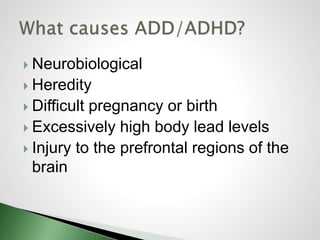
 Neurobiological
 Heredity
 Difficult pregnancy or birth
 Excessively high body lead levels
 Injury to the prefrontal regions of the
brain
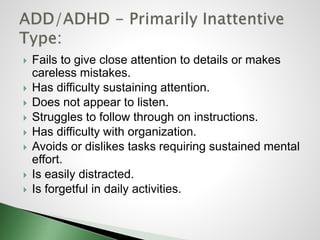
 Fails to give close attention to details or makes
careless mistakes.
 Has difficulty sustaining attention.
 Does not appear to listen.
 Struggles to follow through on instructions.
 Has difficulty with organization.
 Avoids or dislikes tasks requiring sustained mental
effort.
 Is easily distracted.
 Is forgetful in daily activities.
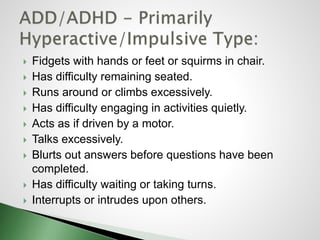
 Fidgets with hands or feet or squirms in chair.
 Has difficulty remaining seated.
 Runs around or climbs excessively.
 Has difficulty engaging in activities quietly.
 Acts as if driven by a motor.
 Talks excessively.
 Blurts out answers before questions have been
completed.
 Has difficulty waiting or taking turns.
 Interrupts or intrudes upon others.
 Meets both inattentive and
hyperactive/impulsive criteria.
 Assessment of the child’s school
performance
 Social and emotional functioning
 Developmental level
 History from parents, teachers, and
the child
 At least SIX symptoms that have persisted
for at least SIX months to a degree that is
maladaptive and inconsistent with
developmental level
 Onset usually before age SEVEN
 Symptoms must be present in TWO or more
situations
 Causes significant distress or impairment
 Is not accounted for by another disorder
Why Accommodations for
Students with ADD/ADHD?
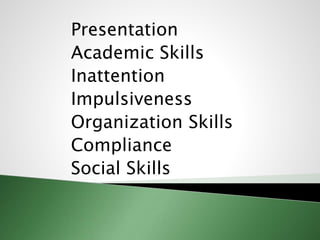
Presentation
Academic Skills
Inattention
Impulsiveness
Organization Skills
Compliance
Social Skills
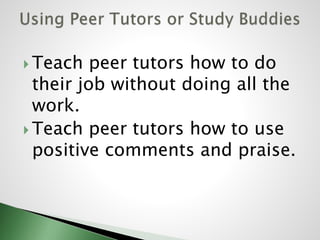
 Teach peer tutors how to do
their job without doing all the
work.
 Teach peer tutors how to use
positive comments and praise.
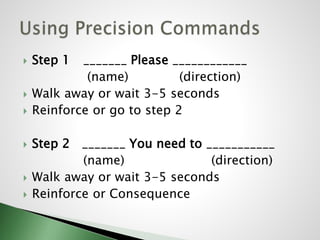
 Step 1 _______ Please ____________
(name) (direction)
 Walk away or wait 3-5 seconds
 Reinforce or go to step 2
 Step 2 _______ You need to ___________
(name) (direction)
 Walk away or wait 3-5 seconds
 Reinforce or Consequence
 http://www.youtube.com/watch?v=yZm0BfXY
vFg&feature=related

ADHD presentation2

  • 3.
     Neurobiological  Heredity Difficult pregnancy or birth  Excessively high body lead levels  Injury to the prefrontal regions of the brain
  • 4.
     Fails togive close attention to details or makes careless mistakes.  Has difficulty sustaining attention.  Does not appear to listen.  Struggles to follow through on instructions.  Has difficulty with organization.  Avoids or dislikes tasks requiring sustained mental effort.  Is easily distracted.  Is forgetful in daily activities.
  • 5.
     Fidgets withhands or feet or squirms in chair.  Has difficulty remaining seated.  Runs around or climbs excessively.  Has difficulty engaging in activities quietly.  Acts as if driven by a motor.  Talks excessively.  Blurts out answers before questions have been completed.  Has difficulty waiting or taking turns.  Interrupts or intrudes upon others.
  • 6.
     Meets bothinattentive and hyperactive/impulsive criteria.
  • 7.
     Assessment ofthe child’s school performance  Social and emotional functioning  Developmental level  History from parents, teachers, and the child
  • 8.
     At leastSIX symptoms that have persisted for at least SIX months to a degree that is maladaptive and inconsistent with developmental level  Onset usually before age SEVEN  Symptoms must be present in TWO or more situations  Causes significant distress or impairment  Is not accounted for by another disorder
  • 9.
  • 10.
  • 11.
     Teach peertutors how to do their job without doing all the work.  Teach peer tutors how to use positive comments and praise.
  • 12.
     Step 1_______ Please ____________ (name) (direction)  Walk away or wait 3-5 seconds  Reinforce or go to step 2  Step 2 _______ You need to ___________ (name) (direction)  Walk away or wait 3-5 seconds  Reinforce or Consequence
  • 13.