BY MIA GORNALL
LEARNING POD
YEAR 7
7A
MISS TAYLOR
ADHD
WHAT IS ADHD
 ADHD stands forAttention Deficit
Hyperactivity Disorder. ADHD is a common
behavioral disorder that affects an estimated
8% to 10% of school-age children. Boys are
about three times more likely than girls to be
diagnosed with it.
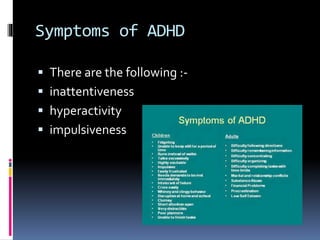
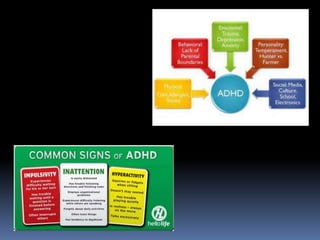
Symptoms of ADHD
 There are the following :-
 inattentiveness
 hyperactivity
 impulsiveness
inattentiveness
 The main signs of inattentiveness are:
 having a short attention span and being easily
distracted
 making careless mistakes – for example, in
schoolwork
 appearing forgetful or losing things
 being unable to stick at tasks that are tedious or
time-consuming
 appearing to be unable to listen to or carry out
instructions
 constantly changing activity or task
 having difficulty organising tasks
Hyperactivity and
impulsiveness
 The main signs of hyperactivity and impulsiveness are:
 being unable to sit still, especially in calm or quiet
surroundings
 constantly fidgeting
 being unable to concentrate on tasks
 excessive physical movement
 excessive talking
 being unable to wait their turn
 acting without thinking
 interrupting conversations
 little or no sense of danger
Who is affected by ADHD?
 Around 1.7 per cent of the UK population,
mostly children, have ADHD.
 Boys are more likely than girls to be affected
by ADHD.
How is ADHD diagnosed ?
 History of symptoms
 Medical history
 Educational history
 Family history
 Social assessment
 And much, much more
Educational management
 This includes individual, or group, learning
support for coexisting learning difficulties and
educational underachievement.The other
complexities and challenges involved when
supporting children and young people with
ADHD in school are described in other parts
of this guidance series.
What is the likely outcome?
 Some children and young people will outgrow ADHD.
 Roughly half of those affected appear to function normally
by young adulthood, but a significant number (in some
studies up to 60 per cent depending how the ADHD and its
impairment is assessed) will have problems that persist into
adult life.
 These may take the form of persisting restlessness and
distractibility, perhaps with less obvious 'hyperactivity' in
many; depression, irritability, antisocial behaviour and
other adverse outcomes are observed at significantly
higher rates that non ADHD adults.

Diet
 Research suggests that diet is not a
significant factor in ADHD for most children.
Some children have particular food allergies
that need investigation. Dietary changes
need to be supervised by a doctor and
nutritionist.
Adhd

Adhd

  • 1.
    BY MIA GORNALL LEARNINGPOD YEAR 7 7A MISS TAYLOR ADHD
  • 3.
    WHAT IS ADHD ADHD stands forAttention Deficit Hyperactivity Disorder. ADHD is a common behavioral disorder that affects an estimated 8% to 10% of school-age children. Boys are about three times more likely than girls to be diagnosed with it.
  • 4.
    Symptoms of ADHD There are the following :-  inattentiveness  hyperactivity  impulsiveness
  • 5.
    inattentiveness  The mainsigns of inattentiveness are:  having a short attention span and being easily distracted  making careless mistakes – for example, in schoolwork  appearing forgetful or losing things  being unable to stick at tasks that are tedious or time-consuming  appearing to be unable to listen to or carry out instructions  constantly changing activity or task  having difficulty organising tasks
  • 6.
    Hyperactivity and impulsiveness  Themain signs of hyperactivity and impulsiveness are:  being unable to sit still, especially in calm or quiet surroundings  constantly fidgeting  being unable to concentrate on tasks  excessive physical movement  excessive talking  being unable to wait their turn  acting without thinking  interrupting conversations  little or no sense of danger
  • 7.
    Who is affectedby ADHD?  Around 1.7 per cent of the UK population, mostly children, have ADHD.  Boys are more likely than girls to be affected by ADHD.
  • 8.
    How is ADHDdiagnosed ?  History of symptoms  Medical history  Educational history  Family history  Social assessment  And much, much more
  • 9.
    Educational management  Thisincludes individual, or group, learning support for coexisting learning difficulties and educational underachievement.The other complexities and challenges involved when supporting children and young people with ADHD in school are described in other parts of this guidance series.
  • 10.
    What is thelikely outcome?  Some children and young people will outgrow ADHD.  Roughly half of those affected appear to function normally by young adulthood, but a significant number (in some studies up to 60 per cent depending how the ADHD and its impairment is assessed) will have problems that persist into adult life.  These may take the form of persisting restlessness and distractibility, perhaps with less obvious 'hyperactivity' in many; depression, irritability, antisocial behaviour and other adverse outcomes are observed at significantly higher rates that non ADHD adults. 
  • 11.
    Diet  Research suggeststhat diet is not a significant factor in ADHD for most children. Some children have particular food allergies that need investigation. Dietary changes need to be supervised by a doctor and nutritionist.