ADDISON’S DISEASE
118
OVERVIEW OF THE DISEASE
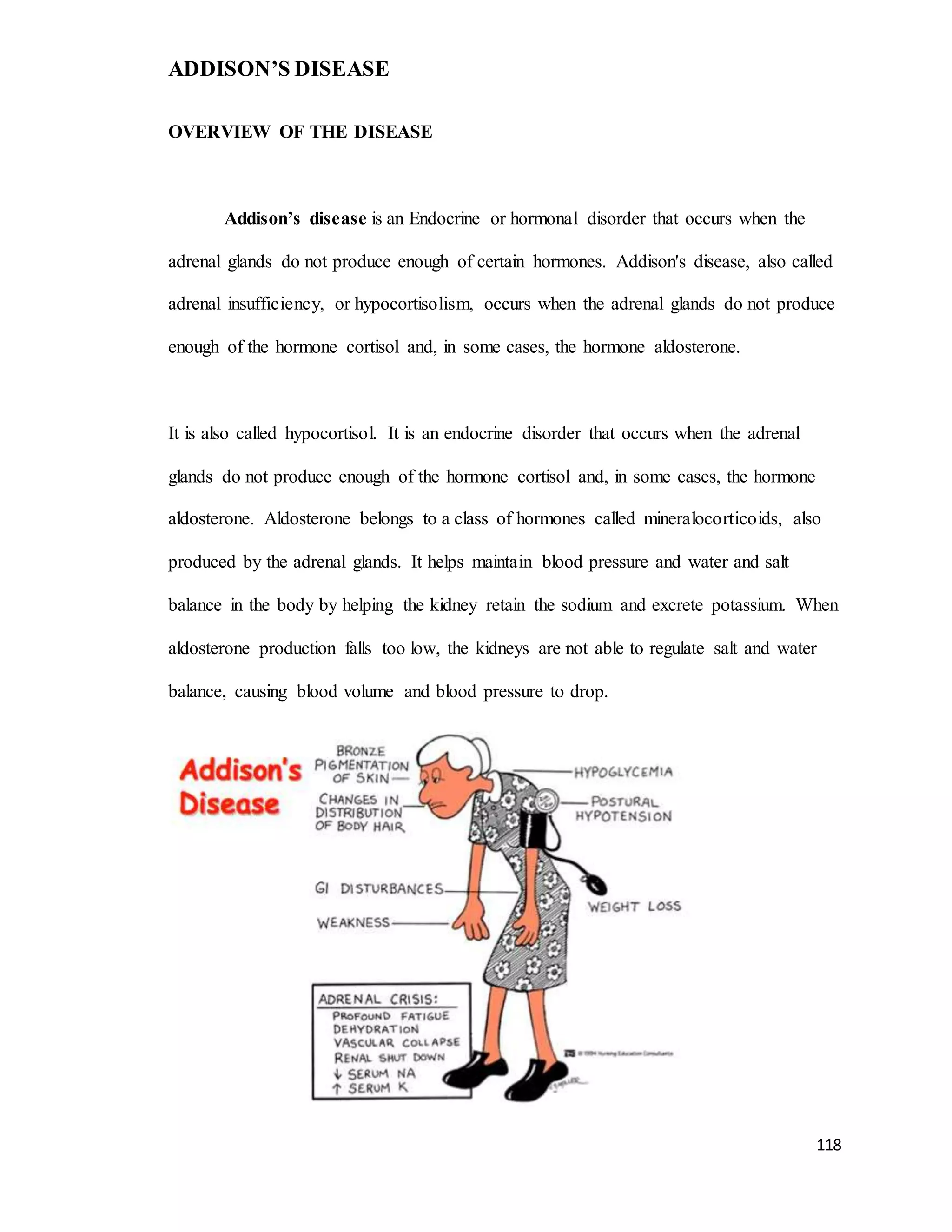
Addison’s disease is an Endocrine or hormonal disorder that occurs when the
adrenal glands do not produce enough of certain hormones. Addison's disease, also called
adrenal insufficiency, or hypocortisolism, occurs when the adrenal glands do not produce
enough of the hormone cortisol and, in some cases, the hormone aldosterone.
It is also called hypocortisol. It is an endocrine disorder that occurs when the adrenal
glands do not produce enough of the hormone cortisol and, in some cases, the hormone
aldosterone. Aldosterone belongs to a class of hormones called mineralocorticoids, also
produced by the adrenal glands. It helps maintain blood pressure and water and salt
balance in the body by helping the kidney retain the sodium and excrete potassium. When
aldosterone production falls too low, the kidneys are not able to regulate salt and water
balance, causing blood volume and blood pressure to drop.
ADDISON’S DISEASE
119
If Addison’s disease isn’t treated, severe abdominal pains, profound weakness, extremely
low blood pressure, kidney failure, and shock may occur, especially if the body is
subjected to stress such as an injury, surgery, or severe infection. DEATH MAY
QUICKLY FOLLOW.
Most cases of Addison’s disease are caused by the gradual destruction of the adrenal
cortex of the body’s own immune system. The adrenal cortex is the outer layer of the
adrenal gland and it secretes various hormones including cortisone, estrogen,
testosterone, cortisol, androgen, aldosterone, progesterone.
Adrenal insufficiency occurs when at least 90 percent of the adrenal cortex has been
destroyed.
STATISTICS
Addison's affects between 1 and 4 in 100,000 people, including both men
and women within all age groups.
CASE POPULATION
Philippines 862 102 333 4843
Retrieved from: http://www.rightdiagnosis.com/a/addisons_disease/stats-country.htmLast Update: 17
April, 2015 (2:51)
Addison's disease is a rare condition. Only one in 100,000 people has it. It can
happen at any age to either men or women. People with Addison's disease can lead
normal lives as long as they take their medication. President John F. Kennedy had the
condition.
ADDISON’S DISEASE
120
CAUSES AND RISK FACTORS
Most cases of Addison’s disease result from a problem with the adrenal glands
themselves (primary adrenal insufficiency). Autoimmune disease accounts for 70% of
Addison’s disease. This occurs when the body's immune system mistakenly attacks the
adrenal glands. This autoimmune assault destroys the outer layer of the glands.
Long-lasting infections -- such as tuberculosis, HIV, and some fungal infections
-- can harm the adrenal glands. Cancer cells that spread from other parts of the body to
the adrenal glands also can cause Addison's disease.
Less commonly, Addison's disease is due to secondary adrenal insufficiency
caused by a problem with the pituitary gland or a problem with the hypothalamus, both
located in the center of the brain. These glands produce hormones that act as a switch and
can turn on or off the production of hormones in the rest of the body. A pituitary hormone
called ACTH is the switch that turns on cortisol production in the adrenal gland. If ACTH
levels are too low, the adrenal glands stay in the off position.
Another cause of secondary adrenal insufficiency is prolonged or improper use
of steroid hormones such as prednisone. Less common causes include pituitary tumors
and damage to the pituitary gland during surgery or radiation.
 autoimmune disease
 bilateral adrenal tuberculosis
 adrenal fungal infections
 bilateral adrenal hemorrhages due to meningococcal septicemia, post partum,
patient on anticoagulant therapy
ADDISON’S DISEASE
121
ASSESSMENT
History
Determine if the patient has a history of recent infection, steroid use, or adrenal or
pituitary surgery. The patient may describe hyperpigmentation of the skin (particularly on
the knuckles, elbows, knees, palmar creases), nailbeds, and mucous membranes that has
lasted for months or even years. Establish a history of poor tolerance for stress, weakness,
fatigue, and activity intolerance. Ask if the patient has experienced anorexia, nausea,
vomiting, or diarrhea as a result of altered metabolism. Some patients have dizziness with
orthostasis due to hypotension. Elicit a history of craving for salt or intolerance to cold.
Determine presence of altered menses in females and impotence in males.
Physical Examination
Assess the patient for signs of dehydration such as tachycardia, altered level of
consciousness, dry skin with poor turgor, dry mucous membranes, weight loss, and weak
peripheral pulses. Check for postural hypotension—that is, a drop in systolic blood
pressure greater than 15 mm Hg when the patient is moved from a lying position to a
sitting or standing position.
Inspect the skin for pigmentation changes caused by an altered regulation of melanin,
noting if surgical scars, skin folds, and genitalia show a characteristic bronze color.
Inspect the patient's gums and oral mucous membranes to see if they are bluish-black.
Take the patient's temperature to see if it is subnormal. Note any loss of axillary and
pubic hair that could be caused by decreased androgen levels.
ADDISON’S DISEASE
122
Psychosocial
Because an acute adrenal crisis may be precipitated by emotional stress, periodic
psychosocial assessments are necessary for patients with adrenal insufficiency. Patients
with an adrenal insufficiency frequently complain of weakness and fatigue, which are
also characteristic of an emotional problem. However, weakness and fatigue of an
emotional origin seem to have a pattern of being worse in the morning and lessening
throughout the day, while the weakness and fatigue of adrenal insufficiency seem to be
precipitated by activity and lessen with rest. Patients with adrenal insufficiency may
show signs of depression and irritability from decreased cortisol levels.
Independent
Because of the negative effect of physical and emotional stress on the patient with
adrenal insufficiency, promote strategies that reduce stress. Teach the patient to rest
between activities to conserve energy and to wear warm clothing to increase comfort and
limit heat loss. To limit the risk of infection, encourage the patient to use good hand-
washing techniques and to limit exposure to people with infections. To prevent
complications, teach the patient to avoid using lotions that contain alcohol to prevent skin
dryness and breakdown and to eat a nutritious diet that has adequate proteins, fats, and
carbohydrates to maintain sodium and potassium balance.
Finally, the prospect of a chronic disease and the need to avoid stress may lead patients to
impaired social interaction and ineffective coping. Discuss with the patient the presence
of support systems and coping patterns. Provide emotional support by encouraging the
patient to verbalize feelings about an altered body image and anxieties about the disease
process. Incorporate the patient's unique positive characteristics and strengths into the
ADDISON’S DISEASE
123
care plan. Encourage the patient to interact with family and significant others. Before
discharge, refer patients who exhibit disabling behaviors to therapists, self-help groups,
or crisis intervention centers.
Evidence BasedPractice Health Policy
Lapi, F., Kezouh, A., Suissa, S., & Ernst, P. (2013). The use of inhaled corticosteroids
and the risk of adrenal insufficiency. European Respiratory Journal, 42(1), 79–86.
 Investigators have questioned the effects that respiratory medications, particularly
inhaled corticosteroids such as fluticasone, have on the risk for adrenal
insufficiency.
 Among a sample of more than 350,000 prevalent users of respiratory medications,
high doses of inhaled corticosteroids (equal to or higher than the daily equivalent
of 2,000 mcg of beclometasone, 1,600 mcg of budesonide, 4,000 mcg of
triamcinolone, 1,000 mcg of fluticasone, or 4,000 mcg of flunisolide) nearly
doubled the risk of adrenal insufficiency (OR 1.84, 95% CI 1.16 to 2.90).
 Providers caring for patients being treated with inhaled corticosteroids should be
sensitive to the risk for and development of symptoms of adrenal insufficiency.
SIGNS AND SYMPTOMS
 water loss, dehydration and hypovolemia
 muscular weakness, fatigue, weight loss
 GI Problems--anorexia, nausea, vomiting, diarrhea, constipation, abdominal pain.
 Hypotension, hypoglycemia, low basal metabolic rate, increased insulin
sensitivity.
ADDISON’S DISEASE
124
 Mental Changes--depression, irritability, anxiety, apprehension caused by
hypoglycemia and hypovolemia.
 hyperpigmentation(darkening of an area of skin or nails caused by increased
melanin.)
1. Hypoglycemia (TIRED)
 Tremors and tachycardia
 Irritability
 Restlessness
 Extreme fatigue
 Diaphoresis and depression
2. Decreased tolerance to stress (d/t decreased cortisol) à Addisonian Crisis
3. Hyponatremia
 Hypotension
 Signs of dehydration
c. Weight loss
4. Hyperkalemia
 Irritability and agitation
 Diarrhea
 Arrhythmias
5. Decreased Libido
6. Loss of pubic and axillary hair
7. Bronze-like skin pigmentation d/t decreased cortisol stimulation of MSH from
pituitary gland
ADDISON’S DISEASE
125
Reference: http://allfornursing.blogspot.com/2012/07/ms-addisons-disease-vs-cushings-
disease.html#sthash.0ex28clv.dpuf
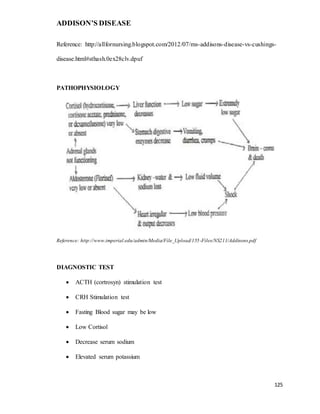
PATHOPHYSIOLOGY
Reference: http://www.imperial.edu/admin/Media/File_Upload/155-Files/NS211/Addisons.pdf
DIAGNOSTIC TEST
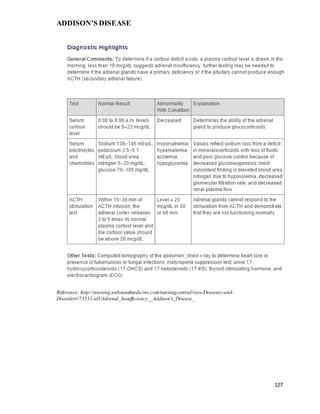
 ACTH (cortrosyn) stimulation test
 CRH Stimulation test
 Fasting Blood sugar may be low
 Low Cortisol
 Decrease serum sodium
 Elevated serum potassium
ADDISON’S DISEASE
126
OTHER TEST
Once a diagnosis of primary adrenal insufficiency has been made, x-ray exams of the
abdomen may be taken to see of the adrenals have any signs of calcium deposits. Calcium
deposits may indicate TB.
Because cortisol is so vital to health, the amount of cortisol produce by the adrenals is
precisely balance.
Like many other hormones, cortisol is regulated by the brain’s hypothalamus and the
pituitary gland, a bean-sized organ at the base of the brain.
First the hypothalamus sends “releasing hormone” to the pituitary gland. The pituitary
responds by secreting hormones that regulate growth and thyroid and adrenal function
and sex hormones such as estrogen and testosterone.
One of the pituitary’s main function is to secrete ACTH ( adrenocorticotropin) , A
hormones that stimulates the adrenal gland.
When the adrenal receive the pituitary’s signal in the form of the ACTH , they respond
by producing cortisol. Completing the cycle . Cortisol the signals the pituitary to lower
secretion of ACTH.
ADDISON’S DISEASE
127
Reference: http://nursing.unboundmedicine.com/nursingcentral/view/Diseases-and-
Disorders/73511/all/Adrenal_Insufficiency__Addison's_Disease_
ADDISON’S DISEASE
128
MEDICAL MANAGEMENT AND DRUG THERAPHY
 Restoration of normal fluid and electrolyte balance: high sodium, low-potassium
diet and fluids.
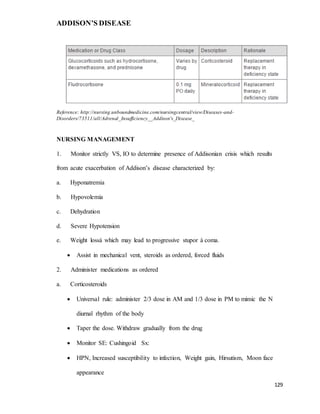
 Treatment of glucocorticoids deficiency with such agent as hydrocortisone
(Cortef) or prednisone (Orasone). Patients with chronic obstructive
pulmonary disease and heart failure may require preparations with low
mineralocorticoid activity, such as methylprednisolone (Solu-Medrol), to prevent
fluid retention.
 Mineralocorticoiddeficiency is treated with fludrocortisone(Florinef)
 Cardiovascular support if indicated.
 Immediate treatment if Addisonian (adrenal) crisis or circulatory collapse
if imminent: a. I.V. sodium chloride solution to replace sodium ions.b.
Hydrocortisone (Cortef). Injection of circulatory stimulants, such as atropine
sulfate (Atropine),calcium chloride (Calcium), epinephrine (Adrenalin).
 Diagnosis and treatment of underlying cause of adrenocortical insufficiency or
addisonian crisis (eg, antibiotic therapy to treat infection if this is a factor in
crisis)
PHARMACOLOGIC HIGHLIGHTS:
General Comments: Fludrocortisone promotes kidney reabsorption of sodium and the
excretion of potassium. Overtreatment can result in fluid retention and possibly
congestive heart failure; therefore, monitor serum potassium and sodium levels
frequently during fludrocortisone administration.
ADDISON’S DISEASE
129
Reference: http://nursing.unboundmedicine.com/nursingcentral/view/Diseases-and-
Disorders/73511/all/Adrenal_Insufficiency__Addison's_Disease_
NURSING MANAGEMENT
1. Monitor strictly VS, IO to determine presence of Addisonian crisis which results
from acute exacerbation of Addison’s disease characterized by:
a. Hyponatremia
b. Hypovolemia
c. Dehydration
d. Severe Hypotension
e. Weight lossà which may lead to progressive stupor à coma.
 Assist in mechanical vent, steroids as ordered, forced fluids
2. Administer medications as ordered
a. Corticosteroids
 Universal rule: administer 2/3 dose in AM and 1/3 dose in PM to mimic the N
diurnal rhythm of the body
 Taper the dose. Withdraw gradually from the drug
 Monitor SE: Cushingoid Sx:
 HPN, Increased susceptibility to infection, Weight gain, Hirsutism, Moon face
appearance
ADDISON’S DISEASE
130
 Ex: Hydrocortisone, Dexamethasone, Prednisone
b. Mineralocorticoids – fludrocortisone
3. Forced fluids
4. Maintain patent IV line
5. Diet: high CHO/calories, Na and CHON, low K
6. Meticulous skin care
7. Provide health teaching and d/c planning
a. Avoidance of precipitating factors leading to addisonian crisis:
 Stress, Infection, Sudden withdrawal to steroids
b. Prevent Complications – hypovolemic shock
c. Hormonal replacement therapy for life
d. Importance of ff. up care
reference: http://allfornursing.blogspot.com/2012/07/ms-addisons-disease-vs-cushings-
disease.html#sthash.0ex28clv.dpuf
NURSING DIAGNOSIS
 Deficient fluid volume, related to hypovolemia secondary to
adrenal insufficiency
 Ineffective tissue perfusion: Peripheral, related to fluid volume deficit
 Activity intolerance related to weakness, fatigue, and/or muscle ache
 Risk for injury related to weakness
 Anxiety, related to lack of knowledge about the effects and treatment of adrenal
insufficiency
Reference: http://www.imperial.edu/admin/Media/File_Upload/155-Files/NS211/Addisons.pdf
ADDISON’S DISEASE
131
DISCHARGE AND HOME HEALTHCARE GUIDELINES
PREVENTION: To prevent acute adrenal crisis, teach patients how to avoid stress.
Emphasize the need to take medications as prescribed and to contact the physician if the
patient becomes stressed or unable to take medications. Make sure the patient knows to
alert the surgeon about adrenal insufficiency prior to all surgical procedures. Parenteral
corticosteroids will likely be prescribed during any major procedure or times of major
stress or trauma.
MEDICATIONS: Be sure the patient understands the reason for steroids prescribed.
RESOURCES: Referrals may be necessary to identify potential physical and emotional
problems. Notify the hospital's social service department before patient discharge if you
have identified obvious environmental stressors. Initiate home health nursing to ensure
compliance with medical therapy and early detection of complications. If you identify
emotional problems, refer the patient to therapists or self-help groups.
Patient Teaching for Corticosteroids
 Emphasize the lifetime nature of taking corticosteroids.
 Provide name, dosage, and action of the prescribed medication.
 Explain the common side effects of weight gain, swelling around the face and
eyes, insomnia, bruising, gastric distress, gastric bleeding, and petechial.
 Advice the patient to take the medication with meals to avoid gastric irritation and
to take the medication at the time of day prescribed, usually in the morning.
 Suggest the patient weigh self-daily, at the same time each day, and call the
healthcare provider if weight changes by 5 pounds.
ADDISON’S DISEASE
132
 Emphasize that the patient should always take the medication. Not taking it can
cause life-threatening complications. Tell the patient to call the healthcare
provider if she or he is unable to take medication for more than 24 hours.
 Explain that periods of stress require more medication. Tell the patient to call the
healthcare provider for changes in dose if he or she experiences extra physical or
emotional stress. Illness and temperature extremes are considered stressors.
 Explain preventative measures. Tell the patient that to prevent getting ill, she or
he should avoid being in groups with people who are ill and environments where
temperatures change from very hot to very cold.
 Teach the patient to recognize signs of under medication: weakness, fatigue, and
dizziness. Emphasize the need to report under dosing to the healthcare provider.
 Teach the patient to avoid dizziness by moving from a sitting to a standing
position slowly.
 Urge the patient to always wear a medical alert necklace or bracelet to inform
healthcare professionals of the diagnosis.
Lapi, F., Kezouh, A., Suissa, S., & Ernst, P. (2013).The use of inhaled corticosteroids and the risk of
adrenal insufficiency. European Respiratory Journal,42(1),79–86.

Addisons Disease

  • 1.
    ADDISON’S DISEASE 118 OVERVIEW OFTHE DISEASE Addison’s disease is an Endocrine or hormonal disorder that occurs when the adrenal glands do not produce enough of certain hormones. Addison's disease, also called adrenal insufficiency, or hypocortisolism, occurs when the adrenal glands do not produce enough of the hormone cortisol and, in some cases, the hormone aldosterone. It is also called hypocortisol. It is an endocrine disorder that occurs when the adrenal glands do not produce enough of the hormone cortisol and, in some cases, the hormone aldosterone. Aldosterone belongs to a class of hormones called mineralocorticoids, also produced by the adrenal glands. It helps maintain blood pressure and water and salt balance in the body by helping the kidney retain the sodium and excrete potassium. When aldosterone production falls too low, the kidneys are not able to regulate salt and water balance, causing blood volume and blood pressure to drop.
  • 2.
    ADDISON’S DISEASE 119 If Addison’sdisease isn’t treated, severe abdominal pains, profound weakness, extremely low blood pressure, kidney failure, and shock may occur, especially if the body is subjected to stress such as an injury, surgery, or severe infection. DEATH MAY QUICKLY FOLLOW. Most cases of Addison’s disease are caused by the gradual destruction of the adrenal cortex of the body’s own immune system. The adrenal cortex is the outer layer of the adrenal gland and it secretes various hormones including cortisone, estrogen, testosterone, cortisol, androgen, aldosterone, progesterone. Adrenal insufficiency occurs when at least 90 percent of the adrenal cortex has been destroyed. STATISTICS Addison's affects between 1 and 4 in 100,000 people, including both men and women within all age groups. CASE POPULATION Philippines 862 102 333 4843 Retrieved from: http://www.rightdiagnosis.com/a/addisons_disease/stats-country.htmLast Update: 17 April, 2015 (2:51) Addison's disease is a rare condition. Only one in 100,000 people has it. It can happen at any age to either men or women. People with Addison's disease can lead normal lives as long as they take their medication. President John F. Kennedy had the condition.
  • 3.
    ADDISON’S DISEASE 120 CAUSES ANDRISK FACTORS Most cases of Addison’s disease result from a problem with the adrenal glands themselves (primary adrenal insufficiency). Autoimmune disease accounts for 70% of Addison’s disease. This occurs when the body's immune system mistakenly attacks the adrenal glands. This autoimmune assault destroys the outer layer of the glands. Long-lasting infections -- such as tuberculosis, HIV, and some fungal infections -- can harm the adrenal glands. Cancer cells that spread from other parts of the body to the adrenal glands also can cause Addison's disease. Less commonly, Addison's disease is due to secondary adrenal insufficiency caused by a problem with the pituitary gland or a problem with the hypothalamus, both located in the center of the brain. These glands produce hormones that act as a switch and can turn on or off the production of hormones in the rest of the body. A pituitary hormone called ACTH is the switch that turns on cortisol production in the adrenal gland. If ACTH levels are too low, the adrenal glands stay in the off position. Another cause of secondary adrenal insufficiency is prolonged or improper use of steroid hormones such as prednisone. Less common causes include pituitary tumors and damage to the pituitary gland during surgery or radiation.  autoimmune disease  bilateral adrenal tuberculosis  adrenal fungal infections  bilateral adrenal hemorrhages due to meningococcal septicemia, post partum, patient on anticoagulant therapy
  • 4.
    ADDISON’S DISEASE 121 ASSESSMENT History Determine ifthe patient has a history of recent infection, steroid use, or adrenal or pituitary surgery. The patient may describe hyperpigmentation of the skin (particularly on the knuckles, elbows, knees, palmar creases), nailbeds, and mucous membranes that has lasted for months or even years. Establish a history of poor tolerance for stress, weakness, fatigue, and activity intolerance. Ask if the patient has experienced anorexia, nausea, vomiting, or diarrhea as a result of altered metabolism. Some patients have dizziness with orthostasis due to hypotension. Elicit a history of craving for salt or intolerance to cold. Determine presence of altered menses in females and impotence in males. Physical Examination Assess the patient for signs of dehydration such as tachycardia, altered level of consciousness, dry skin with poor turgor, dry mucous membranes, weight loss, and weak peripheral pulses. Check for postural hypotension—that is, a drop in systolic blood pressure greater than 15 mm Hg when the patient is moved from a lying position to a sitting or standing position. Inspect the skin for pigmentation changes caused by an altered regulation of melanin, noting if surgical scars, skin folds, and genitalia show a characteristic bronze color. Inspect the patient's gums and oral mucous membranes to see if they are bluish-black. Take the patient's temperature to see if it is subnormal. Note any loss of axillary and pubic hair that could be caused by decreased androgen levels.
  • 5.
    ADDISON’S DISEASE 122 Psychosocial Because anacute adrenal crisis may be precipitated by emotional stress, periodic psychosocial assessments are necessary for patients with adrenal insufficiency. Patients with an adrenal insufficiency frequently complain of weakness and fatigue, which are also characteristic of an emotional problem. However, weakness and fatigue of an emotional origin seem to have a pattern of being worse in the morning and lessening throughout the day, while the weakness and fatigue of adrenal insufficiency seem to be precipitated by activity and lessen with rest. Patients with adrenal insufficiency may show signs of depression and irritability from decreased cortisol levels. Independent Because of the negative effect of physical and emotional stress on the patient with adrenal insufficiency, promote strategies that reduce stress. Teach the patient to rest between activities to conserve energy and to wear warm clothing to increase comfort and limit heat loss. To limit the risk of infection, encourage the patient to use good hand- washing techniques and to limit exposure to people with infections. To prevent complications, teach the patient to avoid using lotions that contain alcohol to prevent skin dryness and breakdown and to eat a nutritious diet that has adequate proteins, fats, and carbohydrates to maintain sodium and potassium balance. Finally, the prospect of a chronic disease and the need to avoid stress may lead patients to impaired social interaction and ineffective coping. Discuss with the patient the presence of support systems and coping patterns. Provide emotional support by encouraging the patient to verbalize feelings about an altered body image and anxieties about the disease process. Incorporate the patient's unique positive characteristics and strengths into the
  • 6.
    ADDISON’S DISEASE 123 care plan.Encourage the patient to interact with family and significant others. Before discharge, refer patients who exhibit disabling behaviors to therapists, self-help groups, or crisis intervention centers. Evidence BasedPractice Health Policy Lapi, F., Kezouh, A., Suissa, S., & Ernst, P. (2013). The use of inhaled corticosteroids and the risk of adrenal insufficiency. European Respiratory Journal, 42(1), 79–86.  Investigators have questioned the effects that respiratory medications, particularly inhaled corticosteroids such as fluticasone, have on the risk for adrenal insufficiency.  Among a sample of more than 350,000 prevalent users of respiratory medications, high doses of inhaled corticosteroids (equal to or higher than the daily equivalent of 2,000 mcg of beclometasone, 1,600 mcg of budesonide, 4,000 mcg of triamcinolone, 1,000 mcg of fluticasone, or 4,000 mcg of flunisolide) nearly doubled the risk of adrenal insufficiency (OR 1.84, 95% CI 1.16 to 2.90).  Providers caring for patients being treated with inhaled corticosteroids should be sensitive to the risk for and development of symptoms of adrenal insufficiency. SIGNS AND SYMPTOMS  water loss, dehydration and hypovolemia  muscular weakness, fatigue, weight loss  GI Problems--anorexia, nausea, vomiting, diarrhea, constipation, abdominal pain.  Hypotension, hypoglycemia, low basal metabolic rate, increased insulin sensitivity.
  • 7.
    ADDISON’S DISEASE 124  MentalChanges--depression, irritability, anxiety, apprehension caused by hypoglycemia and hypovolemia.  hyperpigmentation(darkening of an area of skin or nails caused by increased melanin.) 1. Hypoglycemia (TIRED)  Tremors and tachycardia  Irritability  Restlessness  Extreme fatigue  Diaphoresis and depression 2. Decreased tolerance to stress (d/t decreased cortisol) à Addisonian Crisis 3. Hyponatremia  Hypotension  Signs of dehydration c. Weight loss 4. Hyperkalemia  Irritability and agitation  Diarrhea  Arrhythmias 5. Decreased Libido 6. Loss of pubic and axillary hair 7. Bronze-like skin pigmentation d/t decreased cortisol stimulation of MSH from pituitary gland
  • 8.
    ADDISON’S DISEASE 125 Reference: http://allfornursing.blogspot.com/2012/07/ms-addisons-disease-vs-cushings- disease.html#sthash.0ex28clv.dpuf PATHOPHYSIOLOGY Reference:http://www.imperial.edu/admin/Media/File_Upload/155-Files/NS211/Addisons.pdf DIAGNOSTIC TEST  ACTH (cortrosyn) stimulation test  CRH Stimulation test  Fasting Blood sugar may be low  Low Cortisol  Decrease serum sodium  Elevated serum potassium
  • 9.
    ADDISON’S DISEASE 126 OTHER TEST Oncea diagnosis of primary adrenal insufficiency has been made, x-ray exams of the abdomen may be taken to see of the adrenals have any signs of calcium deposits. Calcium deposits may indicate TB. Because cortisol is so vital to health, the amount of cortisol produce by the adrenals is precisely balance. Like many other hormones, cortisol is regulated by the brain’s hypothalamus and the pituitary gland, a bean-sized organ at the base of the brain. First the hypothalamus sends “releasing hormone” to the pituitary gland. The pituitary responds by secreting hormones that regulate growth and thyroid and adrenal function and sex hormones such as estrogen and testosterone. One of the pituitary’s main function is to secrete ACTH ( adrenocorticotropin) , A hormones that stimulates the adrenal gland. When the adrenal receive the pituitary’s signal in the form of the ACTH , they respond by producing cortisol. Completing the cycle . Cortisol the signals the pituitary to lower secretion of ACTH.
  • 10.
  • 11.
    ADDISON’S DISEASE 128 MEDICAL MANAGEMENTAND DRUG THERAPHY  Restoration of normal fluid and electrolyte balance: high sodium, low-potassium diet and fluids.  Treatment of glucocorticoids deficiency with such agent as hydrocortisone (Cortef) or prednisone (Orasone). Patients with chronic obstructive pulmonary disease and heart failure may require preparations with low mineralocorticoid activity, such as methylprednisolone (Solu-Medrol), to prevent fluid retention.  Mineralocorticoiddeficiency is treated with fludrocortisone(Florinef)  Cardiovascular support if indicated.  Immediate treatment if Addisonian (adrenal) crisis or circulatory collapse if imminent: a. I.V. sodium chloride solution to replace sodium ions.b. Hydrocortisone (Cortef). Injection of circulatory stimulants, such as atropine sulfate (Atropine),calcium chloride (Calcium), epinephrine (Adrenalin).  Diagnosis and treatment of underlying cause of adrenocortical insufficiency or addisonian crisis (eg, antibiotic therapy to treat infection if this is a factor in crisis) PHARMACOLOGIC HIGHLIGHTS: General Comments: Fludrocortisone promotes kidney reabsorption of sodium and the excretion of potassium. Overtreatment can result in fluid retention and possibly congestive heart failure; therefore, monitor serum potassium and sodium levels frequently during fludrocortisone administration.
  • 12.
    ADDISON’S DISEASE 129 Reference: http://nursing.unboundmedicine.com/nursingcentral/view/Diseases-and- Disorders/73511/all/Adrenal_Insufficiency__Addison's_Disease_ NURSINGMANAGEMENT 1. Monitor strictly VS, IO to determine presence of Addisonian crisis which results from acute exacerbation of Addison’s disease characterized by: a. Hyponatremia b. Hypovolemia c. Dehydration d. Severe Hypotension e. Weight lossà which may lead to progressive stupor à coma.  Assist in mechanical vent, steroids as ordered, forced fluids 2. Administer medications as ordered a. Corticosteroids  Universal rule: administer 2/3 dose in AM and 1/3 dose in PM to mimic the N diurnal rhythm of the body  Taper the dose. Withdraw gradually from the drug  Monitor SE: Cushingoid Sx:  HPN, Increased susceptibility to infection, Weight gain, Hirsutism, Moon face appearance
  • 13.
    ADDISON’S DISEASE 130  Ex:Hydrocortisone, Dexamethasone, Prednisone b. Mineralocorticoids – fludrocortisone 3. Forced fluids 4. Maintain patent IV line 5. Diet: high CHO/calories, Na and CHON, low K 6. Meticulous skin care 7. Provide health teaching and d/c planning a. Avoidance of precipitating factors leading to addisonian crisis:  Stress, Infection, Sudden withdrawal to steroids b. Prevent Complications – hypovolemic shock c. Hormonal replacement therapy for life d. Importance of ff. up care reference: http://allfornursing.blogspot.com/2012/07/ms-addisons-disease-vs-cushings- disease.html#sthash.0ex28clv.dpuf NURSING DIAGNOSIS  Deficient fluid volume, related to hypovolemia secondary to adrenal insufficiency  Ineffective tissue perfusion: Peripheral, related to fluid volume deficit  Activity intolerance related to weakness, fatigue, and/or muscle ache  Risk for injury related to weakness  Anxiety, related to lack of knowledge about the effects and treatment of adrenal insufficiency Reference: http://www.imperial.edu/admin/Media/File_Upload/155-Files/NS211/Addisons.pdf
  • 14.
    ADDISON’S DISEASE 131 DISCHARGE ANDHOME HEALTHCARE GUIDELINES PREVENTION: To prevent acute adrenal crisis, teach patients how to avoid stress. Emphasize the need to take medications as prescribed and to contact the physician if the patient becomes stressed or unable to take medications. Make sure the patient knows to alert the surgeon about adrenal insufficiency prior to all surgical procedures. Parenteral corticosteroids will likely be prescribed during any major procedure or times of major stress or trauma. MEDICATIONS: Be sure the patient understands the reason for steroids prescribed. RESOURCES: Referrals may be necessary to identify potential physical and emotional problems. Notify the hospital's social service department before patient discharge if you have identified obvious environmental stressors. Initiate home health nursing to ensure compliance with medical therapy and early detection of complications. If you identify emotional problems, refer the patient to therapists or self-help groups. Patient Teaching for Corticosteroids  Emphasize the lifetime nature of taking corticosteroids.  Provide name, dosage, and action of the prescribed medication.  Explain the common side effects of weight gain, swelling around the face and eyes, insomnia, bruising, gastric distress, gastric bleeding, and petechial.  Advice the patient to take the medication with meals to avoid gastric irritation and to take the medication at the time of day prescribed, usually in the morning.  Suggest the patient weigh self-daily, at the same time each day, and call the healthcare provider if weight changes by 5 pounds.
  • 15.
    ADDISON’S DISEASE 132  Emphasizethat the patient should always take the medication. Not taking it can cause life-threatening complications. Tell the patient to call the healthcare provider if she or he is unable to take medication for more than 24 hours.  Explain that periods of stress require more medication. Tell the patient to call the healthcare provider for changes in dose if he or she experiences extra physical or emotional stress. Illness and temperature extremes are considered stressors.  Explain preventative measures. Tell the patient that to prevent getting ill, she or he should avoid being in groups with people who are ill and environments where temperatures change from very hot to very cold.  Teach the patient to recognize signs of under medication: weakness, fatigue, and dizziness. Emphasize the need to report under dosing to the healthcare provider.  Teach the patient to avoid dizziness by moving from a sitting to a standing position slowly.  Urge the patient to always wear a medical alert necklace or bracelet to inform healthcare professionals of the diagnosis. Lapi, F., Kezouh, A., Suissa, S., & Ernst, P. (2013).The use of inhaled corticosteroids and the risk of adrenal insufficiency. European Respiratory Journal,42(1),79–86.