E T I O L O G Y A N D P R E V E N T I O N
S U B M I T T E D B Y :
R A M E S H B E H R A
ENDEMIC GOITER
CONTENTS
 ENDEMIC GOITER DEFINATION
 ETIOLOGY
 HOW IT HAPPENS
 SYMPTOMS
 PREVENTIONS
 IODISED SALT
 SEAFOODS AND OTHER METHODS.
WHAT IS ENDEMIC GOITER
 Defined as thyroid enlargement due to iodine
deficiency, primarily dietary deficiency
 Endemic goiter term is used when the local
prevalence is greater than 5 - 10%
 Common in mountainous and iodine deficient areas
of the world where the diet contains insufficient
amount of iodine
 Over 1/3 of world population live in iodine deficient
area; 1.6 billion are at risk of iodine deficiency; 655
million have goiter
ETIOLOGY
 Some inland areas where soil and water lacks in
iodine compounds and consumption of marine
foods is low are known for higher incidence of goitre.
In such areas goitre is said to be "endemic“
 mostly common in african countries

HOW?
 When iodine intake is low, thyroid hormone
production is low, and in response the pituitary
gland secretes greater quantities of the
hormone thyrotropin (thyroid-stimulating hormone,
TSH) in an attempt to restore thyroid hormone
production to normal. This excess thyrotropin
stimulates not only thyroid hormone production but
also thyroid growth.
SYMPTOMS
 The main symptoms of goiter include:
 A swelling in the front of the neck, just below the
Adam's apple
 A feeling of tightness in the throat area
 Hoarseness (scratchy voice)
 Neck vein swelling
 Dizziness when the arms are raised above the head
PREVENTIONS
 Iodised Salt
 Seafood
 Iodised Oil
IODIZED SALT
 In 1917, physician David Marine began conducting
experiments demonstrating that taking iodine
supplements was effective at reducing the incidence
of goiters.
 Soon after in 1920, many countries around the globe
began fortifying table salt with iodine in an effort to
prevent iodine deficiency.
 The introduction of iodized salt was incredibly
effective at eliminating the deficiency in many parts
of the world.
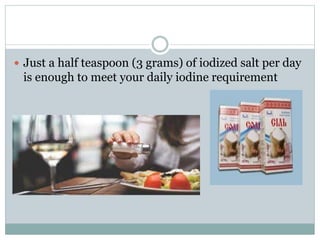
 Just a half teaspoon (3 grams) of iodized salt per day
is enough to meet your daily iodine requirement
OTHER SOURCES
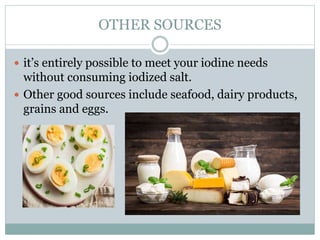
 it’s entirely possible to meet your iodine needs
without consuming iodized salt.
 Other good sources include seafood, dairy products,
grains and eggs.
SEAFOODS
 Seaweed: 1 sheet dried contains 11–1,989% of the
RDI
 Cod: 3 ounces (85 grams) contains 66% of the RDI
 Shrimp: 3 ounces (85 grams) contains 23% of the
RDI
 Canned tuna: 3 ounces (85 grams) contains 11% of
the RDI
OTHER METHODS
 Addition of iodide or iodate to bread
 Use of tablets containing potassium or sodium iodide
 Administration of iodinated oil.
ENDEMIC GOITER.pptx

ENDEMIC GOITER.pptx

  • 1.
    E T IO L O G Y A N D P R E V E N T I O N S U B M I T T E D B Y : R A M E S H B E H R A ENDEMIC GOITER
  • 2.
    CONTENTS  ENDEMIC GOITERDEFINATION  ETIOLOGY  HOW IT HAPPENS  SYMPTOMS  PREVENTIONS  IODISED SALT  SEAFOODS AND OTHER METHODS.
  • 3.
    WHAT IS ENDEMICGOITER  Defined as thyroid enlargement due to iodine deficiency, primarily dietary deficiency  Endemic goiter term is used when the local prevalence is greater than 5 - 10%  Common in mountainous and iodine deficient areas of the world where the diet contains insufficient amount of iodine
  • 4.
     Over 1/3of world population live in iodine deficient area; 1.6 billion are at risk of iodine deficiency; 655 million have goiter
  • 5.
    ETIOLOGY  Some inlandareas where soil and water lacks in iodine compounds and consumption of marine foods is low are known for higher incidence of goitre. In such areas goitre is said to be "endemic“  mostly common in african countries 
  • 6.
    HOW?  When iodineintake is low, thyroid hormone production is low, and in response the pituitary gland secretes greater quantities of the hormone thyrotropin (thyroid-stimulating hormone, TSH) in an attempt to restore thyroid hormone production to normal. This excess thyrotropin stimulates not only thyroid hormone production but also thyroid growth.
  • 8.
    SYMPTOMS  The mainsymptoms of goiter include:  A swelling in the front of the neck, just below the Adam's apple  A feeling of tightness in the throat area  Hoarseness (scratchy voice)  Neck vein swelling  Dizziness when the arms are raised above the head
  • 10.
    PREVENTIONS  Iodised Salt Seafood  Iodised Oil
  • 11.
    IODIZED SALT  In1917, physician David Marine began conducting experiments demonstrating that taking iodine supplements was effective at reducing the incidence of goiters.  Soon after in 1920, many countries around the globe began fortifying table salt with iodine in an effort to prevent iodine deficiency.  The introduction of iodized salt was incredibly effective at eliminating the deficiency in many parts of the world.
  • 12.
     Just ahalf teaspoon (3 grams) of iodized salt per day is enough to meet your daily iodine requirement
  • 13.
    OTHER SOURCES  it’sentirely possible to meet your iodine needs without consuming iodized salt.  Other good sources include seafood, dairy products, grains and eggs.
  • 14.
    SEAFOODS  Seaweed: 1sheet dried contains 11–1,989% of the RDI  Cod: 3 ounces (85 grams) contains 66% of the RDI  Shrimp: 3 ounces (85 grams) contains 23% of the RDI  Canned tuna: 3 ounces (85 grams) contains 11% of the RDI
  • 16.
    OTHER METHODS  Additionof iodide or iodate to bread  Use of tablets containing potassium or sodium iodide  Administration of iodinated oil.