Adaptive Leadership
PME 803 – Organizational Leadership
Jacqueline Samuels
What is
adaptive
Leadership?
Adaptive leadership is a
model that leaders use to
encourage people to adapt in
order to face and deal with
problems, challenges and
changes.
(Northouse 2016)
What are the main activities of
Adaptive Leadership?
Adaptive leaders aim to mobilize,
motivate, organize, orient and focus
attention of others. (Heifetz, 1994)
A Look at
the Model
of Adaptive
Leadership
• This presentation will highlight the leader
behaviours associated with each situational
challenge faced by the leader.
• Situational challenges:
Technical Challenges
Technical and Adaptive Challenges
Adaptive Challenges
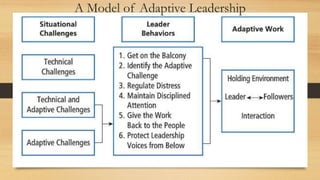
A Model of Adaptive Leadership
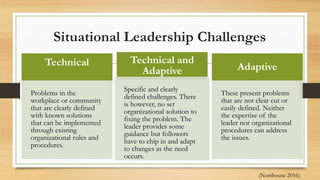
Situational Leadership Challenges
Technical
Problems in the
workplace or community
that are clearly defined
with known solutions
that can be implemented
through existing
organizational rules and
procedures.
Technical and
Adaptive
Specific and clearly
defined challenges. There
is however, no set
organizational solution to
fixing the problem. The
leader provides some
guidance but followers
have to chip in and adapt
to changes as the need
occurs.
Adaptive
These present problems
that are not clear cut or
easily defined. Neither
the expertise of the
leader nor organizational
procedures can address
the issues.
(Northouse 2016)
Leader Behaviors in Adaptive
Leadership
Situational Challenges
Get on the
Balcony
Step away from the
conflict without
disassociating from it
entirely. Look at the big
picture to get a full
understanding.
Is this easier said than done?
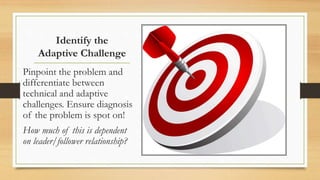
Identify the
Adaptive Challenge
Pinpoint the problem and
differentiate between
technical and adaptive
challenges. Ensure diagnosis
of the problem is spot on!
How much of this is dependent
on leader/follower relationship?
Regulate Distress
• Help others to become aware of the
need for change without the feeling of
being overwhelmed by the need for the
change itself. The leader has to ‘monitor
the stress people are experiencing and keep it
within a productive range.’ (Northouse
2016)
Maintain Disciplined
Attention
Help to provide focus attention on
the key issues at hand. The leader
has to ‘mobilize and encourage people to
drop their defenses and openly confront
their problems.’ (Northouse 2016)
How can the leader handle followers who insist in
blaming others or pretend the problem isn’t there?
Give the Work
Back to the
People
Leaders are
encouraged to put
limits on their
influence and redirect
problem solving back
to the people involved.
Can leaders easily
empower followers?
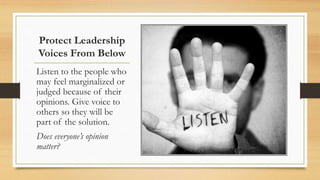
Protect Leadership
Voices From Below
Listen to the people who
may feel marginalized or
judged because of their
opinions. Give voice to
others so they will be
part of the solution.
Does everyone’s opinion
matter?
The adaptive leadership provides some prescriptive
and practical solutions to conflicts that leaders
must help to resolve. It helps leaders to guide
followers as they face problems and inevitable
changes. Although criticized for being somewhat
abstract and open to various interpretations, the
overall value of this approach is useful. It provides
a view to determine if problems are technical or
adaptive and suggests strategies for managing the
challenges.
References
Mike, M. (2012). Why Most Leaders Need to Shut up and Listen. Forbes Contributor.
Retrieved from https://goo.gl/QhSK7D. July 23, 2017
Northouse, P. G. (2016). Leadership: Theory and practice (7th ed.). Thousand Oaks, CA:
Sage.

Adaptive leadership

  • 1.
    Adaptive Leadership PME 803– Organizational Leadership Jacqueline Samuels
  • 2.
    What is adaptive Leadership? Adaptive leadershipis a model that leaders use to encourage people to adapt in order to face and deal with problems, challenges and changes. (Northouse 2016)
  • 3.
    What are themain activities of Adaptive Leadership? Adaptive leaders aim to mobilize, motivate, organize, orient and focus attention of others. (Heifetz, 1994)
  • 4.
    A Look at theModel of Adaptive Leadership • This presentation will highlight the leader behaviours associated with each situational challenge faced by the leader. • Situational challenges: Technical Challenges Technical and Adaptive Challenges Adaptive Challenges
  • 5.
    A Model ofAdaptive Leadership
  • 6.
    Situational Leadership Challenges Technical Problemsin the workplace or community that are clearly defined with known solutions that can be implemented through existing organizational rules and procedures. Technical and Adaptive Specific and clearly defined challenges. There is however, no set organizational solution to fixing the problem. The leader provides some guidance but followers have to chip in and adapt to changes as the need occurs. Adaptive These present problems that are not clear cut or easily defined. Neither the expertise of the leader nor organizational procedures can address the issues. (Northouse 2016)
  • 7.
    Leader Behaviors inAdaptive Leadership Situational Challenges
  • 8.
    Get on the Balcony Stepaway from the conflict without disassociating from it entirely. Look at the big picture to get a full understanding. Is this easier said than done?
  • 9.
    Identify the Adaptive Challenge Pinpointthe problem and differentiate between technical and adaptive challenges. Ensure diagnosis of the problem is spot on! How much of this is dependent on leader/follower relationship?
  • 10.
    Regulate Distress • Helpothers to become aware of the need for change without the feeling of being overwhelmed by the need for the change itself. The leader has to ‘monitor the stress people are experiencing and keep it within a productive range.’ (Northouse 2016)
  • 11.
    Maintain Disciplined Attention Help toprovide focus attention on the key issues at hand. The leader has to ‘mobilize and encourage people to drop their defenses and openly confront their problems.’ (Northouse 2016) How can the leader handle followers who insist in blaming others or pretend the problem isn’t there?
  • 12.
    Give the Work Backto the People Leaders are encouraged to put limits on their influence and redirect problem solving back to the people involved. Can leaders easily empower followers?
  • 13.
    Protect Leadership Voices FromBelow Listen to the people who may feel marginalized or judged because of their opinions. Give voice to others so they will be part of the solution. Does everyone’s opinion matter?
  • 14.
    The adaptive leadershipprovides some prescriptive and practical solutions to conflicts that leaders must help to resolve. It helps leaders to guide followers as they face problems and inevitable changes. Although criticized for being somewhat abstract and open to various interpretations, the overall value of this approach is useful. It provides a view to determine if problems are technical or adaptive and suggests strategies for managing the challenges.
  • 15.
    References Mike, M. (2012).Why Most Leaders Need to Shut up and Listen. Forbes Contributor. Retrieved from https://goo.gl/QhSK7D. July 23, 2017 Northouse, P. G. (2016). Leadership: Theory and practice (7th ed.). Thousand Oaks, CA: Sage.