Randall C. Starling, M.D., M.P.H., F.A.C.C. Section of Heart Failure and Cardiac Transplant Medicine Department of Cardiovascular Medicine Kaufman Center for Heart Failure Acute Heart Failure
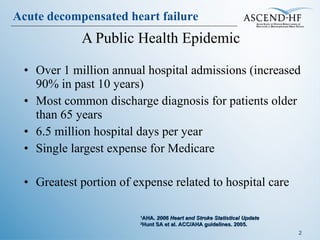
A Public Health Epidemic Over 1 million annual hospital admissions (increased 90% in past 10 years) Most common discharge diagnosis for patients older than 65 years  6.5 million hospital days per year Single largest expense for Medicare Greatest portion of expense related to hospital care Acute decompensated heart failure 1 AHA.  2006 Heart and Stroke Statistical Update 2 Hunt SA et al. ACC/AHA guidelines. 2005.
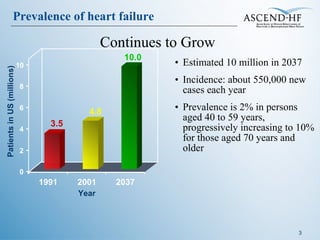
Continues to Grow Estimated 10 million in 2037 Incidence: about 550,000 new cases each year Prevalence is 2% in persons aged 40 to 59 years, progressively increasing to 10% for those aged 70 years and older  Patients in US (millions) Year Prevalence of heart failure 1991 2001 2037 3.5 4.8 10.0 0 2 4 6 8 10
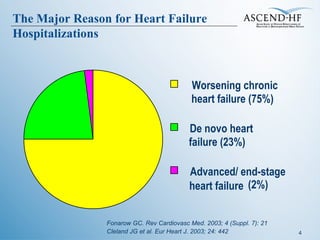
Fonarow GC. Rev Cardiovasc Med. 2003; 4 (Suppl. 7): 21 Cleland JG et al. Eur Heart J. 2003; 24: 442 The Major Reason for Heart Failure Hospitalizations Worsening chronic heart failure (75%) De novo heart failure (23%) Advanced/ end-stage heart failure (2%)
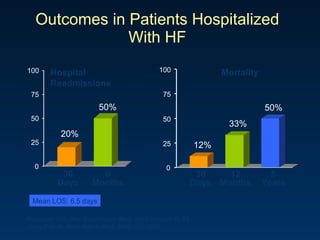
Outcomes in Patients Hospitalized With HF Fonarow, GC.  Rev Cardiovasc Med. 2002 ;3(suppl 4):S3 Jong P et al.  Arch Intern Med. 2002 ;162:1689 0 25 50 75 100 20% 50% 30 Days 6 Months Hospital Readmissions 0 25 50 75 100 12% 50% 30 Days 12 Months Mortality 33% 5 Years Mean LOS: 6.5 days
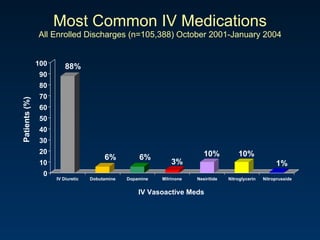
Most Common IV Medications All Enrolled Discharges (n=105,388) October 2001-January 2004 0 10 20 30 40 50 60 70 80 90 100 Patients (%)  IV Diuretic Dobutamine Dopamine Milrinone Nesiritide Nitroglycerin Nitroprusside IV Vasoactive Meds 88% 6% 6% 10% 3% 1% 10%
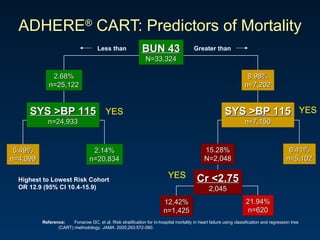
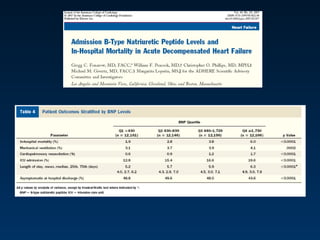
ADHERE ®  CART: Predictors of Mortality Highest to Lowest Risk Cohort OR 12.9 (95% CI 10.4-15.9) Reference: Fonarow GC, et al. Risk stratification for in-hospital mortality in heart failure using classification and regression tree (CART) methodology.  JAMA . 2005;293:572-580. YES YES YES SYS >BP 115 n=24,933 SYS >BP 115 n=7,150 6.41% n=5,102 15.28% N=2,048 21.94% n=620 12.42% n=1,425 5.49% n=4,099 2.14% n=20,834 BUN 43 N=33,324 Greater than Less than 2.68% n=25,122 8.98% n=7,202 Cr <2.75 2,045
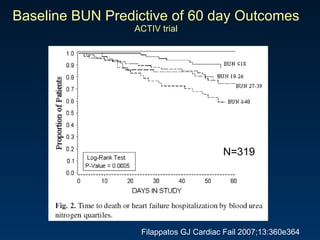
Baseline BUN Predictive of 60 day Outcomes ACTIV trial Filappatos GJ Cardiac Fail 2007;13:360e364   N=319
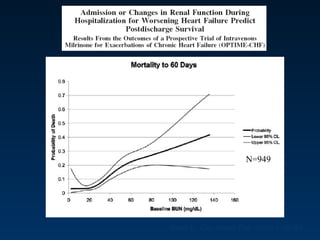
Klein L. Circ Heart Fail. 2008;1:25-33. N=949
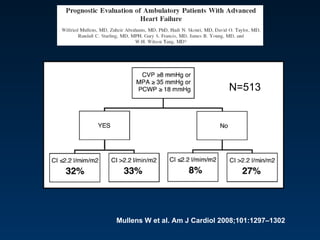
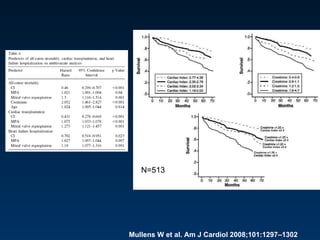
Mullens W et al. Am J Cardiol 2008;101:1297–1302 N=513
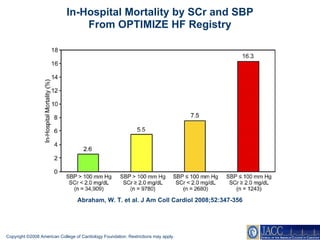
Copyright ©2008 American College of Cardiology Foundation. Restrictions may apply. Abraham, W. T. et al. J Am Coll Cardiol 2008;52:347-356 In-Hospital Mortality by SCr and SBP From OPTIMIZE HF Registry
 
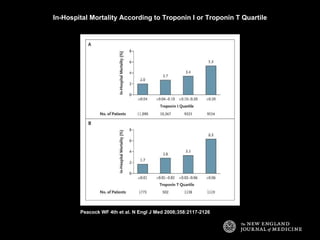
In-Hospital Mortality According to Troponin I or Troponin T Quartile Peacock WF 4th et al. N Engl J Med 2008;358:2117-2126
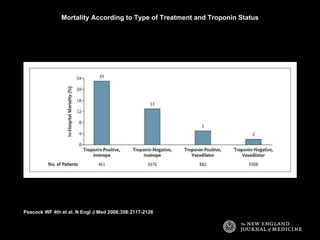
Mortality According to Type of Treatment and Troponin Status Peacock WF 4th et al. N Engl J Med 2008;358:2117-2126
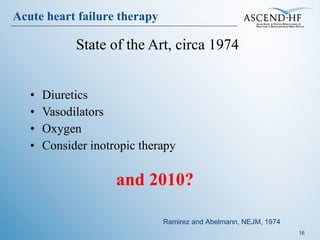
State of the Art, circa 1974  Diuretics Vasodilators Oxygen Consider inotropic therapy Ramirez and Abelmann, NEJM, 1974 Acute heart failure therapy and 2010?
What Should be the Goals of Therapy of ADHF? Make the patient feel better:  reduce dyspnea and improve QOL Reduce Mortality Reduce Rehospitalization Do it safely
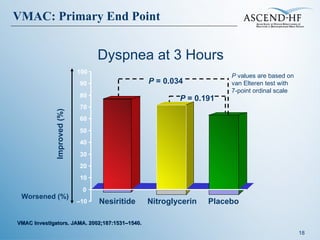
VMAC: Primary End Point VMAC Investigators. JAMA. 2002;187:1531–1540.  Dyspnea at 3 Hours – 10 0 10 20 30 40 50 60 70 80 90 100 Nesiritide Placebo Nitroglycerin Improved (%) Worsened (%) P  = 0.034 P  = 0.191 P  values are based on  van Elteren test with  7-point ordinal scale
 
Acute Study of Clinical Effectiveness  of Nesiritide in Decompensated  Heart Failure Adrian F. Hernandez, MD On behalf of the ASCEND-HF Committees,  Investigators and Study Coordinators
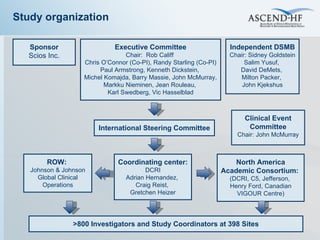
International Steering Committee Study organization >800 Investigators and Study Coordinators at 398 Sites Clinical Event Committee Chair: John McMurray Executive Committee Chair:  Rob Califf  Chris O’Connor (Co-PI), Randy Starling (Co-PI) Paul Armstrong, Kenneth Dickstein,  Michel Komajda, Barry Massie, John McMurray, Markku Nieminen, Jean Rouleau,  Karl Swedberg, Vic Hasselblad Sponsor Scios Inc. Independent DSMB Chair: Sidney Goldstein Salim Yusuf,  David DeMets,  Milton Packer,  John Kjekshus North America Academic Consortium:  (DCRI, C5, Jefferson,  Henry Ford, Canadian VIGOUR Centre) ROW:  Johnson & Johnson Global Clinical Operations Coordinating center:  DCRI Adrian Hernandez,  Craig Reist,  Gretchen Heizer
Background Acute decompensated heart failure is a major health problem responsible for several million hospitalizations worldwide each year.  Standard therapy has not changed since 1970s and includes diuretics and variable use of vasodilators or inotropes. In 2001, nesiritide (recombinant human B-type natriuretic peptide) was approved by the FDA to reduce PCWP and improve dyspnea, based on efficacy at 3 hrs in ADHF. However, in 2005 two meta-analyses raised concerns regarding the risks of mortality  and renal injury. Subsequently, an independent panel* was convened  by Scios Inc and recommended that a clinical trial be conducted to definitively answer the question of nesiritide’ s safety and efficacy. * chaired by Eugene Braunwald
Investigator independence framed by a joint academic executive and  steering committee Large, pragmatic international trial model Focused Efficient study design Streamlined procedures Simple follow-up Permissive enrollment criteria for broad population clinical ADHF Meaningful outcomes “ Real world” treatment (local standards of care guided by manual constructed by  international committee of ADHF experts) Design of ASCEND-HF: Guiding principles
To assess whether nesiritide vs placebo, in addition to standard care provides: Reduction in rate of HF rehospitalization or all-cause mortality through Day 30 Significant improvement in self-assessed dyspnea  at 6 or 24 hrs using 7-point Likert scale Co-Primary objectives
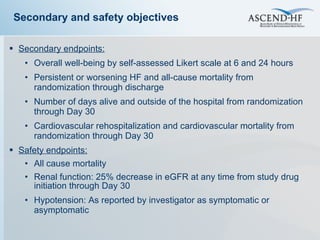
Secondary endpoints: Overall well-being by self‑assessed Likert scale at 6 and 24 hours  Persistent or worsening HF and all-cause mortality from randomization through discharge Number of days alive and outside of the hospital from randomization through Day 30 Cardiovascular rehospitalization and cardiovascular mortality from randomization through Day 30 Safety endpoints: All cause mortality Renal function: 25% decrease in eGFR at any time from study drug initiation through Day 30 Hypotension: As reported by investigator as symptomatic or asymptomatic Secondary and safety objectives
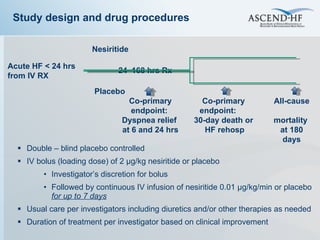
Double – blind placebo controlled IV bolus (loading dose) of 2 µg/kg nesiritide or placebo Investigator ’s discretion for bolus  Followed by continuous IV infusion of nesiritide 0.01 µg/kg/min or placebo  for up to 7 days Usual care per investigators including diuretics and/or other therapies as needed Duration of treatment per investigator based on clinical improvement  Study design and drug procedures Nesiritide Placebo 24–168 hrs Rx Acute HF < 24 hrs from IV RX Co-primary endpoint:  Dyspnea relief  at 6 and 24 hrs Co-primary  endpoint:  30-day death or  HF rehosp All-cause  mortality  at 180 days
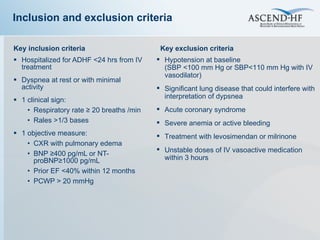
Hospitalized for ADHF <24 hrs from IV treatment Dyspnea at rest or with minimal activity 1 clinical sign:  Respiratory rate ≥ 20 breaths /min  Rales >1/3 bases  1 objective measure:  CXR with pulmonary edema  BNP ≥400 pg/mL or NT-proBNP≥1000 pg/mL Prior EF <40% within 12 months PCWP > 20 mmHg Hypotension at baseline  (SBP <100 mm Hg or SBP<110 mm Hg with IV vasodilator) Significant lung disease that could interfere with interpretation of dypsnea Acute coronary syndrome Severe anemia or active bleeding Treatment with levosimendan or milrinone  Unstable doses of IV vasoactive medication within 3 hours  Key inclusion criteria Key exclusion criteria Inclusion and exclusion criteria
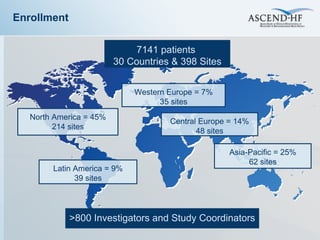
Enrollment North America = 45% 214 sites Latin America = 9% 39 sites Asia-Pacific = 25% 62 sites Central Europe = 14% 48 sites Western Europe = 7% 35 sites 7141 patients  30 Countries & 398 Sites >800 Investigators and Study Coordinators
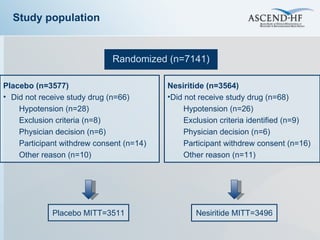
Randomized (n=7141) Study population Placebo MITT=3511 Placebo (n=3577)   Did not receive study drug (n=66) Hypotension (n=28) Exclusion criteria (n=8) Physician decision (n=6) Participant withdrew consent (n=14) Other reason (n=10) Nesiritide MITT=3496 Nesiritide (n=3564) Did not  receive study drug  (n=68) Hypotension (n=26) Exclusion criteria identified (n=9) Physician decision (n=6) Participant withdrew consent (n=16) Other reason (n=11)
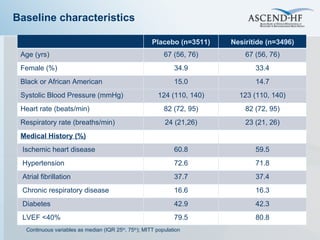
Baseline characteristics Continuous variables as median (IQR 25 th , 75 th ); MITT population Placebo (n=3511) Nesiritide (n=3496) Age (yrs) 67 (56, 76) 67 (56, 76) Female (%) 34.9 33.4 Black or African American 15.0 14.7 Systolic Blood Pressure (mmHg) 124 (110, 140) 123 (110, 140) Heart rate (beats/min) 82 (72, 95) 82 (72, 95) Respiratory rate (breaths/min) 24 (21,26) 23 (21, 26) Medical History (%) Ischemic heart disease 60.8 59.5 Hypertension 72.6 71.8 Atrial fibrillation 37.7 37.4 Chronic respiratory disease 16.6 16.3 Diabetes 42.9 42.3 LVEF <40% 79.5 80.8
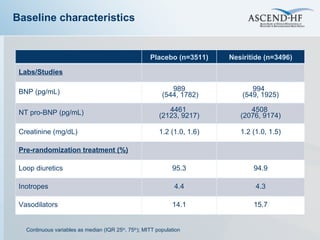
Baseline characteristics Continuous variables as median (IQR 25 th , 75 th ); MITT population Placebo (n=3511) Nesiritide (n=3496) Labs/Studies BNP (pg/mL) 989 (544, 1782) 994  (549, 1925) NT pro-BNP (pg/mL) 4461  (2123, 9217) 4508  (2076, 9174) Creatinine (mg/dL) 1.2 (1.0, 1.6) 1.2 (1.0, 1.5) Pre-randomization treatment (%) Loop diuretics 95.3 94.9 Inotropes 4.4 4.3 Vasodilators 14.1 15.7
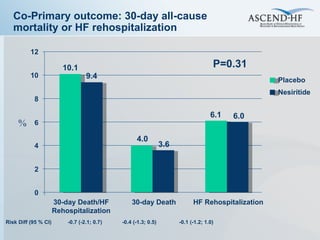
Co-Primary outcome: 30-day all-cause mortality or HF rehospitalization Placebo Nesiritide HF Rehospitalization 30-day Death/HF Rehospitalization 30-day Death 0 2 4 6 8 10 12 Risk Diff (95 % CI)  -0.7 (-2.1; 0.7)    -0.4 (-1.3; 0.5)    -0.1 (-1.2; 1.0) % 10.1 4.0 6.1 P=0.31 9.4 3.6 6.0
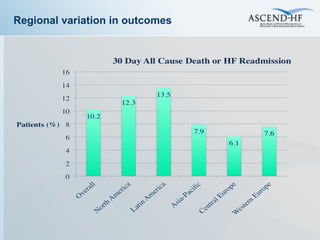
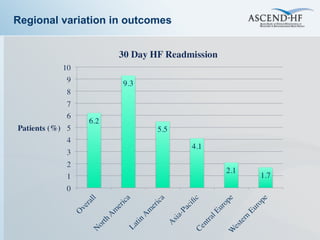
Regional variation in outcomes
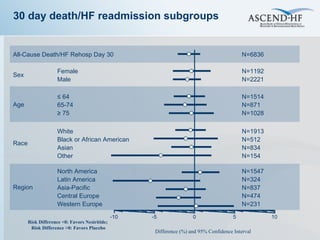
30 day death/HF readmission subgroups Difference (%) and 95% Confidence Interval  Risk Difference <0: Favors Nesiritide;  Risk Difference >0: Favors Placebo All-Cause Death/HF Rehosp Day 30 N=6836 Sex Female Male N=1192 N=2221 Age ≤  64 65-74 ≥  75 N=1514 N=871 N=1028 Race White Black or African American Asian Other N=1913 N=512 N=834 N=154 Region North America Latin America Asia-Pacific Central Europe Western Europe N=1547 N=324 N=837 N=474 N=231
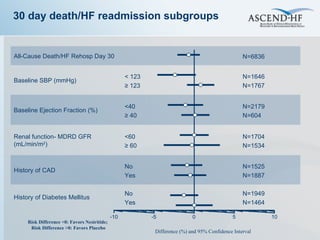
30 day death/HF readmission subgroups Difference (%) and 95% Confidence Interval  Risk Difference <0: Favors Nesiritide;  Risk Difference >0: Favors Placebo All-Cause Death/HF Rehosp Day 30 N=6836 Baseline SBP (mmHg) < 123 ≥  123 N=1646 N=1767 Baseline Ejection Fraction (%) <40 ≥  40 N=2179 N=604 Renal function- MDRD GFR  (mL/min/m 2 ) <60 ≥  60 N=1704 N=1534 History of CAD No Yes N=1525 N=1887 History of Diabetes Mellitus No Yes N=1949 N=1464
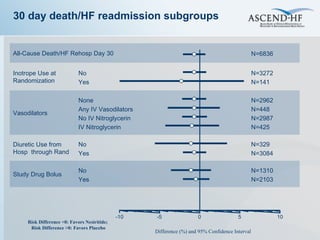
30 day death/HF readmission subgroups Difference (%) and 95% Confidence Interval  Risk Difference <0: Favors Nesiritide;  Risk Difference >0: Favors Placebo All-Cause Death/HF Rehosp Day 30 N=6836 Inotrope Use at Randomization  No Yes N=3272 N=141 Vasodilators None Any IV Vasodilators No IV Nitroglycerin IV Nitroglycerin N=2962 N=448 N=2987 N=425 Diuretic Use from Hosp  through Rand No Yes N=329 N=3084 Study Drug Bolus No Yes N=1310 N=2103
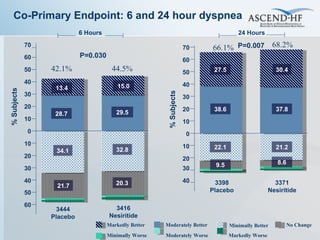
Co-Primary Endpoint: 6 and 24 hour dyspnea 70 60 50 40 30 20 10 0 10 20 30 40 % Subjects 24 Hours Markedly Better Minimally Worse Moderately Better Moderately Worse Minimally Better Markedly Worse No Change 70 60 50 40 30 20 10 0 10 20 30 40 % Subjects 50 60 6 Hours 42.1% 44.5% 66.1% 68.2% 3444 Placebo 13.4 28.7 34.1 21.7 P=0.030 3416 Nesiritide 15.0 29.5 32.8 20.3 3398 Placebo 27.5 38.6 22.1 9.5 3371 Nesiritide 30.4 37.8 21.2 P=0.007 8.6
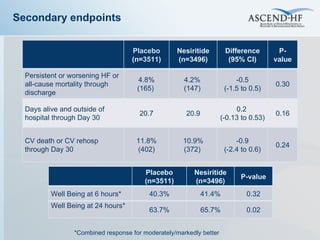
Secondary endpoints *Combined response for moderately/markedly better Placebo (n= 3511 ) Nesiritide (n=3496) Difference (95% CI) P-value Persistent or worsening HF or all-cause mortality through discharge 4.8% (165)  4.2%  (147)  -0.5 (-1.5 to 0.5) 0.30 Days alive and outside of hospital through Day 30 20.7 20.9 0.2  (-0.13 to 0.53) 0.16 CV death or CV rehosp through Day 30 11.8% (402)  10.9% (372)  -0.9 (-2.4 to 0.6) 0.24 Placebo (n=3511) Nesiritide (n=3496) P-value Well Being at 6 hours* 40.3% 41.4% 0.32 Well Being at 24 hours* 63.7% 65.7% 0.02
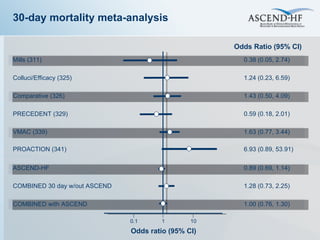
30-day mortality meta-analysis 1 10 0.1 Odds ratio (95% CI) Mills (311) Colluci/Efficacy (325) Comparative (326) PRECEDENT (329) VMAC (339) PROACTION (341) ASCEND-HF COMBINED 30 day w/out ASCEND COMBINED with ASCEND Odds Ratio (95% CI) 0.38 (0.05, 2.74) 1.24 (0.23, 6.59) 1.43 (0.50, 4.09) 0.59 (0.18, 2.01) 1.63 (0.77, 3.44) 6.93 (0.89, 53.91) 0.89 (0.69, 1.14) 1.28 (0.73, 2.25) 1.00 (0.76, 1.30)
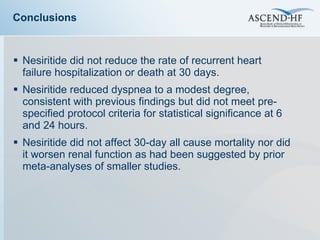
Nesiritide did not reduce the rate of recurrent heart failure hospitalization or death at 30 days.  Nesiritide reduced dyspnea to a modest degree, consistent with previous findings but did not meet pre-specified protocol criteria for statistical significance at 6 and 24 hours. Nesiritide did not affect 30-day all cause mortality nor did it worsen renal function as had been suggested by prior meta-analyses of smaller studies. Conclusions
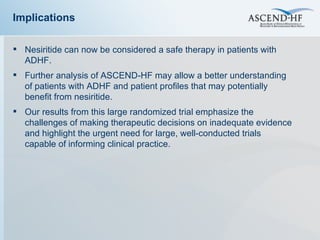
Implications Nesiritide can now be considered a safe therapy in patients with ADHF.  Further analysis of ASCEND-HF may allow a better understanding of patients with ADHF and patient profiles that may potentially benefit from nesiritide. Our results from this large randomized trial emphasize the challenges of making therapeutic decisions on inadequate evidence and highlight the urgent need for large, well-conducted trials capable of informing clinical practice.
Steering Committee North America:  Kirkwood F. Adams Jr MD; Javed Butler, MD;Maria Rosa Costanzo, MD; Mark E. Dunlap, MD; Justin A. Ezekowitz, MBBCh, MSc; David Feldman, MD, PhD; Gregg C. Fonarow, MD; Stephen S. Gottlieb, MD, MHS; James A. Hill, MD, MS; Judd E. Hollander, MD; Jonathan G. Howlett, MD; Michael Hudson, MD; Mariell L. Jessup, MD; Serge Lepage, MD; Wayne C. Levy, MD; Naveen Pereira, MD; W.H. Wilson Tan, MD; John R. Teerlink, MD Europe:  Stefan D. Anker, MD, PhD; Dan Atar, MD; Alexander Battler, MD; Ulf Dahlstrom, MD, PhD; Aleksandras Laucevicius, MD; Marco Metra, MD; Alexander Parkhomenko, MD; Piotr Ponikowski, MD, PhD; Jindrich Spinar, MD; Svetla Torbova, MD; Filippos Triposkiadis, MD;Vyacheslav Mareev, MD; Adriaan A. Voors, MD, PhD;David J. Whellan, MD, MHS; Clyde W. Yancy, MD; Faiez Zannad, MD, PhD Latin America:  Rodrigo Botero, MD; Nadine Clausell, MD; Ramón Corbalán, MD; Rafael Diaz, MD; Gustavo Méndez Machedo  Asia Pacific:  Ping Chai, MD; Wen-Jone Chen, MD; Henry Krum, MBBS, PhD; Sanjay Mittal, MD; Byung Hee Oh, MD; Supachai Tanomsup, MD; Richard W. Troughton, MD, PhD; YueJin Yang, MD;

Acute Heart Failure

  • 1.
    Randall C. Starling,M.D., M.P.H., F.A.C.C. Section of Heart Failure and Cardiac Transplant Medicine Department of Cardiovascular Medicine Kaufman Center for Heart Failure Acute Heart Failure
  • 2.
    A Public HealthEpidemic Over 1 million annual hospital admissions (increased 90% in past 10 years) Most common discharge diagnosis for patients older than 65 years 6.5 million hospital days per year Single largest expense for Medicare Greatest portion of expense related to hospital care Acute decompensated heart failure 1 AHA. 2006 Heart and Stroke Statistical Update 2 Hunt SA et al. ACC/AHA guidelines. 2005.
  • 3.
    Continues to GrowEstimated 10 million in 2037 Incidence: about 550,000 new cases each year Prevalence is 2% in persons aged 40 to 59 years, progressively increasing to 10% for those aged 70 years and older Patients in US (millions) Year Prevalence of heart failure 1991 2001 2037 3.5 4.8 10.0 0 2 4 6 8 10
  • 4.
    Fonarow GC. RevCardiovasc Med. 2003; 4 (Suppl. 7): 21 Cleland JG et al. Eur Heart J. 2003; 24: 442 The Major Reason for Heart Failure Hospitalizations Worsening chronic heart failure (75%) De novo heart failure (23%) Advanced/ end-stage heart failure (2%)
  • 5.
    Outcomes in PatientsHospitalized With HF Fonarow, GC. Rev Cardiovasc Med. 2002 ;3(suppl 4):S3 Jong P et al. Arch Intern Med. 2002 ;162:1689 0 25 50 75 100 20% 50% 30 Days 6 Months Hospital Readmissions 0 25 50 75 100 12% 50% 30 Days 12 Months Mortality 33% 5 Years Mean LOS: 6.5 days
  • 6.
    Most Common IVMedications All Enrolled Discharges (n=105,388) October 2001-January 2004 0 10 20 30 40 50 60 70 80 90 100 Patients (%) IV Diuretic Dobutamine Dopamine Milrinone Nesiritide Nitroglycerin Nitroprusside IV Vasoactive Meds 88% 6% 6% 10% 3% 1% 10%
  • 7.
    ADHERE ® CART: Predictors of Mortality Highest to Lowest Risk Cohort OR 12.9 (95% CI 10.4-15.9) Reference: Fonarow GC, et al. Risk stratification for in-hospital mortality in heart failure using classification and regression tree (CART) methodology. JAMA . 2005;293:572-580. YES YES YES SYS >BP 115 n=24,933 SYS >BP 115 n=7,150 6.41% n=5,102 15.28% N=2,048 21.94% n=620 12.42% n=1,425 5.49% n=4,099 2.14% n=20,834 BUN 43 N=33,324 Greater than Less than 2.68% n=25,122 8.98% n=7,202 Cr <2.75 2,045
  • 8.
    Baseline BUN Predictiveof 60 day Outcomes ACTIV trial Filappatos GJ Cardiac Fail 2007;13:360e364 N=319
  • 9.
    Klein L. CircHeart Fail. 2008;1:25-33. N=949
  • 10.
    Mullens W etal. Am J Cardiol 2008;101:1297–1302 N=513
  • 11.
    Mullens W etal. Am J Cardiol 2008;101:1297–1302 N=513
  • 12.
    Copyright ©2008 AmericanCollege of Cardiology Foundation. Restrictions may apply. Abraham, W. T. et al. J Am Coll Cardiol 2008;52:347-356 In-Hospital Mortality by SCr and SBP From OPTIMIZE HF Registry
  • 13.
  • 14.
    In-Hospital Mortality Accordingto Troponin I or Troponin T Quartile Peacock WF 4th et al. N Engl J Med 2008;358:2117-2126
  • 15.
    Mortality According toType of Treatment and Troponin Status Peacock WF 4th et al. N Engl J Med 2008;358:2117-2126
  • 16.
    State of theArt, circa 1974 Diuretics Vasodilators Oxygen Consider inotropic therapy Ramirez and Abelmann, NEJM, 1974 Acute heart failure therapy and 2010?
  • 17.
    What Should bethe Goals of Therapy of ADHF? Make the patient feel better: reduce dyspnea and improve QOL Reduce Mortality Reduce Rehospitalization Do it safely
  • 18.
    VMAC: Primary EndPoint VMAC Investigators. JAMA. 2002;187:1531–1540. Dyspnea at 3 Hours – 10 0 10 20 30 40 50 60 70 80 90 100 Nesiritide Placebo Nitroglycerin Improved (%) Worsened (%) P = 0.034 P = 0.191 P values are based on van Elteren test with 7-point ordinal scale
  • 19.
  • 20.
    Acute Study ofClinical Effectiveness of Nesiritide in Decompensated Heart Failure Adrian F. Hernandez, MD On behalf of the ASCEND-HF Committees, Investigators and Study Coordinators
  • 21.
    International Steering CommitteeStudy organization >800 Investigators and Study Coordinators at 398 Sites Clinical Event Committee Chair: John McMurray Executive Committee Chair: Rob Califf Chris O’Connor (Co-PI), Randy Starling (Co-PI) Paul Armstrong, Kenneth Dickstein, Michel Komajda, Barry Massie, John McMurray, Markku Nieminen, Jean Rouleau, Karl Swedberg, Vic Hasselblad Sponsor Scios Inc. Independent DSMB Chair: Sidney Goldstein Salim Yusuf, David DeMets, Milton Packer, John Kjekshus North America Academic Consortium: (DCRI, C5, Jefferson, Henry Ford, Canadian VIGOUR Centre) ROW: Johnson & Johnson Global Clinical Operations Coordinating center: DCRI Adrian Hernandez, Craig Reist, Gretchen Heizer
  • 22.
    Background Acute decompensatedheart failure is a major health problem responsible for several million hospitalizations worldwide each year. Standard therapy has not changed since 1970s and includes diuretics and variable use of vasodilators or inotropes. In 2001, nesiritide (recombinant human B-type natriuretic peptide) was approved by the FDA to reduce PCWP and improve dyspnea, based on efficacy at 3 hrs in ADHF. However, in 2005 two meta-analyses raised concerns regarding the risks of mortality and renal injury. Subsequently, an independent panel* was convened by Scios Inc and recommended that a clinical trial be conducted to definitively answer the question of nesiritide’ s safety and efficacy. * chaired by Eugene Braunwald
  • 23.
    Investigator independence framedby a joint academic executive and steering committee Large, pragmatic international trial model Focused Efficient study design Streamlined procedures Simple follow-up Permissive enrollment criteria for broad population clinical ADHF Meaningful outcomes “ Real world” treatment (local standards of care guided by manual constructed by international committee of ADHF experts) Design of ASCEND-HF: Guiding principles
  • 24.
    To assess whethernesiritide vs placebo, in addition to standard care provides: Reduction in rate of HF rehospitalization or all-cause mortality through Day 30 Significant improvement in self-assessed dyspnea at 6 or 24 hrs using 7-point Likert scale Co-Primary objectives
  • 25.
    Secondary endpoints: Overallwell-being by self‑assessed Likert scale at 6 and 24 hours Persistent or worsening HF and all-cause mortality from randomization through discharge Number of days alive and outside of the hospital from randomization through Day 30 Cardiovascular rehospitalization and cardiovascular mortality from randomization through Day 30 Safety endpoints: All cause mortality Renal function: 25% decrease in eGFR at any time from study drug initiation through Day 30 Hypotension: As reported by investigator as symptomatic or asymptomatic Secondary and safety objectives
  • 26.
    Double – blindplacebo controlled IV bolus (loading dose) of 2 µg/kg nesiritide or placebo Investigator ’s discretion for bolus Followed by continuous IV infusion of nesiritide 0.01 µg/kg/min or placebo for up to 7 days Usual care per investigators including diuretics and/or other therapies as needed Duration of treatment per investigator based on clinical improvement Study design and drug procedures Nesiritide Placebo 24–168 hrs Rx Acute HF < 24 hrs from IV RX Co-primary endpoint: Dyspnea relief at 6 and 24 hrs Co-primary endpoint: 30-day death or HF rehosp All-cause mortality at 180 days
  • 27.
    Hospitalized for ADHF<24 hrs from IV treatment Dyspnea at rest or with minimal activity 1 clinical sign: Respiratory rate ≥ 20 breaths /min Rales >1/3 bases 1 objective measure: CXR with pulmonary edema BNP ≥400 pg/mL or NT-proBNP≥1000 pg/mL Prior EF <40% within 12 months PCWP > 20 mmHg Hypotension at baseline (SBP <100 mm Hg or SBP<110 mm Hg with IV vasodilator) Significant lung disease that could interfere with interpretation of dypsnea Acute coronary syndrome Severe anemia or active bleeding Treatment with levosimendan or milrinone Unstable doses of IV vasoactive medication within 3 hours Key inclusion criteria Key exclusion criteria Inclusion and exclusion criteria
  • 28.
    Enrollment North America= 45% 214 sites Latin America = 9% 39 sites Asia-Pacific = 25% 62 sites Central Europe = 14% 48 sites Western Europe = 7% 35 sites 7141 patients 30 Countries & 398 Sites >800 Investigators and Study Coordinators
  • 29.
    Randomized (n=7141) Studypopulation Placebo MITT=3511 Placebo (n=3577)   Did not receive study drug (n=66) Hypotension (n=28) Exclusion criteria (n=8) Physician decision (n=6) Participant withdrew consent (n=14) Other reason (n=10) Nesiritide MITT=3496 Nesiritide (n=3564) Did not receive study drug (n=68) Hypotension (n=26) Exclusion criteria identified (n=9) Physician decision (n=6) Participant withdrew consent (n=16) Other reason (n=11)
  • 30.
    Baseline characteristics Continuousvariables as median (IQR 25 th , 75 th ); MITT population Placebo (n=3511) Nesiritide (n=3496) Age (yrs) 67 (56, 76) 67 (56, 76) Female (%) 34.9 33.4 Black or African American 15.0 14.7 Systolic Blood Pressure (mmHg) 124 (110, 140) 123 (110, 140) Heart rate (beats/min) 82 (72, 95) 82 (72, 95) Respiratory rate (breaths/min) 24 (21,26) 23 (21, 26) Medical History (%) Ischemic heart disease 60.8 59.5 Hypertension 72.6 71.8 Atrial fibrillation 37.7 37.4 Chronic respiratory disease 16.6 16.3 Diabetes 42.9 42.3 LVEF <40% 79.5 80.8
  • 31.
    Baseline characteristics Continuousvariables as median (IQR 25 th , 75 th ); MITT population Placebo (n=3511) Nesiritide (n=3496) Labs/Studies BNP (pg/mL) 989 (544, 1782) 994 (549, 1925) NT pro-BNP (pg/mL) 4461 (2123, 9217) 4508 (2076, 9174) Creatinine (mg/dL) 1.2 (1.0, 1.6) 1.2 (1.0, 1.5) Pre-randomization treatment (%) Loop diuretics 95.3 94.9 Inotropes 4.4 4.3 Vasodilators 14.1 15.7
  • 32.
    Co-Primary outcome: 30-dayall-cause mortality or HF rehospitalization Placebo Nesiritide HF Rehospitalization 30-day Death/HF Rehospitalization 30-day Death 0 2 4 6 8 10 12 Risk Diff (95 % CI) -0.7 (-2.1; 0.7) -0.4 (-1.3; 0.5) -0.1 (-1.2; 1.0) % 10.1 4.0 6.1 P=0.31 9.4 3.6 6.0
  • 33.
  • 34.
  • 35.
    30 day death/HFreadmission subgroups Difference (%) and 95% Confidence Interval Risk Difference <0: Favors Nesiritide; Risk Difference >0: Favors Placebo All-Cause Death/HF Rehosp Day 30 N=6836 Sex Female Male N=1192 N=2221 Age ≤ 64 65-74 ≥ 75 N=1514 N=871 N=1028 Race White Black or African American Asian Other N=1913 N=512 N=834 N=154 Region North America Latin America Asia-Pacific Central Europe Western Europe N=1547 N=324 N=837 N=474 N=231
  • 36.
    30 day death/HFreadmission subgroups Difference (%) and 95% Confidence Interval Risk Difference <0: Favors Nesiritide; Risk Difference >0: Favors Placebo All-Cause Death/HF Rehosp Day 30 N=6836 Baseline SBP (mmHg) < 123 ≥ 123 N=1646 N=1767 Baseline Ejection Fraction (%) <40 ≥ 40 N=2179 N=604 Renal function- MDRD GFR (mL/min/m 2 ) <60 ≥ 60 N=1704 N=1534 History of CAD No Yes N=1525 N=1887 History of Diabetes Mellitus No Yes N=1949 N=1464
  • 37.
    30 day death/HFreadmission subgroups Difference (%) and 95% Confidence Interval Risk Difference <0: Favors Nesiritide; Risk Difference >0: Favors Placebo All-Cause Death/HF Rehosp Day 30 N=6836 Inotrope Use at Randomization No Yes N=3272 N=141 Vasodilators None Any IV Vasodilators No IV Nitroglycerin IV Nitroglycerin N=2962 N=448 N=2987 N=425 Diuretic Use from Hosp through Rand No Yes N=329 N=3084 Study Drug Bolus No Yes N=1310 N=2103
  • 38.
    Co-Primary Endpoint: 6and 24 hour dyspnea 70 60 50 40 30 20 10 0 10 20 30 40 % Subjects 24 Hours Markedly Better Minimally Worse Moderately Better Moderately Worse Minimally Better Markedly Worse No Change 70 60 50 40 30 20 10 0 10 20 30 40 % Subjects 50 60 6 Hours 42.1% 44.5% 66.1% 68.2% 3444 Placebo 13.4 28.7 34.1 21.7 P=0.030 3416 Nesiritide 15.0 29.5 32.8 20.3 3398 Placebo 27.5 38.6 22.1 9.5 3371 Nesiritide 30.4 37.8 21.2 P=0.007 8.6
  • 39.
    Secondary endpoints *Combinedresponse for moderately/markedly better Placebo (n= 3511 ) Nesiritide (n=3496) Difference (95% CI) P-value Persistent or worsening HF or all-cause mortality through discharge 4.8% (165) 4.2% (147) -0.5 (-1.5 to 0.5) 0.30 Days alive and outside of hospital through Day 30 20.7 20.9 0.2 (-0.13 to 0.53) 0.16 CV death or CV rehosp through Day 30 11.8% (402) 10.9% (372) -0.9 (-2.4 to 0.6) 0.24 Placebo (n=3511) Nesiritide (n=3496) P-value Well Being at 6 hours* 40.3% 41.4% 0.32 Well Being at 24 hours* 63.7% 65.7% 0.02
  • 40.
    30-day mortality meta-analysis1 10 0.1 Odds ratio (95% CI) Mills (311) Colluci/Efficacy (325) Comparative (326) PRECEDENT (329) VMAC (339) PROACTION (341) ASCEND-HF COMBINED 30 day w/out ASCEND COMBINED with ASCEND Odds Ratio (95% CI) 0.38 (0.05, 2.74) 1.24 (0.23, 6.59) 1.43 (0.50, 4.09) 0.59 (0.18, 2.01) 1.63 (0.77, 3.44) 6.93 (0.89, 53.91) 0.89 (0.69, 1.14) 1.28 (0.73, 2.25) 1.00 (0.76, 1.30)
  • 41.
    Nesiritide did notreduce the rate of recurrent heart failure hospitalization or death at 30 days. Nesiritide reduced dyspnea to a modest degree, consistent with previous findings but did not meet pre-specified protocol criteria for statistical significance at 6 and 24 hours. Nesiritide did not affect 30-day all cause mortality nor did it worsen renal function as had been suggested by prior meta-analyses of smaller studies. Conclusions
  • 42.
    Implications Nesiritide cannow be considered a safe therapy in patients with ADHF. Further analysis of ASCEND-HF may allow a better understanding of patients with ADHF and patient profiles that may potentially benefit from nesiritide. Our results from this large randomized trial emphasize the challenges of making therapeutic decisions on inadequate evidence and highlight the urgent need for large, well-conducted trials capable of informing clinical practice.
  • 43.
    Steering Committee NorthAmerica: Kirkwood F. Adams Jr MD; Javed Butler, MD;Maria Rosa Costanzo, MD; Mark E. Dunlap, MD; Justin A. Ezekowitz, MBBCh, MSc; David Feldman, MD, PhD; Gregg C. Fonarow, MD; Stephen S. Gottlieb, MD, MHS; James A. Hill, MD, MS; Judd E. Hollander, MD; Jonathan G. Howlett, MD; Michael Hudson, MD; Mariell L. Jessup, MD; Serge Lepage, MD; Wayne C. Levy, MD; Naveen Pereira, MD; W.H. Wilson Tan, MD; John R. Teerlink, MD Europe: Stefan D. Anker, MD, PhD; Dan Atar, MD; Alexander Battler, MD; Ulf Dahlstrom, MD, PhD; Aleksandras Laucevicius, MD; Marco Metra, MD; Alexander Parkhomenko, MD; Piotr Ponikowski, MD, PhD; Jindrich Spinar, MD; Svetla Torbova, MD; Filippos Triposkiadis, MD;Vyacheslav Mareev, MD; Adriaan A. Voors, MD, PhD;David J. Whellan, MD, MHS; Clyde W. Yancy, MD; Faiez Zannad, MD, PhD Latin America: Rodrigo Botero, MD; Nadine Clausell, MD; Ramón Corbalán, MD; Rafael Diaz, MD; Gustavo Méndez Machedo Asia Pacific: Ping Chai, MD; Wen-Jone Chen, MD; Henry Krum, MBBS, PhD; Sanjay Mittal, MD; Byung Hee Oh, MD; Supachai Tanomsup, MD; Richard W. Troughton, MD, PhD; YueJin Yang, MD;

Editor's Notes

  • #3 Congestive heart failure (CHF) afflicts nearly 5 million persons in the United States. An estimated 550,000 new cases of heart failure are diagnosed annually. 1 Roughly equal numbers of men and women have CHF. The incidence of heart failure is approximately 1 per 100 for persons older than 65 years. 2 Heart failure results in a tremendous economic burden. CHF now represents the most common discharge diagnosis in patients older than 65 years. 3 The prognosis of this condition in the absence of optimal treatment remains poor. Only 50% of CHF patients survive for 5 years after diagnosis. 4 References: Hunt SA, Baker DW, Chin MH, et al. ACC/AHA Guidelines for the Evaluation and Management of Chronic Heart Failure in the Adult: A Report of the American College of Cardiology/American Heart Association Task Force on Practice Guidelines. 2001. American College of Cardiology Web site. Available at: http://acc.org/clinical/guidelines/failure/hf_index.htm. Accessed December 2002. American Heart Association. 2002 Heart and Stroke Statistical Update. Dallas, TX: American Heart Association; 2001. Graves EJ, Gillum BS. 1994 Summary: National Hospital Discharge Survey: Advance Data From Vital and Health Statistics. No. 278. Hyattsville, MD: National Center for Health Statistics; 1996. Dargie HJ, McMurray JJ, McDonagh TA. Heart failure—implications of the true size of the problem. J Intern Med. 1996;239:309–315.
  • #4 Heart failure currently affects 4.79 million persons in the United States alone, 1 and this number is expected to rise to 10 million by 2037. 2 Approximately 550,000 new cases of heart failure are diagnosed each year. One reason for the increase in heart failure is old age. Risk of sudden cardiac death is 6 to 9 times higher in the heart failure population. 1 The prevalence of heart failure increases with age, affecting 10% of persons aged 70 years and older. 3 References: American Heart Association. 2002 Heart and Stroke Statistical Update. Dallas, TX: American Heart Association; 2001. Croft JB, Giles WH, Pollard RA, et al. National trends in the initial hospitalization for heart failure. J Am Geriatr Soc. 1997;45:279–275. National Heart, Lung, and Blood Institute. Congestive Heart Failure Data Fact Sheet. Available at: http://www.nhlbi.nih.gov/health/public/heart/other/CHF.htm. Accessed December 2002.
  • #5 Data from the Acute Decompensated Heart Failure Registry (ADHERE) and Euro Heart Failure Survey in over 120,000 consecutive patients showed that over 75% of the admissions for heart failure are due to worsening of chronic heart failure. About 20% of the admissions are due to newly diagnosed heart failure cases (e.g., post-MI, hypertensive episode on a non-compliant ventricle, etc.) and only 2% of admissions are seen in patients with low output state (or advanced/end-stage heart failure). This is extremely important, as many clinicians believe that a low output state is a very common reason for admissions. Although these patients comprise only 2% of the population, they are often extremely sick and this is the population the heart failure specialists are being consulted on, contributing to the biased view that these patients represent the majority of admissions, when in fact they are a distinct minority.
  • #7 Most Common IV Medications All Enrolled Discharges (N = 105,388) October 2001 –January 2004 The use of IV vasoactive medications is shown on this slide. IV diuretics are used in 88% of patients admitted with ADHF. Data on file, Scios Inc.
  • #15 Figure 2. In-Hospital Mortality According to Troponin I or Troponin T Quartile. P&lt;0.001 by the chi-square test for all comparisons.
  • #16 Figure 3. Mortality According to Type of Treatment and Troponin Status. P&lt;0.001 by the chi-square test for the association between troponin status and mortality within the vasodilator and inotrope groups.
  • #19 In VMAC, the beneficial effect of nesiritide on dyspnea at 3 hours was significant compared with placebo, in all subjects ( P = 0.034) as well as in the catheterized stratum ( P = 0.030).