Chapter Three
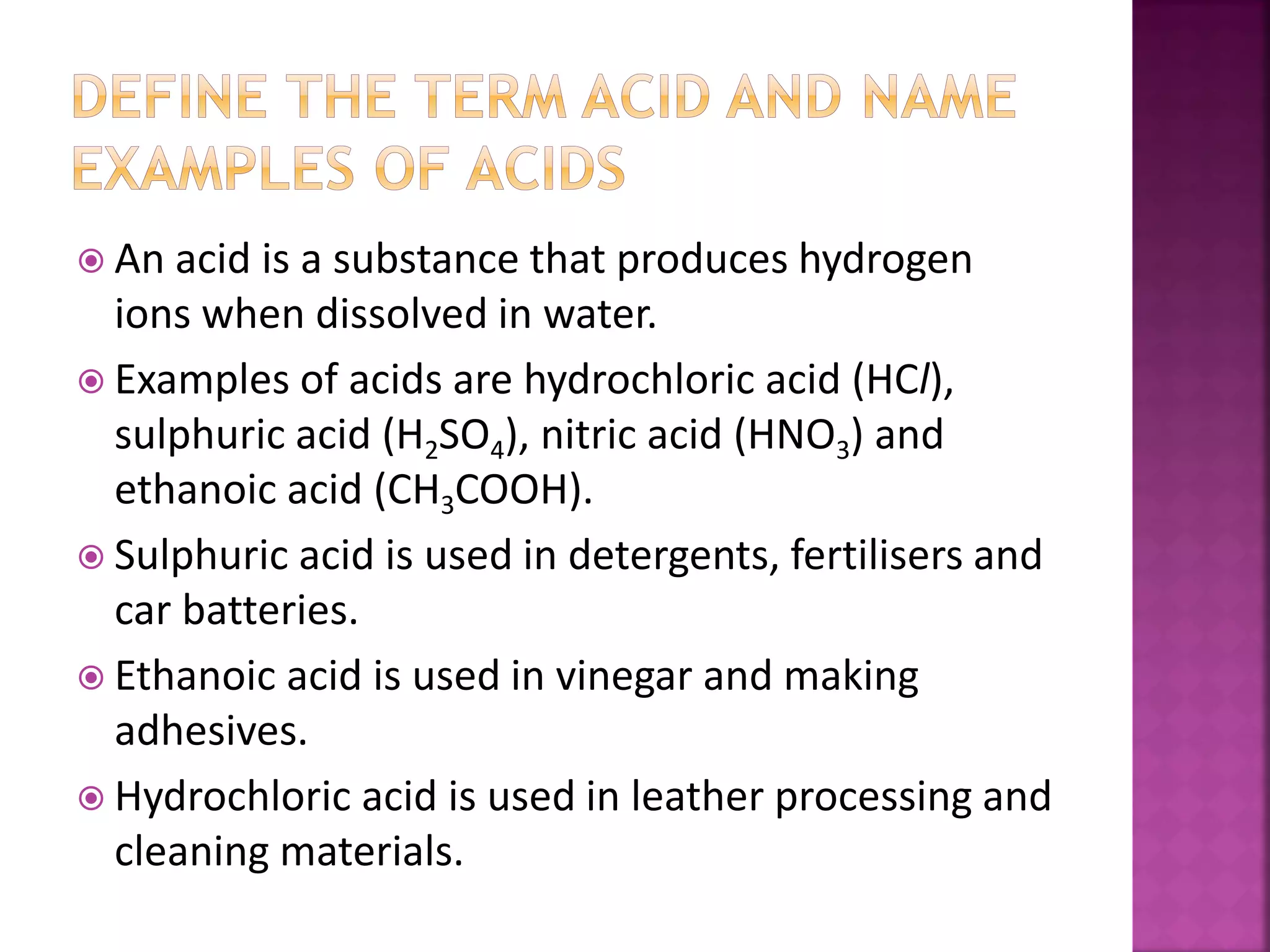
 An acid is a substance that produces hydrogen
ions when dissolved in water.
 Examples of acids are hydrochloric acid (HCl),
sulphuric acid (H2SO4), nitric acid (HNO3) and
ethanoic acid (CH3COOH).
 Sulphuric acid is used in detergents, fertilisers and
car batteries.
 Ethanoic acid is used in vinegar and making
adhesives.
 Hydrochloric acid is used in leather processing and
cleaning materials.
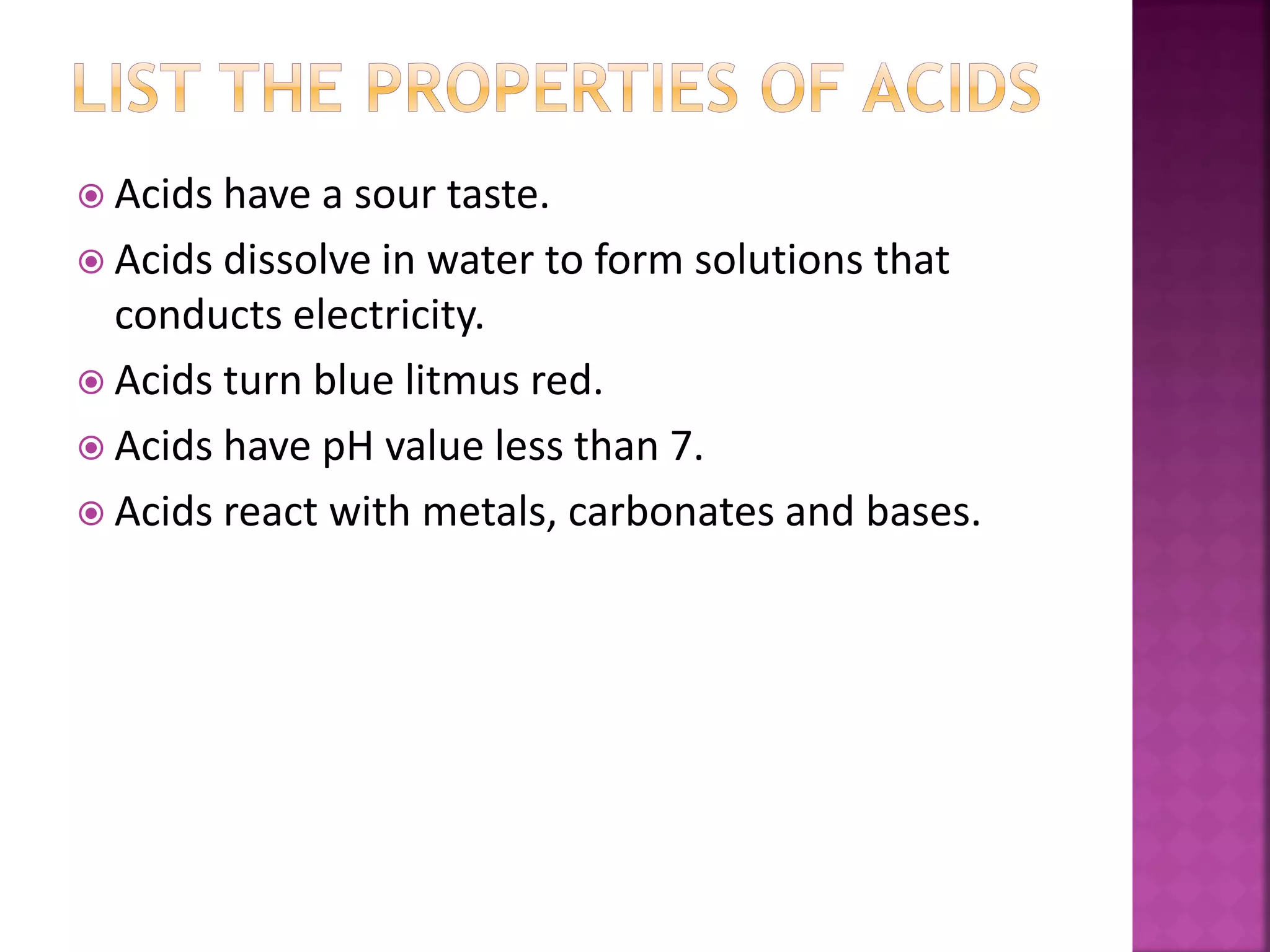
 Acids have a sour taste.
 Acids dissolve in water to form solutions that
conducts electricity.
 Acids turn blue litmus red.
 Acids have pH value less than 7.
 Acids react with metals, carbonates and bases.
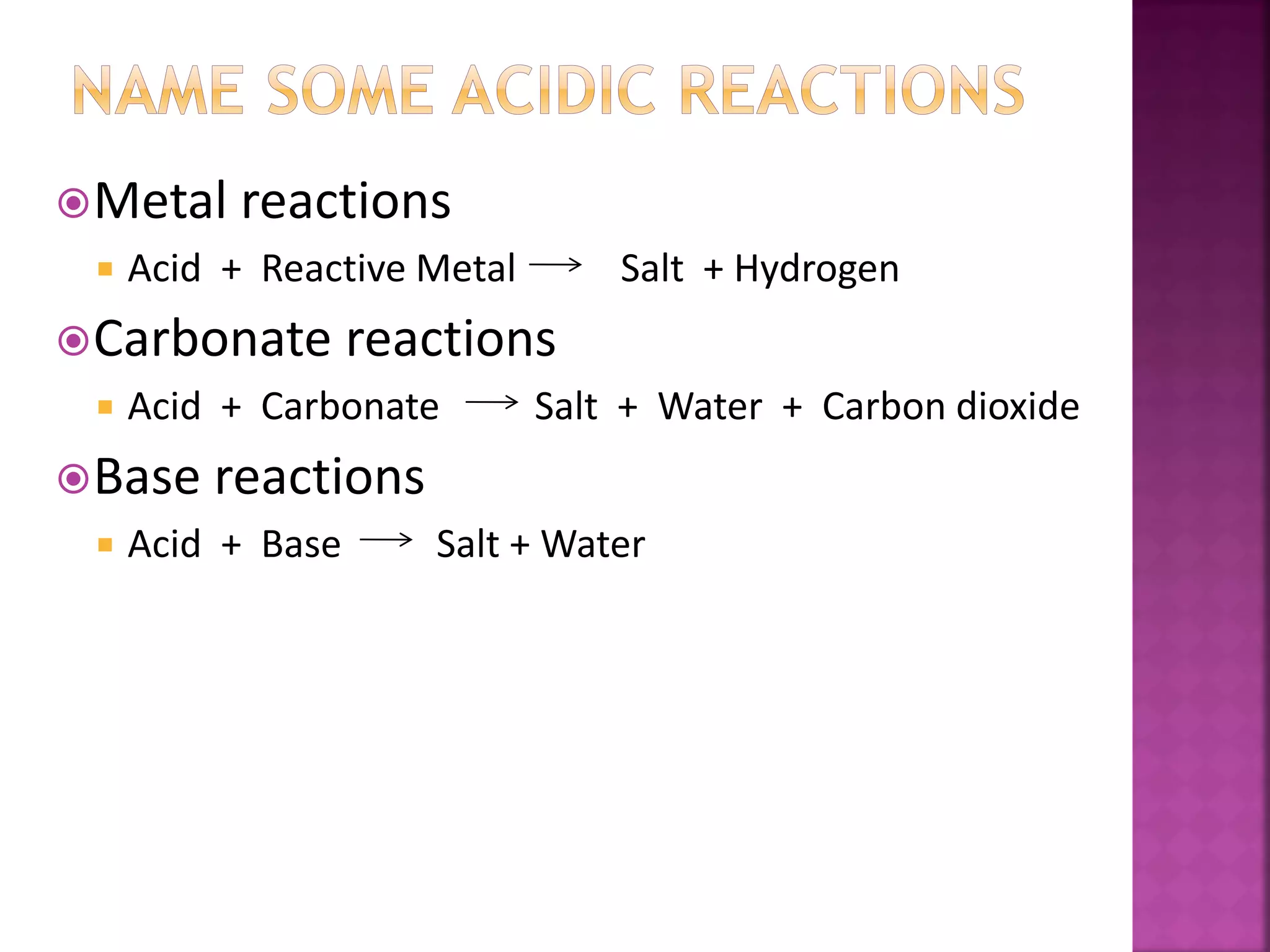
Metal reactions
 Acid + Reactive Metal Salt + Hydrogen
Carbonate reactions
 Acid + Carbonate Salt + Water + Carbon dioxide
Base reactions
 Acid + Base Salt + Water
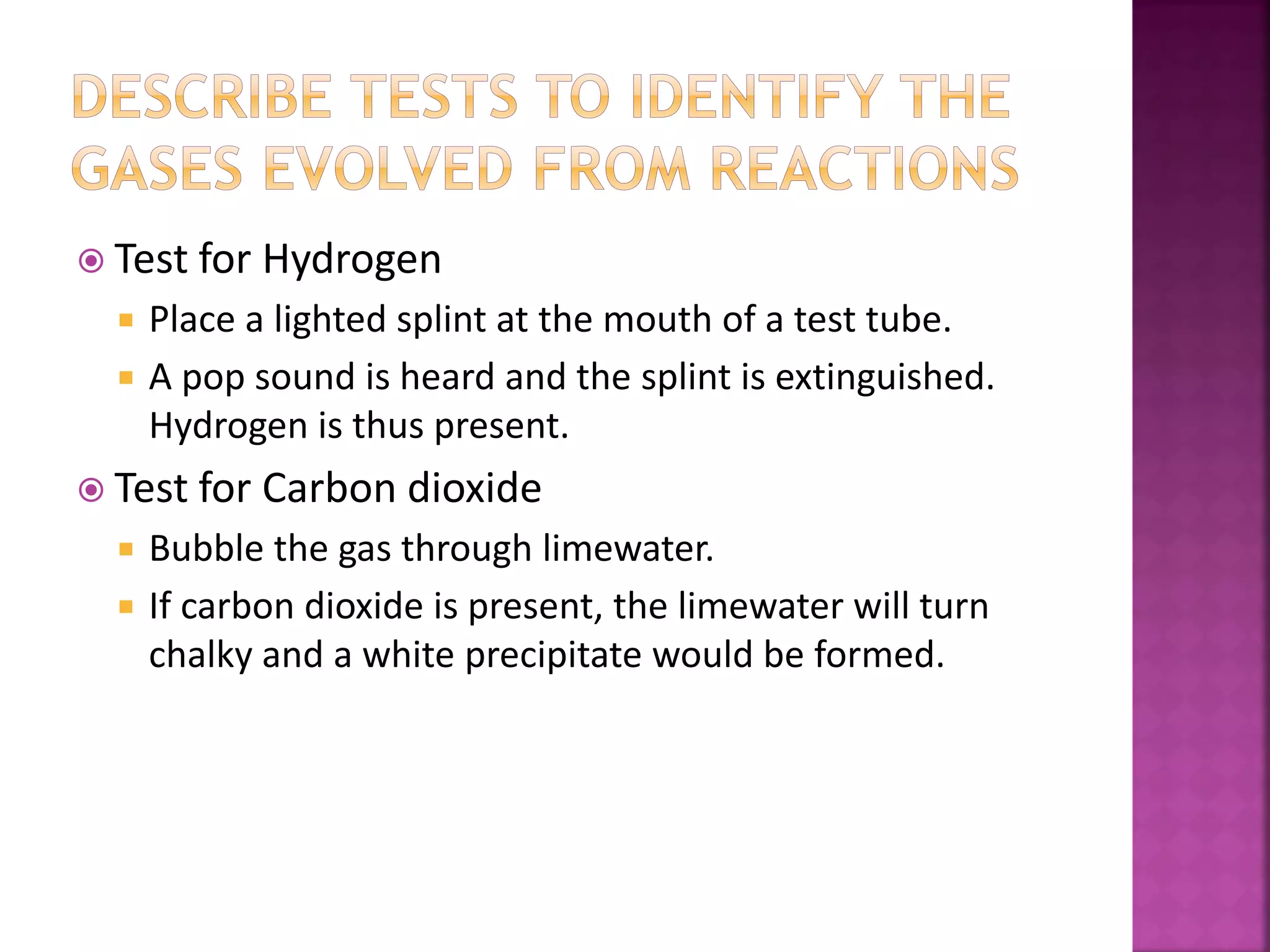
 Test for Hydrogen
 Place a lighted splint at the mouth of a test tube.
 A pop sound is heard and the splint is extinguished.
Hydrogen is thus present.
 Test for Carbon dioxide
 Bubble the gas through limewater.
 If carbon dioxide is present, the limewater will turn
chalky and a white precipitate would be formed.
 An alkali is a metal oxide or hydroxide that is
soluble in water.
 Examples :
 sodium hydroxide (NaOH)
 potassium hydroxide (KOH)
 calcium hydroxide [Ca(OH)2]
 barium hydroxide [Ba(OH)2]
 aqueous ammonia (NH3).
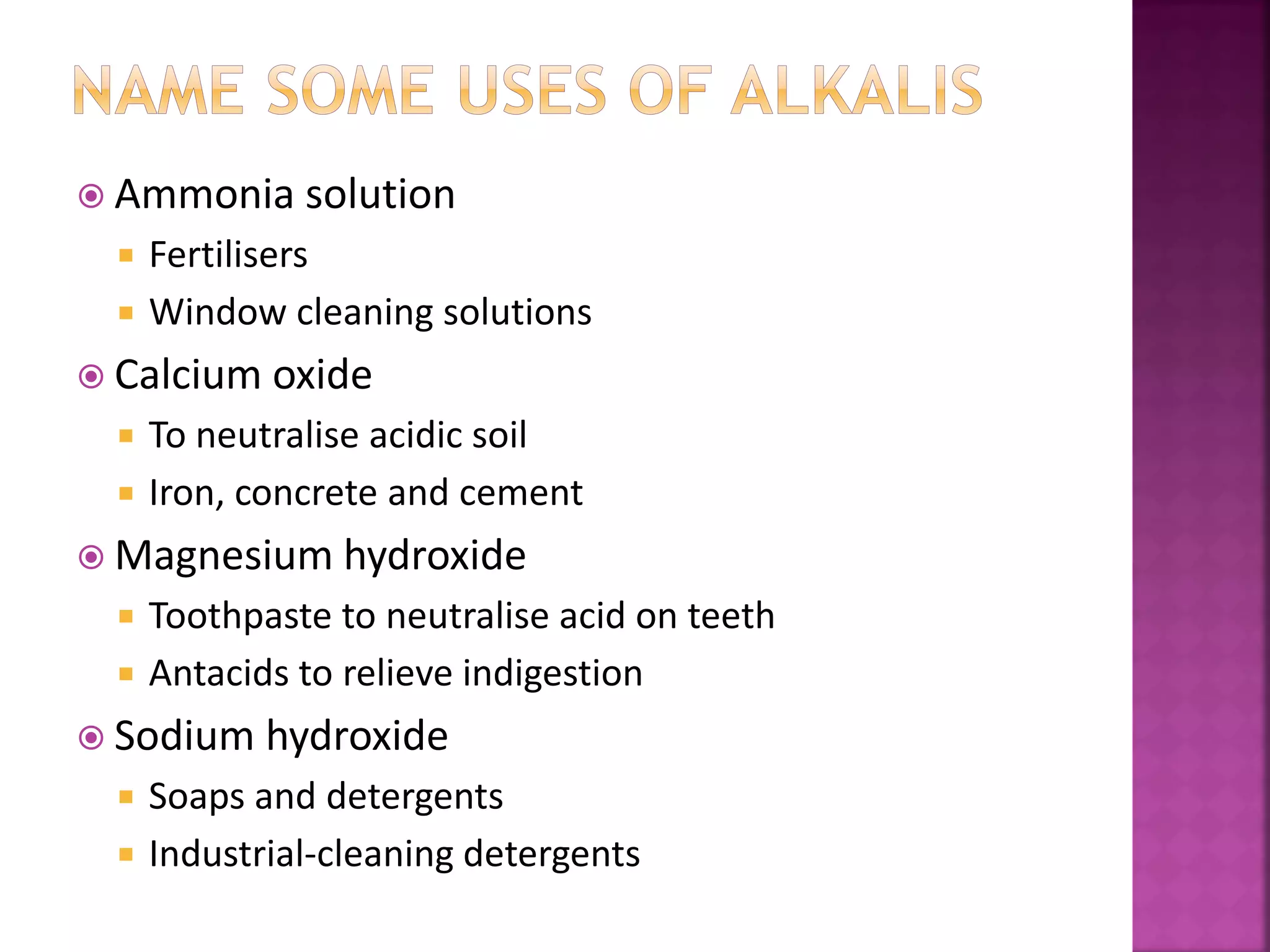
 Ammonia solution
 Fertilisers
 Window cleaning solutions
 Calcium oxide
 To neutralise acidic soil
 Iron, concrete and cement
 Magnesium hydroxide
 Toothpaste to neutralise acid on teeth
 Antacids to relieve indigestion
 Sodium hydroxide
 Soaps and detergents
 Industrial-cleaning detergents
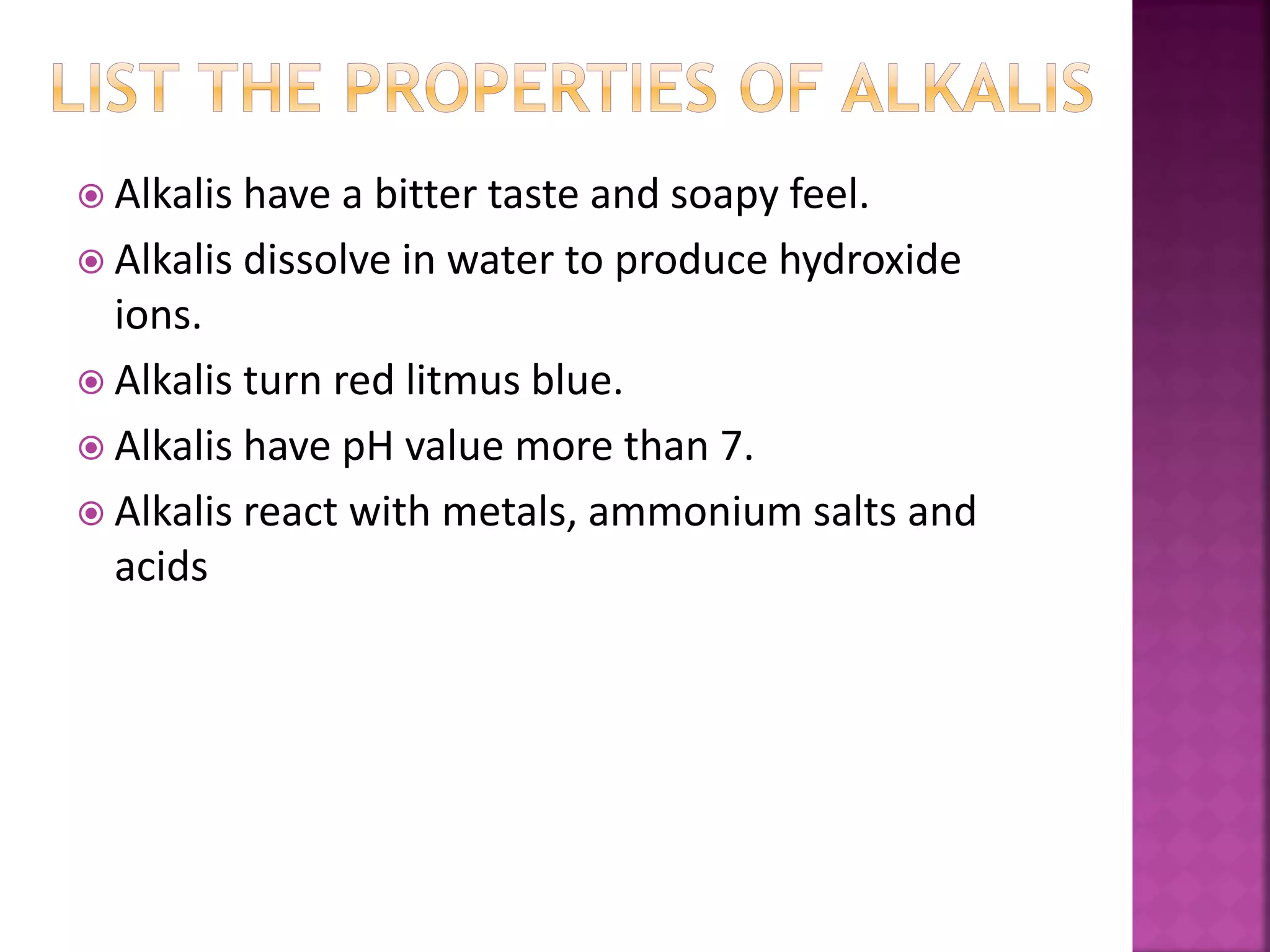
 Alkalis have a bitter taste and soapy feel.
 Alkalis dissolve in water to produce hydroxide
ions.
 Alkalis turn red litmus blue.
 Alkalis have pH value more than 7.
 Alkalis react with metals, ammonium salts and
acids
Metal reactions
 Alkali + Salt A Metal hydroxide + Salt B
Ammonium salt reactions
 Alkali + Ammonium Ammonia + Water + Salt
Base reactions
 Alkali + Acid Salt + Water
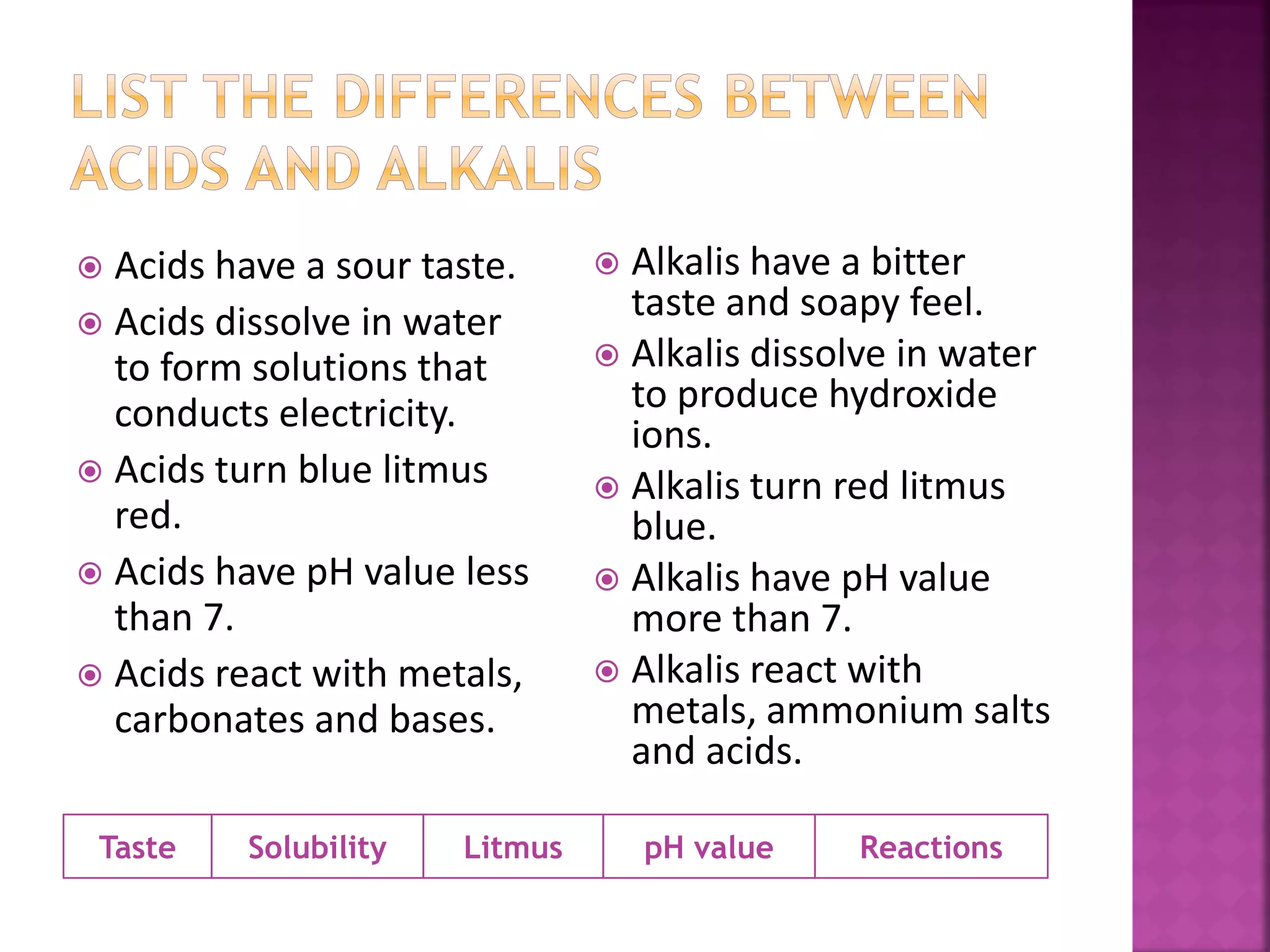
Taste Solubility
 Acids have a sour taste.
 Acids dissolve in water
to form solutions that
conducts electricity.
 Acids turn blue litmus
red.
 Acids have pH value less
than 7.
 Acids react with metals,
carbonates and bases.
 Alkalis have a bitter
taste and soapy feel.
 Alkalis dissolve in water
to produce hydroxide
ions.
 Alkalis turn red litmus
blue.
 Alkalis have pH value
more than 7.
 Alkalis react with
metals, ammonium salts
and acids.
Litmus pH value Reactions
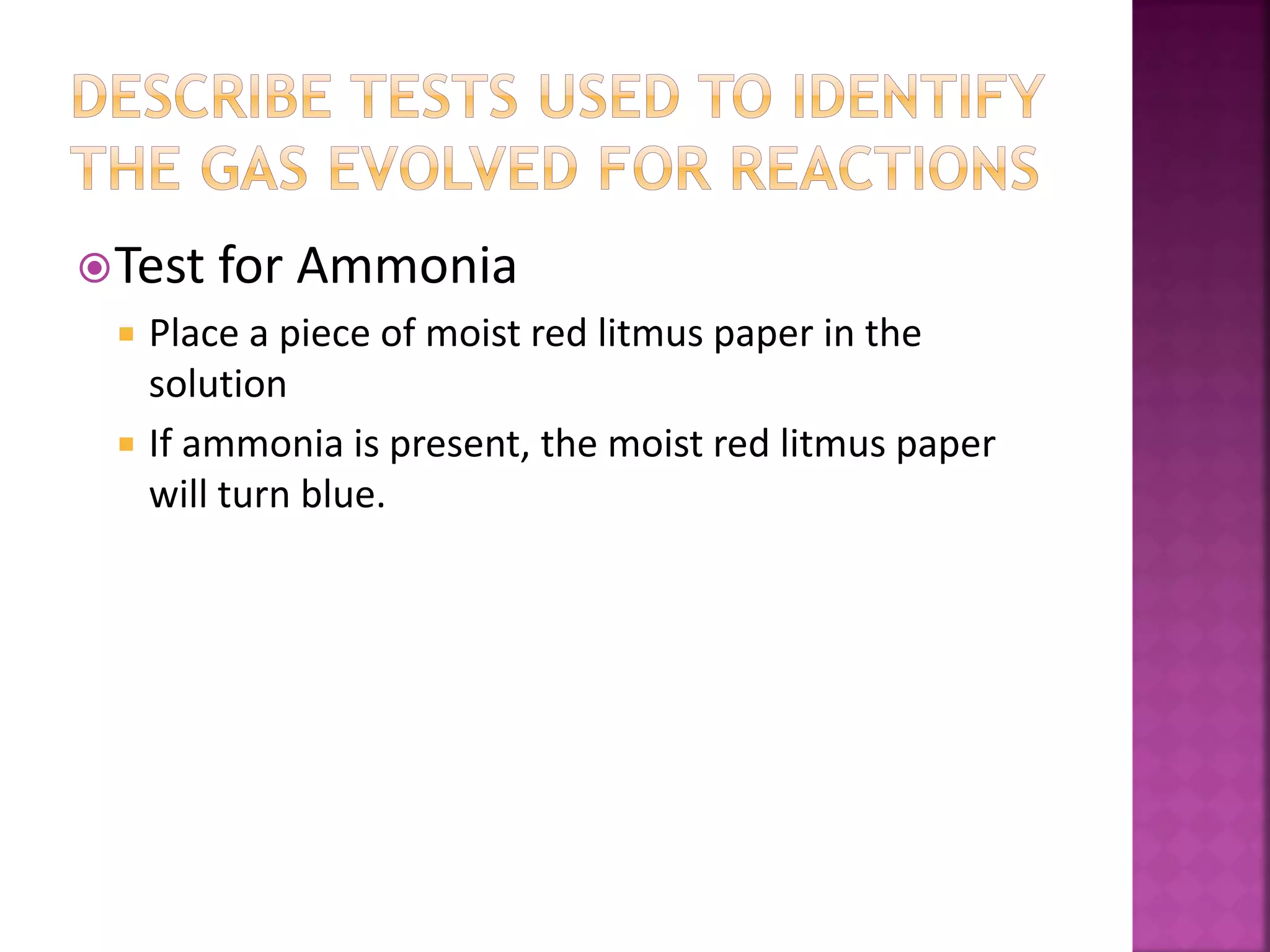
Test for Ammonia
 Place a piece of moist red litmus paper in the
solution
 If ammonia is present, the moist red litmus paper
will turn blue.
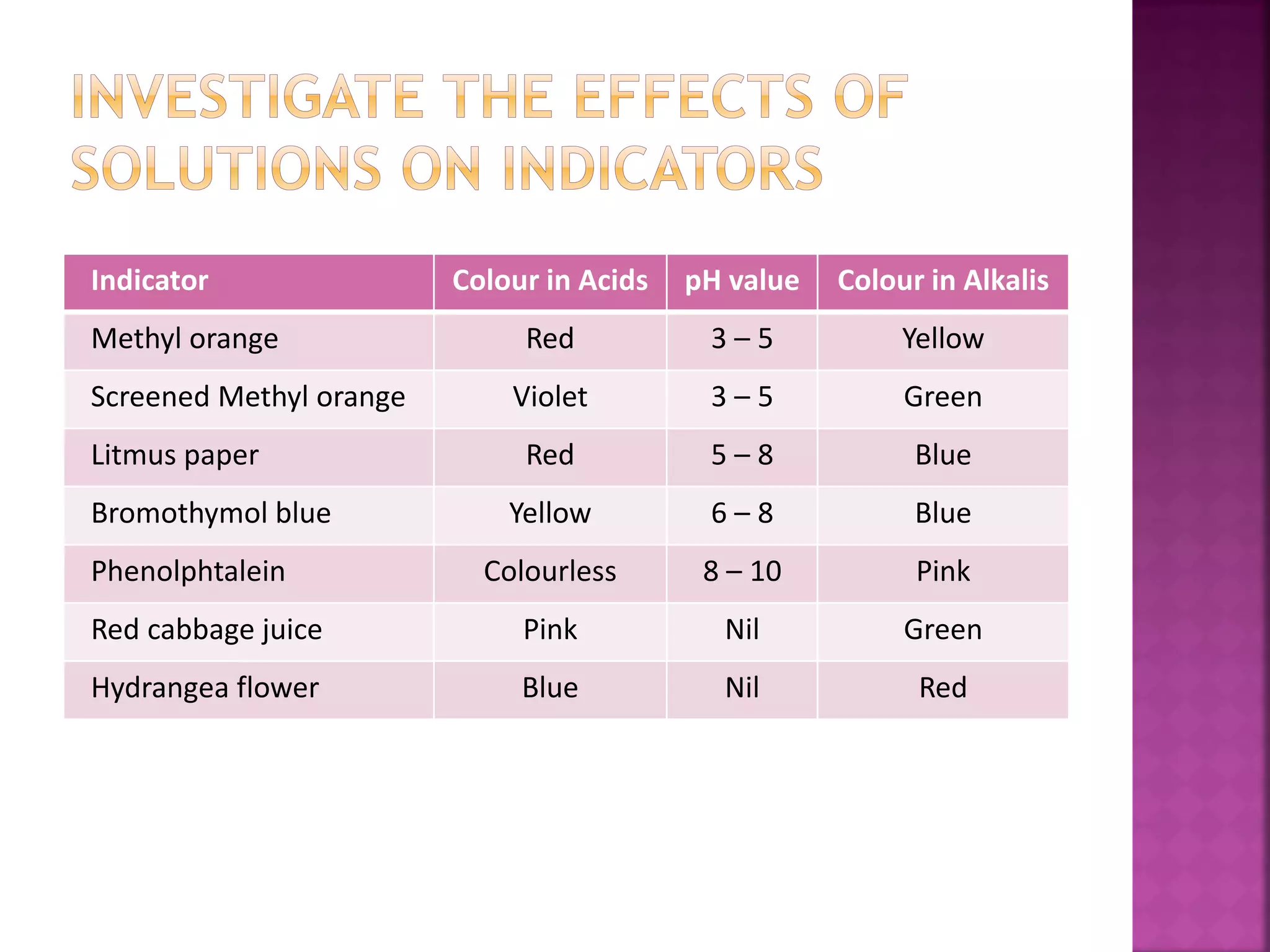
Indicator Colour in Acids pH value Colour in Alkalis
Methyl orange Red 3 – 5 Yellow
Screened Methyl orange Violet 3 – 5 Green
Litmus paper Red 5 – 8 Blue
Bromothymol blue Yellow 6 – 8 Blue
Phenolphtalein Colourless 8 – 10 Pink
Red cabbage juice Pink Nil Green
Hydrangea flower Blue Nil Red
 When an acid and alkali react together, they
neutralise each other. Their properties are
removed.
 The pH value of the acid is increased while the pH
value of the alkali is decreased. The neutral
mixture has a pH value of 7.
 Water is formed together with a new substance
called a salt.
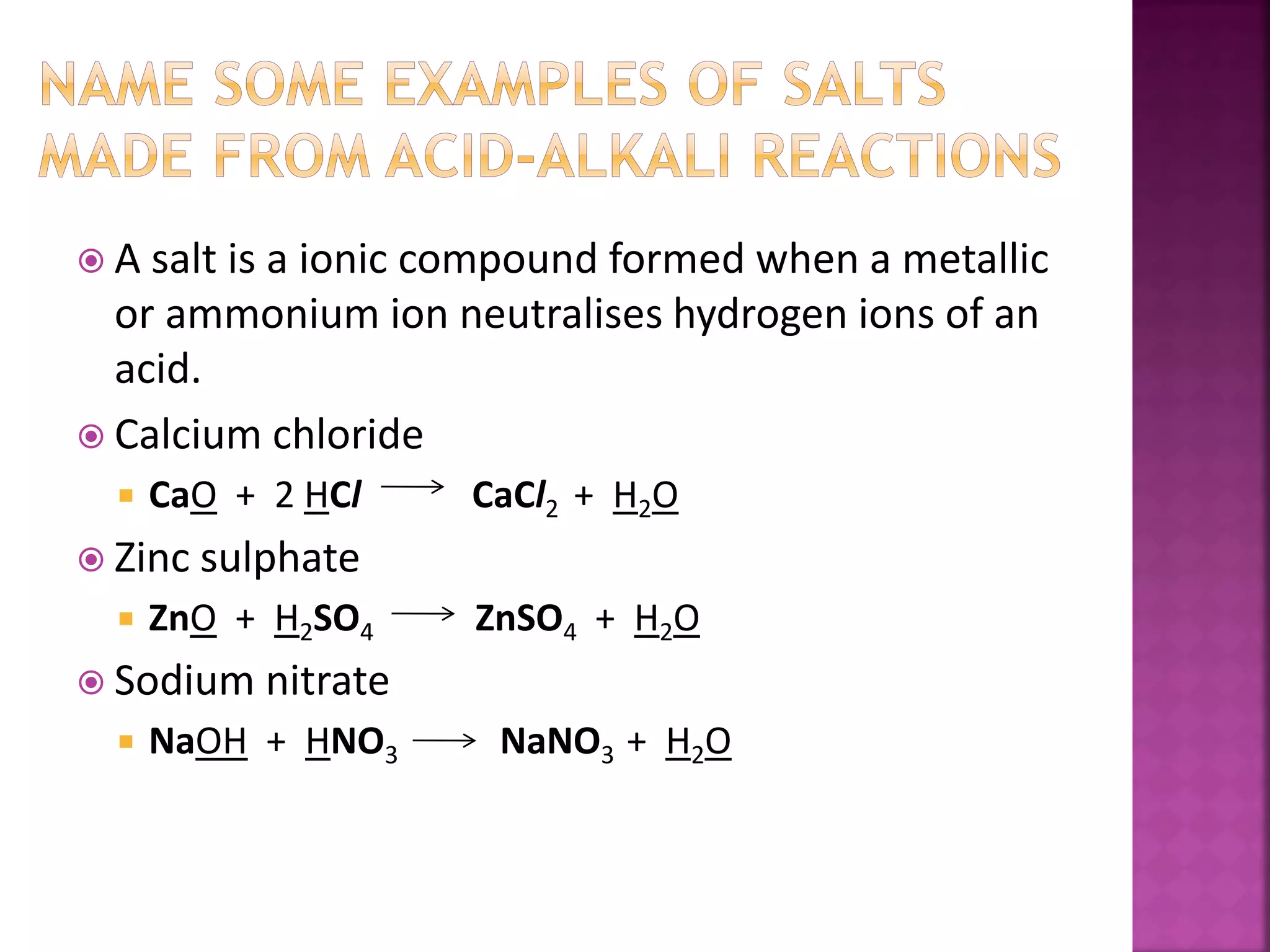
 A salt is a ionic compound formed when a metallic
or ammonium ion neutralises hydrogen ions of an
acid.
 Calcium chloride
 CaO + 2 HCl CaCl2 + H2O
 Zinc sulphate
 ZnO + H2SO4 ZnSO4 + H2O
 Sodium nitrate
 NaOH + HNO3 NaNO3 + H2O

Acids And Alkali

  • 1.
  • 2.
     An acidis a substance that produces hydrogen ions when dissolved in water.  Examples of acids are hydrochloric acid (HCl), sulphuric acid (H2SO4), nitric acid (HNO3) and ethanoic acid (CH3COOH).  Sulphuric acid is used in detergents, fertilisers and car batteries.  Ethanoic acid is used in vinegar and making adhesives.  Hydrochloric acid is used in leather processing and cleaning materials.
  • 3.
     Acids havea sour taste.  Acids dissolve in water to form solutions that conducts electricity.  Acids turn blue litmus red.  Acids have pH value less than 7.  Acids react with metals, carbonates and bases.
  • 4.
    Metal reactions  Acid+ Reactive Metal Salt + Hydrogen Carbonate reactions  Acid + Carbonate Salt + Water + Carbon dioxide Base reactions  Acid + Base Salt + Water
  • 5.
     Test forHydrogen  Place a lighted splint at the mouth of a test tube.  A pop sound is heard and the splint is extinguished. Hydrogen is thus present.  Test for Carbon dioxide  Bubble the gas through limewater.  If carbon dioxide is present, the limewater will turn chalky and a white precipitate would be formed.
  • 6.
     An alkaliis a metal oxide or hydroxide that is soluble in water.  Examples :  sodium hydroxide (NaOH)  potassium hydroxide (KOH)  calcium hydroxide [Ca(OH)2]  barium hydroxide [Ba(OH)2]  aqueous ammonia (NH3).
  • 7.
     Ammonia solution Fertilisers  Window cleaning solutions  Calcium oxide  To neutralise acidic soil  Iron, concrete and cement  Magnesium hydroxide  Toothpaste to neutralise acid on teeth  Antacids to relieve indigestion  Sodium hydroxide  Soaps and detergents  Industrial-cleaning detergents
  • 8.
     Alkalis havea bitter taste and soapy feel.  Alkalis dissolve in water to produce hydroxide ions.  Alkalis turn red litmus blue.  Alkalis have pH value more than 7.  Alkalis react with metals, ammonium salts and acids
  • 9.
    Metal reactions  Alkali+ Salt A Metal hydroxide + Salt B Ammonium salt reactions  Alkali + Ammonium Ammonia + Water + Salt Base reactions  Alkali + Acid Salt + Water
  • 10.
    Taste Solubility  Acidshave a sour taste.  Acids dissolve in water to form solutions that conducts electricity.  Acids turn blue litmus red.  Acids have pH value less than 7.  Acids react with metals, carbonates and bases.  Alkalis have a bitter taste and soapy feel.  Alkalis dissolve in water to produce hydroxide ions.  Alkalis turn red litmus blue.  Alkalis have pH value more than 7.  Alkalis react with metals, ammonium salts and acids. Litmus pH value Reactions
  • 11.
    Test for Ammonia Place a piece of moist red litmus paper in the solution  If ammonia is present, the moist red litmus paper will turn blue.
  • 12.
    Indicator Colour inAcids pH value Colour in Alkalis Methyl orange Red 3 – 5 Yellow Screened Methyl orange Violet 3 – 5 Green Litmus paper Red 5 – 8 Blue Bromothymol blue Yellow 6 – 8 Blue Phenolphtalein Colourless 8 – 10 Pink Red cabbage juice Pink Nil Green Hydrangea flower Blue Nil Red
  • 13.
     When anacid and alkali react together, they neutralise each other. Their properties are removed.  The pH value of the acid is increased while the pH value of the alkali is decreased. The neutral mixture has a pH value of 7.  Water is formed together with a new substance called a salt.
  • 14.
     A saltis a ionic compound formed when a metallic or ammonium ion neutralises hydrogen ions of an acid.  Calcium chloride  CaO + 2 HCl CaCl2 + H2O  Zinc sulphate  ZnO + H2SO4 ZnSO4 + H2O  Sodium nitrate  NaOH + HNO3 NaNO3 + H2O