Achieving SDG2 by 2030
through food systems
transformations:
Implications for Asia
Anaka Aiyar
Tata-Cornell Institute for Agriculture and
Nutrition
Cornell university
Evolving Agrifood Systems in Asia: Achieving food and
nutrition security by 2030
Oct 30th 2019
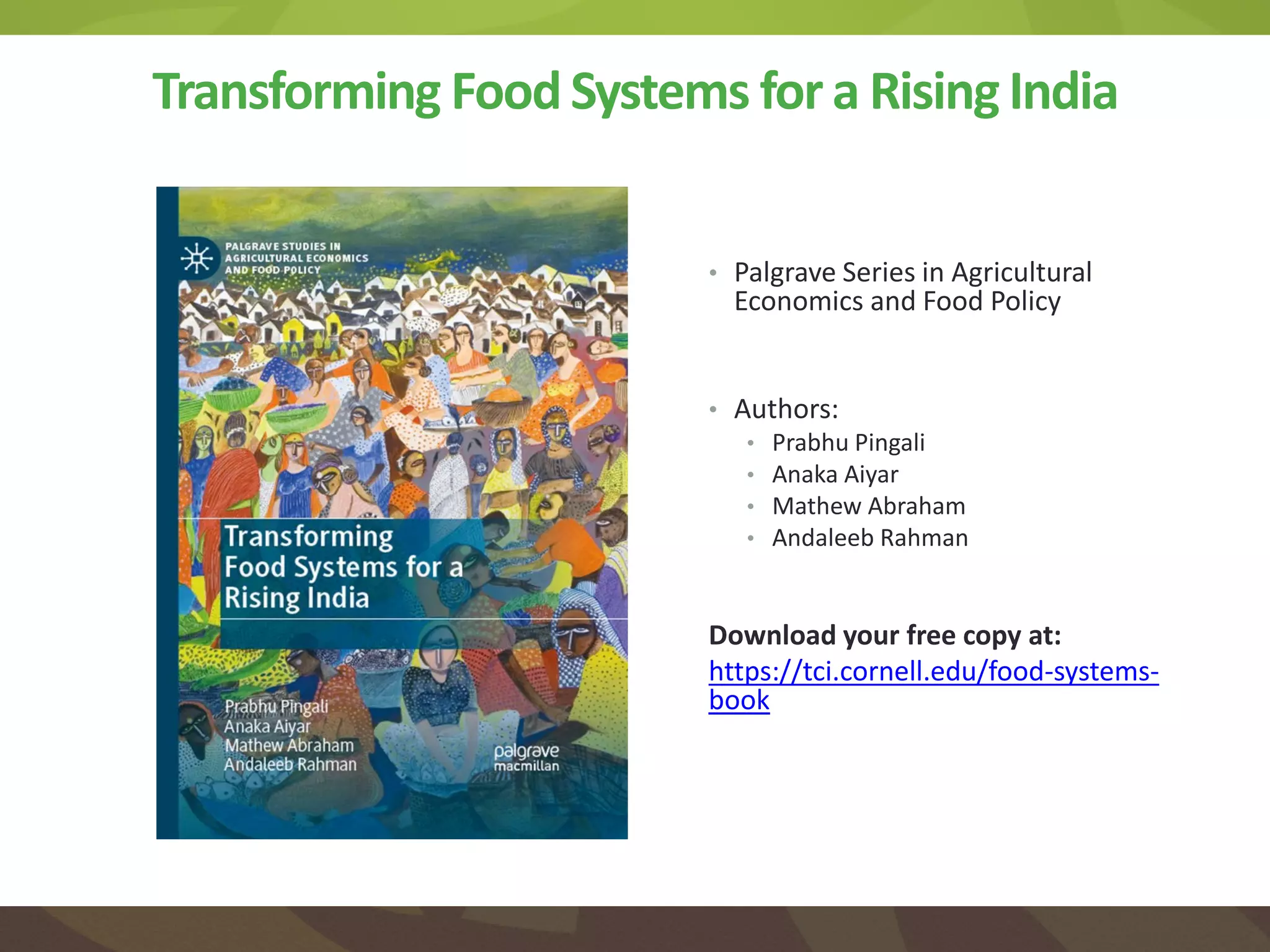
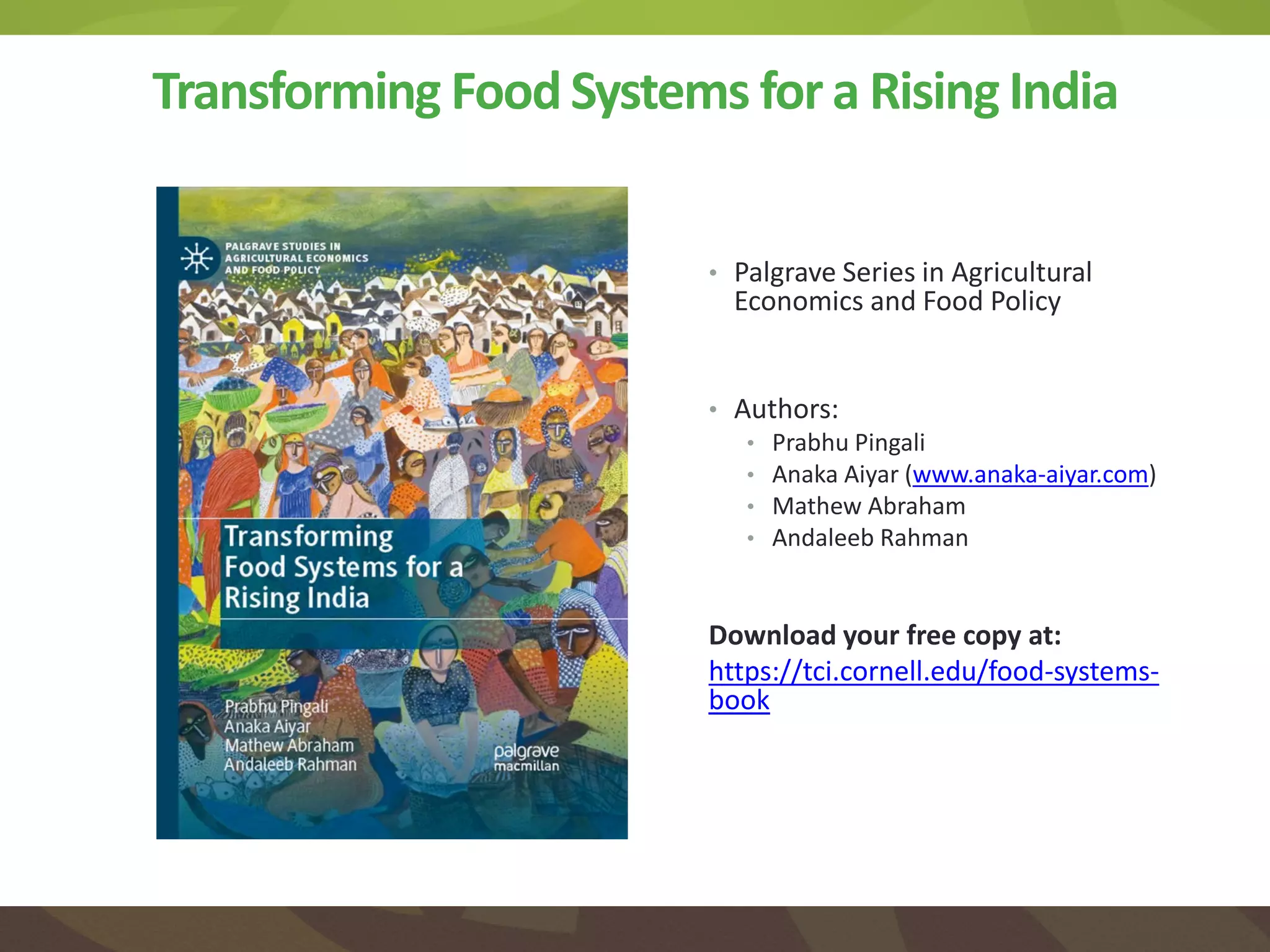
Transforming FoodSystems for a Rising India
• Palgrave Series in Agricultural
Economics and Food Policy
• Authors:
• Prabhu Pingali
• Anaka Aiyar
• Mathew Abraham
• Andaleeb Rahman
Download your free copy at:
https://tci.cornell.edu/food-systems-
book
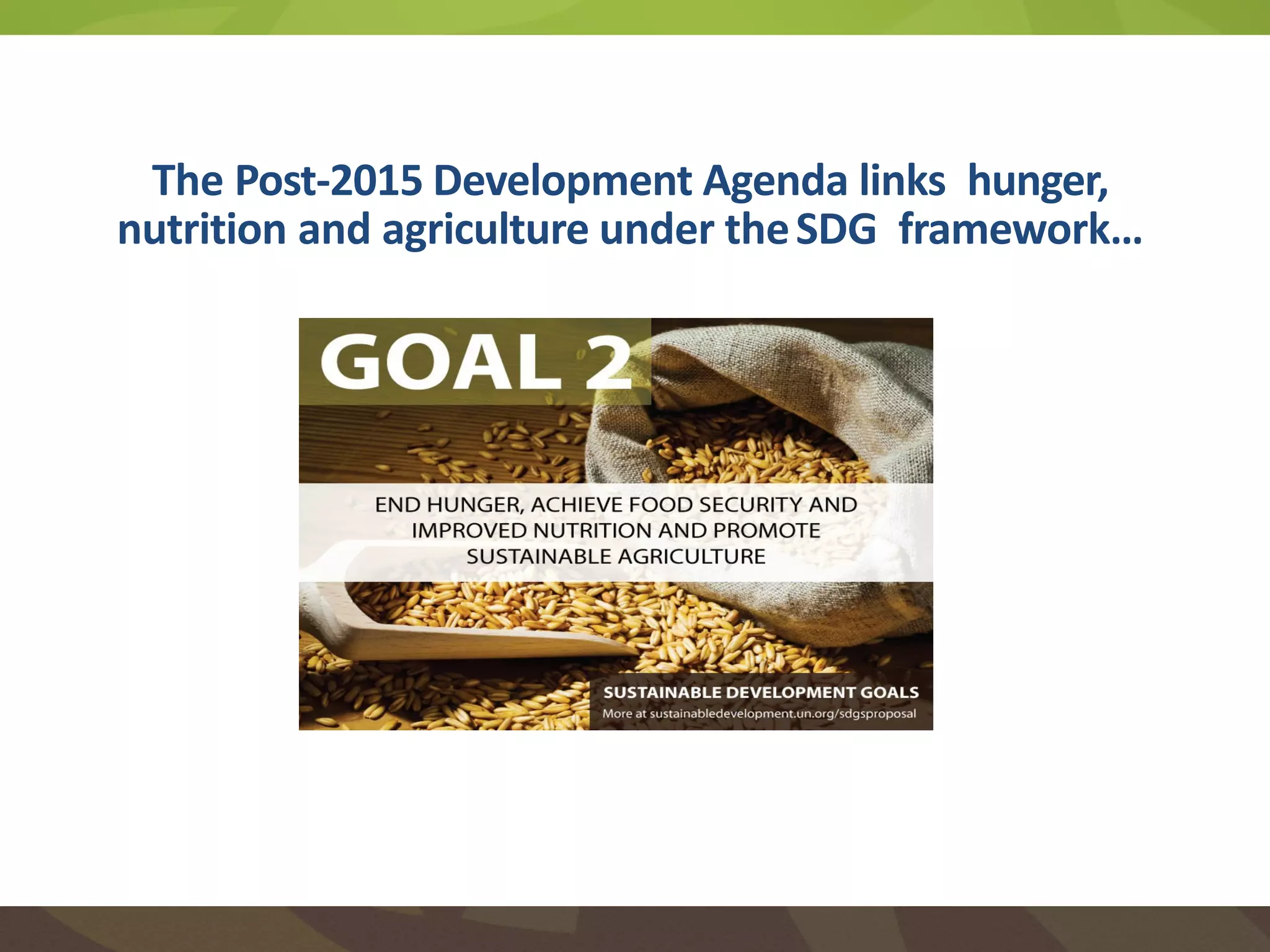
The Post-2015 Development Agenda links hunger,
nutrition and agriculture under theSDG framework…
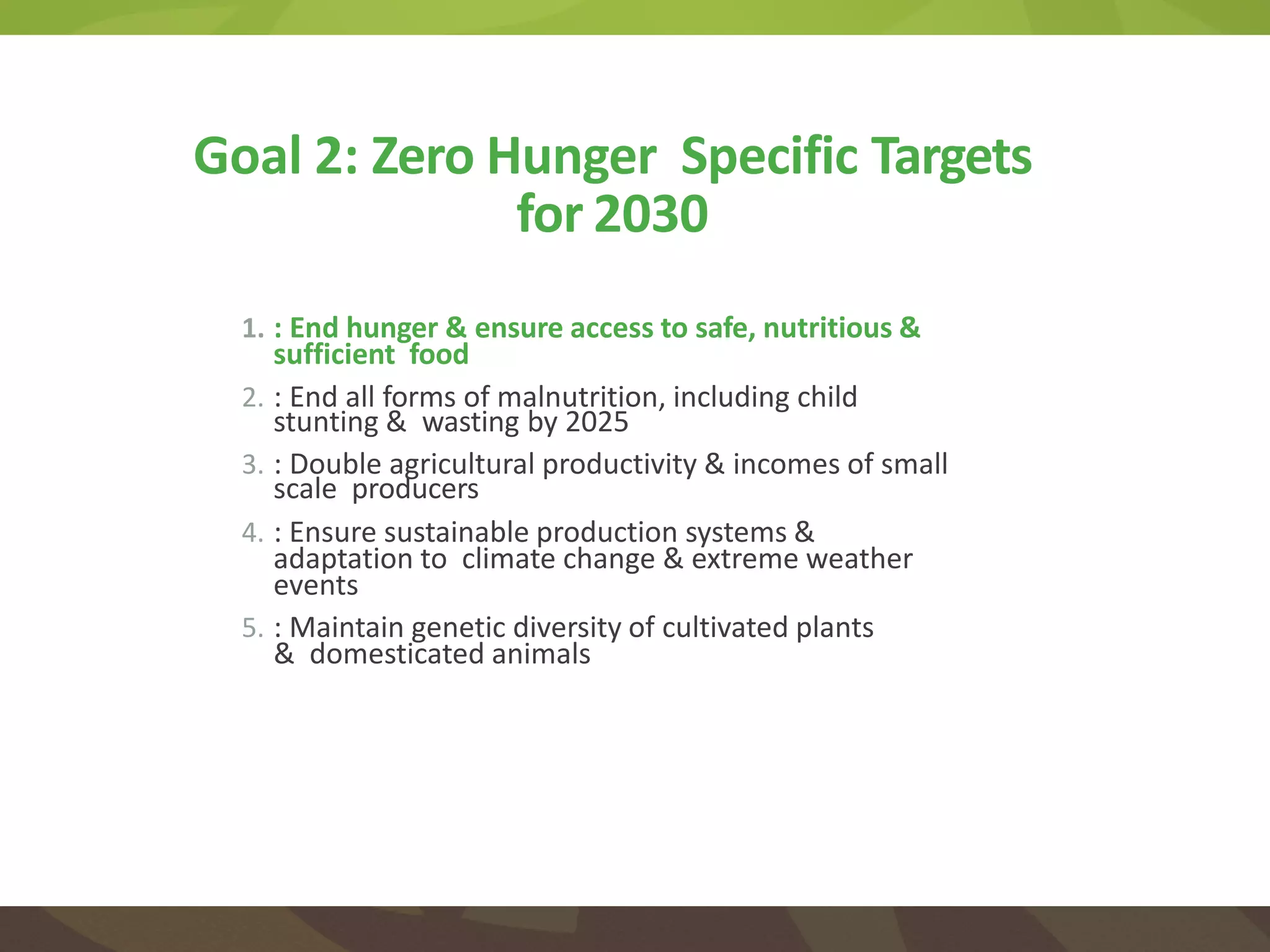
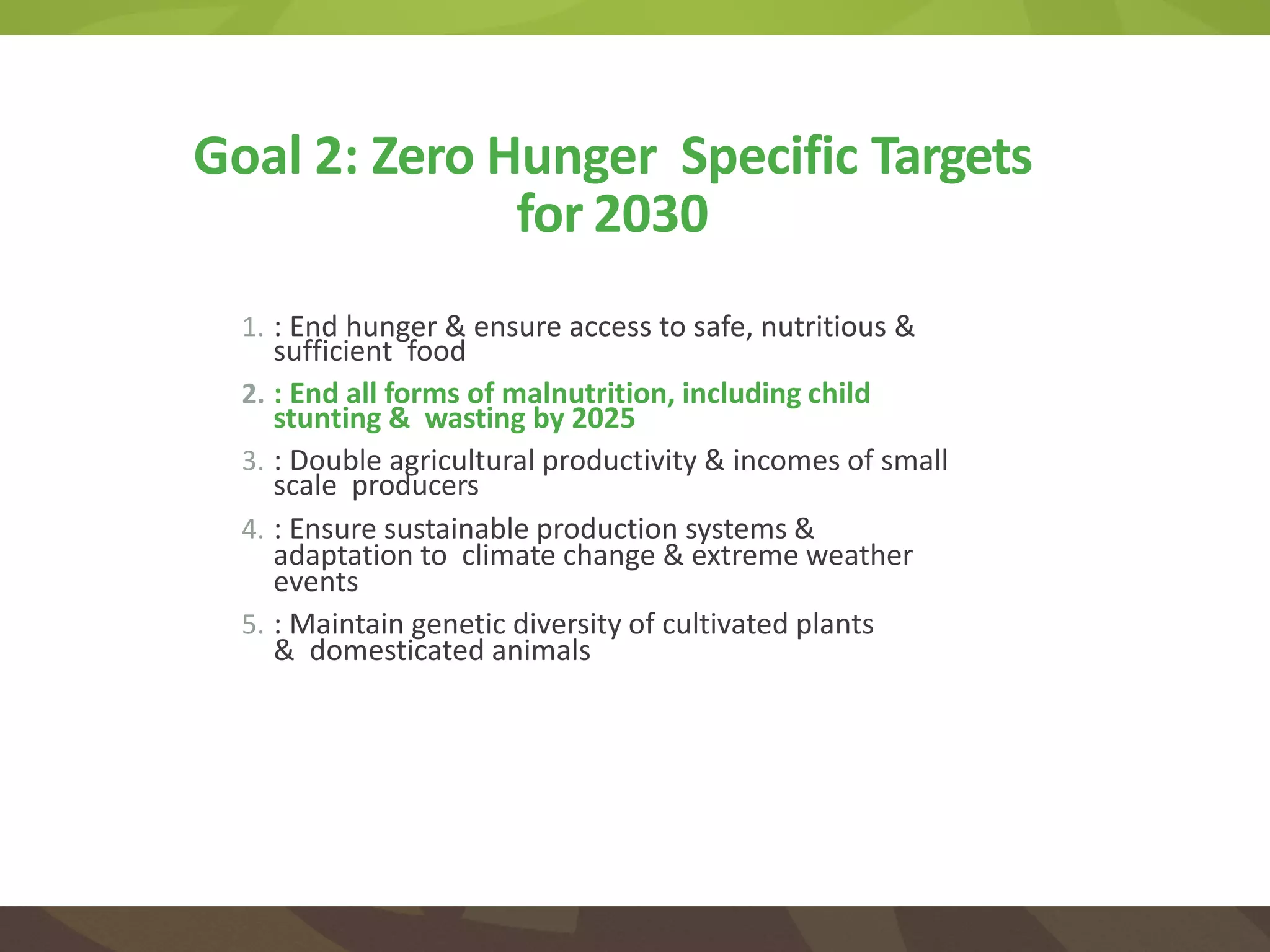
1. : End hunger & ensure access to safe, nutritious &
sufficient food
2. : End all forms of malnutrition, including child
stunting & wasting by 2025
3. : Double agricultural productivity & incomes of small
scale producers
4. : Ensure sustainable production systems &
adaptation to climate change & extreme weather
events
5. : Maintain genetic diversity of cultivated plants
& domesticated animals
Goal 2: Zero Hunger Specific Targets
for 2030
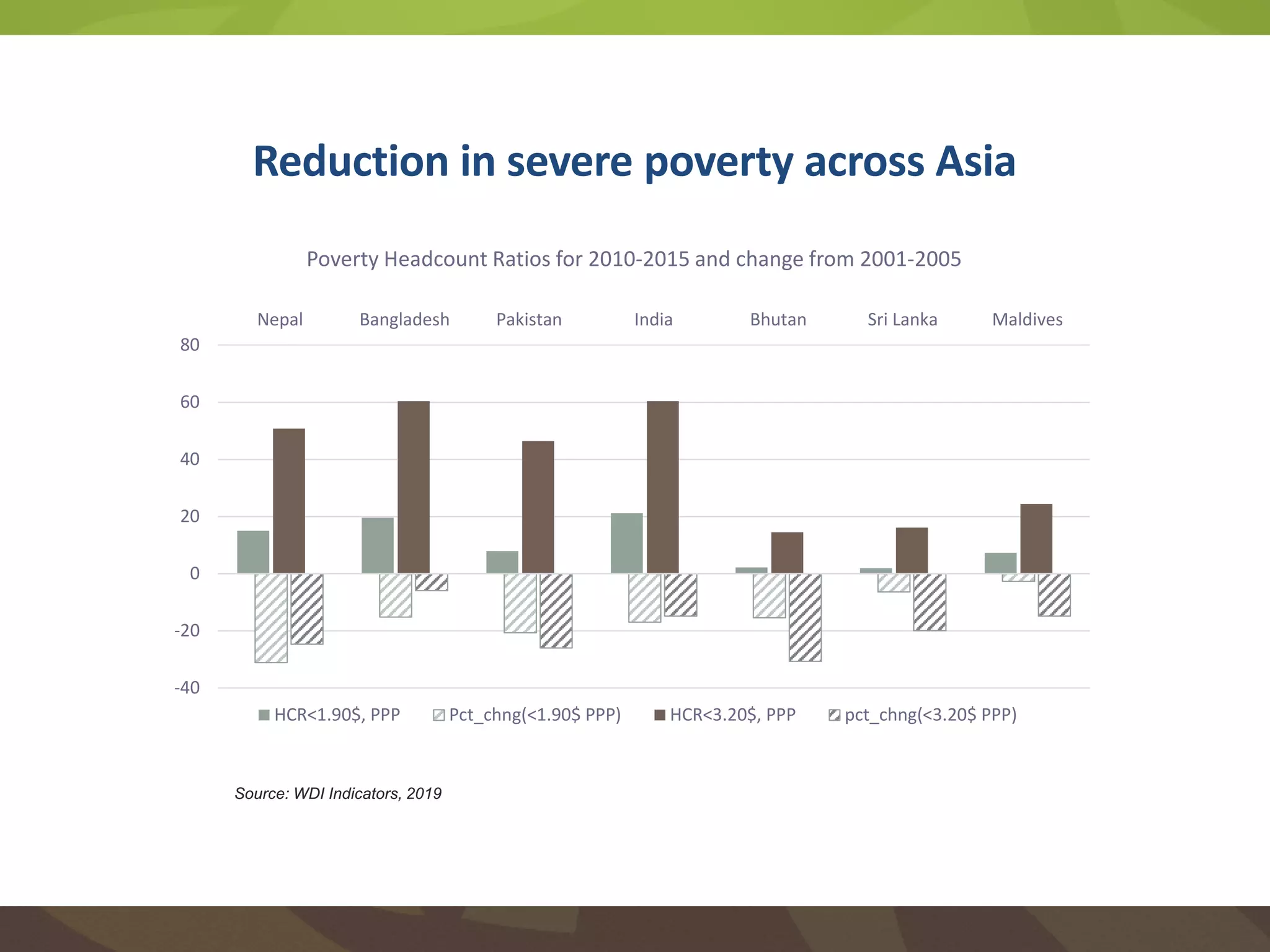
Reduction in severe poverty across Asia
-40
-20
0
20
40
60
80
Nepal Bangladesh Pakistan India Bhutan Sri Lanka Maldives
Poverty Headcount Ratios for 2010-2015 and change from 2001-2005
HCR<1.90$, PPP Pct_chng(<1.90$ PPP) HCR<3.20$, PPP pct_chng(<3.20$ PPP)
Source: WDI Indicators, 2019
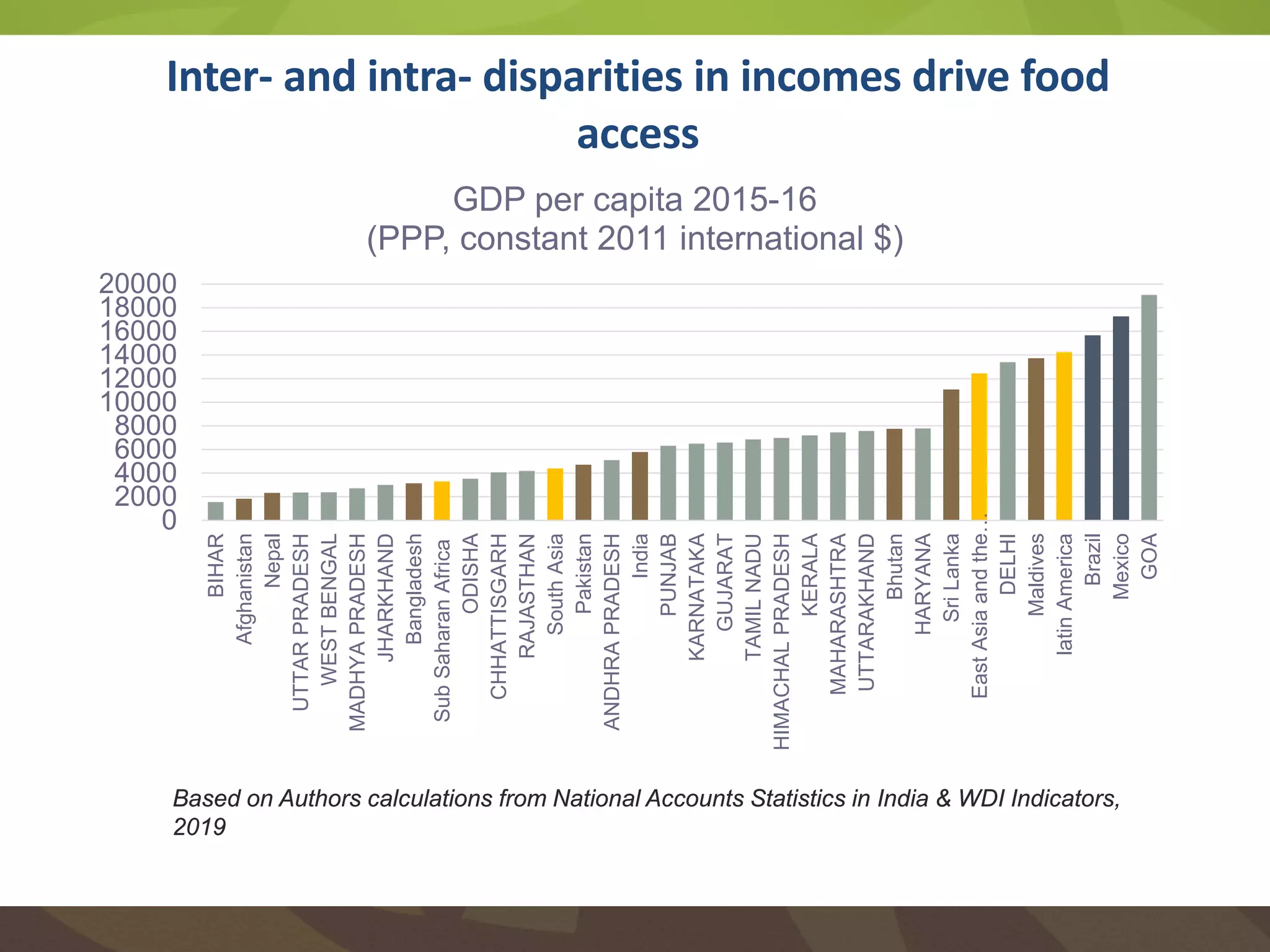
Inter- and intra- disparities in incomes drive food
access
0
2000
4000
6000
8000
10000
12000
14000
16000
18000
20000
BIHAR
Afghanistan
Nepal
UTTARPRADESH
WESTBENGAL
MADHYAPRADESH
JHARKHAND
Bangladesh
SubSaharanAfrica
ODISHA
CHHATTISGARH
RAJASTHAN
SouthAsia
Pakistan
ANDHRAPRADESH
India
PUNJAB
KARNATAKA
GUJARAT
TAMILNADU
HIMACHALPRADESH
KERALA
MAHARASHTRA
UTTARAKHAND
Bhutan
HARYANA
SriLanka
EastAsiaandthe…
DELHI
Maldives
latinAmerica
Brazil
Mexico
GOA
GDP per capita 2015-16
(PPP, constant 2011 international $)
Based on Authors calculations from National Accounts Statistics in India & WDI Indicators,
2019
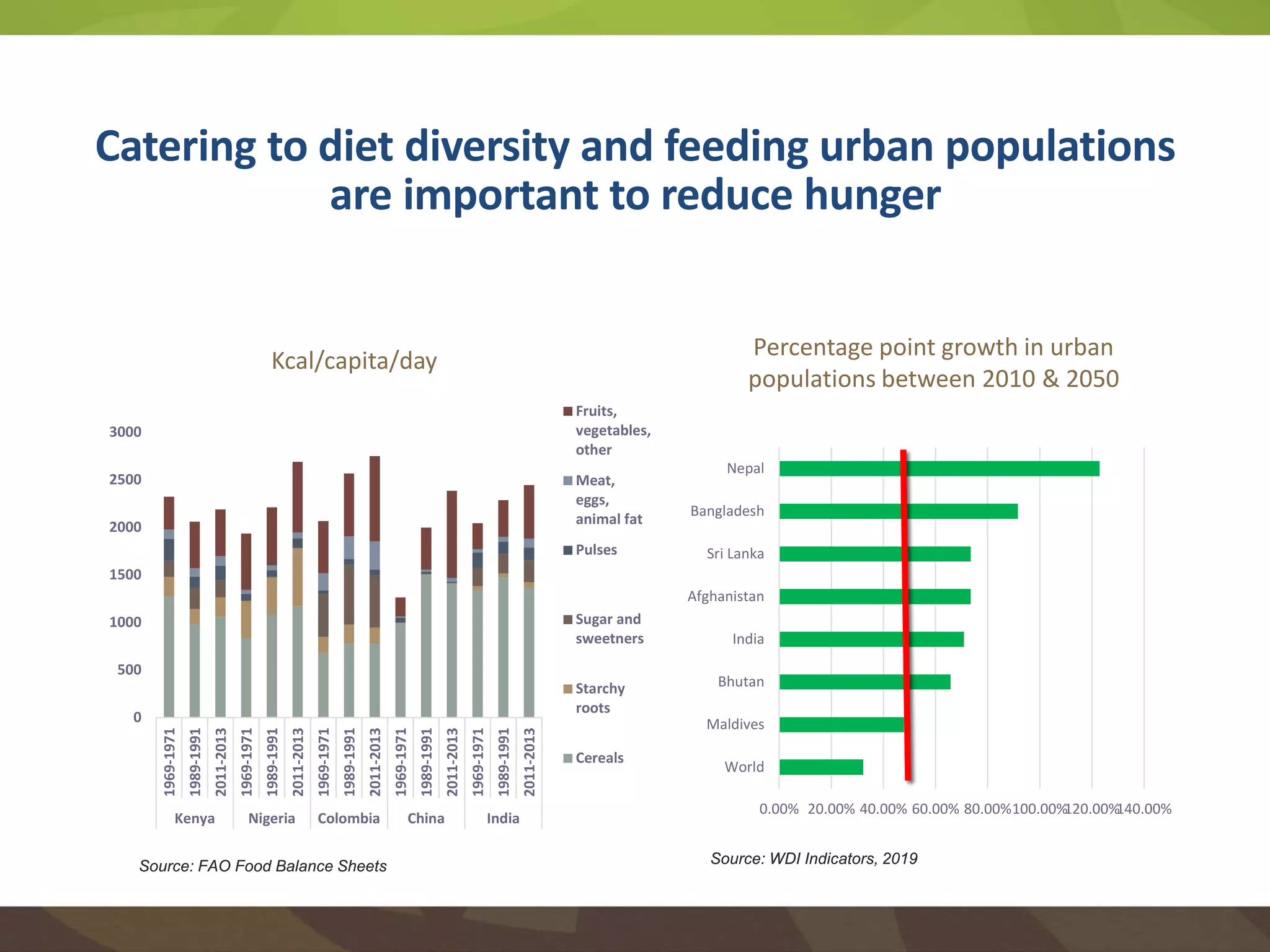
Catering to diet diversity and feeding urban populations
are important to reduce hunger
Kcal/capita/day
0
500
1000
1500
2000
2500
3000
1969-1971
1989-1991
2011-2013
1969-1971
1989-1991
2011-2013
1969-1971
1989-1991
2011-2013
1969-1971
1989-1991
2011-2013
1969-1971
1989-1991
2011-2013
Kenya Nigeria Colombia China India
Fruits,
vegetables,
other
Meat,
eggs,
animal fat
Pulses
Sugar and
sweetners
Starchy
roots
Cereals
Percentage point growth in urban
populations between 2010 & 2050
0.00% 20.00% 40.00% 60.00% 80.00%100.00%120.00%140.00%
World
Maldives
Bhutan
India
Afghanistan
Sri Lanka
Bangladesh
Nepal
Source: WDI Indicators, 2019Source: FAO Food Balance Sheets
1. : End hunger & ensure access to safe, nutritious &
sufficient food
2. : End all forms of malnutrition, including child
stunting & wasting by 2025
3. : Double agricultural productivity & incomes of small
scale producers
4. : Ensure sustainable production systems &
adaptation to climate change & extreme weather
events
5. : Maintain genetic diversity of cultivated plants
& domesticated animals
Goal 2: Zero Hunger Specific Targets
for 2030
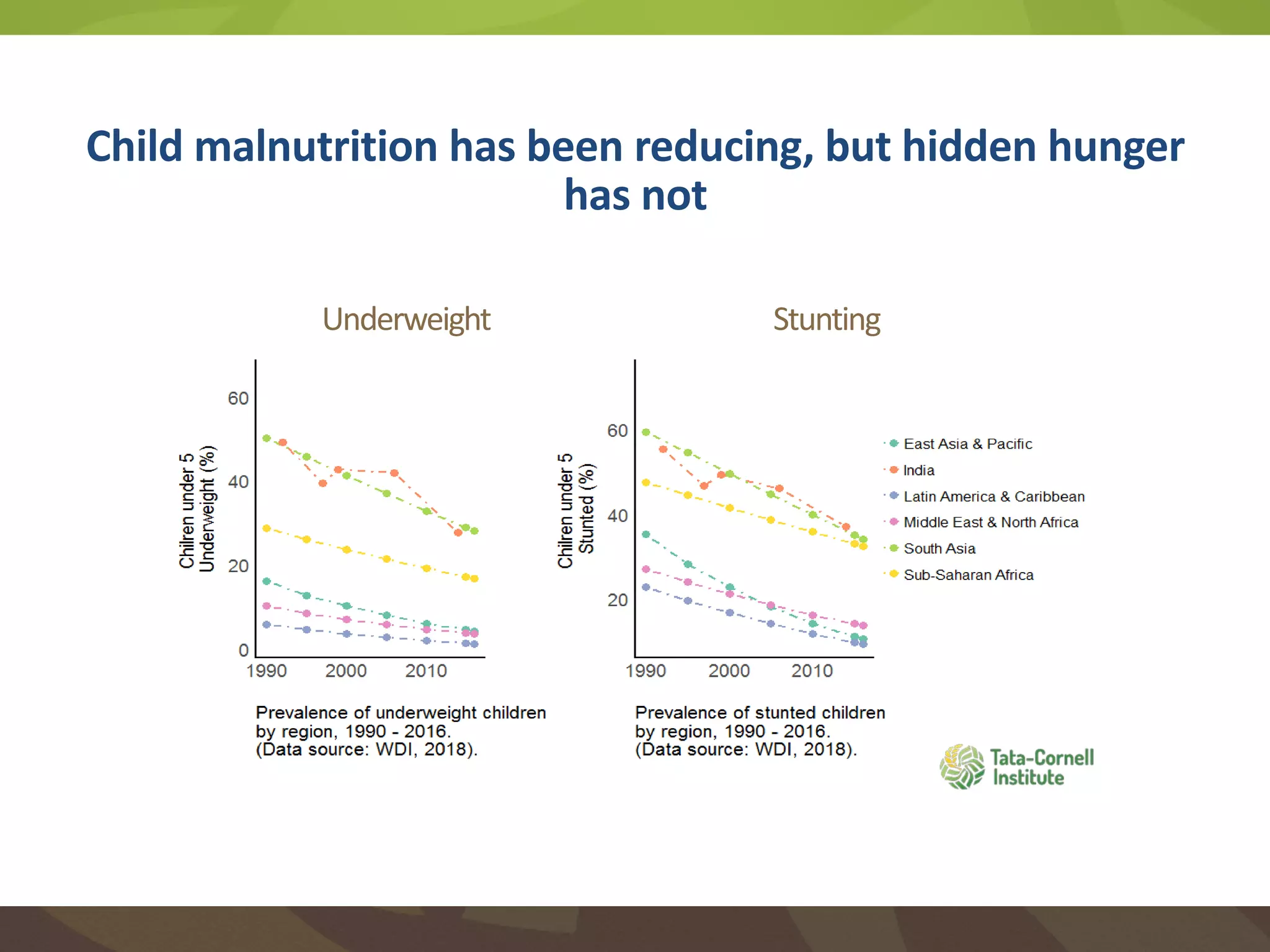
Child malnutrition has been reducing, but hidden hunger
has not
Underweight Stunting
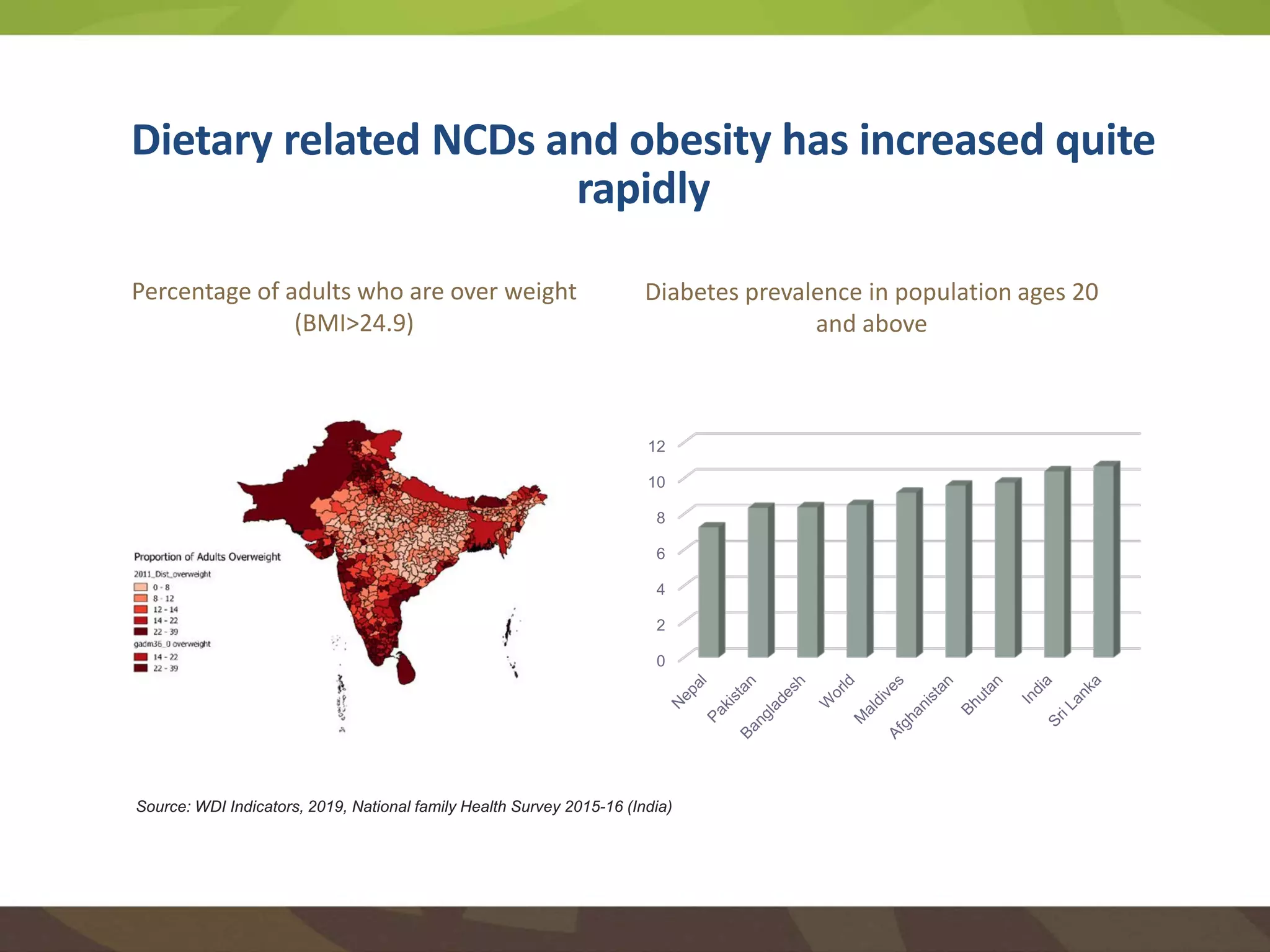
Dietary related NCDs and obesity has increased quite
rapidly
Percentage of adults who are over weight
(BMI>24.9)
Diabetes prevalence in population ages 20
and above
0
2
4
6
8
10
12
Source: WDI Indicators, 2019, National family Health Survey 2015-16 (India)
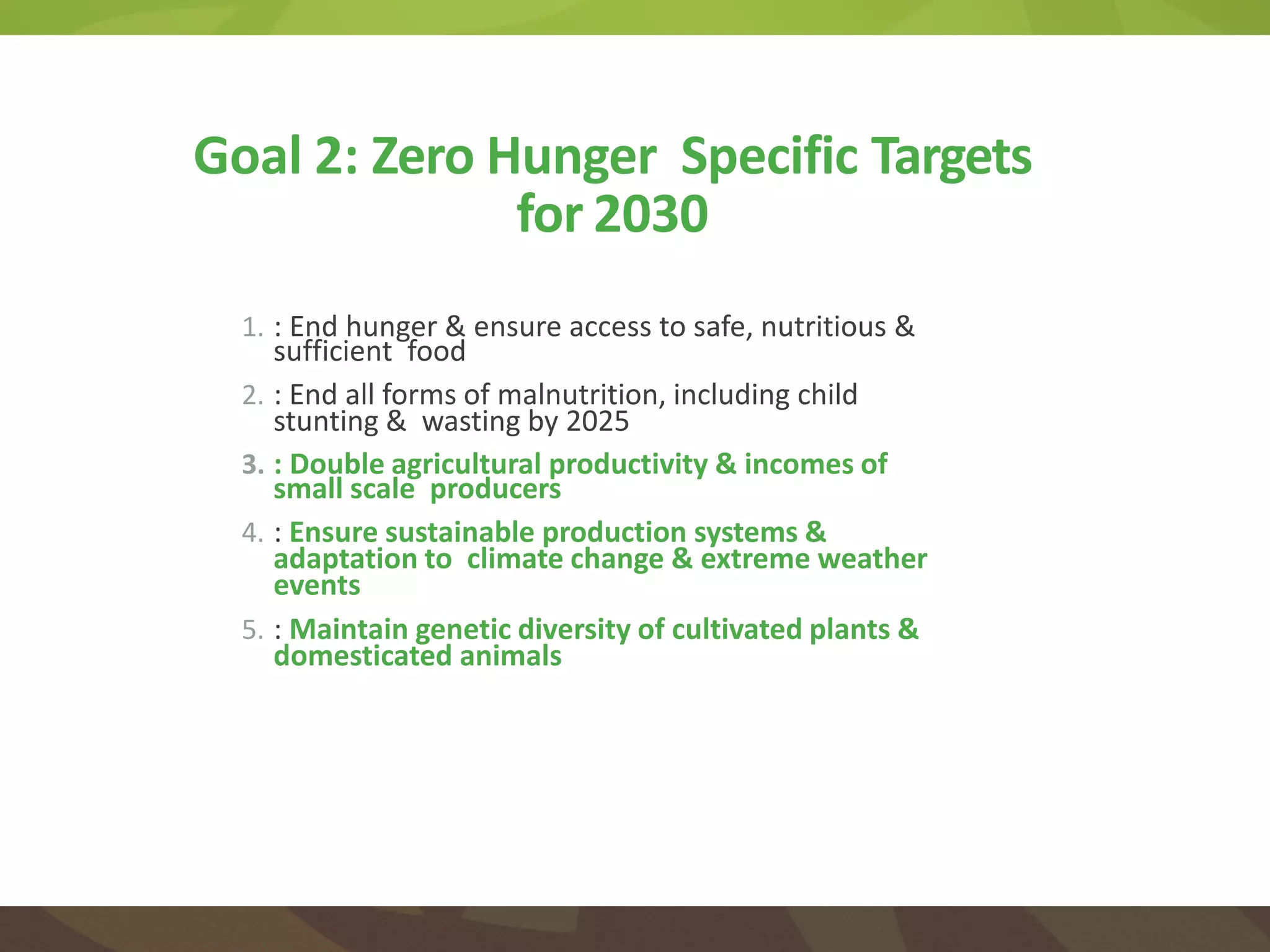
1. : End hunger & ensure access to safe, nutritious &
sufficient food
2. : End all forms of malnutrition, including child
stunting & wasting by 2025
3. : Double agricultural productivity & incomes of
small scale producers
4. : Ensure sustainable production systems &
adaptation to climate change & extreme weather
events
5. : Maintain genetic diversity of cultivated plants &
domesticated animals
Goal 2: Zero Hunger Specific Targets
for 2030
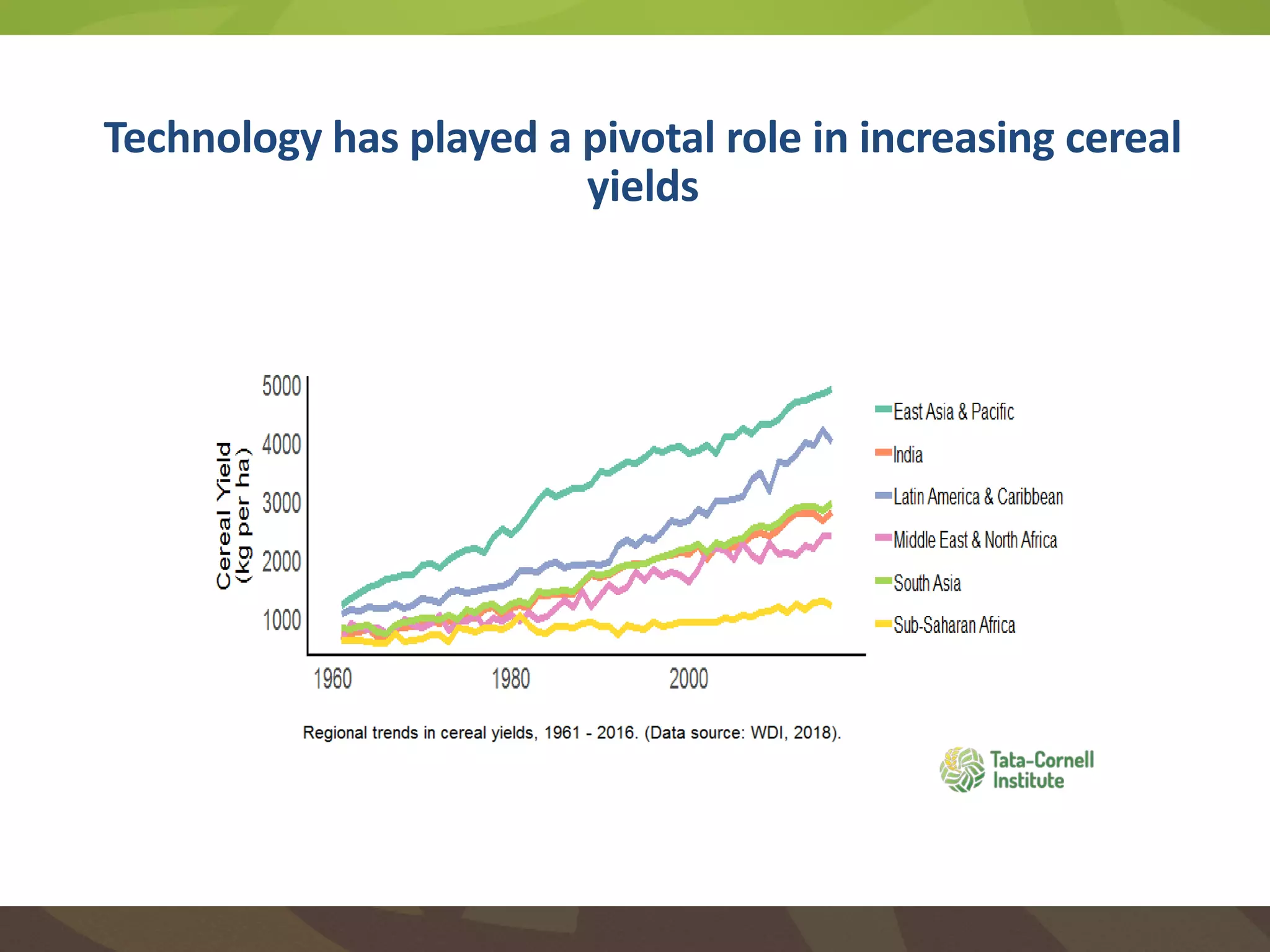
Technology has played a pivotal role in increasing cereal
yields
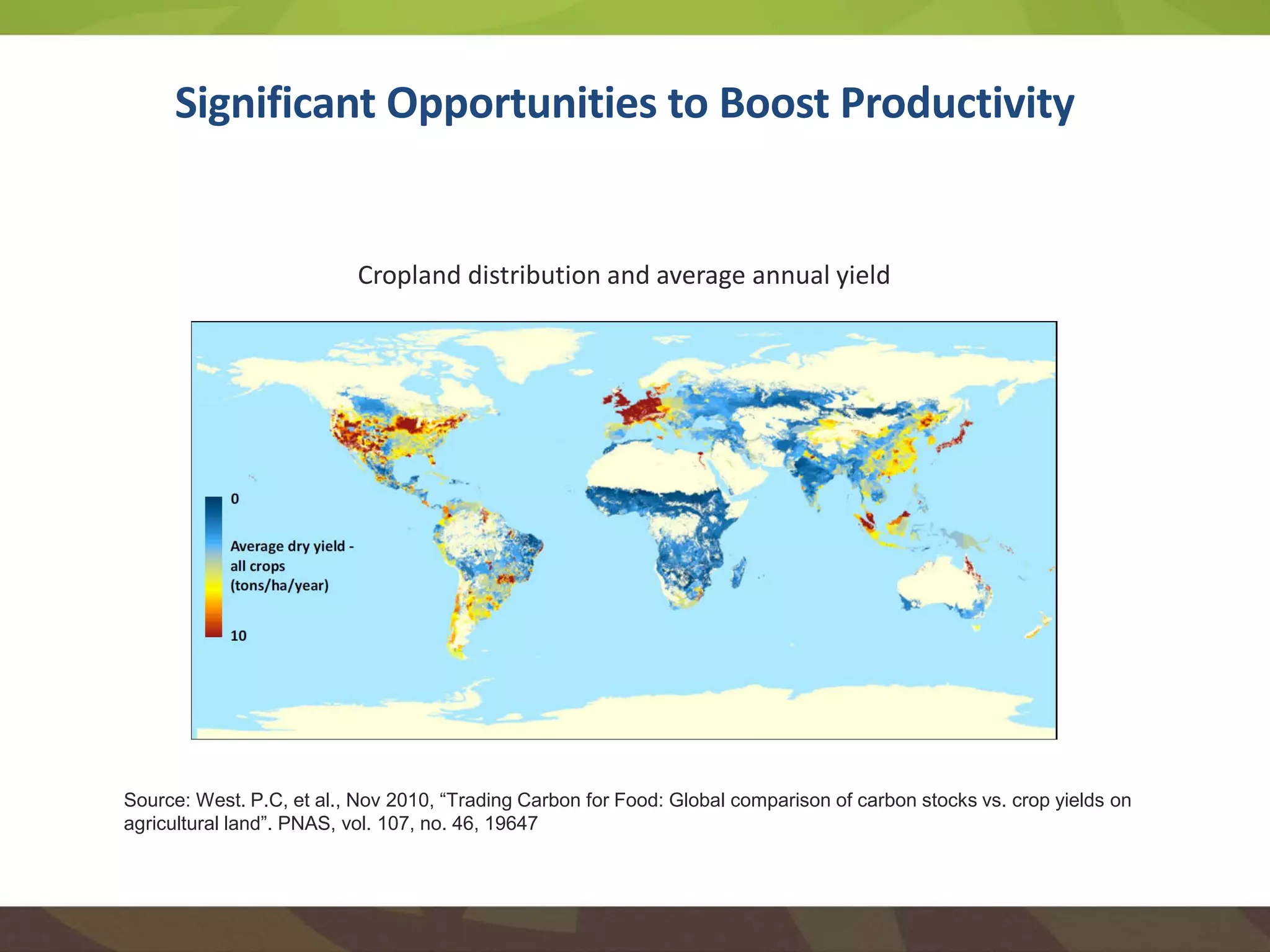
Source: West. P.C, et al., Nov 2010, “Trading Carbon for Food: Global comparison of carbon stocks vs. crop yields on
agricultural land”. PNAS, vol. 107, no. 46, 19647
Cropland distribution and average annual yield
Significant Opportunities to Boost Productivity
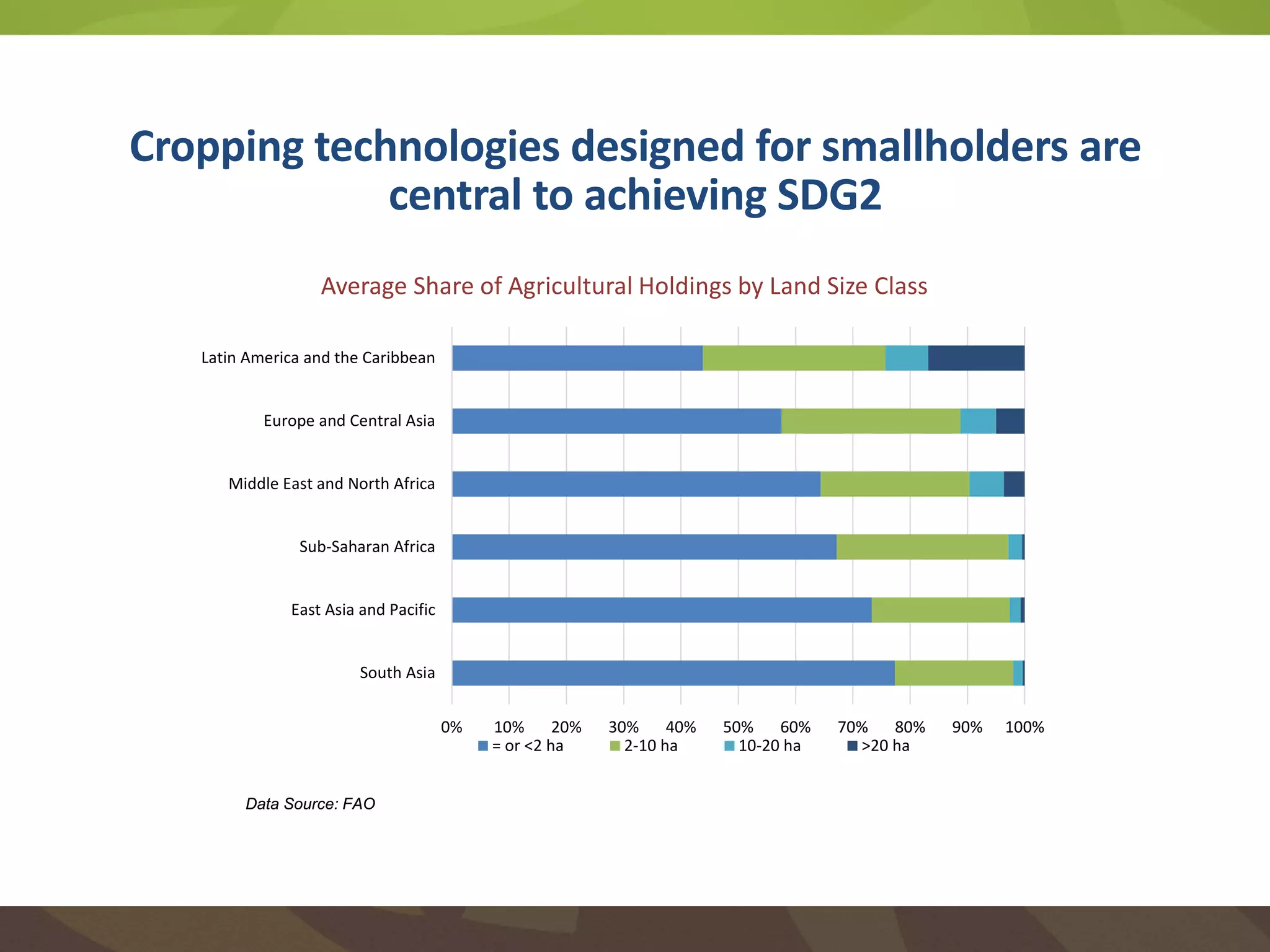
Cropping technologies designed for smallholders are
central to achieving SDG2
0% 10% 20% 30% 40% 50% 60% 70% 80% 90% 100%
South Asia
East Asia and Pacific
Sub-Saharan Africa
Middle East and North Africa
Europe and Central Asia
Latin America and the Caribbean
Average Share of Agricultural Holdings by Land Size Class
= or <2 ha 2-10 ha 10-20 ha >20 ha
Data Source: FAO
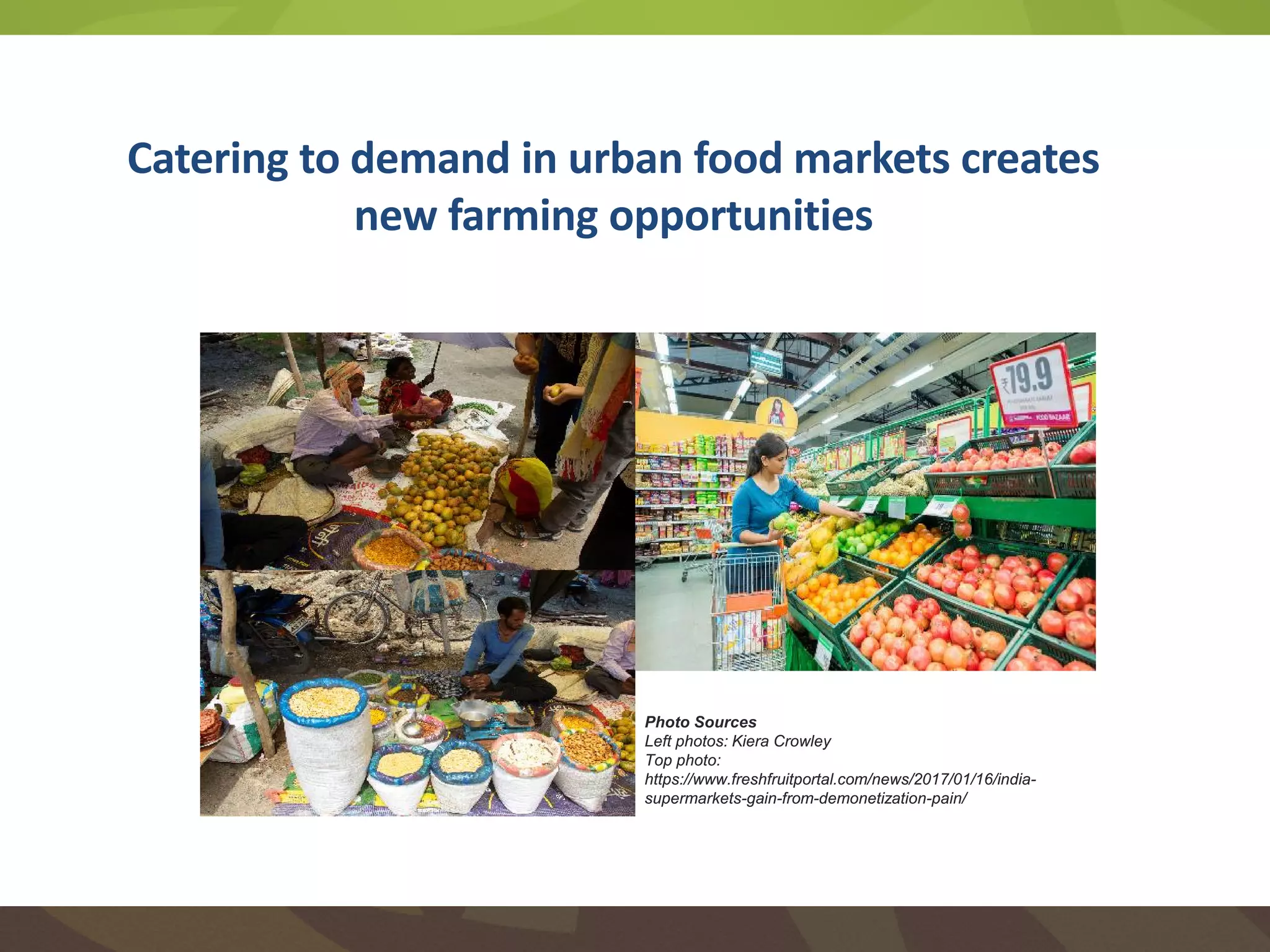
Catering to demand in urban food markets creates
new farming opportunities
Photo Sources
Left photos: Kiera Crowley
Top photo:
https://www.freshfruitportal.com/news/2017/01/16/india-
supermarkets-gain-from-demonetization-pain/
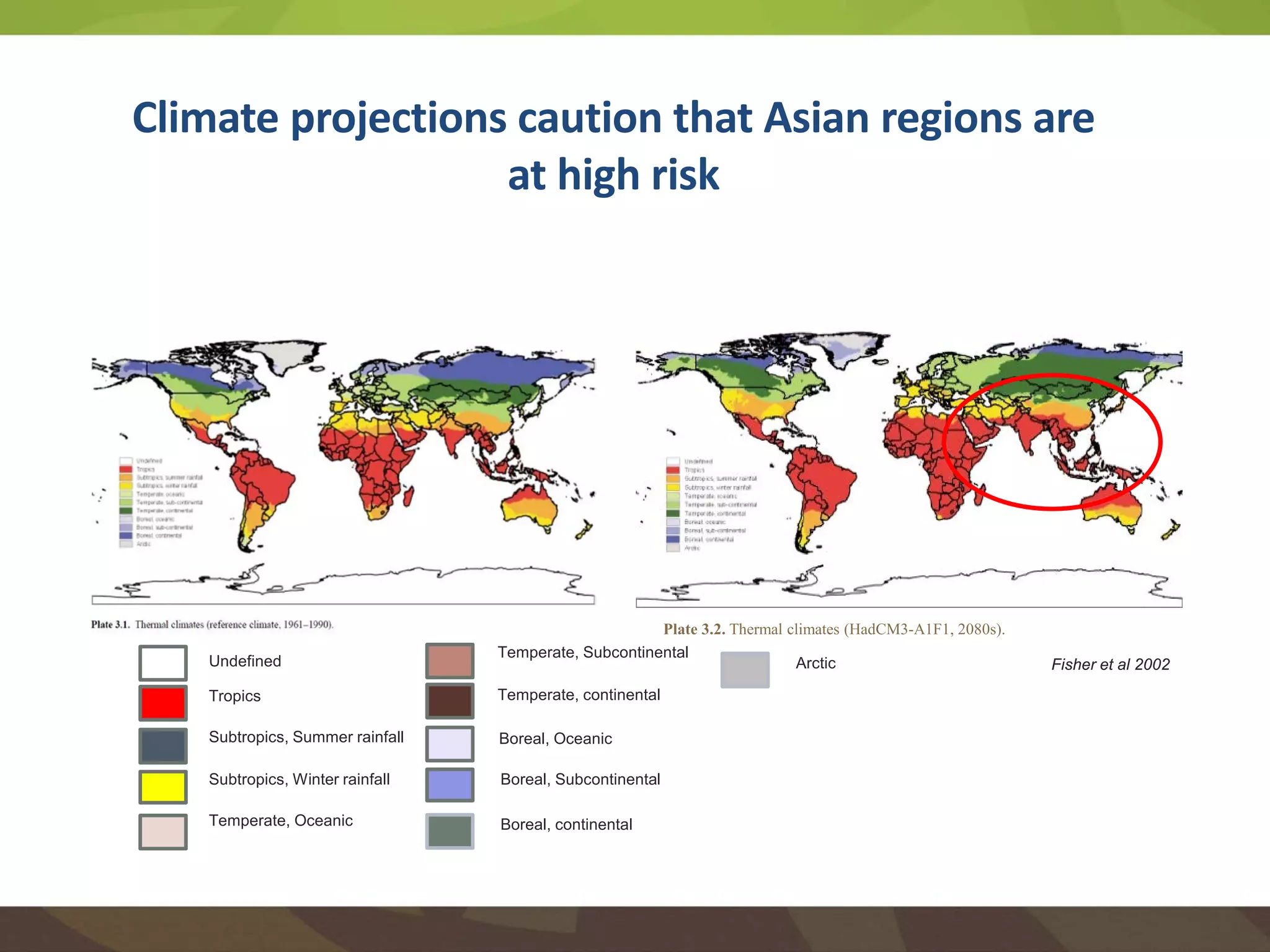
Climate projections caution that Asian regions are
at high risk
Plate 3.2. Thermal climates (HadCM3-A1F1, 2080s).
Undefined
Tropics
Subtropics, Summer rainfall
Subtropics, Winter rainfall
Temperate, Oceanic
Temperate, Subcontinental
Temperate, continental
Boreal, Oceanic
Boreal, Subcontinental
Boreal, continental
Arctic Fisher et al 2002
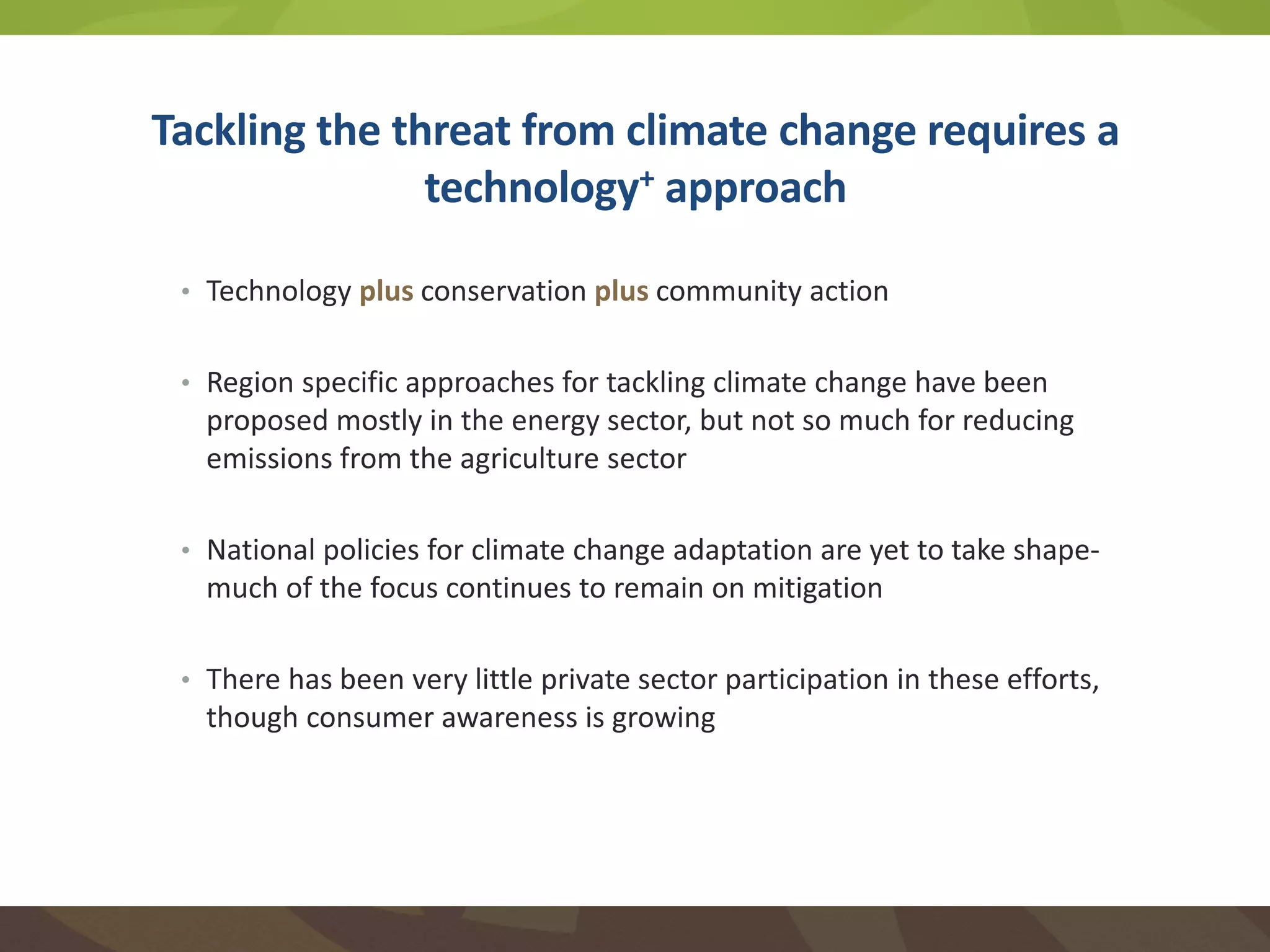
Tackling the threat from climate change requires a
technology+ approach
• Technology plus conservation plus community action
• Region specific approaches for tackling climate change have been
proposed mostly in the energy sector, but not so much for reducing
emissions from the agriculture sector
• National policies for climate change adaptation are yet to take shape-
much of the focus continues to remain on mitigation
• There has been very little private sector participation in these efforts,
though consumer awareness is growing
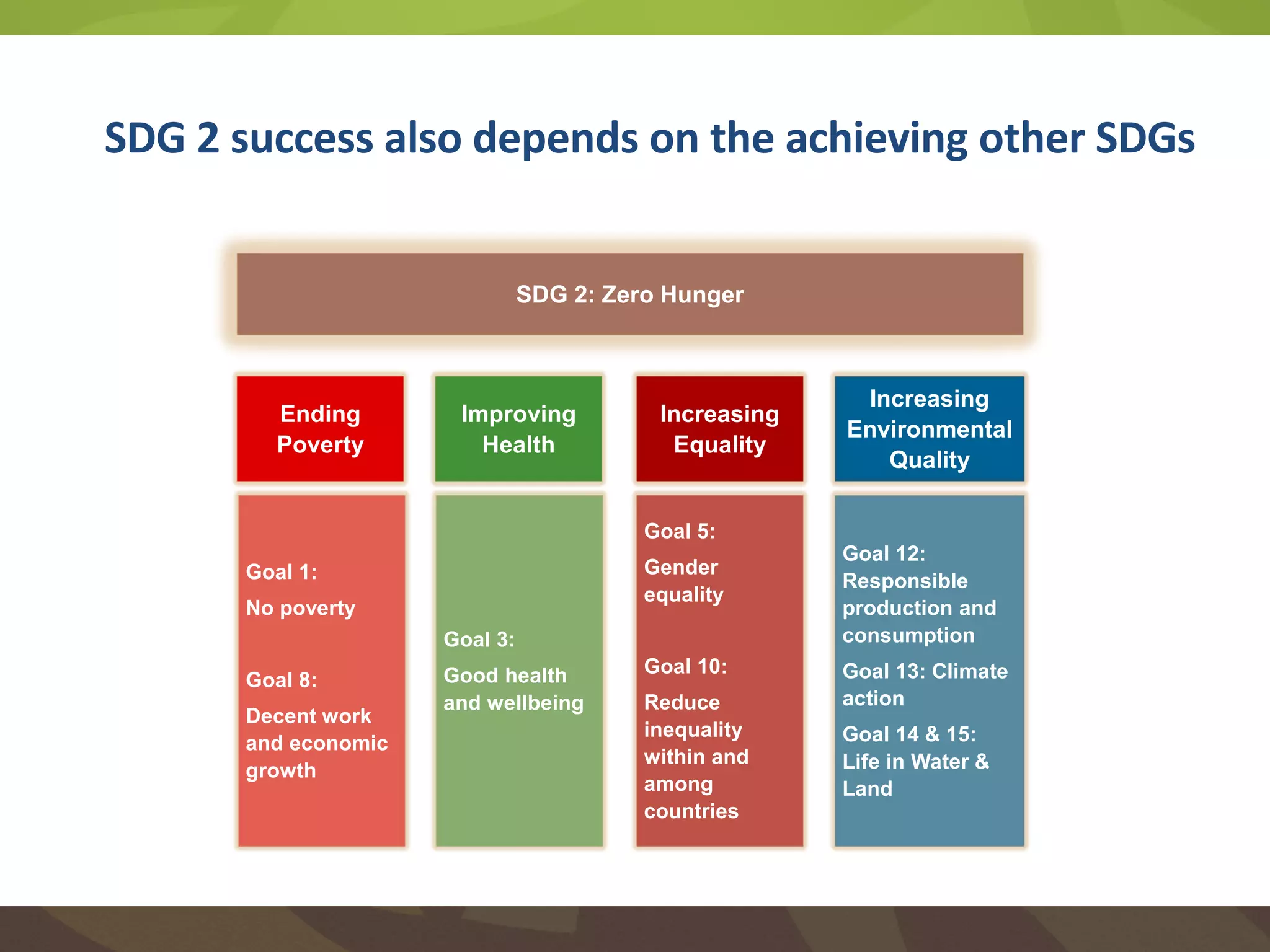
SDG 2 success also depends on the achieving other SDGs
SDG 2: Zero Hunger
Ending
Poverty
Increasing
Environmental
Quality
Improving
Health
Goal 1:
No poverty
Goal 8:
Decent work
and economic
growth
Increasing
Equality
Goal 3:
Good health
and wellbeing
Goal 5:
Gender
equality
Goal 10:
Reduce
inequality
within and
among
countries
Goal 12:
Responsible
production and
consumption
Goal 13: Climate
action
Goal 14 & 15:
Life in Water &
Land
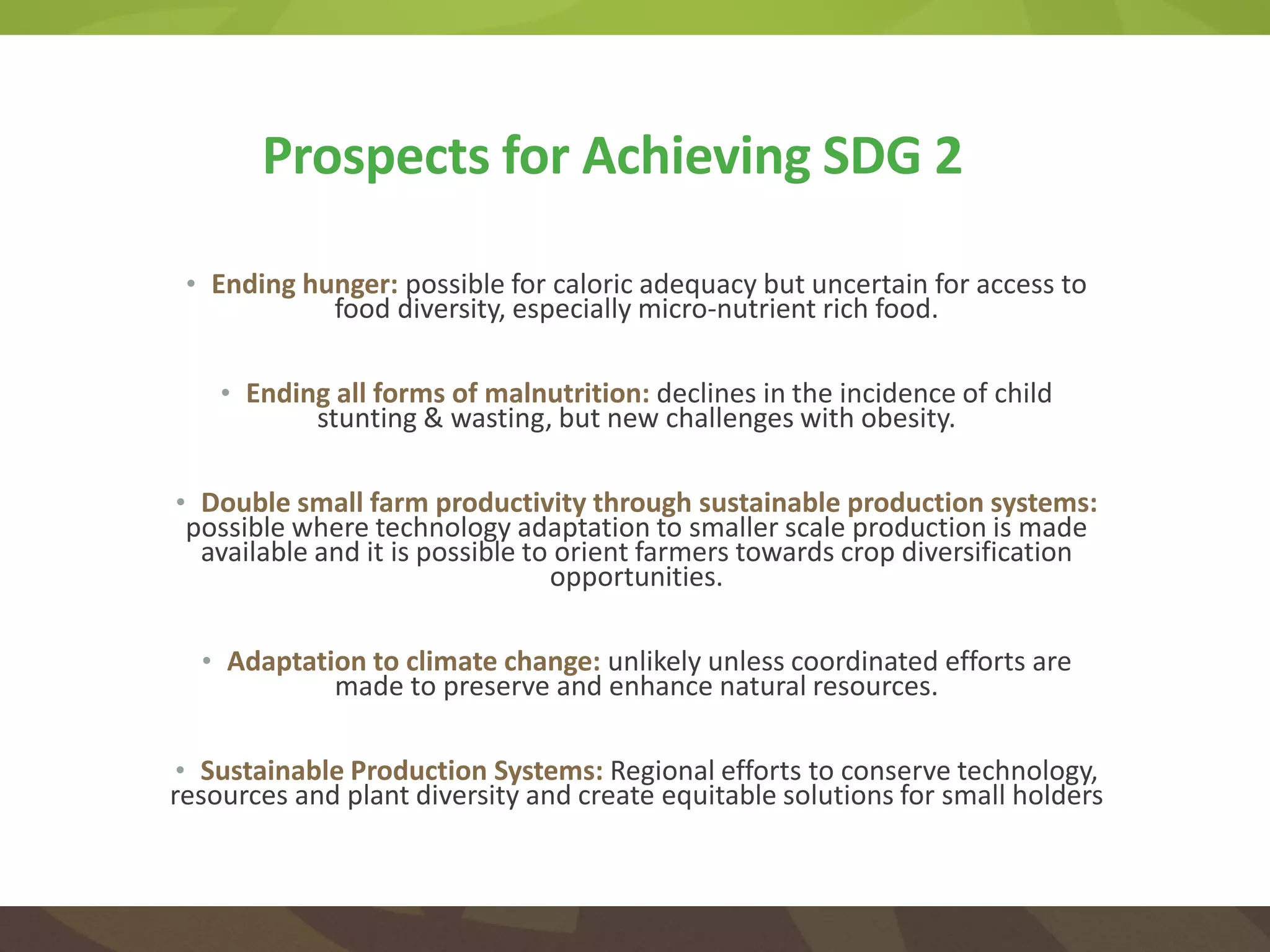
• Ending hunger: possible for caloric adequacy but uncertain for access to
food diversity, especially micro-nutrient rich food.
• Ending all forms of malnutrition: declines in the incidence of child
stunting & wasting, but new challenges with obesity.
• Double small farm productivity through sustainable production systems:
possible where technology adaptation to smaller scale production is made
available and it is possible to orient farmers towards crop diversification
opportunities.
• Adaptation to climate change: unlikely unless coordinated efforts are
made to preserve and enhance natural resources.
• Sustainable Production Systems: Regional efforts to conserve technology,
resources and plant diversity and create equitable solutions for small holders
Prospects for Achieving SDG 2
Transforming FoodSystems for a Rising India
• Palgrave Series in Agricultural
Economics and Food Policy
• Authors:
• Prabhu Pingali
• Anaka Aiyar (www.anaka-aiyar.com)
• Mathew Abraham
• Andaleeb Rahman
Download your free copy at:
https://tci.cornell.edu/food-systems-
book

Achieving SDG2 by 2030 through food systems transformations: Implications for Asia

  • 1.
    Achieving SDG2 by2030 through food systems transformations: Implications for Asia Anaka Aiyar Tata-Cornell Institute for Agriculture and Nutrition Cornell university Evolving Agrifood Systems in Asia: Achieving food and nutrition security by 2030 Oct 30th 2019
  • 2.
    Transforming FoodSystems fora Rising India • Palgrave Series in Agricultural Economics and Food Policy • Authors: • Prabhu Pingali • Anaka Aiyar • Mathew Abraham • Andaleeb Rahman Download your free copy at: https://tci.cornell.edu/food-systems- book
  • 4.
    The Post-2015 DevelopmentAgenda links hunger, nutrition and agriculture under theSDG framework…
  • 5.
    1. : Endhunger & ensure access to safe, nutritious & sufficient food 2. : End all forms of malnutrition, including child stunting & wasting by 2025 3. : Double agricultural productivity & incomes of small scale producers 4. : Ensure sustainable production systems & adaptation to climate change & extreme weather events 5. : Maintain genetic diversity of cultivated plants & domesticated animals Goal 2: Zero Hunger Specific Targets for 2030
  • 6.
    Reduction in severepoverty across Asia -40 -20 0 20 40 60 80 Nepal Bangladesh Pakistan India Bhutan Sri Lanka Maldives Poverty Headcount Ratios for 2010-2015 and change from 2001-2005 HCR<1.90$, PPP Pct_chng(<1.90$ PPP) HCR<3.20$, PPP pct_chng(<3.20$ PPP) Source: WDI Indicators, 2019
  • 7.
    Inter- and intra-disparities in incomes drive food access 0 2000 4000 6000 8000 10000 12000 14000 16000 18000 20000 BIHAR Afghanistan Nepal UTTARPRADESH WESTBENGAL MADHYAPRADESH JHARKHAND Bangladesh SubSaharanAfrica ODISHA CHHATTISGARH RAJASTHAN SouthAsia Pakistan ANDHRAPRADESH India PUNJAB KARNATAKA GUJARAT TAMILNADU HIMACHALPRADESH KERALA MAHARASHTRA UTTARAKHAND Bhutan HARYANA SriLanka EastAsiaandthe… DELHI Maldives latinAmerica Brazil Mexico GOA GDP per capita 2015-16 (PPP, constant 2011 international $) Based on Authors calculations from National Accounts Statistics in India & WDI Indicators, 2019
  • 8.
    Catering to dietdiversity and feeding urban populations are important to reduce hunger Kcal/capita/day 0 500 1000 1500 2000 2500 3000 1969-1971 1989-1991 2011-2013 1969-1971 1989-1991 2011-2013 1969-1971 1989-1991 2011-2013 1969-1971 1989-1991 2011-2013 1969-1971 1989-1991 2011-2013 Kenya Nigeria Colombia China India Fruits, vegetables, other Meat, eggs, animal fat Pulses Sugar and sweetners Starchy roots Cereals Percentage point growth in urban populations between 2010 & 2050 0.00% 20.00% 40.00% 60.00% 80.00%100.00%120.00%140.00% World Maldives Bhutan India Afghanistan Sri Lanka Bangladesh Nepal Source: WDI Indicators, 2019Source: FAO Food Balance Sheets
  • 9.
    1. : Endhunger & ensure access to safe, nutritious & sufficient food 2. : End all forms of malnutrition, including child stunting & wasting by 2025 3. : Double agricultural productivity & incomes of small scale producers 4. : Ensure sustainable production systems & adaptation to climate change & extreme weather events 5. : Maintain genetic diversity of cultivated plants & domesticated animals Goal 2: Zero Hunger Specific Targets for 2030
  • 10.
    Child malnutrition hasbeen reducing, but hidden hunger has not Underweight Stunting
  • 11.
    Dietary related NCDsand obesity has increased quite rapidly Percentage of adults who are over weight (BMI>24.9) Diabetes prevalence in population ages 20 and above 0 2 4 6 8 10 12 Source: WDI Indicators, 2019, National family Health Survey 2015-16 (India)
  • 12.
    1. : Endhunger & ensure access to safe, nutritious & sufficient food 2. : End all forms of malnutrition, including child stunting & wasting by 2025 3. : Double agricultural productivity & incomes of small scale producers 4. : Ensure sustainable production systems & adaptation to climate change & extreme weather events 5. : Maintain genetic diversity of cultivated plants & domesticated animals Goal 2: Zero Hunger Specific Targets for 2030
  • 13.
    Technology has playeda pivotal role in increasing cereal yields
  • 14.
    Source: West. P.C,et al., Nov 2010, “Trading Carbon for Food: Global comparison of carbon stocks vs. crop yields on agricultural land”. PNAS, vol. 107, no. 46, 19647 Cropland distribution and average annual yield Significant Opportunities to Boost Productivity
  • 15.
    Cropping technologies designedfor smallholders are central to achieving SDG2 0% 10% 20% 30% 40% 50% 60% 70% 80% 90% 100% South Asia East Asia and Pacific Sub-Saharan Africa Middle East and North Africa Europe and Central Asia Latin America and the Caribbean Average Share of Agricultural Holdings by Land Size Class = or <2 ha 2-10 ha 10-20 ha >20 ha Data Source: FAO
  • 16.
    Catering to demandin urban food markets creates new farming opportunities Photo Sources Left photos: Kiera Crowley Top photo: https://www.freshfruitportal.com/news/2017/01/16/india- supermarkets-gain-from-demonetization-pain/
  • 17.
    Climate projections cautionthat Asian regions are at high risk Plate 3.2. Thermal climates (HadCM3-A1F1, 2080s). Undefined Tropics Subtropics, Summer rainfall Subtropics, Winter rainfall Temperate, Oceanic Temperate, Subcontinental Temperate, continental Boreal, Oceanic Boreal, Subcontinental Boreal, continental Arctic Fisher et al 2002
  • 18.
    Tackling the threatfrom climate change requires a technology+ approach • Technology plus conservation plus community action • Region specific approaches for tackling climate change have been proposed mostly in the energy sector, but not so much for reducing emissions from the agriculture sector • National policies for climate change adaptation are yet to take shape- much of the focus continues to remain on mitigation • There has been very little private sector participation in these efforts, though consumer awareness is growing
  • 19.
    SDG 2 successalso depends on the achieving other SDGs SDG 2: Zero Hunger Ending Poverty Increasing Environmental Quality Improving Health Goal 1: No poverty Goal 8: Decent work and economic growth Increasing Equality Goal 3: Good health and wellbeing Goal 5: Gender equality Goal 10: Reduce inequality within and among countries Goal 12: Responsible production and consumption Goal 13: Climate action Goal 14 & 15: Life in Water & Land
  • 20.
    • Ending hunger:possible for caloric adequacy but uncertain for access to food diversity, especially micro-nutrient rich food. • Ending all forms of malnutrition: declines in the incidence of child stunting & wasting, but new challenges with obesity. • Double small farm productivity through sustainable production systems: possible where technology adaptation to smaller scale production is made available and it is possible to orient farmers towards crop diversification opportunities. • Adaptation to climate change: unlikely unless coordinated efforts are made to preserve and enhance natural resources. • Sustainable Production Systems: Regional efforts to conserve technology, resources and plant diversity and create equitable solutions for small holders Prospects for Achieving SDG 2
  • 21.
    Transforming FoodSystems fora Rising India • Palgrave Series in Agricultural Economics and Food Policy • Authors: • Prabhu Pingali • Anaka Aiyar (www.anaka-aiyar.com) • Mathew Abraham • Andaleeb Rahman Download your free copy at: https://tci.cornell.edu/food-systems- book