
Pakistan’s Multi-Sectoral
Nutrition Strategy
Amna Ejaz
International Food Policy Research Institute – Pakistan
Yangon, Myanmar | October 30, 2019
Brief
Background
Brief Background
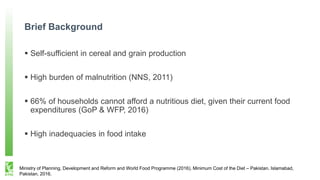
 Self-sufficient in cereal and grain production
 High burden of malnutrition (NNS, 2011)
 66% of households cannot afford a nutritious diet, given their current food
expenditures (GoP & WFP, 2016)
 High inadequacies in food intake
Ministry of Planning, Development and Reform and World Food Programme (2016). Minimum Cost of the Diet – Pakistan. Islamabad,
Pakistan, 2016.
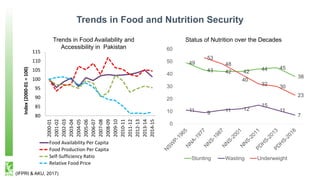
80
85
90
95
100
105
110
115 2000-01
2001-02
2002-03
2003-04
2004-05
2005-06
2006-07
2007-08
2008-09
2009-10
2010-11
2011-12
2012-13
2013-14
2014-15
Index(2000-01=100)
Food Availability Per Capita (1/2)
Food Production Per Capita (1/6)
Self-Sufficiency Ratio (1/6)
Relative Food Price (1/6)
Trends in Food Availability and
Accessibility in Pakistan
Status of Nutrition over the Decades
(IFPRI & AKU, 2017)
49
43 42 42 44 45
38
11 9 11 12
15
11
7
53
48
40
32 30
23
0
10
20
30
40
50
60
Stunting Wasting Underweight
Trends in Food and Nutrition Security
Government
Initiatives
Government is Taking Ownership
 Key Strategies in Place:
o Agricultural and related policies (National Water Policy, National Food
Security Policy, provincial Agricultural Policies, Seed Amendment and Plant
Breeders Rights Act).
o Protection of Breastfeeding and Child Nutrition Act, Food Fortification Acts
and the Early Marriage Restraint Act
o Multi-Sectoral Nutrition Strategies
 Expanded social safety nets.
o Expansion of Benazir Income Support Program (BISP) coverage
o Initiatives under the ‘Ehsaas’ Program
 Provincial programs to address stunting, wasting, malnutrition
Pakistan Multi-Sectoral
Nutrition Strategy
2018-2025
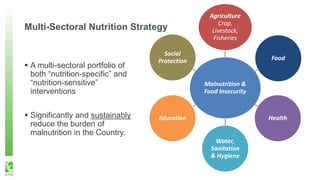
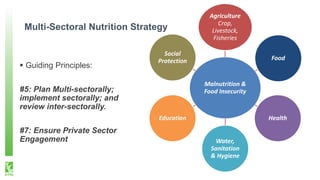
Multi-Sectoral Nutrition Strategy
 A multi-sectoral portfolio of
both “nutrition-specific” and
“nutrition-sensitive”
interventions
 Significantly and sustainably
reduce the burden of
malnutrition in the Country.
Malnutrition &
Food Insecurity
Agriculture
Crop,
Livestock,
Fisheries
Food
Health
Water,
Sanitation
& Hygiene
Education
Social
Protection
Multi-Sectoral Nutrition Strategy
 Guiding Principles:
#5: Plan Multi-sectorally;
implement sectorally; and
review inter-sectorally.
#7: Ensure Private Sector
Engagement
Malnutrition &
Food Insecurity
Agriculture
Crop,
Livestock,
Fisheries
Food
Health
Water,
Sanitation
& Hygiene
Education
Social
Protection
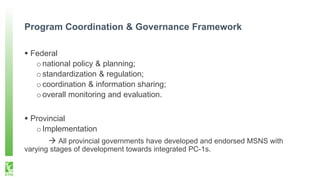
Program Coordination & Governance Framework
 Federal
o national policy & planning;
o standardization & regulation;
o coordination & information sharing;
o overall monitoring and evaluation.
 Provincial
o Implementation
 All provincial governments have developed and endorsed MSNS with
varying stages of development towards integrated PC-1s.
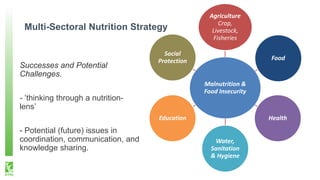
Multi-Sectoral Nutrition Strategy
Successes and Potential
Challenges.
- ’thinking through a nutrition-
lens’
- Potential (future) issues in
coordination, communication, and
knowledge sharing.
Malnutrition &
Food Insecurity
Agriculture
Crop,
Livestock,
Fisheries
Food
Health
Water,
Sanitation
& Hygiene
Education
Social
Protection
SDG-2 in
Pakistan
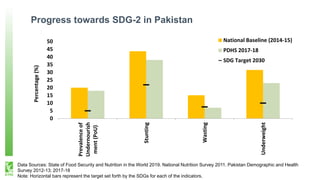
Data Sources: State of Food Security and Nutrition in the World 2019. National Nutrition Survey 2011. Pakistan Demographic and Health
Survey 2012-13; 2017-18
Note: Horizontal bars represent the target set forth by the SDGs for each of the indicators.
0
5
10
15
20
25
30
35
40
45
50
Prevalenceof
Undernourish
ment(PoU)
Stunting
Wasting
Underweight
Percentage(%)
National Baseline (2014-15)
PDHS 2017-18
SDG Target 2030
Progress towards SDG-2 in Pakistan
Thank you!

Pakistan’s Multi-Sectoral Nutrition Strategy

  • 1.
    Pakistan’s Multi-Sectoral Nutrition Strategy AmnaEjaz International Food Policy Research Institute – Pakistan Yangon, Myanmar | October 30, 2019
  • 2.
  • 3.
    Brief Background  Self-sufficientin cereal and grain production  High burden of malnutrition (NNS, 2011)  66% of households cannot afford a nutritious diet, given their current food expenditures (GoP & WFP, 2016)  High inadequacies in food intake Ministry of Planning, Development and Reform and World Food Programme (2016). Minimum Cost of the Diet – Pakistan. Islamabad, Pakistan, 2016.
  • 4.
    80 85 90 95 100 105 110 115 2000-01 2001-02 2002-03 2003-04 2004-05 2005-06 2006-07 2007-08 2008-09 2009-10 2010-11 2011-12 2012-13 2013-14 2014-15 Index(2000-01=100) Food AvailabilityPer Capita (1/2) Food Production Per Capita (1/6) Self-Sufficiency Ratio (1/6) Relative Food Price (1/6) Trends in Food Availability and Accessibility in Pakistan Status of Nutrition over the Decades (IFPRI & AKU, 2017) 49 43 42 42 44 45 38 11 9 11 12 15 11 7 53 48 40 32 30 23 0 10 20 30 40 50 60 Stunting Wasting Underweight Trends in Food and Nutrition Security
  • 5.
  • 6.
    Government is TakingOwnership  Key Strategies in Place: o Agricultural and related policies (National Water Policy, National Food Security Policy, provincial Agricultural Policies, Seed Amendment and Plant Breeders Rights Act). o Protection of Breastfeeding and Child Nutrition Act, Food Fortification Acts and the Early Marriage Restraint Act o Multi-Sectoral Nutrition Strategies  Expanded social safety nets. o Expansion of Benazir Income Support Program (BISP) coverage o Initiatives under the ‘Ehsaas’ Program  Provincial programs to address stunting, wasting, malnutrition
  • 7.
  • 8.
    Multi-Sectoral Nutrition Strategy A multi-sectoral portfolio of both “nutrition-specific” and “nutrition-sensitive” interventions  Significantly and sustainably reduce the burden of malnutrition in the Country. Malnutrition & Food Insecurity Agriculture Crop, Livestock, Fisheries Food Health Water, Sanitation & Hygiene Education Social Protection
  • 9.
    Multi-Sectoral Nutrition Strategy Guiding Principles: #5: Plan Multi-sectorally; implement sectorally; and review inter-sectorally. #7: Ensure Private Sector Engagement Malnutrition & Food Insecurity Agriculture Crop, Livestock, Fisheries Food Health Water, Sanitation & Hygiene Education Social Protection
  • 10.
    Program Coordination &Governance Framework  Federal o national policy & planning; o standardization & regulation; o coordination & information sharing; o overall monitoring and evaluation.  Provincial o Implementation  All provincial governments have developed and endorsed MSNS with varying stages of development towards integrated PC-1s.
  • 11.
    Multi-Sectoral Nutrition Strategy Successesand Potential Challenges. - ’thinking through a nutrition- lens’ - Potential (future) issues in coordination, communication, and knowledge sharing. Malnutrition & Food Insecurity Agriculture Crop, Livestock, Fisheries Food Health Water, Sanitation & Hygiene Education Social Protection
  • 12.
  • 13.
    Data Sources: Stateof Food Security and Nutrition in the World 2019. National Nutrition Survey 2011. Pakistan Demographic and Health Survey 2012-13; 2017-18 Note: Horizontal bars represent the target set forth by the SDGs for each of the indicators. 0 5 10 15 20 25 30 35 40 45 50 Prevalenceof Undernourish ment(PoU) Stunting Wasting Underweight Percentage(%) National Baseline (2014-15) PDHS 2017-18 SDG Target 2030 Progress towards SDG-2 in Pakistan
  • 14.