
Chapter 03
Kinematics of Linear
Motion
(Acceleration and
Equations of Motion)
Lec-12
Learning Objectives
• Review
• Velocity and Acceleration
• Review Problems
• 1st Equation of motion
• Home Task
Velocity
Velocity is displacement
covered in any time OR
Velocity is speed and
direction. SI unit m/s
𝑽 𝒂𝒗 =
𝑺
𝒕
Types of Velocity
1.Uniform Velocity.
Displacement does not
change with time.
2. Variable Velocity
Displacement changes
with time
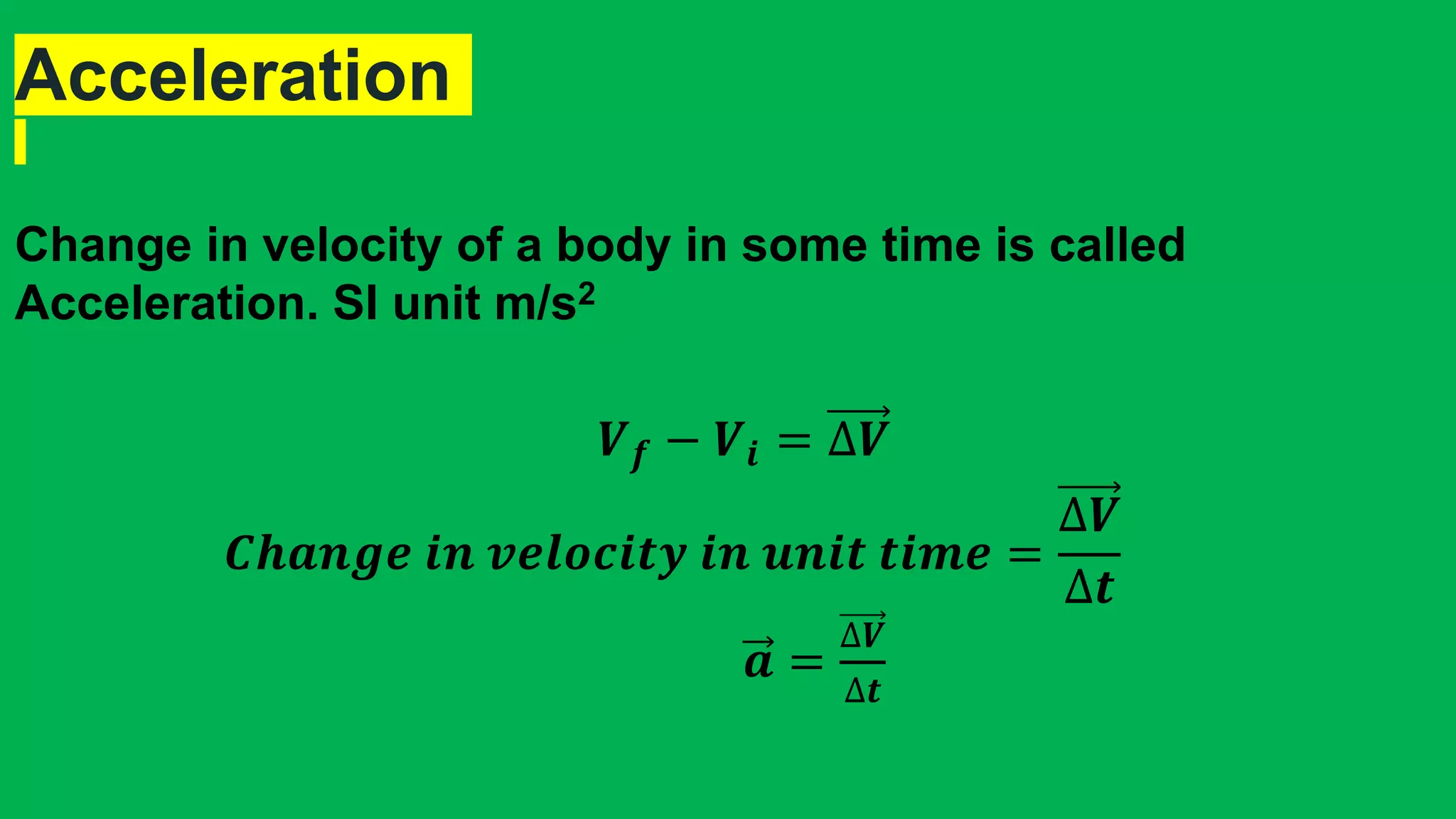
Acceleration
Change in velocity of a body in some time is called
Acceleration. SI unit m/s2
𝑽 𝒇 − 𝑽𝒊 = ∆𝑽
𝑪𝒉𝒂𝒏𝒈𝒆 𝒊𝒏 𝒗𝒆𝒍𝒐𝒄𝒊𝒕𝒚 𝒊𝒏 𝒖𝒏𝒊𝒕 𝒕𝒊𝒎𝒆 =
∆𝑽
∆𝒕
𝒂 =
∆𝑽
∆𝒕
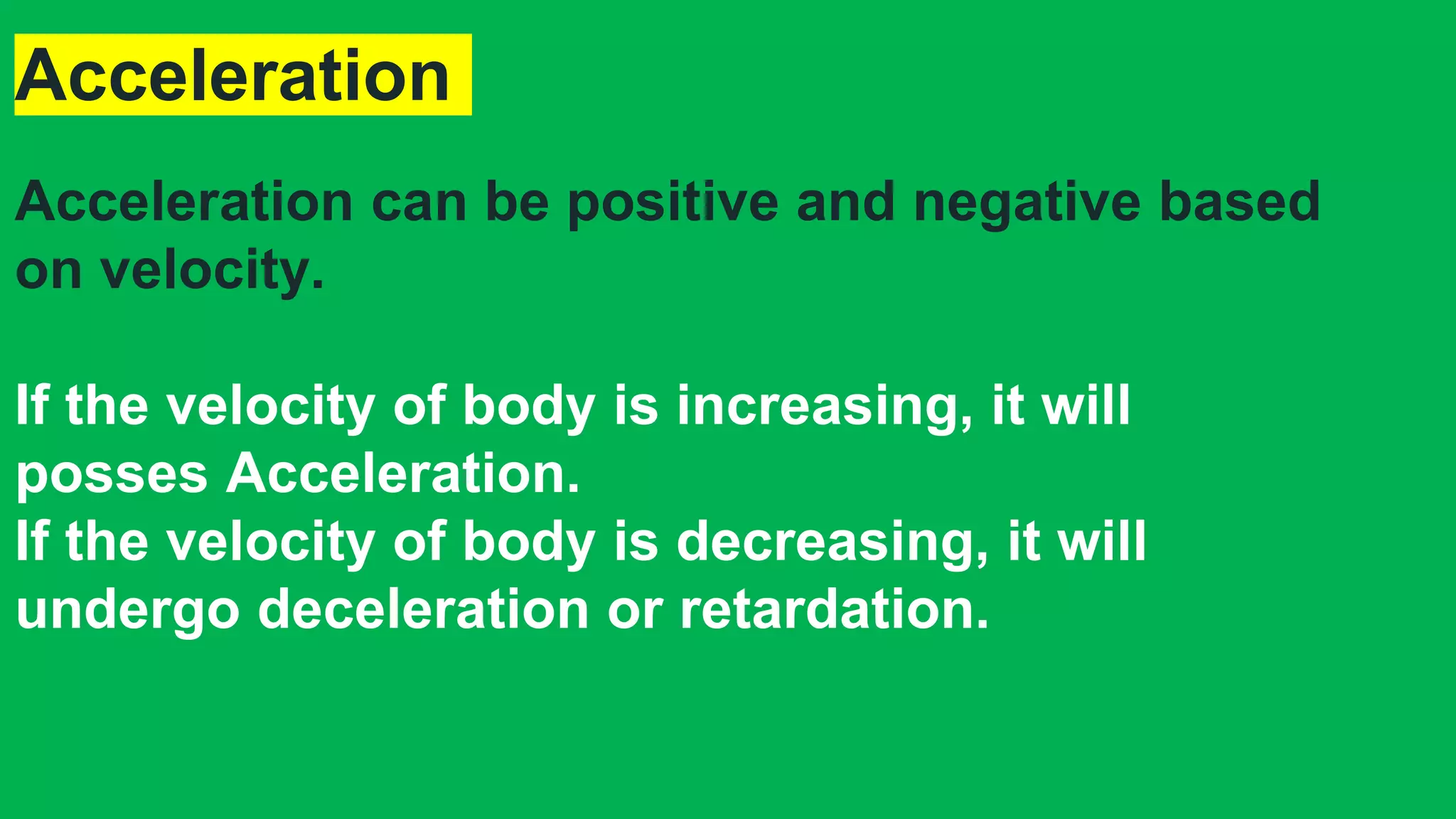
Acceleration
Acceleration can be positive and negative based
on velocity.
If the velocity of body is increasing, it will
posses Acceleration.
If the velocity of body is decreasing, it will
undergo deceleration or retardation.
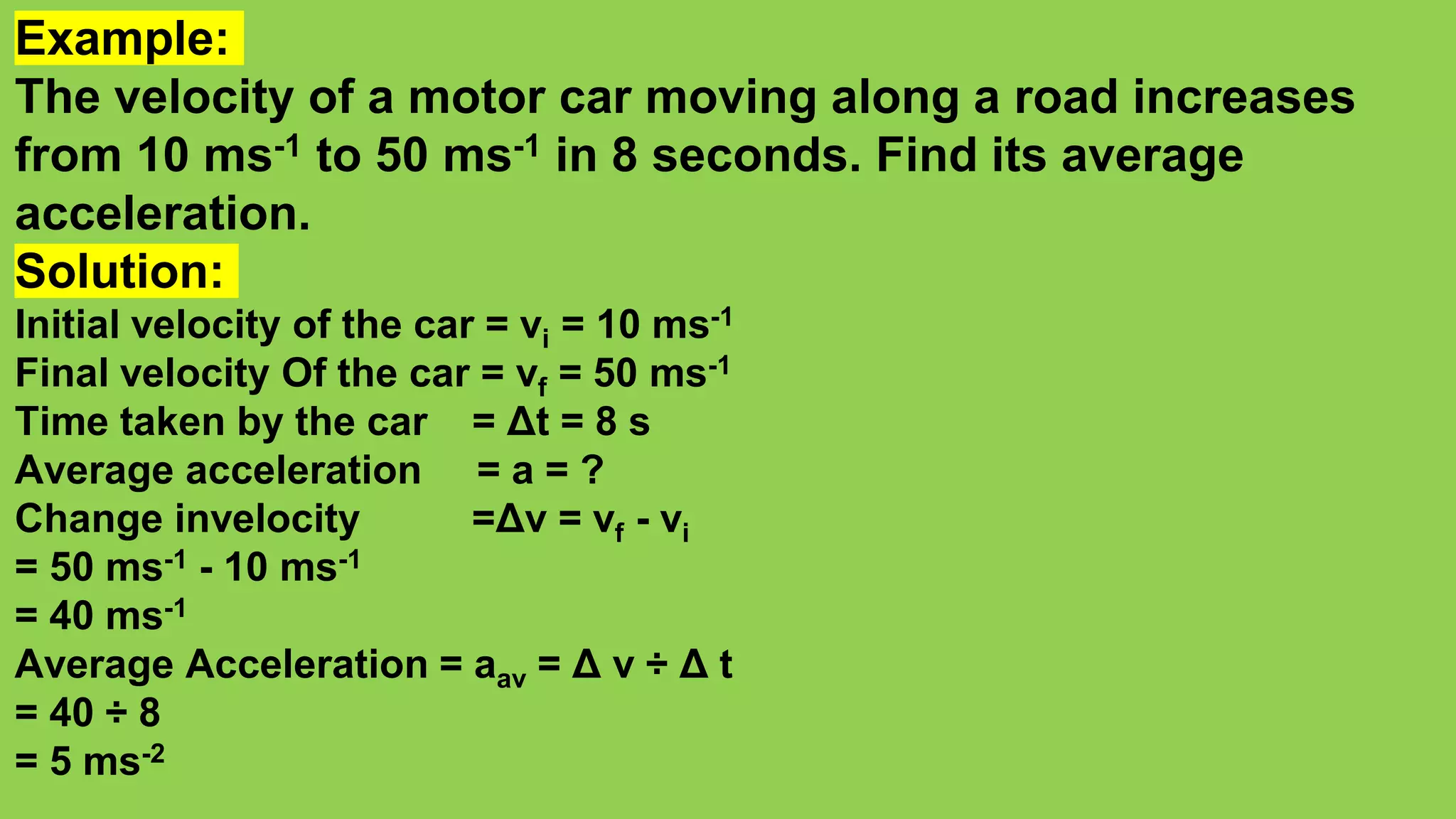
Example:
The velocity of a motor car moving along a road increases
from 10 ms-1 to 50 ms-1 in 8 seconds. Find its average
acceleration.
Solution:
Initial velocity of the car = vi = 10 ms-1
Final velocity Of the car = vf = 50 ms-1
Time taken by the car = Δt = 8 s
Average acceleration = a = ?
Change invelocity =Δv = vf - vi
= 50 ms-1 - 10 ms-1
= 40 ms-1
Average Acceleration = aav = Δ v ÷ Δ t
= 40 ÷ 8
= 5 ms-2
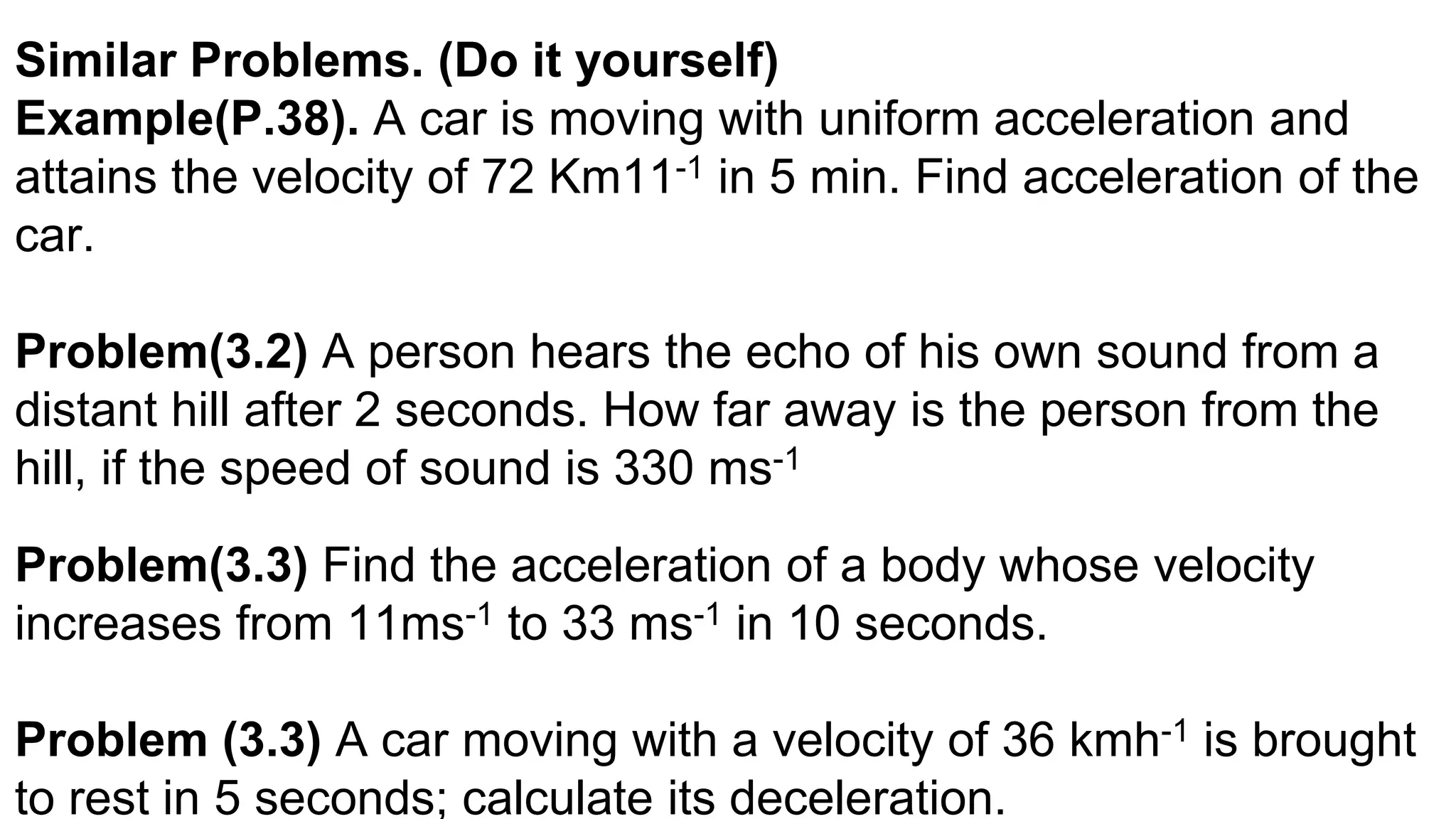
Similar Problems. (Do it yourself)
Example(P.38). A car is moving with uniform acceleration and
attains the velocity of 72 Km11-1 in 5 min. Find acceleration of the
car.
Problem(3.2) A person hears the echo of his own sound from a
distant hill after 2 seconds. How far away is the person from the
hill, if the speed of sound is 330 ms-1
Problem(3.3) Find the acceleration of a body whose velocity
increases from 11ms-1 to 33 ms-1 in 10 seconds.
Problem (3.3) A car moving with a velocity of 36 kmh-1 is brought
to rest in 5 seconds; calculate its deceleration.
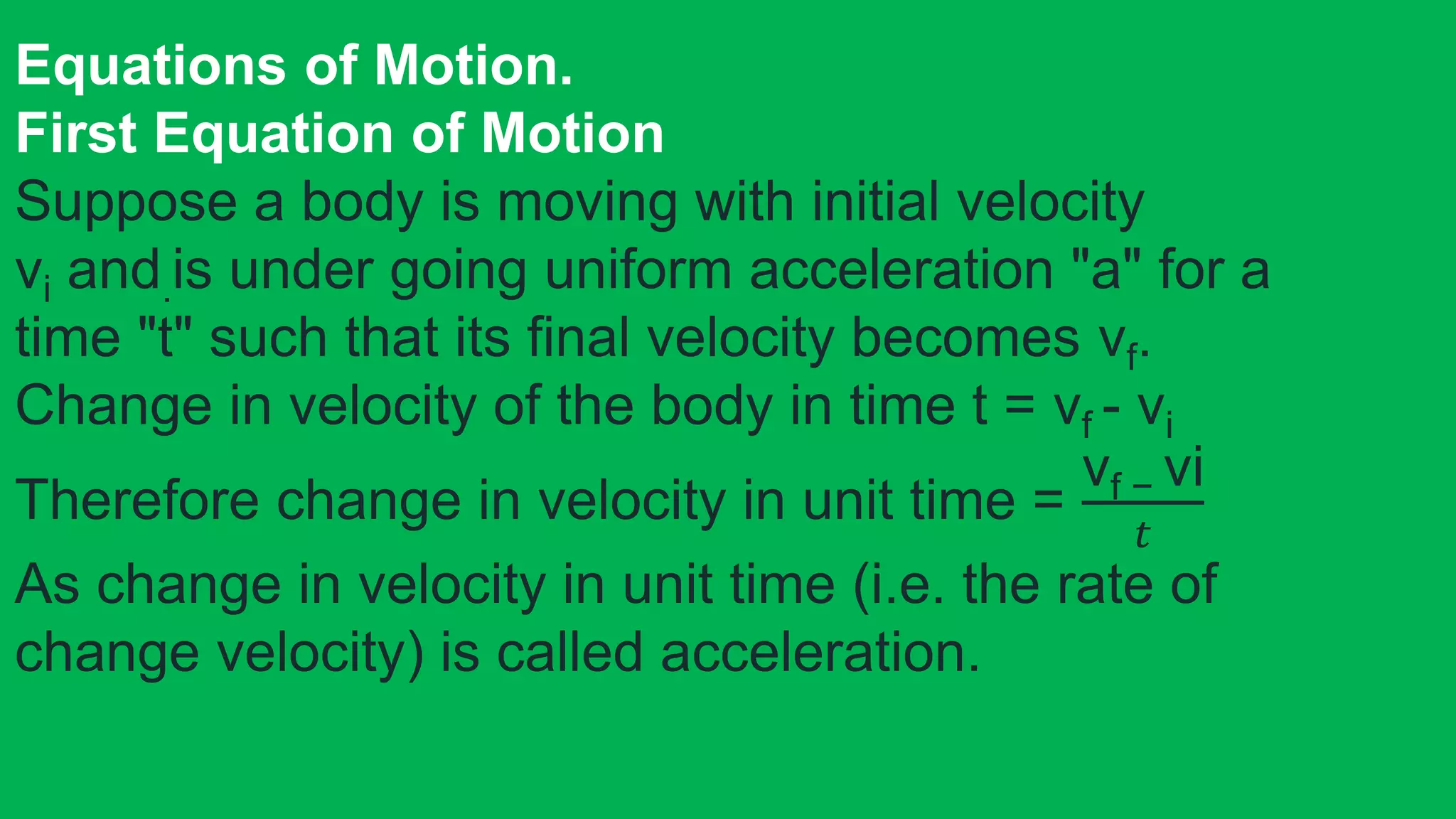
Equations of Motion.
First Equation of Motion
Suppose a body is moving with initial velocity
vi and.is under going uniform acceleration "a" for a
time "t" such that its final velocity becomes vf.
Change in velocity of the body in time t = vf - vi
Therefore change in velocity in unit time =
vf − vi
𝑡
As change in velocity in unit time (i.e. the rate of
change velocity) is called acceleration.
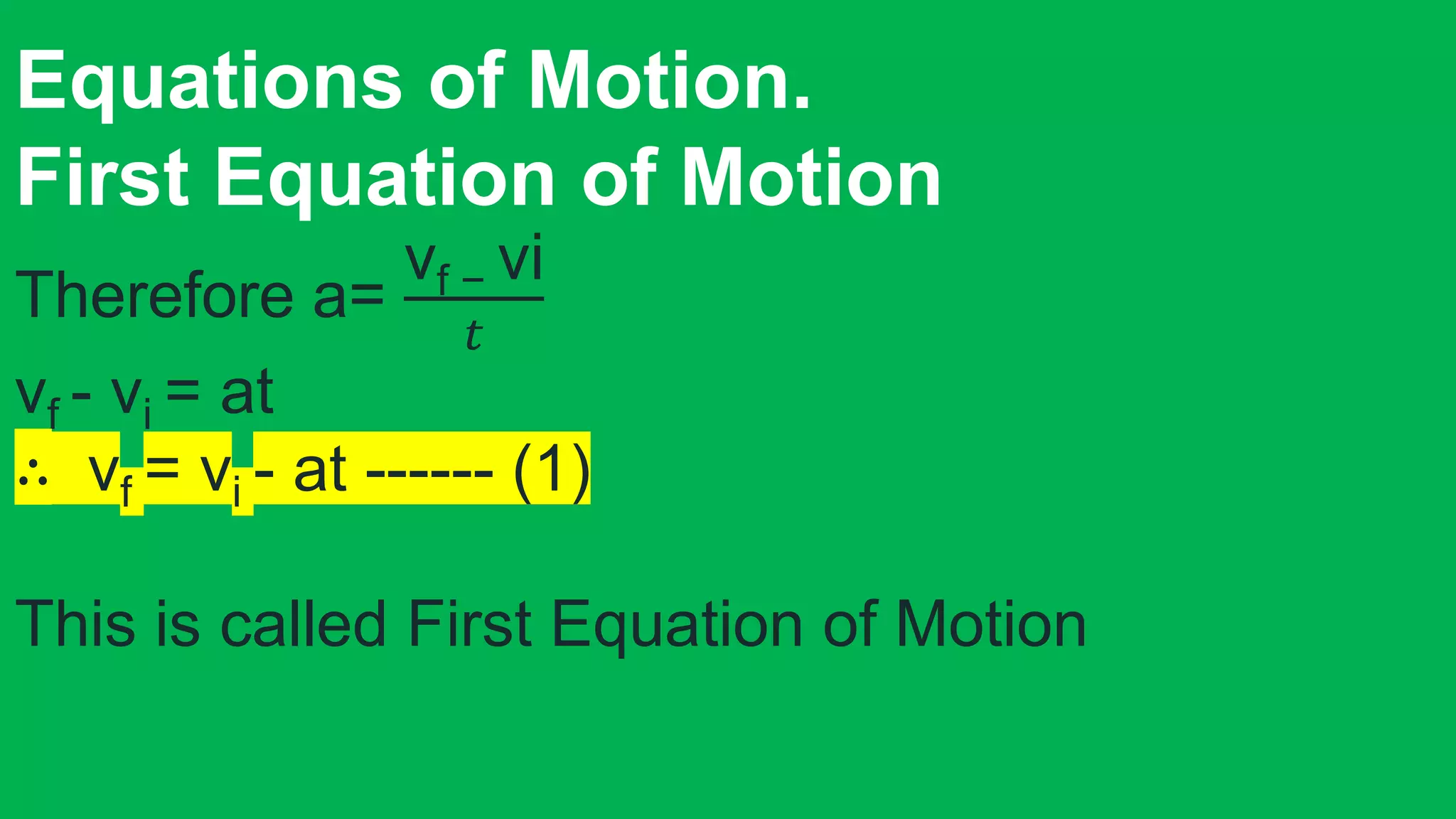
Equations of Motion.
First Equation of Motion
Therefore a=
vf − vi
𝑡
vf - vi = at
∴ vf = vi - at ------ (1)
This is called First Equation of Motion
Home Task
• Write the Definitions of velocity,
acceleration, their formula and
probelems.
Thank You For Your
Cooperation
You can find this presentation on Slideshare.com
“Acceleration and Equation of Motion”

Acceleration and Equations of Motion(1st)

  • 1.
    Chapter 03 Kinematics ofLinear Motion (Acceleration and Equations of Motion) Lec-12
  • 2.
    Learning Objectives • Review •Velocity and Acceleration • Review Problems • 1st Equation of motion • Home Task
  • 3.
    Velocity Velocity is displacement coveredin any time OR Velocity is speed and direction. SI unit m/s 𝑽 𝒂𝒗 = 𝑺 𝒕
  • 4.
    Types of Velocity 1.UniformVelocity. Displacement does not change with time. 2. Variable Velocity Displacement changes with time
  • 5.
    Acceleration Change in velocityof a body in some time is called Acceleration. SI unit m/s2 𝑽 𝒇 − 𝑽𝒊 = ∆𝑽 𝑪𝒉𝒂𝒏𝒈𝒆 𝒊𝒏 𝒗𝒆𝒍𝒐𝒄𝒊𝒕𝒚 𝒊𝒏 𝒖𝒏𝒊𝒕 𝒕𝒊𝒎𝒆 = ∆𝑽 ∆𝒕 𝒂 = ∆𝑽 ∆𝒕
  • 6.
    Acceleration Acceleration can bepositive and negative based on velocity. If the velocity of body is increasing, it will posses Acceleration. If the velocity of body is decreasing, it will undergo deceleration or retardation.
  • 7.
    Example: The velocity ofa motor car moving along a road increases from 10 ms-1 to 50 ms-1 in 8 seconds. Find its average acceleration. Solution: Initial velocity of the car = vi = 10 ms-1 Final velocity Of the car = vf = 50 ms-1 Time taken by the car = Δt = 8 s Average acceleration = a = ? Change invelocity =Δv = vf - vi = 50 ms-1 - 10 ms-1 = 40 ms-1 Average Acceleration = aav = Δ v ÷ Δ t = 40 ÷ 8 = 5 ms-2
  • 8.
    Similar Problems. (Doit yourself) Example(P.38). A car is moving with uniform acceleration and attains the velocity of 72 Km11-1 in 5 min. Find acceleration of the car. Problem(3.2) A person hears the echo of his own sound from a distant hill after 2 seconds. How far away is the person from the hill, if the speed of sound is 330 ms-1 Problem(3.3) Find the acceleration of a body whose velocity increases from 11ms-1 to 33 ms-1 in 10 seconds. Problem (3.3) A car moving with a velocity of 36 kmh-1 is brought to rest in 5 seconds; calculate its deceleration.
  • 9.
    Equations of Motion. FirstEquation of Motion Suppose a body is moving with initial velocity vi and.is under going uniform acceleration "a" for a time "t" such that its final velocity becomes vf. Change in velocity of the body in time t = vf - vi Therefore change in velocity in unit time = vf − vi 𝑡 As change in velocity in unit time (i.e. the rate of change velocity) is called acceleration.
  • 10.
    Equations of Motion. FirstEquation of Motion Therefore a= vf − vi 𝑡 vf - vi = at ∴ vf = vi - at ------ (1) This is called First Equation of Motion
  • 11.
    Home Task • Writethe Definitions of velocity, acceleration, their formula and probelems.
  • 12.
    Thank You ForYour Cooperation You can find this presentation on Slideshare.com “Acceleration and Equation of Motion”