ACADEMIC
WRITING &
THE WRITING
PROCESS
• What is your definition of ‘writing’?
• Here’s another question…
– What makes writing ‘good’?
• Writing is…
– A response
– Linear
– Ongoing/Changes
– Decision Making
– A Process
WHAT IS
WRITING?
• In high school…
– You write what you know
• In college…
– You write to find out what you
don’t know.
HOW DO I
WRITE FOR
COLLEGE?
• The Title
• Preliminary Remarks
• Audience & Purpose
• The Thesis
• The Introduction
• The Body
• The Conclusion
• The Postscript
ELEMENTS OF
AN ESSAY
• Choose a topic.
• Focus your topic.
• Collect your ideas.
• Organize your ideas.
• Write them down onto paper.
• Revise!!!!!
• Turn it in on time.
• Congratulate yourself.
WRITING
ACADEMIC
PAPERS: AN
OVERVIEW
THE WRITING
PROCESS
• Finding out what you already know,
think, or how you feel about your
chosen topic.
• You may want to do some research
to find out more, or solidify facts
and figures.
• Strategies: Brainstorming
(Clustering, Listing); Freewriting;
Outlining
PREWRITING
• Think of an assignment as a
problem to be solved. Write it out in
a single sentence.
• Stop trying. Take a break. Come
back refreshed.
• Free write, brainstorm, outline
• Research what others have said
WRITER’S
BLOCK
• Don’t wait until the last minute!
• Establish a schedule that works for
you
• Break down your writing task
• Expect surprises
• Expect to do more than one draft
• Strategies: Taking Notes;
Expanding on an Outline; Writing
paragraphs
DRAFTING
• When writing for yourself – don’t
worry
• Personal writing = length
• When writing for others…
– Make sure your points come
across clearly
– What needs work? What still
needs work? What do you need
to say more (or less) of?
ASSESSING
YOUR OWN
WRITING
• Purpose
– Why you are writing
• Audience
– Who you are writing to/for
• Genre
– What type of writing are you
doing?
• Stance
– How do you feel about the
topic?
CONSIDER THE
RHETORICAL
SITUATION
• Focus
– Thesis
– Introduction & Conclusion
• Support
– Reasons, Evidence
• Organization
• Clarity
REVIEWING
YOUR WRITING
• Others can point out problems that
you do not see in your own text
• Answer specific questions you may
have about the audience of your text
GETTING
RESPONSES
• Major changes to the essay
• Layered
– Whole-Text
– Details
• Give yourself time to revise
• Sharpen your focus
• Strengthen the argument
• Clarify
• Rewriting – pg. 239
REVISING
• Details
– Paragraphs, Sentences, etc.
• Paragraphs
• Sentences
• Words
EDITING
• Clean up your work for presentation
• Spell check
• Formatting
PROOFREADING
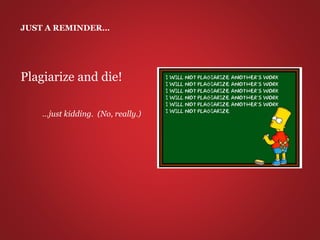
JUST A REMINDER…
Plagiarize and die!
…just kidding. (No, really.)

Academic writing + writing process

  • 1.
  • 2.
    • What isyour definition of ‘writing’? • Here’s another question… – What makes writing ‘good’? • Writing is… – A response – Linear – Ongoing/Changes – Decision Making – A Process WHAT IS WRITING?
  • 3.
    • In highschool… – You write what you know • In college… – You write to find out what you don’t know. HOW DO I WRITE FOR COLLEGE?
  • 4.
    • The Title •Preliminary Remarks • Audience & Purpose • The Thesis • The Introduction • The Body • The Conclusion • The Postscript ELEMENTS OF AN ESSAY
  • 5.
    • Choose atopic. • Focus your topic. • Collect your ideas. • Organize your ideas. • Write them down onto paper. • Revise!!!!! • Turn it in on time. • Congratulate yourself. WRITING ACADEMIC PAPERS: AN OVERVIEW
  • 6.
  • 7.
    • Finding outwhat you already know, think, or how you feel about your chosen topic. • You may want to do some research to find out more, or solidify facts and figures. • Strategies: Brainstorming (Clustering, Listing); Freewriting; Outlining PREWRITING
  • 8.
    • Think ofan assignment as a problem to be solved. Write it out in a single sentence. • Stop trying. Take a break. Come back refreshed. • Free write, brainstorm, outline • Research what others have said WRITER’S BLOCK
  • 9.
    • Don’t waituntil the last minute! • Establish a schedule that works for you • Break down your writing task • Expect surprises • Expect to do more than one draft • Strategies: Taking Notes; Expanding on an Outline; Writing paragraphs DRAFTING
  • 10.
    • When writingfor yourself – don’t worry • Personal writing = length • When writing for others… – Make sure your points come across clearly – What needs work? What still needs work? What do you need to say more (or less) of? ASSESSING YOUR OWN WRITING
  • 11.
    • Purpose – Whyyou are writing • Audience – Who you are writing to/for • Genre – What type of writing are you doing? • Stance – How do you feel about the topic? CONSIDER THE RHETORICAL SITUATION
  • 12.
    • Focus – Thesis –Introduction & Conclusion • Support – Reasons, Evidence • Organization • Clarity REVIEWING YOUR WRITING
  • 13.
    • Others canpoint out problems that you do not see in your own text • Answer specific questions you may have about the audience of your text GETTING RESPONSES
  • 14.
    • Major changesto the essay • Layered – Whole-Text – Details • Give yourself time to revise • Sharpen your focus • Strengthen the argument • Clarify • Rewriting – pg. 239 REVISING
  • 15.
    • Details – Paragraphs,Sentences, etc. • Paragraphs • Sentences • Words EDITING
  • 16.
    • Clean upyour work for presentation • Spell check • Formatting PROOFREADING
  • 17.
    JUST A REMINDER… Plagiarizeand die! …just kidding. (No, really.)

Editor's Notes

  • #2 Compiled by Ashley Barbara Supinski for NCC’s English 101: Freshman Composition Updated January 2015.
  • #3 Image Credit: Google Images, “Writing Clipart”
  • #4 Image Credit: Northampton Community College logo, Google Search.
  • #5 Handout from TULSA COMMUNITY COLLEGE, MC Writing Center “Elements of an Essay.”
  • #6 From NCC’s Learning Center handout, “Writing Academic Papers.”
  • #10 Norton Field Guide to Writing, pg. 226
  • #16 Image Credit: Google Images, “Writing Clipart”
  • #18 Image Credit: The Simpsons. Google Search: Plagiarism