ANALYZING A
TEXT
with Literary Analysis
WHAT IS ANALYSIS?
 An interpretation of a text
 Understanding not only what the text says, but also how it tries to
persuade its readers and influence them
KEY FEATURES
 SUMMARIZE THE TEXT
 Tell the reader about the main ideas of the text.
 If it is a well-known text, you do not have to have a lot of summary.
 ATTENTION TO CONTEXT
 What else is being said about the topic? Is the text itself a response to a
larger conversation?
 CLEAR INTERPRETATION/JUDGMENT
 Lead your readers through a “careful examination” of the text to show your
interpretation of the content.
 Interpret – Explain what you think the text means.
 REASONABLE SUPPORT FOR CONCLUSIONS
 Using the text to back up your claims/ideas.
GENERATING IDEAS
Your goal is to understand what the text says, how it works, and what it
means.
 Read the text carefully
 Annotate and take notes for yourself on the content.
 Decide what to analyze
 Don’t try to analyze the entire text. Look at one or two specific ideas that connect.
 Think about the larger context (next slide)
 Consider what you know about the writer/artist
 Do research on the author.
 Study how the text works
 How is it structured?
 Analyze the argument (next slide)
 Come up with a thesis (next slide)
THE LARGER CONTEXT
To consider the larger context, think about these things:
 Who else cares about the topic?
 Who is the text written for? Why should the reader care?
 Ideas presented
 What ideas does the author present? What ideas do you have based on the
text
 Terms used
 Are there any terms that you are unfamiliar with? Do the terms used show a
specific audience?
 Citations made
 Who has the author referenced?
ANALYZE THE ARGUMENT
 What is the claim?
 What is the paper’s thesis? What is the stance of the author?
 What support does the writer offer for the claim?
 What reason and evidence does the author supply for their argument?
 How does the writer appeal to readers?
 Appeals to emotions, logic, and character
 How evenhandedly does the writer present the argument?
 Does the writer use any logical fallacies?
 What authorities or other sources of outside information does the
writer use?
 How does the writer address you as the reader?
COMING UP WITH A THESIS
 In an analysis, you are arguing that a text should be read in a
certain way.
 Identify your analytical goal: how do you want the reader to
interpret the original text?
 A thesis is NOT a summary of the text.
Organization, Beginnings
& Endings
We will discuss this in class.
However, prepare yourselves by
looking over the chart on page 76 in
the textbook.
Beginnings – pg. 77
Endings – pg. 78
TAKING STOCK OF YOUR WORK
 For a “checklist” to go over before handing in a final draft, review
page 81 in your textbook.
Reading Assignment
For an understanding how how an
analysis works, please read William
Safire’s “A Spirit Reborn” on pages
62-64 in your textbook.
LITERARY ANALYSIS
A LITERARY ANALYSIS…
 …studies a literary text closely to understand messages, interpret
meanings, and appreciate the writer’s techniques.
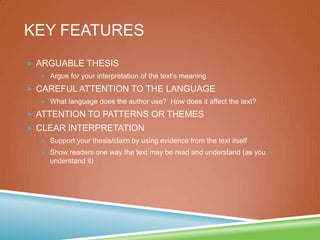
KEY FEATURES
 ARGUABLE THESIS
 Argue for your interpretation of the text’s meaning
 CAREFUL ATTENTION TO THE LANGUAGE
 What language does the author use? How does it affect the text?
 ATTENTION TO PATTERNS OR THEMES
 CLEAR INTERPRETATION
 Support your thesis/claim by using evidence from the text itself
 Show readers one way the text may be read and understand (as you
understand it)
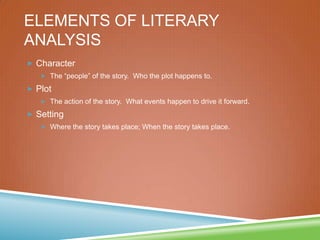
ELEMENTS OF LITERARY
ANALYSIS
 Character
 The “people” of the story. Who the plot happens to.
 Plot
 The action of the story. What events happen to drive it forward.
 Setting
 Where the story takes place; When the story takes place.
CAUSE & EFFECT
Please read…
“Ways of Organizing an Analysis of
Causes and Effects” on pages 320-
31.

Analysis and Literary Analysis

  • 1.
  • 2.
    WHAT IS ANALYSIS? An interpretation of a text  Understanding not only what the text says, but also how it tries to persuade its readers and influence them
  • 3.
    KEY FEATURES  SUMMARIZETHE TEXT  Tell the reader about the main ideas of the text.  If it is a well-known text, you do not have to have a lot of summary.  ATTENTION TO CONTEXT  What else is being said about the topic? Is the text itself a response to a larger conversation?  CLEAR INTERPRETATION/JUDGMENT  Lead your readers through a “careful examination” of the text to show your interpretation of the content.  Interpret – Explain what you think the text means.  REASONABLE SUPPORT FOR CONCLUSIONS  Using the text to back up your claims/ideas.
  • 4.
    GENERATING IDEAS Your goalis to understand what the text says, how it works, and what it means.  Read the text carefully  Annotate and take notes for yourself on the content.  Decide what to analyze  Don’t try to analyze the entire text. Look at one or two specific ideas that connect.  Think about the larger context (next slide)  Consider what you know about the writer/artist  Do research on the author.  Study how the text works  How is it structured?  Analyze the argument (next slide)  Come up with a thesis (next slide)
  • 5.
    THE LARGER CONTEXT Toconsider the larger context, think about these things:  Who else cares about the topic?  Who is the text written for? Why should the reader care?  Ideas presented  What ideas does the author present? What ideas do you have based on the text  Terms used  Are there any terms that you are unfamiliar with? Do the terms used show a specific audience?  Citations made  Who has the author referenced?
  • 6.
    ANALYZE THE ARGUMENT What is the claim?  What is the paper’s thesis? What is the stance of the author?  What support does the writer offer for the claim?  What reason and evidence does the author supply for their argument?  How does the writer appeal to readers?  Appeals to emotions, logic, and character  How evenhandedly does the writer present the argument?  Does the writer use any logical fallacies?  What authorities or other sources of outside information does the writer use?  How does the writer address you as the reader?
  • 7.
    COMING UP WITHA THESIS  In an analysis, you are arguing that a text should be read in a certain way.  Identify your analytical goal: how do you want the reader to interpret the original text?  A thesis is NOT a summary of the text.
  • 8.
    Organization, Beginnings & Endings Wewill discuss this in class. However, prepare yourselves by looking over the chart on page 76 in the textbook. Beginnings – pg. 77 Endings – pg. 78
  • 9.
    TAKING STOCK OFYOUR WORK  For a “checklist” to go over before handing in a final draft, review page 81 in your textbook.
  • 10.
    Reading Assignment For anunderstanding how how an analysis works, please read William Safire’s “A Spirit Reborn” on pages 62-64 in your textbook.
  • 11.
  • 12.
    A LITERARY ANALYSIS… …studies a literary text closely to understand messages, interpret meanings, and appreciate the writer’s techniques.
  • 13.
    KEY FEATURES  ARGUABLETHESIS  Argue for your interpretation of the text’s meaning  CAREFUL ATTENTION TO THE LANGUAGE  What language does the author use? How does it affect the text?  ATTENTION TO PATTERNS OR THEMES  CLEAR INTERPRETATION  Support your thesis/claim by using evidence from the text itself  Show readers one way the text may be read and understand (as you understand it)
  • 14.
    ELEMENTS OF LITERARY ANALYSIS Character  The “people” of the story. Who the plot happens to.  Plot  The action of the story. What events happen to drive it forward.  Setting  Where the story takes place; When the story takes place.
  • 15.
  • 16.
    Please read… “Ways ofOrganizing an Analysis of Causes and Effects” on pages 320- 31.

Editor's Notes

  • #2 Norton Field Guide to Writing, 3rd edition – with Readings & Handbook