The Writing Process
Drafting
 Don’t wait until the last minute!
 Establish a schedule that works for you
 Break down your writing task
 Expect surprises
 Expect to do more than one draft
Writer’s Block
 Think of an assignment as a problem to
be solved. Write it out in a single
sentence.
 Stop trying. Take a break. Come back
refreshed.
 Free write, brainstorm, outline
 Research what others have said
Assessing Your Own Writing
 When writing for yourself – don’t worry
 Personal writing = length
 When writing for others…
◦ Make sure your points come across clearly
◦ What needs work? What still needs work?
What do you need to say more (or less) of?
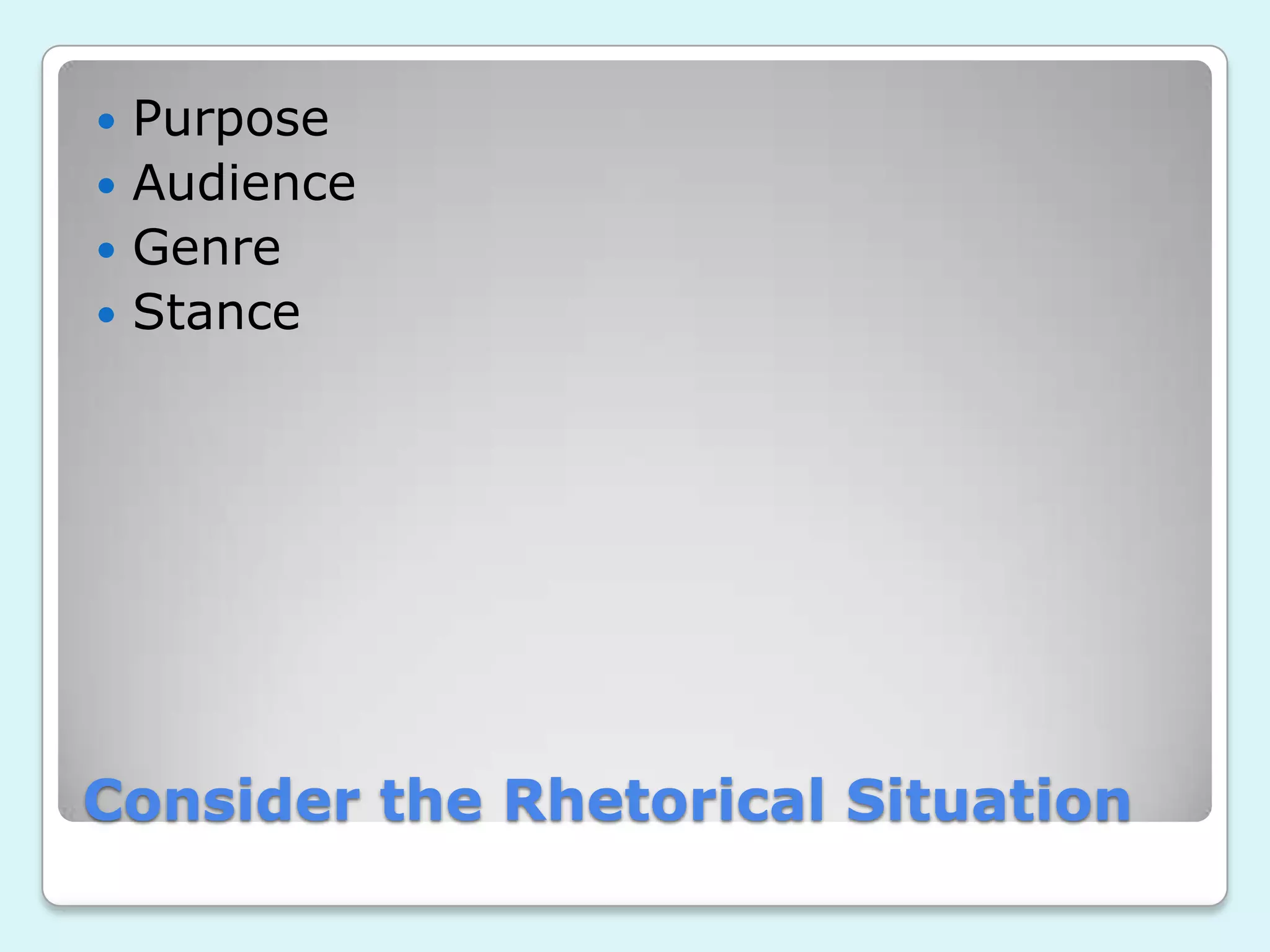
Consider the Rhetorical Situation
 Purpose
 Audience
 Genre
 Stance
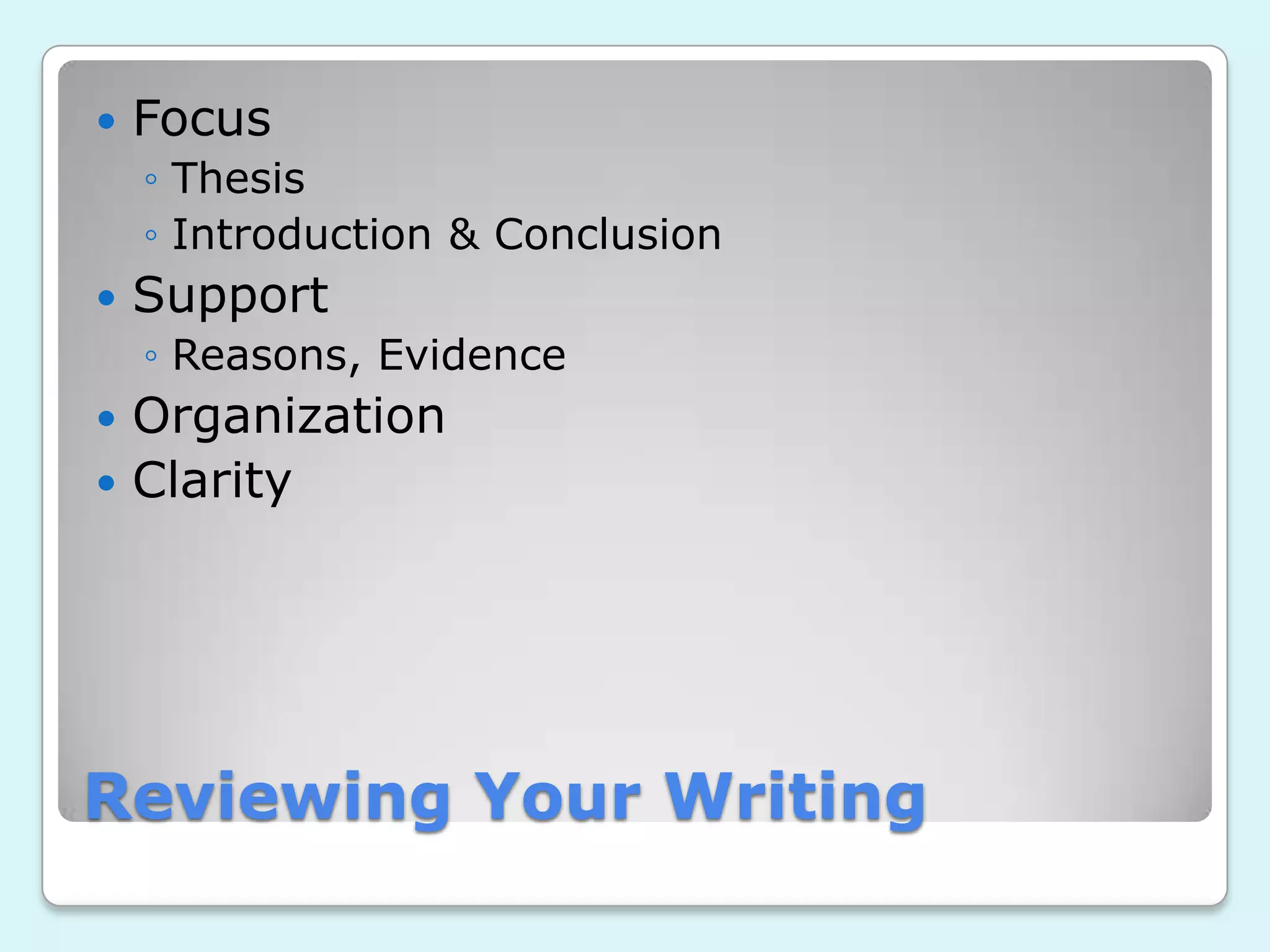
Reviewing Your Writing
 Focus
◦ Thesis
◦ Introduction & Conclusion
 Support
◦ Reasons, Evidence
 Organization
 Clarity
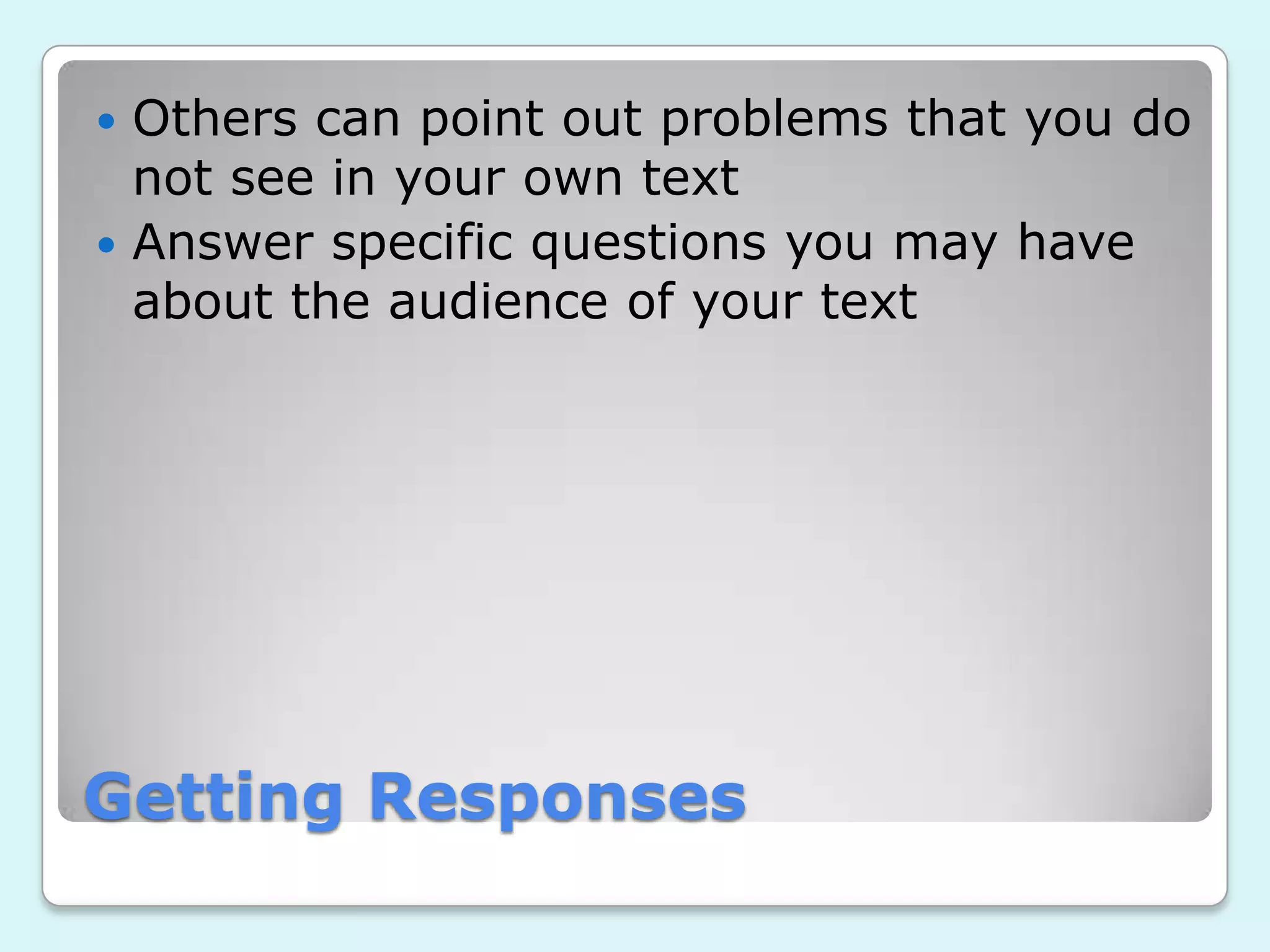
Getting Responses
 Others can point out problems that you do
not see in your own text
 Answer specific questions you may have
about the audience of your text
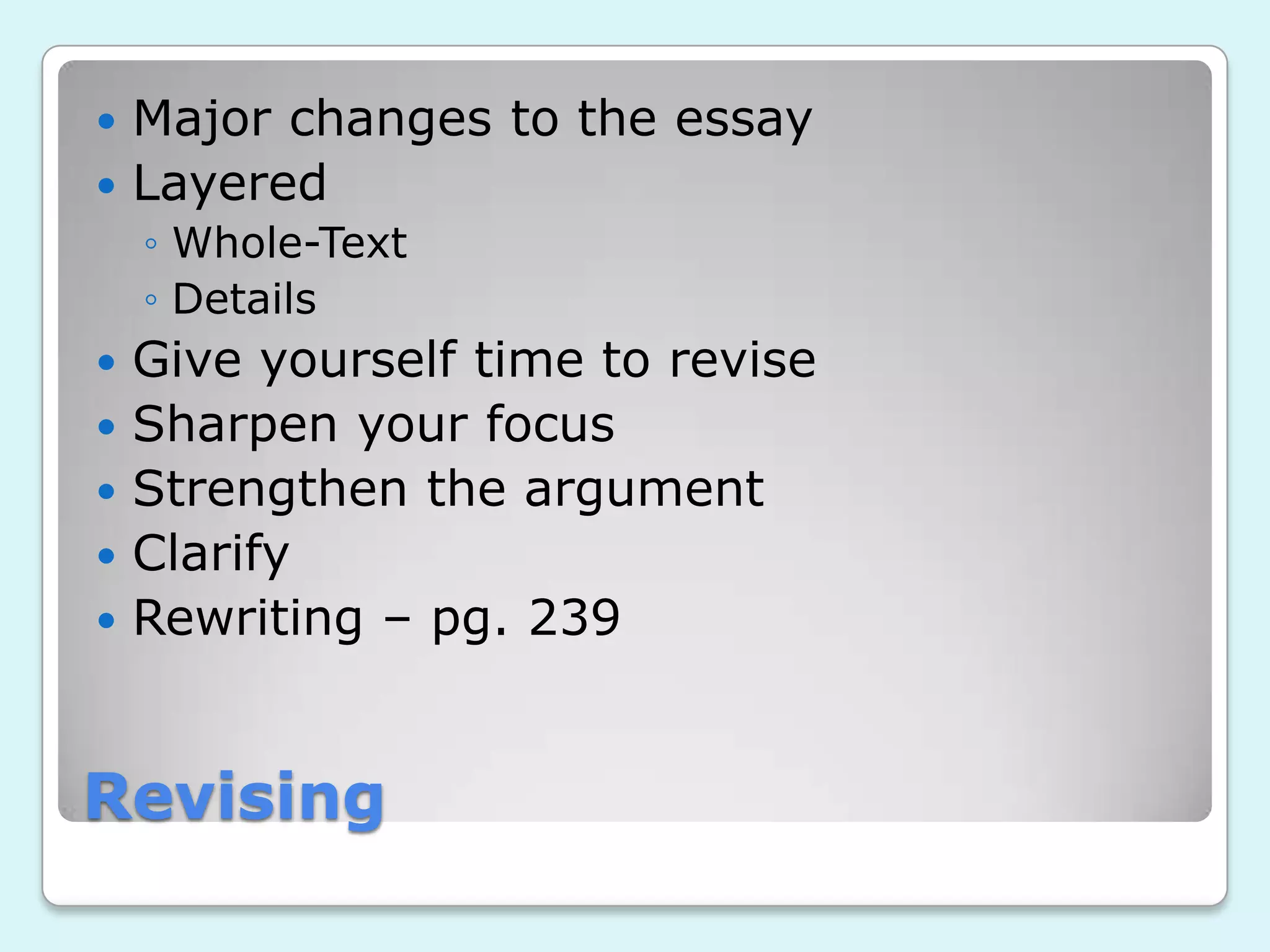
Revising
 Major changes to the essay
 Layered
◦ Whole-Text
◦ Details
 Give yourself time to revise
 Sharpen your focus
 Strengthen the argument
 Clarify
 Rewriting – pg. 239
Editing
 Details
◦ Paragraphs, Sentences, etc.
 Paragraphs
 Sentences
 Words
Proofreading
 Clean up your work for presentation
 Spell check
 Formatting

Writing Process

  • 1.
  • 2.
    Drafting  Don’t waituntil the last minute!  Establish a schedule that works for you  Break down your writing task  Expect surprises  Expect to do more than one draft
  • 3.
    Writer’s Block  Thinkof an assignment as a problem to be solved. Write it out in a single sentence.  Stop trying. Take a break. Come back refreshed.  Free write, brainstorm, outline  Research what others have said
  • 4.
    Assessing Your OwnWriting  When writing for yourself – don’t worry  Personal writing = length  When writing for others… ◦ Make sure your points come across clearly ◦ What needs work? What still needs work? What do you need to say more (or less) of?
  • 5.
    Consider the RhetoricalSituation  Purpose  Audience  Genre  Stance
  • 6.
    Reviewing Your Writing Focus ◦ Thesis ◦ Introduction & Conclusion  Support ◦ Reasons, Evidence  Organization  Clarity
  • 7.
    Getting Responses  Otherscan point out problems that you do not see in your own text  Answer specific questions you may have about the audience of your text
  • 8.
    Revising  Major changesto the essay  Layered ◦ Whole-Text ◦ Details  Give yourself time to revise  Sharpen your focus  Strengthen the argument  Clarify  Rewriting – pg. 239
  • 9.
    Editing  Details ◦ Paragraphs,Sentences, etc.  Paragraphs  Sentences  Words
  • 10.
    Proofreading  Clean upyour work for presentation  Spell check  Formatting

Editor's Notes

  • #3 Norton Field Guide to Writing, pg. 226