Chapter 1
• Series of sentences
that are about one
central idea.
• May stand alone, or
part of a larger work.
• Series of paragraphs
that are about one
central idea.
The Paragraph
• The topic sentence
introduces the subject of
the paragraph and the
writer’s attitude toward the
subject.
• The body of the
paragraph contains details
that support the topic
sentence.
• The paragraph ends with
a concluding sentence.
The Essay
• The introduction engages
the reader’s interest and
contains the thesis
statement.
• The body paragraphs
each support the main
idea of the essay.
• The conclusion
reemphasizes the thesis
and restates the main
points of the essay. It
brings the essay to a
satisfactory close.
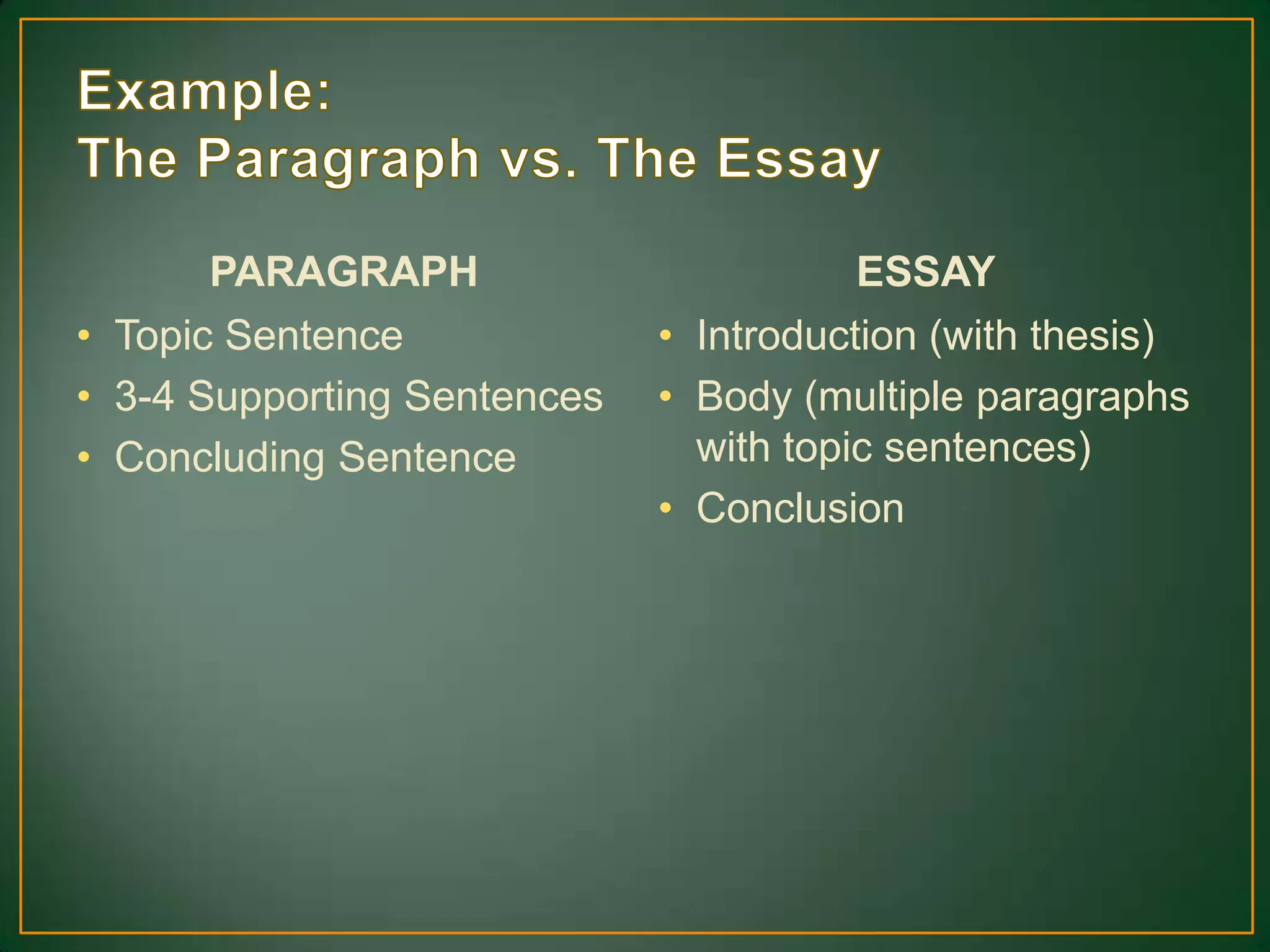
PARAGRAPH
• Topic Sentence
• 3-4 Supporting Sentences
• Concluding Sentence
ESSAY
• Introduction (with thesis)
• Body (multiple paragraphs
with topic sentences)
• Conclusion
• Scenario: You’re given a blank page and a subject and
told to write. You think, “I don’t know what to write.”
• Exploring helps you think about your subject before
writing a paragraph or essay.
• How many words should I write?
• What is the due date/time for the assignment?
• Are there any special qualities that my writing should
include?
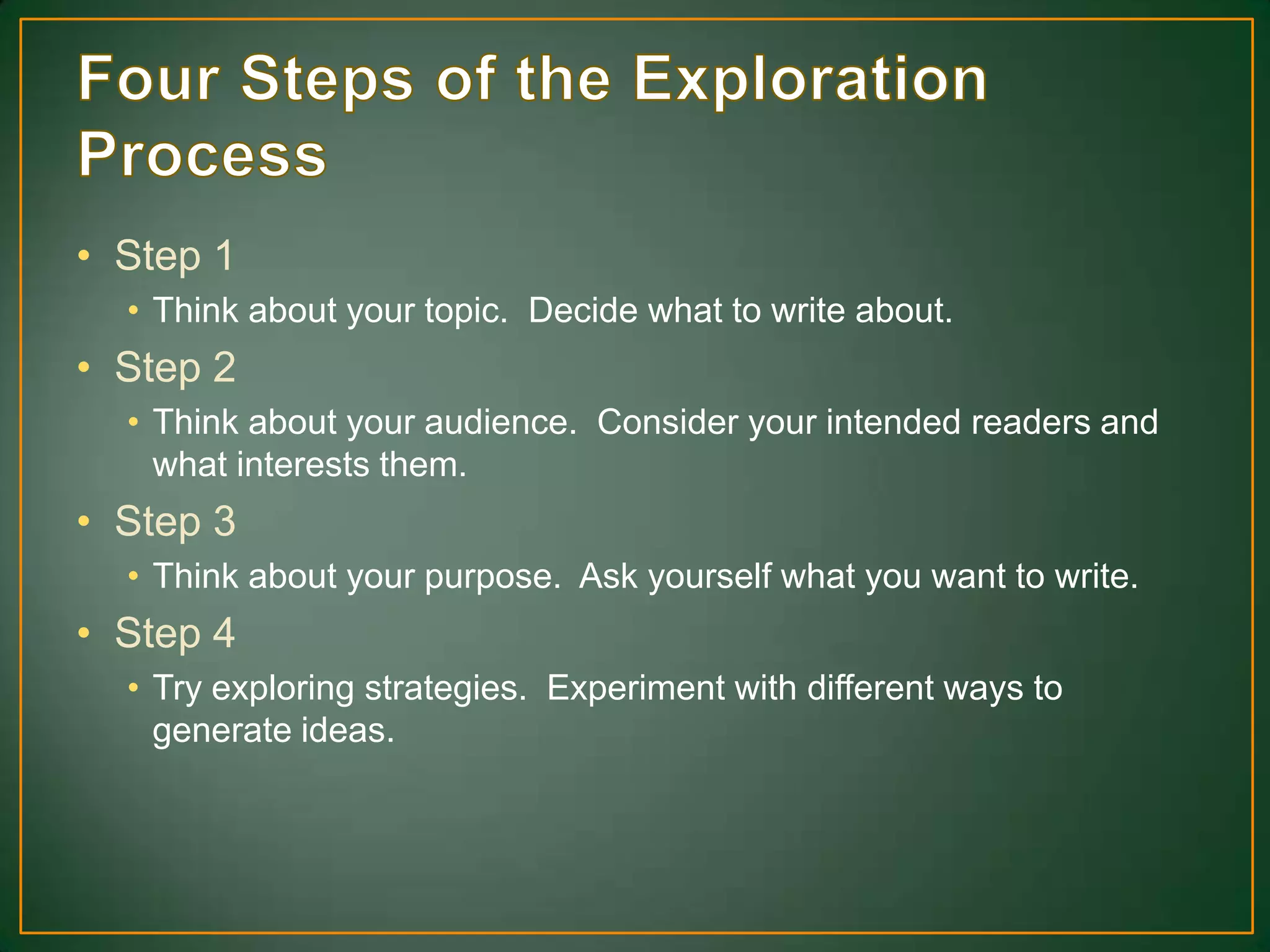
• Step 1
• Think about your topic. Decide what to write about.
• Step 2
• Think about your audience. Consider your intended readers and
what interests them.
• Step 3
• Think about your purpose. Ask yourself what you want to write.
• Step 4
• Try exploring strategies. Experiment with different ways to
generate ideas.
• What you are writing about
• Narrow the topic to find an area that interests you
• Example:
• Travel > Dangers of Travel
• Ask yourself…
• What special knowledge do I have about the topic?
• What subtopics are most relevant to me?
• What aspect of the topic arouses my emotions?
• Intended reader
• Different classes have different audiences
• Instructor as Audience
• Writing for a limited period of time without stopping
• Purpose: Record first thoughts that come to mind
• “I don’t know what to write.”
• Don’t worry about grammar, spelling, etc.
• Sandra’s Freewriting – p. 9
• Sandra’s Focused Writing – p. 9
• Create a list of ideas
• Don’t be concerned with spelling, grammar
• Jin’s Brainstorming – p. 9
• Jin’s Focused Brainstorming – p. 10
• Ask yourself a series of questions and write resposnes to
them
• Help you define and narrow your topic
• Ask: who, what, when, where, why, how?
• Clayton’s Questioning – p. 10
• Drawing a word map
• Ideas are arranged in a visual image
• Write the topic in the middle. Draw lines to connect ideas
to the main topic.
• Mahan’s Clustering – p. 11
• Mahan’s Focused Clustering – p. 11
• Before you write, you should think about your
topic, audience and purpose. What are each of these
things?
• Briefly define each of the following exploring strategies:
• Freewriting
• Brainstorming
• Questioning
• Clustering
Chapter 2
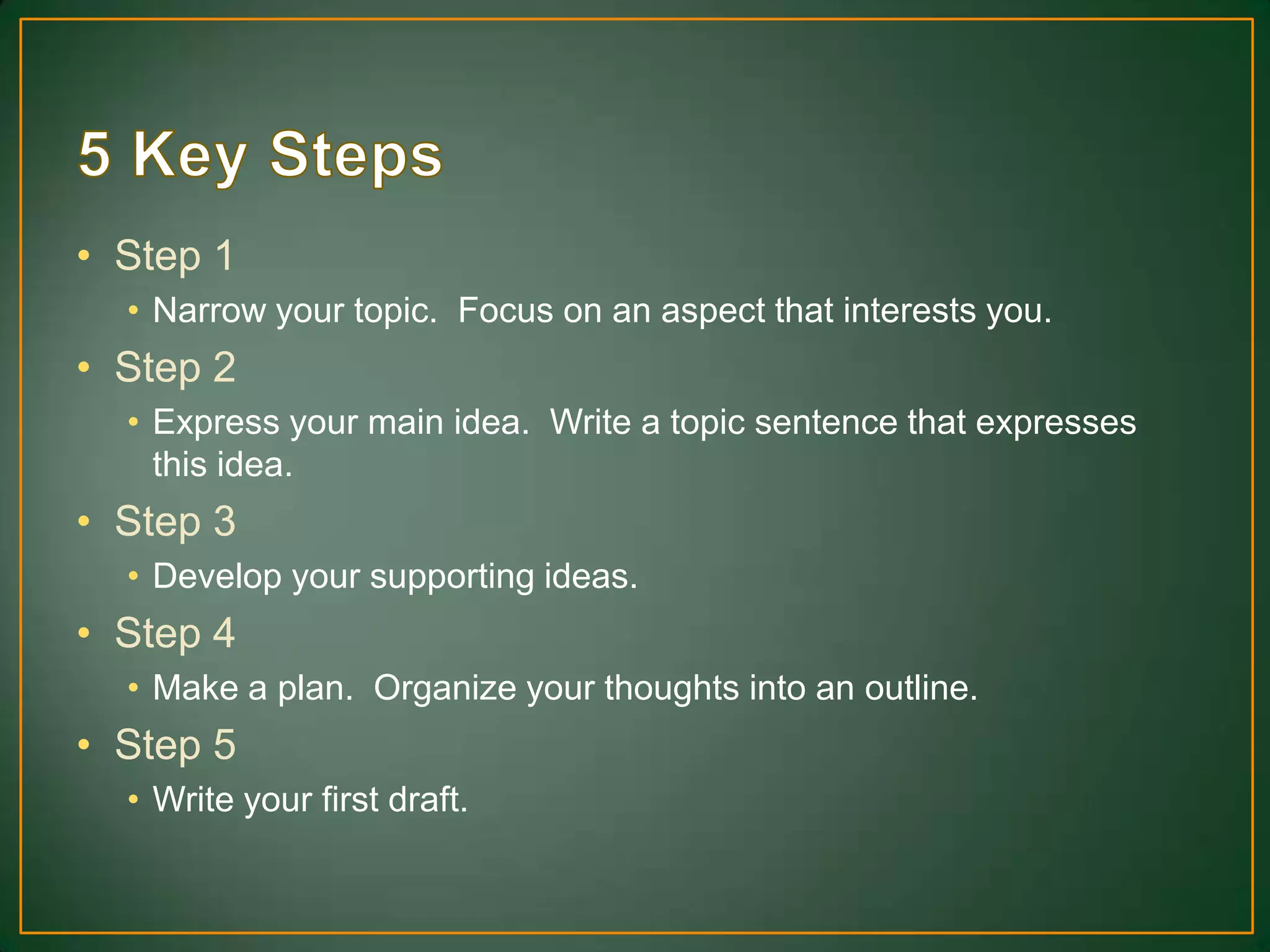
• Step 1
• Narrow your topic. Focus on an aspect that interests you.
• Step 2
• Express your main idea. Write a topic sentence that expresses
this idea.
• Step 3
• Develop your supporting ideas.
• Step 4
• Make a plan. Organize your thoughts into an outline.
• Step 5
• Write your first draft.
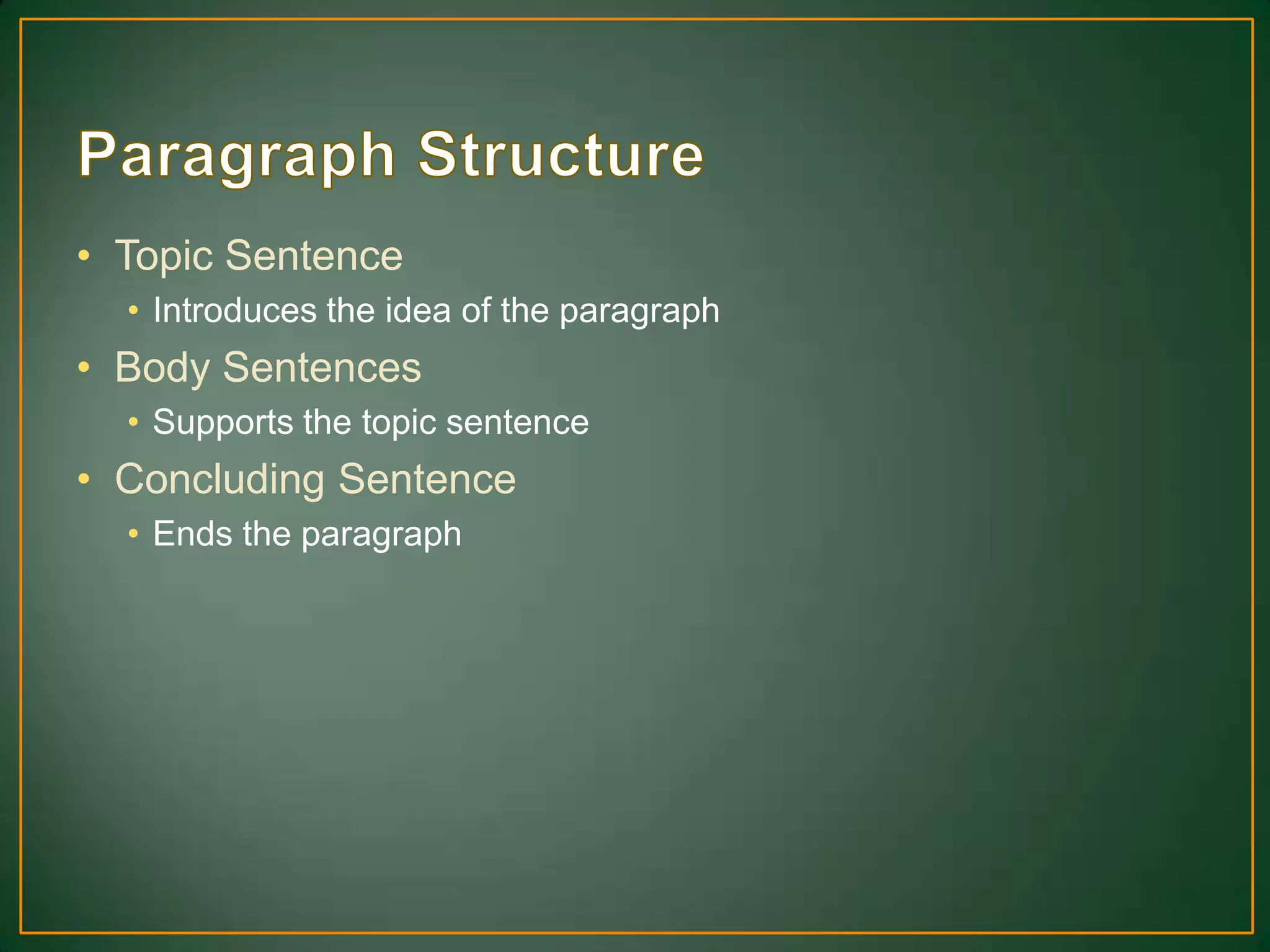
• Topic Sentence
• Introduces the idea of the paragraph
• Body Sentences
• Supports the topic sentence
• Concluding Sentence
• Ends the paragraph
• Narrow these topics:
• Cosmetic Surgery
• Music
• College Life
• Introduces the topic of the paragraph
• States the paragraph’s controlling idea
• Most general sentence in the paragraph
• Followed by other sentences that provide support
(facts, examples)
• A controlling idea makes the point about a topic and
expresses the writer’s opinion, attitude, feeling.
• Music education is essential in public schools.
• There are three types of terrible bosses.
• My furnished room has everything a student could need.
• Incomplete
• Announcement
• Vague
• Invalid Point
• Too Broad
• Too Narrow
• I will write about negative political campaigns.
• History teaches us lessons.
• Deciding to go to college.
• Facts and examples that provide the reader with
interesting information about the subject matter
• Generate by using some of the brainstorming activities.
• Transitional Expressions help guide your reader from one
idea to the next.
• Time Order
• The way in which things occurred
• First, Second, Last
• Emphatic Order
• Arrange in logical sequence
• Most Important, Important, Least Important
• Space Order
• Where things are positioned
• Top, Middle, Bottom
• Brings the paragraph to a satisfactory close
• May…
• Restate the topic sentence in a new, refreshing way
• Make an interesting, final observation
• End with a prediction, suggestion, quotation
• In an essay, it will transition to the next paragraph’s idea
• What is a topic sentence?
• True or False? A paragraph has more than one main
idea.
• True or False? A paragraph’s details support its topic
sentence.

The Writing Process (Gaetz)

  • 2.
  • 3.
    • Series ofsentences that are about one central idea. • May stand alone, or part of a larger work. • Series of paragraphs that are about one central idea.
  • 4.
    The Paragraph • Thetopic sentence introduces the subject of the paragraph and the writer’s attitude toward the subject. • The body of the paragraph contains details that support the topic sentence. • The paragraph ends with a concluding sentence. The Essay • The introduction engages the reader’s interest and contains the thesis statement. • The body paragraphs each support the main idea of the essay. • The conclusion reemphasizes the thesis and restates the main points of the essay. It brings the essay to a satisfactory close.
  • 5.
    PARAGRAPH • Topic Sentence •3-4 Supporting Sentences • Concluding Sentence ESSAY • Introduction (with thesis) • Body (multiple paragraphs with topic sentences) • Conclusion
  • 6.
    • Scenario: You’regiven a blank page and a subject and told to write. You think, “I don’t know what to write.” • Exploring helps you think about your subject before writing a paragraph or essay.
  • 7.
    • How manywords should I write? • What is the due date/time for the assignment? • Are there any special qualities that my writing should include?
  • 8.
    • Step 1 •Think about your topic. Decide what to write about. • Step 2 • Think about your audience. Consider your intended readers and what interests them. • Step 3 • Think about your purpose. Ask yourself what you want to write. • Step 4 • Try exploring strategies. Experiment with different ways to generate ideas.
  • 9.
    • What youare writing about • Narrow the topic to find an area that interests you • Example: • Travel > Dangers of Travel • Ask yourself… • What special knowledge do I have about the topic? • What subtopics are most relevant to me? • What aspect of the topic arouses my emotions?
  • 10.
    • Intended reader •Different classes have different audiences • Instructor as Audience
  • 12.
    • Writing fora limited period of time without stopping • Purpose: Record first thoughts that come to mind • “I don’t know what to write.” • Don’t worry about grammar, spelling, etc. • Sandra’s Freewriting – p. 9 • Sandra’s Focused Writing – p. 9
  • 13.
    • Create alist of ideas • Don’t be concerned with spelling, grammar • Jin’s Brainstorming – p. 9 • Jin’s Focused Brainstorming – p. 10
  • 14.
    • Ask yourselfa series of questions and write resposnes to them • Help you define and narrow your topic • Ask: who, what, when, where, why, how? • Clayton’s Questioning – p. 10
  • 15.
    • Drawing aword map • Ideas are arranged in a visual image • Write the topic in the middle. Draw lines to connect ideas to the main topic. • Mahan’s Clustering – p. 11 • Mahan’s Focused Clustering – p. 11
  • 16.
    • Before youwrite, you should think about your topic, audience and purpose. What are each of these things? • Briefly define each of the following exploring strategies: • Freewriting • Brainstorming • Questioning • Clustering
  • 17.
  • 18.
    • Step 1 •Narrow your topic. Focus on an aspect that interests you. • Step 2 • Express your main idea. Write a topic sentence that expresses this idea. • Step 3 • Develop your supporting ideas. • Step 4 • Make a plan. Organize your thoughts into an outline. • Step 5 • Write your first draft.
  • 19.
    • Topic Sentence •Introduces the idea of the paragraph • Body Sentences • Supports the topic sentence • Concluding Sentence • Ends the paragraph
  • 20.
    • Narrow thesetopics: • Cosmetic Surgery • Music • College Life
  • 21.
    • Introduces thetopic of the paragraph • States the paragraph’s controlling idea • Most general sentence in the paragraph • Followed by other sentences that provide support (facts, examples) • A controlling idea makes the point about a topic and expresses the writer’s opinion, attitude, feeling.
  • 22.
    • Music educationis essential in public schools. • There are three types of terrible bosses. • My furnished room has everything a student could need.
  • 23.
    • Incomplete • Announcement •Vague • Invalid Point • Too Broad • Too Narrow
  • 24.
    • I willwrite about negative political campaigns. • History teaches us lessons. • Deciding to go to college.
  • 25.
    • Facts andexamples that provide the reader with interesting information about the subject matter • Generate by using some of the brainstorming activities.
  • 26.
    • Transitional Expressionshelp guide your reader from one idea to the next. • Time Order • The way in which things occurred • First, Second, Last • Emphatic Order • Arrange in logical sequence • Most Important, Important, Least Important • Space Order • Where things are positioned • Top, Middle, Bottom
  • 27.
    • Brings theparagraph to a satisfactory close • May… • Restate the topic sentence in a new, refreshing way • Make an interesting, final observation • End with a prediction, suggestion, quotation • In an essay, it will transition to the next paragraph’s idea
  • 28.
    • What isa topic sentence? • True or False? A paragraph has more than one main idea. • True or False? A paragraph’s details support its topic sentence.

Editor's Notes

  • #2 THE WRITER’S WORLD: Paragraphs & Essays, 3rd Edition.
  • #6 Example – PG. 4
  • #23 Practice #1 (19)What is the topic? What is the controlling idea?
  • #25 Practice #3 (21-22)What is the problem with the statement? How do you fix it?