NoodleTools
Helps you stay organized

      Taking notes

  CONTRA COSTA COLLEGE LIBRARY
            FALL 2012
What is NoodleTools?

Gather, organize, think, create
• Begin a working bibliography
• Copy-and-paste relevant quotes onto notecards
• Paraphrase the author’s words
• Analyze, question and add your own ideas
• Tag and pile your notes – what emerges?
• Create an outline, add piles – reorder and
  experiment!
• Create [essay, speech, product…] with a
  bibliography
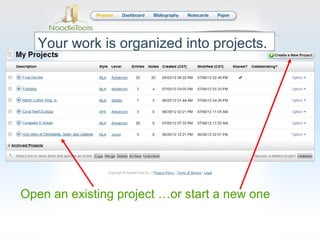
Your work is organized into projects.


Open an existing project …or start a new one
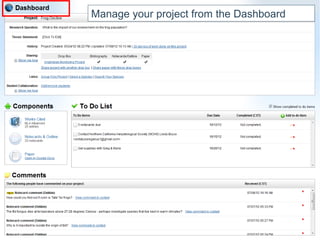
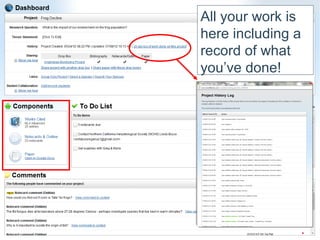
Manage your project from the Dashboard
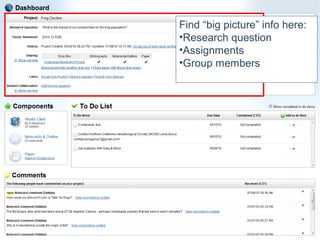
Find “big picture” info here:
•Research question
•Assignments
•Group members
All your work is
here including a
record of what
you’ve done!
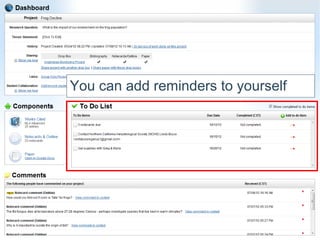
You can add reminders to yourself
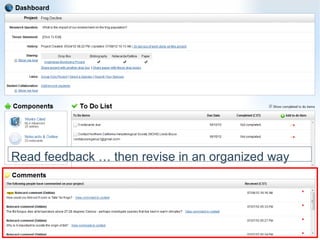
Read feedback … then revise in an organized way
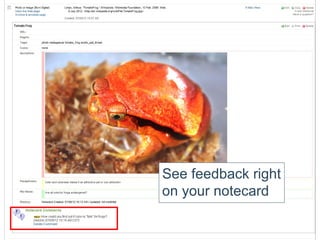
See feedback right
on your notecard
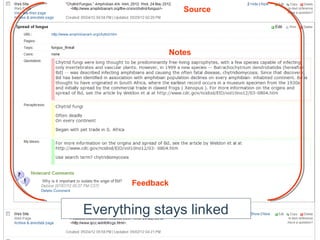
Source


                  Notes


       Feedback


Everything stays linked
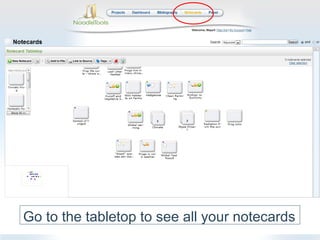
Go to the tabletop to see all your notecards
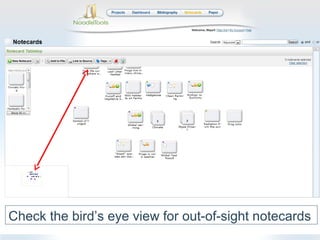
Check the bird’s eye view for out-of-sight notecards
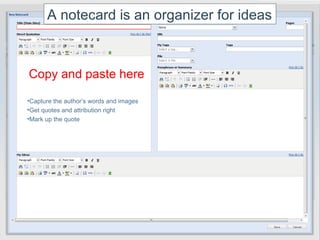
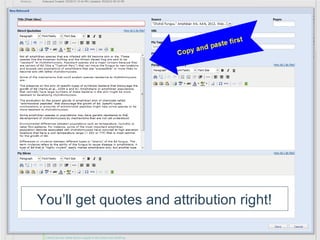
A notecard is an organizer for ideas


Copy and paste here
•Capture the author’s words and images
•Get quotes and attribution right
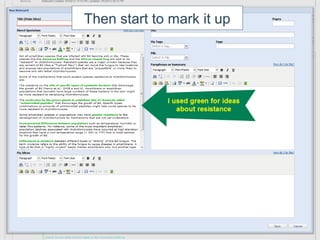
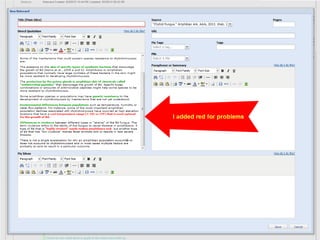
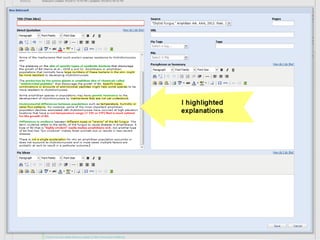
•Mark up the quote
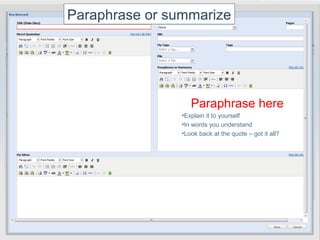
Paraphrase or summarize


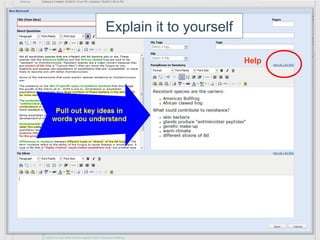
                   Paraphrase here
                •Explain it to yourself
                •In words you understand
                •Look back at the quote – got it all?
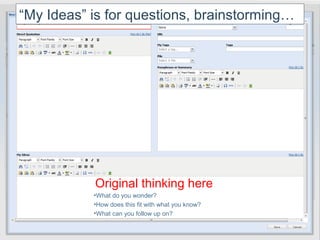
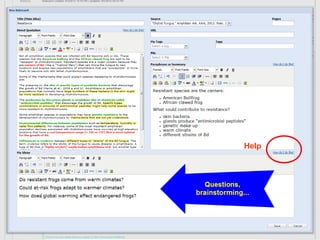
“My Ideas” is for questions, brainstorming…


           Original thinking here
           •What do you wonder?
           •How does this fit with what you know?
           •What can you follow up on?
You’ll get quotes and attribution right!
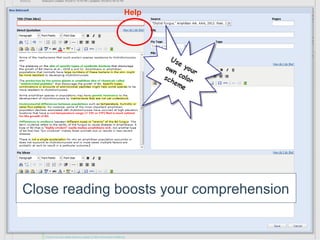
Then start to mark it up
Help


Close reading boosts your comprehension
Explain it to yourself

                         Help
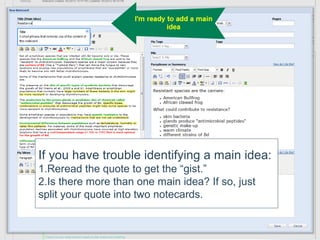
If you have trouble identifying a main idea:
1.Reread the quote to get the “gist.”
2.Is there more than one main idea? If so, just
split your quote into two notecards.
Help
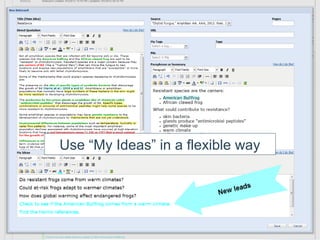
Use “My Ideas” in a flexible way
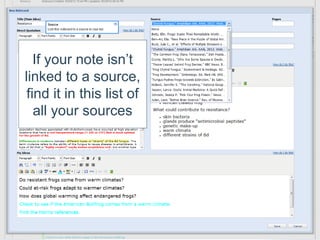
If your note isn’t
linked to a source,
 find it in this list of
   all your sources
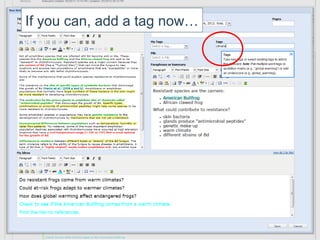
If you can, add a tag now…
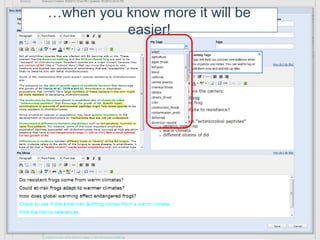
…when you know more it will be
          easier!
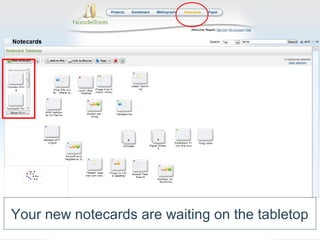
Your new notecards are waiting on the tabletop
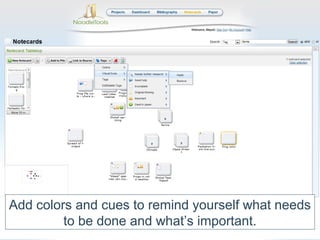
Add colors and cues to remind yourself what needs
         to be done and what’s important.
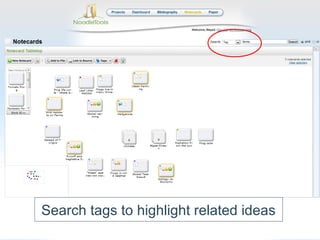
Search tags to highlight related ideas
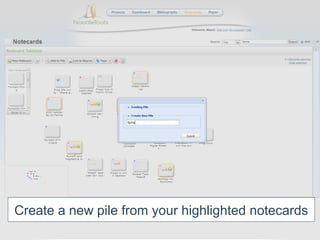
Create a new pile from your highlighted notecards
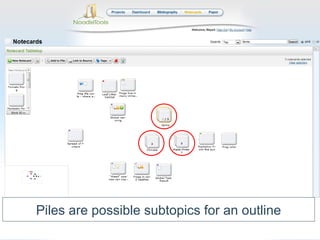
Piles are possible subtopics for an outline
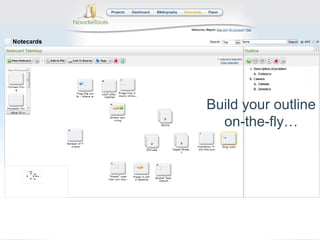
Build your outline
  on-the-fly…
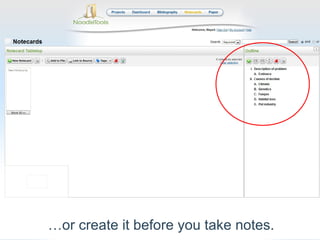
…or create it before you take notes.
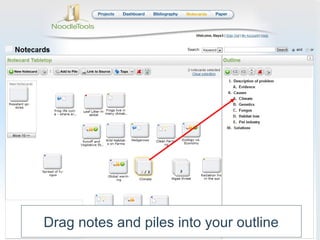
Drag notes and piles into your outline
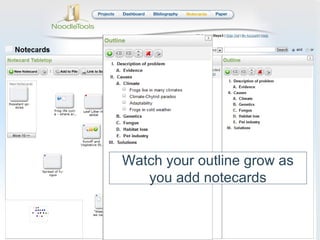
Watch your outline grow as
   you add notecards
Organize flexibly and playfully

What notes have similar titles or topics?
•Pile them together
•Add them to your outline
         Experiment with the order, be curious!
What if I make new combinations of notes?
•Search by one or more tags to find common ideas
among notes
•What other ways can I order my outline?
•Do new grouping suggest new ways to analyze what I
know? New ideas? New questions?
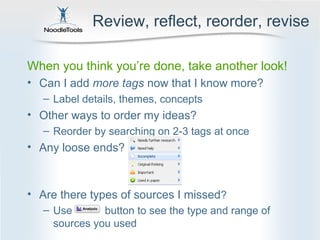
Review, reflect, reorder, revise

When you think you’re done, take another look!
• Can I add more tags now that I know more?
   – Label details, themes, concepts
• Other ways to order my ideas?
   – Reorder by searching on 2-3 tags at once
• Any loose ends?


• Are there types of sources I missed?
   – Use       button to see the type and range of
     sources you used
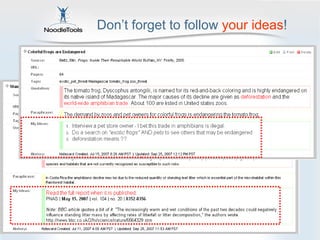
Don’t forget to follow your ideas!
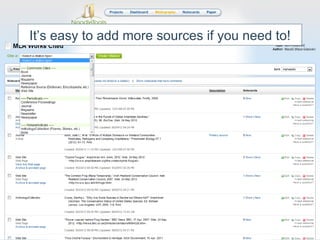
It’s easy to add more sources if you need to!
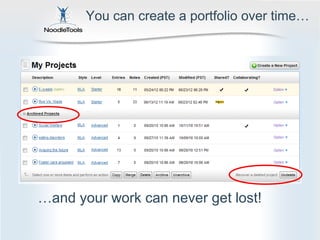
You can create a portfolio over time…


…and your work can never get lost!
Use your “noodle”!

Stay organized, feel successful
• Access your work from home and school
• Safeguard against accidental plagiarism
• Spend your time thinking and creating
  (not on commas)
• Get curious, feel creative…have fun!
“Noodle” time…start thinking!

          Questions?


                   For more teaching ideas:
                   support [at] noodletools [dot] com

Noodletools notecards

  • 1.
    NoodleTools Helps you stayorganized Taking notes CONTRA COSTA COLLEGE LIBRARY FALL 2012
  • 2.
    What is NoodleTools? Gather,organize, think, create • Begin a working bibliography • Copy-and-paste relevant quotes onto notecards • Paraphrase the author’s words • Analyze, question and add your own ideas • Tag and pile your notes – what emerges? • Create an outline, add piles – reorder and experiment! • Create [essay, speech, product…] with a bibliography
  • 3.
    Your work isorganized into projects. Open an existing project …or start a new one
  • 4.
    Manage your projectfrom the Dashboard
  • 5.
    Find “big picture”info here: •Research question •Assignments •Group members
  • 6.
    All your workis here including a record of what you’ve done!
  • 7.
    You can addreminders to yourself
  • 8.
    Read feedback …then revise in an organized way
  • 9.
    See feedback right onyour notecard
  • 10.
    Source Notes Feedback Everything stays linked
  • 11.
    Go to thetabletop to see all your notecards
  • 12.
    Check the bird’seye view for out-of-sight notecards
  • 13.
    A notecard isan organizer for ideas Copy and paste here •Capture the author’s words and images •Get quotes and attribution right •Mark up the quote
  • 14.
    Paraphrase or summarize Paraphrase here •Explain it to yourself •In words you understand •Look back at the quote – got it all?
  • 15.
    “My Ideas” isfor questions, brainstorming… Original thinking here •What do you wonder? •How does this fit with what you know? •What can you follow up on?
  • 16.
    You’ll get quotesand attribution right!
  • 17.
    Then start tomark it up
  • 20.
    Help Close reading boostsyour comprehension
  • 21.
    Explain it toyourself Help
  • 22.
    If you havetrouble identifying a main idea: 1.Reread the quote to get the “gist.” 2.Is there more than one main idea? If so, just split your quote into two notecards.
  • 23.
  • 24.
    Use “My Ideas”in a flexible way
  • 25.
    If your noteisn’t linked to a source, find it in this list of all your sources
  • 26.
    If you can,add a tag now…
  • 27.
    …when you knowmore it will be easier!
  • 28.
    Your new notecardsare waiting on the tabletop
  • 29.
    Add colors andcues to remind yourself what needs to be done and what’s important.
  • 30.
    Search tags tohighlight related ideas
  • 31.
    Create a newpile from your highlighted notecards
  • 32.
    Piles are possiblesubtopics for an outline
  • 33.
    Build your outline on-the-fly…
  • 34.
    …or create itbefore you take notes.
  • 35.
    Drag notes andpiles into your outline
  • 36.
    Watch your outlinegrow as you add notecards
  • 37.
    Organize flexibly andplayfully What notes have similar titles or topics? •Pile them together •Add them to your outline Experiment with the order, be curious! What if I make new combinations of notes? •Search by one or more tags to find common ideas among notes •What other ways can I order my outline? •Do new grouping suggest new ways to analyze what I know? New ideas? New questions?
  • 38.
    Review, reflect, reorder,revise When you think you’re done, take another look! • Can I add more tags now that I know more? – Label details, themes, concepts • Other ways to order my ideas? – Reorder by searching on 2-3 tags at once • Any loose ends? • Are there types of sources I missed? – Use button to see the type and range of sources you used
  • 39.
    Don’t forget tofollow your ideas!
  • 40.
    It’s easy toadd more sources if you need to!
  • 41.
    You can createa portfolio over time… …and your work can never get lost!
  • 42.
    Use your “noodle”! Stayorganized, feel successful • Access your work from home and school • Safeguard against accidental plagiarism • Spend your time thinking and creating (not on commas) • Get curious, feel creative…have fun!
  • 43.
    “Noodle” time…start thinking! Questions? For more teaching ideas: support [at] noodletools [dot] com

Editor's Notes

  • #3 Note: There are tutorials on notecards, tagging and other features of the Tabletop here: http://www.noodletools.com/helpdesk/index.php?action=downloads#category-3
  • #4 http://www.noodletools.com/noodlebib/usersguide/index.html?n=Overview2.html
  • #5 Your question, teacher assignments, student collaborators
  • #6 Your question, teacher assignments, student collaborators
  • #7 Your question, teacher assignments, student collaborators
  • #8 Your question, teacher assignments, student collaborators
  • #9 Your question, teacher assignments, student collaborators
  • #10 http://www.noodletools.com/noodlebib/usersguide/index.html?n=CreatingANotecard.html
  • #34 http://www.noodletools.com/noodlebib/usersguide/index.html?n=NavigatingTheTabletop.html
  • #35 http://www.noodletools.com/noodlebib/usersguide/index.html?n=WhyUseAnOutline.html
  • #42 http://www.noodletools.com/noodlebib/usersguide/index.html?n=Overview2.html