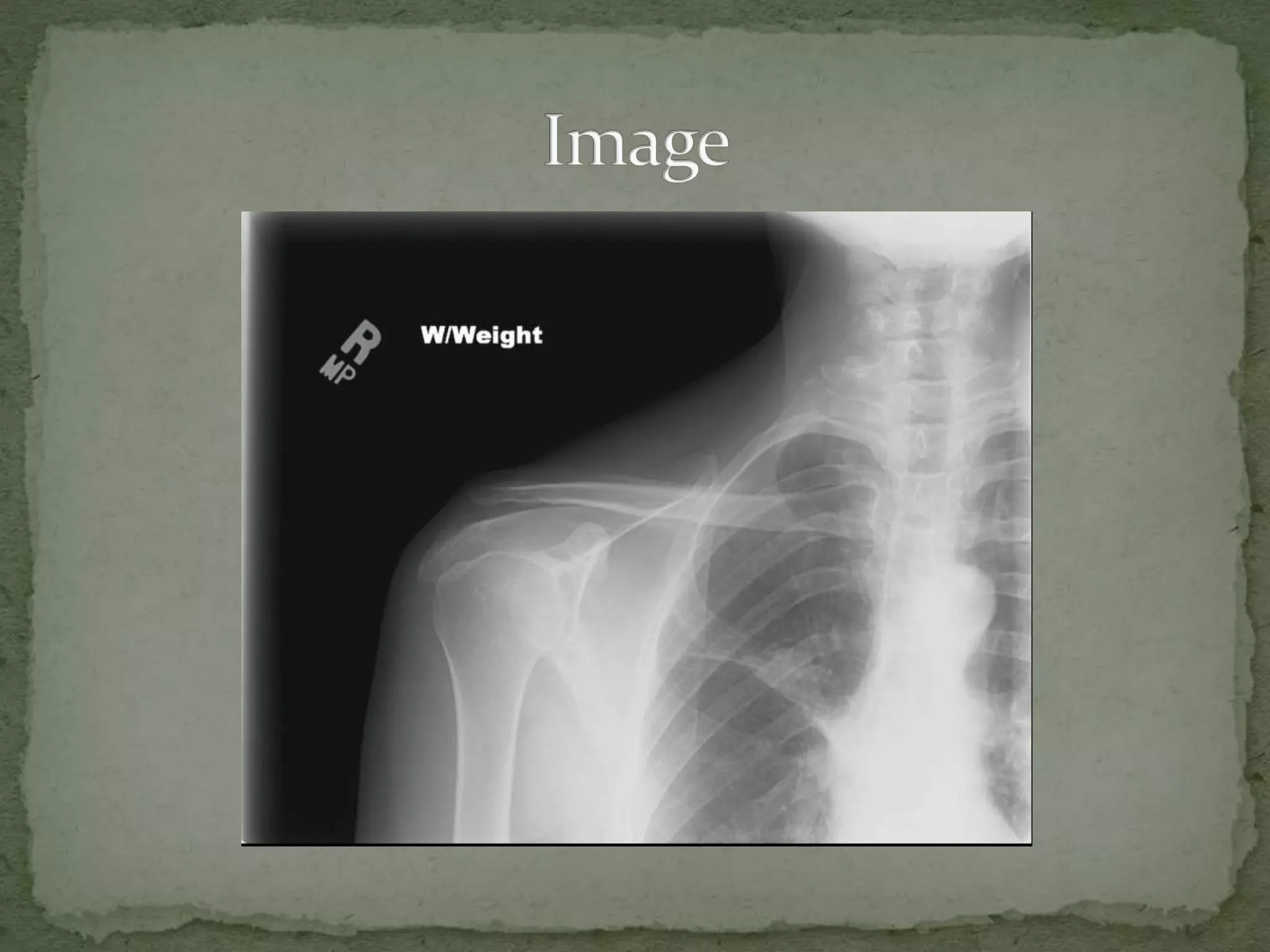
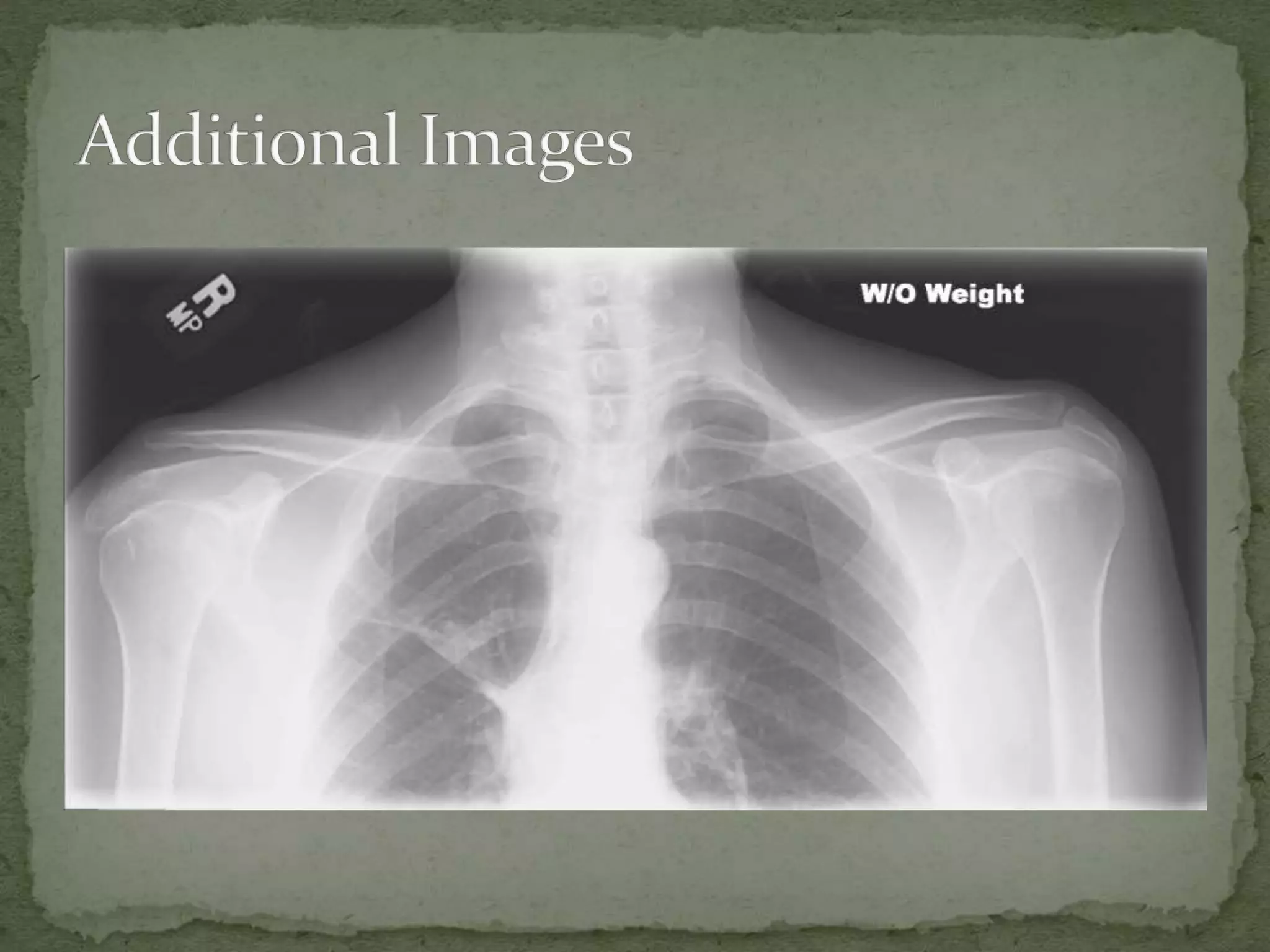
 A 42yo presents to the ED after being struck in the

right shoulder with a baseball bat. On exam, he
refuses to move his shoulder secondary to pain and
is tender on the top of his shoulder.
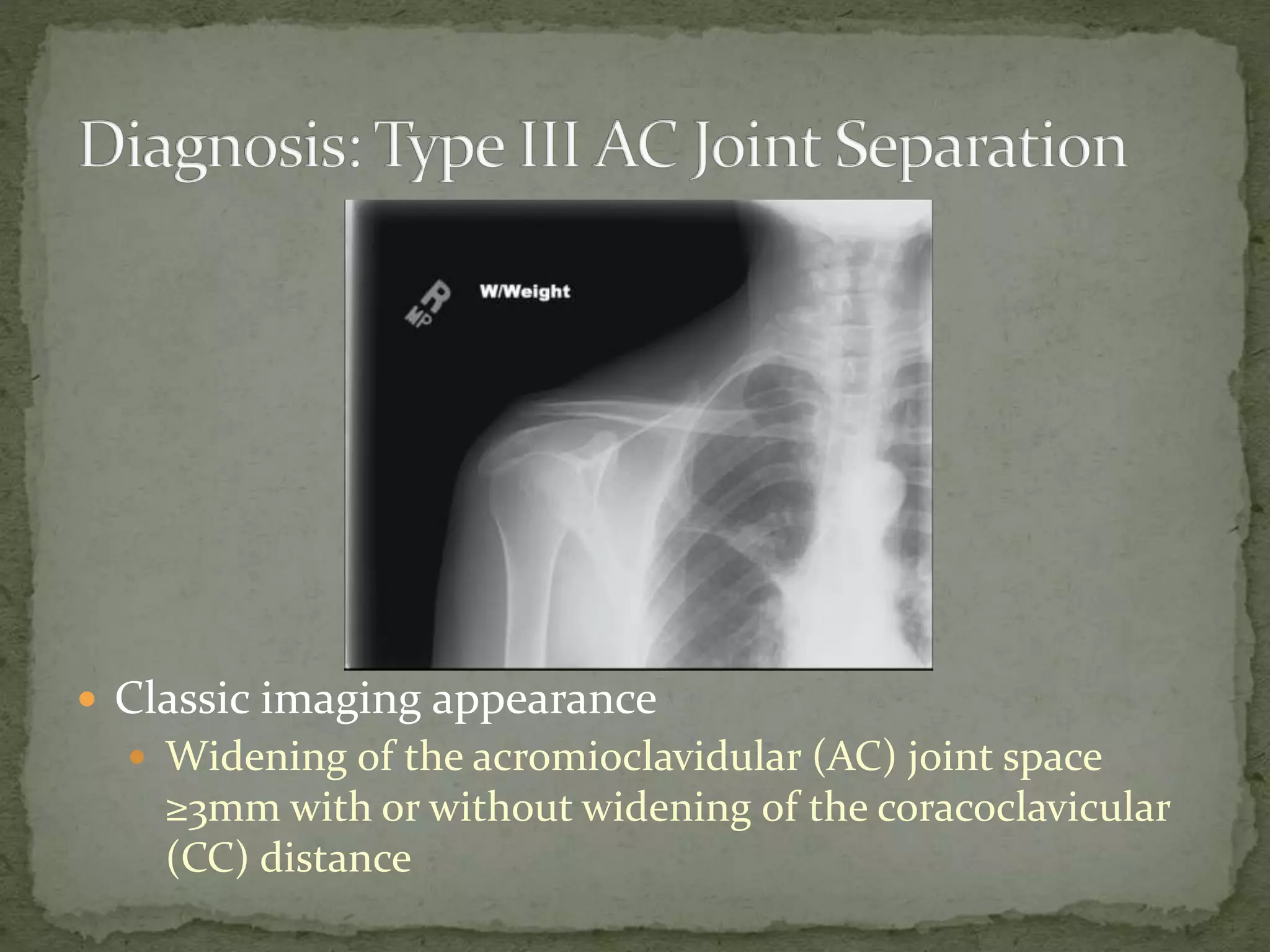
 Classic imaging appearance
 Widening of the acromioclavidular (AC) joint space

≥3mm with or without widening of the coracoclavicular
(CC) distance
 Type I
 Mild, bruised ligaments, no

actual separation of the AC
joint—a clinical diagnosis

 Type II
 Moderate, partial tear in the

AC ligaments, ≥ 3mm
separation of the AC joint

 Type III
 Severe, complete tear of the

AC as well as the CC
ligaments, compete
separation of the AC joint

 Type IV
 Type III injury and associated

posterior dislocation of the
distal end of the clavicle
 Type I
 Sling and adhesive strapping
 Excellent prognosis

 Type II
 Same as above +/- arthroplasty
 90% recover; 10% require surgery

 Type III
 Internal fixation; fixation screw being passed from the clavicle

downwards into the coracoid process
 80% good; 20% require reoperation
 Type IV
 Open reduction and internal fixation
 Similar to type III
 History typically of a direct blow to tip of shoulder,

downward blow to the clavicle (sports), applying traction
to the arm, or falling on the hand or elbow with the arm
flexed at 90 degrees
 Comparison with the contralateral side should be

made before establishing the diagnosis, due to the
large amount of anatomical variance
 Associated with fractures of coracoid process and
distal end of the clavicle
 Marx J MD; Hockberger R MD; Walls R MD. Rosen’s

emergency medicine. 7th ed.
 Simon R; Sherman S; Koenigsknecht S. Emergency
orthopedics: the extremities. 5th ed. McGraw Hill
Publishing.
 Wheeless C R III MD. Wheeless textbook of
orthopedics. www.wheelessonline.com.

AC Joint Separation

  • 2.
     A 42yopresents to the ED after being struck in the right shoulder with a baseball bat. On exam, he refuses to move his shoulder secondary to pain and is tender on the top of his shoulder.
  • 4.
     Classic imagingappearance  Widening of the acromioclavidular (AC) joint space ≥3mm with or without widening of the coracoclavicular (CC) distance
  • 5.
     Type I Mild, bruised ligaments, no actual separation of the AC joint—a clinical diagnosis  Type II  Moderate, partial tear in the AC ligaments, ≥ 3mm separation of the AC joint  Type III  Severe, complete tear of the AC as well as the CC ligaments, compete separation of the AC joint  Type IV  Type III injury and associated posterior dislocation of the distal end of the clavicle
  • 6.
     Type I Sling and adhesive strapping  Excellent prognosis  Type II  Same as above +/- arthroplasty  90% recover; 10% require surgery  Type III  Internal fixation; fixation screw being passed from the clavicle downwards into the coracoid process  80% good; 20% require reoperation  Type IV  Open reduction and internal fixation  Similar to type III
  • 7.
     History typicallyof a direct blow to tip of shoulder, downward blow to the clavicle (sports), applying traction to the arm, or falling on the hand or elbow with the arm flexed at 90 degrees  Comparison with the contralateral side should be made before establishing the diagnosis, due to the large amount of anatomical variance  Associated with fractures of coracoid process and distal end of the clavicle
  • 9.
     Marx JMD; Hockberger R MD; Walls R MD. Rosen’s emergency medicine. 7th ed.  Simon R; Sherman S; Koenigsknecht S. Emergency orthopedics: the extremities. 5th ed. McGraw Hill Publishing.  Wheeless C R III MD. Wheeless textbook of orthopedics. www.wheelessonline.com.