ABSCESS
Group C
Odoi joseph
Ocung Emmanuel
Ongwen Emmanuel
Nabukenya Victoria
Definition
An abscess is a circumscribed area of inflammation that contains pus.
The process of pus formation is called suppuration
pus contains;
- dead and alive leukocytes
- Dead and alive bacteria
- Tissue debris
.
Etiology
• Different causes of abscesses include;
-infections by microorganisms. Numerous organisms cause abscesses
but the most common is staphylococcus aureus
- Autoimmune
- Neoplastic (benign and malignant)
- Trauma
- Congenital
- Idiopathic
- iatrogenic
Predisposing factors
• Impaired host defense mechanisms like in HIV
• Presence of foreign bodies within the tissue
• Tissue ischemia or necrosis
• Hematoma or excessive fluid accumulation in tissue
• Trauma
Sites of abscess
External;
• Fingers , hands, neck, axilla, breast, foot, thigh etc.
Internal;
• Retroperitoneal,
• lung abscess,
• brain,
• periphrenic,
• abdominal(pelvic, phrenic, paracolic, liver abscess, splenic abscess)
Classification of abscess
Based on duration of occurrence;
• Acute abscess(hot abscess)- inflammatory symptoms more active
• Chronic abscess(cold abscess)- inflammatory symptoms are less
active, soft with liquid and has a thin wall
Based on location;
• Superficial abscess
• Deep abscess
Types of abscess
• There are 3 types;
• Pyogenic
• Pyaemic
• Cold
• Pyogenic abscess; is a collection of pus resulting from infection by
pyogenic organisms.
• Entry of organisms is through direct infection from outside due to
penetrating wound, local extension from adjacent focus of an
infection, through the lymphatics and the
bloodstream(hematogenous)
Cont.
• Features of acute inflammation are present that is calor, rubor,dolor
and tumor.
• There’s also fever
• Presence of pus elicited by fluctuation in the abscess area.
• These pyogenic abscesses may be located anywhere in the body.
Pyaemic abscess
This is caused by infective emboli in cases of pyaemia
Pyaemia is a condition in which the infected emboli containing clumps
of microorganisms, infected clots or vegetation circulate in the blood
stream. For example in conditions like acute osteomyelitis
Cold abscess
• It is called so because it is not accompanied by the classical signs of
inflammation- heat, redness, pain, fever, swelling which are usually
found with pyogenic abscess
• More commonly a sequelae of tubercular infection elsewhere in the
body, commonly in the lymph nodes and bone.
• Other causes can be ;
• - leprosy,
• fungal infections like blastomycosis
Cold abscess
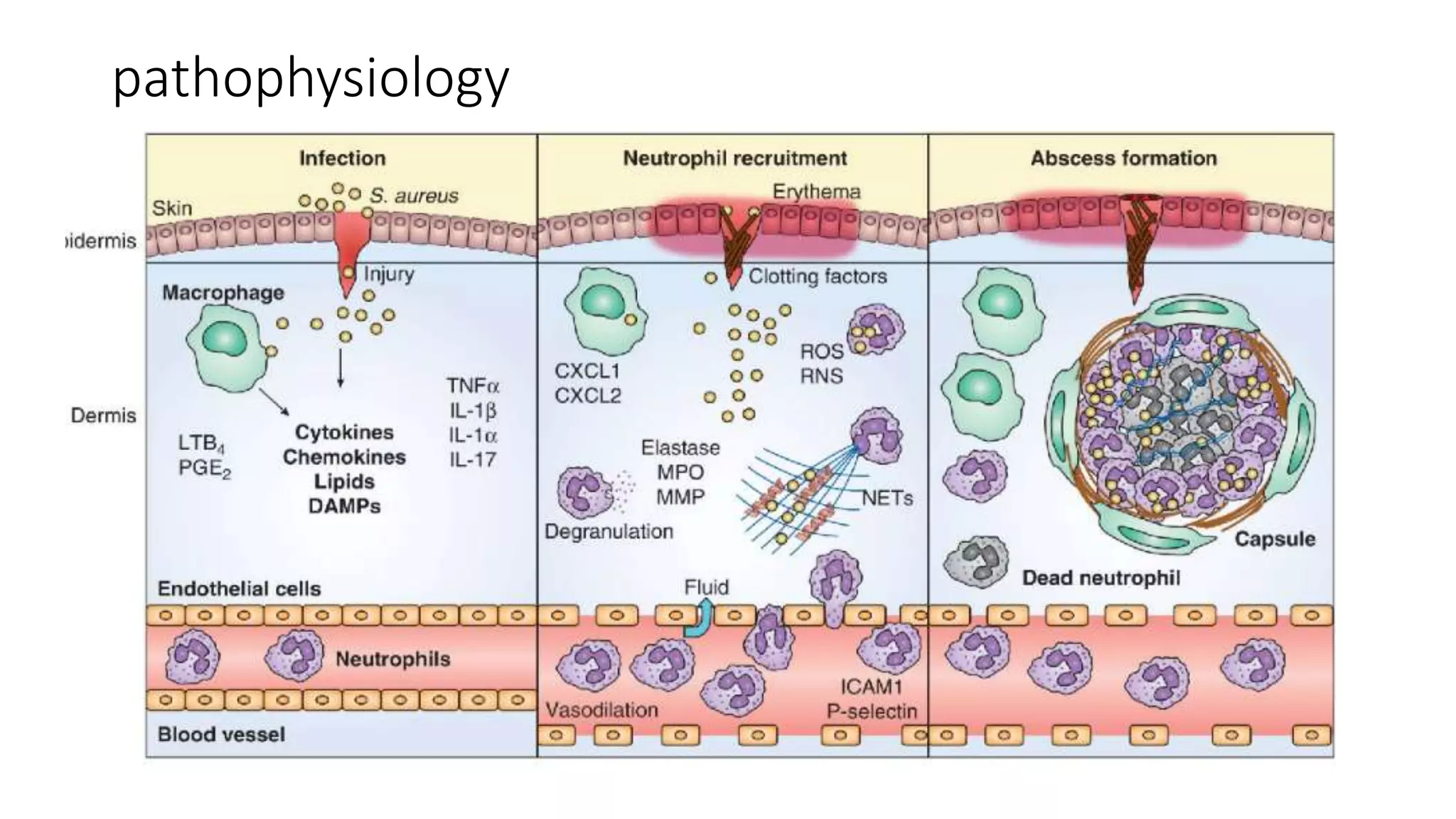
pathophysiology
• An abscess occurs when tissue is invaded by microorganisms and
multiplication occurs.
• An immune response follows resulting into the formation of pus.
• In response to injury the tissue releases cytokines like TNF, IL-1, IL-6
and chemokines. These attract nearby white blood cells
• Cytokines also cause dilation of nearby capillaries bringing more
blood to the affected site and also cause the capillaries to become
leaky leading to diffusion of more inflammatory cells to the affected
site.
• Neutrophils are the first cells to be attracted to the infection site.
Cont.
• Neutrophils release chemicals and enzymes which kill bacteria and
dissolve pieces of dead cells creating a pool of dead material
• This is called suppurative inflammation
• Sometimes called liquefactive necrosis because area of dead tissue
turns into a liquid.
• Some immune cells die too and become part of the pool.
• Around this area of pus a wall of fibrinogen forms and hardens to
form a barrier.
• There is still plenty of live bacteria within the pus that makes it highly
infectious. The most common being staphylococcus aureus
Cont.
• Staphylococcus aureus produces coagulase which speeds up process
of building the fibrinogen wall.
• Abscesses also occur deep in the body in areas that are already
walled off
pathophysiology
Diagnosis
• Largely based on history taking and physical examination
Clinical features of an abscess
• Fevers with chills and rigors
• Smooth, soft fluctuant Localized swelling
• Visible or pointing pus
• Tenderness in the affected part
• Redness and warmth of the abscess area
•
Investigations
• Hematological
• Complete blood count
• Culture and sensitivity
• ESR
• CRP
• Blood sugar to rule out diabetes
• Radiological
• X-ray radiograph
• Ultrasound
• CT Scan
• Angiography
• Endoscopy
• MRI
Management
• Can be operative and non operative
Non operative-
• use of antibiotics to treat the underlying infection
• use of analgesics for pain management
Operative management through surgical drainage
Complications of abscess
• Bacteremia/septicemia
• Multiple abscess formation
• Metastatic abscess
• Tissue destruction
• Sinus and fistula formation
• Destruction of adjacent blood vessels leading to hemorrhage
• Organ failure for example hepatic failure due to liver abscess,
neurological deficit due to brain abscess
• Un-healing ulcers
Differential diagnosis
• Soft tissue tumors
• Hematoma
• Aneurysm
• Lipoma
• Cyst

ABSCESS.pptx

  • 1.
    ABSCESS Group C Odoi joseph OcungEmmanuel Ongwen Emmanuel Nabukenya Victoria
  • 2.
    Definition An abscess isa circumscribed area of inflammation that contains pus. The process of pus formation is called suppuration pus contains; - dead and alive leukocytes - Dead and alive bacteria - Tissue debris
  • 3.
  • 4.
    Etiology • Different causesof abscesses include; -infections by microorganisms. Numerous organisms cause abscesses but the most common is staphylococcus aureus - Autoimmune - Neoplastic (benign and malignant) - Trauma - Congenital - Idiopathic - iatrogenic
  • 5.
    Predisposing factors • Impairedhost defense mechanisms like in HIV • Presence of foreign bodies within the tissue • Tissue ischemia or necrosis • Hematoma or excessive fluid accumulation in tissue • Trauma
  • 6.
    Sites of abscess External; •Fingers , hands, neck, axilla, breast, foot, thigh etc. Internal; • Retroperitoneal, • lung abscess, • brain, • periphrenic, • abdominal(pelvic, phrenic, paracolic, liver abscess, splenic abscess)
  • 7.
    Classification of abscess Basedon duration of occurrence; • Acute abscess(hot abscess)- inflammatory symptoms more active • Chronic abscess(cold abscess)- inflammatory symptoms are less active, soft with liquid and has a thin wall Based on location; • Superficial abscess • Deep abscess
  • 8.
    Types of abscess •There are 3 types; • Pyogenic • Pyaemic • Cold • Pyogenic abscess; is a collection of pus resulting from infection by pyogenic organisms. • Entry of organisms is through direct infection from outside due to penetrating wound, local extension from adjacent focus of an infection, through the lymphatics and the bloodstream(hematogenous)
  • 9.
    Cont. • Features ofacute inflammation are present that is calor, rubor,dolor and tumor. • There’s also fever • Presence of pus elicited by fluctuation in the abscess area. • These pyogenic abscesses may be located anywhere in the body.
  • 10.
    Pyaemic abscess This iscaused by infective emboli in cases of pyaemia Pyaemia is a condition in which the infected emboli containing clumps of microorganisms, infected clots or vegetation circulate in the blood stream. For example in conditions like acute osteomyelitis
  • 11.
    Cold abscess • Itis called so because it is not accompanied by the classical signs of inflammation- heat, redness, pain, fever, swelling which are usually found with pyogenic abscess • More commonly a sequelae of tubercular infection elsewhere in the body, commonly in the lymph nodes and bone. • Other causes can be ; • - leprosy, • fungal infections like blastomycosis
  • 12.
  • 13.
    pathophysiology • An abscessoccurs when tissue is invaded by microorganisms and multiplication occurs. • An immune response follows resulting into the formation of pus. • In response to injury the tissue releases cytokines like TNF, IL-1, IL-6 and chemokines. These attract nearby white blood cells • Cytokines also cause dilation of nearby capillaries bringing more blood to the affected site and also cause the capillaries to become leaky leading to diffusion of more inflammatory cells to the affected site. • Neutrophils are the first cells to be attracted to the infection site.
  • 14.
    Cont. • Neutrophils releasechemicals and enzymes which kill bacteria and dissolve pieces of dead cells creating a pool of dead material • This is called suppurative inflammation • Sometimes called liquefactive necrosis because area of dead tissue turns into a liquid. • Some immune cells die too and become part of the pool. • Around this area of pus a wall of fibrinogen forms and hardens to form a barrier. • There is still plenty of live bacteria within the pus that makes it highly infectious. The most common being staphylococcus aureus
  • 15.
    Cont. • Staphylococcus aureusproduces coagulase which speeds up process of building the fibrinogen wall. • Abscesses also occur deep in the body in areas that are already walled off
  • 16.
  • 17.
    Diagnosis • Largely basedon history taking and physical examination
  • 18.
    Clinical features ofan abscess • Fevers with chills and rigors • Smooth, soft fluctuant Localized swelling • Visible or pointing pus • Tenderness in the affected part • Redness and warmth of the abscess area •
  • 19.
    Investigations • Hematological • Completeblood count • Culture and sensitivity • ESR • CRP • Blood sugar to rule out diabetes • Radiological • X-ray radiograph • Ultrasound • CT Scan • Angiography • Endoscopy • MRI
  • 20.
    Management • Can beoperative and non operative Non operative- • use of antibiotics to treat the underlying infection • use of analgesics for pain management Operative management through surgical drainage
  • 22.
    Complications of abscess •Bacteremia/septicemia • Multiple abscess formation • Metastatic abscess • Tissue destruction • Sinus and fistula formation • Destruction of adjacent blood vessels leading to hemorrhage • Organ failure for example hepatic failure due to liver abscess, neurological deficit due to brain abscess • Un-healing ulcers
  • 23.
    Differential diagnosis • Softtissue tumors • Hematoma • Aneurysm • Lipoma • Cyst