Chapter 3 Clinical Assessment, Diagnosis, and Treatment
Clinical Assessment: How and Why Does the Client Behave Abnormally? What is assessment? The collecting of relevant information in an effort to reach a conclusion Clinical assessment is used to determine how and why a person is behaving abnormally and how that person may be helped Focus is idiographic – on an individual person Also may be used to evaluate treatment progress
Clinical Assessment: How and Why Does the Client Behave Abnormally? The specific tools used in an assessment depend on the clinician’s theoretical orientation Hundreds of clinical assessment tools have been developed and fall into three categories: Clinical interviews Tests Observations
Characteristics of Assessment Tools To be useful, assessment tools must be standardized and have clear reliability and validity To standardize a technique is to set up common steps to be followed whenever it is administered One must standardize administration, scoring, and interpretation
Characteristics of Assessment Tools Reliability refers to the consistency of a test A good test will yield the same results in the same situation Two main types: Test – retest reliability To test for this type of reliability, a subject is tested on two different occasions and the scores are correlated – the higher the correlation, the greater the test’s reliability Interrater reliability Independent judges agree on how to score and interpret a particular test
Characteristics of Assessment Tools Validity refers to the accuracy of a test’s results A good test must accurately measure what it is supposed to be measuring Three specific types: Face validity – a test appears to measure what it is supposed to measure; does not necessarily indicate true validity Predictive validity – a test accurately predicts future characteristics or behavior Concurrent validity – a test’s results agree with independent measures assessing similar characteristics or behavior
Clinical Interviews Face-to-face encounters  Often the first contact between a client and a clinician/assessor Used to collect detailed information, especially personal history, about a client Allow the interviewer to focus on whatever topics they consider most important
Clinical Interviews Conducting the interview Focus depends on theoretical orientation Can be either  unstructured  or  structured   In unstructured interviews, clinicians ask open-ended questions In structured interviews, clinicians ask prepared questions, often from a published interview schedule May include a mental status exam
Clinical Interviews Limitations: May lack validity or accuracy Interviewers may be biased or may make mistakes in judgment Interviews, particularly unstructured ones, may lack reliability
Clinical Tests Devices for gathering information about a few aspects of a person’s psychological functioning, from which broader information can be inferred More than 500 different tests are in use They fall into six categories…
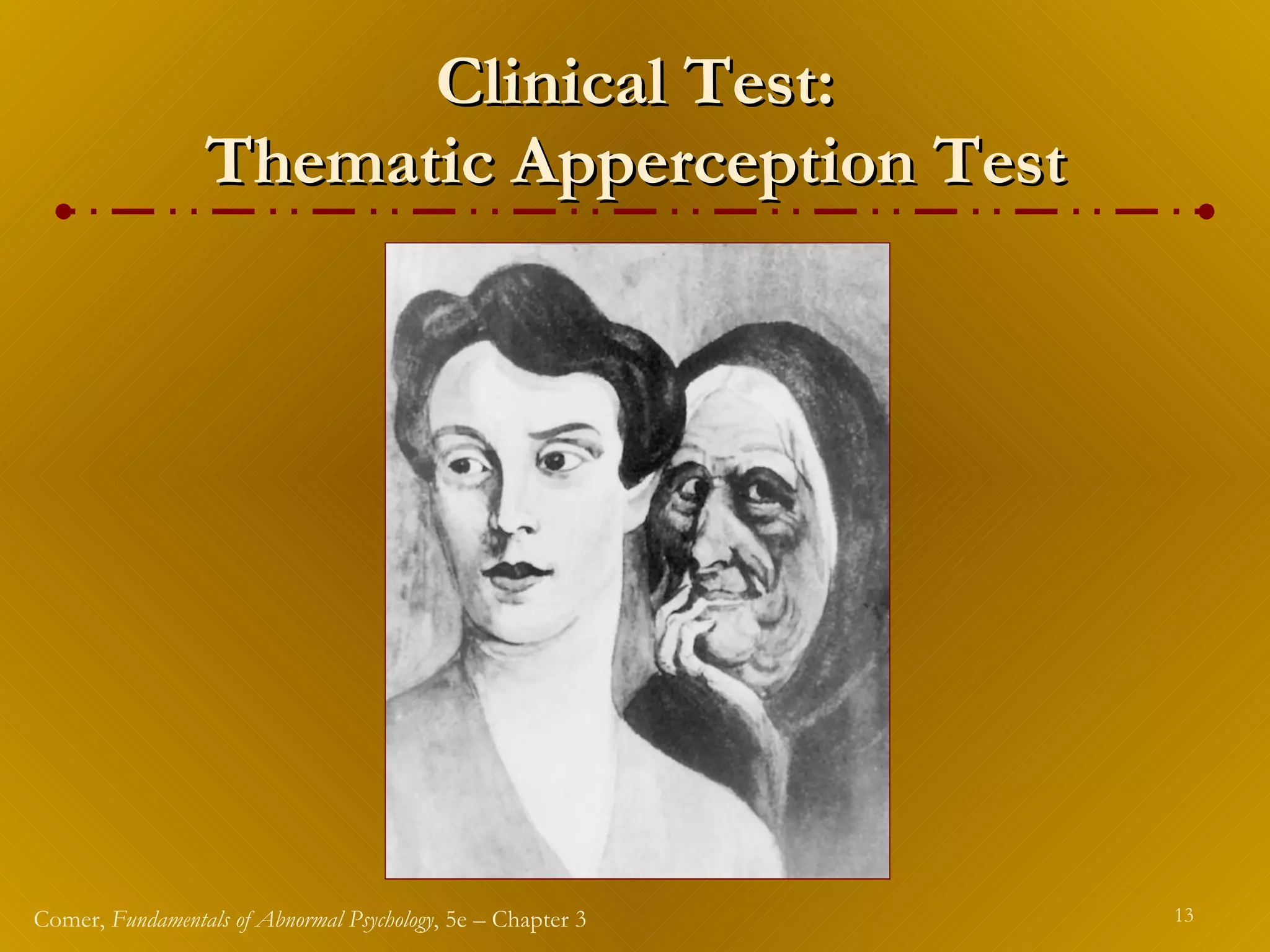
Clinical Tests Projective tests Require that subjects interpret vague and ambiguous stimuli or follow open-ended instruction Mainly used by psychodynamic practitioners Most popular: Rorschach Test Thematic Apperception Test Sentence Completion Test Drawings
Clinical Test: Rorschach Inkblot
Clinical Test: Thematic Apperception Test
Clinical Test:  Sentence-Completion Test “I wish ___________________________” “My father ________________________”
Clinical Test: Drawings Draw-a-Person (DAP) test: “Draw a person” “Draw another person of the opposite sex”
Clinical Tests Projective tests Strengths and weaknesses: Helpful for providing “supplementary” information Have rarely demonstrated much reliability or validity May be biased against minority ethnic groups
Clinical Tests Personality inventories Designed to measure broad personality characteristics Focus on behaviors, beliefs, and feelings Usually based on self-reported responses Most widely used: Minnesota Multiphasic Personality Inventory For Adults: MMPI (original) or MMPI-2 (1989 revision) For Adolescents: MMPI-A
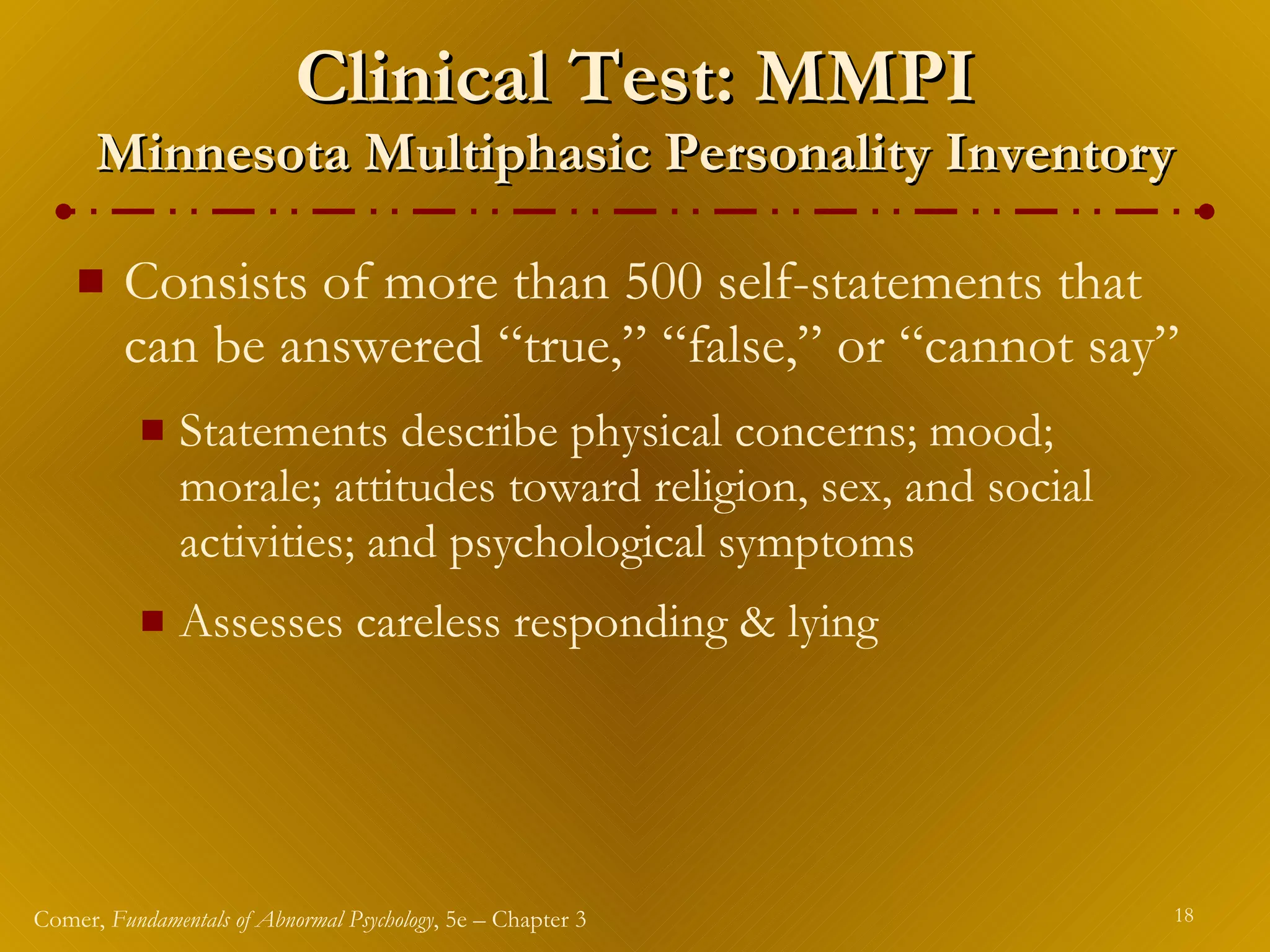
Clinical Test: MMPI Minnesota Multiphasic Personality Inventory Consists of more than 500 self-statements that can be answered “true,” “false,” or “cannot say” Statements describe physical concerns; mood; morale; attitudes toward religion, sex, and social activities; and psychological symptoms Assesses careless responding & lying
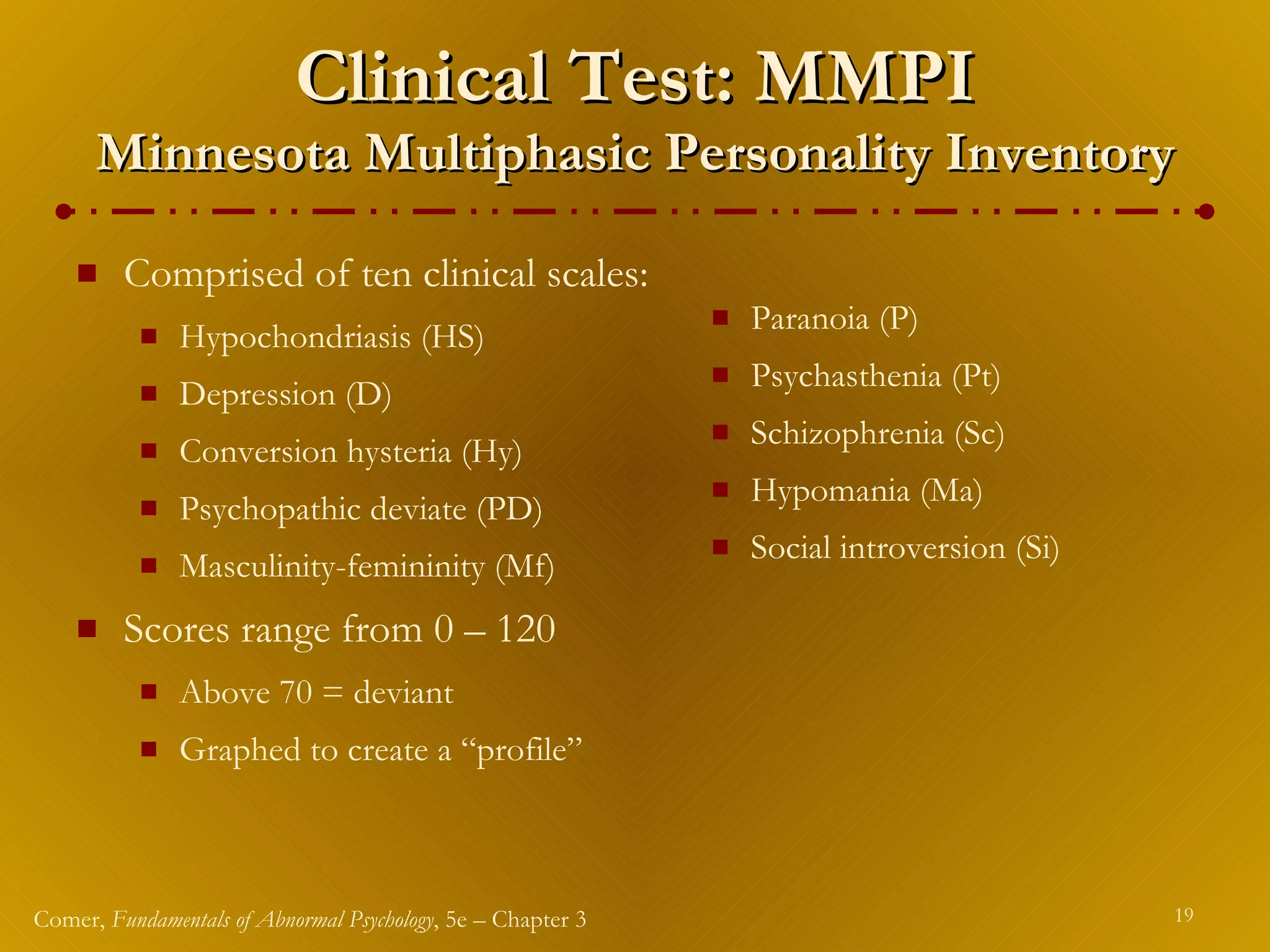
Clinical Test: MMPI Minnesota Multiphasic Personality Inventory Comprised of ten clinical scales: Hypochondriasis (HS) Depression (D) Conversion hysteria (Hy) Psychopathic deviate (PD) Masculinity-femininity (Mf) Scores range from 0 – 120 Above 70 = deviant Graphed to create a “profile” Paranoia (P) Psychasthenia (Pt) Schizophrenia (Sc) Hypomania (Ma) Social introversion (Si)
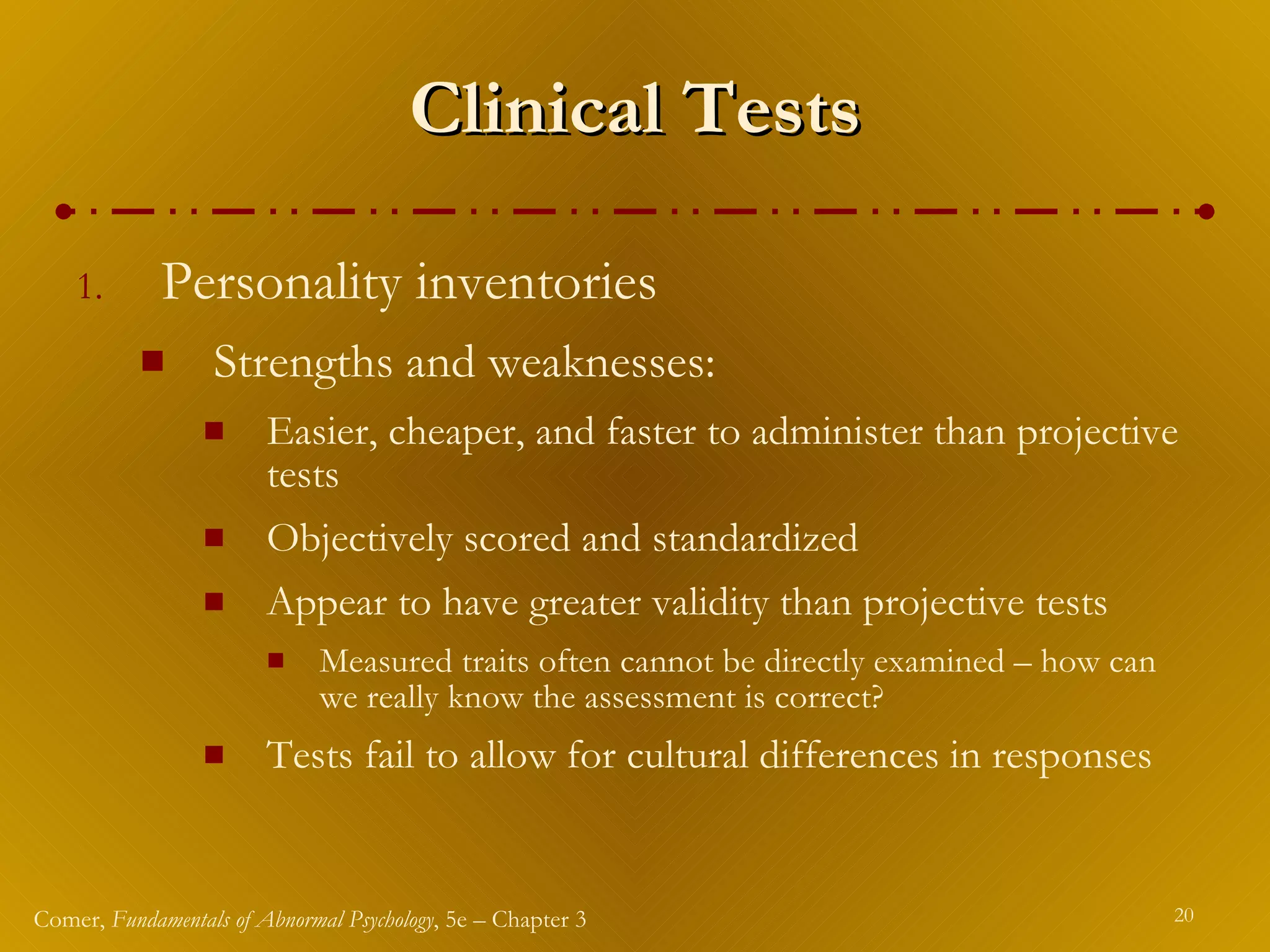
Clinical Tests Personality inventories Strengths and weaknesses: Easier, cheaper, and faster to administer than projective tests Objectively scored and standardized Appear to have greater validity than projective tests Measured traits often cannot be directly examined – how can we really know the assessment is correct? Tests fail to allow for cultural differences in responses
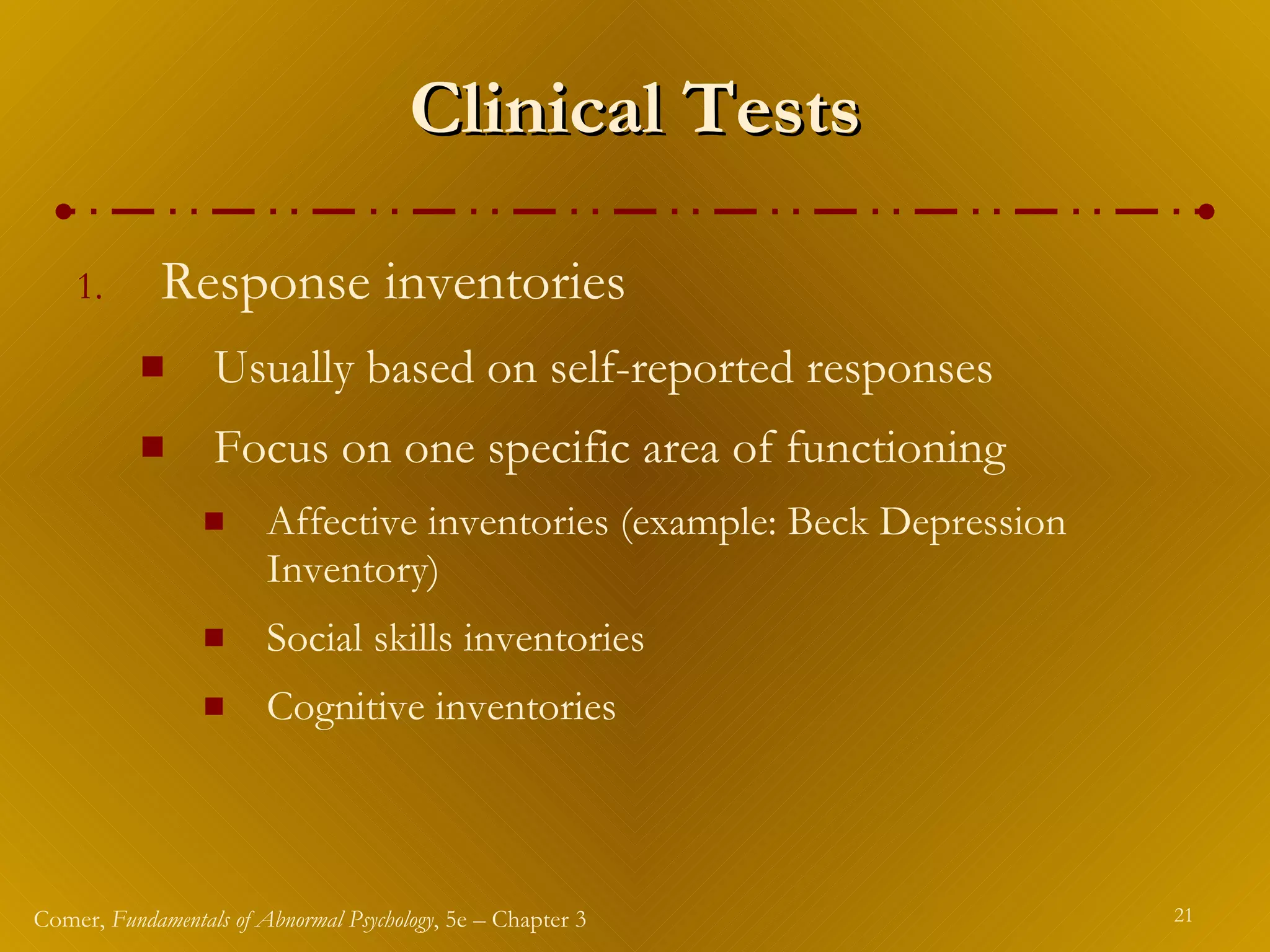
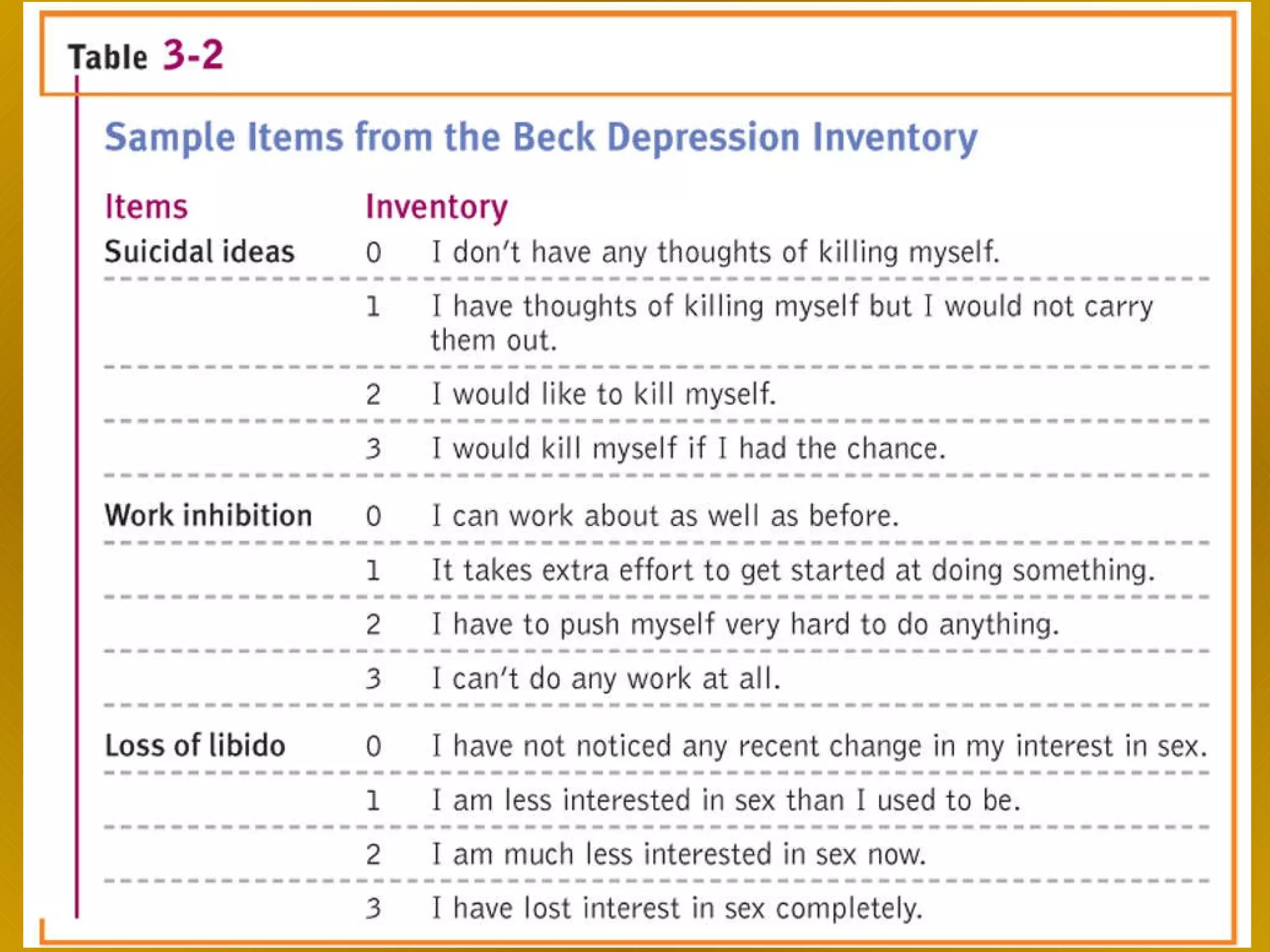
Clinical Tests Response inventories  Usually based on self-reported responses Focus on one specific area of functioning Affective inventories (example: Beck Depression Inventory) Social skills inventories Cognitive inventories
Clinical Tests Response inventories  Strengths and weaknesses: Increasing in use and number Not all have been subjected to careful standardization, reliability, and/or validity procedures (BDI and a few others are exceptions)
Clinical Tests Psychophysiological tests  Measure physiological response as an indication of psychological problems Includes heart rate, blood pressure, body temperature, galvanic skin response, and muscle contraction Most popular is the polygraph (lie detector)
Clinical Tests Psychophysiological tests  Strengths and weaknesses: Require expensive equipment that must be tuned and maintained Can be inaccurate and unreliable
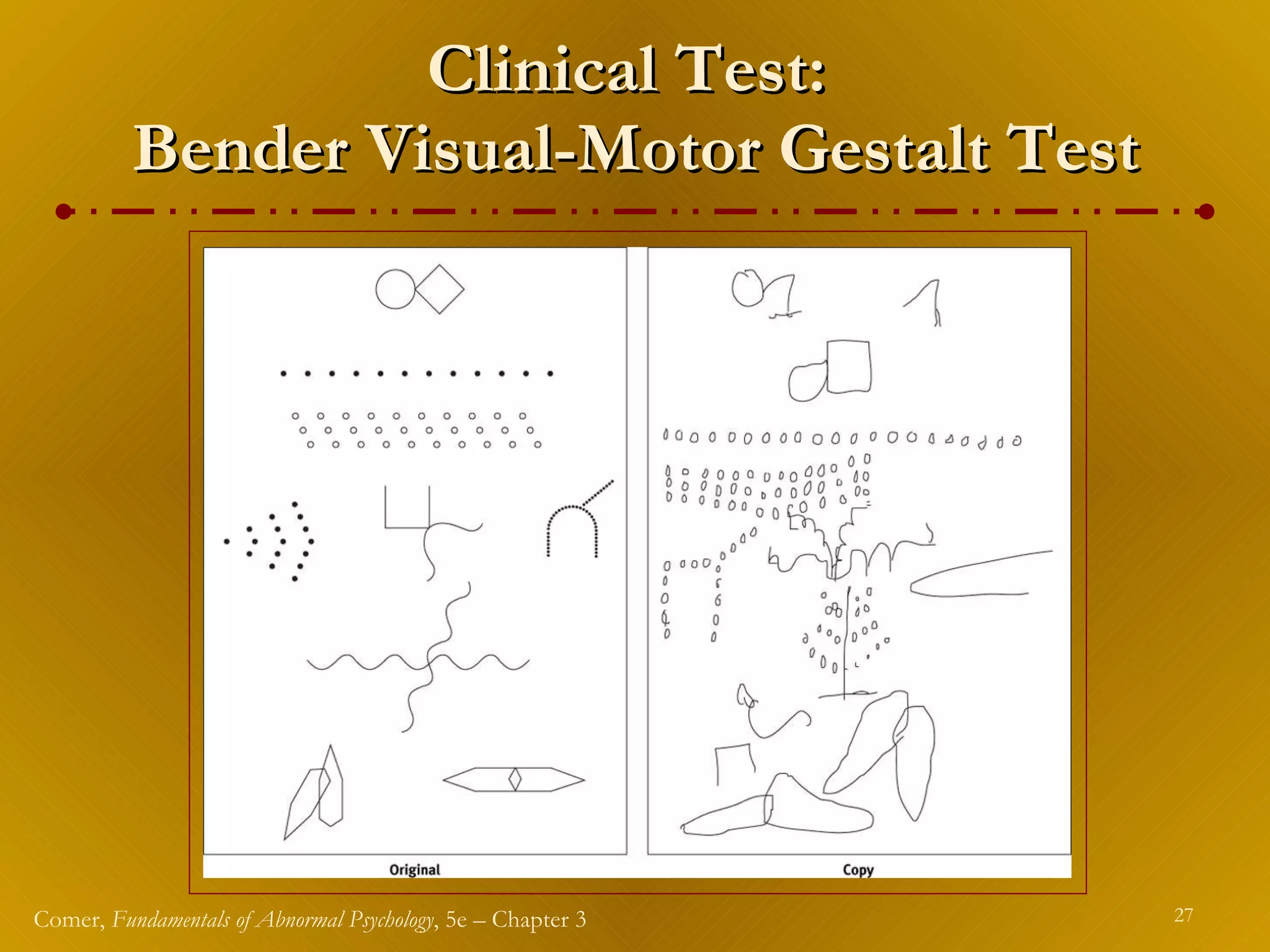
Clinical Tests Neurological and neuropsychological tests Neurological tests directly assess brain function by assessing brain structure and activity Examples: EEG, PET scans, CAT scans, MRI Neuropsychological tests indirectly assess brain function by assessing cognitive, perceptual, and motor functioning Most widely used is the Bender Visual-Motor Gestalt Test
Clinical Test:  Bender Visual-Motor Gestalt Test
Clinical Tests Neurological and neuropsychological tests Strengths and weaknesses: Can be very accurate At best, though, these tests are general screening devices Best when used in a battery of tests, each targeting a specific skill area
Clinical Tests Intelligence tests Designed to measure intellectual ability Composed of a series of tests assessing both verbal and nonverbal skills Generate an intelligence quotient (IQ)
Clinical Tests Intelligence tests Strengths and weaknesses: Are among the most carefully produced of all clinical tests Highly standardized on large groups of subjects Have very high reliability and validity Because intelligence is an inferred quality, it can only be measured indirectly
Clinical Tests Intelligence tests Strengths and weaknesses: Performance can be influenced by nonintelligence factors (e.g., motivation, anxiety, test-taking experience) Tests may contain cultural biases in language or tasks
Clinical Observations Systematic observation of behavior Several kinds: Naturalistic Analog Self-monitoring
Clinical Observations Naturalistic and analog observations Naturalistic observations occur in everyday environments Can occur in homes, schools, institutions (hospitals and prisons), and community settings Tend to focus on parent – child, sibling – child, or teacher – child interactions Observations are generally made by “participant observers” and reported to a clinician If naturalistic observation is impractical, analog observations are used in artificial settings
Clinical Observations Naturalistic and analog observations Strengths and weaknesses: Reliability is a concern Different observers may focus on different aspects of behavior Validity is a concern Risk of “overload,” “observer drift,” and observer bias Client reactivity may also limit validity Observations may lack cross-situational validity
Clinical Observations Self-monitoring People observe themselves and carefully record certain behaviors, feelings, or cognitions as they occur over time
Clinical Observations Self-monitoring  Strengths and weaknesses: Useful in assessing infrequent behaviors Useful for observing overly frequent behaviors Provides a means of measuring private thoughts or perceptions Validity is often a problem Clients may not receive proper training and instruction Clients may not record information accurately When people monitor themselves, they often change their behavior
Diagnosis: Does the Client’s Syndrome Match a Known Disorder? Using all available information, clinicians attempt to paint a “clinical picture” Influenced by their theoretical orientation Using assessment data and the clinical picture, clinicians attempt to make a diagnosis A determination that a person’s problems reflect a particular disorder or syndrome Based on an existing classification system
Classification Systems Lists of categories, disorders, and symptom descriptions, with guidelines for assignment Focus on clusters of symptoms (syndromes) In current use in the US: DSM-IV-TR Diagnostic and Statistical Manual of Mental Disorders (4th edition), Text Revision
DSM-IV-TR Published in 1994, revised in 2000 (TR) Lists approximately 400 disorders Listed in the inside back flap of your text Describes criteria for diagnoses, key clinical features, and related features which are often but not always present
The DSM-IV-TR Most widely used classification system in the US Multiaxial Uses 5 axes (branches of information) to develop a full clinical picture People usually receive a diagnosis on either Axis   I or Axis II, but they may receive diagnoses on both
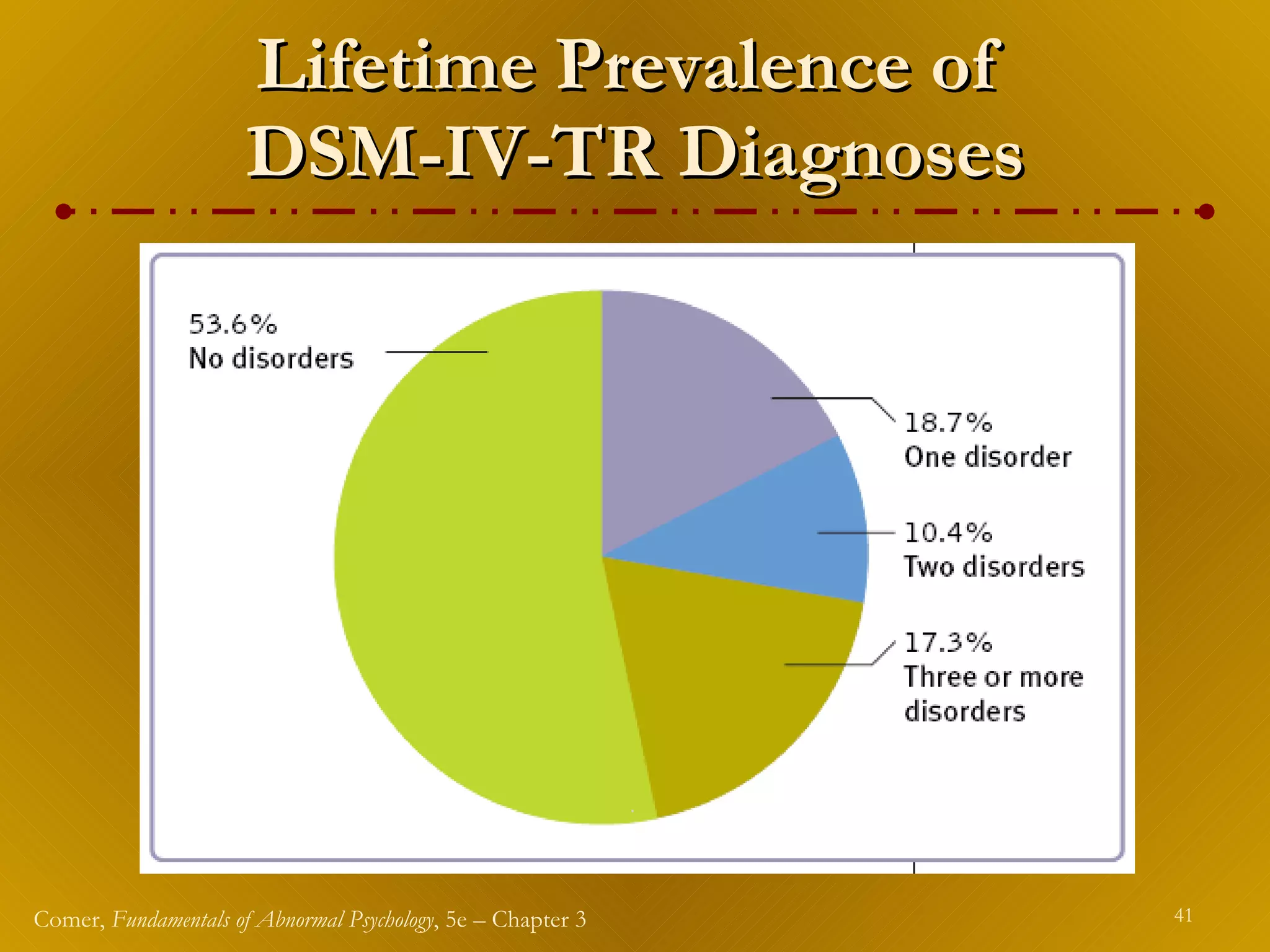
Lifetime Prevalence of  DSM-IV-TR Diagnoses
The DSM-IV-TR Axis I  Most frequently diagnosed disorders, except personality disorders and mental retardation
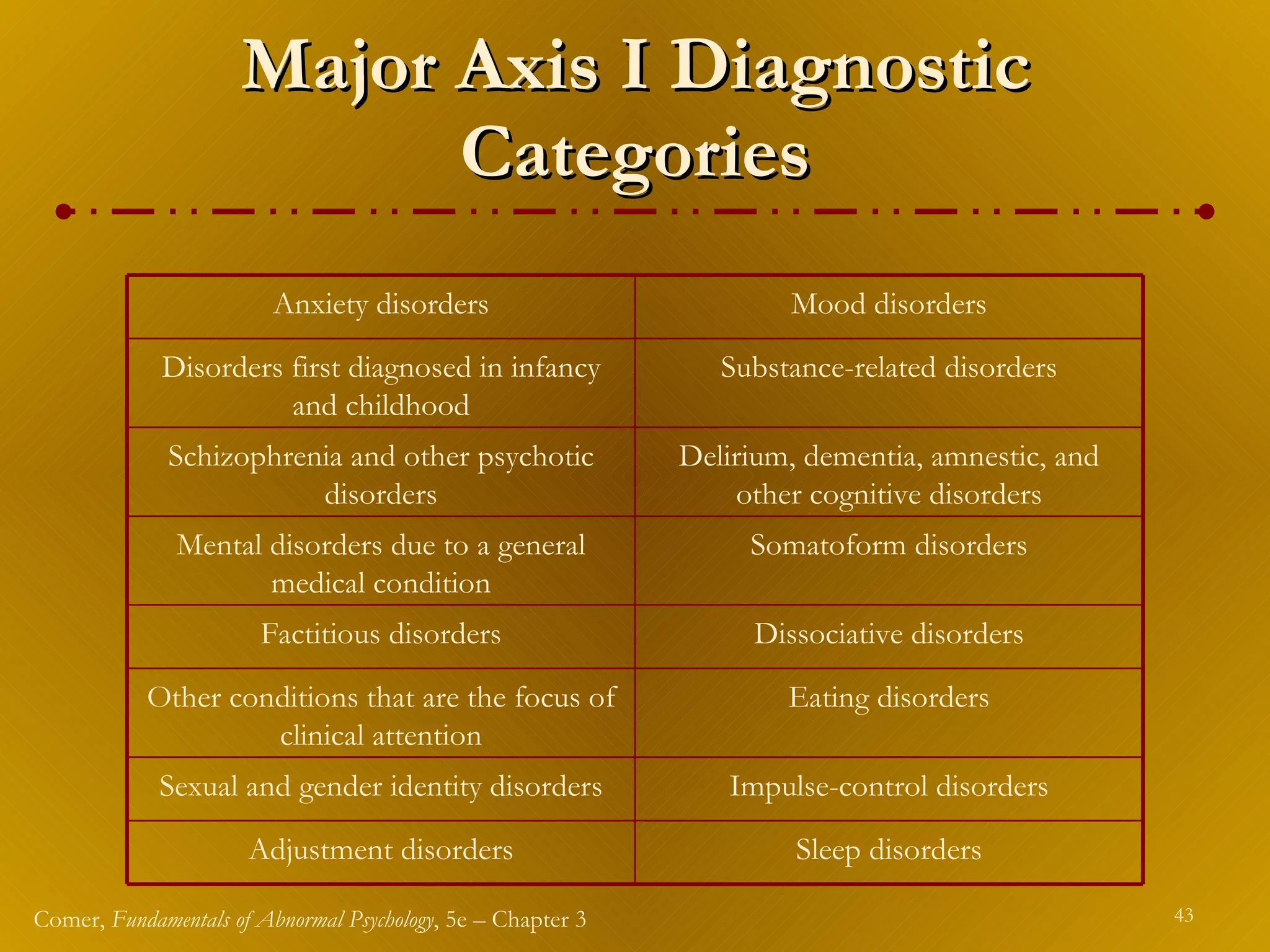
Major Axis I Diagnostic Categories Sleep disorders Adjustment disorders Impulse-control disorders Sexual and gender identity disorders Eating disorders Other conditions that are the focus of clinical attention Dissociative disorders Factitious disorders Somatoform disorders Mental disorders due to a general medical condition Delirium, dementia, amnestic, and other cognitive disorders Schizophrenia and other psychotic disorders Substance-related disorders Disorders first diagnosed in infancy and childhood Mood disorders Anxiety disorders
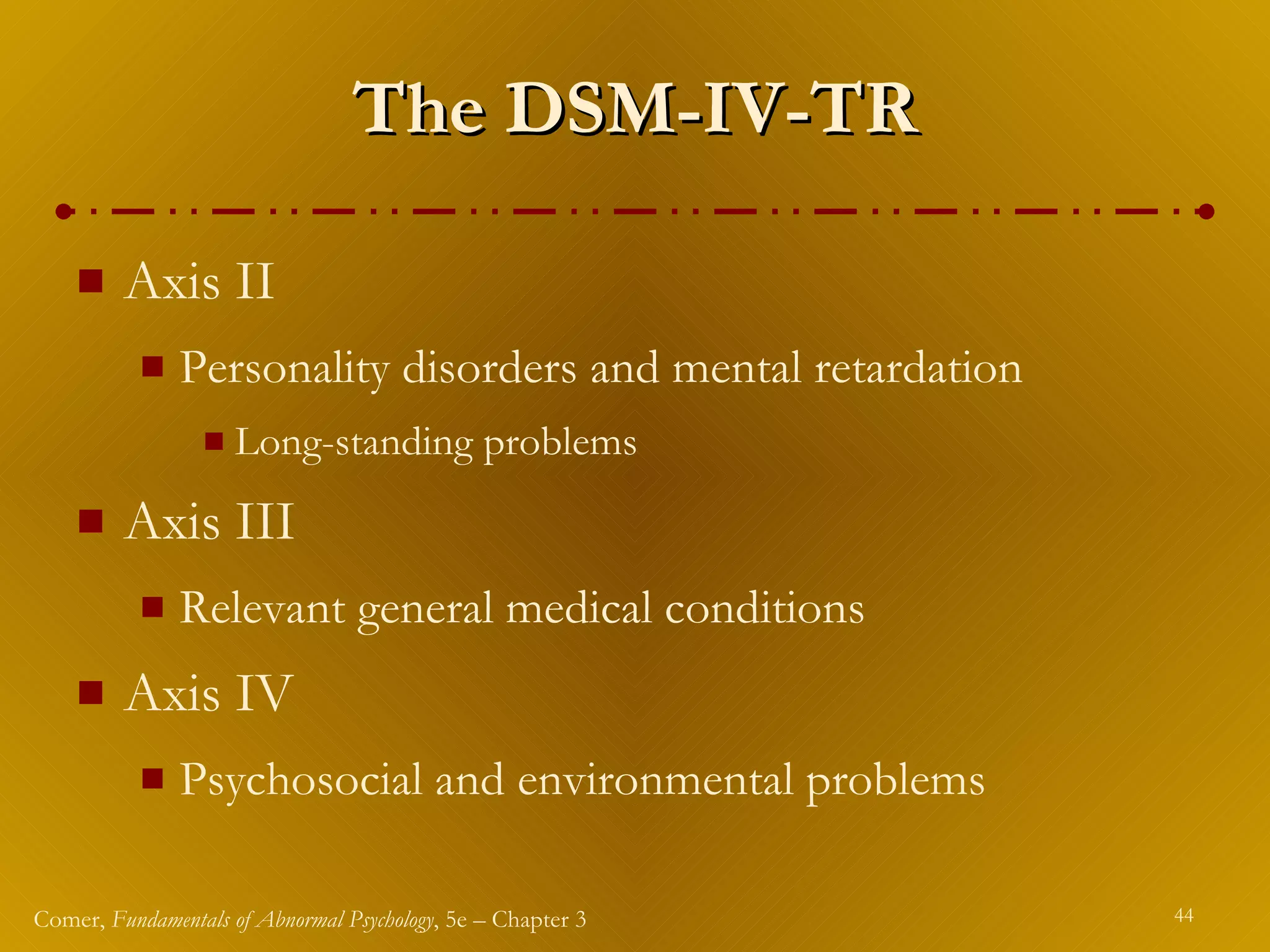
The DSM-IV-TR Axis II Personality disorders and mental retardation Long-standing problems Axis III Relevant general medical conditions  Axis IV Psychosocial and environmental problems
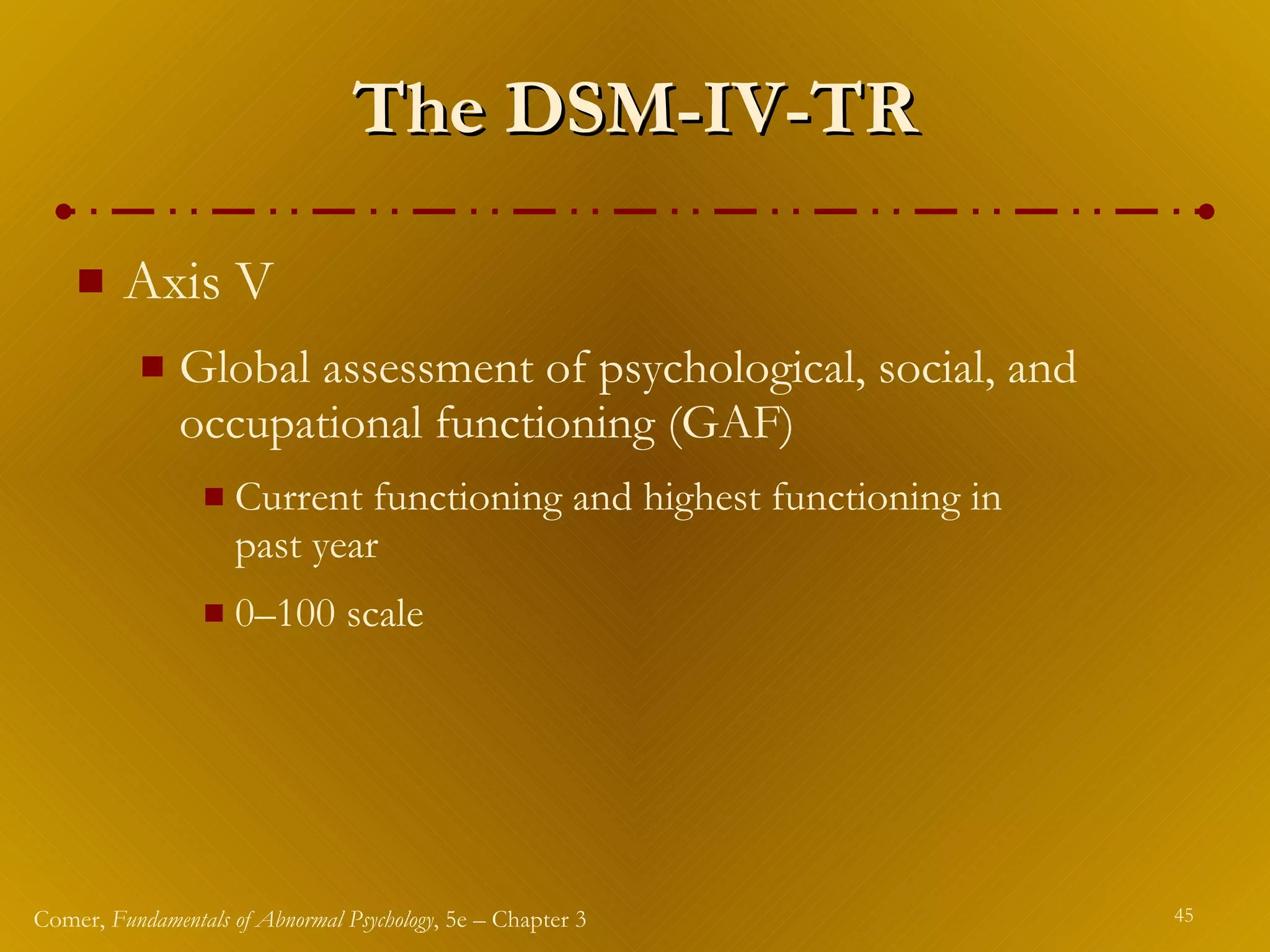
The DSM-IV-TR Axis V Global assessment of psychological, social, and occupational functioning (GAF) Current functioning and highest functioning in  past year 0 – 100 scale
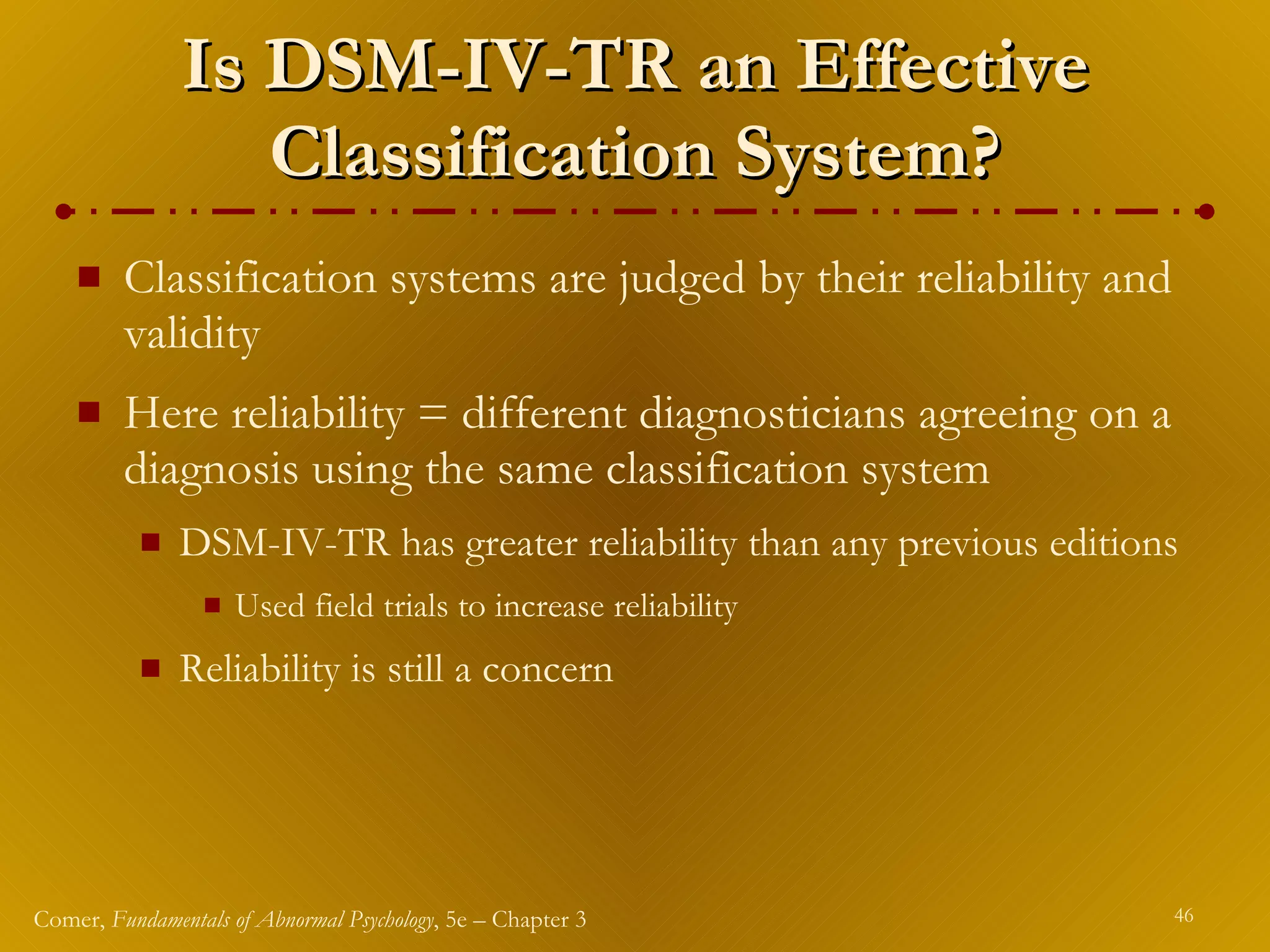
Is DSM-IV-TR an Effective Classification System? Classification systems are judged by their reliability and validity Here reliability   = different diagnosticians agreeing on a diagnosis using the same classification system DSM-IV-TR has greater reliability than any previous editions Used field trials to increase reliability Reliability   is still a concern
Is DSM-IV-TR an Effective Classification System? The validity of a classification system is the accuracy of information that the diagnostic categories provide Predictive validity is of the most use clinically DSM-IV-TR has greater validity than any previous editions Conducted extensive literature reviews and ran field studies Validity is still a concern
Is DSM-IV-TR an Effective Classification System? Beyond concerns about reliability and validity, a growing number of theorists believe that two fundamental problems weaken the DSM-IV-TR: Basic assumption that disorders are  qualitatively  different from normal behavior Reliance on  discrete  diagnostic categories
Can Diagnosis and Labeling  Cause Harm? Misdiagnosis always a concern Major issue is reliance on clinical judgment Also present is the issue of labeling and stigma Diagnosis may be a self-fulfilling prophecy Because of these problems, some clinicians would like to cease the practice of diagnosis
Treatment: How Might the  Client Be Helped? Treatment decisions  Begin with assessment information and diagnostic decisions to determine a treatment plan Use a combination of idiographic and nomothetic information Other factors: Therapist’s theoretical orientation Current research General state of clinical knowledge – currently focusing on empirically supported, evidence-based treatment
The Effectiveness of Treatment More than 400 forms of therapy in practice, but is therapy effective? Difficult question to answer: How do you define success? How do you measure improvement? How do you compare treatments – treatments differ in range and complexity; therapists differ in skill and knowledge; clients differ in severity and motivation…
The Effectiveness of Treatment Controlled clinical research and therapy outcome studies typically assess one of the following questions: Is therapy  in general  effective? Are  particular  therapies generally effective? Are  particular  therapies effective for  particular  problems?
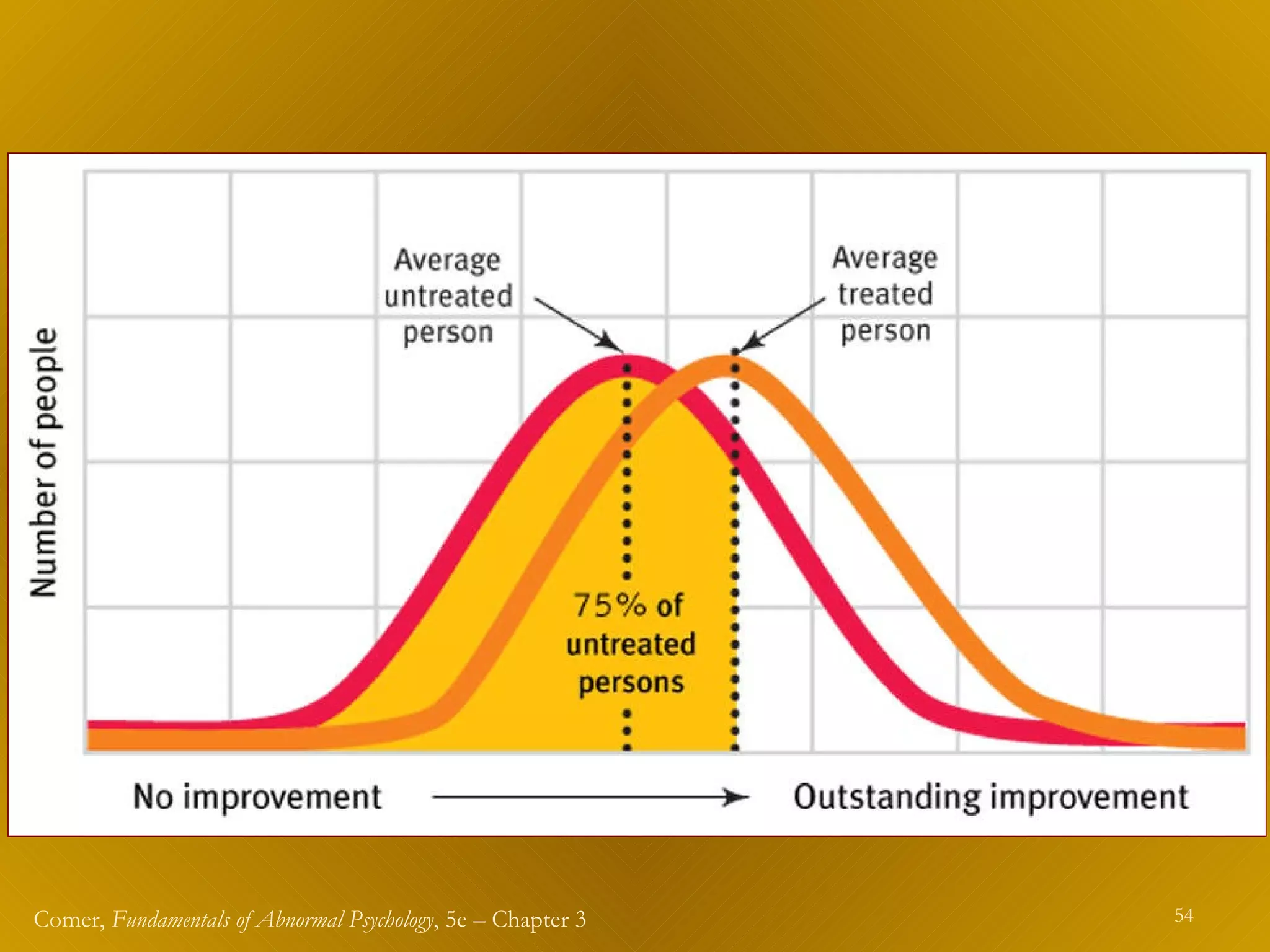
The Effectiveness of Treatment Is therapy generally effective? Research suggests that therapy is generally more effective than no treatment or placebo In one major study using meta-analysis, the average person who received treatment was better off than 75% of the untreated subjects
 
The Effectiveness of Treatment Is therapy generally effective? Some clinicians are concerned with a related question:  Can therapy can be harmful? Has this potential Studies report ~5% get worse with treatment
The Effectiveness of Treatment Are particular therapies generally effective? Generally, therapy-outcome studies lump all therapies together to consider their general effectiveness One critic has called this the “uniformity myth” It is argued that scientists must look at the effectiveness of particular therapies There is a movement (“rapprochement”) to look at commonalities among therapies
The Effectiveness of Treatment Are particular therapies effective for particular problems? Studies now being conducted to examine effectiveness of specific treatments for specific disorders: “ What  specific treatment, by  whom , is the most effective for  this  individual with  that  specific problem, and under  which  set of circumstances?” Recent studies focus on the effectiveness of combined approaches – drug therapy combined with certain forms of psychotherapy – to treat certain disorders

Abnormal Psych Pwrpt. ch03

  • 1.
    Chapter 3 ClinicalAssessment, Diagnosis, and Treatment
  • 2.
    Clinical Assessment: Howand Why Does the Client Behave Abnormally? What is assessment? The collecting of relevant information in an effort to reach a conclusion Clinical assessment is used to determine how and why a person is behaving abnormally and how that person may be helped Focus is idiographic – on an individual person Also may be used to evaluate treatment progress
  • 3.
    Clinical Assessment: Howand Why Does the Client Behave Abnormally? The specific tools used in an assessment depend on the clinician’s theoretical orientation Hundreds of clinical assessment tools have been developed and fall into three categories: Clinical interviews Tests Observations
  • 4.
    Characteristics of AssessmentTools To be useful, assessment tools must be standardized and have clear reliability and validity To standardize a technique is to set up common steps to be followed whenever it is administered One must standardize administration, scoring, and interpretation
  • 5.
    Characteristics of AssessmentTools Reliability refers to the consistency of a test A good test will yield the same results in the same situation Two main types: Test – retest reliability To test for this type of reliability, a subject is tested on two different occasions and the scores are correlated – the higher the correlation, the greater the test’s reliability Interrater reliability Independent judges agree on how to score and interpret a particular test
  • 6.
    Characteristics of AssessmentTools Validity refers to the accuracy of a test’s results A good test must accurately measure what it is supposed to be measuring Three specific types: Face validity – a test appears to measure what it is supposed to measure; does not necessarily indicate true validity Predictive validity – a test accurately predicts future characteristics or behavior Concurrent validity – a test’s results agree with independent measures assessing similar characteristics or behavior
  • 7.
    Clinical Interviews Face-to-faceencounters Often the first contact between a client and a clinician/assessor Used to collect detailed information, especially personal history, about a client Allow the interviewer to focus on whatever topics they consider most important
  • 8.
    Clinical Interviews Conductingthe interview Focus depends on theoretical orientation Can be either unstructured or structured In unstructured interviews, clinicians ask open-ended questions In structured interviews, clinicians ask prepared questions, often from a published interview schedule May include a mental status exam
  • 9.
    Clinical Interviews Limitations:May lack validity or accuracy Interviewers may be biased or may make mistakes in judgment Interviews, particularly unstructured ones, may lack reliability
  • 10.
    Clinical Tests Devicesfor gathering information about a few aspects of a person’s psychological functioning, from which broader information can be inferred More than 500 different tests are in use They fall into six categories…
  • 11.
    Clinical Tests Projectivetests Require that subjects interpret vague and ambiguous stimuli or follow open-ended instruction Mainly used by psychodynamic practitioners Most popular: Rorschach Test Thematic Apperception Test Sentence Completion Test Drawings
  • 12.
  • 13.
    Clinical Test: ThematicApperception Test
  • 14.
    Clinical Test: Sentence-Completion Test “I wish ___________________________” “My father ________________________”
  • 15.
    Clinical Test: DrawingsDraw-a-Person (DAP) test: “Draw a person” “Draw another person of the opposite sex”
  • 16.
    Clinical Tests Projectivetests Strengths and weaknesses: Helpful for providing “supplementary” information Have rarely demonstrated much reliability or validity May be biased against minority ethnic groups
  • 17.
    Clinical Tests Personalityinventories Designed to measure broad personality characteristics Focus on behaviors, beliefs, and feelings Usually based on self-reported responses Most widely used: Minnesota Multiphasic Personality Inventory For Adults: MMPI (original) or MMPI-2 (1989 revision) For Adolescents: MMPI-A
  • 18.
    Clinical Test: MMPIMinnesota Multiphasic Personality Inventory Consists of more than 500 self-statements that can be answered “true,” “false,” or “cannot say” Statements describe physical concerns; mood; morale; attitudes toward religion, sex, and social activities; and psychological symptoms Assesses careless responding & lying
  • 19.
    Clinical Test: MMPIMinnesota Multiphasic Personality Inventory Comprised of ten clinical scales: Hypochondriasis (HS) Depression (D) Conversion hysteria (Hy) Psychopathic deviate (PD) Masculinity-femininity (Mf) Scores range from 0 – 120 Above 70 = deviant Graphed to create a “profile” Paranoia (P) Psychasthenia (Pt) Schizophrenia (Sc) Hypomania (Ma) Social introversion (Si)
  • 20.
    Clinical Tests Personalityinventories Strengths and weaknesses: Easier, cheaper, and faster to administer than projective tests Objectively scored and standardized Appear to have greater validity than projective tests Measured traits often cannot be directly examined – how can we really know the assessment is correct? Tests fail to allow for cultural differences in responses
  • 21.
    Clinical Tests Responseinventories Usually based on self-reported responses Focus on one specific area of functioning Affective inventories (example: Beck Depression Inventory) Social skills inventories Cognitive inventories
  • 23.
    Clinical Tests Responseinventories Strengths and weaknesses: Increasing in use and number Not all have been subjected to careful standardization, reliability, and/or validity procedures (BDI and a few others are exceptions)
  • 24.
    Clinical Tests Psychophysiologicaltests Measure physiological response as an indication of psychological problems Includes heart rate, blood pressure, body temperature, galvanic skin response, and muscle contraction Most popular is the polygraph (lie detector)
  • 25.
    Clinical Tests Psychophysiologicaltests Strengths and weaknesses: Require expensive equipment that must be tuned and maintained Can be inaccurate and unreliable
  • 26.
    Clinical Tests Neurologicaland neuropsychological tests Neurological tests directly assess brain function by assessing brain structure and activity Examples: EEG, PET scans, CAT scans, MRI Neuropsychological tests indirectly assess brain function by assessing cognitive, perceptual, and motor functioning Most widely used is the Bender Visual-Motor Gestalt Test
  • 27.
    Clinical Test: Bender Visual-Motor Gestalt Test
  • 28.
    Clinical Tests Neurologicaland neuropsychological tests Strengths and weaknesses: Can be very accurate At best, though, these tests are general screening devices Best when used in a battery of tests, each targeting a specific skill area
  • 29.
    Clinical Tests Intelligencetests Designed to measure intellectual ability Composed of a series of tests assessing both verbal and nonverbal skills Generate an intelligence quotient (IQ)
  • 30.
    Clinical Tests Intelligencetests Strengths and weaknesses: Are among the most carefully produced of all clinical tests Highly standardized on large groups of subjects Have very high reliability and validity Because intelligence is an inferred quality, it can only be measured indirectly
  • 31.
    Clinical Tests Intelligencetests Strengths and weaknesses: Performance can be influenced by nonintelligence factors (e.g., motivation, anxiety, test-taking experience) Tests may contain cultural biases in language or tasks
  • 32.
    Clinical Observations Systematicobservation of behavior Several kinds: Naturalistic Analog Self-monitoring
  • 33.
    Clinical Observations Naturalisticand analog observations Naturalistic observations occur in everyday environments Can occur in homes, schools, institutions (hospitals and prisons), and community settings Tend to focus on parent – child, sibling – child, or teacher – child interactions Observations are generally made by “participant observers” and reported to a clinician If naturalistic observation is impractical, analog observations are used in artificial settings
  • 34.
    Clinical Observations Naturalisticand analog observations Strengths and weaknesses: Reliability is a concern Different observers may focus on different aspects of behavior Validity is a concern Risk of “overload,” “observer drift,” and observer bias Client reactivity may also limit validity Observations may lack cross-situational validity
  • 35.
    Clinical Observations Self-monitoringPeople observe themselves and carefully record certain behaviors, feelings, or cognitions as they occur over time
  • 36.
    Clinical Observations Self-monitoring Strengths and weaknesses: Useful in assessing infrequent behaviors Useful for observing overly frequent behaviors Provides a means of measuring private thoughts or perceptions Validity is often a problem Clients may not receive proper training and instruction Clients may not record information accurately When people monitor themselves, they often change their behavior
  • 37.
    Diagnosis: Does theClient’s Syndrome Match a Known Disorder? Using all available information, clinicians attempt to paint a “clinical picture” Influenced by their theoretical orientation Using assessment data and the clinical picture, clinicians attempt to make a diagnosis A determination that a person’s problems reflect a particular disorder or syndrome Based on an existing classification system
  • 38.
    Classification Systems Listsof categories, disorders, and symptom descriptions, with guidelines for assignment Focus on clusters of symptoms (syndromes) In current use in the US: DSM-IV-TR Diagnostic and Statistical Manual of Mental Disorders (4th edition), Text Revision
  • 39.
    DSM-IV-TR Published in1994, revised in 2000 (TR) Lists approximately 400 disorders Listed in the inside back flap of your text Describes criteria for diagnoses, key clinical features, and related features which are often but not always present
  • 40.
    The DSM-IV-TR Mostwidely used classification system in the US Multiaxial Uses 5 axes (branches of information) to develop a full clinical picture People usually receive a diagnosis on either Axis   I or Axis II, but they may receive diagnoses on both
  • 41.
    Lifetime Prevalence of DSM-IV-TR Diagnoses
  • 42.
    The DSM-IV-TR AxisI Most frequently diagnosed disorders, except personality disorders and mental retardation
  • 43.
    Major Axis IDiagnostic Categories Sleep disorders Adjustment disorders Impulse-control disorders Sexual and gender identity disorders Eating disorders Other conditions that are the focus of clinical attention Dissociative disorders Factitious disorders Somatoform disorders Mental disorders due to a general medical condition Delirium, dementia, amnestic, and other cognitive disorders Schizophrenia and other psychotic disorders Substance-related disorders Disorders first diagnosed in infancy and childhood Mood disorders Anxiety disorders
  • 44.
    The DSM-IV-TR AxisII Personality disorders and mental retardation Long-standing problems Axis III Relevant general medical conditions Axis IV Psychosocial and environmental problems
  • 45.
    The DSM-IV-TR AxisV Global assessment of psychological, social, and occupational functioning (GAF) Current functioning and highest functioning in past year 0 – 100 scale
  • 46.
    Is DSM-IV-TR anEffective Classification System? Classification systems are judged by their reliability and validity Here reliability = different diagnosticians agreeing on a diagnosis using the same classification system DSM-IV-TR has greater reliability than any previous editions Used field trials to increase reliability Reliability is still a concern
  • 47.
    Is DSM-IV-TR anEffective Classification System? The validity of a classification system is the accuracy of information that the diagnostic categories provide Predictive validity is of the most use clinically DSM-IV-TR has greater validity than any previous editions Conducted extensive literature reviews and ran field studies Validity is still a concern
  • 48.
    Is DSM-IV-TR anEffective Classification System? Beyond concerns about reliability and validity, a growing number of theorists believe that two fundamental problems weaken the DSM-IV-TR: Basic assumption that disorders are qualitatively different from normal behavior Reliance on discrete diagnostic categories
  • 49.
    Can Diagnosis andLabeling Cause Harm? Misdiagnosis always a concern Major issue is reliance on clinical judgment Also present is the issue of labeling and stigma Diagnosis may be a self-fulfilling prophecy Because of these problems, some clinicians would like to cease the practice of diagnosis
  • 50.
    Treatment: How Mightthe Client Be Helped? Treatment decisions Begin with assessment information and diagnostic decisions to determine a treatment plan Use a combination of idiographic and nomothetic information Other factors: Therapist’s theoretical orientation Current research General state of clinical knowledge – currently focusing on empirically supported, evidence-based treatment
  • 51.
    The Effectiveness ofTreatment More than 400 forms of therapy in practice, but is therapy effective? Difficult question to answer: How do you define success? How do you measure improvement? How do you compare treatments – treatments differ in range and complexity; therapists differ in skill and knowledge; clients differ in severity and motivation…
  • 52.
    The Effectiveness ofTreatment Controlled clinical research and therapy outcome studies typically assess one of the following questions: Is therapy in general effective? Are particular therapies generally effective? Are particular therapies effective for particular problems?
  • 53.
    The Effectiveness ofTreatment Is therapy generally effective? Research suggests that therapy is generally more effective than no treatment or placebo In one major study using meta-analysis, the average person who received treatment was better off than 75% of the untreated subjects
  • 54.
  • 55.
    The Effectiveness ofTreatment Is therapy generally effective? Some clinicians are concerned with a related question: Can therapy can be harmful? Has this potential Studies report ~5% get worse with treatment
  • 56.
    The Effectiveness ofTreatment Are particular therapies generally effective? Generally, therapy-outcome studies lump all therapies together to consider their general effectiveness One critic has called this the “uniformity myth” It is argued that scientists must look at the effectiveness of particular therapies There is a movement (“rapprochement”) to look at commonalities among therapies
  • 57.
    The Effectiveness ofTreatment Are particular therapies effective for particular problems? Studies now being conducted to examine effectiveness of specific treatments for specific disorders: “ What specific treatment, by whom , is the most effective for this individual with that specific problem, and under which set of circumstances?” Recent studies focus on the effectiveness of combined approaches – drug therapy combined with certain forms of psychotherapy – to treat certain disorders