Statistical Normality / Abnormality Yep … a bit more of stats … but just a bit
Frequency Distribution Table and Variability What is a frequency distribution table?? A way of organising data to show how often a value occurs in a set of data When graphed, the data will generally show one of three patterns – normal, skewed (negative or positive), bimodal. Look in your book on page 21 and 22 to see examples (we will discuss these in class). What is variability?? Variability – indicates how widely scores are spread out
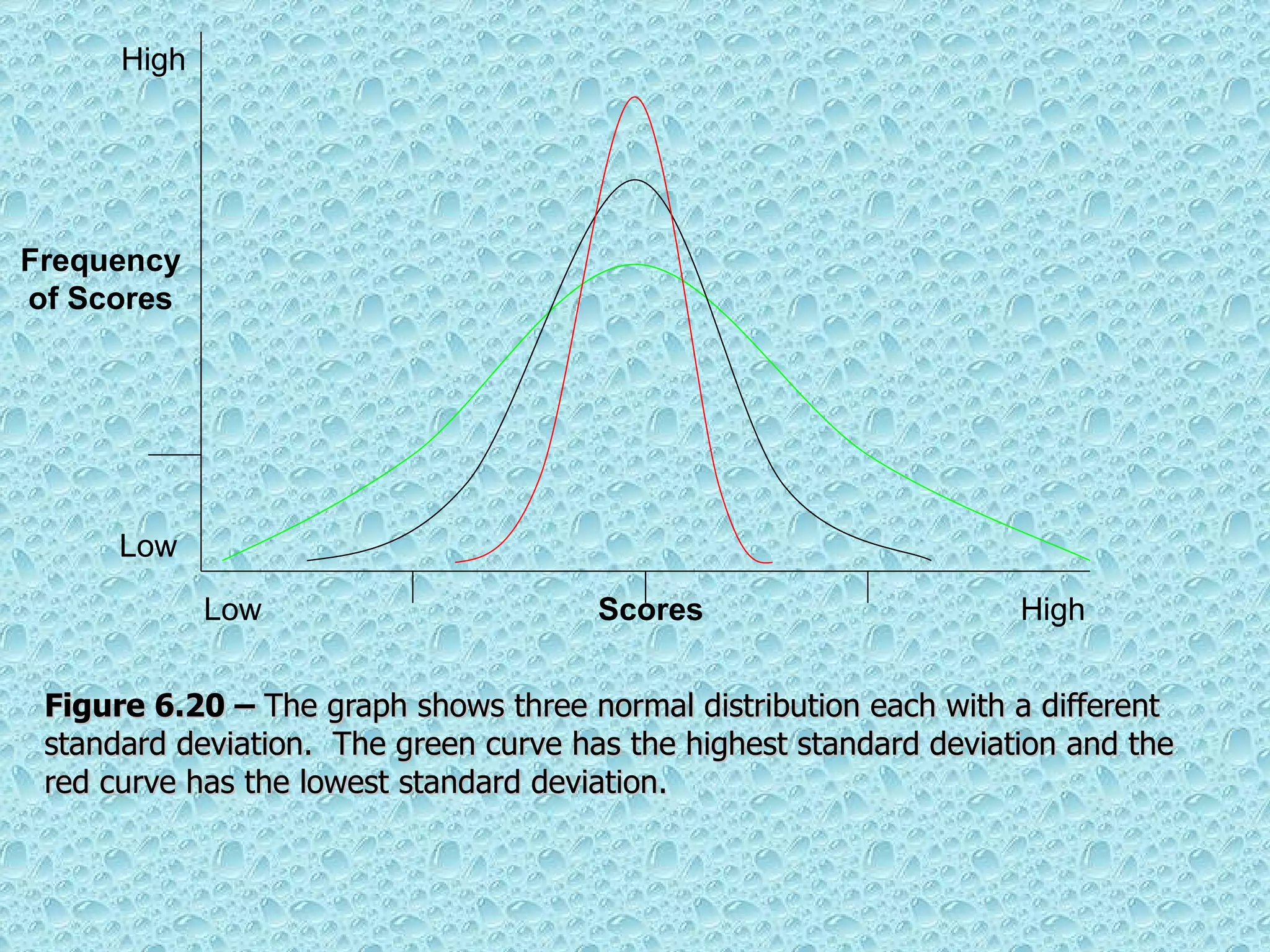
Standard Deviation (SD) This is one measure of variability. It gives information about the spread of data (clustered around one value or spread out) It summaries how far, on average, a score differs from the mean If all the scores were the same, SD = 0 (no variability)  A low standard deviation indicates that there is little variability in the set of scores and that most scores are clustered around the mean. The higher the standard deviation, the greater the variability there is among the scores.
Figure 6.20 –  The graph shows three normal distribution each with a different standard deviation.  The green curve has the highest standard deviation and the red curve has the lowest standard deviation. Scores Low High Frequency of Scores Low High
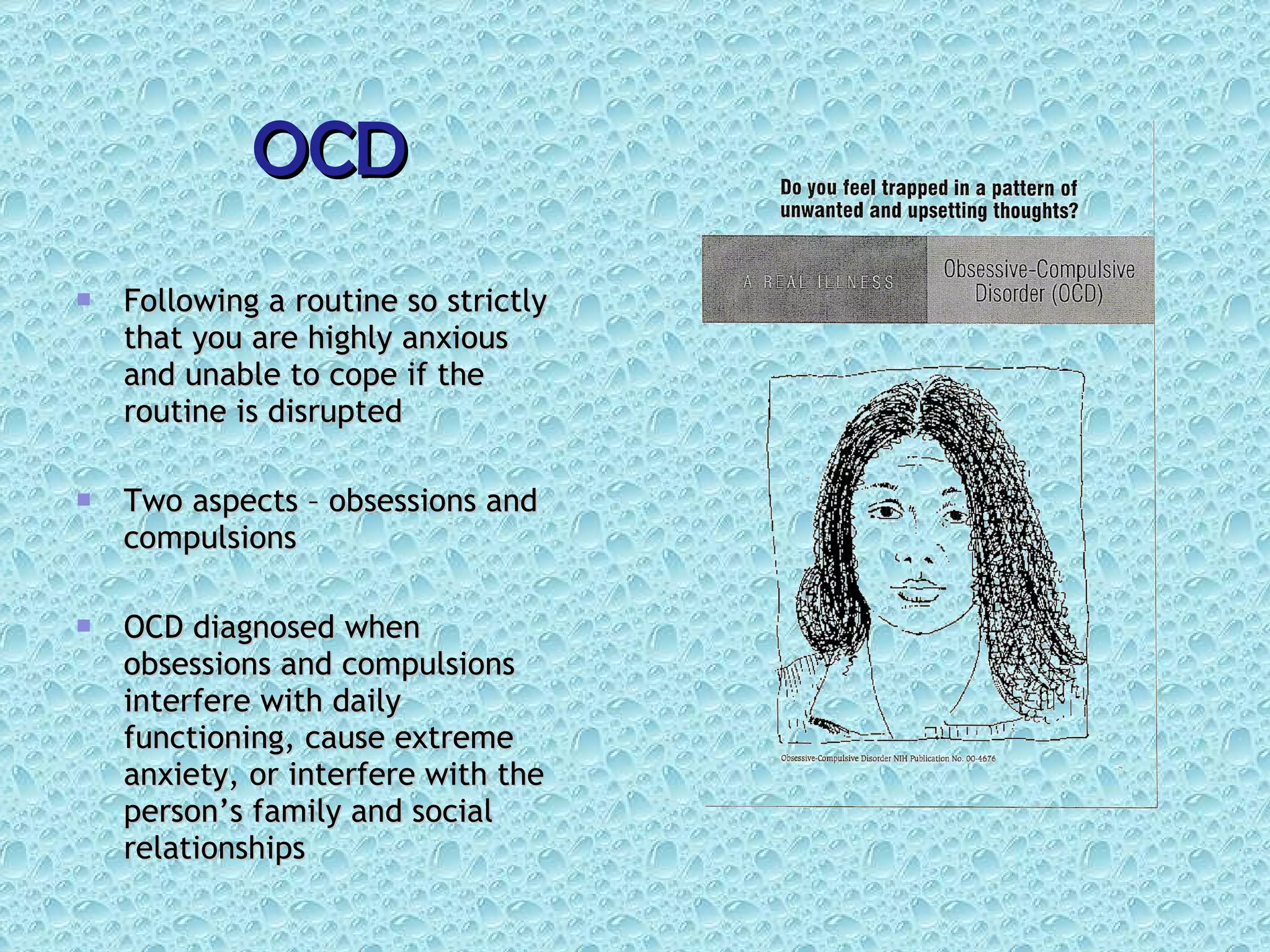
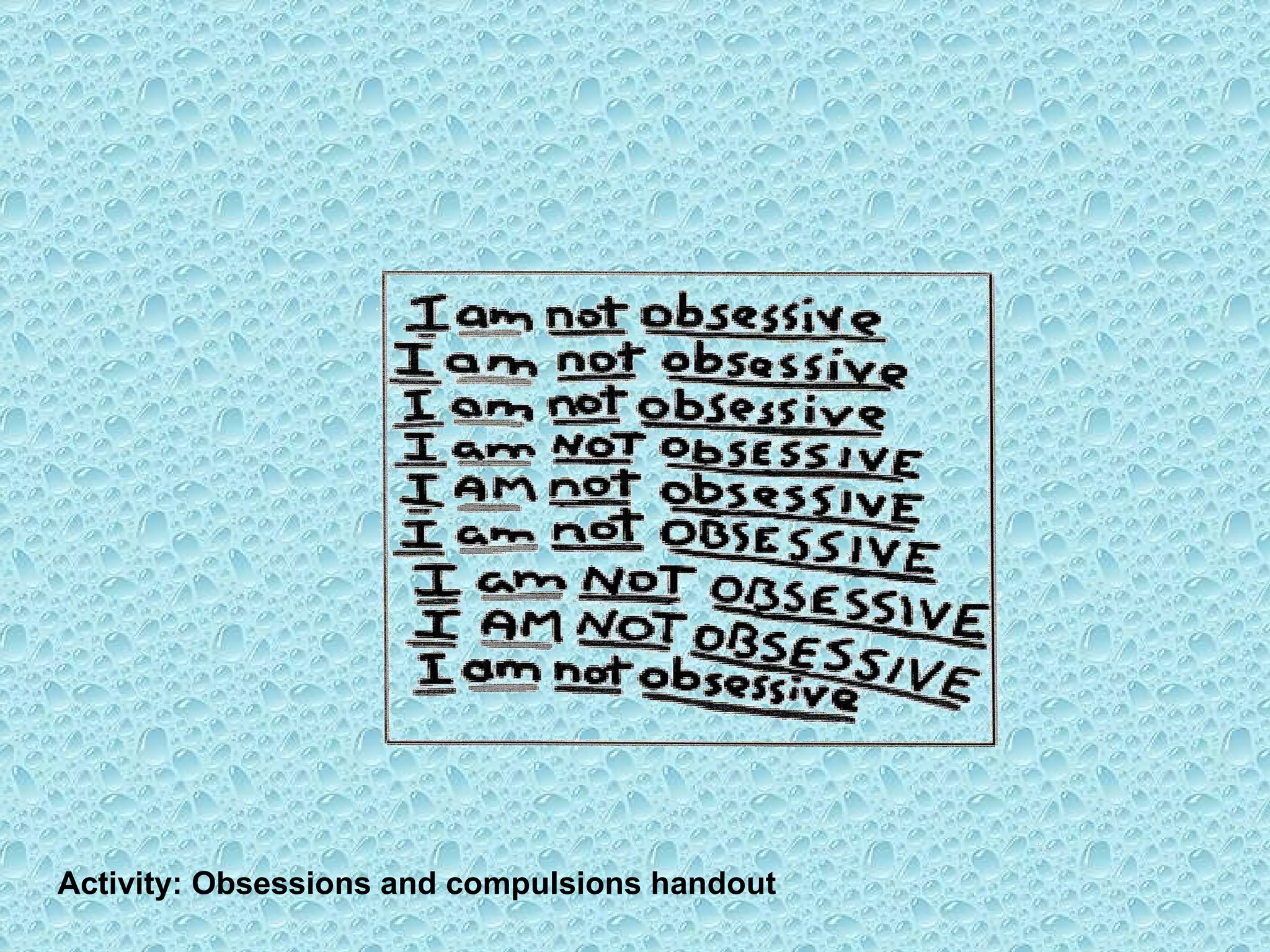
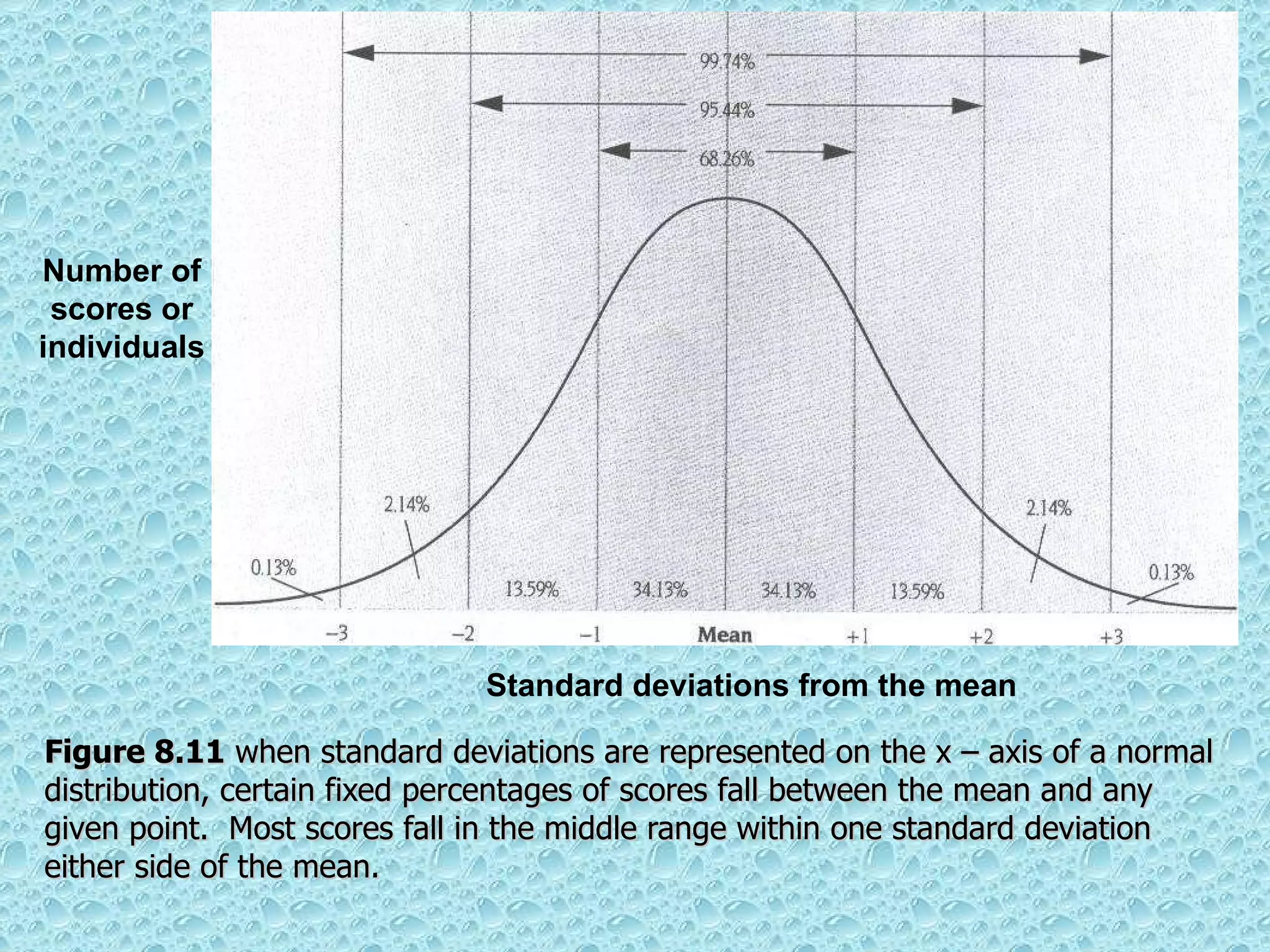
Figure 8.11  when standard deviations are represented on the x – axis of a normal distribution, certain fixed percentages of scores fall between the mean and any given point.  Most scores fall in the middle range within one standard deviation either side of the mean. Number of scores or individuals Standard deviations from the mean
Answer the following questions (use your book if you need) What is a frequency distribution i.e. what information does it tell us? Present the information in the table below as a Frequency Table What are the four patterns a frequency distribution can show?  Describe and draw each of the frequency distribution patterns What does variability tell us about the data? What is a measure of variability? Draw examples of a normal distribution with high standard deviation and low standard deviation 4 Below 5 2 5-9 1 10-14 5 15-19 2 20-24 1 25-29 # of individuals Times Late
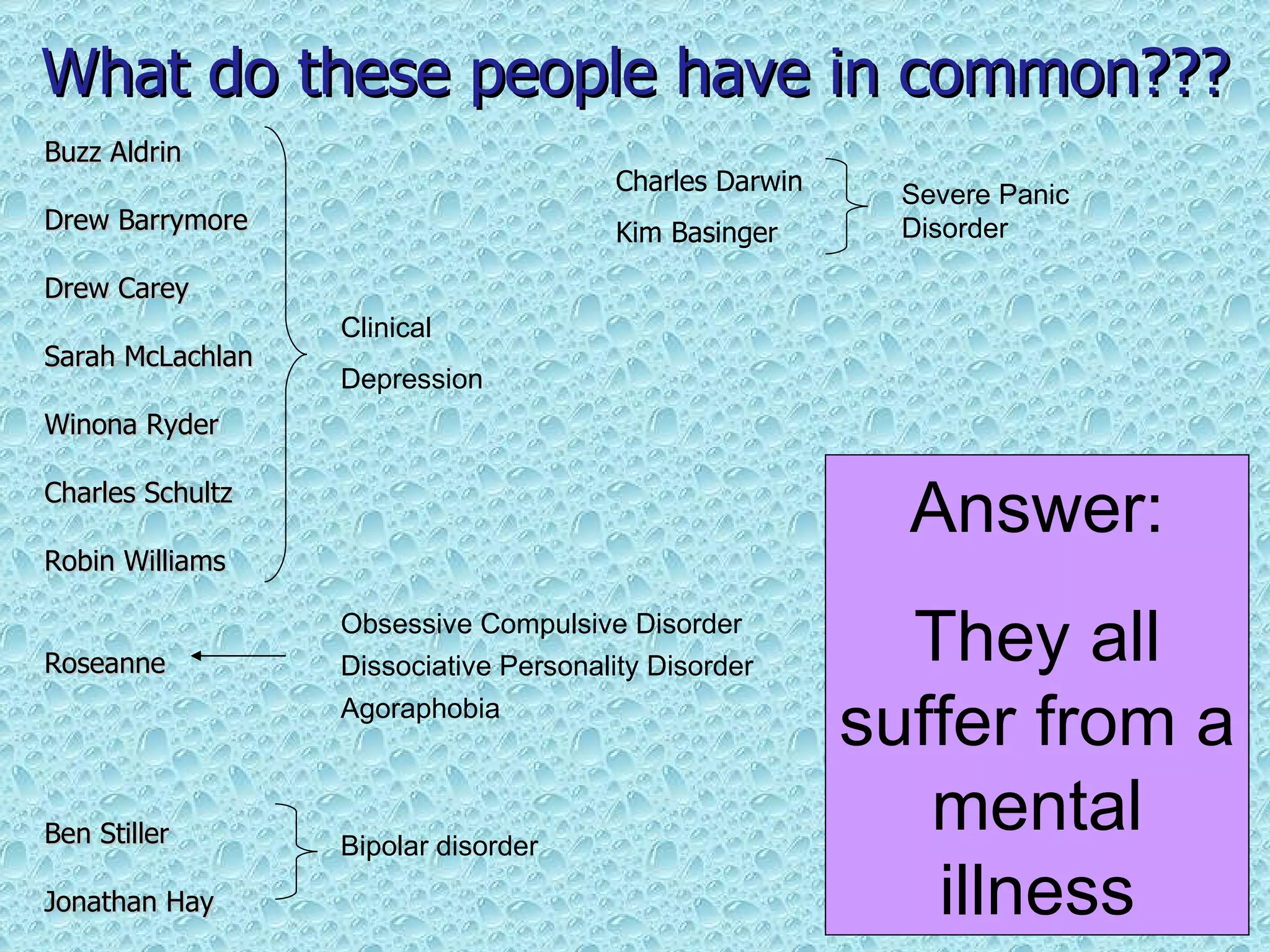
What do these people have in common??? Buzz Aldrin Drew Barrymore Drew Carey Sarah McLachlan Winona Ryder  Charles Schultz Robin Williams Roseanne Ben Stiller Jonathan Hay Charles Darwin Kim Basinger Clinical  Depression Bipolar disorder Dissociative Personality Disorder Agoraphobia Obsessive Compulsive Disorder Severe Panic Disorder Answer: They all suffer from a mental illness
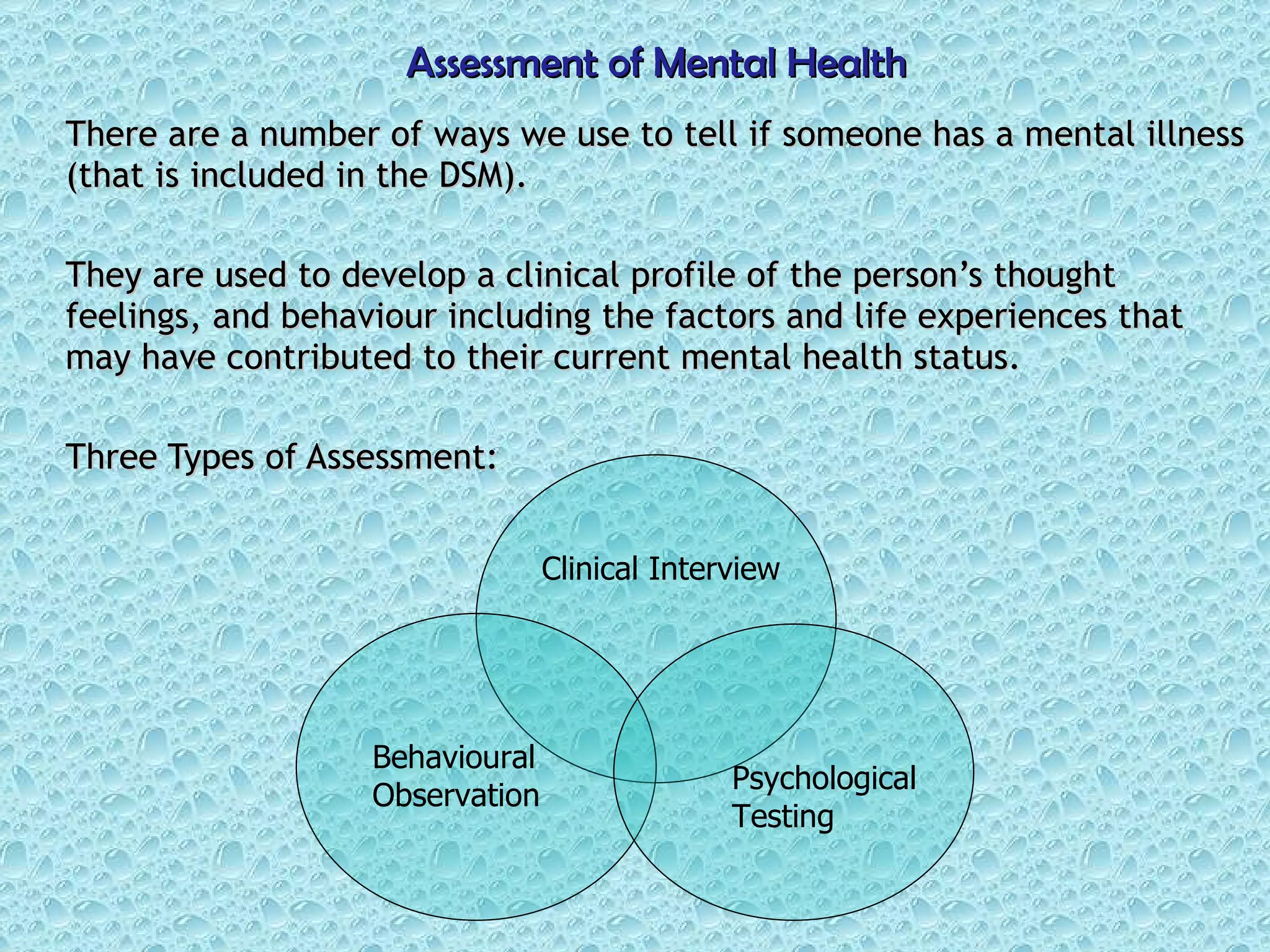
Assessment of Mental Health There are a number of ways we use to tell if someone has a mental illness (that is included in the DSM). They are used to develop a clinical profile of the person’s thought feelings, and behaviour including the factors and life experiences that may have contributed to their current mental health status. Three Types of Assessment: Clinical Interview Behavioural Observation Psychological Testing
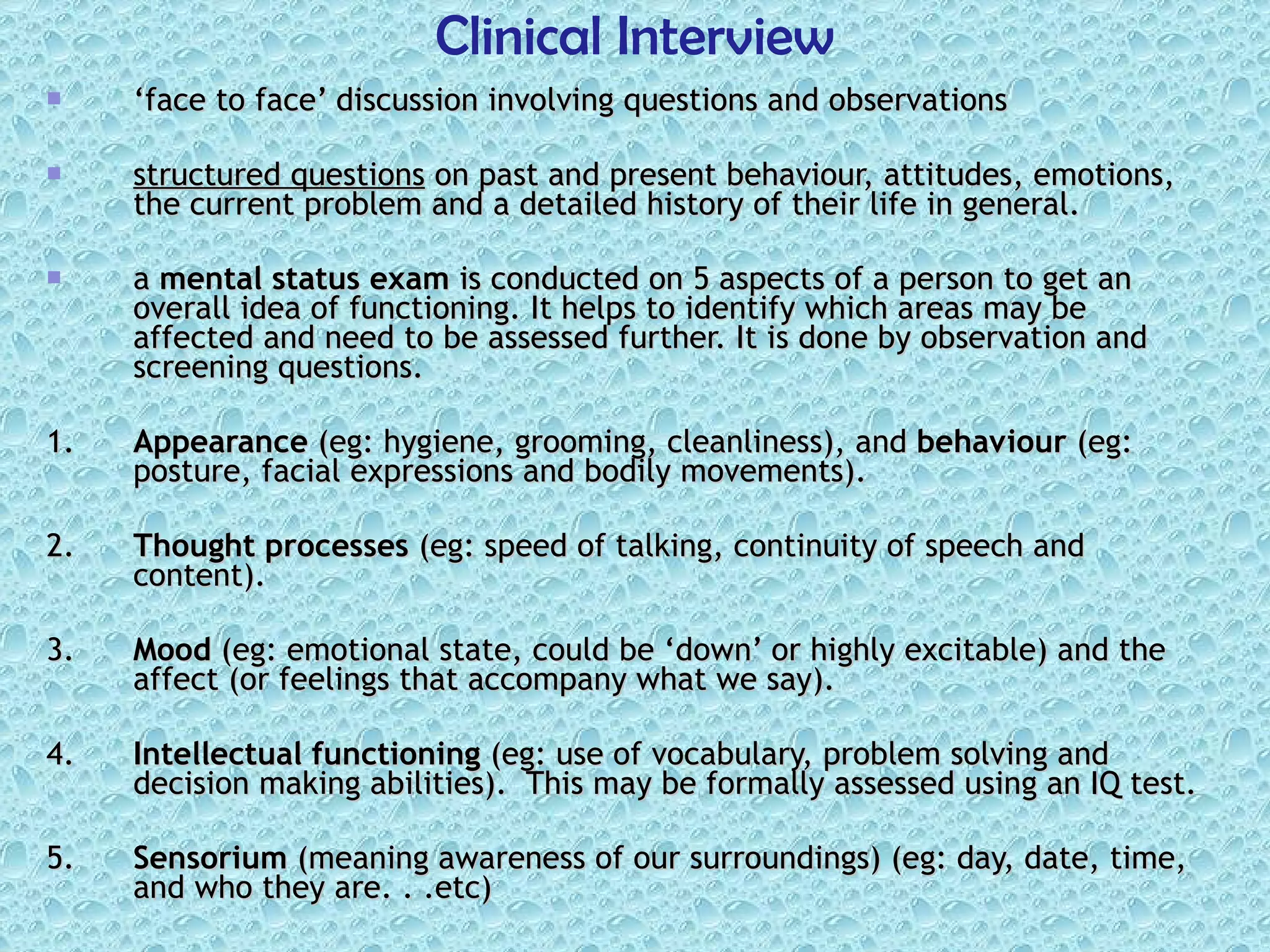
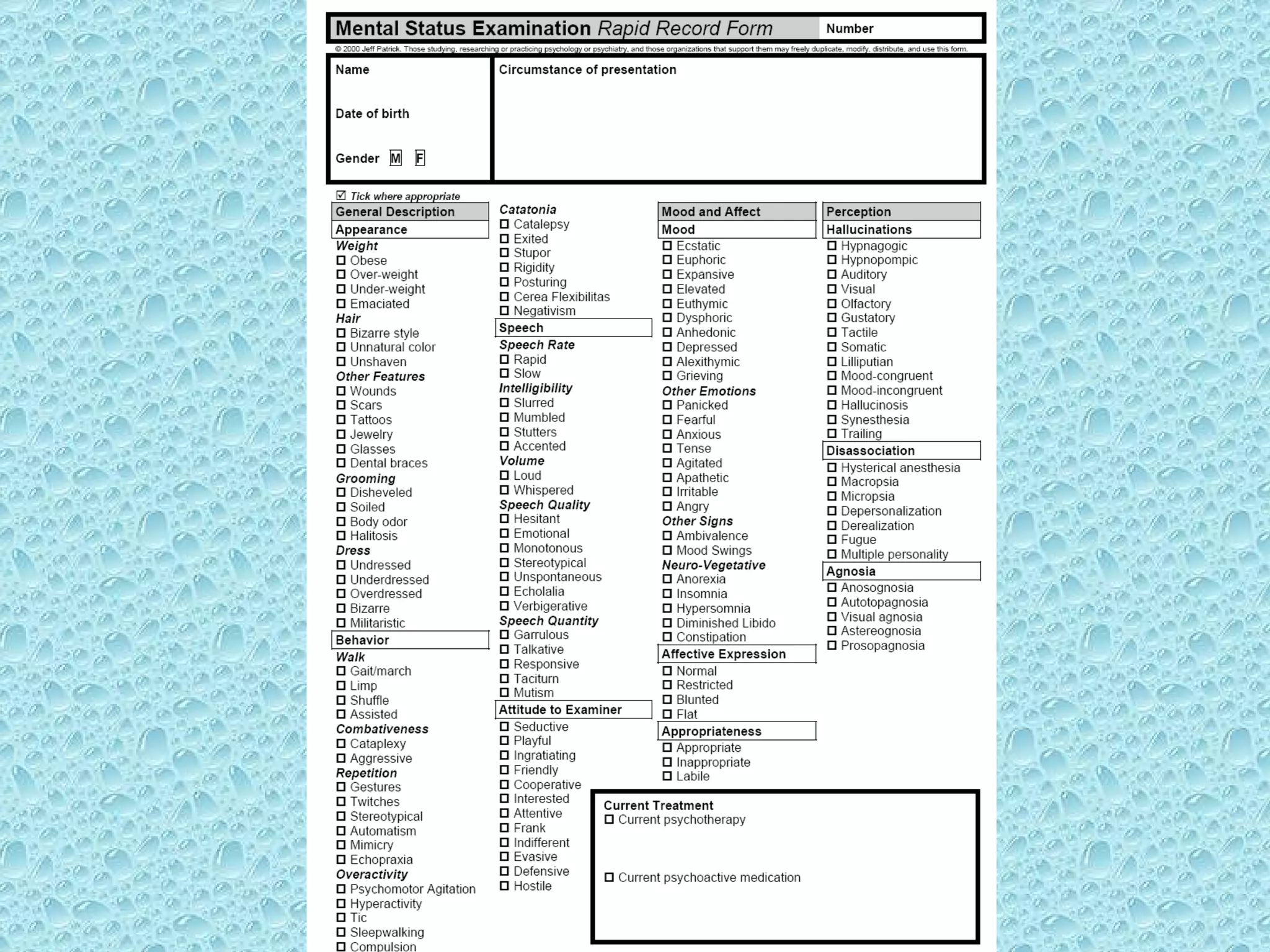
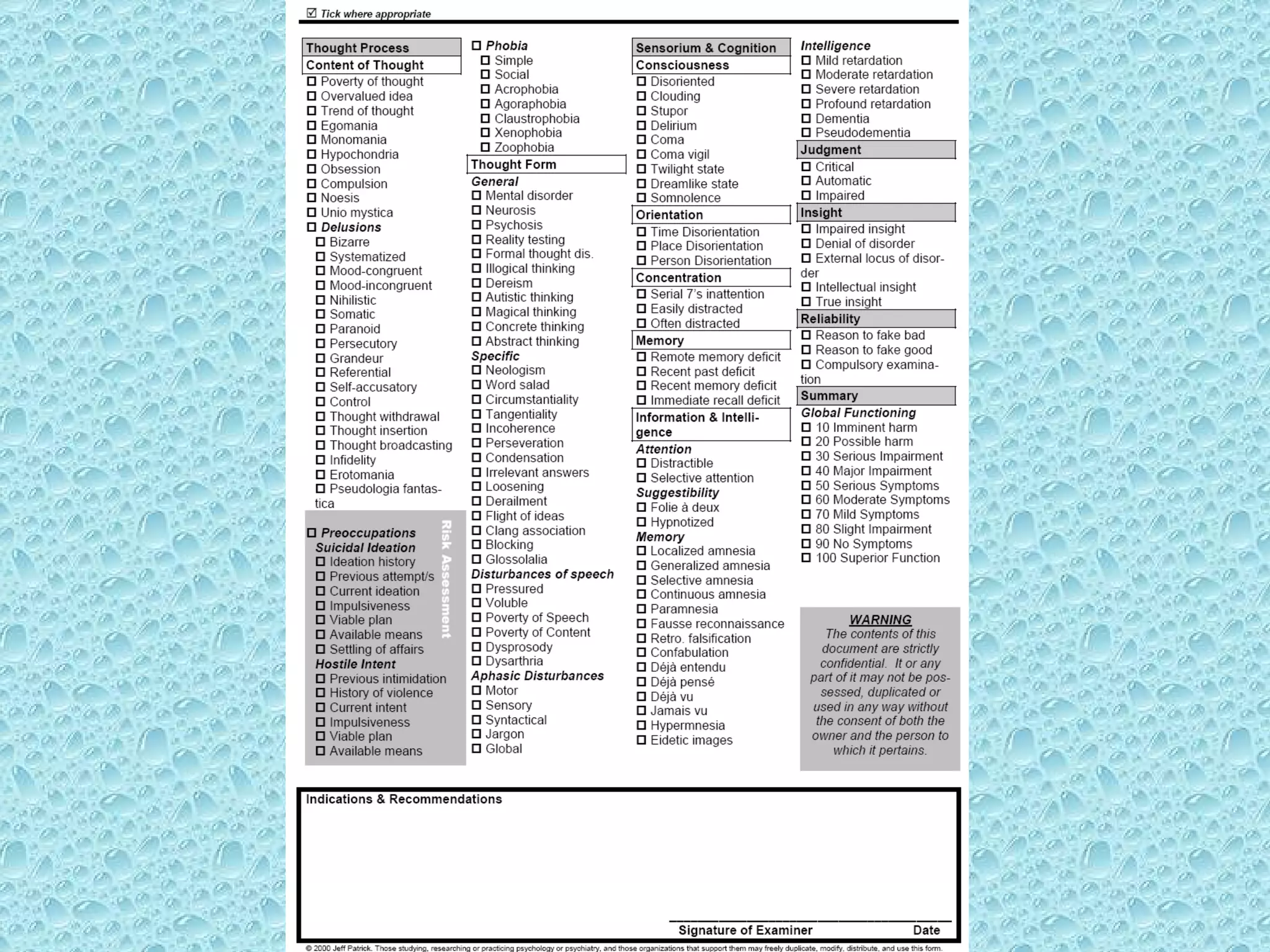
‘ face to face’ discussion involving questions and observations  structured questions  on past and present behaviour, attitudes, emotions, the current problem and a detailed history of their life in general.  a  mental status exam  is conducted on 5 aspects of a person to get an overall idea of functioning. It helps to identify which areas may be affected and need to be assessed further. It is done by observation and screening questions. 1. Appearance  (eg: hygiene, grooming, cleanliness), and  behaviour  (eg: posture, facial expressions and bodily movements). 2. Thought processes  (eg: speed of talking, continuity of speech and content). 3. Mood  (eg: emotional state, could be ‘down’ or highly excitable) and the affect (or feelings that accompany what we say). 4. Intellectual functioning  (eg: use of vocabulary, problem solving and decision making abilities).  This may be formally assessed using an IQ test. 5. Sensorium  (meaning awareness of our surroundings) (eg: day, date, time, and who they are. . .etc) Clinical Interview


TASK: Role Play Groups of 2 Come up with role play showing a clinical interview in progress. One person is the ‘psychologist’ and the other the ‘patient’. The patient should demonstrate one or more deficits in the aspects we have covered.  Perform the role play for the class we will have to guess which one(s) are being shown
may be taken during a clinical interview (eg; watching for eye contact, fidgeting or hesitating before answering questions)  Or when the person is in their natural environment (where the health professional may visit the client’s natural setting or get a friend or relative to gather the information). Useful because you can’t always get an accurate picture from what people TELL you. Again – very STRUCTURED and SPECIFIC observations Frequency, severity, specificity, circumstance Use ratings scales Behavioural Observations
Goal of assessment is to identify whether a person is suffering from a mental illness, and if so, the type Important in planning treatment Therefore ACCURACY is critical! Behavioural Obs and Clinical Interviews – can provide useful information, but can be subjective: may be DIFFERENT between different professionals
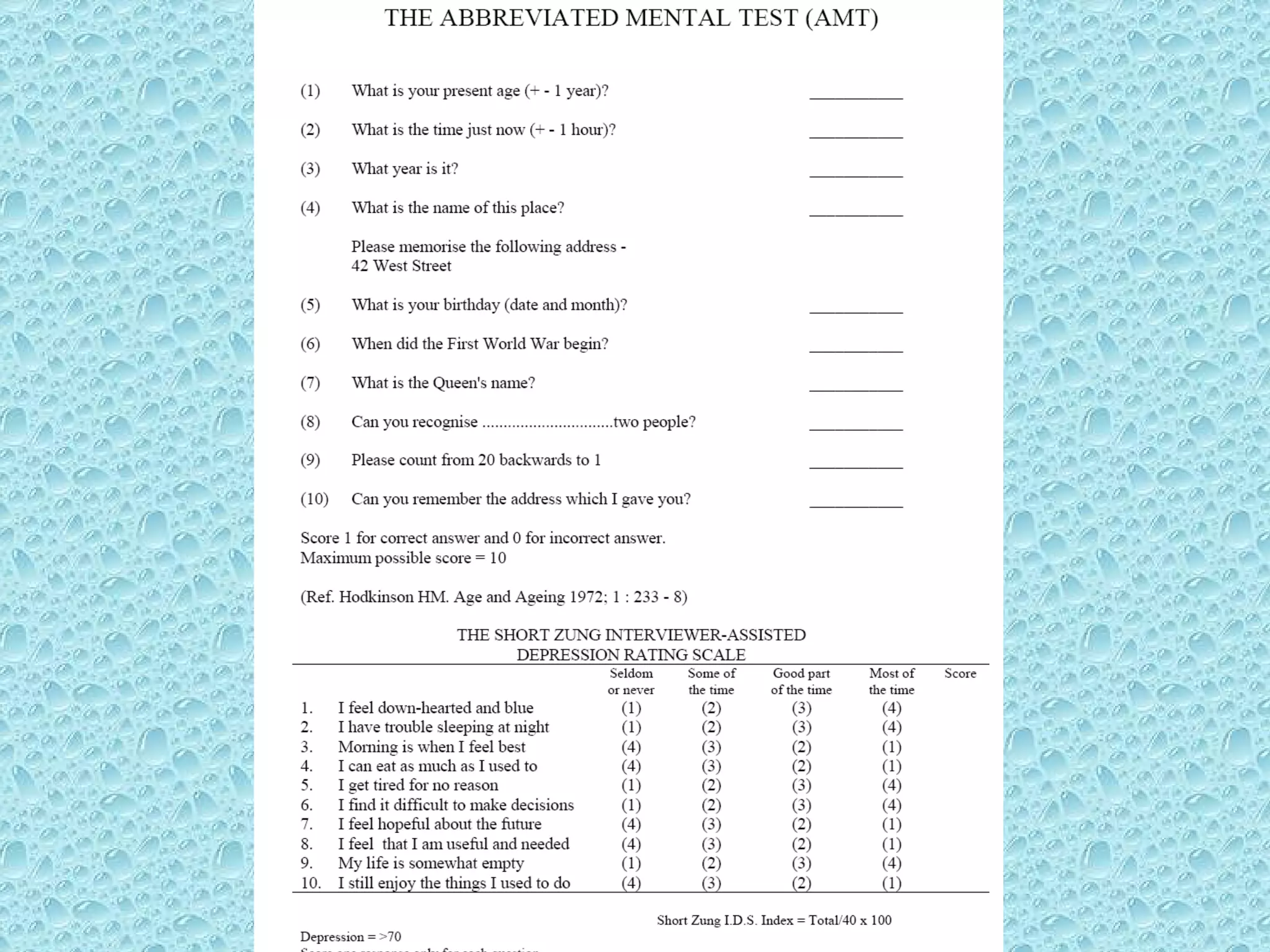
Aids diagnosis  Variety of specific psychological tests available, designed to assess areas such as personality or intelligence Type of ‘evidence’ of specific health problems or illnesses For a test to be useful it must be both  reliable  and  valid .  Valid  = it must actually test what it is setting out to assess. Reliable  = it must consistently assess what it is supposed to; each time it is given. Psychological Testing
Activity In groups of four briefly compare different psychological tests. Look at: What types of questions they ask and how many How answers are given What the test is measuring
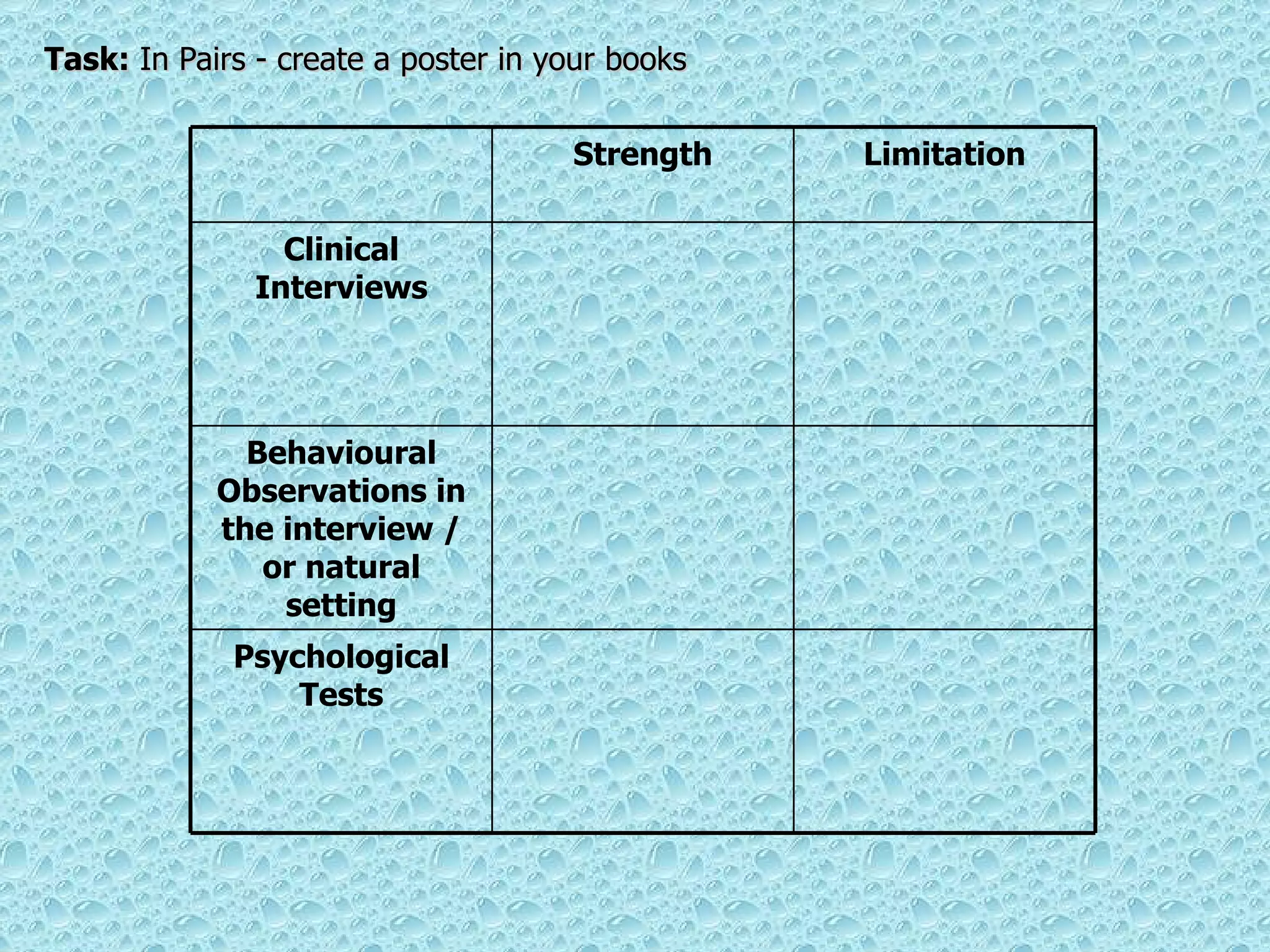
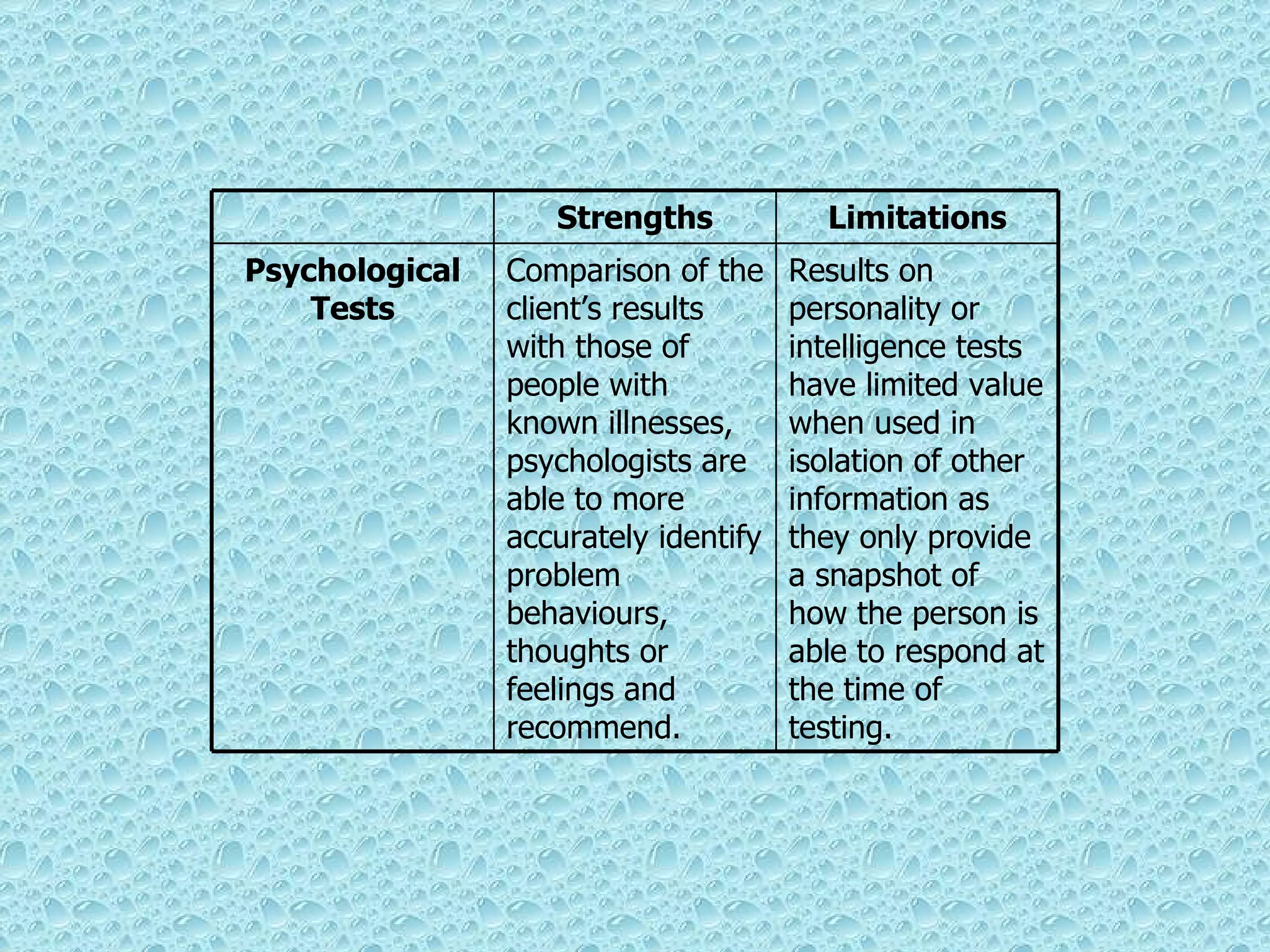
Task:  In Pairs - create a poster in your books Psychological Tests Behavioural Observations in the interview / or natural setting Clinical Interviews Limitation Strength
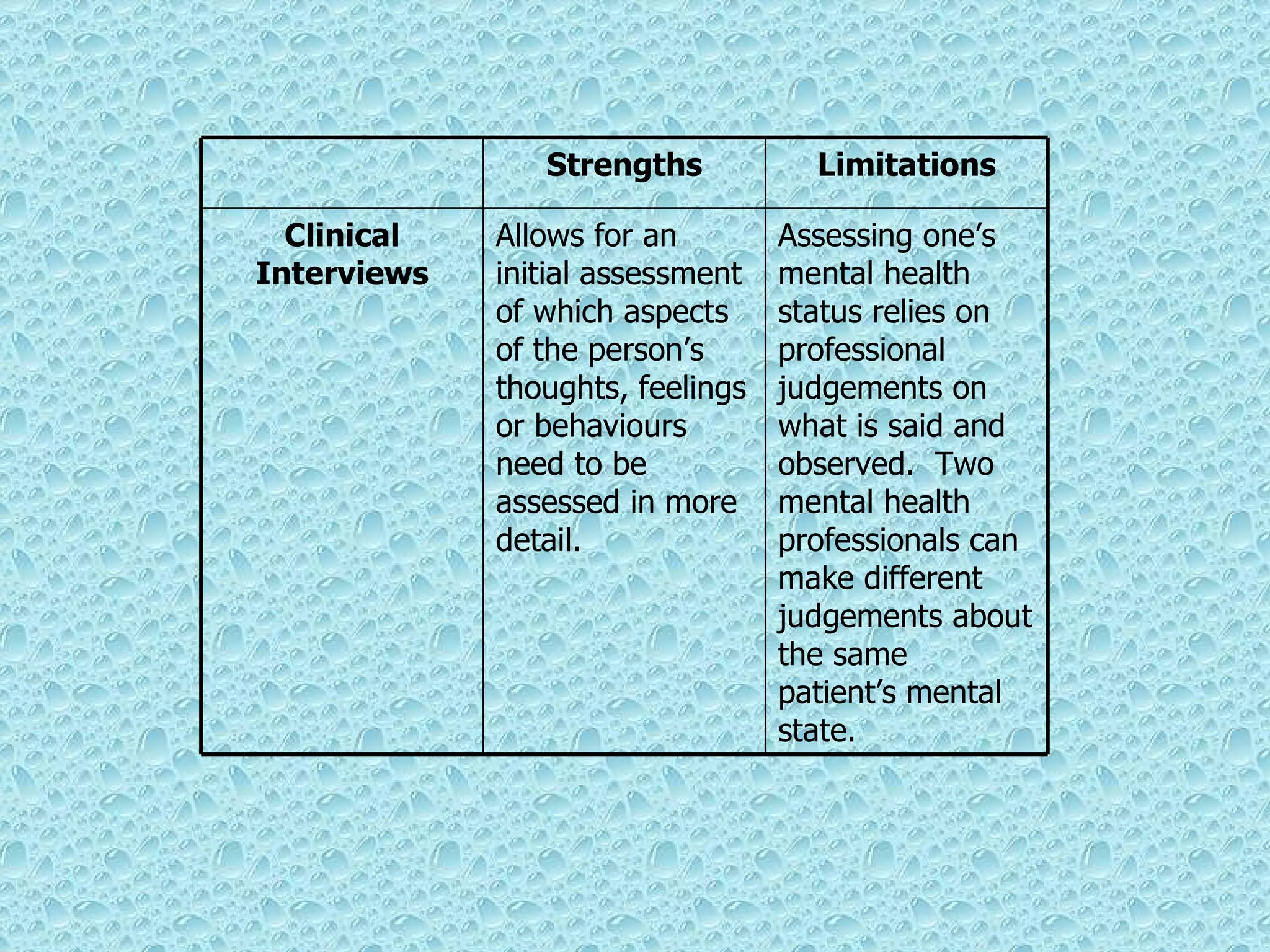
Assessing one’s mental health status relies on professional judgements on what is said and observed.  Two mental health professionals can make different judgements about the same patient’s mental state. Allows for an initial assessment of which aspects of the person’s thoughts, feelings or behaviours need to be assessed in more detail. Clinical Interviews Limitations Strengths
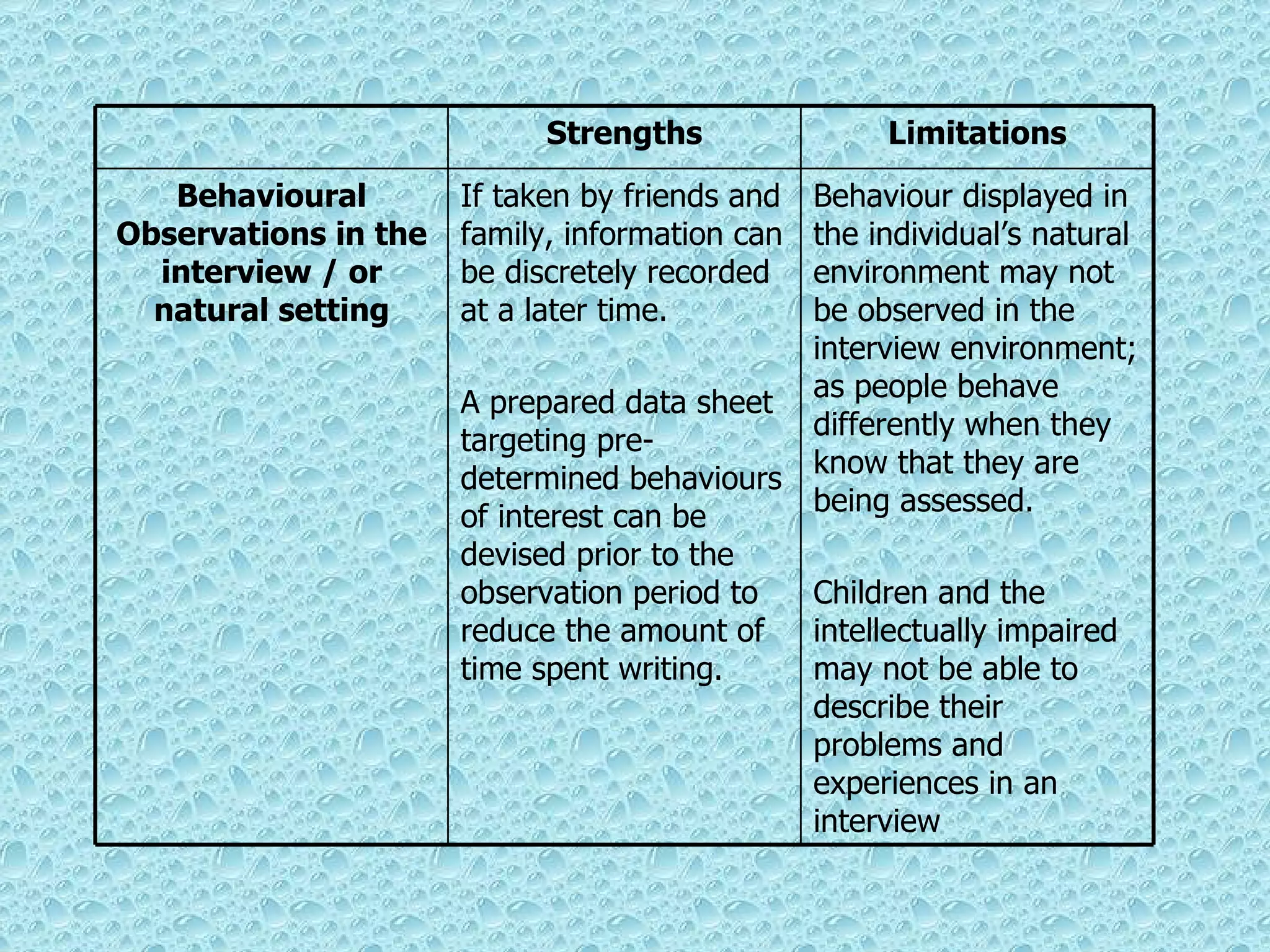
Behaviour displayed in the individual’s natural environment may not be observed in the interview environment; as people behave differently when they know that they are being assessed. Children and the intellectually impaired may not be able to describe their problems and experiences in an interview If taken by friends and family, information can be discretely recorded at a later time. A prepared data sheet targeting pre-determined behaviours of interest can be devised prior to the observation period to reduce the amount of time spent writing. Behavioural Observations in the interview / or natural setting Limitations Strengths
Results on personality or intelligence tests have limited value when used in isolation of other information as they only provide a snapshot of how the person is able to respond at the time of testing. Comparison of the client’s results with those of people with known illnesses, psychologists are able to more accurately identify problem behaviours, thoughts or feelings and recommend. Psychological Tests Limitations Strengths
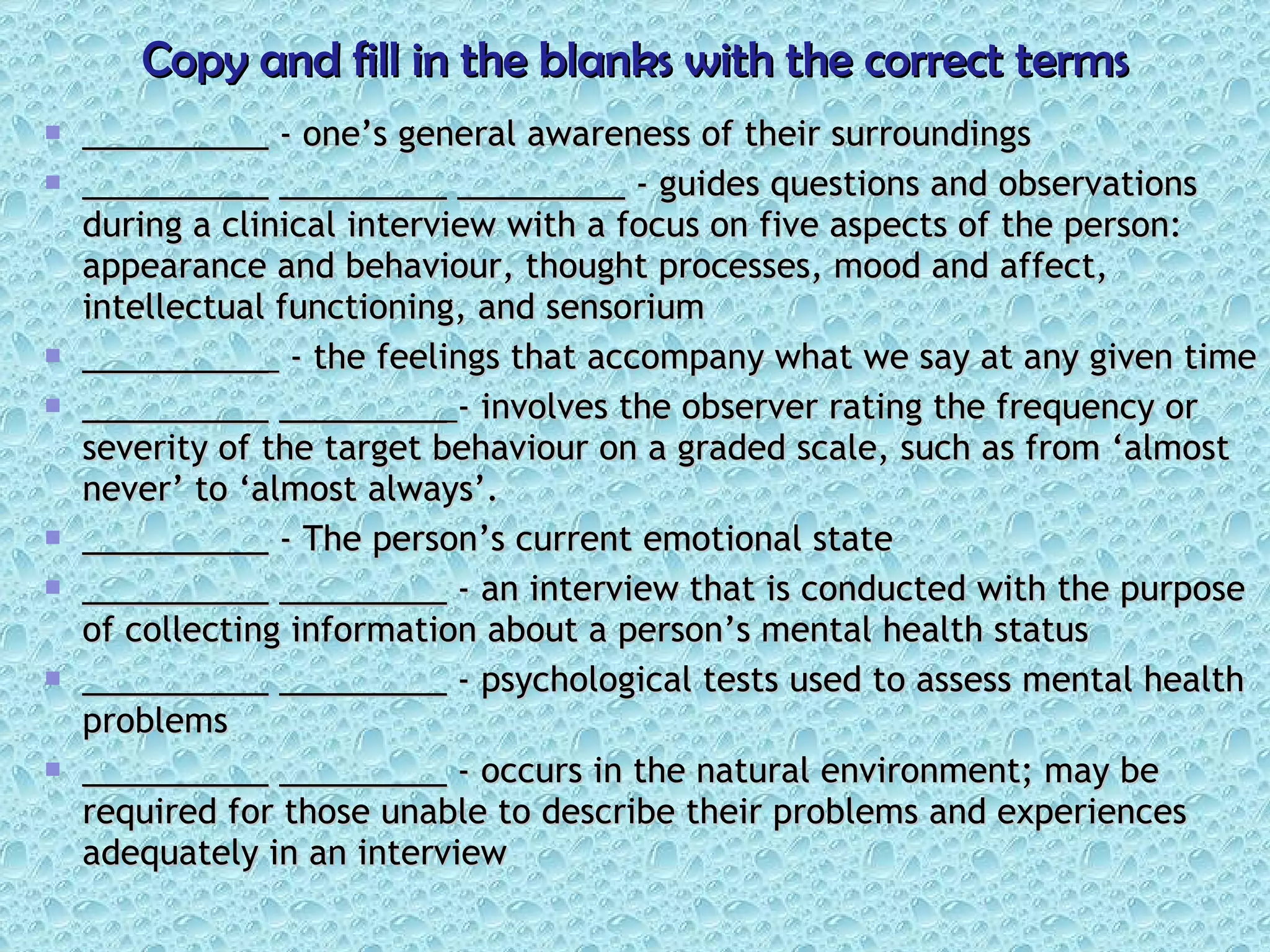
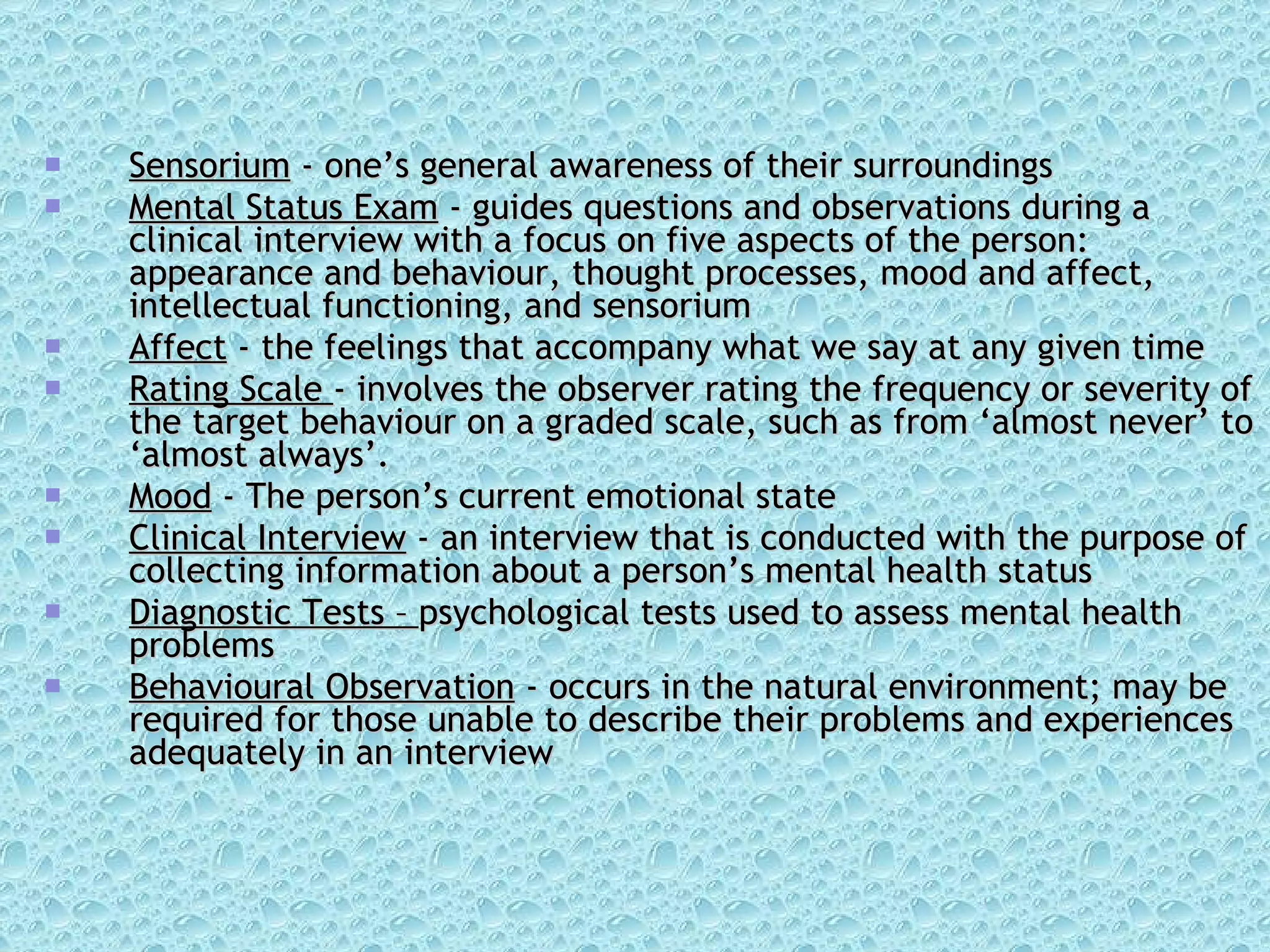
Copy and fill in the blanks with the correct terms __________  - one’s general awareness of their surroundings __________   _________   _________  - guides questions and observations during a clinical interview with a focus on five aspects of the person: appearance and behaviour, thought processes, mood and affect, intellectual functioning, and sensorium __________  - the feelings that accompany what we say at any given time __________   _________  - involves the observer rating the frequency or severity of the target behaviour on a graded scale, such as from ‘almost never’ to ‘almost always’. __________  - The person’s current emotional state __________   _________  - an interview that is conducted with the purpose of collecting information about a person’s mental health status __________   _________  - psychological tests used to assess mental health problems __________   _________  - occurs in the natural environment; may be required for those unable to describe their problems and experiences adequately in an interview
Sensorium  - one’s general awareness of their surroundings Mental Status Exam  - guides questions and observations during a clinical interview with a focus on five aspects of the person: appearance and behaviour, thought processes, mood and affect, intellectual functioning, and sensorium Affect  - the feelings that accompany what we say at any given time Rating Scale  - involves the observer rating the frequency or severity of the target behaviour on a graded scale, such as from ‘almost never’ to ‘almost always’. Mood  - The person’s current emotional state Clinical Interview  - an interview that is conducted with the purpose of collecting information about a person’s mental health status Diagnostic Tests –  psychological tests used to assess mental health problems Behavioural Observation  - occurs in the natural environment; may be required for those unable to describe their problems and experiences adequately in an interview
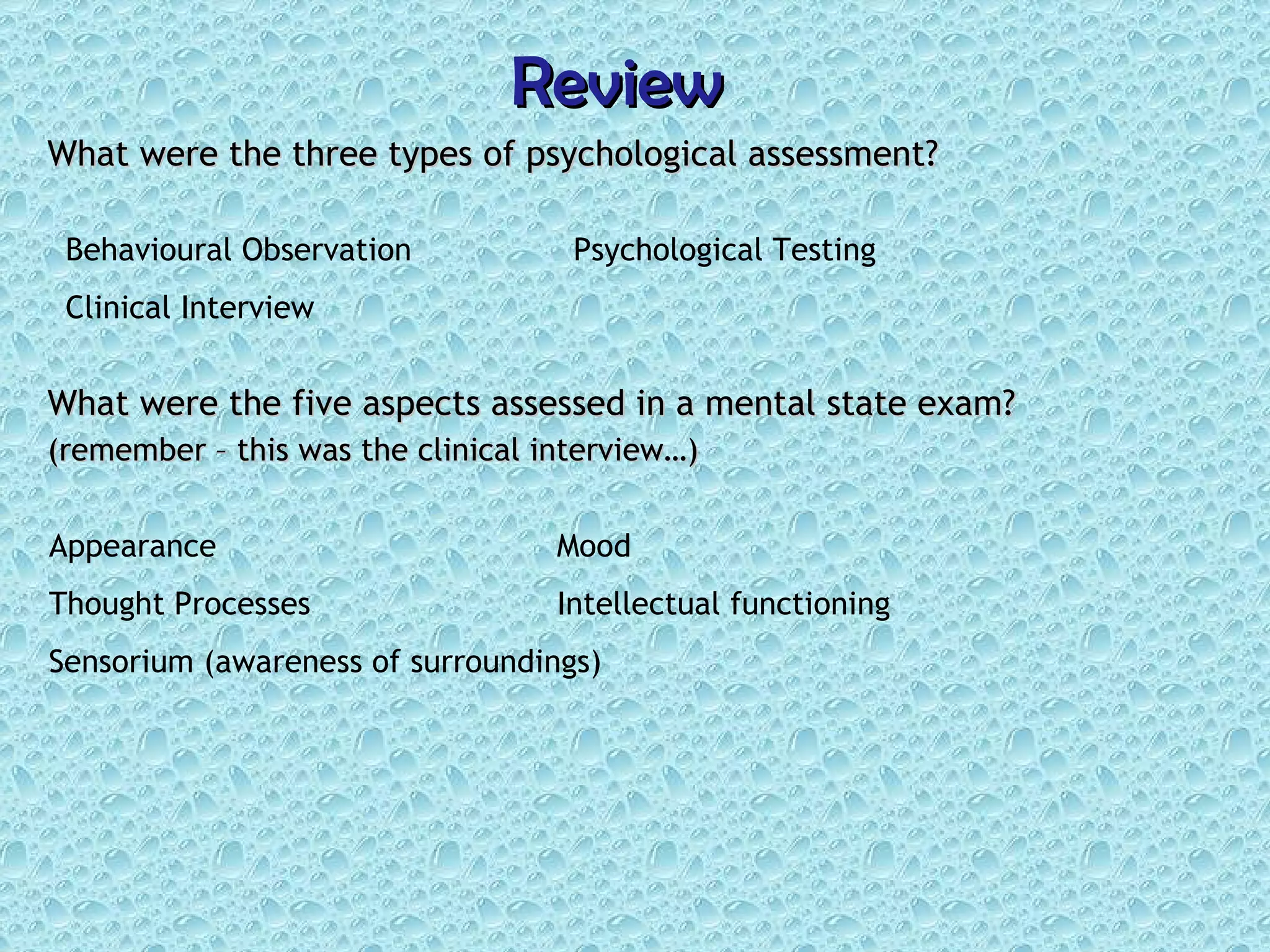
Review What were the three types of psychological assessment? What were the five aspects assessed in a mental state exam?  (remember – this was the clinical interview…) Behavioural Observation Psychological Testing Clinical Interview Appearance Mood Thought Processes Intellectual functioning Sensorium (awareness of surroundings)
Classification Mental health professionals classify mental illnesses according to characteristic patterns of thoughts, feelings and behaviour Symptoms that regularly occur together and follow a particular course constitute a mental illness When people display this pattern of symptoms they are assigned to that diagnostic category A list of the categories of mental illnesses or disorders, with descriptions of the symptoms and guidelines for assigning individuals to the categories, is known as a  classification system
Standard reference is  Diagnostic and Statistical Manual of Mental Disorders Edition 4 Test Revision  (DSM-IV-TR) Provides a system for classifying disorders based on  recognisable  symptoms that are  precisely  described Sets out standard symptoms into mental disorders so professionals can RELIABLY diagnose mental illness Assists with differential diagnosis particularly in mental illnesses which share multiple symptoms Provides information on the typical course of the disorder, the degree of impairment, when it is likely to develop (onset age), whether it runs in families, relationship to gender, age and culture. DSM-IV-TR
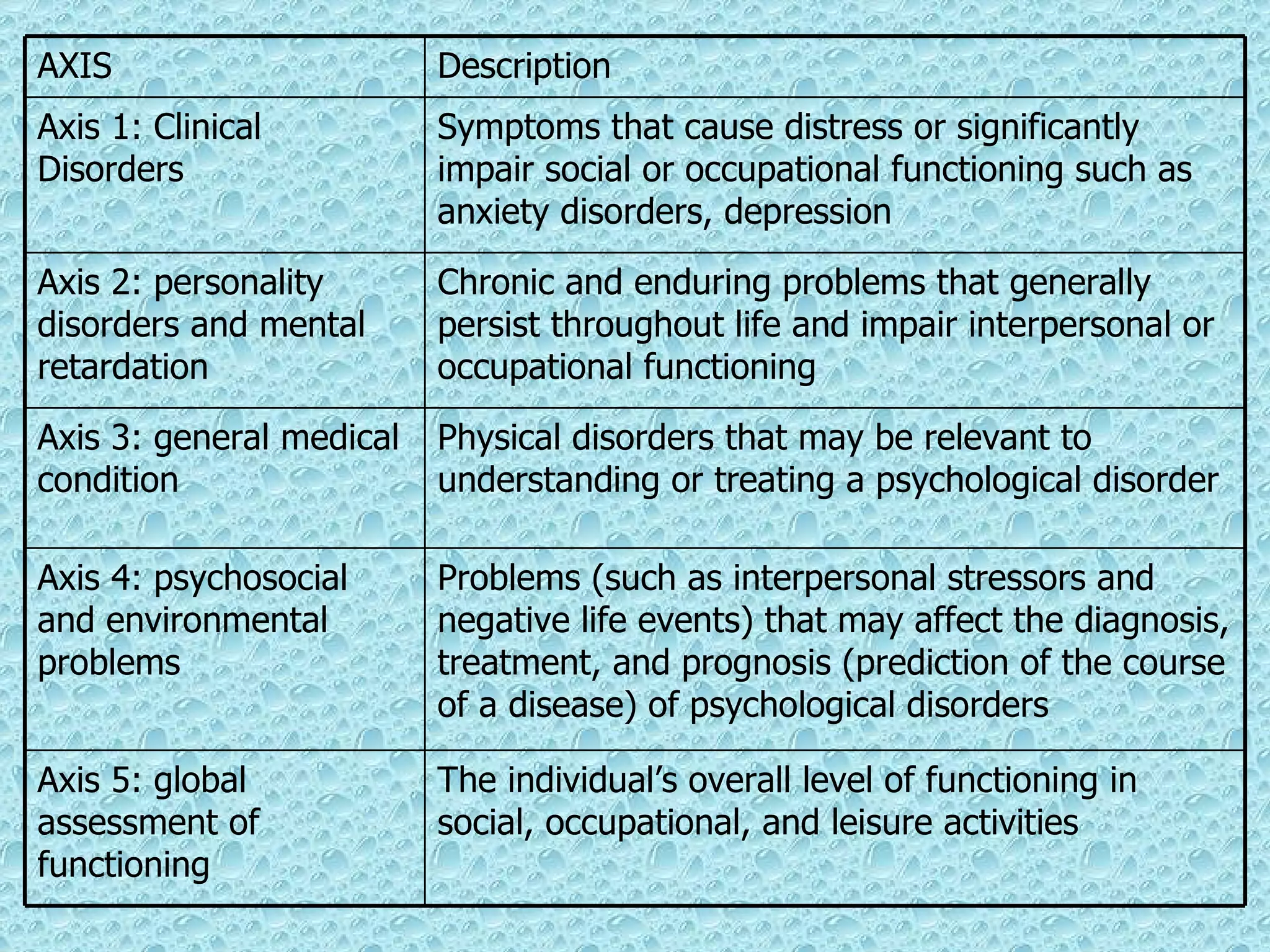
Applicable for all ages, males and females, attempts to be culturally unbiased (useful across cultures) BUT – some consider it to reflect American and Western European view of mental disorders DSM-IV-TR in action Requires mental health professional to evaluate client based on 5 scales (Axis of information)
The individual’s overall level of functioning in social, occupational, and leisure activities Axis 5: global assessment of functioning Problems (such as interpersonal stressors and negative life events) that may affect the diagnosis, treatment, and prognosis (prediction of the course of a disease) of psychological disorders Axis 4: psychosocial and environmental problems Physical disorders that may be relevant to understanding or treating a psychological disorder Axis 3: general medical condition Chronic and enduring problems that generally persist throughout life and impair interpersonal or occupational functioning Axis 2: personality disorders and mental retardation Symptoms that cause distress or significantly impair social or occupational functioning such as anxiety disorders, depression Axis 1: Clinical Disorders Description AXIS
Mental health professional decides whether person has symptoms of one or more disorders described on Axis 1 or 2 – about 400 clinical disorders that cause significant or chronic impairment Symptoms exhibited by patient are matched against DSM-IV-TR criteria  Symptoms are divided into  essential  features (the patient must display to receive diagnosis) and  non-essential  features (symptoms they may exhibit) Most have either Axis 1 or 2, but can have BOTH, or multiple from each Axis Axes 3-5 – provide other information relevant to diagnosis
Anxiety Disorders Anxiety is a state of emotional arousal associated with feelings of apprehension, worry or uneasiness that something is wrong or something bad is about to happen Anxiety has three basic elements: Feelings  of tension, apprehension, dread, and an expectation of not being able to cope Behavioural responses  such as avoidance of a feared situation, impaired speech and movements, and difficulty completing complex tasks requiring ‘mental effort’ Physiological responses  including muscle tension, increased heart rate and blood pressure, rapid breathing, dry mouth, nausea, diarrhoea and dizziness.
Discussion Question In what way is the anxiety experienced as a ‘normal’ part of everyday life different from the experience of anxiety that characterises an anxiety disorder? While most people feel anxious sometimes, some people feel anxious most of the time. For these people, anxiety is a source of extreme distress and can indicate an anxiety disorder
Anxiety disorders are characterised by a chronic (‘persistent’) feelings of tension, distress, nervousness, and apprehension or fear about the future, with a negative effect.  The anxiety interferes with their ability to function normally in everyday life. There are five main types of anxiety disorder  –  generalised anxiety disorder panic disorder obsessive-compulsive disorder phobias post-traumatic stress disorder Activity: Read ‘Ruth’ case study
OCD Following a routine so strictly that you are highly anxious and unable to cope if the routine is disrupted Two aspects – obsessions and compulsions OCD diagnosed when obsessions and compulsions interfere with daily functioning, cause extreme anxiety, or interfere with the person’s family and social relationships
Activity: Obsessions and compulsions handout
Problems With DSM/Classification Can result in: Labelling (both positive and negative consequences) Stigma Activity: Labelling Handout Read: page 306 -308 Complete: Learning Activity 9.11
Labelling The process of classifying and naming a mental health problem following a diagnosis POSITIVES Help recognise and describe a mental health problem Assist in identifying treatment and support Assists with communication NEGATIVES It can influence the way in which an individual with that diagnostic is viewed by others and how they think and feel about themselves Can create misconceptions that bias our views about a person Once label is given, it may be there for life

Normality Cwl

  • 1.
    Statistical Normality /Abnormality Yep … a bit more of stats … but just a bit
  • 2.
    Frequency Distribution Tableand Variability What is a frequency distribution table?? A way of organising data to show how often a value occurs in a set of data When graphed, the data will generally show one of three patterns – normal, skewed (negative or positive), bimodal. Look in your book on page 21 and 22 to see examples (we will discuss these in class). What is variability?? Variability – indicates how widely scores are spread out
  • 3.
    Standard Deviation (SD)This is one measure of variability. It gives information about the spread of data (clustered around one value or spread out) It summaries how far, on average, a score differs from the mean If all the scores were the same, SD = 0 (no variability) A low standard deviation indicates that there is little variability in the set of scores and that most scores are clustered around the mean. The higher the standard deviation, the greater the variability there is among the scores.
  • 4.
    Figure 6.20 – The graph shows three normal distribution each with a different standard deviation. The green curve has the highest standard deviation and the red curve has the lowest standard deviation. Scores Low High Frequency of Scores Low High
  • 5.
    Figure 8.11 when standard deviations are represented on the x – axis of a normal distribution, certain fixed percentages of scores fall between the mean and any given point. Most scores fall in the middle range within one standard deviation either side of the mean. Number of scores or individuals Standard deviations from the mean
  • 6.
    Answer the followingquestions (use your book if you need) What is a frequency distribution i.e. what information does it tell us? Present the information in the table below as a Frequency Table What are the four patterns a frequency distribution can show? Describe and draw each of the frequency distribution patterns What does variability tell us about the data? What is a measure of variability? Draw examples of a normal distribution with high standard deviation and low standard deviation 4 Below 5 2 5-9 1 10-14 5 15-19 2 20-24 1 25-29 # of individuals Times Late
  • 7.
    What do thesepeople have in common??? Buzz Aldrin Drew Barrymore Drew Carey Sarah McLachlan Winona Ryder Charles Schultz Robin Williams Roseanne Ben Stiller Jonathan Hay Charles Darwin Kim Basinger Clinical Depression Bipolar disorder Dissociative Personality Disorder Agoraphobia Obsessive Compulsive Disorder Severe Panic Disorder Answer: They all suffer from a mental illness
  • 8.
    Assessment of MentalHealth There are a number of ways we use to tell if someone has a mental illness (that is included in the DSM). They are used to develop a clinical profile of the person’s thought feelings, and behaviour including the factors and life experiences that may have contributed to their current mental health status. Three Types of Assessment: Clinical Interview Behavioural Observation Psychological Testing
  • 9.
    ‘ face toface’ discussion involving questions and observations structured questions on past and present behaviour, attitudes, emotions, the current problem and a detailed history of their life in general. a mental status exam is conducted on 5 aspects of a person to get an overall idea of functioning. It helps to identify which areas may be affected and need to be assessed further. It is done by observation and screening questions. 1. Appearance (eg: hygiene, grooming, cleanliness), and behaviour (eg: posture, facial expressions and bodily movements). 2. Thought processes (eg: speed of talking, continuity of speech and content). 3. Mood (eg: emotional state, could be ‘down’ or highly excitable) and the affect (or feelings that accompany what we say). 4. Intellectual functioning (eg: use of vocabulary, problem solving and decision making abilities). This may be formally assessed using an IQ test. 5. Sensorium (meaning awareness of our surroundings) (eg: day, date, time, and who they are. . .etc) Clinical Interview
  • 10.
  • 11.
  • 12.
  • 13.
  • 14.
    TASK: Role PlayGroups of 2 Come up with role play showing a clinical interview in progress. One person is the ‘psychologist’ and the other the ‘patient’. The patient should demonstrate one or more deficits in the aspects we have covered. Perform the role play for the class we will have to guess which one(s) are being shown
  • 15.
    may be takenduring a clinical interview (eg; watching for eye contact, fidgeting or hesitating before answering questions) Or when the person is in their natural environment (where the health professional may visit the client’s natural setting or get a friend or relative to gather the information). Useful because you can’t always get an accurate picture from what people TELL you. Again – very STRUCTURED and SPECIFIC observations Frequency, severity, specificity, circumstance Use ratings scales Behavioural Observations
  • 16.
    Goal of assessmentis to identify whether a person is suffering from a mental illness, and if so, the type Important in planning treatment Therefore ACCURACY is critical! Behavioural Obs and Clinical Interviews – can provide useful information, but can be subjective: may be DIFFERENT between different professionals
  • 17.
    Aids diagnosis Variety of specific psychological tests available, designed to assess areas such as personality or intelligence Type of ‘evidence’ of specific health problems or illnesses For a test to be useful it must be both reliable and valid . Valid = it must actually test what it is setting out to assess. Reliable = it must consistently assess what it is supposed to; each time it is given. Psychological Testing
  • 18.
    Activity In groupsof four briefly compare different psychological tests. Look at: What types of questions they ask and how many How answers are given What the test is measuring
  • 19.
    Task: InPairs - create a poster in your books Psychological Tests Behavioural Observations in the interview / or natural setting Clinical Interviews Limitation Strength
  • 20.
    Assessing one’s mentalhealth status relies on professional judgements on what is said and observed. Two mental health professionals can make different judgements about the same patient’s mental state. Allows for an initial assessment of which aspects of the person’s thoughts, feelings or behaviours need to be assessed in more detail. Clinical Interviews Limitations Strengths
  • 21.
    Behaviour displayed inthe individual’s natural environment may not be observed in the interview environment; as people behave differently when they know that they are being assessed. Children and the intellectually impaired may not be able to describe their problems and experiences in an interview If taken by friends and family, information can be discretely recorded at a later time. A prepared data sheet targeting pre-determined behaviours of interest can be devised prior to the observation period to reduce the amount of time spent writing. Behavioural Observations in the interview / or natural setting Limitations Strengths
  • 22.
    Results on personalityor intelligence tests have limited value when used in isolation of other information as they only provide a snapshot of how the person is able to respond at the time of testing. Comparison of the client’s results with those of people with known illnesses, psychologists are able to more accurately identify problem behaviours, thoughts or feelings and recommend. Psychological Tests Limitations Strengths
  • 23.
    Copy and fillin the blanks with the correct terms __________ - one’s general awareness of their surroundings __________ _________ _________ - guides questions and observations during a clinical interview with a focus on five aspects of the person: appearance and behaviour, thought processes, mood and affect, intellectual functioning, and sensorium __________ - the feelings that accompany what we say at any given time __________ _________ - involves the observer rating the frequency or severity of the target behaviour on a graded scale, such as from ‘almost never’ to ‘almost always’. __________ - The person’s current emotional state __________ _________ - an interview that is conducted with the purpose of collecting information about a person’s mental health status __________ _________ - psychological tests used to assess mental health problems __________ _________ - occurs in the natural environment; may be required for those unable to describe their problems and experiences adequately in an interview
  • 24.
    Sensorium -one’s general awareness of their surroundings Mental Status Exam - guides questions and observations during a clinical interview with a focus on five aspects of the person: appearance and behaviour, thought processes, mood and affect, intellectual functioning, and sensorium Affect - the feelings that accompany what we say at any given time Rating Scale - involves the observer rating the frequency or severity of the target behaviour on a graded scale, such as from ‘almost never’ to ‘almost always’. Mood - The person’s current emotional state Clinical Interview - an interview that is conducted with the purpose of collecting information about a person’s mental health status Diagnostic Tests – psychological tests used to assess mental health problems Behavioural Observation - occurs in the natural environment; may be required for those unable to describe their problems and experiences adequately in an interview
  • 25.
    Review What werethe three types of psychological assessment? What were the five aspects assessed in a mental state exam? (remember – this was the clinical interview…) Behavioural Observation Psychological Testing Clinical Interview Appearance Mood Thought Processes Intellectual functioning Sensorium (awareness of surroundings)
  • 26.
    Classification Mental healthprofessionals classify mental illnesses according to characteristic patterns of thoughts, feelings and behaviour Symptoms that regularly occur together and follow a particular course constitute a mental illness When people display this pattern of symptoms they are assigned to that diagnostic category A list of the categories of mental illnesses or disorders, with descriptions of the symptoms and guidelines for assigning individuals to the categories, is known as a classification system
  • 27.
    Standard reference is Diagnostic and Statistical Manual of Mental Disorders Edition 4 Test Revision (DSM-IV-TR) Provides a system for classifying disorders based on recognisable symptoms that are precisely described Sets out standard symptoms into mental disorders so professionals can RELIABLY diagnose mental illness Assists with differential diagnosis particularly in mental illnesses which share multiple symptoms Provides information on the typical course of the disorder, the degree of impairment, when it is likely to develop (onset age), whether it runs in families, relationship to gender, age and culture. DSM-IV-TR
  • 28.
    Applicable for allages, males and females, attempts to be culturally unbiased (useful across cultures) BUT – some consider it to reflect American and Western European view of mental disorders DSM-IV-TR in action Requires mental health professional to evaluate client based on 5 scales (Axis of information)
  • 29.
    The individual’s overalllevel of functioning in social, occupational, and leisure activities Axis 5: global assessment of functioning Problems (such as interpersonal stressors and negative life events) that may affect the diagnosis, treatment, and prognosis (prediction of the course of a disease) of psychological disorders Axis 4: psychosocial and environmental problems Physical disorders that may be relevant to understanding or treating a psychological disorder Axis 3: general medical condition Chronic and enduring problems that generally persist throughout life and impair interpersonal or occupational functioning Axis 2: personality disorders and mental retardation Symptoms that cause distress or significantly impair social or occupational functioning such as anxiety disorders, depression Axis 1: Clinical Disorders Description AXIS
  • 30.
    Mental health professionaldecides whether person has symptoms of one or more disorders described on Axis 1 or 2 – about 400 clinical disorders that cause significant or chronic impairment Symptoms exhibited by patient are matched against DSM-IV-TR criteria Symptoms are divided into essential features (the patient must display to receive diagnosis) and non-essential features (symptoms they may exhibit) Most have either Axis 1 or 2, but can have BOTH, or multiple from each Axis Axes 3-5 – provide other information relevant to diagnosis
  • 31.
    Anxiety Disorders Anxietyis a state of emotional arousal associated with feelings of apprehension, worry or uneasiness that something is wrong or something bad is about to happen Anxiety has three basic elements: Feelings of tension, apprehension, dread, and an expectation of not being able to cope Behavioural responses such as avoidance of a feared situation, impaired speech and movements, and difficulty completing complex tasks requiring ‘mental effort’ Physiological responses including muscle tension, increased heart rate and blood pressure, rapid breathing, dry mouth, nausea, diarrhoea and dizziness.
  • 32.
    Discussion Question Inwhat way is the anxiety experienced as a ‘normal’ part of everyday life different from the experience of anxiety that characterises an anxiety disorder? While most people feel anxious sometimes, some people feel anxious most of the time. For these people, anxiety is a source of extreme distress and can indicate an anxiety disorder
  • 33.
    Anxiety disorders arecharacterised by a chronic (‘persistent’) feelings of tension, distress, nervousness, and apprehension or fear about the future, with a negative effect. The anxiety interferes with their ability to function normally in everyday life. There are five main types of anxiety disorder – generalised anxiety disorder panic disorder obsessive-compulsive disorder phobias post-traumatic stress disorder Activity: Read ‘Ruth’ case study
  • 34.
    OCD Following aroutine so strictly that you are highly anxious and unable to cope if the routine is disrupted Two aspects – obsessions and compulsions OCD diagnosed when obsessions and compulsions interfere with daily functioning, cause extreme anxiety, or interfere with the person’s family and social relationships
  • 35.
    Activity: Obsessions andcompulsions handout
  • 36.
    Problems With DSM/ClassificationCan result in: Labelling (both positive and negative consequences) Stigma Activity: Labelling Handout Read: page 306 -308 Complete: Learning Activity 9.11
  • 37.
    Labelling The processof classifying and naming a mental health problem following a diagnosis POSITIVES Help recognise and describe a mental health problem Assist in identifying treatment and support Assists with communication NEGATIVES It can influence the way in which an individual with that diagnostic is viewed by others and how they think and feel about themselves Can create misconceptions that bias our views about a person Once label is given, it may be there for life