ABDOMINAL HYSTERECTOMY
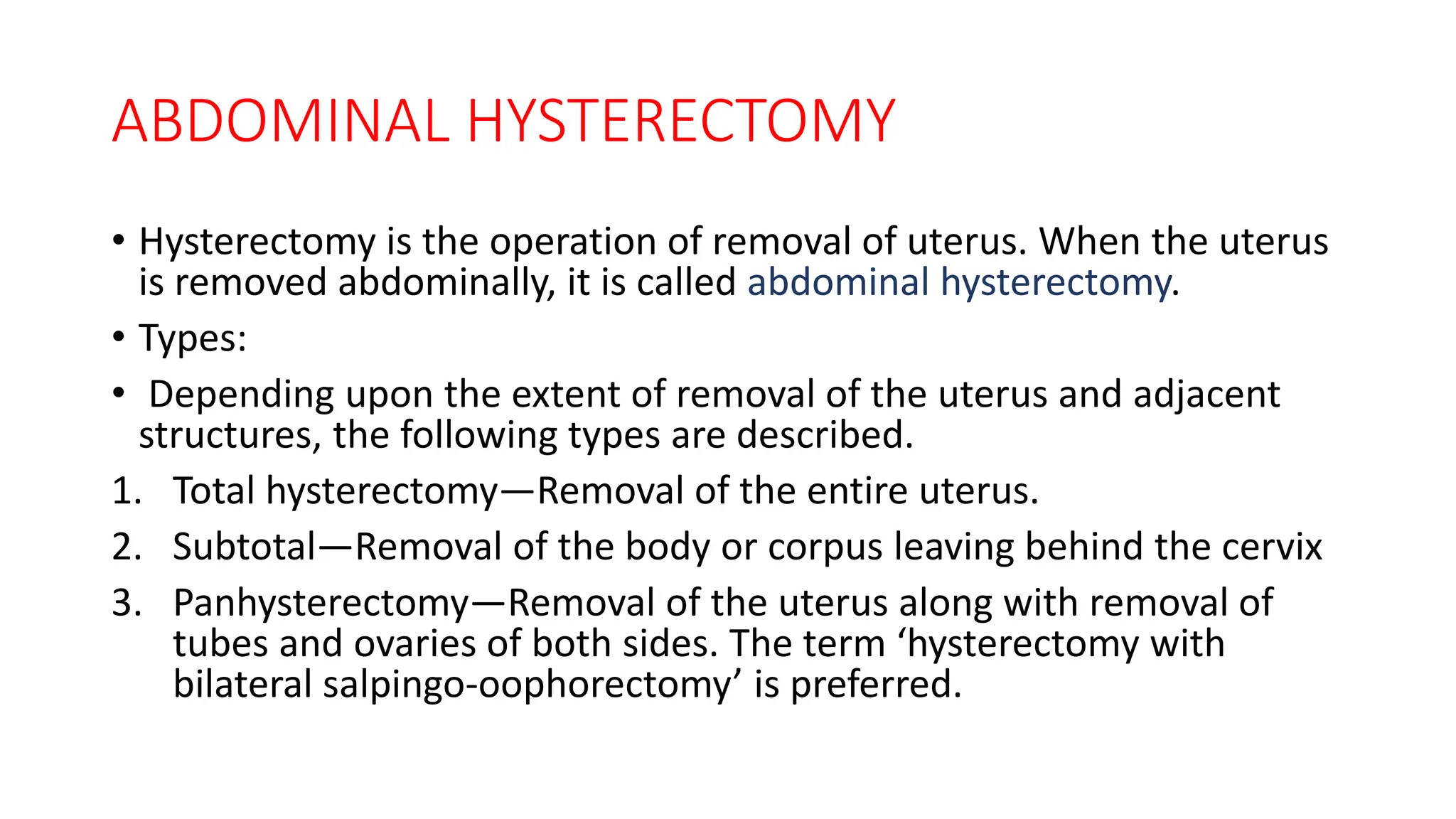
• Hysterectomy is the operation of removal of uterus. When the uterus
is removed abdominally, it is called abdominal hysterectomy.
• Types:
• Depending upon the extent of removal of the uterus and adjacent
structures, the following types are described.
1. Total hysterectomy—Removal of the entire uterus.
2. Subtotal—Removal of the body or corpus leaving behind the cervix
3. Panhysterectomy—Removal of the uterus along with removal of
tubes and ovaries of both sides. The term ‘hysterectomy with
bilateral salpingo-oophorectomy’ is preferred.
.
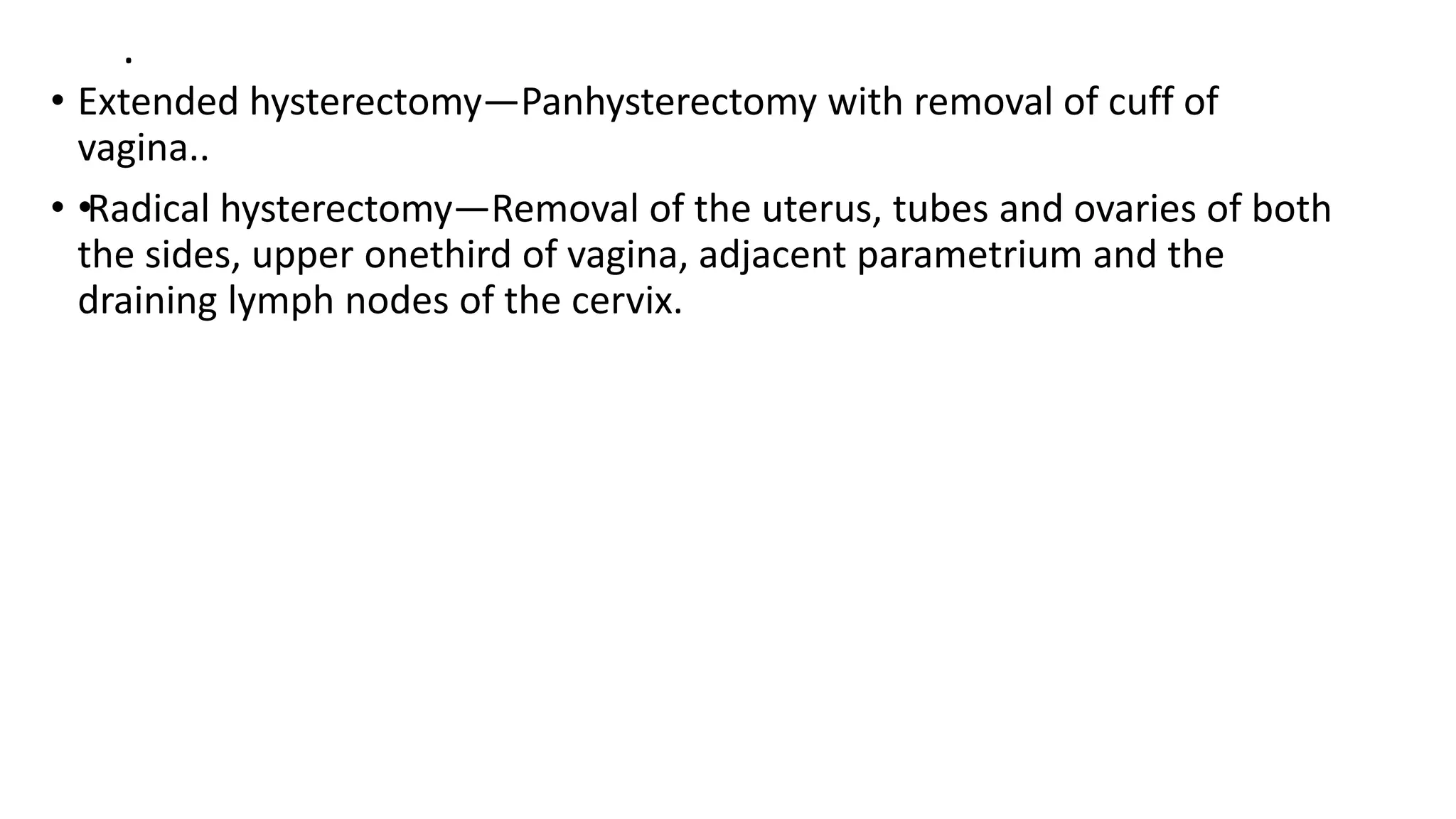
• Extended hysterectomy—Panhysterectomy with removal of cuff of
vagina..
• •
Radical hysterectomy—Removal of the uterus, tubes and ovaries of both
the sides, upper onethird of vagina, adjacent parametrium and the
draining lymph nodes of the cervix.
Indications for abdominal hysterectomy
• Abdomen is opened either by a low transverse or infraumbilical
paramedian or midline incision.
• The uterus is drawn out of the wound.
• Doyen’s retractor is placed in position.
• The patient is placed in Trendelenburg position.
• The guts and omentum are packed off from the operative area.
• The pelvic organs are examined. The decision of preserving or removing
the adnexae is made.
• The traction of the uterus is given by either using vulsellum or placing
long artery forceps on either side of the uterine cornu (myoma screw is
used in fibroid). The uterus is pulled to one side while clamps are placed
on the contralateral side.
Steps in abdominal hysterectomy[Benign]
.
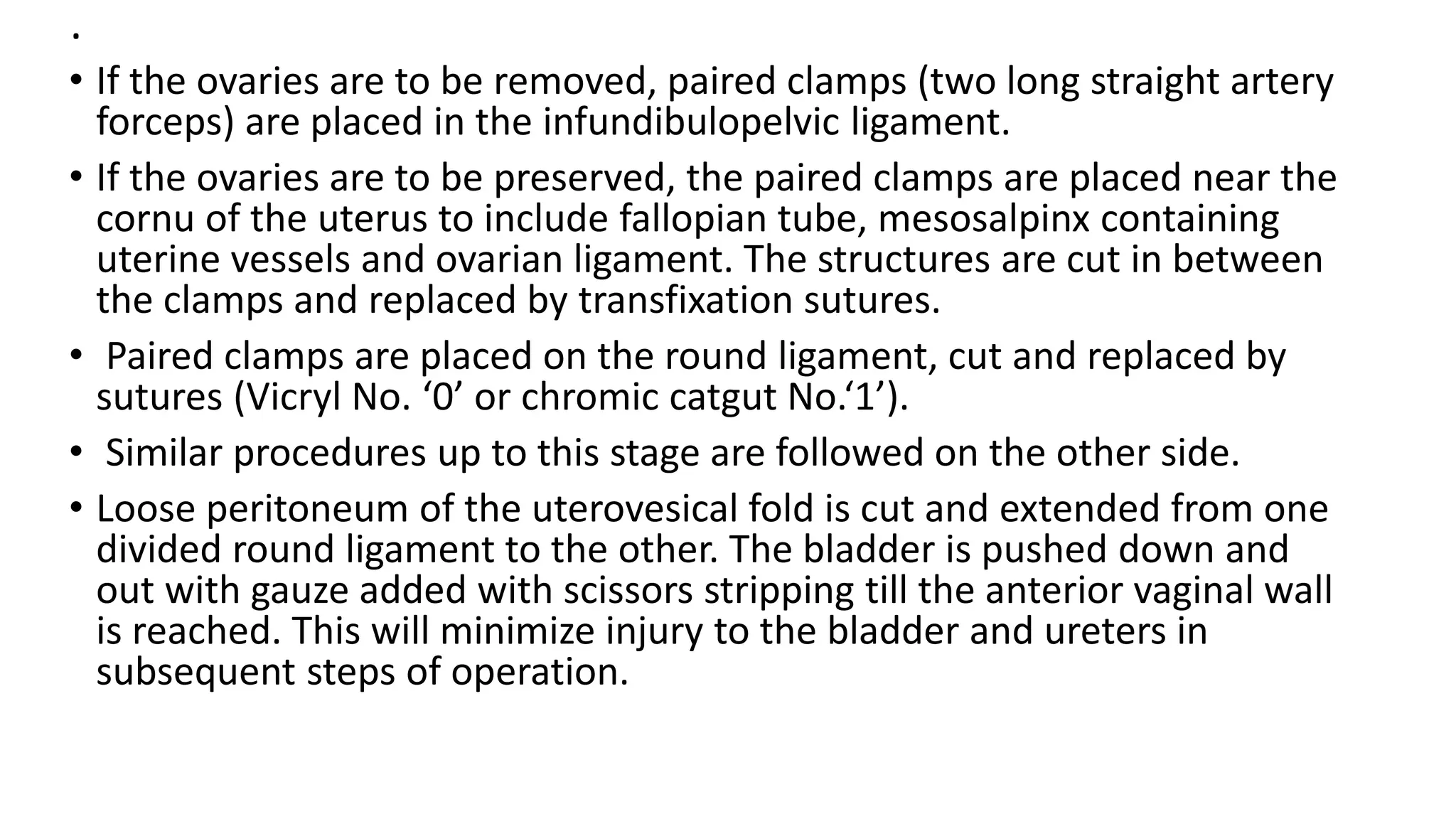
• If the ovaries are to be removed, paired clamps (two long straight artery
forceps) are placed in the infundibulopelvic ligament.
• If the ovaries are to be preserved, the paired clamps are placed near the
cornu of the uterus to include fallopian tube, mesosalpinx containing
uterine vessels and ovarian ligament. The structures are cut in between
the clamps and replaced by transfixation sutures.
• Paired clamps are placed on the round ligament, cut and replaced by
sutures (Vicryl No. ‘0’ or chromic catgut No.‘1’).
• Similar procedures up to this stage are followed on the other side.
• Loose peritoneum of the uterovesical fold is cut and extended from one
divided round ligament to the other. The bladder is pushed down and
out with gauze added with scissors stripping till the anterior vaginal wall
is reached. This will minimize injury to the bladder and ureters in
subsequent steps of operation.
.
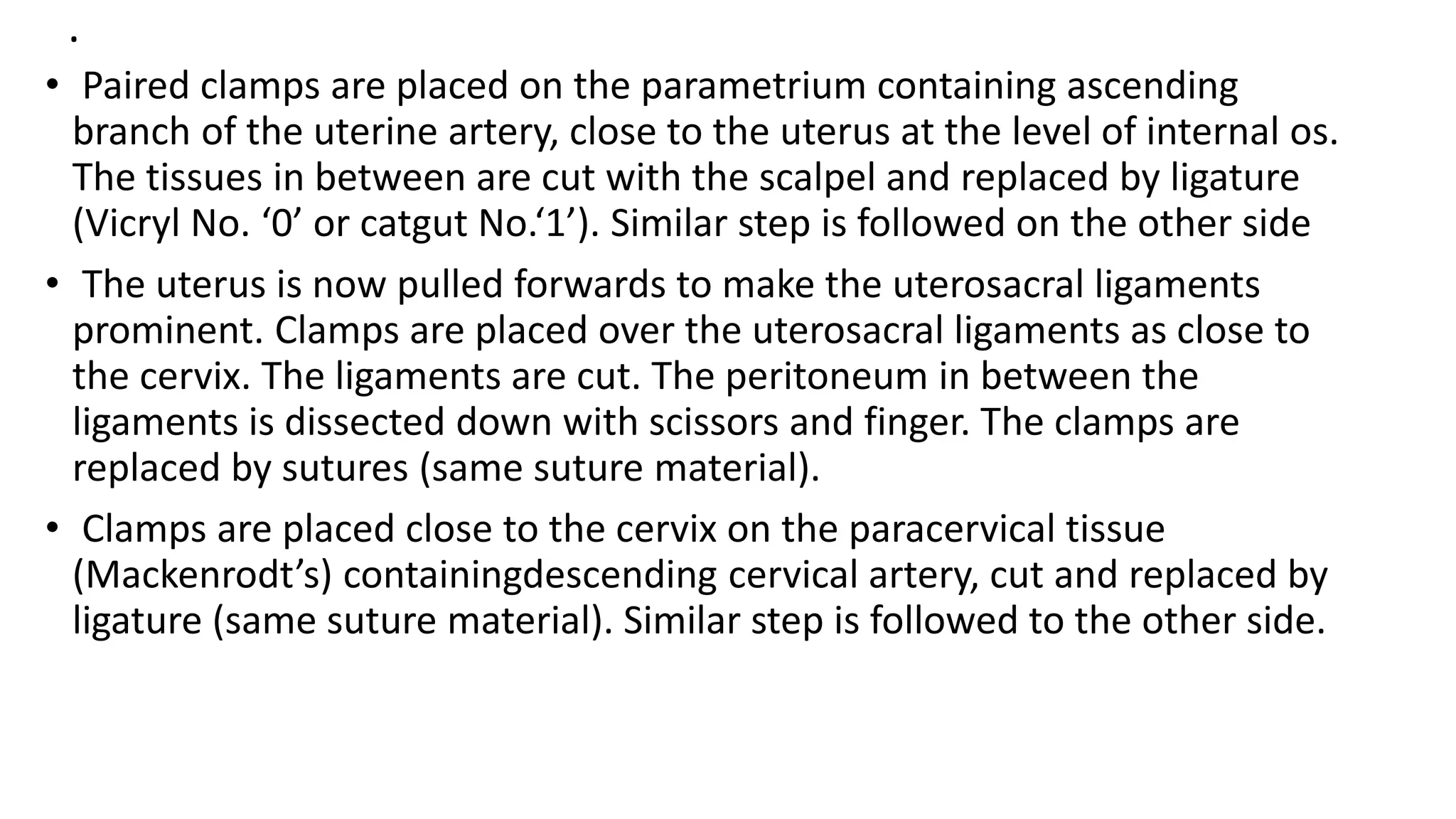
• Paired clamps are placed on the parametrium containing ascending
branch of the uterine artery, close to the uterus at the level of internal os.
The tissues in between are cut with the scalpel and replaced by ligature
(Vicryl No. ‘0’ or catgut No.‘1’). Similar step is followed on the other side
• The uterus is now pulled forwards to make the uterosacral ligaments
prominent. Clamps are placed over the uterosacral ligaments as close to
the cervix. The ligaments are cut. The peritoneum in between the
ligaments is dissected down with scissors and finger. The clamps are
replaced by sutures (same suture material).
• Clamps are placed close to the cervix on the paracervical tissue
(Mackenrodt’s) containingdescending cervical artery, cut and replaced by
ligature (same suture material). Similar step is followed to the other side.
.
• Vault of the vagina is opened by a stab incision with a scalpel at the
cervicovaginal junction. The remaining vault of the vagina is cut while
traction is given with a single toothed vulsellum on the cervix .
• The edges of the cut vaginal vault are grasped by Allis forceps .
• Lateral vaginal angles are closed by transfixation suture .
• Vault is closed by interrupted sutures or the free vaginal margin is
reefed with a continuous locking suture .
• Pelvic peritonization may be done (optional) by running sutures using
catgut No.‘0’.
• Abdominal packs are removed; peritoneal toileting is done.
• Abdomen is closed in layers
.
.
Principle steps of abdominal hysterectomy
Advantages of abdominal hysterectomy
• Scope of wide exploration of the abdominal and pelvic organs
(ovaries, appendix, gallbladder, etc.) .
• Tubo-ovarian pathology can be tackled effectively and simultaneously.
• Concurrent surgical procedures (appendicectomy) may be performed
when needed.
• Operation can be done by a relatively less experienced surgeon.
Disadvantage of abdominal hysterectomy
• Difficult to perform in too obese patients.
• Postoperative complications are slightly high. There is increased
incidence of peritonitis, fever, pulmonary and vascular complications.
• More postoperative pain and more need of analgesia.
• More hospital stay
• Delayed resumption in day-to-day activities .
• Morbidity and mortality are more compared to a vaginal
hysterectomy .
• Presence of abdominal scar.

ABDOMINAL HYSTERECTOMY OBGYN SLIDES1.pptx

  • 1.
    ABDOMINAL HYSTERECTOMY • Hysterectomyis the operation of removal of uterus. When the uterus is removed abdominally, it is called abdominal hysterectomy. • Types: • Depending upon the extent of removal of the uterus and adjacent structures, the following types are described. 1. Total hysterectomy—Removal of the entire uterus. 2. Subtotal—Removal of the body or corpus leaving behind the cervix 3. Panhysterectomy—Removal of the uterus along with removal of tubes and ovaries of both sides. The term ‘hysterectomy with bilateral salpingo-oophorectomy’ is preferred.
  • 2.
    . • Extended hysterectomy—Panhysterectomywith removal of cuff of vagina.. • • Radical hysterectomy—Removal of the uterus, tubes and ovaries of both the sides, upper onethird of vagina, adjacent parametrium and the draining lymph nodes of the cervix.
  • 3.
  • 5.
    • Abdomen isopened either by a low transverse or infraumbilical paramedian or midline incision. • The uterus is drawn out of the wound. • Doyen’s retractor is placed in position. • The patient is placed in Trendelenburg position. • The guts and omentum are packed off from the operative area. • The pelvic organs are examined. The decision of preserving or removing the adnexae is made. • The traction of the uterus is given by either using vulsellum or placing long artery forceps on either side of the uterine cornu (myoma screw is used in fibroid). The uterus is pulled to one side while clamps are placed on the contralateral side. Steps in abdominal hysterectomy[Benign]
  • 6.
    . • If theovaries are to be removed, paired clamps (two long straight artery forceps) are placed in the infundibulopelvic ligament. • If the ovaries are to be preserved, the paired clamps are placed near the cornu of the uterus to include fallopian tube, mesosalpinx containing uterine vessels and ovarian ligament. The structures are cut in between the clamps and replaced by transfixation sutures. • Paired clamps are placed on the round ligament, cut and replaced by sutures (Vicryl No. ‘0’ or chromic catgut No.‘1’). • Similar procedures up to this stage are followed on the other side. • Loose peritoneum of the uterovesical fold is cut and extended from one divided round ligament to the other. The bladder is pushed down and out with gauze added with scissors stripping till the anterior vaginal wall is reached. This will minimize injury to the bladder and ureters in subsequent steps of operation.
  • 7.
    . • Paired clampsare placed on the parametrium containing ascending branch of the uterine artery, close to the uterus at the level of internal os. The tissues in between are cut with the scalpel and replaced by ligature (Vicryl No. ‘0’ or catgut No.‘1’). Similar step is followed on the other side • The uterus is now pulled forwards to make the uterosacral ligaments prominent. Clamps are placed over the uterosacral ligaments as close to the cervix. The ligaments are cut. The peritoneum in between the ligaments is dissected down with scissors and finger. The clamps are replaced by sutures (same suture material). • Clamps are placed close to the cervix on the paracervical tissue (Mackenrodt’s) containingdescending cervical artery, cut and replaced by ligature (same suture material). Similar step is followed to the other side.
  • 8.
    . • Vault ofthe vagina is opened by a stab incision with a scalpel at the cervicovaginal junction. The remaining vault of the vagina is cut while traction is given with a single toothed vulsellum on the cervix . • The edges of the cut vaginal vault are grasped by Allis forceps . • Lateral vaginal angles are closed by transfixation suture . • Vault is closed by interrupted sutures or the free vaginal margin is reefed with a continuous locking suture . • Pelvic peritonization may be done (optional) by running sutures using catgut No.‘0’. • Abdominal packs are removed; peritoneal toileting is done. • Abdomen is closed in layers
  • 9.
  • 10.
    . Principle steps ofabdominal hysterectomy
  • 11.
    Advantages of abdominalhysterectomy • Scope of wide exploration of the abdominal and pelvic organs (ovaries, appendix, gallbladder, etc.) . • Tubo-ovarian pathology can be tackled effectively and simultaneously. • Concurrent surgical procedures (appendicectomy) may be performed when needed. • Operation can be done by a relatively less experienced surgeon.
  • 12.
    Disadvantage of abdominalhysterectomy • Difficult to perform in too obese patients. • Postoperative complications are slightly high. There is increased incidence of peritonitis, fever, pulmonary and vascular complications. • More postoperative pain and more need of analgesia. • More hospital stay • Delayed resumption in day-to-day activities . • Morbidity and mortality are more compared to a vaginal hysterectomy . • Presence of abdominal scar.