A Comparison
between Edge
computing and Cloud
computing
Prepared by :
Supervised by :
Chapter “1”
Overview
1
2
3
4
5
6
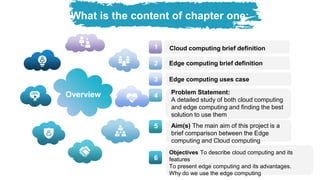
Cloud computing brief definition
Edge computing brief definition
Edge computing uses case
Problem Statement:
A detailed study of both cloud computing
and edge computing and finding the best
solution to use them
Aim(s) The main aim of this project is a
brief comparison between the Edge
computing and Cloud computing
Objectives To describe cloud computing and its
features
To present edge computing and its advantages.
Why do we use the edge computing
Overview
What is the content of chapter one:
project scope
This project will study
cloud and edge
computing in terms of
their advantages,
disadvantages
1010011010010
0001010100111
1011101101101
1010101000011
0 1 0 0 1
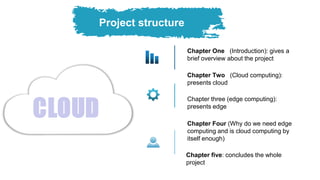
Chapter Two (Cloud computing):
presents cloud
Chapter Four (Why do we need edge
computing and is cloud computing by
itself enough)
Chapter One (Introduction): gives a
brief overview about the project
Chapter three (edge computing):
presents edge
Chapter five: concludes the whole
project
Project structure
Chapter “2”
Cloud Computing
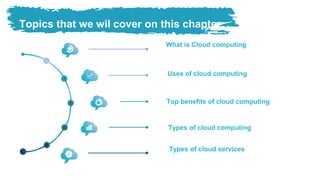
Topics that we wil cover on this chapter:
What is Cloud computing
Top benefits of cloud computing
Types of cloud computing
Uses of cloud computing
Types of cloud services
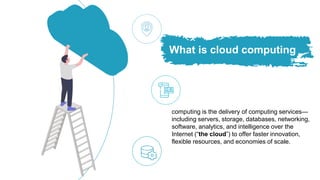
computing is the delivery of computing services—
including servers, storage, databases, networking,
software, analytics, and intelligence over the
Internet (“the cloud”) to offer faster innovation,
flexible resources, and economies of scale.
What is cloud computing
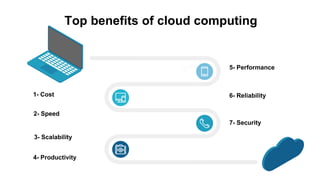
Top benefits of cloud computing
6- Reliability
5- Performance
1- Cost
2- Speed
7- Security
3- Scalability
4- Productivity
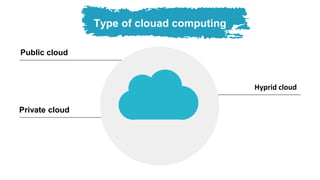
Type of clouad computing
Public cloud
Private cloud
Hyprid cloud
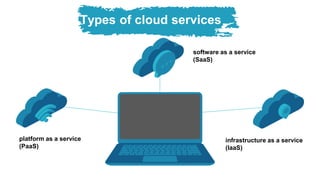
Types of cloud services
infrastructure as a service
(IaaS)
platform as a service
(PaaS)
software as a service
(SaaS)
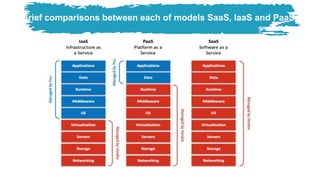
A Brief comparisons between each of models SaaS, IaaS and PaaS.
Chapter “3”
Edge computing
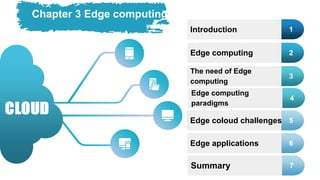
Chapter 3 Edge computing
Introduction
The need of Edge
computing
Edge coloud challenges
Edge computing
1
2
3
5
Edge applications 6
Edge computing
paradigms
4
Summary 7
Chapter “4”
Why do we need edge
computing and dose cloud
computing by itself enough?
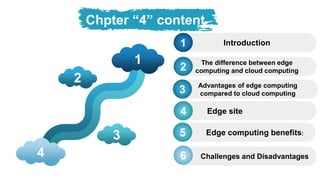
Chpter “4” content
Introduction
The difference between edge
computing and cloud computing
Edge site
1
2
4
Challenges and Disadvantages
6
1
4
2
3
Advantages of edge computing
compared to cloud computing
3
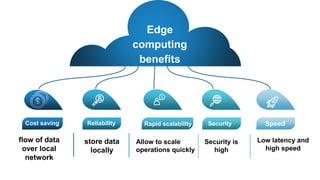
Edge computing benefits:
5
Low latency and
high speed
Allow to scale
operations quickly
Security is
high
store data
locally
flow of data
over local
network
Cost saving Reliability Security
Rapid scalability Speed
Edge
computing
benefits
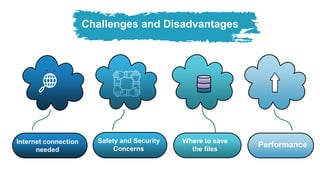
Challenges and Disadvantages
Internet connection
needed
Safety and Security
Concerns
Where to save
the files
Performance
Chapter “5”
Edge computing
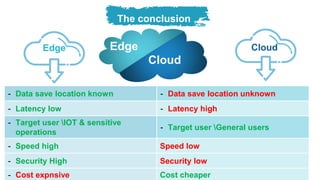
The conclusion
Both techniques are currently indispensable and are complementary
Edge
Cloud
Edge Cloud
- Data save location known - Data save location unknown
- Latency low - Latency high
- Target user IOT & sensitive
operations
- Target user General users
- Speed high Speed low
- Security High Security low
- Cost expnsive Cost cheaper
THANK YOU

A Comparison between Edge computing and Cloud computing

  • 1.
    A Comparison between Edge computingand Cloud computing Prepared by : Supervised by :
  • 2.
  • 3.
    1 2 3 4 5 6 Cloud computing briefdefinition Edge computing brief definition Edge computing uses case Problem Statement: A detailed study of both cloud computing and edge computing and finding the best solution to use them Aim(s) The main aim of this project is a brief comparison between the Edge computing and Cloud computing Objectives To describe cloud computing and its features To present edge computing and its advantages. Why do we use the edge computing Overview What is the content of chapter one:
  • 4.
    project scope This projectwill study cloud and edge computing in terms of their advantages, disadvantages 1010011010010 0001010100111 1011101101101 1010101000011 0 1 0 0 1
  • 5.
    Chapter Two (Cloudcomputing): presents cloud Chapter Four (Why do we need edge computing and is cloud computing by itself enough) Chapter One (Introduction): gives a brief overview about the project Chapter three (edge computing): presents edge Chapter five: concludes the whole project Project structure
  • 6.
  • 7.
    Topics that wewil cover on this chapter: What is Cloud computing Top benefits of cloud computing Types of cloud computing Uses of cloud computing Types of cloud services
  • 8.
    computing is thedelivery of computing services— including servers, storage, databases, networking, software, analytics, and intelligence over the Internet (“the cloud”) to offer faster innovation, flexible resources, and economies of scale. What is cloud computing
  • 9.
    Top benefits ofcloud computing 6- Reliability 5- Performance 1- Cost 2- Speed 7- Security 3- Scalability 4- Productivity
  • 10.
    Type of clouadcomputing Public cloud Private cloud Hyprid cloud
  • 11.
    Types of cloudservices infrastructure as a service (IaaS) platform as a service (PaaS) software as a service (SaaS)
  • 12.
    A Brief comparisonsbetween each of models SaaS, IaaS and PaaS.
  • 13.
  • 14.
    Chapter 3 Edgecomputing Introduction The need of Edge computing Edge coloud challenges Edge computing 1 2 3 5 Edge applications 6 Edge computing paradigms 4 Summary 7
  • 15.
    Chapter “4” Why dowe need edge computing and dose cloud computing by itself enough?
  • 16.
    Chpter “4” content Introduction Thedifference between edge computing and cloud computing Edge site 1 2 4 Challenges and Disadvantages 6 1 4 2 3 Advantages of edge computing compared to cloud computing 3 Edge computing benefits: 5
  • 17.
    Low latency and highspeed Allow to scale operations quickly Security is high store data locally flow of data over local network Cost saving Reliability Security Rapid scalability Speed Edge computing benefits
  • 18.
    Challenges and Disadvantages Internetconnection needed Safety and Security Concerns Where to save the files Performance
  • 19.
  • 20.
    The conclusion Both techniquesare currently indispensable and are complementary Edge Cloud Edge Cloud - Data save location known - Data save location unknown - Latency low - Latency high - Target user IOT & sensitive operations - Target user General users - Speed high Speed low - Security High Security low - Cost expnsive Cost cheaper
  • 21.