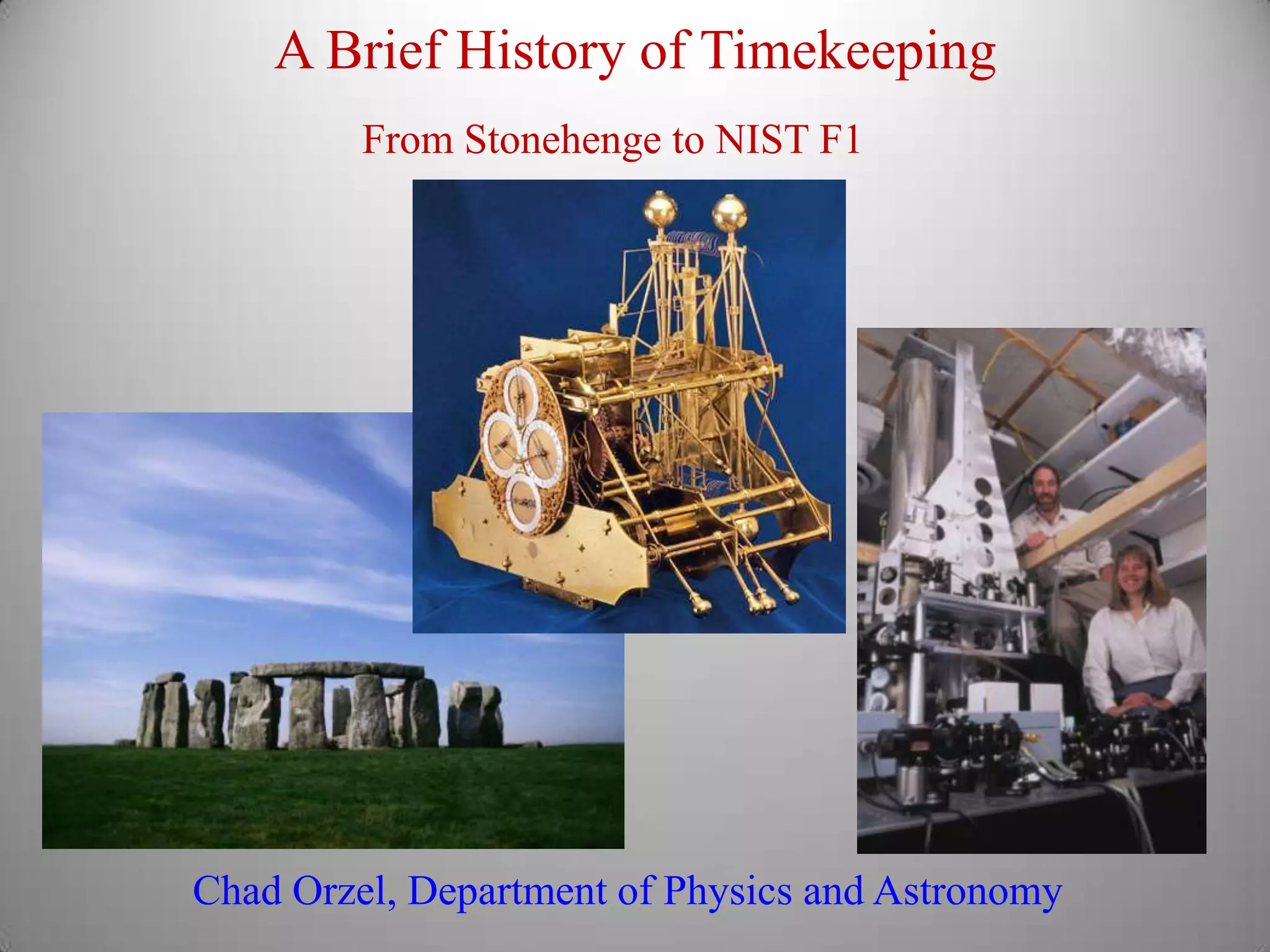
From Stonehenge to NIST F1Chad Orzel, Department of Physics and AstronomyA Brief History of Timekeeping
Time According to PhysicistsTheories of Space-Time:Clocks:
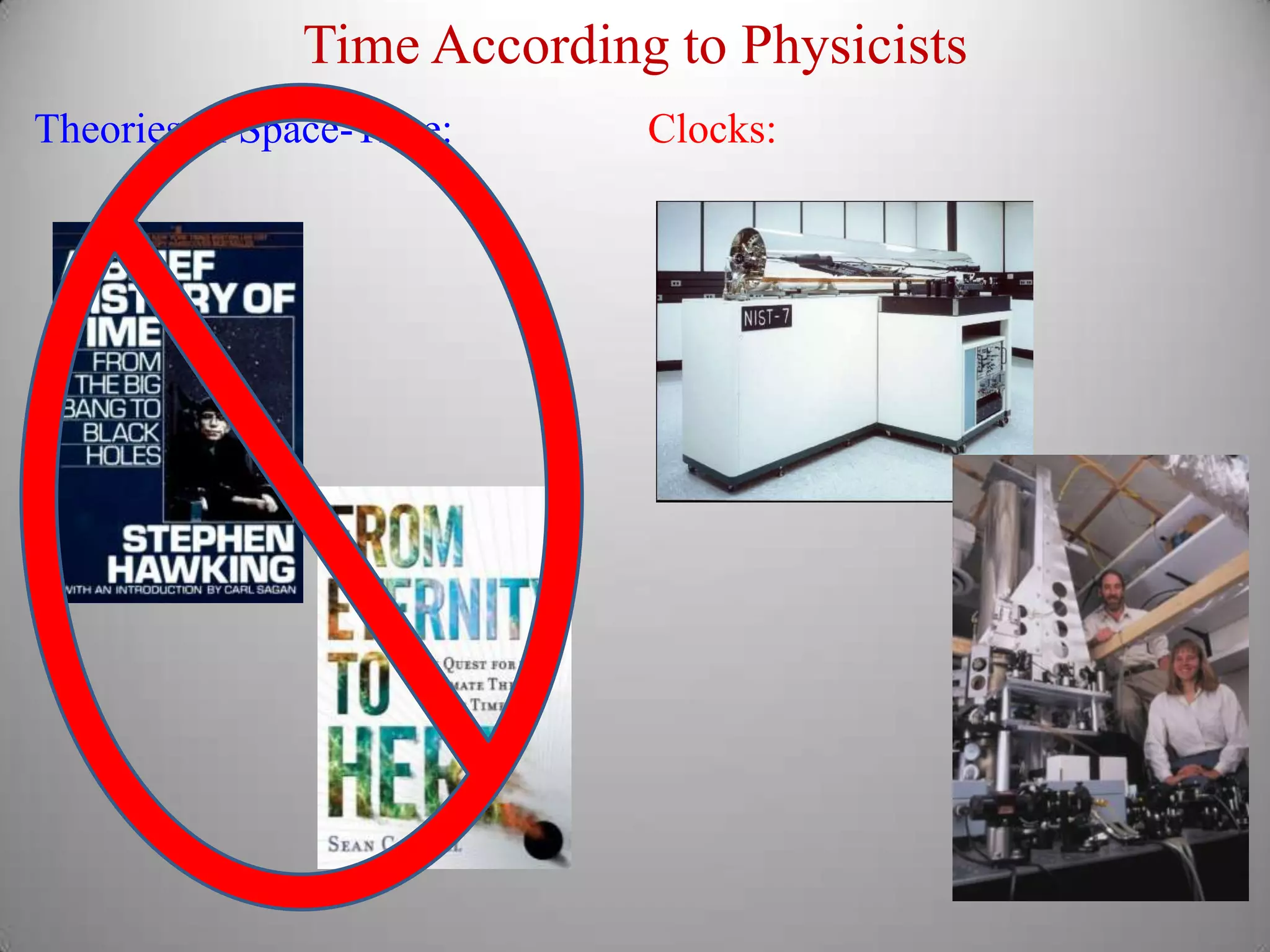
A clock is something that “ticks”Regular, repeated action used to measure timeWhat Is a Clock?
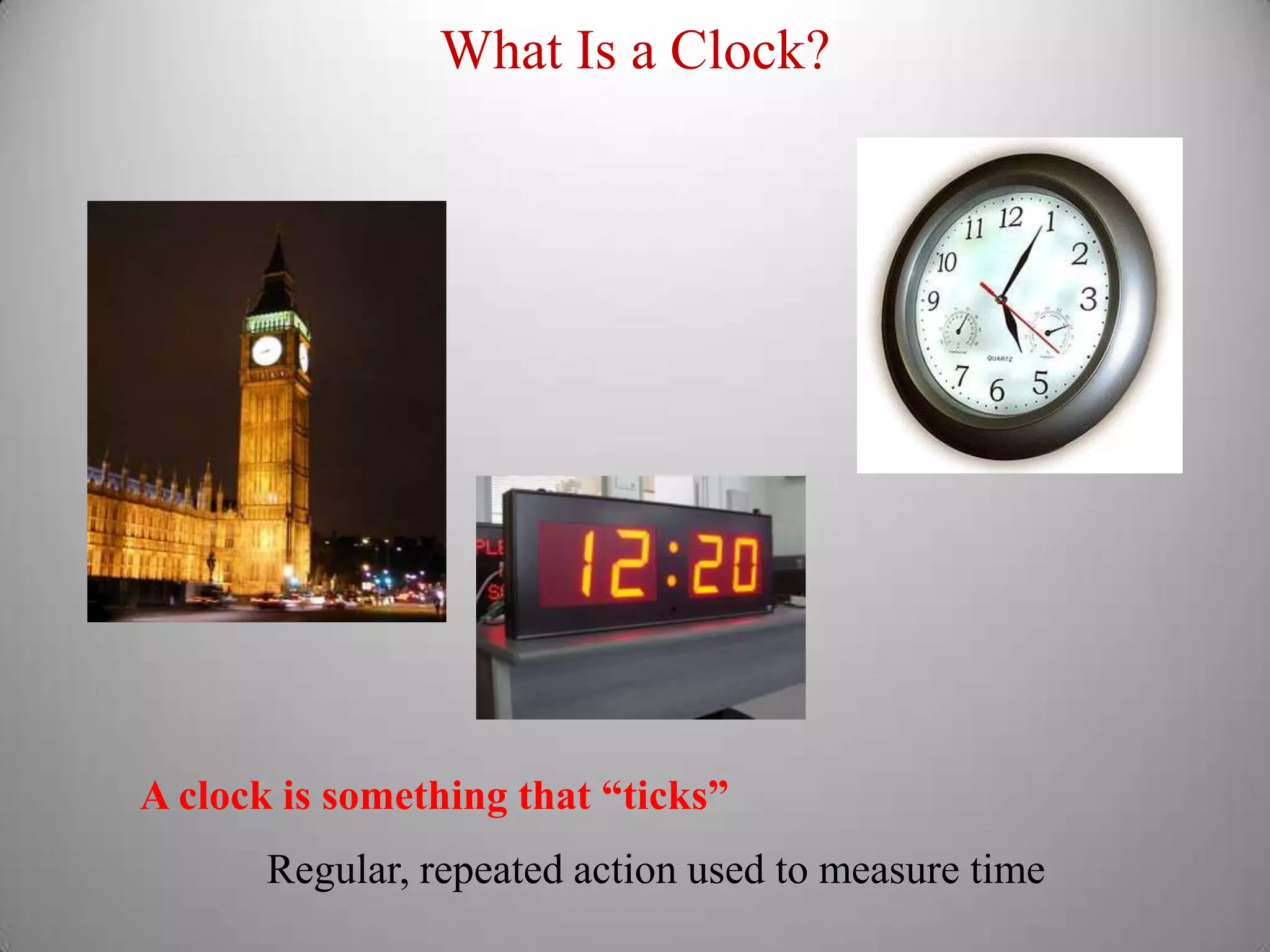
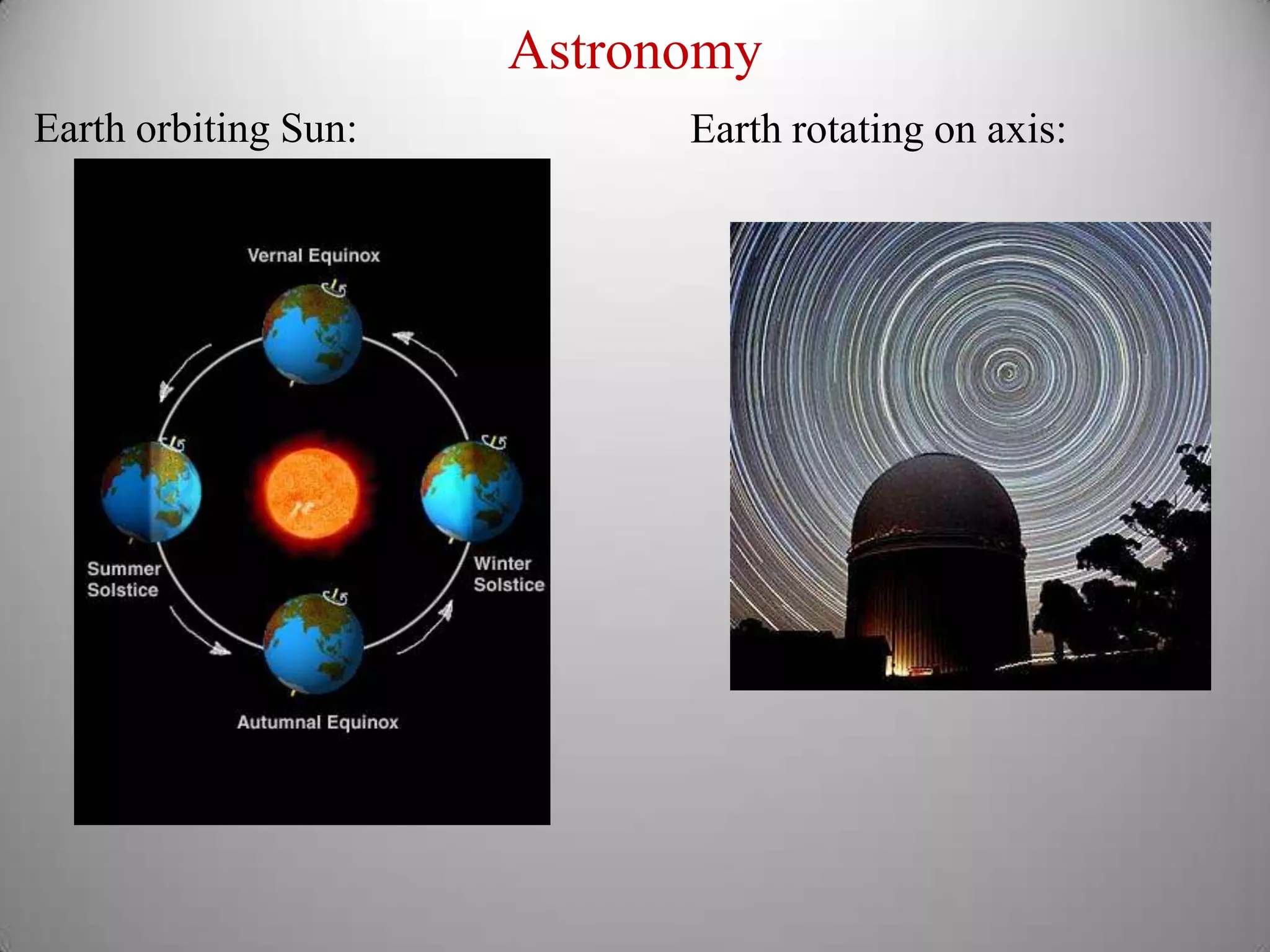
Earth orbiting Sun:Earth rotating on axis:Astronomy
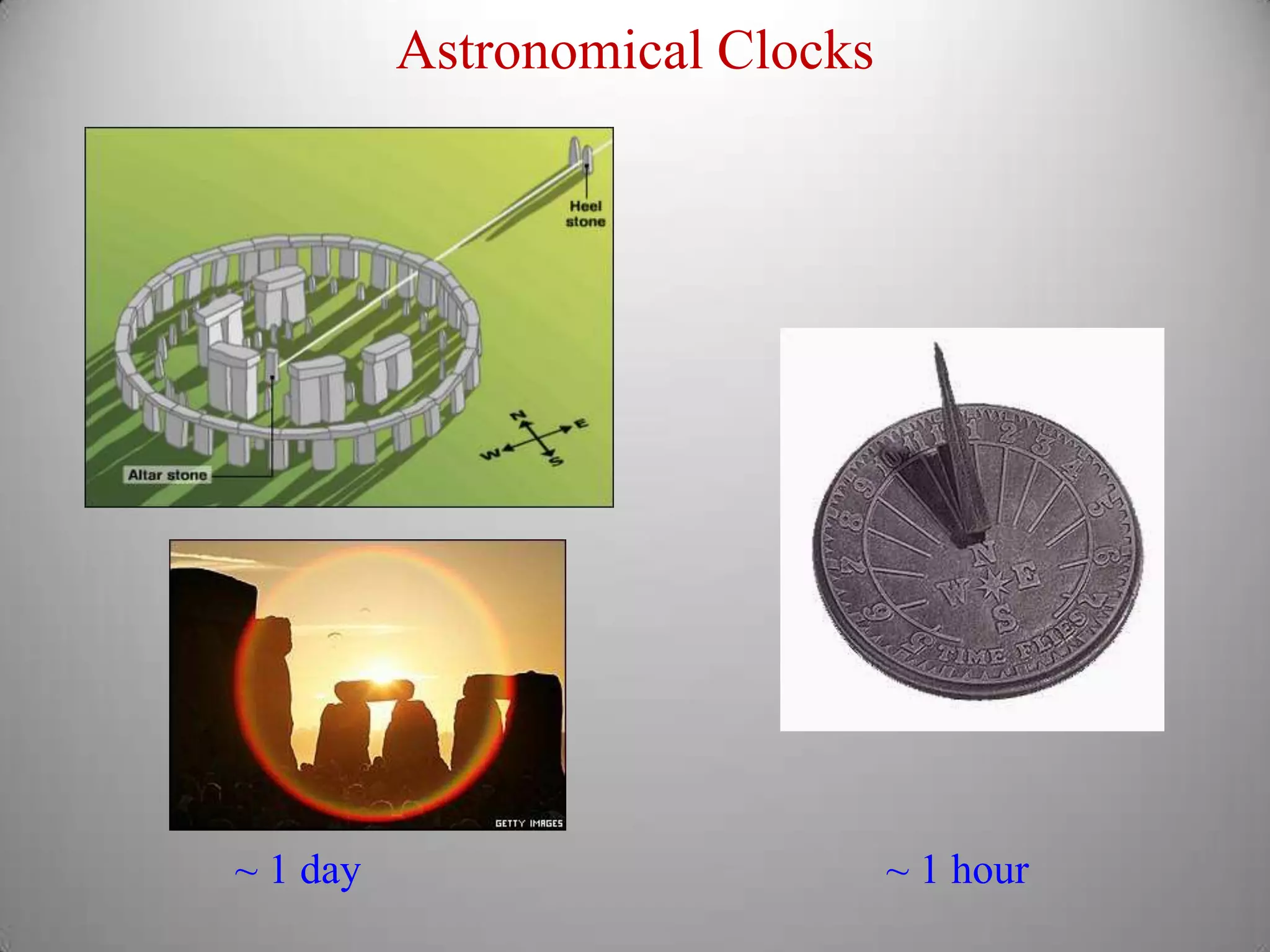
~ 1 day~ 1 hourAstronomical Clocks
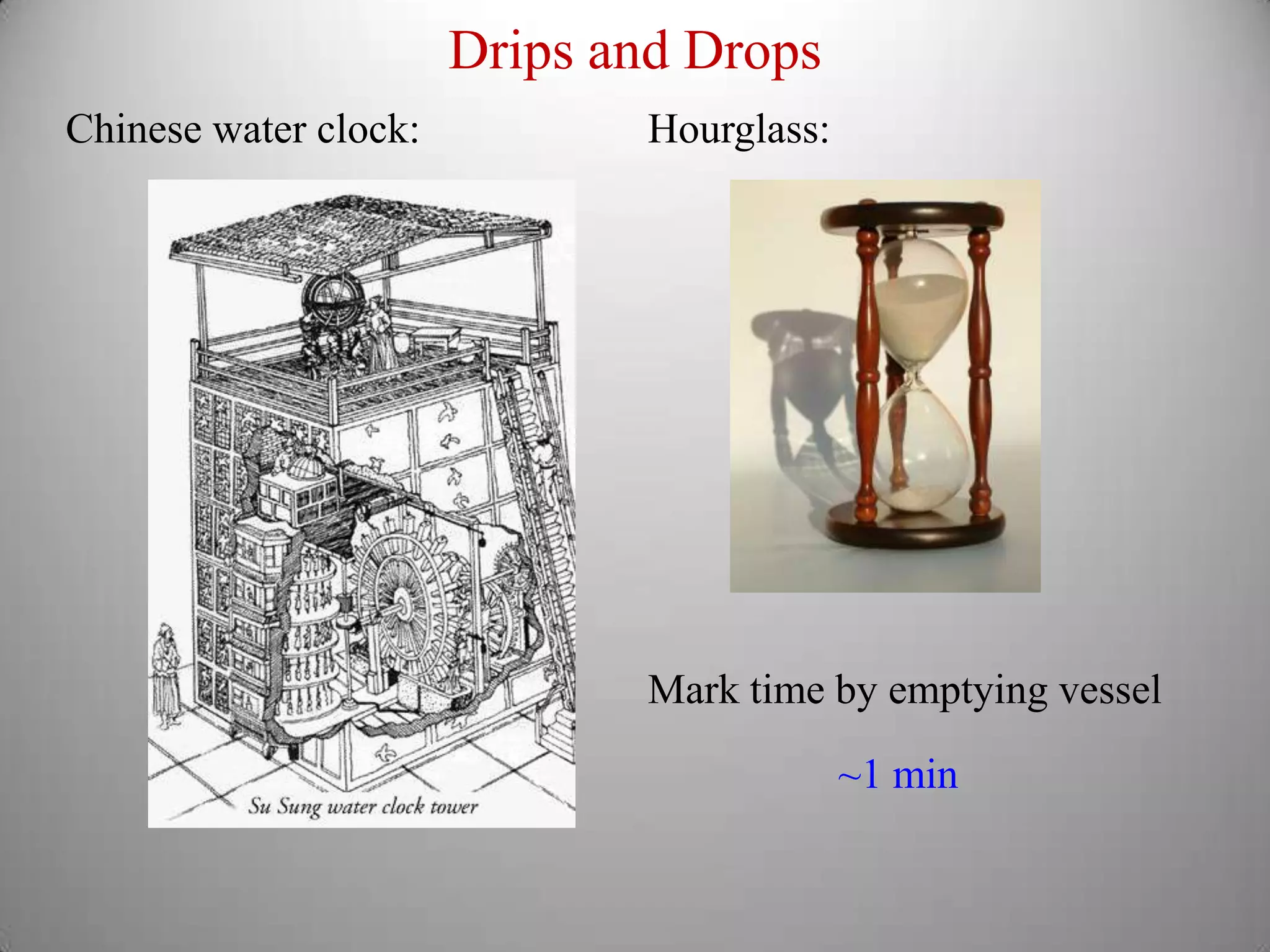
Drips and DropsChinese water clock:Hourglass:Mark time by emptying vessel~1 min
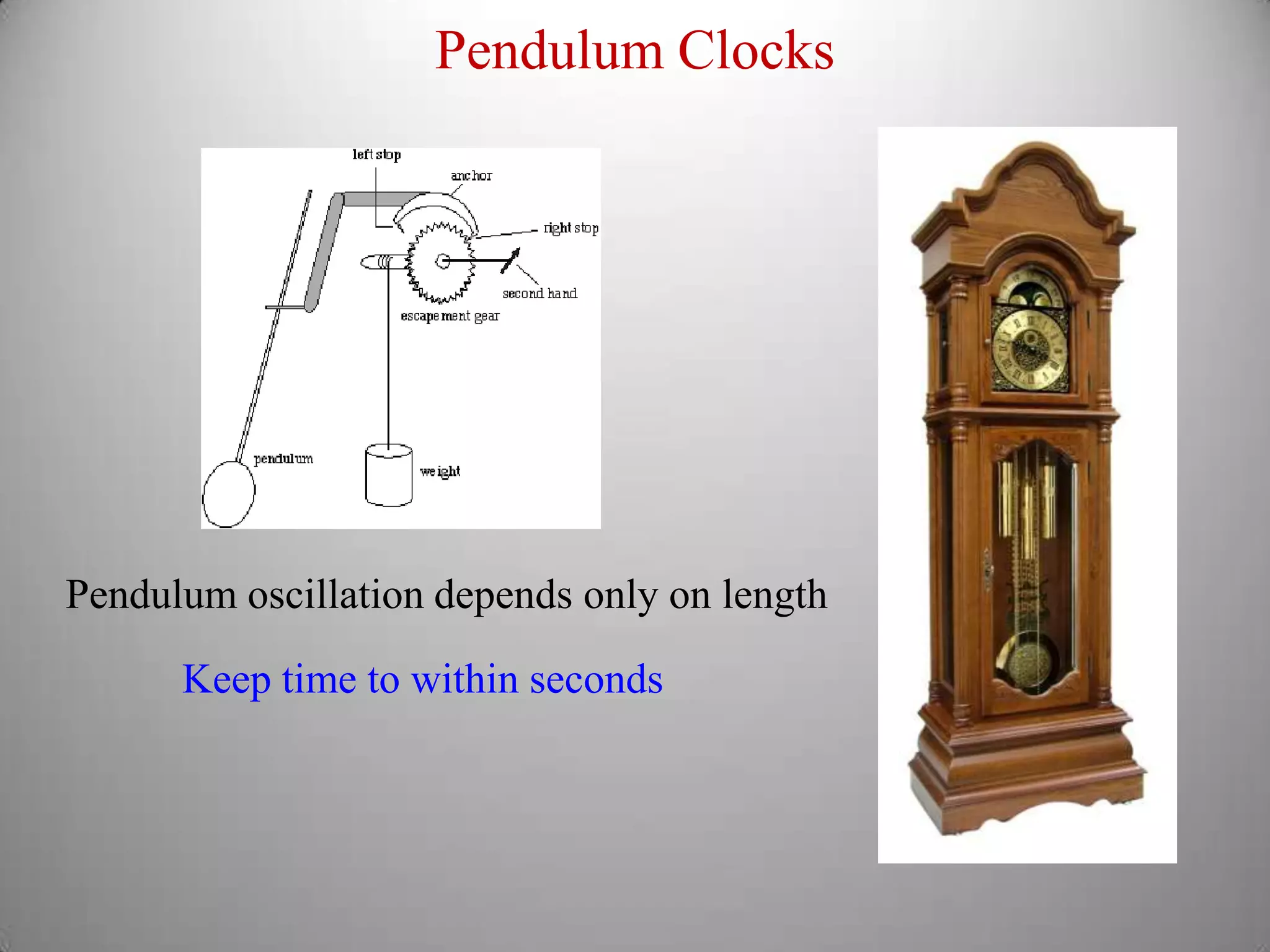
Pendulum ClocksPendulum oscillation depends only on lengthKeep time to within seconds
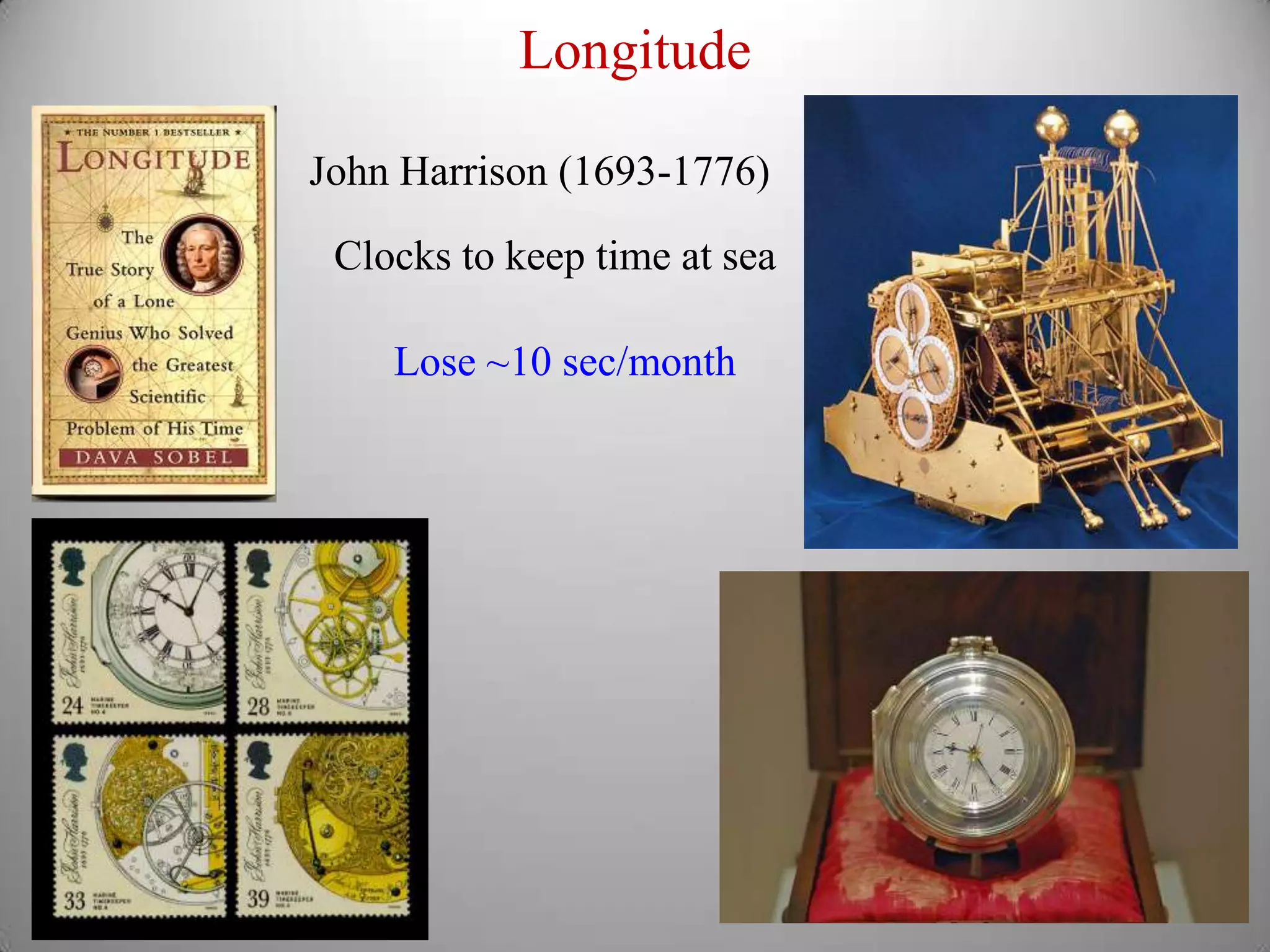
LongitudeJohn Harrison (1693-1776)Clocks to keep time at seaLose ~10 sec/month
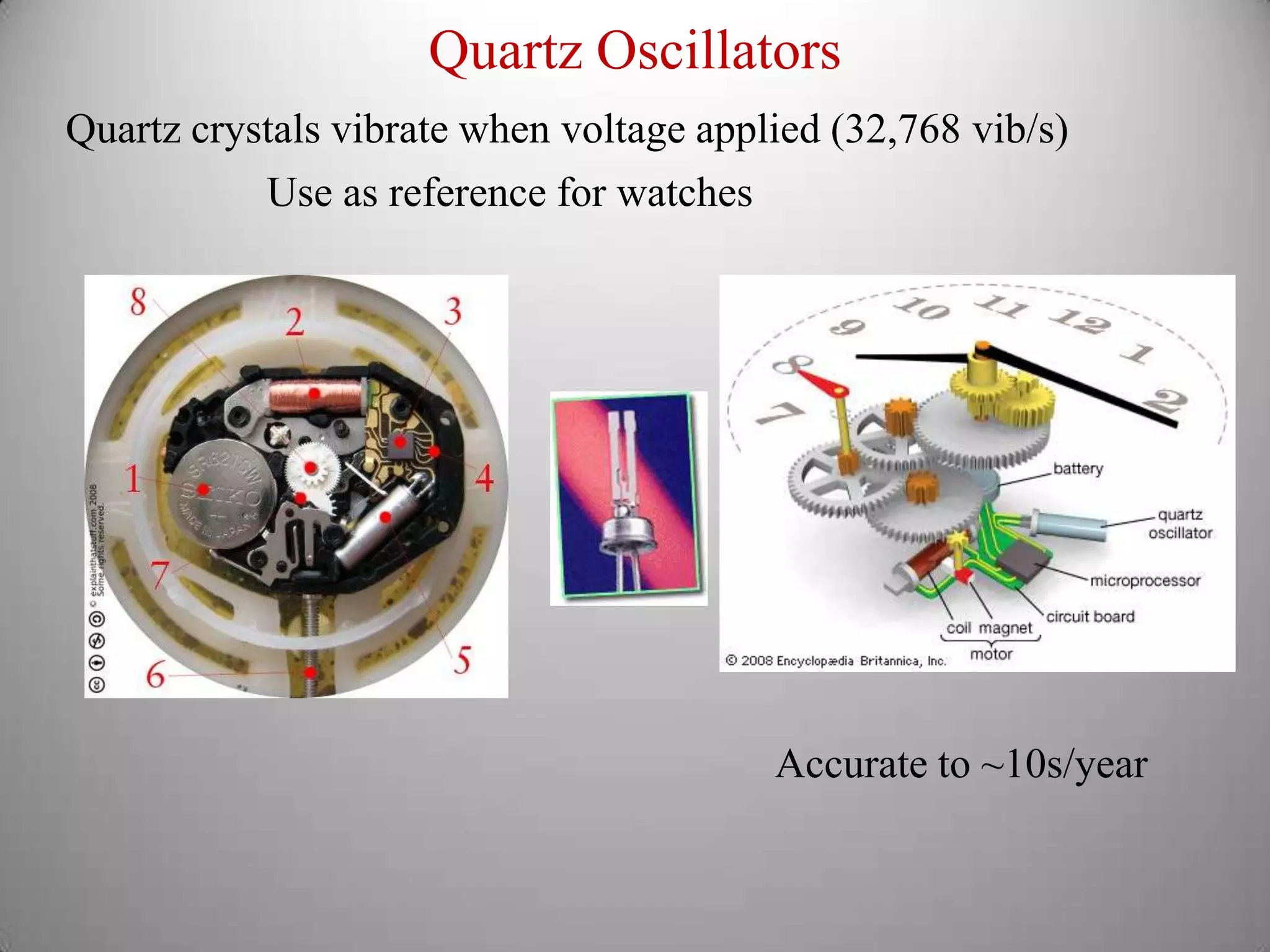
Quartz OscillatorsQuartz crystals vibrate when voltage applied (32,768 vib/s)Use as reference for watchesAccurate to ~10s/year
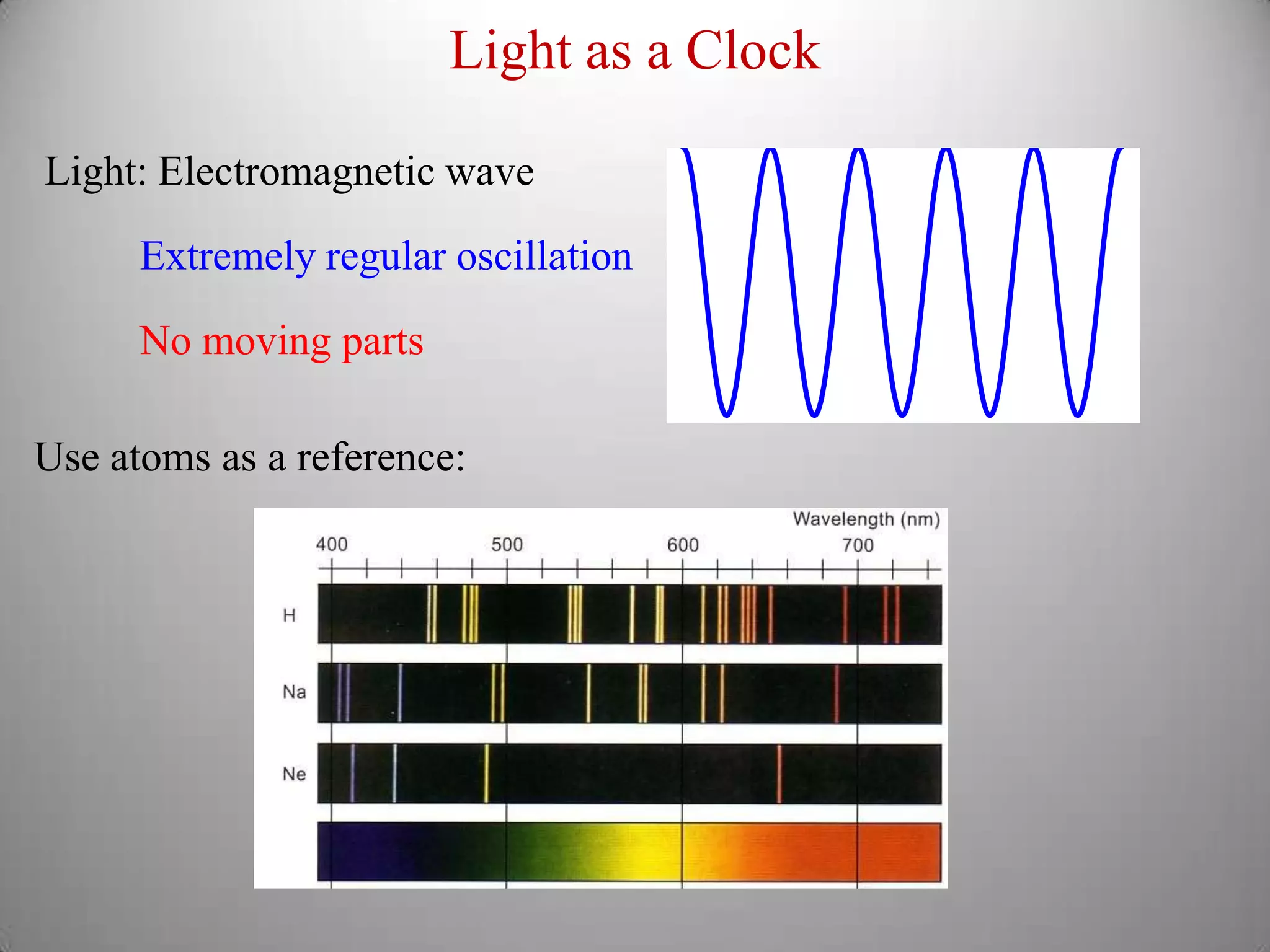
Light as a ClockLight: Electromagnetic waveExtremely regular oscillationNo moving partsUse atoms as a reference:
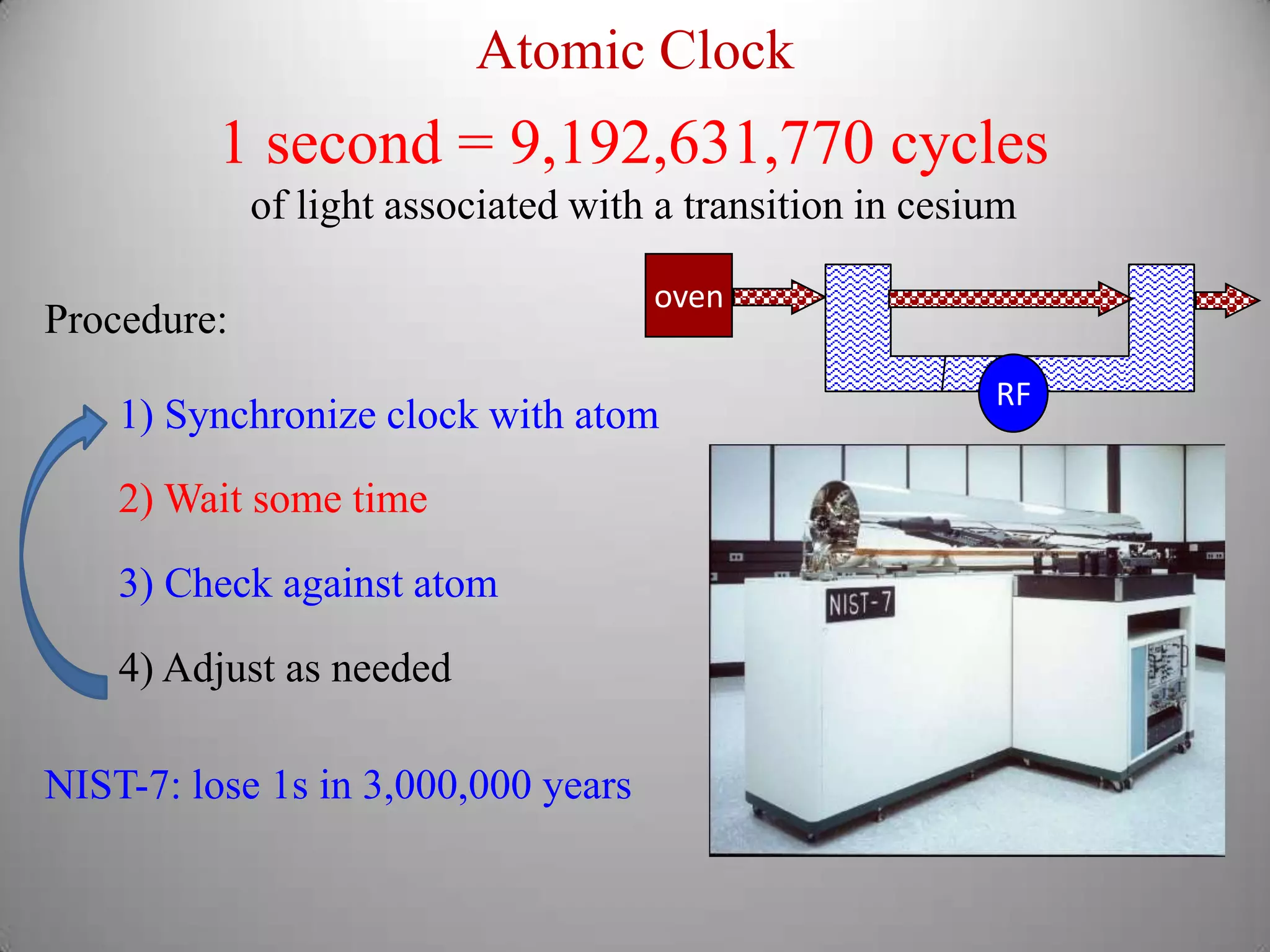
Atomic ClockovenRF1 second = 9,192,631,770 cyclesof light associated with a transition in cesiumProcedure:1) Synchronize clock with atom2) Wait some time3) Check against atom4) Adjust as neededNIST-7: lose 1s in 3,000,000 years
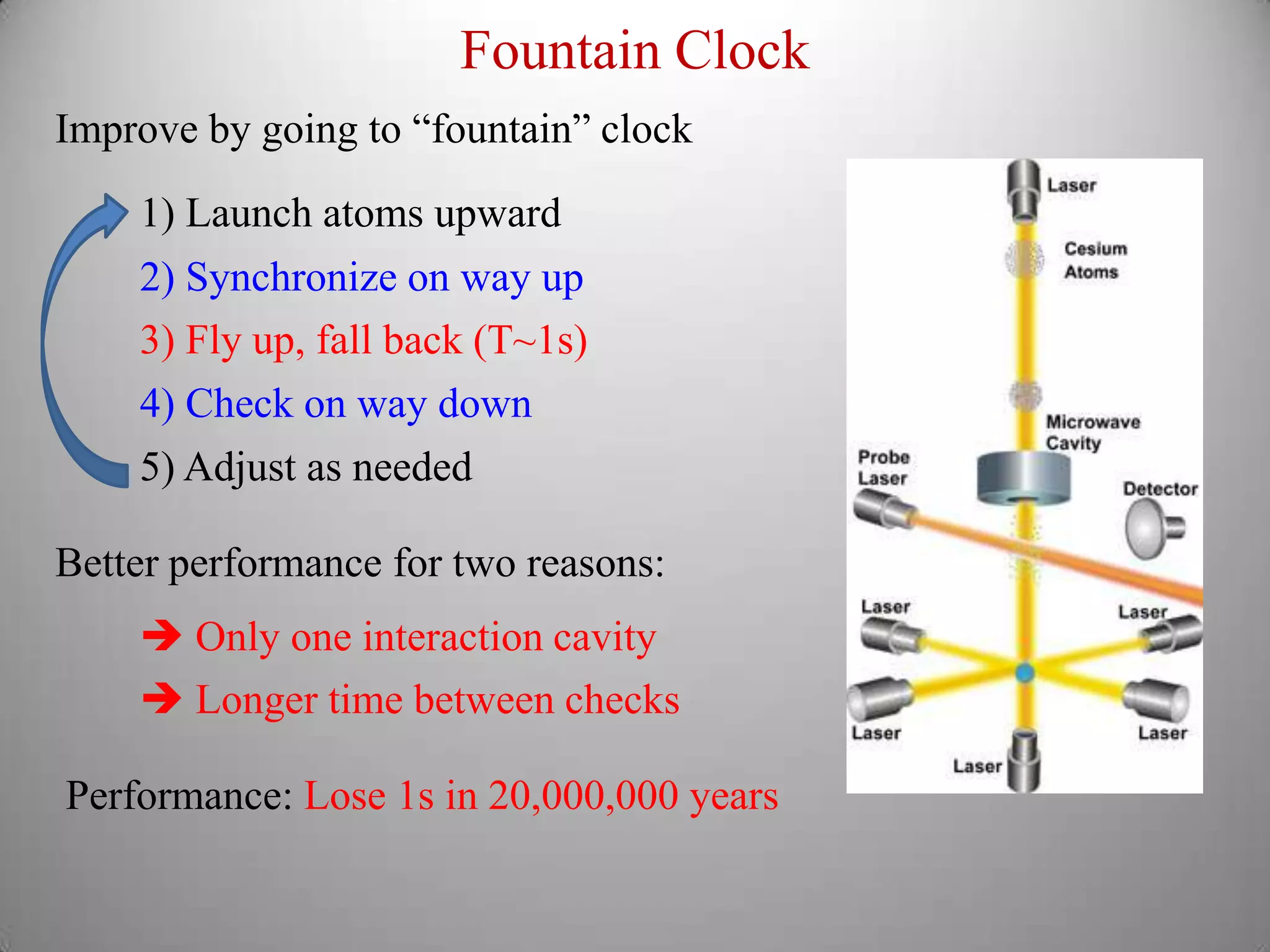
Fountain ClockImprove by going to “fountain” clock1) Launch atoms upward2) Synchronize on way up3) Fly up, fall back (T~1s)4) Check on way down5) Adjust as neededBetter performance for two reasons: Only one interaction cavity Longer time between checksPerformance: Lose 1s in 20,000,000 years
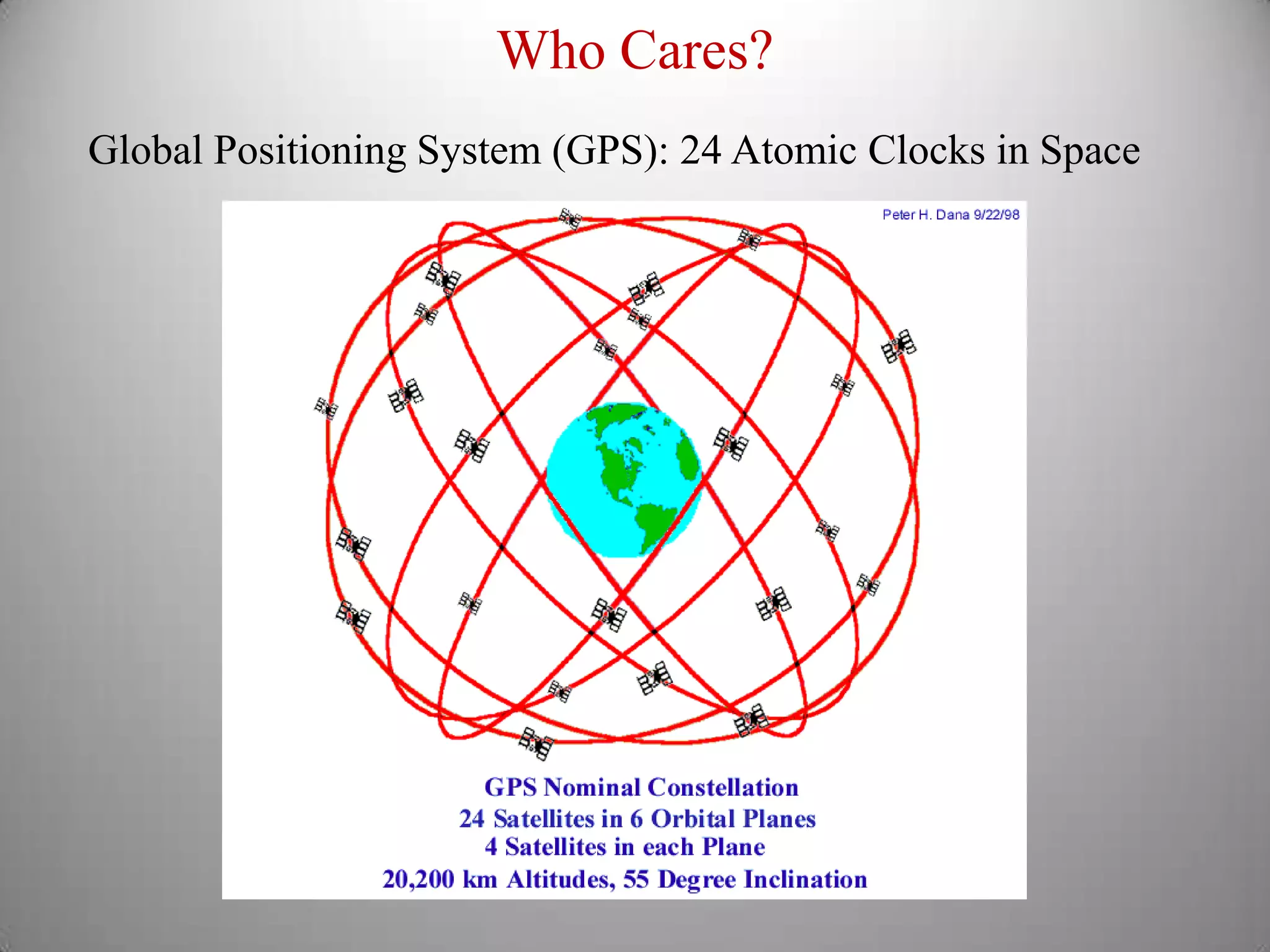
Who Cares?Global Positioning System (GPS): 24 Atomic Clocks in Space
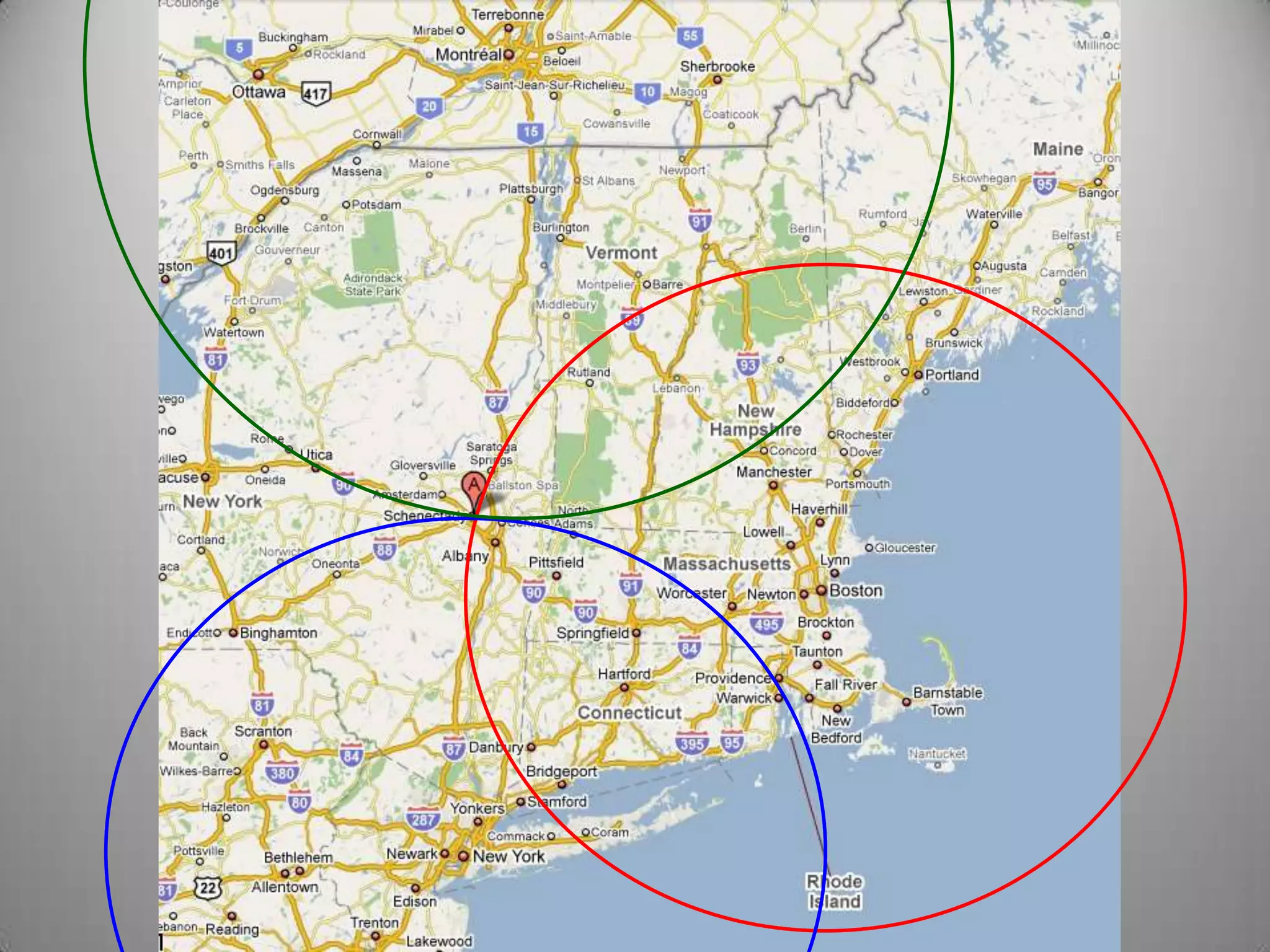
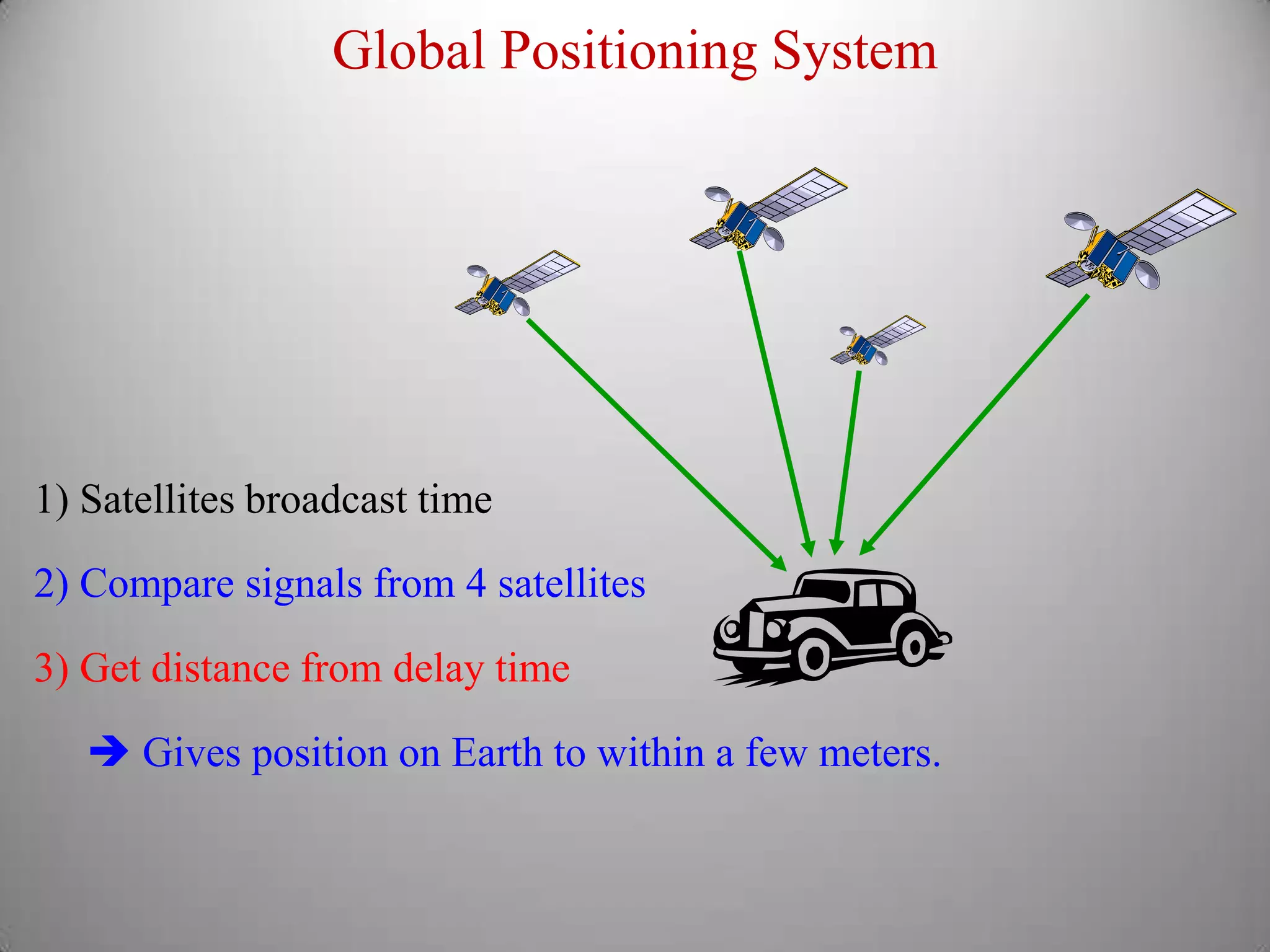
Global Positioning System1) Satellites broadcast time2) Compare signals from 4 satellites3) Get distance from delay time Gives position on Earth to within a few meters.
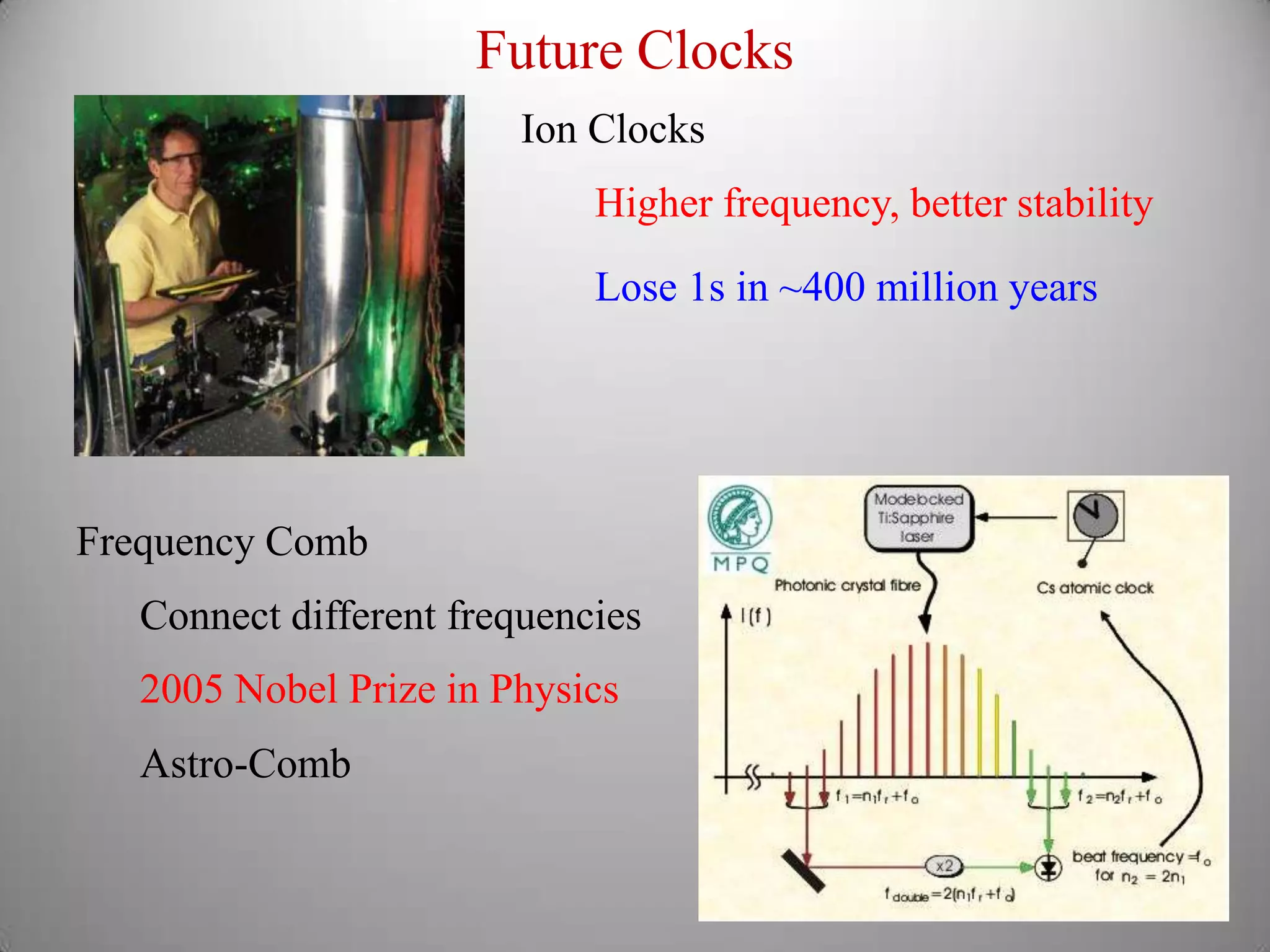
Future ClocksIon ClocksHigher frequency, better stabilityLose 1s in ~400 million yearsFrequency CombConnect different frequencies2005 Nobel Prize in PhysicsAstro-Comb

A Brief History of Timekeeping

  • 1.
    From Stonehenge toNIST F1Chad Orzel, Department of Physics and AstronomyA Brief History of Timekeeping
  • 2.
    Time According toPhysicistsTheories of Space-Time:Clocks:
  • 3.
    A clock issomething that “ticks”Regular, repeated action used to measure timeWhat Is a Clock?
  • 4.
    Earth orbiting Sun:Earthrotating on axis:Astronomy
  • 5.
    ~ 1 day~1 hourAstronomical Clocks
  • 6.
    Drips and DropsChinesewater clock:Hourglass:Mark time by emptying vessel~1 min
  • 7.
    Pendulum ClocksPendulum oscillationdepends only on lengthKeep time to within seconds
  • 8.
    LongitudeJohn Harrison (1693-1776)Clocksto keep time at seaLose ~10 sec/month
  • 9.
    Quartz OscillatorsQuartz crystalsvibrate when voltage applied (32,768 vib/s)Use as reference for watchesAccurate to ~10s/year
  • 10.
    Light as aClockLight: Electromagnetic waveExtremely regular oscillationNo moving partsUse atoms as a reference:
  • 11.
    Atomic ClockovenRF1 second= 9,192,631,770 cyclesof light associated with a transition in cesiumProcedure:1) Synchronize clock with atom2) Wait some time3) Check against atom4) Adjust as neededNIST-7: lose 1s in 3,000,000 years
  • 12.
    Fountain ClockImprove bygoing to “fountain” clock1) Launch atoms upward2) Synchronize on way up3) Fly up, fall back (T~1s)4) Check on way down5) Adjust as neededBetter performance for two reasons: Only one interaction cavity Longer time between checksPerformance: Lose 1s in 20,000,000 years
  • 13.
    Who Cares?Global PositioningSystem (GPS): 24 Atomic Clocks in Space
  • 15.
    Global Positioning System1)Satellites broadcast time2) Compare signals from 4 satellites3) Get distance from delay time Gives position on Earth to within a few meters.
  • 16.
    Future ClocksIon ClocksHigherfrequency, better stabilityLose 1s in ~400 million yearsFrequency CombConnect different frequencies2005 Nobel Prize in PhysicsAstro-Comb