
Chapter - 2- Understanding
Secularism
Prepared By: Navya Rai
Grade – 8- civics
Introduction
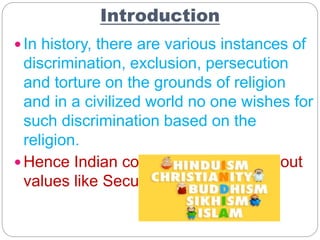
 In history, there are various instances of
discrimination, exclusion, persecution
and torture on the grounds of religion
and in a civilized world no one wishes for
such discrimination based on the
religion.
 Hence Indian constitution speaks about
values like Secularism.
Conti….
secularism
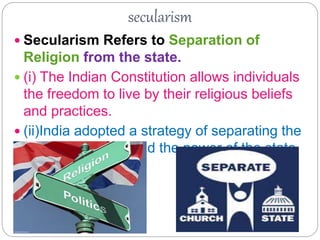
 Secularism Refers to Separation of
Religion from the state.
 (i) The Indian Constitution allows individuals
the freedom to live by their religious beliefs
and practices.
 (ii)India adopted a strategy of separating the
power of religion and the power of the state.
Why is it Important to Separate Religion from the
State:
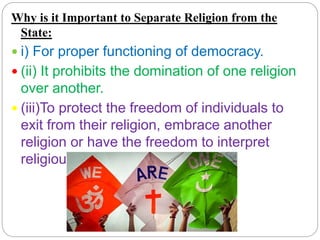
 i) For proper functioning of democracy.
 (ii) It prohibits the domination of one religion
over another.
 (iii)To protect the freedom of individuals to
exit from their religion, embrace another
religion or have the freedom to interpret
religious teachings differently.
What is Indian Secularism
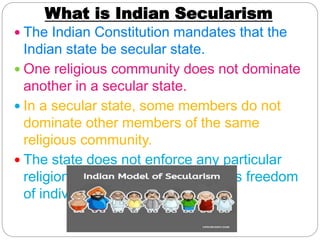
 The Indian Constitution mandates that the
Indian state be secular state.
 One religious community does not dominate
another in a secular state.
 In a secular state, some members do not
dominate other members of the same
religious community.
 The state does not enforce any particular
religion nor take away the religious freedom
of individuals.
Cont…..
 The government schools can not promote any
one religion.
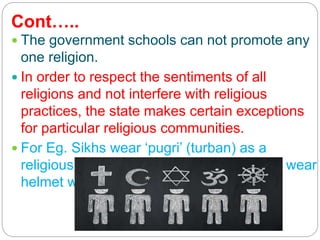
 In order to respect the sentiments of all
religions and not interfere with religious
practices, the state makes certain exceptions
for particular religious communities.
 For Eg. Sikhs wear ‘pugri’ (turban) as a
religious practice. Hence they need not to wear
helmet while riding two-wheeler.
Cont….
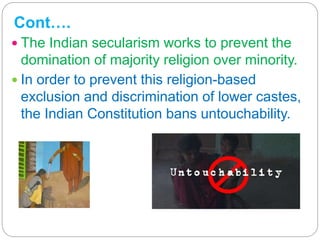
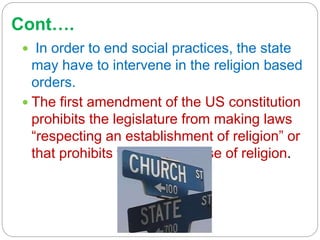
 The Indian secularism works to prevent the
domination of majority religion over minority.
 In order to prevent this religion-based
exclusion and discrimination of lower castes,
the Indian Constitution bans untouchability.
Cont….
 In order to end social practices, the state
may have to intervene in the religion based
orders.
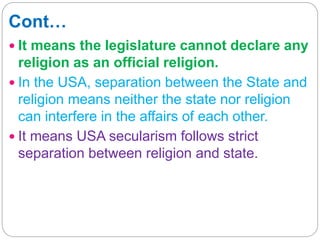
 The first amendment of the US constitution
prohibits the legislature from making laws
“respecting an establishment of religion” or
that prohibits the free exercise of religion.
Cont…
 It means the legislature cannot declare any
religion as an official religion.
 In the USA, separation between the State and
religion means neither the state nor religion
can interfere in the affairs of each other.
 It means USA secularism follows strict
separation between religion and state.
Cont…
 The Indian state is secular and works in
various ways to prevent religious
domination.
 Unlike USA, in India, the state can
interfere in religion on the ideal laid down in
the constitution. For example;
Untouchability is banned by the law.
Cont…
 In Indian secularism the state is not strictly
separate from religion but it maintains
principled distance from religion.
 This means that any interference in religion
by the state has to be based on the ideals
laid out in the Constitution.
THANK YOU

8th std Social Science Chapter 2. Understanding Secularism

  • 1.
    Chapter - 2-Understanding Secularism Prepared By: Navya Rai Grade – 8- civics
  • 2.
    Introduction  In history,there are various instances of discrimination, exclusion, persecution and torture on the grounds of religion and in a civilized world no one wishes for such discrimination based on the religion.  Hence Indian constitution speaks about values like Secularism.
  • 3.
  • 4.
    secularism  Secularism Refersto Separation of Religion from the state.  (i) The Indian Constitution allows individuals the freedom to live by their religious beliefs and practices.  (ii)India adopted a strategy of separating the power of religion and the power of the state.
  • 5.
    Why is itImportant to Separate Religion from the State:  i) For proper functioning of democracy.  (ii) It prohibits the domination of one religion over another.  (iii)To protect the freedom of individuals to exit from their religion, embrace another religion or have the freedom to interpret religious teachings differently.
  • 6.
    What is IndianSecularism  The Indian Constitution mandates that the Indian state be secular state.  One religious community does not dominate another in a secular state.  In a secular state, some members do not dominate other members of the same religious community.  The state does not enforce any particular religion nor take away the religious freedom of individuals.
  • 7.
    Cont…..  The governmentschools can not promote any one religion.  In order to respect the sentiments of all religions and not interfere with religious practices, the state makes certain exceptions for particular religious communities.  For Eg. Sikhs wear ‘pugri’ (turban) as a religious practice. Hence they need not to wear helmet while riding two-wheeler.
  • 8.
    Cont….  The Indiansecularism works to prevent the domination of majority religion over minority.  In order to prevent this religion-based exclusion and discrimination of lower castes, the Indian Constitution bans untouchability.
  • 9.
    Cont….  In orderto end social practices, the state may have to intervene in the religion based orders.  The first amendment of the US constitution prohibits the legislature from making laws “respecting an establishment of religion” or that prohibits the free exercise of religion.
  • 10.
    Cont…  It meansthe legislature cannot declare any religion as an official religion.  In the USA, separation between the State and religion means neither the state nor religion can interfere in the affairs of each other.  It means USA secularism follows strict separation between religion and state.
  • 11.
    Cont…  The Indianstate is secular and works in various ways to prevent religious domination.  Unlike USA, in India, the state can interfere in religion on the ideal laid down in the constitution. For example; Untouchability is banned by the law.
  • 12.
    Cont…  In Indiansecularism the state is not strictly separate from religion but it maintains principled distance from religion.  This means that any interference in religion by the state has to be based on the ideals laid out in the Constitution.
  • 13.