POWERPOINT PRESENTATION ON SECULARISM
SANJEEV
ADGOTRA (SS
CAFÉ 01923222598)
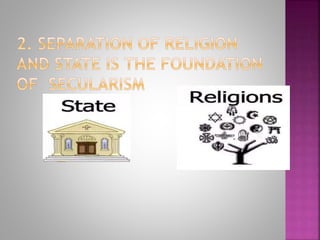
• Secularism is the principle of
the separation of government
institutions and persons
mandated to represent the
state from religious institutions
and religious dignitaries.
• The term "secularism" was first
used by the British writer
George Jacob Holyoake in
1851.[5] Although the term was
new, the general notions of
freethought on which it was
based had existed throughout
history.
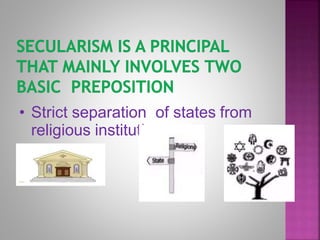
• Strict separation of states from
religious institutions
• Secularism seeks to ensure and protect
freedom of religious belief and practice for
all citizens. Secularism is not about
curtailing religious freedoms; it is about
ensuring that the freedoms of thought and
conscience apply equally to all believers
and non-believers alike.
• Secularism seeks to defend the absolute
freedom of religious and other belief, and
protect the right to manifest religious belief
insofar as it does not impinge
disproportionately on the rights and
freedoms of others. Secularism ensures
that the right of individuals to freedom of
religion is always balanced by the right to
be free from religion.
• In a secular democracy all citizens are equal before the
law and parliament. No religious or political affiliation
gives advantages or disadvantages and religious
believers are citizens with the same rights and
obligations as anyone else.
• Secularism champions human rights above
discriminatory religious demands. It upholds equality
laws that protect women, LGBT people and minorities.
These equality laws ensure that non-believers have the
same rights as those who identify with a religious or
philosophical belief.
• We all share hospitals, schools, the police and the
services of local authorities. It is essential that these
public services are secular at the point of use so that
no-one is disadvantaged or denied access on
grounds of religious belief (or non-belief.) All state-
funded schools should be non-religious in character,
with children being educated together regardless of
their parents' religion. When a public body grants a
contract for the provision of services to an
organisation affiliated to a particular religion or belief,
such services must be delivered in a neutral manner,
with no attempt to promote the ideas of that faith
group.
• Atheism is a lack of belief in gods. Secularism
simply provides a framework for a democratic
society. Atheists have an obvious interest in
supporting secularism, but secularism itself does
not seek to challenge the tenets of any particular
religion or belief, neither does it seek to impose
atheism on anyone.
• Secularism is simply a framework for ensuring
equality throughout society – in politics,
education, the law and elsewhere, for believers
and non-believers alike.
6.Secularism protects free speech and
expression
• Religious people have the right to express
their beliefs publicly but so do those who
oppose or question those beliefs.
Religious beliefs, ideas and organisations
must not enjoy privileged protection from
the right to freedom of expression. In a
democracy, all ideas and beliefs must be
open to discussion. Individuals have
rights, ideas do not.
• Secularism in India means equal treatment of all religions by the
state.
• With the 42nd Amendment of the Constitution of India enacted in
1976, the Preamble to the Constitution asserted that India is a
secular nation. However, neither India's constitution nor its laws
define the relationship between religion and state. The laws
implicitly require the state and its institutions to recognize and
accept all religions, enforce parliamentary laws instead of religious
laws, and respect pluralism. India does not have an official state
religion. The people of India have freedom of religion, and the state
treats all individuals as equal citizens regardless of their religion. In
matters of law in modern India, however, the applicable code of law
is unequal, and India's personal laws - on matters such as marriage,
divorce, inheritance, alimony - varies with an individual's religion.
Muslim Indians have Sharia-based Muslim Personal Law, while
Hindus, Christians, Sikhs and other non-Muslim Indians live under
common law. The attempt to respect unequal, religious law has
created a number of issues in India such as acceptability of child
marriage,[4] polygamy, unequal inheritance rights, extrajudicial
unilateral divorce rights favorable to some males, and conflicting
interpretations of religious books.
• Secularism as practiced in India, with its marked
differences with Western practice of secularism, is a
controversial topic in India. Supporters of the Indian
concept of secularism claim it respects Muslim men’s
religious rights and recognizes that they are culturally
different from Indians of other religions. Supporters of
this form of secularism claim that any attempt to
introduce a uniform civil code, that is equal laws for
every citizen irrespective of his or her religion, would
impose majoritarian Hindu sensibilities and ideals,
something that is unacceptable to Muslim Indians.
Opponents argue that India's acceptance of Sharia
and religious laws violates the principle of equal
human rights, discriminates against Muslim women,
allows unelected religious personalities to interpret
religious laws, and creates plurality of unequal
citizenship; they suggest India should move towards
separating religion and state.
• Secularism is a divisive, politically charged topic in India.
• Secularist organizations promote the view that moral
standards should be based solely on concern for the
good of humanity in the present life, without reference to
supernatural concepts, such as God or an afterlife, any
desire for doing good as a reward after death, or any
fear of punishment for not believing after death. The term
secularism, as coined and promulgated by George
Jacob Holyoake, originally referred to such a view.[1]
Secularism may also refer to the belief that government
should be neutral on matters of religion, and that church
and state should be separate. The term is here used in
the first sense, though most organizations listed here
also support secularism in the second sense.
• List
• International
• Atheist Alliance International
• The Brights' Net is a nonprofit educational organization dedicated to "building a constituency" and
"constructively address[ing] the marginalized situation of persons who have a naturalistic
worldview."
• European Humanist Federation is a union of "numerous humanist organisations from most
European countries" whose purpose is to promote humanism and secularism in Europe.
• International Humanist and Ethical Union (IHEU) is "the sole world umbrella organisation
embracing Humanist, atheist, rationalist, secularist, skeptic, laique, [sic] ethical cultural,
freethought and similar organisations world-wide." IHEU is a union of over 100 Humanist or
secularist organizations in more than 40 countries. It is an international NGO (Non-governmental
organization) with special consultative status with the United Nations.
• International Humanist and Ethical Youth Organisation (IHEYO), IHEU's youth wing
• International League of Humanists
• International League of non-religious and atheists
• Rationalist International
• SundayAssembly
• THANKS FOR WATCHING
THIS POWERPOINT
PRESENTATION

Secularism

  • 1.
    POWERPOINT PRESENTATION ONSECULARISM SANJEEV ADGOTRA (SS CAFÉ 01923222598)
  • 2.
    • Secularism isthe principle of the separation of government institutions and persons mandated to represent the state from religious institutions and religious dignitaries. • The term "secularism" was first used by the British writer George Jacob Holyoake in 1851.[5] Although the term was new, the general notions of freethought on which it was based had existed throughout history.
  • 3.
    • Strict separationof states from religious institutions
  • 8.
    • Secularism seeksto ensure and protect freedom of religious belief and practice for all citizens. Secularism is not about curtailing religious freedoms; it is about ensuring that the freedoms of thought and conscience apply equally to all believers and non-believers alike.
  • 9.
    • Secularism seeksto defend the absolute freedom of religious and other belief, and protect the right to manifest religious belief insofar as it does not impinge disproportionately on the rights and freedoms of others. Secularism ensures that the right of individuals to freedom of religion is always balanced by the right to be free from religion.
  • 10.
    • In asecular democracy all citizens are equal before the law and parliament. No religious or political affiliation gives advantages or disadvantages and religious believers are citizens with the same rights and obligations as anyone else. • Secularism champions human rights above discriminatory religious demands. It upholds equality laws that protect women, LGBT people and minorities. These equality laws ensure that non-believers have the same rights as those who identify with a religious or philosophical belief.
  • 11.
    • We allshare hospitals, schools, the police and the services of local authorities. It is essential that these public services are secular at the point of use so that no-one is disadvantaged or denied access on grounds of religious belief (or non-belief.) All state- funded schools should be non-religious in character, with children being educated together regardless of their parents' religion. When a public body grants a contract for the provision of services to an organisation affiliated to a particular religion or belief, such services must be delivered in a neutral manner, with no attempt to promote the ideas of that faith group.
  • 12.
    • Atheism isa lack of belief in gods. Secularism simply provides a framework for a democratic society. Atheists have an obvious interest in supporting secularism, but secularism itself does not seek to challenge the tenets of any particular religion or belief, neither does it seek to impose atheism on anyone. • Secularism is simply a framework for ensuring equality throughout society – in politics, education, the law and elsewhere, for believers and non-believers alike.
  • 13.
    6.Secularism protects freespeech and expression • Religious people have the right to express their beliefs publicly but so do those who oppose or question those beliefs. Religious beliefs, ideas and organisations must not enjoy privileged protection from the right to freedom of expression. In a democracy, all ideas and beliefs must be open to discussion. Individuals have rights, ideas do not.
  • 16.
    • Secularism inIndia means equal treatment of all religions by the state. • With the 42nd Amendment of the Constitution of India enacted in 1976, the Preamble to the Constitution asserted that India is a secular nation. However, neither India's constitution nor its laws define the relationship between religion and state. The laws implicitly require the state and its institutions to recognize and accept all religions, enforce parliamentary laws instead of religious laws, and respect pluralism. India does not have an official state religion. The people of India have freedom of religion, and the state treats all individuals as equal citizens regardless of their religion. In matters of law in modern India, however, the applicable code of law is unequal, and India's personal laws - on matters such as marriage, divorce, inheritance, alimony - varies with an individual's religion. Muslim Indians have Sharia-based Muslim Personal Law, while Hindus, Christians, Sikhs and other non-Muslim Indians live under common law. The attempt to respect unequal, religious law has created a number of issues in India such as acceptability of child marriage,[4] polygamy, unequal inheritance rights, extrajudicial unilateral divorce rights favorable to some males, and conflicting interpretations of religious books.
  • 17.
    • Secularism aspracticed in India, with its marked differences with Western practice of secularism, is a controversial topic in India. Supporters of the Indian concept of secularism claim it respects Muslim men’s religious rights and recognizes that they are culturally different from Indians of other religions. Supporters of this form of secularism claim that any attempt to introduce a uniform civil code, that is equal laws for every citizen irrespective of his or her religion, would impose majoritarian Hindu sensibilities and ideals, something that is unacceptable to Muslim Indians. Opponents argue that India's acceptance of Sharia and religious laws violates the principle of equal human rights, discriminates against Muslim women, allows unelected religious personalities to interpret religious laws, and creates plurality of unequal citizenship; they suggest India should move towards separating religion and state. • Secularism is a divisive, politically charged topic in India.
  • 18.
    • Secularist organizationspromote the view that moral standards should be based solely on concern for the good of humanity in the present life, without reference to supernatural concepts, such as God or an afterlife, any desire for doing good as a reward after death, or any fear of punishment for not believing after death. The term secularism, as coined and promulgated by George Jacob Holyoake, originally referred to such a view.[1] Secularism may also refer to the belief that government should be neutral on matters of religion, and that church and state should be separate. The term is here used in the first sense, though most organizations listed here also support secularism in the second sense.
  • 19.
    • List • International •Atheist Alliance International • The Brights' Net is a nonprofit educational organization dedicated to "building a constituency" and "constructively address[ing] the marginalized situation of persons who have a naturalistic worldview." • European Humanist Federation is a union of "numerous humanist organisations from most European countries" whose purpose is to promote humanism and secularism in Europe. • International Humanist and Ethical Union (IHEU) is "the sole world umbrella organisation embracing Humanist, atheist, rationalist, secularist, skeptic, laique, [sic] ethical cultural, freethought and similar organisations world-wide." IHEU is a union of over 100 Humanist or secularist organizations in more than 40 countries. It is an international NGO (Non-governmental organization) with special consultative status with the United Nations. • International Humanist and Ethical Youth Organisation (IHEYO), IHEU's youth wing • International League of Humanists • International League of non-religious and atheists • Rationalist International • SundayAssembly
  • 20.
    • THANKS FORWATCHING THIS POWERPOINT PRESENTATION