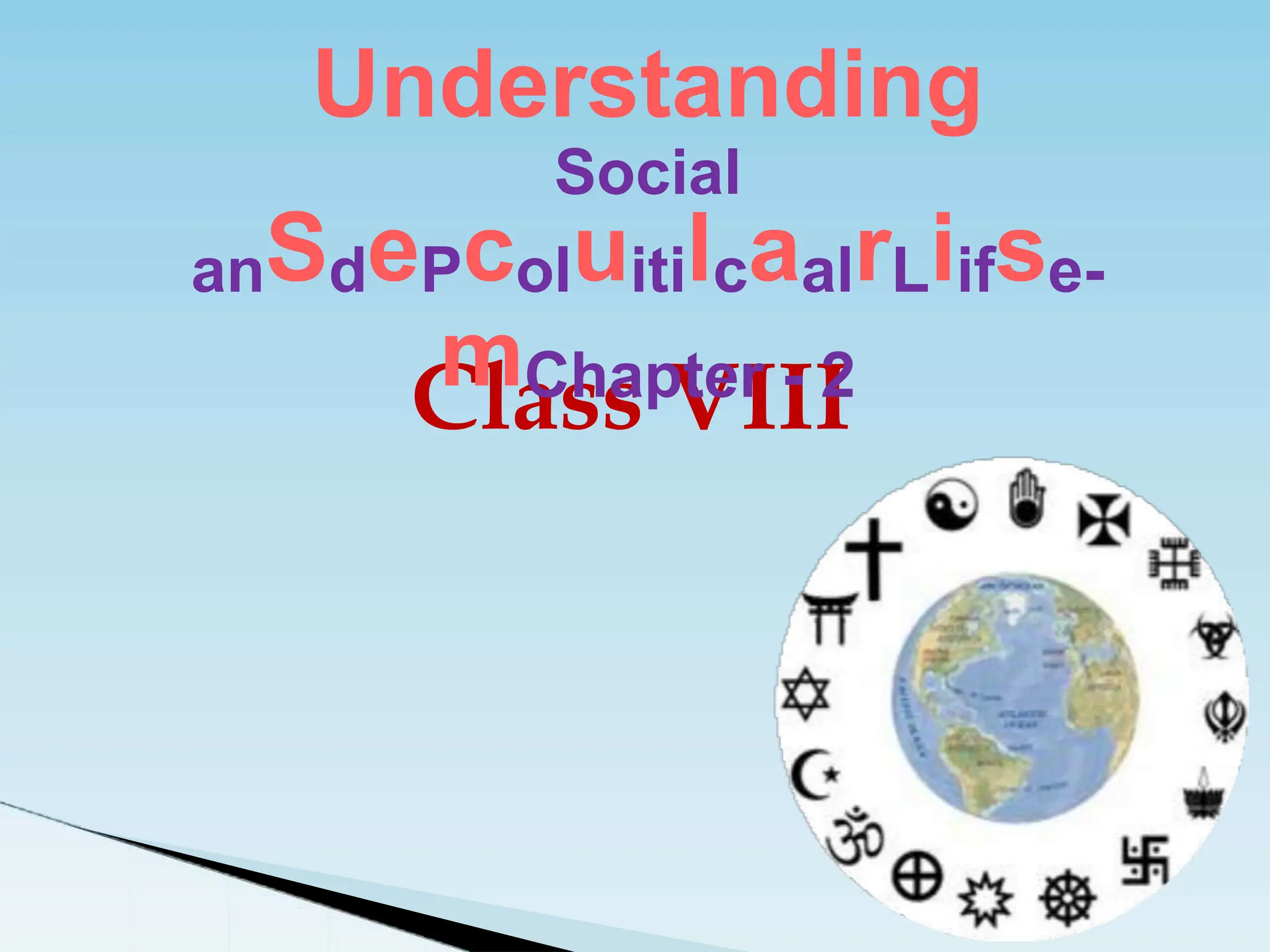
Class VIII
Understanding
Social
anSdePcoluitilcaalrLiifse-
mChapter - 2
INTRODUCTION
7th Std – Ansari’s Story
A Minority – Hindu, Sikh or Muslim in USA – Christian Fundamentalism Feeling
of You – 1) Retaliation 2) Fight for justice for all
1)Retaliation – lead to the violence throughout the world.
2)Fight for justice for all – No peace
Assumption for fight :
All forms of domination related to religion should end.
- This is the essence of Secularism
Solution to end all forms of religious domination is
SECULARISM
Objecti
Dear Children, after lea
vrnin
eg t
shis lesson You will be
able
to
1.Acquire knowledge about major world
religions in brief
2.Define the term ‘secularism’
3.Understand the need to separate
religion from the State
4.Explain secularism in Indian Context
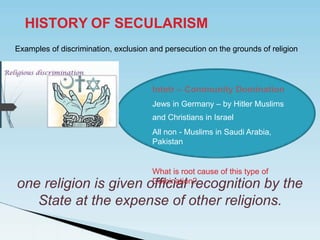
HISTORY OF SECULARISM
Examples of discrimination, exclusion and persecution on the grounds of religion
Intetr – Community Domination
Jews in Germany – by Hitler Muslims
and Christians in Israel
All non - Muslims in Saudi Arabia,
Pakistan
What is root cause of this type of
Domination?
one religion is given official recognition by the
State at the expense of other religions.
In India, can the State discriminate against citizens on the grounds
of their religion?
ABSOLUTELY
“NO”
Because,
INDIA IS A SECULAR STATE
What is Secularism?
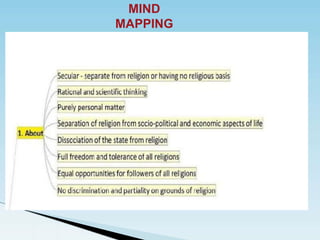
•Religious freedom for all -The Indian Constitution allows individuals
the freedom to live by their religious beliefs and practices as they interpret these.
•Separating the power of religion and the power of the
State.
•No discrimination by the state only on the basis of
religion.
•The concept of “My Nation” is a highest goal of citizen
and not the concept of “My Religion”.
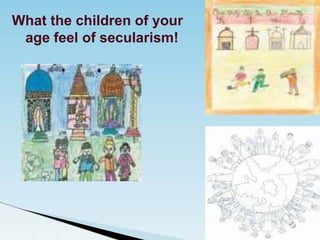
What the children of your
age feel of secularism!
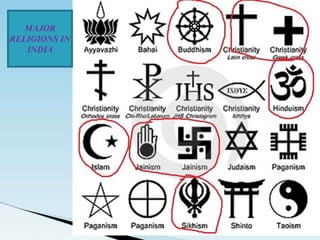
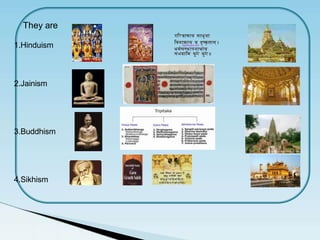
MAJOR
RELIGIONS IN
INDIA
They are
1.Hinduism
2.Jainism
3.Buddhism
4.Sikhism
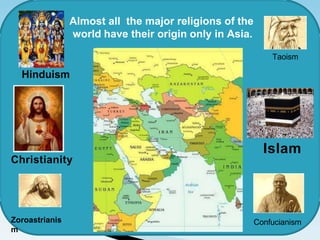
Zoroastrianis
m
Confucianism
Taoism
Christianity
Islam
Almost all the major religions of the
world have their origin only in Asia.
Hinduism
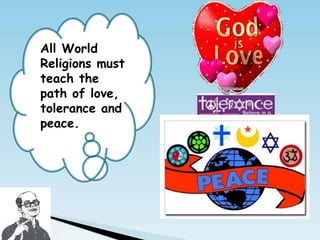
All World
Religions must
teach the
path of love,
tolerance and
peace.
Why is it Important to Separate Religion from the State?
1. To protect the Fundamental rights of the minorities
in a Democratic Society
If this majority religious group has access to State power, then it could quite
easily use this power and financial resources to
discriminate against and persecute persons of other
religions.
This tyranny of the majority could result in the discrimination, coercion and at
times even the killing of religious minorities.
The majority could quite easily prevent minorities from practising their
religions
Any form of domination based on religion is in violation of the rights that a
democratic society guarantees to each and every
citizen irrespective of their religion.
Why is it Important to Separate Religion from the State?
2. There is a need to protect the freedom of
individuals
• to interpret religious teachings differently.
• to exit from their religion,
• to embrace another religion
The Dominant and tyrannical group inside the religion may not allow the
other interpretations of the religion to come up if they have the power of the
state in their hands.
Eg.
• So called ‘Higher Castes’ against ‘untouchables’ – among Hindus
• Shia Muslims against Sunni Muslims – in Islam
• Catholics against Protestants – in Christianity
Time for open
discussion in class
Can there be different
views within the same
religion?
The Constitution of India by providing for a ‘secular
state’ ensures 3 things:
1.One religious community does not dominate
another
2.Some members do not dominate other members of
the same religious community
3.The State does not enforce any particular
religion nor take away the religious freedom of
individuals.
What is Indian Secularism?
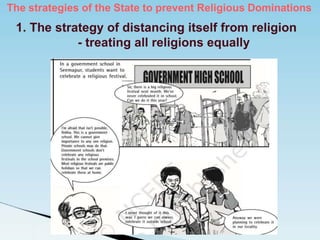
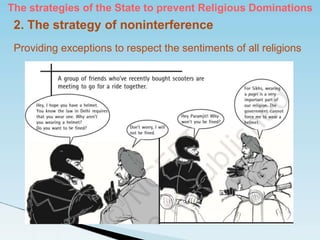
The strategies of the State to prevent Religious Dominations
1. The strategy of distancing itself from religion
- treating all religions equally
2. The strategy of noninterference
Providing exceptions to respect the sentiments of all religions
The strategies of the State to prevent Religious Dominations
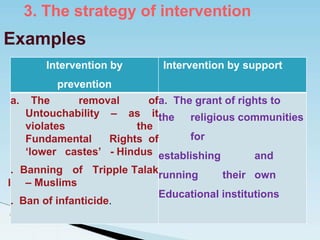
3. The strategy of intervention
b
c
Intervention by
prevention
Intervention by support
a. The removal of
Untouchability – as it
violates the
Fundamental Rights of
‘lower castes’ - Hindus
. Banning of Tripple Talak
– Muslims
. Ban of infanticide.
a. The grant of rights to
the religious communities
for
establishing and
running their own
Educational institutions
Examples
In this case, the government will definitely intervene.
Our Constitution has given the government the right to
intervene in religious affairs if there is a threat to social
harmony or of a criminal offence. Infanticide is a savage
crime and cannot be allowed at any cost; even in the name of
religion.
Will the government intervene if some religious
group says that their religion allows them to
practice infanticide? Give reasons for your answer.
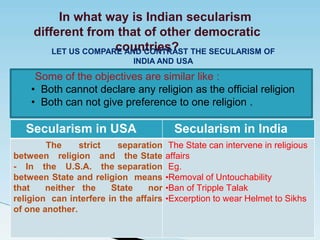
In what way is Indian secularism
different from that of other democratic
countries?
Secularism in USA Secularism in India
The strict separation
between religion and the State
- In the U.S.A. the separation
between State and religion means
that neither the State nor
religion can interfere in the affairs
of one another.
The State can intervene in religious
affairs
Eg.
•Removal of Untouchability
•Ban of Tripple Talak
•Excerption to wear Helmet to Sikhs
Some of the objectives are similar like :
• Both cannot declare any religion as the official religion
• Both can not give preference to one religion .
LET US COMPARE AND CONTRAST THE SECULARISM OF
INDIA AND USA
This photo shows students taking the ‘Pledge of Allegiance’ in a
government school in the U.S.A.
This is not compulsary for all in USA as the phrase “Under God” is
assumed as religious
(strict separation between religion and the State)
FRANCE
“It is an indivisible, secular, democratic and social Republic, guaranteeing
that all citizens regardless of their origin, race or religion are treated as
equals before the law and respecting all religious beliefs"
In February 2004,
France passed a law banning
students from wearing any conspicuous religious or political
signs or symbols
the Islamic headscarf, the
skullcap, or large Christian
such as
Jewish
crosses. This encountered a lot of
resistance from immigrants mainly from
former French colonies of Algeria,
Tunisia and Morocco.
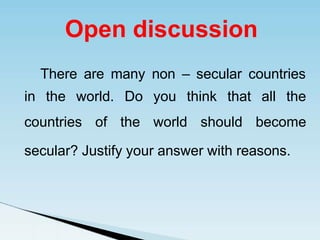
There are many non – secular countries
in the world.
countries of
Do you think that all the
the world should become
secular? Justify your answer with reasons.
Open discussion
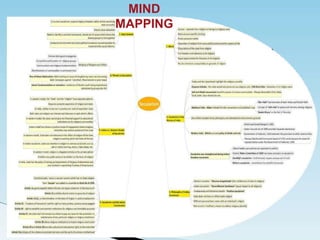
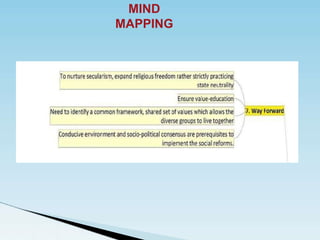
MIND
MAPPING
MIND
MAPPING
MIND
MAPPING
MIND
MAPPING
MIND
MAPPING
MIND
MAPPING
MIND
MAPPING
MIND
MAPPING
MIND
MAPPING
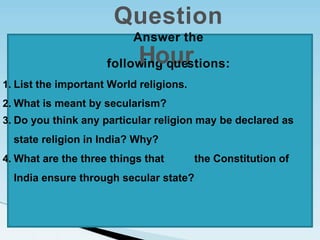
1. List the important World religions.
2. What is meant by secularism?
3. Do you think any particular religion may be declared as
state religion in India? Why?
4. What are the three things that the Constitution of
India ensure through secular state?
Question
Answer the
follow
H
ing
oq
u
ue
r
stions:
1. Draw a poster depicting religious tolerance.
2. Discuss for and against the following
statement: “Teaching of Religious principles is
necessary in Educational Institutions”.
3. In Indian context how do you define
secularism?
Home
Work
Ch 2 Understanding Secularism 1.ppt (1).ppt

Ch 2 Understanding Secularism 1.ppt (1).ppt

  • 1.
  • 2.
    INTRODUCTION 7th Std –Ansari’s Story A Minority – Hindu, Sikh or Muslim in USA – Christian Fundamentalism Feeling of You – 1) Retaliation 2) Fight for justice for all 1)Retaliation – lead to the violence throughout the world. 2)Fight for justice for all – No peace Assumption for fight : All forms of domination related to religion should end. - This is the essence of Secularism Solution to end all forms of religious domination is SECULARISM
  • 3.
    Objecti Dear Children, afterlea vrnin eg t shis lesson You will be able to 1.Acquire knowledge about major world religions in brief 2.Define the term ‘secularism’ 3.Understand the need to separate religion from the State 4.Explain secularism in Indian Context
  • 4.
    HISTORY OF SECULARISM Examplesof discrimination, exclusion and persecution on the grounds of religion Intetr – Community Domination Jews in Germany – by Hitler Muslims and Christians in Israel All non - Muslims in Saudi Arabia, Pakistan What is root cause of this type of Domination? one religion is given official recognition by the State at the expense of other religions.
  • 5.
    In India, canthe State discriminate against citizens on the grounds of their religion? ABSOLUTELY “NO” Because, INDIA IS A SECULAR STATE
  • 6.
    What is Secularism? •Religiousfreedom for all -The Indian Constitution allows individuals the freedom to live by their religious beliefs and practices as they interpret these. •Separating the power of religion and the power of the State. •No discrimination by the state only on the basis of religion. •The concept of “My Nation” is a highest goal of citizen and not the concept of “My Religion”.
  • 7.
    What the childrenof your age feel of secularism!
  • 8.
  • 9.
  • 10.
    Zoroastrianis m Confucianism Taoism Christianity Islam Almost all themajor religions of the world have their origin only in Asia. Hinduism
  • 11.
    All World Religions must teachthe path of love, tolerance and peace.
  • 12.
    Why is itImportant to Separate Religion from the State? 1. To protect the Fundamental rights of the minorities in a Democratic Society If this majority religious group has access to State power, then it could quite easily use this power and financial resources to discriminate against and persecute persons of other religions. This tyranny of the majority could result in the discrimination, coercion and at times even the killing of religious minorities. The majority could quite easily prevent minorities from practising their religions Any form of domination based on religion is in violation of the rights that a democratic society guarantees to each and every citizen irrespective of their religion.
  • 13.
    Why is itImportant to Separate Religion from the State? 2. There is a need to protect the freedom of individuals • to interpret religious teachings differently. • to exit from their religion, • to embrace another religion The Dominant and tyrannical group inside the religion may not allow the other interpretations of the religion to come up if they have the power of the state in their hands. Eg. • So called ‘Higher Castes’ against ‘untouchables’ – among Hindus • Shia Muslims against Sunni Muslims – in Islam • Catholics against Protestants – in Christianity
  • 14.
    Time for open discussionin class Can there be different views within the same religion?
  • 15.
    The Constitution ofIndia by providing for a ‘secular state’ ensures 3 things: 1.One religious community does not dominate another 2.Some members do not dominate other members of the same religious community 3.The State does not enforce any particular religion nor take away the religious freedom of individuals. What is Indian Secularism?
  • 16.
    The strategies ofthe State to prevent Religious Dominations 1. The strategy of distancing itself from religion - treating all religions equally
  • 17.
    2. The strategyof noninterference Providing exceptions to respect the sentiments of all religions The strategies of the State to prevent Religious Dominations
  • 18.
    3. The strategyof intervention b c Intervention by prevention Intervention by support a. The removal of Untouchability – as it violates the Fundamental Rights of ‘lower castes’ - Hindus . Banning of Tripple Talak – Muslims . Ban of infanticide. a. The grant of rights to the religious communities for establishing and running their own Educational institutions Examples
  • 19.
    In this case,the government will definitely intervene. Our Constitution has given the government the right to intervene in religious affairs if there is a threat to social harmony or of a criminal offence. Infanticide is a savage crime and cannot be allowed at any cost; even in the name of religion. Will the government intervene if some religious group says that their religion allows them to practice infanticide? Give reasons for your answer.
  • 20.
    In what wayis Indian secularism different from that of other democratic countries? Secularism in USA Secularism in India The strict separation between religion and the State - In the U.S.A. the separation between State and religion means that neither the State nor religion can interfere in the affairs of one another. The State can intervene in religious affairs Eg. •Removal of Untouchability •Ban of Tripple Talak •Excerption to wear Helmet to Sikhs Some of the objectives are similar like : • Both cannot declare any religion as the official religion • Both can not give preference to one religion . LET US COMPARE AND CONTRAST THE SECULARISM OF INDIA AND USA
  • 21.
    This photo showsstudents taking the ‘Pledge of Allegiance’ in a government school in the U.S.A. This is not compulsary for all in USA as the phrase “Under God” is assumed as religious (strict separation between religion and the State)
  • 22.
    FRANCE “It is anindivisible, secular, democratic and social Republic, guaranteeing that all citizens regardless of their origin, race or religion are treated as equals before the law and respecting all religious beliefs" In February 2004, France passed a law banning students from wearing any conspicuous religious or political signs or symbols the Islamic headscarf, the skullcap, or large Christian such as Jewish crosses. This encountered a lot of resistance from immigrants mainly from former French colonies of Algeria, Tunisia and Morocco.
  • 23.
    There are manynon – secular countries in the world. countries of Do you think that all the the world should become secular? Justify your answer with reasons. Open discussion
  • 24.
  • 25.
  • 26.
  • 27.
  • 28.
  • 29.
  • 30.
  • 31.
  • 32.
  • 33.
    1. List theimportant World religions. 2. What is meant by secularism? 3. Do you think any particular religion may be declared as state religion in India? Why? 4. What are the three things that the Constitution of India ensure through secular state? Question Answer the follow H ing oq u ue r stions:
  • 34.
    1. Draw aposter depicting religious tolerance. 2. Discuss for and against the following statement: “Teaching of Religious principles is necessary in Educational Institutions”. 3. In Indian context how do you define secularism? Home Work