Chapter - 2- Understanding
Secularism
Prepared By: Nidhi Goyal
Grade – 8- civics

https://www.opindia.com/2020/10/tanishq-ad-
controversy-5-ads-short-films-hindu-muslim-unity-
secularism/.
 Which religion do You belong to?
 Which religion do you think is the best?
 Have you read Vedas, Quran, Guru Granth Sahib or
Bible?
 So, without reading or knowing about the other
religions how do you know which religion is the best?
 Therefore, all religions are good. Every religion
teaches us good things. People in every religion may
be good or bad. But for that can we blame religion?
 That is why our leaders decided that all religions
will be treated equally in India.
 They wanted to make India a unique country full
of varieties in Religion, caste, Languages, Dress,
Food, etc.
 Do you know which word our leaders have used
for India in our constitution – A secular country?
 And what is the meaning of a Secular country?
 It means all religions are the same and will be
treated equally.
Introduction
 In history, there are various instances of
discrimination, exclusion, persecution
and torture on the grounds of religion
and in a civilized world no one wishes for
such discrimination based on the
religion.
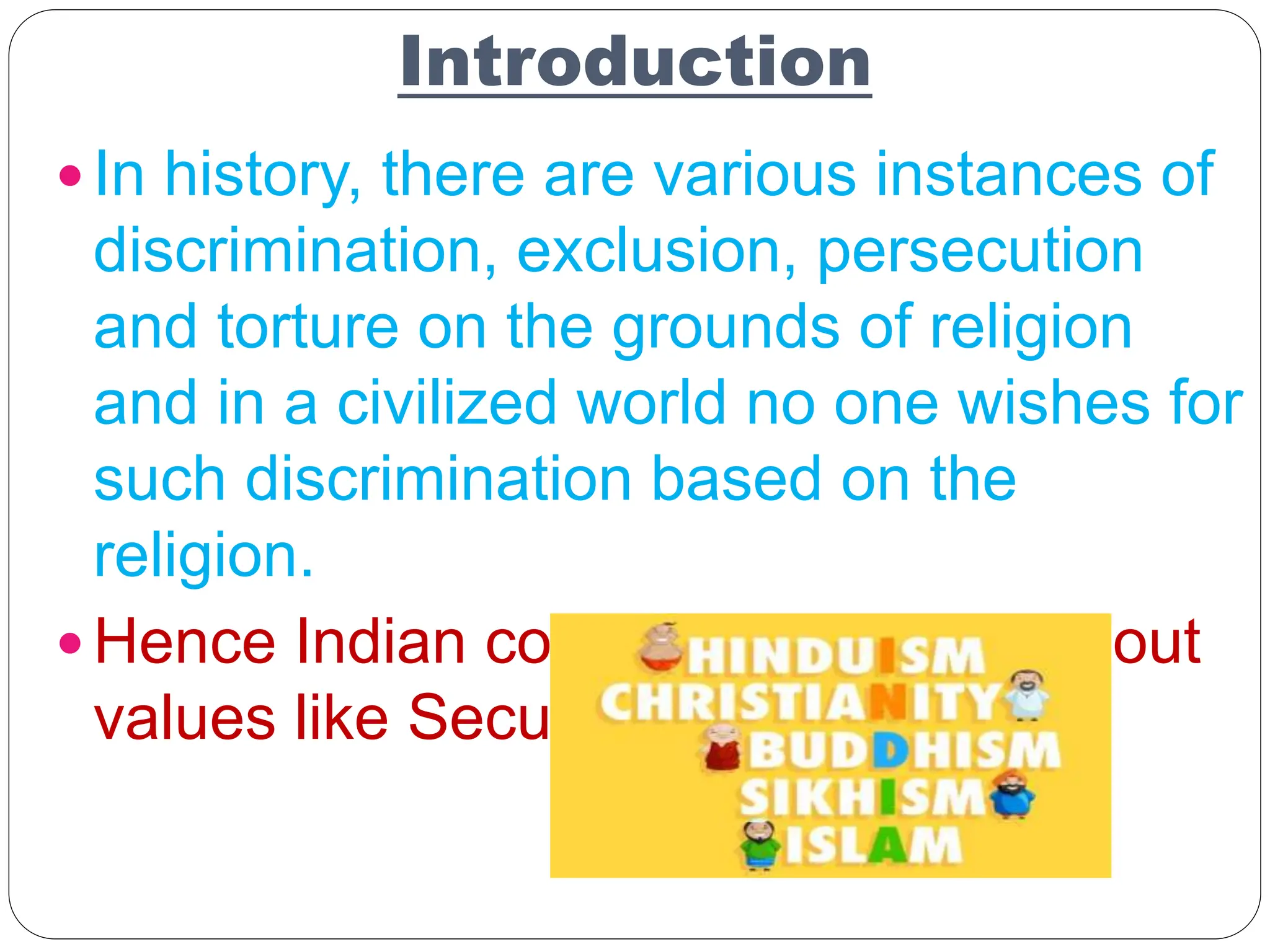
 Hence Indian constitution speaks about
values like Secularism.
Conti….
secularism
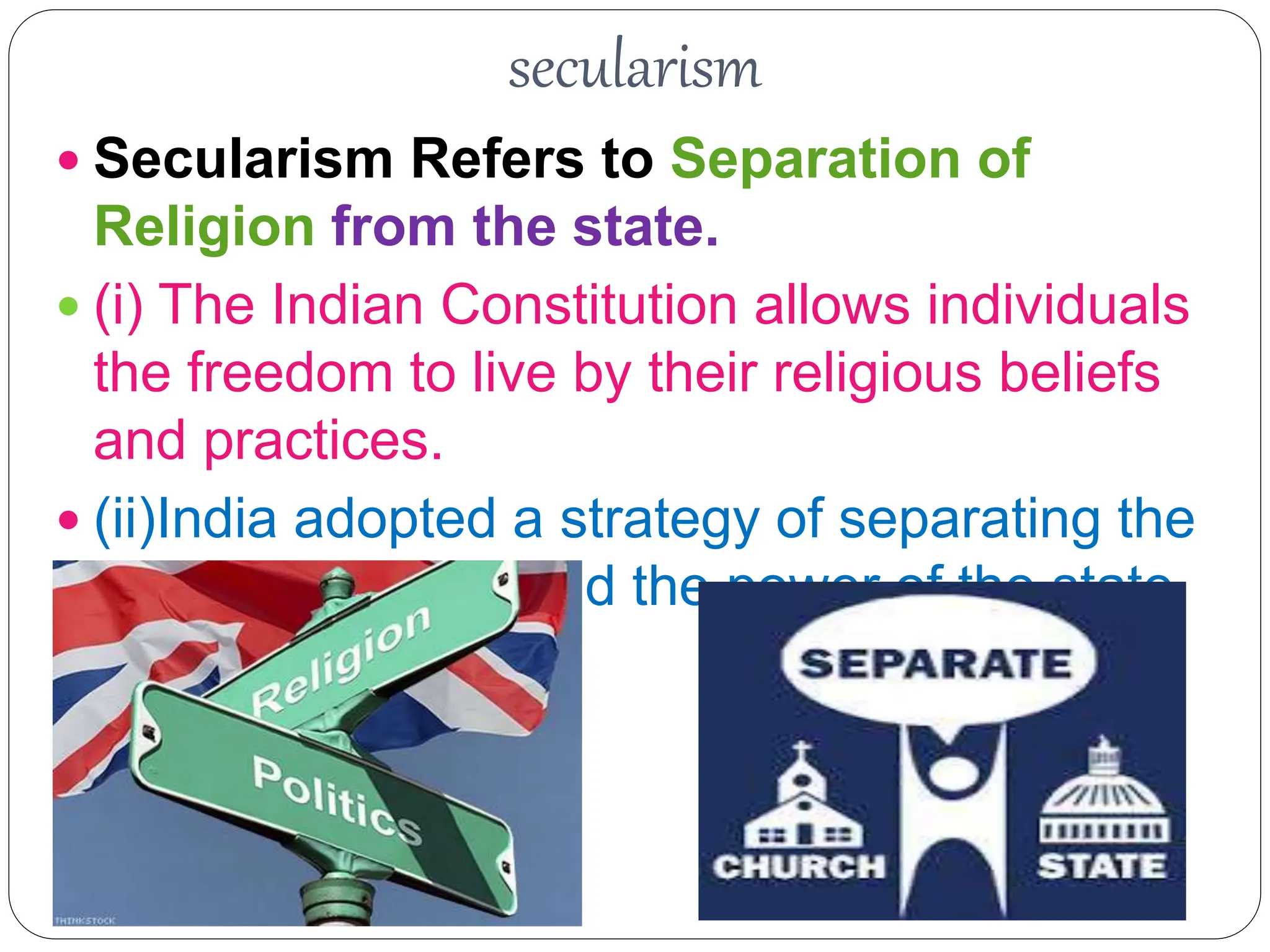
 Secularism Refers to Separation of
Religion from the state.
 (i) The Indian Constitution allows individuals
the freedom to live by their religious beliefs
and practices.
 (ii)India adopted a strategy of separating the
power of religion and the power of the state.
Why is it Important to Separate Religion from the
State:
 i) For proper functioning of democracy.
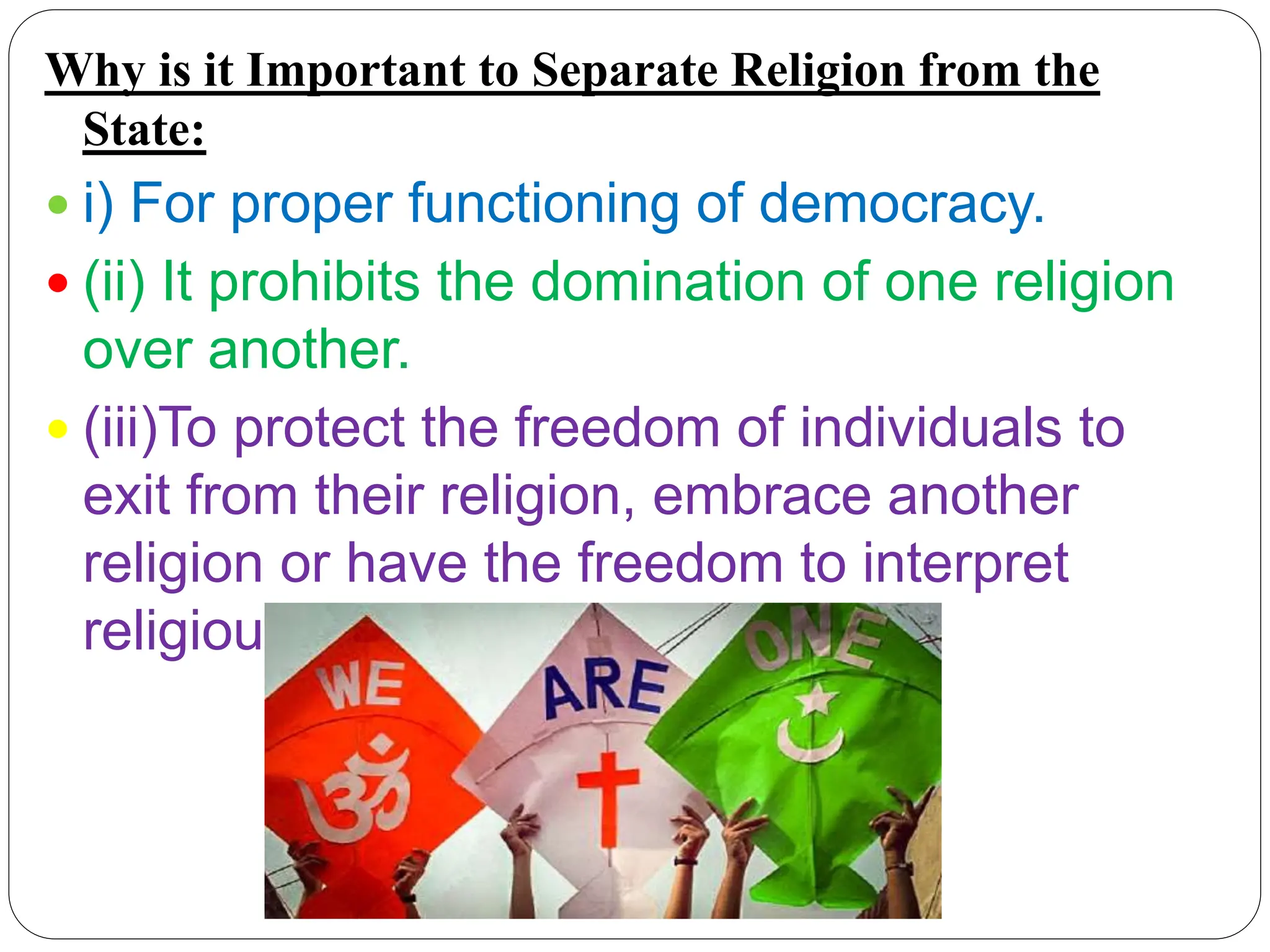
 (ii) It prohibits the domination of one religion
over another.
 (iii)To protect the freedom of individuals to
exit from their religion, embrace another
religion or have the freedom to interpret
religious teachings differently.
What is Indian Secularism
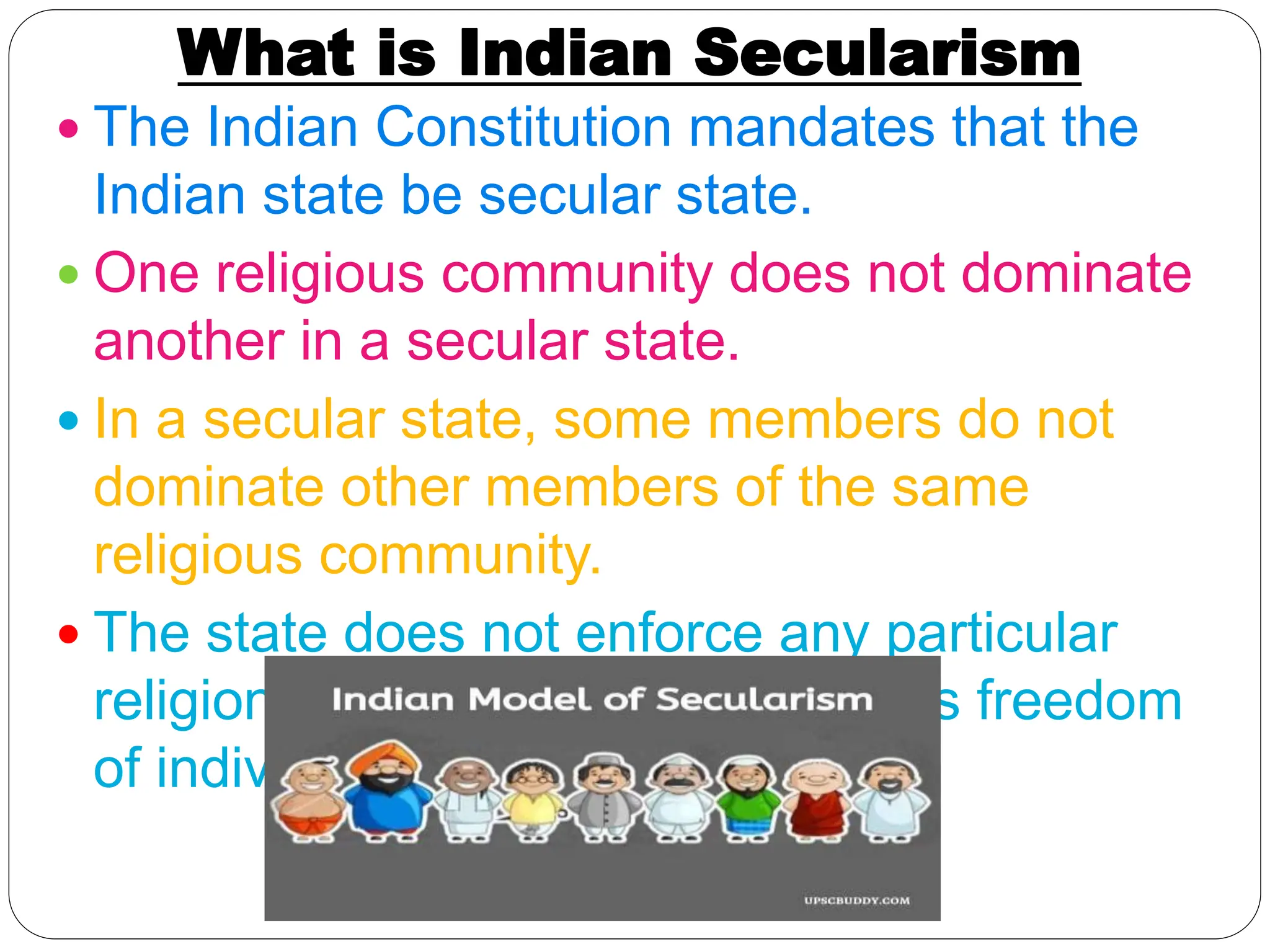
 The Indian Constitution mandates that the
Indian state be secular state.
 One religious community does not dominate
another in a secular state.
 In a secular state, some members do not
dominate other members of the same
religious community.
 The state does not enforce any particular
religion nor take away the religious freedom
of individuals.
Cont…..
 The government schools can not promote any
one religion.
 In order to respect the sentiments of all
religions and not interfere with religious
practices, the state makes certain exceptions
for particular religious communities.
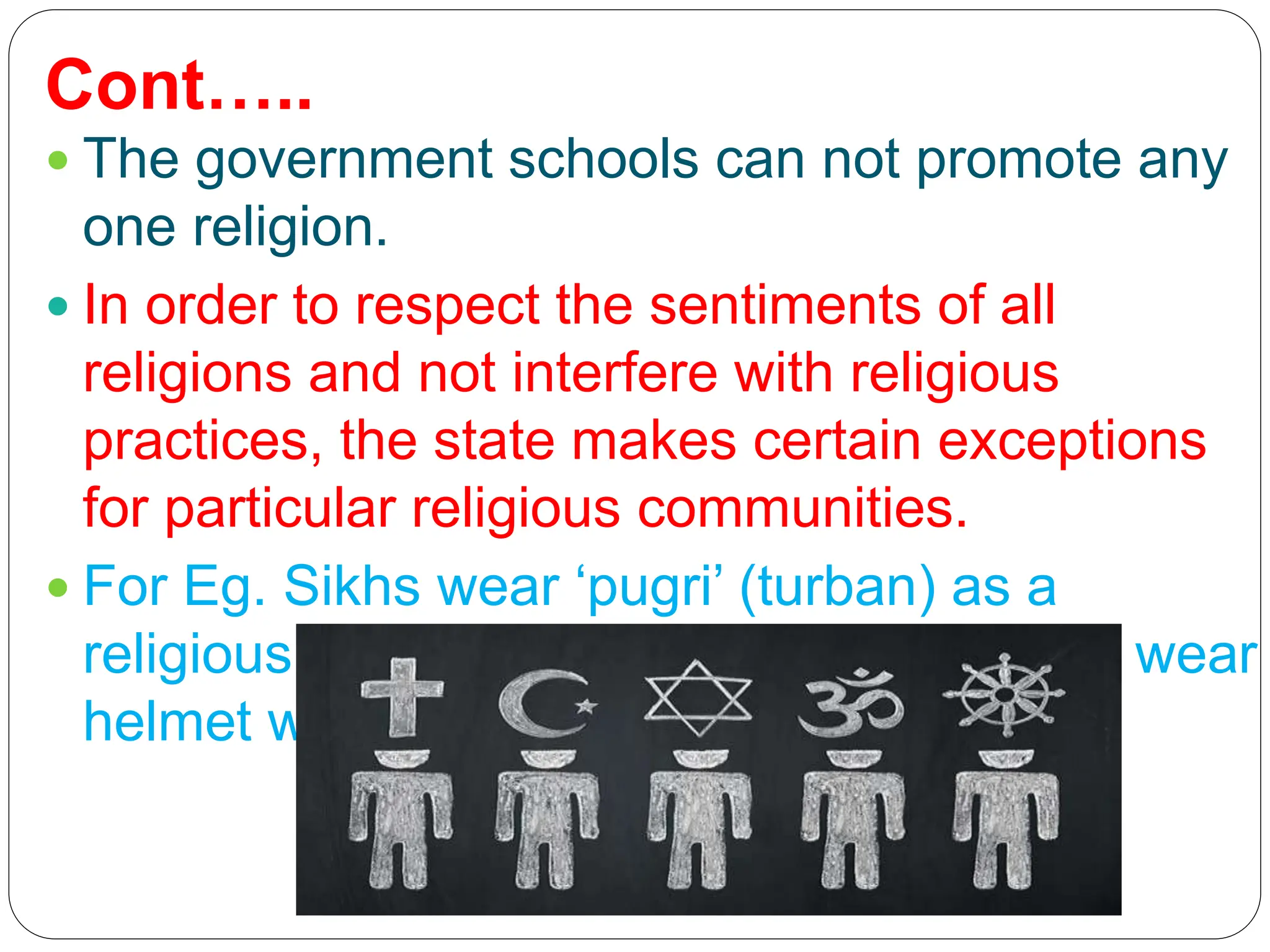
 For Eg. Sikhs wear ‘pugri’ (turban) as a
religious practice. Hence they need not to wear
helmet while riding two-wheeler.
Cont….
 The Indian secularism works to prevent the
domination of majority religion over minority.
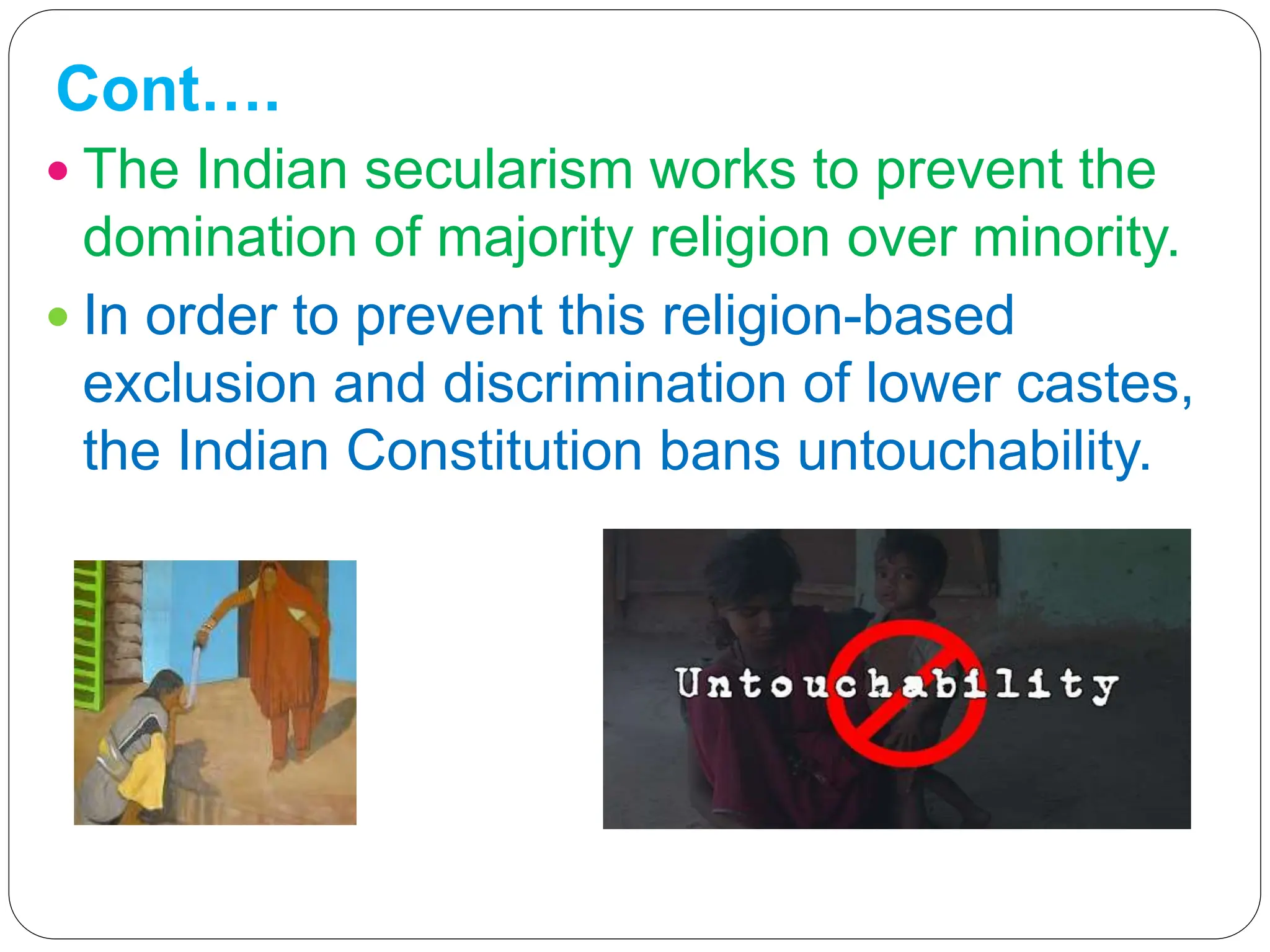
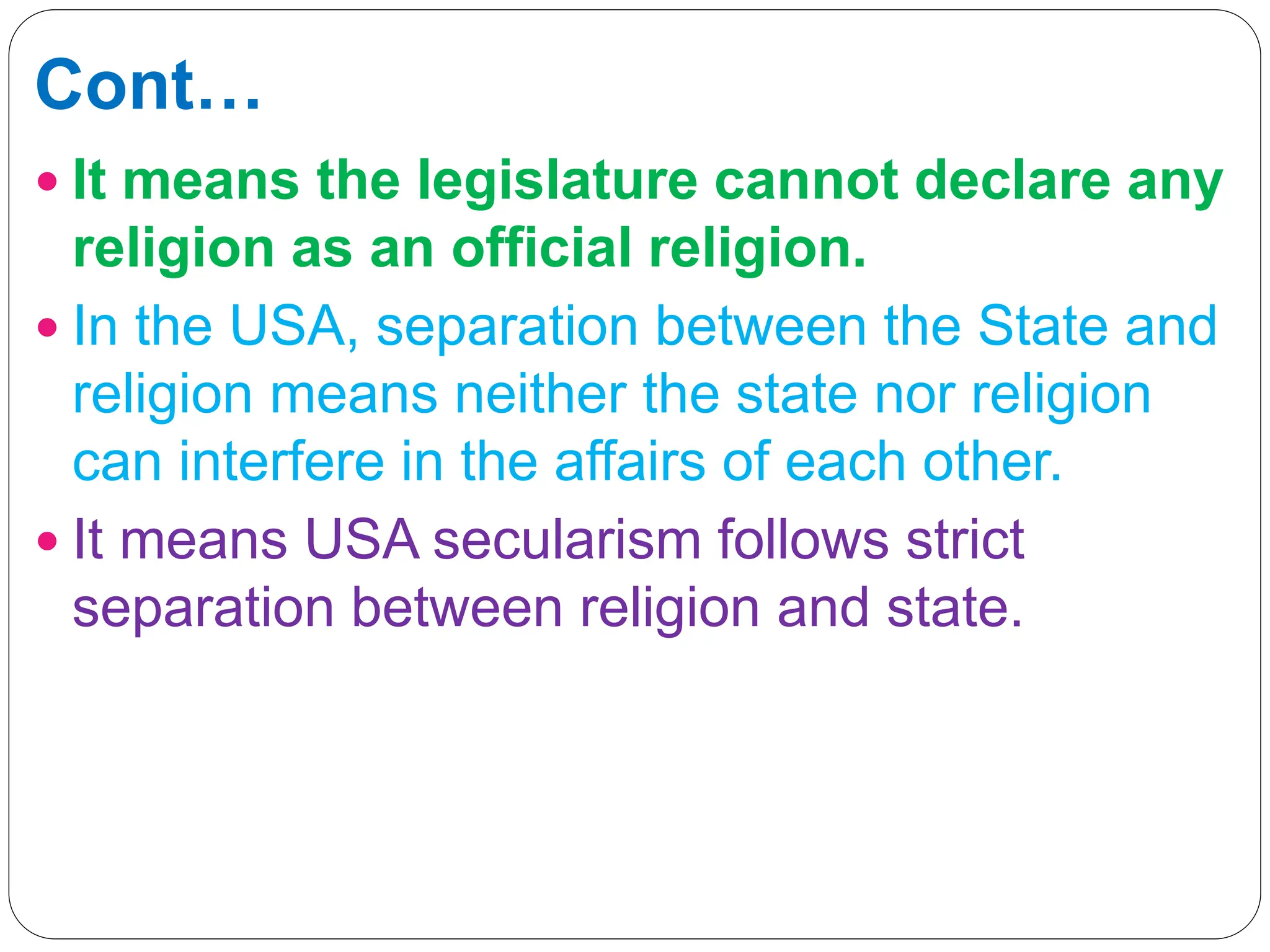
 In order to prevent this religion-based
exclusion and discrimination of lower castes,
the Indian Constitution bans untouchability.
Cont….
 In order to end social practices, the state
may have to intervene in the religion based
orders.
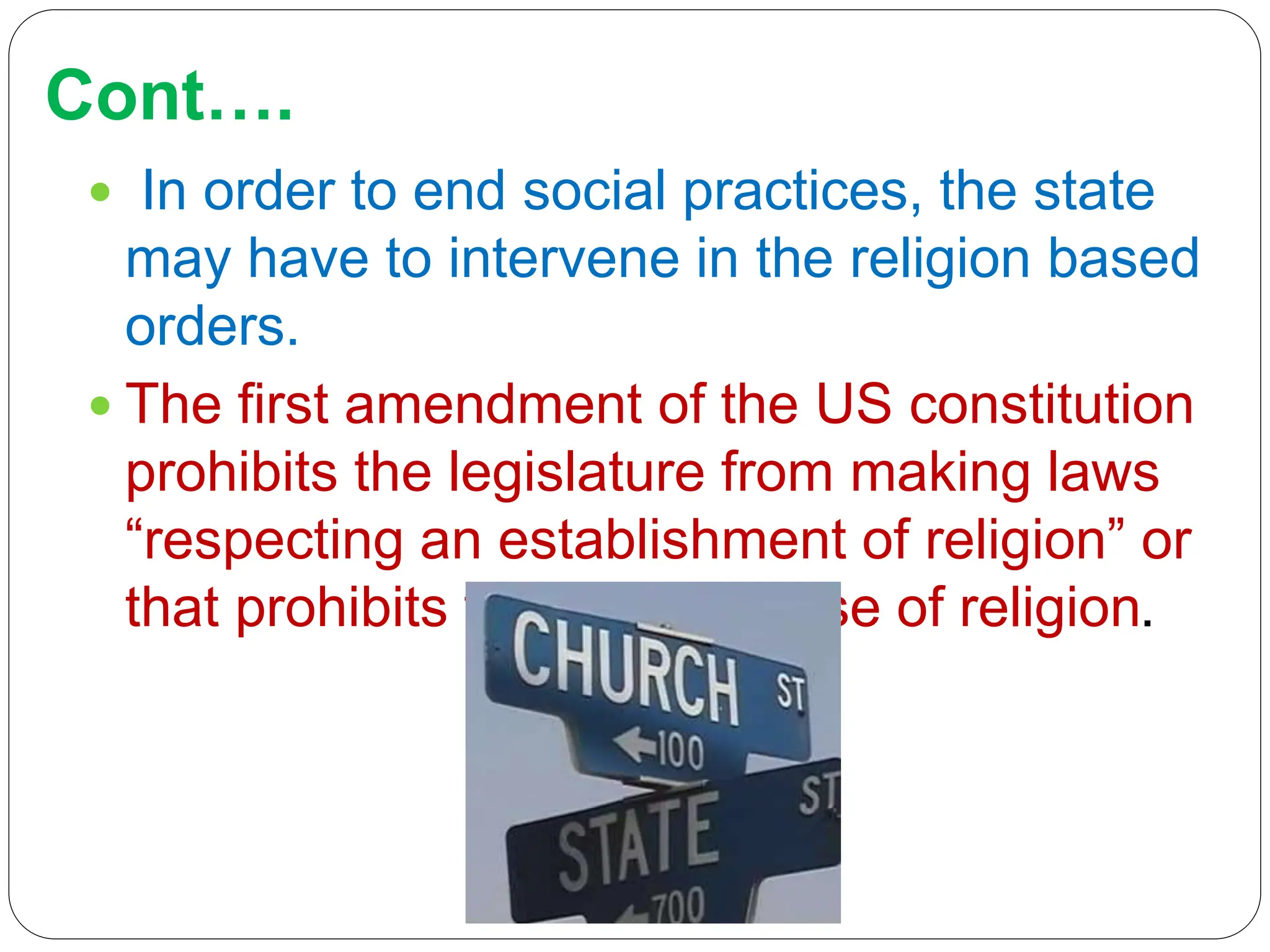
 The first amendment of the US constitution
prohibits the legislature from making laws
“respecting an establishment of religion” or
that prohibits the free exercise of religion.
Cont…
 It means the legislature cannot declare any
religion as an official religion.
 In the USA, separation between the State and
religion means neither the state nor religion
can interfere in the affairs of each other.
 It means USA secularism follows strict
separation between religion and state.
Cont…
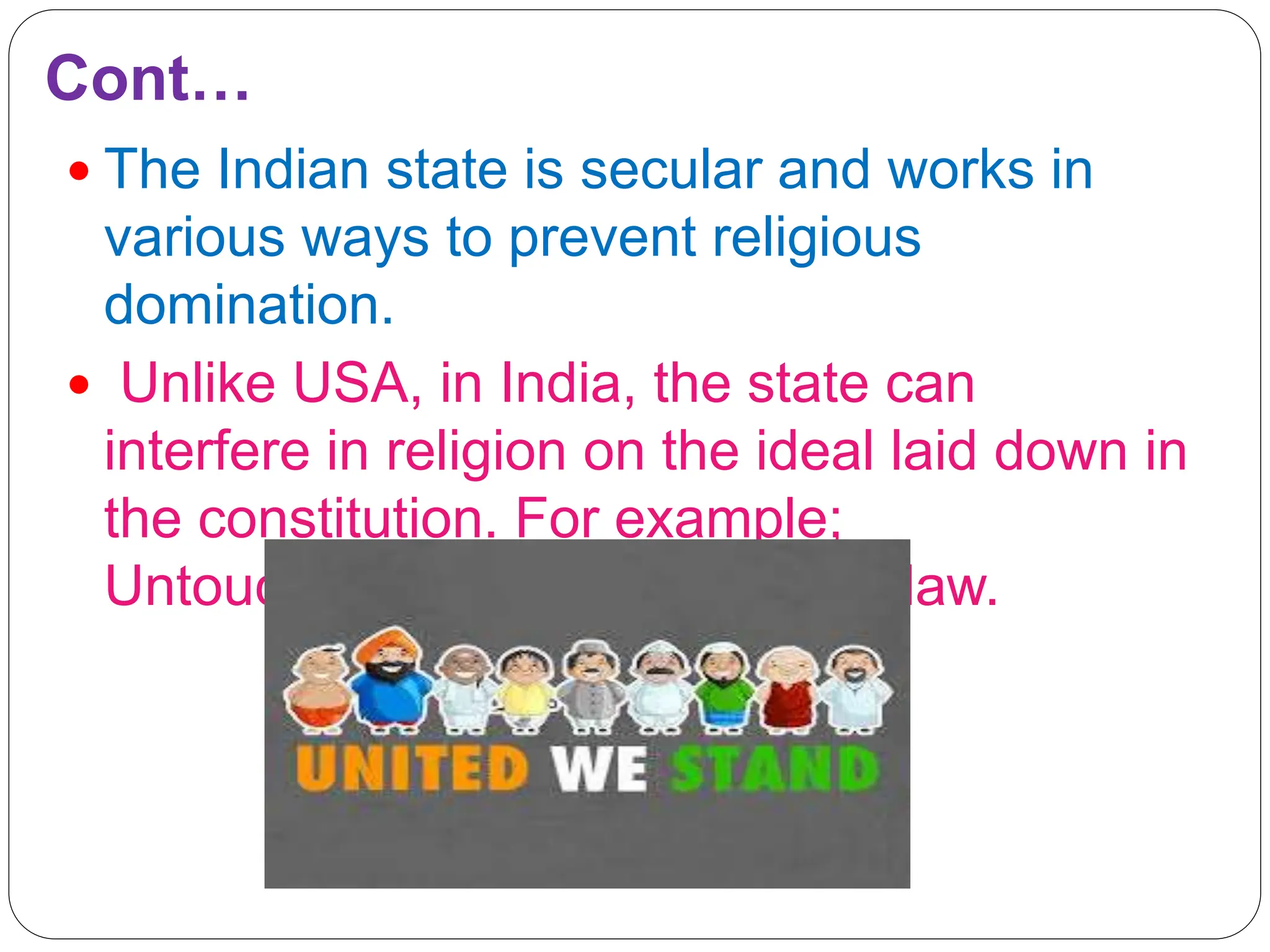
 The Indian state is secular and works in
various ways to prevent religious
domination.
 Unlike USA, in India, the state can
interfere in religion on the ideal laid down in
the constitution. For example;
Untouchability is banned by the law.
Cont…
 In Indian secularism the state is not strictly
separate from religion but it maintains
principled distance from religion.
 This means that any interference in religion
by the state has to be based on the ideals
laid out in the Constitution.
THANK YOU

Grade 8 Unit 2 Understanding Secularism

  • 1.
    Chapter - 2-Understanding Secularism Prepared By: Nidhi Goyal Grade – 8- civics
  • 2.
  • 3.
     Which religiondo You belong to?  Which religion do you think is the best?  Have you read Vedas, Quran, Guru Granth Sahib or Bible?  So, without reading or knowing about the other religions how do you know which religion is the best?  Therefore, all religions are good. Every religion teaches us good things. People in every religion may be good or bad. But for that can we blame religion?
  • 4.
     That iswhy our leaders decided that all religions will be treated equally in India.  They wanted to make India a unique country full of varieties in Religion, caste, Languages, Dress, Food, etc.  Do you know which word our leaders have used for India in our constitution – A secular country?  And what is the meaning of a Secular country?  It means all religions are the same and will be treated equally.
  • 5.
    Introduction  In history,there are various instances of discrimination, exclusion, persecution and torture on the grounds of religion and in a civilized world no one wishes for such discrimination based on the religion.  Hence Indian constitution speaks about values like Secularism.
  • 6.
  • 7.
    secularism  Secularism Refersto Separation of Religion from the state.  (i) The Indian Constitution allows individuals the freedom to live by their religious beliefs and practices.  (ii)India adopted a strategy of separating the power of religion and the power of the state.
  • 8.
    Why is itImportant to Separate Religion from the State:  i) For proper functioning of democracy.  (ii) It prohibits the domination of one religion over another.  (iii)To protect the freedom of individuals to exit from their religion, embrace another religion or have the freedom to interpret religious teachings differently.
  • 9.
    What is IndianSecularism  The Indian Constitution mandates that the Indian state be secular state.  One religious community does not dominate another in a secular state.  In a secular state, some members do not dominate other members of the same religious community.  The state does not enforce any particular religion nor take away the religious freedom of individuals.
  • 10.
    Cont…..  The governmentschools can not promote any one religion.  In order to respect the sentiments of all religions and not interfere with religious practices, the state makes certain exceptions for particular religious communities.  For Eg. Sikhs wear ‘pugri’ (turban) as a religious practice. Hence they need not to wear helmet while riding two-wheeler.
  • 11.
    Cont….  The Indiansecularism works to prevent the domination of majority religion over minority.  In order to prevent this religion-based exclusion and discrimination of lower castes, the Indian Constitution bans untouchability.
  • 12.
    Cont….  In orderto end social practices, the state may have to intervene in the religion based orders.  The first amendment of the US constitution prohibits the legislature from making laws “respecting an establishment of religion” or that prohibits the free exercise of religion.
  • 13.
    Cont…  It meansthe legislature cannot declare any religion as an official religion.  In the USA, separation between the State and religion means neither the state nor religion can interfere in the affairs of each other.  It means USA secularism follows strict separation between religion and state.
  • 14.
    Cont…  The Indianstate is secular and works in various ways to prevent religious domination.  Unlike USA, in India, the state can interfere in religion on the ideal laid down in the constitution. For example; Untouchability is banned by the law.
  • 15.
    Cont…  In Indiansecularism the state is not strictly separate from religion but it maintains principled distance from religion.  This means that any interference in religion by the state has to be based on the ideals laid out in the Constitution.
  • 16.