6th Grade
Math Vocabulary
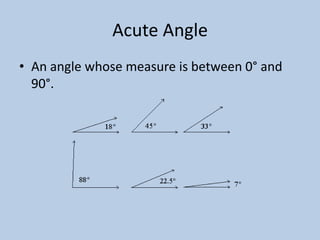
Acute Angle
• An angle whose measure is between 0° and
  90°.
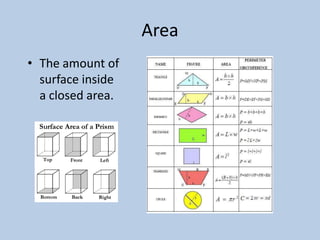
Area
• The amount of
  surface inside
  a closed area.
Capacity

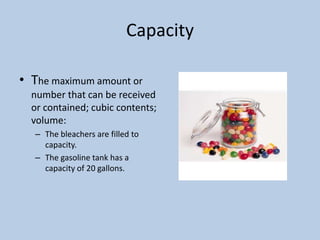
• The maximum amount or
  number that can be received
  or contained; cubic contents;
  volume:
  – The bleachers are filled to
    capacity.
  – The gasoline tank has a
    capacity of 20 gallons.
Common Denominator
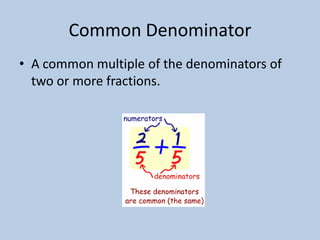
• A common multiple of the denominators of
  two or more fractions.
Complementary Angle
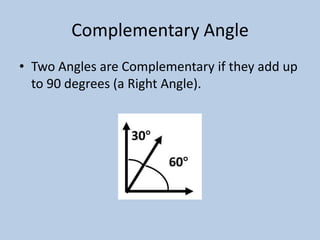
• Two Angles are Complementary if they add up
  to 90 degrees (a Right Angle).
Composite Number
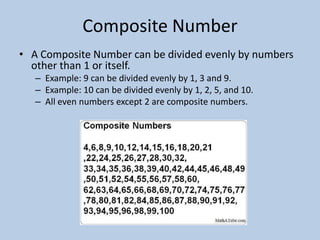
• A Composite Number can be divided evenly by numbers
  other than 1 or itself.
   – Example: 9 can be divided evenly by 1, 3 and 9.
   – Example: 10 can be divided evenly by 1, 2, 5, and 10.
   – All even numbers except 2 are composite numbers.
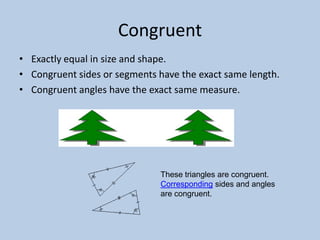
Congruent
• Exactly equal in size and shape.
• Congruent sides or segments have the exact same length.
• Congruent angles have the exact same measure.


                              These triangles are congruent.
                              Corresponding sides and angles
                              are congruent.
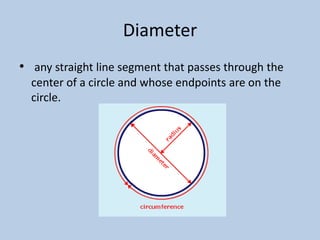
Diameter
• any straight line segment that passes through the
  center of a circle and whose endpoints are on the
  circle.
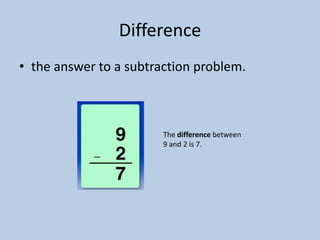
Difference
• the answer to a subtraction problem.


                        The difference between
                        9 and 2 is 7.
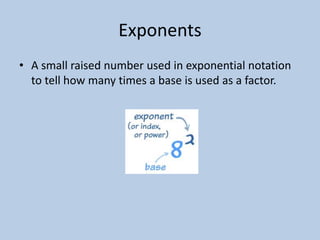
Exponents
• A small raised number used in exponential notation
  to tell how many times a base is used as a factor.
Factors
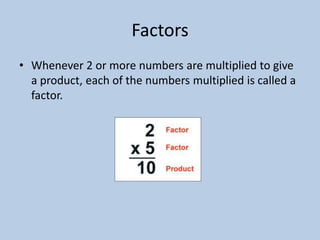
• Whenever 2 or more numbers are multiplied to give
  a product, each of the numbers multiplied is called a
  factor.
Graph
Horizontal
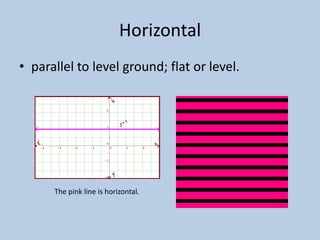
• parallel to level ground; flat or level.


      The pink line is horizontal.
Integers
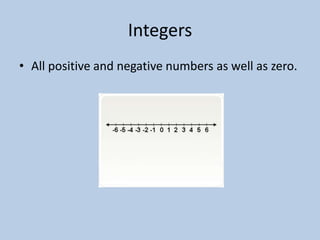
• All positive and negative numbers as well as zero.
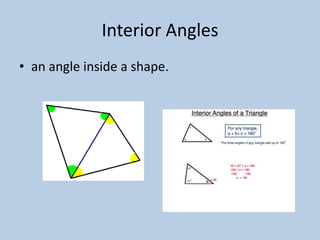
Interior Angles
• an angle inside a shape.
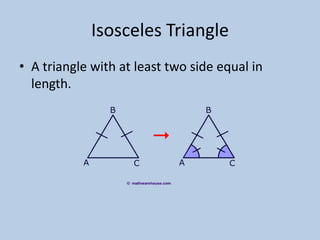
Isosceles Triangle
• A triangle with at least two side equal in
  length.
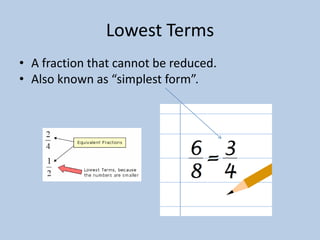
Lowest Terms
• A fraction that cannot be reduced.
• Also known as “simplest form”.
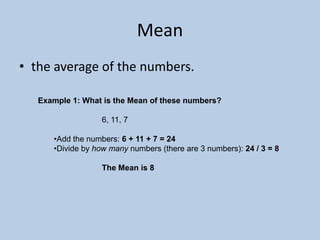
Mean
• the average of the numbers.

   Example 1: What is the Mean of these numbers?

                   6, 11, 7

      •Add the numbers: 6 + 11 + 7 = 24
      •Divide by how many numbers (there are 3 numbers): 24 / 3 = 8

                   The Mean is 8
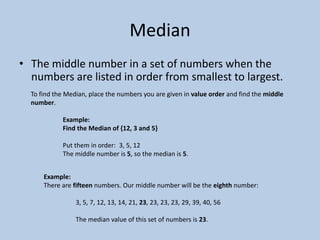
Median
• The middle number in a set of numbers when the
  numbers are listed in order from smallest to largest.
  To find the Median, place the numbers you are given in value order and find the middle
  number.

            Example:
            Find the Median of {12, 3 and 5}

            Put them in order: 3, 5, 12
            The middle number is 5, so the median is 5.


      Example:
      There are fifteen numbers. Our middle number will be the eighth number:

                 3, 5, 7, 12, 13, 14, 21, 23, 23, 23, 23, 29, 39, 40, 56

                 The median value of this set of numbers is 23.
Metric Units
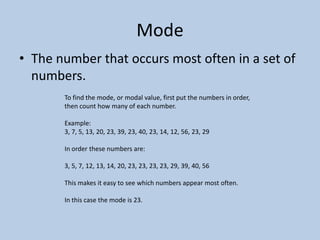
Mode
• The number that occurs most often in a set of
  numbers.
       To find the mode, or modal value, first put the numbers in order,
       then count how many of each number.

       Example:
       3, 7, 5, 13, 20, 23, 39, 23, 40, 23, 14, 12, 56, 23, 29

       In order these numbers are:

       3, 5, 7, 12, 13, 14, 20, 23, 23, 23, 23, 29, 39, 40, 56

       This makes it easy to see which numbers appear most often.

       In this case the mode is 23.
Multiples
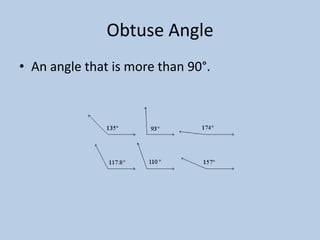
Obtuse Angle
• An angle that is more than 90°.
Ordered Pair
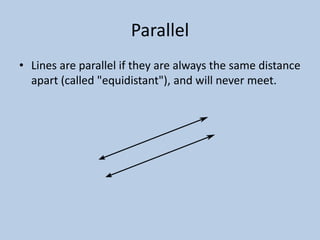
Parallel
• Lines are parallel if they are always the same distance
  apart (called "equidistant"), and will never meet.
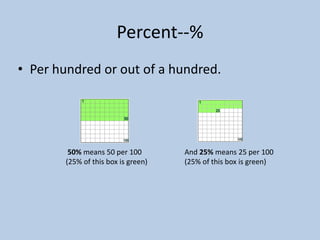
Percent--%
• Per hundred or out of a hundred.


         50% means 50 per 100        And 25% means 25 per 100
        (25% of this box is green)   (25% of this box is green)
Perimeter
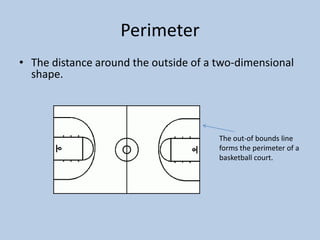
• The distance around the outside of a two-dimensional
  shape.


                                       The out-of bounds line
                                       forms the perimeter of a
                                       basketball court.
Perpendicular Lines
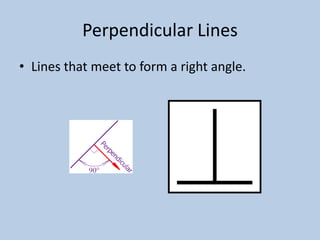
• Lines that meet to form a right angle.
Polygon
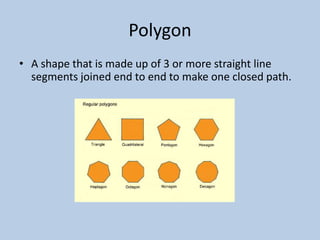
• A shape that is made up of 3 or more straight line
  segments joined end to end to make one closed path.
Prime Number
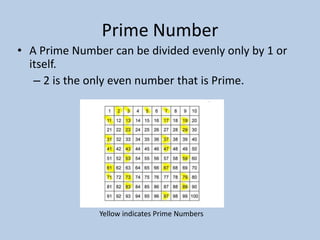
• A Prime Number can be divided evenly only by 1 or
  itself.
   – 2 is the only even number that is Prime.


               Yellow indicates Prime Numbers
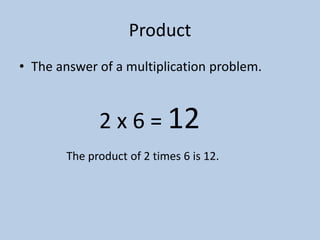
Product
• The answer of a multiplication problem.


             2 x 6 = 12
       The product of 2 times 6 is 12.
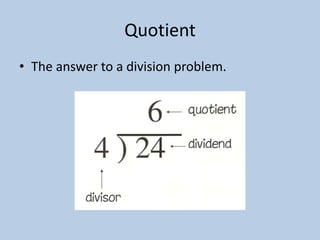
Quotient
• The answer to a division problem.
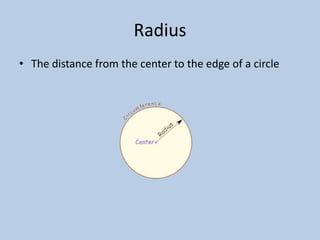
Radius
• The distance from the center to the edge of a circle
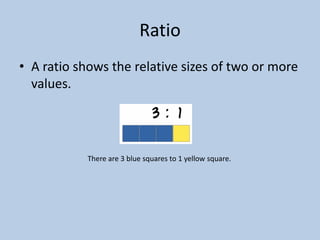
Ratio
• A ratio shows the relative sizes of two or more
  values.


            There are 3 blue squares to 1 yellow square.
Reflection
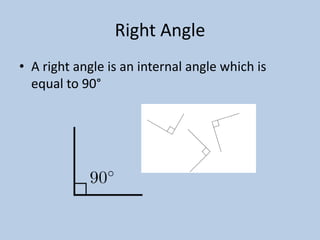
Right Angle
• A right angle is an internal angle which is
  equal to 90°
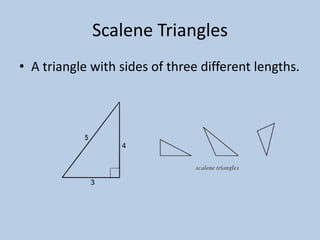
Scalene Triangles
• A triangle with sides of three different lengths.
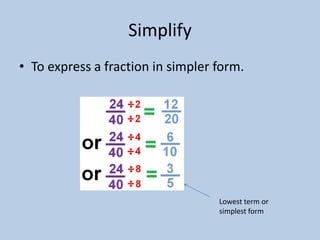
Simplify
• To express a fraction in simpler form.


                                   Lowest term or
                                   simplest form
Slide
Standard Form
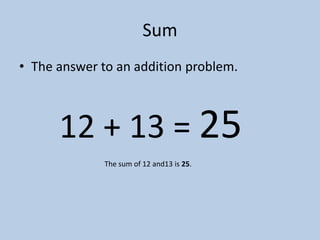
Sum
• The answer to an addition problem.


      12 + 13 = 25
              The sum of 12 and13 is 25.
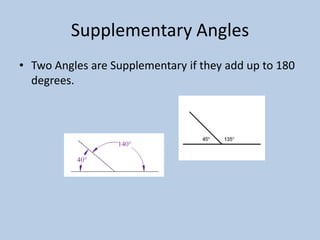
Supplementary Angles
• Two Angles are Supplementary if they add up to 180
  degrees.
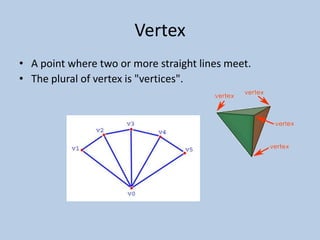
Vertex
• A point where two or more straight lines meet.
• The plural of vertex is "vertices".
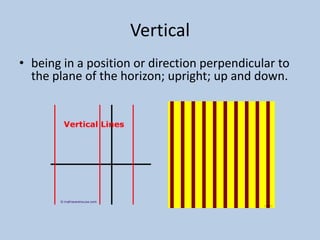
Vertical
• being in a position or direction perpendicular to
  the plane of the horizon; upright; up and down.
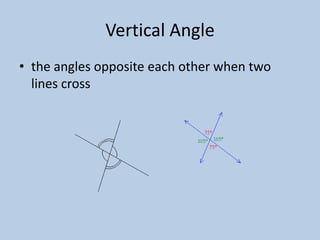
Vertical Angle
• the angles opposite each other when two
  lines cross

6th grade math vocab

  • 1.
  • 2.
    Acute Angle • Anangle whose measure is between 0° and 90°.
  • 3.
    Area • The amountof surface inside a closed area.
  • 4.
    Capacity • The maximumamount or number that can be received or contained; cubic contents; volume: – The bleachers are filled to capacity. – The gasoline tank has a capacity of 20 gallons.
  • 5.
    Common Denominator • Acommon multiple of the denominators of two or more fractions.
  • 6.
    Complementary Angle • TwoAngles are Complementary if they add up to 90 degrees (a Right Angle).
  • 7.
    Composite Number • AComposite Number can be divided evenly by numbers other than 1 or itself. – Example: 9 can be divided evenly by 1, 3 and 9. – Example: 10 can be divided evenly by 1, 2, 5, and 10. – All even numbers except 2 are composite numbers.
  • 8.
    Congruent • Exactly equalin size and shape. • Congruent sides or segments have the exact same length. • Congruent angles have the exact same measure. These triangles are congruent. Corresponding sides and angles are congruent.
  • 9.
    Diameter • any straightline segment that passes through the center of a circle and whose endpoints are on the circle.
  • 10.
    Difference • the answerto a subtraction problem. The difference between 9 and 2 is 7.
  • 11.
    Exponents • A smallraised number used in exponential notation to tell how many times a base is used as a factor.
  • 12.
    Factors • Whenever 2or more numbers are multiplied to give a product, each of the numbers multiplied is called a factor.
  • 13.
  • 14.
    Horizontal • parallel tolevel ground; flat or level. The pink line is horizontal.
  • 15.
    Integers • All positiveand negative numbers as well as zero.
  • 16.
    Interior Angles • anangle inside a shape.
  • 17.
    Isosceles Triangle • Atriangle with at least two side equal in length.
  • 18.
    Lowest Terms • Afraction that cannot be reduced. • Also known as “simplest form”.
  • 19.
    Mean • the averageof the numbers. Example 1: What is the Mean of these numbers? 6, 11, 7 •Add the numbers: 6 + 11 + 7 = 24 •Divide by how many numbers (there are 3 numbers): 24 / 3 = 8 The Mean is 8
  • 20.
    Median • The middlenumber in a set of numbers when the numbers are listed in order from smallest to largest. To find the Median, place the numbers you are given in value order and find the middle number. Example: Find the Median of {12, 3 and 5} Put them in order: 3, 5, 12 The middle number is 5, so the median is 5. Example: There are fifteen numbers. Our middle number will be the eighth number: 3, 5, 7, 12, 13, 14, 21, 23, 23, 23, 23, 29, 39, 40, 56 The median value of this set of numbers is 23.
  • 21.
  • 22.
    Mode • The numberthat occurs most often in a set of numbers. To find the mode, or modal value, first put the numbers in order, then count how many of each number. Example: 3, 7, 5, 13, 20, 23, 39, 23, 40, 23, 14, 12, 56, 23, 29 In order these numbers are: 3, 5, 7, 12, 13, 14, 20, 23, 23, 23, 23, 29, 39, 40, 56 This makes it easy to see which numbers appear most often. In this case the mode is 23.
  • 23.
  • 24.
    Obtuse Angle • Anangle that is more than 90°.
  • 25.
  • 26.
    Parallel • Lines areparallel if they are always the same distance apart (called "equidistant"), and will never meet.
  • 27.
    Percent--% • Per hundredor out of a hundred. 50% means 50 per 100 And 25% means 25 per 100 (25% of this box is green) (25% of this box is green)
  • 28.
    Perimeter • The distancearound the outside of a two-dimensional shape. The out-of bounds line forms the perimeter of a basketball court.
  • 29.
    Perpendicular Lines • Linesthat meet to form a right angle.
  • 30.
    Polygon • A shapethat is made up of 3 or more straight line segments joined end to end to make one closed path.
  • 31.
    Prime Number • APrime Number can be divided evenly only by 1 or itself. – 2 is the only even number that is Prime. Yellow indicates Prime Numbers
  • 32.
    Product • The answerof a multiplication problem. 2 x 6 = 12 The product of 2 times 6 is 12.
  • 33.
    Quotient • The answerto a division problem.
  • 34.
    Radius • The distancefrom the center to the edge of a circle
  • 35.
    Ratio • A ratioshows the relative sizes of two or more values. There are 3 blue squares to 1 yellow square.
  • 36.
  • 37.
    Right Angle • Aright angle is an internal angle which is equal to 90°
  • 38.
    Scalene Triangles • Atriangle with sides of three different lengths.
  • 39.
    Simplify • To expressa fraction in simpler form. Lowest term or simplest form
  • 40.
  • 41.
  • 42.
    Sum • The answerto an addition problem. 12 + 13 = 25 The sum of 12 and13 is 25.
  • 43.
    Supplementary Angles • TwoAngles are Supplementary if they add up to 180 degrees.
  • 44.
    Vertex • A pointwhere two or more straight lines meet. • The plural of vertex is "vertices".
  • 45.
    Vertical • being ina position or direction perpendicular to the plane of the horizon; upright; up and down.
  • 46.
    Vertical Angle • theangles opposite each other when two lines cross