MATHS REVISION
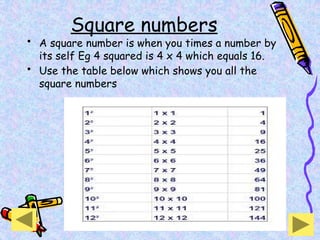
Square numbers
• A square number is when you times a number by
its self Eg 4 squared is 4 x 4 which equals 16.
• Use the table below which shows you all the
square numbers
Multiples
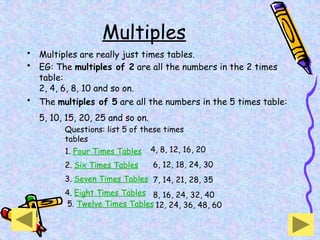
• Multiples are really just times tables.
• EG: The multiples of 2 are all the numbers in the 2 times
table:
2, 4, 6, 8, 10 and so on.
• The multiples of 5 are all the numbers in the 5 times table:
5, 10, 15, 20, 25 and so on.
Questions: list 5 of these times
tables
1. Four Times Tables
2. Six Times Tables
3. Seven Times Tables
4. Eight Times Tables
5. Twelve Times Tables
4, 8, 12, 16, 20
6, 12, 18, 24, 30
7, 14, 21, 28, 35
8, 16, 24, 32, 40
12, 24, 36, 48, 60
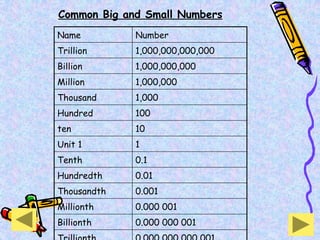
Common Big and Small Numbers
Name Number
Trillion 1,000,000,000,000
Billion 1,000,000,000
Million 1,000,000
Thousand 1,000
Hundred 100
ten 10
Unit 1 1
Tenth 0.1
Hundredth 0.01
Thousandth 0.001
Millionth 0.000 001
Billionth 0.000 000 001
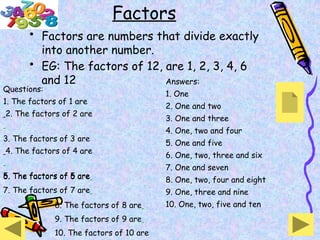
Factors
• Factors are numbers that divide exactly
into another number.
• EG: The factors of 12, are 1, 2, 3, 4, 6
and 12
Questions:
1. The factors of 1 are
2. The factors of 2 are
3. The factors of 3 are
4. The factors of 4 are
5. The factors of 5 are
8. The factors of 8 are
9. The factors of 9 are
10. The factors of 10 are
6. The factors of 6 are
7. The factors of 7 are
Answers:
1. One
2. One and two
3. One and three
4. One, two and four
5. One and five
6. One, two, three and six
7. One and seven
8. One, two, four and eight
9. One, three and nine
10. One, two, five and ten
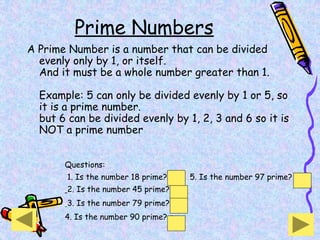
Prime Numbers
A Prime Number is a number that can be divided
evenly only by 1, or itself.
And it must be a whole number greater than 1.
Example: 5 can only be divided evenly by 1 or 5, so
it is a prime number.
but 6 can be divided evenly by 1, 2, 3 and 6 so it is
NOT a prime number
Questions:
1. Is the number 18 prime? no 5. Is the number 97 prime? yes
2. Is the number 45 prime? no
3. Is the number 79 prime? yes
4. Is the number 90 prime? no
Algebra - Substitution
"Substitute" means to put in the place of another.
• Substitution
• In Algebra "Substitution" means putting numbers
where the letters are:
• If you had x5+12= and you knew that x=2 and if a
number and letter together means you’ve got to
times them then you know all you have to do is
5x2+12= and then you can work out the answer in
this case the answer is 22
Nth term
• Nth term is when you replace some
letters for numbers
• Use this page to help you:
Finding the nth term
• 8,11,14
• The common difference is 3, so it must be
related to the 3 times table (3n)
• The 3 times table is 3, 6, 9, ...
The sequence is 8, 11, 14, ....
• Every term in the sequence is 5 more than
the corresponding term in the 3 times
table, so the nth term is 3n + 5.
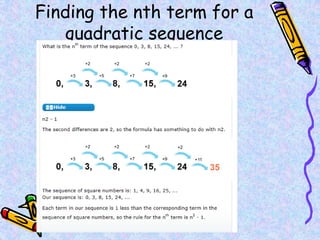
Finding the nth term for a
quadratic sequence
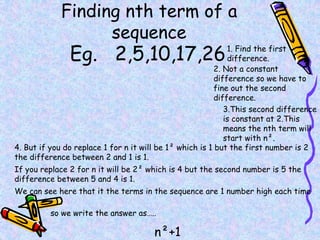
Finding nth term of a
sequence
Eg. 2,5,10,17,26
2. Not a constant
difference so we have to
fine out the second
difference.
3.This second difference
is constant at 2.This
means the nth term will
start with n².
4. But if you do replace 1 for n it will be 1² which is 1 but the first number is 2
the difference between 2 and 1 is 1.
If you replace 2 for n it will be 2² which is 4 but the second number is 5 the
difference between 5 and 4 is 1.
We can see here that it the terms in the sequence are 1 number high each time
so we write the answer as…..
n²+1
1. Find the first
difference.
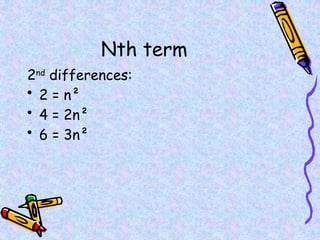
Nth term
2nd
differences:
• 2 = n²
• 4 = 2n²
• 6 = 3n²
Mean/Average
• The mean is just the average of the
numbers. It is easy to calculate: add up all
the numbers, then divide by how many
numbers there are.
• Listen to this
Median
• The Median is the "middle number"
(in a sorted list of numbers). To find
the Median, place the numbers you
are given in value order and find the
middle number.
Mode
• The mode is simply the number which
appears most often. To find the
mode, or modal value, first put the
numbers in order, then count how
many of each number.
Range
• The range means you have to take
the small number away from the
bigger number to get the range.
Modal group
• If you had a stem and leaf diagram like this for example
• 1/1,2,6 2/4,4,4,5,7,8,9 3/1,6 4/2 5/4,7
• The mode would be the value on the "leaf"
that appears most frequently so in this case
it would be 24.
• However, the modal group would be the
group from the "stem" that has the most
values, so in this case it would focus on the
20's.
• You would write it from the number on the
stem
to the highest in the group, like- 20-29.
• Frequency density =
frequency ÷ class width
Angles
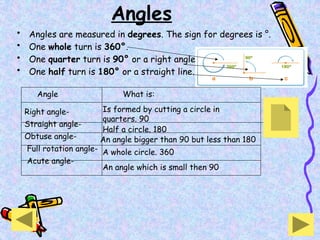
• Angles are measured in degrees. The sign for degrees is °.
• One whole turn is 360°.
• One quarter turn is 90° or a right angle.
• One half turn is 180° or a straight line.
An angle which is small then 90
Right angle-
Straight angle-
Obtuse angle-
Full rotation angle-
Acute angle-
Is formed by cutting a circle in
quarters. 90
What is:
Half a circle. 180
An angle bigger than 90 but less than 180
A whole circle. 360
Angle
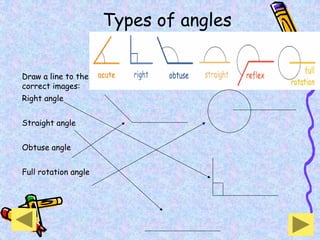
Draw a line to the
correct images:
Right angle
Straight angle
Obtuse angle
Full rotation angle
Types of angles
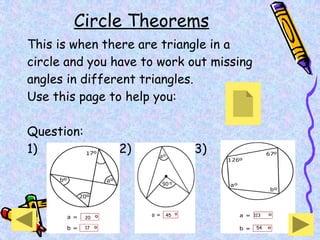
Circle Theorems
This is when there are triangle in a
circle and you have to work out missing
angles in different triangles.
Use this page to help you:
Question:
1) 2) 3)
20
17
45 113
54
Angles 2
• Angles in a triangle 180
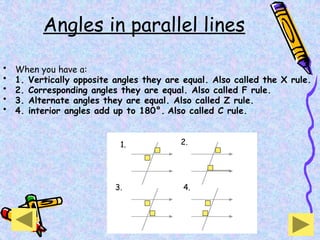
Angles in parallel lines
• When you have a:
• 1. Vertically opposite angles they are equal. Also called the X rule.
• 2. Corresponding angles they are equal. Also called F rule.
• 3. Alternate angles they are equal. Also called Z rule.
• 4. interior angles add up to 180°. Also called C rule.
3. 4.
2.
1.
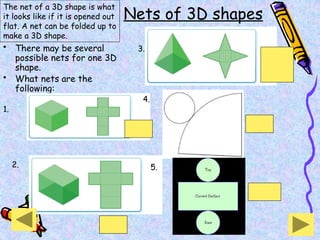
Nets of 3D shapes
• There may be several
possible nets for one 3D
shape.
• What nets are the
following:
The net of a 3D shape is what
it looks like if it is opened out
flat. A net can be folded up to
make a 3D shape.
1.
3.
2.
4.
5.
cube
cuboid
Square
based
pyramid
cylinder
cone
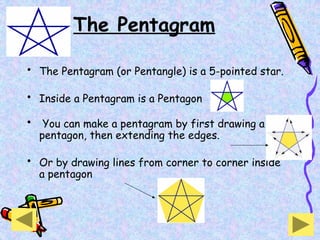
The Pentagram
• The Pentagram (or Pentangle) is a 5-pointed star.
• Inside a Pentagram is a Pentagon
• You can make a pentagram by first drawing a
pentagon, then extending the edges.
• Or by drawing lines from corner to corner inside
a pentagon
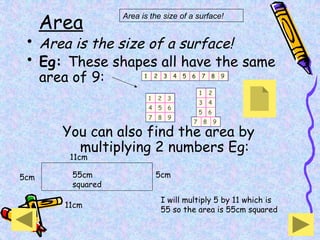
Area
• Area is the size of a surface!
• Eg: These shapes all have the same
area of 9:
You can also find the area by
multiplying 2 numbers Eg:
Area is the size of a surface!
11cm
5cm
5cm
11cm
I will multiply 5 by 11 which is
55 so the area is 55cm squared
55cm
squared
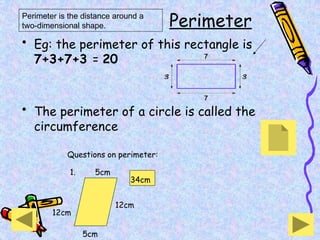
Perimeter
• Eg: the perimeter of this rectangle is
7+3+7+3 = 20
• The perimeter of a circle is called the
circumference
Perimeter is the distance around a
two-dimensional shape.
Questions on perimeter:
1.
12cm
12cm
5cm
5cm
34cm
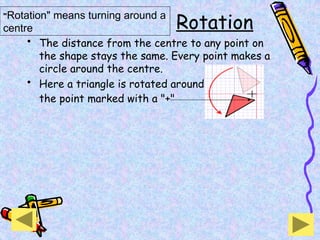
Rotation
• The distance from the centre to any point on
the shape stays the same. Every point makes a
circle around the centre.
• Here a triangle is rotated around
the point marked with a "+"
"Rotation" means turning around a
centre
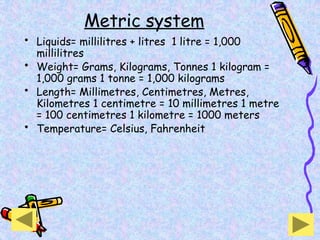
Metric system
• Liquids= millilitres + litres 1 litre = 1,000
millilitres
• Weight= Grams, Kilograms, Tonnes 1 kilogram =
1,000 grams 1 tonne = 1,000 kilograms
• Length= Millimetres, Centimetres, Metres,
Kilometres 1 centimetre = 10 millimetres 1 metre
= 100 centimetres 1 kilometre = 1000 meters
• Temperature= Celsius, Fahrenheit
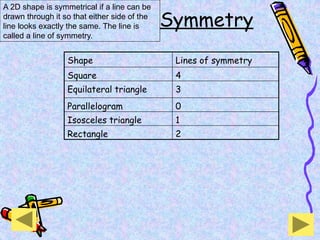
Symmetry
A 2D shape is symmetrical if a line can be
drawn through it so that either side of the
line looks exactly the same. The line is
called a line of symmetry.
Shape Lines of symmetry
Square 4
Equilateral triangle 3
Parallelogram 0
Isosceles triangle 1
Rectangle 2
Negatives
• When you have+ + together it equals a +
• When you have - - together it equals a +
• When you have + - together it equals a -
• When you have - + together it equals a –
• Eg: 2 + -5 would be 2 – 5 because a +- together = -
so the answer is -3
Questions:
2.
1.
Money
• You have 10p
How much change will you
get? 7p
3p
change
Answer
4p
6p
change
Answer
How much change
will you get?
1.
2.
What is a product?
• The product is the answer you get when you
multiply numbers. For example: If you multiply
two times eight, the product (also know as the
answer) is sixteen.
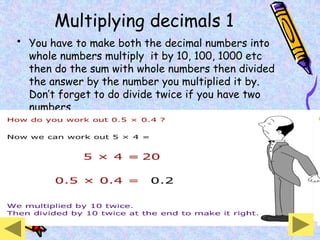
Multiplying decimals 1
• You have to make both the decimal numbers into
whole numbers multiply it by 10, 100, 1000 etc
then do the sum with whole numbers then divided
the answer by the number you multiplied it by.
Don’t forget to do divide twice if you have two
numbers.
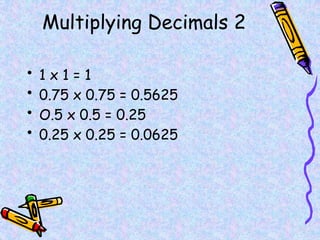
Multiplying Decimals 2
• 1 x 1 = 1
• 0.75 x 0.75 = 0.5625
• O.5 x 0.5 = 0.25
• 0.25 x 0.25 = 0.0625
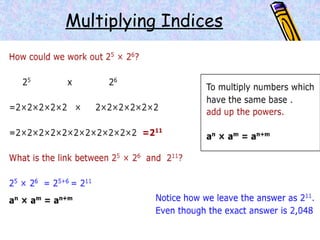
Multiplying Indices
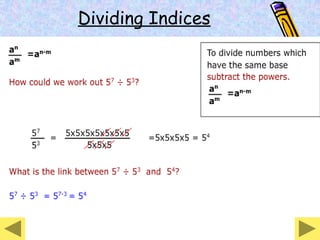
Dividing Indices
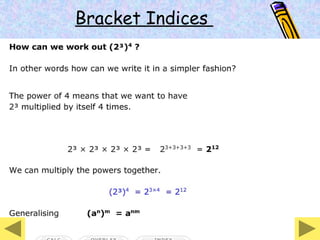
Bracket Indices
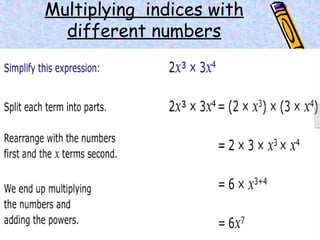
Multiplying indices with
different numbers
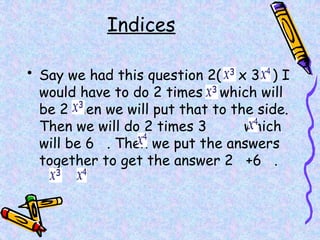
Indices
• Say we had this question 2( x 3 ) I
would have to do 2 times which will
be 2 then we will put that to the side.
Then we will do 2 times 3 which
will be 6 . Then we put the answers
together to get the answer 2 +6 .
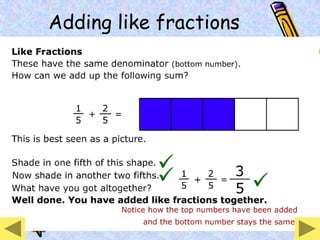
Adding like fractions
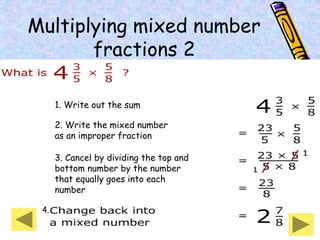
Multiplying mixed number
fractions 2
1. Write out the sum
2. Write the mixed number
as an improper fraction
3. Cancel by dividing the top and
bottom number by the number
that equally goes into each
number
4.
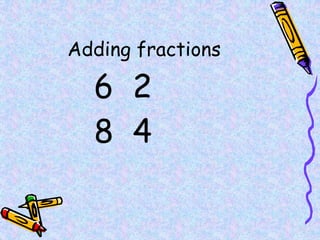
Adding fractions
6 2
8 4
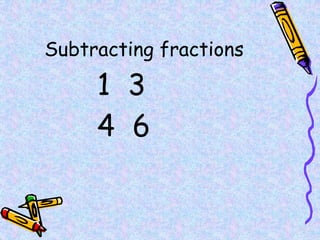
Subtracting fractions
1 3
4 6
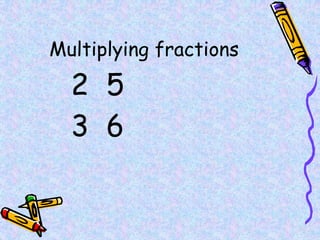
Multiplying fractions
2 5
3 6
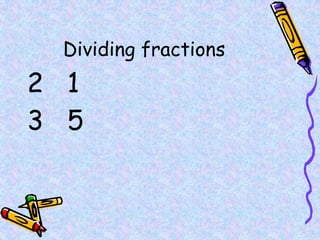
Dividing fractions
2 1
3 5
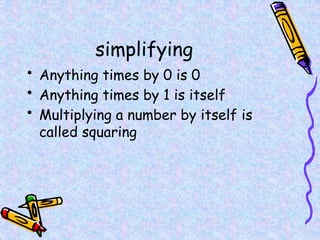
simplifying
• Anything times by 0 is 0
• Anything times by 1 is itself
• Multiplying a number by itself is
called squaring
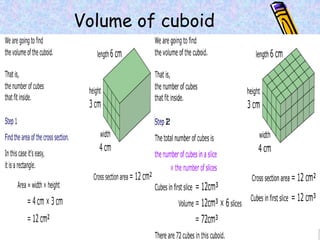
Volume of cuboid
2
2
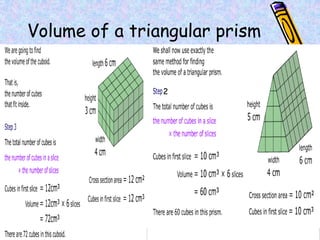
Volume of a triangular prism
2
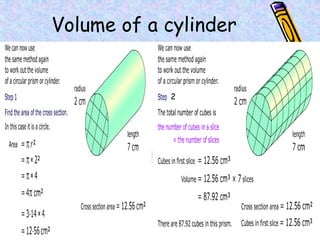
Volume of a cylinder
2
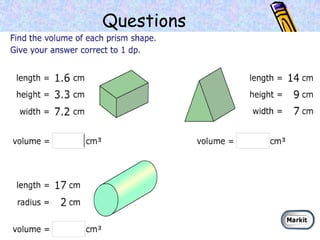
Questions
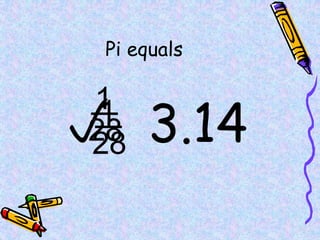
Pi equals
 3.14


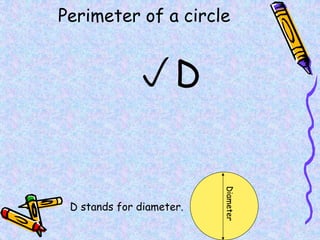
Perimeter of a circle
D
D stands for diameter.
Diameter
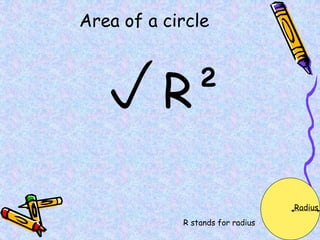
Area of a circle
R²
R stands for radius
Radius
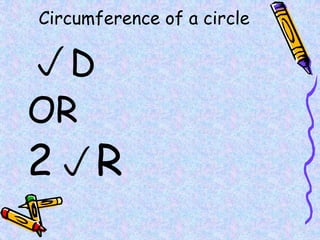
Circumference of a circle
D
OR
2R
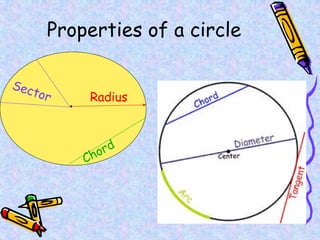
Properties of a circle
Radius
Chord
Sector
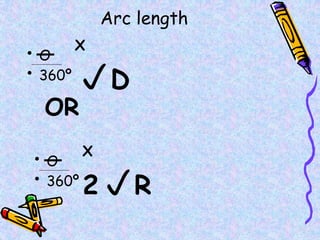
Arc length
• Θ
• 360º
X
D
OR
X
2R
• Θ
• 360º
Congruent
• The word 'Congruent' in maths means
that two or more things are exact
same size and shape. They should slot
together when you place the shapes
together.
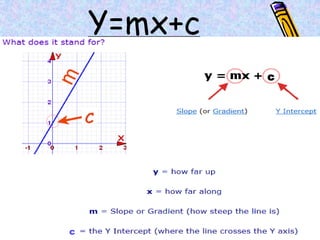
Y=mx+c
c
C
c
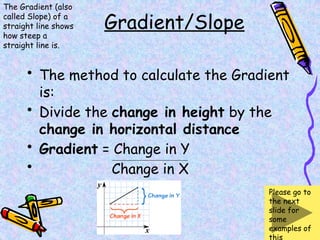
Gradient/Slope
• The method to calculate the Gradient
is:
• Divide the change in height by the
change in horizontal distance
• Gradient = Change in Y
• Change in X
Please go to
the next
slide for
some
examples of
this
The Gradient (also
called Slope) of a
straight line shows
how steep a
straight line is.
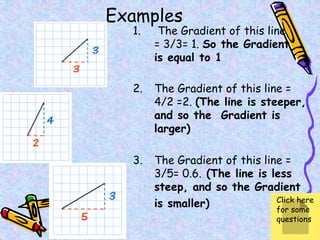
Examples
1. The Gradient of this line
= 3/3= 1. So the Gradient
is equal to 1
2. The Gradient of this line =
4/2 =2. (The line is steeper,
and so the Gradient is
larger)
3. The Gradient of this line =
3/5= 0.6. (The line is less
steep, and so the Gradient
is smaller) Click here
for some
questions
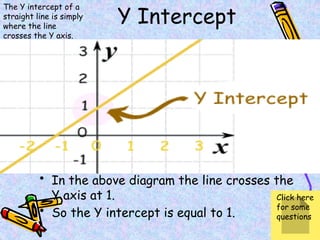
Y Intercept
• In the above diagram the line crosses the
Y axis at 1.
• So the Y intercept is equal to 1.
The Y intercept of a
straight line is simply
where the line
crosses the Y axis.
Click here
for some
questions
• B-rackets
• I-ndices
• D-ivision
• M-ultiplication
• A-ddition
• S-ubtraction
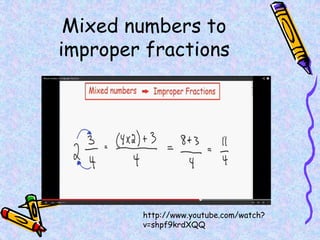
Mixed numbers to
improper fractions
http://www.youtube.com/watch?
v=shpf9krdXQQ
Percentage to decimal
• Percent means "per 100", so 50% means 50 per 100, or
simply 50/100.
If you divide 50 by 100 you get 0.5 (a decimal number).
So, to convert from percent to decimal: divide by 100, and
remove the "%" sign.
The Easy Way:
The easy way to divide by 100 is to move the decimal point 2
places to the left, so
From Percent To Decimal
move the decimal point 2 places to the left, and remove the
"%" sign.
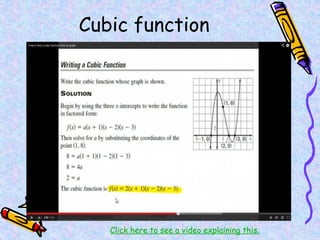
Cubic function
Click here to see a video explaining this.
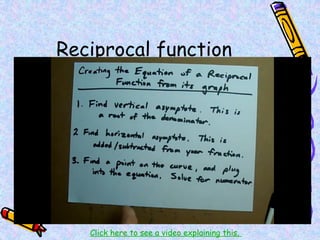
Reciprocal function
Click here to see a video explaining this.
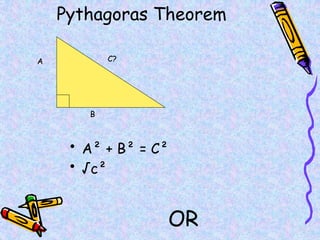
Pythagoras Theorem
• A² + B² = C²
• √c²
A
B
C?
OR
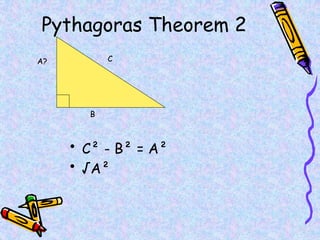
Pythagoras Theorem 2
• C² - B² = A²
• √A²
A?
B
C
Angles in a triangle
• To figure out the angle inside any shape
your have to do 180º(n-2)
• N stands for the number of sides a shape
has.
• Example:
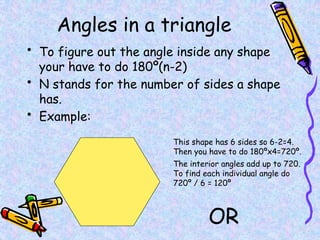
This shape has 6 sides so 6-2=4.
Then you have to do 180ºx4=720º.
The interior angles add up to 720.
To find each individual angle do
720º / 6 = 120º
OR
• See how many triangles can be
formed in the shape. Then times it
by 180º.
• Example:
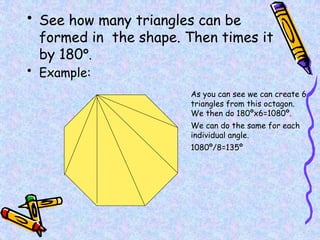
As you can see we can create 6
triangles from this octagon.
We then do 180ºx6=1080º.
We can do the same for each
individual angle.
1080º/8=135º
Cumulative frequency
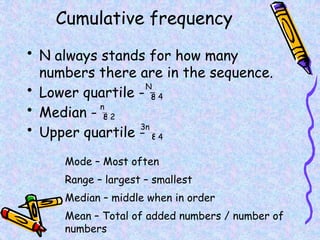
• N always stands for how many
numbers there are in the sequence.
• Lower quartile - ⅛
• Median - ⅛
• Upper quartile - ⅛
4
2
4
n
N
3n
Mode – Most often
Range – largest – smallest
Median – middle when in order
Mean – Total of added numbers / number of
numbers
3D shapes
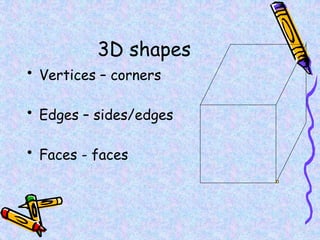
• Vertices – corners
• Edges – sides/edges
• Faces - faces
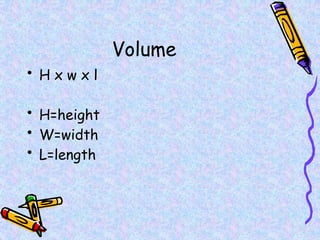
Volume
• H x w x l
• H=height
• W=width
• L=length
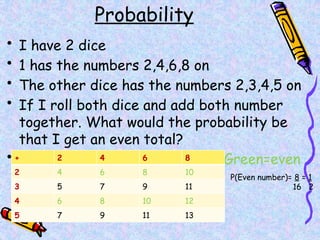
Probability
• I have 2 dice
• 1 has the numbers 2,4,6,8 on
• The other dice has the numbers 2,3,4,5 on
• If I roll both dice and add both number
together. What would the probability be
that I get an even total?
• Green=even
+ 2 4 6 8
2 4 6 8 10
3 5 7 9 11
4 6 8 10 12
5 7 9 11 13
P(Even number)= 8 = 1
16 2
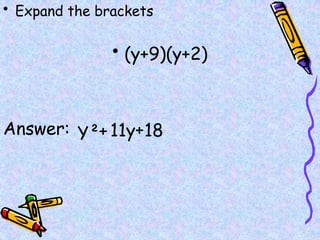
• Expand the brackets
• (y+9)(y+2)
Answer: Y²+11y 18
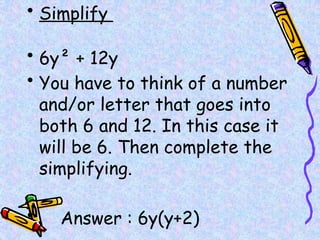
• Simplify
• 6y² + 12y
• You have to think of a number
and/or letter that goes into
both 6 and 12. In this case it
will be 6. Then complete the
simplifying.
• Answer : 6y(y+2)
Cumulative frecuency-finding the median and
interquartile range for grouped data
• Watch this video
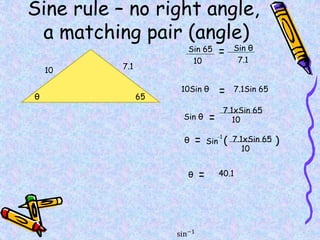
Sine rule – no right angle,
a matching pair (angle)
65
10 7.1
θ
Sin 65 Sin θ
10 7.1
=
=
10Sin θ 7.1Sin 65
Sin θ =
7.1xSin 65
10
θ = Sin ( )
7.1xSin 65
10
-1
θ = 40.1
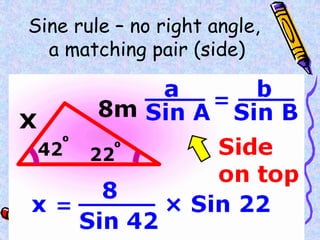
Sine rule – no right angle,
a matching pair (side)
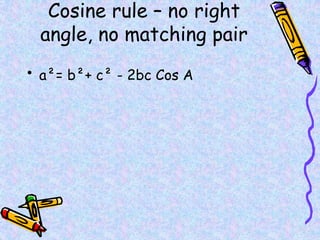
Cosine rule – no right
angle, no matching pair
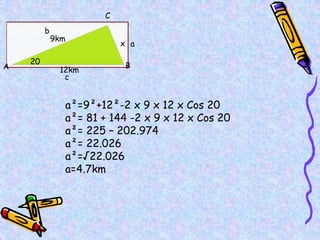
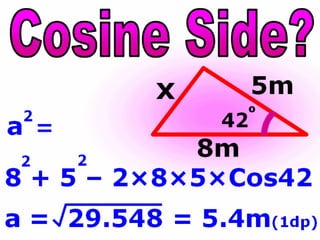
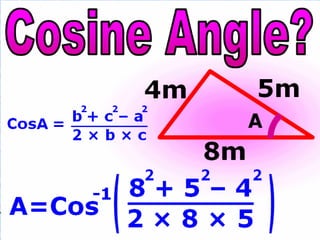
• a²= b²+ c² - 2bc Cos A
9km
12km
x
20
A B
C
a
b
c
a²=9²+12²-2 x 9 x 12 x Cos 20
a²= 81 + 144 -2 x 9 x 12 x Cos 20
a²= 225 – 202.974
a²= 22.026
a²=√22.026
a=4.7km
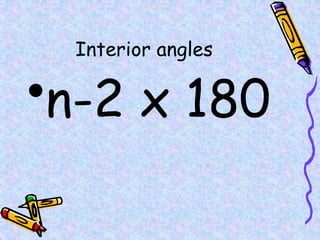
Interior angles
•n-2 x 180
Exterior angles
•Always add up
to 360˚

mathsrevision-year 7 maths cambridge.pptx

  • 1.
  • 3.
    Square numbers • Asquare number is when you times a number by its self Eg 4 squared is 4 x 4 which equals 16. • Use the table below which shows you all the square numbers
  • 4.
    Multiples • Multiples arereally just times tables. • EG: The multiples of 2 are all the numbers in the 2 times table: 2, 4, 6, 8, 10 and so on. • The multiples of 5 are all the numbers in the 5 times table: 5, 10, 15, 20, 25 and so on. Questions: list 5 of these times tables 1. Four Times Tables 2. Six Times Tables 3. Seven Times Tables 4. Eight Times Tables 5. Twelve Times Tables 4, 8, 12, 16, 20 6, 12, 18, 24, 30 7, 14, 21, 28, 35 8, 16, 24, 32, 40 12, 24, 36, 48, 60
  • 5.
    Common Big andSmall Numbers Name Number Trillion 1,000,000,000,000 Billion 1,000,000,000 Million 1,000,000 Thousand 1,000 Hundred 100 ten 10 Unit 1 1 Tenth 0.1 Hundredth 0.01 Thousandth 0.001 Millionth 0.000 001 Billionth 0.000 000 001
  • 6.
    Factors • Factors arenumbers that divide exactly into another number. • EG: The factors of 12, are 1, 2, 3, 4, 6 and 12 Questions: 1. The factors of 1 are 2. The factors of 2 are 3. The factors of 3 are 4. The factors of 4 are 5. The factors of 5 are 8. The factors of 8 are 9. The factors of 9 are 10. The factors of 10 are 6. The factors of 6 are 7. The factors of 7 are Answers: 1. One 2. One and two 3. One and three 4. One, two and four 5. One and five 6. One, two, three and six 7. One and seven 8. One, two, four and eight 9. One, three and nine 10. One, two, five and ten
  • 7.
    Prime Numbers A PrimeNumber is a number that can be divided evenly only by 1, or itself. And it must be a whole number greater than 1. Example: 5 can only be divided evenly by 1 or 5, so it is a prime number. but 6 can be divided evenly by 1, 2, 3 and 6 so it is NOT a prime number Questions: 1. Is the number 18 prime? no 5. Is the number 97 prime? yes 2. Is the number 45 prime? no 3. Is the number 79 prime? yes 4. Is the number 90 prime? no
  • 9.
    Algebra - Substitution "Substitute"means to put in the place of another. • Substitution • In Algebra "Substitution" means putting numbers where the letters are: • If you had x5+12= and you knew that x=2 and if a number and letter together means you’ve got to times them then you know all you have to do is 5x2+12= and then you can work out the answer in this case the answer is 22
  • 10.
    Nth term • Nthterm is when you replace some letters for numbers • Use this page to help you:
  • 11.
    Finding the nthterm • 8,11,14 • The common difference is 3, so it must be related to the 3 times table (3n) • The 3 times table is 3, 6, 9, ... The sequence is 8, 11, 14, .... • Every term in the sequence is 5 more than the corresponding term in the 3 times table, so the nth term is 3n + 5.
  • 12.
    Finding the nthterm for a quadratic sequence
  • 13.
    Finding nth termof a sequence Eg. 2,5,10,17,26 2. Not a constant difference so we have to fine out the second difference. 3.This second difference is constant at 2.This means the nth term will start with n². 4. But if you do replace 1 for n it will be 1² which is 1 but the first number is 2 the difference between 2 and 1 is 1. If you replace 2 for n it will be 2² which is 4 but the second number is 5 the difference between 5 and 4 is 1. We can see here that it the terms in the sequence are 1 number high each time so we write the answer as….. n²+1 1. Find the first difference.
  • 14.
    Nth term 2nd differences: • 2= n² • 4 = 2n² • 6 = 3n²
  • 16.
    Mean/Average • The meanis just the average of the numbers. It is easy to calculate: add up all the numbers, then divide by how many numbers there are. • Listen to this
  • 17.
    Median • The Medianis the "middle number" (in a sorted list of numbers). To find the Median, place the numbers you are given in value order and find the middle number.
  • 18.
    Mode • The modeis simply the number which appears most often. To find the mode, or modal value, first put the numbers in order, then count how many of each number.
  • 19.
    Range • The rangemeans you have to take the small number away from the bigger number to get the range.
  • 20.
    Modal group • Ifyou had a stem and leaf diagram like this for example • 1/1,2,6 2/4,4,4,5,7,8,9 3/1,6 4/2 5/4,7 • The mode would be the value on the "leaf" that appears most frequently so in this case it would be 24. • However, the modal group would be the group from the "stem" that has the most values, so in this case it would focus on the 20's. • You would write it from the number on the stem to the highest in the group, like- 20-29.
  • 21.
    • Frequency density= frequency ÷ class width
  • 23.
    Angles • Angles aremeasured in degrees. The sign for degrees is °. • One whole turn is 360°. • One quarter turn is 90° or a right angle. • One half turn is 180° or a straight line. An angle which is small then 90 Right angle- Straight angle- Obtuse angle- Full rotation angle- Acute angle- Is formed by cutting a circle in quarters. 90 What is: Half a circle. 180 An angle bigger than 90 but less than 180 A whole circle. 360 Angle
  • 24.
    Draw a lineto the correct images: Right angle Straight angle Obtuse angle Full rotation angle Types of angles
  • 25.
    Circle Theorems This iswhen there are triangle in a circle and you have to work out missing angles in different triangles. Use this page to help you: Question: 1) 2) 3) 20 17 45 113 54
  • 26.
    Angles 2 • Anglesin a triangle 180
  • 27.
    Angles in parallellines • When you have a: • 1. Vertically opposite angles they are equal. Also called the X rule. • 2. Corresponding angles they are equal. Also called F rule. • 3. Alternate angles they are equal. Also called Z rule. • 4. interior angles add up to 180°. Also called C rule. 3. 4. 2. 1.
  • 29.
    Nets of 3Dshapes • There may be several possible nets for one 3D shape. • What nets are the following: The net of a 3D shape is what it looks like if it is opened out flat. A net can be folded up to make a 3D shape. 1. 3. 2. 4. 5. cube cuboid Square based pyramid cylinder cone
  • 30.
    The Pentagram • ThePentagram (or Pentangle) is a 5-pointed star. • Inside a Pentagram is a Pentagon • You can make a pentagram by first drawing a pentagon, then extending the edges. • Or by drawing lines from corner to corner inside a pentagon
  • 31.
    Area • Area isthe size of a surface! • Eg: These shapes all have the same area of 9: You can also find the area by multiplying 2 numbers Eg: Area is the size of a surface! 11cm 5cm 5cm 11cm I will multiply 5 by 11 which is 55 so the area is 55cm squared 55cm squared
  • 32.
    Perimeter • Eg: theperimeter of this rectangle is 7+3+7+3 = 20 • The perimeter of a circle is called the circumference Perimeter is the distance around a two-dimensional shape. Questions on perimeter: 1. 12cm 12cm 5cm 5cm 34cm
  • 34.
    Rotation • The distancefrom the centre to any point on the shape stays the same. Every point makes a circle around the centre. • Here a triangle is rotated around the point marked with a "+" "Rotation" means turning around a centre
  • 35.
    Metric system • Liquids=millilitres + litres 1 litre = 1,000 millilitres • Weight= Grams, Kilograms, Tonnes 1 kilogram = 1,000 grams 1 tonne = 1,000 kilograms • Length= Millimetres, Centimetres, Metres, Kilometres 1 centimetre = 10 millimetres 1 metre = 100 centimetres 1 kilometre = 1000 meters • Temperature= Celsius, Fahrenheit
  • 36.
    Symmetry A 2D shapeis symmetrical if a line can be drawn through it so that either side of the line looks exactly the same. The line is called a line of symmetry. Shape Lines of symmetry Square 4 Equilateral triangle 3 Parallelogram 0 Isosceles triangle 1 Rectangle 2
  • 37.
    Negatives • When youhave+ + together it equals a + • When you have - - together it equals a + • When you have + - together it equals a - • When you have - + together it equals a – • Eg: 2 + -5 would be 2 – 5 because a +- together = - so the answer is -3 Questions: 2. 1.
  • 38.
    Money • You have10p How much change will you get? 7p 3p change Answer 4p 6p change Answer How much change will you get? 1. 2.
  • 39.
    What is aproduct? • The product is the answer you get when you multiply numbers. For example: If you multiply two times eight, the product (also know as the answer) is sixteen.
  • 40.
    Multiplying decimals 1 •You have to make both the decimal numbers into whole numbers multiply it by 10, 100, 1000 etc then do the sum with whole numbers then divided the answer by the number you multiplied it by. Don’t forget to do divide twice if you have two numbers.
  • 41.
    Multiplying Decimals 2 •1 x 1 = 1 • 0.75 x 0.75 = 0.5625 • O.5 x 0.5 = 0.25 • 0.25 x 0.25 = 0.0625
  • 42.
  • 43.
  • 44.
  • 45.
  • 46.
    Indices • Say wehad this question 2( x 3 ) I would have to do 2 times which will be 2 then we will put that to the side. Then we will do 2 times 3 which will be 6 . Then we put the answers together to get the answer 2 +6 .
  • 48.
  • 49.
    Multiplying mixed number fractions2 1. Write out the sum 2. Write the mixed number as an improper fraction 3. Cancel by dividing the top and bottom number by the number that equally goes into each number 4.
  • 50.
  • 51.
  • 52.
  • 53.
  • 54.
    simplifying • Anything timesby 0 is 0 • Anything times by 1 is itself • Multiplying a number by itself is called squaring
  • 55.
  • 56.
    Volume of atriangular prism 2
  • 57.
    Volume of acylinder 2
  • 58.
  • 59.
  • 60.
    Perimeter of acircle D D stands for diameter. Diameter
  • 61.
    Area of acircle R² R stands for radius Radius
  • 62.
    Circumference of acircle D OR 2R
  • 63.
    Properties of acircle Radius Chord Sector
  • 64.
    Arc length • Θ •360º X D OR X 2R • Θ • 360º
  • 65.
    Congruent • The word'Congruent' in maths means that two or more things are exact same size and shape. They should slot together when you place the shapes together.
  • 66.
  • 67.
    Gradient/Slope • The methodto calculate the Gradient is: • Divide the change in height by the change in horizontal distance • Gradient = Change in Y • Change in X Please go to the next slide for some examples of this The Gradient (also called Slope) of a straight line shows how steep a straight line is.
  • 68.
    Examples 1. The Gradientof this line = 3/3= 1. So the Gradient is equal to 1 2. The Gradient of this line = 4/2 =2. (The line is steeper, and so the Gradient is larger) 3. The Gradient of this line = 3/5= 0.6. (The line is less steep, and so the Gradient is smaller) Click here for some questions
  • 69.
    Y Intercept • Inthe above diagram the line crosses the Y axis at 1. • So the Y intercept is equal to 1. The Y intercept of a straight line is simply where the line crosses the Y axis. Click here for some questions
  • 70.
    • B-rackets • I-ndices •D-ivision • M-ultiplication • A-ddition • S-ubtraction
  • 71.
    Mixed numbers to improperfractions http://www.youtube.com/watch? v=shpf9krdXQQ
  • 72.
    Percentage to decimal •Percent means "per 100", so 50% means 50 per 100, or simply 50/100. If you divide 50 by 100 you get 0.5 (a decimal number). So, to convert from percent to decimal: divide by 100, and remove the "%" sign. The Easy Way: The easy way to divide by 100 is to move the decimal point 2 places to the left, so From Percent To Decimal move the decimal point 2 places to the left, and remove the "%" sign.
  • 73.
    Cubic function Click hereto see a video explaining this.
  • 74.
    Reciprocal function Click hereto see a video explaining this.
  • 75.
    Pythagoras Theorem • A²+ B² = C² • √c² A B C? OR
  • 76.
    Pythagoras Theorem 2 •C² - B² = A² • √A² A? B C
  • 77.
    Angles in atriangle • To figure out the angle inside any shape your have to do 180º(n-2) • N stands for the number of sides a shape has. • Example: This shape has 6 sides so 6-2=4. Then you have to do 180ºx4=720º. The interior angles add up to 720. To find each individual angle do 720º / 6 = 120º OR
  • 78.
    • See howmany triangles can be formed in the shape. Then times it by 180º. • Example: As you can see we can create 6 triangles from this octagon. We then do 180ºx6=1080º. We can do the same for each individual angle. 1080º/8=135º
  • 79.
    Cumulative frequency • Nalways stands for how many numbers there are in the sequence. • Lower quartile - ⅛ • Median - ⅛ • Upper quartile - ⅛ 4 2 4 n N 3n Mode – Most often Range – largest – smallest Median – middle when in order Mean – Total of added numbers / number of numbers
  • 80.
    3D shapes • Vertices– corners • Edges – sides/edges • Faces - faces
  • 81.
    Volume • H xw x l • H=height • W=width • L=length
  • 82.
    Probability • I have2 dice • 1 has the numbers 2,4,6,8 on • The other dice has the numbers 2,3,4,5 on • If I roll both dice and add both number together. What would the probability be that I get an even total? • Green=even + 2 4 6 8 2 4 6 8 10 3 5 7 9 11 4 6 8 10 12 5 7 9 11 13 P(Even number)= 8 = 1 16 2
  • 83.
    • Expand thebrackets • (y+9)(y+2) Answer: Y²+11y 18
  • 84.
    • Simplify • 6y²+ 12y • You have to think of a number and/or letter that goes into both 6 and 12. In this case it will be 6. Then complete the simplifying. • Answer : 6y(y+2)
  • 85.
    Cumulative frecuency-finding themedian and interquartile range for grouped data • Watch this video
  • 86.
    Sine rule –no right angle, a matching pair (angle) 65 10 7.1 θ Sin 65 Sin θ 10 7.1 = = 10Sin θ 7.1Sin 65 Sin θ = 7.1xSin 65 10 θ = Sin ( ) 7.1xSin 65 10 -1 θ = 40.1
  • 87.
    Sine rule –no right angle, a matching pair (side)
  • 88.
    Cosine rule –no right angle, no matching pair • a²= b²+ c² - 2bc Cos A
  • 89.
    9km 12km x 20 A B C a b c a²=9²+12²-2 x9 x 12 x Cos 20 a²= 81 + 144 -2 x 9 x 12 x Cos 20 a²= 225 – 202.974 a²= 22.026 a²=√22.026 a=4.7km
  • 92.
  • 93.