5 Plants
                   By: Joe Chandler
(The pictures that I took are blurry)
Rose
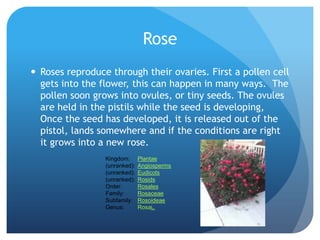
 Roses reproduce through their ovaries. First a pollen cell
  gets into the flower, this can happen in many ways. The
  pollen soon grows into ovules, or tiny seeds. The ovules
  are held in the pistils while the seed is developing,
  Once the seed has developed, it is released out of the
  pistol, lands somewhere and if the conditions are right
  it grows into a new rose.
                 Kingdom:      Plantae
                 (unranked):   Angiosperms
                 (unranked):   Eudicots
                 (unranked):   Rosids
                 Order:        Rosales
                 Family:       Rosaceae
                 Subfamily:    Rosoideae
                 Genus:        RosaL.
Rose Growth
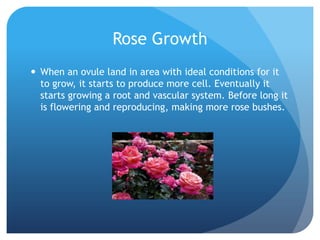
 When an ovule land in area with ideal conditions for it
  to grow, it starts to produce more cell. Eventually it
  starts growing a root and vascular system. Before long it
  is flowering and reproducing, making more rose bushes.
Rose Response

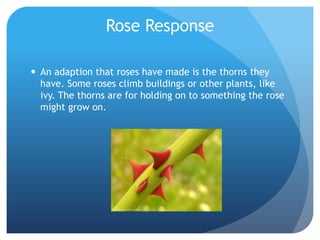
 An adaption that roses have made is the thorns they
  have. Some roses climb buildings or other plants, like
  ivy. The thorns are for holding on to something the rose
  might grow on.
Chrysanthemum
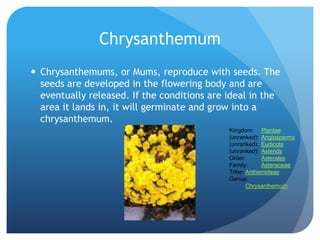
 Chrysanthemums, or Mums, reproduce with seeds. The
  seeds are developed in the flowering body and are
  eventually released. If the conditions are ideal in the
  area it lands in, it will germinate and grow into a
  chrysanthemum.
                                             Kingdom: Plantae
                                             (unranked): Angiosperms
                                             (unranked): Eudicots
                                             (unranked): Asterids
                                             Order:      Asterales
                                             Family:     Asteraceae
                                             Tribe: Anthemideae
                                             Genus:
                                                    Chrysanthemum
Chrysanthemum Growth and
             Response
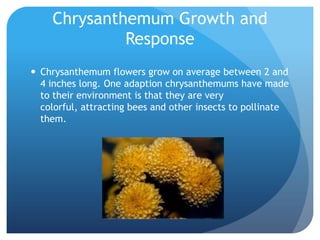
 Chrysanthemum flowers grow on average between 2 and
  4 inches long. One adaption chrysanthemums have made
  to their environment is that they are very
  colorful, attracting bees and other insects to pollinate
  them.
Crab Tree
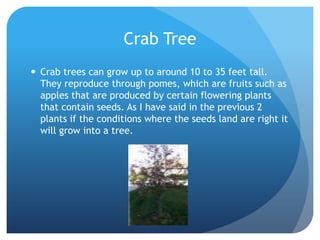
 Crab trees can grow up to around 10 to 35 feet tall.
  They reproduce through pomes, which are fruits such as
  apples that are produced by certain flowering plants
  that contain seeds. As I have said in the previous 2
  plants if the conditions where the seeds land are right it
  will grow into a tree.
Response
 The flowers are easily attract bees. They are used as pollenizers in some orchards.

                             Kingdom:           Plantae

                          (unranked):        Angiosperms

                            (unranked):        Eudicots

                             (unranked):        Rosids

                                  Order: Rosales

                                 Family: Rosaceae

                   Subfamily:          Maloideae or Spiraeoideae

                                  Tribe: Maleae

                                   Genus:Malus
Birch Tree
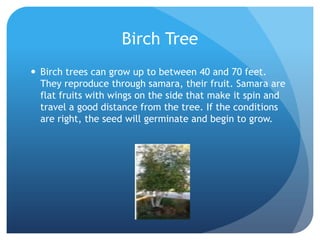
 Birch trees can grow up to between 40 and 70 feet.
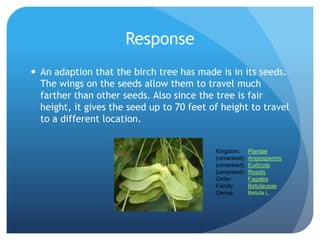
  They reproduce through samara, their fruit. Samara are
  flat fruits with wings on the side that make it spin and
  travel a good distance from the tree. If the conditions
  are right, the seed will germinate and begin to grow.
Response
 An adaption that the birch tree has made is in its seeds.
  The wings on the seeds allow them to travel much
  farther than other seeds. Also since the tree is fair
  height, it gives the seed up to 70 feet of height to travel
  to a different location.


                                           Kingdom:      Plantae
                                           (unranked):   Angiosperms
                                           (unranked):   Eudicots
                                           (unranked):   Rosids
                                           Order:        Fagales
                                           Family:       Betulaceae
                                           Genus:        Betula L.
Arborvitae Pyramidalis
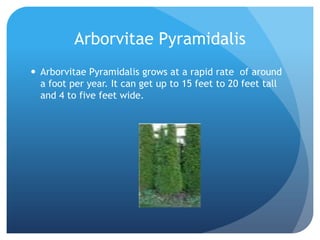
 Arborvitae Pyramidalis grows at a rapid rate of around
  a foot per year. It can get up to 15 feet to 20 feet tall
  and 4 to five feet wide.
Reproduction
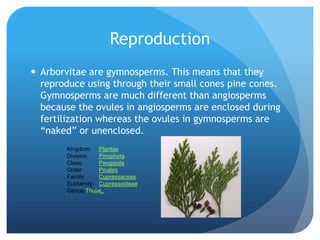
 Arborvitae are gymnosperms. This means that they
  reproduce using through their small cones pine cones.
  Gymnosperms are much different than angiosperms
  because the ovules in angiosperms are enclosed during
  fertilization whereas the ovules in gymnosperms are
  “naked” or unenclosed.
        Kingdom: Plantae
        Division:  Pinophyta
        Class:     Pinopsida
        Order:     Pinales
        Family:    Cupressaceae
        Subfamily: Cupressoideae
        Genus:ThujaL.
Adaption

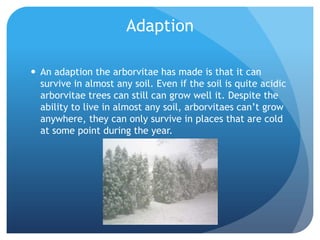
 An adaption the arborvitae has made is that it can
  survive in almost any soil. Even if the soil is quite acidic
  arborvitae trees can still can grow well it. Despite the
  ability to live in almost any soil, arborvitaes can’t grow
  anywhere, they can only survive in places that are cold
  at some point during the year.
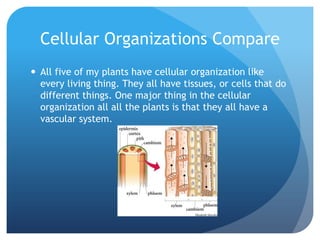
Cellular Organizations Compare
 All five of my plants have cellular organization like
  every living thing. They all have tissues, or cells that do
  different things. One major thing in the cellular
  organization all all the plants is that they all have a
  vascular system.
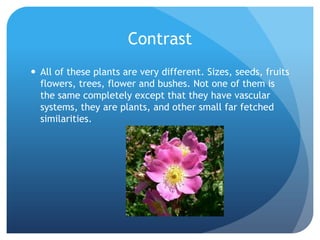
Contrast
 All of these plants are very different. Sizes, seeds, fruits
  flowers, trees, flower and bushes. Not one of them is
  the same completely except that they have vascular
  systems, they are plants, and other small far fetched
  similarities.
Resources
http://en.wikipedia.org/wiki/Rose

http://www.aboutarborvitae.com/

www.botanical-online.com#4C5639
www.newworldencyclopedia#4C4764

5 plants

  • 1.
    5 Plants By: Joe Chandler (The pictures that I took are blurry)
  • 2.
    Rose  Roses reproducethrough their ovaries. First a pollen cell gets into the flower, this can happen in many ways. The pollen soon grows into ovules, or tiny seeds. The ovules are held in the pistils while the seed is developing, Once the seed has developed, it is released out of the pistol, lands somewhere and if the conditions are right it grows into a new rose. Kingdom: Plantae (unranked): Angiosperms (unranked): Eudicots (unranked): Rosids Order: Rosales Family: Rosaceae Subfamily: Rosoideae Genus: RosaL.
  • 3.
    Rose Growth  Whenan ovule land in area with ideal conditions for it to grow, it starts to produce more cell. Eventually it starts growing a root and vascular system. Before long it is flowering and reproducing, making more rose bushes.
  • 4.
    Rose Response  Anadaption that roses have made is the thorns they have. Some roses climb buildings or other plants, like ivy. The thorns are for holding on to something the rose might grow on.
  • 5.
    Chrysanthemum  Chrysanthemums, orMums, reproduce with seeds. The seeds are developed in the flowering body and are eventually released. If the conditions are ideal in the area it lands in, it will germinate and grow into a chrysanthemum. Kingdom: Plantae (unranked): Angiosperms (unranked): Eudicots (unranked): Asterids Order: Asterales Family: Asteraceae Tribe: Anthemideae Genus: Chrysanthemum
  • 6.
    Chrysanthemum Growth and Response  Chrysanthemum flowers grow on average between 2 and 4 inches long. One adaption chrysanthemums have made to their environment is that they are very colorful, attracting bees and other insects to pollinate them.
  • 7.
    Crab Tree  Crabtrees can grow up to around 10 to 35 feet tall. They reproduce through pomes, which are fruits such as apples that are produced by certain flowering plants that contain seeds. As I have said in the previous 2 plants if the conditions where the seeds land are right it will grow into a tree.
  • 8.
    Response  The flowersare easily attract bees. They are used as pollenizers in some orchards.  Kingdom: Plantae  (unranked): Angiosperms  (unranked): Eudicots  (unranked): Rosids  Order: Rosales  Family: Rosaceae  Subfamily: Maloideae or Spiraeoideae  Tribe: Maleae  Genus:Malus
  • 9.
    Birch Tree  Birchtrees can grow up to between 40 and 70 feet. They reproduce through samara, their fruit. Samara are flat fruits with wings on the side that make it spin and travel a good distance from the tree. If the conditions are right, the seed will germinate and begin to grow.
  • 10.
    Response  An adaptionthat the birch tree has made is in its seeds. The wings on the seeds allow them to travel much farther than other seeds. Also since the tree is fair height, it gives the seed up to 70 feet of height to travel to a different location. Kingdom: Plantae (unranked): Angiosperms (unranked): Eudicots (unranked): Rosids Order: Fagales Family: Betulaceae Genus: Betula L.
  • 11.
    Arborvitae Pyramidalis  ArborvitaePyramidalis grows at a rapid rate of around a foot per year. It can get up to 15 feet to 20 feet tall and 4 to five feet wide.
  • 12.
    Reproduction  Arborvitae aregymnosperms. This means that they reproduce using through their small cones pine cones. Gymnosperms are much different than angiosperms because the ovules in angiosperms are enclosed during fertilization whereas the ovules in gymnosperms are “naked” or unenclosed. Kingdom: Plantae Division: Pinophyta Class: Pinopsida Order: Pinales Family: Cupressaceae Subfamily: Cupressoideae Genus:ThujaL.
  • 13.
    Adaption  An adaptionthe arborvitae has made is that it can survive in almost any soil. Even if the soil is quite acidic arborvitae trees can still can grow well it. Despite the ability to live in almost any soil, arborvitaes can’t grow anywhere, they can only survive in places that are cold at some point during the year.
  • 14.
    Cellular Organizations Compare All five of my plants have cellular organization like every living thing. They all have tissues, or cells that do different things. One major thing in the cellular organization all all the plants is that they all have a vascular system.
  • 15.
    Contrast  All ofthese plants are very different. Sizes, seeds, fruits flowers, trees, flower and bushes. Not one of them is the same completely except that they have vascular systems, they are plants, and other small far fetched similarities.
  • 16.