5 Essential Steps to Building a
Better Board for Your Nonprofit
Richard Wolf, CPA, CGMA, CFE, CVA
Introductions
Richard Wolf, CPA, CGMA, CFE,
CVA
Principal at Gross Mendelsohn
20 years of public accounting
experience in the nonprofit sector
Today we’ll cover
1. Basic responsibilities of your board and their role in
good governance
2. How to identify the right (and wrong) board members
for your organization
3. Ways to improve board accountability
4. How to prepare for and undergo leadership transition
5. Simple strategies to boost board engagement
Start watching
You can watch this presentation as
a free on-demand webinar
Define board responsibilities
Action Step #1
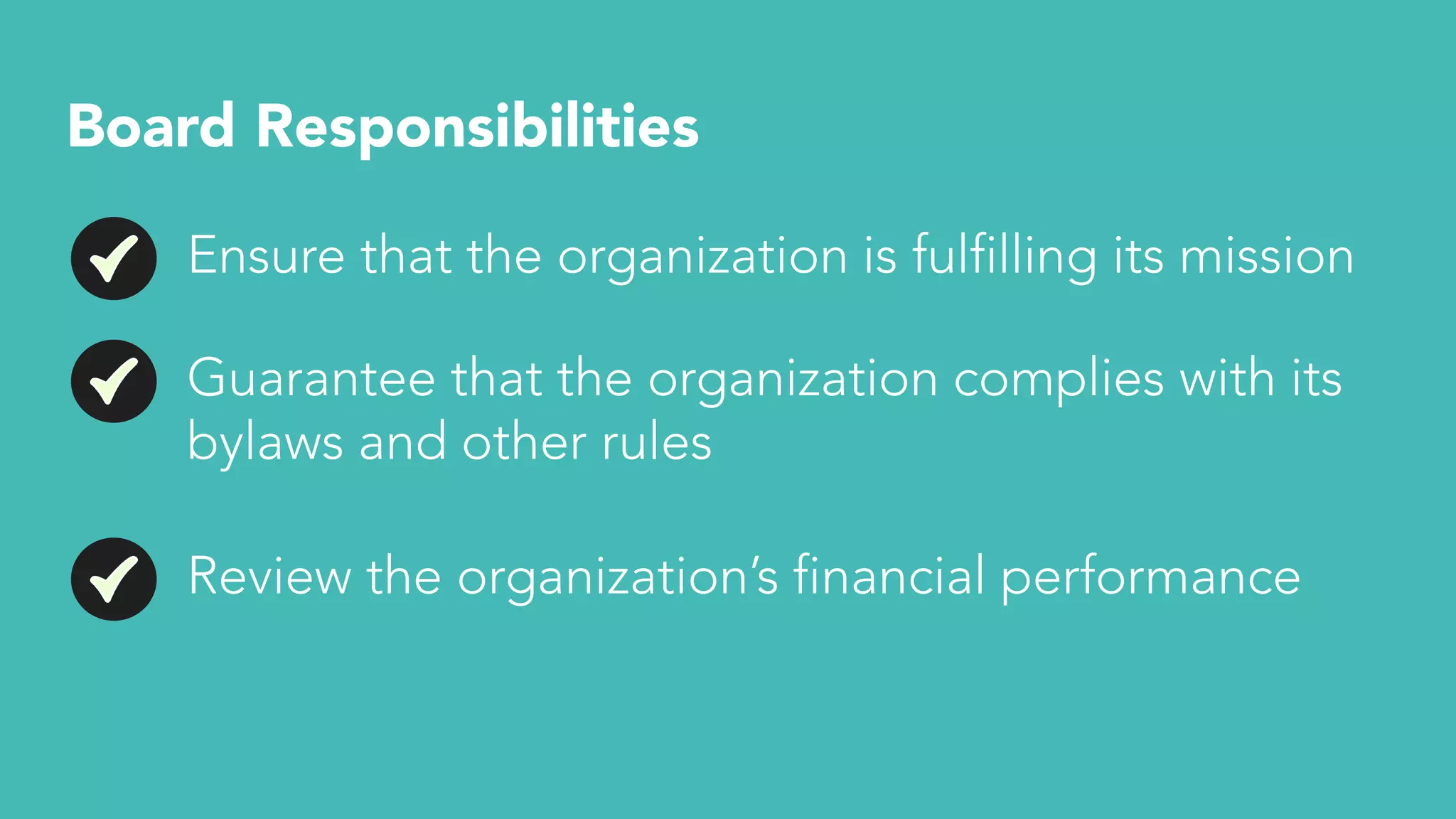
Board Responsibilities
Ensure that the organization is fulfilling its mission
Guarantee that the organization complies with its
bylaws and other rules
Review the organization’s financial performance
Board Responsibilities
Hire and evaluate the executive officer
Determine and monitor the organization’s
programs and services
Set strategic objectives
Board Responsibilities
Enhance the organization’s public image
Serve as content matter experts and a sounding
board for executive officers
Protect the assets of the organization
Board Responsibilities
Ensure legal and ethical integrity
Ensure adequate resources are available to the
organization
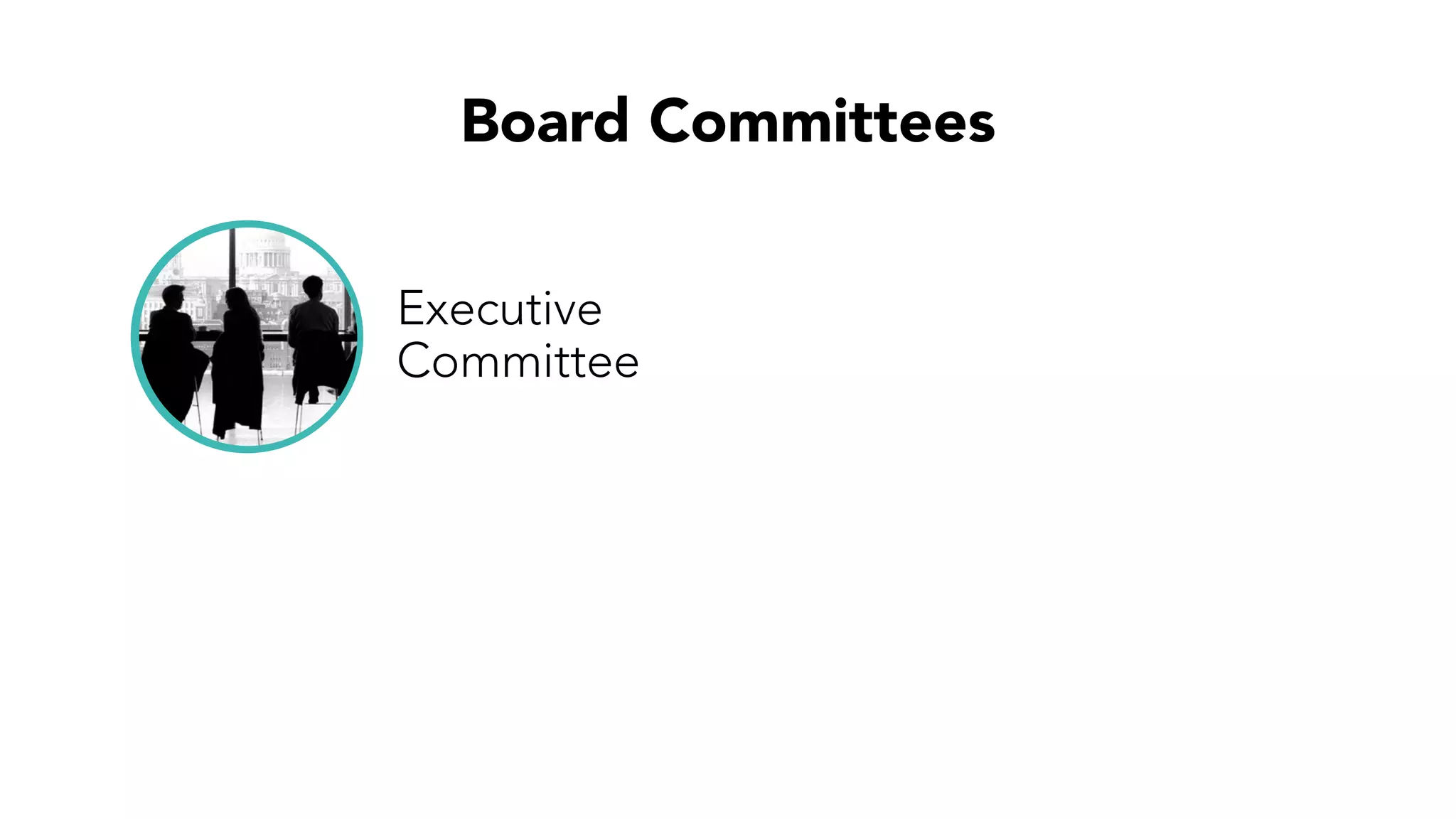
Board Committees
Executive
Committee
Board Committees
Executive
Committee
Audit
Committee
Board Committees
Executive
Committee
Finance
Committee
Audit
Committee
Board Committees
Executive
Committee
Finance
Committee
Audit
Committee
Development
Committee
Board Committees
Investment
Committee
Board Committees
Investment
Committee
Compensation
Committee
Board Committees
Investment
Committee
Compensation
Committee
Strategic Planning
Committee
Identify the right (and wrong) board
members for your organization
Action Step #2
How many board members should
my organization have?
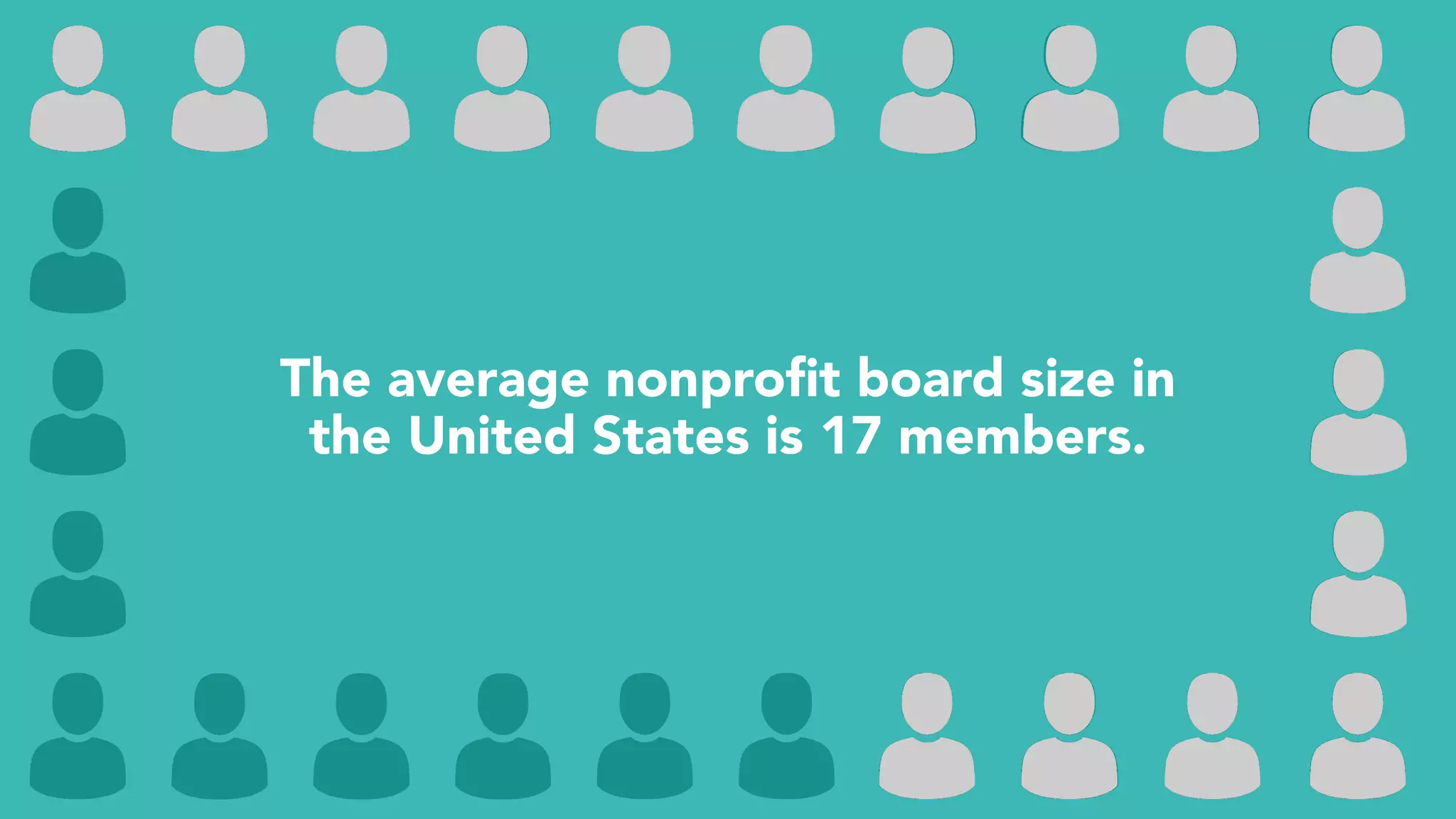
The average nonprofit board size in
the United States is 17 members.
Is a bigger board better?
Burden on director and staff
Is a bigger board better?
$ Costs associated
Burden on director and staff
Is a bigger board better?
$ Costs associated
Burden on director and staff
Enough for a healthy debate
Don’ts of board composition
Going committee crazy
Don’ts of board composition
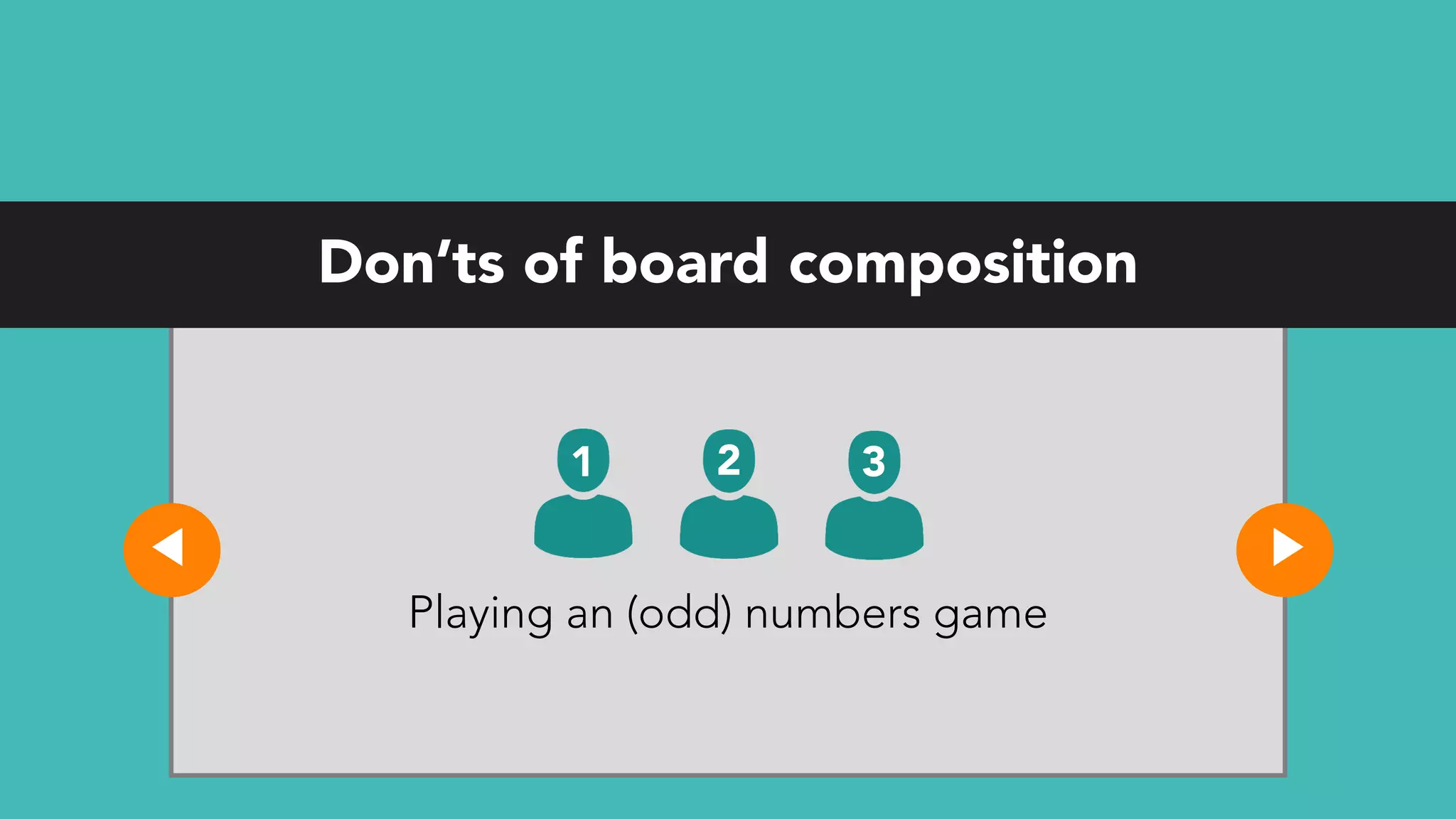
Playing an (odd) numbers game
1 2 3
Don’ts of board composition
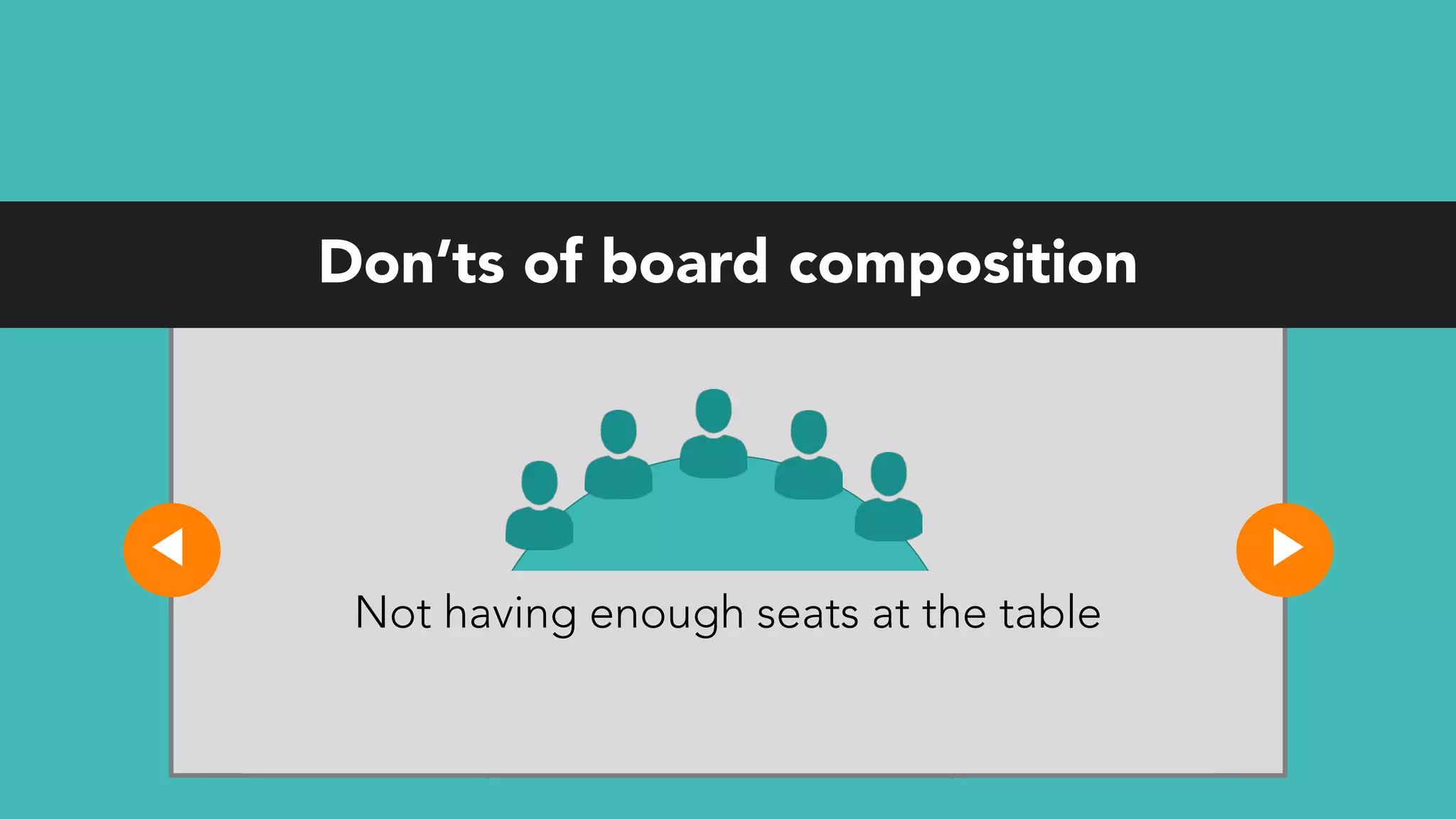
Not having enough seats at the table
Potential board members to consider
Passionate about your
organization’s mission
Understand your
organization’s clientele
Service professionals
Business leaders
Young professionals
Board Composition Traps
Skills trap
Board Composition Traps
Skills trap
Free services trap
Board Composition Traps
Skills trap
Free services trap
Money/connection trap
Improve board accountability
Action Step #3
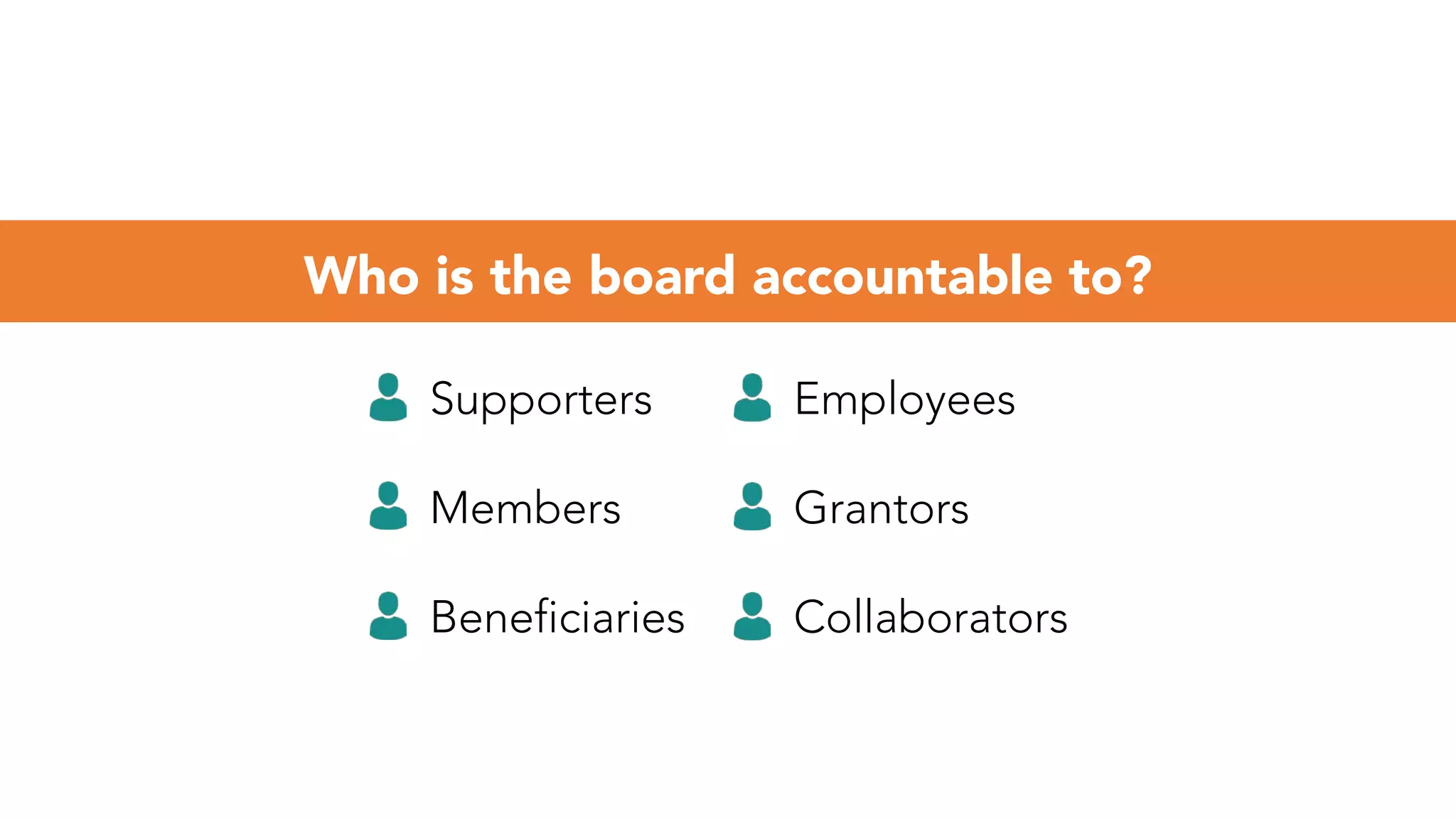
Who is the board accountable to?
Supporters
Members
Beneficiaries
Employees
Grantors
Collaborators
Principles of good governance
Legal compliance and public disclosures
Effective governance
Legal compliance and public disclosures
Effective governance
Strong financial oversight
Legal compliance and public disclosures
Effective governance
Strong financial oversight
Responsible fundraising
Two aspects of board accountability
Individual board
member accountability
Two aspects of board accountability
Individual board
member accountability
&
The board’s collective
responsibility
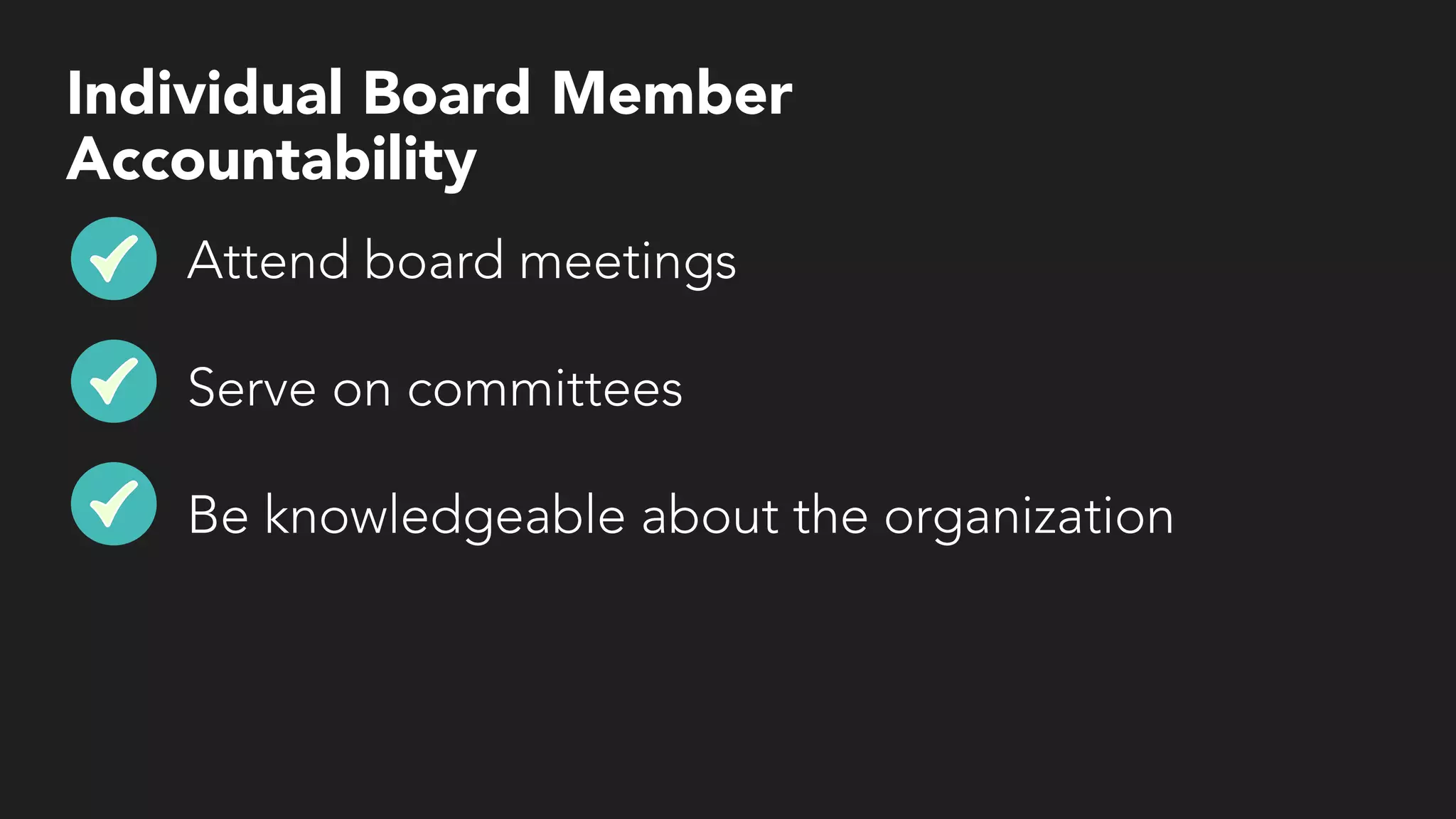
Individual Board Member
Accountability
Attend board meetings
Serve on committees
Be knowledgeable about the organization
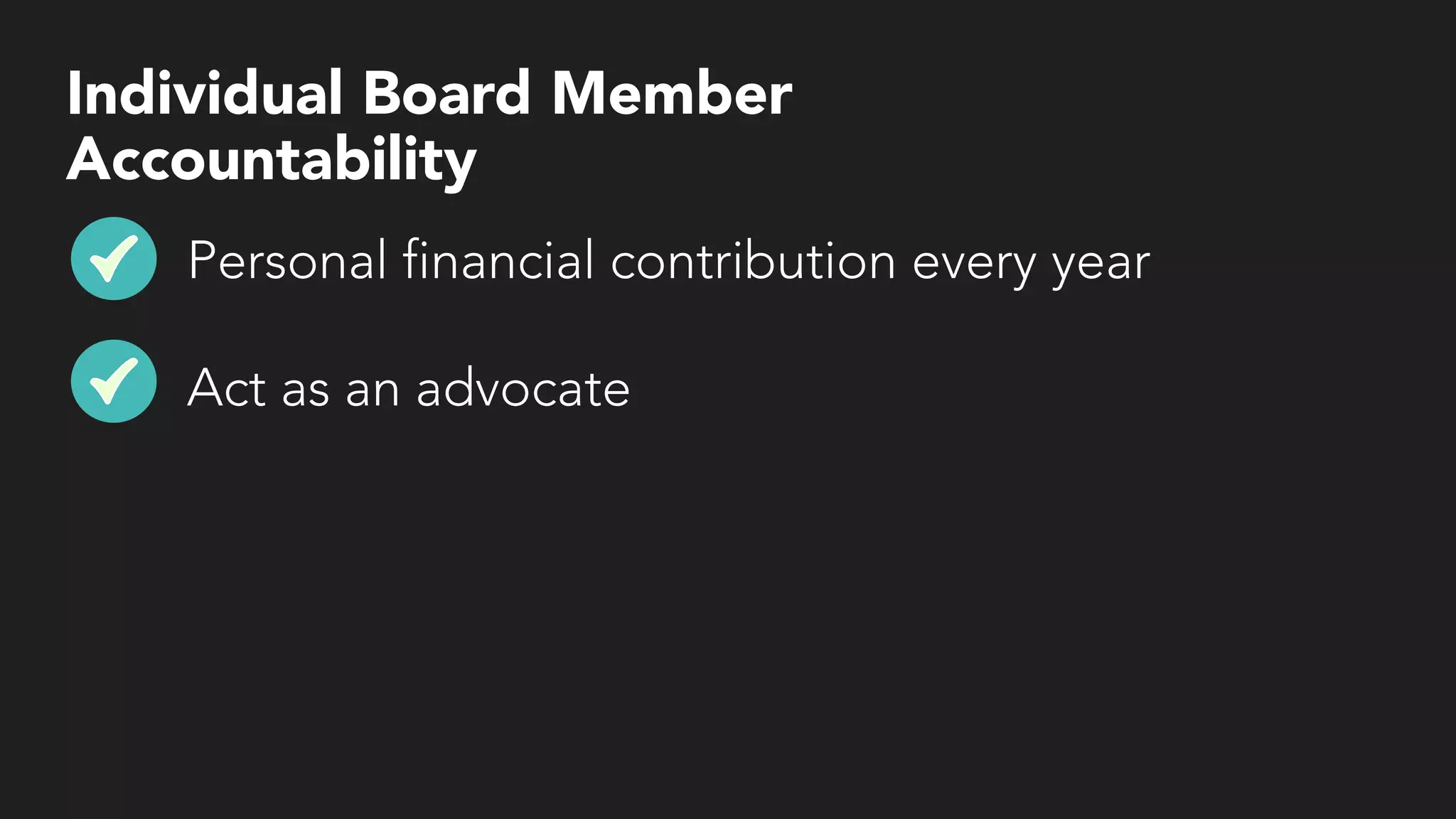
Individual Board Member
Accountability
Personal financial contribution every year
Act as an advocate
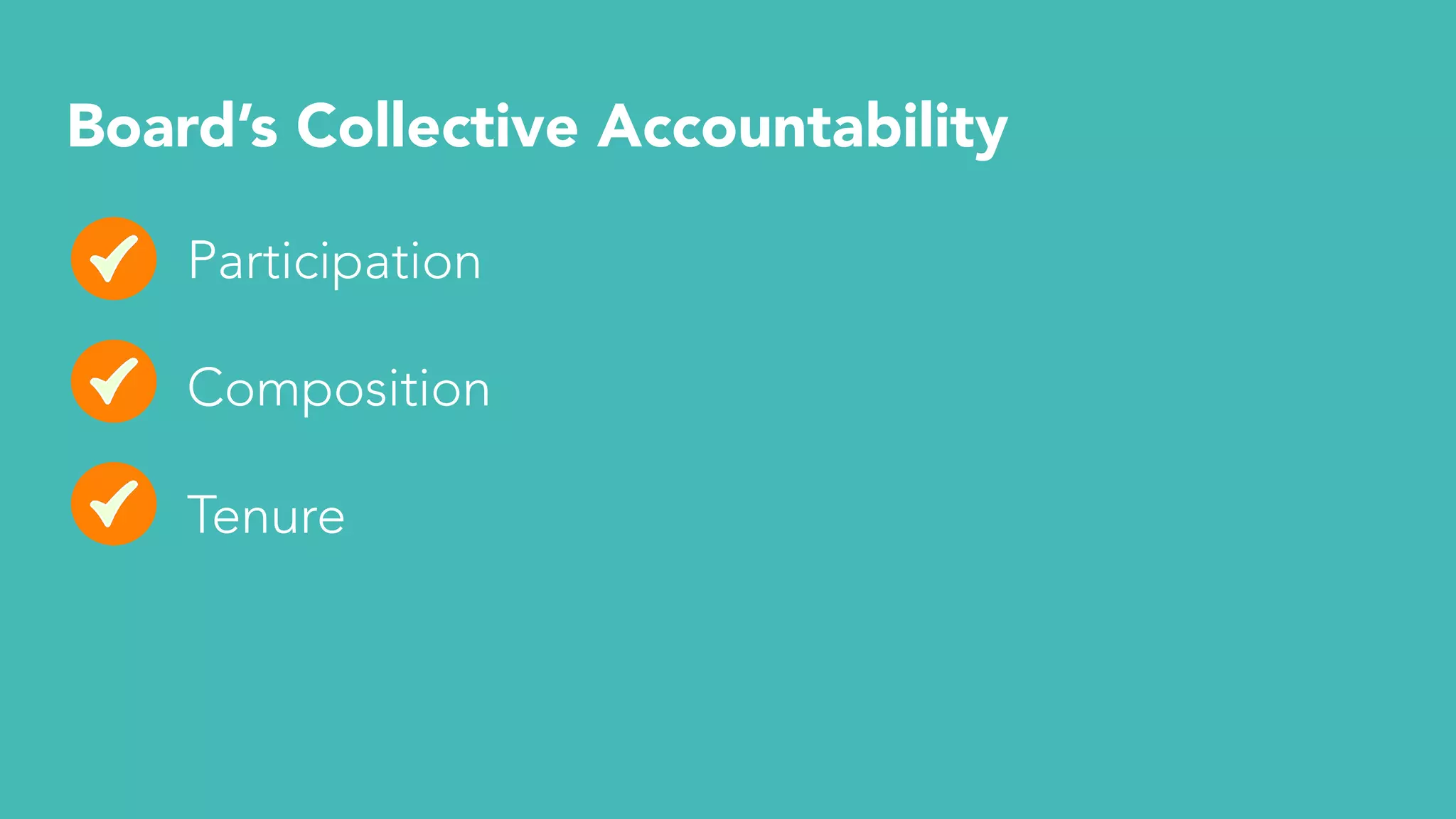
Board’s Collective Accountability
Participation
Composition
Tenure
Board’s Collective Accountability
Participation
Composition
Tenure
Recruitment
Officers
Meetings
Board’s Collective Accountability
Self-assessment of the board
Annual assessment of the CEO
Address issues head-on
Lead with authenticity
Create leadership transition plans
Action Step #4
Change in Executive Director
 Candid assessment of organization’s
strengths and weaknesses
 Candid assessment of outgoing executive
director’s strengths and weaknesses
Change in Executive Director
 Communication is key throughout the
process
 Staff needs to see that the board is leading
a thoughtful transition
Change in Executive Director
 Provide assistance to the new hire
 Prepare the way, as successful executives rarely
let go easily
 Be proactive in your efforts for a smooth
transition
Board Succession
Define roles of board leadership positions
Board Succession
Define a development process
for future board leaders
Board Succession
Define a process of succession
Board Succession
On-boarding or orientation
for new board leaders
Boost board engagement
Action Step #5
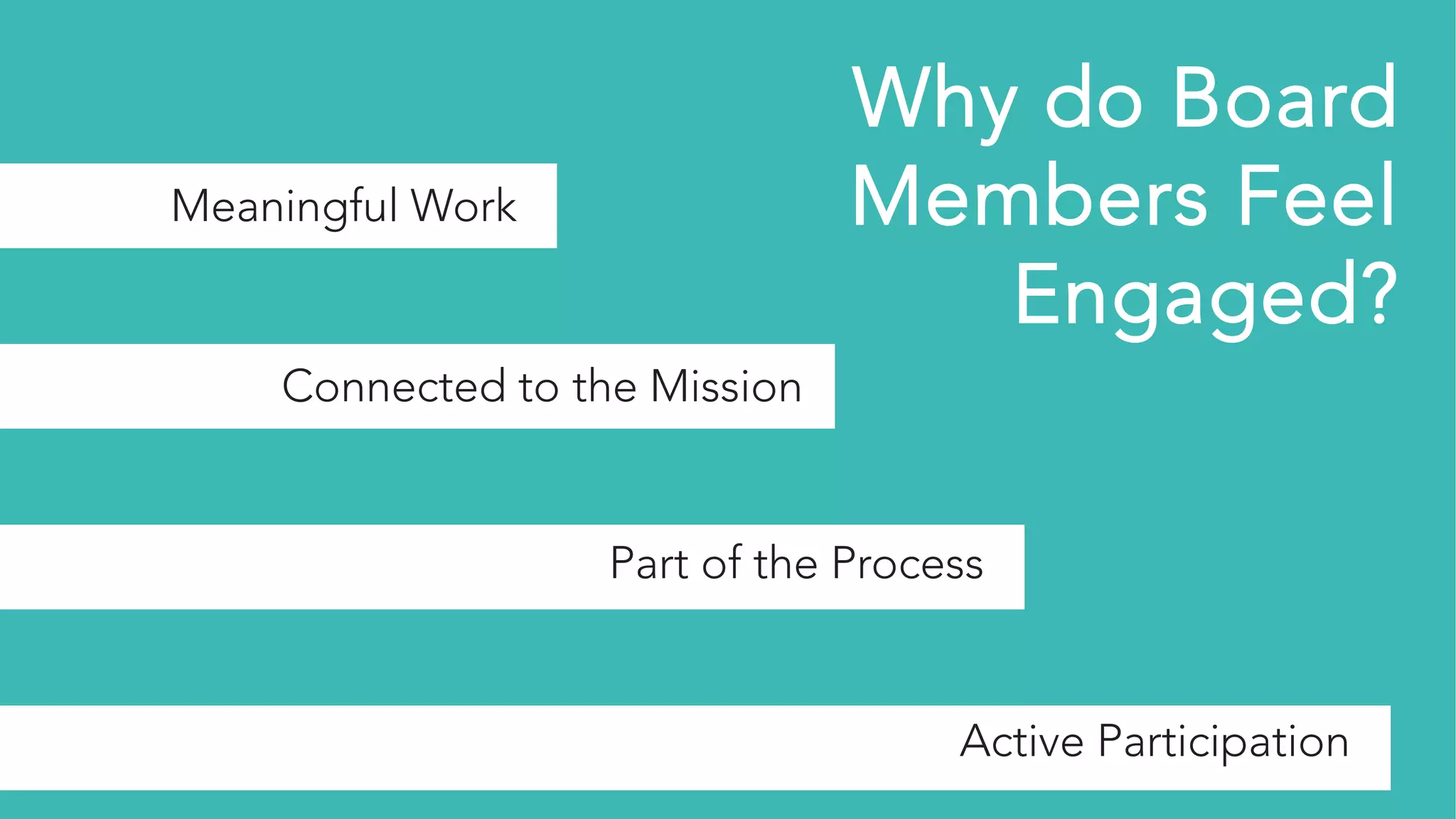
Meaningful Work
Connected to the Mission
Part of the Process
Active Participation
Why do Board
Members Feel
Engaged?
Practice Pointers
Assign board mentors to
new board members
Assist all board members in
finding the appropriate
committee assignment
Include copy of mission
statement and strategic plan
in board orientation
materials
General Pointers
Include bios of all board
members in board
orientation materials
Find the right balance of
communication
Show appreciation
Board contracts
General Pointers
Distribute board packets prior to
meeting to:
Anticipate key questions
Get committee reports in writing
Use name tags/tents at all board
meetings
Provide a list of all internal
acronyms
Board Meeting Pointers
Board chair should lead meetings,
not the Executive Director
Structure board meeting agendas
around important questions, not
minor details
Board Meeting Pointers
Focus not on “telling” and
“selling,” but on “testing,”
“consulting” and “creating”
Adjourn on time, or agree to stay
later
Board Meeting Pointers
Contact me
RWolf@gma-cpa.com
800.899.4623
www.gma-cpa.com
FREE QUIZ
Start the quiz now
8 Questions to Discover the
Type of Board Member Your
Nonprofit is Missing

5 Essential Steps to Building a Better Board for Your Nonprofit