Developing a High
Performing Board
Governor’s Conference on Service and Nonprofit Capacity Building
Oct. 3-4, 2013
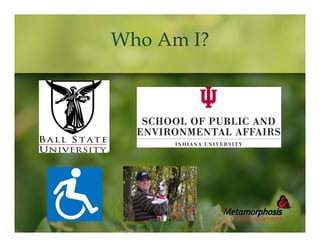
Who Am I?
Rebecca Kirby, MPA

Metamorphosis Consulting Services
www.experiencemcs.com
Nonprofit Start-Up
Organizational Assessment, Expansion and Change
Executive Director Transition and Search
Professional Interim Executive Director
Nonprofit Best Practices Implementation
Grant Writing
Special Projects
Board Development
Who Are YOU?
Developing a High
Performing Board
“There is no other way that as few people can
raise the quality of the whole American society
as far and as fast as can trustees and directors
of our voluntary institutions, using the strength
they now have in the positions they now hold.”
Robert K. Greenleaf
Developing a High
Performing Board
 10 Basic Responsibilities of Nonprofit Boards
 Board Assessment
 Board Member Recruitment
 Developing Strong Committees
 Firing a Board Member
 Taking the Board to the “Next Level”
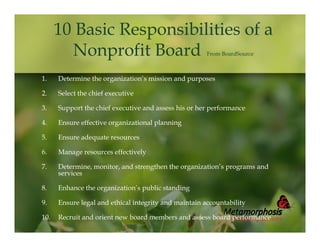
10 Basic Responsibilities of a
Nonprofit Board
From BoardSource

1.

Determine the organization’s mission and purposes

2.

Select the chief executive

3.

Support the chief executive and assess his or her performance

4.

Ensure effective organizational planning

5.

Ensure adequate resources

6.

Manage resources effectively

7.

Determine, monitor, and strengthen the organization’s programs and
services

8.

Enhance the organization’s public standing

9.

Ensure legal and ethical integrity and maintain accountability

10.

Recruit and orient new board members and assess board performance
Board Assessment
 Not a performance evaluation of Exec. Director,
Organization or individual board members
 “How are we doing as a board?”
 A process, not a one-time activity
 Builds an ongoing “to do” list for governance
improvement
 Is a springboard for discussions about strengths,
weaknesses and ongoing issues of concern.
Board Assessment:
Are You Ready?
 Staff and board leadership commitment
 Board leadership transition
 Staff leadership transition
 Time has lapsed since your last assessment
 Governance committee in place
 Link work to strategic plan
 Time commitment
Board Assessment:
Focus Areas
 Finance
 Fundraising
 Board recruitment
 Decision-making
 Leadership
 Strategy
 10 Basic Responsibilities…?
Board Assessment:
Process
1. Determine who will own results
2. Make sure full board is on board
3. Administer survey
4. Provide results to board
5. Hold a board retreat
6. Develop governance agenda
7. Activate governance committee
8. Keep it alive!
Board Assessment:
Resources
 www.boardsource.org - $550-$975

 Simpler Assessment

 Board Profiles
Board Member
Recruitment
When recruiting new board members, go beyond
making a list of skills needed for organizational
tasks. Board members should not only lend their
expertise but give entree into areas of influence
for fundraising and marketing possibilities.
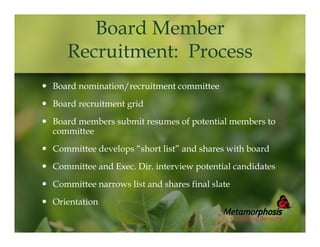
Board Member
Recruitment: Process
 Board nomination/recruitment committee
 Board recruitment grid
 Board members submit resumes of potential members to
committee
 Committee develops “short list” and shares with board
 Committee and Exec. Dir. interview potential candidates
 Committee narrows list and shares final slate
 Orientation
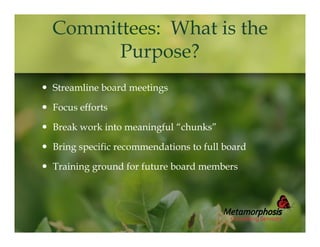
Committees: What is the
Purpose?
 Streamline board meetings
 Focus efforts
 Break work into meaningful “chunks”
 Bring specific recommendations to full board
 Training ground for future board members
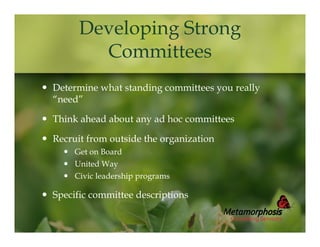
Developing Strong
Committees
 Determine what standing committees you really
“need”
 Think ahead about any ad hoc committees
 Recruit from outside the organization
 Get on Board
 United Way
 Civic leadership programs

 Specific committee descriptions
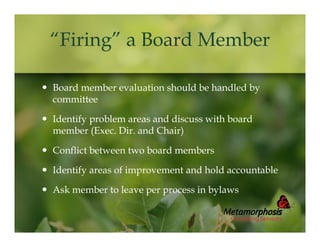
“Firing” a Board Member
 Board member evaluation should be handled by
committee
 Identify problem areas and discuss with board
member (Exec. Dir. and Chair)
 Conflict between two board members
 Identify areas of improvement and hold accountable
 Ask member to leave per process in bylaws
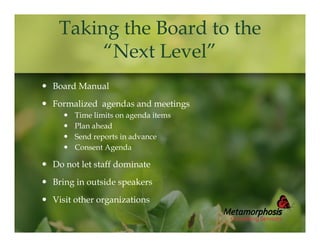
Taking the Board to the
“Next Level”
 Board Manual
 Formalized agendas and meetings





Time limits on agenda items
Plan ahead
Send reports in advance
Consent Agenda

 Do not let staff dominate
 Bring in outside speakers
 Visit other organizations
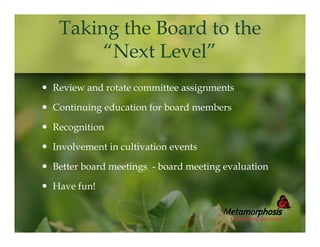
Taking the Board to the
“Next Level”
 Review and rotate committee assignments
 Continuing education for board members
 Recognition
 Involvement in cultivation events
 Better board meetings - board meeting evaluation
 Have fun!
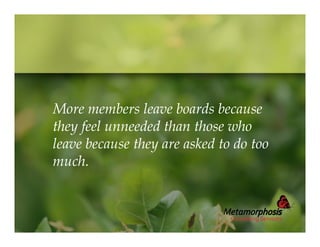
More members leave boards because
they feel unneeded than those who
leave because they are asked to do too
much.
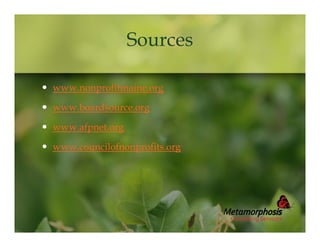
Sources
 www.nonprofitmaine.org
 www.boardsource.org
 www.afpnet.org
 www.councilofnonprofits.org
Rebecca Kirby, MPA

Metamorphosis Consulting Services
www.experiencemcs.com
Nonprofit Start-Up
Organizational Assessment, Expansion and Change
Executive Director Transition and Search
Professional Interim Executive Director
Nonprofit Best Practices Implementation
Grant Writing
Special Projects
Board Development

Developing a High Performing Board

  • 1.
    Developing a High PerformingBoard Governor’s Conference on Service and Nonprofit Capacity Building Oct. 3-4, 2013
  • 2.
  • 3.
    Rebecca Kirby, MPA MetamorphosisConsulting Services www.experiencemcs.com Nonprofit Start-Up Organizational Assessment, Expansion and Change Executive Director Transition and Search Professional Interim Executive Director Nonprofit Best Practices Implementation Grant Writing Special Projects Board Development
  • 4.
  • 5.
    Developing a High PerformingBoard “There is no other way that as few people can raise the quality of the whole American society as far and as fast as can trustees and directors of our voluntary institutions, using the strength they now have in the positions they now hold.” Robert K. Greenleaf
  • 6.
    Developing a High PerformingBoard  10 Basic Responsibilities of Nonprofit Boards  Board Assessment  Board Member Recruitment  Developing Strong Committees  Firing a Board Member  Taking the Board to the “Next Level”
  • 7.
    10 Basic Responsibilitiesof a Nonprofit Board From BoardSource 1. Determine the organization’s mission and purposes 2. Select the chief executive 3. Support the chief executive and assess his or her performance 4. Ensure effective organizational planning 5. Ensure adequate resources 6. Manage resources effectively 7. Determine, monitor, and strengthen the organization’s programs and services 8. Enhance the organization’s public standing 9. Ensure legal and ethical integrity and maintain accountability 10. Recruit and orient new board members and assess board performance
  • 8.
    Board Assessment  Nota performance evaluation of Exec. Director, Organization or individual board members  “How are we doing as a board?”  A process, not a one-time activity  Builds an ongoing “to do” list for governance improvement  Is a springboard for discussions about strengths, weaknesses and ongoing issues of concern.
  • 9.
    Board Assessment: Are YouReady?  Staff and board leadership commitment  Board leadership transition  Staff leadership transition  Time has lapsed since your last assessment  Governance committee in place  Link work to strategic plan  Time commitment
  • 10.
    Board Assessment: Focus Areas Finance  Fundraising  Board recruitment  Decision-making  Leadership  Strategy  10 Basic Responsibilities…?
  • 11.
    Board Assessment: Process 1. Determinewho will own results 2. Make sure full board is on board 3. Administer survey 4. Provide results to board 5. Hold a board retreat 6. Develop governance agenda 7. Activate governance committee 8. Keep it alive!
  • 12.
    Board Assessment: Resources  www.boardsource.org- $550-$975  Simpler Assessment  Board Profiles
  • 13.
    Board Member Recruitment When recruitingnew board members, go beyond making a list of skills needed for organizational tasks. Board members should not only lend their expertise but give entree into areas of influence for fundraising and marketing possibilities.
  • 14.
    Board Member Recruitment: Process Board nomination/recruitment committee  Board recruitment grid  Board members submit resumes of potential members to committee  Committee develops “short list” and shares with board  Committee and Exec. Dir. interview potential candidates  Committee narrows list and shares final slate  Orientation
  • 15.
    Committees: What isthe Purpose?  Streamline board meetings  Focus efforts  Break work into meaningful “chunks”  Bring specific recommendations to full board  Training ground for future board members
  • 16.
    Developing Strong Committees  Determinewhat standing committees you really “need”  Think ahead about any ad hoc committees  Recruit from outside the organization  Get on Board  United Way  Civic leadership programs  Specific committee descriptions
  • 17.
    “Firing” a BoardMember  Board member evaluation should be handled by committee  Identify problem areas and discuss with board member (Exec. Dir. and Chair)  Conflict between two board members  Identify areas of improvement and hold accountable  Ask member to leave per process in bylaws
  • 18.
    Taking the Boardto the “Next Level”  Board Manual  Formalized agendas and meetings     Time limits on agenda items Plan ahead Send reports in advance Consent Agenda  Do not let staff dominate  Bring in outside speakers  Visit other organizations
  • 19.
    Taking the Boardto the “Next Level”  Review and rotate committee assignments  Continuing education for board members  Recognition  Involvement in cultivation events  Better board meetings - board meeting evaluation  Have fun!
  • 20.
    More members leaveboards because they feel unneeded than those who leave because they are asked to do too much.
  • 21.
    Sources  www.nonprofitmaine.org  www.boardsource.org www.afpnet.org  www.councilofnonprofits.org
  • 22.
    Rebecca Kirby, MPA MetamorphosisConsulting Services www.experiencemcs.com Nonprofit Start-Up Organizational Assessment, Expansion and Change Executive Director Transition and Search Professional Interim Executive Director Nonprofit Best Practices Implementation Grant Writing Special Projects Board Development