ELECTRIC CIRCUITS
AN ELECTRIC CIRCUIT IS A CLOSED PATH IN WHICH ELECTRONS
MOVE TO PRODUCE ELECTRIC CURRENTS. INDEED, ALL THE
SIMPLE MODERN MARVELS ARE A CONSEQUENCE OF THIS
SCIENTIFIC PRINCIPLE. READ ON TO UNDERSTAND MORE ON
THE COMPONENTS, TYPES, AND OTHER CONCEPTS RELATED
TO ELECTRIC CIRCUITS.
•Electric circuits are important concepts that
have practical applications in our daily lives. It
is a very simple concept that incorporates three
different components: a source of electrical
energy, a device, and a closed loop of
conducting material.
SOURCE OF ELECTRICAL ENERGY
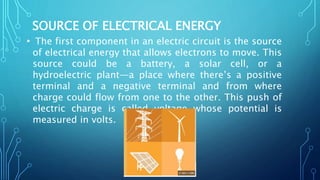
• The first component in an electric circuit is the source
of electrical energy that allows electrons to move. This
source could be a battery, a solar cell, or a
hydroelectric plant—a place where there’s a positive
terminal and a negative terminal and from where
charge could flow from one to the other. This push of
electric charge is called voltage whose potential is
measured in volts.
DEVICE IN THE ELECTRIC CIRCUIT
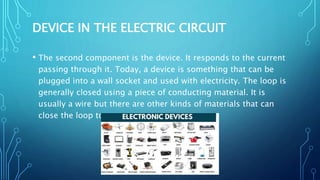
• The second component is the device. It responds to the current
passing through it. Today, a device is something that can be
plugged into a wall socket and used with electricity. The loop is
generally closed using a piece of conducting material. It is
usually a wire but there are other kinds of materials that can
close the loop too.
RESISTANCE OF THE ELECTRIC CIRCUIT
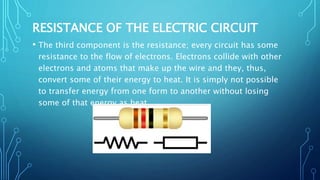
• The third component is the resistance; every circuit has some
resistance to the flow of electrons. Electrons collide with other
electrons and atoms that make up the wire and they, thus,
convert some of their energy to heat. It is simply not possible
to transfer energy from one form to another without losing
some of that energy as heat.
LIGHT BULB
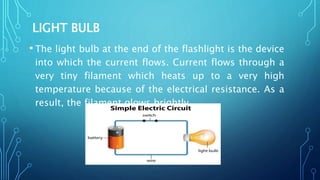
• The light bulb at the end of the flashlight is the device
into which the current flows. Current flows through a
very tiny filament which heats up to a very high
temperature because of the electrical resistance. As a
result, the filament glows brightly.
SWITCH, FUSE, AND CIRCUIT BREAKERS
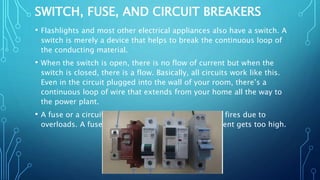
• Flashlights and most other electrical appliances also have a switch. A
switch is merely a device that helps to break the continuous loop of
the conducting material.
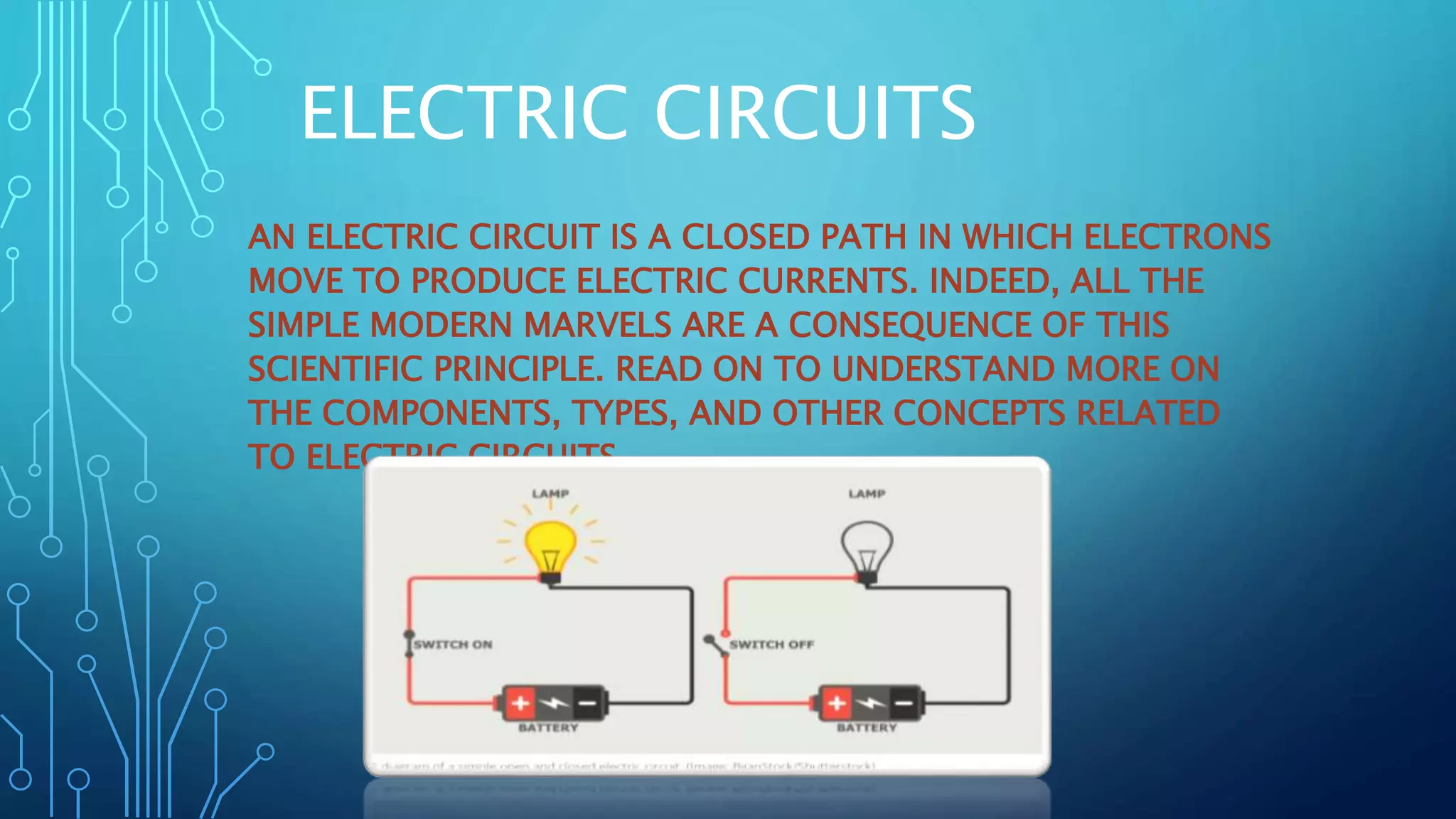
• When the switch is open, there is no flow of current but when the
switch is closed, there is a flow. Basically, all circuits work like this.
Even in the circuit plugged into the wall of your room, there’s a
continuous loop of wire that extends from your home all the way to
the power plant.
• A fuse or a circuit breaker is used to prevent major fires due to
overloads. A fuse is designed to burn up if the current gets too high.
TYPES OF ELECTRIC CIRCUITS
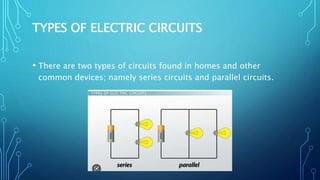
• There are two types of circuits found in homes and other
common devices; namely series circuits and parallel circuits.
SERIES CIRCUITS
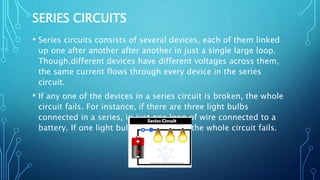
• Series circuits consists of several devices, each of them linked
up one after another after another in just a single large loop.
Though,different devices have different voltages across them,
the same current flows through every device in the series
circuit.
• If any one of the devices in a series circuit is broken, the whole
circuit fails. For instance, if there are three light bulbs
connected in a series, in just one loop of wire connected to a
battery. If one light bulb is unscrewed, the whole circuit fails.
PARALLEL CIRCUITS
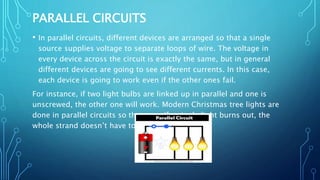
• In parallel circuits, different devices are arranged so that a single
source supplies voltage to separate loops of wire. The voltage in
every device across the circuit is exactly the same, but in general
different devices are going to see different currents. In this case,
each device is going to work even if the other ones fail.
For instance, if two light bulbs are linked up in parallel and one is
unscrewed, the other one will work. Modern Christmas tree lights are
done in parallel circuits so that even if a single light burns out, the
whole strand doesn’t have to be thrown out.

Electric circuits.pptx

  • 1.
    ELECTRIC CIRCUITS AN ELECTRICCIRCUIT IS A CLOSED PATH IN WHICH ELECTRONS MOVE TO PRODUCE ELECTRIC CURRENTS. INDEED, ALL THE SIMPLE MODERN MARVELS ARE A CONSEQUENCE OF THIS SCIENTIFIC PRINCIPLE. READ ON TO UNDERSTAND MORE ON THE COMPONENTS, TYPES, AND OTHER CONCEPTS RELATED TO ELECTRIC CIRCUITS.
  • 2.
    •Electric circuits areimportant concepts that have practical applications in our daily lives. It is a very simple concept that incorporates three different components: a source of electrical energy, a device, and a closed loop of conducting material.
  • 3.
    SOURCE OF ELECTRICALENERGY • The first component in an electric circuit is the source of electrical energy that allows electrons to move. This source could be a battery, a solar cell, or a hydroelectric plant—a place where there’s a positive terminal and a negative terminal and from where charge could flow from one to the other. This push of electric charge is called voltage whose potential is measured in volts.
  • 4.
    DEVICE IN THEELECTRIC CIRCUIT • The second component is the device. It responds to the current passing through it. Today, a device is something that can be plugged into a wall socket and used with electricity. The loop is generally closed using a piece of conducting material. It is usually a wire but there are other kinds of materials that can close the loop too.
  • 5.
    RESISTANCE OF THEELECTRIC CIRCUIT • The third component is the resistance; every circuit has some resistance to the flow of electrons. Electrons collide with other electrons and atoms that make up the wire and they, thus, convert some of their energy to heat. It is simply not possible to transfer energy from one form to another without losing some of that energy as heat.
  • 6.
    LIGHT BULB • Thelight bulb at the end of the flashlight is the device into which the current flows. Current flows through a very tiny filament which heats up to a very high temperature because of the electrical resistance. As a result, the filament glows brightly.
  • 7.
    SWITCH, FUSE, ANDCIRCUIT BREAKERS • Flashlights and most other electrical appliances also have a switch. A switch is merely a device that helps to break the continuous loop of the conducting material. • When the switch is open, there is no flow of current but when the switch is closed, there is a flow. Basically, all circuits work like this. Even in the circuit plugged into the wall of your room, there’s a continuous loop of wire that extends from your home all the way to the power plant. • A fuse or a circuit breaker is used to prevent major fires due to overloads. A fuse is designed to burn up if the current gets too high.
  • 8.
    TYPES OF ELECTRICCIRCUITS • There are two types of circuits found in homes and other common devices; namely series circuits and parallel circuits.
  • 9.
    SERIES CIRCUITS • Seriescircuits consists of several devices, each of them linked up one after another after another in just a single large loop. Though,different devices have different voltages across them, the same current flows through every device in the series circuit. • If any one of the devices in a series circuit is broken, the whole circuit fails. For instance, if there are three light bulbs connected in a series, in just one loop of wire connected to a battery. If one light bulb is unscrewed, the whole circuit fails.
  • 10.
    PARALLEL CIRCUITS • Inparallel circuits, different devices are arranged so that a single source supplies voltage to separate loops of wire. The voltage in every device across the circuit is exactly the same, but in general different devices are going to see different currents. In this case, each device is going to work even if the other ones fail. For instance, if two light bulbs are linked up in parallel and one is unscrewed, the other one will work. Modern Christmas tree lights are done in parallel circuits so that even if a single light burns out, the whole strand doesn’t have to be thrown out.