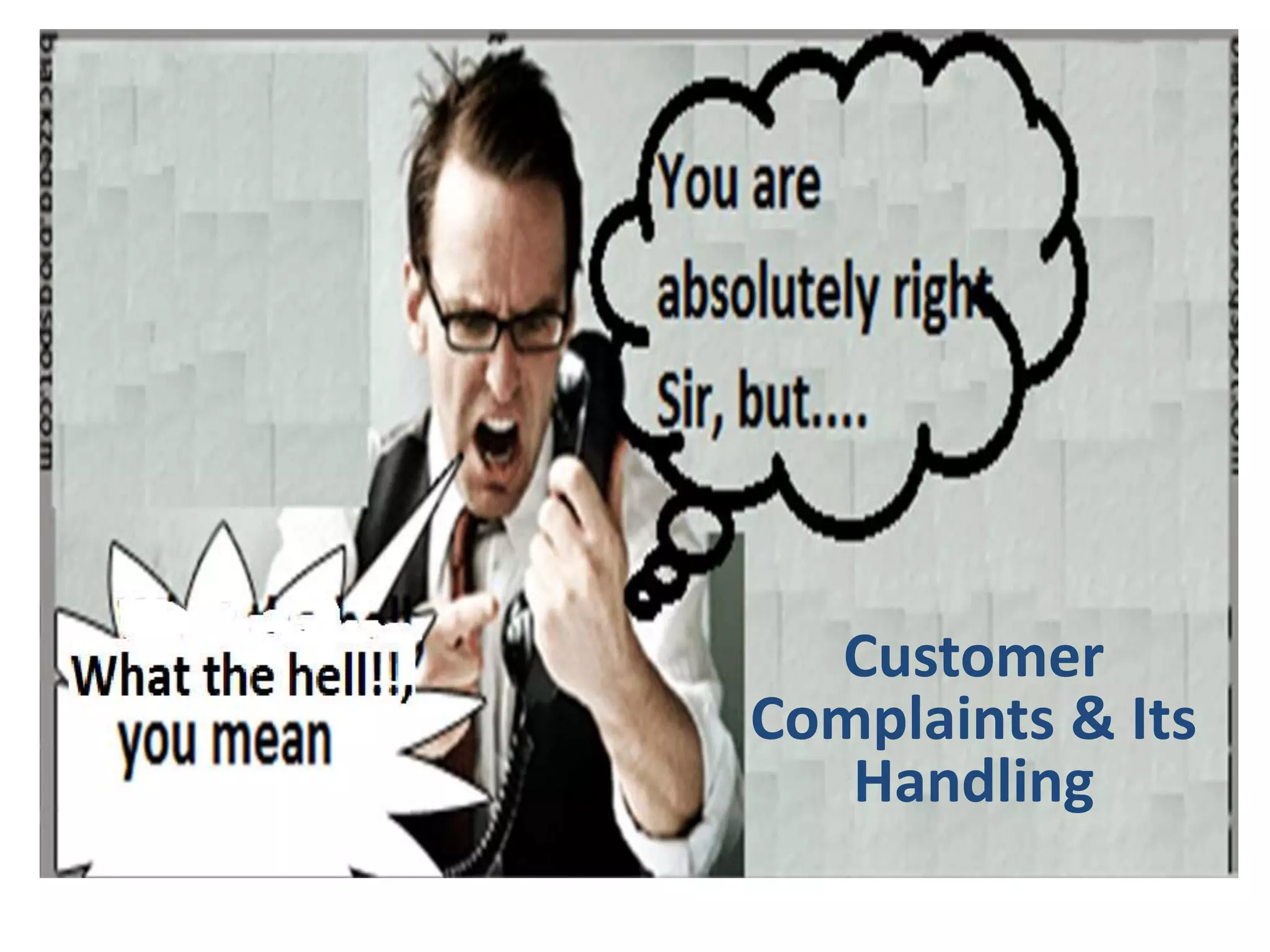
Customer
Complaints & Its
Handling
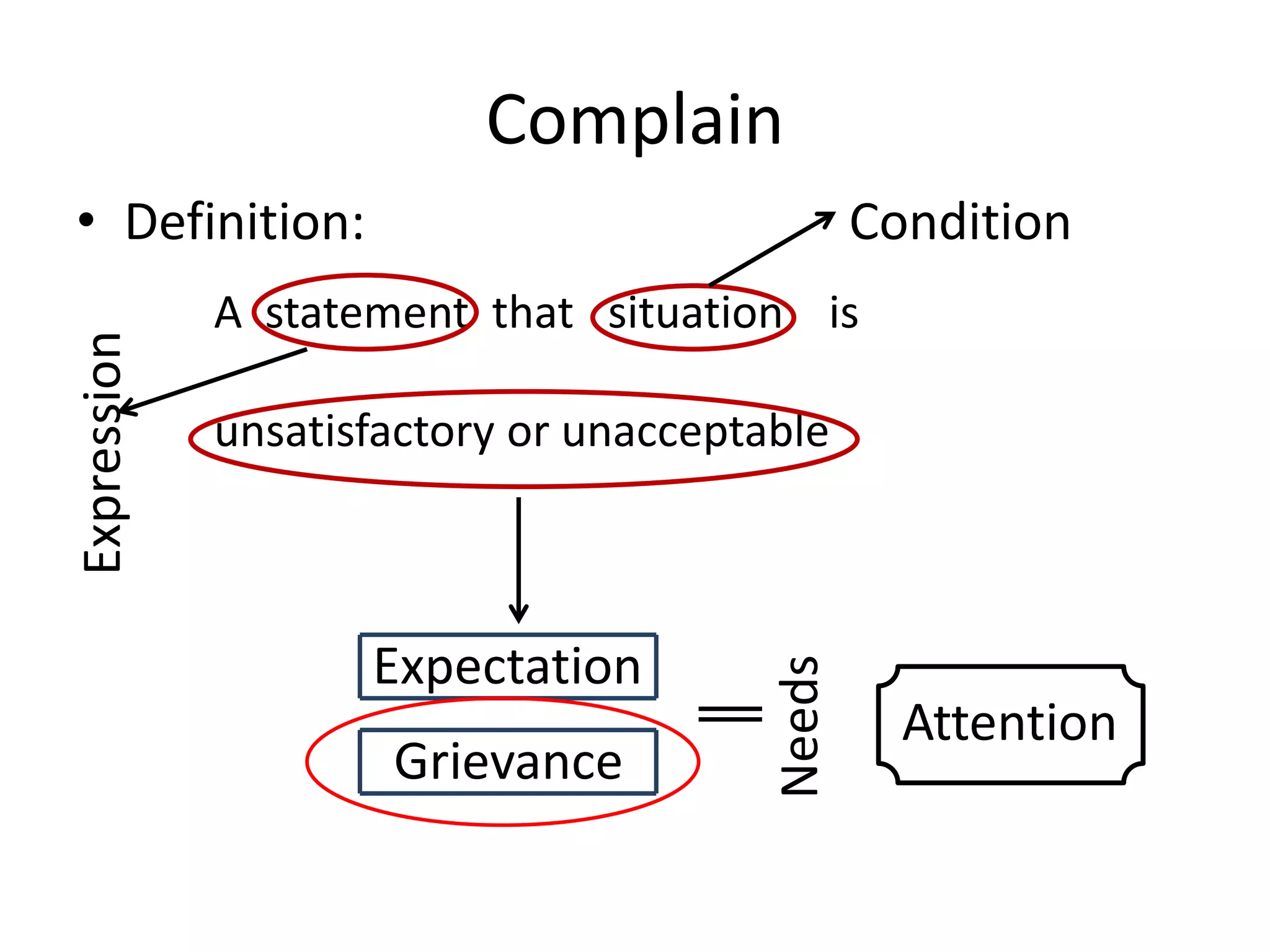
Complain
• Definition:
A statement that situation is
unsatisfactory or unacceptable
Expression
Condition
Expectation
Attention
Needs
Grievance
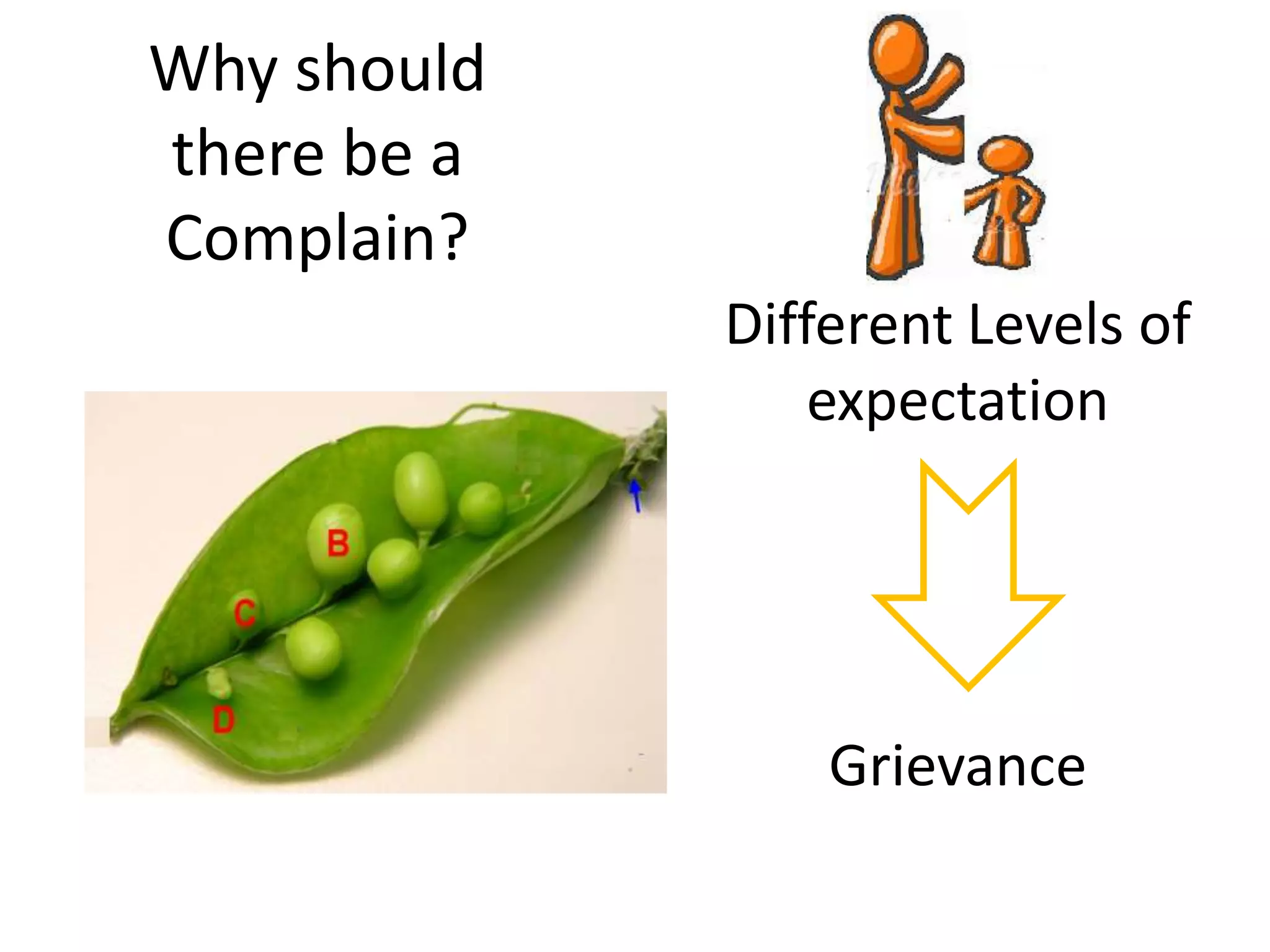
Why should
there be a
Complain?
Different Levels of
expectation
Grievance
What Makes A Person Angry?
The Psychology of an “Angry Customer”
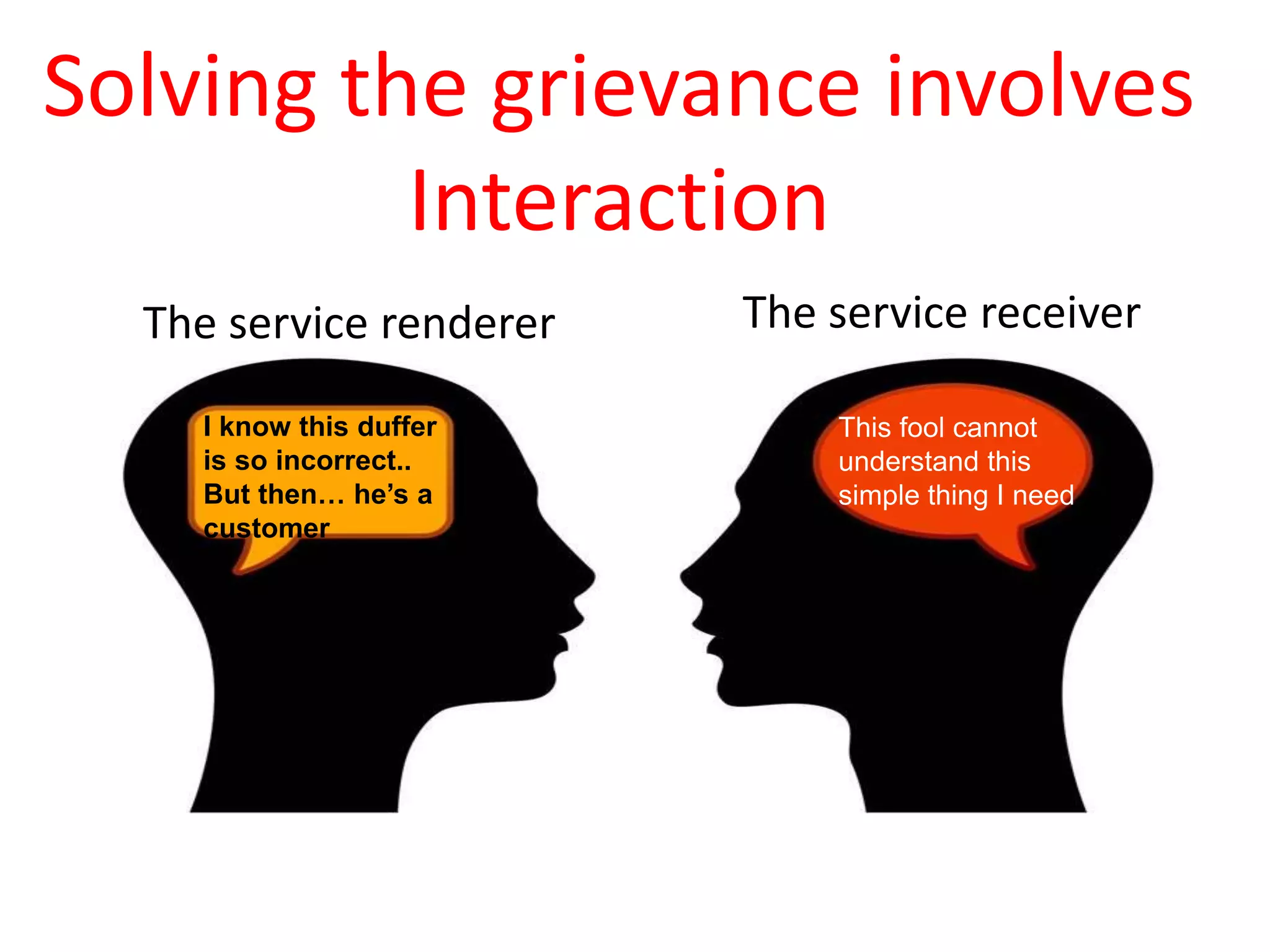
Solving the grievance involves
Interaction
I know this duffer
is so incorrect..
But then… he’s a
customer
This fool cannot
understand this
simple thing I need
The service renderer The service receiver
IS GRIEVANCE A PROBLEM?
Key word : How you “respond” to the person who complains
that reflects upon the degree of the problem
The Problem is not PROBLEM
In Practice
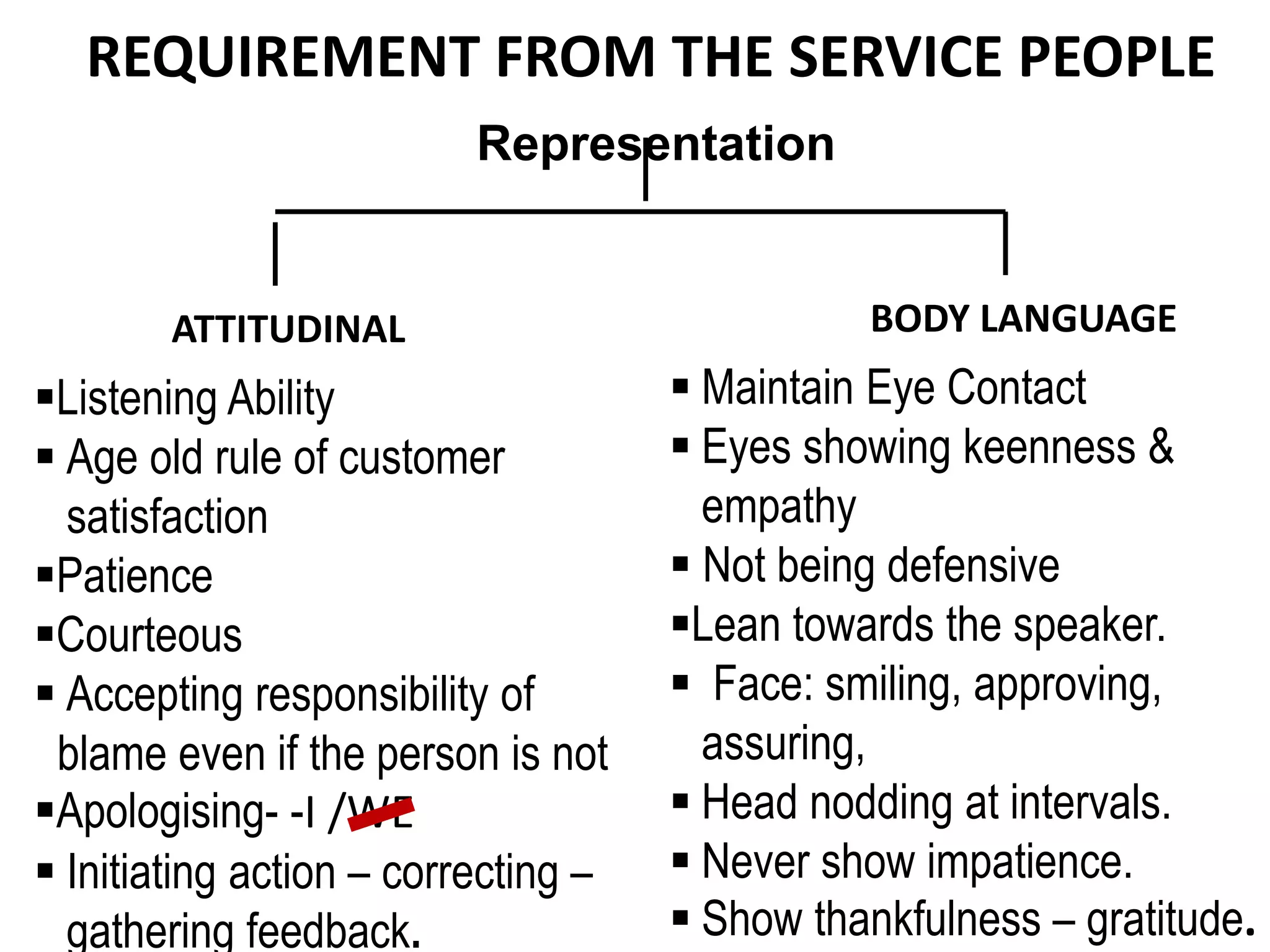
REQUIREMENT FROM THE SERVICE PEOPLE
ATTITUDINAL BODY LANGUAGE
Listening Ability
 Age old rule of customer
satisfaction
Patience
Courteous
 Accepting responsibility of
blame even if the person is not
Apologising- -I /WE
 Initiating action – correcting –
gathering feedback.
 Maintain Eye Contact
 Eyes showing keenness &
empathy
 Not being defensive
Lean towards the speaker.
 Face: smiling, approving,
assuring,
 Head nodding at intervals.
 Never show impatience.
 Show thankfulness – gratitude.
Representation
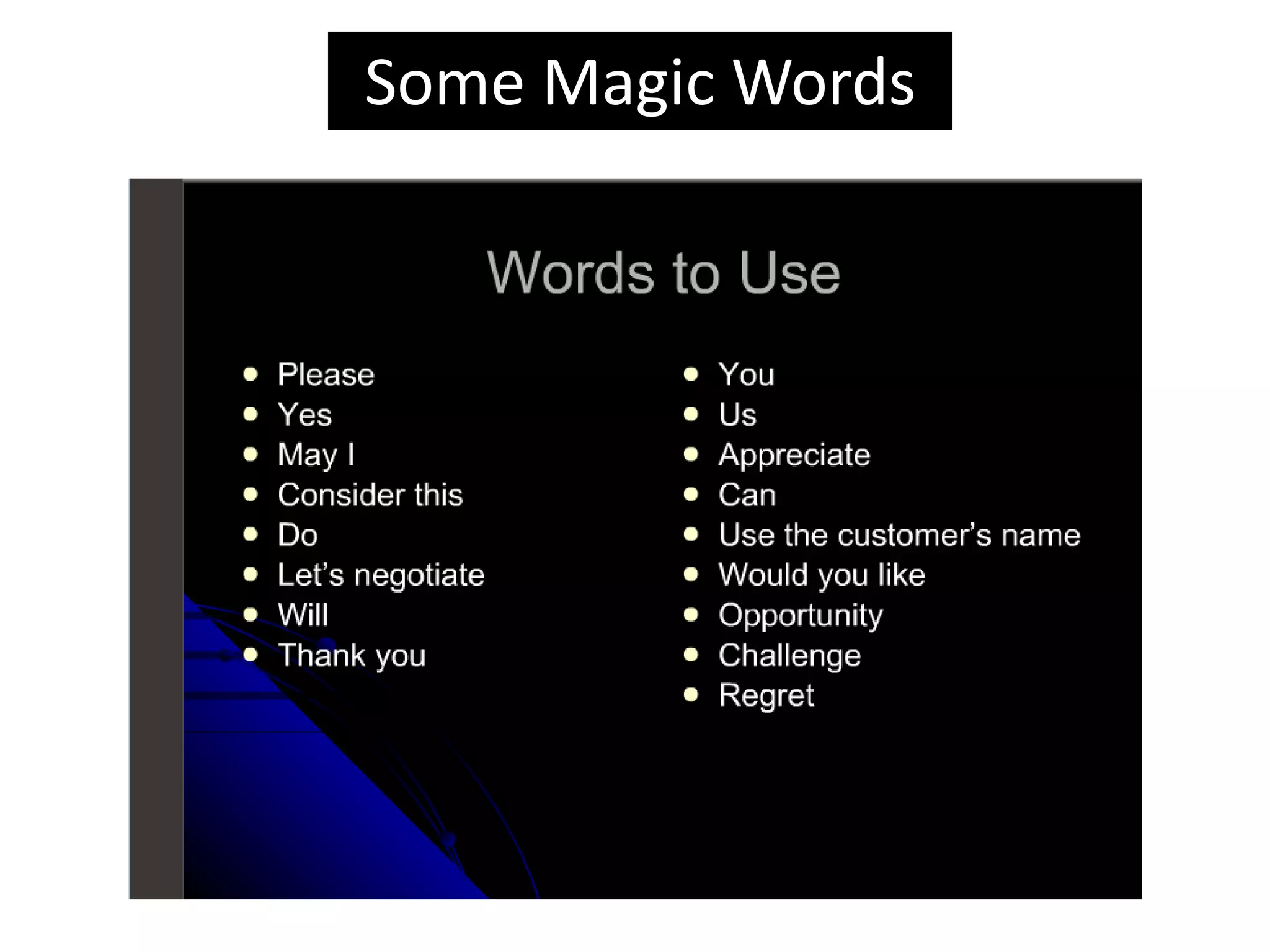
Some Magic Words
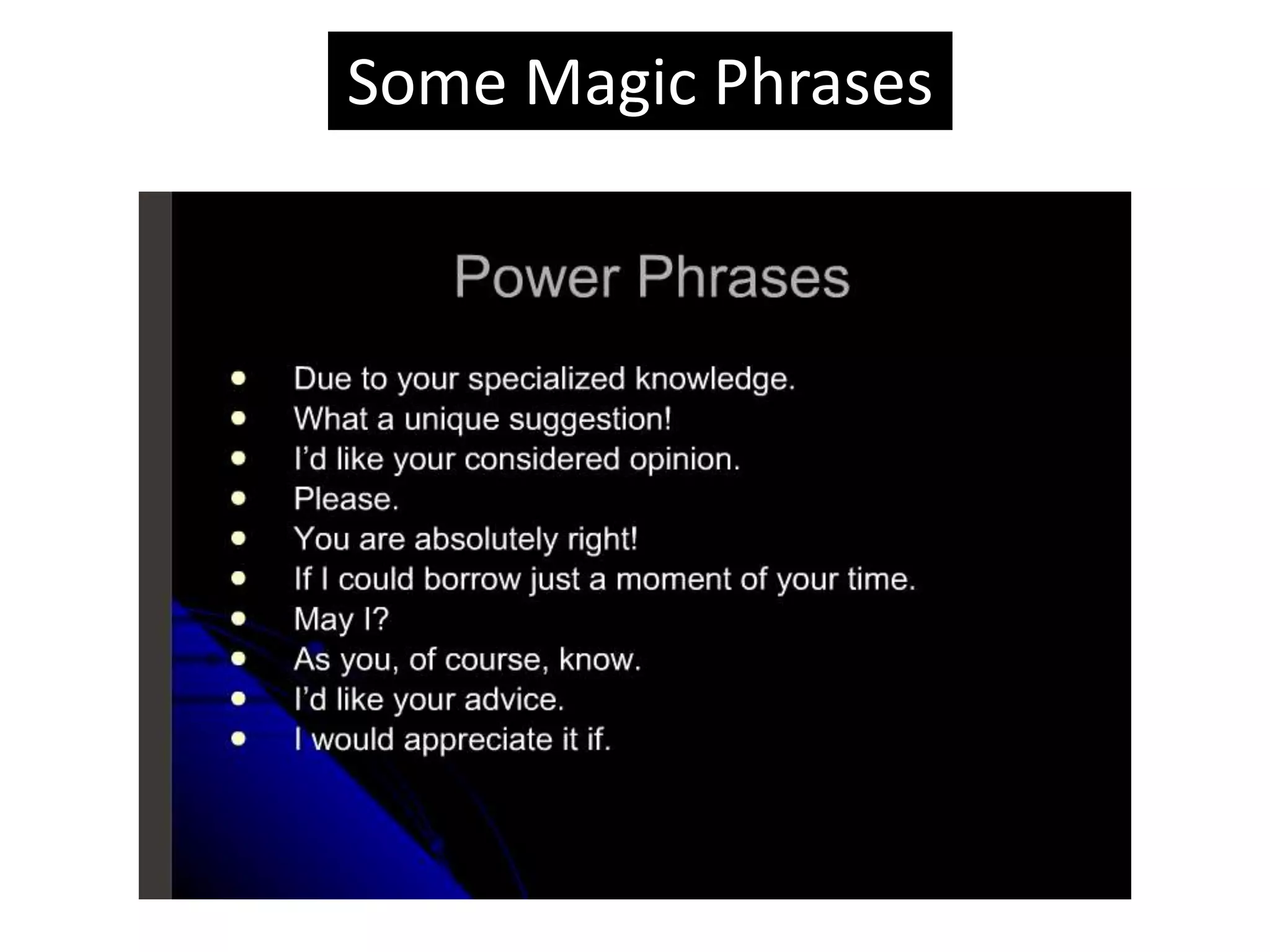
Some Magic Phrases
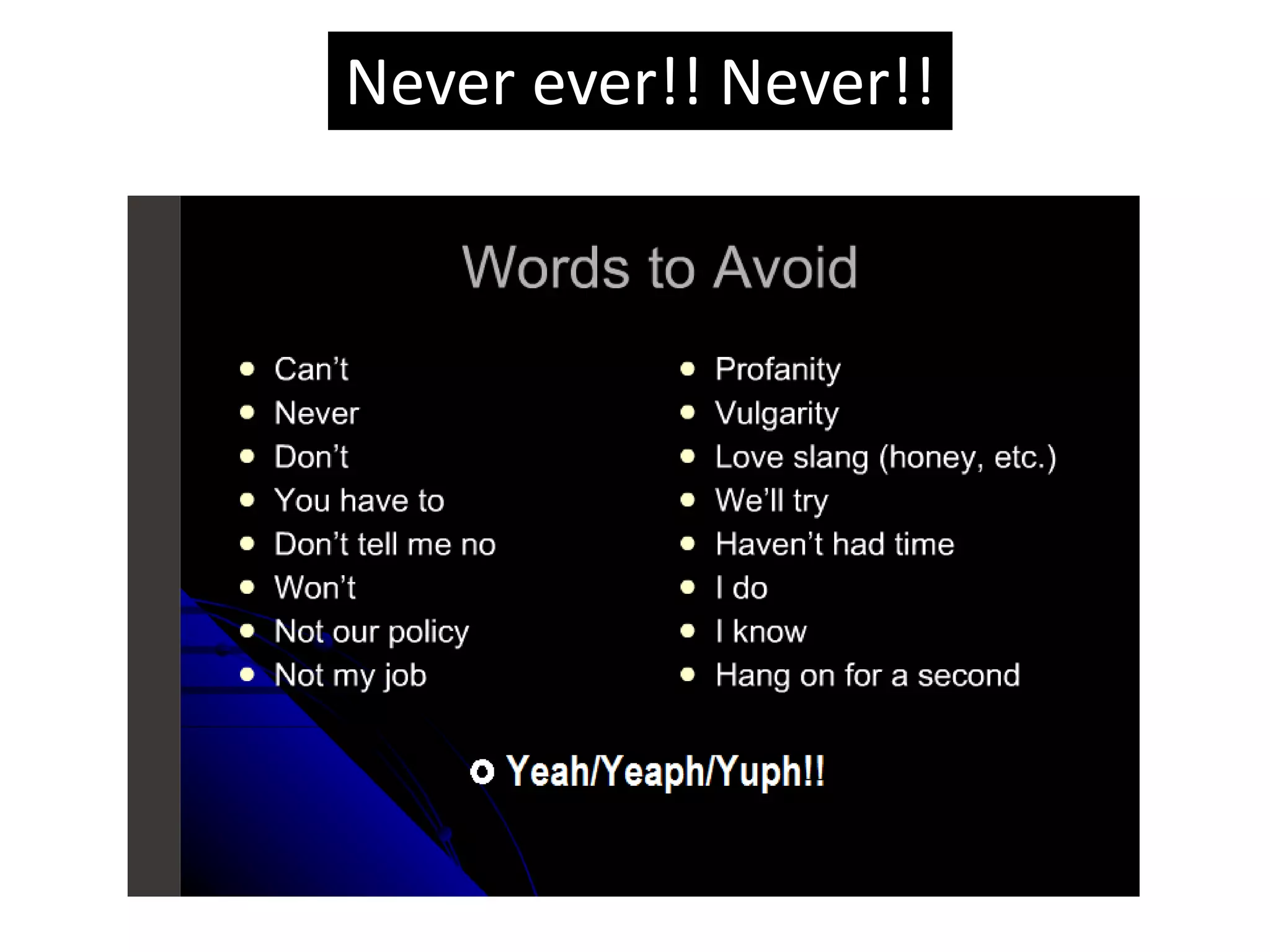
Never ever!! Never!!
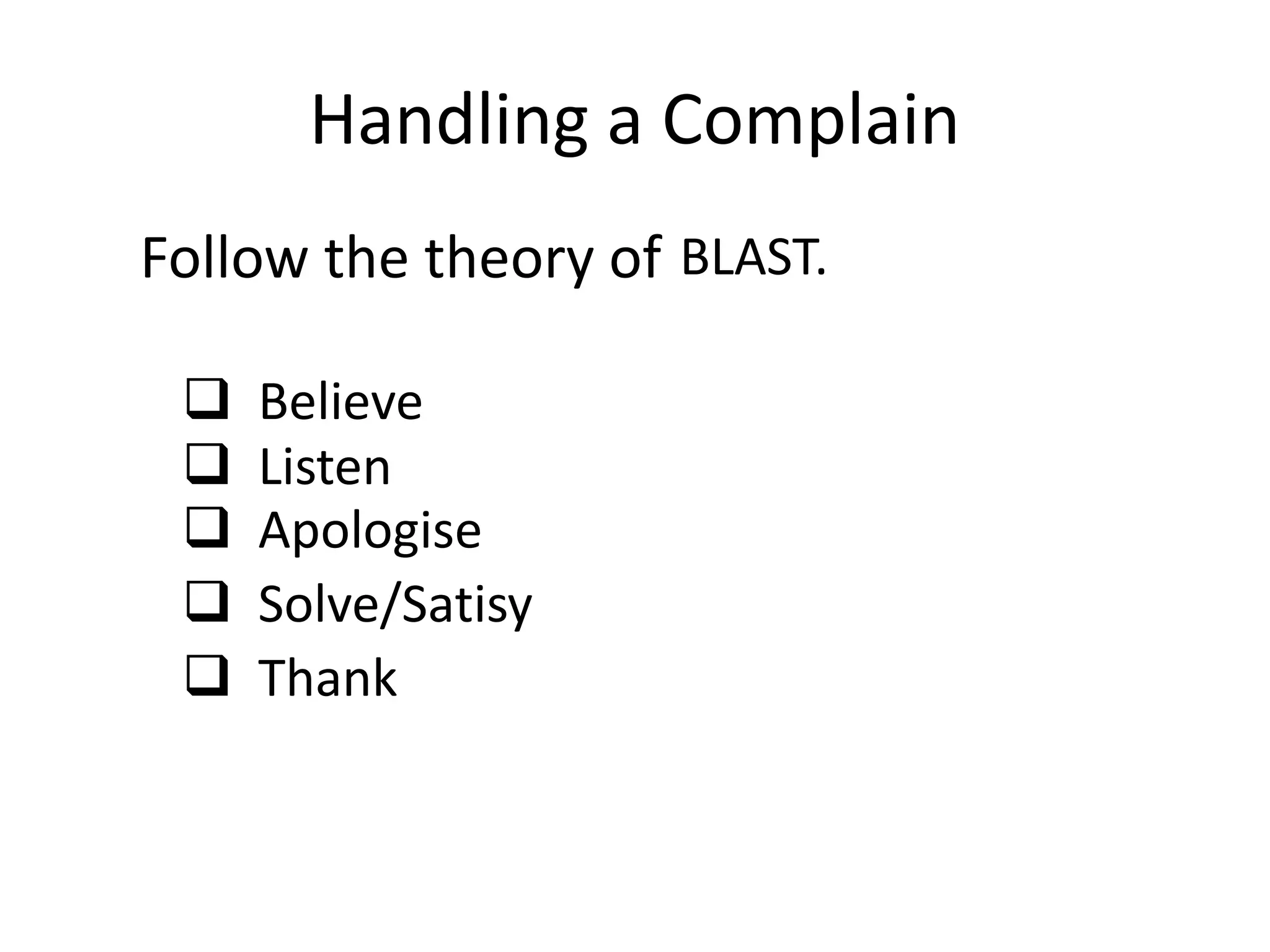
Handling a Complain
Follow the theory of
 Believe
 Listen
 Apologise
 Solve/Satisy
 Thank
BLAST.
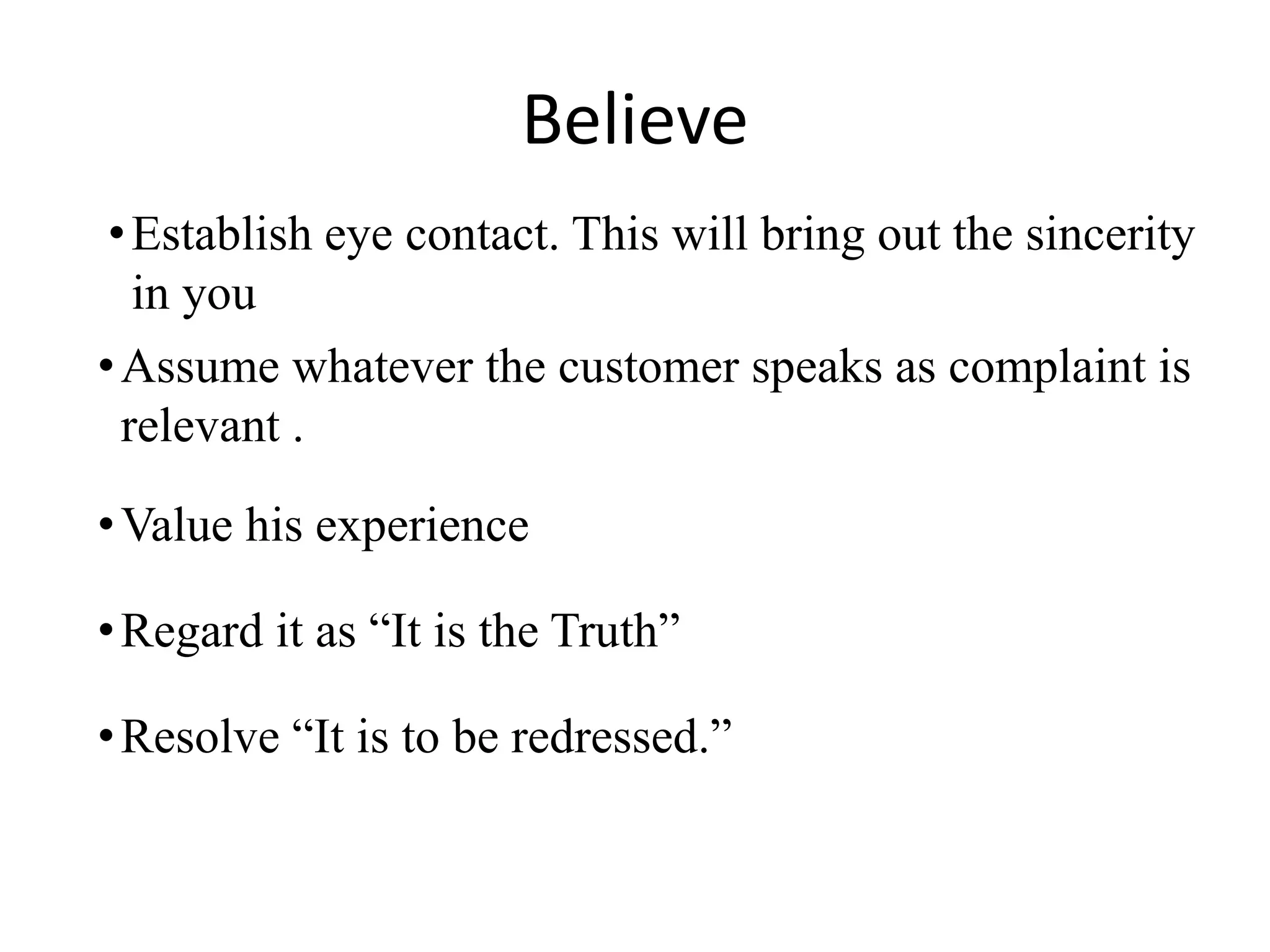
Believe
•Assume whatever the customer speaks as complaint is
relevant .
•Regard it as “It is the Truth”
•Resolve “It is to be redressed.”
•Establish eye contact. This will bring out the sincerity
in you
•Value his experience
Listen
•Give a patient
hearing.
•Avoid being defensive – remember it is not an
Accusation but an Opportunity.
•Do no take the criticisms personally.
•Do not assume
Be relaxed &
calm.
Show
empathy
•Try to understand where the problem lies.
Apologise
•Even if the disservice is not your fault.
•If the name of the customer is known address him
by his sir name
Satisfy/Solve
•When it is felt that the customer has vent out his
feelings
Give assurance that the person’s grievance is
understood
•Tell him what you can do; not what you can’t
•Make the customer a part of your solution; not a
part of your problem.
•If you do not have a solution
Do not lie
Assure
You shall refer to competent authority and get back ASAP
Satisfy/Solve (Cont’d)
If an agreement to a solution is reached act quickly
before they can change their mind.
- Follow up
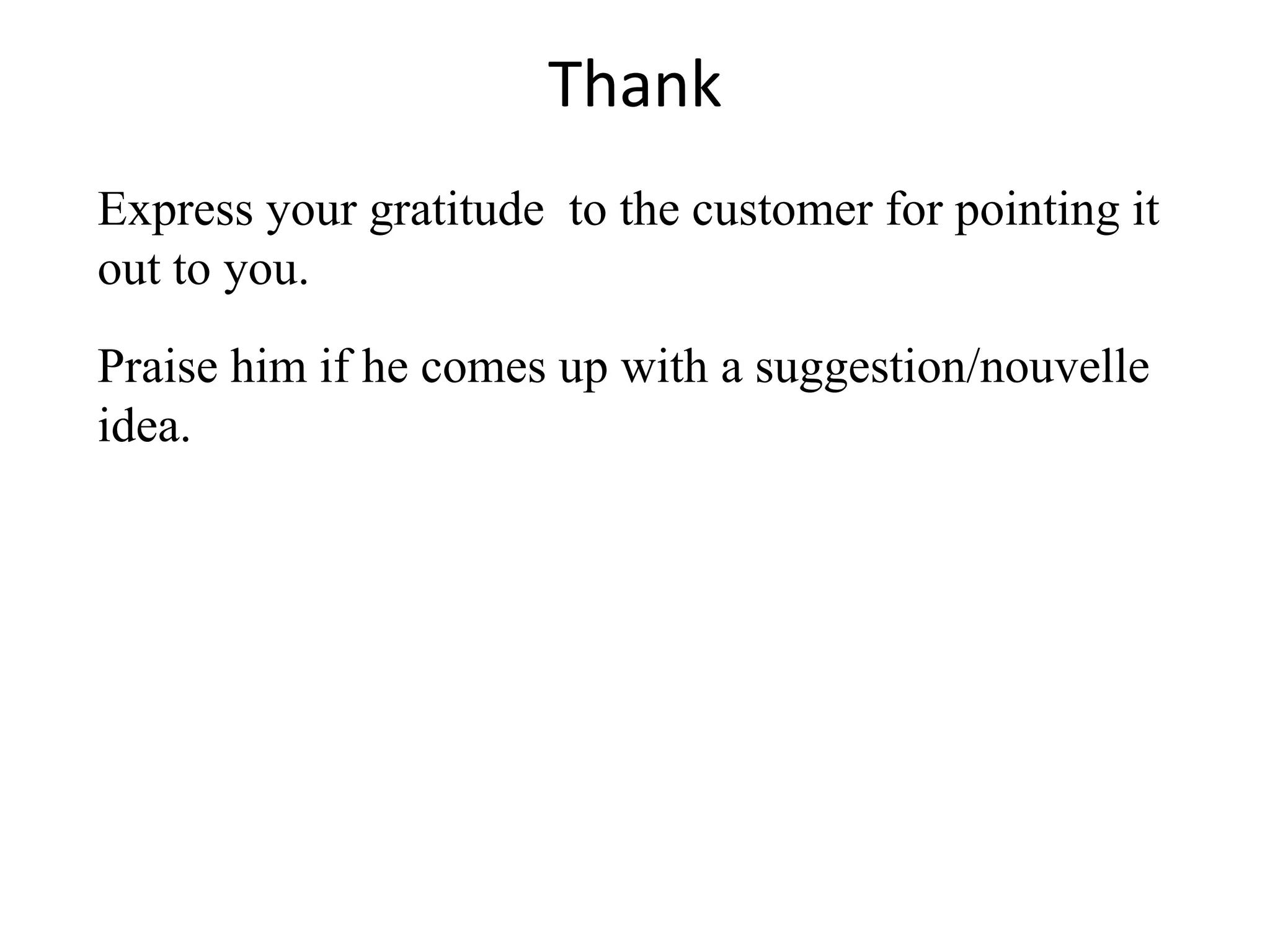
Thank
Express your gratitude to the customer for pointing it
out to you.
Praise him if he comes up with a suggestion/nouvelle
idea.
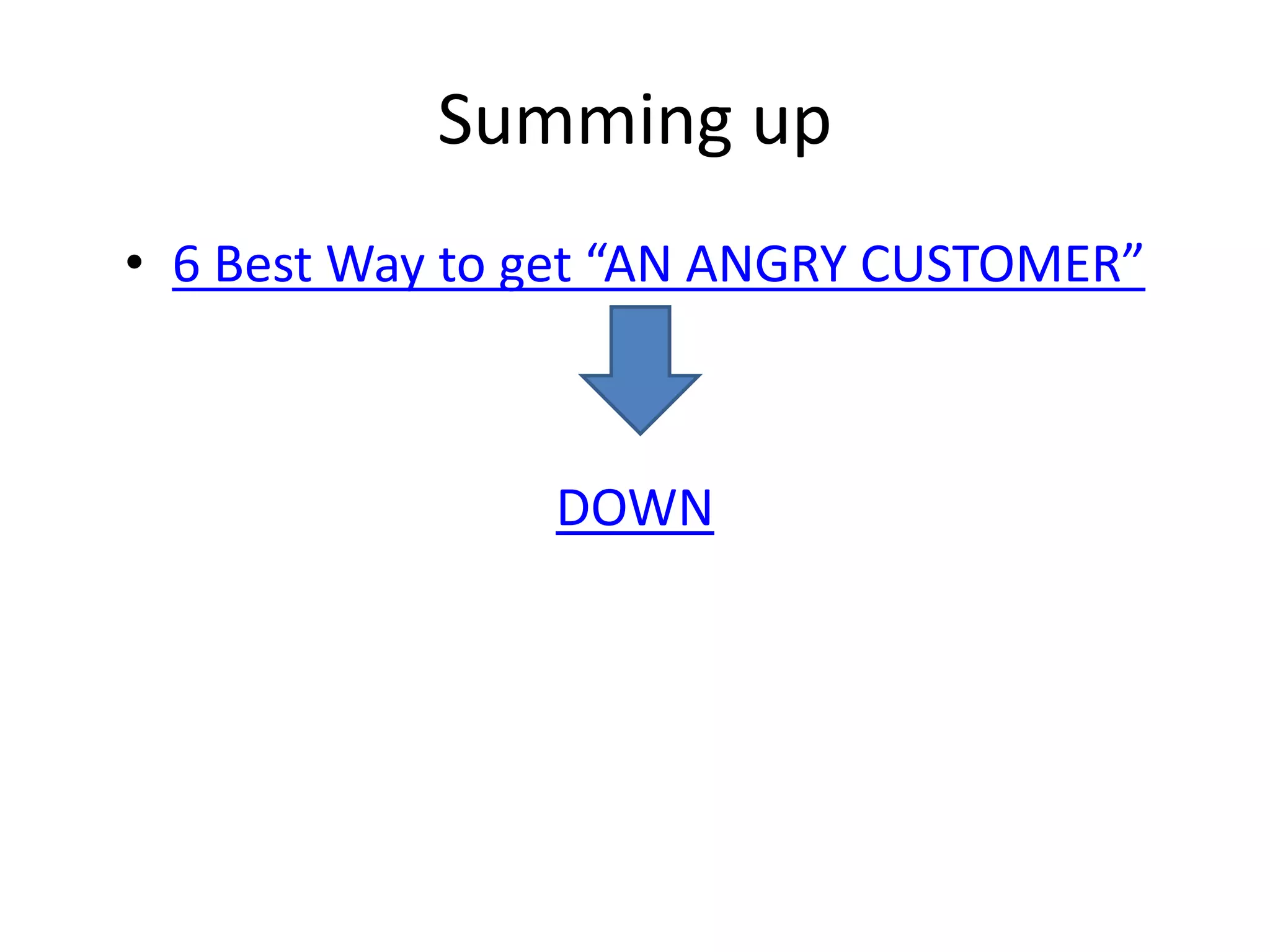
Summing up
• 6 Best Way to get “AN ANGRY CUSTOMER”
DOWN
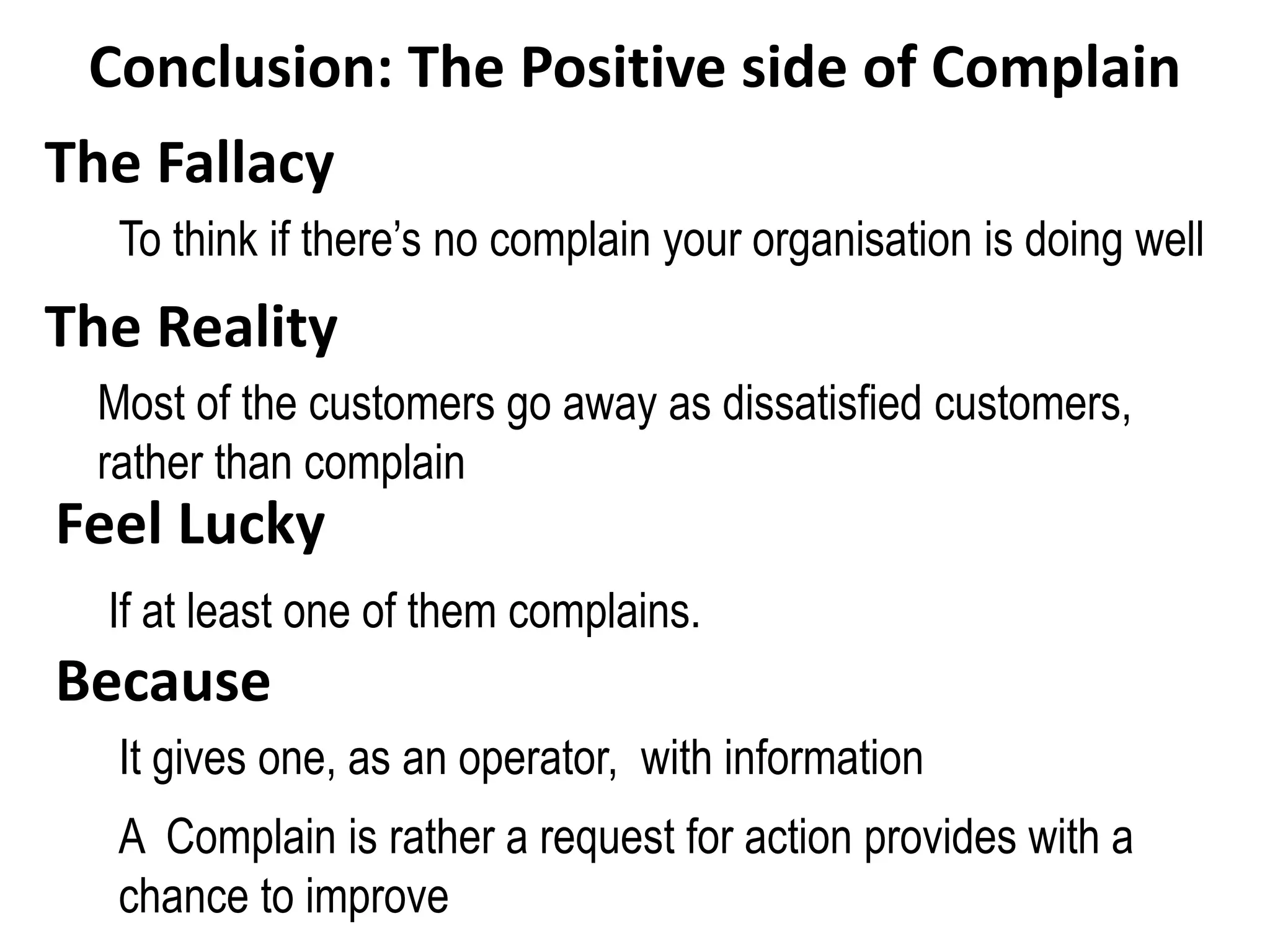
Conclusion: The Positive side of Complain
The Fallacy
Most of the customers go away as dissatisfied customers,
rather than complain
Feel Lucky
If at least one of them complains.
Because
It gives one, as an operator, with information
A Complain is rather a request for action provides with a
chance to improve
To think if there’s no complain your organisation is doing well
The Reality
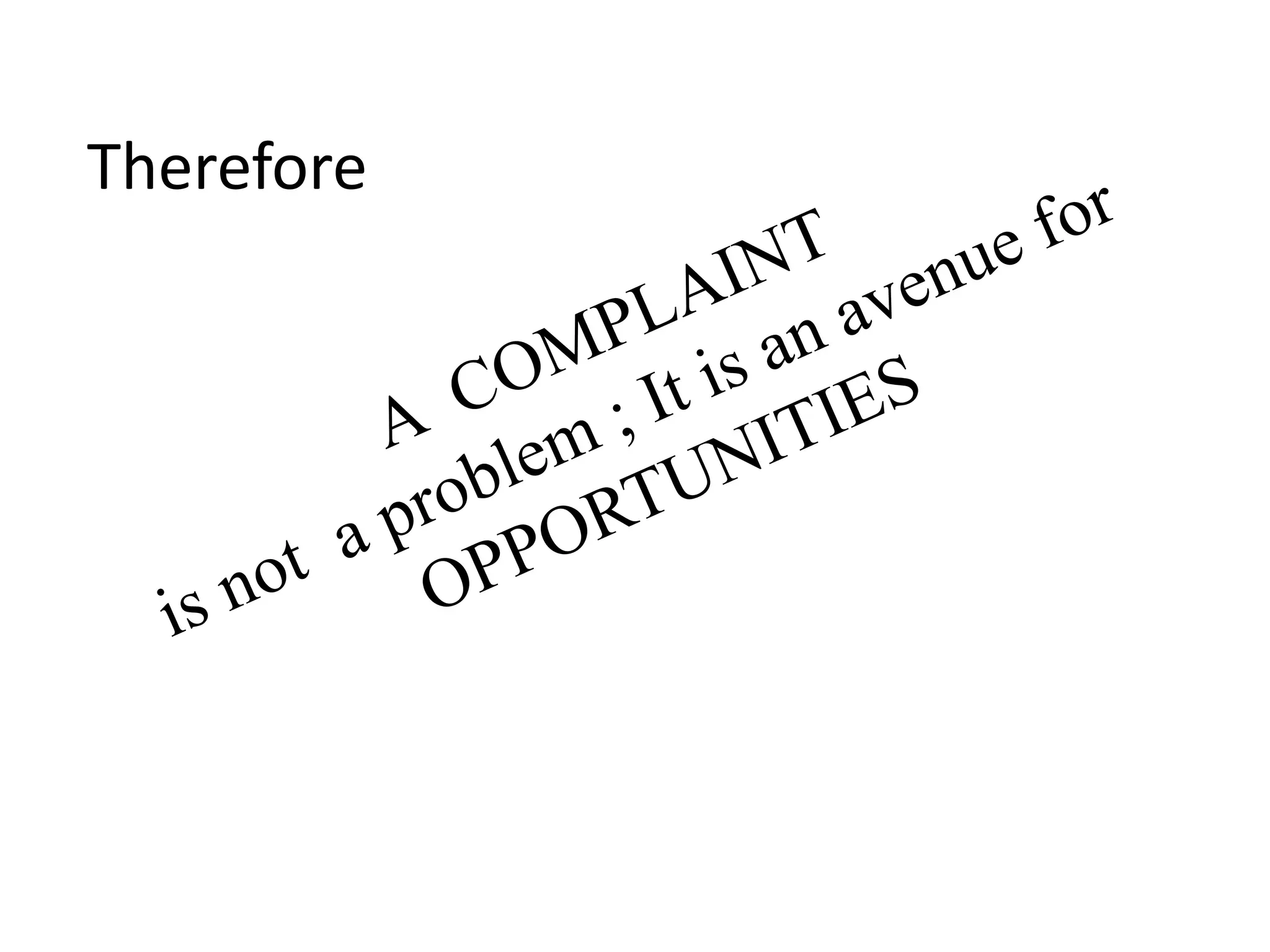
Therefore
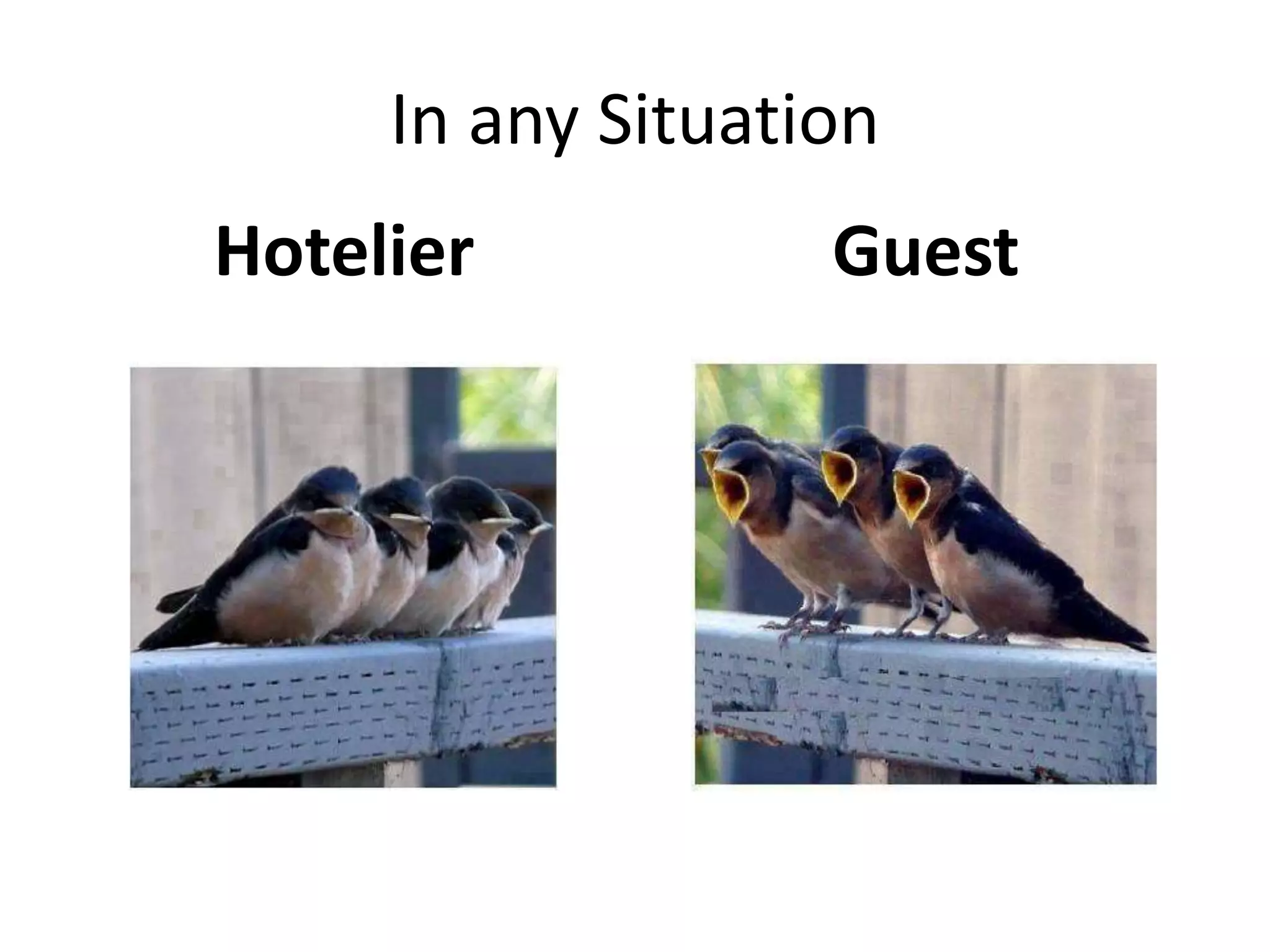
In any Situation
Hotelier Guest

HANDLING OF CUSTOMER COMPLAINS

  • 2.
  • 3.
    Complain • Definition: A statementthat situation is unsatisfactory or unacceptable Expression Condition Expectation Attention Needs Grievance
  • 4.
    Why should there bea Complain? Different Levels of expectation Grievance
  • 5.
    What Makes APerson Angry? The Psychology of an “Angry Customer”
  • 6.
    Solving the grievanceinvolves Interaction I know this duffer is so incorrect.. But then… he’s a customer This fool cannot understand this simple thing I need The service renderer The service receiver
  • 7.
    IS GRIEVANCE APROBLEM? Key word : How you “respond” to the person who complains that reflects upon the degree of the problem The Problem is not PROBLEM In Practice
  • 8.
    REQUIREMENT FROM THESERVICE PEOPLE ATTITUDINAL BODY LANGUAGE Listening Ability  Age old rule of customer satisfaction Patience Courteous  Accepting responsibility of blame even if the person is not Apologising- -I /WE  Initiating action – correcting – gathering feedback.  Maintain Eye Contact  Eyes showing keenness & empathy  Not being defensive Lean towards the speaker.  Face: smiling, approving, assuring,  Head nodding at intervals.  Never show impatience.  Show thankfulness – gratitude. Representation
  • 9.
  • 10.
  • 11.
  • 12.
    Handling a Complain Followthe theory of  Believe  Listen  Apologise  Solve/Satisy  Thank BLAST.
  • 13.
    Believe •Assume whatever thecustomer speaks as complaint is relevant . •Regard it as “It is the Truth” •Resolve “It is to be redressed.” •Establish eye contact. This will bring out the sincerity in you •Value his experience
  • 14.
    Listen •Give a patient hearing. •Avoidbeing defensive – remember it is not an Accusation but an Opportunity. •Do no take the criticisms personally. •Do not assume Be relaxed & calm. Show empathy •Try to understand where the problem lies.
  • 15.
    Apologise •Even if thedisservice is not your fault. •If the name of the customer is known address him by his sir name
  • 16.
    Satisfy/Solve •When it isfelt that the customer has vent out his feelings Give assurance that the person’s grievance is understood •Tell him what you can do; not what you can’t •Make the customer a part of your solution; not a part of your problem. •If you do not have a solution Do not lie Assure You shall refer to competent authority and get back ASAP
  • 17.
    Satisfy/Solve (Cont’d) If anagreement to a solution is reached act quickly before they can change their mind. - Follow up
  • 18.
    Thank Express your gratitudeto the customer for pointing it out to you. Praise him if he comes up with a suggestion/nouvelle idea.
  • 19.
    Summing up • 6Best Way to get “AN ANGRY CUSTOMER” DOWN
  • 20.
    Conclusion: The Positiveside of Complain The Fallacy Most of the customers go away as dissatisfied customers, rather than complain Feel Lucky If at least one of them complains. Because It gives one, as an operator, with information A Complain is rather a request for action provides with a chance to improve To think if there’s no complain your organisation is doing well The Reality
  • 21.
  • 22.