Projecting the Right Attitude
By: Sylvester Motulis
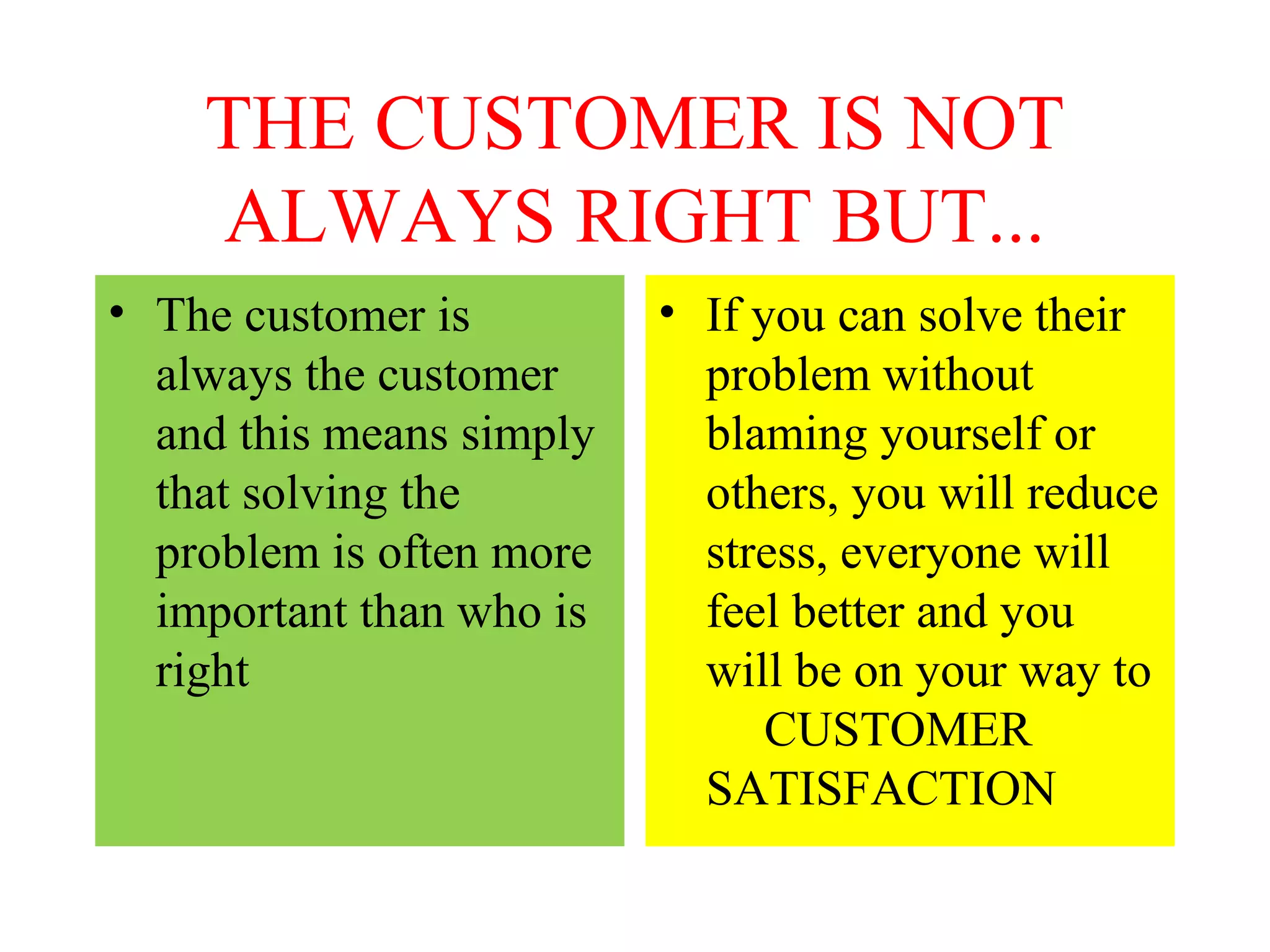
THE CUSTOMER IS NOT
ALWAYS RIGHT BUT...
• The customer is
always the customer
and this means simply
that solving the
problem is often more
important than who is
right

• If you can solve their
problem without
blaming yourself or
others, you will reduce
stress, everyone will
feel better and you
will be on your way to
CUSTOMER
SATISFACTION
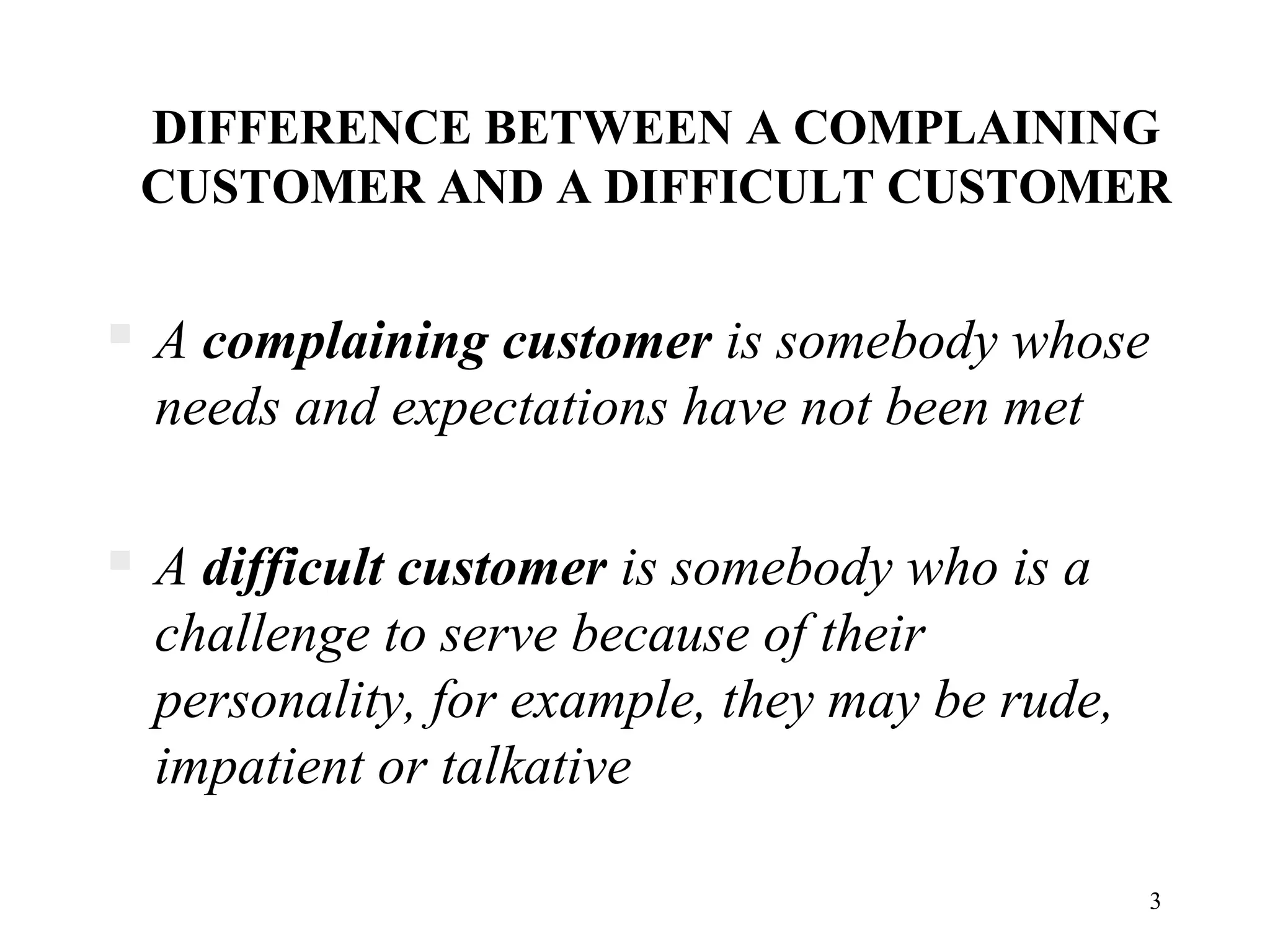
DIFFERENCE BETWEEN A COMPLAINING
CUSTOMER AND A DIFFICULT CUSTOMER


A complaining customer is somebody whose
needs and expectations have not been met



A difficult customer is somebody who is a
challenge to serve because of their
personality, for example, they may be rude,
impatient or talkative
3
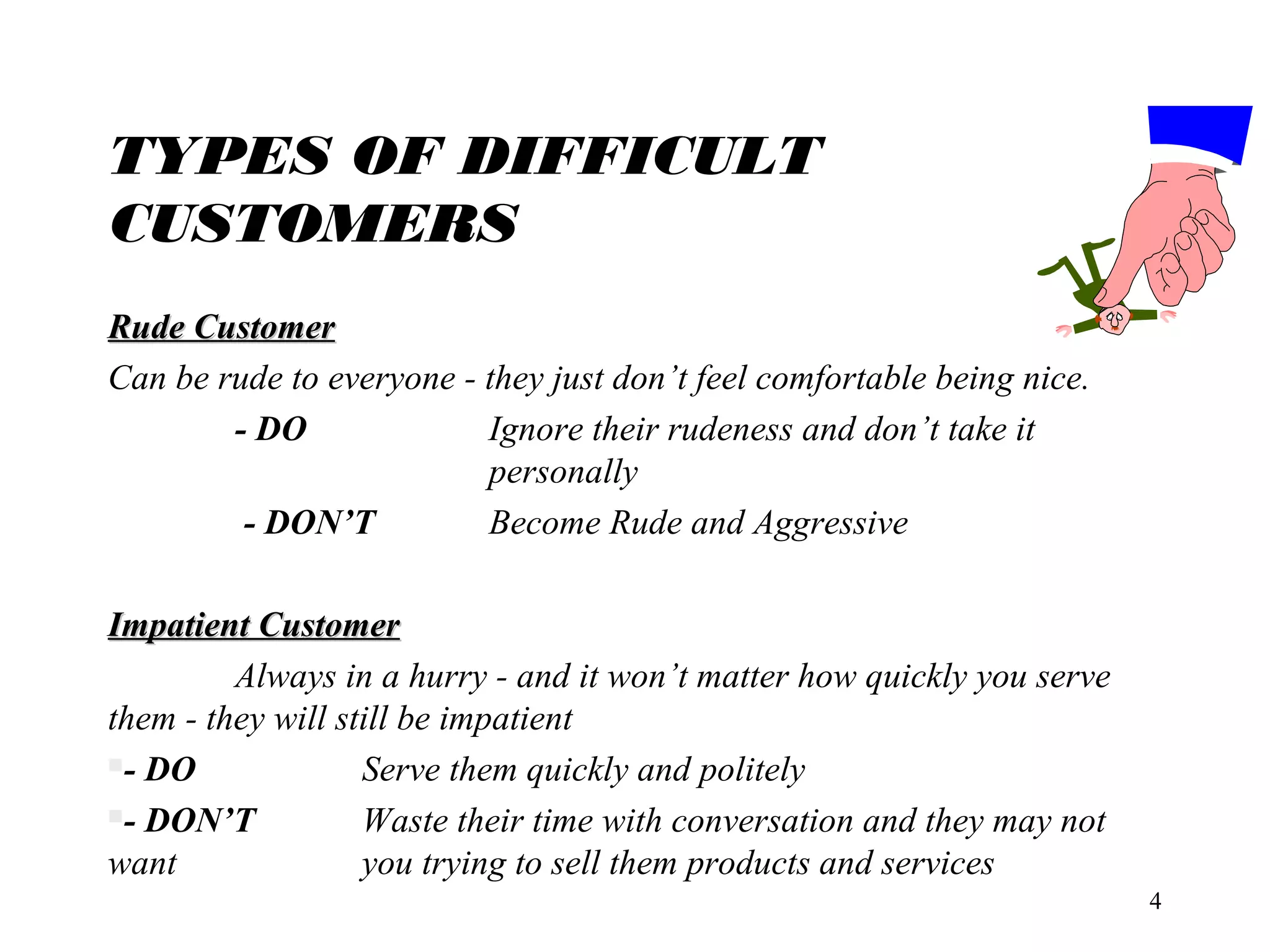
TYPES OF DIFFICULT
CUSTOMERS
Rude Customer
Can be rude to everyone - they just don’t feel comfortable being nice.
- DO
Ignore their rudeness and don’t take it
personally
- DON’T
Become Rude and Aggressive
Impatient Customer
Always in a hurry - and it won’t matter how quickly you serve
them - they will still be impatient
- DO
Serve them quickly and politely
- DON’T
Waste their time with conversation and they may not
want
you trying to sell them products and services
4
TYPES OF DIFFICULT
CUSTOMERS


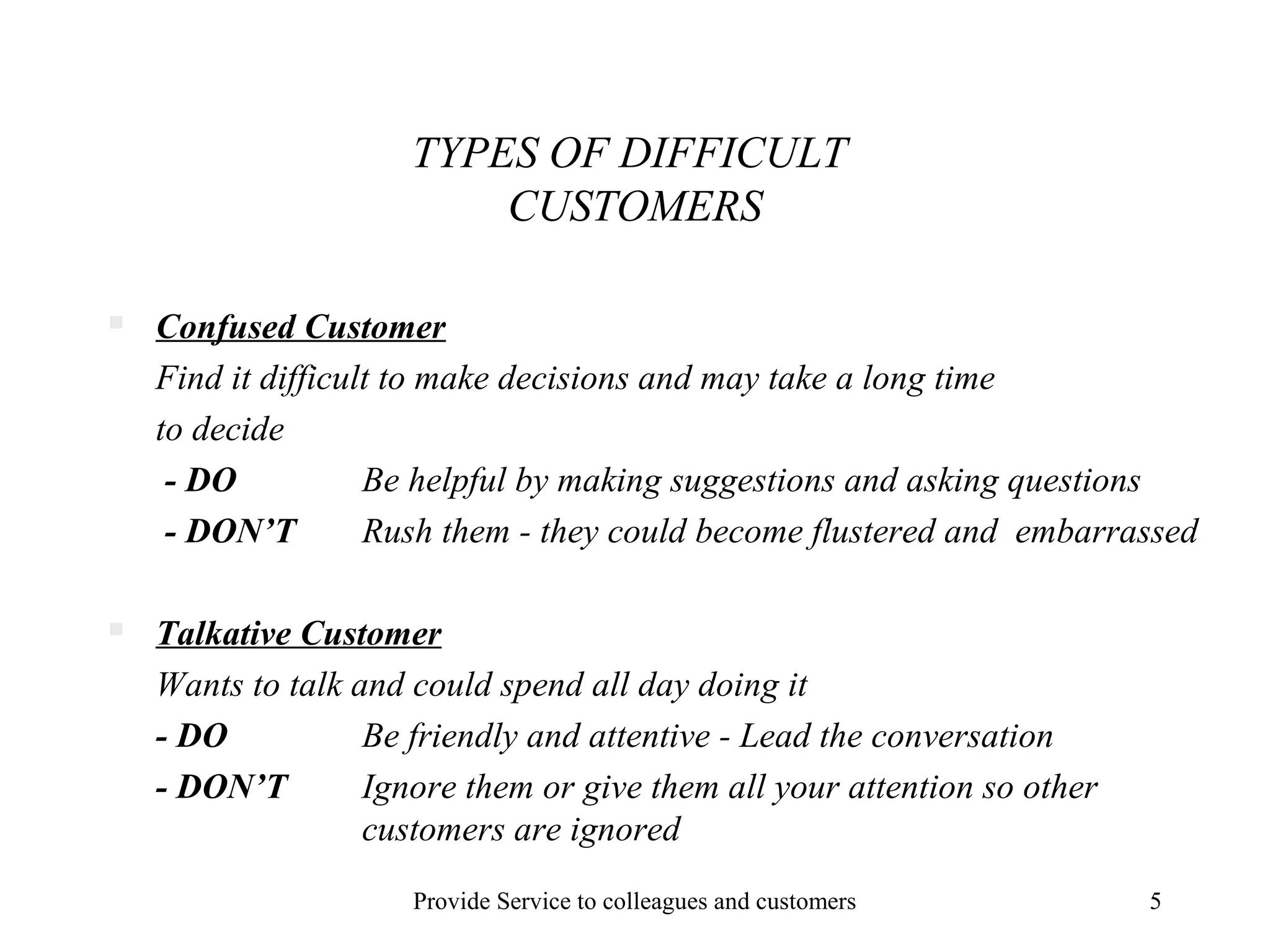
Confused Customer
Find it difficult to make decisions and may take a long time
to decide
- DO
Be helpful by making suggestions and asking questions
- DON’T
Rush them - they could become flustered and embarrassed



Talkative Customer
Wants to talk and could spend all day doing it
- DO
Be friendly and attentive - Lead the conversation
- DON’T
Ignore them or give them all your attention so other
customers are ignored
Provide Service to colleagues and customers

5
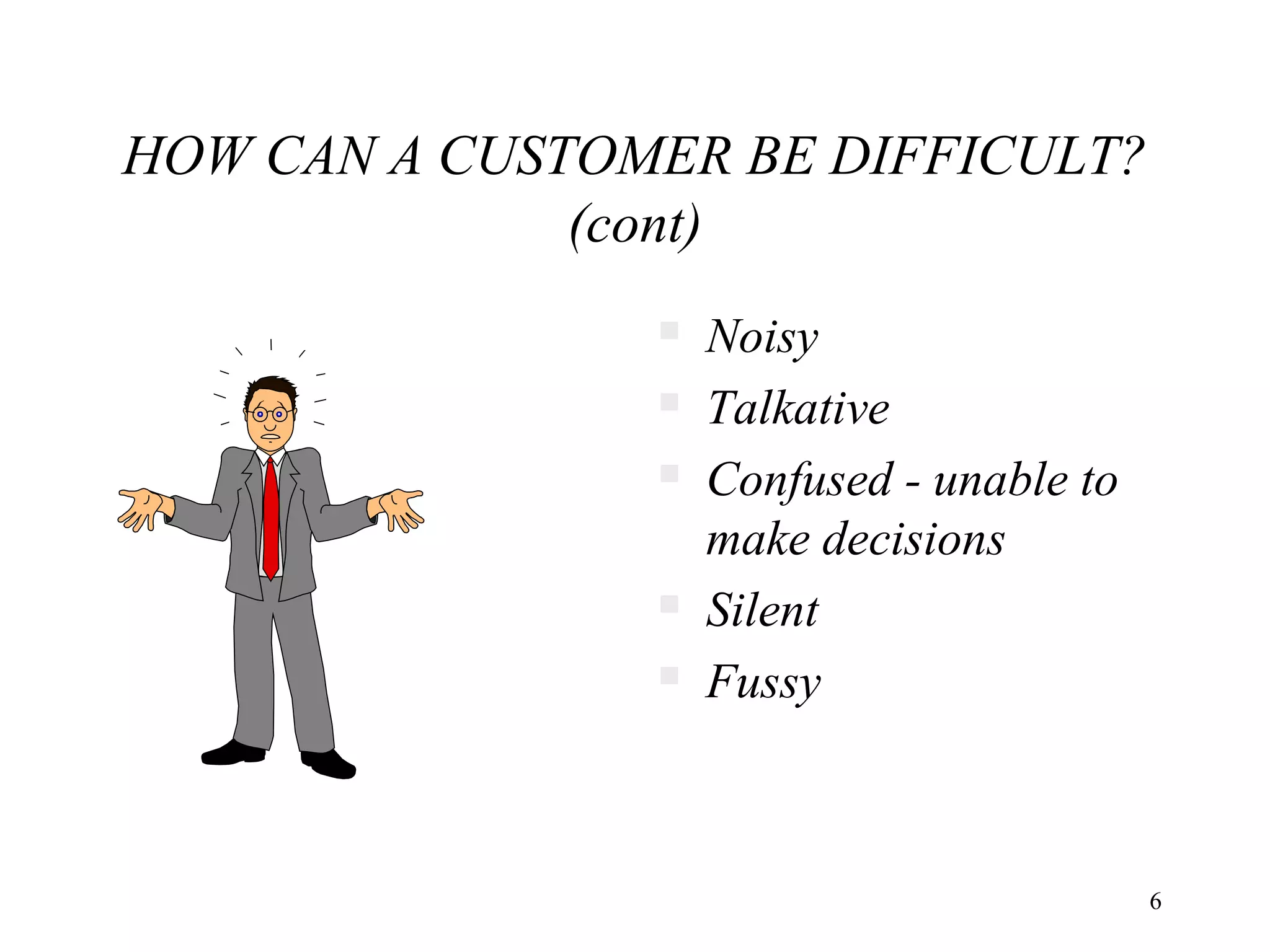
HOW CAN A CUSTOMER BE DIFFICULT?
(cont)







Noisy
Talkative
Confused - unable to
make decisions
Silent
Fussy

6
WHY ARE THEY DIFFICULT?
• They are often
• They are difficult for
expressing a need but
their own reasons are choosing an
NOT BECAUSE OF
appropriate and
YOU
impolite way to
communicate this need
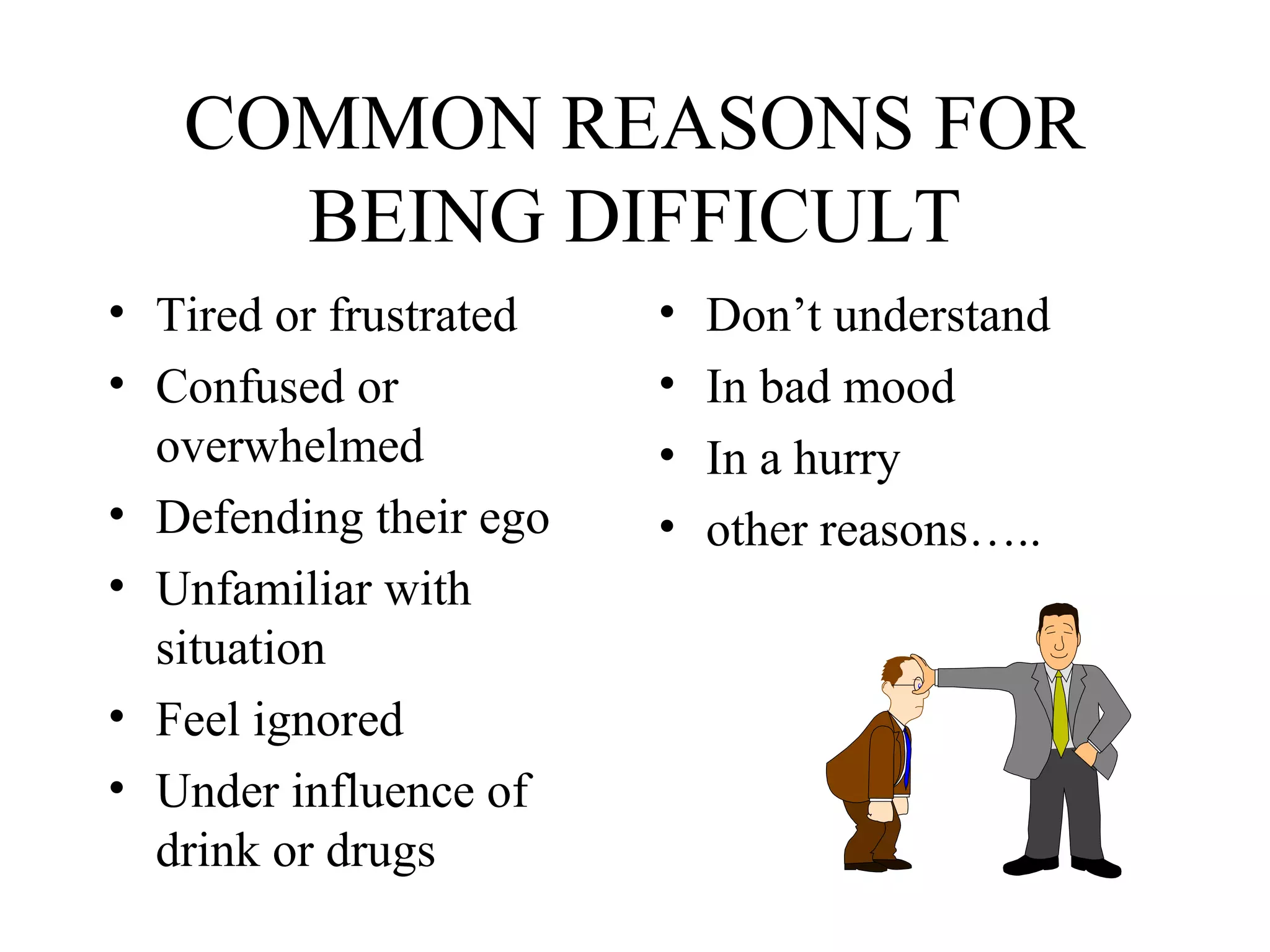
COMMON REASONS FOR
BEING DIFFICULT
• Tired or frustrated
• Confused or
overwhelmed
• Defending their ego
• Unfamiliar with
situation
• Feel ignored
• Under influence of
drink or drugs

•
•
•
•

Don’t understand
In bad mood
In a hurry
other reasons…..
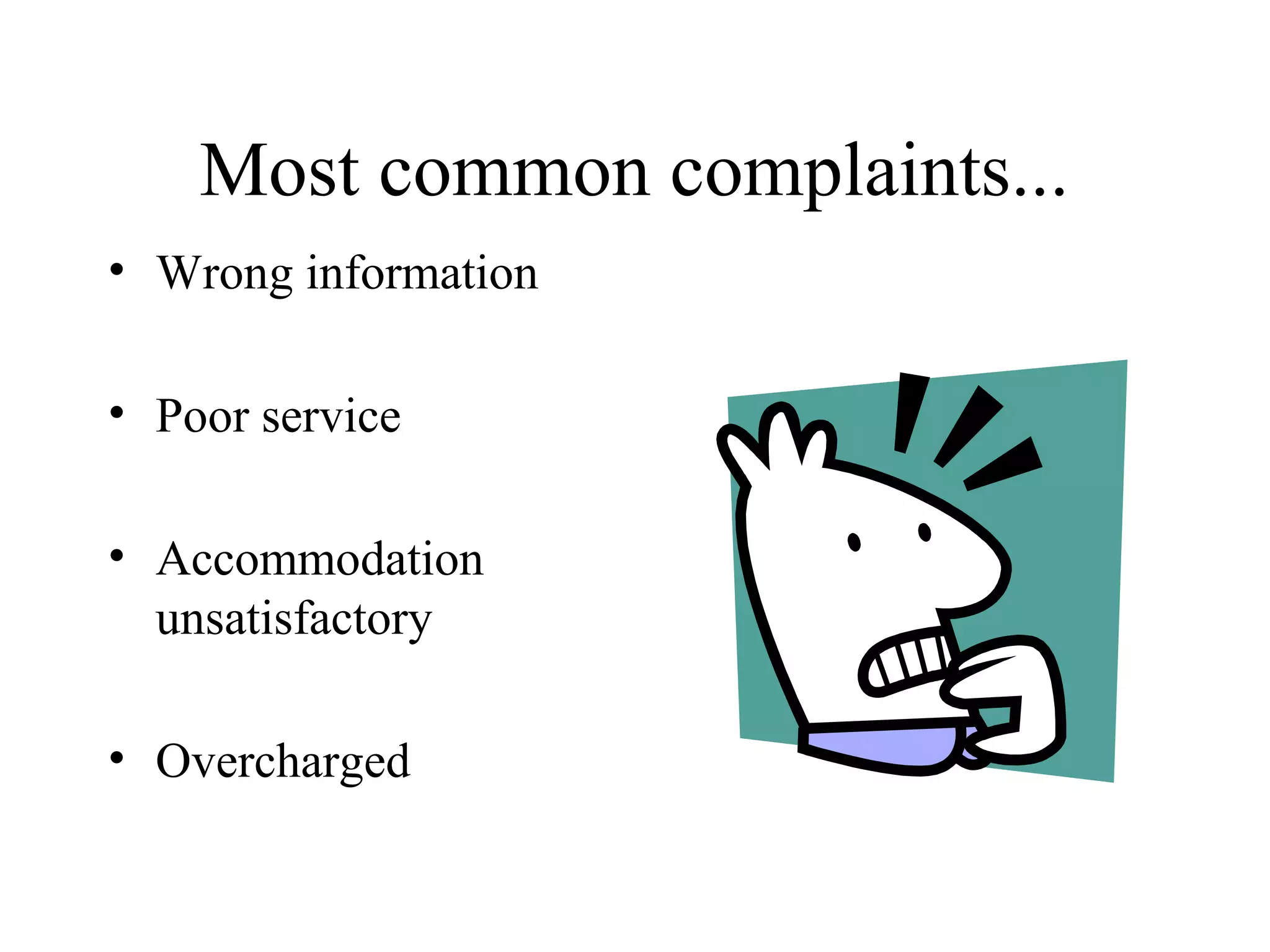
Most common complaints...
• Wrong information
• Poor service
• Accommodation
unsatisfactory
• Overcharged
HOW DO I DEAL WITH
THESE PEOPLE?
• “this job would be great if it weren’t for the
difficult people”
FREQUENT FRUSTRATIONS
• Others blame you for
problems over which
you have not control
• People pressure you
with last minute
requests
• Superiors don’t
understand your job

• You don’t get the right
info or materials
needed to do job
properly
• People change their
minds
BELIEFS ARE OFTEN A
BARRIER TO PROBLEM
SOLVING
SO HOW CAN I COPE WITH
THESE DIFFICULT PEOPLE?

?
APPROACH THEM
PROFESSIONALLY AND NOT
PERSONALLY
• TAKING THINGS PERSONALLY CAN
HURT YOU AND OTHERS
• TAKING A SITUATION
PROFESSIONALLY PAYS OFF FOR
EVERYONE
REMIND YOURSELF!

• This is my job and I’m • reinforce this by
saying…
going to do it
• “I like the job, not
professionally
because it’s easy, not
• If it were not for these
because there are no
customers I would not
difficult people, not
have a job
because there are no
• every time I solve a
frustrations but
problem I will feel
because people are
better
part of any job and I
can make things easier
by taking things
professionally
LISTEN FOR THE SIGNALS
THAT YOU ARE TAKING
THINGS PERSONALLY !!
WHAT ARE THE MOST
COMMON COMPLAINTS?
• DO YOU KNOW HOW TO HANDLE
THESE?
• WHAT WOULD YOU SAY?
• WHAT WOULD YOU DO?
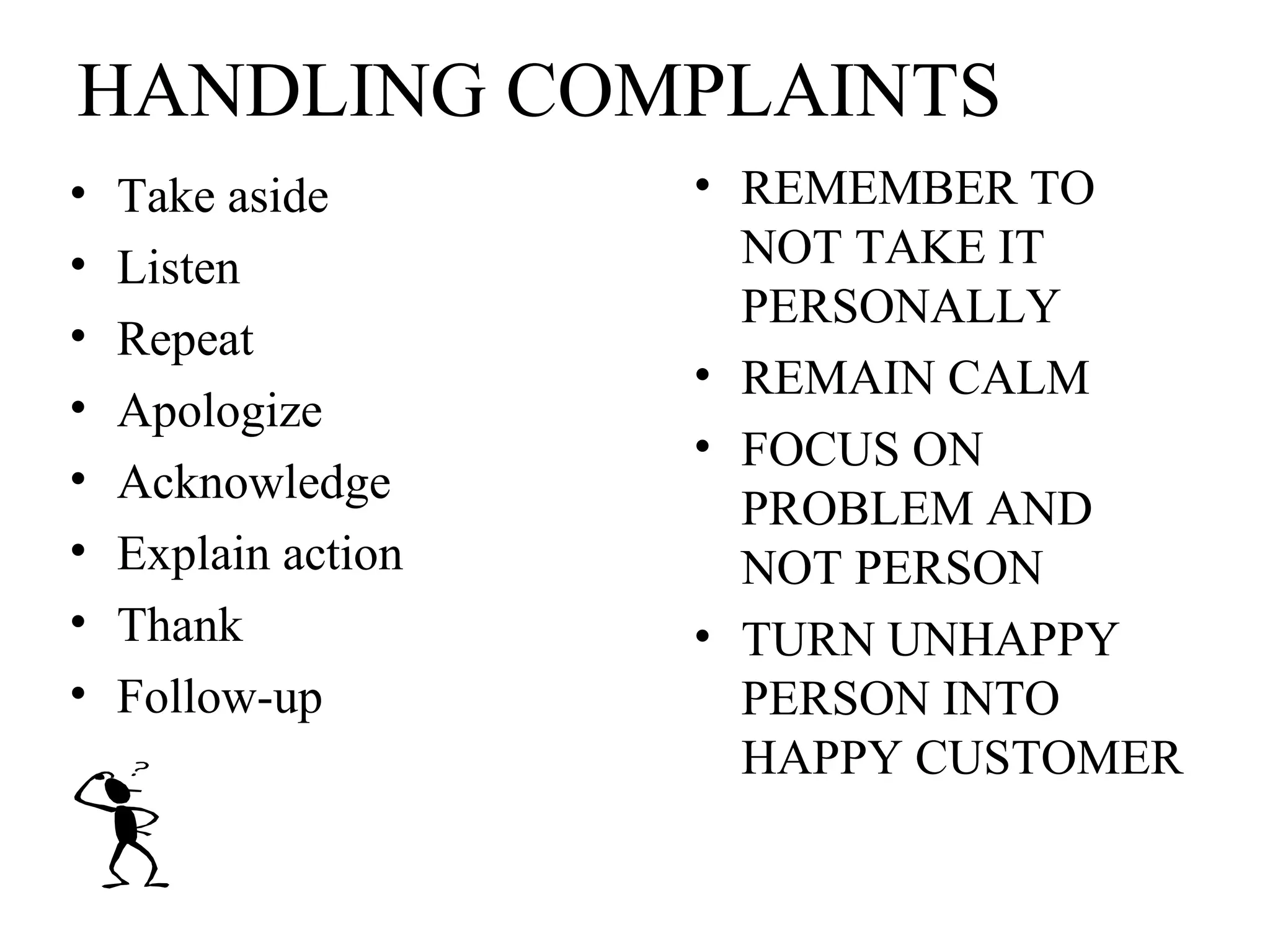
HANDLING COMPLAINTS
•
•
•
•
•
•
•
•

Take aside
Listen
Repeat
Apologize
Acknowledge
Explain action
Thank
Follow-up

• REMEMBER TO
NOT TAKE IT
PERSONALLY
• REMAIN CALM
• FOCUS ON
PROBLEM AND
NOT PERSON
• TURN UNHAPPY
PERSON INTO
HAPPY CUSTOMER
CHECK YOU CUSTOMER
SERVICE ATTITUDE
ATTITUDE IS THE KEY TO
SUCCESS

Attitude is your mental position on
facts – or more simply, the way you
view things
FIVE POINTS ABOUT
ATTITUDE TO REMEMBER
• your attitude towards • your attitude affects
customers influences
everyone who comes
your behaviour. You
in contact with you
cannot always
• tone and body
camouflage how you
language reflect your
feel
attitude
• your attitude
• your attitude is not
determines the level of
fixed. The attitude
job satisfaction
you choose to display
is up to YOU
SUMMARY
• Be positive
• Take things professionally and not
personally
• Aim for customer satisfaction, not just
service
• Solve problems without blaming yourself or
others
• Remember attitudes are caught, not taught
and finally…
• THINK OF HOW MANY LIVES YOU
INTERACT WITH EACH DAY PROFESSIONALLY AND PERSONALLY AND
CONSIDER THIS:
• “there never was, there isn’t now, and there never
will be again another person specifically powerful
like me who could have influenced that life in that
moment of time uniquely the way I could
have…”

Topic 9 handling difficult guests

  • 1.
    Projecting the RightAttitude By: Sylvester Motulis
  • 2.
    THE CUSTOMER ISNOT ALWAYS RIGHT BUT... • The customer is always the customer and this means simply that solving the problem is often more important than who is right • If you can solve their problem without blaming yourself or others, you will reduce stress, everyone will feel better and you will be on your way to CUSTOMER SATISFACTION
  • 3.
    DIFFERENCE BETWEEN ACOMPLAINING CUSTOMER AND A DIFFICULT CUSTOMER  A complaining customer is somebody whose needs and expectations have not been met  A difficult customer is somebody who is a challenge to serve because of their personality, for example, they may be rude, impatient or talkative 3
  • 4.
    TYPES OF DIFFICULT CUSTOMERS RudeCustomer Can be rude to everyone - they just don’t feel comfortable being nice. - DO Ignore their rudeness and don’t take it personally - DON’T Become Rude and Aggressive Impatient Customer Always in a hurry - and it won’t matter how quickly you serve them - they will still be impatient - DO Serve them quickly and politely - DON’T Waste their time with conversation and they may not want you trying to sell them products and services 4
  • 5.
    TYPES OF DIFFICULT CUSTOMERS  ConfusedCustomer Find it difficult to make decisions and may take a long time to decide - DO Be helpful by making suggestions and asking questions - DON’T Rush them - they could become flustered and embarrassed  Talkative Customer Wants to talk and could spend all day doing it - DO Be friendly and attentive - Lead the conversation - DON’T Ignore them or give them all your attention so other customers are ignored Provide Service to colleagues and customers 5
  • 6.
    HOW CAN ACUSTOMER BE DIFFICULT? (cont)      Noisy Talkative Confused - unable to make decisions Silent Fussy 6
  • 7.
    WHY ARE THEYDIFFICULT? • They are often • They are difficult for expressing a need but their own reasons are choosing an NOT BECAUSE OF appropriate and YOU impolite way to communicate this need
  • 8.
    COMMON REASONS FOR BEINGDIFFICULT • Tired or frustrated • Confused or overwhelmed • Defending their ego • Unfamiliar with situation • Feel ignored • Under influence of drink or drugs • • • • Don’t understand In bad mood In a hurry other reasons…..
  • 9.
    Most common complaints... •Wrong information • Poor service • Accommodation unsatisfactory • Overcharged
  • 10.
    HOW DO IDEAL WITH THESE PEOPLE? • “this job would be great if it weren’t for the difficult people”
  • 11.
    FREQUENT FRUSTRATIONS • Othersblame you for problems over which you have not control • People pressure you with last minute requests • Superiors don’t understand your job • You don’t get the right info or materials needed to do job properly • People change their minds
  • 12.
    BELIEFS ARE OFTENA BARRIER TO PROBLEM SOLVING
  • 13.
    SO HOW CANI COPE WITH THESE DIFFICULT PEOPLE? ?
  • 14.
    APPROACH THEM PROFESSIONALLY ANDNOT PERSONALLY • TAKING THINGS PERSONALLY CAN HURT YOU AND OTHERS • TAKING A SITUATION PROFESSIONALLY PAYS OFF FOR EVERYONE
  • 15.
    REMIND YOURSELF! • Thisis my job and I’m • reinforce this by saying… going to do it • “I like the job, not professionally because it’s easy, not • If it were not for these because there are no customers I would not difficult people, not have a job because there are no • every time I solve a frustrations but problem I will feel because people are better part of any job and I can make things easier by taking things professionally
  • 16.
    LISTEN FOR THESIGNALS THAT YOU ARE TAKING THINGS PERSONALLY !!
  • 17.
    WHAT ARE THEMOST COMMON COMPLAINTS? • DO YOU KNOW HOW TO HANDLE THESE? • WHAT WOULD YOU SAY? • WHAT WOULD YOU DO?
  • 18.
    HANDLING COMPLAINTS • • • • • • • • Take aside Listen Repeat Apologize Acknowledge Explainaction Thank Follow-up • REMEMBER TO NOT TAKE IT PERSONALLY • REMAIN CALM • FOCUS ON PROBLEM AND NOT PERSON • TURN UNHAPPY PERSON INTO HAPPY CUSTOMER
  • 19.
  • 20.
    ATTITUDE IS THEKEY TO SUCCESS Attitude is your mental position on facts – or more simply, the way you view things
  • 21.
    FIVE POINTS ABOUT ATTITUDETO REMEMBER • your attitude towards • your attitude affects customers influences everyone who comes your behaviour. You in contact with you cannot always • tone and body camouflage how you language reflect your feel attitude • your attitude • your attitude is not determines the level of fixed. The attitude job satisfaction you choose to display is up to YOU
  • 22.
    SUMMARY • Be positive •Take things professionally and not personally • Aim for customer satisfaction, not just service • Solve problems without blaming yourself or others • Remember attitudes are caught, not taught
  • 23.
    and finally… • THINKOF HOW MANY LIVES YOU INTERACT WITH EACH DAY PROFESSIONALLY AND PERSONALLY AND CONSIDER THIS: • “there never was, there isn’t now, and there never will be again another person specifically powerful like me who could have influenced that life in that moment of time uniquely the way I could have…”