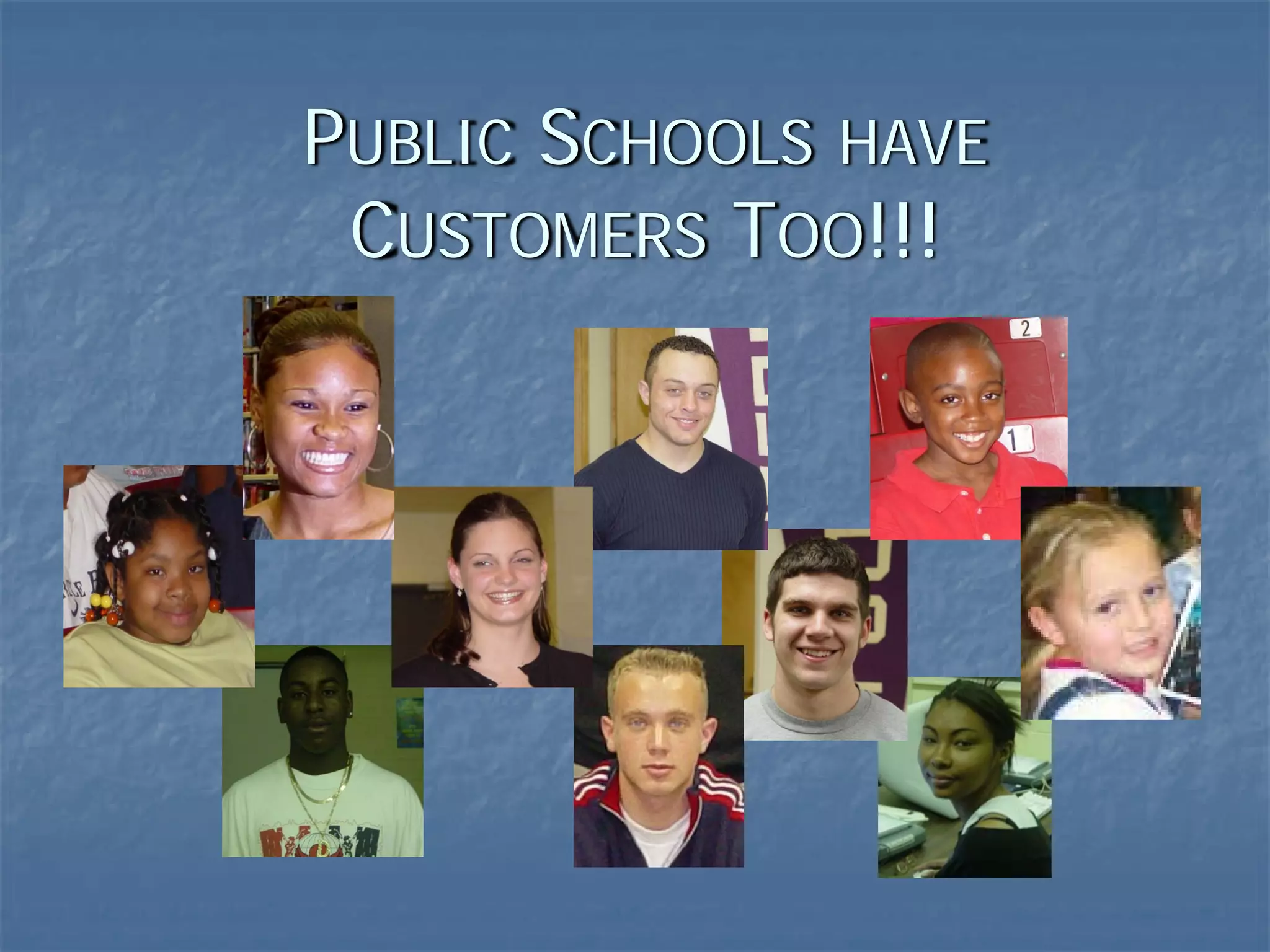
PUBLIC SCHOOLS HAVE
 CUSTOMERS TOO!!!
WHY IS THIS P. D. IMPORTANT?

Refresher course for our staff
To assist you in dealing with difficult people
To improve the district’s image with our
customers
To help the district function more efficiently
Key to creating family-friendly schools
WHAT IS A CUSTOMER?
A customer is someone who brings us his or
her needs and desires. It is our job to care
for those needs and desires.

The customer is not an interruption of our
work.

 He or she is the purpose of our work. We
are not doing customers a favor by offering
education as a product for their consumption.
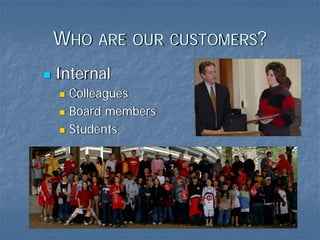
WHO ARE OUR CUSTOMERS?
Internal
  Colleagues
  Board members
  Students
WHO ARE OUR CUSTOMERS?
External
 Parents
 Community members
 Employees from other districts
 Students
 Vendors and people with whom we do
 business
SIX BASIC NEEDS OF SCHOOL
               CUSTOMERS

1.   Friendliness
2.   Understanding and empathy
3.   Fairness
4.   Control
5.   Options and alternatives
6.   Information
THE ANGRY CUSTOMER
Customer feels ignored
Customer was already upset by someone
else
Customer has a chip on their shoulder
Someone promised something that was
not delivered
Someone was rude to them
Customer was transferred without consent
or put on hold for a long time
Customer was told they had no right to
be angry
Customer’s integrity or honesty was
questioned
Someone argued with customer
Customer feels you don’t know what you
are talking about
Customer acted on advice provided by
someone…and it was wrong
WHAT   DOES AN ANGRY CUSTOMERS
     REALLY WANT FROM US?
To be listened to
To be taken seriously
To be understood
To be treated with respect
Quick action
Someone to be reprimanded or punished
Assurance the problem will not occur
again
WHAT IS YOUR CONFLICT
MANAGEMENT STYLE?
WHAT IS YOUR CONFLICT
MANAGEMENT STYLE?


   If you chose 'A' answers most often,
   your style is:
              Avoidance
WHAT IS YOUR CONFLICT
MANAGEMENT STYLE?


 If you chose 'B' answers most often,
 your style is:
               Analyzing
WHAT IS YOUR
CONFLICT
MANAGEMENT STYLE?


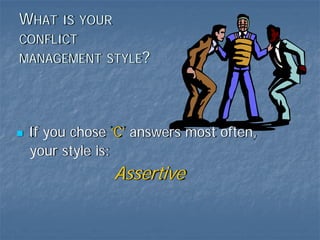
 If you chose ‘C’ answers most often,
 your style is:
               Assertive
WHAT IS YOUR
CONFLICT
MANAGEMENT STYLE?


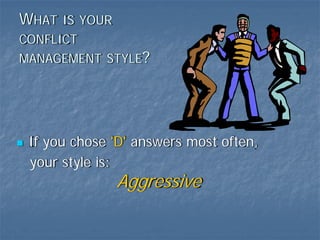
 If you chose 'D' answers most often,
 your style is:
               Aggressive
FOUR     BASIC STEPS TO DEFUSING AN
           ANGRY CUSTOMER
Listen

Ask questions and summarize

Provide a solution and work together

Follow up
EFFECTIVE LISTENING

 How do you do this?

LISTEN
             LISTEN
                       LISTEN
TEN STEPS TO EFFECTIVE LISTENING
1. Face the speaker and maintain eye
    contact
2. Be attentive yet relaxed
3. Keep an open mind
4. Listen to the words and try to picture
    what the speaker is saying
5. Don't interrupt and don't impose
    your “solutions”
TEN STEPS TO EFFECTIVE LISTENING

6. Wait for the speaker to pause to ask
   clarifying questions
7. Ask questions only to ensure
   understanding
8. Try to feel what the speaker is feeling
9. Give the speaker regular feedbacks
10. Pay attention to non-verbal cues
QUESTIONS TO USE TO DEFUSE THE
         ANGRY CUSTOMER
Build Relationship
Gather Information
Clarify Information
Identify Interests
Provide Information
Probe for Solutions
Reframe Positions / Common Ground
Confront and Initiate
RESPECTING THE CUSTOMER
Judge the content, not the delivery
Look beyond the anger at the real problem
Take notes and don’t forget to summarize
Stick to the facts, don’t put in editorial
comments
Offer a solution, ask for the customer’s
input
RESPECTING THE CUSTOMER

Follow up, complete the necessary
paperwork
Follow up by calling the person /
department responsible
When the interaction is complete,
apologize and thank the customer
DURING THE INCIDENT
Don’t TIP….(Take It Personally)
Never dismiss a complaint
Give your undivided attention
Speak in a calm, reassuring voice
Establish rapport by using the
customer’s name
Don’t start a chain reaction
DURING THE INCIDENT
Practice patience and keep an open mind
When responding to customers, don’t use
jargon or language that intimidates
Don’t shift the blame
Don’t make excuses
Voice
Tone
Body Language
AFTER THE CUSTOMER LEAVES


TAKE A BREAK!
Inform your supervisor
Learn from the experience
Was there anything you could have done
differently?
AFTER THE CUSTOMER LEAVES

Did you listen intently and not interrupt?
Did you push the customer’s hot button?
Could you have said something else to
calm the customer?
Follow up with the customer
CONCLUSION

It’s up to you. You can be the villain or the
hero

Remember not to TIP (Take it Personally)

Share what you learned from the situation
with co-workers
CONCLUSION


Handling upset customers is not the job
that most of us want to do, but it’s an
essential part of our jobs.

What it all boils down to is …What type of
story do we want them to tell?…Because
they will tell their story
TIPS   FOR SCHOOL SECRETARIES
   Ask yourself how you would like to be
   treated…
1. Be first to make contact
2. Minimize inconvenience to the customer
3. Be sure of your facts
4. If your not sure, don’t say it
5. Be honest
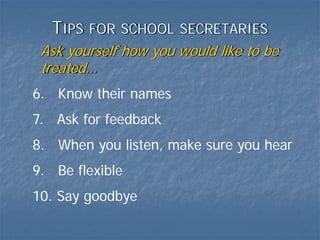
TIPS   FOR SCHOOL SECRETARIES
 Ask yourself how you would like to be
 treated…
6. Know their names
7. Ask for feedback
8. When you listen, make sure you hear
9. Be flexible
10. Say goodbye
IF YOU SEE SOMEONE WITHOUT A SMILE,


     GIVE THEM ONE OF YOURS!

Public schools have customers too!!!

  • 1.
    PUBLIC SCHOOLS HAVE CUSTOMERS TOO!!!
  • 2.
    WHY IS THISP. D. IMPORTANT? Refresher course for our staff To assist you in dealing with difficult people To improve the district’s image with our customers To help the district function more efficiently Key to creating family-friendly schools
  • 3.
    WHAT IS ACUSTOMER? A customer is someone who brings us his or her needs and desires. It is our job to care for those needs and desires. The customer is not an interruption of our work. He or she is the purpose of our work. We are not doing customers a favor by offering education as a product for their consumption.
  • 4.
    WHO ARE OURCUSTOMERS? Internal Colleagues Board members Students
  • 5.
    WHO ARE OURCUSTOMERS? External Parents Community members Employees from other districts Students Vendors and people with whom we do business
  • 6.
    SIX BASIC NEEDSOF SCHOOL CUSTOMERS 1. Friendliness 2. Understanding and empathy 3. Fairness 4. Control 5. Options and alternatives 6. Information
  • 7.
    THE ANGRY CUSTOMER Customerfeels ignored Customer was already upset by someone else Customer has a chip on their shoulder Someone promised something that was not delivered Someone was rude to them Customer was transferred without consent or put on hold for a long time
  • 8.
    Customer was toldthey had no right to be angry Customer’s integrity or honesty was questioned Someone argued with customer Customer feels you don’t know what you are talking about Customer acted on advice provided by someone…and it was wrong
  • 9.
    WHAT DOES AN ANGRY CUSTOMERS REALLY WANT FROM US? To be listened to To be taken seriously To be understood To be treated with respect Quick action Someone to be reprimanded or punished Assurance the problem will not occur again
  • 10.
    WHAT IS YOURCONFLICT MANAGEMENT STYLE?
  • 11.
    WHAT IS YOURCONFLICT MANAGEMENT STYLE? If you chose 'A' answers most often, your style is: Avoidance
  • 12.
    WHAT IS YOURCONFLICT MANAGEMENT STYLE? If you chose 'B' answers most often, your style is: Analyzing
  • 13.
    WHAT IS YOUR CONFLICT MANAGEMENTSTYLE? If you chose ‘C’ answers most often, your style is: Assertive
  • 14.
    WHAT IS YOUR CONFLICT MANAGEMENTSTYLE? If you chose 'D' answers most often, your style is: Aggressive
  • 15.
    FOUR BASIC STEPS TO DEFUSING AN ANGRY CUSTOMER Listen Ask questions and summarize Provide a solution and work together Follow up
  • 16.
    EFFECTIVE LISTENING Howdo you do this? LISTEN LISTEN LISTEN
  • 17.
    TEN STEPS TOEFFECTIVE LISTENING 1. Face the speaker and maintain eye contact 2. Be attentive yet relaxed 3. Keep an open mind 4. Listen to the words and try to picture what the speaker is saying 5. Don't interrupt and don't impose your “solutions”
  • 18.
    TEN STEPS TOEFFECTIVE LISTENING 6. Wait for the speaker to pause to ask clarifying questions 7. Ask questions only to ensure understanding 8. Try to feel what the speaker is feeling 9. Give the speaker regular feedbacks 10. Pay attention to non-verbal cues
  • 19.
    QUESTIONS TO USETO DEFUSE THE ANGRY CUSTOMER Build Relationship Gather Information Clarify Information Identify Interests Provide Information Probe for Solutions Reframe Positions / Common Ground Confront and Initiate
  • 20.
    RESPECTING THE CUSTOMER Judgethe content, not the delivery Look beyond the anger at the real problem Take notes and don’t forget to summarize Stick to the facts, don’t put in editorial comments Offer a solution, ask for the customer’s input
  • 21.
    RESPECTING THE CUSTOMER Followup, complete the necessary paperwork Follow up by calling the person / department responsible When the interaction is complete, apologize and thank the customer
  • 22.
    DURING THE INCIDENT Don’tTIP….(Take It Personally) Never dismiss a complaint Give your undivided attention Speak in a calm, reassuring voice Establish rapport by using the customer’s name Don’t start a chain reaction
  • 23.
    DURING THE INCIDENT Practicepatience and keep an open mind When responding to customers, don’t use jargon or language that intimidates Don’t shift the blame Don’t make excuses Voice Tone Body Language
  • 24.
    AFTER THE CUSTOMERLEAVES TAKE A BREAK! Inform your supervisor Learn from the experience Was there anything you could have done differently?
  • 25.
    AFTER THE CUSTOMERLEAVES Did you listen intently and not interrupt? Did you push the customer’s hot button? Could you have said something else to calm the customer? Follow up with the customer
  • 26.
    CONCLUSION It’s up toyou. You can be the villain or the hero Remember not to TIP (Take it Personally) Share what you learned from the situation with co-workers
  • 27.
    CONCLUSION Handling upset customersis not the job that most of us want to do, but it’s an essential part of our jobs. What it all boils down to is …What type of story do we want them to tell?…Because they will tell their story
  • 28.
    TIPS FOR SCHOOL SECRETARIES Ask yourself how you would like to be treated… 1. Be first to make contact 2. Minimize inconvenience to the customer 3. Be sure of your facts 4. If your not sure, don’t say it 5. Be honest
  • 29.
    TIPS FOR SCHOOL SECRETARIES Ask yourself how you would like to be treated… 6. Know their names 7. Ask for feedback 8. When you listen, make sure you hear 9. Be flexible 10. Say goodbye
  • 30.
    IF YOU SEESOMEONE WITHOUT A SMILE, GIVE THEM ONE OF YOURS!