1
© 2016 Electric Power Research Institute, Inc. All rights reserved.
Overview of Techno-Economic Assessment
Simulation & Analysis tools for
Microgrids
2
© 2016 Electric Power Research Institute, Inc. All rights reserved.
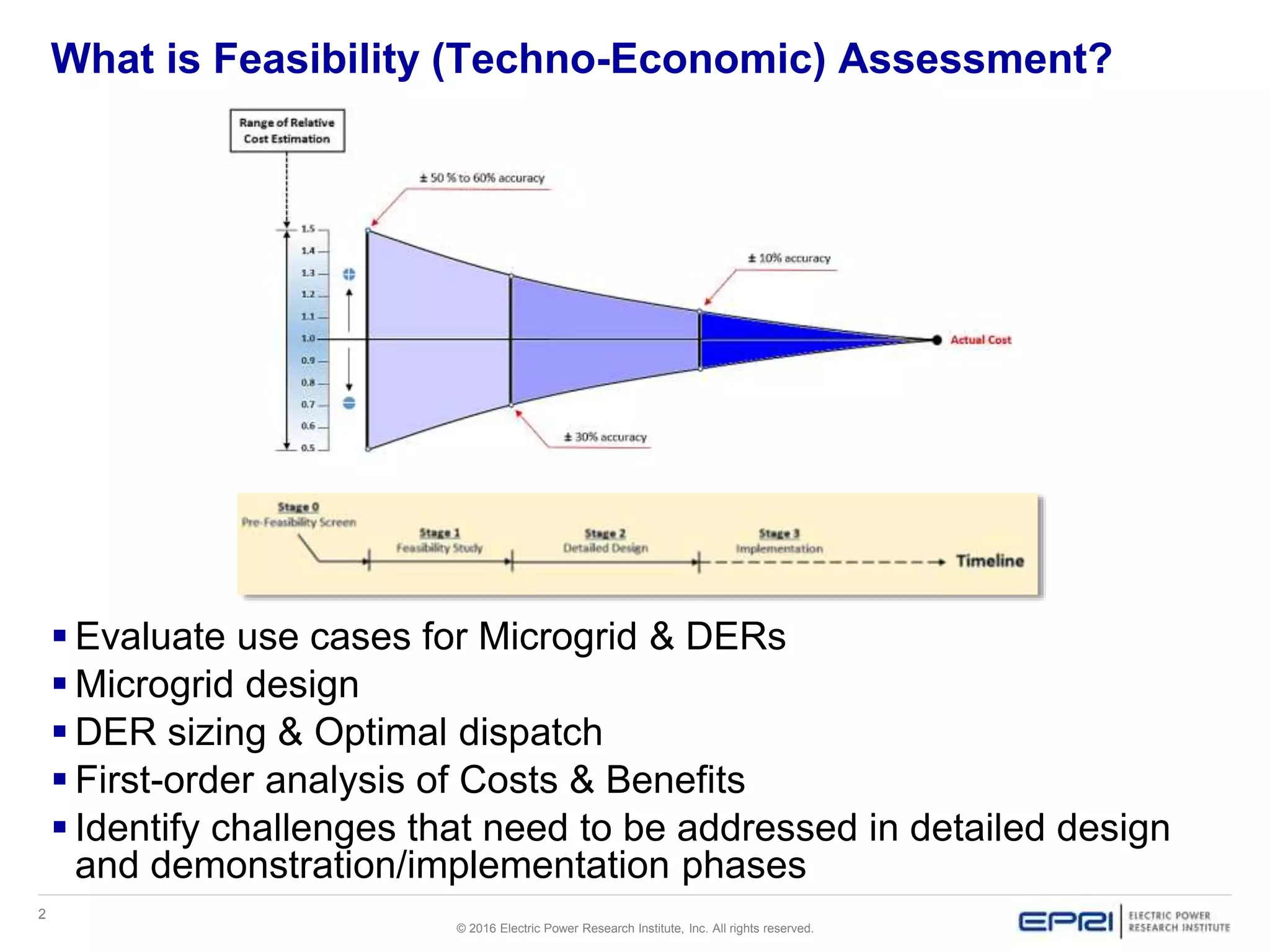
What is Feasibility (Techno-Economic) Assessment?
 Evaluate use cases for Microgrid & DERs
 Microgrid design
 DER sizing & Optimal dispatch
 First-order analysis of Costs & Benefits
 Identify challenges that need to be addressed in detailed design
and demonstration/implementation phases
3
© 2016 Electric Power Research Institute, Inc. All rights reserved.
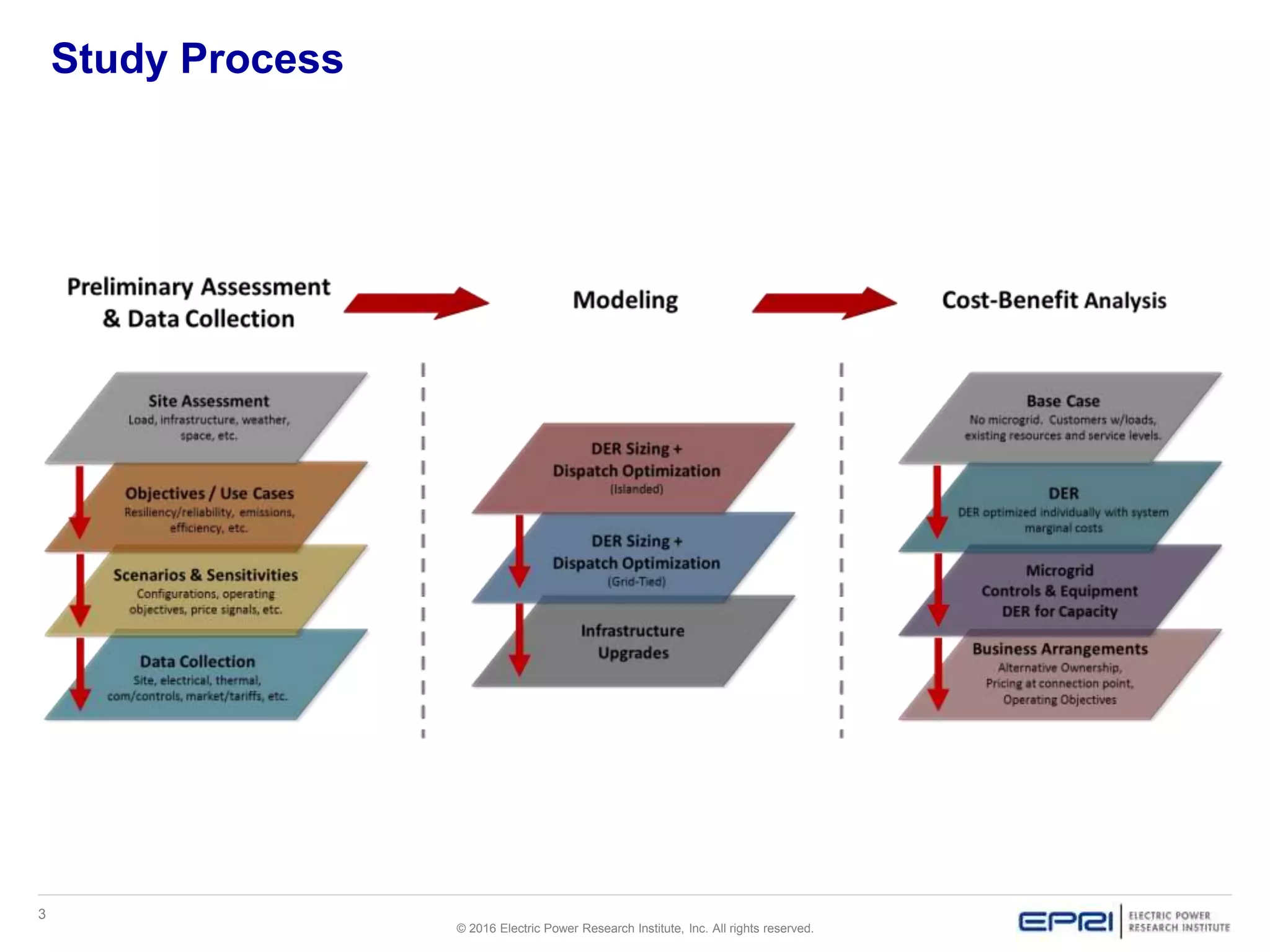
Study Process
4
© 2016 Electric Power Research Institute, Inc. All rights reserved.
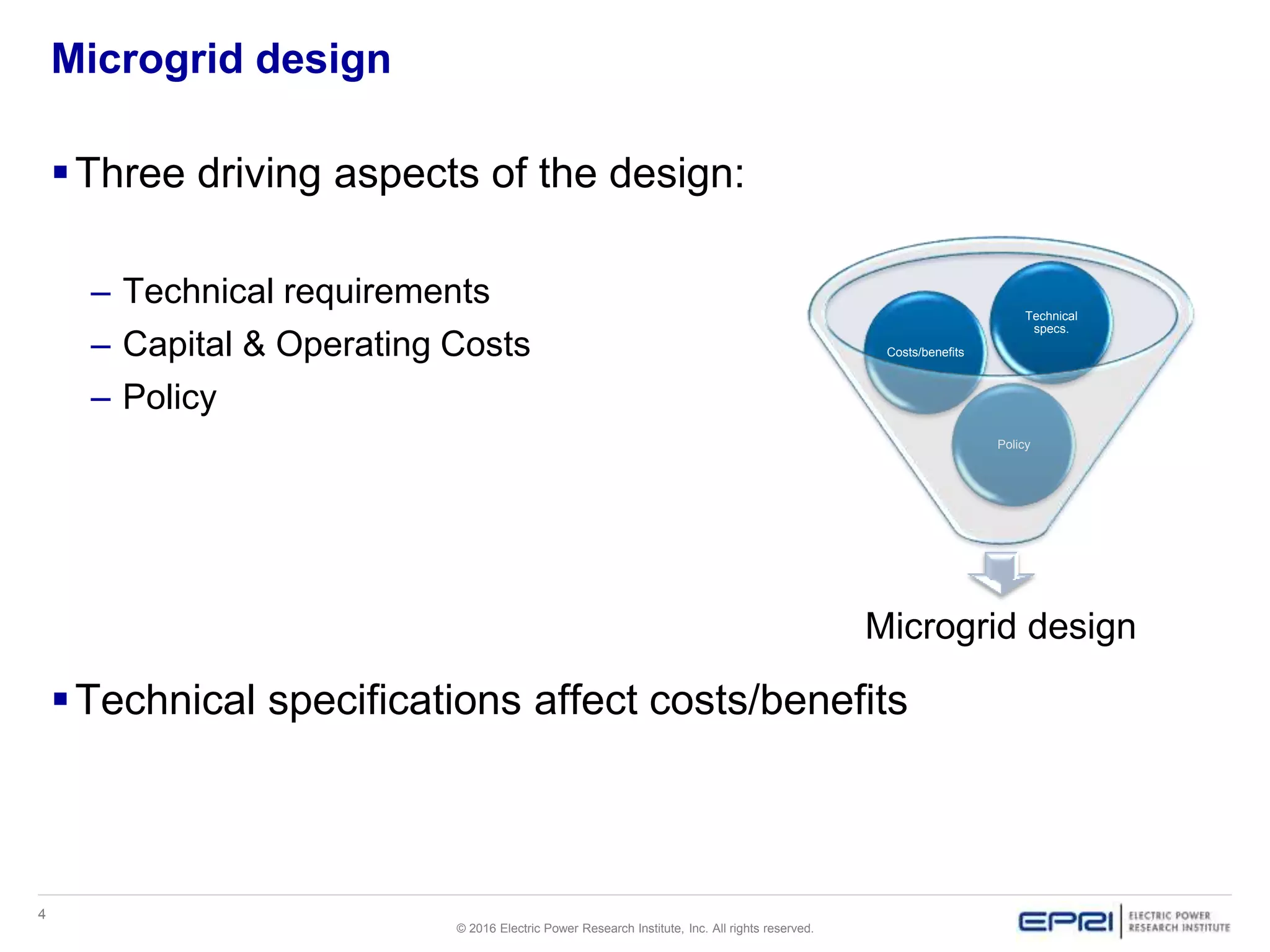
Microgrid design
Three driving aspects of the design:
– Technical requirements
– Capital & Operating Costs
– Policy
Technical specifications affect costs/benefits
Microgrid design
Policy
Costs/benefits
Technical
specs.
5
© 2016 Electric Power Research Institute, Inc. All rights reserved.
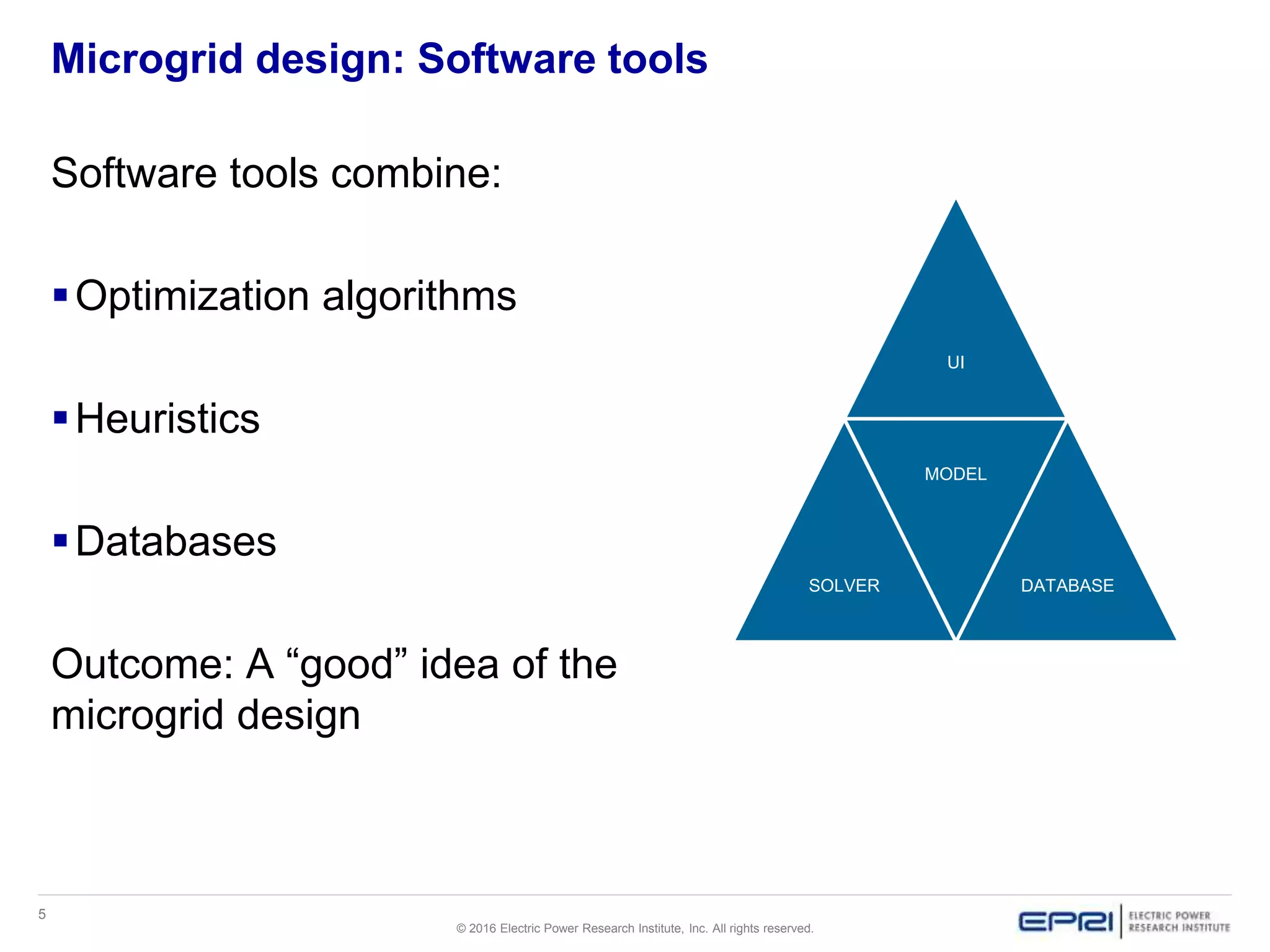
Microgrid design: Software tools
Software tools combine:
Optimization algorithms
Heuristics
Databases
Outcome: A “good” idea of the
microgrid design
UI
SOLVER
MODEL
DATABASE
6
© 2016 Electric Power Research Institute, Inc. All rights reserved.
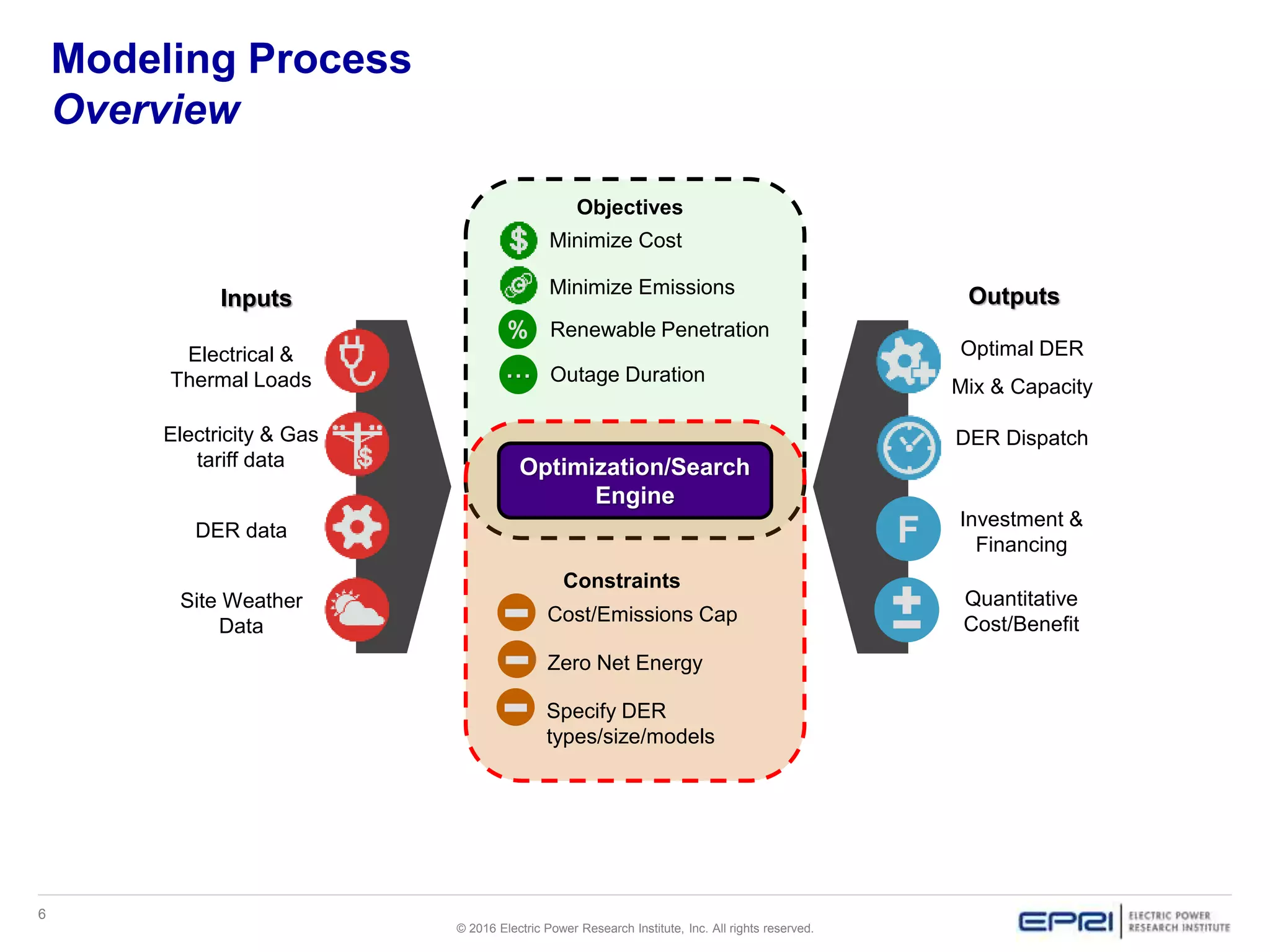
Modeling Process
Overview
Inputs
Electrical &
Thermal Loads
Electricity & Gas
tariff data
DER data
Site Weather
Data
Outputs
Optimal DER
Mix & Capacity
DER Dispatch
Quantitative
Cost/Benefit
F Investment &
Financing
Objectives
Minimize Cost
Minimize Emissions
% Renewable Penetration
… Outage Duration
Constraints
Cost/Emissions Cap
Zero Net Energy
Specify DER
types/size/models
Optimization/Search
Engine
7
© 2016 Electric Power Research Institute, Inc. All rights reserved.
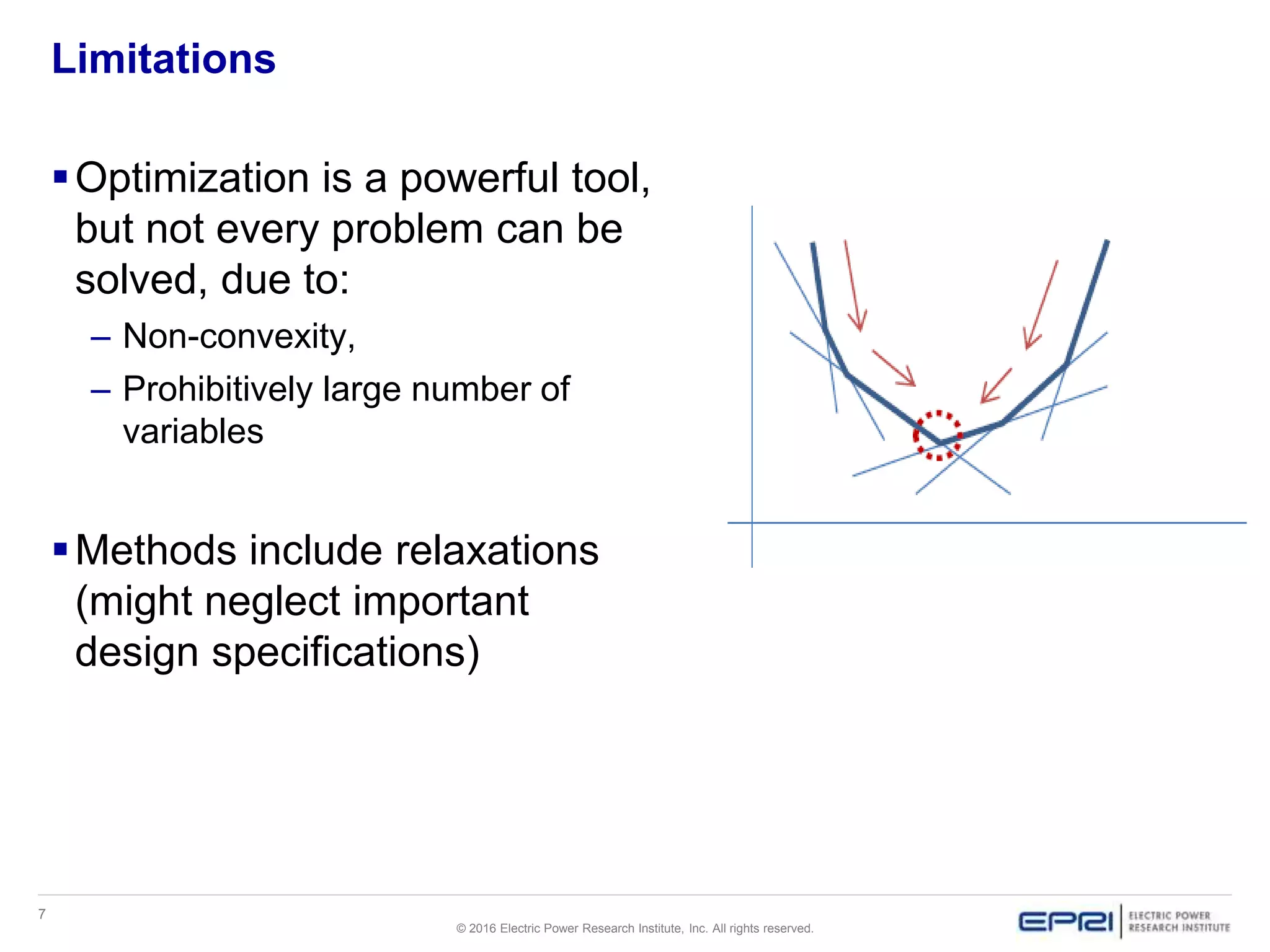
Limitations
Optimization is a powerful tool,
but not every problem can be
solved, due to:
– Non-convexity,
– Prohibitively large number of
variables
Methods include relaxations
(might neglect important
design specifications)
8
© 2016 Electric Power Research Institute, Inc. All rights reserved.
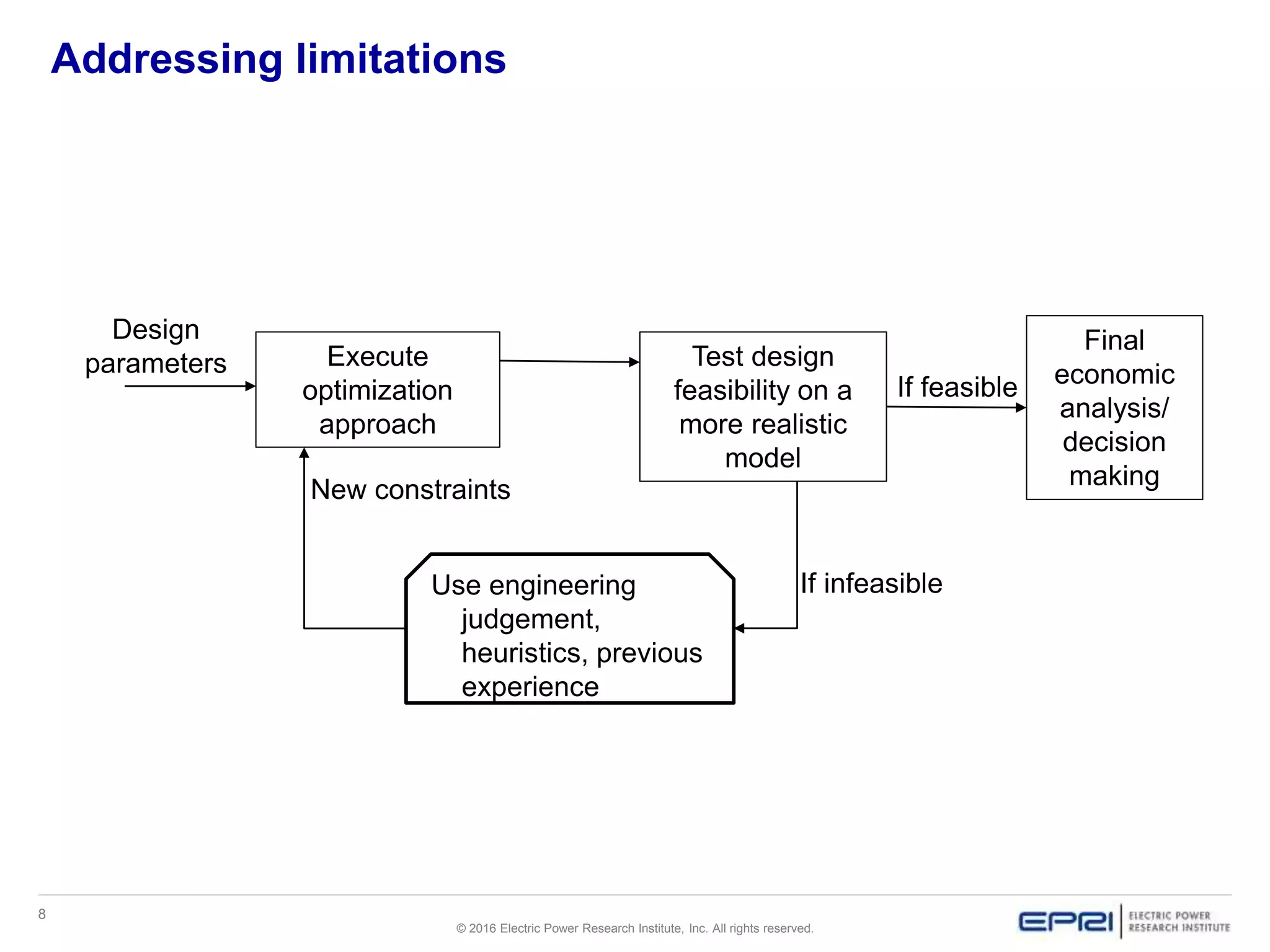
Addressing limitations
Execute
optimization
approach
Test design
feasibility on a
more realistic
model
Final
economic
analysis/
decision
making
Use engineering
judgement,
heuristics, previous
experience
New constraints
If infeasible
If feasible
Design
parameters
9
© 2016 Electric Power Research Institute, Inc. All rights reserved.
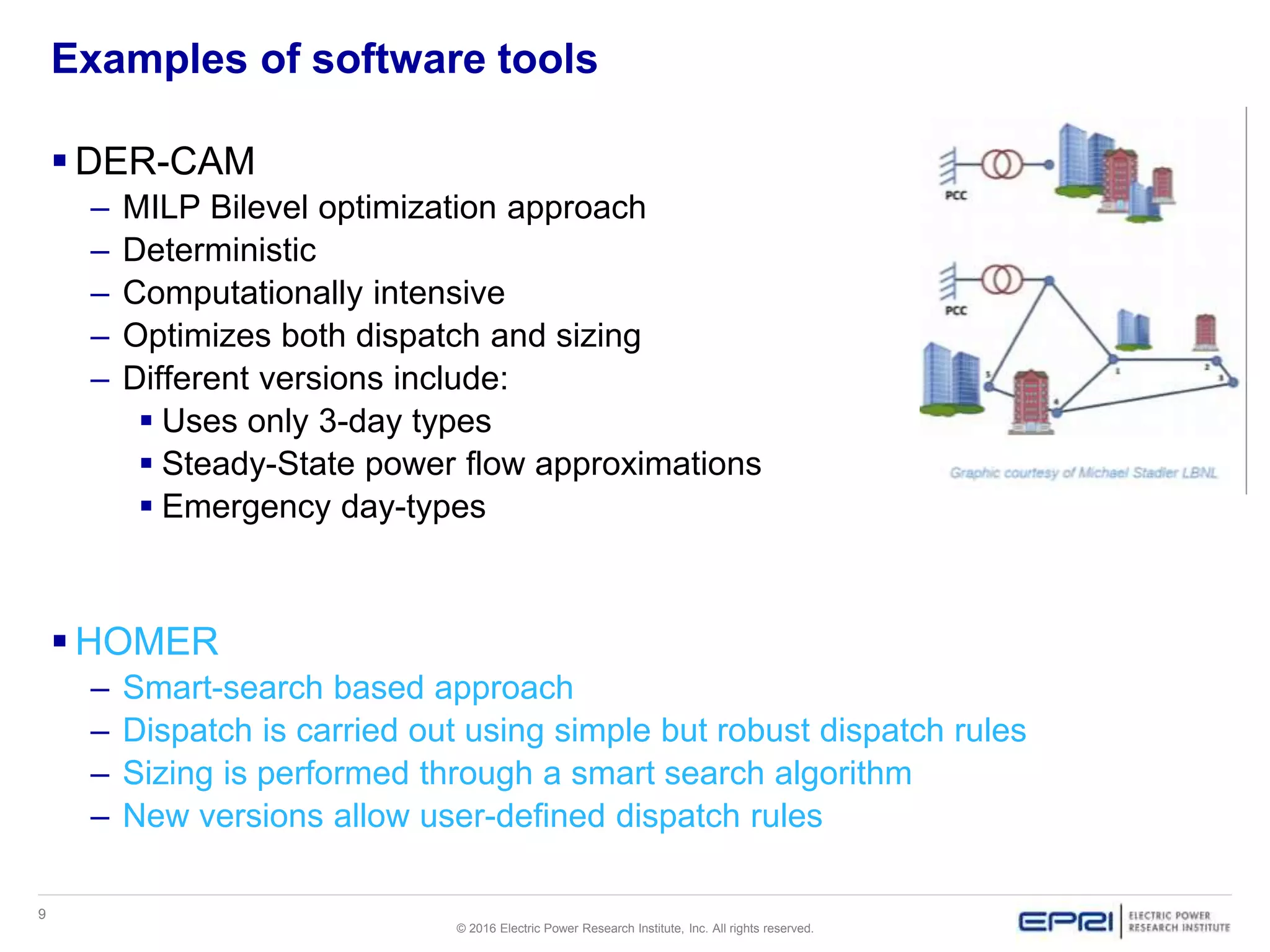
Examples of software tools
 DER-CAM
– MILP Bilevel optimization approach
– Deterministic
– Computationally intensive
– Optimizes both dispatch and sizing
– Different versions include:
 Uses only 3-day types
 Steady-State power flow approximations
 Emergency day-types
 HOMER
– Smart-search based approach
– Dispatch is carried out using simple but robust dispatch rules
– Sizing is performed through a smart search algorithm
– New versions allow user-defined dispatch rules
10
© 2016 Electric Power Research Institute, Inc. All rights reserved.
Handling uncertainty
Some of the design parameters might be unknown
– Greenfield projects with unknown load
– Electricity rates to establish
– Project ownership
This sort of uncertainty can be handled using sensitivity
analysis
– Scenarios for different values of the uncertain parameters
The resulting information should help decision making
11
© 2016 Electric Power Research Institute, Inc. All rights reserved.
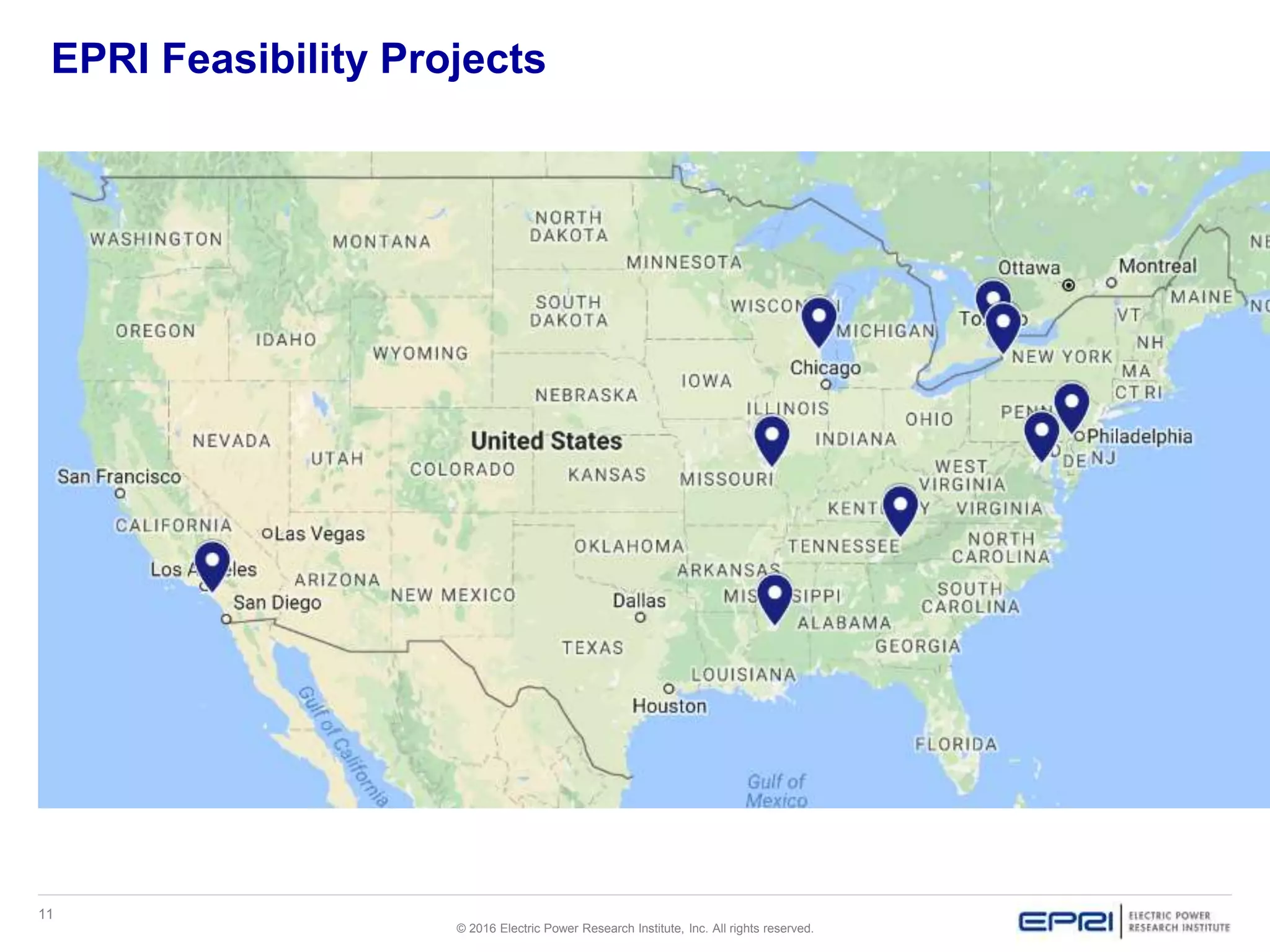
EPRI Feasibility Projects
12
© 2016 Electric Power Research Institute, Inc. All rights reserved.
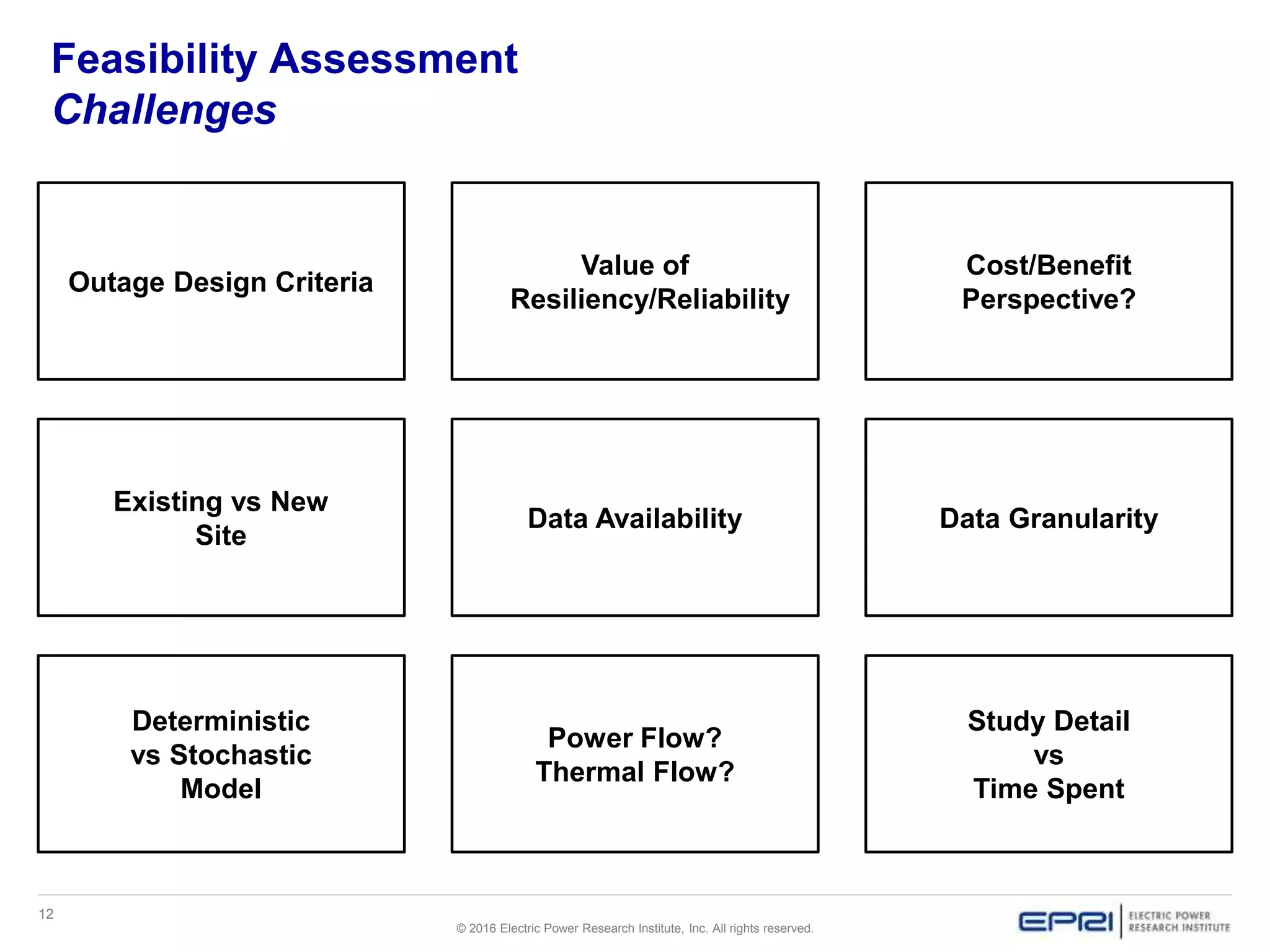
Feasibility Assessment
Challenges
Outage Design Criteria
Value of
Resiliency/Reliability
Cost/Benefit
Perspective?
Existing vs New
Site
Data Availability Data Granularity
Deterministic
vs Stochastic
Model
Power Flow?
Thermal Flow?
Study Detail
vs
Time Spent
13
© 2016 Electric Power Research Institute, Inc. All rights reserved.
Together…Shaping the Future of Electricity

4.1_Simulation & Analysis Tools for Microgrids_Weng and Cortes_EPRI/SNL Microgrid

  • 1.
    1 © 2016 ElectricPower Research Institute, Inc. All rights reserved. Overview of Techno-Economic Assessment Simulation & Analysis tools for Microgrids
  • 2.
    2 © 2016 ElectricPower Research Institute, Inc. All rights reserved. What is Feasibility (Techno-Economic) Assessment?  Evaluate use cases for Microgrid & DERs  Microgrid design  DER sizing & Optimal dispatch  First-order analysis of Costs & Benefits  Identify challenges that need to be addressed in detailed design and demonstration/implementation phases
  • 3.
    3 © 2016 ElectricPower Research Institute, Inc. All rights reserved. Study Process
  • 4.
    4 © 2016 ElectricPower Research Institute, Inc. All rights reserved. Microgrid design Three driving aspects of the design: – Technical requirements – Capital & Operating Costs – Policy Technical specifications affect costs/benefits Microgrid design Policy Costs/benefits Technical specs.
  • 5.
    5 © 2016 ElectricPower Research Institute, Inc. All rights reserved. Microgrid design: Software tools Software tools combine: Optimization algorithms Heuristics Databases Outcome: A “good” idea of the microgrid design UI SOLVER MODEL DATABASE
  • 6.
    6 © 2016 ElectricPower Research Institute, Inc. All rights reserved. Modeling Process Overview Inputs Electrical & Thermal Loads Electricity & Gas tariff data DER data Site Weather Data Outputs Optimal DER Mix & Capacity DER Dispatch Quantitative Cost/Benefit F Investment & Financing Objectives Minimize Cost Minimize Emissions % Renewable Penetration … Outage Duration Constraints Cost/Emissions Cap Zero Net Energy Specify DER types/size/models Optimization/Search Engine
  • 7.
    7 © 2016 ElectricPower Research Institute, Inc. All rights reserved. Limitations Optimization is a powerful tool, but not every problem can be solved, due to: – Non-convexity, – Prohibitively large number of variables Methods include relaxations (might neglect important design specifications)
  • 8.
    8 © 2016 ElectricPower Research Institute, Inc. All rights reserved. Addressing limitations Execute optimization approach Test design feasibility on a more realistic model Final economic analysis/ decision making Use engineering judgement, heuristics, previous experience New constraints If infeasible If feasible Design parameters
  • 9.
    9 © 2016 ElectricPower Research Institute, Inc. All rights reserved. Examples of software tools  DER-CAM – MILP Bilevel optimization approach – Deterministic – Computationally intensive – Optimizes both dispatch and sizing – Different versions include:  Uses only 3-day types  Steady-State power flow approximations  Emergency day-types  HOMER – Smart-search based approach – Dispatch is carried out using simple but robust dispatch rules – Sizing is performed through a smart search algorithm – New versions allow user-defined dispatch rules
  • 10.
    10 © 2016 ElectricPower Research Institute, Inc. All rights reserved. Handling uncertainty Some of the design parameters might be unknown – Greenfield projects with unknown load – Electricity rates to establish – Project ownership This sort of uncertainty can be handled using sensitivity analysis – Scenarios for different values of the uncertain parameters The resulting information should help decision making
  • 11.
    11 © 2016 ElectricPower Research Institute, Inc. All rights reserved. EPRI Feasibility Projects
  • 12.
    12 © 2016 ElectricPower Research Institute, Inc. All rights reserved. Feasibility Assessment Challenges Outage Design Criteria Value of Resiliency/Reliability Cost/Benefit Perspective? Existing vs New Site Data Availability Data Granularity Deterministic vs Stochastic Model Power Flow? Thermal Flow? Study Detail vs Time Spent
  • 13.
    13 © 2016 ElectricPower Research Institute, Inc. All rights reserved. Together…Shaping the Future of Electricity

Editor's Notes