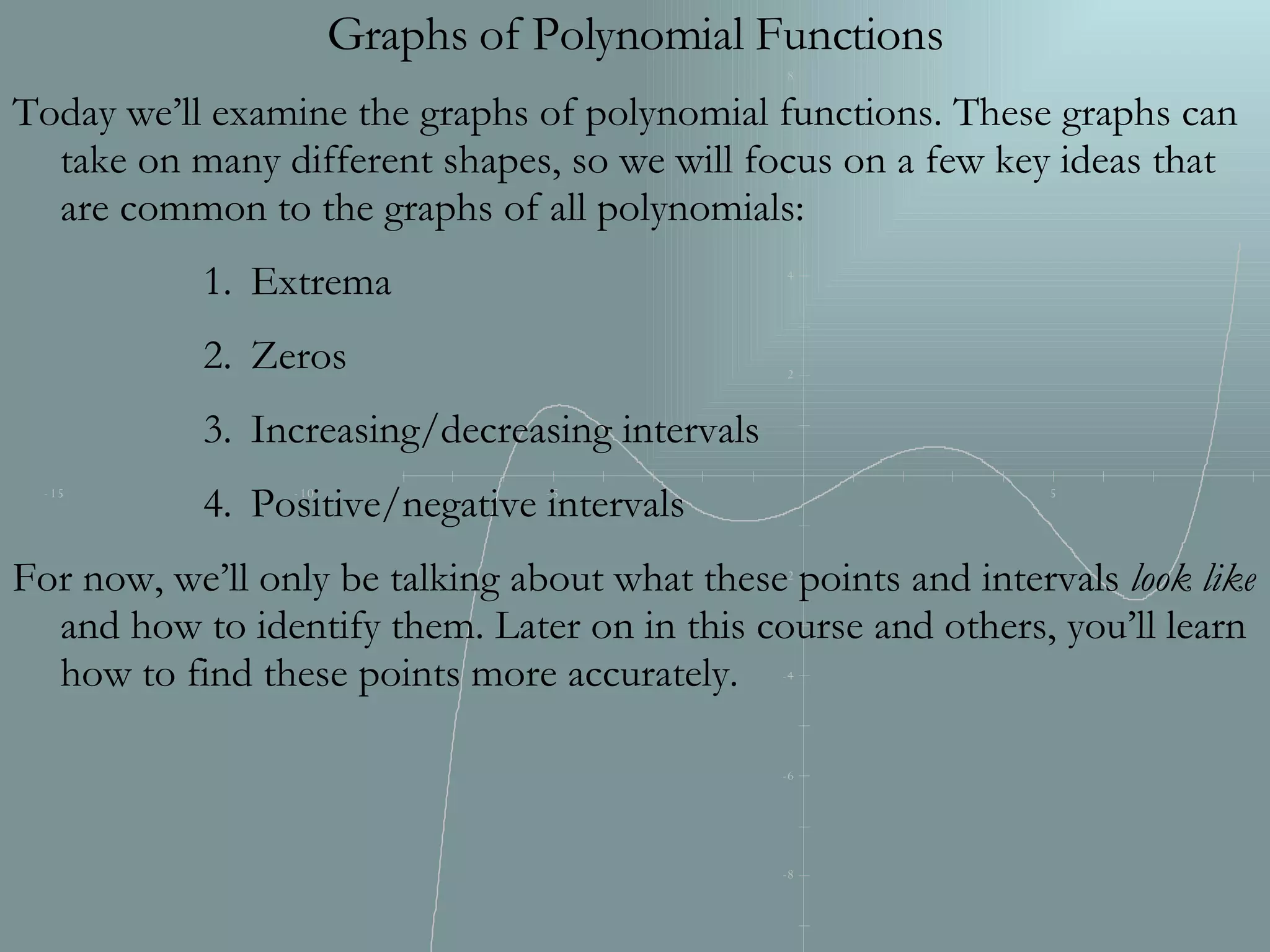
Graphs of Polynomial Functions Today we’ll examine the graphs of polynomial functions. These graphs can take on many different shapes, so we will focus on a few key ideas that are common to the graphs of all polynomials: Extrema Zeros Increasing/decreasing intervals Positive/negative intervals For now, we’ll only be talking about what these points and intervals  look like  and how to identify them. Later on in this course and others, you’ll learn how to find these points more accurately.
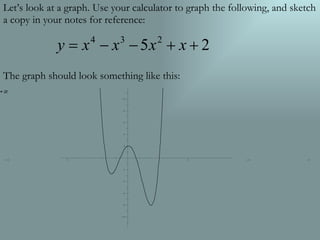
Let’s look at a graph. Use your calculator to graph the following, and sketch a copy in your notes for reference: The graph should look something like this:
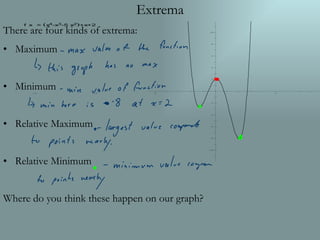
Extrema There are four kinds of extrema: Maximum Minimum Relative Maximum Relative Minimum Where do you think these happen on our graph?
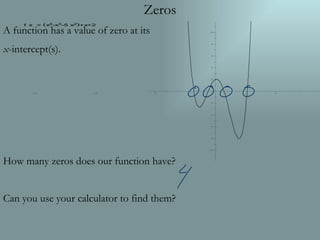
Zeros A function has a value of zero at its x -intercept(s). How many zeros does our function have? Can you use your calculator to find them?
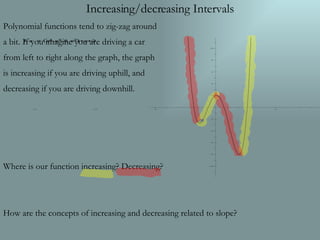
Increasing/decreasing Intervals Polynomial functions tend to zig-zag around a bit. If you imagine you are driving a car from left to right along the graph, the graph is increasing if you are driving uphill, and decreasing if you are driving downhill. Where is our function increasing? Decreasing? How are the concepts of increasing and decreasing related to slope?
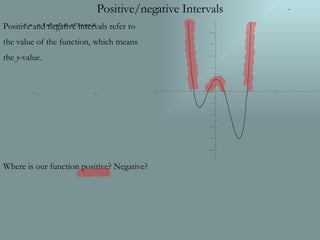
Positive/negative Intervals Positive and negative intervals refer to the value of the function, which means the  y -value. Where is our function positive? Negative?

4.10.08 Graphs Of Polynomials

  • 1.
    Graphs of PolynomialFunctions Today we’ll examine the graphs of polynomial functions. These graphs can take on many different shapes, so we will focus on a few key ideas that are common to the graphs of all polynomials: Extrema Zeros Increasing/decreasing intervals Positive/negative intervals For now, we’ll only be talking about what these points and intervals look like and how to identify them. Later on in this course and others, you’ll learn how to find these points more accurately.
  • 2.
    Let’s look ata graph. Use your calculator to graph the following, and sketch a copy in your notes for reference: The graph should look something like this:
  • 3.
    Extrema There arefour kinds of extrema: Maximum Minimum Relative Maximum Relative Minimum Where do you think these happen on our graph?
  • 4.
    Zeros A functionhas a value of zero at its x -intercept(s). How many zeros does our function have? Can you use your calculator to find them?
  • 5.
    Increasing/decreasing Intervals Polynomialfunctions tend to zig-zag around a bit. If you imagine you are driving a car from left to right along the graph, the graph is increasing if you are driving uphill, and decreasing if you are driving downhill. Where is our function increasing? Decreasing? How are the concepts of increasing and decreasing related to slope?
  • 6.
    Positive/negative Intervals Positiveand negative intervals refer to the value of the function, which means the y -value. Where is our function positive? Negative?